The Essentials of Diabetes: Health, Nutrition, and Mindset with Dr. Maria Colon-Gonzalez


 Apple Podcasts
 Spotify
 RSS Feed
 Goodpods
 Amazon Music
 iHeartRadio
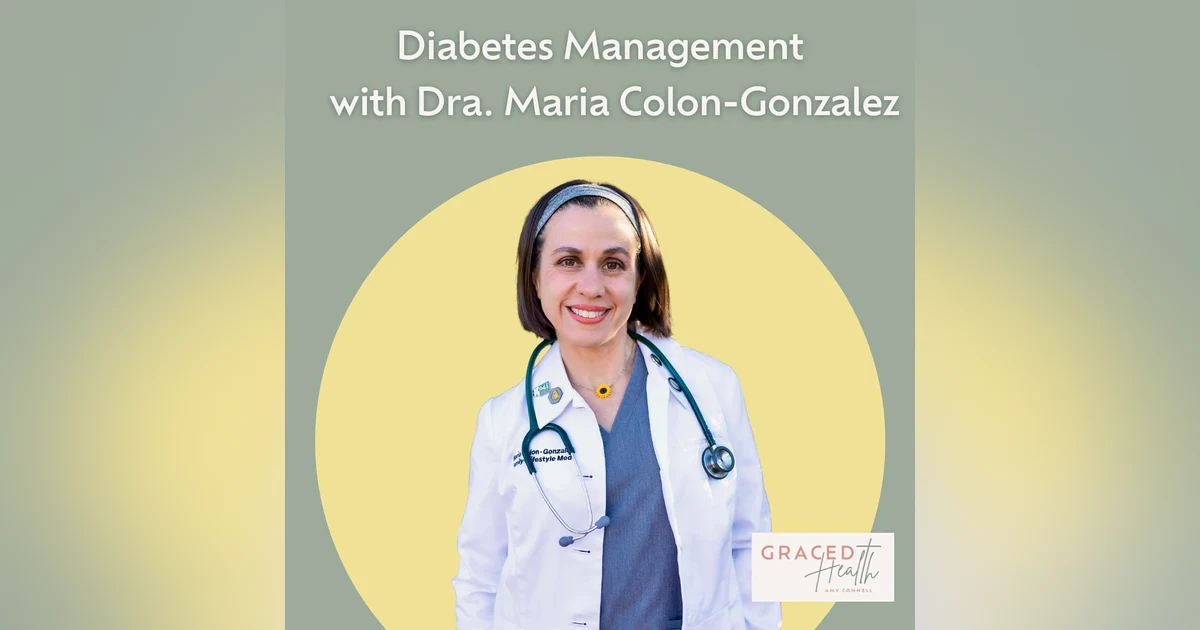
 In this powerful podcast episode, Dra. Maria provides an overview of different types of diabetes, explains insulin resistance, and discusses how it relates to hormonal changes in women over 40. This is Dra. Maria's second time on the show and I just know you are going to learn so much from her this second time around!
We discuss:
-The different types of diabetes
-Explanation of glycemic index and its role in blood sugar management
-Tips for managing insulin sensitivity
-Importance of community support in managing diabetes
-The spiritual aspect of caring for one's body
Great quotes from Dra. Maria from this conversation:
"Vegetables are not the bad carbs. Eat your vegetables."
"Restriction will never lead you to freedom."
Connect with Dra. Maria:
Free download: Sugar-Balance Simplify: Lower Blood Sugar Levels for Busy Professional Women with Type 2 Diabetes
CONNECT WITH DRA. MARIA
www.saludRevisited.com
Instagram: @saludRevisited
Facebook: Salud Revisited
YouTube
Will you help me celebrate my upcoming 50th birthday?
Head to GracedHealth.com/Podcast on your phone by November 4 to leave a voice mail. Simply click on "leave a voicemail" then follow the simple prompts.
If you are over 50, share one thing you wish you'd know when you turned 50.
If you are not yet 50, what's one bucket-list-item you have before joining the big 5-0.
Thanks for helping me celebrate!
Join The Stronger Collective
Nourished Notes Newsletter
Core Essentials: Episode 1 2 3 4
30+ Non-Gym Ways to Improve Your Health (free download)
Connect with Amy:
GracedHealth.com
Join the Graced Health community on Facebook!
Instagram: @GracedHealth
YouTube: @AmyConnell
Join GracedHealth+ for virtual community meetups and bonus episodes
Leave a one-time tip of $5
...
The Essentials of Diabetes: Health, Nutrition, and Mindset with Dr. Maria Colon-Gonzalez
Amy: Dr. Maria, welcome, welcome.
Thank you, Amy. Thank you for having me back in the show. Absolutely. I So strongly believe in what you do, Dr. Maria, because I feel like you have taken the time and the energy to really approach our health from a holistic point of view. It's not just food. It's not just eating. It's not just medicine. It is so much. So many different aspects and especially your trauma informed and story work that you have done culinary nutrition, integrative medicine.
I mean, you've got it all. So I'm, I'm just thrilled that you have taken the time out of your business schedule to chat with us.
Dra. Maria: Yes. And I'm very excited to share with, you know, your audience a little bit about so diabetes and insulin resistance. And as you said, it's more than just the food.
Amy: yes, yes. Okay. So I know you have this program and we talked about this in the intro focusing on type two diabetes, but can we just back up just a little bit and give us the high level overview type one diabetes, type two diabetes, pre diabetic I've heard of type three. I'm not really familiar with that.
So just do kind of a little high level overview and then we can filter in some for our conversation.
Dra. Maria: Okay, so let's start with type one and then type one and a half, okay?
Amy: Oh, one in, okay, there's, I didn't even know about that.
Dra. Maria: So, you know, type one is the one that we know as autoimmune. Those are the people that their body produces. Proteins that start to attack the pancreas. Those are people that need insulin the rest of their life and their care is a little bit different,
From somebody that has type 2 diabetes or prediabetes. Type one and a half is people that When you test them in their blood, they have the antibodies, but they're not fully yet insulin dependent. And those, those type of patients, they need to be monitored very carefully because you need to be able to catch If they do progress to needing insulin for the rest of their life And and this is important a lot of the times people think that sugar and insulin they're bad They're not our body needs them.
Our body needs them. So people that Do not produce insulin at all, They usually use at this point of age We use they usually have an insulin pump and they have that constant amount of insulin You that their body is, you know, kind of like absorbing now because we have the continuous glucose monitors,
For people that have type one, a lot of the times they're using these two devices and they know very well how to manage them so that they can continue having that continuous amount of insulin. And then there is insulin resistance. Okay. Insulin resistance means, Your body, your pancreas is producing insulin and insulin is getting into the blood. The problem here in insulin resistance is that your body cannot use insulin to do its job. So the natural job of insulin is to get the sugar from the blood vessels into your cells. That's where it needs to go because that's the way that your body produces energy. And when we talk about insulin resistance, we first start in that pre diabetes stage,
So that is, you are starting to have problems, That is that A1c that is below that 6. 5, so I think 6. 4 and below it starts at 5. 7. And those are people that, again, patients at that time. That's really when we want to start to do everything right and what we know is that nowadays There's actually more people living with pre diabetes than type 2 diabetes, And then what happens in type 2 diabetes is that again? You have developed more and more and more insulin resistance There's actually a formula that can be used There's a little bit of controversy When it comes to fasting insulin levels in terms of like what's normal But what we know is that if we check your fasting insulin with your fasting blood sugar level There is a formula that in a way help us It's almost like it help us put you in like a level of how much insulin resistance you have.
And that's what happens in type, type two diabetes and pre diabetes. It's really insulin resistance that can be reversed that your body can regain insulin sensitivity. It's a process. It's not an overnight thing, but it can happen. And then you mentioned diabetes type three. So diabetes type three, which isWhen somebody has again, insulin resistance, these are the changes that is specifically that does in the brain that we know that people with insulin resistance have a very high risk of developing dementia, So type three diabetes, the best way that I can explain it is like dementia costs because of sugar.
Amy: Okay. So that again is dementia. What?
Dra. Maria: caused because of blood sugar levels,
Amy: Oh, that's terrifying.
So type 3 diabetes is really known as what's happening in your brain, Got it. That is a great high level overview. And I know you see me taking vigorous notes over here.
Dra. Maria: That's fine.
Amy: One of the things that I think you know about this community is many of my community are women who are over 40 and then really kind of pushing into pre menopausal post menopausal, all of that kind of stuff. And so I. I'm wondering if, and this is purely selfish wondering, honestly, if I'm, if I'm totally honest I am wondering if there is a relationship with maybe seeing higher A1C levels, higher fasting glucose levels and our hormonal changes that we are having.
And I asked this simply because I was noticing just a, just an uptick, just an uptick every time I would go get blood work done. And, correct me if I'm wrong. So your fasting glucose or the fasting blood sugar is kind of that one point in time. And your A1c is more like three months back. So it gives you a bit broader perspective.
Is that correct?
Dra. Maria: Correct.
Amy: Okay. All right. So I've been seeing both of these just kind of come up, come up, come up, but I'm like, I'm not doing anything differently. Like my lifestyle is if anything. It's, I don't know. I just, I'm like, I'm just wondering if there's a connection. So before we get into management and what we can do, I'm just wondering if there is a connection or is this just like, no, Amy, you're having too much chocolate after lunch.
Dra. Maria: yes, so and I love chocolate, especially dark chocolate I love it. So what we know is that it's specifically as the estrogen starts to reduce, insulin resistance increases, And for all of your ladies out there, you know, the time, the time that women really want to start to say, where do I want my health to go is between 35 and 40.
Thank you. That's really when you have to like say, okay, where do I want it to go? Because it's not that in your fifties, there's not hope. There's still hope, but it will take youmore work.
Amy: Yeah. I get
Dra. Maria: Yeah, more doing But definitely as estrogen reduces, insulin resistant increases. The other thing, and this is something that I learned more recently that happens when your estrogen levels reduce.
Your cravings tend to be for fat, okay?
Amy: Okay.
Dra. Maria: And then so what happens is if you are Eating those cravings of fat and especially if you choose, Cheese, saturated fat if you if what you're going to then is saturated fat saturated fat will then eat Immensely provoke all of these other changes that will worsen insulin resistance and as you know that also can increase your risk of having like heart attacks and stroke forming the plaques and the blood vessels.
So yes, you are not crazy That does not mean that every woman is going to develop type 2 diabetes or prediabetes
Amy: Okay. Now I'm confused about something because I thought that a lot of our insulin, possibly resistance and variations in our glucose were primarily caused by carbohydrates. And, you know, blood sugars. So how do, how does higher fat and particularly higher saturated fat items affect our insulin?
Dra. Maria: Yes, so it doesn't affect exactly our insulin again, what's happening. This is the example that I love to use. Okay. So think of insulin as a car, okay? The passenger is sugar, ? Now, what happens? You can get into your car. Your car can be in perfect conditions. But if you do not put fuel into your car, your car cannot take you anywhere.
Dra. Maria: it can be you can you bought it. It is in super really good condition If they give it to you with the gas tank empty, you cannot do anything with it after you buy it, So the first thing that you have to do is open the door of the gas tank and put gas What saturated fat does is that it dams the door of the gas tank,
and that's why fasting insulin levels are also Again, there's a lot of controversy So I don't want to say that that's the only thing that you should be looking at and that sort of stuff because we still do Not know this exact number We know a range but that's what happens,
Your body has This insulin, the pancreas continues to say, well the blood sugar level is up, I'm going to shoot more, I'm going to shoot more, I'm going to shoot more, your blood sugar level still stays up, and it's really because It cannot get into the cells and what we know is it's not a specifically saturated fat,
Does that So when we talk about the percentage of saturated fat that we recommend for somebody that has Insulin resistance, We really aren't thinking 10 or less a day
Amy: Okay. Of your total
Dra. Maria: Okay, yes intake
Amy: I assume.
Dra. Maria: yes Exactly
Amy: I assume because you're, you specifically keep saying saturated fat. This does not include our monounsaturated fats, polyunsaturated fats. So we're good there.
Dra. Maria: exactly
Amy: Okay. Okay. So to be very clear, Dr.
Maria is not telling us not to have fat.
Dra. Maria: No, no, absolutely not.
Amy: Okay. That sounds good. Okay. So, let's just say you have a woman listening who is like, okay, well maybe I didn't, you know, you said, you know, the 35 to 40 is kind of the ideal and maybe I'm starting now to make changes or I've been fine and now I'm seeing something and I'm kind of ready to start making some changes.
Let's dig into some of the ways that we can manage that insulin. And I, and correct me with the right way of saying this, like, I don't know if it's like that we should manage insulin, potential insulin resistance, if it's that we just manage our insulin or if it's our blood sugar or what. So I will let you clarify that, but what now, what can we do?
And I, I know, you know, that we are a very balanced, we are kind of intuitive eating, like we don't want to get any craziness here. So how can we. And then the last thing is to put all of that together without all of a sudden being chained to like, well, I can't get
Dra. Maria: and I think that, you know, mindset is extremely important, That's the first thing that I would say
Amy: that again. That sounds really
Dra. Maria: because restriction comes from that mindset mentality, And what I mean by that is, and I know that you have heard me like, you know, I eat pizza sometimes, I eat my dark chocolate,
I have these things. Now, these things do not control me. And and the other important thing to know is I'm not having all of these other things every day. So I think that there is the space for grave. There's always the space. space for grace. But, you know, again, you have it as this mindset and this relationship as this is, you know, my, my grace.
And I don't even like to use, sometimes people use the word my, I'm giving myself a treat. I, because again, that starts to give you that relationship, And the mindset is very powerful. Or for example, when I go to some of like my public activities, They might, they might serve me certain food that it's not the food that I eat all the time and you know, I'm going to eat it without that shame, without that guilt.
So mindset is very important and that's the one thing. The other thing. So as women, if you are, you know, 40 plus, let's, let's say 40 plus, a couple of changes that you can start to evaluate, do I need to make them? And are they feasible for me? Because you might not need to implement all of them. So, one of the important things is that we know that reducing glycemic index, because we were talking specifically about that reducing estrogen, it's really important. So again, it's not that you're not going to never eat carbs. It's that you're going to start to select You know, the carbs that are high in fiber and that also have protein a lot of people, for example, do not know that I had a cauliflower has about 146 calories and of those that has 11 grams of protein.
so you're still going to be eating, good, wholesome qualities of your carbs and your protein, but it is important, that you think Of foods that are more those simple process box type of like, you know, carbohydrates that we that we understand as carbohydrates, I think that that's very important because again, What you want to help your body is increased insulin sensitivity, So I think that that's extremely important, I don't even use carbs with my patients. I tell them focus on the fiber, fiber, fiber, because what we know and what studies have shown is that people with type two diabetes eat an average of 10 to 15 grams of fiber per day. Okay. Yet, studies have shown that if you increase it to between 30 to 40, that will lower your A1C as good as medications, And at the end,
Amy: impactful.
Dra. Maria: yes, so if you increase your fiber, your A1C will start to go down and it's more effective than some of the medications that are out in the market, and you won't have constipation either, two
Amy: That's incredible. And, you know, it's so funny because, I think I might've even mentioned this last time when we were talking about cholesterol, and I know that you believe in the power of plants and I do too. And it just seems like whether we are talking about mental health or cholesterol or gut health or reducing, you know, dementia risk, it all roads lead back to eating a variety of plants.
Dra. Maria: Yes, yes. And I think about it specifically. I mean, because I do a lot of like 20 hour recalls with my patients. I think about especially vegetables, like, it's like, Hello, come on, let's eat more of those. And again, I think that it is because there's this big confusion. And when we talk about the macros.
Again. So we get this confusion of like, these are carbs and these are proteins and, and then you leave food items that have like a mixture, Like the cauliflower head that has carbs, It's about 29 grams of carbs. And I can't remember how much of those are fiber, But it has carbs and it has also a good amount of.
a protein, So you have this food item that has to these two macros in it, and I think that that's why a food can sometimes become very complicated and messy, But definitely if you increase your fiber And it will help with the blood sugar level. It will help with constipation.
And then the other thing is, you know, I think that if you're going to do this, and you're going to decide to do it on your own, you really want to increase the fiber slowly. Because if you're not even eating enough fiber, you do not have The little GI Joe's in your gut to digest that fiber, and then you'll get you're going to get GI issues and GI symptoms,
So that's like a note on the side. And then the other thing is, you want to do the 10 to 1 carb to fiber ratio. when you look at food ingredients by the food labels, And it tells you the amount of carbs. If it's 30, you want, you want to buy a product that then at least has three grams of fiber, at least.
There's products out there that have more than that, But you want to shoot at that 10 to one 10 of, of carbs, one of fiber, ratio, And those are good things. And, and the reason that I emphasize like Whole Foods and things like, you know, your vegetables and your fruits and the way that it is. If you put it that way, then we don't have to be obsessed with counting gram of carbs and counting grams of protein and how much am I eating? Because if you make it obsessed and complicated, then you're not going to do
Amy: the other thing about, and I know, you know, this about fiber, but this was something that I made sure to put in my new book for teen girls. Cause I talk about one of the chapter titles is why can't I poop? Because I know this is an issue with them. And I talk about fiber some also make sure you're getting plenty of water.
You mentioned earlier glycemic index, can you define what that is for someone who may not be familiar with it?
Dra. Maria: this is a system that has been created to create categories, low glycemic, medium, fast glycemic. The way that this has been done is that it has, we, you know, we have used like table sugar, Or the people that design it, they use table sugar to compare with like the apple or grapes.
And basically the glycemic index is, so once you eat this food item, How fast does it become sugar in your blood? Okay. And that's why a lot of people use like the word Oh, spike, Because yes, there is some food items that when you consume them compared to others, the rise in the blood sugar will be higher.
I don't like to again, use the word spike because it is normal for when you eat for your blood sugar level to go up as well as your insulin level. That is what needs to happen physiologically. So I don't want people to, you know, become obsessed because again sometimes then what they do is that they say, well, I'm never going to eat, you know, whatever it was ever again, because, oh my God, look what I did.
Amy: And I feel like too, there can be a time and place to have those things. Like I'm thinking about when I was running and I would keep like the little goo packets or the little jelly bean packets or something like that. Because when I was on mile 10, I needed some quick food.
energy. And that was going to probably be a very high glycemic index because that's what I needed. And so that fit the time. So to your point, Dr. Maria, it's not about like never have that. It's like, what is the right time and use for something like that? Okay.
Dra. Maria: What season of your life are you? I was listening to a podcast and we were talking about like, you know, movement, movement as it comes with like women and the cycle and all these kind of stuff. And it is a reality, When you are, even for me, when I was in my twenties, I was running my half marathons,
Now that I'm in my forties, I still run, but I might do four to six miles. Yeah. And not doing a mile to get again. So, you know, as the season in your life changes, The way that you're going to start to relate to your body and take care of it needs to also Change there has to be metamorphosis.
Amy: That's good. Now I know that you have developed this program to help women with diabetes or with type two diabetes. So you've given us kind of a little, a little taste of what we can do, but I also know that you offer more personalized services, more in depth. Tell us some about that program.
Dra. Maria: Yeah, so that program is specifically designed So right now anybody in the state of Texas or any woman in the state of Texas could actually participate The way that is designed is that it's a 12 week program And I combine one to one appointments with chair medical appointments. So actually in 12 weeks, you actually see me 15 times, right?
So you get, yeah, yeah. Wow.
Amy: Yeah.
Dra. Maria: Happy that you said that, And because in the, in the one to ones, I'm, We're going you in labs, ordering labs, adjusting medications or supplements, doing the more type of personalized type of like here and then people get access to every week. There is a short 5 to 10 minutes, teaching module,
Where I talk about certain concepts. And then after that, people have homework. Okay. or an action task that they will complete each week. And that can be something as simple as let's identify, you know, the sources of like hidden fructose in your home to one of the exercises is let's, let's write your food story,
Because that's also like very important. And it's not only about food, I talk about movement, how weight lifting. important, And keeping that muscles and the mitochondria like super healthy. And I actually addressed, so, you know, diabetes affects all the systems in your body because it does,
It addresses the systems that are more critical, So like the liver, the kidney, Your gut health. So I don't go into all the systems. I also talk about brain health, you know, dementia. I emphasize what are things that in order to keep also these organs that are still Extremely important.
What are other things that we need to do besides blood sugar control because of food, I think that a lot of the times, again, we get fixated on the food and yes, food is extremely important. And then I might ask them, what are they doing for exercise? And they're just doing, and I say just doing, that sounded super bad,
They're, they're doing like the walk, And yes, that's good, but that really won't start to transform the metabolism so that we can increase insulin sensitivity, So, we address all of that, and then we come to a group, and the purpose of the group and a group medical appointment is Okay, let's let's kind of like check in let's see how things are going, you know, if you are sharing what have been your struggles what have been your challenges and it's not only me from the position of being an expert the beauty In their studies that have shown this patients that participate on this type of model of care tend to have Not only like better outcomes, but they can't sustain the outcomes because now they create this community because even thought we know that there's millions of people out there living with, you know, diabetes, insulin resistance, still people feel it's just me.
I'm lonely. What do I do with this? And that overwhelmed. So basically, you know, that's like a big overview of how the program works. And yes, I also do like one to one to take care of other medical problems, but I specifically designed this for type two diabetes one, because again, it affects all the organs in the body. Unfortunately, it's kind of like a cancer that if you do not take, with the only difference is that there's things that you can do, which is a little bit different sometimes than a cancer. And that is where, you know, I focus a lot, What are the things that you can do so that you can achieve that remission?
Mm
Amy: Okay. I love that. And I love your focus on community as well. we are now learning how lonely people feel, not only Gen Z, but also just in general, like we are in the loneliest season. And I think it is because we feel like, well, it is like we're surrounded by people, but we don't really have the opportunity or create the space.
to really connect with other people and for them to be able to say me too, or I care or something like that. So I love that you are doing that. And, you know, as you were talking, Dr. Maria, one of the things that was going through my mind is just the mindset behind making some of these decisions As you know, we talk a lot on here about being, you know, taking care of ourselves so we can do what we're called to do and it may be more about having our future self in mind without this becoming an idol, without this becoming something that constrains us from fully living and thriving in the way that God wants us living, but at the same time.
And I think maybe sacrificing to self, to our, to our current want, which I am the very first person to raise my hand and say, I know I do this and instead thinking, okay, this is for my future self. This is for my future role as a vibrant mom or a grandma or something like that. And so just having that mindset behind it and the why behind it, rather than like.
I'm not going to have this, you know,
Dra. Maria: I'm restricted.
Amy: beans. Right, Because, you know, so anyway, I don't
Dra. Maria: Yes. And that's no, that's why I say mindset is extremely important because that's what's going to keep you focused, I want, I think that and to then also, which I think that because of how we live in this Western culture where we live up here and we do not know what's going on down here,
If we also focus on how your body feels, what changes do you notice? What, you know, that actually helps a lot of my patients because all of a sudden they're like, Oh yeah, now I have more energy. Now I can focus more at work, They start to notice these subtle changes, That I think that is, it's extremely important.
Amy: one of the things that I always say is like. Jesus needed a body. He needed a And a lot of the time, you know, we, we treat this as, you know, like something, But this is not just something, You know, without a good body, he was not going to be able to walk as he was walking and going to places, He needed a body that was healthy because when you are, you know, dealing with 5, 000 people at the same time Like, you know, so think about it, So there, there was a reason that Jesus needed a body and he needed it in a good condition, needed it to be good and working. And the other thing is, I always say without the body, there wouldn't have been the blood, so good. Yeah, that's so true.
Dra. Maria: So, yeah. So again, we don't make of our bodies, our idols. But I also believe that, we have to carry them in our way that we are embodying, you know, that we were fearfully and wonderfully made, So that's why I say your body tells me a story, And it's not a story only of self care.
That's great. I love. We're going to end there. So good. Okay. I have a few questions. I ask all my guests and I know that you were on we talked about cholesterol before and I know I've asked you this, but I don't remember what the answer was. And the question is, I love learning about people's tattoos.
Amy: And so I've found when people decide to put something on their body for the rest of their life, often they have a reason. Do you have any tattoos? If so, what's the meaning behind it? And if not, if you had to get one, what would it be and where would it go?
Dra. Maria: Yes, I do not have one. If I were to have one. So the last time that I was on the show, I said a butterfly. And I think that I'm still debating if I want a butterfly or a starfish there's a story behind the starfish very long. But basically like a peach starfish and definitely I would put it like in my lower back on the sacrum towards like my butt area because especially You know, they both have meaning to me,
The butterfly has this metamorphosis process that again, I have been through, And then if I were to go with a starfish, the peach starfish, it was something specifically, again, that got spoken to, spoke to me and, you know, gave me this starfish, peach starfish. And then I had to like, understand what, what do you mean by that?
What do you mean by that? I'm like, P starfish. So it has to do with identity, In that sense. Yeah.
Amy: Okay. All right. Very good. Well, you'll have to let me know if you ever get one. Do you have a meaningful Bible verse that you would like
Dra. Maria: Yeah. So I want to share and I'm going to share it for the passion translation, So it's Psalms 93, three to four. Chaos once challenged you. The raging waves lifted themselves over and over high above the ocean's depth, letting out their mighty roar. Yet, at the sound of your voice, they were all stale by your might.
What a majestic king, filled with power.
Amy: That's beautiful. Thank you. And that's the passion
Dra. Maria: Yes.
Amy: Okay, I don't really read that translation very often. So I'll have to check that out. Thank you. Okay. Dr. Maria, if people are wanting to connect with you, particularly if they are in Texas and want to work with you, how can they do
Dra. Maria: Yeah. So they can just go to my website. www. salud, which is S A L U D, revisited, R E V I S I T E D. com. And from there, you can schedule a consultation directly. And the good thing is that I do not have call centers. They actually get moved.
Amy: Awesome. Thank you. Okay. What is the one simple thing you would like us to remember about this conversation about diabetes?
Dra. Maria: Ah, vegetables are not the bad carbs. Eat your vegetables. And most of all, remember that restriction will never lead you to freedom.
Amy: Amen to that. Okay, that is all for today. Go out there and have a graced day.