Episodes
201
Oct. 9, 2026
A Nobel in Ice: Unveiling the Secrets of the IceCube Neutrino Observatory
Show notes We're back after a short break! Today: the 2026 Nobel Prize in Physics goes to Francis Halzen for the IceCube Neutrino Observatory — a cubic kilometre of Antarctic ice turned into a telescope. Then a Sydney-led team publishes the most distant fast radio burst yet, from a dwarf galaxy just 3 billion years after the big bang; Hubble's archive yields a possible second-generation planet around a white dwarf; and we catch up on Starship's first orbit, Crew-13, Juice's Earth flyby and the e...
200
Sept. 22, 2026
The Great Water Mystery: Jezero Crater and the Hunt for Mars' Hidden History
Perseverance drove to the edge of an ancient Martian lake expecting a beach and found the inside of a volcano — rock that water has been through at least three separate times. Europe's Jupiter probe comes home on Monday night and crosses Australia in a fully dark sky. Two teams, using two completely different techniques, both find something hiding inside the most famous planetary system we have ever photographed — and an Australian instrument is in the middle of one of them. Plus: heavy water in...
199
Sept. 21, 2026
What Keeps a Galaxy Churning: Andromeda's Supernova Secrets Revealed
Supernovae keep galaxies churning A new study led by Fan Yi Meng from Tsinghua University provides the first comprehensive census of superbubbles in the Andromeda Galaxy, revealing that clustered supernova feedback is sufficient to sustain galactic-scale turbulence. This finding helps to explain why galaxies remain active over billions of years, with turbulence playing a crucial role in regulating star formation rates. The research, published in Nature Astronomy, highlights the energy balance be...
197
Sept. 19, 2026
The Unifying Mystery of Black Hole Jets: Stellar and Supermassive Connections
SHOW NOTES Black hole jets follow one universal rule Adelle Goodwin (Curtin University / ICRAR, Forrest Research Foundation Fellow) and Andrew Mummery (Institute for Advanced Study, Princeton) show that supermassive black holes launch their outflows at the same critical accretion rate as stellar-mass black holes — about 2% of the Eddington limit — making accretion-outflow coupling scale-invariant across seven orders of magnitude in mass. Nature Astronomy, 17 September 2026. DOI: 10.1038/s41550-0...
196
Sept. 18, 2026
The Youngest Planet Ever Found
Astronomers have confirmed the youngest planet ever found - Elias 2-24 b, less than a million years old, sitting inside a gap it is carving in its own birth disc 450 light-years away. Plus: the Lunar Reconnaissance Orbiter finds a 222-metre crater that was not there in 2024, a 178-year-old space weather record gets corrected by seven years, and Sakurai's Object - a star that came back from the dead - has become six times hotter in thirty years. SOURCES Newfound 'Baby' Planet Smashes Record for ...
195
Sept. 16, 2026
Roman Opens Its Eye
First starlight from Roman, a shorter fuse on the Solar System, weapons in orbit, and a globular cluster hiding behind the dust Roman opens its eye — and finds it has twice as long to look NASA has activated the Nancy Grace Roman Space Telescope's Wide Field Instrument, a 300-megapixel infrared camera built around eighteen detectors, with a field of view at least a hundred times larger than Hubble's infrared field — a patch of sky bigger than the full Moon in a single exposure, at Hubble-compara...
193
Sept. 14, 2026
The Evolving Enigma of Dark Energy and the Sun's Mysterious Past
An Australian-led team has rebuilt thirty years of supernova observations into one consistent catalogue — and it adds fresh weight to the idea that dark energy is not constant. We also ask whether the young Sun swallowed a super-Earth, find out why a quiet Sun is bad news at thirty-five thousand feet, and watch JWST run the most sensitive exomoon search ever attempted. Plus a Crew-13 update and a skywatch with a live aurora alert for both hemispheres. In this episode · Two thousand, eight hundre...
192
Sept. 12, 2026
The Planet That Keeps Shrinking plus the Weekend Wrap
Today's episode — The Weekend Wrap, Saturday 12 September 2026: OUR LEAD: A SMALLER MERCURY Mercury has been contracting for four and a half billion years as its huge iron core cools, and it writes the record on its own surface — in long lobe-fronted cliffs called lobate scarps, where one slab of crust has ridden up over another. Add up all that shortening and you get the total contraction. The trouble was that the surface record always gave a smaller number than thermal models predicted. New wo...
191
Sept. 11, 2026
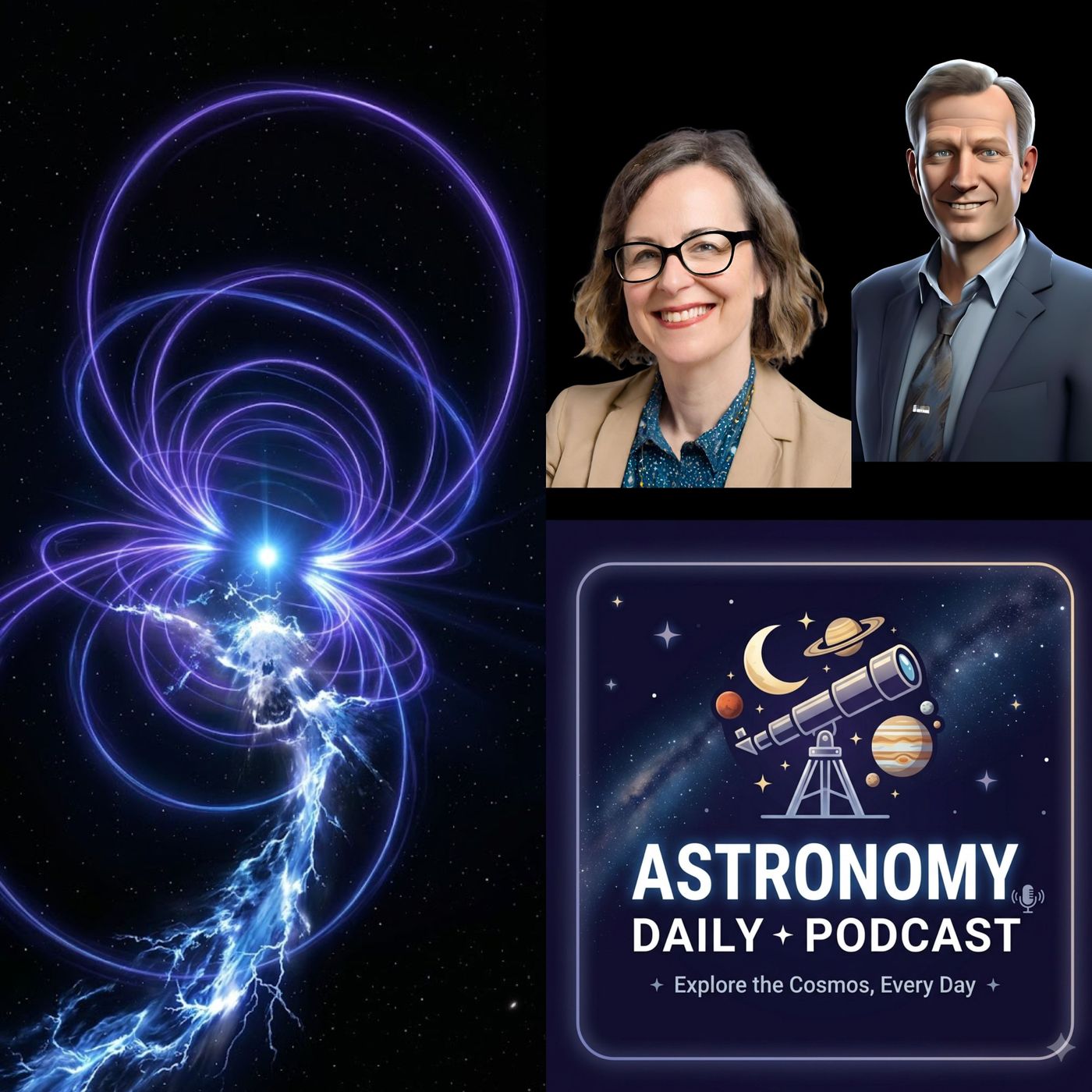
Half the Neutron Stars
Today's episode — S05E191, Friday September 11, 2026: Main story: A population-synthesis study published in Nature Astronomy on 10 September argues that magnetars make up roughly half of all neutron stars, not the one-in-a-hundred implied by the catalogues. Celsa Pardo-Araujo and Nanda Rea (Institute of Space Sciences, ICE-CSIC, Barcelona) with Michele Ronchi (ASTRON) and Vanessa Graber (Royal Holloway) modelled the whole isolated-neutron-star population as one family rather than four separate c...

190
Sept. 10, 2026
A Hundred and Nine Flashes
Today's episode — S05E190, Thursday September 10, 2026: Main story: 109 fast radio bursts have been used to measure how much galactic feedback has smoothed out the matter in the universe. A fast radio burst lasts about a millisecond, and on its way to us it is dispersed — low radio frequencies slowed more than high ones by free electrons along the path, exactly the way a prism separates white light. The size of that delay counts the ordinary matter the burst passed through. Writing in Nature Ast...
189
Sept. 9, 2026
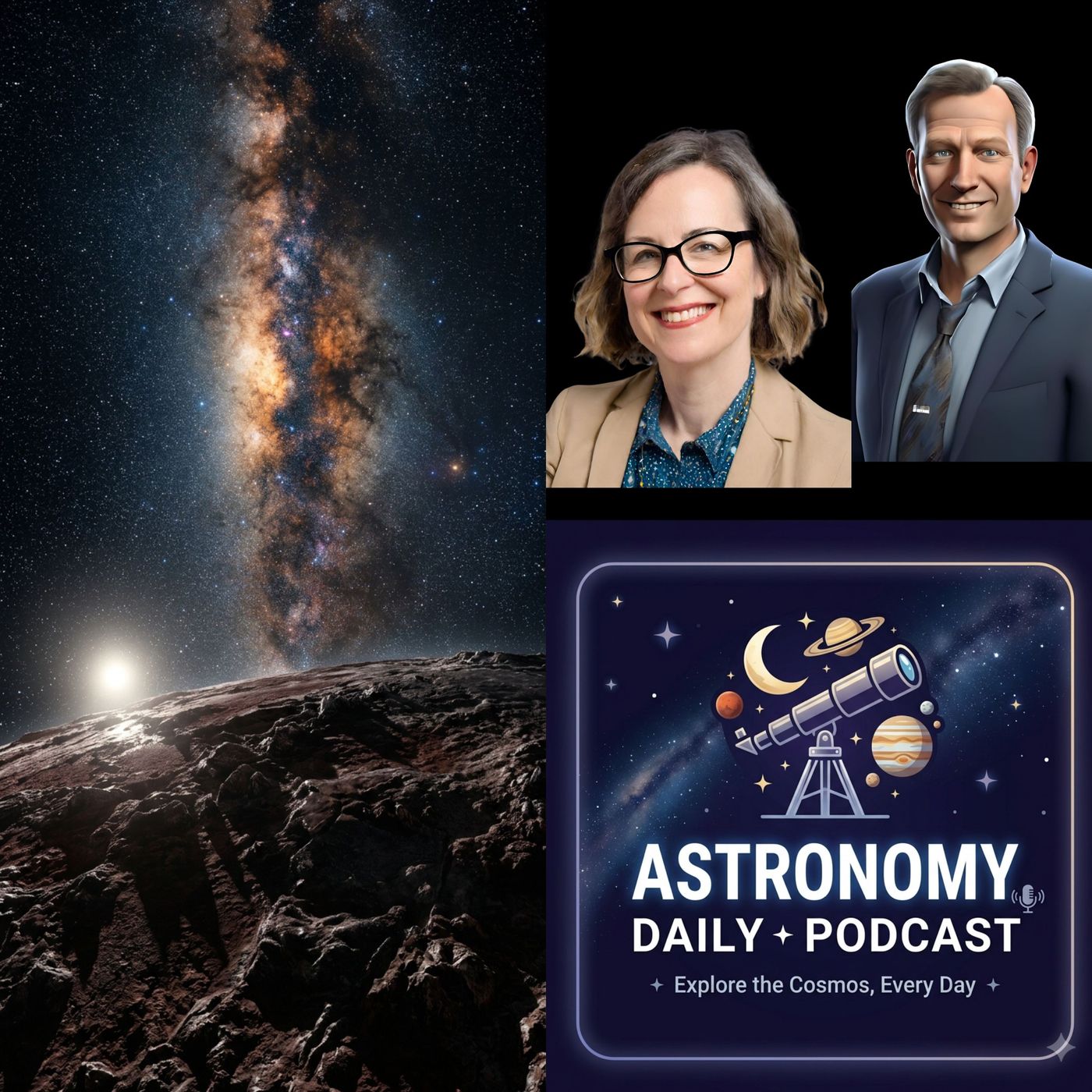
The Smallest Things Remember
Everything beyond Neptune is a leftover. The icy bodies of the Kuiper Belt never got assembled into a planet, and out there — dark, cold and empty enough that things mostly leave each other alone — they are the closest thing we have to the original building blocks of the solar system, still sitting roughly where they were made. The trouble is that everything we know about them, we learned from the big ones. Ground-based telescopes stop at around twenty-five kilometres. In two papers published on...
188
Sept. 8, 2026
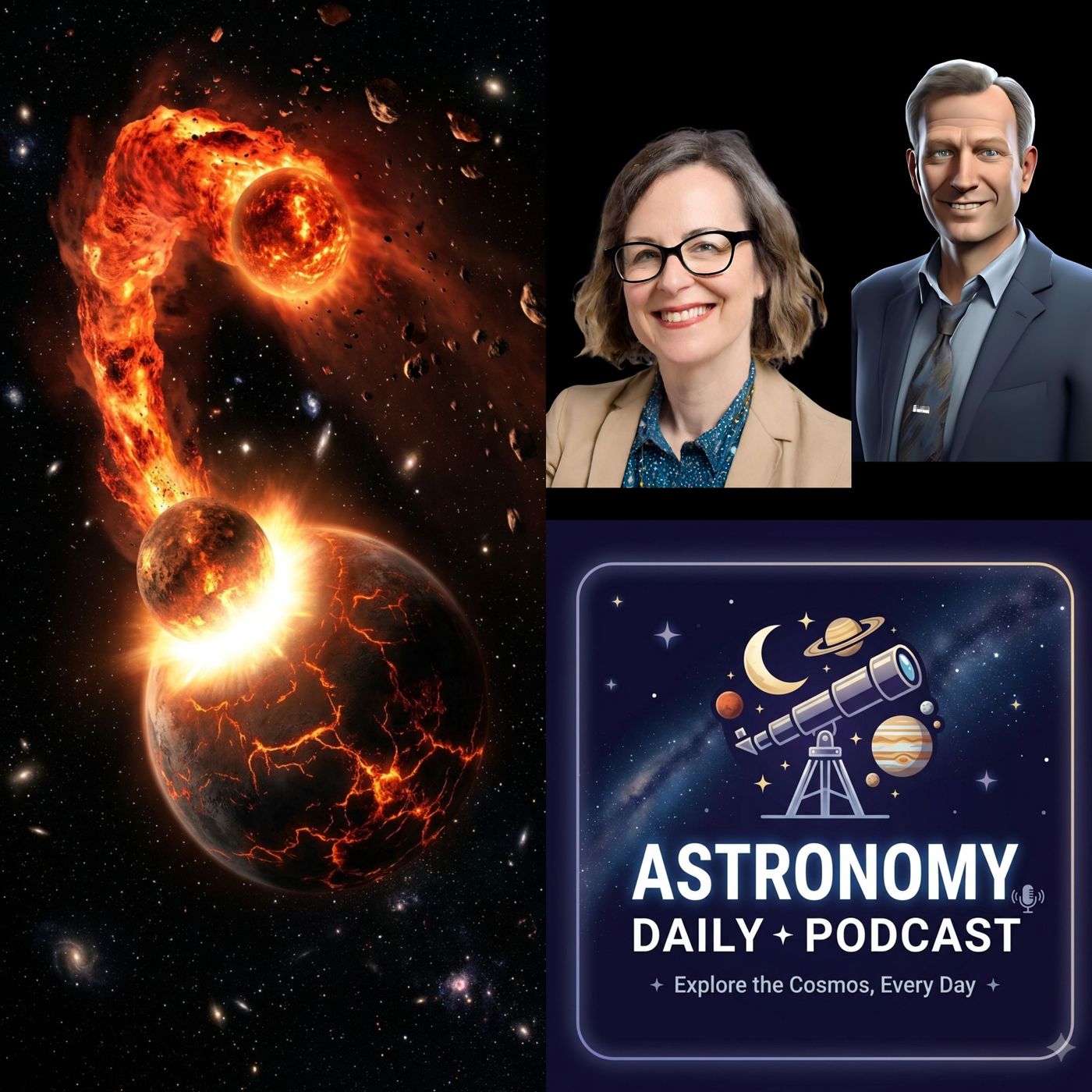
The Moon in Five Hours
For fifty years the story has been that the Moon assembled slowly out of a disc of debris. New simulations from Southwest Research Institute add one thing everybody left out — the strength of rock — and get an intact Moon in about five hours. Plus eight black holes that outgrew their galaxies, two massive stars that fell past each other and got caught, Dragonfly's Titan landing site gets a name, and today's daylight occultation of Jupiter. Links & sources Southwest Research Institute — SwRI-led...

187
Sept. 7, 2026
Europe Launches From Europe — And Two White Dwarfs Six Minutes Apart
A German rocket lifted off from an Arctic island on Saturday and became the first vehicle ever to reach orbit from Western European soil. Plus: the gaps in stellar streams may not be dark matter after all, two white dwarfs circling every 374 seconds in the far southern sky, peptides that fold in concentrated sulfuric acid, and what Katalyst's LINK is actually doing next to Swift. Both-hemispheres skywatch, and a serious safety warning for tomorrow's daylight Jupiter occultation. Links & sources...
186
Sept. 5, 2026
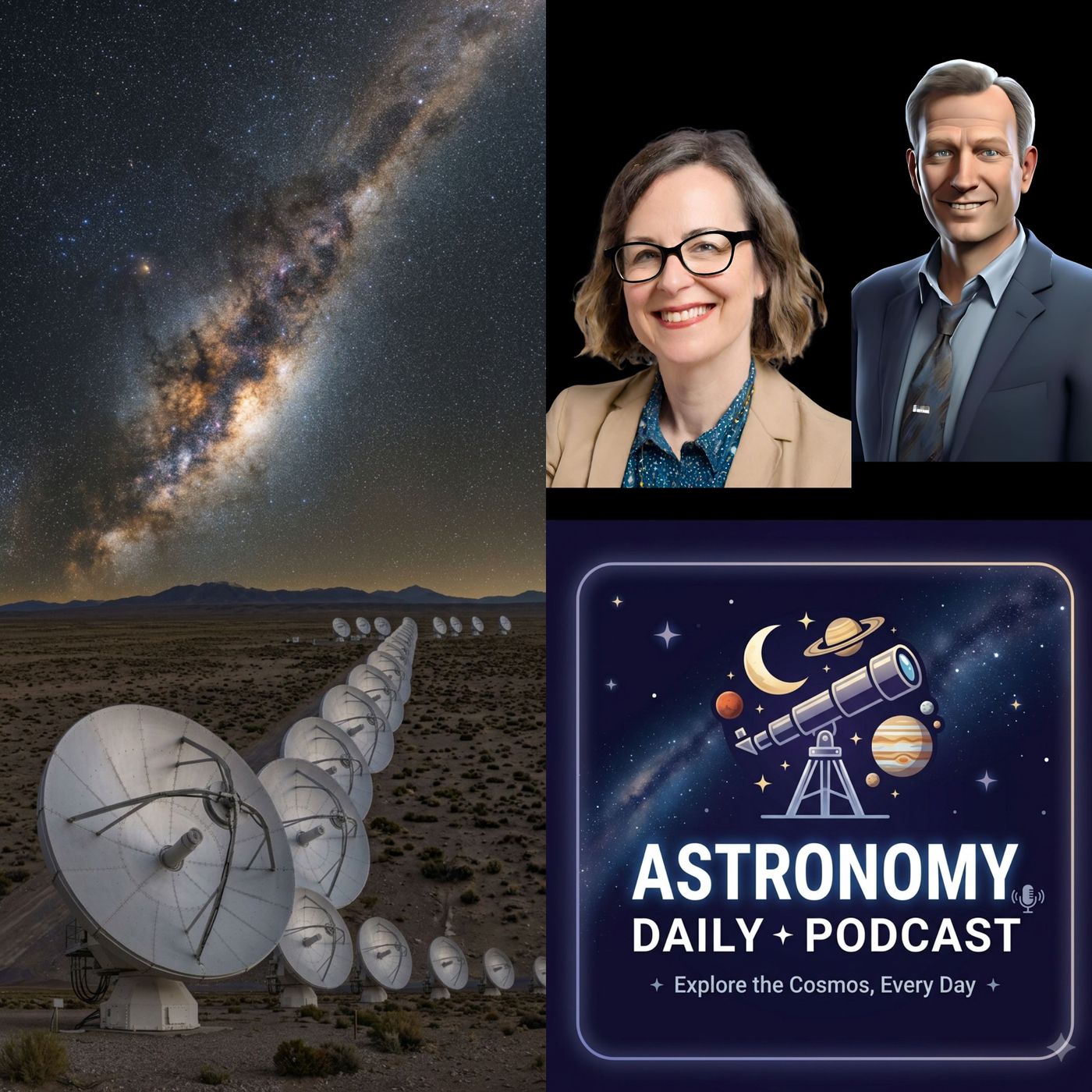
The Hydrogen Map: How a Radio Telescope Heard Half the Universe
Anna and Avery open the Weekend Wrap with a genuine first: South Africa's MeerKAT has detected the 21-centimetre hydrogen signal from four to five billion light years away using radio data alone — no optical galaxy survey propping it up — proving out the technique the Square Kilometre Array will use to measure dark energy. Then the week in review: Roman's coronagraph wakes up, Starship Flight 14 gets a date, Mars turns out to be lopsided inside, BepiColombo lets go, LZ's one unexplained flash, a...
185
Sept. 4, 2026
One Flash in the Xenon: The Dark Matter Event Nobody Can Explain
Links & sources Brown University — LZ experiment sees surprising result in search for dark matter — https://www.brown.edu/news/2026-09-01/lz-dark-matter-results US Department of Energy — LZ Sees Surprising Result in Search for Dark Matter — https://www.energy.gov/science/articles/lz-sees-surprising-result-search-dark-matter Imperial College London — Dark matter hunt takes unexpected turn after puzzling signal spotted in LZ detector — https://www.imperial.ac.uk/news/articles/natural-sciences/phys...
184
Sept. 3, 2026
BepiColombo Lets Go: Eight Years, Nine Flybys, One Irreversible Moment
Anna and Avery cover BepiColombo's arrival at Mercury beginning today, as the ESA/JAXA mission jettisons the transfer module that has carried it for nearly eight years and nine planetary flybys. Plus: NASA awards Blue Origin a $700 million contract to build a dedicated Mars communications orbiter, Hubble confirms a brand-new ten-sided cloud pattern at Saturn's south pole — first spotted by amateur astronomers, one of them in outback New South Wales — and China's Galactic Energy flies its reusabl...
183
Sept. 2, 2026
There's Something Molten Under Mars's South Pole
Today's episode — S05E183, Wednesday September 2, 2026: Main story: A thermal anomaly beneath Mars's south pole. Writing in Nature on August 27, a team led by Alexander Berne (Caltech PhD '26, now University of Arizona) reports that the interior of Mars's southern hemisphere is 200–400 °C hotter than the northern hemisphere and partially molten. The team used tidal tomography — measuring how much the solid body of Mars flexes under the Sun's tidal pull by tracking minute velocity changes in thre...
182
Sept. 1, 2026
Catching the Uncatchable: Starship's Boldest Test Yet
Today's episode — S05E182, Tuesday September 1, 2026: Main story: SpaceX cleared Booster 21's static fire at Starbase's Pad 2 on August 30, the last major milestone before Starship Flight 14 — the third flight of the Starship V3 design. Ship 41 had already completed its own static fire campaign at Massey's Test Site. Flight 14 will attempt something no Starship flight has done before: catching the ship itself, not just the Super Heavy booster, with the launch tower's upgraded "chopstick" arms. P...
181
Aug. 31, 2026
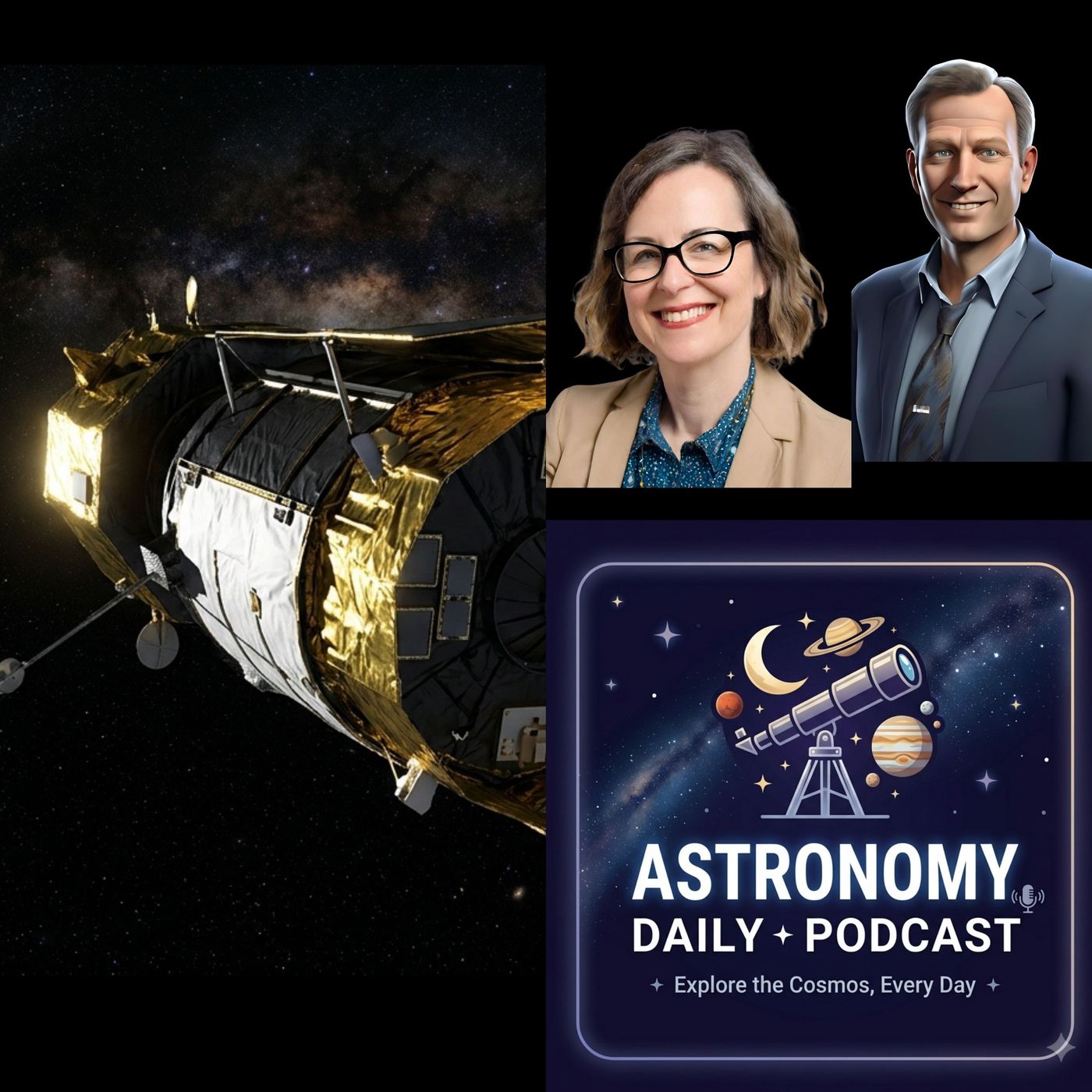
Roman Launches: A Telescope's Countdown Ends
🚀 The Nancy Grace Roman Space Telescope is safely away — Anna and Avery recap Sunday's clean Falcon Heavy launch, what happens next on the road to L2, and a surprise Australian link in the mission. Then: Elon Musk signals the eventual retirement of Falcon 9, two Nobel laureates defend an accelerating universe against a slowing-expansion claim, a single ancient asteroid strike solves two mysteries on Mars's moon Deimos, and everything worth looking up at tonight, wherever you are. Chapters / topi...
180
Aug. 29, 2026
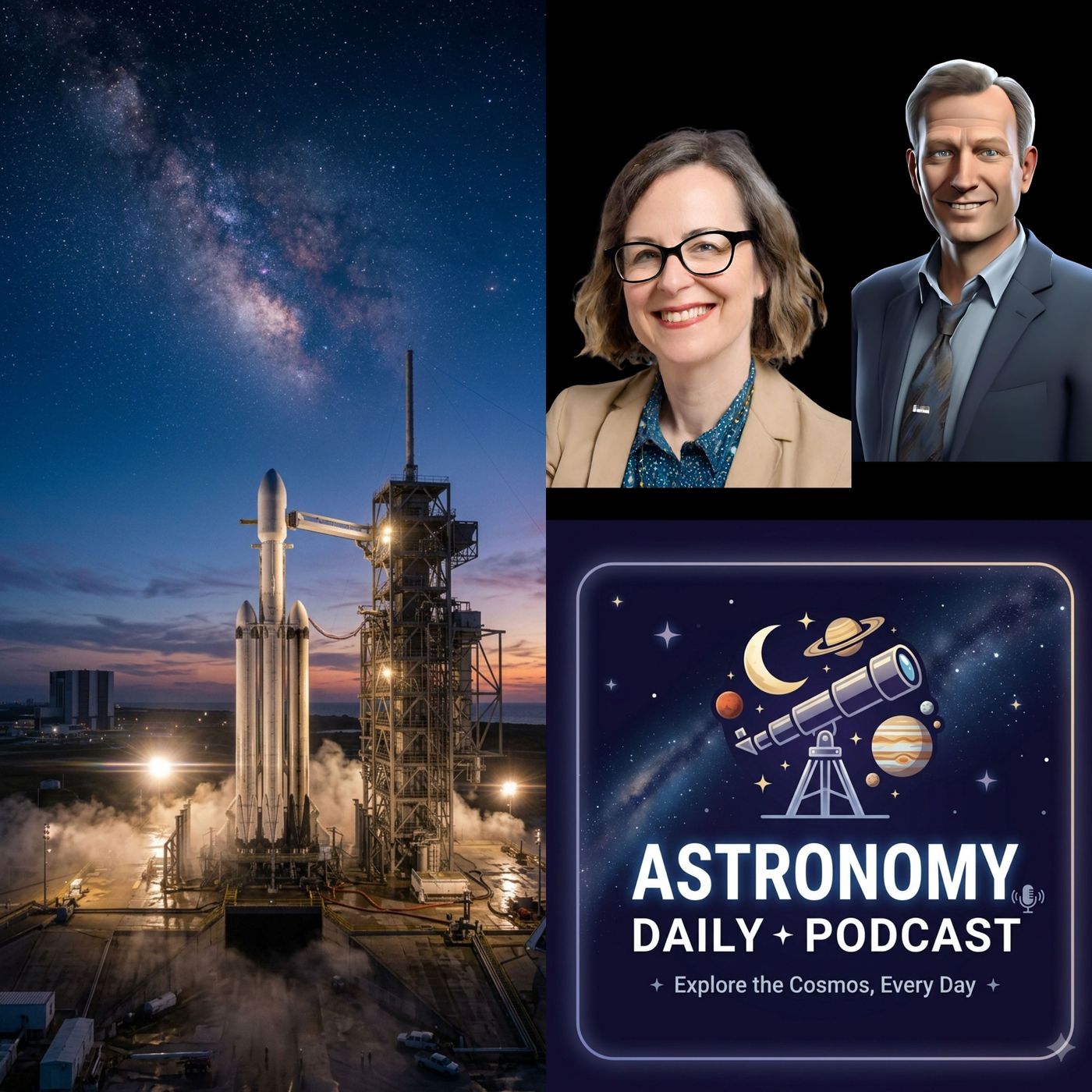
The Weekend Wrap, August 29: Roman's Countdown Begins
Today's episode — S05E180, Saturday August 29, 2026, The Weekend Wrap: Main story: The Nancy Grace Roman Space Telescope launches tomorrow, Sunday August 30, with a primary window opening 7:26am EDT (11:26 UTC / 9:26pm AEST Sunday night in Sydney) on a SpaceX Falcon Heavy from LC-39A, Kennedy Space Center; backup window Monday August 31 at 7:22am EDT. Total ascent to spacecraft deployment is about 31 minutes 31 seconds, with Falcon Heavy's side boosters landing back at Cape Canaveral roughly 7 m...
179
Aug. 28, 2026
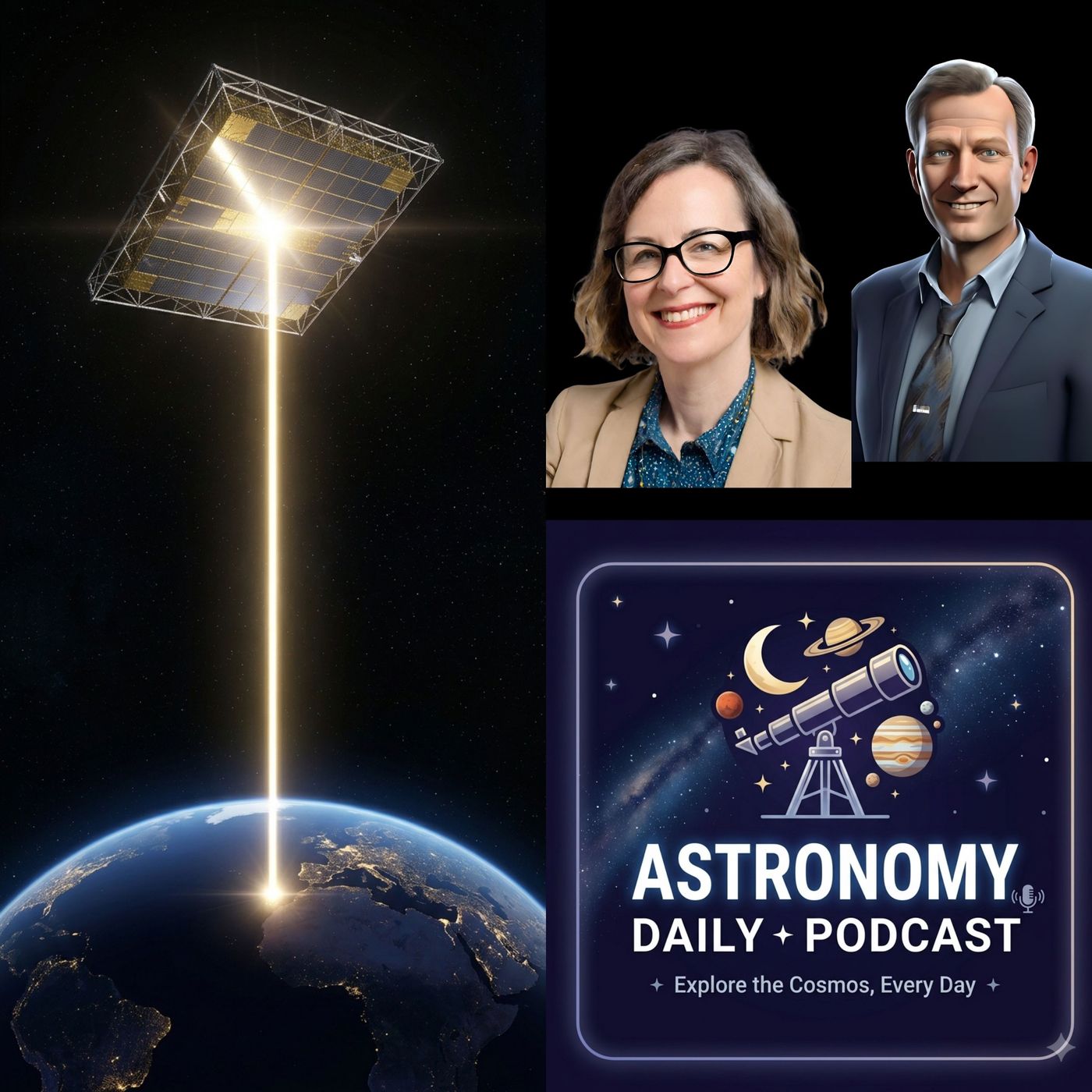
Forty Times Brighter Than the Full Moon: Inside the Space-Mirror Fight
Today's episode — S05E179, Friday August 28, 2026: Feature story: US startup Reflect Orbital has FCC approval for Eärendil-1, a demonstration satellite carrying a 60-foot mirror, the first step toward a planned constellation of 50,000-plus orbital mirrors beaming reflected sunlight to Earth on demand. A new peer-reviewed study (Kocifaj, Bakos and Kundracik, accepted at The Astrophysical Journal Letters) finds a full-scale, 174-foot operational mirror would appear about 40 times brighter than the...
178
Aug. 27, 2026
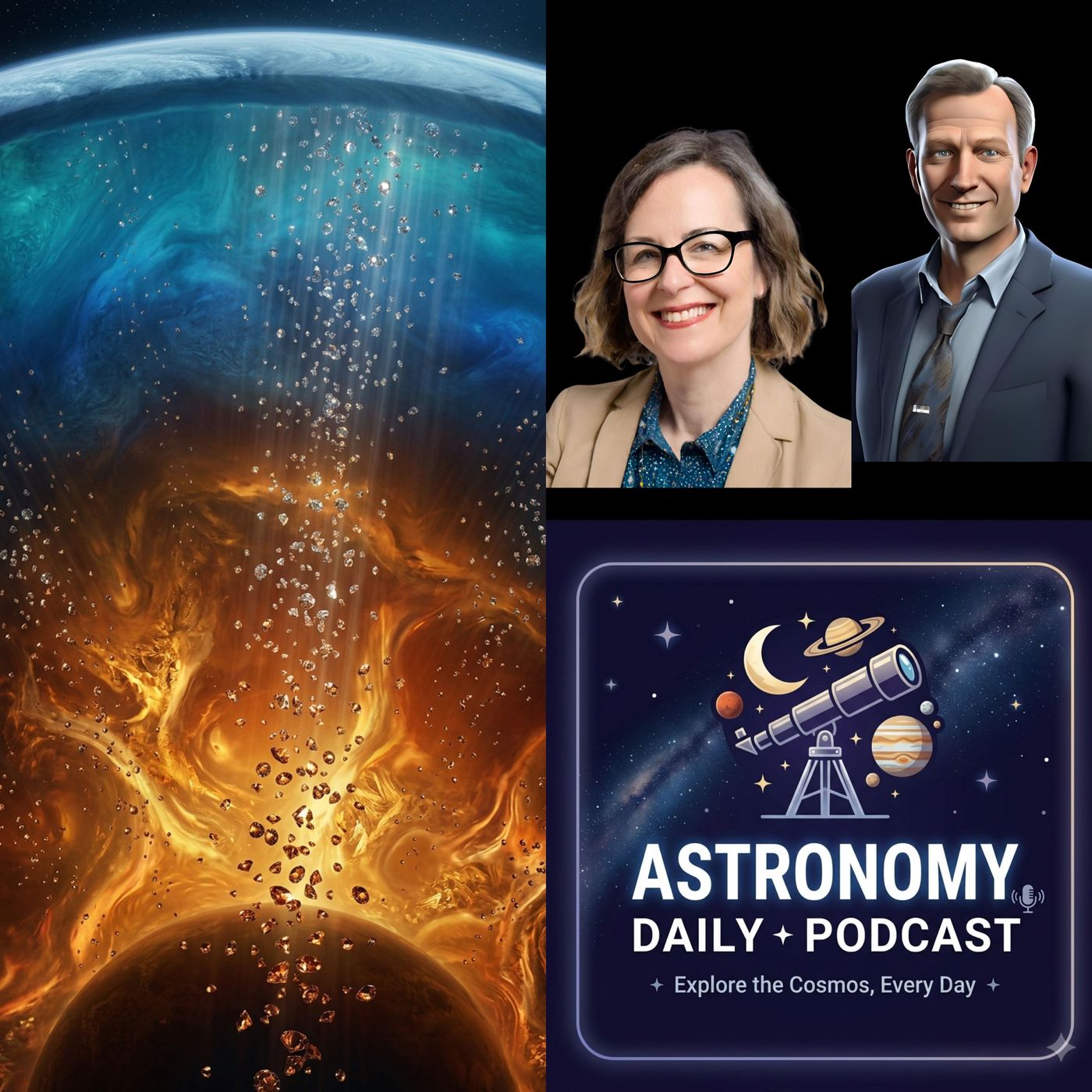
Diamond Rain, Decoded: Twenty Years of Disagreement, Solved
Today's episode — S05E178, Thursday August 27, 2026: Feature story: Physicists at Lawrence Livermore National Laboratory, led by Marius Millot, used the Omega Laser Facility at the University of Rochester to shock-compress diamond samples to about 1...
177
Aug. 26, 2026
Betelgeuse, Up Close: A Star's Boiling Skin, Revealed
Today's episode — S05E177, Wednesday August 26, 2026: Feature story: Astronomers using the ALMA array in Chile, led by Bill Dent (European Southern Observatory), have released the most detailed picture yet of the actual surface of Betelgeuse, the red...
176
Aug. 25, 2026
NASA's Roman Space Telescope Is Ready to Fly — Nine Months Early
Today's episode — S05E176, Tuesday August 25, 2026: Feature story: NASA's Roman Space Telescope is fully encapsulated inside its Falcon Heavy fairing and cleared to launch no earlier than 7:26 a.m. ET this Sunday, August 30 — about nine months ahead...