The Youngest Planet Ever Found
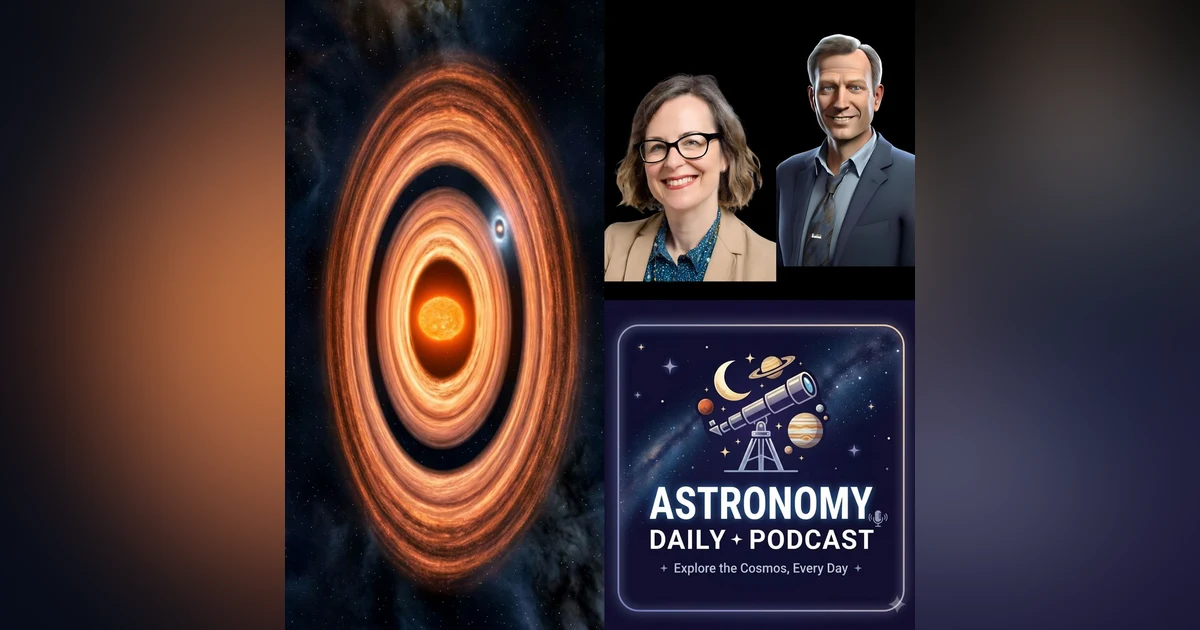
Astronomers have confirmed the youngest planet ever found - Elias 2-24 b, less than a million years old, sitting inside a gap it is carving in its own birth disc 450 light-years away. Plus: the Lunar Reconnaissance Orbiter finds a 222-metre crater that was not there in 2024, a 178-year-old space weather record gets corrected by seven years, and Sakurai's Object - a star that came back from the dead - has become six times hotter in thirty years.
SOURCES Newfound 'Baby' Planet Smashes Record for Youngest Known World NASA Science, 16 September 2026 - https://science.nasa.gov/universe/newfound-baby-planet-smashes-record-for-youngest-known-world/ Elias 2-24 b discovery paper Bernardi, Cieza et al., The Astrophysical Journal Letters, 16 September 2026, DOI 10.3847/2041-8213/ae9bb6 - https://doi.org/10.3847/2041-8213/ae9bb6 ALMA Observations of Elias 2-24: A Protoplanetary Disk with Multiple Gaps (background) Cieza et al., ApJL 851 L23, 2017, DOI 10.3847/2041-8213/aa9b7b - https://doi.org/10.3847/2041-8213/aa9b7b NASA's Moon Orbiter Spots New, 'Once-in-Century' Moon Crater NASA Science, 16 September 2026 - https://science.nasa.gov/solar-system/moon/nasas-moon-orbiter-spots-new-once-in-century-moon-crater/ New 222-metre lunar crater - mission release W. M. Keck / Intuitive Machines / NASA LROC, 16 September 2026; two papers in Science Advances (Robinson et al., morphology and ejecta; Powell et al., Diviner thermal signature) - https://www.prnewswire.com/news-releases/nasas-lunar-reconnaissance-orbiter-discovers-a-new-222-m-diameter-lunar-crater-302880555.html Mystery of one of the earliest recorded space weather impacts solved Lancaster University / RMIT University, 16 September 2026; Wild, Carter, Hapgood et al., Space Weather (AGU), DOI 10.1029/2026SW005239 - https://doi.org/10.1029/2026SW005239 'Born-again' star offers rare chance to watch stellar evolution in real time The University of Manchester, 16 September 2026; Zijlstra, van Hoof et al., 'The emergence of a [WC] star in Sakurai's object', MNRAS, DOI 10.1093/mnras/stag1533 - https://doi.org/10.1093/mnras/stag1533 Cargo Mission and Crew-13 Updates; Station Research, Maintenance Continue NASA Space Station Blog, 16 September 2026 - https://www.nasa.gov/blogs/spacestation/2026/09/16/cargo-mission-and-crew-13-updates-station-research-maintenance-continue/ International Observe the Moon Night 2026 NASA, Saturday 19 September 2026 - https://science.nasa.gov/moon/observe-the-moon-night/overview Skywatch ephemerides Computed in-session with PyEphem for Sydney, Los Angeles, New York and London, 17-18 September 2026
Become a supporter of this podcast: https://www.spreaker.com/podcast/astronomy-daily-latest-space-news--5648921/support.
Sponsor Details:
Ensure your online privacy by using NordVPN. To get our special listener deal and save a lot of money, visit www.astronomydaily.io/nordvpn. You'll be glad you did!
Get the best secure and private email on the planet. Stop your Government, google and who knows who else spying on every email you write. Do what we did and use ProtonMail. They beleive in privacy and there are no ads in their business model...yet they still provide a free forever service. Check them out and get out special deal at www.astronomydaily.io/protonmail
Become a supporter of Astronomy Daily by joining our Supporters Club. Commercial free episodes daily are only a click way... Click Here
This episode includes AI-generated content.
0
00:00:00.000 --> 00:00:02.680
Anna: Every planet you have ever heard of was
1
00:00:02.680 --> 00:00:05.600
already finished when we found it. Grown up,
2
00:00:06.160 --> 00:00:08.680
settled into its orbit. The
3
00:00:08.680 --> 00:00:11.520
disc of gas and dust it was built from
4
00:00:11.840 --> 00:00:12.640
long gone.
5
00:00:13.040 --> 00:00:15.920
Avery: Not this one. Astronomers have found a
6
00:00:15.920 --> 00:00:18.800
planet that is still being built, less than
7
00:00:18.800 --> 00:00:21.640
a million years old, sitting in the gap it is
8
00:00:21.640 --> 00:00:23.520
carving through its own birth cloud.
9
00:00:24.000 --> 00:00:26.880
Anna: Also today, a brand new crater on the
10
00:00:26.880 --> 00:00:29.880
Moon, a Victorian train delay that turns
11
00:00:29.880 --> 00:00:32.720
out to be a solar storm, and a dead star
12
00:00:32.720 --> 00:00:35.560
that has got six times hotter in 30 years.
13
00:00:36.040 --> 00:00:37.080
Avery: I'm Avery.
14
00:00:37.240 --> 00:00:39.280
Anna: And I'm Anna. This is Astronomy
15
00:00:39.280 --> 00:00:41.240
AstroDailyPod. Here is a number that should
16
00:00:41.240 --> 00:00:41.800
stop you.
17
00:00:42.200 --> 00:00:44.840
Every previously confirmed young planet,
18
00:00:45.160 --> 00:00:47.520
every single one held up as an example of a
19
00:00:47.520 --> 00:00:50.240
world caught in the act of forming, was at
20
00:00:50.240 --> 00:00:53.200
least 5 million years old. 5 million years
21
00:00:53.200 --> 00:00:55.940
sounds young. It is young. Our own
22
00:00:55.940 --> 00:00:57.700
solar system is about four and a half
23
00:00:57.700 --> 00:01:00.500
billion. But five million years is also long
24
00:01:00.500 --> 00:01:02.460
enough that the most interesting part is
25
00:01:02.460 --> 00:01:05.140
already over. The gas is mostly gone.
26
00:01:05.380 --> 00:01:07.820
The building is done. You are looking at the
27
00:01:07.820 --> 00:01:10.700
result, not the process. Yesterday in
28
00:01:10.700 --> 00:01:13.420
the Astrophysical Journal Letters, a team led
29
00:01:13.420 --> 00:01:15.420
from Chile published the confirmation of a
30
00:01:15.420 --> 00:01:18.180
planet that is less than 1 million years old,
31
00:01:18.660 --> 00:01:21.510
not 5, less than 1. It is
32
00:01:21.510 --> 00:01:24.510
called Elias 224B. And the most
33
00:01:24.510 --> 00:01:26.350
remarkable thing about it is that we are
34
00:01:26.350 --> 00:01:27.550
watching it being made.
35
00:01:27.870 --> 00:01:29.990
Avery: And this is one of those results where the
36
00:01:29.990 --> 00:01:32.470
storey of how we got there is as good as the
37
00:01:32.470 --> 00:01:35.350
result itself. Because the first hint of
38
00:01:35.350 --> 00:01:38.150
this planet is 9 years old, it
39
00:01:38.150 --> 00:01:38.430
is.
40
00:01:38.910 --> 00:01:41.790
Anna: Let me take you back to 2017. A team
41
00:01:41.790 --> 00:01:44.390
including Lucas Sieza, who is an author on
42
00:01:44.390 --> 00:01:47.050
today's paper as well, pointed Alma,
43
00:01:47.130 --> 00:01:50.010
the Big Millimetre array up on the Chagnantor
44
00:01:50.010 --> 00:01:52.730
Plateau in northern Chile at a young star in
45
00:01:52.730 --> 00:01:54.650
the Ophiuchus molecular cloud.
46
00:01:54.970 --> 00:01:57.610
Ophiuchus is one of the closest active star
47
00:01:57.610 --> 00:02:00.490
forming regions to us, about 450
48
00:02:00.490 --> 00:02:02.850
light years away. And from here in the
49
00:02:02.850 --> 00:02:05.490
southern hemisphere, it rides high across the
50
00:02:05.490 --> 00:02:08.010
winter sky. The star is catalogued as
51
00:02:08.010 --> 00:02:10.730
Elias224. It is a K
52
00:02:10.730 --> 00:02:13.260
type star, roughly the mass of the sun, but
53
00:02:13.260 --> 00:02:15.620
much cooler and much puffier because it has
54
00:02:15.620 --> 00:02:18.500
not finished contracting yet. What Alma saw
55
00:02:18.500 --> 00:02:20.780
was a disc of dust around that star with gaps
56
00:02:20.780 --> 00:02:23.380
in it. Dark rings, clean
57
00:02:23.380 --> 00:02:26.300
circular lanes swept through the dust. And
58
00:02:26.300 --> 00:02:28.260
the standard interpretation of a gap like
59
00:02:28.260 --> 00:02:30.780
that is simple and beautiful. Something
60
00:02:30.780 --> 00:02:33.300
massive is orbiting in there and its gravity
61
00:02:33.300 --> 00:02:36.060
is hurting the dust out of its path. The gap
62
00:02:36.060 --> 00:02:38.150
is the wake, a footprint
63
00:02:38.150 --> 00:02:39.190
Avery: rather than a foot.
64
00:02:39.590 --> 00:02:42.190
Anna: Exactly that. And footprints are frustrating
65
00:02:42.190 --> 00:02:44.230
because a gap can be made by other things.
66
00:02:44.710 --> 00:02:46.870
Ice lines, where a particular molecule
67
00:02:46.870 --> 00:02:48.990
freezes out and changes how the dust sticks
68
00:02:48.990 --> 00:02:51.510
together. Magnetic effects in the disc
69
00:02:51.670 --> 00:02:53.990
turbulence. For nine years,
70
00:02:53.990 --> 00:02:56.750
Elias224 has been a beautiful set of
71
00:02:56.750 --> 00:02:59.670
rings and an unproven assumption. What
72
00:02:59.670 --> 00:03:02.590
Andrea Bernardi at Universidad Diego Portales
73
00:03:02.590 --> 00:03:05.280
in Santiago did was go looking for the foot
74
00:03:05.600 --> 00:03:07.680
and the data had been sitting in an archive
75
00:03:07.680 --> 00:03:08.400
the whole time.
76
00:03:08.880 --> 00:03:10.240
Avery: This is the part I love.
77
00:03:10.400 --> 00:03:12.920
Anna: The W.M. keck Observatory on Mauna
78
00:03:12.920 --> 00:03:15.440
Kea observed this system in 2018
79
00:03:15.840 --> 00:03:18.600
and again in 2020 using a
80
00:03:18.600 --> 00:03:21.280
coronagraph on the NIRC 2
81
00:03:21.280 --> 00:03:24.120
infrared camera. A, uh, coronagraph is a
82
00:03:24.120 --> 00:03:26.320
mask that blocks the light of the star itself
83
00:03:26.800 --> 00:03:28.920
so you can see the much fainter things next
84
00:03:28.920 --> 00:03:31.670
to it. The same basic trick the Roman Space
85
00:03:31.670 --> 00:03:33.830
Telescope's coronagraph is being commissioned
86
00:03:33.830 --> 00:03:35.990
to do right now, which we talked about on
87
00:03:35.990 --> 00:03:38.870
Wednesday. Those Keck observations were
88
00:03:38.870 --> 00:03:41.510
taken, archived and not fully
89
00:03:41.510 --> 00:03:44.230
mined. Bernardi's team went back into them,
90
00:03:44.470 --> 00:03:46.990
reprocessed them and found a point of
91
00:03:46.990 --> 00:03:48.910
infrared light sitting inside one of the
92
00:03:48.910 --> 00:03:51.830
gaps. And here is Bernardi's line, which
93
00:03:51.830 --> 00:03:54.550
is the whole paper in one. The
94
00:03:54.550 --> 00:03:56.840
planets should be found within the gaps since
95
00:03:56.840 --> 00:03:57.880
they are carving them.
96
00:03:58.120 --> 00:03:59.520
And that's exactly where we found
97
00:03:59.520 --> 00:04:02.280
Elias224B, end quote.
98
00:04:02.840 --> 00:04:05.320
Avery: So the prediction and the detection line up.
99
00:04:05.720 --> 00:04:08.520
Anna: They line up and then the confirmation
100
00:04:08.520 --> 00:04:11.440
needed a third instrument. ESO's Very
101
00:04:11.440 --> 00:04:14.440
Large Telescope at Paranal in the Atacama
102
00:04:14.680 --> 00:04:16.840
had also caught a faint point of light in
103
00:04:16.840 --> 00:04:18.840
that gap. Put the three together.
104
00:04:19.320 --> 00:04:21.720
ALMA showing you the gap in millimetre dust.
105
00:04:21.800 --> 00:04:24.250
The the VLT and KECK both showing you an
106
00:04:24.250 --> 00:04:26.930
infrared source sitting in it at two separate
107
00:04:26.930 --> 00:04:29.570
epochs, two years apart. So you can cheque it
108
00:04:29.570 --> 00:04:31.530
is moving with the star rather than being a
109
00:04:31.530 --> 00:04:34.130
background object and you have a planet.
110
00:04:34.530 --> 00:04:36.530
Avery: Bernardi made a point of that in the release.
111
00:04:37.010 --> 00:04:39.330
Something like we usually hear about
112
00:04:39.330 --> 00:04:41.730
telescopes working separately. But this
113
00:04:41.730 --> 00:04:44.050
confirmation was only possible by using
114
00:04:44.050 --> 00:04:46.970
multiple telescopes together, which is worth
115
00:04:46.970 --> 00:04:49.490
sitting with for a second because it is also
116
00:04:49.490 --> 00:04:52.490
a storey about hemispheres. ALMA and
117
00:04:52.490 --> 00:04:55.490
the VLT are both in Chile. Keck is
118
00:04:55.490 --> 00:04:58.290
in Hawaii. Ophiuchus sits at about
119
00:04:58.290 --> 00:05:00.930
24 degrees south, so it is a target
120
00:05:01.010 --> 00:05:03.810
both hemispheres can reach. And it took all
121
00:05:03.810 --> 00:05:06.330
three facilities on both sides of the equator
122
00:05:06.330 --> 00:05:09.330
to nail this down. The southern telescopes
123
00:05:09.330 --> 00:05:11.930
found the gap and the northern telescope had
124
00:05:11.930 --> 00:05:14.890
the planet sitting in its archive. Now
125
00:05:14.890 --> 00:05:17.050
the physics and this is where it gets
126
00:05:17.050 --> 00:05:19.210
genuinely awkward for the textbooks.
127
00:05:19.610 --> 00:05:22.570
Elias224B is roughly the
128
00:05:22.570 --> 00:05:25.210
mass of Jupiter and it is orbiting about
129
00:05:25.210 --> 00:05:28.130
55 times further from its star than Earth
130
00:05:28.130 --> 00:05:30.570
is from the Sun. 55
131
00:05:30.570 --> 00:05:33.210
astronomical units for scale.
132
00:05:33.370 --> 00:05:36.250
Neptune is at 30, Pluto averages
133
00:05:36.250 --> 00:05:39.170
about 39. So this is a Jupiter
134
00:05:39.170 --> 00:05:41.970
mass planet out past where our own Kuiper
135
00:05:41.970 --> 00:05:44.680
Belt starts. And it got there in under a
136
00:05:44.680 --> 00:05:47.640
million years. And the standard way we build
137
00:05:47.640 --> 00:05:50.560
giant planets does not go that fast, that
138
00:05:50.560 --> 00:05:51.120
far out.
139
00:05:51.200 --> 00:05:54.080
Anna: It does not core accretion.
140
00:05:54.400 --> 00:05:57.360
The mainstream model says you assemble
141
00:05:57.360 --> 00:05:59.720
a solid core first by sticking pebbles
142
00:05:59.720 --> 00:06:02.320
together. And once that core is heavy enough,
143
00:06:02.320 --> 00:06:05.200
it starts pulling gas down onto itself and
144
00:06:05.200 --> 00:06:08.080
runs away into a gas giant. The trouble is
145
00:06:08.080 --> 00:06:10.530
that the further out you go, the thinner the
146
00:06:10.530 --> 00:06:12.970
disc is and the slower everything orbits.
147
00:06:13.370 --> 00:06:15.170
So there is less material and fewer
148
00:06:15.170 --> 00:06:18.010
collisions per orbit. Building a Jupiter at
149
00:06:18.010 --> 00:06:20.730
55 au by core accretion is slow.
150
00:06:21.290 --> 00:06:23.530
Estimates run to many millions of years.
151
00:06:24.010 --> 00:06:26.050
This planet did not have many millions of
152
00:06:26.050 --> 00:06:28.330
years. It had at the outside one.
153
00:06:28.890 --> 00:06:30.650
Lucas Sieza put it plainly,
154
00:06:31.610 --> 00:06:33.970
our planet formation models already struggled
155
00:06:33.970 --> 00:06:35.770
to explain the previous record holders.
156
00:06:36.390 --> 00:06:39.230
Elias224B shows us that even our best
157
00:06:39.230 --> 00:06:40.870
models are still missing some important
158
00:06:40.950 --> 00:06:43.030
processes. End quote.
159
00:06:43.510 --> 00:06:46.310
Avery: There is an alternative, isn't there? The
160
00:06:46.310 --> 00:06:48.230
disc fragmenting directly.
161
00:06:48.630 --> 00:06:51.190
Anna: There is gravitational instability.
162
00:06:51.590 --> 00:06:53.550
Instead of building a planet from the bottom
163
00:06:53.550 --> 00:06:55.990
up, you let a patch of the disc become dense
164
00:06:55.990 --> 00:06:57.910
enough that it collapses under its own
165
00:06:57.910 --> 00:07:00.830
gravity all at once and makes a giant
166
00:07:00.830 --> 00:07:02.860
planet more or less the way a star forms.
167
00:07:03.410 --> 00:07:05.930
That is fast, and it works better at large
168
00:07:05.930 --> 00:07:08.090
distances where discs are cooler and more
169
00:07:08.090 --> 00:07:10.690
prone to collapse. A planet like this one,
170
00:07:10.930 --> 00:07:13.930
this young, this far out, is exactly
171
00:07:13.930 --> 00:07:15.970
the sort of object people point to when they
172
00:07:15.970 --> 00:07:18.930
argue that gravitational instability has to
173
00:07:18.930 --> 00:07:20.900
be part of the picture rather than a, uh,
174
00:07:20.970 --> 00:07:23.650
curiosity. But I want to be careful here.
175
00:07:23.810 --> 00:07:26.090
And this is the caveat that does not come out
176
00:07:26.090 --> 00:07:29.020
of the script. Go on directly
177
00:07:29.020 --> 00:07:30.780
Imaged protoplanets have a history.
178
00:07:31.420 --> 00:07:34.220
Candidates around the stars Lkca 15
179
00:07:34.300 --> 00:07:37.180
and AB Orige were both announced as
180
00:07:37.180 --> 00:07:39.300
planets in the making, and both ended up
181
00:07:39.300 --> 00:07:41.860
disputed. In some cases, what looked like a
182
00:07:41.860 --> 00:07:43.860
planet turned out to be a bright knot of disc
183
00:07:43.860 --> 00:07:46.340
material or an artefact of how the starlight
184
00:07:46.340 --> 00:07:49.100
was subtracted. The system PDS 70
185
00:07:49.100 --> 00:07:51.780
is the one everybody agrees on, and that took
186
00:07:51.780 --> 00:07:54.230
years of independent confirmation. So
187
00:07:54.230 --> 00:07:56.990
Elias 224B is a strong detection
188
00:07:56.990 --> 00:07:59.550
with three telescopes behind it. And it is
189
00:07:59.550 --> 00:08:01.590
also a detection that will get tested hard
190
00:08:01.590 --> 00:08:04.070
over the next few years, as it should be.
191
00:08:04.390 --> 00:08:06.710
And the mass number deserves the same care.
192
00:08:07.270 --> 00:08:09.550
At an age under a million years, you cannot
193
00:08:09.550 --> 00:08:11.790
weigh a planet directly. You measure how
194
00:08:11.790 --> 00:08:14.070
bright it is in the infrared, and you convert
195
00:08:14.070 --> 00:08:15.910
that to, uh, a mass using models of how a
196
00:08:15.910 --> 00:08:18.670
young giant planet cools. Those models
197
00:08:18.670 --> 00:08:20.670
disagree with each other most severely at
198
00:08:20.670 --> 00:08:23.220
exactly this age, because they depend on how
199
00:08:23.220 --> 00:08:25.020
much heat the planet held onto from its
200
00:08:25.020 --> 00:08:27.220
formation. And some of the light you are
201
00:08:27.220 --> 00:08:29.060
seeing may not be the planet's surface at
202
00:08:29.060 --> 00:08:31.860
all, but gas falling onto it and glowing as
203
00:08:31.860 --> 00:08:34.460
it lands. So when we say Jupiter mass,
204
00:08:34.620 --> 00:08:37.380
read that as Jupiter ish, with real room on
205
00:08:37.380 --> 00:08:40.300
either side. An earlier kinematic estimate
206
00:08:40.300 --> 00:08:42.740
for whatever is carving that gap put it as
207
00:08:42.740 --> 00:08:44.540
high as five Jupiter masses.
208
00:08:45.020 --> 00:08:46.940
Avery: None of which changes the headline.
209
00:08:47.260 --> 00:08:49.810
Anna: None of which changes the headline. Something
210
00:08:49.810 --> 00:08:52.570
with the mass of a giant planet is
211
00:08:52.570 --> 00:08:55.330
sitting in that gap and the star it
212
00:08:55.330 --> 00:08:57.970
orbits is younger than our species.
213
00:08:58.690 --> 00:09:00.850
We have around 6,000 confirmed
214
00:09:00.850 --> 00:09:03.690
exoplanets now and almost every one of them
215
00:09:03.690 --> 00:09:04.850
is a finished product.
216
00:09:05.650 --> 00:09:08.290
This is a building site with the scaffolding
217
00:09:08.290 --> 00:09:11.250
still up and it is going to be observed
218
00:09:11.250 --> 00:09:14.170
to death, which is the correct fate for a
219
00:09:14.170 --> 00:09:15.170
result like this one.
220
00:09:16.150 --> 00:09:18.990
Avery: Moving on to storey two, sometime between
221
00:09:18.990 --> 00:09:21.990
11 April and 22 May
222
00:09:22.150 --> 00:09:24.910
2024, something the size of a three
223
00:09:24.910 --> 00:09:27.110
to six storey building hit the moon.
224
00:09:27.510 --> 00:09:30.190
Nobody saw it happen. We found the hole
225
00:09:30.190 --> 00:09:33.150
18 months later and the papers describing it
226
00:09:33.150 --> 00:09:35.590
were published yesterday in Science Advances.
227
00:09:36.230 --> 00:09:37.190
Anna: How big a hole?
228
00:09:37.910 --> 00:09:40.750
Avery: 222 metres across and
229
00:09:40.750 --> 00:09:43.750
about 43 metres deep. That is roughly
230
00:09:43.750 --> 00:09:46.310
two football pitches wide and a 14
231
00:09:46.390 --> 00:09:49.190
storey building deep. And here is the part
232
00:09:49.190 --> 00:09:52.110
that makes it news rather than trivia. It
233
00:09:52.110 --> 00:09:54.430
is about three times wider than the largest
234
00:09:54.430 --> 00:09:57.430
new crater found in the entire 17 years the
235
00:09:57.430 --> 00:09:59.390
lunar Reconnaissance Orbiter has been
236
00:09:59.390 --> 00:10:02.070
watching. The team put an impact this size
237
00:10:02.150 --> 00:10:04.590
at something like one in a hundred and thirty
238
00:10:04.590 --> 00:10:07.510
years. It is on the near side at about
239
00:10:07.510 --> 00:10:10.170
1.4 degrees north, 67
240
00:10:10.170 --> 00:10:12.730
degrees east, out on the outer ring of the
241
00:10:12.730 --> 00:10:15.570
crisium basin, roughly 20 kilometres
242
00:10:15.570 --> 00:10:18.410
east of Mare Speumens, right on the boundary
243
00:10:18.410 --> 00:10:21.010
where the bright highlands meet the dark Mare
244
00:10:21.010 --> 00:10:23.850
plains. It is being referred to informally
245
00:10:23.850 --> 00:10:26.370
by the name of its neighbourhood, Magecheon,
246
00:10:26.530 --> 00:10:29.370
after Thomas Magn, who once directed the
247
00:10:29.370 --> 00:10:31.330
Lunar and Planetary Institute.
248
00:10:31.890 --> 00:10:34.370
Formal naming is the IAU's business
249
00:10:34.610 --> 00:10:36.290
and that is a separate process.
250
00:10:37.380 --> 00:10:39.500
Anna: And nobody was looking at that patch of the
251
00:10:39.500 --> 00:10:40.260
moon at the time.
252
00:10:40.820 --> 00:10:41.780
Avery: Nobody was.
253
00:10:42.180 --> 00:10:44.980
It was found by Robert Wagner, an image
254
00:10:44.980 --> 00:10:47.380
processing specialist at Intuitive Machines,
255
00:10:47.700 --> 00:10:50.100
working with the orbiter's camera team. In
256
00:10:50.100 --> 00:10:52.979
October last year, doing routine data
257
00:10:52.979 --> 00:10:55.940
quality cheques, he was running software that
258
00:10:55.940 --> 00:10:58.420
compares before and after maps of the whole
259
00:10:58.420 --> 00:11:00.580
moon and flags. What has changed?
260
00:11:01.140 --> 00:11:03.500
His description of the moment is my favourite
261
00:11:03.500 --> 00:11:06.410
thing. In the release I just
262
00:11:06.410 --> 00:11:08.890
stopped, dropped everything and started
263
00:11:08.890 --> 00:11:10.730
looking into what that spot was.
264
00:11:12.170 --> 00:11:14.690
What stood out was a bright splash of fresh
265
00:11:14.690 --> 00:11:17.530
ejecta. And the ejecta is the science.
266
00:11:17.930 --> 00:11:20.410
The continuous blanket of thrown out rock
267
00:11:20.569 --> 00:11:23.490
reaches a median of about 258
268
00:11:23.490 --> 00:11:26.250
metres from the centre. Bright disturbance
269
00:11:26.250 --> 00:11:28.250
shows up 15 kilometres out.
270
00:11:28.730 --> 00:11:31.570
Fainter, darker disturbance runs beyond a
271
00:11:31.570 --> 00:11:34.080
hundred kilometres. The biggest boulder they
272
00:11:34.080 --> 00:11:36.920
measured is 13 metres by 9 by 3
273
00:11:37.400 --> 00:11:40.040
from a hole 200 metres wide. The
274
00:11:40.040 --> 00:11:42.840
surface is measurably rearranged over an area
275
00:11:42.840 --> 00:11:44.360
the size of a small country,
276
00:11:44.920 --> 00:11:46.840
Anna: which is a lot of energy, about
277
00:11:46.840 --> 00:11:49.760
Avery: 65 trillion joules on assumptions of a
278
00:11:49.760 --> 00:11:52.760
rocky impactor at 15 kilometres a second.
279
00:11:53.160 --> 00:11:55.560
And the second paper is the one I would not
280
00:11:55.560 --> 00:11:56.520
have predicted.
281
00:11:56.840 --> 00:11:59.480
A team led by Powell went to Diviner,
282
00:11:59.750 --> 00:12:02.190
the orbiter's thermal instrument and found a
283
00:12:02.190 --> 00:12:04.630
cold spot about seven kilometres across,
284
00:12:04.630 --> 00:12:07.510
centred on the crater eight or nine Kelvin,
285
00:12:07.510 --> 00:12:10.030
cooler than its surroundings. That is the
286
00:12:10.030 --> 00:12:12.790
signature of fluffed up soil. The impact
287
00:12:12.950 --> 00:12:15.749
did not just dig a hole, it loosened the top
288
00:12:15.749 --> 00:12:18.390
layer of regolith across seven kilometres.
289
00:12:18.470 --> 00:12:21.030
And loose soil holds heat differently from
290
00:12:21.030 --> 00:12:23.510
packed soil. Mark Robinson, the
291
00:12:23.510 --> 00:12:26.030
camera's chief scientist, framed it as
292
00:12:26.030 --> 00:12:28.750
gardening impacts, as the process that
293
00:12:28.750 --> 00:12:31.590
turns the lunar soil over, churning buried
294
00:12:31.590 --> 00:12:34.550
material up and fresh material down. And
295
00:12:34.550 --> 00:12:36.830
he drew the conclusion people always want
296
00:12:36.830 --> 00:12:39.510
drawn on that turnover rate. The
297
00:12:39.510 --> 00:12:41.750
Apollo footprints will, in his words,
298
00:12:41.910 --> 00:12:44.550
definitely be long gone in about
299
00:12:44.550 --> 00:12:45.270
80,000
300
00:12:45.350 --> 00:12:48.270
Anna: years, which is not soon. But it
301
00:12:48.270 --> 00:12:49.510
is not forever either.
302
00:12:49.910 --> 00:12:51.510
Avery: That is the thing to take away.
303
00:12:52.070 --> 00:12:54.870
We talk about the moon as the dead unchanging
304
00:12:54.870 --> 00:12:57.760
one, the place where nothing happens. It
305
00:12:57.760 --> 00:13:00.760
is not unchanging. It is changing slowly
306
00:13:00.760 --> 00:13:03.320
and it changed in a big way two years ago.
307
00:13:03.560 --> 00:13:06.000
And the only reason we know is that there is
308
00:13:06.000 --> 00:13:08.400
a spacecraft up there photographing the same
309
00:13:08.400 --> 00:13:11.200
ground over and over. Take the watcher
310
00:13:11.200 --> 00:13:13.130
away and this simply would not be a, ah,
311
00:13:13.200 --> 00:13:13.800
known event.
312
00:13:14.360 --> 00:13:17.320
Anna: Okay, now on to our next storey. This one
313
00:13:17.320 --> 00:13:19.720
is a detective storey and it has an
314
00:13:19.720 --> 00:13:22.210
Australian fingerprint on it for
315
00:13:22.210 --> 00:13:25.130
178 years. The textbook answer
316
00:13:25.130 --> 00:13:27.930
to when did space weather first disrupt
317
00:13:27.930 --> 00:13:30.834
human Technology has been 18
318
00:13:31.026 --> 00:13:33.490
October 1841 in
319
00:13:33.490 --> 00:13:36.330
Devon, in the southwest of England. A
320
00:13:36.330 --> 00:13:38.690
train leaving Exeter at 5 past 10 at night
321
00:13:38.690 --> 00:13:41.370
was held for 16 minutes because the
322
00:13:41.370 --> 00:13:43.570
railway telegraph between Exeter and the
323
00:13:43.570 --> 00:13:45.890
village of Starcross had stopped working
324
00:13:46.290 --> 00:13:48.770
and the signalman could not confirm the line
325
00:13:48.770 --> 00:13:49.570
ahead was clear.
326
00:13:50.360 --> 00:13:51.320
Avery: Sixteen minutes.
327
00:13:51.640 --> 00:13:53.160
Hardly a catastrophe.
328
00:13:53.400 --> 00:13:56.360
Anna: Hardly a catastrophe. And that is precisely
329
00:13:56.360 --> 00:13:59.240
why it is famous. It is the first time we can
330
00:13:59.240 --> 00:14:01.360
point at a piece of critical infrastructure
331
00:14:01.360 --> 00:14:04.320
and say the sun did that. Trains
332
00:14:04.320 --> 00:14:06.640
stopped because of something happening 93
333
00:14:06.640 --> 00:14:09.320
million miles away and the people involved
334
00:14:09.320 --> 00:14:12.040
had no idea. It is quoted in review
335
00:14:12.040 --> 00:14:14.360
papers, in government resilience reports,
336
00:14:14.760 --> 00:14:17.670
in lectures. 1841 is the
337
00:14:17.670 --> 00:14:20.510
date everyone uses yesterday in the
338
00:14:20.510 --> 00:14:23.470
Journal Space Weather. A team led by Jim Wild
339
00:14:23.470 --> 00:14:26.310
at Lancaster University, with Brett Carter at
340
00:14:26.310 --> 00:14:28.910
RMIT in Melbourne, Mike Hapgood at
341
00:14:28.910 --> 00:14:31.470
RAL Space and colleagues at the British
342
00:14:31.470 --> 00:14:34.230
Geological Survey, Natural Resources Canada
343
00:14:34.230 --> 00:14:37.230
and Baylor published the correction. It
344
00:14:37.230 --> 00:14:40.150
did not happen in 1841. It happened on
345
00:14:40.150 --> 00:14:41.685
the 18th of October
346
00:14:41.875 --> 00:14:44.250
Avery: 1848, seven years out.
347
00:14:44.650 --> 00:14:47.130
How does a date like that survive a century
348
00:14:47.130 --> 00:14:47.850
and a half?
349
00:14:48.010 --> 00:14:50.850
Anna: Because nobody went back to the source. The
350
00:14:50.850 --> 00:14:53.490
original account is an anonymous article in
351
00:14:53.490 --> 00:14:56.376
the journal nature, published in 1871,
352
00:14:56.564 --> 00:14:59.490
30 years after the fact. And the
353
00:14:59.490 --> 00:15:01.850
giveaway, once you look, is almost
354
00:15:01.850 --> 00:15:04.850
embarrassing. The railway line between Exeter
355
00:15:04.850 --> 00:15:07.610
and Star Cross did not open until 1846.
356
00:15:08.200 --> 00:15:09.800
The event could not have happened on the line
357
00:15:09.800 --> 00:15:12.800
in 1841, because in 1841 there was
358
00:15:12.800 --> 00:15:13.400
no line.
359
00:15:14.280 --> 00:15:15.800
Avery: So it is a typo.
360
00:15:16.200 --> 00:15:18.920
Anna: It looks like a typo. 1848
361
00:15:18.920 --> 00:15:21.000
misprinted as 1841,
362
00:15:21.480 --> 00:15:23.680
probably by the anonymous author, who the
363
00:15:23.680 --> 00:15:25.920
team think was most likely Nathaniel John
364
00:15:25.920 --> 00:15:28.520
Holmes, a telegraph engineer of the period.
365
00:15:29.160 --> 00:15:31.720
But proving that took real archival work
366
00:15:32.040 --> 00:15:34.330
and this is the part I enjoyed. They went
367
00:15:34.330 --> 00:15:36.810
through old railway timetables to find when a
368
00:15:36.810 --> 00:15:39.130
five past ten evening service from Exeter
369
00:15:39.130 --> 00:15:41.930
actually existed, which narrowed it to a four
370
00:15:41.930 --> 00:15:44.370
month window. They pulled the magnetic
371
00:15:44.370 --> 00:15:46.930
observatory records from Greenwich. They read
372
00:15:46.930 --> 00:15:49.130
the sunspot drawings. They went through
373
00:15:49.130 --> 00:15:51.494
newspaper archives and 18
374
00:15:51.646 --> 00:15:53.770
October 1848 lights up
375
00:15:54.090 --> 00:15:56.370
Greenwich recorded powerful magnetic
376
00:15:56.370 --> 00:15:58.610
disturbance from about 20 past 9 in the
377
00:15:58.610 --> 00:16:01.220
evening Universal Time. There were
378
00:16:01.220 --> 00:16:03.220
aurora sightings right across the United
379
00:16:03.220 --> 00:16:05.780
Kingdom. And there was a large sunspot group
380
00:16:05.780 --> 00:16:08.460
on the disc recorded from Durham. The
381
00:16:08.460 --> 00:16:10.900
timetable, the magnetometer, the aurora
382
00:16:10.900 --> 00:16:13.620
reports and the sunspot all agree on one
383
00:16:13.620 --> 00:16:13.940
night.
384
00:16:14.420 --> 00:16:17.300
Avery: Mike Hapgood had a line about that he
385
00:16:17.300 --> 00:16:18.500
did quote.
386
00:16:18.980 --> 00:16:21.300
Anna: Our research has a hint of a Detective Storey
387
00:16:21.780 --> 00:16:24.060
piecing together a wide range of archived
388
00:16:24.060 --> 00:16:26.140
records to better understand a historically
389
00:16:26.140 --> 00:16:27.620
severe space weather event.
390
00:16:28.220 --> 00:16:30.780
End quote. And there is a reason this matters
391
00:16:30.780 --> 00:16:32.620
beyond tidying up. A footnote.
392
00:16:33.020 --> 00:16:35.980
1848 is 11 years before the Carrington
393
00:16:35.980 --> 00:16:38.780
event of 1859, which is the storm
394
00:16:38.780 --> 00:16:41.500
everyone uses as the worst case. Redating
395
00:16:41.500 --> 00:16:44.099
this one does not just move a date, it puts a
396
00:16:44.099 --> 00:16:46.620
severe infrastructure affecting storm into
397
00:16:46.620 --> 00:16:48.540
the record in a decade where we thought we
398
00:16:48.540 --> 00:16:51.260
had one. How often the really big storms
399
00:16:51.260 --> 00:16:53.620
happen is a question we answer by counting
400
00:16:53.620 --> 00:16:55.990
them in the historical record. And the
401
00:16:55.990 --> 00:16:57.910
historical record is only as good as the
402
00:16:57.910 --> 00:16:59.670
record keeping, which is
403
00:16:59.670 --> 00:17:01.830
Avery: the same trap we keep running into with
404
00:17:01.830 --> 00:17:02.670
catalogues.
405
00:17:03.230 --> 00:17:05.790
Anna: It is exactly the same trap moved from
406
00:17:05.790 --> 00:17:08.790
telescopes to archives and it sits squarely
407
00:17:08.790 --> 00:17:10.830
in a thread we have been pulling all month.
408
00:17:11.230 --> 00:17:13.430
The superflare potential work back On
409
00:17:13.430 --> 00:17:16.310
Saturday the 12th, the cosmic radiation at
410
00:17:16.310 --> 00:17:17.430
aviation altitudes.
411
00:17:17.430 --> 00:17:19.950
On Monday the 14th, same dial.
412
00:17:20.510 --> 00:17:22.630
Jim Wilde's closing thought is the one to
413
00:17:22.630 --> 00:17:25.490
keep Space weather is not a
414
00:17:25.490 --> 00:17:27.490
new threat, but a long standing natural
415
00:17:27.490 --> 00:17:30.170
hazard. Society has been experiencing the
416
00:17:30.170 --> 00:17:32.570
effects of space weather on technology for
417
00:17:32.570 --> 00:17:34.690
almost as long as electrical technologies
418
00:17:34.690 --> 00:17:37.650
have existed. End quote. The Victorians
419
00:17:37.650 --> 00:17:39.970
were not protected from the sun. They just
420
00:17:39.970 --> 00:17:40.850
had less to lose.
421
00:17:41.010 --> 00:17:43.650
Avery: In February 1996, a
422
00:17:43.650 --> 00:17:46.330
Japanese amateur astronomer named Yukio
423
00:17:46.330 --> 00:17:48.530
Sakurai found a new star in
424
00:17:48.530 --> 00:17:51.120
Sagittarius. It was announced through the
425
00:17:51.120 --> 00:17:53.800
usual channel, an IAU circular
426
00:17:53.880 --> 00:17:56.800
on 23 February. At first
427
00:17:56.800 --> 00:17:58.760
everyone assumed it was a nova.
428
00:17:59.160 --> 00:17:59.960
Anna: It wasn't.
429
00:18:00.680 --> 00:18:03.320
Avery: No, it certainly wasn't. What
430
00:18:03.320 --> 00:18:05.600
Sakurai had found was one of the rarest
431
00:18:05.600 --> 00:18:08.520
events in stellar astrophysics. A
432
00:18:08.520 --> 00:18:10.960
star that had already died coming back to
433
00:18:10.960 --> 00:18:13.080
life. It is catalogued as
434
00:18:13.080 --> 00:18:14.920
V4334
435
00:18:14.920 --> 00:18:17.480
Sagittarius and everybody calls it
436
00:18:17.480 --> 00:18:20.440
Sakurai's object. Yesterday, a
437
00:18:20.440 --> 00:18:23.280
team led by Albert Zylstra at the Jodrell
438
00:18:23.280 --> 00:18:25.680
Bank Centre for Astrophysics in Manchester,
439
00:18:25.840 --> 00:18:28.800
with Peter Van Hoof at the Royal Observatory
440
00:18:28.800 --> 00:18:31.400
of Belgium and colleagues at the Valongo
441
00:18:31.400 --> 00:18:34.200
Observatory in Rio de Janeiro published
442
00:18:34.200 --> 00:18:36.920
new measurements of it in monthly notices of
443
00:18:36.920 --> 00:18:39.880
the Royal Astronomical Society. And the
444
00:18:39.880 --> 00:18:42.760
number is. In 30 years, the
445
00:18:42.830 --> 00:18:45.470
the star has become about six times hotter.
446
00:18:45.790 --> 00:18:48.510
Its surface was sun like when Sakurai found
447
00:18:48.510 --> 00:18:50.510
it. It is now somewhere between
448
00:18:50.750 --> 00:18:53.390
27,000 and 36,000
449
00:18:53.470 --> 00:18:56.270
kelvin. That is among the fastest heating
450
00:18:56.270 --> 00:18:58.430
rates ever measured on any star.
451
00:18:59.150 --> 00:19:01.150
Anna: Take us through what actually happened to it.
452
00:19:01.790 --> 00:19:04.630
Avery: So this star had finished. It had been a sun
453
00:19:04.630 --> 00:19:07.150
like star. It had run through its fuel,
454
00:19:07.310 --> 00:19:09.750
blown off its outer layers and and settled
455
00:19:09.750 --> 00:19:12.710
down to be a white dwarf, an inert cooling
456
00:19:12.710 --> 00:19:15.310
cinder that is meant to be the end.
457
00:19:15.630 --> 00:19:17.950
But there was still a thin layer of helium
458
00:19:17.950 --> 00:19:20.670
sitting on top of the carbon and oxygen core.
459
00:19:20.750 --> 00:19:23.590
And that layer reignited one
460
00:19:23.590 --> 00:19:26.550
last shell flash after the star had already
461
00:19:26.550 --> 00:19:29.270
become a white dwarf. The technical
462
00:19:29.270 --> 00:19:32.270
term is a very late thermal pulse and
463
00:19:32.270 --> 00:19:34.790
the effect is dramatic. The star
464
00:19:34.790 --> 00:19:37.750
puffs back up into a giant in years rather
465
00:19:37.750 --> 00:19:40.690
than millennia. It ends up hydrogen poor
466
00:19:40.690 --> 00:19:43.650
and enriched in helium and carbon because
467
00:19:43.650 --> 00:19:46.370
the flash has dragged process material up
468
00:19:46.370 --> 00:19:49.370
from deep inside. Astronomers call these
469
00:19:49.370 --> 00:19:52.330
born again stars and we know of only
470
00:19:52.330 --> 00:19:53.130
a handful.
471
00:19:53.690 --> 00:19:54.809
Anna: And then it vanished.
472
00:19:54.809 --> 00:19:57.730
Avery: Didn't, did. And that is the
473
00:19:57.730 --> 00:20:00.450
frustrating part of the storey. By late
474
00:20:00.450 --> 00:20:03.370
1998 the Star had manufactured
475
00:20:03.370 --> 00:20:05.560
so much carbon dust that that it wrapped
476
00:20:05.560 --> 00:20:07.880
itself in an opaque shell and by
477
00:20:07.880 --> 00:20:10.640
1999 it had disappeared from
478
00:20:10.640 --> 00:20:12.560
optical telescopes entirely.
479
00:20:13.200 --> 00:20:15.640
Imagine watching the one event you have been
480
00:20:15.640 --> 00:20:18.440
waiting a career for and the object pulls a
481
00:20:18.440 --> 00:20:21.240
curtain across itself. What this team has
482
00:20:21.240 --> 00:20:23.720
done is get back in. They used
483
00:20:23.720 --> 00:20:26.720
ESO's Very Large Telescope in Chile for
484
00:20:26.720 --> 00:20:29.600
spectroscopy. They used ALMA, and
485
00:20:29.600 --> 00:20:32.120
they compared what they saw against models
486
00:20:32.120 --> 00:20:35.020
built for Wolf Rayet stars, the hot
487
00:20:35.100 --> 00:20:37.900
stripped, fiercely windy stars that show
488
00:20:37.900 --> 00:20:40.300
strong carbon and helium signatures.
489
00:20:40.620 --> 00:20:43.460
And that is what Sakurai's object now looks
490
00:20:43.460 --> 00:20:46.180
like. The paper's title says the
491
00:20:46.180 --> 00:20:48.380
emergence of a WC star in
492
00:20:48.380 --> 00:20:51.380
Sakurai's object. Astronomers write it
493
00:20:51.380 --> 00:20:53.980
in square brackets, which is the notation for
494
00:20:53.980 --> 00:20:56.940
the low mass version. It has the spectrum of
495
00:20:56.940 --> 00:20:59.740
a Wolf Rayet star without being a massive
496
00:20:59.740 --> 00:21:00.700
star at all.
497
00:21:01.590 --> 00:21:02.710
Anna: So the curtain is thinning.
498
00:21:02.870 --> 00:21:05.310
Avery: You could say that. And the star underneath
499
00:21:05.310 --> 00:21:07.590
is a different star from the one that went
500
00:21:07.590 --> 00:21:08.310
behind it.
501
00:21:08.630 --> 00:21:11.270
And the headline result is a disagreement
502
00:21:11.270 --> 00:21:13.670
with theory, which is the useful kind of
503
00:21:13.670 --> 00:21:16.470
result. Zelstra's team find it is
504
00:21:16.470 --> 00:21:18.750
reheating more gradually than some of the
505
00:21:18.750 --> 00:21:21.670
newer models predicted. That is a direct
506
00:21:21.750 --> 00:21:24.710
constraint on how convection and mixing work
507
00:21:24.790 --> 00:21:27.660
inside a star during a shell flash, a
508
00:21:27.660 --> 00:21:30.420
process we normally can only model because it
509
00:21:30.420 --> 00:21:33.260
takes longer than a civilization. Here
510
00:21:33.260 --> 00:21:36.260
it takes about as long as a career. One
511
00:21:36.260 --> 00:21:39.260
honest caveat. The distance to this object
512
00:21:39.260 --> 00:21:41.180
is genuinely poorly known.
513
00:21:41.820 --> 00:21:44.140
Published estimates run from under 2
514
00:21:44.140 --> 00:21:47.140
kiloparsecs to more than 5, which is a
515
00:21:47.140 --> 00:21:50.140
factor of nearly 3. And distance feeds
516
00:21:50.140 --> 00:21:53.100
into luminosity. The temperature measurement
517
00:21:53.100 --> 00:21:55.600
does not depend on it. That comes from the
518
00:21:55.600 --> 00:21:56.200
spectrum.
519
00:21:56.280 --> 00:21:58.840
But be wary of any brightness figure
520
00:21:58.840 --> 00:22:01.360
quoted to more precision than that spread
521
00:22:01.360 --> 00:22:02.040
allows.
522
00:22:02.680 --> 00:22:03.880
Anna: And where is it headed?
523
00:22:04.440 --> 00:22:06.800
Avery: Back where it came from. It will keep
524
00:22:06.800 --> 00:22:09.480
heating, blow away what is left and
525
00:22:09.560 --> 00:22:12.040
settle down to being a white dwarf again.
526
00:22:12.360 --> 00:22:14.520
The same fate reached twice.
527
00:22:15.080 --> 00:22:17.840
Peter van Hoof's summary is the one to end
528
00:22:17.840 --> 00:22:20.680
on. Sakurai's
529
00:22:20.680 --> 00:22:23.000
object offers something far rarer.
530
00:22:23.560 --> 00:22:26.160
It is one of the very few stars known to have
531
00:22:26.160 --> 00:22:28.480
changed dramatically within just a few
532
00:22:28.480 --> 00:22:31.320
decades, end quote. Most
533
00:22:31.320 --> 00:22:34.080
of stellar evolution is a slideshow. We get
534
00:22:34.080 --> 00:22:37.000
one frame of this one is a film.
535
00:22:37.640 --> 00:22:39.640
Anna: A quick update on a storey we left
536
00:22:39.640 --> 00:22:42.440
deliberately unfinished Back On Monday
537
00:22:42.440 --> 00:22:45.200
the 14th we told you Crew 13 had been
538
00:22:45.200 --> 00:22:47.920
stood down, that the cause was an oxidizer
539
00:22:47.920 --> 00:22:49.880
leak found in Dragon's propulsion system
540
00:22:50.350 --> 00:22:52.550
during pre launch processing. That the
541
00:22:52.550 --> 00:22:55.070
Canadian Space Agency had said late September
542
00:22:55.230 --> 00:22:57.950
and that NASA had published no specific date.
543
00:22:58.350 --> 00:23:00.790
We said on air that the absence of a date was
544
00:23:00.790 --> 00:23:01.710
itself the news.
545
00:23:02.510 --> 00:23:04.030
Avery: And now there is one.
546
00:23:04.590 --> 00:23:05.790
Anna: Now there is a window.
547
00:23:06.109 --> 00:23:08.910
NASA's station blog updated yesterday says
548
00:23:08.910 --> 00:23:11.550
the oxidizer valve has been replaced and that
549
00:23:11.550 --> 00:23:14.550
NASA and SpaceX are targeting quote as
550
00:23:14.550 --> 00:23:17.230
soon as early October end quote for the
551
00:23:17.230 --> 00:23:19.670
launch. The extra time is for pre launch
552
00:23:19.670 --> 00:23:21.910
activities. Readiness reviews and
553
00:23:21.910 --> 00:23:24.790
coordinating with station operations. So
554
00:23:24.950 --> 00:23:27.390
still not a calendar date, but a valve that
555
00:23:27.390 --> 00:23:29.310
has been fixed rather than a leak being
556
00:23:29.310 --> 00:23:31.830
investigated and a month you can plan around.
557
00:23:32.390 --> 00:23:34.990
The crew is unchanged. Jessica Watkins
558
00:23:34.990 --> 00:23:37.910
commanding, Luke Delaney as pilot, Joshua
559
00:23:37.910 --> 00:23:40.550
Kutryk for the Canadian Space agency and
560
00:23:40.550 --> 00:23:43.110
Sergey to Teriatnikov for Roscosmos
561
00:23:43.620 --> 00:23:46.180
on a Falcon 9 from Space Launch Complex 40.
562
00:23:46.900 --> 00:23:49.420
Avery: And the station is not going hungry in the
563
00:23:49.420 --> 00:23:51.140
meantime, it is not.
564
00:23:51.700 --> 00:23:54.500
Anna: Progress 96 launched yesterday morning US
565
00:23:54.580 --> 00:23:57.220
time with nearly three tonnes of food,
566
00:23:57.540 --> 00:24:00.380
fuel and cargo for the Expedition 75
567
00:24:00.380 --> 00:24:03.020
crew. And it docks to the POISK module on
568
00:24:03.020 --> 00:24:03.300
Saturday.
569
00:24:03.700 --> 00:24:06.620
Avery: Right, what to actually go outside and look
570
00:24:06.620 --> 00:24:06.900
at.
571
00:24:07.140 --> 00:24:09.660
And there is a genuine event on the calendar
572
00:24:09.660 --> 00:24:12.630
for tomorrow night. Friday the 18th
573
00:24:12.870 --> 00:24:15.590
Venus reaches greatest brilliancy.
574
00:24:15.910 --> 00:24:18.510
That is the single brightest Venus gets in
575
00:24:18.510 --> 00:24:21.350
this entire evening apparition at about
576
00:24:21.430 --> 00:24:24.190
magnitude -4.8. And
577
00:24:24.190 --> 00:24:27.030
tonight it is already within a whisker of it.
578
00:24:27.270 --> 00:24:30.150
So do not wait for permission. The reason the
579
00:24:30.150 --> 00:24:32.950
peak falls now rather than when Venus is
580
00:24:32.950 --> 00:24:35.750
closest or when Venus is fullest, is
581
00:24:35.750 --> 00:24:38.740
worth 30 seconds because it is a lovely bit
582
00:24:38.740 --> 00:24:39.660
of geometry.
583
00:24:40.220 --> 00:24:41.420
Anna: It is a trade off.
584
00:24:41.900 --> 00:24:44.900
Avery: It is exactly a trade off. Brightness is
585
00:24:44.900 --> 00:24:47.900
lit fraction times disc size. As
586
00:24:47.900 --> 00:24:50.780
Venus swings round toward us, it gets bigger.
587
00:24:51.020 --> 00:24:54.020
The disc is now about 39 arc seconds
588
00:24:54.020 --> 00:24:56.740
across, which is enormous, roughly
589
00:24:56.740 --> 00:24:59.140
three times the size it was at the start of
590
00:24:59.140 --> 00:25:01.900
the apparition. But as it comes toward us,
591
00:25:01.900 --> 00:25:04.810
we also see less of its lit face. It
592
00:25:04.810 --> 00:25:07.650
is only about 26% illuminated.
593
00:25:07.890 --> 00:25:10.650
A big thin crescent beats a small full
594
00:25:10.650 --> 00:25:13.570
disc. And tomorrow night the two curves
595
00:25:13.570 --> 00:25:14.050
cross.
596
00:25:14.450 --> 00:25:17.010
Put a pair of binoculars on it, steadied
597
00:25:17.010 --> 00:25:19.610
against a fence or a door frame, and the
598
00:25:19.610 --> 00:25:22.570
crescent shape is obvious. That is not a
599
00:25:22.570 --> 00:25:25.170
subtle target. One note on the date.
600
00:25:25.490 --> 00:25:28.330
Some listings give 22 September for
601
00:25:28.330 --> 00:25:30.690
greatest brilliancy. On a slightly different
602
00:25:30.690 --> 00:25:33.030
definition, we are using the
603
00:25:33.030 --> 00:25:33.750
18th.
604
00:25:33.990 --> 00:25:36.630
The difference is a definition, not a
605
00:25:36.630 --> 00:25:39.390
disagreement about Venus. And either way,
606
00:25:39.390 --> 00:25:41.830
this week and next are spectacular.
607
00:25:42.470 --> 00:25:45.110
Now, where you are standing decides how good
608
00:25:45.110 --> 00:25:48.030
a night you have. And the gap is enormous.
609
00:25:48.030 --> 00:25:50.910
Right now. From Sydney, the Sun sets
610
00:25:50.910 --> 00:25:53.790
at 11 minutes to 6 and Venus is
611
00:25:53.790 --> 00:25:56.670
39 degrees above the western horizon at
612
00:25:56.670 --> 00:25:59.500
that moment, most of the way from the horizon
613
00:25:59.500 --> 00:26:02.140
to overhead. It does not set until
614
00:26:02.220 --> 00:26:05.060
three minutes past nine. That is three
615
00:26:05.060 --> 00:26:08.060
and a quarter hours of Venus after sunset.
616
00:26:08.300 --> 00:26:11.100
Melbourne, Brisbane, Perth, Auckland,
617
00:26:11.260 --> 00:26:14.220
Cape Town, Santiago, same storey.
618
00:26:15.100 --> 00:26:17.100
Anna: And for our, uh, North American listeners,
619
00:26:17.260 --> 00:26:19.180
who are the biggest part of this audience,
620
00:26:20.060 --> 00:26:21.340
considerably tougher.
621
00:26:21.580 --> 00:26:24.060
Avery: And I am not going to pretend otherwise.
622
00:26:24.720 --> 00:26:27.640
From Los angeles, Venus is 14 degrees
623
00:26:27.640 --> 00:26:30.360
up at sunset and sets an hour and
624
00:26:30.360 --> 00:26:33.320
20 minutes later from New York, 10
625
00:26:33.320 --> 00:26:35.600
degrees and an hour and five
626
00:26:36.240 --> 00:26:39.040
from London, three degrees and half an
627
00:26:39.040 --> 00:26:42.000
hour. Genuinely difficult. This is the
628
00:26:42.000 --> 00:26:44.920
ecliptic tilt again and it is at its most
629
00:26:44.920 --> 00:26:47.520
extreme in the weeks around the equinox.
630
00:26:47.840 --> 00:26:50.240
The line the planets follow stands almost
631
00:26:50.320 --> 00:26:52.880
vertically up from the western horizon at
632
00:26:52.880 --> 00:26:55.250
dusk from the southern hemisphere and, and
633
00:26:55.250 --> 00:26:57.930
lies almost flat along it from the northern.
634
00:26:58.490 --> 00:27:01.210
Same planet, same evening, radically
635
00:27:01.210 --> 00:27:02.490
different altitude.
636
00:27:03.050 --> 00:27:05.210
Anna: So what is the practical advice up north?
637
00:27:05.450 --> 00:27:08.370
Avery: Find a clear western horizon, the sea,
638
00:27:08.370 --> 00:27:11.290
a lake, a ridge with nothing on it. And
639
00:27:11.290 --> 00:27:14.250
look 20 to 45 minutes after sunset.
640
00:27:14.890 --> 00:27:16.970
Venus is bright enough to punch through
641
00:27:16.970 --> 00:27:19.530
twilight and you will not mistake it for
642
00:27:19.530 --> 00:27:22.240
anything else. It is worth the effort.
643
00:27:22.560 --> 00:27:25.200
You just cannot be casual about it the way we
644
00:27:25.200 --> 00:27:28.200
can down here. Mercury is the harder
645
00:27:28.200 --> 00:27:31.080
version of the same lesson. From Sydney,
646
00:27:31.080 --> 00:27:33.680
it is 15 degrees up, uh, at sunset,
647
00:27:33.920 --> 00:27:36.800
a genuinely good apparition. And it sets
648
00:27:36.800 --> 00:27:38.960
an hour and a quarter after the Sun.
649
00:27:39.600 --> 00:27:42.560
From Los angeles, it is 8 degrees. From
650
00:27:42.560 --> 00:27:44.960
New York, six from London, three
651
00:27:45.680 --> 00:27:48.020
Southern. Listeners, this is your
652
00:27:48.020 --> 00:27:50.860
Mercury. It sits below and to the
653
00:27:50.860 --> 00:27:53.780
right of Venus, about 24 degrees away
654
00:27:54.500 --> 00:27:56.900
then the Moon. And this is where both
655
00:27:56.900 --> 00:27:58.740
hemispheres get the same present.
656
00:27:59.300 --> 00:28:01.860
It is a fat Crescent tonight, about
657
00:28:01.860 --> 00:28:04.260
37% lit, going to
658
00:28:04.260 --> 00:28:07.060
47% tomorrow. And first quarter
659
00:28:07.140 --> 00:28:09.980
falls on Friday the 18th at 43
660
00:28:09.980 --> 00:28:12.740
minutes past 8 in the evening, universal
661
00:28:12.740 --> 00:28:15.390
time, which is quarter to 7 on Saturday
662
00:28:15.550 --> 00:28:18.550
morning here in Sydney. And that timing
663
00:28:18.550 --> 00:28:21.190
is not an accident because Saturday the
664
00:28:21.190 --> 00:28:24.150
19th is international. Observe the Moon
665
00:28:24.150 --> 00:28:26.190
night, which is deliberately
666
00:28:26.190 --> 00:28:27.390
Anna: scheduled for this phase.
667
00:28:27.470 --> 00:28:29.870
Avery: Deliberately and for the right reason.
668
00:28:30.270 --> 00:28:32.830
A full moon is a flat, glaring,
669
00:28:32.830 --> 00:28:35.510
shadowless disc and it is the worst night of
670
00:28:35.510 --> 00:28:38.030
the month to look at it. At first quarter,
671
00:28:38.110 --> 00:28:40.990
the terminator, the line between lunar day
672
00:28:40.990 --> 00:28:43.630
and lunar night, runs straight down the
673
00:28:43.630 --> 00:28:46.550
middle. The sunlight comes in almost sideways
674
00:28:46.790 --> 00:28:49.630
and every crater, rim and mountain throws
675
00:28:49.630 --> 00:28:52.430
a long shadow. Through even the smallest
676
00:28:52.430 --> 00:28:53.110
telescope.
677
00:28:53.110 --> 00:28:55.870
The Moon stops being a picture and becomes a
678
00:28:55.870 --> 00:28:58.470
landscape. And in the light of our second
679
00:28:58.550 --> 00:29:01.390
storey, have a look at Mare Chrisium, the
680
00:29:01.390 --> 00:29:04.110
dark oval near the eastern limb. It is
681
00:29:04.110 --> 00:29:07.100
obvious in binoculars. Somewhere out on
682
00:29:07.100 --> 00:29:09.980
its outer ring, 20 kilometres east of Mare
683
00:29:09.980 --> 00:29:12.540
Spumans, is the crater that was not there
684
00:29:12.540 --> 00:29:15.380
before the middle of 2024. You
685
00:29:15.380 --> 00:29:18.260
will not see it. 200 metres is far
686
00:29:18.260 --> 00:29:20.580
below anything Earth based equipment can
687
00:29:20.580 --> 00:29:23.340
resolve. And at this phase that region is
688
00:29:23.340 --> 00:29:25.940
fully lit and flat, rather than sitting on
689
00:29:25.940 --> 00:29:28.300
the terminator. But you will be looking at
690
00:29:28.300 --> 00:29:30.940
the right patch of ground and knowing it is
691
00:29:30.940 --> 00:29:33.530
there changes what you are looking at. Before
692
00:29:33.530 --> 00:29:36.090
dawn, the balance flips and this one
693
00:29:36.090 --> 00:29:38.970
belongs to the North Jupiter Is the
694
00:29:38.970 --> 00:29:41.930
prize at the start of nautical Twilight.
695
00:29:42.090 --> 00:29:44.770
Jupiter is 26 degrees up from Los
696
00:29:44.770 --> 00:29:46.970
Angeles, 24 from New York,
697
00:29:47.450 --> 00:29:50.238
21 from London and only 8
698
00:29:50.342 --> 00:29:52.090
1/2 degrees from Sydney.
699
00:29:52.490 --> 00:29:55.330
Still fighting the horizon murk. Mars
700
00:29:55.330 --> 00:29:58.170
is even more lopsided, 48 degrees
701
00:29:58.170 --> 00:30:01.030
up from Los Angeles, 46 from New
702
00:30:01.030 --> 00:30:03.830
York, 40 from London against uh, 20
703
00:30:03.830 --> 00:30:06.590
from Sydney. Mars is faint at the
704
00:30:06.590 --> 00:30:09.430
moment, magnitude 1.2, an
705
00:30:09.430 --> 00:30:12.430
unremarkable orange dot, but the two are
706
00:30:12.430 --> 00:30:15.390
23 degrees apart and closing. They
707
00:30:15.390 --> 00:30:17.830
will be about 12 degrees apart by mid
708
00:30:17.830 --> 00:30:20.590
October and about 2 degrees apart by
709
00:30:20.590 --> 00:30:23.310
mid November. Start watching that gap
710
00:30:23.310 --> 00:30:25.750
now and the shrinking is the whole point.
711
00:30:26.490 --> 00:30:28.970
Saturn is well placed for everybody before
712
00:30:28.970 --> 00:30:31.690
dawn around 23 to 28
713
00:30:31.690 --> 00:30:34.610
degrees up wherever you are and it is worth
714
00:30:34.610 --> 00:30:37.250
getting familiar with because opposition is
715
00:30:37.250 --> 00:30:39.930
on the 4th of October rings about
716
00:30:39.930 --> 00:30:42.730
7 degrees open disc a uh touch
717
00:30:42.730 --> 00:30:45.610
under 20 arc seconds. One note for
718
00:30:45.610 --> 00:30:48.370
the southern zodiacal light hunters, not this
719
00:30:48.370 --> 00:30:51.170
week. The evening sky is moonlit from
720
00:30:51.170 --> 00:30:53.690
here through full moon on the 26th.
721
00:30:54.240 --> 00:30:57.240
That false dusk in the west. The faint cone
722
00:30:57.240 --> 00:30:59.880
of sunlight scattered off interplanetary
723
00:30:59.880 --> 00:31:02.360
dust which is an evening object from the
724
00:31:02.360 --> 00:31:05.040
southern hemisphere and a pre dawn object
725
00:31:05.040 --> 00:31:07.800
from the northern at this time of year comes
726
00:31:07.800 --> 00:31:10.480
back into play in the first week of October
727
00:31:10.800 --> 00:31:13.320
and the equinox Wednesday the
728
00:31:13.320 --> 00:31:16.200
23rd at five minutes past midnight
729
00:31:16.200 --> 00:31:18.760
Universal time which is the evening of
730
00:31:18.760 --> 00:31:21.760
Tuesday the 22nd across the Americas and
731
00:31:21.760 --> 00:31:24.160
mid morning on Wednesday here in Australia.
732
00:31:24.900 --> 00:31:27.620
It is an instant, not a day, so the date
733
00:31:27.620 --> 00:31:30.460
depends on where you are standing. Finally,
734
00:31:30.460 --> 00:31:33.060
and we say this every single episode for a
735
00:31:33.060 --> 00:31:35.940
reason, our space weather storey mentioned a
736
00:31:35.940 --> 00:31:37.900
big sunspot group visible in
737
00:31:37.900 --> 00:31:40.820
1848 and every time we mention
738
00:31:40.900 --> 00:31:43.860
sunspots someone quite reasonably wants to go
739
00:31:43.860 --> 00:31:46.820
and look. Do not point any telescope,
740
00:31:46.820 --> 00:31:49.660
any binoculars or any camera at the sun
741
00:31:49.660 --> 00:31:52.140
without a purpose built solar filter fitted
742
00:31:52.140 --> 00:31:54.600
over the front of the optics. If you are
743
00:31:54.600 --> 00:31:57.400
using eclipse glasses or a handheld solar
744
00:31:57.400 --> 00:31:59.880
viewer they must meet the ISO
745
00:31:59.880 --> 00:32:02.640
123122 international
746
00:32:02.960 --> 00:32:05.960
safety standard cheque for that marking and
747
00:32:05.960 --> 00:32:08.720
cheque the filter for scratches or pinholes
748
00:32:08.720 --> 00:32:10.320
before every single use.
749
00:32:10.960 --> 00:32:13.360
Sunglasses are not a solar filter.
750
00:32:13.840 --> 00:32:16.320
Exposed film, smoked glass and
751
00:32:16.320 --> 00:32:19.040
welding glass below shade 14 are
752
00:32:19.040 --> 00:32:21.940
not solar filters. Eye damage from the
753
00:32:21.940 --> 00:32:24.740
sun is painless and permanent and it does
754
00:32:24.740 --> 00:32:26.820
not announce itself until it is done.
755
00:32:26.980 --> 00:32:28.980
Anna: That is Astronomy AstroDailyPod for Thursday
756
00:32:29.140 --> 00:32:31.860
17th September. A
757
00:32:31.860 --> 00:32:34.380
planet under a million years old caught in
758
00:32:34.380 --> 00:32:37.020
the gap. It is carving a 200
759
00:32:37.020 --> 00:32:39.260
metre hole in the moon that nobody saw
760
00:32:39.260 --> 00:32:41.860
arrive. A Victorian train delay
761
00:32:41.860 --> 00:32:44.420
recovered from the wrong decade and a dead
762
00:32:44.420 --> 00:32:46.020
star getting hotter by the year.
763
00:32:47.000 --> 00:32:49.840
Avery: Show notes Sources and links for everything
764
00:32:49.840 --> 00:32:52.280
we have covered are at astronomydaily
765
00:32:52.600 --> 00:32:55.320
IO and there is a contact form there.
766
00:32:55.560 --> 00:32:57.680
Listener questions have started whole
767
00:32:57.680 --> 00:32:59.960
segments on this show, so use it.
768
00:33:00.520 --> 00:33:02.280
Anna: We are on x, Facebook,
769
00:33:02.760 --> 00:33:05.320
Instagram, TikTok and Tumblr.
770
00:33:05.560 --> 00:33:08.560
AstroDaily Pod Astronomy AstroDailyPod
771
00:33:08.560 --> 00:33:11.080
is part of the Bitesz.com podcast network
772
00:33:11.400 --> 00:33:12.520
produced in Sydney.
773
00:33:13.300 --> 00:33:14.260
Avery: I'm Avery.
774
00:33:14.260 --> 00:33:16.100
Anna: And I'm Anna. Clear Skies.
775
00:33:18.910 --> 00:33:19.100
Mhm.


