Sept. 16, 2026
Roman Opens Its Eye
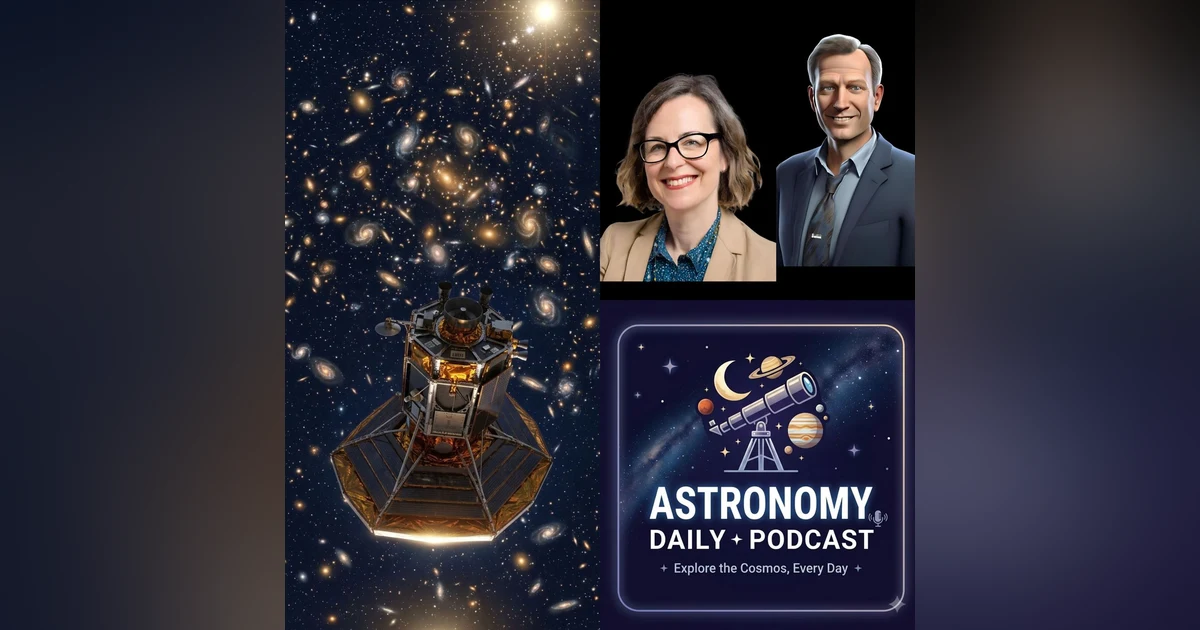
First starlight from Roman, a shorter fuse on the Solar System, weapons in orbit, and a globular cluster hiding behind the dust Roman opens its eye — and finds it has twice as long to look NASA has activated the Nancy Grace Roman Space Telescope's Wide Field Instrument, a 300-megapixel infrared camera built around eighteen detectors, with a field of view at least a hundred times larger than Hubble's infrared field — a patch of sky bigger than the full Moon in a single exposure, at Hubble-comparable sharpness. The instrument reached its operating temperature of −143 °C on 11 September; detectors and the calibration system came up across the 11th and 12th; the element wheel turned in microgravity for the first time on the 12th; the focus mechanism was verified on the 13th. Roman then took its first starlight image — deliberately out of focus, and exactly as intended: a baseline diagnostic that proves the optical path is clear and every detector is live. Sharp science images are expected by early 2027. The Coronagraph Instrument has completed initial communications checkout from Caltech/IPAC and is running 30-day decontamination cycles at room temperature. Separately, NASA published the numbers from Roman's first mid-course correction: better than 99% accurate, using about 18 kg of a 200 kg propellant budget, on a spacecraft that launched lighter than its allowance. Jamie Dunn (Goddard): Roman has fuel for at least 22 years of potential science operations, against a design life of ten. Caveat kept on air: that is a fuel figure, not a funding or hardware figure. Why it matters: Roman's High-Latitude Time-Domain Survey measures cosmic expansion with Type Ia supernovae, and its High-Latitude Wide-Area Survey probes cosmic acceleration across more than 5,000 square degrees through weak lensing and galaxy clustering — two independent handles on the dark energy question that Monday's Australian-led supernova compilation sharpened but could not settle. A doubled mission means a longer lever arm in time, which in this measurement is everything. Caltech: the Solar System's dynamical fuse is far shorter than we thought Konstantin Batygin, Jim Fuller and Fred Adams (Caltech), 'Terminal instability of the Solar System triggered by stochastic solar mass loss', arXiv:2609.12494, posted 11 September and accepted to the Astrophysical Journal Letters. The standard estimate for how long the giant planets hold their architecture — about 10¹⁸ years — assumes the dying Sun sheds mass smoothly. Observations of white-dwarf recoil indicate mass is instead lost in discrete, independently directed ejections, so planetary orbits take a random walk. In simulations, roughly 40% of systems are disrupted or violently scattered before white dwarf formation and about 90% within ~3 billion years after, cutting the outer Solar System's dynamical lifetime to around a gigayear past white dwarf formation. Framed on air as a prediction to test — planetary systems around old white dwarfs should be rarer and more chaotic — with the granularity of the mass loss named as the number to go and measure. The United States says, for the first time, that it has weapons in orbit Secretary of the Air Force Troy Meink, speaking on the opening day of the Air & Space Forces Association's Air, Space & Cyber Conference at National Harbor, Maryland on Monday 14 September: the United States now has 'on-orbit space control weapons capable of defending the joint force against hostile adversary actions'. It is the first public US acknowledgement of offensive capability in orbit. No systems, numbers, locations or timelines were disclosed. A Space Force spokesperson defined space control as employing 'kinetic and non-kinetic means to affect adversary capabilities through disruption, degradation and even destruction, if necessary'. Gen. Douglas Schiess, Chief of Space Operations, said the following day that 'it was time' to talk about it, citing Chinese and Russian anti-satellite advances. Covered factually, with both the deterrence and the arms-control readings presented, and with orbital debris as the physical consequence that outlasts any dispute. Australian context: Operation Olympic Defender and Defence Space Command. Rubin finds a globular cluster hiding behind the dust Aashay Pai, William Cerny, Andrew Pace, Alex Drlica-Wagner and colleagues, 'Rubin Observatory Reveals a Dust-Shrouded Halo Globular Cluster in Ophiuchus', arXiv:2609.15872, posted 14 September. Rubin-GC1 was found in Rubin's Early Data Preview 2 — not the survey proper — in the direction of the galactic bulge, behind heavy dust and a crowded foreground. It sits about 31 kiloparsecs away, roughly 100,000 light-years, out in the Milky Way's halo. Half-light radius ~5 pc, absolute magnitude ≈ −2.4, placing it in the faint tail of the globular cluster luminosity function; age ≈ 9.2 billion years; moderately metal-poor. Gaia DR3 proper motions and phase-space modelling point to an origin in the Sagittarius dwarf spheroidal — an accreted cluster, not one of our own. Spectroscopy is the confirming next step. Reusable framing, now used four times in a month: catalogues are detection limits, not censuses. Quick hit — Starship Flight 14 has a firm date SpaceX has published and the FAA has cleared Flight 14 for Tuesday 22 September, a 75-minute window opening 08:15 EDT / 12:15 UTC (22:15 AEST on the 22nd). This is the first orbital attempt: six orbits at about 275 km, then a Pacific splashdown west of Chile roughly ten hours after launch. The payload is 26 Starlink V3 satellites — the first flight of the next-generation satellites designed for Starship — three of them carrying cameras to photograph the ship's heat shield during re-entry. Super Heavy splashes down in the Gulf about seven minutes after liftoff. No tower catches on this flight, for either stage, confirming the correction we carried on 12 September. Skywatch — both hemispheres Tonight: a five-day-old waxing crescent Moon beside Antares — 2.5° apart and 60° up from Sydney, 5.5° apart and 18° up from Los Angeles, nearly 7° apart and 12° up from New York. The September ecliptic tilt again. Friday 18 September: Venus at greatest brilliancy, about magnitude −4.8 — brightest not when fullest but when the product of a thinning crescent (~26% lit) and a swelling disc (~39 arcsec) peaks. Steadied binoculars will show the crescent. Venus sets ~3h15m after the Sun from Sydney, ~1h20m from Los Angeles, ~1h05m from New York; northern listeners should look low in the west 20–45 minutes after sunset with a clear horizon. Mercury is a southern-only bonus at magnitude −0.4 but only 16° from the Sun: 15° up at sunset from Sydney, 3° from London. Saturn rises within about an hour of sunset everywhere and is up all night, heading for opposition on 4 October with the rings ~7° open. First quarter falls on 18 September at 20:43 UTC, setting up International Observe the Moon Night on Saturday 19 September — timed near first quarter because that is when the terminator throws long shadows. Pre-dawn belongs to the north: Mars 45–47° up at nautical dawn from Los Angeles and New York against 20° from Sydney, with Jupiter below it, and the pair closing to about 2° by mid-November. Zodiacal light returns after the 26th — false dusk in the west from the south, false dawn in the east from the north. The September equinox is a single instant, 00:05 UTC on 23 September: the evening of the 22nd in the Americas, mid-morning on the 23rd in Australia. Eye safety: never sweep the daytime sky with binoculars or a telescope while hunting Venus. Block the Sun behind a building or wall first. Eclipse glasses must carry the ISO 12312-2 certification and be undamaged, and are for looking at the Sun only. Never use optics on the Sun without proper solar filtration fitted at the front. Sources and further reading · NASA Roman blog — 'NASA Activates Roman's Primary Instrument, Checks Out Coronagraph' (15 Sept 2026) · NASA Roman blog — 'Fuel Savings Double Potential Lifetime for NASA's Roman Mission' (14 Sept 2026) · NASA — Roman Core Community Surveys · arXiv:2609.12494 — Batygin, Fuller & Adams, 'Terminal instability of the Solar System triggered by stochastic solar mass loss' (accepted, ApJL) · arXiv:2609.15872 — Pai et al., 'Rubin Observatory Reveals a Dust-Shrouded Halo Globular Cluster in Ophiuchus' · AFA Air, Space & Cyber Conference 2026 — remarks by Secretary of the Air Force Troy Meink, 14 September 2026 · SpaceX — Starship Flight 14 mission page · Astronomy Daily S05E193 — 'The Universe Changes Its Mind' (the dark energy lead this episode calls back to) · Astronomy Daily S05E187 — stellar streams (Nora Shipp co-author callback)
Become a supporter of this podcast: https://www.spreaker.com/podcast/astronomy-daily-latest-space-news--5648921/support.
Sponsor Details:
Ensure your online privacy by using NordVPN. To get our special listener deal and save a lot of money, visit www.astronomydaily.io/nordvpn. You'll be glad you did!
Get the best secure and private email on the planet. Stop your Government, google and who knows who else spying on every email you write. Do what we did and use ProtonMail. They beleive in privacy and there are no ads in their business model...yet they still provide a free forever service. Check them out and get out special deal at www.astronomydaily.io/protonmail
Become a supporter of Astronomy Daily by joining our Supporters Club. Commercial free episodes daily are only a click way... Click Here
This episode includes AI-generated content.
Become a supporter of this podcast: https://www.spreaker.com/podcast/astronomy-daily-latest-space-news--5648921/support.
Sponsor Details:
Ensure your online privacy by using NordVPN. To get our special listener deal and save a lot of money, visit www.astronomydaily.io/nordvpn. You'll be glad you did!
Get the best secure and private email on the planet. Stop your Government, google and who knows who else spying on every email you write. Do what we did and use ProtonMail. They beleive in privacy and there are no ads in their business model...yet they still provide a free forever service. Check them out and get out special deal at www.astronomydaily.io/protonmail
Become a supporter of Astronomy Daily by joining our Supporters Club. Commercial free episodes daily are only a click way... Click Here
This episode includes AI-generated content.
WEBVTT
0
00:00:00.000 --> 00:00:02.600
Anna: On Friday, a camera the size of a small car
1
00:00:02.600 --> 00:00:04.560
finished cooling to minus
2
00:00:04.560 --> 00:00:06.960
143 degrees Celsius,
3
00:00:07.440 --> 00:00:09.680
a million and a half kilometres from here.
4
00:00:10.320 --> 00:00:13.240
Over the weekend, NASA turned it on and
5
00:00:13.240 --> 00:00:14.320
then it looked at a star.
6
00:00:14.960 --> 00:00:17.520
Avery: The picture is blurry, deliberately,
7
00:00:17.680 --> 00:00:20.360
gloriously blurry. And it is the most
8
00:00:20.360 --> 00:00:23.280
important image the Nancy Grace Roman Space
9
00:00:23.280 --> 00:00:24.960
Telescope will ever take.
10
00:00:25.440 --> 00:00:28.160
Anna: Welcome to Astronomy AstroDailyPod. I'm Anna.
11
00:00:28.660 --> 00:00:31.476
Avery: And I'm avery. It's Wednesday 16th
12
00:00:31.657 --> 00:00:34.500
September 2026. Coming to you from
13
00:00:34.500 --> 00:00:34.980
Sydney.
14
00:00:35.460 --> 00:00:38.380
Anna: Coming up, Roman opens its eye and
15
00:00:38.380 --> 00:00:41.020
finds it has twice as long to look as anyone
16
00:00:41.020 --> 00:00:41.540
planned.
17
00:00:41.940 --> 00:00:44.300
Avery: Caltech says the solar system has an
18
00:00:44.300 --> 00:00:47.060
expiry date and it is very much earlier
19
00:00:47.060 --> 00:00:48.340
than the textbooks say.
20
00:00:48.660 --> 00:00:51.660
Anna: The United States says out loud. And for the
21
00:00:51.660 --> 00:00:54.180
first time that it has weapons in orbit,
22
00:00:54.830 --> 00:00:55.750
Rubin finds a
23
00:00:55.750 --> 00:00:58.270
Avery: globular cluster that was hiding behind a
24
00:00:58.270 --> 00:01:00.950
hundred thousand light years of dust and bad
25
00:01:00.950 --> 00:01:01.390
luck.
26
00:01:01.870 --> 00:01:04.870
Anna: Starship finally has a date and a Venus
27
00:01:04.870 --> 00:01:07.150
that is about to be as bright as it gets.
28
00:01:07.790 --> 00:01:08.830
Avery: Let's get into it.
29
00:01:09.230 --> 00:01:10.910
Anna: Let's start with a telescope we have been
30
00:01:10.910 --> 00:01:13.550
following all the way from the launch pad. On
31
00:01:13.550 --> 00:01:16.110
30 August, we watched the Nancy Grace
32
00:01:16.110 --> 00:01:18.830
Roman Space Telescope leave Kennedy on a
33
00:01:18.830 --> 00:01:21.480
Falcon Heavy. On 1st September, its
34
00:01:21.480 --> 00:01:23.680
Coronagraph Instrument got its first taste of
35
00:01:23.680 --> 00:01:26.280
electrical power. And this week, the main
36
00:01:26.280 --> 00:01:29.160
event, Roman's primary instrument, is awake
37
00:01:29.320 --> 00:01:30.920
and it has seen starlight.
38
00:01:31.400 --> 00:01:33.640
Avery: This is the wide field instrument.
39
00:01:34.120 --> 00:01:36.520
Anna: It is, and it's worth being precise about
40
00:01:36.520 --> 00:01:39.320
what it actually is because the specification
41
00:01:39.320 --> 00:01:42.000
is doing something unusual. It's a 300
42
00:01:42.000 --> 00:01:44.760
megapixel infrared camera built around 18
43
00:01:44.840 --> 00:01:47.630
separate detectors. Its field of view is at
44
00:01:47.630 --> 00:01:49.710
least a hundred times larger than Hubble's
45
00:01:49.710 --> 00:01:52.230
infrared field. The practical way to say that
46
00:01:52.230 --> 00:01:54.670
is in a single exposure.
47
00:01:54.750 --> 00:01:57.350
Roman captures a patch of sky bigger than the
48
00:01:57.350 --> 00:01:59.830
full moon at a sharpness comparable to
49
00:01:59.830 --> 00:02:02.750
Hubble's. Hubble takes exquisite postage
50
00:02:02.750 --> 00:02:05.470
stamps. Roman takes exquisite murals.
51
00:02:06.030 --> 00:02:08.630
Avery: And the activation happened over about four
52
00:02:08.630 --> 00:02:08.990
days.
53
00:02:09.550 --> 00:02:12.070
Anna: It did, and NASA has walked through it step
54
00:02:12.070 --> 00:02:14.850
by step, which I appreciate. On Friday the
55
00:02:14.850 --> 00:02:17.250
11th, the instrument finished cooling to its
56
00:02:17.250 --> 00:02:19.170
operating temperature. Minus
57
00:02:19.170 --> 00:02:21.930
225 Fahrenheit, minus
58
00:02:21.930 --> 00:02:24.890
143 Celsius. Infrared
59
00:02:24.890 --> 00:02:27.250
detectors have to be cold because if they
60
00:02:27.250 --> 00:02:29.729
aren't, the camera sees its own heat instead
61
00:02:29.729 --> 00:02:32.290
of the sky. Then across the 11th and
62
00:02:32.290 --> 00:02:35.290
12th, the team brought up all 18 infrared
63
00:02:35.290 --> 00:02:38.290
detectors and the calibration system. On
64
00:02:38.290 --> 00:02:40.870
the 12th, the element wheel, the carousel
65
00:02:40.870 --> 00:02:43.030
that swings filters and optical elements into
66
00:02:43.030 --> 00:02:45.630
the light path, turned in microgravity for
67
00:02:45.630 --> 00:02:46.350
the first time.
68
00:02:46.910 --> 00:02:49.310
On the 13th, they confirmed the Focus
69
00:02:49.310 --> 00:02:51.470
mechanism moves the way it's supposed to.
70
00:02:51.950 --> 00:02:53.510
Avery: Any one of which could have gone
71
00:02:53.510 --> 00:02:55.910
Anna: wrong, any one of which could have ended the
72
00:02:55.910 --> 00:02:58.830
mission. Frankly, a stuck filter wheel
73
00:02:58.830 --> 00:03:00.790
on an instrument a million and a half
74
00:03:00.790 --> 00:03:03.270
kilometres away is not a thing. You send
75
00:03:03.270 --> 00:03:06.030
somebody up to jiggle and then they pointed
76
00:03:06.030 --> 00:03:08.800
it at stars and took the picture I mentioned
77
00:03:08.800 --> 00:03:11.760
at the top, which is out of focus and
78
00:03:11.760 --> 00:03:12.920
which is exactly right.
79
00:03:13.720 --> 00:03:16.360
Avery: Explain that. Because our new
80
00:03:16.360 --> 00:03:19.320
billion dollar telescope took a blurry photo
81
00:03:19.640 --> 00:03:22.120
is a headline waiting to be misread?
82
00:03:22.680 --> 00:03:25.520
Anna: It is. So let's head it off. You do
83
00:03:25.520 --> 00:03:27.680
not focus an instrument before you know the
84
00:03:27.680 --> 00:03:30.680
detectors work. The order of operations is
85
00:03:31.320 --> 00:03:34.000
prove the detectors respond, prove they
86
00:03:34.000 --> 00:03:36.760
respond uniformly, establish a baseline
87
00:03:36.920 --> 00:03:39.640
and only then start the long fussy business
88
00:03:39.640 --> 00:03:42.320
of focusing a telescope that has been shaken
89
00:03:42.320 --> 00:03:44.680
by a rocket and then allowed to settle in
90
00:03:44.680 --> 00:03:47.400
vacuum. Those defocused stars
91
00:03:47.800 --> 00:03:50.720
smeared across thousands of pixels are a
92
00:03:50.720 --> 00:03:53.640
diagnostic. They tell you the optical path
93
00:03:53.640 --> 00:03:56.480
is clear, every detector is live, and
94
00:03:56.480 --> 00:03:58.720
the light is arriving where the model said it
95
00:03:58.720 --> 00:04:01.410
would. Josh Schlieder, the wide field
96
00:04:01.410 --> 00:04:03.290
instrument scientist at Goddard, put it
97
00:04:03.290 --> 00:04:06.130
plainly. After years of effort building and
98
00:04:06.130 --> 00:04:08.450
testing the instrument on the ground, they
99
00:04:08.450 --> 00:04:10.570
now have confirmation that it is operational
100
00:04:10.570 --> 00:04:11.130
in space.
101
00:04:11.850 --> 00:04:14.210
Sharp science images are expected by early
102
00:04:14.210 --> 00:04:17.050
2027 and the coronagraph
103
00:04:17.530 --> 00:04:20.410
progressing. The team at Caltech and IPAC
104
00:04:20.410 --> 00:04:22.170
have completed initial communications,
105
00:04:22.170 --> 00:04:24.810
testing software, thermal systems,
106
00:04:24.810 --> 00:04:27.400
mechanisms, cameras, avionics, all, all
107
00:04:27.400 --> 00:04:30.240
responding. It's now sitting through 30 day
108
00:04:30.240 --> 00:04:32.400
decontamination cycles at room temperature
109
00:04:32.720 --> 00:04:35.400
about 22 degrees to bake off any
110
00:04:35.400 --> 00:04:37.920
contaminants before it gets cold and precise.
111
00:04:38.640 --> 00:04:40.400
That's the instrument we talked about on the
112
00:04:40.400 --> 00:04:42.800
6th, the technology demonstrator. That's
113
00:04:42.800 --> 00:04:44.800
meant to prove we can block a star's light
114
00:04:44.800 --> 00:04:47.040
well enough to photograph a planet beside it.
115
00:04:47.600 --> 00:04:50.480
Avery: Okay, but the thing that actually made me sit
116
00:04:50.480 --> 00:04:53.240
up this week wasn't the first light. It was
117
00:04:53.240 --> 00:04:53.880
the fuel.
118
00:04:54.440 --> 00:04:56.960
Anna: It's the better storey. And it landed the day
119
00:04:56.960 --> 00:04:59.760
before. On Monday the 14th, NASA
120
00:04:59.760 --> 00:05:01.800
published the numbers from Roman's first mid
121
00:05:01.800 --> 00:05:04.480
course correction. The burn that fine tunes
122
00:05:04.480 --> 00:05:06.640
the trajectory out to the second Lagrange
123
00:05:06.640 --> 00:05:09.600
point. That burn was better than 99%
124
00:05:09.600 --> 00:05:12.560
accurate. It used under 10% of what had
125
00:05:12.560 --> 00:05:15.480
been allocated to it. About 18 kilogrammes
126
00:05:15.480 --> 00:05:17.920
of propellant out of a, uh, 200 kilogramme
127
00:05:17.920 --> 00:05:18.280
budget.
128
00:05:19.010 --> 00:05:21.570
Avery: And accuracy converts directly into fuel.
129
00:05:22.050 --> 00:05:24.850
Anna: Directly. Every kilogramme you don't spend
130
00:05:24.850 --> 00:05:27.210
correcting an error is a kilogramme you can
131
00:05:27.210 --> 00:05:30.170
spend later holding station and pointing. On
132
00:05:30.170 --> 00:05:32.570
top of that, the spacecraft came in lighter
133
00:05:32.570 --> 00:05:35.090
than the maximum it was allowed to be. So it
134
00:05:35.090 --> 00:05:36.890
launched with margin. It was never supposed
135
00:05:36.890 --> 00:05:39.570
to have. Add the accurate first burn,
136
00:05:39.890 --> 00:05:42.450
add the launch margin, add what they expect
137
00:05:42.450 --> 00:05:44.610
from the second burn and the insertion into
138
00:05:44.610 --> 00:05:47.420
orbit around L2. And Jamie Dunn at
139
00:05:47.420 --> 00:05:49.540
Goddard says the quiet part out loud.
140
00:05:50.260 --> 00:05:53.140
Roman has fuel for at least 22 years of
141
00:05:53.140 --> 00:05:56.140
potential science operations against a
142
00:05:56.140 --> 00:05:58.820
design life of 10 five years primary,
143
00:05:58.900 --> 00:06:01.460
five years extended. So this is roughly
144
00:06:01.460 --> 00:06:03.340
double. And here is where I want to be
145
00:06:03.340 --> 00:06:06.100
careful because NASA telescope's life
146
00:06:06.100 --> 00:06:08.700
doubled is going to be everywhere this week
147
00:06:08.700 --> 00:06:10.340
and it needs a caveat attached.
148
00:06:10.900 --> 00:06:13.680
22 years is a fuel figure, it is not a
149
00:06:13.680 --> 00:06:16.080
funding figure and it is not a hardware
150
00:06:16.080 --> 00:06:18.960
figure. Detectors degrade, budgets get
151
00:06:18.960 --> 00:06:21.400
written annually. Fuel is one of several
152
00:06:21.400 --> 00:06:23.600
things that can end a space telescope and
153
00:06:23.600 --> 00:06:25.680
Roman has just removed it from the top of the
154
00:06:25.680 --> 00:06:28.280
list. That's genuinely excellent news.
155
00:06:28.680 --> 00:06:31.240
It is not a promise of 22 years of science.
156
00:06:32.040 --> 00:06:34.920
Avery: Understood. So why does the fuel matter
157
00:06:35.000 --> 00:06:37.400
so much for this particular telescope?
158
00:06:37.800 --> 00:06:39.800
Anna: Because of what Roman was built to measure
159
00:06:40.450 --> 00:06:42.210
and because of what we led with on Monday.
160
00:06:42.930 --> 00:06:45.650
Remember Monday's lead the Australian
161
00:06:45.650 --> 00:06:47.770
led supernova compilation out of the
162
00:06:47.770 --> 00:06:50.530
University of Queensland with ANU and
163
00:06:50.530 --> 00:06:53.690
Swinburne2884
164
00:06:53.690 --> 00:06:56.130
type Ia supernovae Pantheon
165
00:06:56.450 --> 00:06:58.810
and the full dark energy survey five year
166
00:06:58.810 --> 00:07:01.330
sample rebuilt in one framework and a
167
00:07:01.330 --> 00:07:04.170
2.5 to 3.1-sigma preference for
168
00:07:04.170 --> 00:07:06.730
dark energy that changes over time rather
169
00:07:06.730 --> 00:07:07.890
than staying constant.
170
00:07:08.570 --> 00:07:11.290
Avery: Which was tantalising and not conclusive.
171
00:07:11.850 --> 00:07:14.250
Anna: Exactly that. And the reason it wasn't
172
00:07:14.250 --> 00:07:17.250
conclusive is the reason Roman exists. You
173
00:07:17.250 --> 00:07:19.690
are trying to detect a slow drift in a number
174
00:07:19.930 --> 00:07:22.290
and your enemies are sample size and
175
00:07:22.290 --> 00:07:24.730
systematics. Dust host
176
00:07:24.730 --> 00:07:27.450
galaxy properties, the slow accumulation
177
00:07:27.450 --> 00:07:29.610
of small calibration differences between
178
00:07:29.690 --> 00:07:32.170
surveys. Roman attacks all three
179
00:07:32.730 --> 00:07:35.290
Its high latitude Time domain survey about
180
00:07:35.290 --> 00:07:37.870
six months of observing Hunt's Type Ia
181
00:07:37.870 --> 00:07:39.990
supernovae specifically to measure how the
182
00:07:39.990 --> 00:07:42.630
expansion rate has changed. Its high
183
00:07:42.630 --> 00:07:45.430
latitude Wide area survey about 17 months
184
00:07:45.830 --> 00:07:48.350
covers more than 5,000 square degrees to
185
00:07:48.350 --> 00:07:50.390
probe the origin of cosmic acceleration
186
00:07:50.790 --> 00:07:53.510
through weak gravitational lensing and galaxy
187
00:07:53.510 --> 00:07:56.190
clustering. A completely independent handle
188
00:07:56.190 --> 00:07:57.110
on the same question.
189
00:07:57.830 --> 00:08:00.630
Avery: Two different methods, one telescope, one
190
00:08:00.630 --> 00:08:01.270
calibration.
191
00:08:01.990 --> 00:08:04.940
Anna: Which is the whole point. Monday's paper was
192
00:08:04.940 --> 00:08:07.220
heroic precisely because it had to stitch
193
00:08:07.220 --> 00:08:08.740
together three decades of different
194
00:08:08.740 --> 00:08:09.300
instruments.
195
00:08:09.780 --> 00:08:12.540
Roman gets to skip that problem and now it
196
00:08:12.540 --> 00:08:14.900
gets to do it for 22 years instead of 10.
197
00:08:15.220 --> 00:08:17.820
Which is not just more supernovae. It's a
198
00:08:17.820 --> 00:08:20.260
longer lever arm in time. And in this
199
00:08:20.260 --> 00:08:22.100
measurement the lever arm is everything.
200
00:08:22.820 --> 00:08:24.900
Avery: There's the exoplanet half too.
201
00:08:25.300 --> 00:08:27.740
Anna: There is, and it's extraordinary. The
202
00:08:27.740 --> 00:08:30.740
Galactic bulge time domain survey 15 months
203
00:08:30.740 --> 00:08:33.660
or so, 6 observing seasons imaging the
204
00:08:33.660 --> 00:08:36.260
crowded heart of the Galaxy every 12 minutes,
205
00:08:36.740 --> 00:08:39.580
12.1 minutes, to be exact. That
206
00:08:39.580 --> 00:08:41.780
Cadence is designed to catch gravitational
207
00:08:41.780 --> 00:08:44.420
microlensing events, and it's expected to
208
00:08:44.420 --> 00:08:46.900
find more than a thousand planets on wide
209
00:08:46.900 --> 00:08:49.900
orbits, the cold, distant worlds that transit
210
00:08:49.900 --> 00:08:52.540
surveys are almost blind to, plus something
211
00:08:52.540 --> 00:08:54.780
like a hundred thousand transiting planets as
212
00:08:54.780 --> 00:08:55.300
a bonus.
213
00:08:55.950 --> 00:08:58.350
Avery: And for southern listeners, there's a thread
214
00:08:58.350 --> 00:08:59.630
running through all of this.
215
00:08:59.790 --> 00:09:02.110
Anna: There is, and it's the one I keep coming back
216
00:09:02.110 --> 00:09:02.430
to.
217
00:09:02.590 --> 00:09:05.550
The Dark Energy survey data in Monday's paper
218
00:09:05.630 --> 00:09:08.430
came off the Blanco 4 metre telescope at
219
00:09:08.430 --> 00:09:11.030
Cerro Tololo in Chile. The
220
00:09:11.030 --> 00:09:13.510
compilation was led out of Brisbane. The
221
00:09:13.510 --> 00:09:15.590
accelerating universe result that started
222
00:09:15.590 --> 00:09:18.390
this whole argument was work Brian Schmidt
223
00:09:18.390 --> 00:09:20.670
did at Matt Stromlo outside Canberra.
224
00:09:21.400 --> 00:09:23.520
The question about dark energy got sharpened
225
00:09:23.520 --> 00:09:26.520
in the Southern sky over 30 years by
226
00:09:26.520 --> 00:09:29.200
people working in our half of the world. And
227
00:09:29.200 --> 00:09:31.400
this week the instrument built to settle it
228
00:09:31.400 --> 00:09:34.000
opened its eye, took a deliberately blurry
229
00:09:34.000 --> 00:09:36.760
picture of a star and found out it has twice
230
00:09:36.760 --> 00:09:38.920
as long to look as anyone had planned.
231
00:09:39.480 --> 00:09:40.520
Avery: Not a bad week.
232
00:09:41.160 --> 00:09:42.360
Anna: Not a bad week at all.
233
00:09:42.840 --> 00:09:45.560
Avery: Right, let's talk about how the solar system
234
00:09:45.560 --> 00:09:48.360
ends, because three people at Caltech have
235
00:09:48.360 --> 00:09:50.520
just moved the date forward by about a
236
00:09:50.520 --> 00:09:51.400
billion fold.
237
00:09:52.130 --> 00:09:53.490
Anna: That is an aggressive revision.
238
00:09:54.050 --> 00:09:56.610
Avery: It really is. The paper is by
239
00:09:56.610 --> 00:09:59.210
Constantine Batygin, Jim Fuller and
240
00:09:59.210 --> 00:10:01.810
Fred Watson Adams. It went up on the archive
241
00:10:01.810 --> 00:10:04.490
on Friday the 11th, and it's been accepted by
242
00:10:04.490 --> 00:10:07.330
the Astrophysical Journal Letters. So it's
243
00:10:07.330 --> 00:10:10.130
five days old and peer reviewed, but not yet
244
00:10:10.130 --> 00:10:12.610
in the Journal. I'll flag that as we go.
245
00:10:13.010 --> 00:10:15.770
The title is Terminal Instability of the
246
00:10:15.770 --> 00:10:18.330
Solar System Triggered by Stochastic Solar
247
00:10:18.330 --> 00:10:18.930
Mass Loss.
248
00:10:19.670 --> 00:10:20.870
Anna: Give me the old number first.
249
00:10:21.430 --> 00:10:23.990
Avery: 10 to the 18 years. A billion
250
00:10:24.150 --> 00:10:27.110
billion years. That's the standard estimate
251
00:10:27.110 --> 00:10:29.750
for how long the giant planets Jupiter,
252
00:10:29.910 --> 00:10:32.710
Saturn, Uranus, Neptune hold
253
00:10:32.710 --> 00:10:34.870
their current orbital architecture together.
254
00:10:35.110 --> 00:10:37.670
And it already accounts for the sun losing
255
00:10:37.670 --> 00:10:40.270
mass as it dies, and for the occasional
256
00:10:40.270 --> 00:10:43.190
passing star. It is an absurdly long
257
00:10:43.190 --> 00:10:46.150
time. The universe is 14 billion
258
00:10:46.150 --> 00:10:46.870
years old.
259
00:10:47.690 --> 00:10:48.570
Anna: So what breaks it?
260
00:10:48.890 --> 00:10:51.450
Avery: An assumption nobody was really examining.
261
00:10:51.690 --> 00:10:54.250
That the sun sheds its mass smoothly.
262
00:10:54.730 --> 00:10:57.490
That as it becomes a red giant and then a
263
00:10:57.490 --> 00:11:00.170
white dwarf, it releases material steadily
264
00:11:00.170 --> 00:11:03.049
and symmetrically, like a tyre with a slow
265
00:11:03.049 --> 00:11:05.690
puncture, and the planet's orbits widen
266
00:11:05.690 --> 00:11:06.970
gently in response.
267
00:11:07.530 --> 00:11:09.130
Anna: And that isn't what happens.
268
00:11:09.690 --> 00:11:12.330
Avery: Apparently not. And the evidence comes from
269
00:11:12.330 --> 00:11:15.000
white dwarfs themselves. Measure how
270
00:11:15.000 --> 00:11:17.560
fast white dwarfs are moving and they show
271
00:11:17.560 --> 00:11:20.480
recoil. A kick. A kick means
272
00:11:20.480 --> 00:11:23.320
the mass didn't leave evenly. It left
273
00:11:23.320 --> 00:11:25.600
in discrete, independently directed
274
00:11:25.600 --> 00:11:28.480
ejections. Parcels, not a stream,
275
00:11:28.560 --> 00:11:31.120
each one shoving the star a different way,
276
00:11:31.520 --> 00:11:31.960
and the
277
00:11:31.960 --> 00:11:34.080
Anna: planets are attached to the star's gravity,
278
00:11:34.320 --> 00:11:35.760
so they feel every shove.
279
00:11:36.320 --> 00:11:39.200
Avery: That's the mechanism. The star jitters and
280
00:11:39.200 --> 00:11:41.640
the planet's orbits take a random walk in
281
00:11:41.640 --> 00:11:44.620
response, each ejection nudging them a little
282
00:11:44.780 --> 00:11:47.660
in no particular direction, with the size of
283
00:11:47.660 --> 00:11:50.380
the nudges set by how lumpy the mass loss
284
00:11:50.380 --> 00:11:53.100
is. Do that for long enough and
285
00:11:53.100 --> 00:11:55.780
orbits that were carefully spaced drift into
286
00:11:55.780 --> 00:11:58.540
each other's business. And once giant
287
00:11:58.540 --> 00:12:00.380
planets start perturbing each other in
288
00:12:00.380 --> 00:12:03.380
earnest, the outcome is scattering planets
289
00:12:03.380 --> 00:12:06.060
thrown onto wild orbits or thrown out
290
00:12:06.060 --> 00:12:06.780
altogether.
291
00:12:07.260 --> 00:12:08.780
Anna: What do the simulations give?
292
00:12:08.940 --> 00:12:11.540
Avery: About 40% of the modelled systems are
293
00:12:11.540 --> 00:12:13.960
disrupted or violently scattered because
294
00:12:14.110 --> 00:12:16.790
before the sun even finishes becoming a white
295
00:12:16.790 --> 00:12:19.310
dwarf, and roughly 90%
296
00:12:19.550 --> 00:12:22.230
come apart within about 3 billion years.
297
00:12:22.230 --> 00:12:25.110
After that, the headline number the
298
00:12:25.110 --> 00:12:27.870
dynamical lifetime of the outer solar system
299
00:12:27.950 --> 00:12:30.910
drops from 10 to the 18 years to
300
00:12:30.910 --> 00:12:33.910
somewhere around 1 billion years past white
301
00:12:33.910 --> 00:12:34.990
dwarf formation.
302
00:12:35.790 --> 00:12:38.470
Anna: I want to be clear, for anyone reaching for
303
00:12:38.470 --> 00:12:41.150
the panic button, please, none
304
00:12:41.150 --> 00:12:43.870
Avery: of this is near term anything. The
305
00:12:43.870 --> 00:12:46.790
sun has about 5 billion years of normal
306
00:12:46.790 --> 00:12:49.310
life left and Earth's surface becomes
307
00:12:49.310 --> 00:12:51.990
uninhabitable long before the interesting
308
00:12:51.990 --> 00:12:54.630
part of this paper begins. What it
309
00:12:54.630 --> 00:12:57.190
changes isn't a forecast, it's a
310
00:12:57.190 --> 00:12:58.830
prediction. We can go and cheque.
311
00:12:59.710 --> 00:13:01.950
Meaning, if this is right,
312
00:13:02.350 --> 00:13:05.350
planetary systems around old white dwarfs
313
00:13:05.350 --> 00:13:08.190
should be rarer, more scattered and more
314
00:13:08.190 --> 00:13:10.830
chaotic than the smooth mass loss picture
315
00:13:10.830 --> 00:13:13.420
predicts. We already find white
316
00:13:13.420 --> 00:13:16.020
dwarfs polluted with the debris of shredded
317
00:13:16.020 --> 00:13:18.420
rocky bodies, which tells us something
318
00:13:18.420 --> 00:13:21.260
violent happens out there. This gives
319
00:13:21.260 --> 00:13:23.940
that violence a mechanism and a rate.
320
00:13:24.580 --> 00:13:27.300
And the caveat, the honest one, is
321
00:13:27.860 --> 00:13:30.660
it's a simulation result. And the answer
322
00:13:30.660 --> 00:13:33.380
depends entirely on how granular the mass
323
00:13:33.380 --> 00:13:35.940
loss really is. Big
324
00:13:36.100 --> 00:13:38.740
infrequent parcels give you a very different
325
00:13:38.740 --> 00:13:41.350
system for from small frequent ones.
326
00:13:41.910 --> 00:13:44.670
That granularity is now the number to go and
327
00:13:44.670 --> 00:13:47.470
measure. Which is a nice place for a paper
328
00:13:47.470 --> 00:13:50.230
to end, not with a claim, but with an
329
00:13:50.230 --> 00:13:50.870
assignment.
330
00:13:51.750 --> 00:13:54.510
Anna: Now, a storey that isn't astronomy, but which
331
00:13:54.510 --> 00:13:56.870
sits directly over the sky, we all use.
332
00:13:57.510 --> 00:13:59.630
On Monday, at the opening of the Air and
333
00:13:59.630 --> 00:14:02.470
Space Forces Association's Air, Space and
334
00:14:02.470 --> 00:14:04.350
Cyber Conference at National Harbour in
335
00:14:04.350 --> 00:14:06.870
Maryland, the Secretary of the Air Force,
336
00:14:06.870 --> 00:14:09.710
Troy Meink, said that the United
337
00:14:09.790 --> 00:14:12.550
States now has, in his words, on
338
00:14:12.550 --> 00:14:15.110
orbit space control weapons capable of
339
00:14:15.110 --> 00:14:17.790
defending the joint force against hostile
340
00:14:17.790 --> 00:14:19.070
adversary actions.
341
00:14:19.630 --> 00:14:21.710
Avery: That's the first time that's been said out
342
00:14:21.710 --> 00:14:22.110
loud.
343
00:14:22.510 --> 00:14:24.870
Anna: It is the first public acknowledgment by the
344
00:14:24.870 --> 00:14:27.630
United States military that it has offensive
345
00:14:27.630 --> 00:14:30.470
capability in orbit. And I want to be
346
00:14:30.470 --> 00:14:32.670
precise about what was and wasn't said,
347
00:14:33.200 --> 00:14:35.840
because the gap matters. What was said?
348
00:14:36.240 --> 00:14:39.160
The capability exists, it is on orbit
349
00:14:39.160 --> 00:14:41.600
and it is framed as defensive of the Joint
350
00:14:41.600 --> 00:14:44.360
Force. What was not said, what the
351
00:14:44.360 --> 00:14:47.200
systems are, how many there are, where they
352
00:14:47.200 --> 00:14:49.880
are, when they got there, or what they can
353
00:14:49.880 --> 00:14:50.560
actually do.
354
00:14:51.120 --> 00:14:53.040
Avery: Did anyone define the term?
355
00:14:53.520 --> 00:14:55.720
Anna: A Space Force spokesperson did, and the
356
00:14:55.720 --> 00:14:58.320
definition is broad. Space control, they
357
00:14:58.320 --> 00:15:01.040
said, encapsulates the mission areas required
358
00:15:01.040 --> 00:15:03.280
to contest and control the space domain,
359
00:15:03.600 --> 00:15:06.040
employing kinetic and non kinetic means to
360
00:15:06.040 --> 00:15:08.240
affect adversary capabilities through
361
00:15:08.240 --> 00:15:11.120
disruption, degradation and if
362
00:15:11.120 --> 00:15:13.840
necessary, destruction. So that covers
363
00:15:13.840 --> 00:15:16.080
everything from M jamming a signal to
364
00:15:16.080 --> 00:15:18.600
physically destroying a satellite. And the
365
00:15:18.600 --> 00:15:20.480
statement doesn't tell us where on that
366
00:15:20.480 --> 00:15:22.000
spectrum these systems sit.
367
00:15:22.640 --> 00:15:23.760
Avery: Why say it now?
368
00:15:23.920 --> 00:15:26.660
Anna: That question got answered the following day.
369
00:15:26.900 --> 00:15:29.660
General Douglas Schies, the Chief of Space
370
00:15:29.660 --> 00:15:32.580
Operations, said on Tuesday, I think it
371
00:15:32.580 --> 00:15:34.820
was time that within the Department of War we
372
00:15:34.820 --> 00:15:37.220
talked about it and it's time to talk about
373
00:15:37.220 --> 00:15:39.500
that. We have the capabilities to make sure
374
00:15:39.500 --> 00:15:42.460
that we can do what the Joint Force needs. He
375
00:15:42.460 --> 00:15:44.780
attributed the decision to advances by China
376
00:15:44.780 --> 00:15:47.460
and Russia in anti satellite capability
377
00:15:47.700 --> 00:15:49.980
and said the United States needed to be able
378
00:15:49.980 --> 00:15:52.020
to respond from a position of strength.
379
00:15:52.910 --> 00:15:54.110
Avery: How is that being read?
380
00:15:54.670 --> 00:15:57.310
Anna: Two ways, and I think both are worth hearing.
381
00:15:57.790 --> 00:15:59.870
The deterrence reading is that capability.
382
00:16:00.110 --> 00:16:03.030
Nobody knows about deters. Nobody. That if
383
00:16:03.030 --> 00:16:05.430
the point of a weapon is to make an adversary
384
00:16:05.430 --> 00:16:08.430
decide not to act, the adversary has to
385
00:16:08.430 --> 00:16:11.350
know it exists on that reading. Saying it
386
00:16:11.350 --> 00:16:13.870
out loud is the whole function. The arms
387
00:16:13.870 --> 00:16:15.990
control reading is that public acknowledgment
388
00:16:15.990 --> 00:16:18.400
by the largest space power lowers the
389
00:16:18.400 --> 00:16:20.720
threshold for everyone else, invites
390
00:16:20.720 --> 00:16:23.480
reciprocal declarations and makes the orbital
391
00:16:23.480 --> 00:16:26.040
environment more contested rather than less,
392
00:16:26.440 --> 00:16:28.800
with debris as the physical consequence that
393
00:16:28.800 --> 00:16:30.600
outlives any particular dispute.
394
00:16:31.160 --> 00:16:33.400
Avery: And debris is where this touches us.
395
00:16:33.960 --> 00:16:36.880
Anna: That's the part I'd hold onto. We covered US
396
00:16:36.880 --> 00:16:39.160
Space Command's Apollo manoeuvres exercise
397
00:16:39.160 --> 00:16:41.680
last week. The first live fly orbital
398
00:16:41.680 --> 00:16:43.720
manoeuvre drill with allies including
399
00:16:43.800 --> 00:16:46.360
Australia, under Operation Olympic Defender.
400
00:16:46.870 --> 00:16:48.910
Australia has its own Defence Space Command
401
00:16:48.910 --> 00:16:51.110
and we're part of that framework. But
402
00:16:51.110 --> 00:16:53.830
whatever anybody's strategic view, kinetic
403
00:16:53.830 --> 00:16:56.390
action in low Earth orbit produces debris,
404
00:16:56.550 --> 00:16:59.510
and debris doesn't respect flags. Every
405
00:16:59.510 --> 00:17:02.070
fragment is a hazard to every satellite and
406
00:17:02.470 --> 00:17:05.070
in the long run, to the sky above every
407
00:17:05.070 --> 00:17:07.470
observatory on the ground. We'll keep
408
00:17:07.470 --> 00:17:09.910
reporting this one factually as it develops.
409
00:17:10.150 --> 00:17:12.150
The conference is still running as we record.
410
00:17:13.150 --> 00:17:15.230
Avery: Lets finish the news with something that made
411
00:17:15.230 --> 00:17:18.110
me grin. The Vera Rubin Observatory
412
00:17:18.110 --> 00:17:20.590
has found a globular cluster in our own
413
00:17:20.590 --> 00:17:23.310
galaxy that nobody had ever catalogued.
414
00:17:23.630 --> 00:17:26.590
Anna: In our own galaxy in 2026,
415
00:17:27.230 --> 00:17:27.510
in
416
00:17:27.510 --> 00:17:30.110
Avery: our own galaxy in 2026.
417
00:17:30.510 --> 00:17:33.150
The paper went up on Monday. Lead author
418
00:17:33.150 --> 00:17:35.710
Ashay Pai with William Cerny,
419
00:17:35.790 --> 00:17:38.790
Andrew Pace, Alex Drlica, Wagner and
420
00:17:38.790 --> 00:17:40.920
colleagues across Chicago, Yale,
421
00:17:41.080 --> 00:17:43.640
Dartmouth, Washington and Colorado.
422
00:17:43.800 --> 00:17:46.720
They've named it Rubin GC1. And they
423
00:17:46.720 --> 00:17:49.320
found it in Rubin's early data preview too.
424
00:17:49.720 --> 00:17:52.200
Not even the survey proper. The preview.
425
00:17:52.760 --> 00:17:53.880
Anna: Where was it hiding?
426
00:17:54.360 --> 00:17:57.280
Avery: In the worst possible direction, towards the
427
00:17:57.280 --> 00:17:59.760
galactic bulge. You're looking through the
428
00:17:59.760 --> 00:18:02.560
thickest dust in the galaxy at a field so
429
00:18:02.560 --> 00:18:04.960
crowded with foreground stars that a faint
430
00:18:04.960 --> 00:18:07.640
clump is statistically invisible. Trying to
431
00:18:07.640 --> 00:18:09.640
pick out something that isn't bright to begin
432
00:18:09.640 --> 00:18:09.920
with.
433
00:18:10.640 --> 00:18:12.000
Anna: So it's in the bulge?
434
00:18:12.720 --> 00:18:15.640
Avery: No. And this is the lovely bit. It's
435
00:18:15.640 --> 00:18:18.480
behind it. Rubin GC1 is
436
00:18:18.480 --> 00:18:21.360
about 31 kiloparsecs away. Call it
437
00:18:21.360 --> 00:18:24.120
a hundred thousand light years. That puts it
438
00:18:24.120 --> 00:18:26.760
out in the Milky Way's halo, seen through the
439
00:18:26.760 --> 00:18:29.520
bulge. A, uh, halo object sitting in the most
440
00:18:29.520 --> 00:18:31.360
confusing line of sight we have.
441
00:18:31.840 --> 00:18:32.880
Anna: What is it physically?
442
00:18:33.200 --> 00:18:36.000
Avery: Small and old, half light radius around
443
00:18:36.000 --> 00:18:38.700
5 parsecs. A compact little ball,
444
00:18:39.180 --> 00:18:42.140
absolute magnitude about minus 2.4,
445
00:18:42.300 --> 00:18:45.100
which is faint for a globular. The authors
446
00:18:45.100 --> 00:18:47.420
place it in the faint tail of the globular
447
00:18:47.420 --> 00:18:50.060
cluster. Luminosity function age
448
00:18:50.060 --> 00:18:52.300
about 9.2 billion years.
449
00:18:52.700 --> 00:18:54.220
Moderately metal poor.
450
00:18:54.860 --> 00:18:57.180
Anna: And where did it come from?
451
00:18:57.900 --> 00:19:00.900
Avery: This is my favourite part. They took Gaia's
452
00:19:00.900 --> 00:19:03.420
third day to release proper motions, measured
453
00:19:03.420 --> 00:19:05.420
how the cluster is actually moving through
454
00:19:05.420 --> 00:19:08.180
space and ran the phase space modelling
455
00:19:08.180 --> 00:19:10.860
backwards. The answer that comes out is that
456
00:19:10.860 --> 00:19:13.420
Rubin GC1 was very probably
457
00:19:13.420 --> 00:19:15.460
stripped from the Sagittarius dwarf
458
00:19:15.460 --> 00:19:17.940
spheroidal galaxy, one of the small
459
00:19:17.940 --> 00:19:20.580
galaxies the Milky Way is currently eating.
460
00:19:21.140 --> 00:19:23.060
So it isn't ours originally.
461
00:19:23.140 --> 00:19:25.420
Anna: It's spoils that needs
462
00:19:25.420 --> 00:19:26.900
spectroscopy to confirm.
463
00:19:26.900 --> 00:19:29.590
Avery: Presumably it does, and the
464
00:19:29.590 --> 00:19:32.190
authors say so. That's the next beat,
465
00:19:32.270 --> 00:19:34.150
along with the fact that this is early
466
00:19:34.150 --> 00:19:36.750
preview data, not the full survey.
467
00:19:36.990 --> 00:19:39.270
But step back, because there's a pattern
468
00:19:39.270 --> 00:19:41.630
here. We have now hit four times in a month.
469
00:19:42.030 --> 00:19:44.830
M M74 turned out to be more than twice
470
00:19:44.830 --> 00:19:47.550
its catalogue size. Magnetars
471
00:19:47.550 --> 00:19:50.110
turned out to be half of all neutron stars,
472
00:19:50.110 --> 00:19:53.030
rather than 1%. Mercury turned
473
00:19:53.030 --> 00:19:55.510
out to have shrunk up to 30% more than we
474
00:19:55.510 --> 00:19:58.400
thought. And now a globular cluster a
475
00:19:58.400 --> 00:20:00.800
hundred thousand light years away turns out
476
00:20:00.800 --> 00:20:02.920
to have been sitting in our catalogue's blind
477
00:20:02.920 --> 00:20:04.120
spot the whole time.
478
00:20:04.760 --> 00:20:07.360
Anna: Catalogues are detection limits, not
479
00:20:07.360 --> 00:20:08.120
censuses.
480
00:20:08.840 --> 00:20:11.480
Avery: That's the line and it keeps being true.
481
00:20:12.119 --> 00:20:14.520
This cluster wasn't missing because it's far
482
00:20:14.520 --> 00:20:17.480
away. Plenty of catalogued globulars are.
483
00:20:17.480 --> 00:20:20.000
Further, it was missing because it's faint
484
00:20:20.000 --> 00:20:22.610
and behind dust and, and in a crowded
485
00:20:22.610 --> 00:20:25.450
direction. Three handicaps stacked on
486
00:20:25.450 --> 00:20:28.250
each other. Ruben removed enough of the first
487
00:20:28.250 --> 00:20:29.650
to overcome the other two.
488
00:20:30.210 --> 00:20:32.890
Anna: And Ruben is on Cerro Pachon in
489
00:20:32.890 --> 00:20:35.330
Avery: Chile in our half of the sky.
490
00:20:35.730 --> 00:20:37.990
And two names on that author list are, uh,
491
00:20:38.050 --> 00:20:40.970
old friends of this programme. Nora Shipp
492
00:20:40.970 --> 00:20:43.330
was on the Stellar Streams paper we led with
493
00:20:43.330 --> 00:20:46.210
on the 7th. Alex Drelika Wagner
494
00:20:46.210 --> 00:20:48.910
is a dark energy survey scientist. Which
495
00:20:48.910 --> 00:20:50.430
ties straight back to Monday.
496
00:20:51.070 --> 00:20:53.550
Same small community, same southern
497
00:20:53.550 --> 00:20:55.950
telescopes. Three different questions.
498
00:20:56.510 --> 00:20:59.310
Anna: We've ended three recent leads with wait for
499
00:20:59.310 --> 00:20:59.870
Rubin.
500
00:21:00.430 --> 00:21:03.390
Avery: Stellar Streams, the Trans Neptunian Objects
501
00:21:03.390 --> 00:21:05.470
and Monday's dark energy result.
502
00:21:06.110 --> 00:21:08.750
This is the first instalment on that promise
503
00:21:08.750 --> 00:21:10.910
and it came out of a data preview.
504
00:21:11.470 --> 00:21:13.550
Rubin hasn't really started yet.
505
00:21:14.360 --> 00:21:16.640
Anna: Next up, a quick hit. And it's an update to
506
00:21:16.640 --> 00:21:18.600
something we left unresolved Yesterday.
507
00:21:19.160 --> 00:21:21.640
Starship Flight 14 has a firm date.
508
00:21:22.280 --> 00:21:24.200
Finally, finally.
509
00:21:24.440 --> 00:21:26.360
Yesterday we had to carry two dates and a
510
00:21:26.360 --> 00:21:28.840
caveat. An FAA advisory showing the
511
00:21:28.840 --> 00:21:31.400
18th reporting pointing to the 22nd
512
00:21:31.800 --> 00:21:33.800
and no formal word from SpaceX.
513
00:21:34.440 --> 00:21:36.960
SpaceX has now published and the FAA has
514
00:21:36.960 --> 00:21:39.960
cleared it. Tuesday the 22nd of September.
515
00:21:40.430 --> 00:21:43.340
Uh, a 75 minute window opening at 8:15 in the
516
00:21:43.340 --> 00:21:46.100
morning Eastern. That's 12:15 UTC
517
00:21:46.420 --> 00:21:48.940
and 10 past 10 in the evening Sydney time on
518
00:21:48.940 --> 00:21:49.620
the 22nd.
519
00:21:49.940 --> 00:21:51.860
Avery: And um, this is the orbital one.
520
00:21:52.260 --> 00:21:55.260
Anna: This is the orbital one six orbits at about
521
00:21:55.260 --> 00:21:58.140
275 kilometres then
522
00:21:58.140 --> 00:22:00.580
splash down in the Pacific west of Chile
523
00:22:01.060 --> 00:22:03.940
roughly 10 hours after launch. So this flight
524
00:22:03.940 --> 00:22:06.590
ends in our half of the world. The payload is
525
00:22:06.590 --> 00:22:09.590
26 Starlink V3 satellites, the
526
00:22:09.590 --> 00:22:11.190
first flight of the next generation
527
00:22:11.190 --> 00:22:13.070
satellites designed specifically for
528
00:22:13.070 --> 00:22:13.710
starship.
529
00:22:14.110 --> 00:22:16.470
And three of them carry cameras to photograph
530
00:22:16.470 --> 00:22:18.430
the ship's heat shield during re entry.
531
00:22:18.910 --> 00:22:21.790
Booster Gulf splashdown about seven
532
00:22:21.790 --> 00:22:24.510
minutes after liftoff. And confirming what we
533
00:22:24.510 --> 00:22:27.470
corrected on air back on the 12th. No tower
534
00:22:27.470 --> 00:22:29.550
catches on this flight for either stage.
535
00:22:30.110 --> 00:22:32.790
SpaceX's framing is that going to orbit is
536
00:22:32.790 --> 00:22:34.350
what unlocks the next phase.
537
00:22:35.020 --> 00:22:37.220
Their line is that by going to orbit, the
538
00:22:37.220 --> 00:22:39.620
work of making starship fully and rapidly
539
00:22:39.620 --> 00:22:40.860
reusable can begin.
540
00:22:41.340 --> 00:22:44.220
Avery: And that brings us to the sky. And this is
541
00:22:44.220 --> 00:22:45.340
a good week in it.
542
00:22:45.660 --> 00:22:47.940
Anna: Start with tonight, because tonight is lovely
543
00:22:47.940 --> 00:22:50.659
and it's free. Go out at dusk and find the
544
00:22:50.659 --> 00:22:53.580
moon, a waxing crescent about a quarter lit,
545
00:22:53.580 --> 00:22:56.140
five days old. Sitting right beside it is
546
00:22:56.140 --> 00:22:58.700
Antares, the red heart of Scorpius.
547
00:22:59.100 --> 00:23:02.050
How close from Sydney? Two and a half
548
00:23:02.050 --> 00:23:04.690
degrees apart at nautical dusk and both of
549
00:23:04.690 --> 00:23:07.570
them about 60 degrees up. A pairing you can
550
00:23:07.570 --> 00:23:09.450
cover with two fingers at arm's length.
551
00:23:09.610 --> 00:23:12.250
Sitting high overhead From Los Angeles,
552
00:23:12.490 --> 00:23:14.810
five and a half degrees apart and 18 degrees
553
00:23:14.810 --> 00:23:17.690
up. From New York, nearly seven degrees
554
00:23:17.690 --> 00:23:19.290
apart and 12 degrees up.
555
00:23:19.770 --> 00:23:22.410
Avery: Same sky, wildly different view.
556
00:23:23.050 --> 00:23:25.730
Anna: Same sky, same night. And it's the
557
00:23:25.730 --> 00:23:27.610
ecliptic tilt we talked about yesterday.
558
00:23:28.290 --> 00:23:30.450
Around the September equinox, the ecliptic
559
00:23:30.450 --> 00:23:32.610
stands up almost vertically from the western
560
00:23:32.610 --> 00:23:34.770
horizon at dusk in the southern hemisphere
561
00:23:34.930 --> 00:23:37.650
and lies down almost flat in the northern.
562
00:23:38.210 --> 00:23:40.450
Everything on that line, the Moon,
563
00:23:40.690 --> 00:23:43.530
Venus. Mercury rides high and
564
00:23:43.530 --> 00:23:46.410
lingers in the south and hugs the horizon in
565
00:23:46.410 --> 00:23:49.210
the north. In March, it reverses and
566
00:23:49.210 --> 00:23:50.770
the north gets the good version.
567
00:23:51.170 --> 00:23:52.850
Avery: Which brings us to Venus.
568
00:23:52.930 --> 00:23:55.460
Anna: And, um, Friday, Friday the 18th,
569
00:23:55.620 --> 00:23:58.620
Venus reaches greatest brilliancy, about
570
00:23:58.620 --> 00:24:01.580
magnitude -4.8, the brightest it
571
00:24:01.580 --> 00:24:04.140
gets in this evening apparition. And the
572
00:24:04.140 --> 00:24:05.980
reason is worth understanding because it's
573
00:24:05.980 --> 00:24:08.940
counterintuitive. Venus is not brightest when
574
00:24:08.940 --> 00:24:09.700
it's fullest.
575
00:24:10.180 --> 00:24:10.820
Avery: Go on.
576
00:24:11.380 --> 00:24:13.620
Anna: Right now, Venus is a Crescent, only about
577
00:24:13.620 --> 00:24:16.580
26% lit, but it's swinging in towards
578
00:24:16.580 --> 00:24:19.540
us. So its disc has swollen to about 39
579
00:24:19.540 --> 00:24:22.150
arcseconds across. Enormous as
580
00:24:22.150 --> 00:24:25.030
planets go. Brightness depends on the total
581
00:24:25.030 --> 00:24:27.990
illuminated area, which is the lit fraction
582
00:24:27.990 --> 00:24:30.990
multiplied by the size of the disc. As Venus
583
00:24:30.990 --> 00:24:33.590
approaches, the crescent thins, but the disc
584
00:24:33.590 --> 00:24:36.150
grows. And the product of those two peaks,
585
00:24:36.150 --> 00:24:39.110
right about now, a thin crescent that's very
586
00:24:39.110 --> 00:24:41.750
big beats a full disc that's very small.
587
00:24:42.390 --> 00:24:45.190
Avery: And at, uh, 39 arcseconds, you can actually
588
00:24:45.350 --> 00:24:46.390
see the crescent.
589
00:24:46.390 --> 00:24:49.080
Anna: You, you can steady a pair of binoculars
590
00:24:49.080 --> 00:24:51.760
against a fence post or a wall, and Venus
591
00:24:51.760 --> 00:24:54.080
resolves into a crescent rather than a dot.
592
00:24:54.560 --> 00:24:56.760
That's a genuinely startling thing to show
593
00:24:56.760 --> 00:24:59.600
somebody who has never looked where and when
594
00:25:00.080 --> 00:25:02.640
west after sunset. And the two hemispheres
595
00:25:02.640 --> 00:25:05.400
get very different deals. From Sydney, Venus
596
00:25:05.400 --> 00:25:08.200
stands nearly 40 degree high at sunset and
597
00:25:08.200 --> 00:25:10.120
sets about three and a quarter hours after
598
00:25:10.120 --> 00:25:13.050
the sun. You cannot miss it. From Los
599
00:25:13.050 --> 00:25:15.210
Angeles, it sets about an hour and 20 minutes
600
00:25:15.210 --> 00:25:17.490
after the sun. From New York, about an hour
601
00:25:17.490 --> 00:25:19.730
and five. So for, uh, our North American
602
00:25:19.730 --> 00:25:22.290
listeners, and you are our largest audience,
603
00:25:22.770 --> 00:25:25.650
the honest advice is look low in the west
604
00:25:25.890 --> 00:25:28.890
20 to 45 minutes after sunset with a clear
605
00:25:28.890 --> 00:25:31.250
horizon, it's bright enough to punch through
606
00:25:31.250 --> 00:25:33.570
twilight. You just need to be looking at the
607
00:25:33.570 --> 00:25:35.810
right time without a building in the way.
608
00:25:36.290 --> 00:25:38.690
Avery: There's a southern only bonus this week, too.
609
00:25:39.420 --> 00:25:41.180
Anna: Mercury magnitude
610
00:25:41.180 --> 00:25:44.180
-0.4, which is bright, but only
611
00:25:44.180 --> 00:25:46.460
16 degrees from the sun, which is awful.
612
00:25:47.180 --> 00:25:49.660
From Sydney, the steep ecliptic rescues it
613
00:25:49.980 --> 00:25:52.700
15 degrees up at sunset, setting more than an
614
00:25:52.700 --> 00:25:55.540
hour after the Sun. From London, it's three
615
00:25:55.540 --> 00:25:58.340
degrees up and effectively unobservable same
616
00:25:58.340 --> 00:26:01.220
planet, same brightness. A real target in
617
00:26:01.220 --> 00:26:02.940
the south and a non event in the north.
618
00:26:03.660 --> 00:26:04.300
Avery: Saturn.
619
00:26:04.820 --> 00:26:07.580
Anna: Saturn is everybody's. It rises about an hour
620
00:26:07.580 --> 00:26:10.020
and a quarter after sunset from Sydney and
621
00:26:10.020 --> 00:26:12.740
under an hour after sunset from New York, Los
622
00:26:12.740 --> 00:26:15.300
Angeles and London. So from anywhere it's
623
00:26:15.300 --> 00:26:17.420
well placed by full dark and stays up all
624
00:26:17.420 --> 00:26:20.180
night. Magnitude around 0.3
625
00:26:20.660 --> 00:26:23.500
disc just under 20 arc seconds. Rings about
626
00:26:23.500 --> 00:26:26.220
7 degrees open heading for opposition on the
627
00:26:26.220 --> 00:26:27.140
4th of October.
628
00:26:27.780 --> 00:26:29.660
If you have a telescope, this is
629
00:26:29.660 --> 00:26:32.100
Avery: the month moon phase for the weekend.
630
00:26:32.500 --> 00:26:34.780
Anna: First quarter on Friday the 18th at
631
00:26:34.780 --> 00:26:37.580
2043 UTC, which is
632
00:26:37.580 --> 00:26:40.260
Saturday morning 27 in Sydney.
633
00:26:40.580 --> 00:26:43.020
And that timing is not an accident because
634
00:26:43.020 --> 00:26:45.500
Saturday the 19th is international observe
635
00:26:45.500 --> 00:26:47.900
the Moon, uh, night. NASA is running public
636
00:26:47.900 --> 00:26:50.620
events and observatories and astronomy clubs
637
00:26:50.620 --> 00:26:51.940
around the world will be too.
638
00:26:52.500 --> 00:26:54.260
Avery: Why first quarter specifically?
639
00:26:54.820 --> 00:26:57.140
Anna: Because a full moon is the worst moon.
640
00:26:57.740 --> 00:26:59.860
At full the sunlight comes straight down and
641
00:26:59.860 --> 00:27:02.620
everything looks flat and washed out. At
642
00:27:02.620 --> 00:27:05.180
first quarter, the terminator, the line
643
00:27:05.180 --> 00:27:08.060
between lit and unlit runs down the middle of
644
00:27:08.060 --> 00:27:10.820
the disc and along that line the sun is low
645
00:27:10.820 --> 00:27:13.299
and every crater rim and mountain throws a
646
00:27:13.299 --> 00:27:15.980
long black shadow. The Moon looks three
647
00:27:15.980 --> 00:27:16.620
dimensional.
648
00:27:17.020 --> 00:27:19.100
That's what you want to show somebody. And
649
00:27:19.100 --> 00:27:21.500
that's why the date moves each year to land
650
00:27:21.500 --> 00:27:22.380
near first quarter.
651
00:27:23.110 --> 00:27:25.470
Avery: And the pre dawn sky belongs to the north.
652
00:27:25.470 --> 00:27:28.070
Anna: This week it does. And that's a fair trade
653
00:27:28.070 --> 00:27:30.990
for Venus. Mars and Jupiter are both in the
654
00:27:30.990 --> 00:27:33.950
east before sunrise. From Los Angeles
655
00:27:33.950 --> 00:27:36.910
and New York, Mars is 45 to 47
656
00:27:36.910 --> 00:27:39.470
degrees up at nautical dawn with
657
00:27:39.470 --> 00:27:41.830
Jupiter about 24 degrees below it.
658
00:27:42.230 --> 00:27:44.470
A comfortable civilised pairing.
659
00:27:45.110 --> 00:27:47.630
From Sydney, Mars is 20 degrees up and
660
00:27:47.630 --> 00:27:50.610
Jupiter is a struggle at 8. Jupiter
661
00:27:50.610 --> 00:27:52.970
is the bright one at minus 1.7.
662
00:27:53.610 --> 00:27:56.370
Mars the modest orange dot at plus
663
00:27:56.370 --> 00:27:58.970
1.2. And they're closing
664
00:27:59.370 --> 00:28:02.370
24 degrees apart this morning, about 12
665
00:28:02.370 --> 00:28:05.170
by mid October and just 2 degrees apart by
666
00:28:05.170 --> 00:28:07.490
the middle of November. Put that in your
667
00:28:07.490 --> 00:28:09.930
calendar now, zodiacal light
668
00:28:10.490 --> 00:28:12.930
standing item. And the Moon is out of the way
669
00:28:12.930 --> 00:28:15.740
again after the 26th. For from the southern
670
00:28:15.740 --> 00:28:17.940
hemisphere it's a faint cone in the west
671
00:28:17.940 --> 00:28:19.060
after full dark.
672
00:28:19.220 --> 00:28:22.180
The false dusk from the northern hemisphere
673
00:28:22.180 --> 00:28:24.580
it's the same cone in the east before dawn,
674
00:28:24.740 --> 00:28:27.700
the false dawn, same dust, same
675
00:28:27.700 --> 00:28:30.540
tilt. Opposite ends of the night running
676
00:28:30.540 --> 00:28:33.140
through to early November. You need a dark
677
00:28:33.140 --> 00:28:34.100
sight and patience.
678
00:28:34.820 --> 00:28:37.300
Avery: And um, the equinox next Wednesday.
679
00:28:37.860 --> 00:28:39.580
Anna: And this is the clarification we made
680
00:28:39.580 --> 00:28:41.800
yesterday, and I wanna keep making the
681
00:28:41.800 --> 00:28:44.800
September equinox is a single instant five
682
00:28:44.800 --> 00:28:47.440
minutes past midnight UTC on the 23rd,
683
00:28:47.840 --> 00:28:49.800
which means it falls on the evening of the
684
00:28:49.800 --> 00:28:52.680
22nd across the Americas and mid morning
685
00:28:52.680 --> 00:28:54.000
on the 23rd in Australia.
686
00:28:54.800 --> 00:28:57.280
An equinox is a moment, not a day,
687
00:28:57.760 --> 00:29:00.040
and which calendar date it lands on depends
688
00:29:00.040 --> 00:29:01.680
entirely on where you're standing
689
00:29:02.320 --> 00:29:05.120
Avery: and the safety line, which we never cut.
690
00:29:05.760 --> 00:29:08.250
Anna: Never. But with Venus this bright, some of
691
00:29:08.250 --> 00:29:09.890
you will want to try to find it in broad
692
00:29:09.890 --> 00:29:12.650
daylight. And you can. It's genuinely doable,
693
00:29:13.130 --> 00:29:16.130
but you must do it safely. Do not sweep the
694
00:29:16.130 --> 00:29:18.530
daytime sky with binoculars or a telescope.
695
00:29:18.530 --> 00:29:21.410
Hunting for Venus One accidental pass
696
00:29:21.410 --> 00:29:24.050
across the sun at that magnification and the
697
00:29:24.050 --> 00:29:26.490
damage to your eye is instant and permanent.
698
00:29:26.890 --> 00:29:29.450
Use a building or a wall to physically block
699
00:29:29.450 --> 00:29:31.370
the sun from your field of view before you
700
00:29:31.370 --> 00:29:33.810
start and know where Venus is before you
701
00:29:33.810 --> 00:29:36.380
look. And if you have any eclipse glasses
702
00:29:36.380 --> 00:29:38.740
left over from August, those are for looking
703
00:29:38.740 --> 00:29:39.620
at the sun only.
704
00:29:39.940 --> 00:29:41.060
They must carry the
705
00:29:41.060 --> 00:29:43.140
ISO12312
706
00:29:44.180 --> 00:29:47.060
certification and they must be undamaged.
707
00:29:47.780 --> 00:29:49.860
Never look at the sun through any optics
708
00:29:49.860 --> 00:29:52.300
without proper solar filtration fitted at the
709
00:29:52.300 --> 00:29:54.660
front. Your eyes do not grow back.
710
00:29:55.220 --> 00:29:57.220
Avery: That's Astronomy daily for Wednesday
711
00:29:57.300 --> 00:29:58.900
16th September.
712
00:29:59.300 --> 00:30:02.060
Anna: Roman's wide field instrument is alive. It it
713
00:30:02.060 --> 00:30:04.660
has seen its first starlight and it has fuel
714
00:30:04.660 --> 00:30:07.260
for 22 years instead of 10, which
715
00:30:07.260 --> 00:30:09.580
matters most for the dark energy question an
716
00:30:09.580 --> 00:30:11.620
Australian LED team sharpened on Monday.
717
00:30:12.100 --> 00:30:15.060
Avery: Caltech has cut the solar system's dynamical
718
00:30:15.060 --> 00:30:17.660
lifetime from a billion billion years to
719
00:30:17.660 --> 00:30:20.580
about a billion by pointing out that dying
720
00:30:20.580 --> 00:30:22.260
stars don't lose mass.
721
00:30:22.260 --> 00:30:24.980
Anna: Politely, the United States has said out
722
00:30:24.980 --> 00:30:27.660
loud for the first time that it has weapons
723
00:30:27.660 --> 00:30:28.340
in orbit.
724
00:30:28.710 --> 00:30:31.270
Avery: Rubin has found a globular cluster a hundred
725
00:30:31.270 --> 00:30:33.590
thousand light years away that was hiding
726
00:30:33.590 --> 00:30:36.070
behind dust crowding and its own
727
00:30:36.070 --> 00:30:38.310
faintness. From a data preview
728
00:30:39.030 --> 00:30:40.110
Starship flies on
729
00:30:40.110 --> 00:30:42.990
Anna: the 22nd and Venus is at its brightest
730
00:30:42.990 --> 00:30:43.590
on Friday.
731
00:30:44.470 --> 00:30:47.190
Avery: Show notes, sources and links for every
732
00:30:47.190 --> 00:30:50.070
storey are at astronomydaily IO
733
00:30:50.310 --> 00:30:53.110
and there's a contact form there. We read
734
00:30:53.110 --> 00:30:55.140
everything that comes through it, and
735
00:30:55.140 --> 00:30:57.460
listener questions have driven segments on
736
00:30:57.460 --> 00:30:59.100
this programme more than once.
737
00:30:59.980 --> 00:31:02.620
Anna: You'll find us as astrodaily pod on Social
738
00:31:02.700 --> 00:31:04.500
and Astronomy AstroDailyPod wherever you get
739
00:31:04.500 --> 00:31:07.300
your podcasts. If the show is useful to you,
740
00:31:07.300 --> 00:31:09.340
the single most helpful thing you can do is
741
00:31:09.340 --> 00:31:11.100
tell one other person about it.
742
00:31:11.660 --> 00:31:12.700
Avery: I'm Avery.
743
00:31:13.020 --> 00:31:15.860
Anna: And I'm Anna. Astronomy AstroDailyPod is a
744
00:31:15.860 --> 00:31:18.460
production of the bytes.com podcast network
745
00:31:18.860 --> 00:31:21.260
clear Skies and if you're anywhere near the
746
00:31:21.260 --> 00:31:23.870
west after sunset this week or go and look at
747
00:31:23.870 --> 00:31:24.390
Venus
748
00:31:27.040 --> 00:31:27.880
Avery: mhm.
0
00:00:00.000 --> 00:00:02.600
Anna: On Friday, a camera the size of a small car
1
00:00:02.600 --> 00:00:04.560
finished cooling to minus
2
00:00:04.560 --> 00:00:06.960
143 degrees Celsius,
3
00:00:07.440 --> 00:00:09.680
a million and a half kilometres from here.
4
00:00:10.320 --> 00:00:13.240
Over the weekend, NASA turned it on and
5
00:00:13.240 --> 00:00:14.320
then it looked at a star.
6
00:00:14.960 --> 00:00:17.520
Avery: The picture is blurry, deliberately,
7
00:00:17.680 --> 00:00:20.360
gloriously blurry. And it is the most
8
00:00:20.360 --> 00:00:23.280
important image the Nancy Grace Roman Space
9
00:00:23.280 --> 00:00:24.960
Telescope will ever take.
10
00:00:25.440 --> 00:00:28.160
Anna: Welcome to Astronomy AstroDailyPod. I'm Anna.
11
00:00:28.660 --> 00:00:31.476
Avery: And I'm avery. It's Wednesday 16th
12
00:00:31.657 --> 00:00:34.500
September 2026. Coming to you from
13
00:00:34.500 --> 00:00:34.980
Sydney.
14
00:00:35.460 --> 00:00:38.380
Anna: Coming up, Roman opens its eye and
15
00:00:38.380 --> 00:00:41.020
finds it has twice as long to look as anyone
16
00:00:41.020 --> 00:00:41.540
planned.
17
00:00:41.940 --> 00:00:44.300
Avery: Caltech says the solar system has an
18
00:00:44.300 --> 00:00:47.060
expiry date and it is very much earlier
19
00:00:47.060 --> 00:00:48.340
than the textbooks say.
20
00:00:48.660 --> 00:00:51.660
Anna: The United States says out loud. And for the
21
00:00:51.660 --> 00:00:54.180
first time that it has weapons in orbit,
22
00:00:54.830 --> 00:00:55.750
Rubin finds a
23
00:00:55.750 --> 00:00:58.270
Avery: globular cluster that was hiding behind a
24
00:00:58.270 --> 00:01:00.950
hundred thousand light years of dust and bad
25
00:01:00.950 --> 00:01:01.390
luck.
26
00:01:01.870 --> 00:01:04.870
Anna: Starship finally has a date and a Venus
27
00:01:04.870 --> 00:01:07.150
that is about to be as bright as it gets.
28
00:01:07.790 --> 00:01:08.830
Avery: Let's get into it.
29
00:01:09.230 --> 00:01:10.910
Anna: Let's start with a telescope we have been
30
00:01:10.910 --> 00:01:13.550
following all the way from the launch pad. On
31
00:01:13.550 --> 00:01:16.110
30 August, we watched the Nancy Grace
32
00:01:16.110 --> 00:01:18.830
Roman Space Telescope leave Kennedy on a
33
00:01:18.830 --> 00:01:21.480
Falcon Heavy. On 1st September, its
34
00:01:21.480 --> 00:01:23.680
Coronagraph Instrument got its first taste of
35
00:01:23.680 --> 00:01:26.280
electrical power. And this week, the main
36
00:01:26.280 --> 00:01:29.160
event, Roman's primary instrument, is awake
37
00:01:29.320 --> 00:01:30.920
and it has seen starlight.
38
00:01:31.400 --> 00:01:33.640
Avery: This is the wide field instrument.
39
00:01:34.120 --> 00:01:36.520
Anna: It is, and it's worth being precise about
40
00:01:36.520 --> 00:01:39.320
what it actually is because the specification
41
00:01:39.320 --> 00:01:42.000
is doing something unusual. It's a 300
42
00:01:42.000 --> 00:01:44.760
megapixel infrared camera built around 18
43
00:01:44.840 --> 00:01:47.630
separate detectors. Its field of view is at
44
00:01:47.630 --> 00:01:49.710
least a hundred times larger than Hubble's
45
00:01:49.710 --> 00:01:52.230
infrared field. The practical way to say that
46
00:01:52.230 --> 00:01:54.670
is in a single exposure.
47
00:01:54.750 --> 00:01:57.350
Roman captures a patch of sky bigger than the
48
00:01:57.350 --> 00:01:59.830
full moon at a sharpness comparable to
49
00:01:59.830 --> 00:02:02.750
Hubble's. Hubble takes exquisite postage
50
00:02:02.750 --> 00:02:05.470
stamps. Roman takes exquisite murals.
51
00:02:06.030 --> 00:02:08.630
Avery: And the activation happened over about four
52
00:02:08.630 --> 00:02:08.990
days.
53
00:02:09.550 --> 00:02:12.070
Anna: It did, and NASA has walked through it step
54
00:02:12.070 --> 00:02:14.850
by step, which I appreciate. On Friday the
55
00:02:14.850 --> 00:02:17.250
11th, the instrument finished cooling to its
56
00:02:17.250 --> 00:02:19.170
operating temperature. Minus
57
00:02:19.170 --> 00:02:21.930
225 Fahrenheit, minus
58
00:02:21.930 --> 00:02:24.890
143 Celsius. Infrared
59
00:02:24.890 --> 00:02:27.250
detectors have to be cold because if they
60
00:02:27.250 --> 00:02:29.729
aren't, the camera sees its own heat instead
61
00:02:29.729 --> 00:02:32.290
of the sky. Then across the 11th and
62
00:02:32.290 --> 00:02:35.290
12th, the team brought up all 18 infrared
63
00:02:35.290 --> 00:02:38.290
detectors and the calibration system. On
64
00:02:38.290 --> 00:02:40.870
the 12th, the element wheel, the carousel
65
00:02:40.870 --> 00:02:43.030
that swings filters and optical elements into
66
00:02:43.030 --> 00:02:45.630
the light path, turned in microgravity for
67
00:02:45.630 --> 00:02:46.350
the first time.
68
00:02:46.910 --> 00:02:49.310
On the 13th, they confirmed the Focus
69
00:02:49.310 --> 00:02:51.470
mechanism moves the way it's supposed to.
70
00:02:51.950 --> 00:02:53.510
Avery: Any one of which could have gone
71
00:02:53.510 --> 00:02:55.910
Anna: wrong, any one of which could have ended the
72
00:02:55.910 --> 00:02:58.830
mission. Frankly, a stuck filter wheel
73
00:02:58.830 --> 00:03:00.790
on an instrument a million and a half
74
00:03:00.790 --> 00:03:03.270
kilometres away is not a thing. You send
75
00:03:03.270 --> 00:03:06.030
somebody up to jiggle and then they pointed
76
00:03:06.030 --> 00:03:08.800
it at stars and took the picture I mentioned
77
00:03:08.800 --> 00:03:11.760
at the top, which is out of focus and
78
00:03:11.760 --> 00:03:12.920
which is exactly right.
79
00:03:13.720 --> 00:03:16.360
Avery: Explain that. Because our new
80
00:03:16.360 --> 00:03:19.320
billion dollar telescope took a blurry photo
81
00:03:19.640 --> 00:03:22.120
is a headline waiting to be misread?
82
00:03:22.680 --> 00:03:25.520
Anna: It is. So let's head it off. You do
83
00:03:25.520 --> 00:03:27.680
not focus an instrument before you know the
84
00:03:27.680 --> 00:03:30.680
detectors work. The order of operations is
85
00:03:31.320 --> 00:03:34.000
prove the detectors respond, prove they
86
00:03:34.000 --> 00:03:36.760
respond uniformly, establish a baseline
87
00:03:36.920 --> 00:03:39.640
and only then start the long fussy business
88
00:03:39.640 --> 00:03:42.320
of focusing a telescope that has been shaken
89
00:03:42.320 --> 00:03:44.680
by a rocket and then allowed to settle in
90
00:03:44.680 --> 00:03:47.400
vacuum. Those defocused stars
91
00:03:47.800 --> 00:03:50.720
smeared across thousands of pixels are a
92
00:03:50.720 --> 00:03:53.640
diagnostic. They tell you the optical path
93
00:03:53.640 --> 00:03:56.480
is clear, every detector is live, and
94
00:03:56.480 --> 00:03:58.720
the light is arriving where the model said it
95
00:03:58.720 --> 00:04:01.410
would. Josh Schlieder, the wide field
96
00:04:01.410 --> 00:04:03.290
instrument scientist at Goddard, put it
97
00:04:03.290 --> 00:04:06.130
plainly. After years of effort building and
98
00:04:06.130 --> 00:04:08.450
testing the instrument on the ground, they
99
00:04:08.450 --> 00:04:10.570
now have confirmation that it is operational
100
00:04:10.570 --> 00:04:11.130
in space.
101
00:04:11.850 --> 00:04:14.210
Sharp science images are expected by early
102
00:04:14.210 --> 00:04:17.050
2027 and the coronagraph
103
00:04:17.530 --> 00:04:20.410
progressing. The team at Caltech and IPAC
104
00:04:20.410 --> 00:04:22.170
have completed initial communications,
105
00:04:22.170 --> 00:04:24.810
testing software, thermal systems,
106
00:04:24.810 --> 00:04:27.400
mechanisms, cameras, avionics, all, all
107
00:04:27.400 --> 00:04:30.240
responding. It's now sitting through 30 day
108
00:04:30.240 --> 00:04:32.400
decontamination cycles at room temperature
109
00:04:32.720 --> 00:04:35.400
about 22 degrees to bake off any
110
00:04:35.400 --> 00:04:37.920
contaminants before it gets cold and precise.
111
00:04:38.640 --> 00:04:40.400
That's the instrument we talked about on the
112
00:04:40.400 --> 00:04:42.800
6th, the technology demonstrator. That's
113
00:04:42.800 --> 00:04:44.800
meant to prove we can block a star's light
114
00:04:44.800 --> 00:04:47.040
well enough to photograph a planet beside it.
115
00:04:47.600 --> 00:04:50.480
Avery: Okay, but the thing that actually made me sit
116
00:04:50.480 --> 00:04:53.240
up this week wasn't the first light. It was
117
00:04:53.240 --> 00:04:53.880
the fuel.
118
00:04:54.440 --> 00:04:56.960
Anna: It's the better storey. And it landed the day
119
00:04:56.960 --> 00:04:59.760
before. On Monday the 14th, NASA
120
00:04:59.760 --> 00:05:01.800
published the numbers from Roman's first mid
121
00:05:01.800 --> 00:05:04.480
course correction. The burn that fine tunes
122
00:05:04.480 --> 00:05:06.640
the trajectory out to the second Lagrange
123
00:05:06.640 --> 00:05:09.600
point. That burn was better than 99%
124
00:05:09.600 --> 00:05:12.560
accurate. It used under 10% of what had
125
00:05:12.560 --> 00:05:15.480
been allocated to it. About 18 kilogrammes
126
00:05:15.480 --> 00:05:17.920
of propellant out of a, uh, 200 kilogramme
127
00:05:17.920 --> 00:05:18.280
budget.
128
00:05:19.010 --> 00:05:21.570
Avery: And accuracy converts directly into fuel.
129
00:05:22.050 --> 00:05:24.850
Anna: Directly. Every kilogramme you don't spend
130
00:05:24.850 --> 00:05:27.210
correcting an error is a kilogramme you can
131
00:05:27.210 --> 00:05:30.170
spend later holding station and pointing. On
132
00:05:30.170 --> 00:05:32.570
top of that, the spacecraft came in lighter
133
00:05:32.570 --> 00:05:35.090
than the maximum it was allowed to be. So it
134
00:05:35.090 --> 00:05:36.890
launched with margin. It was never supposed
135
00:05:36.890 --> 00:05:39.570
to have. Add the accurate first burn,
136
00:05:39.890 --> 00:05:42.450
add the launch margin, add what they expect
137
00:05:42.450 --> 00:05:44.610
from the second burn and the insertion into
138
00:05:44.610 --> 00:05:47.420
orbit around L2. And Jamie Dunn at
139
00:05:47.420 --> 00:05:49.540
Goddard says the quiet part out loud.
140
00:05:50.260 --> 00:05:53.140
Roman has fuel for at least 22 years of
141
00:05:53.140 --> 00:05:56.140
potential science operations against a
142
00:05:56.140 --> 00:05:58.820
design life of 10 five years primary,
143
00:05:58.900 --> 00:06:01.460
five years extended. So this is roughly
144
00:06:01.460 --> 00:06:03.340
double. And here is where I want to be
145
00:06:03.340 --> 00:06:06.100
careful because NASA telescope's life
146
00:06:06.100 --> 00:06:08.700
doubled is going to be everywhere this week
147
00:06:08.700 --> 00:06:10.340
and it needs a caveat attached.
148
00:06:10.900 --> 00:06:13.680
22 years is a fuel figure, it is not a
149
00:06:13.680 --> 00:06:16.080
funding figure and it is not a hardware
150
00:06:16.080 --> 00:06:18.960
figure. Detectors degrade, budgets get
151
00:06:18.960 --> 00:06:21.400
written annually. Fuel is one of several
152
00:06:21.400 --> 00:06:23.600
things that can end a space telescope and
153
00:06:23.600 --> 00:06:25.680
Roman has just removed it from the top of the
154
00:06:25.680 --> 00:06:28.280
list. That's genuinely excellent news.
155
00:06:28.680 --> 00:06:31.240
It is not a promise of 22 years of science.
156
00:06:32.040 --> 00:06:34.920
Avery: Understood. So why does the fuel matter
157
00:06:35.000 --> 00:06:37.400
so much for this particular telescope?
158
00:06:37.800 --> 00:06:39.800
Anna: Because of what Roman was built to measure
159
00:06:40.450 --> 00:06:42.210
and because of what we led with on Monday.
160
00:06:42.930 --> 00:06:45.650
Remember Monday's lead the Australian
161
00:06:45.650 --> 00:06:47.770
led supernova compilation out of the
162
00:06:47.770 --> 00:06:50.530
University of Queensland with ANU and
163
00:06:50.530 --> 00:06:53.690
Swinburne2884
164
00:06:53.690 --> 00:06:56.130
type Ia supernovae Pantheon
165
00:06:56.450 --> 00:06:58.810
and the full dark energy survey five year
166
00:06:58.810 --> 00:07:01.330
sample rebuilt in one framework and a
167
00:07:01.330 --> 00:07:04.170
2.5 to 3.1-sigma preference for
168
00:07:04.170 --> 00:07:06.730
dark energy that changes over time rather
169
00:07:06.730 --> 00:07:07.890
than staying constant.
170
00:07:08.570 --> 00:07:11.290
Avery: Which was tantalising and not conclusive.
171
00:07:11.850 --> 00:07:14.250
Anna: Exactly that. And the reason it wasn't
172
00:07:14.250 --> 00:07:17.250
conclusive is the reason Roman exists. You
173
00:07:17.250 --> 00:07:19.690
are trying to detect a slow drift in a number
174
00:07:19.930 --> 00:07:22.290
and your enemies are sample size and
175
00:07:22.290 --> 00:07:24.730
systematics. Dust host
176
00:07:24.730 --> 00:07:27.450
galaxy properties, the slow accumulation
177
00:07:27.450 --> 00:07:29.610
of small calibration differences between
178
00:07:29.690 --> 00:07:32.170
surveys. Roman attacks all three
179
00:07:32.730 --> 00:07:35.290
Its high latitude Time domain survey about
180
00:07:35.290 --> 00:07:37.870
six months of observing Hunt's Type Ia
181
00:07:37.870 --> 00:07:39.990
supernovae specifically to measure how the
182
00:07:39.990 --> 00:07:42.630
expansion rate has changed. Its high
183
00:07:42.630 --> 00:07:45.430
latitude Wide area survey about 17 months
184
00:07:45.830 --> 00:07:48.350
covers more than 5,000 square degrees to
185
00:07:48.350 --> 00:07:50.390
probe the origin of cosmic acceleration
186
00:07:50.790 --> 00:07:53.510
through weak gravitational lensing and galaxy
187
00:07:53.510 --> 00:07:56.190
clustering. A completely independent handle
188
00:07:56.190 --> 00:07:57.110
on the same question.
189
00:07:57.830 --> 00:08:00.630
Avery: Two different methods, one telescope, one
190
00:08:00.630 --> 00:08:01.270
calibration.
191
00:08:01.990 --> 00:08:04.940
Anna: Which is the whole point. Monday's paper was
192
00:08:04.940 --> 00:08:07.220
heroic precisely because it had to stitch
193
00:08:07.220 --> 00:08:08.740
together three decades of different
194
00:08:08.740 --> 00:08:09.300
instruments.
195
00:08:09.780 --> 00:08:12.540
Roman gets to skip that problem and now it
196
00:08:12.540 --> 00:08:14.900
gets to do it for 22 years instead of 10.
197
00:08:15.220 --> 00:08:17.820
Which is not just more supernovae. It's a
198
00:08:17.820 --> 00:08:20.260
longer lever arm in time. And in this
199
00:08:20.260 --> 00:08:22.100
measurement the lever arm is everything.
200
00:08:22.820 --> 00:08:24.900
Avery: There's the exoplanet half too.
201
00:08:25.300 --> 00:08:27.740
Anna: There is, and it's extraordinary. The
202
00:08:27.740 --> 00:08:30.740
Galactic bulge time domain survey 15 months
203
00:08:30.740 --> 00:08:33.660
or so, 6 observing seasons imaging the
204
00:08:33.660 --> 00:08:36.260
crowded heart of the Galaxy every 12 minutes,
205
00:08:36.740 --> 00:08:39.580
12.1 minutes, to be exact. That
206
00:08:39.580 --> 00:08:41.780
Cadence is designed to catch gravitational
207
00:08:41.780 --> 00:08:44.420
microlensing events, and it's expected to
208
00:08:44.420 --> 00:08:46.900
find more than a thousand planets on wide
209
00:08:46.900 --> 00:08:49.900
orbits, the cold, distant worlds that transit
210
00:08:49.900 --> 00:08:52.540
surveys are almost blind to, plus something
211
00:08:52.540 --> 00:08:54.780
like a hundred thousand transiting planets as
212
00:08:54.780 --> 00:08:55.300
a bonus.
213
00:08:55.950 --> 00:08:58.350
Avery: And for southern listeners, there's a thread
214
00:08:58.350 --> 00:08:59.630
running through all of this.
215
00:08:59.790 --> 00:09:02.110
Anna: There is, and it's the one I keep coming back
216
00:09:02.110 --> 00:09:02.430
to.
217
00:09:02.590 --> 00:09:05.550
The Dark Energy survey data in Monday's paper
218
00:09:05.630 --> 00:09:08.430
came off the Blanco 4 metre telescope at
219
00:09:08.430 --> 00:09:11.030
Cerro Tololo in Chile. The
220
00:09:11.030 --> 00:09:13.510
compilation was led out of Brisbane. The
221
00:09:13.510 --> 00:09:15.590
accelerating universe result that started
222
00:09:15.590 --> 00:09:18.390
this whole argument was work Brian Schmidt
223
00:09:18.390 --> 00:09:20.670
did at Matt Stromlo outside Canberra.
224
00:09:21.400 --> 00:09:23.520
The question about dark energy got sharpened
225
00:09:23.520 --> 00:09:26.520
in the Southern sky over 30 years by
226
00:09:26.520 --> 00:09:29.200
people working in our half of the world. And
227
00:09:29.200 --> 00:09:31.400
this week the instrument built to settle it
228
00:09:31.400 --> 00:09:34.000
opened its eye, took a deliberately blurry
229
00:09:34.000 --> 00:09:36.760
picture of a star and found out it has twice
230
00:09:36.760 --> 00:09:38.920
as long to look as anyone had planned.
231
00:09:39.480 --> 00:09:40.520
Avery: Not a bad week.
232
00:09:41.160 --> 00:09:42.360
Anna: Not a bad week at all.
233
00:09:42.840 --> 00:09:45.560
Avery: Right, let's talk about how the solar system
234
00:09:45.560 --> 00:09:48.360
ends, because three people at Caltech have
235
00:09:48.360 --> 00:09:50.520
just moved the date forward by about a
236
00:09:50.520 --> 00:09:51.400
billion fold.
237
00:09:52.130 --> 00:09:53.490
Anna: That is an aggressive revision.
238
00:09:54.050 --> 00:09:56.610
Avery: It really is. The paper is by
239
00:09:56.610 --> 00:09:59.210
Constantine Batygin, Jim Fuller and
240
00:09:59.210 --> 00:10:01.810
Fred Watson Adams. It went up on the archive
241
00:10:01.810 --> 00:10:04.490
on Friday the 11th, and it's been accepted by
242
00:10:04.490 --> 00:10:07.330
the Astrophysical Journal Letters. So it's
243
00:10:07.330 --> 00:10:10.130
five days old and peer reviewed, but not yet
244
00:10:10.130 --> 00:10:12.610
in the Journal. I'll flag that as we go.
245
00:10:13.010 --> 00:10:15.770
The title is Terminal Instability of the
246
00:10:15.770 --> 00:10:18.330
Solar System Triggered by Stochastic Solar
247
00:10:18.330 --> 00:10:18.930
Mass Loss.
248
00:10:19.670 --> 00:10:20.870
Anna: Give me the old number first.
249
00:10:21.430 --> 00:10:23.990
Avery: 10 to the 18 years. A billion
250
00:10:24.150 --> 00:10:27.110
billion years. That's the standard estimate
251
00:10:27.110 --> 00:10:29.750
for how long the giant planets Jupiter,
252
00:10:29.910 --> 00:10:32.710
Saturn, Uranus, Neptune hold
253
00:10:32.710 --> 00:10:34.870
their current orbital architecture together.
254
00:10:35.110 --> 00:10:37.670
And it already accounts for the sun losing
255
00:10:37.670 --> 00:10:40.270
mass as it dies, and for the occasional
256
00:10:40.270 --> 00:10:43.190
passing star. It is an absurdly long
257
00:10:43.190 --> 00:10:46.150
time. The universe is 14 billion
258
00:10:46.150 --> 00:10:46.870
years old.
259
00:10:47.690 --> 00:10:48.570
Anna: So what breaks it?
260
00:10:48.890 --> 00:10:51.450
Avery: An assumption nobody was really examining.
261
00:10:51.690 --> 00:10:54.250
That the sun sheds its mass smoothly.
262
00:10:54.730 --> 00:10:57.490
That as it becomes a red giant and then a
263
00:10:57.490 --> 00:11:00.170
white dwarf, it releases material steadily
264
00:11:00.170 --> 00:11:03.049
and symmetrically, like a tyre with a slow
265
00:11:03.049 --> 00:11:05.690
puncture, and the planet's orbits widen
266
00:11:05.690 --> 00:11:06.970
gently in response.
267
00:11:07.530 --> 00:11:09.130
Anna: And that isn't what happens.
268
00:11:09.690 --> 00:11:12.330
Avery: Apparently not. And the evidence comes from
269
00:11:12.330 --> 00:11:15.000
white dwarfs themselves. Measure how
270
00:11:15.000 --> 00:11:17.560
fast white dwarfs are moving and they show
271
00:11:17.560 --> 00:11:20.480
recoil. A kick. A kick means
272
00:11:20.480 --> 00:11:23.320
the mass didn't leave evenly. It left
273
00:11:23.320 --> 00:11:25.600
in discrete, independently directed
274
00:11:25.600 --> 00:11:28.480
ejections. Parcels, not a stream,
275
00:11:28.560 --> 00:11:31.120
each one shoving the star a different way,
276
00:11:31.520 --> 00:11:31.960
and the
277
00:11:31.960 --> 00:11:34.080
Anna: planets are attached to the star's gravity,
278
00:11:34.320 --> 00:11:35.760
so they feel every shove.
279
00:11:36.320 --> 00:11:39.200
Avery: That's the mechanism. The star jitters and
280
00:11:39.200 --> 00:11:41.640
the planet's orbits take a random walk in
281
00:11:41.640 --> 00:11:44.620
response, each ejection nudging them a little
282
00:11:44.780 --> 00:11:47.660
in no particular direction, with the size of
283
00:11:47.660 --> 00:11:50.380
the nudges set by how lumpy the mass loss
284
00:11:50.380 --> 00:11:53.100
is. Do that for long enough and
285
00:11:53.100 --> 00:11:55.780
orbits that were carefully spaced drift into
286
00:11:55.780 --> 00:11:58.540
each other's business. And once giant
287
00:11:58.540 --> 00:12:00.380
planets start perturbing each other in
288
00:12:00.380 --> 00:12:03.380
earnest, the outcome is scattering planets
289
00:12:03.380 --> 00:12:06.060
thrown onto wild orbits or thrown out
290
00:12:06.060 --> 00:12:06.780
altogether.
291
00:12:07.260 --> 00:12:08.780
Anna: What do the simulations give?
292
00:12:08.940 --> 00:12:11.540
Avery: About 40% of the modelled systems are
293
00:12:11.540 --> 00:12:13.960
disrupted or violently scattered because
294
00:12:14.110 --> 00:12:16.790
before the sun even finishes becoming a white
295
00:12:16.790 --> 00:12:19.310
dwarf, and roughly 90%
296
00:12:19.550 --> 00:12:22.230
come apart within about 3 billion years.
297
00:12:22.230 --> 00:12:25.110
After that, the headline number the
298
00:12:25.110 --> 00:12:27.870
dynamical lifetime of the outer solar system
299
00:12:27.950 --> 00:12:30.910
drops from 10 to the 18 years to
300
00:12:30.910 --> 00:12:33.910
somewhere around 1 billion years past white
301
00:12:33.910 --> 00:12:34.990
dwarf formation.
302
00:12:35.790 --> 00:12:38.470
Anna: I want to be clear, for anyone reaching for
303
00:12:38.470 --> 00:12:41.150
the panic button, please, none
304
00:12:41.150 --> 00:12:43.870
Avery: of this is near term anything. The
305
00:12:43.870 --> 00:12:46.790
sun has about 5 billion years of normal
306
00:12:46.790 --> 00:12:49.310
life left and Earth's surface becomes
307
00:12:49.310 --> 00:12:51.990
uninhabitable long before the interesting
308
00:12:51.990 --> 00:12:54.630
part of this paper begins. What it
309
00:12:54.630 --> 00:12:57.190
changes isn't a forecast, it's a
310
00:12:57.190 --> 00:12:58.830
prediction. We can go and cheque.
311
00:12:59.710 --> 00:13:01.950
Meaning, if this is right,
312
00:13:02.350 --> 00:13:05.350
planetary systems around old white dwarfs
313
00:13:05.350 --> 00:13:08.190
should be rarer, more scattered and more
314
00:13:08.190 --> 00:13:10.830
chaotic than the smooth mass loss picture
315
00:13:10.830 --> 00:13:13.420
predicts. We already find white
316
00:13:13.420 --> 00:13:16.020
dwarfs polluted with the debris of shredded
317
00:13:16.020 --> 00:13:18.420
rocky bodies, which tells us something
318
00:13:18.420 --> 00:13:21.260
violent happens out there. This gives
319
00:13:21.260 --> 00:13:23.940
that violence a mechanism and a rate.
320
00:13:24.580 --> 00:13:27.300
And the caveat, the honest one, is
321
00:13:27.860 --> 00:13:30.660
it's a simulation result. And the answer
322
00:13:30.660 --> 00:13:33.380
depends entirely on how granular the mass
323
00:13:33.380 --> 00:13:35.940
loss really is. Big
324
00:13:36.100 --> 00:13:38.740
infrequent parcels give you a very different
325
00:13:38.740 --> 00:13:41.350
system for from small frequent ones.
326
00:13:41.910 --> 00:13:44.670
That granularity is now the number to go and
327
00:13:44.670 --> 00:13:47.470
measure. Which is a nice place for a paper
328
00:13:47.470 --> 00:13:50.230
to end, not with a claim, but with an
329
00:13:50.230 --> 00:13:50.870
assignment.
330
00:13:51.750 --> 00:13:54.510
Anna: Now, a storey that isn't astronomy, but which
331
00:13:54.510 --> 00:13:56.870
sits directly over the sky, we all use.
332
00:13:57.510 --> 00:13:59.630
On Monday, at the opening of the Air and
333
00:13:59.630 --> 00:14:02.470
Space Forces Association's Air, Space and
334
00:14:02.470 --> 00:14:04.350
Cyber Conference at National Harbour in
335
00:14:04.350 --> 00:14:06.870
Maryland, the Secretary of the Air Force,
336
00:14:06.870 --> 00:14:09.710
Troy Meink, said that the United
337
00:14:09.790 --> 00:14:12.550
States now has, in his words, on
338
00:14:12.550 --> 00:14:15.110
orbit space control weapons capable of
339
00:14:15.110 --> 00:14:17.790
defending the joint force against hostile
340
00:14:17.790 --> 00:14:19.070
adversary actions.
341
00:14:19.630 --> 00:14:21.710
Avery: That's the first time that's been said out
342
00:14:21.710 --> 00:14:22.110
loud.
343
00:14:22.510 --> 00:14:24.870
Anna: It is the first public acknowledgment by the
344
00:14:24.870 --> 00:14:27.630
United States military that it has offensive
345
00:14:27.630 --> 00:14:30.470
capability in orbit. And I want to be
346
00:14:30.470 --> 00:14:32.670
precise about what was and wasn't said,
347
00:14:33.200 --> 00:14:35.840
because the gap matters. What was said?
348
00:14:36.240 --> 00:14:39.160
The capability exists, it is on orbit
349
00:14:39.160 --> 00:14:41.600
and it is framed as defensive of the Joint
350
00:14:41.600 --> 00:14:44.360
Force. What was not said, what the
351
00:14:44.360 --> 00:14:47.200
systems are, how many there are, where they
352
00:14:47.200 --> 00:14:49.880
are, when they got there, or what they can
353
00:14:49.880 --> 00:14:50.560
actually do.
354
00:14:51.120 --> 00:14:53.040
Avery: Did anyone define the term?
355
00:14:53.520 --> 00:14:55.720
Anna: A Space Force spokesperson did, and the
356
00:14:55.720 --> 00:14:58.320
definition is broad. Space control, they
357
00:14:58.320 --> 00:15:01.040
said, encapsulates the mission areas required
358
00:15:01.040 --> 00:15:03.280
to contest and control the space domain,
359
00:15:03.600 --> 00:15:06.040
employing kinetic and non kinetic means to
360
00:15:06.040 --> 00:15:08.240
affect adversary capabilities through
361
00:15:08.240 --> 00:15:11.120
disruption, degradation and if
362
00:15:11.120 --> 00:15:13.840
necessary, destruction. So that covers
363
00:15:13.840 --> 00:15:16.080
everything from M jamming a signal to
364
00:15:16.080 --> 00:15:18.600
physically destroying a satellite. And the
365
00:15:18.600 --> 00:15:20.480
statement doesn't tell us where on that
366
00:15:20.480 --> 00:15:22.000
spectrum these systems sit.
367
00:15:22.640 --> 00:15:23.760
Avery: Why say it now?
368
00:15:23.920 --> 00:15:26.660
Anna: That question got answered the following day.
369
00:15:26.900 --> 00:15:29.660
General Douglas Schies, the Chief of Space
370
00:15:29.660 --> 00:15:32.580
Operations, said on Tuesday, I think it
371
00:15:32.580 --> 00:15:34.820
was time that within the Department of War we
372
00:15:34.820 --> 00:15:37.220
talked about it and it's time to talk about
373
00:15:37.220 --> 00:15:39.500
that. We have the capabilities to make sure
374
00:15:39.500 --> 00:15:42.460
that we can do what the Joint Force needs. He
375
00:15:42.460 --> 00:15:44.780
attributed the decision to advances by China
376
00:15:44.780 --> 00:15:47.460
and Russia in anti satellite capability
377
00:15:47.700 --> 00:15:49.980
and said the United States needed to be able
378
00:15:49.980 --> 00:15:52.020
to respond from a position of strength.
379
00:15:52.910 --> 00:15:54.110
Avery: How is that being read?
380
00:15:54.670 --> 00:15:57.310
Anna: Two ways, and I think both are worth hearing.
381
00:15:57.790 --> 00:15:59.870
The deterrence reading is that capability.
382
00:16:00.110 --> 00:16:03.030
Nobody knows about deters. Nobody. That if
383
00:16:03.030 --> 00:16:05.430
the point of a weapon is to make an adversary
384
00:16:05.430 --> 00:16:08.430
decide not to act, the adversary has to
385
00:16:08.430 --> 00:16:11.350
know it exists on that reading. Saying it
386
00:16:11.350 --> 00:16:13.870
out loud is the whole function. The arms
387
00:16:13.870 --> 00:16:15.990
control reading is that public acknowledgment
388
00:16:15.990 --> 00:16:18.400
by the largest space power lowers the
389
00:16:18.400 --> 00:16:20.720
threshold for everyone else, invites
390
00:16:20.720 --> 00:16:23.480
reciprocal declarations and makes the orbital
391
00:16:23.480 --> 00:16:26.040
environment more contested rather than less,
392
00:16:26.440 --> 00:16:28.800
with debris as the physical consequence that
393
00:16:28.800 --> 00:16:30.600
outlives any particular dispute.
394
00:16:31.160 --> 00:16:33.400
Avery: And debris is where this touches us.
395
00:16:33.960 --> 00:16:36.880
Anna: That's the part I'd hold onto. We covered US
396
00:16:36.880 --> 00:16:39.160
Space Command's Apollo manoeuvres exercise
397
00:16:39.160 --> 00:16:41.680
last week. The first live fly orbital
398
00:16:41.680 --> 00:16:43.720
manoeuvre drill with allies including
399
00:16:43.800 --> 00:16:46.360
Australia, under Operation Olympic Defender.
400
00:16:46.870 --> 00:16:48.910
Australia has its own Defence Space Command
401
00:16:48.910 --> 00:16:51.110
and we're part of that framework. But
402
00:16:51.110 --> 00:16:53.830
whatever anybody's strategic view, kinetic
403
00:16:53.830 --> 00:16:56.390
action in low Earth orbit produces debris,
404
00:16:56.550 --> 00:16:59.510
and debris doesn't respect flags. Every
405
00:16:59.510 --> 00:17:02.070
fragment is a hazard to every satellite and
406
00:17:02.470 --> 00:17:05.070
in the long run, to the sky above every
407
00:17:05.070 --> 00:17:07.470
observatory on the ground. We'll keep
408
00:17:07.470 --> 00:17:09.910
reporting this one factually as it develops.
409
00:17:10.150 --> 00:17:12.150
The conference is still running as we record.
410
00:17:13.150 --> 00:17:15.230
Avery: Lets finish the news with something that made
411
00:17:15.230 --> 00:17:18.110
me grin. The Vera Rubin Observatory
412
00:17:18.110 --> 00:17:20.590
has found a globular cluster in our own
413
00:17:20.590 --> 00:17:23.310
galaxy that nobody had ever catalogued.
414
00:17:23.630 --> 00:17:26.590
Anna: In our own galaxy in 2026,
415
00:17:27.230 --> 00:17:27.510
in
416
00:17:27.510 --> 00:17:30.110
Avery: our own galaxy in 2026.
417
00:17:30.510 --> 00:17:33.150
The paper went up on Monday. Lead author
418
00:17:33.150 --> 00:17:35.710
Ashay Pai with William Cerny,
419
00:17:35.790 --> 00:17:38.790
Andrew Pace, Alex Drlica, Wagner and
420
00:17:38.790 --> 00:17:40.920
colleagues across Chicago, Yale,
421
00:17:41.080 --> 00:17:43.640
Dartmouth, Washington and Colorado.
422
00:17:43.800 --> 00:17:46.720
They've named it Rubin GC1. And they
423
00:17:46.720 --> 00:17:49.320
found it in Rubin's early data preview too.
424
00:17:49.720 --> 00:17:52.200
Not even the survey proper. The preview.
425
00:17:52.760 --> 00:17:53.880
Anna: Where was it hiding?
426
00:17:54.360 --> 00:17:57.280
Avery: In the worst possible direction, towards the
427
00:17:57.280 --> 00:17:59.760
galactic bulge. You're looking through the
428
00:17:59.760 --> 00:18:02.560
thickest dust in the galaxy at a field so
429
00:18:02.560 --> 00:18:04.960
crowded with foreground stars that a faint
430
00:18:04.960 --> 00:18:07.640
clump is statistically invisible. Trying to
431
00:18:07.640 --> 00:18:09.640
pick out something that isn't bright to begin
432
00:18:09.640 --> 00:18:09.920
with.
433
00:18:10.640 --> 00:18:12.000
Anna: So it's in the bulge?
434
00:18:12.720 --> 00:18:15.640
Avery: No. And this is the lovely bit. It's
435
00:18:15.640 --> 00:18:18.480
behind it. Rubin GC1 is
436
00:18:18.480 --> 00:18:21.360
about 31 kiloparsecs away. Call it
437
00:18:21.360 --> 00:18:24.120
a hundred thousand light years. That puts it
438
00:18:24.120 --> 00:18:26.760
out in the Milky Way's halo, seen through the
439
00:18:26.760 --> 00:18:29.520
bulge. A, uh, halo object sitting in the most
440
00:18:29.520 --> 00:18:31.360
confusing line of sight we have.
441
00:18:31.840 --> 00:18:32.880
Anna: What is it physically?
442
00:18:33.200 --> 00:18:36.000
Avery: Small and old, half light radius around
443
00:18:36.000 --> 00:18:38.700
5 parsecs. A compact little ball,
444
00:18:39.180 --> 00:18:42.140
absolute magnitude about minus 2.4,
445
00:18:42.300 --> 00:18:45.100
which is faint for a globular. The authors
446
00:18:45.100 --> 00:18:47.420
place it in the faint tail of the globular
447
00:18:47.420 --> 00:18:50.060
cluster. Luminosity function age
448
00:18:50.060 --> 00:18:52.300
about 9.2 billion years.
449
00:18:52.700 --> 00:18:54.220
Moderately metal poor.
450
00:18:54.860 --> 00:18:57.180
Anna: And where did it come from?
451
00:18:57.900 --> 00:19:00.900
Avery: This is my favourite part. They took Gaia's
452
00:19:00.900 --> 00:19:03.420
third day to release proper motions, measured
453
00:19:03.420 --> 00:19:05.420
how the cluster is actually moving through
454
00:19:05.420 --> 00:19:08.180
space and ran the phase space modelling
455
00:19:08.180 --> 00:19:10.860
backwards. The answer that comes out is that
456
00:19:10.860 --> 00:19:13.420
Rubin GC1 was very probably
457
00:19:13.420 --> 00:19:15.460
stripped from the Sagittarius dwarf
458
00:19:15.460 --> 00:19:17.940
spheroidal galaxy, one of the small
459
00:19:17.940 --> 00:19:20.580
galaxies the Milky Way is currently eating.
460
00:19:21.140 --> 00:19:23.060
So it isn't ours originally.
461
00:19:23.140 --> 00:19:25.420
Anna: It's spoils that needs
462
00:19:25.420 --> 00:19:26.900
spectroscopy to confirm.
463
00:19:26.900 --> 00:19:29.590
Avery: Presumably it does, and the
464
00:19:29.590 --> 00:19:32.190
authors say so. That's the next beat,
465
00:19:32.270 --> 00:19:34.150
along with the fact that this is early
466
00:19:34.150 --> 00:19:36.750
preview data, not the full survey.
467
00:19:36.990 --> 00:19:39.270
But step back, because there's a pattern
468
00:19:39.270 --> 00:19:41.630
here. We have now hit four times in a month.
469
00:19:42.030 --> 00:19:44.830
M M74 turned out to be more than twice
470
00:19:44.830 --> 00:19:47.550
its catalogue size. Magnetars
471
00:19:47.550 --> 00:19:50.110
turned out to be half of all neutron stars,
472
00:19:50.110 --> 00:19:53.030
rather than 1%. Mercury turned
473
00:19:53.030 --> 00:19:55.510
out to have shrunk up to 30% more than we
474
00:19:55.510 --> 00:19:58.400
thought. And now a globular cluster a
475
00:19:58.400 --> 00:20:00.800
hundred thousand light years away turns out
476
00:20:00.800 --> 00:20:02.920
to have been sitting in our catalogue's blind
477
00:20:02.920 --> 00:20:04.120
spot the whole time.
478
00:20:04.760 --> 00:20:07.360
Anna: Catalogues are detection limits, not
479
00:20:07.360 --> 00:20:08.120
censuses.
480
00:20:08.840 --> 00:20:11.480
Avery: That's the line and it keeps being true.
481
00:20:12.119 --> 00:20:14.520
This cluster wasn't missing because it's far
482
00:20:14.520 --> 00:20:17.480
away. Plenty of catalogued globulars are.
483
00:20:17.480 --> 00:20:20.000
Further, it was missing because it's faint
484
00:20:20.000 --> 00:20:22.610
and behind dust and, and in a crowded
485
00:20:22.610 --> 00:20:25.450
direction. Three handicaps stacked on
486
00:20:25.450 --> 00:20:28.250
each other. Ruben removed enough of the first
487
00:20:28.250 --> 00:20:29.650
to overcome the other two.
488
00:20:30.210 --> 00:20:32.890
Anna: And Ruben is on Cerro Pachon in
489
00:20:32.890 --> 00:20:35.330
Avery: Chile in our half of the sky.
490
00:20:35.730 --> 00:20:37.990
And two names on that author list are, uh,
491
00:20:38.050 --> 00:20:40.970
old friends of this programme. Nora Shipp
492
00:20:40.970 --> 00:20:43.330
was on the Stellar Streams paper we led with
493
00:20:43.330 --> 00:20:46.210
on the 7th. Alex Drelika Wagner
494
00:20:46.210 --> 00:20:48.910
is a dark energy survey scientist. Which
495
00:20:48.910 --> 00:20:50.430
ties straight back to Monday.
496
00:20:51.070 --> 00:20:53.550
Same small community, same southern
497
00:20:53.550 --> 00:20:55.950
telescopes. Three different questions.
498
00:20:56.510 --> 00:20:59.310
Anna: We've ended three recent leads with wait for
499
00:20:59.310 --> 00:20:59.870
Rubin.
500
00:21:00.430 --> 00:21:03.390
Avery: Stellar Streams, the Trans Neptunian Objects
501
00:21:03.390 --> 00:21:05.470
and Monday's dark energy result.
502
00:21:06.110 --> 00:21:08.750
This is the first instalment on that promise
503
00:21:08.750 --> 00:21:10.910
and it came out of a data preview.
504
00:21:11.470 --> 00:21:13.550
Rubin hasn't really started yet.
505
00:21:14.360 --> 00:21:16.640
Anna: Next up, a quick hit. And it's an update to
506
00:21:16.640 --> 00:21:18.600
something we left unresolved Yesterday.
507
00:21:19.160 --> 00:21:21.640
Starship Flight 14 has a firm date.
508
00:21:22.280 --> 00:21:24.200
Finally, finally.
509
00:21:24.440 --> 00:21:26.360
Yesterday we had to carry two dates and a
510
00:21:26.360 --> 00:21:28.840
caveat. An FAA advisory showing the
511
00:21:28.840 --> 00:21:31.400
18th reporting pointing to the 22nd
512
00:21:31.800 --> 00:21:33.800
and no formal word from SpaceX.
513
00:21:34.440 --> 00:21:36.960
SpaceX has now published and the FAA has
514
00:21:36.960 --> 00:21:39.960
cleared it. Tuesday the 22nd of September.
515
00:21:40.430 --> 00:21:43.340
Uh, a 75 minute window opening at 8:15 in the
516
00:21:43.340 --> 00:21:46.100
morning Eastern. That's 12:15 UTC
517
00:21:46.420 --> 00:21:48.940
and 10 past 10 in the evening Sydney time on
518
00:21:48.940 --> 00:21:49.620
the 22nd.
519
00:21:49.940 --> 00:21:51.860
Avery: And um, this is the orbital one.
520
00:21:52.260 --> 00:21:55.260
Anna: This is the orbital one six orbits at about
521
00:21:55.260 --> 00:21:58.140
275 kilometres then
522
00:21:58.140 --> 00:22:00.580
splash down in the Pacific west of Chile
523
00:22:01.060 --> 00:22:03.940
roughly 10 hours after launch. So this flight
524
00:22:03.940 --> 00:22:06.590
ends in our half of the world. The payload is
525
00:22:06.590 --> 00:22:09.590
26 Starlink V3 satellites, the
526
00:22:09.590 --> 00:22:11.190
first flight of the next generation
527
00:22:11.190 --> 00:22:13.070
satellites designed specifically for
528
00:22:13.070 --> 00:22:13.710
starship.
529
00:22:14.110 --> 00:22:16.470
And three of them carry cameras to photograph
530
00:22:16.470 --> 00:22:18.430
the ship's heat shield during re entry.
531
00:22:18.910 --> 00:22:21.790
Booster Gulf splashdown about seven
532
00:22:21.790 --> 00:22:24.510
minutes after liftoff. And confirming what we
533
00:22:24.510 --> 00:22:27.470
corrected on air back on the 12th. No tower
534
00:22:27.470 --> 00:22:29.550
catches on this flight for either stage.
535
00:22:30.110 --> 00:22:32.790
SpaceX's framing is that going to orbit is
536
00:22:32.790 --> 00:22:34.350
what unlocks the next phase.
537
00:22:35.020 --> 00:22:37.220
Their line is that by going to orbit, the
538
00:22:37.220 --> 00:22:39.620
work of making starship fully and rapidly
539
00:22:39.620 --> 00:22:40.860
reusable can begin.
540
00:22:41.340 --> 00:22:44.220
Avery: And that brings us to the sky. And this is
541
00:22:44.220 --> 00:22:45.340
a good week in it.
542
00:22:45.660 --> 00:22:47.940
Anna: Start with tonight, because tonight is lovely
543
00:22:47.940 --> 00:22:50.659
and it's free. Go out at dusk and find the
544
00:22:50.659 --> 00:22:53.580
moon, a waxing crescent about a quarter lit,
545
00:22:53.580 --> 00:22:56.140
five days old. Sitting right beside it is
546
00:22:56.140 --> 00:22:58.700
Antares, the red heart of Scorpius.
547
00:22:59.100 --> 00:23:02.050
How close from Sydney? Two and a half
548
00:23:02.050 --> 00:23:04.690
degrees apart at nautical dusk and both of
549
00:23:04.690 --> 00:23:07.570
them about 60 degrees up. A pairing you can
550
00:23:07.570 --> 00:23:09.450
cover with two fingers at arm's length.
551
00:23:09.610 --> 00:23:12.250
Sitting high overhead From Los Angeles,
552
00:23:12.490 --> 00:23:14.810
five and a half degrees apart and 18 degrees
553
00:23:14.810 --> 00:23:17.690
up. From New York, nearly seven degrees
554
00:23:17.690 --> 00:23:19.290
apart and 12 degrees up.
555
00:23:19.770 --> 00:23:22.410
Avery: Same sky, wildly different view.
556
00:23:23.050 --> 00:23:25.730
Anna: Same sky, same night. And it's the
557
00:23:25.730 --> 00:23:27.610
ecliptic tilt we talked about yesterday.
558
00:23:28.290 --> 00:23:30.450
Around the September equinox, the ecliptic
559
00:23:30.450 --> 00:23:32.610
stands up almost vertically from the western
560
00:23:32.610 --> 00:23:34.770
horizon at dusk in the southern hemisphere
561
00:23:34.930 --> 00:23:37.650
and lies down almost flat in the northern.
562
00:23:38.210 --> 00:23:40.450
Everything on that line, the Moon,
563
00:23:40.690 --> 00:23:43.530
Venus. Mercury rides high and
564
00:23:43.530 --> 00:23:46.410
lingers in the south and hugs the horizon in
565
00:23:46.410 --> 00:23:49.210
the north. In March, it reverses and
566
00:23:49.210 --> 00:23:50.770
the north gets the good version.
567
00:23:51.170 --> 00:23:52.850
Avery: Which brings us to Venus.
568
00:23:52.930 --> 00:23:55.460
Anna: And, um, Friday, Friday the 18th,
569
00:23:55.620 --> 00:23:58.620
Venus reaches greatest brilliancy, about
570
00:23:58.620 --> 00:24:01.580
magnitude -4.8, the brightest it
571
00:24:01.580 --> 00:24:04.140
gets in this evening apparition. And the
572
00:24:04.140 --> 00:24:05.980
reason is worth understanding because it's
573
00:24:05.980 --> 00:24:08.940
counterintuitive. Venus is not brightest when
574
00:24:08.940 --> 00:24:09.700
it's fullest.
575
00:24:10.180 --> 00:24:10.820
Avery: Go on.
576
00:24:11.380 --> 00:24:13.620
Anna: Right now, Venus is a Crescent, only about
577
00:24:13.620 --> 00:24:16.580
26% lit, but it's swinging in towards
578
00:24:16.580 --> 00:24:19.540
us. So its disc has swollen to about 39
579
00:24:19.540 --> 00:24:22.150
arcseconds across. Enormous as
580
00:24:22.150 --> 00:24:25.030
planets go. Brightness depends on the total
581
00:24:25.030 --> 00:24:27.990
illuminated area, which is the lit fraction
582
00:24:27.990 --> 00:24:30.990
multiplied by the size of the disc. As Venus
583
00:24:30.990 --> 00:24:33.590
approaches, the crescent thins, but the disc
584
00:24:33.590 --> 00:24:36.150
grows. And the product of those two peaks,
585
00:24:36.150 --> 00:24:39.110
right about now, a thin crescent that's very
586
00:24:39.110 --> 00:24:41.750
big beats a full disc that's very small.
587
00:24:42.390 --> 00:24:45.190
Avery: And at, uh, 39 arcseconds, you can actually
588
00:24:45.350 --> 00:24:46.390
see the crescent.
589
00:24:46.390 --> 00:24:49.080
Anna: You, you can steady a pair of binoculars
590
00:24:49.080 --> 00:24:51.760
against a fence post or a wall, and Venus
591
00:24:51.760 --> 00:24:54.080
resolves into a crescent rather than a dot.
592
00:24:54.560 --> 00:24:56.760
That's a genuinely startling thing to show
593
00:24:56.760 --> 00:24:59.600
somebody who has never looked where and when
594
00:25:00.080 --> 00:25:02.640
west after sunset. And the two hemispheres
595
00:25:02.640 --> 00:25:05.400
get very different deals. From Sydney, Venus
596
00:25:05.400 --> 00:25:08.200
stands nearly 40 degree high at sunset and
597
00:25:08.200 --> 00:25:10.120
sets about three and a quarter hours after
598
00:25:10.120 --> 00:25:13.050
the sun. You cannot miss it. From Los
599
00:25:13.050 --> 00:25:15.210
Angeles, it sets about an hour and 20 minutes
600
00:25:15.210 --> 00:25:17.490
after the sun. From New York, about an hour
601
00:25:17.490 --> 00:25:19.730
and five. So for, uh, our North American
602
00:25:19.730 --> 00:25:22.290
listeners, and you are our largest audience,
603
00:25:22.770 --> 00:25:25.650
the honest advice is look low in the west
604
00:25:25.890 --> 00:25:28.890
20 to 45 minutes after sunset with a clear
605
00:25:28.890 --> 00:25:31.250
horizon, it's bright enough to punch through
606
00:25:31.250 --> 00:25:33.570
twilight. You just need to be looking at the
607
00:25:33.570 --> 00:25:35.810
right time without a building in the way.
608
00:25:36.290 --> 00:25:38.690
Avery: There's a southern only bonus this week, too.
609
00:25:39.420 --> 00:25:41.180
Anna: Mercury magnitude
610
00:25:41.180 --> 00:25:44.180
-0.4, which is bright, but only
611
00:25:44.180 --> 00:25:46.460
16 degrees from the sun, which is awful.
612
00:25:47.180 --> 00:25:49.660
From Sydney, the steep ecliptic rescues it
613
00:25:49.980 --> 00:25:52.700
15 degrees up at sunset, setting more than an
614
00:25:52.700 --> 00:25:55.540
hour after the Sun. From London, it's three
615
00:25:55.540 --> 00:25:58.340
degrees up and effectively unobservable same
616
00:25:58.340 --> 00:26:01.220
planet, same brightness. A real target in
617
00:26:01.220 --> 00:26:02.940
the south and a non event in the north.
618
00:26:03.660 --> 00:26:04.300
Avery: Saturn.
619
00:26:04.820 --> 00:26:07.580
Anna: Saturn is everybody's. It rises about an hour
620
00:26:07.580 --> 00:26:10.020
and a quarter after sunset from Sydney and
621
00:26:10.020 --> 00:26:12.740
under an hour after sunset from New York, Los
622
00:26:12.740 --> 00:26:15.300
Angeles and London. So from anywhere it's
623
00:26:15.300 --> 00:26:17.420
well placed by full dark and stays up all
624
00:26:17.420 --> 00:26:20.180
night. Magnitude around 0.3
625
00:26:20.660 --> 00:26:23.500
disc just under 20 arc seconds. Rings about
626
00:26:23.500 --> 00:26:26.220
7 degrees open heading for opposition on the
627
00:26:26.220 --> 00:26:27.140
4th of October.
628
00:26:27.780 --> 00:26:29.660
If you have a telescope, this is
629
00:26:29.660 --> 00:26:32.100
Avery: the month moon phase for the weekend.
630
00:26:32.500 --> 00:26:34.780
Anna: First quarter on Friday the 18th at
631
00:26:34.780 --> 00:26:37.580
2043 UTC, which is
632
00:26:37.580 --> 00:26:40.260
Saturday morning 27 in Sydney.
633
00:26:40.580 --> 00:26:43.020
And that timing is not an accident because
634
00:26:43.020 --> 00:26:45.500
Saturday the 19th is international observe
635
00:26:45.500 --> 00:26:47.900
the Moon, uh, night. NASA is running public
636
00:26:47.900 --> 00:26:50.620
events and observatories and astronomy clubs
637
00:26:50.620 --> 00:26:51.940
around the world will be too.
638
00:26:52.500 --> 00:26:54.260
Avery: Why first quarter specifically?
639
00:26:54.820 --> 00:26:57.140
Anna: Because a full moon is the worst moon.
640
00:26:57.740 --> 00:26:59.860
At full the sunlight comes straight down and
641
00:26:59.860 --> 00:27:02.620
everything looks flat and washed out. At
642
00:27:02.620 --> 00:27:05.180
first quarter, the terminator, the line
643
00:27:05.180 --> 00:27:08.060
between lit and unlit runs down the middle of
644
00:27:08.060 --> 00:27:10.820
the disc and along that line the sun is low
645
00:27:10.820 --> 00:27:13.299
and every crater rim and mountain throws a
646
00:27:13.299 --> 00:27:15.980
long black shadow. The Moon looks three
647
00:27:15.980 --> 00:27:16.620
dimensional.
648
00:27:17.020 --> 00:27:19.100
That's what you want to show somebody. And
649
00:27:19.100 --> 00:27:21.500
that's why the date moves each year to land
650
00:27:21.500 --> 00:27:22.380
near first quarter.
651
00:27:23.110 --> 00:27:25.470
Avery: And the pre dawn sky belongs to the north.
652
00:27:25.470 --> 00:27:28.070
Anna: This week it does. And that's a fair trade
653
00:27:28.070 --> 00:27:30.990
for Venus. Mars and Jupiter are both in the
654
00:27:30.990 --> 00:27:33.950
east before sunrise. From Los Angeles
655
00:27:33.950 --> 00:27:36.910
and New York, Mars is 45 to 47
656
00:27:36.910 --> 00:27:39.470
degrees up at nautical dawn with
657
00:27:39.470 --> 00:27:41.830
Jupiter about 24 degrees below it.
658
00:27:42.230 --> 00:27:44.470
A comfortable civilised pairing.
659
00:27:45.110 --> 00:27:47.630
From Sydney, Mars is 20 degrees up and
660
00:27:47.630 --> 00:27:50.610
Jupiter is a struggle at 8. Jupiter
661
00:27:50.610 --> 00:27:52.970
is the bright one at minus 1.7.
662
00:27:53.610 --> 00:27:56.370
Mars the modest orange dot at plus
663
00:27:56.370 --> 00:27:58.970
1.2. And they're closing
664
00:27:59.370 --> 00:28:02.370
24 degrees apart this morning, about 12
665
00:28:02.370 --> 00:28:05.170
by mid October and just 2 degrees apart by
666
00:28:05.170 --> 00:28:07.490
the middle of November. Put that in your
667
00:28:07.490 --> 00:28:09.930
calendar now, zodiacal light
668
00:28:10.490 --> 00:28:12.930
standing item. And the Moon is out of the way
669
00:28:12.930 --> 00:28:15.740
again after the 26th. For from the southern
670
00:28:15.740 --> 00:28:17.940
hemisphere it's a faint cone in the west
671
00:28:17.940 --> 00:28:19.060
after full dark.
672
00:28:19.220 --> 00:28:22.180
The false dusk from the northern hemisphere
673
00:28:22.180 --> 00:28:24.580
it's the same cone in the east before dawn,
674
00:28:24.740 --> 00:28:27.700
the false dawn, same dust, same
675
00:28:27.700 --> 00:28:30.540
tilt. Opposite ends of the night running
676
00:28:30.540 --> 00:28:33.140
through to early November. You need a dark
677
00:28:33.140 --> 00:28:34.100
sight and patience.
678
00:28:34.820 --> 00:28:37.300
Avery: And um, the equinox next Wednesday.
679
00:28:37.860 --> 00:28:39.580
Anna: And this is the clarification we made
680
00:28:39.580 --> 00:28:41.800
yesterday, and I wanna keep making the
681
00:28:41.800 --> 00:28:44.800
September equinox is a single instant five
682
00:28:44.800 --> 00:28:47.440
minutes past midnight UTC on the 23rd,
683
00:28:47.840 --> 00:28:49.800
which means it falls on the evening of the
684
00:28:49.800 --> 00:28:52.680
22nd across the Americas and mid morning
685
00:28:52.680 --> 00:28:54.000
on the 23rd in Australia.
686
00:28:54.800 --> 00:28:57.280
An equinox is a moment, not a day,
687
00:28:57.760 --> 00:29:00.040
and which calendar date it lands on depends
688
00:29:00.040 --> 00:29:01.680
entirely on where you're standing
689
00:29:02.320 --> 00:29:05.120
Avery: and the safety line, which we never cut.
690
00:29:05.760 --> 00:29:08.250
Anna: Never. But with Venus this bright, some of
691
00:29:08.250 --> 00:29:09.890
you will want to try to find it in broad
692
00:29:09.890 --> 00:29:12.650
daylight. And you can. It's genuinely doable,
693
00:29:13.130 --> 00:29:16.130
but you must do it safely. Do not sweep the
694
00:29:16.130 --> 00:29:18.530
daytime sky with binoculars or a telescope.
695
00:29:18.530 --> 00:29:21.410
Hunting for Venus One accidental pass
696
00:29:21.410 --> 00:29:24.050
across the sun at that magnification and the
697
00:29:24.050 --> 00:29:26.490
damage to your eye is instant and permanent.
698
00:29:26.890 --> 00:29:29.450
Use a building or a wall to physically block
699
00:29:29.450 --> 00:29:31.370
the sun from your field of view before you
700
00:29:31.370 --> 00:29:33.810
start and know where Venus is before you
701
00:29:33.810 --> 00:29:36.380
look. And if you have any eclipse glasses
702
00:29:36.380 --> 00:29:38.740
left over from August, those are for looking
703
00:29:38.740 --> 00:29:39.620
at the sun only.
704
00:29:39.940 --> 00:29:41.060
They must carry the
705
00:29:41.060 --> 00:29:43.140
ISO12312
706
00:29:44.180 --> 00:29:47.060
certification and they must be undamaged.
707
00:29:47.780 --> 00:29:49.860
Never look at the sun through any optics
708
00:29:49.860 --> 00:29:52.300
without proper solar filtration fitted at the
709
00:29:52.300 --> 00:29:54.660
front. Your eyes do not grow back.
710
00:29:55.220 --> 00:29:57.220
Avery: That's Astronomy daily for Wednesday
711
00:29:57.300 --> 00:29:58.900
16th September.
712
00:29:59.300 --> 00:30:02.060
Anna: Roman's wide field instrument is alive. It it
713
00:30:02.060 --> 00:30:04.660
has seen its first starlight and it has fuel
714
00:30:04.660 --> 00:30:07.260
for 22 years instead of 10, which
715
00:30:07.260 --> 00:30:09.580
matters most for the dark energy question an
716
00:30:09.580 --> 00:30:11.620
Australian LED team sharpened on Monday.
717
00:30:12.100 --> 00:30:15.060
Avery: Caltech has cut the solar system's dynamical
718
00:30:15.060 --> 00:30:17.660
lifetime from a billion billion years to
719
00:30:17.660 --> 00:30:20.580
about a billion by pointing out that dying
720
00:30:20.580 --> 00:30:22.260
stars don't lose mass.
721
00:30:22.260 --> 00:30:24.980
Anna: Politely, the United States has said out
722
00:30:24.980 --> 00:30:27.660
loud for the first time that it has weapons
723
00:30:27.660 --> 00:30:28.340
in orbit.
724
00:30:28.710 --> 00:30:31.270
Avery: Rubin has found a globular cluster a hundred
725
00:30:31.270 --> 00:30:33.590
thousand light years away that was hiding
726
00:30:33.590 --> 00:30:36.070
behind dust crowding and its own
727
00:30:36.070 --> 00:30:38.310
faintness. From a data preview
728
00:30:39.030 --> 00:30:40.110
Starship flies on
729
00:30:40.110 --> 00:30:42.990
Anna: the 22nd and Venus is at its brightest
730
00:30:42.990 --> 00:30:43.590
on Friday.
731
00:30:44.470 --> 00:30:47.190
Avery: Show notes, sources and links for every
732
00:30:47.190 --> 00:30:50.070
storey are at astronomydaily IO
733
00:30:50.310 --> 00:30:53.110
and there's a contact form there. We read
734
00:30:53.110 --> 00:30:55.140
everything that comes through it, and
735
00:30:55.140 --> 00:30:57.460
listener questions have driven segments on
736
00:30:57.460 --> 00:30:59.100
this programme more than once.
737
00:30:59.980 --> 00:31:02.620
Anna: You'll find us as astrodaily pod on Social
738
00:31:02.700 --> 00:31:04.500
and Astronomy AstroDailyPod wherever you get
739
00:31:04.500 --> 00:31:07.300
your podcasts. If the show is useful to you,
740
00:31:07.300 --> 00:31:09.340
the single most helpful thing you can do is
741
00:31:09.340 --> 00:31:11.100
tell one other person about it.
742
00:31:11.660 --> 00:31:12.700
Avery: I'm Avery.
743
00:31:13.020 --> 00:31:15.860
Anna: And I'm Anna. Astronomy AstroDailyPod is a
744
00:31:15.860 --> 00:31:18.460
production of the bytes.com podcast network
745
00:31:18.860 --> 00:31:21.260
clear Skies and if you're anywhere near the
746
00:31:21.260 --> 00:31:23.870
west after sunset this week or go and look at
747
00:31:23.870 --> 00:31:24.390
Venus
748
00:31:27.040 --> 00:31:27.880
Avery: mhm.


