Forty Times Brighter Than the Full Moon: Inside the Space-Mirror Fight
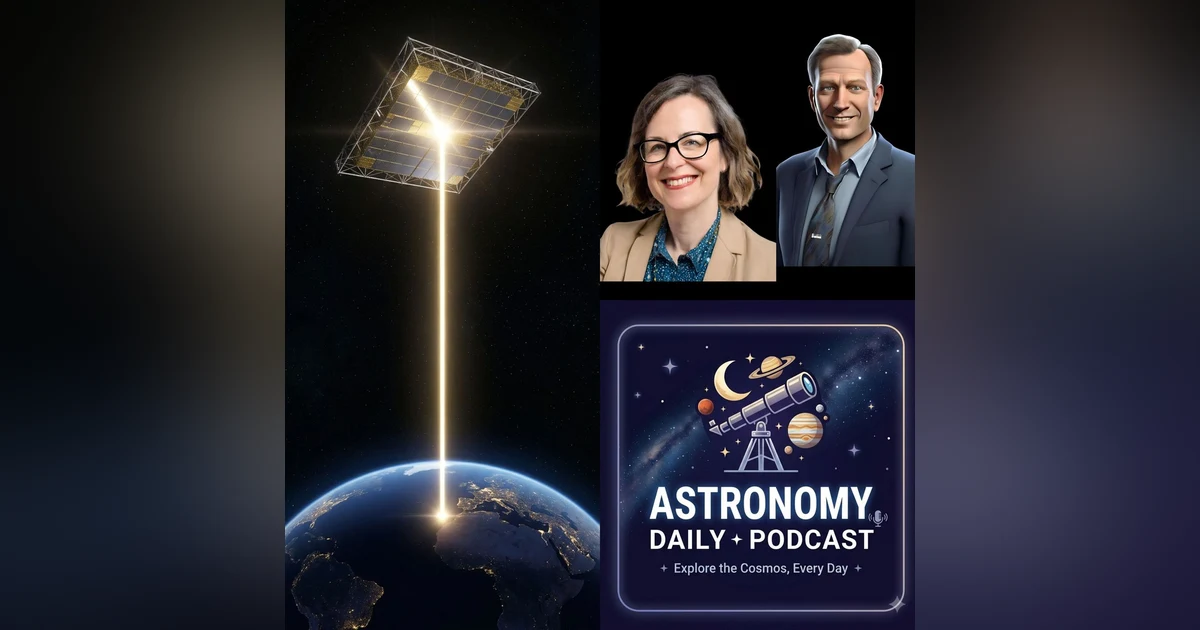
Today's episode — S05E179, Friday August 28, 2026: Feature story: US startup Reflect Orbital has FCC approval for Eärendil-1, a demonstration satellite carrying a 60-foot mirror, the first step toward a planned constellation of 50,000-plus orbital mirrors beaming reflected sunlight to Earth on demand. A new peer-reviewed study (Kocifaj, Bakos and Kundracik, accepted at The Astrophysical Journal Letters) finds a full-scale, 174-foot operational mirror would appear about 40 times brighter than the full Moon to anyone standing in its roughly 3.4-mile beam, with measurable sky-glow extending 20-34 km further — astronomer Gáspár Bakos says it would be "worse than big cities like London," warning "you would not see any stars if you were in the beam." The rest of the news: Starship update: Ship 40 — the Flight 13 upper stage that survived an intact splashdown on July 24 — has been loaded onto a heavy-lift transport vessel off Christmas Island and is now heading home to Starbase, Texas, a journey expected to take several months. Meanwhile Flight 14 has quietly slipped to no-earlier-than September 15, per internal SpaceX/FAA planning documents, with Booster 21's static fire testing now the pacing item. A hot, watery world on borrowed time: astronomers led by Sylvain Breton (INAF) have characterised HD 176071 b, an exoplanet 335 light-years away that's roughly 50% water by mass, orbiting so close to its star (a 14-hour year) that it's expected to eventually be consumed by tidal forces. Found via a reflected-light technique applied to archival Kepler data. Roman Space Telescope: two days from its Sunday, August 30 launch (7:26am ET, Falcon Heavy), with today's Launch Readiness Review still underway as we record. We trace the mission's near-cancellation in leaked 2025 budget documents proposing a 24% NASA funding cut — and how Roman's team responded to Congress restoring funding by pulling the launch forward eight months, finishing under budget. Tonight's Sky: the G2 geomagnetic storm NOAA forecast for today is playing out now — aurora chances improve at northern latitudes, unlikely to reach much past Tasmania locally. Venus and Saturn remain the reliable local targets, under a near-full Moon. Links & sources: Space.com — Massive space mirrors could be 40 times brighter than the full moon, astronomers warn arXiv — Atmospheric Light Pollution by Proposed Reflect Orbital Space Mirrors (Kocifaj, Bakos & Kundracik) Space.com — The FCC just gave Reflect Orbital permission to launch its 1st space mirror to orbit Space.com — Starship is coming home: SpaceX loads floating spacecraft onto huge ship in the Indian Ocean Space.com — Astronomers discover hot watery exoplanet destined to be swallowed by its star Space.com — Trump tried to scrap NASA's Roman Space Telescope last year. Now it's ready to launch Watchers.news — M6.9 solar flare produces Earth-directed CME, G2 geomagnetic storm watch issued for August 28 Follow us: @AstronomyDailyPod
Become a supporter of this podcast: https://www.spreaker.com/podcast/astronomy-daily-latest-space-news--5648921/support.
Sponsor Details:
Ensure your online privacy by using NordVPN. To get our special listener deal and save a lot of money, visit www.astronomydaily.io/nordvpn. You'll be glad you did!
Get the best secure and private email on the planet. Stop your Government, google and who knows who else spying on every email you write. Do what we did and use ProtonMail. They beleive in privacy and there are no ads in their business model...yet they still provide a free forever service. Check them out and get out special deal at www.astronomydaily.io/protonmail
Become a supporter of Astronomy Daily by joining our Supporters Club. Commercial free episodes daily are only a click way... Click Here
This episode includes AI-generated content.
0
00:00:00.800 --> 00:00:03.520
Anna: Here we go. Hi everyone. Welcome back to
1
00:00:03.520 --> 00:00:05.600
Astronomy AstroDailyPod. I'm Anna.
2
00:00:05.680 --> 00:00:08.120
Avery: And I'm um, avery. It's Friday, August
3
00:00:08.120 --> 00:00:10.440
28th. Series 5 Episode
4
00:00:10.440 --> 00:00:12.800
179 Today's Lead Storey
5
00:00:12.800 --> 00:00:15.360
Anna: is one of those genuinely new dilemmas.
6
00:00:15.680 --> 00:00:18.160
As we reported a few weeks ago, a US
7
00:00:18.160 --> 00:00:20.640
startup just got the green light to put a
8
00:00:20.640 --> 00:00:23.160
giant mirror in orbit and beam
9
00:00:23.160 --> 00:00:25.520
sunlight down to Earth at night. And
10
00:00:25.520 --> 00:00:28.480
astronomers are understandably not happy
11
00:00:28.480 --> 00:00:30.880
about the maths on how bright that actually
12
00:00:30.880 --> 00:00:31.280
is.
13
00:00:31.870 --> 00:00:34.110
Avery: Then Starship's, um, next flight quietly
14
00:00:34.110 --> 00:00:36.430
slips a few weeks while the last one is
15
00:00:36.430 --> 00:00:39.230
finally on its way home by ship. A hot little
16
00:00:39.230 --> 00:00:42.230
exoplanet that's living on borrowed time and
17
00:00:42.230 --> 00:00:44.510
the Roman Space Telescope two days from
18
00:00:44.510 --> 00:00:46.630
launch with a budget survival storey we
19
00:00:46.630 --> 00:00:47.709
haven't told you yet.
20
00:00:48.110 --> 00:00:49.070
Anna: Let's get into it.
21
00:00:49.230 --> 00:00:52.150
Avery: Okay, this first one sounds almost too on the
22
00:00:52.150 --> 00:00:55.070
nose. Mirrors in space aimed at Earth.
23
00:00:55.630 --> 00:00:58.620
Anna: That's exactly it. Uh, a US startup
24
00:00:58.620 --> 00:01:01.540
called ReflectOrbital wants to put tens
25
00:01:01.540 --> 00:01:04.260
of thousands of large mirrors into low
26
00:01:04.260 --> 00:01:06.780
Earth orbit and use them to beam
27
00:01:06.780 --> 00:01:09.660
reflected sunlight down to specific spots
28
00:01:09.660 --> 00:01:12.300
on the ground on demand, even at night.
29
00:01:12.540 --> 00:01:15.260
And back in July, the FCC actually
30
00:01:15.420 --> 00:01:18.140
approved their first demonstration satellite.
31
00:01:18.380 --> 00:01:20.220
Avery: Approved it to do what exactly?
32
00:01:20.460 --> 00:01:22.980
Anna: To launch and operate a satellite called
33
00:01:22.980 --> 00:01:25.940
Earendil 1, about 600 kilometres
34
00:01:25.940 --> 00:01:28.940
up, carrying a reflective mirror roughly
35
00:01:28.940 --> 00:01:31.740
60ft on a side. That's just the demo.
36
00:01:31.740 --> 00:01:34.220
The company's actual business plan is a
37
00:01:34.220 --> 00:01:36.620
constellation of more than 50,000
38
00:01:36.700 --> 00:01:39.660
mirrors by 2035, with the operational
39
00:01:39.660 --> 00:01:42.060
versions much bigger, again around
40
00:01:42.140 --> 00:01:45.020
174ft or 54
41
00:01:45.020 --> 00:01:46.220
metres per side.
42
00:01:46.620 --> 00:01:48.860
Avery: And um, the pitch is what free
43
00:01:48.860 --> 00:01:51.740
Anna: nighttime sunlight pretty much reflect.
44
00:01:51.740 --> 00:01:54.620
Orbital's pitch is extending solar panel
45
00:01:54.620 --> 00:01:57.560
output into the night, lighting disaster and
46
00:01:57.560 --> 00:01:59.520
search and rescue zones without needing
47
00:01:59.520 --> 00:02:02.200
generators, letting construction and outdoor
48
00:02:02.200 --> 00:02:05.160
work run longer hours. Even carbon free
49
00:02:05.160 --> 00:02:08.040
street lighting. On paper, it's a genuinely
50
00:02:08.040 --> 00:02:10.240
interesting idea. Controllable,
51
00:02:10.400 --> 00:02:13.120
targeted daylight wherever and whenever you
52
00:02:13.120 --> 00:02:13.600
need it.
53
00:02:14.080 --> 00:02:15.520
Avery: So where's the catch?
54
00:02:15.840 --> 00:02:18.160
Anna: The catch is what it does to everyone
55
00:02:18.400 --> 00:02:20.880
standing underneath it who didn't ask for it.
56
00:02:21.040 --> 00:02:23.940
And to the night sky generally. A new peer
57
00:02:23.940 --> 00:02:26.900
reviewed study led by Miroslav Kochifai
58
00:02:26.900 --> 00:02:29.860
and Princeton astrophysicist Gaspar Bakos
59
00:02:30.100 --> 00:02:33.020
worked out exactly how bright one of these
60
00:02:33.020 --> 00:02:35.900
full scale 54 metre mirrors would
61
00:02:35.900 --> 00:02:38.420
actually look from the ground. Their number
62
00:02:38.660 --> 00:02:40.020
about magnitude
63
00:02:40.020 --> 00:02:42.980
-16.7, roughly 4
64
00:02:42.980 --> 00:02:45.540
magnitudes, which works out to about 40
65
00:02:45.700 --> 00:02:48.540
times brighter than the full moon for anyone
66
00:02:48.540 --> 00:02:51.260
standing inside its roughly 3.4
67
00:02:51.260 --> 00:02:52.020
mile beam.
68
00:02:52.730 --> 00:02:55.570
Avery: 40 times the full moon. That's not reading
69
00:02:55.570 --> 00:02:58.010
by moonlight bright. That's daylight.
70
00:02:58.490 --> 00:03:00.930
Anna: That's the point. Bacchus was making. His
71
00:03:00.930 --> 00:03:03.330
actual quote was that it would be worse than
72
00:03:03.330 --> 00:03:05.770
big cities like London for light pollution
73
00:03:05.930 --> 00:03:08.530
and that you would not see any stars if you
74
00:03:08.530 --> 00:03:10.650
were in the beam. And it's not just the
75
00:03:10.650 --> 00:03:13.570
direct beam either. The study also modelled
76
00:03:13.570 --> 00:03:16.170
how sunlight scatters around the atmosphere
77
00:03:16.250 --> 00:03:18.670
around that brightest source, and found the
78
00:03:18.670 --> 00:03:21.510
skyglow stays measurably brighter for another
79
00:03:21.590 --> 00:03:24.510
20 to 30 kilometres beyond the edge
80
00:03:24.510 --> 00:03:25.590
of the beam itself.
81
00:03:26.150 --> 00:03:27.990
Avery: So even people who aren't the target
82
00:03:28.150 --> 00:03:30.830
Anna: still get some of the glow right, and it
83
00:03:30.830 --> 00:03:33.710
compounds. Space.com's reporting on the
84
00:03:33.710 --> 00:03:36.470
study noted that if you had several hundred
85
00:03:36.470 --> 00:03:38.790
of these mirrors with overlapping beams,
86
00:03:38.870 --> 00:03:41.430
which is exactly what a 40,000 plus
87
00:03:41.430 --> 00:03:43.470
satellite constellation would eventually
88
00:03:43.470 --> 00:03:46.270
produce, the combined brightness could run
89
00:03:46.270 --> 00:03:49.230
up around, uh, 10,000 times the full moon
90
00:03:49.230 --> 00:03:50.470
in the overlap zones.
91
00:03:50.870 --> 00:03:53.270
Avery: That feels like a genuinely different scale
92
00:03:53.270 --> 00:03:55.310
of problem to what we've talked about before
93
00:03:55.310 --> 00:03:56.790
with satellite constellations.
94
00:03:57.350 --> 00:03:59.830
Anna: It is a different problem and it's worth
95
00:03:59.830 --> 00:04:02.350
being precise about that difference. The
96
00:04:02.350 --> 00:04:04.910
Starlink style mega constellation complaints
97
00:04:04.910 --> 00:04:07.390
astronomers have been raising for years are
98
00:04:07.390 --> 00:04:10.070
mostly about individual satellites showing up
99
00:04:10.070 --> 00:04:12.430
as bright, moving streaks across long
100
00:04:12.430 --> 00:04:14.870
exposure telescope images. Annoying,
101
00:04:14.950 --> 00:04:17.830
sometimes ruining a specific observation, but
102
00:04:17.830 --> 00:04:20.710
a source of light, not a source of daylight.
103
00:04:21.030 --> 00:04:23.790
This is different. It's purpose built to be
104
00:04:23.790 --> 00:04:26.590
as bright as possible, aimed deliberately at
105
00:04:26.590 --> 00:04:29.430
a patch of ground dark. Sky advocates like
106
00:04:29.430 --> 00:04:32.070
John Barentine have flagged separate concerns
107
00:04:32.070 --> 00:04:34.790
too. The effect on nocturnal wildlife that
108
00:04:34.790 --> 00:04:37.430
navigate and hunt by natural light cycles,
109
00:04:37.590 --> 00:04:39.190
not just on telescopes.
110
00:04:39.840 --> 00:04:41.160
Avery: What does the company say to all
111
00:04:41.160 --> 00:04:44.120
Anna: that Reflect Orbital's position? Is that the
112
00:04:44.120 --> 00:04:46.640
light stays contained to a defined target
113
00:04:46.640 --> 00:04:49.440
area, that beams can be shut off instantly if
114
00:04:49.440 --> 00:04:51.600
needed, and that they'll steer clear of
115
00:04:51.600 --> 00:04:54.040
observatories and sensitive habitats when
116
00:04:54.040 --> 00:04:56.520
scheduling illumination passes. Whether
117
00:04:56.520 --> 00:04:59.000
that's enough to satisfy critics once there
118
00:04:59.000 --> 00:05:01.360
are tens of thousands of these things flying
119
00:05:01.680 --> 00:05:04.600
rather than one demo satellite, is very much
120
00:05:04.600 --> 00:05:07.290
the open question. And it's one regulators
121
00:05:07.290 --> 00:05:09.730
are going to have to keep answering as more
122
00:05:09.730 --> 00:05:11.130
of these filings show up.
123
00:05:11.850 --> 00:05:14.250
Avery: So this is really the opening chapter of a
124
00:05:14.250 --> 00:05:16.170
much bigger fight. Not the whole storey,
125
00:05:16.810 --> 00:05:17.610
exactly.
126
00:05:17.610 --> 00:05:20.370
Anna: That Arendelle Lun hasn't even flown
127
00:05:20.370 --> 00:05:22.970
yet. It's still targeted for later this year,
128
00:05:23.130 --> 00:05:25.890
but the FCC's already approved it. The
129
00:05:25.890 --> 00:05:28.330
astronomy community has already got peer
130
00:05:28.330 --> 00:05:31.130
reviewed numbers on exactly how bad the
131
00:05:31.130 --> 00:05:33.380
full scale version would be. And the
132
00:05:33.380 --> 00:05:36.060
company's public ambition is 40,000
133
00:05:36.140 --> 00:05:39.100
to 50,000 of these things within a decade.
134
00:05:39.420 --> 00:05:41.620
That's the shape of the next big fight
135
00:05:41.620 --> 00:05:44.220
between commercial space and the people who'd
136
00:05:44.220 --> 00:05:46.940
like to still see actual stars at night.
137
00:05:47.340 --> 00:05:49.860
Avery: A mirror in orbit and a genuinely
138
00:05:49.860 --> 00:05:51.580
unresolved argument underneath it.
139
00:05:52.060 --> 00:05:54.660
Anna: Watch this space. Sorry, couldn't resist that
140
00:05:54.660 --> 00:05:54.940
one.
141
00:05:55.340 --> 00:05:57.700
Avery: Sticking with things in orbit. Or in this
142
00:05:57.700 --> 00:06:00.620
case, things very much not in orbit anymore.
143
00:06:01.270 --> 00:06:03.870
Anna: Two Starship updates today, and they bookend
144
00:06:03.870 --> 00:06:06.870
each other nicely. First ship 40, the
145
00:06:06.870 --> 00:06:09.390
upper stage that made that historic intact
146
00:06:09.390 --> 00:06:12.262
splashdown after Flight 13 back on July
147
00:06:12.358 --> 00:06:15.310
24, has finally been loaded onto a heavy
148
00:06:15.310 --> 00:06:18.150
lift transport vessel in the Indian Ocean off
149
00:06:18.150 --> 00:06:20.750
Christmas island and is now on its way home
150
00:06:20.750 --> 00:06:22.630
to Starbase in South Texas.
151
00:06:23.110 --> 00:06:24.870
Avery: That's the one that had been floating around
152
00:06:24.870 --> 00:06:25.830
for weeks, right?
153
00:06:26.560 --> 00:06:29.080
Anna: That's the one towed further than originally
154
00:06:29.080 --> 00:06:31.640
expected, ending up sheltering off Christmas
155
00:06:31.640 --> 00:06:34.000
island for over three weeks before this
156
00:06:34.000 --> 00:06:36.600
loading happened. SpaceX says the trip back
157
00:06:36.600 --> 00:06:39.240
to Texas will take several months, but the
158
00:06:39.240 --> 00:06:41.920
reason it mattered enough to tow home at all
159
00:06:42.080 --> 00:06:45.040
is that ship 40 is the first starship upper
160
00:06:45.040 --> 00:06:47.520
stage ever to survive re entry and
161
00:06:47.520 --> 00:06:50.440
splashdown intact. So engineers now
162
00:06:50.440 --> 00:06:53.120
get to physically inspect real heat shield
163
00:06:53.120 --> 00:06:55.920
samples and reentry damage, rather than just
164
00:06:55.920 --> 00:06:58.560
working from telemetry data that's already
165
00:06:58.640 --> 00:07:01.160
feeding into design changes on the next ships
166
00:07:01.160 --> 00:07:01.600
in line.
167
00:07:02.080 --> 00:07:04.720
Avery: And speaking of the next ship in line, that's
168
00:07:04.720 --> 00:07:06.480
flight 14, right?
169
00:07:06.560 --> 00:07:08.680
Anna: And here's the update. Some of what's
170
00:07:08.680 --> 00:07:11.400
circulating still says Flight 14 is
171
00:07:11.400 --> 00:07:14.080
targeting around August 28th today,
172
00:07:14.400 --> 00:07:16.880
but that number's gone stale. Internal
173
00:07:16.880 --> 00:07:19.760
SpaceX and FAA air traffic planning documents
174
00:07:19.760 --> 00:07:22.480
reported earlier this week put the actual
175
00:07:22.480 --> 00:07:25.440
no earlier than date at September 15th.
176
00:07:26.000 --> 00:07:28.640
Ship 41 already finished its testing
177
00:07:28.800 --> 00:07:31.680
a single engine deorbit burn demo and
178
00:07:31.680 --> 00:07:34.360
a full six engine static fire in the last
179
00:07:34.360 --> 00:07:37.040
week or so. But booster 21 only
180
00:07:37.120 --> 00:07:39.760
just rolled out to the pad for its own static
181
00:07:39.760 --> 00:07:42.560
fire on Monday. And that's the item actually
182
00:07:42.640 --> 00:07:43.760
setting the pace now.
183
00:07:44.240 --> 00:07:47.120
Avery: So ship 40 finally gets home right as its
184
00:07:47.120 --> 00:07:48.400
sibling gears up to fly.
185
00:07:48.800 --> 00:07:51.560
Anna: Nice bit of symmetry, yes, and when Flight
186
00:07:51.560 --> 00:07:54.030
14 does go it it's aiming for something
187
00:07:54.030 --> 00:07:56.990
Starship hasn't done yet, a full orbital
188
00:07:56.990 --> 00:07:59.630
flight. Deploying the newer larger Starlink
189
00:07:59.630 --> 00:08:02.350
V3 satellites. Though the tower catch
190
00:08:02.350 --> 00:08:04.150
attempt for the returning ship is being
191
00:08:04.150 --> 00:08:06.990
pushed back again. Musk saying that's
192
00:08:06.990 --> 00:08:09.670
now probably in a few months. Rather than
193
00:08:09.670 --> 00:08:12.510
this flight, ship 41 will splash down in the
194
00:08:12.510 --> 00:08:15.030
ocean instead. Same as ship 40 did.
195
00:08:15.430 --> 00:08:18.030
Avery: One ship finally coming home by boat, the
196
00:08:18.030 --> 00:08:20.270
next one still a few weeks from even trying
197
00:08:20.270 --> 00:08:20.870
to fly.
198
00:08:21.460 --> 00:08:23.500
Anna: That's Starship in one sentence at the
199
00:08:23.500 --> 00:08:26.340
moment. Recovery and preparation happening in
200
00:08:26.340 --> 00:08:28.700
parallel on two completely different
201
00:08:28.700 --> 00:08:29.540
timescales.
202
00:08:29.860 --> 00:08:32.060
Avery: Alright, uh, from rockets to an actual
203
00:08:32.060 --> 00:08:34.900
planet, one with a pretty grim forecast.
204
00:08:35.380 --> 00:08:37.796
Anna: Meet HD 176071
205
00:08:38.084 --> 00:08:40.380
b, a newly
206
00:08:40.380 --> 00:08:42.260
characterised exoplanet about
207
00:08:42.260 --> 00:08:44.660
335 light years away.
208
00:08:45.060 --> 00:08:48.020
Found by a team led by Sylvain Breton at
209
00:08:48.020 --> 00:08:50.740
Italy's National Institute for astrophysics.
210
00:08:51.340 --> 00:08:53.740
It's roughly 2 1/2 times Earth's width,
211
00:08:54.060 --> 00:08:56.900
about 8 1/2 times Earth's mass. And the
212
00:08:56.900 --> 00:08:59.140
modelling suggests something like half of
213
00:08:59.140 --> 00:09:02.060
that mass is water, half water.
214
00:09:02.540 --> 00:09:04.980
Avery: So an um, actual ocean world, not just a
215
00:09:04.980 --> 00:09:06.780
rocky planet with some water on it.
216
00:09:07.019 --> 00:09:09.300
Anna: That's the read. Though Ocean
217
00:09:09.300 --> 00:09:11.500
undersells how strange the conditions
218
00:09:11.580 --> 00:09:14.460
probably are because this planet orbits its
219
00:09:14.460 --> 00:09:16.980
star from just one and a half million miles
220
00:09:16.980 --> 00:09:19.660
out, completing a ah, full year in about
221
00:09:19.660 --> 00:09:22.550
14 hours. At that distance. We're
222
00:09:22.550 --> 00:09:25.350
not talking gentle blue oceans, we're talking
223
00:09:25.350 --> 00:09:28.190
a permanently baked tidally battered water
224
00:09:28.190 --> 00:09:28.590
world.
225
00:09:29.070 --> 00:09:31.070
Avery: How do you even find something like that?
226
00:09:31.310 --> 00:09:33.630
Doesn't the usual method needed to cross in
227
00:09:33.630 --> 00:09:35.510
front of its star Normally.
228
00:09:35.510 --> 00:09:38.190
Anna: Yes. The transit method. Watching
229
00:09:38.190 --> 00:09:40.830
starlight dim as a planet passes in front.
230
00:09:41.310 --> 00:09:43.390
This one was found a different way.
231
00:09:43.710 --> 00:09:46.310
Retton's team compared old Kepler space
232
00:09:46.310 --> 00:09:48.870
telescope data against newer observations
233
00:09:48.870 --> 00:09:51.380
from TESS and used the HAARPS N
234
00:09:51.380 --> 00:09:54.060
instrument on the Galileo National Telescope
235
00:09:54.220 --> 00:09:56.860
to measure tiny variations in sunlight
236
00:09:56.940 --> 00:09:59.500
reflected directly off the planet's surface.
237
00:09:59.740 --> 00:10:02.580
Rather than waiting for a transit dip, it's a
238
00:10:02.580 --> 00:10:04.860
nice reminder that there's still real science
239
00:10:04.860 --> 00:10:07.220
to be squeezed out of years old archival
240
00:10:07.220 --> 00:10:09.660
data. If you bring a new technique to
241
00:10:09.660 --> 00:10:12.540
Avery: it and the living on borrowed
242
00:10:12.540 --> 00:10:14.540
time part, where does that come from?
243
00:10:15.020 --> 00:10:17.660
Anna: From exactly how close it's orbiting
244
00:10:17.980 --> 00:10:20.900
at 1 1/2 million miles. The tidal
245
00:10:20.900 --> 00:10:23.680
forces from star are extreme and the
246
00:10:23.680 --> 00:10:25.960
consensus from the team is that this planet
247
00:10:25.960 --> 00:10:28.720
is being slowly consumed. The kind of
248
00:10:28.720 --> 00:10:31.160
fate that waits for anything hugging a star
249
00:10:31.160 --> 00:10:33.680
this tightly. It won't happen on any
250
00:10:33.680 --> 00:10:36.560
timescale. We'll be around to watch. But it's
251
00:10:36.560 --> 00:10:38.960
basically doomed by geometry the moment you
252
00:10:38.960 --> 00:10:39.880
look at the orbit.
253
00:10:40.280 --> 00:10:43.160
Avery: A uh, genuine ocean world discovered by a
254
00:10:43.160 --> 00:10:46.080
clever trick with old data and already on
255
00:10:46.080 --> 00:10:47.800
a slow path to being swallowed.
256
00:10:48.350 --> 00:10:51.150
Anna: Space has a way of finding new categories of
257
00:10:51.150 --> 00:10:53.910
beautiful but temporary last storey
258
00:10:53.910 --> 00:10:54.910
before skywatch.
259
00:10:54.910 --> 00:10:56.950
Avery: And um, it's the big one on everyone's launch
260
00:10:56.950 --> 00:10:57.870
calendar right now.
261
00:10:58.190 --> 00:11:00.950
Anna: The Nancy Grace Roman space telescope is
262
00:11:00.950 --> 00:11:03.430
two days from launch Sunday August
263
00:11:03.430 --> 00:11:06.030
30, 7:26am, um, Eastern
264
00:11:06.190 --> 00:11:08.750
on a Falcon Heavy from Kennedy Space Centre.
265
00:11:08.990 --> 00:11:11.230
Today is actually the launch readiness review
266
00:11:11.310 --> 00:11:14.110
happening as we record this. So we don't have
267
00:11:14.110 --> 00:11:16.710
that outcome yet. We'll be all over it once
268
00:11:16.710 --> 00:11:17.310
it lands.
269
00:11:17.740 --> 00:11:19.820
But we wanted to use today's slot on
270
00:11:19.820 --> 00:11:22.700
something. We haven't told you how close this
271
00:11:22.700 --> 00:11:25.020
mission came to never flying at all.
272
00:11:25.500 --> 00:11:27.020
Avery: I don't think I've Heard this part.
273
00:11:27.500 --> 00:11:29.780
Anna: Most people haven't, because it happened
274
00:11:29.780 --> 00:11:32.300
quietly in budget documents rather than
275
00:11:32.300 --> 00:11:34.780
headlines. Back in April last year,
276
00:11:35.020 --> 00:11:37.420
leaked draughts of the Trump administration's
277
00:11:37.420 --> 00:11:39.820
proposed 2026 NASA budget
278
00:11:40.060 --> 00:11:42.100
showed the largest funding cut in the
279
00:11:42.100 --> 00:11:44.790
agency's history on the table, uh, a
280
00:11:44.790 --> 00:11:47.750
24% overall reduction, with science
281
00:11:47.750 --> 00:11:50.630
programmes alone facing a 50% cut.
282
00:11:51.030 --> 00:11:53.870
And buried in that proposal, no funding
283
00:11:53.870 --> 00:11:56.790
Avery: for Roman for a mission that was already
284
00:11:57.430 --> 00:11:59.350
what most of the way built,
285
00:11:59.830 --> 00:12:02.150
Anna: 95% complete at that point,
286
00:12:02.390 --> 00:12:05.070
hardware built, tested most of the way
287
00:12:05.070 --> 00:12:07.750
through integration, and still facing a line
288
00:12:07.750 --> 00:12:10.110
in a federal budget proposal that would have
289
00:12:10.110 --> 00:12:12.370
effectively cancelled it. When the official
290
00:12:12.530 --> 00:12:15.290
skinny budget came out weeks later, it walked
291
00:12:15.290 --> 00:12:17.490
that back slightly. Roman got
292
00:12:17.490 --> 00:12:20.450
$156.6 million, less
293
00:12:20.450 --> 00:12:22.610
than half what it had the year before, but
294
00:12:22.610 --> 00:12:25.210
not zero. Still nowhere near enough
295
00:12:25.210 --> 00:12:27.170
certainty for a mission this far along.
296
00:12:27.810 --> 00:12:30.290
Avery: So how did it end up two days from launch?
297
00:12:30.290 --> 00:12:32.970
Anna: Instead, Congress rejected the deeper cuts
298
00:12:32.970 --> 00:12:35.130
and restored NASA's funding to its previous
299
00:12:35.130 --> 00:12:37.690
levels. That's the part that actually saved
300
00:12:37.690 --> 00:12:40.130
it. But here's the detail we liked enough to
301
00:12:40.130 --> 00:12:42.290
build the whole segment around. Rather than
302
00:12:42.290 --> 00:12:45.130
just breathing a sigh of relief, Roman's own
303
00:12:45.130 --> 00:12:47.770
management team used the scare as motivation.
304
00:12:48.090 --> 00:12:50.490
They pulled the launch timeline forward from
305
00:12:50.490 --> 00:12:53.370
September to August 30, running double
306
00:12:53.370 --> 00:12:55.210
shifts and weekend work to get there,
307
00:12:55.450 --> 00:12:57.730
finishing eight months ahead of the original
308
00:12:57.730 --> 00:12:59.610
schedule and under budget.
309
00:13:00.010 --> 00:13:02.930
Avery: That's a genuinely unusual reaction to nearly
310
00:13:02.930 --> 00:13:05.540
losing your funding. So sprint faster, not
311
00:13:05.540 --> 00:13:05.980
slower.
312
00:13:06.380 --> 00:13:08.940
Anna: Project manager Jamie Dunn put it about as
313
00:13:08.940 --> 00:13:11.220
plainly as you can. Delivering on your
314
00:13:11.220 --> 00:13:13.620
commitments means something, whatever you
315
00:13:13.620 --> 00:13:15.820
think about the politics around it. That's a
316
00:13:15.820 --> 00:13:18.100
team that came within a budget line of being
317
00:13:18.100 --> 00:13:20.860
cancelled and answered by launching nine
318
00:13:20.860 --> 00:13:23.300
months early. Once we've got the launch
319
00:13:23.300 --> 00:13:25.540
readiness review outcome and Sunday's launch
320
00:13:25.540 --> 00:13:28.100
itself, we'll bring you the full storey for
321
00:13:28.100 --> 00:13:30.460
today. That's the part worth knowing going in
322
00:13:30.870 --> 00:13:33.190
Avery: a telescope that survived Washington before
323
00:13:33.190 --> 00:13:34.630
it even had to survive launch.
324
00:13:35.270 --> 00:13:37.070
Anna: Sometimes the hardest part of getting to
325
00:13:37.070 --> 00:13:39.270
space happens entirely on the ground.
326
00:13:39.750 --> 00:13:42.310
Avery: Alright, Skywatch time, quick win on both
327
00:13:42.310 --> 00:13:43.350
hemispheres tonight.
328
00:13:43.670 --> 00:13:46.470
Anna: Starting up north, that G2 geomagnetic
329
00:13:46.470 --> 00:13:48.910
storm watch NOAA issued earlier this week for
330
00:13:48.910 --> 00:13:51.790
Today, Friday the 28th is playing out
331
00:13:51.790 --> 00:13:54.310
right now as we speak. The combination of
332
00:13:54.310 --> 00:13:57.190
Tuesday's, um, M6.9 flare and a
333
00:13:57.190 --> 00:13:59.470
high speed solar wind stream reaching Earth's
334
00:13:59.470 --> 00:14:02.300
magnetosphere. If you're at higher latitudes,
335
00:14:02.380 --> 00:14:04.460
northern tier US states, the uk,
336
00:14:04.940 --> 00:14:07.820
Scandinavia and similar tonight and into the
337
00:14:07.820 --> 00:14:09.980
weekend are worth stepping out for, weather
338
00:14:09.980 --> 00:14:10.540
permitting.
339
00:14:10.860 --> 00:14:12.660
Avery: And for us in the southern hemisphere,
340
00:14:12.660 --> 00:14:15.140
Anna: one more time, pretty much the same answer as
341
00:14:15.140 --> 00:14:17.820
it's been all week. A G2 level storm
342
00:14:17.820 --> 00:14:20.260
typically doesn't push the aurora Australis
343
00:14:20.260 --> 00:14:22.740
much past Tasmania on a good night. And
344
00:14:22.740 --> 00:14:24.740
there's nothing in this forecast suggesting
345
00:14:24.740 --> 00:14:26.620
it goes further than that this time either.
346
00:14:27.100 --> 00:14:28.900
Worth a glance at the southern horizon if
347
00:14:28.900 --> 00:14:30.980
you're somewhere dark, but we wouldn't build
348
00:14:30.980 --> 00:14:31.820
plans around it.
349
00:14:32.220 --> 00:14:34.340
Avery: What's actually reliable for us down here
350
00:14:34.340 --> 00:14:34.750
tonight then?
351
00:14:34.750 --> 00:14:37.660
Anna: Um, Venus and Saturn. Same pair we've been
352
00:14:37.660 --> 00:14:40.260
pointing you to all week. Venus low in the
353
00:14:40.260 --> 00:14:42.900
west shortly after sunset. Unmistakably
354
00:14:42.900 --> 00:14:44.860
bright even with some light pollution around
355
00:14:45.260 --> 00:14:47.660
Saturn. Well placed and worth finding with
356
00:14:47.660 --> 00:14:50.460
binoculars once it's properly dark and
357
00:14:50.460 --> 00:14:52.820
tonight the Moon's essentially full. We
358
00:14:52.820 --> 00:14:54.660
watched most of the world's share of that
359
00:14:54.660 --> 00:14:56.900
partial lunar eclipse pass by in broad
360
00:14:56.900 --> 00:14:59.620
daylight here earlier today, so it'll be a
361
00:14:59.620 --> 00:15:01.780
bright night for the Moon itself, even if
362
00:15:01.780 --> 00:15:03.700
it's washing out some of the fainter stuff
363
00:15:03.700 --> 00:15:04.220
around it.
364
00:15:04.540 --> 00:15:07.500
Avery: Venus at dusk, Saturn after dark, a full
365
00:15:07.500 --> 00:15:09.780
moon overhead and an aurora that's someone
366
00:15:09.780 --> 00:15:10.380
else's show.
367
00:15:10.380 --> 00:15:13.220
Anna: Tonight, a uh, properly full sky. Even
368
00:15:13.220 --> 00:15:15.420
the parts of it that aren't technically ours.
369
00:15:15.820 --> 00:15:17.980
And that's it for today's episode, series
370
00:15:18.060 --> 00:15:20.140
five, episode 179
371
00:15:20.990 --> 00:15:22.350
and my quick recap.
372
00:15:22.510 --> 00:15:25.430
Avery: A uh, US startup's plan to beam sunlight
373
00:15:25.430 --> 00:15:27.790
down from orbit using giant mirrors has
374
00:15:27.790 --> 00:15:30.710
cleared its first FCC hurdle and the new
375
00:15:30.710 --> 00:15:32.990
peer reviewed study says the full scale
376
00:15:32.990 --> 00:15:35.790
version would be roughly 40 times brighter
377
00:15:35.790 --> 00:15:38.070
than the full Moon. For anyone caught in the
378
00:15:38.070 --> 00:15:40.750
beam. Starship's ship 40 is
379
00:15:40.750 --> 00:15:43.190
finally on its way home from the Indian Ocean
380
00:15:43.190 --> 00:15:46.030
by ship while Flight 14 quietly
381
00:15:46.030 --> 00:15:48.920
slips to mid September, astronomers have
382
00:15:48.920 --> 00:15:51.520
found a hot water rich exoplanet
383
00:15:51.520 --> 00:15:54.520
slowly being consumed by its star, and
384
00:15:54.520 --> 00:15:57.320
the Roman Space Telescope is two days from
385
00:15:57.320 --> 00:15:59.800
launch after nearly losing its funding
386
00:15:59.800 --> 00:16:02.680
entirely last year and answering by launching
387
00:16:02.680 --> 00:16:03.560
nine months early.
388
00:16:04.360 --> 00:16:06.560
Anna: If you enjoyed the show, the best thing you
389
00:16:06.560 --> 00:16:08.800
can do is tell a friend. Leave us a rating
390
00:16:08.800 --> 00:16:11.320
wherever you listen and follow us. Just
391
00:16:11.320 --> 00:16:13.720
search Astro AstroDailyPod Pod on Facebook,
392
00:16:14.120 --> 00:16:17.040
Instagram, TikTok x Tumblr and
393
00:16:17.040 --> 00:16:17.520
YouTube.
394
00:16:18.080 --> 00:16:19.520
Avery: And while you're there, head to
395
00:16:19.520 --> 00:16:22.400
astronomydaily.IO and sign up for
396
00:16:22.400 --> 00:16:25.080
our free daily newsletter, a summary of the
397
00:16:25.080 --> 00:16:27.400
latest space and astronomy news straight to
398
00:16:27.400 --> 00:16:30.280
your inbox, plus an email alert every time
399
00:16:30.280 --> 00:16:31.520
we post a new episode.
400
00:16:31.920 --> 00:16:34.240
Anna: We'll be back tomorrow with the weekend wrap.
401
00:16:34.400 --> 00:16:37.160
Until then, keep looking up clear
402
00:16:37.160 --> 00:16:39.040
skies everyone. See you then.
403
00:16:41.870 --> 00:16:42.890
Avery: Mhm.
404
00:16:45.770 --> 00:16:46.010
Anna: Love.


