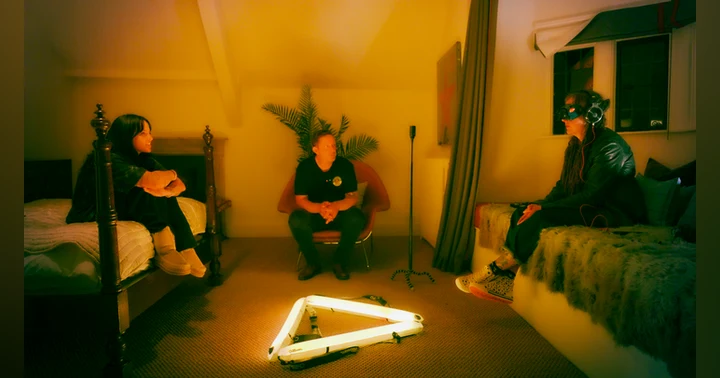
Till Death Wed Us
There are few stories more unsettling than that of Karl Tanzler. Even among the countless tales of obsession, grave robbing and the macabre that fill the darker corners of history, his remains uniquely disturbing. In the 1930s, the German-born radiographer working in Key West became captivated by one of his patients, a young woman named Elena Hoyos. When tuberculosis claimed her life, grief slowly gave way to obsession. Night after night he visited her mausoleum, convinced that death had not severed the bond between them. Two years later he secretly removed her body, taking it home where, over the course of seven years, he painstakingly attempted to preserve it using wire, wax, plaster and fabric. He lived beside her remains as though the life they had imagined together had merely been postponed.
It is a story that seems to exist outside ordinary history. It belongs somewhere between Gothic fiction and psychological horror. Yet while Tanzler's actions were extraordinary, the questions they raise are surprisingly ancient. What becomes of love when death arrives before marriage? Can a life cut short ever truly be considered complete? And should death have the final word over promises made by the living?
Across the world, and stretching back centuries, different cultures answered those questions in ways that continue to astonish us today.
Long before Tanzler wandered the cemeteries of Florida beneath the cover of darkness, families throughout Asia, Africa and Europe were arranging weddings for those who had already died. Some united a deceased bride with a deceased groom. Others allowed the living to marry the dead. There were ceremonies, wedding feasts, matchmakers, vows and even dowries. These were not secret rites performed by eccentrics on society's fringes, but recognised customs embedded within communities, each intended to repair the disruption caused by an untimely death.
To modern readers, the phrase ghost marriage immediately conjures images of haunted churches, spectral brides and restless spirits wandering through moonlit graveyards. The historical reality is both less theatrical and far more revealing. These ceremonies were rarely about romance in the modern sense. Instead, they reflected how deeply marriage once shaped every aspect of society.
Today we tend to think of marriage as a personal choice between two individuals. Historically, it was something much larger. Marriage determined inheritance, family identity, property rights, social standing and the continuation of an ancestral line. To die unmarried was not simply to miss out on companionship. In many societies it represented an unfinished existence, leaving obligations unresolved and families uncertain about how the deceased should be remembered.
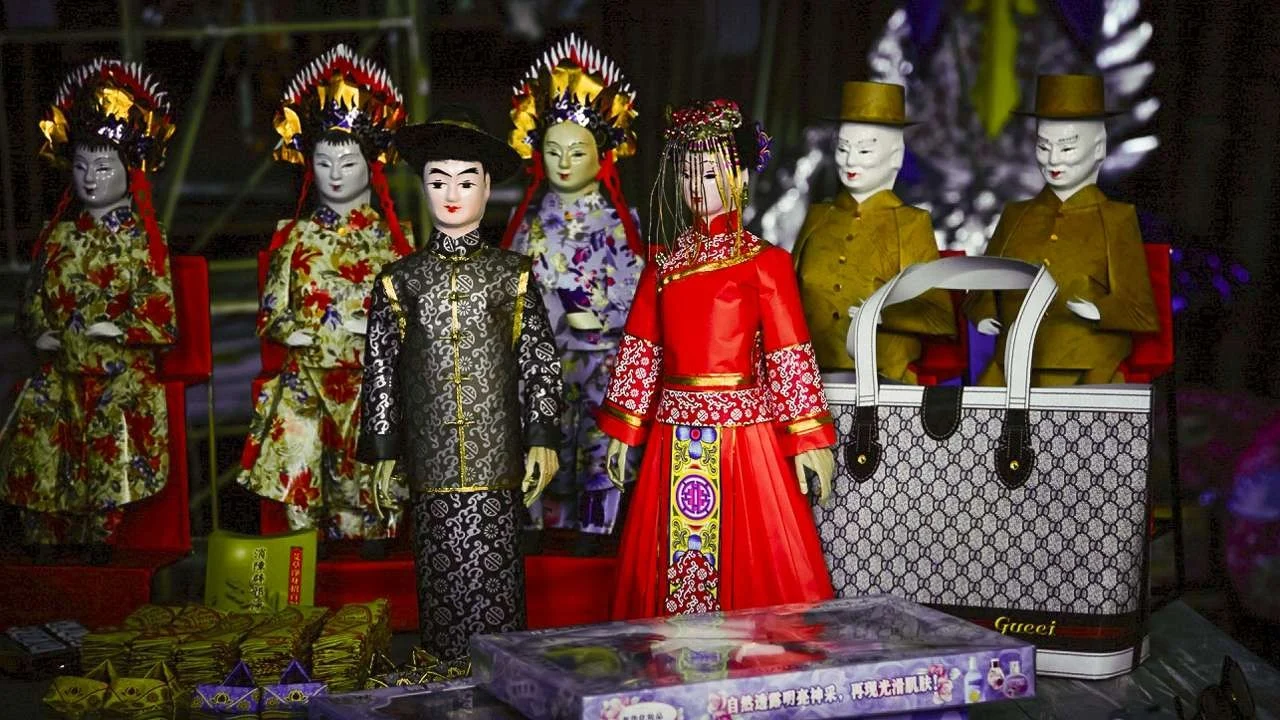
Nowhere is this more evident than in China, where ghost marriage has been practised in various forms for many centuries. Although customs differed from region to region, the underlying belief remained remarkably consistent. A young man or woman who died before marriage could become spiritually restless, lingering uneasily between the worlds of the living and the dead. Such spirits were believed capable of disturbing surviving relatives, bringing illness, financial hardship or persistent misfortune until their unmet desires had been addressed.
Whether these experiences arose through dreams, séances or unexplained family troubles, the solution was often the same. Find a suitable spouse.
Families would seek another household whose unmarried son or daughter had also died. Negotiations were carried out much like ordinary matchmaking, with compatibility, family reputation and tradition all playing their part. Once an agreement had been reached, a wedding ceremony followed. Offerings were made to the ancestors, rituals observed and, in many cases, the remains of the newly married couple were buried together so that, symbolically at least, they could continue into the next world side by side.
Seen through modern eyes, the practice can appear profoundly unsettling. Yet within its original context it was considered an act of kindness rather than superstition. The ceremony offered comfort not only to the dead but also to those left behind, reassuring grieving families that an interrupted life had, in some measure, been completed.
There were practical considerations too. Traditional Chinese society was strongly patrilineal. Sons remained within the family line, while daughters usually became part of their husband's household after marriage. A daughter who died unmarried occupied an uncomfortable position. She no longer had a clear place within the family structure, even after death. Through ghost marriage, her spirit could be formally welcomed into another family, ensuring that she would continue to be remembered, honoured and included in ancestral rites rather than fading into obscurity.
As with so many customs rooted in sincere belief, however, darker consequences eventually followed.
The demand for suitable ghost brides became so significant in some parts of northern China that it created an illicit trade in human remains. Grave robbers began targeting the recently buried, stealing the bodies of young women before selling them to families seeking wives for deceased sons. In recent decades Chinese police have uncovered criminal gangs involved in exhumations, body trafficking and, in the most disturbing cases, murders allegedly committed to satisfy the continuing demand for ghost brides.
It is a sobering reminder that even traditions born from compassion can become vulnerable to exploitation.
Japan developed a very different answer to the same problem.
Rather than pairing two deceased individuals together, some communities instead symbolically married the dead to beautifully crafted dolls. The idea sounds almost whimsical until one understands the belief behind it. Those who died young were thought to harbour resentment because they had been denied the ordinary milestones of adult life. Marriage represented one of those essential passages. Without it, the spirit might remain dissatisfied, turning its frustration towards surviving relatives through illness or misfortune.
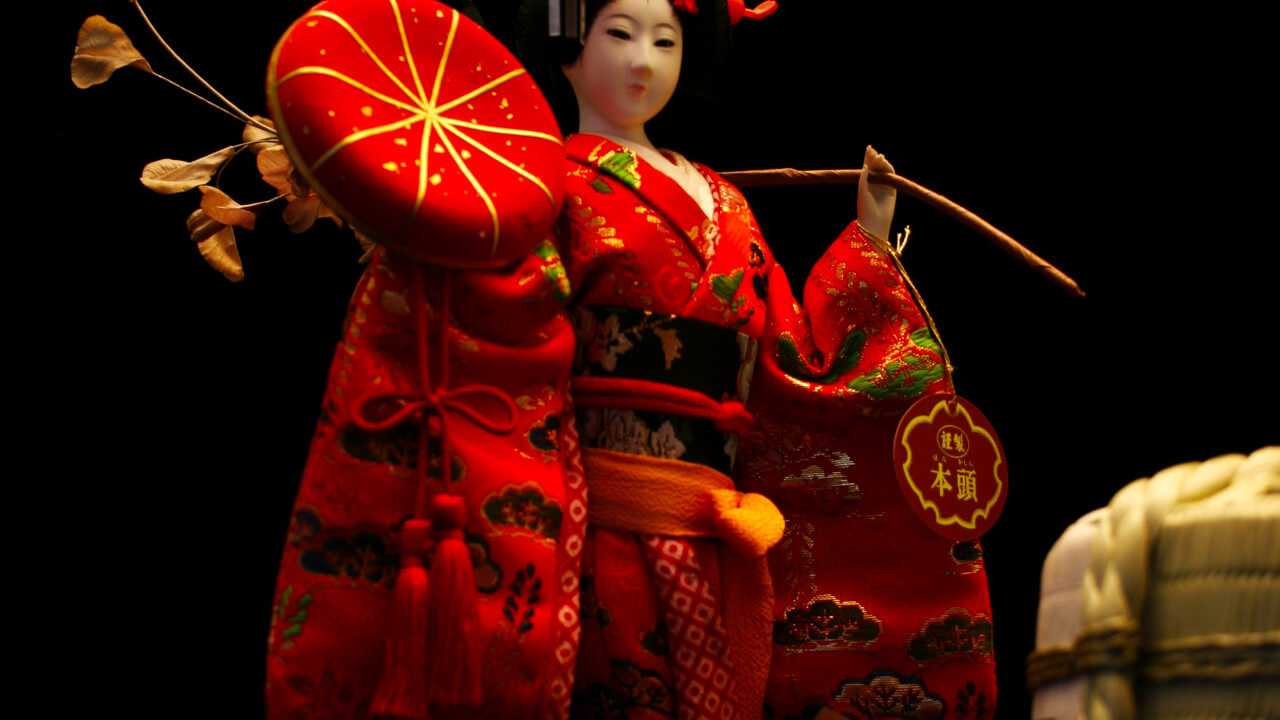
The bride doll therefore became a symbolic companion.
A photograph of the deceased would be displayed beside the carefully dressed doll inside a glass case, representing the marriage that death had prevented during life. Families sometimes kept these displays for decades, believing that over time the spirit would finally find peace before moving into the next realm.
What strikes me most about these customs is not their apparent strangeness, but their extraordinary tenderness. It is easy to dismiss them as curious relics of a superstitious past, yet doing so misses their deeper purpose. Every society develops rituals to soften the harshness of death. Victorian families posed for photographs with their deceased children as though they were merely sleeping. Locks of hair became treasured keepsakes. Ancient Egyptians filled tombs with possessions intended for the afterlife. Medieval Europeans commissioned prayers and masses for souls they believed continued to exist beyond the grave.
Ghost marriage belongs within that same long history of mourning.
It is less about ghosts than about grief.
Perhaps the most surprising example, however, lies not in folklore but in modern law.
France remains one of the few countries where posthumous marriage is legally recognised. Following the catastrophic collapse of the Malpasset Dam in 1959, which claimed more than four hundred lives, one grieving fiancée appealed directly to President Charles de Gaulle for permission to marry the man she had been preparing to wed before disaster intervened. Public sympathy was overwhelming. By the end of that year, legislation had been passed allowing, under exceptional circumstances, a living person to marry a deceased fiancé, provided sufficient evidence existed that the marriage had genuinely been intended.
There are no wandering spirits in these ceremonies. No supernatural beliefs or haunted traditions. Yet emotionally they arise from exactly the same place as ghost marriages elsewhere in the world. They acknowledge something profoundly human: that death often interrupts lives before important promises have been fulfilled.
If China and Japan reveal how ghost marriage could provide comfort for grieving families, another tradition from Africa demonstrates that such ceremonies were not always driven by spiritual concerns alone. Among the Nuer people of what is now South Sudan, posthumous marriage developed as a practical solution to an altogether different problem: preserving family lineage.
Traditionally, if a man died before fathering a male heir, his family risked losing not only property but also the continuation of his ancestral line. To prevent this, a close male relative might marry a woman in the deceased man's name. Although any children born from the union were biologically fathered by the living husband, they were legally regarded as the descendants of the dead man. To modern sensibilities the arrangement seems bewildering, but within Nuer society it ensured inheritance remained intact, property stayed within the family and the deceased's lineage continued despite his untimely death.
It is another reminder that marriage, throughout much of history, was rarely viewed solely as a romantic union. It was a social institution capable of restoring order after catastrophe. Death created disruption; marriage was one means of repairing it.
A similar principle, although expressed through theology rather than tradition, can be found within the Church of Jesus Christ of Latter-day Saints. Members believe that family relationships continue beyond earthly life, leading to the practice of proxy sealing ceremonies. Living individuals may undergo marriage rituals on behalf of deceased ancestors, symbolically uniting families for eternity. Again, the emphasis is not upon ghosts haunting the living, but upon ensuring that death does not permanently sever familial bonds.
Taken together, these customs reveal something profoundly human. Across continents, languages and religions, people repeatedly arrived at remarkably similar conclusions. Death might interrupt a wedding, but perhaps it need not erase the relationship altogether. Through ritual, symbolism or law, communities sought to finish stories that fate had left unfinished.
That is why these traditions deserve to be understood on their own terms. Modern audiences are often drawn towards their most sensational elements, imagining haunted brides, wandering spirits and supernatural encounters. Yet the historical evidence paints a quieter picture. These ceremonies were acts of remembrance. They allowed grieving parents to believe their child had entered the next world with dignity. They enabled fiancés to fulfil promises that illness or disaster had prevented. Above all, they offered reassurance that those who died young had not been denied life's most important milestones forever.
Only when viewed against this wider historical backdrop does Karl Tanzler's story acquire its full significance.
At first glance, his actions seem to belong alongside these traditions. They all involve death, love and an unwillingness to let go. Look more closely, however, and an important distinction emerges. Ghost marriages accepted death as an unavoidable reality. Their purpose was never to reverse mortality but to acknowledge it, while easing the emotional and social consequences it created.
Tanzler's actions did precisely the opposite.
Rather than helping Elena Hoyos pass peacefully into memory, he attempted to keep her physically present within his own life. There was no community supporting his actions, no recognised ritual and no shared belief system guiding what he did. He acted entirely alone, convinced that the woman he loved continued to communicate with him beyond the grave.
His efforts to preserve Elena's body have become infamous. Wires were used to reinforce her skeleton. Glass eyes replaced those that time had destroyed. Perfumes attempted to disguise the inevitable odour of decomposition, while wax, silk and plaster recreated the appearance of living flesh. The result was neither a memorial nor a funeral rite. It was an attempt to deny the finality of death itself.
Perhaps that explains why historians and psychologists continue to return to Tanzler's case. It sits at the uncomfortable crossroads between love, grief and obsession. Every culture develops ways of remembering those it has lost. We visit graves, keep treasured photographs, preserve letters, wear wedding rings long after a spouse has died and sometimes find ourselves speaking aloud to someone who can no longer answer. These rituals are neither unusual nor unhealthy. They are part of the slow process of learning to live alongside loss.
Tanzler crossed a boundary that most grieving people never approach.
His story illustrates how remembrance can, in the rarest circumstances, become possession. Instead of accepting absence, he attempted to erase it. Instead of allowing memory to replace physical presence, he tried to preserve both. In doing so, he transformed what began as bereavement into something profoundly disturbing.
That distinction matters because ghost marriages are so often misunderstood.
The phrase itself encourages sensationalism. It conjures images of candlelit graveyards, haunted churches and supernatural romance. Popular culture has eagerly embraced these themes, filling novels and films with spectral brides and phantom grooms waiting centuries for their lost loves. Such stories possess undeniable emotional power, but they are a poor reflection of the historical record.
The real participants were not Gothic heroes wandering through mist-shrouded cemeteries. They were grieving mothers and fathers. Fiancées robbed of their future. Families trying to navigate unimaginable loss using the beliefs and traditions available to them. Whether in a Chinese village, a French town or a Sudanese community, posthumous marriage was rarely intended to frighten. It existed to comfort.
That comfort often rested upon a simple but deeply moving idea: that love should not be rendered meaningless by an accident of timing.
A young couple engaged to marry could still fulfil their promise.
An unmarried daughter could still find her place within a family.
A son whose life ended too soon could continue his ancestral line.
These customs may seem strange today, yet they emerged from concerns that remain entirely familiar. Every generation fears unfinished conversations, broken promises and futures stolen by unexpected death. Ghost marriage merely provided one cultural response to those universal anxieties.
It is also worth remembering that history is full of mourning customs that appear equally peculiar when separated from their original context. Victorian families commissioned post-mortem photographs of loved ones posed as though asleep. Hair from the deceased was woven into jewellery and displayed with pride. Medieval Christians paid for prayers to be offered on behalf of souls believed to be passing through Purgatory. Ancient Egyptians stocked tombs with food, clothing, furniture and even servants intended to accompany the dead into eternity.
Each practice reflected the same underlying impulse.
Human beings have always struggled to accept that relationships can end abruptly.
Perhaps that is why stories of corpse brides and ghost grooms continue to capture the imagination. They are not really tales about the supernatural at all. They are stories about the extraordinary resilience of love when confronted by mortality. They reveal how different cultures have wrestled with the same impossible question: how do we honour those whose lives ended before they were ready?
Some answered with ritual.
Others answered with law.
Others with theology.
Karl Tanzler answered with obsession.
His story endures because it exposes the point at which devotion ceases to be an act of love and becomes something altogether darker. Unlike the ghost marriages that sought peace for both the living and the dead, Tanzler's actions offered neither. Elena Hoyos was transformed from a cherished memory into the centrepiece of an impossible fantasy, denied even the dignity of resting undisturbed.
That, ultimately, is what separates his case from the centuries of history that came before it.
Ghost marriages sought acceptance.
Karl Tanzler sought possession.
One attempted to make peace with death. The other attempted to defeat it.
History suggests that every culture searches for ways to soften death's cruellest edges. Some build monuments. Some create rituals. Some preserve photographs, letters or treasured possessions. Others hold symbolic weddings for those who never reached the altar. However different these traditions appear, they all acknowledge one unavoidable truth: grief is the price we pay for love.
Karl Tanzler refused to pay that price.
And perhaps that is why, nearly a century later, his story still horrifies us in ways that ghost brides and spectral grooms never quite do. The customs of the past may seem strange, but they were born from compassion. Tanzler's obsession, by contrast, reminds us that there is a profound difference between remembering someone and refusing to let them go. That distinction may be subtle, but it is the line that separates one of history's oldest expressions of love from one of its most disturbing obsessions.

Host, author and producer
Hi I’m Michelle.
Teacher, podcaster, history and paranormal enthusiast and woman who wears many hats and spins many plates including dog whisperer- as you will often find Archie my dog- joining me during podcast recordings where he promptly falls asleep clearly not as enthusiastic about the subject as I am. It does mean his dulcet snoring can often be heard gently in the background- his contribution as occasional co- host needs a little work.
I live in Oxford in the United Kingdom and I love travelling and exploring historical sites throughout the UK for its history and haunted activity. One of the best gifts I ever received was English Heritage vouchers to use to explore various different historical sites. I had the best summer that year. (For friends and family possibly reading this please note that hint for future gift ideas!)
I started this podcast as an adventure through some of my passions. It has been immensely exciting getting to know lots of other people around the world who have these same common interests. I’ve been humbled by the encouragement and support from strangers and people who have become new friends! I truly could not do this without you.
This isn’t something I have done before and I’m learning everything as I go along - from equipment, to editing, to even creating this website. I’m loving it though- it’s a lot of work - but worth every second. Thank you for being patient as I learn and improve along the way. I have big dreams of where to take this podcast and community I hope we build here. If you wish to support that dream and this c… Read More
Silver Birch’s Medium: Restoring Maurice Barbanell to the History of Modern Spiritualism