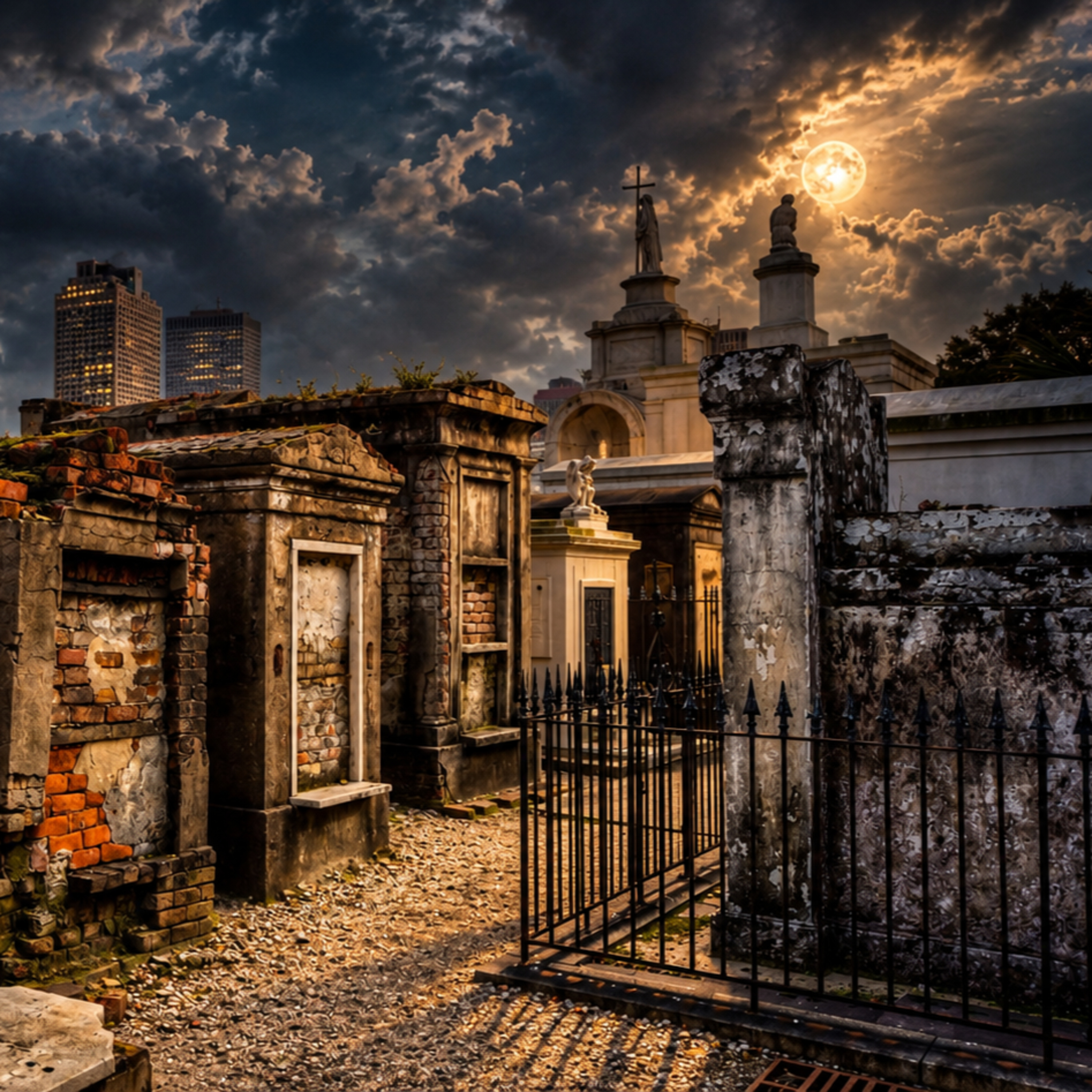
Where the Dead Are Never Far Away: Haunted New Orleans


 Podcast Addict Podcast Addict
  RSS Feed RSS Feed
  Apple Podcasts Apple Podcasts
  Spotify Spotify
  Amazon Music Amazon Music
  Overcast Overcast
  Castro Castro
  iHeartRadio iHeartRadio
  PocketCasts PocketCasts
  Castbox Castbox
  Podchaser Podchaser
  TuneIn TuneIn
  RadioPublic RadioPublic
  Goodpods Goodpods
  Podyssey Podyssey
 What happens when a city doesn't simply remember its dead, but continues to live alongside them?
In New Orleans, cemeteries are woven into the cityscape, generations of families carry stories of the unexplained, and traditions of prayer, Voodoo and ancestor veneration keep the boundary between the living and the dead remarkably close.
After our previous conversation exploring the extraordinary life and afterlife of the Baroness de Pontalba, Dr Rory O'Neill Schmitt and Dr Rosary O'Neill return to take us deeper into the city surrounding her — and into their book The Haunted Guide to New Orleans.
In a city where, as Rory puts it, the cityscape can become a “deathscape”, perhaps the past is never quite as distant as we imagine.
This week we return to New Orleans — a city of ghosts, ancestors, memory and mystery, where the living and the dead sometimes seem to occupy the very same streets.
My Special Guests are Dr Rory O’Neill Schmitt and Dr. Rosary O'Neill:
Dr Rory O’Neill Schmitt is the author of six books exploring history, culture, art, and the enduring mysteries of place. Much of her work is rooted in New Orleans, where the past is never entirely past: its houses, streets, legends, and larger-than-life figures continue to inspire stories of hauntings and restless memory.
Dr Rosary O’Neill, PHD, is a senior Fulbright drama specialist and winner of nine Fulbright awards, including five to study Edgar Degas in Paris. She has published nineteen plays with Concord Publishers (Samuel French Publishers), including Degas in New Orleans and Marilyn/God, and has published six play/screenplay anthologies, three novels and seven books. She co-authored screenplays with Dr Rory Schmitt about Kate Chopin, Edgar Degas and the Baroness of Pontalba in New Orleans, and these are currently being optioned as films.
Dr O’Neill is a professor emerita at Loyola University, New Orleans, and a member of the Playwrights Division of the Actors’ Studio in New York City.
If you value this podcast and want to enjoy more episodes please come and find us on https://www.patreon.com/Haunted_History_Chronicles to support the podcast, gain a wealth of additional exclusive podcasts, writing and other content.
Links to all Haunted History Chronicles Social Media Pages, Published Materials and more: https://linktr.ee/hauntedhistorychronicles?fbclid=IwAR15rJF2m9nJ0HTXm27HZ3QQ2Llz46E0UpdWv-zePVn9Oj9Q8rdYaZsR74I
NEW
Podcast Shop: https://www.teepublic.com/user/haunted-history-chronicles
Buy Me A Coffee https://ko-fi.com/hauntedhistorychronicles
Guest Links:
Websites:
https://www.rorystoryandscreen.com/
YouTube: https://www.youtube.com/watch?v=ASIF-xhxB34
Links to Books:
Those interested in purchasing a signed copy of The Blood of the Baroness may contact either of these bookstores:
The Garden District Book Shop
2727 Prytania Street, Suite 8New Orleans, LA 70130
Phone: 504-895-2266
Email: team@gardendistrictbookshop.com
Website: https://www.gardendistrictbookshop.com/
The Poisoned Pen Bookstore
4014 N. Goldwater Boulevard, Suite 101Scottsdale, AZ 85251
Phone: 480-947-2974
Toll-free: 888-560-9919
Email: sales@poisonedpen.com
Website: https://poisonedpen.com/
Social Pages:
https://www.instagram.com/roryschmittauthor/
https://www.facebook.com/roryschmitt
https://www.tiktok.com/@roryschmittauthor?_r=1&_t=ZP-96rfotn9Smd
Speaker A: I grew up in a haunted house, so that is the inspiration for the book. And that's why I really wanted to write about it. To talk about some of these hauntings we experienced, but also just that our city just. It feels like it's filled with ghosts.
Speaker B: In my previous conversation with Rosary o' Neill and Rory Schmidt, we followed the extraordinary life of Michaela Almonesta, Baroness de Pontalba, a story of wealth, betrayal, violence, and survival that carried us between an ancestral chateau in France and the streets of New Orleans. But there was something else running through that conversation, something we only really had time to touch upon. New Orleans itself, A city where history seems remarkably close to the surface and where, perhaps more than most places, the dead never seem very far away. I wanted to pick up that thread and follow it much further, this time, talking to my guests about their book, the Haunted Guide to New Orleans. And what unfolded became a conversation about far more than haunted houses. We explore a city where cemeteries in the dead form part of the everyday landscape, where generations of families have passed down stories of encounters with ghosts, and where voodoo, ancestor veneration and other spiritual traditions offer very different ways of thinking about our continuing relationship with those who have died. We venture inside the infamous LaLaurie mansion and consider the very human horror behind its supernatural reputation. We hear extraordinary personal accounts from Rosary and Rory themselves, including experiences within their own family home and an unsettling incident involving a door, a burning hand, and a mark of ash that apparently refused to disappear. Our conversation allows us to explore dreams, intuition, and those liminal states between sleeping and waking, consciousness and unconsciousness, where encounters with the dead have been reported across cultures and throughout history. Are places haunted? Or are people. What happens when several people experience the same unexplained event? Perhaps New Orleans provides the perfect landscape in which to ask those questions. A city shaped by water, disaster, faith, death, memory, and generations of stories. A place where the boundaries between past and present and sometimes between the living and the dead, can feel remarkably thin. So we return to New Orleans with Dr. Rose, Ray O' Neill and Dr. Rory Schmidt, and this time, we are following the ghosts. Hello, ladies. Thank you so much for joining me again on the podcast.
Speaker A: Hello, Michelle. Thank you for having us.
Speaker C: Thank you so much for being here. It's a thrill.
Speaker B: I can't wait to be able to talk to you again. We had such a lovely conversation the last time we spoke about the Blood of the Baroness, so I'm really looking forward to be able to talk to you both about another book that you've Co authored together the Haunted Guide to New Orleans. Do you want to maybe just start by introducing the book, both of you, and what inspired you to want to write this particular book?
Speaker A: Sure. Well, we are a mother, daughter writing duo from New Orleans, and I've been dying to write this book with my mom. I grew up in a haunted house, so that is the inspiration for the book. And that's why I really wanted to write about it. To talk about some of these hauntings we experienced, but also just that our city just. It feels like it's filled with ghosts. What about you, Ma?
Speaker C: I'm the one with a deeper voice. The mother.
Speaker A: Yeah.
Speaker C: I grew up in a haunted house as well. I was raised by my grandmother, who was so afraid of being alone. She was of Irish descent, and she was so afraid of being alone in her mansion on a big avenue in New Orleans that she would wait out on her front gallery until I arrived when I was like five or six, even before we would enter the house together. So from an early age, I had a terror of the unseen.
Speaker B: And it's one of those places that I think for most people, they have that impression, don't they? You know, it's often described as being one of America's most haunted cities. And we touched upon this really briefly the last time we spoke about the Blood of the Baroness. But, you know, for this book in particular, I think it's a really important kind of area, maybe to just give that greater depth of what you think as to what makes New Orleans, this relationship with the dead, so distinctive.
Speaker C: It's very generational. In other words, I'm going to my grandmother's house. She has this huge fear of being alone, but also her chauffeur. My grandmother was a wealthy woman, and her driver would tell me stories also about his fears at mortuaries in the world. So it pervaded the entire culture, this idea that ghosts and spirits were coming back and that everyone. And even if you go out to lunch today, you mention you write this kind of book, everyone will raise their hand to introduce the story from their house.
Speaker A: Well, one of the. So in our approach to writing this book, because, you know, we. We wrote together before this, all nonfiction. And we consider this a nonfiction because it's deeply researched. It's based on oral history and cultural traditions. And we interviewed so many people who told. Told us and shared with us, you know, under the protection that we wouldn't tell their names what they experienced in New Orleans. And it's shocking. You know, I even interviewed family members, and I Was. I couldn't believe they hadn't told me some of these experiences before. I think sometimes people don't tell you they've seen a ghost or had this kind of haunted experience because they. They want to protect you. You know, they don't want to scare you. But I find that, you know, sharing these. These secrets and sharing these stories helps us understand how expansive the idea of what happens to us after we die or helps us understand what life is after death, because it wasn't something we could, you know, tidily define. It was just so complex and mystical. So that was pretty exciting for me.
Speaker B: So how do things like the city's architecture and their cemeteries and their religious traditions, you know, things like natural disasters, this layered history, contribute to its haunted atmosphere, do you think?
Speaker C: I think. Well, first of all, Bori and I were discussing this over breakfast. The fact that New Orleans is surrounded by water, like an island. It's surrounded by the Mississippi river, this big ocean lake Pontchartrain. Many people have even boat. I say there's boats in their yard. So when a hurricane comes and there's flooding, they actually take their little boat and shoot around, seeing their neighbors are doing okay. And it sounds extraordinary, but there's a sense of very compactness and closeness in New Orleans where people sort of know their neighbors and people know their dead neighbors and their cemeteries all throughout the city itself. And I think. And along with. It's a prayerful place or has been a prayerful place because of these disasters that come during the hurricane season. The churches, for example, during the hurricane season, a packet of people praying. I mean, if you could crawl through the door and get a seat, you'll get not. Not year round, but when they know, you know, potential death is impending. So there's this idea that death is around the corner, right?
Speaker A: And even in the voodoo tradition, they have something called hurricane turning ceremonies, where people come together and pray to try to, you know, protect the city. I think, yes, I agree with you, Mom. Being on the water, we met with a spiritualist who's actually a medium, and she shared with us that the water can attract certain energies. I also definitely think the architecture of New Orleans being, you know, so hundreds of years old. We met with a historic preservation architect, and he told us that literally, when you're walking downtown in the French Quarter, you're walking on the dead. There are people buried beneath you. We even learned that some people in these older homes were buried in the walls because they couldn't afford proper burials. So this idea that we literally have bodies surrounding us, beneath us. I think that gives that sense of a ghostly nature and also the really complex and torturous history. You know, New Orleans is a very dark history too, for hundreds of years. So I think all of those pieces kind of create this alchemy for spirits to be drawn to and thrive and really just stay.
Speaker C: I remember my father saying years ago there was, there is a bar. He was very poor as a young boy and he said he lived in a house between a bar and a parking lot and all he could see was the church. So this idea of drinking, being left alone, and then maybe religion helping you is something that any child can experience really in New Orleans.
Speaker B: And you know, just kind of following on from that. I mean, I think one of the things that's always stood out to me about it is that it's a place that seems almost as if it has this distinct closeness with death. You know, the dead don't seem to be so far removed. I mean, if you think about the way that, you know, in other parts of the world, you know, cemeteries, places of burial might be a little bit further, further afield from the community. But, you know, New Orleans seems to be that place where you are, you know, just physically, geographically very close to the dead. You know, it's almost this shared landscape which I think adds to that atmosphere. And again, that culture of, you know, the supernatural just seems to pervade every aspect of life.
Speaker A: Yes, and we, we talked about that too. This idea of the cityscape being a death scape, because we have above ground tombs in New Orleans. And actually the Baroness Michaela Alminester Contablo, her father, when he came from Spain, one of his jobs was to help with the burial of the dead in these cemeteries because, you know, they would bury people and then a, a storm would come and all these corpses would pop up out of the ground. And so they really had to find a way to contain the dead and to do it in a way where it was a place, you know, people could visit. I know that last summer I visited my grandparents grave in Metairie cemetery. And I was so expecting to have this very sad experience going to the cemetery. It's a beautiful cemetery, but it was actually so peaceful and just so beautiful and so quiet. So it did, it did have a sense of peacefulness. But not all cemeteries in New Orleans feel like that. Some of them definitely feel grittier and a little bit more terrifying.
Speaker B: But I think what you were just speaking of there is just this continuing relationship with the dead and Again, I think that physical closeness offers that really interesting backdrop to the city's rich, you know, traditions of ghosts and ancestors. That just allows you to continue that relationship when you. Again, you're seeing the dead and the living almost coexisting geographically. I think it's. It's quite a unique place for. For that kind of. That kind of landscape that you were just speaking of. That, again, just makes it so distinctive and unique compared to so many places around the world.
Speaker C: I'm thinking back at this same cemetery, Metairie Cemetery in New Orleans, that when I was last there, there was. It was almost like a puppet show performance. There was this big tomb, and then there was a slot open that had a little curtain in front of it. I guess it was for the next casket. And in front, there was a whole row of chairs as if people were going to a performance. And I thought, gee, this is only in New Orleans, which you have a dance set up like a play, you know, so that whole idea of people interacting with the dead is very much.
Speaker A: And I think, too, in. In your community, too, where you live there, someone was talking about, you know, death as a celebration, too. They came back from a party, and she said, I just went to the best party ever. And it was a funeral. And that they had these catering, they had music, they had dancing and, you know, I know with second line dances, too, and different kinds of jazz funerals. In New Orleans, you know, that celebration of life when people pass on is really there. And it's very different than, I think, other places when someone passes away that
Speaker C: same experience, people saying to me, I went. I had this one woman going on and on at this luncheon about the most fabulous part. She went. Everybody she knew was there. And the pictures and the dancing and the photography. It was a funeral.
Speaker A: I thought, God, was the coffin brought out on like a carriage with horses or something. I mean, it was like
Speaker C: the coffee was carried in a white glass box casket led by two stallions with plumes. It was like, this is an ordinary person. It's not a person. This is not a random experience, you know. And in the French Quarter, of course, they have the, you know, the jazz marches, which. Which celebrating the death and you often will see even cast is driven through. So this idea of death being sort of part of life, I still. Still a big part of New Orleans. Yeah.
Speaker B: So which haunted location then featured in the book has the most compelling history behind its ghost stories, do you think?
Speaker A: Well, the one that people talk about the most is product, probably Madame LaLaurie's. Mansion. So they have different ghost tours in New Orleans. And what I learned is there's a huge supernatural tourism on ghost tourism. People do these different tours. I actually got to interview a tour guide, but they talk about this mansion where this woman actually tortured and killed people and the house burned, but not all of it. And through just different encounters I've had talking to people just openly about ghosts and things, I was able to go inside of this mansion. A friend took me on a tour of this house that, you know, someone owned but didn't live in. He had several properties. And I was so terrified. You know, I said a prayers, you know, protection before I'm going in to, you know. You know, my ancestors protect me because I don't know what kind of evilness might lurk. You know, sometimes I think spirits are drawn to stay in a certain era, even because of trauma or whatnot. But, you know, the home had stories of, of people being pinched by unseen forces or pushed down the stairs. Even the current owner, he has these kind of like metal frames on bookcases and sometimes he'll, he'll. He'll hear them being shook. And these metal covers, almost like grades on a jail, are being shook with no one in the home. And so, you know, all these different stories of this, of this house. I was very nervous going in. And you walk in and it was a beautifully restored, you know, three story historic home. Um, but when I walked up this spiral, the staircase to the second floor, then I started to feel something. I told my friend, I said, I'm feeling something coming from the kitchen. I'm feeling something coming from this room. And then I didn't. I went in the room, you know, and I could just, just feel this kind of pervasive sadness. You know, I didn't feel any malevolence towards me, but it was, it just felt hostile. And then I walked into the connecting living room where the dining room with instead all this beautiful crown molding on the ceiling, these gorgeous curtains. And then I recalled the history of the home and how a fire did actually happen. And it was erupted, I believe, by the staff and the woman. The story is that the woman rather be caught on fire and killed by her own doing than continue to be tortured by this woman, Madame LaLaurie. And so that that sense of either knowing the history or just feeling uncomfortable in that space it lurked. I was able to go up to the rooftop too. And from this it was a skyscraper in its time. It was built in the early 1800s. You could see a Panoramic view of the city. And so just knowing that this house still exists and this history is there, even though owners have changed, the history of the house has changed. It's. It's not a place where terrible things still happen, but I think that's probably one of the most haunted ones people talk about. But, of course, there's plenty of other houses that are continuing to be haunted.
Speaker B: It's one of those places that I think, kind of following on from our conversation about the blood of the Baroness. You know, it's one of those places that is uncomfortable and is, I think, part of the reason why we're so fascinated by that is that, you know, here, again, the monster is that the person who, you know, carried out those atrocities, carried out that violence against, you know, the slaves that they were responsible for. So, you know, it's that kind of, again, that subversion of who's the monster? Is it the ghosts that we're there to kind of seek out, or is it the human being at the heart of this really dark kind of chapter of history? You know, it allows us to explore some of those very uncomfortable feelings about who we are as human beings and how. And what we do to each other, which can be quite dangerous and dark and horrible.
Speaker A: I agree. You know, the evilness of the things that she did to people is terrifying, but also what's even more terrifying is that she got away with it. And I think that threat of knowing that people are capable of those behaviors and do not get any punishment or have any consequences, I think that's probably part of the haunting, too.
Speaker B: Yeah, I think you're absolutely right. I think that's a, you know, a really valid point. And. And again, I think it's just raises so many questions, doesn't it, about, again, her position, who she was in society, that relationship of. Of her with her slaves and. And who she was, what she was allowed to do, the fact that she went unpunished. You know, there's an awful lot that comes out of that with regards to status and position that, again, leads those. Leads us to have those uncomfortable question marks and.
Speaker A: Yes.
Speaker B: And again, it just gives us that moment of pause and reflection, which I think, again, draws that interest, that intrigue, because it's. It's that kind of, again, that feeling of, how could something like that be allowed to happen? How was something like that able to happen under people's noses?
Speaker A: Yeah.
Speaker B: Yeah. It's something that really does bring people in, doesn't it?
Speaker A: Yes. And also, who else was complicit in her in her sins, you know, her husband, who was her second husband, who was a surgeon, you know, who was probably torturing people and doing these experiments on people or her friends who came to dinner parties who would see people with bruises or burn marks and not say anything. I mean, at some point, there was a complaint filed, but it didn't lead anywhere after an investigation. So, um, yeah, it is pretty terrifying to. To. To think about these monsters living among us who you don't even know, you know, who. Who. Who wouldn't even guess sometimes. Yeah.
Speaker B: So when you were kind of putting the book together, did you have any, you know, personal encounters from people that shared their stories that you included?
Speaker A: One of a theme that we often heard was people in bed at night and waking up and feeling like someone was in the room. I'm sure, Michelle, you've. You've talked to people who've had this experience, right? They don't see anything, but they feel something.
Speaker B: Yeah, very much a. A common thread when it comes to personal experiences. So it. It accounts to about 80 of what experiences actually report happening. Really, you know, some kind of night disturbance. And it can. It's fascinating how it manifests. And the people experience it in very similar ways.
Speaker A: Yes.
Speaker B: So, yeah, it's a. It's a big part of that experience that people have. And it. And that covers the whole gambit of kind of paranormal experiences. So I'm talking poltergeist activity, you know, typical hauntings. I'm also talking about activities such as, you know, ufology. So it kind of covers that whole gambit where sleep disturbance does seem to be part of the journey of what they report and what they experience, whatever that experience is.
Speaker A: Yes, yes. And, yeah, I think that's part of the haunting, too, is like feeling like something's there even. It's like that can be even more terrifying, like you're watching a scary movie and you know something's gonna happen before it even happens. But this one person we spoke to, she actually would, you know, at this kind of, you know, mystical hour, between 2 and 3am or 2 and 4am where some people say the veil is the thinnest or unconscious, we're most open to something from another realm. And she would see this woman all dressed in white, you know, in her room. And our friend was just. You know, it was. It was frustrating because the woman, the ghost, wasn't malevolent, but she was just lingering, almost like she owned the place. And so our friend made a deal with the ghost because, you know, she put on covers on her eyes. She'd do anything just to try not to feel or sense this person. But she traveled a lot for work, and she told the ghost, okay, I know that this is probably your home. It was your home before me. I leave a lot for work, and you could have this place to yourself. But when I'm here, uh, you know, I'd appreciate if you wouldn't visit. So she made this deal with a ghost. And so this idea of. I think people feel really attached to a place, a home, somewhere special. Um, and that was a positive encounter. This lady in white that this our friends saw. But for. For me and for my personal experiences I wrote about in the book, you know, the.
Speaker B: There.
Speaker A: Sometimes different parts of a home can feel, I don't know, creepy or more connected, like basements. And the basement of this relative's home just always felt unnerving, you know, like you're not safe. Like, it's a beautiful basement. Great bedroom, bathroom, living room, you know, kitchenette, pool outside, another body of water, Right? And. And I felt. I woke up, and I felt like someone was in the room. And I. I sat up, and there was this ghost of this man dressed in normal clothing, you know, striped sweater. But his face was the most ancient face I've ever seen. Like, he looked like he was a million years old. He had these really deep wrinkles. And then I. I knew it was a ghost, and I was kind of scared, so I just kind of turned over and faced the other way. And that's kind of things I did as a child, too. And I felt like there was a ghost. And I'm like. I'm like, I'm just gonna face the wall, you know, and try to go back to sleep. And then this ghost, he circled the bed, Michelle. And leaned down at me and got close and looked at me. I was like, oh, my God. And then I just. I sat up and I screamed out, you shouldn't be here. You shouldn't be here. And he vanished. So that. I think for me, that was one of the most terrifying. In that same room, I heard children playing outside of my bedroom. Like, the voices of, you know, kids playing. And. And then the next night, the. A little boy ghost pulled my ponytail. And so I told this to the nurse at the hospital. I was visiting relative. And she said, oh, that wasn't a ghost. That was a demon. He was playing with you. I said, oh, my God. I can't handle this face. So then I called a voodoo priestess who I had become close to and met, researching another book and she actually did a ceremony to remove these negative spirits. And when I took. Her name is Sally Ann Glassman. When I took her to the home, we went down to the basement. I said, you know, I used to sleep down here, but I can't, and I don't anymore. And she paused, and she said, it's a good thing you don't.
Speaker B: God.
Speaker A: She said, oh, I can feel it. And, I mean, it was. You know, the fact. I'm like, okay, great. I'm not totally nuts here. Like, people are gonna think I'm losing my mind telling. But there's a haunted nature of this basement. Um, and so she did a whole ceremony. And I had. I provided all these materials, like greens and corn powder, and I think there was rum, or I. There was a whole list. And even, like, when I was getting the list of ingredients, like, sometimes technology. Some people say spirits or ghosts could interrupt the technology. And, you know, this list kept getting erased from my phone. Same thing at Madame Laurie's house.
Speaker B: My.
Speaker A: My phone got so hot, it, like, overheated. And then it told me I couldn't take any more pictures or videos, which it had plenty of room before. So I don't know if the ghosts are interacting there. But Sally Ann did this whole ceremony where she drew these spiritual, ritualistic symbols from voodoo to. To help with removing the spirits. And I had to leave the home because she also thought sometimes the spirits, she said when she was trying to get them to, you know, change into another form or to leave the house, they would run away from her, try to go hide in the attic or go into other places. And she didn't want the spirits to attach to me. I don't. And I'm glad I wasn't in the home, you know, but when I came back, the whole breadth of the entire basement felt different. It felt lighter. It felt brighter. You know, I asked my sister and her family to leave when they did this. And so my sister went to brunch, and I said, what did you tell your friends? And she said, oh, I just said, you know. You know, we're. And her friends just said, okay, that's great. Like, so in New Orleans, the idea of a spiritual person or a voodoo person coming to a home to remove evict ghosts or spirits, it's not totally uncommon. And if people don't believe, I think they'd rather lean towards this. You know, it's better that we do something than we do nothing at all. So if there's something in our power, if there's a spiritual Person or a priest or priestess who has enough courage to help you create a safer sense of space in the basement, the better. And, yeah, that was my experience in that. In that basement, but. And I will stay there again, but only if I have to.
Speaker B: But I think you raised something really important there because, again, kind of coming back to what we were talking about earlier, about just how, you know, the city's culture, the religious traditions, the kind of the history, there is this kind of pervasive element which connects the living and the dead. And I think, you know, voodoo is part of that. You know, there has been this culture of talking to the cadet, communicating with the dead. And it's been something so often sensationalized. Sensationalized in popular culture. You know, if you were kind of speaking to the listeners, you know, what would you want them to really understand about that relationship with spirits and ancestors and voodoo that you think, again, is just kind of such a big part of the story of New Orleans and. And obviously, what you try to help capture with the book.
Speaker C: Well, you know, we wrote a whole book on voodoo. Yeah, it's called A Cultural Guide to Voodoo. So once we go down that lane, we'll probably keep talking.
Speaker A: Well, we love voodoo too. And then what we learned was that voodoo is a beautiful religion. It's a spiritual practice. It's monotheistic. And they have included a lot of ancestor veneration. So you actually call on your ancestors to help you or to guide you or to protect you, and you offer things to them. Like, in my house, I have a altar to the dead. You know, people who've passed before us, my grandparents, my dad's mother who died in childbirth. You know, I never got to meet. Mrs. Chisholm is there. My cousin Michael is there. And you offer them things, you know. You know, and you clean the altar, you keep it nice and tidy. You might put flowers up there or a candle. But the idea of, you know, that death is not the end. And then I remember Aunt Mary, she asked me, what did you learn from your study of voodoo? And I said, death is not the end. And there's some relief in that. And knowing that, you know, maybe our spirits of our. The past can help us. And also these different saints, they call them luas, like. Like Christian saints or orishas. And the idea that we can again have a sense of agency and do different prayers and, you know, participate even in community in rituals to. To call on a power that's bigger than ourselves, call on God, you know, this benevolent spirit to help us and to call on our ancestors, because we're all going to become ancestors. And I'd love to be an ancestor that if I could, I could help people that I cared about from the other side. So I think a big part of that is that communication with the dead. But of course, part of voodoo ceremony is the idea of. They call it being ridden by a spirit. So people, the spirit actually takes over the body and might relay messages. And for some people, that's difficult to see or to watch. And it has been maligned in popular culture. But it's really a beautiful practice to let yourself be open to messages from beyond.
Speaker B: Thanks. So much of the ritual. I mean, you mentioned a feeder just to kind of chip in with something. I mean, things like offerings, prayers, candles, these are things not unique, you know, these are things that we see in other religions, other cultures. But again, I think, like you were just saying it, it is something, sadly, that has been almost demonized in. In film, for example, that has made it something much more sinister rather than this communication with the dead, this. This connection with the dead, that, again, I think, sadly, has led to some quite negative imagery in association with it, which is unwarranted.
Speaker A: Yeah, I. I totally agree. I mean, being part of these different ceremonies, it's. For me, I grew up Catholic and I. I consider myself Catholic, still Catholic. And I practice some voodoo, which. In, you know, voodoo, you can do both. But maybe for Catholics, you know, the Pope might not believe that, but, you know, their ceremonies, they have sparklers that come out, they sing, people are dancing. I mean, it's just. It was really. It's so different for me than Catholic, where everything is kind of sometimes sanitized. It's beautiful marble floors and you. You have to stand at certain times, and there's not that sense of openness or freedom.
Speaker B: Yeah.
Speaker A: So I think that you being part of the. The voodoo community or having a deep respect for voodoo, even our friend, the priestess Miriam, who recently passed away.
Speaker C: Sorry.
Speaker A: It's just so sad that the community there is very loving and I just encourage people who are curious about it just to. To read the book or to. To. To look into more of the positive involved, especially the voodoo queen, Marie Laveau, who was an incredible woman during her time. She helped save so many people. She buried like, I think over 19 people in her tombs. How much was it? 46.
Speaker B: 46 people and children and old people.
Speaker A: Yeah. And so the fact that this woman, she. Her job was, you know, she was a hairstylist, but she also was a entrepreneur. And then she would do these incredible ceremonies in Congo Square and dance with snakes.
Speaker C: I mean, I made so much money to boy.
Speaker A: And you never want to malign her. You know, what she did as a. As a person, what she did as a spiritual leader, too. Do you want to say more about Marie?
Speaker C: I would like to say that I think that demons are secular. There's a lot of demonic force in the world. And the more that we can dismiss holy people, and all the people I met in voodoo were very holy people, kind, loving people. And the more we can dismiss intuition, and most people who have intuition are women, the more that the materialistic, the greedy, the. The cruel behavior can go forward. So I think voodoo's a very holy religion, and I think many religions are holy. I think for women especially. I look back on my family. My mother had an altar in her house. My grandmother had an altar in her closet. And alongside there was a little closet for whiskey. And she would take a chug of whiskey. This is so New Orleans. And then she'd say her bread. But the idea of the presence of holy people in our community, we. And we have to give. If we don't give credence to spirituality, we eliminate artists. Because artists really live in the world of the imagination and of intuition. And every time I've had an intuition and I've denied it, it's usually been a terrible thing for me.
Speaker A: Yes. Yeah. I'm glad that you brought up dismissing intuition, because I think even, you know, sharing ghost experiences, it's. I'll even say it to kind of protect myself. Maybe I was just dreaming.
Speaker C: I know.
Speaker A: You know, I probably just made it up. Yeah. You know, maybe it was that cheese I ate with supper that made me feel like, you know, my best friend visited me from beyond. You know, maybe. Maybe it wasn't really there. Maybe it's just that. That scary movie I watched or something that's making me feel like I saw a spirit. But the idea is, I think being open to our intuition or being open to what is not seen is actually something that's very much present. I think maybe we just don't have the technology yet to. To put it in a box, put it in a category and put it on a shelf. And people feel safe that because the idea of spirits and ghosts, it's just. It can't be contained in any kind of simple explanation. But the fact is, it's very present, and the more you kind of open yourself up to it, I think the more you can kind of see or learn or people will start just you know, in a taxi cab, some of. I'll just mention something, and people have all these experiences, but it's like, for some reason, we've been told to zipper our mouths shut and not talk about ghosts, but instead we want. We should talk about the ghosts or the prayers. Yes, exactly. Yes.
Speaker B: So have either of you had any kind of shared experiences, you know, shed experiences of an apparition of a. Or of a sensation that you've kind of spoken about and talked about, and maybe that made its way into the book?
Speaker C: Yes, I'm going to talk about the. The burning hand on the door, because Rory and I have had the experience of ashes on the door. Now, just. I want to preface this by saying I. I consider myself a very grounded person. I have a PhD, two master's degrees. I've lived a lot of places. Rory has a PhD. She's lived in a lot of places. We reared children. I. So I'm not some kind of flake, you know, dances out nude in a stream. Okay. Now, when I tell these stories and people immediately make me into a nut, okay. Like, somehow pulled away all my credibility. So we lived in a. In a raised house that's like a cottage in New Orleans, on a central Avenue in New Orleans. It was an old Creole cottage. It was maybe constructed in the 1830s. It was raised up, someone said later on that was over a cemetery. But no matter what, it was a raised cottage. I loved this house because I inherited it from my grandmother and she from hers. And next door there was another big house. And I became very friendly with the other big house because my grandmother had also owned that. At one point, I knew the people living in it. The night after this woman died, she was a caterer. We were very good friends. She. She cooked and did all sorts of things. I'm sitting in my living room, a living room where frequently there was blinking lights for no reason, and the electric was perfect. I'm sitting there, and all of a sudden, the front door. Now this front door was solid wood. It had on it what they call burglar bars, these metal bars, because its area had become unsafe. Burger bars on front of it. All of a sudden, the burger bars swing open. The wooden door swings open. This huge gust of wind comes through. I'm sitting on the sofa for me, pushes the back door, which is also solid wood, open, pushes open. The burglar bar is back there. I'm like, oh, my God, who has come to the house? I ran through the back door, and I pushed the door closed. And on the door. I saw a handprint of ashes, five fingers on that door, as if a burning hand had pushed it open. I never. I could hardly even talk about it. Well, I didn't think. I told Rory about it because I didn't want to terrify her because we weren't moving out of the house. But when we wrote the book together, Rory, what happened? You told me and what happened?
Speaker A: Yes, I also had a similar experience. And I. Only through writing this book, Michelle, did my mom tell me about. I think it was a poltergeist. And maybe it was the ghost of Regina, our neighbor. But my experience with something very similar actually happened with two other people. And, you know, it's comforting often when you actually have a ghost experience or some kind of experience, and you're not the only one there, because often I feel like we usually are. So I was sitting in our home. I was watching Star wars on the couch with my brother was on the. In the chair next to me. My older brother, he's about seven years older. And I think I was probably, I don't know, nine years old. And he was probably like 14 or something. And our dad is washing dishes in the kitchen. And my mom and my younger sister were out, you know, I think at the hair salon or something. Anyways, we're watching tv and just to. For rear. To. For listeners to understand. And a lot of houses in New Orleans, all of the rooms are connected to one another. So when you walk through the. The front room, it's connect. The two rooms connecting it are open to the dining room, and that opens to the whole. You know, they're all basically connected. And so we had three entrances or exits to our house, right? The front porch, which is the main entrance. Then we had a side stairs to the backyard. And that's the room that I was in. And apparently my mom had been in too, watching tv. And then two rooms away was the kitchen. So basically I'm watching tv. And New Orleans isn't known for being a safe city. There's a lot of crime. So we have these burglar bars. It's a door, a metal door with a key and lock that you have to use to open it. That. That is the door on the outside to the inside wooden door. And I was interrupted because I heard the doorknob, metal doorknob of the wooden door jangle. That didn't make any sense to me because you can't touch it unless the other door is open. So I heard a jangle. I stopped, I looked over. The wooden door was Forced open, slammed open. And then I saw what looked like a man. It was a masculine force, but it was a blur. And he. It felt masculine. He came running through the room I was in, just running right past. Then ran through the dining room, took a left, went into the kitchen. My dad felt a cold hand on his back and he thought it was one of the children. And he spun around, it wasn't us. And then this poltergeist zoomed past him, went out that back kitchen door and slammed it shut and left this black ash on the door. We had these, like, Japanese painter paper lanterns in the kitchen that were spinning. We had this rubber chicken we had hanging from that was just flailing, going back and forth. Every one of the picture frames in the house was askew. My brother and I ran to my dad to say what had happened. And we were all just completely terrified of this experience. And that ash on the door would not come off. This, like, dark mark on the door, so much so that, like, we would clean it. And, you know, I interviewed my brother for the book and he'd show it to his friends and he'd clean it off. And then the next day it would come back. And this, it stayed on it. And I don't know if it was an omen, I don't know if it was protection, I don't know what. But this, this mark on the door stayed for over a month. So the poltergeist experience that we had, I think that was. That was the biggest kind of wake up call for us, that there's something else happening, you know, in the world. There's other possibilities beyond our imagination.
Speaker C: But even now, if I talk to people that I. That think I'm really smart and kind, they said, you're making this up. I'm saying this.
Speaker A: No, but it's. I think that the important thing is, is that, you know, having these experiences of ghosts or spirits in the house, it didn't just happen in this house once. It didn't happen. It wasn't the same thing, you know. Another time I was with my younger sister, who's also. She's Catherine, she's very religious. And we were in our little pink bedroom playing with Barbie dolls. And we looked up at the stereo and somehow the tape, the cassette tape player, it opened on its own. Some invisible force picked up the cassette tape, held it in the air. It levitated for a moment and dropped to the ground. And my sister and I, children, just looked at each other like, did you see that? And we didn't say anything. We just kept playing. We just kept playing. And you know, we had another babysitter who quit because she said she could never, she couldn't work there anymore because over the washer machine she saw a spirit hovering. So she quit. Another time I'm talking to my brother. He lived in the attic we converted into a bedroom and I don't know, we also had an addition, my parents bedroom, onto the house. If something was like building on an old house or something woke something up underneath the ground, I don't know. But Barrett would tell me he heard a knock on his door and he heard like someone holding like a glass of iced tea or glass. And he thought it was our dad, you know, coming to check on him. And he opened the door and no one was there. You know, I, I frequently heard my dad talk about the, the ghost of the, the war nurse who came to visit him. That's a whole nother thing. You saw her too. But the idea of like, you know, this is a ghost of a woman who is like dark blue dress. Sometimes in the corner of my eye, I would think that I would see the bottom of her skirt turn quickly through a doorway. Does she leave? Or I'd look in the mirror and I would, I would thought I saw a reflection in the mirror real quick. So there's different terrors in that house that many of us experience. But I guess I'm thankful for, to, to know that believe we believe in something else and that it, it gives us information to share with other people. And then when we share other people, even, you know, we were in Ireland last week doing research, people will tell us, you know, similar things that have happened to them, to them.
Speaker B: Yeah, but it's, it's fascinating because what you've got there is, you know, our accounts basically where it's not just confined to one individual. I mean, you've got something that's moving beyond a single witness and even moving beyond two witnesses. You know, you've mentioned several people there in that kind of list of, of, of people who've witnessed something, who've been part of the same experience, who were there and have seen certain things happening. You know, that's, that's quite a body of proof of people in terms of witnesses, you know, who've had that kind of moment where they've shared, shared that same experience with you. And I think there's something very compelling when you have a moment like that that is observed, that is experienced by more than one person because, you know, it makes it far more credible. It makes it Much harder to. To kind of label someone mad, like, you know, your mum was suggesting there, that you've got this. You've got this body of people who are all seeing, experiencing the same thing. How do you begin to explain something like that? You know, it makes it much harder to tear it apart, I think.
Speaker A: Right, right. Like, oh, it was just the wind, really. Scientifically, I'm not sure how the wind could have done that to the doors or left that mark. Yeah, yeah.
Speaker B: And also, why is it then reappearing so many times after that incident? You know, why is it so difficult to remove it? Why does it keep reappearing? I mean, again, just, like, prove it. How is that possible?
Speaker A: Right.
Speaker B: It's fascinating. Yeah.
Speaker C: And then me not telling them, protecting them emotionally and them not telling me, protecting me emotionally for the same event. Yeah.
Speaker B: But again, that makes it compelling because what you're also not doing by doing that is contaminating the experience. You're not, you know, sharing something, and by sharing something, inadvertently, kind of embedding a memory with them, instead, they're coming to you with something that they've experienced that is completely separate. That is their own memory, that is their own experience.
Speaker A: Yes.
Speaker B: And it's only then when you. You've got the two side by side, you're able to compare them and kind of share that you've had something similar. But clearly you both had something that was unique to you that you were then able to share later. Which, again, makes it more compelling, I think.
Speaker A: Yes. Yeah. And I'm glad that you use the word experience because, I mean, that's what our life is. We're just built up of several different experiences and that. And I think that it's important when people share their experiences not just to.
Speaker B: To.
Speaker A: To write it off or put it down or to try to explain it away, but the reality is people have these different good ghost experiences or they have these different experiences in haunted houses or places that are. Feel very real and are very real. So I think that it deserves, you know, the respect and. And dignity and just an open mind to. To learning, you know, so kind of
Speaker B: following on from that, I mean, I'm curious as to what you think based on your own experiences, but also from researching the book, I mean, a question that I often talk about with guests and a question often comes up. Are, you know, is it the. The person that's haunted? Is it the place that's haunted? Do you both have a particular take and perspective on that?
Speaker A: Yes, it's both. Yeah. Someone told me that once Actually, a New Orleanian, he told me that places aren't haunted, Rory. People are. It's like, oh, oh, great. That's not. That's not good news for me then. I think some people, maybe more women, maybe people are more open to. For intuition or in touch with that. I think that some people might be more open or receptive or notice these things. And I do think that it's possible that buildings or places, cities, are, you know, physical. You know, they're receptacles, they're containers for spirits to either be drawn to or to continue to. To show themselves. So I think it can be. I think it can be both. What do you think, Mom?
Speaker C: Well, I think intuition can be. A. Spirituality can be developed. And certainly if you're a spiritual person or an intuitive person, you can sense evil or a certain amount of. I think you can feel it. You're. Not to mention Bori's extremely intuitive. She's more intuitive than I am. I did not want to write this book on ghosts because I did not want to call them into my life. You know, I. She was much more open to a. What's it called? We might talk about that. She's had more experiences, thank God, than I have.
Speaker A: Yes, but you've had some. I mean, you definitely have had some different experiences.
Speaker C: I sleep the lights on. Correct.
Speaker A: And our. My uncle, my mom's brother, who teaches at a seminary, another very spiritual person. He warned us, you know, when you write about this or you study this, you might be calling it in. I'm like, well, we. We need. We're researchers, we're writers. We want to know fact. We want to know experience. We want to know the history, and this history shouldn't be forgotten. And so I was very open to it all. And then I realized, oh, I need to actually put some boundaries on how open I am to having these different experiences. A friend of ours was actually training to be a voodoo priestess, and she had said that she would often leave a cup of water or a white candle by her bedside to, you know, provide a guiding light for the spirits. Um, and she didn't realize she was a. She was kind of opening herself up to everything. Um, and then one night she woke up, and she was in. In bed, and she felt like a thousand hands pushing up her mattress underneath her. And that's when she realized, you know, it's really important to. To know kind of what you're opening yourself up to and to be a bit guarded, because there's not. Not all the think forces are Positive.
Speaker C: You know, a lot of them are negative, too.
Speaker A: Yes. And we did learn from speaking with another person, a paranormal researcher, she was actually based in California, that I asked, you know, what's the difference between a demon and a ghost? And she said, if it can lift more than five pounds, it's a demon. And so I said, oh, okay. So she told us, you know, going to the different places where the. The dryer door was ripped off and thrown or the air condition was picked up and thrown to the ground. And so this idea of, you know, there being these demonic or evil forces. And she'd often go to places with a spiritual person. At one point, she felt she was wearing a cross on her neck. It was lifted up off of her chest, or she would taste blood in her mouth. I mean, these. Like, some of these things are terrifying. She felt like she brought a ghost home with her in the car. So she opened the car door, just screamed out, you know, get out, get out. She says, oh, my. My neighbor, this boy next door, probably thinks I'm totally nuts. But she wants to make sure that she's helping other people. I think she's an incredible person, but also that she's protecting what she brings with her.
Speaker B: Yeah. And, Rose, Roy, I think you mentioned something that is actually really important as part of that kind of discussion about, you know, we can develop intuition. I mean, a kind of a classic example, I think, to help illustrate this is, you know, if you walk down the street with someone, right, you may notice 10 things that the person that you're walking with just doesn't see. You know, their. Their mindset is fixed on something else. And so, you know, developing intuition is just about opening your senses. And I think we live in such very busy worlds and very busy times that often create so much noise and distraction that mean that we don't hear things, we don't see things, we don't notice things, because our mind is always going at a million miles an hour. And so I think intuition can be something that we. In that we can develop and we can build into our lives. And I think it used to be far more part of our lives because before we had, you know, this explosion of technology. And I. And I think for that reason, it was so much of our kind of our ancestors of the past, you know, this belief in the dead and the communication with the dead right. Across all cultures. So, yes, I, you know, I think your point is valid. I think, you know, this is something for some is more naturally there because they are more naturally tuned into those Things simply because they have it as part of their daily lives, where they take notice, they observe, they hear, they see. And they're, I think, more partly in tuned with the world. I think others can develop that and build on that if the right circumstances are put in place to enable them to do it.
Speaker C: I agree. I think also that two things. One, when we let our mind run rampantly, we usually go to sad or, or bad thoughts. We think bad things about other people, you know, I know I do. So I want to keep myself certainly busy to a point that I'm not just going stray there. But we also need to cultivate silence. You know, even in the doctor's office, you notice everybody's on their cell phone. There's not even a second where some new thought could come in because you're filling it up with so much stuff. So we have to brave a certain amount of solids, a certain amount of prayer, a certain amount of meditation. I know I do that in the morning and evening, you know, I. I pray. But it has helped me because the night my sister died, I. I was alone. I think I'd said a few prayers and I had this sense of a voice in the back of our body saying to me, your sister will die tonight. Now, my sister and I were very close. We shared bedroom our whole lives together. So she had just called me and told me she'd gotten Covid, but everything was fine. She was just gonna go to bed and she was dead the next morning. When my brother and sister in law came to the doorstep, I knew she was dead. But I could take it because God had warned me that she was going. Sometimes, you know, by taking the silence, we can be warned and given a gift. That's something that would otherwise be terrible for us is for the betterment of that particular person. She died in her sleep. I shared that. But it came to me as a sound. Mary will die tonight. That came to me as a sound, nothing else. And I knew inside my, my body she was gone. Yes. Yeah.
Speaker B: So kind of following on from what you were talking about, Rory. I mean, you mentioned things like interacting with other investigators that kind of helped develop some of your. Your understanding or question what you thought about, your belief in ghosts and things, you know, thinking about the research that you both did, were there, were there things that kind of came up for both of you or perspectives that people shared with you that kind of changed your belief about ghosts?
Speaker A: Oh my God. I mean, I feel like every day I'm learning something new or someone is sharing something with me. That, you know, it just, it. It blows your mind. I think one of the, one of my main learnings was the idea of our dreams and the dream being a gateway to interaction with spirits. So I never believed that before writing this book. And originally we were actually gonna have a chapter on dreams, but it wasn't included in the final. In the final draft. Maybe that's the next book, Mom. But the idea of in our dreams, you know, we're open at this certain time, this kind of liminal state that people can come to us who either we knew in another life or who are people that we know who've passed on, who can relay information and then not to discount our dreams. And you know, I used to always be really interested in like my dreams and analyzing them. I worked as an art therapist for a while, so I'm interested in like symbology. And even today when I. I had a very interesting dream this week, I was talking to my mom about images of a blacksmith. And so I'm doing research the next day to try to find out in spirituality or in different Nordic circle, what do these symbols mean? But the idea that in our dream life we can be open to messages or learning things. And it might come from spirits or ghosts or ancestors or whoever, God, you know, or it might come from another part of us that maybe have been switched off like a light during the day, but at night it's very open. So I think that paying attention and respecting dreams and, and try to understand what they might mean and where they might be pointing you and not just to discount them as rapid firings in our sleep, which, you know, I've. I've heard of too. But I think that with the research and talking to paranormal, we researchers, but also with just, you know, the guy I sold my car to, you'd be surprised. Well, maybe you're not surprised. Listen, surprise. But you. I can I. I'll just say something flippantly like, oh, yeah, I, you know, this is about this ghost something. Or I saw this ghost when I was a kid. I mean, what do you think about that? People just start telling me, you know, this. He told me he was sleeping in his mom's house. He woke up, he saw this ghost of a little girl walk through the room. Um, and you know, terrifying things like that. And so, you know, it's just incredible when you say something, people and you. And you have an openness to it and a sense of non judgment. People feel safe enough so to tell you their experiences. So I was at the Napoleon House, which is this amazing restaurant we love that our cousin owns and she's also a great supporter of the arts. And you know, this location was supposed to be haunted. And so I was able to get access to these different levels. And I talked to different people there about encounters, like seeing, you know, the ghost of a man in the corner of their eye or one person on the cupola. I guess you go up. It was, I think it was built in 1792 to the top. And there is like a 360 degree view. And this was the residence, was it the mayor or the governor of Louisiana? And they would have. The governor, they would have military stand on this roof to look for pirates on the Mississippi River. But it's a beautiful old building. So some people come and get their wedding photography done there or they get their, you know, high school graduation, you know, of a portrait done. And a person I spoke with said that she was having. It was the photographer. And it was, I think maybe an 18 year old, a teenager, a girl graduating high school. They did a photo shoot and the photographer was looking at her pictures afterwards. And in the reflection of one of these window panes was the face of a little boy. And she told this to the person who worked at the restaurant and she even shared the picture with me, showed me the picture. There was no one up here in this very vacant place except the woman being photographed and the photographer, who are both women. There was no little child there. And last month I was in Ireland doing research and writing and I spoke with this woman who was a musician and she also grew up in Ireland in a very haunted house. And she said she would often see through the window reflection of a child. And so the fact that there's this idea that, you know, ghosts can be something we see, ghosts can be something we don't see until we see evidence later. But even the fact that these different people are kind of recounting me, to me, their experiences, it. It sort of becomes my experience because I believe it to be true. And I believe that these opportunities or happenings could happen, you know, at any moment. And I was talking to my one friend Skyler, and I said, what is it about the paranormal? You know, some people might just have one experience, you know, you might just, I don't know, hear a voice whispering in your ear when you're sleeping, like, or wake up and see a man with a wide brim pat standing and pacing at the end of your bed. Or wake up because you feel the edge of your mattress sink down like someone is sitting on it. That's not there. You might just have one experience, but it stays with you your whole life. And, and my friend agreed with me that it's. It doesn't have to happen more than once for you to remember it forever. And it doesn't have to happen more than once for it to terrify you or to change how you, how you see the realm of spirits and the spirit world. Yeah.
Speaker B: And again, just kind of taking what you were saying there, Rory, with the conversation that Roserie mentioned earlier. I mean, again, these, these ideas of threshold stuff state don't just necessarily have to be someone falling asleep or in that process of waking up that dream state. You know, this could be that point of, of entering a trance like state. So meditation like, like Rosary was mentioning. This could be those moments of extreme exhaustion or extreme grief where our brains are being altered. You know, it's surprising how often we kind of enter these states at different points of our day. I mean, how many times do we get behind the wheel of a car, for example, and we're driving somewhere and we're kind of switching off and going on to automatic pilot.
Speaker A: Yes.
Speaker B: You know, those moments where we are entering this threshold almost this borderland does raise that question of what's being experienced there. You know, is this like you were mentioning, coming from somewhere else or is that experiencing, coming from somewhere deep inside of us that's being switched on because of that sensory deprivation? You know, the distractions are dimming that are allowing us to focus on something. And it, and it kind of reminded me of a, of an experience that I don't think I've ever shared on the podcast before. That happened to me several, several years ago, this is quite a while ago now, where I was doing scrying with a friend. Obviously to, to go into a state of scrying, you're going into that meditative, meditative state where you're looking at this black mirror, you're focusing on it, you're shutting out different, you know, distractions, and you're basically just trying to see what you're seeing in it. And we were doing this, and I'm, I'm not joking when I say this. My friend's image completely changed into somebody else. So I wasn't seeing the face of my friend. I was seeing someone much older who looked like her, but at the same time wasn't her. Her facial shape changed. She was literally aging. But alongside that, I was experiencing almost like a voice inside my head that was not my friend's voice, but again sounded like her. But I recognized it wasn't her. And she also wasn't speaking in English. This voice in my head was speaking in Welsh and I know not one single word of Welsh, so I had no idea what was being said. But I could hear these words really distinctly in my head. And I, and I told my friend and explained what I was seeing and was describing to her what I was seeing. So she wasn't telling me about, oh that, that's such and such. That's my. This. She wasn't kind of adding any contribution to that discussion. So a bit like what we were talking about earlier about if you contaminate someone's memory by starting to ask questions or implanting your own experience, it can change what's what they're kind of sharing, you know. She was doing nothing of nothing of the sort. She was remaining totally silent as I just told her and relayed to her, this is what I'm seeing, this is what I'm hearing in my head. I don't understand what it means. And completely after that moment had finished, she said to me, I think you were describing my grandmother who had been a deeply intuitive woman who had communed with the spirit. She very much believed in spirit communication. The, the words that I kind of relayed in Welsh were very personal to my friend that she'd never shared with me. It was the, the name of a daughter that she'd had that had passed away. It was the, the name of her child in Welsh. I would never have known any of that. I could never have known any of that. And to this day I still couldn't tell. I couldn't tell you now. I couldn't relay those words again unless I heard them again because for anyone who's unfamiliar, Welsh is the most beautiful language. But if you are a non speaker, it is really hard to kind of connect it with, with other, with other languages. It's a really difficult language to learn, I think. And as I say, I can't tell you one word in Welsh. So the fact that I was able to do that is so, so out of the ordinary because I had no reference point for it. And I can only describe that as happening because of that state of, of meditation, that trance like state that I had put myself into to try and see something and experience experiencing something. And yeah, it was, it was deeply, deeply personal to my friend because things that came out of it were so clearly things that she would recognize. And I have to say she did show me photos later of her grandmother and it was so clearly who I was seeing. At the time, you know, it was just really quite profound. I mean, I'm getting goosebumps. The hairs on the back of my, my neck and my arms are kind of standing up, relaying it because it was so deeply personal to, again, to my friend that, and she needed to hear it was the, the other kind of thing that she felt she needed to hear it. And, and so, yeah, it was, it was something that I've, I've not experienced something like that since, I have to say, as well. So it was, it was quite unique as a moment. But I think it's one of those ones that we've been thinking about with regards to what we were just talking about, these, these states of being that, again, we can find ourselves in and out of at different points of the day. And I think if we're willing and we're open into experiencing them, maybe far more people would be experiencing things as a result. Who knows?
Speaker A: Yes.
Speaker C: Yes.
Speaker A: Yeah. And, yeah, I, I, I like how you ask, is this coming from somewhere else or is it something inside of us that's switched on? And I think it can be both. You know, I think that the more we can be open to. They're all different types of spirits or different kinds of encounters or ways of, you know, getting in touch with a deeper knowledge. You know, I think just being open to, like, your, the vision that you had and what that meant not only for you, but also for your friend and how that brought you all together or brought some sense of closure or brought an idea to you that something else is, is possible, that we, I think part of our, we just, we're terrified. Our capability as humans, that we, what if we got in touch with the spiritual side of ourselves, you know, but
Speaker B: there's still so much that we don't understand about neuroscience and the way our brains work.
Speaker C: Right.
Speaker B: That again, you know, it raises those questions. Was it, is it something about, again, something that you're receiving, or is it something about our own brains working in a different way? Was I able to tap into things that my friend was thinking about rather than someone coming through to me as a spirit? I mean, again, there's just lots of things that come out as questions that I think makes these experiences something, something that really does deserve to have, have far more scrutiny and kind of scientific rigor applied to it? Because, again, I think this is probably something that most people experience once or twice in their life. And it's one of those moments that I think it was you earlier that mentioned Rory, that you just tend to dismiss and you just kind of push to the back of the mind as, as, you know, a kind of like a half dreamlike thing that you've experienced didn't really happen. Yes. You know, it's because I was half asleep or I, I wasn't quite awake or something. It will find, we'll try and find something that explains what just happened and how it made us feel. But I think if we can, if we can listen to ourselves and trust ourselves more and not dismiss some of those feelings, I think we'd probably find that more people have had something like that happen than not, is probably the easy answer.
Speaker C: I think also we're trying to explain on a rational, materialistic level something that is imaginary, that's invisible, that's on a different level. And as soon as you experience it, you have that thrum in your body, you get it, you experience it, but once you describe it, it flattens it out.
Speaker B: Yeah, yeah.
Speaker A: Once you try to explain it, it takes some of the mystery away. You know, I know I, I know I was meditating on, on a topic like this. Just, I just, I, you know, I want a clear answer. I want one message, one life to be simple. And what I heard was, it's a mystery. That's what I heard. It's a mystery. And then isn't that wonderful that it's a mystery, that it's not something that we can just, you know, you know, pull out a codex or a, you know, an encyclopedia and say, well, this is this and this is this and, and the idea that we can be open to it's a mystery and accept that, I mean, we accept that with spirit, spirituality and religion, like some of it is a mystery and that's okay. And being open to what's revealed inside of the mystery and then taking action to try to one, hear it, listen, accept it as truthful and valid and make efforts to make meaning or understand what, what happened and what that was and why this is happening right now.
Speaker C: Two and two is five.
Speaker B: Yeah, I like that kind of math.
Speaker A: Yeah.
Speaker B: But it's, it's. I, I think. And again, this is why I think, you know, I think if people really have an interest in this subject, you know, yours is a good book to have a look at. And I, I think it's one that allows, allows you to kind of explore some of these questions and start to think about, again, place, how some of these things can be so intrinsically linked to a house, to a person, to a location like that of New Orleans and, and start to open our minds. Just start to think about experiences maybe that we've had. Start to have that confidence in our own experiences and thoughts and beliefs that it's okay to think and to ask questions about these things. And so, you know, it would be great to. To kind of finish with just maybe you both just sharing what you kind of hope people take away if they pick up your book and where the best place is that maybe people can find a copy of the Haunted Guide to New Orleans and kind of the different ways that they can access the book. Because hopefully my hope is they go away and have a read because I think they'll love it.
Speaker A: We love that. Yeah. I would just say just think about the experiences that you've had even as a child and believe people. You know, like when my daughter says she thought she saw this monster in the closet, like, rather than just writing it off, like, believe her, like maybe something was there, you know, or someone says they see a reflection of a clown in the mirror, like maybe something is happening that we just don't quite understand. So I would definitely say I think our message is to be open to either thinking about ghost encounters or haunted experiences you've had in the past and just try to understand it again and listen to other people and hear what. What they have to share for us. We're excited that our. Our book is digital format now too. Cause a lot of people prefer to read on Kindles. And we're having an audiobook, Dr. Melissa Miller is working on that probably out next month. But generally people, I would say, shop at your favorite local bookstore in Phoenix, it's the Poison Pen. They have signed copies in New Orleans, it's the Garden District bookshop, um, and also major sellers online like Barnes and Noble, Amazon, Target, Walmart. They have the Haunted Guide. And we'd love just to hear from your community too. If people have ghost stories, I'm always open and find me on social media. I think I'm Rory Schmidt, author. And just reach out to us because we want to be part of a community that of seekers, of people who are interested in learning more and who are open to sharing experiences that defy explanation. Because that's, I think, where the true power is and where we can achieve a sense of global awareness. Yeah.
Speaker C: To be or not to be, that is the question. Whether it is noble in the mind's eye to suffer the slings and arrows of outrageous fortune or take arms against a sea of woes. And by opposing in them, I mean the great. Right artists to all mystics. And I think we have to move toward our own spirituality. We have to move toward our own intuition. We have to encourage it. We have to find the silence. We have to make room. We have to see because we get to find tremendous hope and joy in this life.
Speaker B: Oh, honestly, thank you so much. I mean, I loved being able to talk to you about Michaela's story and having the chance to explore New Orleans a little bit more, I think has, has not only help to flesh out Michaela's story and Michaela's life and her experiences and the book that we spoke about previously, but it just gives that deeper understanding to this place, the unique, distinctive place that New Orleans is in, this relationship with the dead that again, I think deserves its own conversation. So the fact that I was able to talk about another one of your books that just really helps to flesh that out, I think has been so enlightening for me personally and I think will, you know, be something hopefully that listeners will find equally valuable because, you know, I think there's so much that you've brought to that discussion and that understanding. So thank you so much for coming back to be able to talk about this a bit more with me today. It's been brilliant.
Speaker C: Thank you, Michelle. Love being with you. Love.
Speaker A: We learned so much. And I loved learning about your, your scrying, that meditative experience and what you saw, I mean, that was phenomenal. Is amazing.
Speaker C: Yeah, me too.
Speaker A: Thank you for having us.
Speaker B: And just like last time, I will make sure that things like links to the books and things that we've mentioned will be in the podcast description notes and on the website. So again, all easily able to be found if you click on those links after listening to the podcast. So hopefully, you know, you'll, you'll kind of have a, have something to go away if you're listening. Something that you'll be wanting to add to your list of are things to buy for yourself for Christmas or Halloween if it's coming up. Treat yourself to something because I think you, I think, you know, you won't be disappointed. They are great books and I think you'll find them as interesting and as fascinating as I did. So again, thank you to both of you for coming along to share your knowledge and your passion. And I will say goodbye to everybody listening. Bye everybody. Thank you for joining us on this journey into the unknown. If you enjoyed today's episode, please subscribe, rate and leave a review on your favorite podcast platform. You can follow us on social media for updates and more intriguing stories. Until next time, keep your eyes open and your mind curious.

Author / Playwright / Screenwriter / Academic / Fulbright Scholar
Dr Rory O’Neill Schmitt is the author of six books exploring history, culture, art, and the enduring mysteries of place. Much of her work is rooted in New Orleans, where the past is never entirely past: its houses, streets, legends, and larger-than-life figures continue to inspire stories of hauntings and restless memory.
In The Haunted Guide to New Orleans (2025), co-authored with Dr Rosary O’Neill, she delves directly into the city’s ghostly lore. The authors’ newest book, The Blood of the Baroness (2026), tells the dramatic story of Micaëla de Pontalba while weaving in the supernatural presences of historic spaces.
Dr Schmitt’s additional books include New Orleans Voodoo: A Cultural History (2018), Edgar Degas in New Orleans (2023), Kate Chopin in New Orleans (2024), and Navajo and Hopi Art in Arizona (2016), all published by Arcadia Publishing.
A Visiting Fulbright Scholar (2024–2027), Dr Schmitt leads faculty development for seven graduate programmes at the University of Southern California.
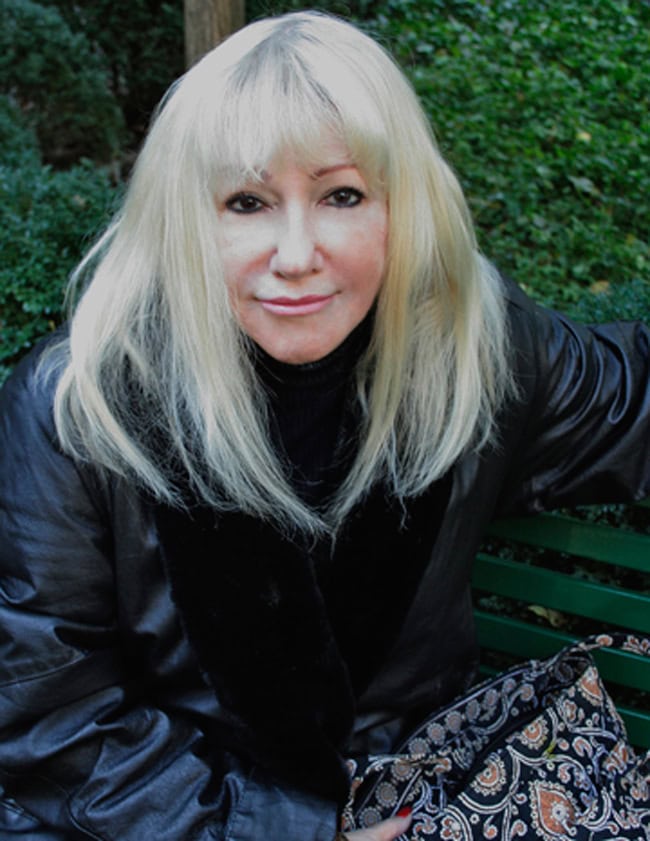
Playwright / Author / Screenwriter / Academic / Fulbright Drama Specialist
ROSARY O’NEILL, PHD, is a senior Fulbright drama specialist and winner of nine Fulbright awards, including five to study Edgar Degas in Paris. She has published nineteen plays with Concord Publishers (Samuel French Publishers), including Degas in New Orleans and Marilyn/God, and has published six play/screenplay anthologies, three novels and seven books. She co-authored screenplays with Dr Rory Schmitt about Kate Chopin, Edgar Degas and the Baroness of Pontalba in New Orleans, and these are currently being optioned as films.
Her other books include New Orleans Carnival Krewes (for which she was keynote speaker at the International Carnival Conference, University of Cologne) and The Actors Checklist, used as a master text in schools nationwide.
Dr O’Neill is a professor emerita at Loyola University, New Orleans, and a member of the Playwrights Division of the Actors’ Studio in New York City. The founder of Southern Rep Theatre, New Orleans, she has received invitations to and sponsorships from American Embassies in England, France, Georgia, Russia and Hungary. She has been a visiting scholar at Cornell University, University of Cologne, University of Bonn, and the Irish Cultural Centre in Paris. She has received artist residencies at the Norman Mailer Institute, National Arts Club, NYC, the Arthur Seelen Theatre, Virginia Center for the Creative Arts, the Tyrone Guthrie Centre in Ireland, Harvard University, Sorbonne University, the American Center, Paris, and the American Academy in Rome.

