The Myth of Objectivity in Paranormal Investigation


 Podcast Addict Podcast Addict
 RSS Feed RSS Feed
 Apple Podcasts Apple Podcasts
 Spotify Spotify
 Amazon Music Amazon Music
 Overcast Overcast
 Castro Castro
 iHeartRadio iHeartRadio
 PocketCasts PocketCasts
 Castbox Castbox
 Podchaser Podchaser
 TuneIn TuneIn
 RadioPublic RadioPublic
 Goodpods Goodpods
 Podyssey Podyssey
Can paranormal investigators ever be truly objective? And what happens when the people conducting an investigation become increasingly entangled in the very experiences they are trying to understand?
In this second instalment of our exploration of contamination in paranormal investigation, I welcome back psychical researcher Ciaran Farrell to Haunted History Chronicles as we examine the complicated relationship between investigators, witnesses and the evidence they seek to uncover.
Building upon our previous discussion of personal experience, expectation and the challenges of interpreting extraordinary phenomena, Ciaran turns his attention to the question of objectivity itself. Is it ever possible to approach an investigation without preconceptions, or do our beliefs, experiences and emotional responses inevitably influence the way we observe and interpret what unfolds?
Our conversation explores the importance of maintaining the integrity of an investigation, particularly when relationships develop between researchers and those experiencing unexplained phenomena. We consider how the boundaries between observer and participant can become blurred, how an investigation may gradually drift beyond its original purpose, and why the desire to help those involved can sometimes create difficult choices for researchers.
We also examine the competing demands placed upon paranormal investigators. How do we balance scientific rigour with empathy? What happens when the needs of witnesses conflict with the pursuit of evidence? And how can researchers recognise when their own involvement may be influencing the direction of an investigation?
Join us for another thought-provoking conversation as we explore the human factors that can shape paranormal research, sometimes in ways that are difficult to recognise until an investigation is already well underway.
When does an investigator stop being an impartial observer and become part of the story they are trying to uncover?
This is Part Two of our series exploring contamination in paranormal investigation with Ciaran Farrell.
My Special Guest Is Ciaran Farrell
Ciaran Farrell is an experienced psychical researcher who has served for many years as a Council member of the Society for Psychical Research (SPR) and on its Spontaneous Cases Committee.
His interest in ghosts, poltergeists and other unexplained phenomena began in childhood, following a series of personal experiences that inspired him to develop his own theories and investigative approaches. These included encounters he interpreted as apparitions and poltergeist activity, as well as experiences involving dreams that appeared to convey information about the deceased.
In this new series, Ciaran brings his experience and critical reflections to the wider question of how paranormal investigations can be influenced, compromised or contaminated, and what researchers might do to recognise and address those challenges.
If you value this podcast and want to enjoy more episodes please come and find us on https://www.patreon.com/Haunted_History_Chronicles to support the podcast, gain a wealth of additional exclusive podcasts, writing and other content.
Links to all Haunted History Chronicles Social Media Pages, Published Materials and more: https://linktr.ee/hauntedhistorychronicles?fbclid=IwAR15rJF2m9nJ0HTXm27HZ3QQ2Llz46E0UpdWv-zePVn9Oj9Q8rdYaZsR74I
NEW
Podcast Shop: https://www.teepublic.com/user/haunted-history-chronicles
Buy Me A Coffee https://ko-fi.com/hauntedhistorychronicles
Speaker A: No, I don't think that true objectivity in investigations, however one would measure it, is a realistic goal.
Speaker B: Is a completely objective paranormal investigation actually possible?
And if it isn't,
does that mean the evidence we collect is necessarily compromised?
Welcome back to Haunted History Chronicles and the second part of my conversation with Kieran Farrell,
exploring contamination in paranormal investigation.
In our previous episode,
we examined the assumptions,
scientific frameworks and personal experiences that shape the way paranormal phenomena are investigated.
But what happens when those principles are put into practice?
Today we're exploring the idea of case purity,
the limitations of objectivity and the complicated relationship between investigators and the people whose experiences they are attempting to understand.
We'll also be looking at what happens when an investigation begins to move beyond its original purpose,
a process known as mission creep,
and the difficulties that arise when scientific detachment comes into conflict with empathy and human understanding.
It's a discussion that asks whether being a good investigator is simply about collecting reliable evidence or whether something equally important risks being lost along the way.
So let's return to my conversation with Kieran.
So how do you define case purity, then, in practical terms during a field investigation? Kieran?
Speaker A: Case purity is essentially this concept, or I suppose to a certain extent dogma or possibly theology,
within the realm of the paranormal and of ghost hunting, of custom community,
that investigator should have no prior knowledge of a case before investigating it.
In order to prevent any prior knowledge or preconceptions about the case from detracting from the application of pure scientific method and established paranormal investigative procedures.
Let me explain.
As I've mentioned, I set myself up quietly and discreetly as a paranormal investigator long before such a calling became as popular as it is today through being a private detective or investigator.
I have therefore spent a great many years as an independent paranormal investigator. So to a certain extent,
what once haunted and hunted me and consumed me became something that I myself could go out on safari to find.
The hunted had turned into a hunter.
In order to do so,
the hunter, of course, needs certain clues,
needs to be able to stalk, as it were,
his prey.
And therefore, what you need is you need an idea, a concept of what the paranormal is looks like. And if someone reports something to you,
how is going to work out in practice, what's going to be involved, and so on.
In this sense, it's a bit like the same conundrum of that nothing succeeds like success.
Nothing is good at preparing you for experience of the paranormal as paranormal experience.
And the same applies to paranormal investigation.
So the idea,
the concept that one must come to something completely fresh and Therefore, completely naive to me is something which is unrealistic in terms of scientific purity. One can never do that.
One can only be as objective as one reasonably can by kind of monitoring oneself and keeping an open mind and being sure that one can and does take reasonable steps to kind of see what you're doing and why you're doing it and maintain that internal kind of self critical mechanism.
And that needs to be part of the sort of mental equipment of all those who are engaged in investigation in all those years. My experience has taught me that there is a very definite mindset within the culture of modern paranormal investigation,
as it is often derived from popular ghost hunting activities rather than developed from a sound knowledge of psychical research or detective work.
Therefore, there is a very definite culture within the body of paranormal investigators that the leading investigator must have a completely free hand to carry out their investigation their way.
This might be summed up in the phrase my investigation my way is what gets results.
So again, we're kind of back to the same thing all over again. It's this chicken and egg situation.
So anything less than that would be to introduce contamination of one sort or another into the investigation, which would obstruct the scientific purity and clarity of any investigation,
which would therefore cloud issues about what was and what was not considered to be paranormal in terms of the findings of that observation.
This matter of my investigation my way is what gets result is a minefield as the disbelievers and debunkers will have their agenda and so will some of the believers as well.
So there can be a lot of conflict around these matters and who claims to be the better or more qualified investigator based on, well,
whoever knows what people say of themselves or whatever,
or going on these courses.
This is particularly due to the characters and personalities involved, but is also due to differing views about the investigative processes and procedures as well as protocols, which people argue about.
This was pretty much there from the start of planned and organized investigations, as illustrated by the SPL's investigation of B House just before 1900.
A book was written about this which highlighted the problems involved.
Many of these were that different investigative groups wanted to investigate an empty house that had been loaned out to one prominent member for that purpose.
The various groups disagreed about which investigative techniques were to be used and therefore which groups would have access to the house at what times to carry out the investigations.
Membership of the groups often overlapped and they argued about the scientific or case purity of their methods,
which in a very real sense is where the term originated from. As far as investigations are concerned.
They also argued about another concept which was the opposite of this, which was the scientific or case contamination,
which could arise as a source of error, doubt and confusion about the best scientific methods to use and how to use them.
Then there was yet another issue which was directly related to this,
which was that one group might not leave the house in good order when they had concluded their investigation or experiments, and therefore the next group would have to spend their valuable time clearing up after them, and of course, as a result,
discussing what the previous group were doing,
why they were doing it, how effective they were,
and whether or not they were doing whatever they were doing with their investigations and experience in a scientific, logical or practical, feasible way.
This also gave valuable clues as to what the previous group had of course, been doing.
And people talked or even gossiped between the groups about how the various experiments and investigations had been carried out and how successful they may have been, and how well a group was led and so on.
What emerged out of this was that the ideal situation for a pure scientific investigation to take place would be that there should be no prior knowledge of the case or the building,
place or site the investigation was to take place in.
In this way, the lead investigator would have to decide on site which were the best investigative techniques to use and who should be delegated specific tasks in relation to this.
This would mean that all decisions would be the necessary and appropriate ones for the given situation,
as any and all preconceived ideas could basically more or less be ruled out.
That, of course, is, you know, pre Internet.
So you gotta kind of like factor that in.
Leave your phone in the hotel, leave your phone at the door and swear that you never used it to look up anything to do with the haunted house. You're about to investigate that.
In order to ensure that there was no prior knowledge which could prejudice or contaminate the way investigation was set and run, absolute secrecy must be maintained, and those concerned would simply be told to plan for the most likely scenarios, whatever they may be.
So again, you're getting a contamination arising here because what are the most likely scenarios? Well,
yes,
that is, you know, obviously the most likely things are probably likely to occur. And then we've got another chicken and egg situation. What do you plan for? Because you need to keep an open mind.
Of course, you're more likely to encounter the obvious than not.
But, you know, again, if you're looking for complete purity, then the difficulty is you've already introduced a source of contamination.
So this approach is not particularly realistic as it Means that one cannot make an initial assessment of what one might be dealing with in order to tailor an investigative team and techniques to any given case, situation or site.
This is not so important when the investigation takes the form of an organized ghost hunting session in a venue that has been hired specifically for the purpose of by the organizers of the event, in which members of ghost hunting groups pay to participate.
There can however, be disagreements over who should engage in which activities, at what time and with which equipment. However,
one of the reasons for this is that there is a very definite kind of ghost hunting culture,
which is that one walks around,
has a discussion while walking around,
and then decides which activities are going to be take place in which rooms, which is the creepiest room,
and so on. And then EVP sessions might be carried out using digital recorders to see if any ghost voices can be recorded.
And also calling out, is anybody there?
You know, can you come, can you do this, can you do that? And then seeing whether any unexplained voices appear on the recordings, which would need to be analyzed later.
But unless you target this correctly and you again make sure that what is done on the tape reflects accurately what's been going on, then there can be confusion because an investigator might shuffle their feet or might make a comment.
But if you pass on that particular recording to someone else to analyze, they won't know that.
So they won't necessarily know who's who or what's what.
All they'll know is there was an unexplained or unaccountable voice. Whether that voice was is that of a ghost or whether that's one of the investigators often remains an open question.
So again, it's a question of making sure that certain things are done in a certain way to rule out as far as possible certain things.
There is a tremendous difference between paranormal investigation and ghost hunting because these ghost hunting activities are often perceived to be standard. Because that's what one would expect to do as a ghost hunter on one of these paid events.
It's an EVP session, maybe take some photographs for later analysis,
Having a call out session and walking around comparing notes or whatever.
When you're dealing with walking around a client's or experiences,
actual home or business,
it's best not to do this in front, you know, all this sort of discussion in front of them. The team of investigators needs to make their own notes and then have a team meeting later in which they can be discussed.
Also,
there is a question mark over the scientific validity of such techniques as calling out, because on the one hand, one is dealing with a situation in which anyone could potentially be a medium and speak to spirit, or on the other hand, nobody is.
So you've got an issue there. Should one attempt to contact something that is there?
How do you know whether there's something there?
One way of finding out is to see if you can, you know, contact something. Will something happen if you call out, can you do this, can you do that, can you move an object, can you bang that door, whatever.
And something happens,
then maybe it would occurred anyway, or maybe it didn't. Maybe it was a ghost responding to your request.
It's difficult to know.
Certainly it's difficult to judge from the basis of a recording. And often these sessions occur in reduced light.
So when you do it,
you can never be sure whether or not somebody is actually kind of engaging in sort of ghost hunting, Saturday night, sort of entertainment, scare factor type behavior by sort of flipping something, which I've often, sometimes seen done, sort of flipping something and then say, oh, what was that?
To give everyone else a bit of a jolt.
That shouldn't happen in a paranormal investigation because you're not there for entertainment. You're there to actually engage in a scientific inquiry. But all these things, of course, add to the tension between what is a scientifically conducted investigation and what is essentially either entertainment or a proving ground for later things.
So the issue of the relationship between investigators and the investigated, or the clients or those who own or manage the premises in which the investigation is to take place are in one way or another crucial to the course and the conclusion of any investigation.
You need their cooperation.
A major factor within these relationships is the actual or perceived knowledge and power imbalance between the investigators and looking down the microscope of investigation at the clients or those who have experience and reported potential or actual paranormal activity.
I hope to be able to set out some explanations for how the concept of contamination may work on both sides and why investigators should not only be aware of it, they should also take it into account from their perspective and that of their clients and the relationships between them.
Speaker B: So do you believe then that true objectivity to, you know, the investigators is realistically achievable then, or even desirable?
Speaker A: No, I don't think that true objectivity in investigations,
however one would measure it, is a realistic goal.
This is because the vast majority of cases that are handled by individual paranormal investigators groups or organizations do not require an on site investigation.
What is important is therefore case management and how an investigator or investigative team relates to the clients. If an on site investigation is considered to be necessary, then there will have been a background to that which would have or should have planned out the sort of on site investigation that is required in that particular case.
Not all cases are the same,
therefore. Consequently, one does not arrive on site or to make a visit to a client without a certain amount of prior knowledge and background.
This means that one can think things through and carefully target and craft the ways in which an on site investigation is carried out.
This needs to be worked through in detail with the client.
In terms of ghost hunting events, and most particularly those carried out by paranormal reality TV shows,
they paint a false picture of what an ordinary or true paranormal investigation should be and consequently look like.
The importance of case purity in the sense of a lack of prior knowledge means that when a ghost hunting team encounter a certain phenomena,
then presumably they had no knowledge of what those phenomena might be in order to that they do not go out of their way to find specific things in specific ways based on the reported history or paranormal phenomena in that location.
In other words, it's a bit of a check or balance on whether or not phenomena might have been produced for the camera rather than occurring naturally and spontaneously during the investigation.
So essentially,
if you cannot prepare, and it's that old adage of failure to prepare is to a certain extent to prepare for failure,
in that if you deny yourself any prior knowledge,
then you deny yourself a lot of the tools of the trade in order to be able to analyze the situation and deploy resources and equipment accordingly. Therefore,
one ends up again in this chicken herd situation of what do you do?
Because by the time you're actually in the situation,
you then find, oh well, I should have done this or I should have done that, I should have brought this piece of equipment or whatever, or we need to carry out such and such experiment, but we now don't have the time or we don't have the equipment or whatever.
And people are often more interested in chasing experiences rather than actually making good scientific observations,
particularly with instruments, especially if they haven't managed to bring them along or they might be back in their van or car or whatever and therefore,
ah, well, you know, is it worthwhile?
So having a certain amount of prior knowledge and being able to plan, I think trumps this idea of don't do anything until you're there on the night and then it will be all right on the night.
The culture of these TV reality shows, which I consider should also include YouTubers,
is that if a team of members have prior knowledge, then it can be used to prime expectations amongst the team and therefore create the expectation that the team will encounter certain paranormal phenomena, rather than carrying out a neutral balance and scientific investigation.
In other words, it stops or should stop or act as a break on team members hearing after certain suspected known goals and raging the evidence to fit those observations and possibly,
dare I say it, fake phenomena in the process.
Which is good, of course,
if you want viewers on a TV program or a YouTube channel, but it is really subverting the scientific process.
This is especially the case when psychics and mediums are involved, and as it is one of the reasons why so many people are skeptical about whether psychic or medium could actually contribute to an investigation.
Simply because something could have been staged does not, however, necessarily mean that it was staged, faked or hoaxed.
As I have learned on many occasions over a great many years,
using my own mediumistic and investigative skills,
psychics and mediums can gain a degree of knowing and understanding,
from a psychical point of view about where the problems within a haunted home, business or office are,
and then be able to advise or direct the focus of the investigation to address them, which is a valuable asset in my view.
It also means that when one is dealing with clients that it offers an avenue of validation of what the clients have been experiencing.
This is important from the point of view of human experience and therefore on the psychological and sociological side when it comes to the investigation.
But it also means that there is an opportunity to take psychically derived data from a psychic or medium and use this in a scientific way to obtain instrumental evidence of a haunting or poltergeist activity or whatever.
Scientific objectivity is not necessarily the same thing as open mindedness,
and the use of psychics and mediums, together with anomalous instrument readings and additional testimony from the clients on site,
often means that an investigation becomes more detailed and may change course or focus in ways that are not necessarily readily predictable from the outset.
Therefore, again, one must be open minded and prepared to take oneself or the team where the evidence leads.
A good paranormal investigator and psychical researcher should be sufficiently open minded as to be able to take these additional complications and findings into account and replan or refocus their investigation,
rather than remaining focused on the original impersonal and detached objectivity of their initial plan for the investigation.
So should you stick with the plan just because it is the plan and you arrive at the plan with little foreknowledge, or should you respond to the changing situations on site during an investigation?
I would always go with changed circumstances,
need a changed plan,
but you've got to be careful.
And this is why you need a good team of people to carry out an on site investigation. And you need good communications and you need the ability to have a team meeting to discuss these matters.
In changing your refocusing and investigation, thought needs to be given to the length of time of the investigation and what can be carried out as follow up work,
and what resources the investigators can then call upon on site and maybe later as well, in order to be able to determine what could conveniently be carried out off site and what needs to be carried out on site.
The reason why the psychically derived data of psychics and mediums is important is because they can turn up the unexpected along with the predictable.
And it is this additional aspect of the investigation which may require changes to the original plan for the investigation.
The same, of course, can be said for anomalous instrumental readings that might need to confirm or particularly if they are repeated,
the investigation and focus. Or that they may need to be used in a different context in order to refocus the investigation to bring it into a different area.
Because if you get, you're getting,
you know, high EMF readings and so on, you need to find out why that might be.
Is that related to the paranormal or is that related, for example, to some sort of electrical property in the property in which you're working?
Sometimes people are grateful for a problem to be pointed out, other times that they're not, because it might be expensive for them to be able to call in an electrician, to be able to figure out what's gone wrong.
And to be able to sort that out doesn't necessarily mean that the ghosts will disappear though.
And that's why maybe you need to have a bit of a broad and open mind about this. That simply because one technique identifies that there may be an issue does not necessarily mean that this is the entire reason why people see ghosts in a particular place.
These matters often lead to a certain amount of mission creep.
And they can often be subject of debate between the investigators,
as some may consider that investigation as originally planned should be carried out in a pure scientific and unsolid and therefore entirely pure way. And that these additional factors should be incorporated into that original plan when the processes and procedures may allow for this to be done.
In other words,
don't allow yourself to be blown off course by events on the night on site.
On the other hand, you need to be flexible, so you've got to strike a balance.
To deviate significantly from the original plan is often perceived to introduce a lack of objectivity and therefore contamination into the investigation.
However,
if you don't respond to circumstances, then you may miss a lot of interesting paranormal or potentially paranormal phenomena as your investigation didn't focus in on them. So either you'd have to go back again or you'd have to forget about it.
Either way, you've got issues.
This can never be completely avoided, but it can be reduced to a certain extent and managed in a productive and sensitive way by ensuring that the initial planning for the investigation is detailed and realistic, and consequently flexible enough to accommodate some of the likely or unexpected complications that might arise on site.
Speaker B: So, can you elaborate on the concept of Mission Creek, which you just mentioned a moment ago? How does that typically emerge during investigations?
Speaker A: Yes,
for various different reasons. Both clients and investigators approach an investigation from different points of view,
and they often expect different things from each other.
It would be tempting to think that these issues might be resolved by investigators setting out a clear set of expectations to the client about what their investigation will cover and what it will not.
However, in reality, on the ground during an investigation,
or the write up of that investigation,
which may involve a certain amount of liaison with the client,
can any investigator say that these initial borders and boundaries which were laid down at the start, still have their integrity at the conclusion of that investigation? The answer is basically no,
because again, if you're prepared to go where the evidence takes you or leads you,
then you know, this is a journey.
It's not something that you can necessarily map out immediately with total clarity before you even get there. I mean, a simple example of that is how many times we often thought of,
ah, well, you know, I just need to make a simple journey on the train or on the bus or whatever, in my car,
whatever it might be. And then the journey ends up not being as simple or as straightforward as you originally thought because of these other factors enter into, but the equation.
This is because things change during the course of an investigation due to the acquisition of knowledge about the phenomena concerned and the development or otherwise of relationships between the investigated and the investigators.
One way of looking at an investigation from a certain psychological or perhaps sociological point of view is through the lens of the alteration or mission creep that tends to occur during an investigation.
A means of analyzing these situations is through the concept of contamination,
which can exist on both sides of the fence, as it can be applied by the client to the contamination of an investigation they thought they were going to receive from the investigators as it was originally outlined to them.
Therefore, this mission creep can exist on both sides of the fence because it's not only a question of the investigators responding to changed circumstances.
It's also about the client as well.
And the client might have always wanted investigators to pay attention to certain things,
and the investigators always hadn't, may have always had a different focus.
The investigators, on the other hand, might consider that the client has unrealistic ideas about how investigation should be conducted and what the paranormal is and where the evidence of it could and should be found,
as well as the methods used to uncover it,
if it is present at all.
Investigators may be looking to either prove or disprove the presence or absence of the paranormal in any given case or in general.
Therefore, they are keen to gather evidence which would support one or other proposition.
Consequently, their primary concern is often beside the point. As far as the client is concerned.
Clients will usually approach an organization for help because they know they have a problem.
They may not be sure what it is or how to deal with it, but they are looking to the investigators to be able to find out what it is and validate their experience of having to live with that problem.
Once a problem has been found,
they will often want, understandably,
the investigators to solve or remove that problem.
Therefore, paranormal investigators and psychical researchers may have their own agendas about confirming or denying the existence of paranormal phenomena, which, one way or another,
they want to study.
The clients at the center of the case want a problem that they want help with, dealt with.
This is not always as easy as the answer to what is going on may be,
therefore a complex one and relate as much to human dynamics and relationships as it might do to the paranormal.
Ghost hunters often also have their own agendas which are different from this, as they are focused in on obtaining evidence of the paranormal or of experiencing it for their own reasons and personal development,
as well as to obtain thrills and, to a certain extent, entertainment through working in a strange or unusual environment.
Some ghost hunters, of course,
do take and operate various capacities within cases that are related to their skill sets and so on. But they are often ill equipped to do so as there is a considerable transition that needs to be made between the ghost hunter and paranormal investigator, who has often started out as a ghost hunter.
In other words, this comes straight back to this business of there are certain techniques which are thought to be standard within ghost hunting,
and consequently, that's what you would do on a paranormal investigation.
But paranormal investigation needs to be directed towards the phenomena that has been reported to you.
So some things may be appropriate, other things not. Or you might want to investigate certain things in different ways, not using those standard procedures.
So this is my key difference between a paranormal investigator and a ghost hunter. A paranormal investigator needs to be able to use detective work in order to find the best method of investigating a particular phenomena, both in terms of planning and when they're there on site, and obviously be open minded and flexible.
I consider that the reality TV shows and YouTubers are far more focused on providing entertainment rather than helping people to discover what is really going on and if there really is paranormal activity involved, and if so,
what that paranormal activity is.
Because getting to the bottom of what is going on can be a very difficult and exhausting process which can involve a number of different on site techniques and experiments.
And even there,
one is not likely to find a smoking gun, because smoking guns don't really exist in this business.
So you're always having to work with, you know, what you think could reasonably be expected and the law of probabilities in terms of most likely outcome of an experiment and what you might think the evidence tilts this way or that way, and so on and so forth.
So you've got to judge matters in the round.
But doing so will often mean that any conclusions that you actually come to may be in the form of, well, it could be this or it could be that. On the one hand this or on one hand that, you've got to, you've got to be prepared to go down that avenue and be able to see if you can get beyond that in terms of a reasonable scenario which is reasonably probable,
because you know you can't prove things, or you're very unlikely to be able to prove anything to a criminal standard which is beyond reasonable doubt as opposed to the balance of probabilities.
So these TV shows, going back to them again,
my point here is that the client and their needs are often sidelined in search for frightening and therefore entertaining phenomena involving dark or dangerous or evil spirits or demons,
without justifying to what extent that is actually warranted. After all, how can one tell if one is dealing with a ghost, a poltergeist, usually only because of this issue of poltergeists throw things around, but demarcation is not quite as clear cut as one would think.
And then you've got another set of problems between how you could possibly tell the difference between a poltergeist, a really bad poltergeist case where there are a lot of physical phenomena and something that goes beyond that, that could be demonic.
How do you know? How can you find out?
It's not easy. It is far from easy to be able to tell any of these things. And it requires time,
and you might not have that time if you've only got limited time at a location to carry out a site investigation.
So you've got to be careful with your planning, you've got to be careful with your execution.
And where there are these other questions that may be generated through on site investigation and experience,
you have to be able to be flexible and maybe re plan and also to be able to plan, if necessary, a second or possibly third investigation to look into some of these factors.
The overarching point I would make about this is that all these factors and the tension within the group of investigators and the client or clients leads to the original form, function and structure of the investigation which was originally planned changing and therefore to the mission creep.
Because everything I've been describing could lead to the alteration of the original investigation plan, which could be perceived as mission creep and consequently as a source of contamination of an investigation.
Viewed from the point of view of the original plan for the investigation,
Speaker B: in your opinion then, Kieran, what are the dangers of prioritizing, you know, privileging scientific detachment over empathetic client engagement, do you think?
Speaker A: Well,
clients are often engaged in a search for truth and therefore for answers,
but in a different way. To investigators.
The client is on the inside of the problem, looking outwards, as it were, whilst the investigators are on the outside looking in.
In order to be able to successfully attract the attention of a spiritual or paranormal group or the spr,
it is often necessary for a client to be able to couch their experiences in terms that those knowledgeable within the paranormal field will understand and accept.
This acceptance does not necessarily imply a validation of the client's experiences.
It simply means that both sides can begin to talk to each other in the same language and hopefully using the same terms that they will both understand and agree upon.
This is vital if a scientific investigation is to be carried out,
and it will of course, avoid misunderstandings and misperceptions further down the line.
Therefore,
as an impartial investigator, one is faced with a chicken and egg type situation in that either a given case cannot be adequately assessed due to the way it has been presented,
or if it has been presented sufficiently well.
What does that actually mean?
It may mean that someone knows what they're talking about and needs help in the form of an investigation of one sort or another,
or it may mean that the potential client is simply telling the investigators what they think they would like to hear.
Then there can be almost a return, as it were, to the previous sorts of contamination in that through their own research, the client may have formed their own ideas about what is happening to them and why, and therefore that the experiences have a paranormal cause.
They might be right.
On the other hand, they may not.
It is the purpose of a scientific investigation to decide, usually on the basis of the balance of probabilities,
whether this is the case or not.
This could lead to a situation where clients and investigators are not seeing eye to eye because the investigators may consider that the client has, again through a different route, gained fixed ideas about the Paranormal, Ghost, Poltergeist, etc.
Therefore, they might not be open to the suggestions made by an investigator that things are not always the way the client has worked them out to be.
An extension of this is when the client becomes involved in ghost hunting or paranormal groups themselves and therefore starts to gain a breadth and depth of knowledge which would start to equal that of any individual or group of individuals who would investigate their case.
Here again, there is the perception that the client may have formed views about themselves and their case and the paranormal.
The reason I'm highlighting this is that in such cases I think that the investigators should do what they can to meet the client halfway and establish or re establish a common ground for the investigation.
In my view, this would best be done through a partnership of equals so that professional help, support and expertise can be brought to bear on the problem as a joint enterprise.
I can see why many paranormal investigators hold the views that they do about these fixed issues of contamination, but I do not necessarily share them.
In my opinion, these considerations limit the cases that investigators consider worthy of an investigation.
This is because a culturally accepted set of invisible guidelines stipulate that the cases that are really worthy of consideration are those that are perceived to be of a clean and pure and therefore unsullied and of a non contaminated nature which involve people with no prior knowledge of the paranormal.
All these factors can lead to tensions and ultimately a breakdown in the relationship between clients and investigators.
One of the reasons for this, and a very large factor in these considerations is, is that to experience the paranormal is to have a human experience and one that it is difficult to measure with instruments in a truly objective way.
Therefore, there are purists when it comes to paranormal investigation who believe that if they cannot adequately correlate a paranormal event with anomalous instrument readings, then it is a falsifiable human being that is in error rather than their instruments.
Some particularly skeptical investigators will sometimes prefer to ascribe the human experience of witnessing an apparition down to instrumental Malfunction or failure.
Rather than have to admit that the client was right when they reported that they had seen a ghost,
Then there are investigators who want to find out on a personal basis if the paranormal is real. And so they are looking to have such an experience.
And this can misdirect them into thinking that it is their experience in a haunted house that they are investigating,
rather than those of the client and the house itself. In order to be able to determine if a house or a person is truly haunted.
Therefore, consequently, again, the concept of contamination can apply as much to. To the clients as investigators.
And as an investigator,
one must do one's best to set to one side, one's own personal experiences and be able to learn from them the ways in which haunting phenomena might be present.
And again,
here you've got this question of, you know, a little bit of knowledge is perceived to be a dangerous thing.
In the minds of some investigators.
A little bit of knowledge may be what someone is grasping for in the sense of being an experiencer or a client reporting paranormal experiences because they are trying to understand what is happening and what is going on.
It is only really through forming a good relationship and a bond with those people that you can actually say to them, yeah, you've got a point here, but maybe not there.
Because if you go into it in greater depth, then you tend to find it's this rather than that.
But in order to be able to get to that point, you have to be open with them, and they need to be open with you. So it comes back to relationships again, and the ability to take on board what people are saying rather than to be able to dismiss it as being fixed or set views or,
you know, the views of the laypeople rather than the professionals. I'd like to kind of sweep that sort of thing aside, because people have their views and they have reasons for them, whatever they may be.
So you need to walk sort of a mile in their shoes in order to understand what it is that they really mean and be able to talk to them, you know, in their own terms about this, so that hopefully that they will be able to talk to you to a certain extent in your own.
Because you can meet in the middle. And that's the most important point.
Because so many times in the past I have been, you know, out on investigations or on cases as an independent,
and certain things which I thought were unlikely or improbable or misdescribed to me ended up being pretty true and real. It's just that we myself, the Client ended up talking about the same thing, using different words and expressing things in different, different ways.
Sometimes it can work the opposite way around that views will diverge, but more than more than usual, it will converge. And at least if you can both see each other's point of view,
then you know, you should be able to get on and see what an investigation we'll, we'll come up with and then the client will be able to understand what you're doing and why you're doing it.
And at the end of the day, even if they don't agree with you, at least you will be able to have a good relationship and be able to see things from each other's point of view.
Which means that there may not be the expectation there that was first there in terms of I got this thing, you need to come, you need to see it for yourself.
And then when you have and you've seen the proof of it, because you know being here is the proof of the pudding and experiencing it, then you've got to do something for me, you've got to help me, you've got to get rid of it for me.
It's not always as simple as that. And there's a whole set of issues around,
you know, clearances as opposed to study and investigation.
So my point is here is that there can be very different views on both sides and again leads to the importance of,
of being open minded and willing to listen and therefore to a certain extent to compromise and be flexible, which I think is the most important thing.
Always be prepared to listen to someone, to see what they're saying rather than dismiss it. And also be prepared to be the one person that is prepared to believe rather than someone that is not.
Speaker B: And that brings us to the end of the second part of my conversation with Kieran Farrell.
So far we've explored the challenges of maintaining objectivity in paranormal investigation,
the importance of preserving the integrity of a case,
and how easily an investigation can drift beyond its original purpose.
We've also considered the delicate balance between scientific detachment and the empathy needed when working with people experiencing something that they cannot explain.
Once again, my thanks to Kieran for sharing his knowledge and insights.
In part three,
we'll turn our attention to the relationship between investigators and witnesses who should have a say in how an investigation unfolds.
How do we build trust while remaining alert to the influence of prior beliefs and experiences?
And what happens when the person seeking answers becomes an active partner in the investigation?
These are just some of the questions we'll explore as we continue our conversation in the next episode.
Thank you for joining us on this journey into the unknown. If you enjoyed today's episode,
please subscribe,
rate and leave a review on your favorite podcast platform.
You can follow us on social media for updates and more intriguing stories.
Until next time,
keep your eyes open and your mind curious.
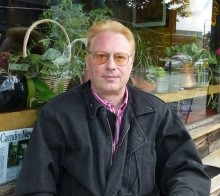
Psychical Researcher & Paranormal Investigator
Ciaran has served as a Council member of the Society for Psychical Research, SPR and the SPR’s Spontaneous Cases committee, SCC for many years.
He has had many psychical experiences and adventures when he was a boy. This led him to formulate his own early theories about ghosts, poltergeists and telepathic veridical dreams of the dead gained through direct encounters with ghosts, spirits and poltergeists.
He went on to build and design some of his own ghost-hunting equipment and to improve upon his previous theories about Cold Spots building on his own experience of them and his own ghost adventures.
He formulated the concept of ‘my body as an instrument’ to monitor and evaluate his perception of the atmospheres of rooms and outdoor places and preternatural Cold Spots within them as well as the perception and detection of poltergeists and ghost encounters.
In 1970, Ciaran went with his mother and sister and members of another family to an extremely haunted holiday home in Broadstairs in Kent. There was a great deal of paranormal activity during the holiday, which was cut short as a result of it. However, the real horror was yet to come, as the paranormal activity associated with several poltergeists/ghosts from the holiday followed Ciaran and his family back to their home in London, and Ciaran to his boarding school. The other family was also severely affected. One of the phenomena that Ciaran experienced due to his psychic sensitivity was that of lucid telepathic veridical dreams from at least two murder victims.
This gave him a deep desire to study sc… Read More

