0:00
I began to see that the way one analysis a given situation depends on one's point of view or attitude towards it.
Later I would study the philosophy of science and become conversant with the concept of paradigms, which is a context or world view of a particular problem or issue which forms a lens through which that problem or issue is seen and therefore analysed and addressed.
0:27
This led me to think, even from an early age, that it was not a question of logic being a single unitary concept or philosophy as Mr. Spock and the Vulcans might believe, as each paradigm had its own internal logic.
0:43
So if one followed a line of reasoning given, it would be difficult to fault the conclusion arrived at through a logical chain of argument.
But that logical train of argument might not necessarily lead you to a logical place, if I could put it that way.
1:03
What happens when the very methods we use to investigate the paranormal begin to shape what we think we are finding?
Can an investigation ever truly be free from assumptions, expectations, and the influence of those conducting it?
1:20
And what happens when the pursuit of scientific objectivity comes into conflict with the extraordinary experiences of those seeking answers?
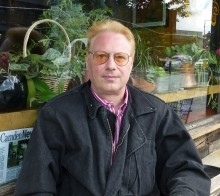
Today, I'm delighted to welcome back Kieran Farrell, who previously joined me to share his remarkable experiences in our series The Poltergeist Boy.
1:41
This time, we're turning our attention to a question that lies at the very heart of paranormal investigation, Contamination.
Across this series of conversations, we'll be exploring what contamination actually means, how it can arise, and whether the principles intended to protect the integrity of an investigation might sometimes create problems of their own.
2:07
In this episode, we begin with Kieran's personal experiences, his developing interest in scientific reasoning, and the assumptions that influence how we interpret the seemingly inexplicable.
Hi, Kieran, welcome back to the podcast.
2:25
Hello, Michelle.
It's great to be back and I really enjoyed the podcast that we did before and it's really good to be back with a a new podcast looking into investigations and how they might be carried out.
So before we kind of dive into the, the, the thick of the, the discussion, which is going to be looking at investigations like you just mentioned and contamination of investigations in particular.
2:52
Do you want to maybe start with just sharing what inspired your interest in the tension between scientific methods and investigative contamination in psychical research?
Just to kind of help set the foundations and and set the scene for what we're going to be discussing tonight.
3:11
Well, in many ways, I I basically grew up with that question rattling around my head because I had many psychical experiences from a very early age and I tried to understand and explain them basically to myself, and I also needed to explain them to other people.
3:28
This to a certain extent forced me to put those inexplicable experiences into words for those other people.
And they held me accountable for what I said, which was often perceived as either make me not being credible or that I was in some way mistaken in my thinking about what had happened to me in the way that I was kind of reporting it to them.
3:51
The criticism I received LED on to me sort of internalising that and therefore self criticism and censorship in that unless I could provide a credible level of argument backed up by some kind of evidence that the experiences that I had were real and genuine and that I was a credible witness of them, that I would not speak of them.
4:14
And that caused problems because that meant that I kind of had a tendency to suffer in silence.
So this led me in turn to become an investigator of my own experiences and to work out what was going on so I could speak of them from a more credible and therefore scientific standpoint.
4:34
It also led me to carry out paranormal experiments when perhaps I should have left certain things well alone, and when I found out that I'd bitten off more than I could chew, to suffer again in silence.
A good example of this was that I saw dead people gathering around my bed, usually at night, and their presence would confine me to bed.
4:58
So that was when I was extremely young, in about a toddler or whatever, and I was not able to get up out of bed at night to use the toilet.
I was not listened to about this as my description or account of what was happening to me was considered implausible or alternative.
5:20
Alternatively, if it were true, then I was making a fuss about something which did not warrant it.
Now the reason for this being that either ghosts did not exist and therefore I was imagining their presence and consequently spooking myself, or if they did exist then they were insubstantial and could not possibly hurt or harm me in any way and consequently they posed no threat to me, therefore I should ignore them.
5:48
They're sort of sophisticated.
All in the mind view that was taken of the phenomena became a dogma and consequently I had to find a means of being able to overcome the problem of all these dead people gathering around my bed and pressing in closer and closer towards me and stifling and smothering me with their bodies.
6:09
Now this could be a very distressing experience because it meant that I became highly sort of claustrophobic, could breathe and you know, I'd wake up screaming and so on and so forth.
Not a good place to be so I used to wake up as I said screaming and couldn't breathe and I would be yelling and all the rest of it.
6:29
What was observed however was that my bedroom was exceptionally cold, particularly one after one of these incidents.
I knew that the people that I saw were dead, as some of them had horrific injuries whilst others looked extremely ill and many of them had large black eyes.
6:48
Some were naked whereas others were clothed, and many of them reached out towards me to feel the light and life within me as they were attracted to it like moths to a flame.
And therefore they were pressing against me and I would notice that their bodies would overlap, so they pressed in against me, suffocating and stifling me, and they'd be merged into one sort of amorphous mass.
7:15
Now that gave me a bit of a clue, but sheer desperation and terror in the end pushed me to a point where I used my mind as a weapon to fight back, imagining that I was physically pushing them back away from myself with my hands.
7:31
This started out as purely defensive in a set of motions and actions.
You know, get away from me, get away from me.
You know where their bodies contacted mine.
I experienced the sensation of electric tension and sort of tingling, almost like an electric shock, and there was a cold.
7:50
But I found to my surprise that my limbs passed through their bodies, even though their bodies appeared to me in my mind and through what I could see with my eyes to be solid, but they weren't.
So I was surprised when, you know, my flailing hands went through their bodies because I could feel the pressure of their bodies and their hands against mine.
8:11
So this meant that I became less scared of them physically pressing in against me and more scared of the sensation of contact, which made me feel sick and I ended up retching.
So instead of yelling out in distress and panic, I would then sort of start retching and being sick.
8:31
And this meant, you know, obviously that, you know, the medical, the doctors had to be sent for and so on and so forth.
What on earth was going on?
Unexplained sickness and so on.
So I was subjected to, you know, quite invasive medical procedures, none of which turned up anything.
8:49
And, you know, they thought I was a very strange little boy when I tried to explain all this to them.
And they considered that I needed, you know, psychological evaluation.
So this left the question, how could something or somebody or someone be both physically insubstantial and yet be able to exert a force or pressure on my body to the extent that they could pin me down and suffocate me?
9:19
How is that possible?
I did not know the answer but I did know that it was possible to overcome the resistance of their bodies had when I pushed my hands and feet through them if I were prepared and therefore ready to suffer symptoms and associated with the contact between our bodies.
9:37
I reasoned that a way to apply the lesson I had been taught about these dead people being ghosts and therefore having insubstantial bodies was to find a way of enduring the electric like tension and shock and the sickening stomach pain and spinning headache while I exerted my will and concentration in order to move through their body.
9:58
The bodies of the dead people that penned me in and pressed against me, that has taught me a valuable lesson in terms of summoning up personal courage in the face of adversity.
But something more.
It was only through uniting the power of the mind and the body that I could achieve the desired result.
10:19
It was no good just to think of doing something because then I would be overcome by the the symptoms and the wretching and so on.
I needed to control my body with my mind and, you know, steel myself in order to be able to accomplish what I needed to, to walk through this wall of, you know, dead people.
10:41
I was later to refer to this type of phenomena of walking through a barrier in the mind as walking through walls after reading books by the psychiatrist Doctor William Sargent.
But that, of course, was when I was much older.
It was this type of experience that led me to question my own experiences and the analysis of the situation and the power to reason things through.
11:04
And also that of the others who thought they knew better about my own experiences and the reality of them.
Because they had no idea what was going on, because they simply didn't believe me or that they thought that this was just sort of 1 little nightmare or whatever, when it quite clearly was not.
11:22
I began to see that the way one analysis a given situation depends on one's point of view or attitude towards it.
Later I would study the philosophy of science and become conversant with the concept of paradigms, which is a context or world view of a particular problem or issue which forms a lens through which that problem or issue is seen and therefore analysed and addressed.
11:49
This led me to think, even from an early age, that it was not a question of logic being a single unitary concept or philosophy as Mr. Spock and the Vulcans might believe, as each paradigm had its own internal logic.
12:06
So if one followed a line of reasoning given, it would be difficult to fault the conclusion arrived at through a logical chain of argument.
But that logical train of argument might not necessarily lead you to a logical place.
12:23
If I could put it that way.
When I started to study science, I was formally introduced to the concept of the scientific method, but I soon found out that this was bound up with not only the ability to get results, but also the ability to get the right results, which ended up proving the right theories through the use and application of the correct methods.
12:50
In other words, there's nothing that succeeds like success.
And those who are able to achieve that kind of scientific success, well, they were the advocates of the right theories and they proved it through carrying out the right experiments in the right way with the right methods.
13:06
Everything is all that is therefore results orientated.
And somebody else who might have had a different set of theories or a different take on things or a different experimental procedure might have been quite right in what they were doing.
But because they didn't secure the result or others got there first, that they were seen as being less worthy as as scientists, which is not necessarily true.
13:30
Because I then went to study the not only the philosophy of science, but also the history of science.
And one of my tutors when I was at university was interested in the history of science.
13:47
And he was one of my supervisors for my PhD, which I didn't complete for various reasons, budget of funding and so on.
But what he had was he borrowed a book and this was the book written by the scientist on the ill-fated Captain Scott exposition.
14:06
And people think because of the film about Captain Scott that there was something wrong with the science that wasn't.
I saw that book.
I leant over my tutor's shoulder reading it.
It was beautifully written and the the the logic of the scientific arguments impeccable.
14:23
So how could a man like that be wrong?
He couldn't.
And therefore this to me at least, changed my whole world view of science.
And also about Captain Scott, that it was just one freak winter that did for them.
14:40
Whereas it wasn't any fault in the science.
Because even science in many ways cannot predict the unpredictable, something which lies largely outside the rules.
And we're only coming to be able to do that through the process of analysing global warming now.
So looking at freak winters is again, something that was sort of in its infancy back in Captain Scott's time.
15:04
So in other words, this whole system, the scientific method and in its application and the success of scientists, can be seen as a circular set of arguments that good science is as good science does.
Therefore, there needed to be a way of stripping away all the aspects of bad or mediocre science in order to reveal the true truth of what real science is and how it is applied in practice.
15:31
Now, that's again one of those sort of ideal situations which you can't actually arrive at.
It's just this notion you sometimes meet in mathematics that what you can do is it's this thing about the like statistics or whatever.
15:47
There's a true answer.
There's a true answer for everything.
It's just a question of finding it or finding a method to be able to, to determine what it is.
Anything less than the purest of scientific methods, whatever that may be applied in the purest of ways, as seen as either, you know, chasing artefacts or the introduction of theoretical distractions and experimental contamination which would lead to the watering down of the pure scientific method or truth and it's application would not obtain the desired results.
16:20
But this is sort of post ad hoc ad type rationalisation.
You know what works because you know who solved the the puzzle.
And the only reason you know that is because such a thing stands the test of time.
People still argue about the the primacy of the laws of thermodynamics, for example.
16:39
You know, you go against that at your peril.
If you're a scientist, you know, natural sciences or whatever, because there is an entire culture that the laws of thermodynamics are set in stone.
But what most people don't know about the the laws of thermodynamics is there are two mathematical expressions of the second law of thermodynamics, the Clausius Mazzetti and the Clausius Clapperon statements, because they were worked up from different arguments on paper that were then translated into mathematics.
17:12
So crazy situation.
You have one law expressed in two mathematical ways.
Each way is just as justifiable as the other because you cannot tell the difference between them.
They both work perfectly in experiments.
So what do you do where there is science?
17:28
Where is then the scientific method?
It's not quite as easy as people think.
And that's one of the things that I learnt empirically at an early stage, prodding and poking these bodies of the dead people that were, you know, trying to assail me in one way or another.
17:44
So one of the things about this is 1 needs to look at artefacts, something that travels with a chain of cause and effect, but is not necessarily part of it or might be somewhere down the line from it.
So you have to try and work that out.
18:02
Now in coming back to my example of, you know, trying to push my way through these dead people.
What is that electrical charge?
Is that something that the bodies of the dead possess?
Is it part of them?
Is it something that is part of ordinary human beings so that when they make the transition to ghosts or spirits or souls or whatever it is beyond death, then they carry some of these properties with them?
18:29
But because we only see, know and understand the way in which we touch our own bodies and, you know, can relate to other people by touching them, do we somehow become blinded to this electrical factor?
I mean, some people, I mean, I had this when I was when I was young, I shook hands with someone or someone shook hands with me.
18:49
They would get an electric shock or sometimes I would, but mostly they would.
So what's going on?
There is personal sense of electricity.
It wasn't down to my shoes in the carpet or whatever, made sure it wasn't because other people found this, you know, a bit uncanny.
19:05
So to try and work through things in the scientific way leads you into applying a clear mental method, but it is also something that leads you into a labyrinth of what might be perceived as questioning your own methods.
19:24
The results that you obtain, whether or not the theories you're using, the hypotheses you're working on are true or correct, whether you know you've blinded yourself to certain realities or you're looking at artefacts by products of a chain of cause and effect rather than the real chain of cause and effect.
19:43
So for me, all I've ever tried to do with any of this is to build up from the ground rather than, you know, think down from the theories.
So what all this really meant for me, at least at the time, was I could prove what was happening to me and show that the problems that I faced were real and substantial.
20:04
Based on a correct analysis of the problems, issues and challenges I faced when confronting with this paranormal experience of these dead people, it was possible for me to push my way through them under certain circumstances.
20:20
It was also possible for me to push them away from me mentally to a certain extent.
Because the interface between me and them was in part a physical one, but it was also a mental one in the sense that it existed in my mind because they were in my mind, because I could see them.
20:39
So it was a question of me knowing what was outside of my own body, seen with my senses, even my 6th sense.
But from their perspective, I don't know.
All I can see is that they were gathering around me, trying to touch me, and they grouped together and they tried to kind of smother me.
20:59
And I wanted to, you know, basically end that, get away through it, get out of it and so on.
But I wasn't successful in ending that those phenomena, although they did decrease over time.
But what became important to me was the knowledge of knowing that if I needed to get up to go to the toilet in the middle of the night, I would be.
21:19
I had a method, a formula for doing that, and therefore to me that became a sort of like a scientific thing.
I knew the answer, and the answer may not be perfect, but it was there and it was a technique that I could use.
Later.
I used to bunk off school and hang out in old haunted hospital buildings, and there I would experiment, learning what ghosts were at first hand.
21:42
In order to do so, I had to conquer my fear of ghosts, which comes back to the earlier episode, and also the paranormal.
That which makes you feel sick and bad isn't necessarily bad.
It just has a bad effect on you.
So, you know, you have to part up with that.
21:59
So, you know, it's a bit like a lot of things in life in terms of, say, taking horrible medicine, it has a bad effect on you initially, but supposedly it does you good.
Or really, is that just some sort of psychological theory that people come up with to make you accept the task of taking on palatable medicine?
22:18
I don't know.
Leave that question open.
So what I found that by experimenting with ghosts directly, you know, prodding and poking them, walking within their ethereal bodies and so on, I found that I bit off far more than I can chew, which is the subject of some other podcasts.
22:36
In the sense that I thought that when I left my little haunted building laboratory, then the ghosts wouldn't follow me.
They had no interest in me, only I had an interest in them.
I was quite wrong about that, but that's another story.
So again, I, it gave me an opportunity to test solidity and reality of their ethereal or ghostly spirit type bodies.
22:59
And I found that to a certain extent it was their bodies were like a sort of an image and you know, like a movie or whatever, that to a certain extent I could do what I wanted, bearing in mind the lessons that I'd previously learnt.
23:15
So both of these activities helped me to refine my ability to experiment and explore the paranormal from an increasingly scientific perspective by carrying out direct, direct experiments with ghosts and apparitions and obtaining specific information from spirits in haunted environs that could be checked.
23:34
So I was now moving things up to a next level.
How can I operate a sense or reality check on my experiences and also on my experiments?
Was there a way of being able to double check that I was getting the right answer?
This gave me the hope that it was possible through these means and good detective work to put a case together for the paranormal that would establish that my experiences were not simply my own personal view of a given matter and did not arise out of an overactive imagination.
24:09
However, this thirst for knowledge had consequences as when I left the haunted buildings and sometimes as I said that the ghost would follow me and I used to have some very special critical lucid dreams about the Life and Times of some of those people as deceased and discounted entities that I encountered in those haunted buildings.
24:33
So I went looking for the scenes that I saw in my mind through those dreams and I found some of them and I again I started to ask questions hanging around in those locations, which landed me in a bit of trouble on some occasions.
24:49
So I would end up communicating with the coasts.
So what I didn't realise at the time was I was honing my psychic abilities and my mediumship skills.
I started to test myself and the abilities of others and was tested by them when I came into contact with some of the top specialists and mediums of the day, despite the fact I was still very young.
25:11
So I was handed over to a bunch of spiritualists at some time, some point, basically to sort out because of various problems.
This had nothing to do with, you know, this, all the psychical stuff.
This had to do with the problems I had in getting on in a mainstream school or even a Montessori school because I had various medical problems.
25:34
So I was profoundly dyslexic, left-handed, left footed in the sense that I would always leave my left foot when I walked or whatever and I had a lazy right eye.
This meant that it was very difficult for me to access the regular curriculum and I spent, oh, a term off school after an incident which occurred in which I was subjected to a spiritual kind of exorcism carried out by some of these characters.
26:03
I don't want to dwell on that, but the important thing was that I'd lost a lot of time at school, so I had to change scores and things didn't work out for me.
But the important thing was that through that contact with these people, and some of them were the were the leading mediums of the day and were, you know, exceptional within the business of mediumship.
26:24
So I started to learn from them.
They were not interested in ghosts per SE.
No, to them ghosts did not exist.
Strangely, what they were interested was spirits and seances and communicating with spirits through seances or individual sessions.
26:41
Ghosts know in either they don't exist or they are sort of the wild creatures of the psychic world.
You don't get involved with them, you know, You don't go and find, you know, steal the zookeepers keys and try and venture into the lions enclosure.
27:03
And if you do, expect to be eaten because you probably will.
And all I can say is I was, but I survived.
So all this was a dark training which prepared me to what was to come in 1970 when I went on holiday with my family and another family to a very haunted house in in Broadstairs.
27:22
What took place during the holiday was only the start of a serious and long running poltergeist saga.
I cast a long shadow over all our lives and I worked with a girl from the other family and between us we were more, more or less figured out how many ghosts, slash spirits or poltergeists were involved and who they were.
27:42
The phenomena followed my family back to our home in London and then me on to my new boarding school, as well as the home of the other family as well.
The boarding school itself turned out to be haunted.
27:58
And then there were the phenomena that had already followed me and had to be contented with.
In addition, it's a long story which I was, you know, basically tested by the school eventually and they learned how to investigate the phenomena that had taken up residence within the school one way or another.
28:22
And I learnt how to be tested and how to apply the detective work that I had already learnt to carry out.
This in scientific terms was the search for what is often referred to as falsifiable evidence, which is a particular fact or outcome that can be checked and verified to establish whether it is true or correct or not.
28:43
These scientific tests of falsifiable Evidence Act as fulcrums on which the success or failure of a scientific hypothesis is determined.
This is the famous search for the one good white crow where people may have come across within the realm of the paranormal.
29:02
That would prove that not all crows are black.
However, one of the great difficulties with psychical research is, to paraphrase Harry Price, that to a sceptic no proof, however well founded and backed by evidence, will ever be sufficient, whereas to a believer no such proofs are necessary.
29:23
I think the William Drake summed up this very well when he's saying, quote the crow wished everything was black, the owl that everything was white, UN quote.
So there are always two sides of the coin when it comes to psychical research and to questions about ghosts, spirits, souls, and survival of bodily death.
29:45
This is where these paragraphs come into play, either for or against a given person reporting their experiences as being genuine and acceptable, even if highly unusual.
Or that such experiences may have arisen through misattributions and misunderstandings or misinterpretations of the person concerned in relation to the physical world, the way in which the mind, brain and psychology operate.
30:13
Therefore, any considerations, factors or evidence that is perceived by either side is in this debate does not directly have a bearing on this particular question.
But it does all too often mean that there are sides involved.
30:31
You know, as you know, Danny Robbins would have it, the team believer versus team sceptic, this kind of thing.
So people's views do matter in this sense.
And what I've always advocated for is somebody to have an open mind and therefore be able to accept awkward facts that don't fit into the theories one way or another, that need to be accounted for rather than dismissed.
30:57
So, you know, people in that sense can be a bit awkward minded, and that's really in the sense what 1 needs to do if one is a sort of paranormal investigator.
So these awkward facts are all too often acknowledged only to cast them aside rather than use them as building blocks of a new science of psychical research built on the evidence of human experience backed up by appropriate instrumental observations as a third or middle way between the two opposing sides or forces.
31:30
It was this middle way that I have always sought to travel, as what has been important to me from the very earliest experiences has been to start from the making of a basic observation, which will then lead on to deductions and conclusions in relation to the formulation of the testable hypothesis.
31:52
This of course is the scientific method, but all too often people don't want to apply it or think that it shouldn't be applied on the basis of.
If someone's observation appears to be impossible or not conversant, or in another sense impossible within their accepted laws of science or the laws of science, most particularly physics, then the observation is false and consequently there is no need to investigate further.
32:23
But the whole thing about the paranormal is we should start from observations of the impossible because that's what the subject really is is about.
I'd have to say that all too often clever, knowledgeable and educated people will fail to apply this scientific method as a result of believing that such observations do not accord with their view of what is and what is scientifically acceptable, possible or credible.
32:49
My point is, like any good detective, a scientist should apply their methods of inquiry and see where the evidence takes them and therefore the need to be open minded.
So in your view then Kieran, how did Harry Price's Blue Book shape or distort later expectations around case purity and contamination then?
33:11
Well this goes back in many ways to the bawly famous Bawly haunting or poltergeist or whatever people want to call it or describe it.
The Reverend Lionel and Marianne Foster experienced quite a bit of haunting and a lot of poltergeist phenomena when they stayed at Bawley Rectory and they moved out of the Bawley Rectory.
33:34
The reason why they may have done so could have been as a result of this or the hard life they experienced in the house as the facilities were of a very basic nature and it was difficult to heat and maintain the property.
33:51
They were given what was known as the living of Bawley, which meant they essentially lived rent free in order that the Reverend Lionel Foster could carry out his ministry and that that rent was calculated to be a certain amount.
And that contributed to what was called the living of Borley, which was, you know, the rent free existence, certain other goods or in kind and a small site stipend by way of a salary which was not much.
34:20
So after the foisters moved out under these difficult circumstances, whatever they may have been, the rectory remained empty for some time.
And then the ghost hunter and psychical researcher Harry Price took out a year long rental agreement and on it for a nominal fee from the owners in order to conduct a paranormal investigation into the haunting and poltergeist phenomena that had previously been reported.
34:49
He was well aware of what that was because he had investigated the property previously.
In order to do this, he placed an advertisement in The Times on the 25th of May 1937, as the result of which he recruited 48 observers who would stay in the rectory in order to stand vigil and report their findings.
35:12
These 48 official observers, as they were termed, were all personally recruited by Harry Price as the result of his interviews and correspondence with them.
However, many of them were not ghost hunters or psychical researchers, so they did not know what to look for or how to record paranormal activity, or indeed how to observe it, or how specifically they should relate to Harry Price about it.
35:43
In other words, if you want to be in a haunted house to experience haunting phenomena, well, what is it?
You're expected to, you know, see, hear, observe, whatever, as opposed to things that may be normal but possibly unusual.
36:00
So you don't want somebody sitting in the room making a note of every, everything that goes on because a lot of that what you're going to be recording just doesn't, won't make sense in the because you know, every time something moves in terms of a noise or whatever, it could be heating or cooling could be all sorts of things.
36:18
So you, you want people to have unnecessary expertise to be able to record and investigate things that might be unusual and ignore things that basically are not, or basically note them down to be able to say there was, you know, a crack or whatever, or the wind might be blowing in or whatever, a draft, a fin, a cool breeze on your face or whatever.
36:43
That may be normal, it may not.
So in order to standardise the process of observation, recording of potentially paranormal events and other relevant matters, Harry Price wrote a small booklet known as The Blue Book, which set out the phenomena that might be anticipated and what to do if they were encountered and how to write them up.
37:04
Write up an encounter with those you know, phenomena or whatever, or to observe them and then for record them.
This was the first time that anyone had sought to specifically describe the process of observation of paranormal phenomena and how those observations should be written up in a standardised way which was appropriate and applicable to people who were not psychic researchers or ghost hunters or even, as the phrase goes, trained observers.
37:35
The term trained observer is often used in ghost hunting and paranormal investigation and it is considered to be a vital tool of the trade.
However, nobody really knows what it entails other than a trained observer is one who has been trained to observe.
37:53
How one learns to acquire the skill and how it is applied in practice are rather open questions, therefore.
Consequently, if you look at what a trained observer means in different contacts within say the military, in particular the Army, Navy, and later obviously the Air Force and other areas of civilian occupations and whatever, then and trained observer is somebody who is trained to observe certain things in a certain way.
38:25
And therefore that training is a specific thing.
It isn't a general thing.
Obviously one can rely on certain transferable skills, but one still needs a specific skill set to be able to know and understand what one should observe and how in a different environment.
38:45
It's no good, for example, taking somebody who's an expert in Morse code or semaphore sending of semaphore signals and expecting them to know and understand how to observe and record the paranormal, for example.
So there are specific meanings to the term from various areas of different human endeavour, spanning from the arts to the art of the application of military science and techniques.
39:10
And of course, the inquiries and investigations carried out by scientists through the application of the scientific method and the engineers in developing or maintaining machinery and equipment.
Because you need to be able to know understand how that equipment works, be able to diagnose what may be wrong with it when a report is filed of a fault with it, and be able to find out what to do about it without having to take the whole thing apart and rebuild it.
39:37
That's assuming you can.
This means that for each specific type of activity that requires accurate and reliable observation reporting, there are certain cultural and specific protocols that are used to ensure the task is carried out to the appropriate and required standards.
39:56
Naval seamen scanning the horizon for other vessels, particularly at dawn.
Which might be hostile is a very different means of using a person's natural capabilities to observe than an artist making a still life drawing with the aid of a model posed in front of them.
40:15
Both the artist and the seamen know specifically what they're looking for and will apply the necessary techniques that they have learnt to to the situation in order to make the required observations.
A very good example which I think comes out of this is the professionalism and protocols which were developed for the analysis of 3D photographic reconnaissance data during the Second World War.
40:40
One trained observer would look at the images in detail and refer to them, pair them to a second or more senior observer for confirmation or interpretation.
The second observer would often ask quote what am I looking at, UN quote in order to have their attention drawn to the correct features of the dual stereoscopic images in the viewfinder.
41:05
If the second person was not a trained observer, which clearly they were, and why, then why would they ask or need to ask if the first observer was, you know, accurate in their observations?
41:22
So what's that about?
What that's about is being able to look at something with a specific view in mind with a certain sort of skill set and be able to potentially identify a certain feature on the ground and be able to refer that to higher authority.
41:43
Now, within this system, it isn't about what comes later in terms of some of the ghost hunting or whatever sort of seeding or planting or persuading or whatever, because the system here is about two professionals.
41:58
First professional forms an opinion.
The second professional needs to confirm that opinion or otherwise.
So that's an accepted part of the procedure.
My point here is that the procedure is something that was worked out in order to be able to ensure that when an observation was made and checked and confirmed, it was as good as it could be under the circumstances.
42:25
And some of these things had very real significance in terms of aerial observation and things like, you know, the V2 rocket program and so on and so forth.
The identification of landing sites and military installations and so on.
42:41
You've got to be right.
You've got to be accurate.
You've got to know what you're talking about.
And you have to be able to compare what you see in, in reading these photographs with other known sources and be able to say, aha, this is such and such that I see here, and then pass on to others within the military who can then take action on what you've have reported to them.
43:06
So the whole system's got to be accurate.
It's got to be consistent and everyone involved needs to have a certain independence of opinion and action.
The reasons for this are actually very simple and it is essentially to ensure that these checks are carried out so no mistakes are made.
43:24
It was this sort of general technique that Harry Price wanted to use at the polyrectory so that each individual observer knew what they might observe and how to make the most of their observations.
When they did observe something that was worth recording, because not all of the OR all of these observations are, they would then record the observation and they would have gone through a second, usually more senior member of the team as well to confirm what observations had been made and how significant they were and the way that they were set down South.
44:05
Harry Price correctly laid a great deal of emphasis on observers remaining cool, calm, and collected, and if and when they observed something that could be unusual or paranormal in origin, so that they could mentally record what they had seen clearly and accurately in their own minds in order to be able to sort of describe it in a prescribed way on paper.
44:30
That sounds easy, but it isn't.
Because if you think about this, if you've just observed an apparition somewhere or you've seen a ghost or whatever, what you need to do is not panic.
You need to be able to hold that image in your mind and be able to answer certain questions about it.
44:52
What was it like?
What did it, you know, in detail?
What did it look like?
What was its features?
Was this sort of an ethereal type of white figure?
Was it dressed?
Was it male or was it female?
If it wore clothes, what were its clothes like?
Can can those be described?
45:08
Could they be seen?
And so on.
What was it doing?
What was its general attitude?
Did it notice the observer?
And so on and so forth.
A long series of questions which if you know you're going to get asked or you know you're going to be record required to record it, must be able to realise off the tip of your mental tongue as it were, so that you don't run away and say, oh, I've seen a ghost or Oh my God, you know that's scary.
45:32
Whatever.
You've got to conquer those, those feelings and those impulses in order to remain in that moment and make the observation in your mind and make a mental note of it so that you can record it on paper.
And you've also got to be able to do this knowing that you've got to record it on paper in a specific way.
45:51
This is the importance of the example in terms of the stereographic aerial photographs.
It's essentially the the same kind of technique because it relies on the same abilities and the teaching of those abilities.
So I think the difficulty with the way in which Harry Price set up the procedures to be used where there was too much emphasis laid on the sort of phenomena which he listed and described in detail which observers might encounter.
46:22
In other words, he was to a certain extent prescribing what people would see.
It would be would have been better if he would have essentially given some examples and made it clear that they were examples rather than attempting to cover the entire range of phenomena which an observer might encounter.
46:39
However, there are pros and cons to that, because if you don't describe the entire range of phenomena, then what does somebody do if they're sort of outside the guidelines of the book, as it were?
So you need in one hand to account for everything and on the other you mustn't start putting things in people's minds.
46:58
So there's a tension though.
This not only acclimatised the observers to what they may see or experience, but it also primed them to see or interpret their observations in terms of the sort of paranormal phenomena they were expected to observe and be able to interpret in relation to the entries in the Blue Book.
47:21
This might have had the effect that too many of Harry Price's trained observers reported the observations that he was expecting them to report relating to the list of phenomena he had provided them with, which created the expectation that they should find them during their vigils.
47:39
In essence, this is a bit like all the things that you know, people know from surveys, which is, you know, on the scale of 1 to 5 or whatever it might be.
Tell me what you think about this or whatever.
So you're forced to give it a number, or you're forced to pigeonhole or categorize something.
47:58
Sometimes that can be an advantage because it makes things clearer.
On other occasions, it can distort what people would say if they were allowed to use their own words.
So the difficulty with Harry Price's Blue Book was that it was too prescriptive and therefore people ended up actually observing what they were told to observe or they thought they were observing rather than what they thought was actually there.
48:24
And this was this was at his very well known criticism.
So the way in which Harry Price set out how observations should be made and recorded had a very large and long lasting influence over the way in which paranormal investigators and ghost hunters have gone about their business ever since.
48:41
Because all these considerations are considerations that form part of what it is to be in that sense, a trained observer or a trained recorder of, you know, the paranormal in relation to paranormal investigation and ghost hunting.
48:57
When I was in my 20s I trained as a private investigator and part of that training related to learning and acquiring and applying these sorts of techniques in order to be able to take mental photographs as it were, or videos of certain events so that I would be able to extract the key information from them in order to record it on paper or through the use of a dictaphone.
49:23
My point here is that it is essentially a three-part process, knowing when to go into this sort of record mode and being able to do so at will.
Then playing back that recording in your own mind in order to extract relevant detail, which of course assumes that you know what that detail is, or at least potentially could be.
49:47
And then finally distilling this and setting it down on paper or as an intermediary step as a voice memo.
These skills once learnt are of course transferable, as are many other skills in related areas, so that the fine artist, the musician as well as the scientist and technician all have their own specific ways of making detailed observations and using them in their work.
50:15
I've already learnt the skills to a very large extent during my earlier years as I taught myself these techniques as a means of being able to re experience and analyse the various ghost encounters I had during my various ghost adventures.
50:32
They're not the only skills that are important to a paranormal investigator because as and when something occurs when one is standing on vigil 1 needs to be able to figure out where a sound is coming from for example and what might be responsible for it.
50:50
As well as a great many other things such as a good knowledge of a light and a way that light is reflected and the way sound is propagated around a room or building.
For example.
The culture of ghost hunting and to a certain extent paranormal investigation has grown up over the last 30 to 40 years as being rather macho one.
51:13
In that there are those who will claim that they are the only truly trained observers, often on the basis of having attended rather basic ghost hunting or paranormal investigation courses.
They will also maintain that those who have not been on such courses do not know how to observe and consequently are second class paranormal and citizens in terms of investigations as far as they are concerned, possibly due to the extent that they could not or should not take part in paranormal investigations or ghost hunting activities.
51:51
So it's a bit of an us and them situation and also a sort of, you know, I am, you know, the big kind of boss person I am and I know everything and other people don't.
That's a kind of a culture that has grown up, which I think really needs to kind of be broken down because what's needed is a diverse range of skills and the skill set.
52:14
Then this sort of, you either know it or you don't kind of routine.
I don't think that this sort of skills, knowledge and techniques that Harry Price wanted to instill in his trained observers can be acquired by asking a group of people to sit quietly in a room and make a note every time someone coughs or scrapes a chair or drops their pen or whatever.
52:37
This, unfortunately, is all too often the way in which the high level observation recording skills which Harry Price intended his trained observers to have and would be useful paranormal investigators to acquire and learn.
52:52
Unfortunately, these courses don't really teach that.
I don't consider that this sort of kind of dumbing down does anyone any favours and creates a great deal of division, misunderstanding and uncertainties when the individuals concerned consider or believe that they have skills and knowledge over and above those of anyone else in the coast hunting or paranormal investigation fields when they do not on the basis of this alone.
53:18
So you need to be able to know exactly what it is you're trying to observe and how you're trying to observe it in order to be able to go through that process of being able to enter that kind of recording mode and be able to make your own mental notes so that you can then in turn distill them onto paper using a standard technique.
53:42
This is not the same as sitting in a room and making a note when somebody coughs or whatever.
It is a different kind of process and it is far more sophisticated because dropping someone, dropping their pen or whatever, OK, you can make a note of that.
I think everybody's capable of doing that.
53:58
I don't think there's any training involved, but what should be involved is to make a note of what should be important, why you think it is important, and what do you think the cause might be.
Because you always face a dilemma with visuals.
54:14
Should you stay and record something or should you go and investigate it?
Because it's very difficult to do both things at the same time.
So what's required are these sort of higher level observers of the paranormal, people who know and understand what they're looking for and are able to record it in detail in a fairly standardised way that other people know, understand and be able to relate to.
54:41
So I think it's far more important to build on those skills people ready have as a result of what they have learnt from life and from their occupations in order to be able to equip them with high end and high level observation recording skills that would be beneficial to the ghost hunter and the paranormal investigator.
55:01
Rather than those basic skills which are as basically they are, which don't really give much to the paranormal investigator or ghost hunter and would pitch people into difficult situations for which they are not prepared if they really do encounter something on an investigation.
55:22
So, in my opinion, misunderstandings about the status and worthiness of an observer and whether that person was in some way a trained observer and on what basis, are common sources of discussion, debate and disagreement about the purity and therefore accuracy of a person's observations as to whether they were properly and accurately made and were not unduly influenced by the views of the observer themselves or anyone they might be reporting to.
55:52
These factors therefore represent, on the one hand, clarity and purity of the observer and the accuracy of their reporting or the lack of it, resulting in an absence of scientific detachment, contamination and the observations with the personal views of the observer or the perception of them in the mind of the person that they are reporting to.
56:18
That brings us to the end of the first part of my conversation with Kieran Farrell, where we've explored how personal beliefs, expectations and assumptions can shape paranormal investigations, sometimes without us even realising it, and why recognising these influences is so important when examining extraordinary experiences.
56:41
My thanks to Kieran for such a thought provoking discussion and for sharing his knowledge and experiences.
In the next episode, we'll delve deeper into the challenges of maintaining objectivity.
Can any investigation ever truly be impartial?
56:58
What happens when an investigation begins to drift beyond its original purpose?
And how do we balance scientific rigour with compassion for those experiencing the unexplained?
Those are just some of the questions we'll be exploring as our conversation continues in Part 2.
57:18
Thank you for joining us on this journey into the unknown.
If you enjoyed today's episode, please subscribe, rate, and leave a review on your favorite podcast platform.
You can follow us on social media for updates and more intriguing stories.
57:35
Until next time, keep your eyes open and your mind curious.


 Podcast Addict
 RSS Feed
 Apple Podcasts
 Spotify
 Amazon Music
 Overcast
 Castro
 iHeartRadio
 PocketCasts
 Castbox
 Podchaser
 TuneIn
 RadioPublic
 Goodpods
 Podyssey