0:00
What if, when investigating A haunting, we've been asking the wrong question?
What if understanding the people who experience these strange events is just as important as investigating the places where they happen?
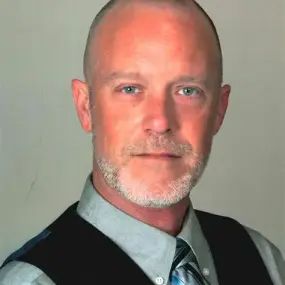
My guest today is Doctor Brian Lathe, A psychologist and paranormal researcher whose work explores the fascinating relationship between human perception, belief, environmental influences, and unexplained phenomena.
0:32
Drawing on his background in experimental psychology and years of field research, Brian has helped develop the concept of haunted people's Syndrome, a framework that challenges to think differently about how hauntings are experienced and interpreted.
0:51
And as Brian explains, there's an important distinction at the heart of that research.
And, and I think something that doesn't really get explained enough or thought about enough when we deal with the paranormal is there is a difference between the phenomena that we experience, the core phenomenological components.
1:10
So if we're, you know, talking about hauntings and object moving or seeing an apparition versus how we are using our belief systems and our background and our life experience to interpret that event to give it meaning.
Today we'll be exploring a book co-authored by Brian Ghosted, Exploring the Haunted Reality of Paranormal Encounters, which brings together scientific research into hauntings, poltergeists, and the extraordinary experiences people report.
1:43
We'll examine what electromagnetic readings can really tell us, why expectations and beliefs matter, and whether the equipment so familiar from modern ghost hunts is bringing us any closer to understanding the unexplained.
So what can science tell us about a haunting, and where do the limits of that understanding begin?
2:06
Let's meet today's guest to find out.
Hi, Brian, thank you so much for joining me on the podcast.
Thank you for having me, it's nice to be here.
So for listeners meeting you for the first time, do you want to introduce yourself and your research and the journey that brought you into the scientific study of paranormal experiences?
2:27
Sure.
You know, I grew up in a very rural environment and I had a lot of paranormal experiences as a kid.
But most of my academic training was in psychology and philosophy as an undergrad.
And then I picked up an experimental psychology PhD at the University of New Hampshire.
2:47
So, you know, and I didn't really formally move into parapsychology until the mid mid noddings, so to speak.
So my original, my original focus was mostly psychology of religion because of the experiences I had as a kid.
And of course, I've had a very robust amateur love of reading a lot of theology and also a lot of esotericism as well as world religions, kind of as a as a balance to experimental psych.
3:15
Most of my stuff nowadays is in looking at hauntings and poltergeists, although my colleague Jim Horan and I have done a fair amount of work now looking at how environments might affect things like ESP scoring or ESP tests.
3:31
But a lot of a lot of our work revolves around basically trying to to document and map the psychological and environmental aspects of paranormal experiences.
And you're one of the the five authors of Ghosted, the book Ghosted.
What were you collectively trying to do with the book and what does it often do you think that you felt was missing from traditional books about ghosts and hauntings?
3:57
Well, you know, that's a that's a loaded, I think maybe even a controversial question.
We did ghosted as part of a way to, to give to, to normal, you know, paranormal enthusiasts, the current research that actually tries to map out various psychological components and environmental components in addition to the anomalous phenomena that is in, you know, at the middle of them.
4:24
And that particular book represented almost 20 studies that my colleagues and I actually published.
And then we tried to put that together in a, in a kind of a readable book for for lay people.
But you know, key to this is we're all, at least to a certain extent, what you would call interactionists.
4:43
And, and I think something that doesn't really get explained enough or thought about enough when we deal with the paranormal is there is a difference between the phenomena that we experience, the core phenomenological components.
So if we're, you know, talking about hauntings and object moving or seeing an apparition versus how we are using our belief systems and our background and our life experience to interpret that event to give it meaning.
5:11
And those are really two separate things in the sense that people will come to, you know, a believer and a skeptic will come to very radical interpretation, different interpretations and conclusions over the same event that they both witnessed.
And we don't see enough of that separation in the field.
5:30
And it's it's very important because it's it's you know, that's part of us getting better answers and understanding how this phenomena works.
Whether you're a believer or a skeptic, not taking into account the background of the individual, their interpretational preferences and their bias towards certain interpretations is not you know is is a confound right is a problem in how we are explaining and trying to map what we might call the quote UN quote paranormal.
5:57
And just to kind of follow on from what you said, because I think this is something that I think is, is for me, what makes the book such an incredible book, because there are some very good writers out there who contribute to this, you know, to the academic study.
6:14
And unfortunately, a lot of that is, is kind of hidden behind, you know, academic sites and so on.
And it can be harder for the layperson to access and to to be able to consume some of that, you know, deeper dive that deeper kind of research into some of the the phenomena that we're talking about.
6:33
And so to have a book like this that is so comprehensive, that covers so many different studies, as you mentioned, but does so in a way that means that it is accessible.
I think puts it in a, you know, particularly successful place on the shelf in terms of how and who is who within the kind of the paranormal field who has an interest can then consume it.
6:56
And I think that's important.
It's.
It's appreciated, although we, we do get into a lot of trouble because we don't take a stand.
We don't go, you know, the book very, very pointedly says, you know, this is the psychology of it.
This is the stuff we can measure.
7:12
And I think sometimes because we're trying to map out various components of haunting, people will assume that the approach is skeptical and it's not.
We, we say repeatedly in almost all of our articles, we're not making claims about the reality of, of paranormal events.
7:28
In other words, 'cause really there, there's two different branches when it comes to research.
You can, you can, you know, look at the experience of the haunting from a person's experiential, you know, point of view as well as their traits, as we were talking about before.
And then there's studies that look at how true is the paranormality of said event, which of course in science you never get to, we've proven anything.
7:50
But, you know, there is, did the object in fact move by itself?
That's one type of analysis, right?
And then there's all the contextual and, you know, psychological and, and, and trait related phenomena.
That is a whole separate, separate game, right.
8:06
And, and I also think to your point, you're right, academic sources are hard to get to for people.
I don't like that necessarily, but it is kind of the name of the structure in the game.
So we were trying to kind of give people with the book kind of an up to date map of, you know, what, what science can say versus what it can't say.
8:26
And, and unlike a lot of people, I love science, but I don't treat science as an end all, be all religion, theology or definitive answer.
It's, it's a method, it's a technique.
There's certain things we can assess very well with the scientific method.
And there's a bunch of stuff that we really can't, you know, assess in any really meaningful way.
8:46
So I, I think, I don't know, I think depending the, the reader will, will come to the book with, with different assumptions.
And of course, it is a fairly technical book.
We really try to map out as much as we can, you know, the things that science can measure.
And then we also try to be honest about the things that are not definitive, but depending on, you know, who looks at it, they they come, they come to it with different opinions.
9:08
And central to the to the book is this idea of haunted people syndrome.
Do you want to explain to the listeners what exactly that is?
And and why might the person, you know, the person sometimes being the important thing more so than the supposedly haunted place, that kind of argument between the two.
9:27
Yeah, and, and you know, unfortunately haunted people syndrome is, is fairly complex.
So I'll, I'll, I'll try to make this because, you know, it has several components.
So I'll, I'll try to make this as succinct as possible.
You know, .1 with haunted people syndrome is this idea again of interactionism, that the way a person interprets the event is different than the phenomena that they experience.
9:49
Why we are always interacting with the world around us that doesn't, you know, and that's not true just for hauntings.
That's true in general, right?
Our belief systems, our experience, our habits help us make sense of the world around us.
So for any given experience that we have, we're going to interpret that based on our previous experience and belief systems.
10:09
But but the two main aspects of of haunted people syndrome 1 is a trait we call trans liminality, which is a measure that has a whole lot of research with it that is associated with thin psychological boundaries.
10:26
So trans liminality, right, you're basically thin boundary structure.
Thin mental boundaries is a person who has a thinner kind of wall between the conscious and the unconscious, but also their conscious selves and the environment around them.
10:41
So people that are high in trans liminality have information from the environment flowing into them and the unconscious flowing up into their consciousness at a greater rate than regular people do.
And the reason that variable is important or that trait is important is because we know that it reliably predicts over and over again paranormal experiences and haunting experiences.
11:04
So haunted people syndrome rests first on interactionism and then translominality.
And then it also recognizes what we call dis ease, which, you know, we've gotten in trouble for because people have misinterpreted that as a disease, right?
Like you're sick or you're I'll, that's not the case.
11:20
We're saying dis ease, a sense of lack of ease.
We're recognizing that hauntings, right?
Paranormal experiences can be unpleasant that they can create anxiety and they can create a sense of distress for a person over time.
11:38
And of course, when we actually apply, you know, haunted people syndrome and do case studies, we, we very often will see this history of, you know, people that have had paranormal experiences in young childhood or a little bit later that were unpleasant, that were disturbing or frightening and that they've carried through over the years after that it we know that beliefs mediate how a person is going to interpret paranormal events.
12:03
We also address that there is contagion effects, which is a normal psychological function for people.
I, I did about 10 years of field investigations.
And one thing that would always happen is one person would go, oh, did you see that?
And then you know what, in 30 to 45 seconds later, someone else would be like, yeah, you know what I think I did?
12:21
And someone else would be like, Oh yes, I saw this or I saw that.
There has to be a recognition that human beings are very prone to other people's influences.
And so contagion can happen at both a conscious and an unconscious level.
So in some cases, we will see that families get involved and that families feed into, you know, kind of the grand story or the grand explanation of what is perceived to be a haunted after we deal with contagion.
12:50
We also recognize that if you have enough weird things happen to you that you're going to become hyper vigilant and that means that you're going to be paying attention to potential threat in your environment.
That small noises that didn't bother you before, you might now pay a lot of attention to and either interpret or misinterpret what those mean in context of a haunting.
13:14
And then of course, the, you know, the core point is after we recognize that threat and agency and hyper vigilance occurs, is this idea that you have paranormal phenomena involved, What is perceived by individuals to be apparitions, odd noises, objects moving, etcetera, etcetera.
13:31
And you know, depending on the author and the book, I'm a believer in the paranormal just from personal experience and studies that I've done.
Others are skeptics, but that's irrelevant, right?
There's a perception of odd or anomalous phenomena that is interpreted as haunted, right?
13:49
So like in a nutshell, it's a recognition that there are individual characteristics, psychological states, the environment, your beliefs, and then anomalous experiences, and they all interact with each other to create the, you know, overall impression of the overall experience of what haunting is.
14:07
And just kind of following on from that, I mean, when experiences then seem to follow someone from one property to another property, how do you begin separating the environmental factors from psychological factors and from the possibility of something genuinely anomalous?
14:25
Well, we know.
OK.
So there's, there's two questions there in, in, in a pure science sense, we have measures and we also have ways of assessing sort of the liminal nature of the environment.
My colleague Jim Horan does work with what's called enchantment, right, which is kind of this, this sense of awe or otherness that can occur from the from different environments.
14:49
And we actually have scales where we can kind of assess the degree to which different environments can create more of what we would call a liminal or an in between space or a space that doesn't appear safe, so to speak, or is different or odd or not comfortable.
15:05
So that's measurable.
But at the same time, when it comes to separating, you know, we can measure the psychology up, we can measure the environment, but again, we have that separation between what is the person experiencing and where are they at versus how much can we actually test specific claims of I saw an object move or I saw an apparition or I have cuts or scratches on my body as a subjective event, right?
15:34
When we're just doing HPS, it's more of a, you know, accepting the person at the word and dealing with them where they are.
Because, you know, a lot of people that might be in an HPS situation are not doing so high in many instances.
15:50
And so whether or not the we can prove the paranormality of, of the things that they've experienced actually become secondary.
And it's also worth noting that proving actual paranormality in itself is a whole.
You know, I, I've done 3 studies where I've looked at, at electromagnetic fields and both subjective and objective phenomenon and haunted locations.
16:13
And that requires a truckload of equipment and protocols and experimental procedures that if you're dealing with a family in distress, may not be appropriate for them.
So, you know, kind of a key point with haunted people syndrome is we're not making a claim when we look at HPS factors in, in terms of Yep, Yep, the events they experienced are paranormal or they are not paranormal.
16:38
Debunking that is kind of irrelevant in context of the entire experience that the person's having.
And to be clear, we're not making a claim that they're telling the truth or otherwise.
We're we're taking what they're telling us at face back it again investigations where you're going to try and get at the anomalousness of various phenomena is really a different kind of experimental bird.
16:59
And again, just to kind of make it really clear for the listeners, I mean, a few moments ago you, you explained the meaning of trans liminality, you know, this idea of this thin permeable boundary.
And just to kind of again, make it really clear for for listeners, does that mean that our that these paranormal experiences are happening inside the person or instead making some people just more sensitive to some anomalous in their environment?
17:27
Do you want to just make that really, really clear for for people listening, for anyone who's unfamiliar with that term?
Sure.
The answer is yes.
And right there are.
We have a a very well well studied scale of, of paranormal basically anomalous events that happened.
17:44
It's called the survey of strange events and they're mixed into what we call subjective things that happen internal in the person versus objective things that you can see outside of the person and or theoretically document.
Right.
So something moving psychokinesis would be an objective event.
18:02
A full body apparition caught on camera or a really clear audio recording of a voice would also be an objective event.
But we also have people having positive or negative impressions of, of presences.
They may have smells.
18:18
They may in kind of a, you know, if you prefer, in a traditional psychology sense, show some conversion disorder characteristics where they have cuts, scratches.
These are all subjective events.
And yes, trans liminality would in theory increase the odds of subjective events because thin boundary structure means that you're going to get more impressions and sort of feelings and senses about the things going on around you in the environment.
18:48
But that doesn't also negate that trans liminals also report more objective events as well.
So it's both.
And it's also worth noting, we've done several studies now looking at transliminality as a predictor of ESP success and we're getting some mixed results.
19:04
But the overall, some of the studies suggest that they're a little bit better at doing ESP in the right environments than than average individuals.
So there, there may be a little, little bit of woo woo mixed in with transliminality.
19:19
It it appears to predict both, but yes, to to your core point, someone higher on translominality is probably going to be more likely to experience objective events than your low translominality individual.
And just to kind of go at a different, different direction, you know, you've also studied, as you mentioned, electromagnetic fields in relation to anomalous experiences.
19:43
What are researchers actually finding when EMF fluctuations occur around reported phenomena, and what makes an unusual reading genuinely interesting, rather than something simply that's normal kind of environmental variation?
19:59
The the answer to the nutshell is that I've done 3 studies, 2 which looked at objective phenomenon controlled conditions and one that looked at just subjective phenomena in a mock seance environment, and what we found at all three was that there was a significant association in time.
20:18
Where you would find either EMF suppression occurring or EMF expansion occurring in a three to five second time period right before either objective events like a beach ball moving or shadow people occur and or subjective reports of phenomena that people report.
20:39
So there is in fact, at least from the research I've done and and no one else has ever replicated it, which has frustrated the heck out of me.
It, it's been out now for about 10 years at least.
You know, accepting that probably independent replication is good, right?
We, I've, I've done 3 studies that show very clearly that if you data log EMF and you don't look at just a reading, but you look at the readings over time, that you actually will see significant changes in EMF right before both objective and subjective events.
21:11
So, you know, and I want to be clear here, you can't take a meter like AK 2M and go, oh, I've got a spike and expect an event doesn't work that way.
In order to find these relationships, you actually have to log the EMF and GMF data with appropriate sensors at, you know, in really two to two to four samples a second will do it.
21:31
But I've done 20 or 30.
You have to look at the change of the wiggle of of of the spikes and the and the trods, right, the peaks and the trods of EMF.
And if you do it that way, you will actually see that there appears to be a very real relationship and EMF change and these anomalous experiences.
21:50
I think what you just said there is a really valuable reminder that gathering readings and understanding what those readings actually mean are two very different things.
So bringing that back to something investigators might encounter in the field, when an investigator's EMF reader suddenly spikes, what should they actually do next before saying we've got something paranormal, do you think?
22:18
Well, I mean, first of all, if the EMF meter spikes and then you see something phenomenal, well, OK, maybe there's a relationship there, but just a random spike or perturbation.
They should be checking all of the outlets.
They should be checking wiring.
They should be checking the nearness of a microwave.
22:35
They should be checking the television, noting that you know, you need to spend some time if you're going to worry about EMF.
And I think this is the problem.
Electromagnetic fields and geomagnetic fields are physics.
22:51
And it's never a good idea to be measuring things that you don't understand the basics of how they work in the 1st place.
So because again, right, how do you know what is normal or abnormal if you don't have a basic understanding of the, I mean, you don't have to like take two courses of college physics, but you know, understanding for instance, that, you know, EMF is a vector off of electricity flowing that there is the inverse power law.
23:17
So something that's 100 milligauss at 0 feet will be 10 milligauss at one feet and 1 milligauss at 2 feet.
But I've heard a lot of people be like, oh, power lines.
I'm like, well, power lines have about an effective 6 foot, you know, radius of, of influence unless they're not shielded or something else is going on.
23:38
And you have to know those things.
You know, if simply using the EMF meter like, oh, I have a spike, something's going on.
Well, the scientist to me says if you can show me spikes repeatedly in time with just spikes, not variation, you know, 4 second variation.
23:56
If you can show me just spikes with associated objective anomalous phenomena or subjective anomalous phenomena, and you can do that enough times, you may have a study.
But at least the work that I've done suggests that spikes themselves are not predictive.
You have to look at at small level variation of of EMF over time.
24:16
So I would say most times a spike is likely due to, particularly if it's an EMF 60 Hertz spike or in your country 50 Hertz, it's probably due to a known source.
And this is where I think, sadly, I think there's almost become this gravitation towards certain devices, you know, gravitation towards things that they may be seeing being used on a ghost hunting show.
24:43
You know, these these different devices as almost have almost flooded the marketplace.
And I know in Ghosted, it's something that you challenge, you know, the use of technology and how commonplace they've become used in in ghost hunting.
What would a device view need to demonstrate before you considered it's, you know, results scientifically meaningful?
25:05
If, if, if you want to spend enough time with almost anything that you want to measure and you can understand how it basically works.
For instance, I, I can't, I have protocols for EVP right now that I I would love to do, but I'm I'm up to my neck and stuff.
Can I separate the psychological effect of pareidolia?
25:24
I can't.
Can I set up a baseline of weird noises that occur when no one's doing anything and then compare them to sessions where people are asking questions to see if when a person in a haunted location ask questions, they're getting a significantly greater amount of quote UN quote weird responses?
25:42
Yes, I can, right.
The, the problem is you have to start thinking about, you know, measurement and you have to have a background to a certain extent in science to start saying, OK, what can I measure reliably?
25:58
What can't I measure reliably?
And that's your first question.
And you know, can I get a baseline of XY and Z?
Do I understand, you know, the basics of electromagnetic fields in the 1st place?
So I know how they behave.
Did I collect a baseline?
And, and I want to be clear that all of that is actually some pretty advanced stuff.
26:18
You know, I, I think one of the problems we see in, in the investigation community, and I want to be clear when I say this, there is no shame at all in going to, in a haunted location and experiencing the haunted location as best you can.
If that's what you're there for, that's what you should do and you should enjoy it.
26:36
And there should be no, you know, that there's no shame in that.
If you want to be a scientist or you want to do things scientifically, that is a different ballpark.
It requires a lot more controls and measurements.
It's not fun.
It can be boring.
26:52
And there's a lot of prerequisite work and education that has to happen.
That's not me being an elitist.
That's just, you know, I, I don't expect my auto mechanic to build a bridge because they're an auto mechanic and they're not an engineer.
And unfortunately, some of the stuff that parapsychologists do with the PhD level, there's just a bunch of stuff that you need to know how to do to, to be able to do it.
27:17
Some of this stuff doesn't translate well to investigators and enthusiasts.
And by the way, that's not a sin.
It's not wrong.
And I'm not judging anybody.
But, you know, doing this stuff takes a whole lot of extra work and a whole lot of, of education.
27:33
So it's, yeah, it's, it's that rock and a hard place.
I, I struggle a lot because I, I want to try and pass down methods from stuff that we've figured out and I want it to be as easy and accessible as possible for people who aren't lucky enough or don't have the spare time to fill their head with all this stuff.
27:51
But there is, there is a gap there, there's a technical gap, there's an expertise gap and some of the stuff that I think investigative groups want to do.
And this isn't an insult.
I don't think they understand how much they're going to have to like, take on before they can do it.
But again, coming back to something that I mentioned earlier, this is where I think your book really helps to bridge that gap between the research, the academics, you know, some of that study, some of that knowledge for people who genuine genuinely are interested in the science or for whom, if they're doing something as part of an investigation, want to understand the mechanics of that investigation, how they can make it, you know, more scientific, more rigorous to ask better questions about it, to set it up in a in a way that's going to give them, you know, evidence material that they can do more with or they can again, lead to other questions.
28:43
You know, you need something that bridges that gap between what you see on the television and what's happening by very, very good people in the, in the paranormal parapsychology, that wide community of people who, who look at this from their from their different expertise, from that, you know, through the different lenses that they look at it.
29:05
But being able to have something in the middle that helps to bring those two worlds together, I think is important and is, you know, advantageous then for everybody, I think.
And it is just about enabling people, I think to start asking some of the questions behind what they're using, what the device is, is kind of being used for, what results you're trying to get from it, how you can better use that tool.
29:30
Is it the right tool is another question for the for the environment.
Do you have enough information about the environment with those baselines to really do anything meaningful with it?
Or are you simply just using it therefore as a as a tool to go around?
That's going to light up, That tells you nothing.
29:47
Well, and and I think I want to add, you know, in some cases, a piece of paper and a pencil and a good and a good time seems watch can collect better data about a haunting than a bunch of technology, particularly if no one in the group actually understands either what the technology is measuring or how it works.
30:07
And in that, you know, again, that's that's that's homework on.
And by the way, am I against testing Ouija boards or obuluses or weird spirit boxes?
Not at all.
But we also have to own that we don't know what that code is doing behind the scenes.
And that's important scientifically and it limits what we can or can't measure if we were going to try and measure it scientifically.
30:27
If, if you have a black box system, you know, like a ghost box is easy, for instance, it just rotates through radio frequencies, right?
I can think of 3 or 4 fun designs using the SDS method, which I'd love to do.
But again, what I want to do versus the time I have where you could you could kind of test a lot of aspects of that and see if you're getting significantly abnormal responses.
30:48
You could do, you could do studies where you can test some of the responses and then and rate to what extent the response was a fit to the question asked.
There's ways to get at it.
But when you deal with things like oculuses or really complicated spirit boxes or those apps, you have a bunch of code that is hidden that is proprietary that you can't get to.
31:10
You can still measure those external factors we were talking about, but you still have this mysterious black box where you don't know what's going on inside.
And and that's going to be, you know, problematic in terms of, of science and, and getting good, good answers.
I'm just kind of staying on this this thread of conversation, you know, how we've talked about how understanding some of the technology is useful to to have that knowledge to better use it in investigations.
31:38
Just coming back to something that you talked about earlier about contagion and how you know expectation can spread through a group.
You know, similar kind of question then if if you know you had investigators setting up an investigation, what advice, what would you kind of suggest to prevent some of that unintentional influencing one another that can happen?
32:02
What kinds of guidelines and parameters would you try and see people putting into place to prevent some of that?
I don't think you can and and and not fully and.
I'll let me answer that at 2 levels.
One, understand the contagion is a very natural human phenomena.
32:19
There are studies out there where they have experimentally shown that a person pretending to have the flu will give one out of three participants flu like symptoms within 3030 minutes and noting that the person did not have the flu, they were simply pretending to have symptoms of the flu.
32:36
Contagion is immensely powerful entirely outside of the, you know, paranormal environment.
We're all prone to contagion.
It happens both consciously and unconsciously.
It will happen psychosomatically.
It can also happen with opinion change.
So it is a, a very real social effect that very much will affect crowd behavior, group behavior, and, and really pure behavior at, at at many different levels.
33:04
But that having been said, because it is ingrained in us, because you know, whether we like it or not, we are essentially herd monkeys.
You know, when it comes to investigations, my protocol was what's that?
You tend to be a believer, be the believer, do it, just just just fall into it.
We're just going to document you.
33:20
We're going to keep video, we're going to keep audio.
And then we're going to classify all this stuff post hoc, noting that some things can be easily classified and some things can't.
When we used to do field investigations, we had what we call the EMPEI, don't even remember what I I called that, but it had 4 stages.
33:38
So after an investigation, we'd go through all the events and look at the EMF and the audio and we do things like compare, you know, 1 audio to the other four in the house to make sure there was no contaminating noise.
Things along those sort of things.
Always comparisons, right?
But we would always classify into four systems.
33:57
A class 0 is obviously something environmental, something we can explain.
A Class 1 is very likely to be something we can explain, like maybe a knock or a wrap, unless it's like repeated or responding to questions.
Then we had Class 2, which was weird, creepy, and spooky, but we can't prove it.
34:15
And that's where a lot of subjective paranormal events fell in.
I got a scratch, I felt like I got punched and I vomited.
I got knocked down to the ground.
I got a very strong feeling of evil or a smell.
These are all internal to the person.
34:32
So, you know, obviously, you know, neuroscience can't find consciousness, let alone make a materialist claim for the brain in any reliable sense.
But also, psychology is not developed enough that we could in any way prove or isolate where that particular scratch, cut, punch or anything else came from.
34:51
It is a mystery zone, right?
So a lot of the subjective events and, and maybe even people suffering from contagion, even if they went to extreme cases where it's like, Oh my goodness, I got scratched.
Oh my goodness, I got scratched too.
I might call that a contagion effect.
I just call it a spooky contagion effect.
35:08
And you know, the limits of science and what we know from measurement would say, well, we can't, there's not much we can do with this.
We're going to document it, we're going to note it, but in terms of, of proving it or debunking it, you, I mean, you can make claims, but you can't make reliable claims from that.
35:26
And then you have your Class 3, which was, we have a documented audio or video.
We can compare that no one else messed with this room at the time.
We can't see any obvious confounds that caused this.
This is likely to be an anomalous event, but no likely to be an anomalous event because by the dictates of science, you never prove anything.
35:48
You just rule out as many compounds as possible.
But I, I really think, I, I really think the experience of the haunting should be the experience of the haunting.
I I, I think a lot of the analysis should occur from good documentation afterwards, because I think trying to control people's psyches in a haunting environment probably isn't going to go so long.
36:07
And again, you know, just kind of thinking about what I think is really particularly successful and interesting about the book Ghosted.
And it follows through with some of the things that we've been talking about in terms of how as investigators, we can approach an investigation, you know, what kinds of things to be mindful of.
36:25
And you know, again, one of the things that I think is so well done with the book and it's so interesting about the book is that it's this almost invitation to have investigators have paranormal investigators become citizen scientists.
36:41
And I suppose a follow on from that is, you know, what would you like investigators to start doing differently?
What information could they be collecting that you think would genuinely help what they're doing, help researchers?
But again, would be part of that, you know, citizen scientists role that you're encouraging people to to try and take up.
37:05
Well, I would say, you know, the first preliminary would be doing this stuff is kind of like a person who you you either want to go learn Kung Fu and truly want to be a black belt and want to put all that effort and time into it, or you dumped.
37:21
So I, I think rule 1 is any investigator has to ask themselves, how much do I want to time dump into this?
How much do I love this?
How much do I want to absorb?
And, and really, you know, grab because again, just like something like martial arts or playing sports, you were about to embark on a very time intensive journey.
37:43
So, you know, it's it, I would say for people that are truly motivated to do it, I hope they do do it.
I also want, I also want to be clear that for those of you who aren't willing to sink a bunch of time into it, I'm not blaming you.
It, it is a massive amount of investment to to go down these rabbit holes.
38:02
But that having been said, you know early stuff is time stamps.
If, if you don't have your audio, video, and all of your equipment time stamped, you have no way of knowing or coordinating all your other environmental evidence to a particular event.
38:20
If you know that was rule #1 back in the day, everything got time stamped preferably within 1/4 of a second.
And and that can, by the way, that could be awkward in the field investigation because if you don't have the right digital equipment, you're going to have to have everybody hold the recorder and go 321 click and then write down the time.
38:39
And then you'll have, you may have to do time math afterwards comparing all of the channels.
You know that they may not be synced to Agps time.
But having a universal time stamp on your investigations helps immensely if you're interested in in debunking or verifying phenomena.
38:55
That's rule number 12 is documentation, which is something happened, write it down, write down what happened and what was the time, you know.
And if you have those logs, then post hoc you can go through.
And if you have a good time stamp, you can say, well, on camera one, I saw something move.
39:13
Where's the where's the hallway camera?
Where are the 2 adjacent rooms?
Pull up that footage.
Was anybody there anything going on over there?
No.
OK, audio recorders, let's pull them up.
Any odd noises we need to be aware of?
You instantly have a full map of your environment.
But you don't get that unless you have an accurate time stamp.
39:31
And it is a pain in the butt.
And time map is a butt.
But if you're going to get real serious about, you know, looking at the quality of evidence, you have to have religious timestamps and you have to put the time into it.
I honestly, that's my number one rule.
I, I, I think regardless of EMF meters or whatever else, you're using good timestamps and in comparing the rest of the environment to your, your interest area, right?
39:57
And that can even be a subjective event.
Maybe, God forbid, and I've, I've seen it happen.
A.
A a person really has a series of somatic events or or maybe even gets dissociusted because of some sort of spiritual event that happened in the house.
You know, aside from looking out for their well-being and health, wouldn't hurt to check around the all the other cameras to make sure that other weird stuff wasn't going on somewhere else.
40:17
But again, without a good time stamp you can't do that.
And this next question is, is a is a loaded one?
It's a big one.
It's one that I don't know if I could fully answer just because my brain is one of those brains that has several different things that kind of float around when it comes to the to this particular question.
40:35
It's so that it's the thing that keeps me up at 3:00 in the morning type thing, Brian.
But I was just curious if, if you can answer this at all, you know, after everything you've researched, what you think we actually know about hauntings and what is the question that still keeps you searching for answers?
40:54
Well, the answer is everything's a demon.
No, I'm kidding.
There is, yeah.
I, I, I have, I, I do have answers.
But but, you know, I always make a point to say I can speak as a scientist or I can speak as a a theologian slash esotericist.
41:12
And I always try to make that distinction in terms of, you know, science does not provide meaning.
Science provides a map of what factor affected what in what way.
It shows us mechanics.
41:30
It does not have a lot of explanatory power in any sort of metaphysical or theological sense, and it never has.
There are people that like to pretend that science is somehow going to explain a thing and that makes it normal and OK and real.
41:46
But if you stop and think about it, the how is not the why.
And, and that's a simple statement, but it's a very powerful one.
And again, this isn't because I'm a believer, you know, and nothing that I'm saying here is scientifically controversial.
42:05
We have a bad habit of thinking just because we can recreate a thing, make a thing, or predict a thing, we somehow now understand why it occurs in the 1st place, what its broader meaning or what its broader role is in the first place.
42:20
And noting that because science uses sample to population, because we have error terms, because we can never prove a thing, and because we can only really measure things that are directly measurable or we have to measure them as a secondary effect, right?
Even if I have EMS in an, in an EMF association in an apparition, I can't tell you the mechanism.
42:44
There was no way for me to, there's no way for me to directly measure the mechanism between the EMF meter going off and the apparition being there.
You know, same thing with ESP.
There is no model for how PSI occurs because how do you measure that, You know, mind beams.
43:01
OK, well, we got to find mind beams first.
So I, I think part of this and, and don't get me wrong, I love parapsychology.
I think we should understand as much as possible about how all this stuff works with anything we can measure.
But having spent 30 years now dealing with spiritual stuff personally, spiritual stuff as a parapsychologist, spiritual stuff as a scientist, the one thing I have learned is we really don't know a whole bunch.
43:31
And that's OK.
You know, I believe in discarnate agency, you know, in, in a broader cultural context, it, it's been popular for 120 years to try and pretend that, that, you know, spiritual experiences, well, those aren't real.
43:46
That's, that's psychosis.
That's, you know, materialism, materialism, materialism.
But there's assumptions with materialism that are provable, that, you know, these are philosophies, They're not proven facts.
And there's what we've actually measured with science all the way through physics and everything else.
44:02
And there's what we haven't, and by strict scientific interpretation, what we haven't measured.
Science isn't allowed to make claims on anytime a scientist says I don't care what field they're in, we know this can't happen.
44:19
That is absolutely a violation of science because science only makes claims about the things it can repeatedly and reliably measure.
And for people that love ghost hunting and for parapsychologists and people that poke the, the, the spooky, we are trying to take science into a realm full of things that we can only kind of measure.
44:43
So I think anyone who's looking for some easy explanation for, by the way, a belief system and a historical documentation of weird, spooky, apparitional and all kinds of stuff events that's been going on for 3000 years.
I, I think we're being egotistical.
45:00
I, I, I think there is a whole lot of mystery left in this stuff.
And I think any sort of absolutist claim from any side is, is very premature.
I, I think honestly, that's what a lot of investigators and a lot of people that love the paranormal really have to start gripping with personal, which is you're not going to get an absolute answer.
45:21
How comfortable are you with the unknown?
How comfortable are are you with saying, I don't know, maybe I can chip away at a little bit of this and get a little bit of a better understanding of it, But I I will stand on this probably to my dying day.
Parapsychology is never going to fully account for this because you know that ultimately what we're looking at is, you know, just an innocent simple question.
45:47
Hey, science, prove that God does or doesn't exist.
Prove that spirit does or doesn't exist.
And you know, the next science question is how do we measure that?
How exactly do I measure spirit or God or deity or entity or demon?
46:06
How do I get at that?
And the answer is you can't.
The correct scientific response is I can't and therefore we don't know.
And the correct scientific response is could be we can't measure it, we don't know.
So by the way, if you were looking for comfort in that answer, my answer is there's a whole bunch of stuff we can't measure and can't explain.
46:26
It's always been that way.
But we do have a multiple thousand year history of a whole lot of, of spiritual interpretations of things that have persisted despite the enlightenment's 400 year quest to destroy it.
I, I, I don't know, I kind of take that in a broader historical sense to mean that it's probably not something that should be destroyed.
46:48
I've got to say, I think that's the best answer I've ever heard from anyone because I think obviously, I think that was so profoundly accurate and again, speaks to so many things that interest me because I, I look at this from a historical, you know, perspective as well.
47:04
I've, I've spoken to historians who've looked at this in terms of their expertise on what they've learned, looking at, you know, kinetic forms from ancient Mesopotamia and what this tells us about belief systems.
You know, I like looking at it from all of these different lenses.
And I think you just sum that up so beautifully and eloquently with the answer that you just you can't quantify this as easily as people want to.
47:29
And, and if you've been in real life experiences of hauntings and spiritual events and, and everything from possession to a, a, a, a, a, a Catholic having a beautiful vision, they are not simple events.
They are complex experiential phenomena and, you know, just like breaking apart any complex social interaction, there's limits to what you can do.
47:52
No, it, it, it is I, I will say this for parapsychologists, we are being a lot more brave and frontier ish than a lot of people because there's some of this stuff that we're not gonna get at.
But I will also say this, being a social psychologist, we really need to start owning when we substitute our belief systems for what the data actually tells us.
48:15
And I see that as a problem in all of science right now, mainstream or otherwise.
And I've certainly seen it as a problem in some instances with with parapsychology.
And I also think it it can be a problem with investigators.
It's a demon.
Well, OK, you believe it's a demon.
48:32
What you actually see are three scratches and someone that's behaving kind of oddly.
That's the actual phenomenon.
And by the way, when I say that, could it be a demon?
Yeah, maybe.
But it's, it's not a known we.
And, and, and I will say personally, because I, I try to make a point when I'm doing research to make it very clear, here are my assumptions, here are the things that I'm working with.
48:54
And I don't want to be clear, you know, that this, this is, I'm coming from this bias perspective or I have this perspective.
I've seen a lot of instances where people are not appropriately keeping their interpretation separate from the things that they're measuring.
49:10
I don't like that.
And I certainly don't like it when it that becomes an us them or some sort of political interaction or some sort of our group is right because we say so versus your group, which is so unscientific.
It makes me furious.
But you know, if, if we're going to play with this stuff, honestly, if we're going to go in and we're going to be, you know, the best scientist we know how to be, we have to be neutral and we have to own how we are interpreting those findings.
49:38
And we also need to understand the findings well enough not to over interpret.
But of course we do like answers.
And so I I think we all probably commit the sin of over generalizing sometimes.
And just to kind of round things off the for listeners who want to go beyond ghosted, you've also, you're also behind the Institute for the Study of Religious and Anomalous Experience.
50:02
Do you want to just tell them a little bit about the work that's taking place in the institute?
You know what people can expect if they come and take a look at the website for example.
Sure.
Yeah, we have almost 50 peer reviewed articles at this point.
Most of them are downloadable.
50:19
You know, the institute started as more kind of a community ghost hunting group, but since then we've really moved to kind of an international non profit, doing as much peer reviewed research as possible.
We also have a couple of surveys, the website isisranet.org.
50:37
Right now we're doing a a paranormal belief study that'll allow you to test yourself on transliminality.
But I'm also about to put up an occult practitioner scale where I'm going to attempt to basically identify and codify some psychological and meditation constructs that are involved with magical and esoteric practice.
51:02
So if anybody out there is a practitioner, please go to my website in a week and help me out by filling out a survey.
That sounds fascinating.
I'm going to make sure to include the links to all of that on the podcast description notes and on the website because I mean, it's a fantastic resource, but just what you were just sharing that's about to go up sounds absolutely fascinating.
51:24
I'm definitely going to be taking a look.
But if, if you if you don't mind for like 30 seconds, you know, there's a fair amount of research in parasite that looks at mediums and psychics.
But historically speaking, all of those practices originally came from magic magical practice.
51:42
And there are robust communities of magicians.
And I've been lucky enough to to sample some of them in a in a 24 paper and they show very promising abilities towards maybe being Super Sai agents.
But more importantly, no one is actually really doing much work with esotericists.
52:01
And they are a very practiced and educated community and they have very specific techniques for producing anomalous effects.
I myself have been practicing for 30 years, and I'm trying to open the door for a better dialogue and better research with esoteric communities that have very specific practices that I believe might foster some of those effects.
52:23
And parapsychologists as a whole, like I think they've been a neglected population.
So I'm AI and some of my colleagues over the next few years, we're going to be trying to get at good measures and in good ways to interact with the community and create research that, whether they are are big science fans or not, they would find useful in their own lives and their own practice.
52:44
I would love to be able to follow up and talk to you about that in a bit more depth, if you're open to that in the in the future, if you want to wait for, for some of the research that you're kind of hoping to get out of the study or, you know, anytime you want to talk about it, the door is open.
Because I think it's a fascinating area.
53:00
And like you said, I'm not sure it's been an an area that many have really looked at, which is a shame.
It's not, and they're and, and esotericists are very different birds in the sense that, you know, mediumship and, and psychic practice does not necessarily require almost like, you know, monk like discipline to do.
53:21
Whereas, you know, esoteric traditions, if you're really dealing with practitioners, you know, may have the equivalent of a master's or a doctor degree in practice and experience from all of the materials that they've read, the meditation that they engage in, the visualization skills that they develop.
53:38
So, so they are a very, in general, they're a very dedicated bunch and and I'm hoping to, like I said, I'm hoping to kind of build some bridges with those communities.
Sounds fascinating.
Like I said, the door is open.
Trust me, the door is wide, wide, wide open.
53:53
Brian, to talk about that in the future.
You know, research is slow.
So, you know, talk to me in 12 to 18 months and see how far we've gotten because again, you know, in any research project, even with multiple colleagues can be a six, 9 to 12 month process to get it to print.
But we do have several projects ongoing and we're going to be collecting data and hopefully doing some experiments over the next year.
54:16
Then it's just an issue of getting all that written up and published.
Honestly, it's going in my diary right now to check in with you in 12 months time.
That's how keen I am to talk about it.
It sounds, honestly, it sounds brilliant.
And I know that the work that you do is just such an important part of bringing this to people like me, people who are interested.
54:38
You know, the fact that you share this and you have this public space where you, you, you collaborate, you share this information with people is fantastic.
So, you know, first of all, I want to say thank you for all the hard work that you do in, in helping to disseminate this to a wider population, but also for coming along and talking on the podcast to be able to again, just be able to touch on some of these topics for people listening.
55:03
So, you know, I encourage people to follow up by taking a look at your website.
If they haven't bought Ghosted, pick it up, have a read.
I think you'll find it really enlightening.
And these may be the starting point of, you know, some deeper study or some questioning and some thinking or some engaging of dialogue with other people.
55:22
You know, I see all of that as a positive thing.
No, we, we like a comment.
We have A and and for the record, we have a a contact us form.
So if you have questions, it, it gets to me, I can filter them out.
We are also going to be doing a, a form of a haunting intake survey for people that any investigation groups can use.
55:43
We're, we're developing that right now that will allow either people that are dealing with hauntings or people that you want to assess to take some scales and give a detailed chronological order of the events that have been happening to them.
And then when you complete the survey, yes, we collect the data, but it will also give you a print out when we're done with it.
56:01
So like we're trying to create some standardized scales and stuff that will be on the site that anyone can use if they want to, and it'll spit out the results and the interpretation for them to maybe help investigators have like a better background about residential hauntings, for instance.
56:18
And, and knowing what's going on.
Again, that project is in the works.
It's very early days, but our goal with Israel right now is to try and get more materials out to people that are in fact user friendly.
You don't have to have a bunch of education and use them.
We're going to try and automate the math processes and other related things so that you get a reliable science based output from a parapsychologist that will be maybe helpful for people to look at and assess and address when they do investigations.
56:48
Sounds honestly sounds really exciting.
Gosh, thank you again.
Thank you so much for your time, Brian.
It's been such a privilege to chat with you.
I have thoroughly enjoyed this conversation.
I do hope we get to do it again soon.
I would love to talk to you about so many different things now.
57:05
It's just been really, really interesting to chat with you, so thank you so much for your time.
Anytime we've talked for an hour and 15 minutes.
So like, you're my friend now.
So yeah, just let me know what you need.
For life, friends, for life, honestly, thank you so much and I will say goodbye to everybody listening.
57:22
Bye everybody.
Thank you for joining us on this journey into the unknown.
If you enjoyed today's episode, please subscribe, rate, and leave a review on your favorite podcast platform.
You can follow us on social media for updates and more intriguing stories.
57:40
Until next time, keep your eyes open and your mind curious.


 Podcast Addict
 RSS Feed
 Apple Podcasts
 Spotify
 Amazon Music
 Overcast
 Castro
 iHeartRadio
 PocketCasts
 Castbox
 Podchaser
 TuneIn
 RadioPublic
 Goodpods
 Podyssey