0:00
One of the words that we often use is resilience, because I think that that's something we have to, it's not just about strength because I feel like we're not born strong.
You know, Michaela had to be attacked several times, you know, that that just reinforced her strength or built her strength or had her become just more the ability to bounce back.
0:20
And it's, it was not pain.
It was not painlessly earned.
She really had to to to, to motivate and to hold on to this.
Today we step into the extraordinary life.
Of.
Michaela Almonesta de Pontalba, heiress, wife, mother, survivor and visionary.
0:41
A woman whose story stretches between 19th century New Orleans and France and encompasses wealth and power, A forced marriage, betrayal, violence, an attempted murder, extraordinary survival and ultimately reinvention.
1:01
Her life is at the heart of The Blood of the Baroness, a new historical thriller inspired by real events written by my guests Dr. Rory O'Neill Schmidt and Doctor Rosary O'Neill.
Drawing upon extensive historical research, the novel takes us inside Michaela's dangerous and often claustrophobic world following her transformation from a 15 year old bride into a woman who survived brutality and went on to leave an extraordinary architectural legacy.
1:35
Her Pontalbra apartments still stand at Jackson Square in New Orleans today, But this is also a story about place and memory.
In researching the book, Rory and Rosary didn't simply study Michaela from a distance.
They followed in her footsteps through New Orleans and France, visited the Chateau where she lived, entered the very room in which she was almost killed, examined letters and photographs, and worked with descendants and family historians to uncover the woman behind the legend.
2:10
And fittingly for this podcast, theirs is a story in which history and the supernatural are never very far apart.
Where old houses hold memories, family stories endure across generations, and ghosts become another means through which the past reaches into the present.
2:29
My first guest, Doctor Rosary O'Neill, is a playwright, novelist, and scholar whose remarkable career includes 9 Fulbright Awards.
A senior Fulbright Drama Specialist and founder of Southern Rep Theatre in New Orleans, she has published 19 plays alongside novels, anthologies and numerous other works, and has held visiting scholarships and residences at institutions including Cornell, the Sorbonne, Harvard and the American Academy in Rome.
3:04
Joining her is her daughter and co-author Doctor Rory O'Neill Schmidt, an author and scholar whose work explores history, culture, art and the enduring mysteries of place.
Her books include New Orleans Voodoo, a cultural history, Edgar Degas in New Orleans, Kate Chopin in New Orleans, and with Rosary, The Haunted Guide to New Orleans.
3:33
She is currently a visiting Fulbright Scholar and leads faculty development for seven graduate programs at the University of Southern California.
Together, as 5th and 6th generation New Orleanians, they bring not only scholarship to Michaela's story.
3:51
But a deeply.
Personal connection to the city and landscape that shaped her.
So who was Michaela de Pontelba?
How did a young woman who found herself controlled, isolated and treated almost as prey become one of the most remarkable figures in New Orleans history?
4:13
And what happens when we return to the places where this history unfolded?
Places where perhaps the past has never entirely gone away.
This is the blood of the Baroness.
4:30
Hello ladies.
Thank you so much for joining me on the podcast tonight.
Hello, Michelle.
Thank you for having us.
Delighted to be here.
So we're going to be talking about a book that you co-authored together called The Blood of the Baroness to help set the stage, if you like, for the people listening to the podcast.
4:51
Do you want to tell us a little bit about who Michaela de Pontalba was and why you felt compelled to bring her really extraordinary story to contemporary readers?
Sure.
Well, Michaela Almonaster Pontalba was a woman from New Orleans who came from a lot of wealth and a lot of power.
5:15
And because of that, even as a child, she was haunted and seen almost as prey.
And in writing this book, this novel, we really extensively studied her history to find out how she went from being sort of a a victim to being a survivor and to finding strength and resilience in a really difficult and dark time in her life.
5:39
It interested me because her father founded New Orleans in New Louisiana as we know it.
He was very much interested in ghosts.
He was a Catholic, and he built the Saint Louis Cathedral, this iconic cathedral in the center of New Orleans that you might see from afar.
5:56
And she'd later built a surround of apartments.
But what we didn't know, what I didn't know growing up in New Orleans and Rory, my daughter here both growing up in New Orleans, was the mystery, the ghosts and the murder that surrounded this woman's life and that intrigued me.
6:15
So what primary sources you know, archive material, historic locations, and family histories did you both draw upon to to create and write the the account of her, her life and her story?
Well, I think a big part of it is what we do as writers is, is placed based storytelling.
6:36
So it's very important as we're doing research to actually visit the places where she lived and the streets where she walked.
And a big part of it was New Orleans, Jackson Square, the Patalba Apartments, the cathedral.
And then also in France, we visited the Chateau where she lived with her French husband and and family.
6:58
And I even got the opportunity to to visit the murder room where she was almost killed.
And so visiting these places, as well as literature that have been published and speaking with her descendants, looking at letters that she had written from New Orleans, looking at different scholarly information, we found too.
7:18
But photographs, artworks and asking the family historians more about who she was, what he's found and what mysteries still exist, That was a big part of the research.
I lived in terror because I, the mother of this brilliant woman next to me, lived in the French Quarter, very close, like 4.
7:40
I don't know, we say four blocks from where she would have lived.
And I did not want to be haunted by her or about any ghost, of which there are many in the French Quarter.
And so I would sleep with my lights on.
But Rory and I are both scholars, as you know, pH DS, I'm in drama history and she's in art history.
8:03
So we had a visual knowledge of the city along with a personal experience of of living there.
I would like to acknowledge to Doctor Christina Vela who was the pre eminent historian on Michaela's life.
8:19
She did her dissertation at Tulane University and wrote a book called Intimate Enemies and that had a well it was like an encyclopedia, a wealth of research, but there was only one book Michelle written on this woman who had such an incredible life.
And so reading that book and studying that book, unfortunately Doctor Vela had passed away.
8:40
But also looking at the historic New Orleans collection that houses archives related to Michaela Pontalba and the architecture that she had built, that was a big part of it too.
It's incredible to me they just sometimes having that chance to walk in the spaces and be in the spaces that you, you know, that this person has has kind of been walking and stepping and, you know, experiencing the same things that you are.
9:07
And then, you know, to have those experiences of seeing things like letters, the handwriting, you get a real sense of the person and who they were from immersing yourself in that kind of research that you've obviously, you know, been so much focused on doing in order to bring her story to life.
9:26
We felt really connected to her as New Orleanians and as women.
And, and we've also felt like outsiders before in France and different places we've been.
But when we were invited into this Chateau, I was actually went last year on the Day of the Dead, which felt very sacred.
9:44
And we, I've met with the descendants and we're sitting by the fireplace and we're reading.
He's pulling out all these letters, and he lets me actually hold her letters in my hands.
You know, I felt like this is an incredible, sacred moment.
And then he brought out photographs of her that had never been seen or published anywhere at all.
10:03
But yeah, having those pieces of history.
And, you know, I would ask him, do you have any clothing from that time, you know, the early 1800s?
And then he left the room and came back with a Butler's jacket, this beautiful blue coach that the house staff would wear.
10:21
And then he points out to me the family emblems on the buttons on the jacket and what all the symbols and the history of, of that, how that persists.
So I think that really being in touch with Pierre de Pontalba, the family historian, and, and really being able to see these, these every little piece felt like we, we talked about, you know, finding these crumbs or finding these little clues that led us to understand more who she was, what she did and why she did it.
10:48
It made the story really, you know, come to life for us.
Just as a brief note, Michaela Patalba was born in New Orleans of a Spanish father and a French mother.
But she married in a forced marriage her first cousin once removed who was from France.
11:05
So at an early age she had to take flight on a sailing ship led by stars.
Must have been terrifying during hurricane season to move to France.
And much of her life, she tried to get back to New Orleans to reclaim her inheritance, which her husband and father-in-law had stolen from her.
11:25
Any other woman that I know would have given up on a condition she went through.
I would have given up.
I would have given up.
But yeah, I think that she was sold a fairy tale and she was sold this kind of safety by marrying within the family.
And then basically she gets to the Chateau and she's, she's, she's barred and, and locked away and, and controlled.
11:44
And I think clearly from that, though, the fact that you you see this incredible woman and how she has been kind of torn between these two places, these two different locations.
And just what he was saying there, you know, you get some real insight in terms of her character, who she was, the fact, as you mentioned, she didn't give up in a way that most of us would have.
12:05
And, you know, I think by again, doing what you've done, researching these different locations that are so much part of her story has given you this real depth of understanding of the world's that she was living in and inhabiting.
You know, the experiences that she was, you know, going through what it was like to be a woman in that time and again, just a real sense of her as an individual, you know, placed at the centre of all of that.
12:30
So she's obviously someone that is remembered through scandal and legend.
What kind of misconceptions does your book help to correct, you think?
And what do you think that readers will understand by reading your book and about her as a woman?
12:51
Well, when we initially studied her and spoke to people, they described her as as very hard and stern of strict business woman.
And you know, I think that what we learned the more we understood her and and spoke with her descendants and studied her was that she was very loving and she was extremely devoted to all of her children.
13:16
And so she could, you know, be this very successful woman and business and also owning properties and building different architectures like the the residents of the American ambassador in Paris.
Is it is was the house that she built and she really just had these high standards.
13:35
It wasn't that, you know, she was difficult to work with is that she wouldn't accept mediocrity.
And so she was always striving to create beauty and excellence.
I think also she had only a limited education.
13:50
I mean she was taught by the Ursula nuns till she was about 14 and that was it.
So it sort of illuminates you how you can be brilliant and grow despite not having a formal education.
That was that was really a stop.
She was almost like an architect without a formal education.
14:07
So that was amazing.
It also was amazing to me the complexity of having a dense, sensual relationship with her husband, who was torn between his parents, who wanted her money for himself and her, and her husband, who was an only child.
So she was in the middle of this breach and always trying to make it work instead of immediately trying for a divorce.
14:28
Of course, a divorce at that time, I think there'd only been two given in Louisiana, probably none in France.
So.
But it was interesting how she loved her husband all the way through to the end, and that was fascinating to me.
Yeah.
She retained that again.
I probably would have killed him, you know?
14:46
But I think one of the things that you know, comes out of of accounts and stories of, of women from history.
When you look at it, oftentimes you just see how they've been forgotten.
Their story isn't well known.
And the the snippets that we do have of them, they've been told through the lens of men, you know, And so their stories aren't necessarily accurate.
15:11
I mean, I was only just having this conversation with a fellow colleague here in the UK because obviously my background is education and there is quite a lot of noise being currently made about the teaching of history when it comes to The Tudors.
15:28
And obviously a big part of Tudor history education here in the United Kingdom is Henry the Eighth, one of probably the most well known figures in history when it comes to British history.
And his wives are obviously known because of what happened to them.
You know, there's that famous rhyme, divorced, beheaded, died, divorced, beheaded, survived.
15:48
But these were incredible women.
These were intelligent.
They were they were kind of at the heart of politics.
In some cases.
They were, you know, they were running the the country in Henry's absence.
These were deeply political thinkers.
16:06
They were intelligent.
They were so much more than just simply his wife.
And who would Henry the Eighth be if not for the fact that he had these six incredible women as his wives?
So, you know, there is this kind of movement to try and do more about the teaching of his wives in their own right, who they were, what they contributed to the political landscape during that period of time.
16:34
And I think, you know, what we're seeing is this same thing, you know, with what you've been doing here with the book, you are bringing to light the true history.
You know, you're able to share that, you've researched it, and you've got to know the person in a far more accurate way.
16:50
And you know, by doing that, we do recognize that sometimes a lot of what is known about someone is sadly a history that's been whitewashed, erased, or been sadly told in a way that suits a particular narrative at the time.
17:11
Yes, I think I, I totally agree with that.
I mean, if we were to look at all these different women from our history of who have just been labeled as a wife or a daughter or an heiress, you know, we're missing so much of the richness of who they were and their influence too, and their with their spouses or with their family.
17:31
I think that, you know, often times what seems to be the most dramatic is what's repeated.
And in learning people's histories and learning Michaela's history, we wanted to know not just the the this terrible moment in her life where where she survived, but what was everything that happened before and, and what happened to her after.
17:53
And we want to present it in a way that seems really accessible and relatable.
So whenever we write non fiction, we've written several non fictions together.
It's our first novel together, but we want to try to really inhabit what was it like in her, her world?
18:09
What was it like for her in a day-to-day and really trying to picture, you know, visiting in the Chateau in in October and then again in November.
What was it like for her kind of being trapped in a space like this with no sense of agency?
18:25
And how do you what can what could she have done and what did she do?
At one point, she did escape.
And it's still a mystery to us in the 1830s without her husband's written consent, how how she might have been able to get safe passage to America at that time.
18:42
And we think potentially could have been the priest who was living on site or could have been one of her sons.
But women did have to find a way either to escape, to get out, to find a means of survival.
And a lot of the people who may have helped him along the way there, those secrets are still heavily protected.
19:02
And we also learned with studying her life and the archives that there are gaps.
So when something's really important to someone, they hold it close and they don't want to share.
But when something might be, you know, caused shame to the family that that information is often destroyed, you know, set a fire or lost or, you know, even pages ripped out of journals we saw too.
19:25
So there's there's more that potentially could be found or uncovered.
You might talk about the tombs that you saw where she's buried.
Oh yes, so I the tomb that she the Puntalba tomb was right behind.
19:40
They were very Catholic family, very religious family, and the church was in the town of Saint Louis, just a little bit away from where their Chateau is.
And they had her father-in-law.
The Baron really wanted to make a lot of people envious or jealous.
19:59
He always wanted things to seem like he had more wealth than he did.
So he they built this huge tomb and Pierre actually had the keys to the tomb and he let me in this above ground crypt where.
We got to go inside and with a with a flashlight read the the carvings on the wall with these tombstones of who was buried there.
20:23
So Michaela is buried there as well as the two children that she buried.
They are there, but the the names of the children weren't included it on the floor of the tomb.
It says Laisonfont de Pontalba, the children of Pentalba.
20:40
So it means that there were several children, both hers and her husband's family, who had passed on the wall.
It has her mother's name, but her mother who was buried there, they name.
They did not include her mother's name when she was remarried and she died.
20:59
Cast Louise Castillon.
They included her first husband's name.
She's buried as Madame Almonester, who was the arch rival of the Baron.
And the Baron was also buried very quickly.
And we could see that because there's not many details on his tombstone after.
21:17
Well, we can get into the scandal what happened with him later.
But we got to really see in walking into the tomb all the people that were buried there.
And, you know, Michelle, there's room for more.
Pierre even said, you know, underneath he lifted, he wants to put some bottles of wine.
21:33
He wants he's making room, you know, for himself and his other family that wants there to be a celebration.
So this idea of, you know, history, it just continues on and her story continuing because the tombstones, I mean, with time, they're just they're just kind of crumbling away.
21:48
And I worry that if we hadn't written this book or photographed inside this, a lot of these precious memories, all gone, would just disintegrate you.
Know the church too.
The little Chapel on the ground is being held up by wood that looks like heavy pieces of toothpicks.
22:04
I mean, it's going to collapse at any moment.
Yeah.
It was, it was, it was dangerous for us to go inside the Chapel.
Yeah, yeah.
But I think that it, it's sort of celebrates the idea of women not just as wife 'cause you know, often them when they cite who live in the house, like you mentioned Henry, Henry's wives, what weren't they besides wives?
22:23
I mean, you know, if you're going to pick up some dumb woman from the street, I mean, who were these women?
I think that's very important because they are deeply influencing the path of the country.
And also the progeny who comes next, right?
Right.
So again, just thinking, coming back to the to the book, I mean, the subtitle is so intriguing.
22:43
You know, you have Michaela as shot, betrayed and unbreakable.
Do you want to tell the listeners a little bit about what happened to her and how she she did manage to survive?
Yes.
Well, she had been married for several years before this incident happened, and she increasingly felt unsafe because she refused to sign over all of her properties and her wealth to her husband's family.
23:11
It was really against everything that was socially accepted at the time.
But according to Louisiana law, women at this time could actually inherit property.
And in France, it was believed that the woman, when they become the wife, they turn it all over to the to the father's family or the husband's family, right?
23:29
But she refused.
Because of that, more and more of her personal integrity was ripped away.
So she had to stay in the Chateau, which she thought she'd be staying in this beautiful main room as the matron of the home.
But instead they had her in the servants quarters in Le Petit Chateau, a small building.
23:48
And they and I was able to go into this room.
It was a very cold room, you know, the size of a large walk in closet, basically with windows overlooking the, the, the Chateau.
It's on the 2nd floor.
And when she'd come to to dinner or to meals with the family, her father-in-law instructed the staff and his wife and aunt and his son to act like she was invisible.
24:16
They didn't even speak to her.
So here she is basically trapped in this house.
She's allowed to eat there, but she's basically just this invisible woman who's completely humiliated.
And so I think that really understanding that any way they could take away some of her power or try to cage her or get her to break down, they did.
24:39
And but she still held firm.
I mean, I think she had this incredible ominous or the strength that she drew from or, and you know, in this, in this room, she had come back to 'cause they also had a home in Paris, an apartment in Paris and she had come to the Chateau.
24:57
It's a few back then it would have taken a few hours, but today it takes, it's about a 35 minute drive.
She had come back to really advocate for her son who was going to be written out of the will.
And during this time, the her father became just so upset and angry and was getting really becoming a maniac.
25:19
I mean, he was getting more and more enraged and mad.
And she was in her room, the second floor of these tiny quarters, and she had a, a housemaid who was with her.
But somehow this person got called away and the Baron came to the the room where she was.
25:38
He has, of course, the keys and no one's going to stop him because he's the boss and he is at all the power and he was carrying two dueling pistols.
Part of the rage was that she'd been in Paris and come back and had a three hour encounter, which probably was incestuously interesting, with her husband, and he had forbidden his son to talk to her at all.
26:02
So he had to wait three hours, and over that time he had a chance, we're supposing, to fumigate and to just reach the edges of his rage.
Yeah, the fact that Michaela, even though she'd have time separated from her husband, they still very much cared for one another.
26:19
And Michaela really was trying to stand up to her father-in-law because her husband just was too fearful to, and for good reason.
For very good reason, Michaela knew.
So the Baron comes to the room, he unlocks the door and she is alone, trapped in this room and she's terrified.
26:41
And I, I look, I'm, I've actually role play this scene like I'm a detective with her, her, her grandson.
And I said to Pierre, well, there's windows.
Could she have jumped out?
And he said, yes, but she would have died.
And there was a tiny washroom closet.
26:58
But he has all the keys and he's this strong ex military man.
He could have broken down a door.
And I said, well, he's walking across the property with two dueling this stills.
No one's gonna stop him.
He said, no, no one is going to, he had that much power.
No one's gonna stop him.
27:13
So he goes into this room, he he closes the door behind him, He locks the door.
She's basically trapped.
And and she's she was planning on leaving that morning.
She had her things packed to go.
And she said to him, you know, I'm, I'm refusing to sign this over.
27:29
And she said you would dare not shoot me.
To which point he did.
She put her hands up to the gun, and he shot two of her fingers off on her left hand.
She falls to the floor in this tiny room, bleeding out.
And then he shoots her again, twice in the chest.
27:48
And he stands over her body and he sees her bleeding and think that she's gonna just gonna die there.
And finally, he's done this because he thinks it's gonna save his son.
Finally, he could have this money, he can have this property, he can have this control that will help him and his whole family.
28:07
And he just leaves her there to die.
And he thinks that he has killed her.
And in the time he leaves her there, he goes back to his room, which we know from archival information, actually into his his own office in the main house, where he proceeds to, in a mad rage, rewrite his will again, you know, cutting out these a grandson and making up some preposterous idea, nothing that couldn't actually happen.
28:35
And and then he, according to tradition, commits suicide.
But in our investigation of this, we have an alternative.
Do you want to talk about what we believe?
Well, you talk exactly.
Do you do that too well?
Oh, OK.
28:50
Mama Well, what we learned was that with with a gun, the Baron shot himself in the chest twice.
Now, my question was, and you know, some people wonder how, how could, how could you shoot yourself twice in his chest?
29:09
How did he do this and reload These?
These are not easy guns.
The guns also have not been found.
They they did not keep them.
I wanted to inspect them.
But I think that perhaps Celestine came to her, his son came to Michaela's side at that point, and potentially he shot his father.
29:28
Now everyone says it was suicide.
It was a very quick burial.
They said that he had gone insane and claimed insanity so that he could have a Catholic burial and also not have any repercussions.
But potentially it was Celestine because what we know from the letters, the archives, that Celestine was at her side nursing her.
29:47
She had a miraculous recovery.
They they brought in doctors from town.
They brought in doctors from Paris to really help her a convalesce.
And then she writes that by some supernatural act she was she survived this terrible attack.
30:07
It's, again, one of those like we've been talking about, you can just see that fight for agency.
I mean, her experiences really do reveal the realities of power, you know, gender, marriage, reputation, you know, this complex world that women really had to to kind of live and survive in irregardless of their status.
30:28
And I think again, that's a misconception sometimes that, you know, women of most higher status somehow therefore have more power and more agency.
But the reality is they didn't.
And that in and in this case, we can see that so played out in the in the story of Michaela's life.
30:44
You know, here is a woman who had wealth, who had status, but yet look at these extraordinary events that happened to her.
Yes, and we've what we learned too was that this was not uncommon for members there as tocracy and women to really be confined like this.
31:02
You know, I mean, you you hear about these story tales of the Princess locked in the tower, but she was basically locked away and and tried to control.
I mean, we even met with them, a historian of the archives in New Orleans, she talked about that the Baron would come to New Orleans and pretend like he had gotten permission and signed over Michaela's properties in New Orleans to himself so he would have more wealth.
31:26
And so the way that people were trying to really manipulate her her whole life was pretty terrifying.
And, and her mother did try to protect her, but at one point the Baron refused the mother to even be allowed to the property.
31:42
So more and more he had this grip on Michaela.
And she and she knew that she had to, to leave, you know, leave the Chateau, leave her husband, go to New Orleans, go to Paris to, to survive.
And at the same time, you know, I think she dealt with as a woman, as a mother, she didn't want to leave her sons.
32:02
You know, she didn't want to lose them for her because that was part of their power play is that they were going to, they were going to take her children away from her and everything that she had done for her children.
She didn't want to to lose her sons too.
I just want to add, I think there's a certain power in laws.
32:19
By that I mean, in 1804, Napoleonic law solidified in Louisiana for the first time, which said that women had the right, the sole right to money they inherited from a parent.
That was not the case before.
Once that rule came out, and of course Michaela was smart enough to learn about it.
32:36
Was she born in like 1795?
So she was like 9 years old.
She was born right into the cusp bat so that when she married at 15, going on 16, obviously the young man that she married, her cousin thought he was going to get it all.
They probably weren't even thinking that this law was actually going to have effect.
32:55
But you know, they said, well, she's 15 or 16.
When she gets to be 21, we'll get we'll get the money.
And her mother hoarded that money and tried to protect her, but she didn't once she knew the rules.
And that's why I say for women, it's, it's really a, a salute to law in that case because that that that particular law changed women's history.
33:14
And her mother did protect the money.
And we should point out that her mother, another woman, was brilliant and built the wealth through making.
I mean, as a widow, widows had more.
And I think that's why her mother did not remarry because she could retain some of her own.
Yeah.
33:31
Her mother built the wealth.
Michaela built the wealth.
And that probably just enraged the Baron war that there was more that he couldn't have.
Right.
But it was just interesting to see how that one law could change the fate of.
Of course, Michaela was the wealthiest woman in New Orleans.
And because of her inheritance, Yeah.
33:47
And then even history today, because it still survives.
But again, I think that's part of why her story is so compelling, because you're able to see how, you know, choices that she made, that kind of desire to survive the the changing times, the law that you mentioned, how that becomes part of that historical, you know, that historical record and you get to see it so powerfully in her story.
34:14
I mean, it's incredible.
Yeah, I mean it.
It is incredible what she, what she went through and how she did survive.
And she went on to live an incredibly long life.
She lived until the 1870s, past the Franco Prussian War.
34:29
And so with two bullets still lodged into her chest, they were too nervous that to remove them, that she would she would die from that operation.
But she did overcome a lot.
And I think that she maybe like some of Henry's, you know, wives too, learned how to either see outside of the box or break the box.
34:51
So she had these incredible visions for, you know, her future, her family's future.
And maybe it wasn't how other people at the time did things, but she was basically going to rewrite the rules or she was going to break the rules because she was unstoppable.
35:07
I mean, even building 1 of the architectural buildings, it's the, it's the central point of New Orleans as a symbol.
These iconic red townhouses on the square.
She climbed a ladder in pantaloons and like the 1840s to check on the workers to make sure they were doing anything right.
35:25
I mean, women didn't wear pants.
You know, that that that wasn't a lot.
She put on some men's pants.
She had them made so she could do this.
It was really revolutionary.
I think New Orleans is a city.
They applauded her because it was like this prodigal daughter that had left home that had, you know, went to France but was coming back and really trying to beautify the city and make this kind of crumbling city center beautiful again.
35:51
And so they were always, I think, on Michaela's side.
And that was what, you know, talk about happy endings.
Of course, when she was in Europe, she was caged and all this stuff was pretty much taken from her.
But then she snuck out and sailed to New Orleans twice.
And she talked to the people and to the court and got, it was like Jonah Vong.
36:09
She got the money back.
It was extraordinary.
And they changed the title.
So it was interesting how history can also be flipped by the power of one person talking for themselves.
Just talking out for yourself, yeah.
And I would say, too, that, you know, after she was shot and almost killed and her father-in-law died, you know it.
36:29
The battle did not stop there, Michelle.
So you'd think like, OK, are they?
And I don't know if other, you know, listeners have been in the situation like, how many times do I have to tell you before you believe me?
You know, how many times do I have to keep saying like I'm in danger?
This is this is this is this is not fair.
This is not just these people are going after my money.
36:46
This is my right to retain my property and my freedom.
And her husband continued to to file lawsuits against her.
I mean, he may have loved her, their relationship was complex, but he he continued to to vie after this sense of wealth and power and control.
37:03
He still he he still did.
And I to me and it came to a point where he actually humiliated her by publishing these court proceedings that at at finally the town who had been owned basically paid off by this Huntapa family for years and generations.
37:20
They finally did give her some treatment of equality and justice eventually, but it took decades.
And it's also interesting to see how her husband was bitten by greed.
And once the old man died, we thought, oh, that's great, the old man's dead.
37:37
But all of a sudden, the greed, such a rise in her husband.
Yes.
Oh no.
Yes.
But she is so marvellous.
And I think, you know, for contemporary readers, we we see a woman who has endured violence, who has suffered enormous personal upheaval and betrayal and yet just manages to survive and reshape her own life.
38:02
And and you just have to, like you said a moment ago, you have to salute that.
You have to applaud that.
There is something in her that we can all hopefully recognize and celebrate and take something away from that just makes her story still resonate today, I think.
38:20
Yeah.
I.
Think so.
I think so too.
I mean, one of the words that we often use is Brazilians, because I think that that's something we have to, it's not just about strength because I feel like we're not born strong.
You know, Michaela had to be attacked several times, you know, that that just reinforced her strength or built her strength or had her become just more the ability to bounce back.
38:43
And it's, it was not pain.
It was not painlessly earned.
She really had to, to, to to motivate and to hold on to this vision.
And we talked to women today.
We were talking to our, our friend at USC a couple days ago and you know it, people, often people feel like, you know, they have hard times in their lives and they can and then they eventually get through it.
39:05
But they can relate.
Like that process of going through it can be so dark.
They can relate to Michaela and they can love her even more because it's almost like she had more arrows being shot at her being that it was, you know, 150 years ago.
And then she grew, you see, because the first time when she was pregnant, like I guess it was 16 or 17, and they kept her mother away from her, even though her mother had bought a house in the nearby town, they would not allow her to see her mother.
39:32
And so she signed over.
That was the only time she did that.
If anything happened to her, that she would give them everything she owned to her husband and to her son or whatever their family.
So she was delivering.
So she did that.
But then after she lived, she because it was only it was contingent on her death.
39:52
She never did it again, ever did that again.
But she she realized that that was a just something she had done in weakness out of love for her husband.
She was a very young girl, but she never went back to that sappy kind of Oh yes, I love you type of type of choice.
It was to me that was very interesting.
40:08
Even though she had to bury proud alone her two of her three children because her mother was not even allowed to be with her.
At the burial of a child when she made this brutal her son.
Had a cottage on the property and then she left and they demolished her cottage.
40:25
While she was gone.
They took the bricks and they said they needed the bricks to build something else and they just took it away.
And when Michaela left town Paris, she went back to Paris, the doors to her apartment were locked that were changed, and they had sold all of her furniture.
So it was like anything that she did to try to build or create a sense of identity or create a safety for herself, it was almost like a game to them.
40:49
It's like this maniacal game, like, how much more can we torture her?
This is fun.
What else can we do?
What's going to break her?
And I mean, the fact that they waited to try to kill her for so long is a little bit surprising.
I mean, maybe they thought she was going to die in childbirth.
I don't know.
Maybe they or maybe they thought she would just give up along the way.
41:06
But, you know, I appreciate that kind of sometimes I get stubborn, that defiance.
It's like the more they went after her, the more the more that she got her.
Yeah.
And I think that that that says a lot for who she was and who she became.
And she didn't have a lot of people like a big group of guards protecting her.
41:23
But she went forth you like from Paris over up to this Chateau, which was like an 8 hour drive by horse.
She just had her maid on, a good friend with her, another woman.
So she was a woman backup, went forth alone.
I mean, you got to think she had tremendous interior strength to face all that.
41:41
And then she would, she would come to town, she'd come to the Chateau, and they forbid her from riding into the Chateau on her horse and carriage.
So she had to go park it in town and walk in.
I mean, it's like anything they could possibly think of.
Wear out, wear out.
To wear her out they did.
41:57
And what was also interesting in the home was, you know, her mother-in-law, who was her mother-in-law and her father-in-law were both actually born in New Orleans and they left to move to France.
But, you know, you'd think maybe the wife, you know, her mother-in-law would advocate for her.
Or her aunt, who was actually her aunt was the widow of the governor of Louisiana living there.
42:18
But after she was shot, they didn't even come to check on her.
They refused to speak to her.
So there was some sort of evil brewing inside of that home at the time.
Yeah.
But yeah, it was pretty awful to to hear.
And did you mention earlier that you had the chance to visit the murdering I'll?
42:38
Tell about that.
Yes, yes, I did.
It was well.
So I visited the Chateau twice.
After the first visit, I said, Mom, I think we need to write up this book.
There's definitely a story here.
And the second time we had been, you know, interviewing with Pierre, the Descendant and Zoom for over the past year.
42:57
And we had learned all these different information, but we wanted to go back, you know, because after you study so much or read so much, you want to be able to look at in person with with a new lens.
And the Petit Chateau was actually rented out by a, a family who lives on the property.
43:14
And luckily they had just gotten back from hunting and they were going to allow us to visit the room.
Now, we didn't mention earlier, but hunting was a big part of their lifestyle then.
And so this idea of Michaela being prey, you know, they haunted on the grounds.
Even Michaela, she learned how to shoot a gun and ride a horse and go hunting as well.
43:32
So maybe she was learning how to protect herself.
But they had come back from hunting.
And there were a set of stairs that went upstairs to her room that were original to her time.
There was also a second set of stairs that were built afterwards in the next generation, so we were able to see both of those entries.
43:52
But I wanted to replay what would it have been like to walk from the Chateau to this original stairwell to go up these wooden stairs that are creaking and dark.
And there's literally spiders fell on me as I'm walking up these stairs and, and wind up.
44:10
And what was going on in the Baron's mind when he's holding on to these two guns, stomping over to her room?
And in the meantime, she's got her things packed.
She's ready to go.
Her assistant is outscored to get something.
She's just had breakfast.
It's a beautiful morning.
44:27
But the fact that he would come into this room also a woman and a man alone, it's not, it's not very proper to have, you know, be alone with her father-in-law in this room.
What is he there to do?
Or what does he think he's going to do there with no one around with two weapons and very domineering.
44:48
And so he goes to this room and he basically just he attacks her in this space.
And the room as we're we're looking at it, maybe it's 10 by 10 feet large and there's a tiny little alcove with a bed that was likely also the same layout as when she was here.
45:07
There's a tiny fireplace that would keep the room warm.
There's a small closet is where apply her toilet was and there were these two windows, but basically there was like a Moat.
There's like a little water surrounding the Chateau and she couldn't escape through the window.
45:24
She would have died.
She couldn't get out.
The one exit was what he had locked and was blocking with them on the key as well.
The the washroom is just another way of being trapped in a even smaller cage.
And she didn't have anything to defend defend herself.
She didn't have a a bodyguard.
45:40
She didn't have a gun.
I mean, she didn't have a knife.
She only had her voice that would tell him no.
She only had her hands that would try to stop a gun in her face from exploding.
And and that's what she did to try to stop him.
45:56
And I think that that she was even in these final, potentially final moments for her life, she wasn't going to just sign over in the next contractor or, or, or or give, give over to him.
She was going to keep telling him no.
And I think that goes to say for women and men, you know, just keep saying no.
46:15
Just keep putting your hand up to that gun.
Just keep telling them no.
And, you know, standing up for herself because she was also standing up for herself and her children too.
And so, you know, I'm really proud that she was able to to do that and to say no and to be trapped.
46:31
And even if her last words were no, you won't shoot me, that could have potentially.
And she wrote a letter to her family member in Chalmette through her lawyer while she was convalescing, describing everything.
And she she said, no, you won't shoot me.
46:46
And he proceeded to to shoot her.
And as she's falling before bleeding out, she, she says in this letter, it was some sort of supernatural act.
The fact that I survived.
She believed that, you know, she was raised Catholic.
They went to Mass every day.
47:01
They even have the receipts to show.
We saw in the archives that they were paying to have a service there every day.
That she believed that some for some reason, she was chosen to survive for some reason and she wasn't going to left that gift of life and that second chance to life just like pass like, OK, I'll just live in my Chateau and have a great life.
47:22
She, she kept doing things that were bigger and better and bolder for her life.
So I think that she she saw that gift as an opportunity to really carry a torch for a new generation or carry a torch of a light for the world that even, you know, now we're we're thinking about her.
47:38
And the city of New Orleans is so grateful to this woman who who did so much in her bravery, in her generosity, too.
So in your research for the book, did you encounter any airy stories?
Well, you know, the Puntauba apartments in New Orleans have these beautiful balconies in these galleries.
47:57
And we did hear from people in New Orleans that they believe they've seen her ghost walking these balconies.
And I personally have not seen her ghost walking these balconies.
But we do have a a close friend who was on the first floor of one of these buildings, actually a bookshop.
48:17
And she was in the back of the room and she felt a, a hand on her shoulder pull her back and she turned around and no one was there.
So there are there is a sense of mystery surrounding the Pontalba buildings that there are spirits surrounding it or maybe even the baronesses spirit surrounding her building there.
48:37
That that just shows that, you know, maybe she's still guarding the property or maybe she's still feeling connected to what she built because in a lot of revelatory and innovative ways, she created the site of architectural things that had not been done when it came to ventilation, when it came to the courtyards, when it came to organization of the building.
48:59
So it was really incredible what she had built.
What other eerie stories did we hear about her mom?
Well, we we personally had eerie stories in our the house that we lived in, which was not very far from hers, but I didn't have I prayed against having a Pusillan encounter with her.
49:17
I think that going into the Chateau it, it almost felt like because it's it's sort of, you know, there's a lot of chateaus I learned in France and I spoke with a curator at the Dorsay are in this kind of state of disrepair maybe in in the UK as well.
49:32
But they're, they're these families are still holding on to the property, but literally 1 face of the building is getting ready to collapse off of the front in front of it.
And so you walk into the building and you kind of kind of almost feel the sense of, I don't know, these generations of people who walk through the house.
49:51
And it was really incredible to be there and really kind of see and, and be mystified by the space, You know, even where her father-in-law was killed, either shot himself or was shot, that that room is actually a carpentry workshop.
50:08
So we got to visit.
So seeing that, also seeing things like, you know, the the family Crest, usually it's the wife's and then the pontalbas.
And since Michaela became, you know, into the into the family, they never removed her almond Ester Crest.
50:25
So that still is a big part.
So she has an imprint on this family hall, you know, that they want to protect her story.
They wanted people to know more about who she was.
Yeah.
Well, I think at some point too save history, what I really learned about that is that basically there's one person there who is one of eight sons and he has been named by the family as a family historian.
50:52
And so he has, he's the keeper of all the records.
And when we went to meet him, we had taken a car out there.
We couldn't find him.
And I kept, you know, calling was he was crawling around the basement.
He's a young man, I guess about 32, tried to repair something.
51:09
So not only is he living in his falling down castle, he is the person, the Carpenter who's trying to make it go.
It's incredible.
And I figured there probably are a lot of places like this in Europe.
And, you know, whatever we can do in this sense to infuse an understanding and and a reality of that they're standing for someone who did something probably very important that we need to know about.
51:33
And certainly he, because it's a dream of Pierre Pontalva that somehow, some way we'll find a way to do ATV series or whatever that will infuse this house.
When I, when I talked to the council general, he said, do you know my, how many castles, chateaus there are like that in in France?
51:51
I said, no, he said least fifty.
I thought, gosh, that's rough, you know?
Yeah, but I think that just knowing that the family continues there even this summer when it's oppressive, he he was living in the in the basement with no windows just to be cool.
52:06
That commitment to history too is incredible because I I think a lot of people would just throw things away that they didn't think mattered.
But he he believes, I mean, he's finding things too, Michelle.
Like one day when I was like, did you find anything?
He's like, oh, I found this picture of Michaela in a drawer this week.
52:23
I said, oh, this is wonderful.
So of course I you want to include it in the next book, but there's always to live in the, you know, if you're a detective or an archaeologist or historian and you're basically at the original source and he's finding things and he's explaining to us these details that weren't included in the other books and articles that we read.
52:44
Like the library.
It was this beautiful place that, you know, I walked into.
It was like, wow, this would be incredible for a writer to be in here.
But he pointed out that the library was made quickly because Napoleon was supposed to visit the Chateau.
But instead of being carved mahogany, it was actually plaster.
53:01
It was plaster that had been painted to look like wood.
So all these small details in the home to make it look like they had more wealth than they did is something that you can still see there.
But he has to be careful to very much to protect it because the house was raided, I think 20 years ago.
53:19
And, you know, people try to, to steal things from from the family and just from history.
And we don't, we don't want things to ever be lost or stolen.
Yeah.
So when you were writing and sharing your the the story in the book, part of that is, you know, you describe the ghost of Michaela's father as part of the the story.
53:42
And it appears that these pivotal moments in her life.
When does he first appear and what kind of seems to bring him back, do you think?
Well, Michaela's father, the story really began with him.
And we we learned often times when we write about people of history, we want to know their origins.
54:00
And I mean, for me, my mom has had a huge impact on the woman I became.
And so I wanted to know from Michaela's point of view, what she would have known about her father and what she learned about her father.
And the fact that he was this, he grew up very poor in, in Spain on the, and he came to, he built his wealth as a notary and he worked for the King Carlos.
54:23
But he came to New Orleans and he, he really was almost like just a hugely benevolent person and a town council leader and a great, you know, entrepreneur as well.
But I think that that he must have been who she was reaching for.
54:43
So he was probably in his 70s, I think, when she was born.
So she was, I believe, five years old when when he died.
So those are the formative years of, you know, seeing your dad come home from work or putting his boots up on a Ottoman or roll out blueprints for the next building he's making or, you know, treating the family to a big supper or taking the family to a country home.
55:09
I mean, she would have had these kind of experiences of this really wonderful, benevolent, powerful man who people feared and were envious of.
He became sort of a, you know, an enemy to some people who didn't work as hard.
He worked extremely hard, slept very little.
55:26
And so she she saw him as this person that she looked up to.
But also when you lose someone at such a young age, she always kind of think, wanted to know.
And I think and, and the she learned more about him through her mother, who she was close to, was married for a long time.
55:42
Her mother was, I think 30 when she married so much later.
He was a lot older, a few 20 or so years.
But I think that her father comes to her because, you know, when we're wounded, who do we want?
55:58
We want a strong person and a parent.
You know, if we're going through heartbreak, we go to our mom or we go to our dad.
And I think he shows up for her in the story because a lot of these battles she's facing, she faces alone.
You know, her mother does die before she is even shot.
56:18
And her mother in her mother's will, leaves the money to Michaela and rewrites her husband's, Celestine, Michaela's husband out of the will.
That makes that made him very upset.
But I think the father comes back, like to just tell her, keep going.
And our sister, my sister Rochelle, wrote a song inspired by the book called Pentala 4.
56:37
And it it just says, you know, keep going, keep growing.
We need if it's an imaginary voice in our heads or if it's a spirit guide or an ancestor, often times we're alone.
We need someone to tell us to keep going and that our dreams aren't ridiculous and that, you know, we, we are capable of doing things that we, we only can imagine.
56:58
But I think that he appears to her when she's battling like her husband and her husband's family and holding on to her wealth or when she's building these iconic buildings in Paris and in New Orleans to, to, to take part of her father's dream and his, his skill and to, to keep going because she has that in her blood.
57:16
Like she, she could learn that too, from watching him and inheriting all that she did through property management too.
So, and after she's shot, you know, that he appears to her and he's holding her.
And I think when I was writing, you know, we were writing some of these stories.
57:32
I, I just remembered mom, you and I, you singing me lullabies like Frere Jacques.
Or are these songs that are, are I even sing to my children too, to put them to bed or just to relax and calm them down?
That he wanted her to to see that she wasn't broken, you know, that she would rise again and that she needed to keep going.
57:52
And so he was a big inspiration for strength.
I think also the fact he was a great philanthropist, if not the biggest philanthropist.
When the when the city burned down, he rebuilt everything.
When the convent was destroyed, he built another one.
58:08
When the school went or you knit, you knocked on his door and you got somebody's going to help you 'cause he was a bachelor to his like late 50s.
But he carried this torch for helping anybody.
And that inflamed people, especially the Baron who was his colleague.
And he kept and, and the colleague kept his hatred for Alminister alive and trying to get it back to Michaela.
58:32
So I think it's very important he shows up because he's going to be there as a presence in her And the Barrett won't win again.
I think also, too, it just makes me think that he was this, this shadow in the room whenever Michaela was with the Baron, because, you know, if you, if you, the Baron's enemy was her father who died, you know, And so he could probably, she probably looked like him.
58:53
We, we saw two portraits of the Michaela and her father hanging up at the dildo in New Orleans.
And they do look a lot alike.
And so the idea that she represented this point of jealousy or this point of hatred and power that he had, it was almost like a ghost in the room with them.
59:14
But I think you raised something so vitally important there because it's that personal connection, isn't it?
It's that reaching out almost with physical hands to something that grounds you, to give you that sense of protection, you know, to somewhere where you feel safe.
Just that personal connection is so integral, I think to the the appearance of her.
59:37
Father as the ghost.
And, and I think you can see real connection and why, you know, also why we're intrigued by places like the Chateau, for example, because you know, when you're walking through the, the different rooms and you're seeing things like the Crest that you mentioned, you know, this is the past doing the same thing.
59:55
It's literally physical hands almost reaching out from the past.
You are understanding their stories, their people.
And it's almost like the the, the ghosts, their presence, are there in the room with you.
And I think that's in part why we're so fascinated by ghostly legends and stories of the supernatural in places like the Chateau.
1:00:15
That's at the heart of, you know, the story here.
You know, it's that connection to the past.
It almost becomes a character in itself that we can understand.
We're reaching out to find out about the past.
And likewise, there seems to be then that better understanding that physical connection and, and I think you can see some kind of crossover between what was being experienced by Michaela, but then also what we too experience when we get to visit places like this too.
1:00:44
We have that sense of belonging and connection.
I, I totally agree with you.
And it's like I could, I, I can't touch Michaela, like I feel so close to her.
And I, you know, but I could go into her tomb and, and be as close to her corpse as possible.
1:01:02
You know, I, you know, we could go into the library of, of books, like, you know, she loved Italian architecture.
We could see those books.
We could take a book off a shelf and touch it.
And even the letters hold in your hands.
It's like you feel like you're sort of touching them.
You know, you feel like, how close can I get?
1:01:18
Can I get in the room where she is shot?
Can I, what, what were these walls?
Tell me, what was it like when she was here?
Because, you know, places they, they repeat and they hold and they protect memory.
And so I think if you keep looking and searching and knowing from the, the facts and being open to what are the messages of these physical spaces are these objects telling me, it can help you really understand their story.
1:01:42
Because, you know, when we die, we, we become stories.
We become what our, our, what our children say about us or our grandchildren say about us.
But they could, they might be able to hold on to a brooch or that they might be able to hold on to a lock of hair, or they might be able to hold on even to the family home, you know, And so it's, it's important that we carry our ancestors with us and we we make it possible for them to live on.
1:02:08
How did writing your other book, I mean the The Haunted Guide to New Orleans, then kind of helped to inform that ghostly or atmospheric elements that you were bringing into the blood of the Baroness?
Well, I think for for us, for me, I wanted to write about ghosts for a long time.
1:02:27
I didn't.
I did not.
No, I did not.
We had written about New Orleans voodoo, and so we're interested in spirituality and ancestors, spirits and, and Saints and such.
But I grew up in New Orleans, which is a very haunted town, and people there just accept ghosts as real.
1:02:46
You know, it's not like, do you believe it's when's the last time you saw something or did anyone in your family see anything?
So I grew up in this haunted house on Carrollton Ave.
Where we had a resident, a ghost woman draped in Navy, I think from the 1800s who appeared to How many members do we?
1:03:04
Find.
My dad said she was the a war nurse.
That's what he believed she was.
But basically, and you know, it's terrifying, even if you hear someone talk about a ghost, you can't sleep at night and maybe make things up.
But maybe that they're real, maybe we don't quite have the language to define it.
1:03:20
But growing up in New Orleans, in this house from the 1830s, raised Creole cottage that seemed to have ghosts that people had said we had a babysitter who quit because she saw as some kind of ghostly spirit hovering over the washing machine.
So it wasn't just us.
1:03:36
It's people who visit or who live in New Orleans who see these things.
This paranormal is intrigue and you know, I, I believe in God and I would believe in afterlife.
And I think it's possible for our spirits to go somewhere and I think it's possible for ghosts to exist.
1:03:51
So we were curious about that writing the Haunted Guide to New Orleans and knowing that the Baroness's ghost has been seen in New Orleans, we of course wanted to include her buildings, her properties, and more about her life.
And what we learned through the ghost book being New Orleans historians, is that you can actually use a ghost story to to educate.
1:04:13
I mean, you're an educator to teach about history.
And so we learned that you teach about what's happening globally, you teach about what's happening locally, you teach about what's happening in the building day-to-day, and then you can bring in the ghost.
And so it's a way of really understanding maybe.
1:04:28
Higher dimension.
Higher dimension but also a history of a town too.
So having those ghostly encounters.
Mom has had some too.
And people we spoke with like, you know, PhDs in English literature, you know, brilliant people who are sometimes they want to be anonymous because they're scared of judgements.
1:04:48
You know, I mean, I was scared writing this book, being an academic.
What are people going to say?
But the reality is that I think most people aren't making this up.
You know, it's not, it's, it's not everyone is just imagining this.
But the reality is ghosts are real, and we wanted to incorporate that.
1:05:05
I think every book I'm probably going to write next is going to have some ghosts.
Aspect of that I mean, we're not the first ones.
I mean Shakespeare, of course, so many of his magnificent plays that haven't been the, you know, quintessential play of all time as the ghosts come in which raises raises the whole experience of living to a higher dimension.
1:05:23
I think that's important and the French Quarter is if if you have you ever been to New Orleans, Michelle?
I haven't.
It is on my bucket list though.
It's one of the places I have always wanted to go.
Well, it's a little village.
I mean, there's a total of like 300,000 people in the city.
1:05:41
And the village of the French Quarter is like, I don't know, 14 blocks.
It's very, very small.
And it's like, you know, tiny.
And so Michaela would have known all these prices.
She would have walked there and also their ghosts and like a ghost stories on like every street.
1:06:00
So it's like walking through a little village of ghosts.
And so that got me.
I mean, we start with one ghost and we go to another ghost.
And of course, the the primary thing is this cathedral that her husband that her father built and that she later rebuilt, which you know, is supposed to have ghosts in the basement.
1:06:17
And then her father is buried in the alcove is surrounded by alleys, pirate's alley, where there apparently goes.
So everything sort of sort of pivots out from there.
So it makes it, in a way kind of easier.
It's like ordering a cup and getting it full of ghosts.
Yeah, I, I think that it's just the air is pregnant with spirits in New Orleans and that people are open to seeing them, but it makes you question your sense of safety.
1:06:40
You know, humans like to be in control.
But if there's something that walks out of a closet, you know, that shouldn't be there, That's can be terrifying.
And it might only happen once in your life where you, you know, have a little girl ghost hold your hand and say, why am I dead?
1:06:57
But that's enough to kind of shake you for the rest of your life.
So I think that exploring the spiritual part of New Orleans and exploring the ghosts.
We actually went to the Napoleon House, which is owned by one of our distant cousins.
It was the residence of the governor of Louisiana at the time when Almonester, Andres Almonester was in the town council.
1:07:19
And so we went up to this Coppola, you know, the top of the building with a 360° view where I was told that, you know, people they would watch for pirates on the water here, right?
And, you know, I'm interested in studying history and, and what these different architectural spaces.
1:07:37
And the person, you know, I'm meeting with says that they've actually had ghosts at this restaurant and, and at this building.
And she showed me a picture.
Someone had a photo shoot and then in the reflection of one of the window glasses was a ghost of a little boy.
And so I'm just thinking like they're kind of you either feel them.
1:07:55
You might hear them in different places in New Orleans knocking coming from an an empty room, a locked empty room.
You might, you know, feel like a whisper in your ear when you're sleeping or like something's hovering above you.
You've I remember mom, you slept in a room where somebody felt like someone was hovering and it was a suicide room.
1:08:12
Someone had just killed themselves, you know, not that much lock.
So I mean, there's there's I know you talked about physical hands reaching out to us in these spaces.
And like maybe some of these physical hands are like spirit hands kind of these memories too, and these people just kind of staying and lingering.
1:08:29
I mean, New Orleans is an amazing place to linger in, so.
Also, it's surrounded by water.
You have the Mississippi River, this you know, the biggest river in America.
And then you have Lake Pontchartrain, and then you have, what else, the Gulf of Mexico.
1:08:46
And the Bayou.
And the Bayou, so everywhere.
And it rains more in that town than any other town in America.
Like, you know, 60% of the days and a year are full of rain.
And there's something about all that mist floating around and being very soggy and being surrounded by you, sort of kept in by the water that I think contains my many, many spiritual sake, attracts the spirits.
1:09:12
Yes, yeah, We did speak to a spiritualist, a medium, and she said the water actually attracts spirits to you.
And we had a friend who was kind of exploring some more voodoo in New Orleans, and she was leaving out a lit candle at night and water for the spirits.
1:09:28
But you have to be very careful when you invite spirits in.
We're learning because she felt like she was sleeping in this hotel room and she felt underneath the mattress, like 100 hands pushing up on the mattress from below.
So I think it's, you know, there are friendly ghosts, but it can, it can be really their anger ghosts too.
1:09:46
And they're, it can be really terrifying.
You have to pay attention, I think, to how you feel when you walk into a space and just to trust your instinct and your intuition.
If you don't feel safe, just like Michaela, you know, get out.
Yeah.
But I think what is so interesting, just following on from what you both shared there, is that, you know, if you take a look at what was happening in in the book, that we've got this almost reversal of expectation.
1:10:15
Because when most people think about ghost stories and and these kinds of locations that give us that creep factor, you know, people often associate them with having that kind of element of terror, it being frightening.
But in in the case of what we're seeing here is that we have, you know, Michaela's father crossing the boundary between life and death is this almost protective element.
1:10:39
And so it allows you to see side by side in such an interesting juxtaposition, how it's not the dead that we should be worried about here.
It is the living who are doing the violence.
And that is even more terrifying, I think when you start to realize and you make that association that, you know, what should feel inherently, you know, frightening and triggering for us is not, that's the peaceful, that's the calming element here.
1:11:06
But the real life humans are the ones carrying out that real atrocity and that violence.
It's terrifying, absolutely terrifying.
I get goosebumps thinking about it.
That's true.
That's true.
It's reversal of what we think.
Like ghosts are dangerous, and human beings, human beings are dangerous.
1:11:22
Those are usually kind.
They're usually warning you.
Yeah.
Yeah, it raises that question, doesn't it?
Who are the real monsters?
What is the real monster to be frightened of under the bed?
And, you know, again, that's just the utterly terrifying thing that makes you kind of stay awake at night, you know, that it's not these things that we think should be the frightening things.
1:11:43
It's the, you know, it's the real life encounters, the real people in our lives that can do us harm.
You know, it's those things that we need to be wary of.
So yeah, it's it's a brilliant, brilliant juxtaposition to see that play out in the in the book.
It's fab.
It's fabulous.
Like I said, it gives me goosebumps even just talking about it and thinking about it from when I read it.
1:12:04
So that's amazing.
I wonder why we like to think of ghosts and as as more dangerous and humans as safe.
I wonder why we like to create that kind of dichotomy.
It's.
Interesting because I think there is an element told we like to be frightened of that otherness because that's removed from our everyday lives where the real trauma and the real violence and the real things that make our lives terrifying and difficult.
1:12:30
You know, tragedies can be, you know, enacted upon us.
You know, we can have these awful events happen to us.
That's what that is utterly terrifying.
But so to be able to kind of almost release that fear into a ghost story or an eerie legend, remove some of that fear.
1:12:48
And, and I think that's, you know, again, part of the, the fascination about why we, why we enjoy sharing ghost stories, why we're intrigued by them, why we tell them, why we reshape them, because it inherently reflects something about our inner thoughts, our inner feelings and our inner fears.
1:13:05
Yes, yeah.
And, you know, ghosts telling ghost stories has been going on in New Orleans for generations.
You know, my mom as a told me ghost stories as a child that her grandmother told.
And, you know, we even in we even have a recording of my great grandmother's voice telling these stories.
1:13:25
And she loved to to she's very traumatic.
She loved to kind of terrify the grandchildren.
But this idea of of releasing fear through ghost stories and helps remove it.
But it it also just feels very terrifying, no matter how old you are hearing about like she would talk about the story of three fingers.
1:13:46
There was you know, there's a leprosy in in New Orleans even 100 years ago.
Did she talk about actually having someone with leprosy in the house frog so that we and then she talk about other ghost stories of the lady in white Ghost or she talk about hearing the the person with one foot climbing up the stairs, their peg leg every night.
1:14:06
And so, you know, these stories really seem to reverberate throughout generations.
Even when we were seeing Uncle Jay, I mention one of the ghost stories and, you know, he remembered that being told the same ones by our relatives.
So they they do repeat.
1:14:22
Yeah.
I wanted to say we have a wonderful film that Rory has produced about ghosts in New Orleans, and people are interested in actually seeing New Orleans and going Uptown and seeing a place that is haunted.
You know, when we talked about the recording of my great grandmother's ghost stories, I, we, I listened to that as I was writing The Haunted Guy to New Orleans, and also even afterwards too.
1:14:45
And I did make a short film called The Elegant Dead Michelle.
And so it's, it's available on YouTube, it's for for free if people wanted to check that out.
But it includes my great grandmother's voice coming back from the dead, you know, reading to us these stories and, and laughing at the end.
1:15:00
And we hope you weren't too scared by any of this.
But filmed in New Orleans and in Phoenix with a great cast and crew.
So it was really wonderful to to make a film that was inspired by ghosts, because a lot of people are interested in ghosts who appear as living, breathing 3D4D.
1:15:20
Well, it can't distinguish the dead between the living sometimes.
What is it about ghost erotica in that movie?
Oh yes, there's a bit of ghost erotica, so that's a just let you know, people like a little bit of the spicy Ness, maybe a.
Elegant dead.
1:15:36
OK, so now good people.
But it's beautiful.
I think you might enjoy because it has that gothic element.
We filmed as a Rossenhaus, which is a historic home museum in Phoenix that's supposedly haunted.
Yes.
And again, I think just following on from that, I think one of the really strong elements of the book is that kind of almost intentional idea of the, you know, the the concept of the Gothic that runs through it that again, just brings in so many of these different threads.
1:16:06
And again, I don't know if that was intentional, if you want to speak about if that was a choice that you were making or not, to try and weave some of that element in the Gothic inn in order to help cement that sense of place and some of those themes.
So the the Gothic Church of which is of course the Saint Louis Cathedral and certainly all the Gothic, you know, most of her life Michaela was wearing black because she was bearing a child.
1:16:32
She was bearing a niece.
She and it was always in black.
And then she wore black because she was covering her, her hands with the gloves with black.
This whole idea of a presence being in black, being bigger, and then these palatial mansions, which when empty, are pretty hollow and scary.
Even the one the Chateau that you go to P as.
1:16:51
I never told him this, but it looks like the path up to Dracula's castle.
I mean, it could have been, he could have been pictured from the exterior as Dracula's castle because it has that whole idea of life continuing to legend and also to this very spacious place where weird people and weird things happen.
1:17:10
Yeah.
I think too, growing up in New Orleans and growing up like seeing these different haunted places and, you know, much of New Orleans hasn't changed in a few 100 years.
It's, you know, I think that is ingrained in our stories.
And when we wrote the short film, you were the short film Garden District, too, just thinking about the elements of gothic fiction.
1:17:31
And it's like, wow, I guess we've been doing this for a long time.
Maybe we're inspired by Anne Rice, you know, the legend of New Orleans and her writings, too.
But the idea of family secrets, you know, the idea of impending violence, you know I the idea of these old houses that hold memory and.
1:17:51
And beauty and.
Beauty too, that juxtaposition of both of the beauty of the pain.
You know, like in England, they have so many gardens.
New Orleans is like that's full of these sumptuous gardens, you know, but banana trees and camellias, you know, and rosebush.
I mean, it's just, it just sucks you in with the beauty.
1:18:08
Then all of a sudden, something terrible happens.
You find suicide among the palmettos.
I mean, it's like, oh, this can't be, this can't be.
It's too pretty to have this kind of horror here.
But somehow the two live together.
Yes.
But again, I think that's why, you know, in in this particular case, that element of the Gothic is also so encompassing and so kind of fascinating because, you know, if you think about the the remains, the the fact that people still live here, the family still lives here, you know, it makes it even more extraordinary.
1:18:42
I think, you know, the the fact that those memories that you're referring to, that these places can hold on to these memories.
You know, that's such a strong element to the Gothic.
But in this case, it's so very real, you know, that these unanswered questions around the attack, you know, these are still present in this building.
1:19:02
And that's something that you can tap into.
So again, it's fascinating that you've got that element in the book, but the fact that it's so very real.
And I think you probably tapped into that through having the wonderful experience that you did of being able to explore, to do the research, to experience these locations, to physically hold artifacts of importance and significance.
1:19:25
You know, you, you've recognized that these places hold these memories, these, these scars, these questions.
And that comes through so powerfully in the book, I think.
Wow, that's.
Great.
Thank you.
That feels wonderful to hear.
I love this, these places, these scars hold memories.
1:19:44
That was a great line, by the way.
Yeah, I, yeah, I think, I think too with, you know, growing up in in New Orleans and, and even in the French Quarter, you know, this is the a place where tortures happen.
This is a place where public executions happened on the square.
1:20:01
People say they still hear cannon balls or, you know, firing, which is crazy to even think about.
But, you know, if you go back to a space and you close your eyes and you imagine what may have happened literally where you're sitting or you even think about who's who could be buried beneath me because people are buried all throughout the quarter, whatever they do renovations.
1:20:22
We spoke with Historian.
Architects, you know what they find, you know, when they're digging to make a, a swimming pool in a backyard, they'll find coffins or even some people were buried in walls of homes too.
So this idea that we're also, we could be surrounded by the dead, I think that creates a sense of mystery too, where we go because we're curious about who was there before us and also like, is that where we're going to go?
1:20:50
Right.
Why don't they talk to us and tell us what's going on out there?
And, and it's that sense isn't it of they're, they're whispering, they're calling out to you again and again, it's that atmosphere that just runs throughout that.
Again, I think because you've had that wonderful opportunity to be able to, to do what you've done.
1:21:10
I think again, you've just beautifully tapped into that.
And I think it does add that other layer of richness to the story that, again, I think allows people to understand the the culture, the context, the landscape that I think is is, is somewhat unique for that particular area.
1:21:30
You know, that there is, there is that kind of sense of of mystique and mystery and the supernatural that does seem to be woven into the very fabric of the, you know, the kind of the surrounding area.
Exactly.
So I think the fact that you've tapped into that so beautifully and allowed that to help also drive the account in the story is just so marvelous, marvelously clever, because I just think it really does pull you in and allow you to experience it in a very visceral way.
1:22:00
Yeah.
And when we meet these ghosts, it's like we're meeting people from the past.
You know, we're meeting people who may have, you know, prayed in the pews where we're sitting or they may have walked the same, you know, the same balcony galleries or they may have, you know, it's been in the same courtyards as us.
1:22:18
It's like they there are people.
It's hard, I think for us to understand that even, you know, 100 years ago or 200 years ago, humans had a lot very similar.
They were, they were capable of doing wonderful things and they were capable of terrible evil too.
1:22:33
And they had to deal with basic family issues and and love issues and interests.
And so I think it's important that we don't keep the past foreign.
We don't we don't keep it buried.
We don't keep it locked away.
We don't keep it defined by one, one book account or one encyclopedia.
1:22:53
It's like we have to keep re examining because the eyes that we bring to looking at history or the past or the the present are different.
You know, we're bringing, I think mom and I, two different generations are bringing a new lens to the story of Michaela and a new lens to the ghost of New Orleans.
1:23:10
Because people today, I think they're very open to, to listening and hearing.
And some people, Michelle, I think actually yearn for it.
They, they want, they want some kind of like evidence or some kind of experience that, you know, something I think is possible.
1:23:25
Could it really be possible?
And, you know, I had this dream of a friend of mine who passed away and I told her that I loved her, you know, and, and, you know, she hugged me and it felt so real.
And I thought I was like, is it possible that Dawn actually her spirit did visit me?
1:23:43
You know, when we have these people or family members, we pass, it's like maybe they they hold us after like Michaela, after we've been shot, or maybe they come to us in a dream or maybe we just hear a whisper when we're walking along the Mississippi River.
But the idea that we can be close to other souls, I think it's that that's also, I think that is still extremely powerful and extremely real for a lot of people.
1:24:07
And kind of almost take this full circle to what we were talking about at the beginning, you know, whatever someone's belief system is, whether they believe in an afterlife and you know, some of the the supernatural elements that we've spoken of, this was a living, breathing person, you know, and as we were talking about right at the very beginning, an incredible woman.
1:24:28
Who?
Reinvented herself, who survived incredible, you know, obstacles in her life and difficulties, personal traumas and violence.
And, you know, you were just talking about how spirits can be there and kind of hold us up.
1:24:44
Is not her story also a spirit?
Is it also not something that enables us to connect with someone for whom we can feel that connection, like your mum mentioned a moment ago, and have that sense of lifting us up, recognizing that we can find that strength in ourselves to get today in our own modern lives?
1:25:04
And that's like, again, that connection.
Yeah, exactly.
So, you know, I think it's all connected.
It's all related.
And again, I think that's what's so powerful about the book.
Yes, I I think, I think we're yearning to understand who Michaela was and then maybe like who she is today.
1:25:21
You know, if she was alive today, what would she do?
What choice would she make?
If we're in this crossing, you know, this point in our life where we have to make a decision what, you know, not to choose what's easier, you know, not to choose to cower, not choose to surrender, give up or let go of a dream or an idea, but to to choose the more difficult Rd. because she she held on to that.
1:25:45
Yeah.
And we're trying to connect with that.
We want, we mean, I yearn for some of her brilliance or her power or her, no, her, her courage, you know, her resilience because an obstacle is not something she faced once in her life.
She, she continued to face it.
1:26:01
I mean, her, her sister died when she was three years old.
And so, you know, she it, it was not, it was not something that she didn't just have one obstacle she had to overcome even yellow fever when she was in New Orleans and cholera.
I mean, there's terrible epidemics that were happening that somehow she survived.
1:26:20
Her father survived, you know, these gunshots, she survived.
I mean, she is.
We don't unfortunately just experience one struggle or one challenge.
It's it can be throughout our whole lives.
So we have to grip on to some of that strength that she had.
1:26:36
But of course, always I'm also fascinated by the demonic in the sense that in beautiful people you always want to see, you know, some kind of glorious Prince or Princess, which really matters.
Sometimes you see the devil.
I mean their their choices are totally satanic really.
1:26:51
Yeah.
And how do you deal with that?
Yeah.
And how did she, how did she deal with knowing that there was someone, some really evil forces or some malevolence in her, within her family, within her home?
Yeah.
That that she'd have to walk past.
1:27:07
Yeah.
And you have to.
I think it's so much of it.
You have to make sure you put almost like this, you know, like this, this barrier like a shield around you of some kind of fortress so that you don't get penetrated by that sense of greed or.
Yeah, you know, get pulled into the argument where the person is carrying a gun and possibly 2 guns, right, and has total control in the room.
1:27:28
How do you remain your strong, independent self?
She found a way and that fascinates me.
Yeah, absolutely.
So for all the listeners who will be listening to the this podcast, having heard some of Michaela's story, where is the the best place for them to find, you know, a copy of your book, the the blood of the Baroness?
1:27:49
And how can they find out more about your other books and the other things that you'll do now and in the.
Future yes, well I would suggest people reach out to their local independent bookstores or whatever they like to to shop and purchase through them.
1:28:06
We also in, I'm living in Scottsdale, AZ now there's a place called the poisoned pen.
You can call or e-mail them and they'll mail you a signed copy.
If you want a signed copy, there's another store in New Orleans called Garden District Bookshop.
So they'll mail those out to and then major retailers like Barnes and Noble, Target, Walmart, Amazon will also sell our books.
1:28:27
What's that in Europe?
In Europe too, yeah.
I I'm not sure probably.
The Amazon, Yeah, I hate to say Amazon, yeah, but.
Barnes and Noble Wood yeah, lots of Arcadia Publishing is our website too, for our publisher.
So we can find it directly through the publisher, arcadiapublishing.com.
1:28:42
Yeah, we'd love for people to, to, to get the physical book and hopefully we're going to have an electronic book available and an audio book of the Baronet.
Blood of the Baroness too.
And all of our additional books are available as electronically and paper and hardback as well online.
1:28:59
And I was just going to add that, you know, one of the the great ways to also get hold of really good books is, you know, especially if you may be not wanting to, to purchase from Amazon, but going into a library, asking them to physically get copies.
You know, they can be great, great places for, for getting, getting it, you know, a hand on a book that ordinarily you might not be able to get in your local bookstore.
1:29:22
So, you know, there are so many options.
Yeah.
Yeah, I think that's a really, that's really important.
War, War and I Burton.
How many books together?
66, Yeah.
So yeah.
And the Ghost to all of them, actually.
Through them, I think yes, but we're, we're trying to, to resuscitate, to rearrest, resurrect stories of the past of real people and create real meaning for today about what those people did or what they overcame.
1:29:51
People like Kate Chopin, first American feminist, now was people like Edgar Degas, who was an impressionist painter.
Relatives business, yeah.
Right.
So we're really trying out, you know, we're really wanting to share these stories that are deeply meaningful and also heavily researched because that's important to us too, to make sure we're prepared with facts and as we form our our own opinions.
1:30:16
Yes, honestly, it's just been such a joy to talk to both of you.
Thank you so much for your time, for just helping to share some of the details of Michaela's remarkable story with the people listening.
You know, I think what you're doing is brilliant because these are stories that do deserve to be part of the historical record.
1:30:37
So the fact that you are exploring the life of this woman and what she went through is just so important and allowing her to almost step out of the shadows to see who she was behind all the, the kind of the myths and the the misconceptions.
1:30:52
So honestly, it's been such an absolute pleasure to speak to both of you.
I really do appreciate it.
We loved it.
Thank you so much.
We love, we love your podcast and we love being part of the show with you.
So thank you so much for including us, and thank you for being part of, you know, bringing Michaela's story to the world.
1:31:11
So I really appreciate it.
You're our champion.
And I will make sure to include links to your websites and obviously links to copies of the books on both the website and in the, the podcast description notes.
So anybody who's interesting should then hopefully find it, you know, a little bit easier to click find you find out more of what you're doing and things because, you know, I hope people follow this up because, you know, it's such an incredible story.
1:31:38
And I think they'd then be surprised like you were just mentioning some of the other materials and things that you've also written.
So I will make sure that these are available.
Thank you.
You know, there's so much we wanted to include in the book, but we couldn't include everything.
You know, we had a limit of 50 photographs, but I wish I could have included 150.
1:31:57
And there's just so much we wanted to share.
And so who knows, maybe there'll be another book about Michaela, but we wanted to make sure we included the story in a way that you that you felt like you got to know who she was.
Yeah, honestly, thank you again and I'll say goodbye to everybody listening.
1:32:13
Bye, everybody.
Thank you for joining us on this journey into the unknown.
If you enjoyed today's episode, please subscribe, rate and leave a review on your favorite podcast platform.
You can follow us on social media for updates and more intriguing stories.
1:32:31
Until next time, keep your eyes open and your mind curious.
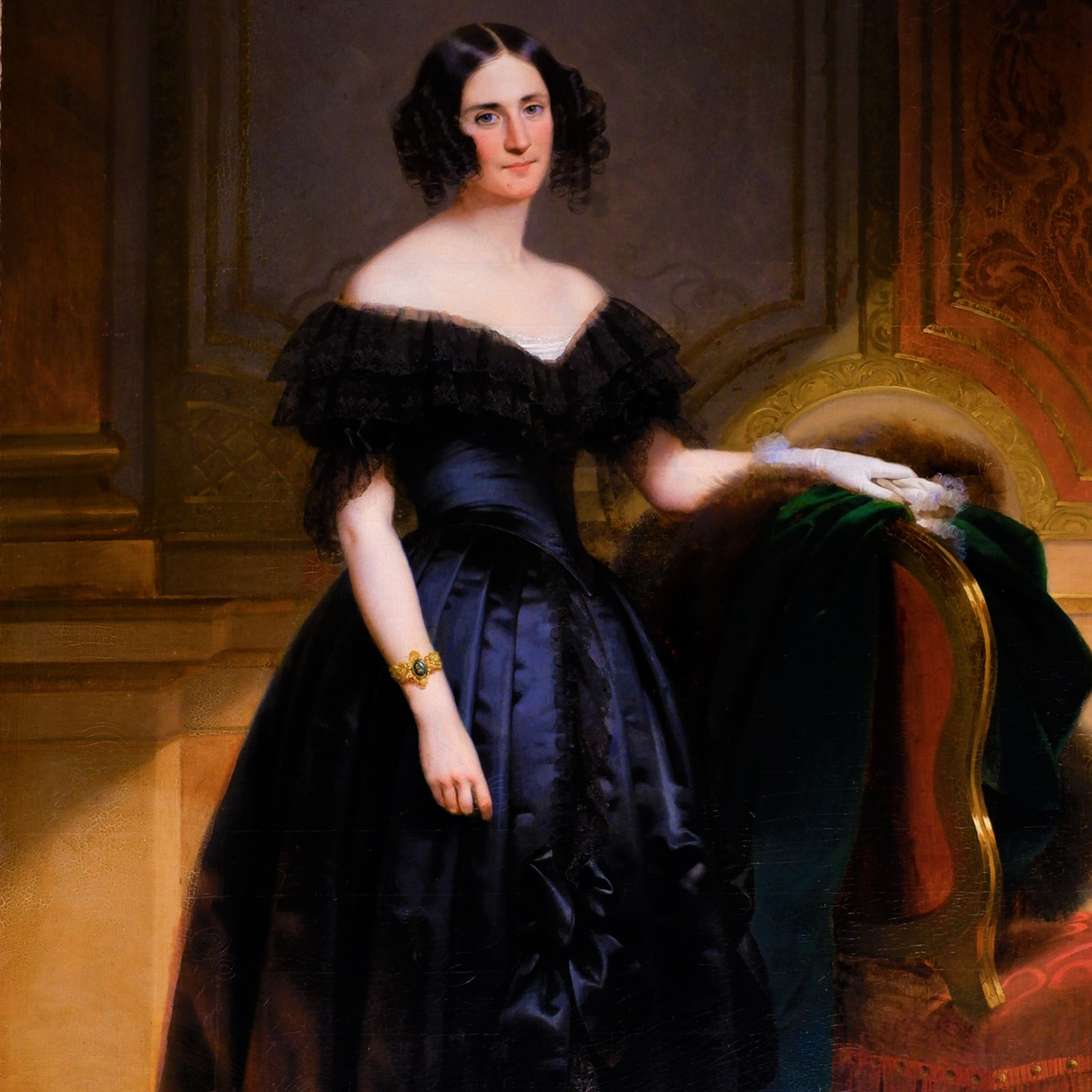


 Podcast Addict
  RSS Feed
  Apple Podcasts
  Spotify
  Amazon Music
  Overcast
  Castro
  iHeartRadio
  PocketCasts
  Castbox
  Podchaser
  TuneIn
  RadioPublic
  Goodpods
  Podyssey