0:00
Belief doesn't just vanish in a scientific age.
I think it involves Barbanel's world reminds us that belief isn't just about facts, it's about trust, it's about authority, and I'd say it's about experience of something feeling true.
And I think those forces are just as influential now as they were back then.
0:18
If you spent any time reading about spiritualism, psychical research or the paranormal, you've almost certainly come across the name Maurice Barbanel, even if he didn't realise it at the time.
From the teachings of his spirit guide Silva Birch, to psychic news, from famous mediumship cases to other well known famous paranormal investigations, his influence can be found almost everywhere.
0:47
Yet today his name is rarely mentioned.
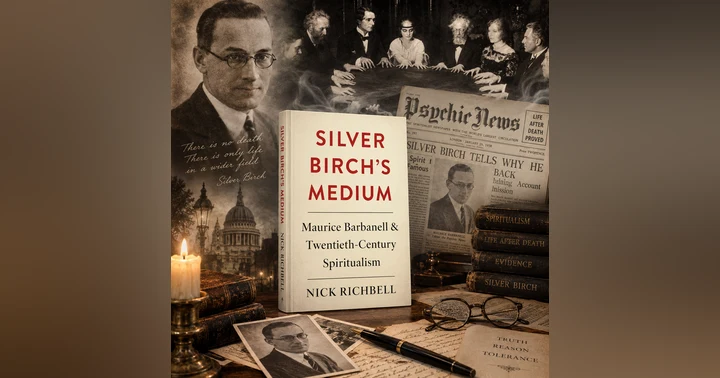
In this episode, I'm joined once again by historian Dr. Nick Richbel to discuss his fascinating new book, Silver Butchers Medium, Maurice Barbonell and 20th Century Spiritualism.
1:04
We explore the man behind one of the most influential voices in modern spiritualism, why his legacy has been overlooked, and why understanding Barbonell helps us understand the wider history of the spiritualist movement itself.
Hi Nick.
1:21
Thank you so much for coming back on the podcast tonight.
Hi, Michelle.
Greg, thanks so much for having me back.
So you've got a new book coming out.
Could you tell the people listening you know the title, what the book is about, and what inspired you to write it?
1:37
Of course.
So the book is called Silver Birches Medium, Morris Barbonelle and 20th Century Spiritualism.
So it's really about Morris Barbonelle.
He was a subject of my PhD dissertation.
So it's a biographical history about his life and Korea.
1:54
And we call it a biographical history because it's not a a true biography, because there were so many pieces missing from his early childhood and early life that I just couldn't find, you know, what he did at that point.
And Maurice Barbonell, and your listeners likely know, was a medium and journalist and newspaper editor in the UK practicing from 1920 to his death in 1981.
2:19
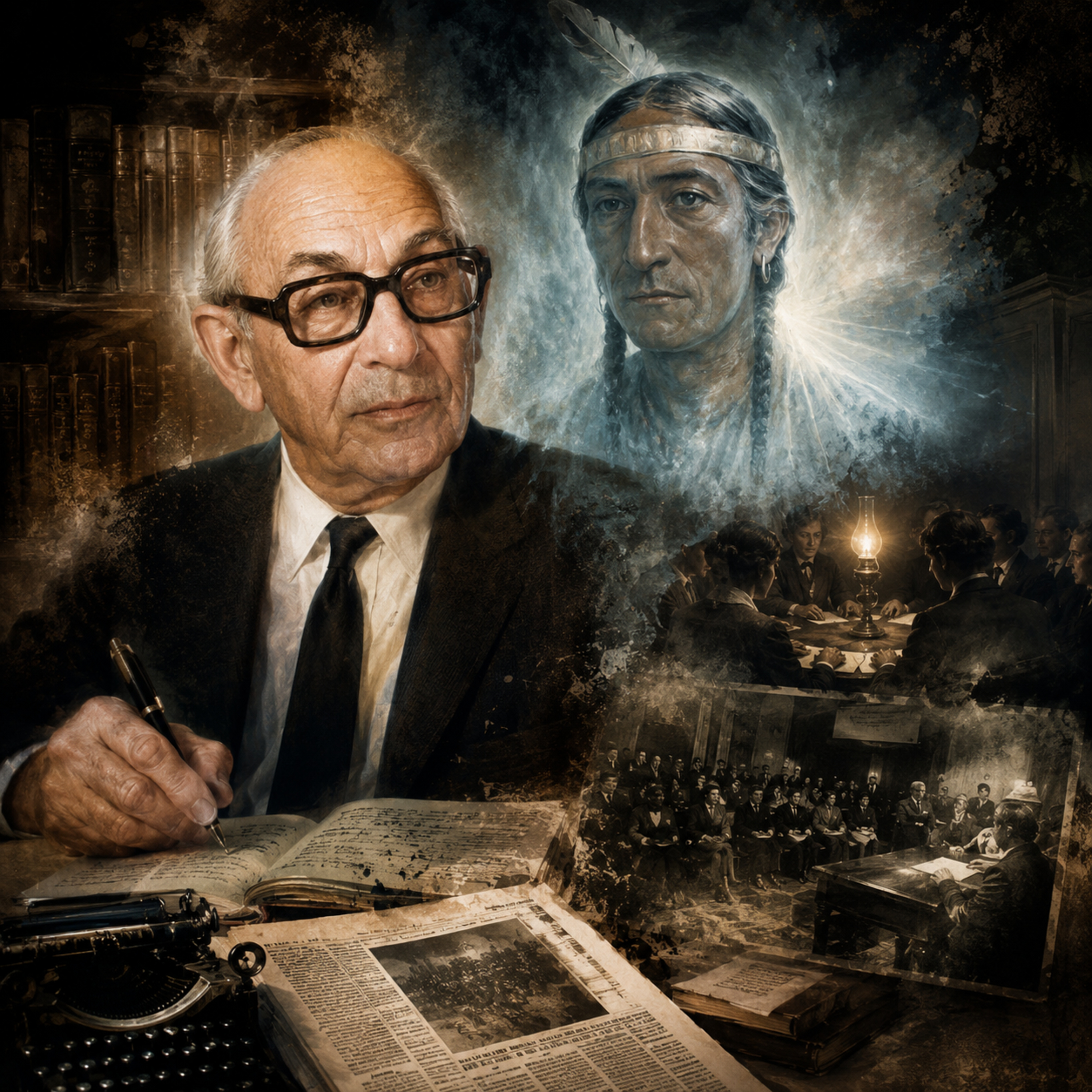
And Silver Birch was the spirit guide that Morris was the channel for and Silver Birch has widely spoken about in spiritualist churches to this day.
But no one talks about Morris Barbonell, unfortunately.
So I was inspired to write about him, to put him back into history because I think he's just as important as his spirit guide, Silver Birch.
2:42
And aside from that, I'm really interested in the people who are involved in spiritualism as much as the, you know, the phenomena that we see in Seance is and that kind of thing.
So many people listening will maybe know you through your work, through your dissertation and your previous research.
3:02
How does this book differ from the dissertation?
Is it an expansion of those ideas?
Something entirely different in a new direction?
Or have you written it, maybe with a a different audience in mind?
So I've definitely written the book with a different audience in mind.
3:19
I've stripped out the academic language, if you like, from what I was used in the dissertation.
I've added two new chapters, one about Maurice Barbonelle's time in North America.
I was able to find he he made two visits to the States and Canada in his life.
3:37
And then I did a chapter on Silver Birch and Silver Birch's kind of teachings and philosophy.
So it's, it's, you know, the dissertation is still the root of this, but it's, you know, a cleaned up version.
It's a much more readable version.
And we've also been able to illustrate the book.
3:54
I think we have around 50 images to illustrate Barbonell's life.
So what do you think readers will find most surprising or compelling about the book, and who do you think will get the most from reading it then?
4:11
So I think what's most surprising is just how modern this story feels.
You have this figure, Maurice Barbonell, who is deeply committed to evidence.
He's someone who believes he's being rational, and yet he's working in this really strange space where there's experience, persuasion and performance all overlapping each other.
4:30
And I think there's a tension in his story that feels incredibly familiar today.
And I think what's compelling is there's a real human side to his story.
There's ambition, there's a lot of controversies, there's courtroom battles, and there's his genuine conviction that he was telling everyone something really important.
4:50
And that is simply that there is life after death.
And I think, you know, this is not a story.
It's not just for historians of spiritualism.
I think it's for anyone who's interested to see how people come to believe things, how authority gets constructed, and even how ideas move between.
5:07
Kind of like science, media and popular culture.
So why has someone as influential as Maurice Barbonell been largely overlooked then in histories of spiritualism, do you think?
So I think Michelle, this is a a bit of a paradox.
5:24
As you said, he was hugely influential in his own time, but he's been over overshadowed in the history of spiritualism.
And I think partly this is because he wasn't just a medium, he was also an editor, an organiser and advocate.
And I think that histories of spiritualism really tend to focus on what I would call spectacular figures, that's to say famous mediums or you know, events where there was a dramatic exposure of someone, you know, being fraudulent or what have you.
5:53
Whereas I think Barbonell worked more through institutions, he worked through the media, especially through psychic news.
I think also there's a credibility issue here.
I think academic histories of spiritualism, they've become more sceptical and that they talk about figures closely associated with defending mediumship.
6:12
Sometimes they fell out of focus, especially if, you know, we can't hold their claims up scientifically.
And ultimately, I think Morris Barber now sits in a really awkward space.
He was too late to become part of Spiritualism's Victorian Golden Age, but he's too committed to belief in his belief to fit comfortably into the modern critical narratives.
6:35
And I think there's this in between position that has made him really easy to be overlooked, even though he's key and central to shaping 20th century spiritualism.
And I think just to kind of add into that, I think, you know, for for listeners who maybe haven't heard of his name or don't recall his name, they might be surprised actually just how often his name does come up.
6:58
And I say that because I was just revisiting the Guy Lion Playfair book on Enfield.
And Maurice Barbonell is mentioned in there a couple of times, as is psychic news, because he reached out to the investigators.
7:13
And, you know, this is where I think sometimes people may have come across his name, read it somewhere else, and just not being able to make that connection because he's not so widely spoken of in comparison to others for all the reasons that you you stated.
7:29
But I think it really does highlight that even if people don't recognise the name, his influence is so wide and it's such a shame that he's been overlooked.
And, you know, This is why I think it's great that you are doing what you are doing to raise his profile, because his legacy is astonishing.
7:53
And I think the more you kind of take note, the more you realise how often he was involved in, in so many different aspects and cases and investigations.
And, you know, there was just so much that he was doing that makes him such a compelling part of the story of spiritualism.
8:10
So yeah, I think it's, I think it's amazing that you're helping to raise his name and his profile and his legacy in the way that you are.
Well, and I think you've made a really key point there, Michelle.
You know that he's mentioned in these other stories, but he's really a sideline, right?
He's never the, the main topic of conversation, but you're, you're right.
8:29
He's, he's was involved in so much throughout his career.
You know, he investigated over 3000 seances, for example, because he really wanted to, to experience that first hand and, and see mediums who are being truthful in their work or, you know, dishonest or that kind of thing.
8:46
But he, he, like I said, he's been sidelined.
So I've really tried to put him back into history as a central figure in spiritualism.
So how did Barbonell's kind of East End upbringing and mixed religious background shape his later world view?
9:03
So for me, I think that this starting point really matters because it it gave Barbonell a really powerful claim to credibility.
I think he was able to present himself not as a believer by default, but as someone who had tested spiritualism and then become convinced by the evidence that he'd seen.
9:22
And I think that that's the narrative that that's moved from scepticism to belief.
That really makes his story much more persuasive to others.
And I think his world view was shaped by these two powerful influences in the home, his upbringing in London, the East End and his mixed religious background.
9:39
As we know, he was raised in this working class immigrant community in East London.
He developed a strong sense of social equality and sympathy for ordinary people.
And then I think at home he was just caught up between his devoutly Jewish mother and his atheist father and all of this.
9:56
And he admitted to this in in his writing.
This encouraged him to question religious authority rather than just accept any belief without questioning it.
And I think that this combination of both scepticism and spiritual curiosity really helps explain why he was initially hostile to spiritualism, but he later embraced it so enthusiastically.
10:19
And I think spiritualism offered what he saw as a middle ground between faith and reason.
It's a religion that's based on personal experience and evidence rather than doctrine alone.
So why is it significant then that he began as a sceptic investigating spiritualism, do you think?
10:36
So I think that highlights how belief can simply take shape.
You know, I think his journey suggests that conviction doesn't necessarily come from abandoning reason, but I think it's from reinterpreting experiences through a different framework.
And then think in that sense, his scepticism just, it doesn't just disappear, it becomes a part of how he justifies belief.
10:58
And I think that's really what makes his position all the more compelling and even more interesting to analyse.
So how should we interpret Barbanel's first trance experience historically?
So I think his first trance experience is less important as proof of anything supernatural, but it's more important as a turning point in his identity.
11:22
I think it marks the moment where this sceptical investigator becomes personally invested, and this is where experience starts to outweigh doubt.
And I think what's significant here is how that moment has been interpreted afterwards.
It's become a foundation for his authority.
11:39
And I think it's something that he could point to as direct evidence.
But I think as a historian, you know, I might read it slightly differently, not as confirmation of spirit communication, but it's an example of how powerful subjective experiences can reshape belief.
11:56
So I think, you know, it's, it's not just an event.
This is the beginning of a narrative, one that Barbanil built his entire case around.
I mean, I think what's also interesting historically, you know, he felt like he fell asleep in this seance that he went to back, you know, as a teenager.
12:15
And he wasn't the only one who kind of entered into spiritualism that way.
The medium Leslie Flint was the same.
He fell asleep or, you know, said he felt felt like he fell asleep during a seance, as did the Scottish hila, Margaret Lyon.
She had a similar entry into spiritualism.
12:32
So I think that's very interesting that, you know, he wasn't alone in that aspect of his start in the journey.
So was this discovery performance or something more complex?
Such a tough question to answer, but I think it's probably best understood as something you know.
12:50
It's more complex than either discovery or performance alone.
I think for him, for Barbonell, it probably felt like a genuine moment of discovery.
This was a breakthrough that confirmed something real about the spirit world for him.
But then from a historical perspective, there are elements of performance that have been shaped by expectation, the setting and the conventions of mediumship.
13:14
And I think this is what makes it interesting, is precisely this overlap.
There's an experience that you know has been felt as discovery.
It's been structured like a performance and later used as evidence as he tells his story.
So I think rather than choosing one label, it's probably more useful to see it as a moment where experience, interpretation, and context all came together to produce something deeply convincing.
13:39
And whether or not we can verify that as objectively truth, that doesn't matter.
That's just part of the story.
Earlier you mentioned the name Silver Birch.
Who was Silver Birch and why is this figure so difficult to interpret, do you think?
13:56
So Silver Birch was the spirit guide who communicated through Maurice Barbonelle during the same seers for, you know, 61 years.
And Silver Birch has been described as an indigenous North American spirit.
And Silver Birch really emphasized service, compassion, personal responsibility, of course, the survival of the soul and, you know, in some just this universal spiritual truth that went beyond organized religion.
14:25
But I find Silver Birch really difficult to interpret because we cannot easily determine, you know, where the voice ends and where Barbonells begins.
But spiritualists have viewed Silver Birch really as an independent spirit communicator.
14:41
And whereas sceptics might see these teachings merely products of Barbonells subconscious mind and they they might argue that the messages reflected his own experiences, values, concerns, and you can see some similarities between the two.
14:59
At the end of the day, Silver Birch was again very complicated.
As I said at one time was indigenous American spirit guide.
And you know, even Hannan Swaffer from the Hannan Swaffer Home circle would, you know, mentioned how English was didn't come easily to the spirit guide at the beginning.
15:20
It was very broken.
And then English became very natural to him over time.
And then even Silva Birch would, you know, talk about his time as a a Native American.
And then suddenly he wasn't Native American and he was actually just a spokesperson for a collective of spiritual beings collaborating in service of what they called a divine plan.
15:42
So All in all, I think Silva Birch is best understood not simply as a spirit guide, but is really a complex figure at this intersection of belief, identity, and authorship, whether a genuine spirit or a psychological creation, or even possibly something in between.
15:59
So what's the significance of Barbanel concealing his identity as the medium for decades, do you think?
So I think this was really significant because it helped focus attention on the message rather than the messenger.
As we know, for many years readers would encounter the teachings of Silver Birch, but they didn't know who the medium was.
16:20
So I think this really reinforces that idea that the communicator was an independent spirit rather just than Maurice Barbonell expressing his own views.
And I think the secrecy also protected Barbonell's credibility as a journalist, an editor, and an advocate for spiritualism.
16:38
By keeping his mediumship separate from his public career, he avoided becoming the story himself and he allowed the teachings really to stand on their own and on their own merits.
And I think, but how well was the secret cat in my book?
16:54
I do mention, you know, at least two times where I think the cat was let out of the bag, so to speak, where two people had alluded to Maurice Barbonelle, not directly, but if you read it close enough, you can see who they were mentioning and that he was in fact the channel for Silver Birch.
17:13
So again, I don't think it was the the best kept secret for all that time, but I think most people were able to not worry too much about who the medium was.
Silver Birch was so popular that that wasn't really part of the equation.
And you've touched on this a little already, but to what extent can we separate Silver Birch's voice from Barbonell's authorship?
17:37
You mentioned some difficulty around this particular issue.
Yeah, it's, it's a really difficult line to draw.
You know, Barbonell, he was never tested for his mediumship because he, he wasn't doing evidential mediumship, right.
17:53
So that's where, you know, if you go to a medium and, you know, your great granny comes through and talks to you or your mother comes through and talks to you.
So that's evidential because you're, you're able to name, if you like, who the person is giving you that message where Silver Birch was really there just for his teachings and his wisdom.
18:11
So then it, you know, that makes it difficult to separate the two I think.
But I think what is striking is how consistent Silver Birch's voice is over history, which I think suggests authenticity.
However, I acknowledge the historian in me, it does raise questions about how much of that voice could reflect Barbonell's own ideas, you know, his own language or his own view of the world.
18:36
Ultimately, at this time I think the reader needs to to make that call and decide if if Silver Birch was genuine or not.
So why should we understand Barbonell as a as a propagandist as well as a medium, do you think?
So Michelle, for me, this is key in Barbonell's story.
18:55
For me, his, his work as a propagandist really outweighs for me personally, his his work as a medium.
And I think you know, because he actively worked to promote, defend and expand the spiritualist movement.
Not only did he found and edit psychic news, he was a prolific lecturer.
19:14
He wrote, you know, over 14 books.
He would, you know, engage in debates.
He would organize rallies in Hyde Park in the mid 1930s, you know, So he really devoted much of his life to shaping public opinion about spiritualism and persuading others of its truth.
19:33
And I think his mediumship did give him a message, but it's his journalism that gave him his platform, you know, as editor of Psychic News and of Two Worlds for about 14 years in between that, he really had this public platform where he was able to share his voice to readers around the country and around the world.
19:52
And I think this is really what helped him become one of spiritualism's most effective advocates in the 20th century.
And I think this really helps us to see that he was not simply transmitting beliefs.
He was strategically promoting A cause.
Whether we accept his medium mediumship or not, he was a skilled communicator who helped define how generations of spiritualists understand their religion.
20:18
So how did psychic news shape ideas of legitimate spiritualism?
So again, I just touched on this, but it's Psychic News was hugely influential because it was a gatekeeper for what counted as proper spiritualism under Barbonell's editorship.
20:34
You know, I think it didn't just report on spiritualism.
It, you know, actively defined it's boundaries.
You know, it would promote certain mediums.
It emphasized ethical standards and highlighted cases that supported the idea of genuine spirit communication.
20:50
At the same time, you know, it really pushed hard back against fraud, sensationalism or practices that might discredit the movement.
So I think that legitimacy wasn't fixed.
I think Barbonell was able to curate it through the pages of Psychic News and I think that helped turn spiritualism into something more organised and self policing, you know, shaping not just what people believed, but what what they understood as credible or authentic within the movement.
21:20
And I think, you know, we can't underestimate, you know, just the sheer length of time that Psychic News has been now operating and obviously publishing their different kind of articles and, you know, magazines in different formats in different ways.
But the number of people for whom they've been able to access that information, the legacy is just incredible in terms of precisely what you were just stating, you know, pushing the boundaries, challenging assumptions, sharing information.
21:50
You know, the number of people for whom Psychic News has had such an impact is, is just something I don't think we can really quantify.
We can't.
And you know, it's nearly 100 years since the first issue was published in May 1932.
So I really hope that Psychic News can keep going for, you know, the next few years and reached that, that incredible anniversary of 100 years.
22:13
The editors there are working hard.
They're putting out really interesting content that has, again, it's advance with the time.
So, you know, there's different types of stories in there that wouldn't have been there when Barbonell was editing.
But it's such a great piece that, you know, I hope people can look into subscribing to it or, you know, picking up a copy at that local church.
22:34
So who do you think Barbonell was trying to persuade them?
So I think he was talking to multiple audiences at once.
So I think on one level he was reinforcing belief among committed spiritualist.
He gave them language, he gave them evidence and confidence in what they already felt they knew to be true.
22:54
But he was also reaching outward, I guess, trying to persuade sceptics and scientists and the broader public that spiritualism was rational and credible.
And I think what's interesting is how he tailored that message.
He leant on personal experience for insiders and the language of evidence and investigation for outsiders.
23:14
So I think, you know, it wasn't just again about belief, it was about legitimisation, trying to move spiritualism from the margins towards the mainstream.
Why was spiritualism so entangled with accusations of fraud?
Well, I think, you know, it was so vulnerable to accusations of fraud because it's core practices such as seances, trans speaking and physical manifestations are really difficult to verify, but they're really easy to imitate.
23:42
And I think the same conditions that made spirit communication possible, like darkness and controlled settings, they also make, you know, they help to make deception possible.
At the same time, though, there were real cases of exposed mediums which gave critics strong ammunition.
23:59
And that meant that even sincere practitioners were always working under suspicion.
So I think fraud wasn't just an external critique.
I think it became part of spiritualism's internal life.
And then people like Barbonell, who spent a lot of time trying to separate genuine phenomena from trickery.
24:17
But I think that boundary was never fully stable and that's what's kept this issue alive today.
So how did he both defend and expose mediums then?
So I think Maurice Barbonell really walked a line here.
On one hand, he was a strong defender of mediumship.
24:34
You know, he was passionate, you know, and ready to argue that genuine spirit communication was real and he would argue that it was worth taking seriously.
But then at the same time, he also recognised that fraud was a real problem and he was willing to call it out when he thought mediums were undermining the movement.
24:52
And I think that dual role actually strengthened his position by exposing dubious practices, he could present himself as a kind of gatekeeper and I'd, you know, almost like someone committed to protecting true spiritualism.
But I think it also highlights the difficulty of the task at hand, because this line between genuine and fraudulent was never entirely clear and he was always navigating the uncertainty.
25:18
What do you think his his legal battles then reveal about the stakes of belief?
So, you know, I think that they show that belief wasn't just a private matter.
I think, you know, the legal battles show that there was a real public and financial stakes in this game.
And I think the questions about whether mediums were genuine or fraudulent, that they could end up in court, you know, they could affect reputations, livelihoods and ultimately the credibility of spiritualism itself.
25:46
And I think what is striking is how these cases actually force spiritualist claims into a very different arena.
And I wondered, and by that I mean there's one where personal experience had to be translated into legal evidence and belief had to withstand cross examination.
26:03
And if you read the law law reports in The Times, who would report on these as the cases that Barbonell was involved with?
You know, you would see, you know, often the judge would be laughing and making, you know, kind of cheeky comments about what was being discussed in in the courtroom.
26:19
So, you know, in all, I think these battles reveal that belief wasn't just about conviction.
It was about authority, legitimacy and risk.
And getting it wrong didn't just mean being being mistaken.
It could mean public exposure, legal consequences and the collapse of a carefully built credibility.
26:38
So why did Barbonelle challenge institutions like the Church of England so forcefully?
So I think this, you know, and I have a whole chapter on this in the book about Barbonelle going against the the Church of England and the Archbishop's Committee on Spiritualism and the report that they didn't publish for, you know, 40 or so years.
26:59
And I think he just challenged the church because he believed that orthodox Christianity had drifted away from the original teachings of Jesus.
He argued that many church doctrines, especially those about eternal punishment, exclusive salvation, and the impossibility of communication with the dead, were contradicted by the evidence that spiritualists possess.
27:22
And, you know, and I think Barbanel saw spiritualism not as an enemy of Christianity, but as a corrective to it.
Through Silver Birch's teachings and Barbonell's own writings, he promoted a universal and progressive view of religion that I think really emphasized personal spiritual growth over dogma and creeds, you know.
27:42
And I think his criticism that, you know, just went on, you know, I think it went on a bit too far would be my personal opinion.
But he was also being strategic.
You know, he was able to challenge the authority of the Church of England, and in doing so, he positions spiritualism as a viable alternative for people who were simply dissatisfied with traditional religion.
28:04
But those people were still seeking some spiritual meaning in life.
And so I think by doing this, he became one of the movements most outspoken public defenders and critics of religious orthodoxy at the same time.
So what was at stake in the conflict then between spiritualism and organized religion, do you think?
28:25
So I think what was at stake was religious authority and the meaning of life after death.
Spiritualists such as Barbonell argued that communication with the dead provided direct evidence of survival after death, and this made traditional reliance on church doctrine and scripture less necessary.
28:44
And I think if spiritualist claims are true, ordinary people could gain knowledge of the afterlife through experience rather than just based on faith alone.
And I think for the Church of England and other established churches, this challenged their authority to define spiritual truth.
29:01
Spiritualism questioned key doctrines, it rejected eternal damnation, and it promoted a more universal view of salvation and spiritual progress and still does to this day.
So I think this conflict was about more than seances on mediumship.
29:17
I think it's just this struggle about who really had the right to speak about God, the soul and the afterlife in 20th century Britain.
So how did some of these legal restrictions shape mediumship practices?
So they had a major impact, Michelle, on how mediumship was practiced in Britain.
29:35
There were laws such as the Witchcraft Act of 1735 and later the Fraudulent Mediums Act of 1951.
These have placed mediums under scrutiny and they create this constant risk of prosecution.
And I think as a result there are many mediums and spiritualist organisations who have worked really hard to present mediumship as a sincere religious practice rather than something that's like fortune telling.
30:02
And I think for Barbonell, the legal challenges he experienced just became part of a broader struggle for legitimacy.
I think he frequently defended mediums in print, in psychic news, and he argued that genuine mediumship should be protected as a religious activity.
30:19
And I think the thread of legal action just hanging over everyone also encouraged spiritualist to adopt codes of conduct, expose fraudulent practitioners.
As we just said, that's what Maurice Barbanel did for so long and it really helped to emphasize evidence based claims.
30:36
So how convincing was Barbonell's claim that spiritualism was evidence based?
I think he could sound very convincing, and especially so to anyone who was already open to this idea.
You know, he would sometimes use the language of science.
30:53
He would talk about observation and repeatability, and he pointed to a lot of eyewitness testimony.
But I think if we look at it from a modern scientific perspective, the case could be argued as being weak.
I think evidence depended heavily on personal experience and what we could call poorly controlled conditions.
31:13
So while it might feel empirical, it may not hold up as rigorous or verifiable proof.
So where do you think the line between demonstration, persuasion and performance kind of sits then?
Gosh, I think that line almost disappears, Michelle.
31:31
I think what's presented as demonstration by Barbonell, such as seances and spirit communications, also function as persuasion, shaping how he could interpret and frame what happened.
And I think those situations, you know, we mentioned this a bit earlier, were often so highly performative.
31:49
There's the atmosphere, there's pacing and there's expectation, all doing a lot of the work here.
So I think rather than three separate categories here, they're blurring all together to become one.
I think performance creates the experience, persuasion goes some way to explain it, and it's all presented as a demonstration or a performance.
32:10
So was Barbonelle trying to prove the afterlife or construct A persuasive system of belief?
I think many ways he was doing both and I think that's what makes him really interesting and and really made me want to write about him.
He generally believed that he was proving the reality of the afterlife through evidence and through seances and through the teachings of Silver Birch.
32:32
And you know, that was his stated aim.
But I think at the same time, what he produced looks very much like a persuasive system of belief.
It had it's own sources of, of authority, it's own standards of evidence and it's own ways of interpreting experience.
So I think the two aren't really separate.
32:50
His attempt to prove the afterlife depended on building a framework that made those proofs meaningful and convincing.
And I think in that sense, he wasn't just discovering evidence, he was also shaping the conditions under which that evidence could be believed.
33:06
So why has Silver Birch, who we've mentioned, become more famous than Barbonell himself?
So I think it's just because Silver Birch has been presented as the true source of the teachings.
You know, we said for decades, Barbanel deliberately kept his role anonymous, allowing readers to just focus on Silver Birch's messages rather than the person delivering them, which was Boris Barbanel.
33:30
And I think these teachings themselves have such a broad appeal.
Maybe even broader than Barbanel's personal story.
Silver Birch offers a universal philosophy about life, death, spiritual growth.
And I think that attracts readers far beyond the spiritualist movement.
33:48
Whereas Barbonell really is is, I don't want to say just a journalist or editor and movement leader, But, you know, he, he just doesn't have that wider interest that Silver Birch does.
And I think ironically, Barbonell's success as a propagandist helped eclipse him.
34:05
You know, he worked tirelessly to promote Silver Birch as this authoritative voice, and in doing so, he's ensured that the guide has become the enduring symbol of the movement.
So I think as a result of this, many people who know the teachings of Silver Birch know little about the man whom they were transmitted by.
34:24
So what does this reveal about authorship and authority and spiritualism?
So I think it reveals that authority and spiritualism really often rest less with the individual medium than with the perceived source of the message.
You know, again, Barbonell consciously placed Silver Birch at the centre of his work, encouraging audiences to judge the teachings by their spiritual value rather than from his own personal reputation.
34:51
And I think as a result of this, the spirit guide acquires greater authority than the man whom the message is were delivered through.
However, at the same time, you know, I think we could argue that the case raises important questions about authorship.
If the teachings came from an independent spirit, then Silver Birch is the author.
35:11
But if they come from Barbonell's own mind, then he played a much larger creative role than spiritualists typically acknowledge.
And as a historian, you know, it's not always possible to separate the two, which makes the Silver Birch material a fascinating example of shared or contested authorship.
35:29
You know, and I think ultimate again, we're, we're never going to know for sure, you know, but as spiritualists are always asked to question everything we need to come up with our own decisions and opinions on what we believe to be true or not.
So what do you think Barbonell's story teaches us about belief in the modern world today?
35:50
So I think the story shows that belief doesn't just vanish in a scientific age.
I think it involves and I think instead of rejecting science, it often borrows its language and authority.
I think people still trust personal experience, you know, and emotional resonance, maybe community validation, sometimes more than formal evidence.
36:13
So I think modern belief isn't irrational.
I think we could say it's negotiated.
It's been shaped by media and experience and trust.
And then, you know, if we think of it that way, Barbonell isn't an outlier, is merely an early example of how belief still works today.
36:29
Why do?
You think this, You know this.
History still matters today.
So I think it still matters because the dynamics that Barbonell was working with, such as claims of evidence, persuasive storytelling, and a powerful personal experience, are still with us.
36:47
Whether it's alternative therapies, conspiracy theories, or viral online content, people will always continue to negotiate what counts as evidence to them in very similar ways.
And I think Barbonell's world reminds us that belief isn't just about facts, it's about trust, it's about authority, And I'd say it's about experience of something feeling true.
37:09
And I think those forces are just as influential now as they were back then.
Absolutely.
And I think, you know, we can, we can see as well how often times when, you know, the world is unsettled, when the world is forever changing around us, that actually you can argue that belief becomes more and more important to us.
37:28
You know, experience becomes more and more important to us.
So I think this is still something that is very much something that exists today, possibly even more so, I think you could argue.
Absolutely, I agree.
So just to kind of wrap up, before we finish our conversation, do you want to just remind everyone who's listening about the book, you know when you think it will be available, where people might be able to get a copy?
37:55
What's the best way for them to follow your work online and keep up with any future projects?
Of course, so silver butchers medium I'm hoping will be available by September the 10th.
So you can keep an eye on my website, doctorspooky.com, on my Instagram at official Doctor Spooky.
38:16
And the publisher is White Crew Books in the UK, so it will be on their website.
So, you know, reach out, follow me, keep up to date with what I'm doing, and I'm sure I'll be back to chat to you again one day.
Michelle.
Gosh, I hope so.
38:31
I do love our conversations.
I just think it's such an important history and such a relevant history for all the, the talking points that you've raised.
And, you know, it's just so fascinating being able to discover more about someone, you know, that you may never have heard of and the legacy that they they have or, you know, maybe someone whose name you do and, you know, you have heard in circles or read about in a, in a kind of a passing sentence here or there.
39:01
And then suddenly to really understand the profound impact that they had and how that impact is something that we feel today.
Because, you know, we would not be where we are today without the people, you know, without people like Barbonell and you know, the things that he brought to spiritualism.
39:21
So I think it's incredible that you put, you know, this spotlight on his work and him as a man and his teachings and all the various things that he was involved in.
You know, his controversies, his his kind of work at Psychic News, All of these things are part of his story and are part of this lasting story of who he was and what he was contributing.
39:43
So I think it's fabulous that you've you've been doing this and you brought this book together so that, you know, so many people and much wider audience can connect with this incredible man and what he was doing for spiritualism.
Thanks for your support, Michelle.
39:59
I enjoy hearing that and I'm looking forward to people, like I said, to be able to, to learn more about Barbonelle.
And there's plenty in there that people won't ever have known that he did.
So I'm excited to be able to to share his story and put him back into history where he deserves to be.
40:16
Honestly, thank you so much for your time, Nick.
Like I said, it's always such a pleasure to chat with you.
So I really do appreciate you coming back to talk about this and share more about your book.
And, and obviously it's something that I hope people, you know, go out and grab because I don't think they'll be disappointed.
40:33
Rick I.
Appreciate it.
Thanks, Michelle.
And I'll say goodbye to everybody listening.
Bye everybody.
Thank you for joining us on this journey into the unknown.
If you enjoyed today's episode, please subscribe, rate, and leave a review on your favorite podcast platform.
40:50
You can follow us on social media for updates and more intriguing stories.
Until next time, keep your eyes open and your mind curious.


 Podcast Addict
  RSS Feed
  Apple Podcasts
  Spotify
  Amazon Music
  Overcast
  Castro
  iHeartRadio
  PocketCasts
  Castbox
  Podchaser
  TuneIn
  RadioPublic
  Goodpods
  Podyssey