0:00
It's the name itself, Mercia, that's the Latinisation Mercia, which just means the Borderlands.
It literally means the Borderlands.
Now that's, that's a liminality.
You know that that's a threshold.
We are walking the Borderlands.
0:16
And that's what started the whole Mystery of Mercia project the the fact that we are living or Midlanders are living in a literal borderland, all all of these strange places.
But you know, where anything could happen where we're in a a threshold that we're in a liminal place between just by the name itself and there are areas of Mercia that where that's the reality.
0:41
It, it struck me as soon as I started exploring the area in earnest, how kind of odd and how well some some of these weird places along that, that that appear to have no reason for them being there.
Where I'm not really that surprised when strange things happen and have happened and you're just, you're travelling through time, through places, history, cultures, everything.
1:06
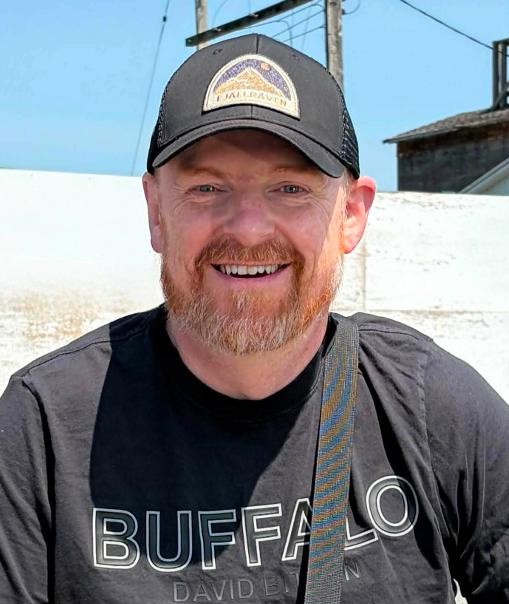
The voice you've just heard was Hugh Williams, folklorist, author, researcher and explorer of those strange Borderlands where history, folklore and the supernatural have a habit of meeting.
1:23
Born in Worcester, at the heart of the Midlands, Hugh has spent years travelling through its landscapes, walking old paths, seeking out forgotten ruins, ancient monuments, churches, caves and waterways and following the stories attached to them.
1:43
Because for Hugh, researching folklore isn't simply about finding a story in a book.
It's about going to the place where that story belongs, standing in the landscape, listening to it, experiencing its atmosphere, and considering what changes when history and folklore are encountered not simply as words on a page, but in the very places that shape them.
2:11
As Hugh puts it during our conversation, there is an elusive atmosphere that can only really be understood by being there.
The shadows, the quiet, the sound of water beneath an old bridge, and then the knowledge of the stories associated with that place.
2:31
Sometimes, he says, it can feel as though these stories have somehow become soaked into the landscape itself.
That approach runs through all of Hugh's books and lies at the heart of Mystery of Mercia, Hugh's wider exploration of the Midlands and it's stranger histories Across his work Huge draws together landscape, history, folklore, supernatural belief and lived experience, taking us into a Midlands far stranger and richer than its comparatively modest place within popular folklore might suggest.
3:11
As he points out in our conversation, this is a region containing an extraordinary diversity of history, geography and story, mountains and great rivers, castles and megaliths, yet one which he feels remains significantly underrepresented.
3:33
His books explore that landscape from different directions, uncovering its mysteries and forgotten stories, while the Magic of Mercier turns towards the history of witchcraft and magic in the Midlands and challenges some of the modern myths that have become attached to them.
3:50
He describes wanting to create something accessible while returning these subjects to their historical context, separating later assumptions from what the records actually tell us.
And that question of how stories change is something we return to again and again.
4:09
Because folklore isn't static, it moves between generations, it adapts, it absorbs new fears and new ideas.
A Victorian ghost story can become inseparable from the identity of a place.
An unexplained experience today can become part of its folklore tomorrow.
4:30
Hugh gives a wonderful example later in our conversation of contemporary experiences gathering around an ancient site until collectively they begin creating an entirely new layer of folklore.
In this conversation we also venture into some much darker territory.
4:48
We discuss witchcraft accusations and cunning folk, and why the historical reality is often considerably more complicated than the version that survives in popular culture.
We explore ghost traditions and haunted landscapes.
The importance of atmosphere in paranormal experience.
5:06
Devil Folklore, ancient places and liminal spaces, and the strange experiences that continue to attach themselves to particular locations.
And beneath all of this is another fascinating question.
5:24
Do places acquire stories because there is something unusual about them, or do centuries of stories change the way we experience those places?
Hugh has his own intriguing thoughts about that, particularly when it comes to hauntings.
5:41
Rather than necessarily interpreting paranormal activity as the spirits of identifiable dead people, he wonders where the place, expectation, human emotion, and something less easily defined might interact.
5:57
Whether, in his words, we somehow complete the circuit.
It's an idea that brings us neatly back to where we began.
The Borderlands not simply borders on a map, but thresholds between past and present, history and story, landscape and memory, belief and experience.
6:22
Places where, as Hugh says, you really don't know what might happen next.
Get ready to explore the pages of history, folklore, and ghost law as we walk the Borderlands.
With Hugh Williams.
6:39
Hi there, Hugh.
Thank you so much for joining me on the podcast.
Hi, Michelle, and thanks for having me on.
So do you want to start by just maybe telling the listeners what first drew you into folklore and and how did those early experiences shape the work that you do today?
6:58
OK, I was born in Worcester, at the centre of the Midlands.
It's a very, very old city and we have a lot of medieval architecture, a lot of Civil war history, etcetera.
But you don't have to travel faster into the countryside either.
So I grew up with that sort of best of both worlds.
7:16
And I have to give most of the credit to my mother because she was very interested in the the folks on the traditions of the area.
She was Scottish, she was from Glasgow.
She wanted to get out of the city and look for something else.
And she was always talking about sort of Robin Redbreast, things like that.
7:36
And at at the age of 10 or 11, I had no idea what Robin Redbreast was.
Fantastic folk horror teams play, as I'm sure you're aware.
But she was always talking about things like that.
And she had books on the shelf for witchcraft and magic and sort of sinister fiction, Mr. James King, Dianus is the Green Man, that sort of thing.
7:56
And so I built up with, with that sort of interest and mum really encouraged it.
So it was natural that I would, you know, have that that sort of inkling as I grew.
Now, obviously you become a teenager, you, you become self obsessed, peer pressure, etcetera.
8:12
But as an adult, I picked up the interest again.
And just then I think during COVID, like a lot of people at the time to reflect and think, I want to actually do something about it.
I want to share my passion and and see what others think about it.
8:29
And it kind of went from there, really.
So your research has kind of always been rooted in physically exploring these places rather than, you know, simply just reading about them.
What has walking the landscapes of of these locations taught you then about those areas that you've brought to your books, etcetera?
8:53
It's that elusive atmosphere which you can't feel unless you were there.
I can describe it in the book and I do, I do attempt to try to involve the reader as much as I can.
But you, you have to go there really to, to feel that magic.
9:09
Some of these places I, I could, I could describe an old pack horse bridge somewhere, for instance, in the Derbyshire Peak District.
Yeah, it's a nice little vignette, You know, I'll, I'll describe that.
But unless you actually go there at the right time with those shadows, with that quiet, with the sounds and the water underneath it, you're not going to feel the same thing.
9:32
And then when I tell the stories, what went on at that pack horse bridge, perhaps an old murder or sort of something happened like that, something more sinister.
You, you really, you look around and you kind of feel it in the place that, that it's soaked into it.
9:49
It's it's, it's difficult to say it, it, it really is an elusive thing that it's atmosphere.
And every location has its own atmosphere.
So I can't lay down a blanket rule on that.
I could go to the aforementioned Pack Horse Bridge, but then I could go to say, a ruined church in the middle of a wood, completely overgrown, barely anybody knows about it.
10:11
And that has a completely different atmosphere.
So I think where possible we should go out to these places and check them out and attempt to connect with the place and then attempt to feel that that magic, it is a connection.
10:31
Magic is stirred up by people.
You know, there has to be, we conduct it, we we complete the circuit.
It only occurs when somebody is there and they could feel it.
So we need to go there as people and create that magic.
I hope that goes some way towards answering that question.
10:51
I think it does.
And I and I think just to kind of echo what you were just saying, I think, you know, part of that connection, that kind of circular connection between the landscape and us is recognizing that if you do get to go there and explore, you are treading the same earth that someone would have walked across 100 years ago.
11:14
Some of the landscape would be identical.
And there is nothing more magical than that.
I say this a lot in my writing.
There are some landscapes, I'll say the Peak District again, but there are a lot of other parts of Britain.
11:30
You look as far as your eye can see.
There's nothing there.
There is no civilisation at all, no Telegraph poles, no nothing.
So the sounds, the smells, it's what people would have experienced thousands of years ago, possibly even right back to the Neolithic age.
11:47
Yes, forests are managed.
I understand that, you know, estates are managed, you know, Moorlands, etcetera, they're managed.
But it's still a natural environment, an ancient woodland.
None of the trees were around thousands of years ago, but it's still been a, a constantly regenerating and managed woodland.
12:05
It's always been that.
So you, you are quite right.
You are literally walking in the footsteps of possibly even your ancestors.
And there's a magic in that there.
There really is.
It's time travel almost, and that's magic.
Yeah, I I completely agree with that.
12:22
And for me, folklore is for everyone you know, It connects us to our past, it connects us to our present, it connects us to our future.
And that connection is the heartbeat of our communities and our landscape.
12:39
With this shared common language, why do you think folklore is important?
You know what can these local communities, these local stories, teach us that historical records just often cannot?
12:55
Photo Photo is more than just stories.
You know, it's, it's food, dishes, dances, music, occasions, you know, kind of customs, that sort of thing.
Clothes, everything, costumes.
It's, you know, photo is everything.
13:12
It's often described as the intangible heritage of, of a fixed place.
So it's therefore something that isn't easy to describe.
It's just something that we do don't know is handed down through people.
So when I hear a story, for instance, there's a place in Worcester called the Devil's Heart.
13:33
It's kind of a subway thing that runs underneath a railway.
Now, in my day, we were told that if you went down there at midnight and you said the Lord to play it backwards, the devil would appear at one end and when you turn around to escape, he's at the other end.
13:50
And you keep going back.
And then he gradually closes in on the person you know as they scream and that's the end of it.
So my son, he was out with his friends.
He came back in on his bike and he said he'd been down with devil's hearts.
And he told me the story and I hadn't related that story to him.
14:07
He'd picked it up from somebody else.
So there's like a 40 year stretch there of that story only existing in the oral form.
And I think that's fantastic that, that that was an example right there in my home of that sort of thing.
14:22
So focal it, it, it, as you say, it is for everybody.
You should tell everybody about it.
You know, you, you should transmit it.
Otherwise it will shrivel and dark focal can change it.
It, it can adapt, it can evolve and it can absorb other traditions into it.
14:40
Yeah, we know that it's ever changing and of course it is.
But it's still very important for us to the, the, the, the central core of, of the folklore idea of, of the story or the calendar custom or whatever.
That central core.
14:56
We must keep that we, we, we must keep that alive.
Basically the reason why we do it.
Why do we do it?
I, I don't know.
It's just something within us.
We want more.
We, we don't always want to be told stories by others.
15:12
We don't want to hear the news.
We don't want to always want to hear bad news.
We don't always want our sport, but we want some sort something that isn't a reality that we live in.
We don't want to, you know, zone out and drop out.
15:28
We just want to hear something that's maybe a little different to what we're used to hearing.
And I think that sort of defines folklore.
It's something that that we express that you can't, you don't.
Well, you don't have to write it down.
You can write books about it and plenty of us do, but it still exists nonetheless in in that form.
15:49
It's transmitted.
I'm kind of going all over the place on this because that is the nature of folklore.
It is a very big tent and it's a very big subject and it is actually quite difficult to define because of all the different forms of it.
16:05
I mean, a traditional pudding baked in Gloucestershire.
What's that got to do with a strange dance that people do in Derbyshire?
Well, it's folklore, it's a custom, it's a tradition.
The stories, I mean, often, I mean ghost stories now are folklore because we pass them down.
16:26
You could have a ghost story that was first told during the Victorian age.
We're still investigating it now.
Surely that's folks all because it's become part of the the fabric of the place.
You can't visit this place without hearing that story.
But it's such a meaty, such a meaty topic, like you pointed out, and it does change.
16:48
It does morph.
It's different from county to county, country to country.
And it's really just that reflection of that ever changing belief system and customs, you know, the things that were important to people at that time in that region.
And I think that's what makes it special because, you know, when we think about, and I teach history, so I can say this as an educator, but when we teach history, so much of what we teach, the history that we share is not about the everyday common person.
17:16
It's history that's been recorded by a certain part of the population, usually very educated people.
And they are sharing history through a particular lens.
And the folklore, I think, tells history of the masses, the beliefs, the fears, the things they thought about, the things that mattered, the everyday customs and traditions that held them together.
17:43
And that, I think, tells us so much about how we have lived amongst each other.
And I think within that, we find the connections to those, to those groups of people because we see those same shared thoughts and those same shared fears and those same shared questions seeping through in that type of storytelling that has survived because they still matter, they are still relevant.
18:08
And I think that's again that connective element that you spoke of earlier.
Yes.
So I, I, I agree.
And this, this goes back to another subject, the representation of working class people within folklore, because this is about, because most folklore arose out of the, the, the working class, the workers in the field, you know, the, the rural workers, the, the, the, the Millers, the weavers, the labourers.
18:35
That's where it came from.
Now it was gathered up by middle and upper class people and then almost handed back to the working classes in the form of these formalized stories.
But the folklore itself, the, the, the, the source material, it's still bubbling away though.
18:56
And it's very important that we keep that going.
Focal can't just exist in, you know, in, in collections of stories put out by academics.
Now.
It, it, it, it exists within, you know, the, the, the working classes of Britain well, and the world that, that, that's where focal is most prevalent.
19:14
And it is very important that we keep that representation and that recognition that that is where the focal is coming from.
That is its sort things like kind of the customs, like the the Coopers Hill cheese rolling.
That's very much a working class activity.
19:31
It always has been.
And on the more extreme end, the Atherstone Street football that it's held on Trobe Tuesday, which to the untrained eye just looks like a broad.
It looks like a just a massive draw And well, it is in some cases because the way that they play the game now, they, they just retreat with the ball into a shot doorway and defend it until the end.
19:54
And a lot of people are horrified by it by, by the violence and the sort of, but that, that is the reality of it, that, that that's a, that's a working class activity that has gone on since the, the 1300s almost exactly in that form.
And they are still playing it today.
20:10
So it it is very important that that focal is maintained at the level that it is generated from, if that makes sense.
Just kind of following on from that, I mean, obviously your books are centred on Mercia rather than the modern count, you know, county boundaries.
20:28
What makes that such a fascinating landscape in which to explore the the history that we've been talking about and the folklore and the supernatural for you?
Well, choosing the term Mercia instead of just the Midlands allows me to sort of cast my net just that little bit wider to encompass, you know, Gloucestershire line up to the gates at Manchester, I guess right across the Peterborough.
20:55
But it's the name itself, Mercier, that's the Latinisation Mercer, which just means the Borderlands.
It literally means the Borderlands.
Now that's, that's a liminality.
You know that that's a threshold.
We are walking the Borderlands.
21:12
And that's what started the whole mystery and mercy of project the, the fact that we are living or Midlanders are, are living in a literal borderland, all all of these strange places.
But you know where anything could happen, where we're in a threshold, we're in a liminal place between just by the name itself and there are areas of Mercier that where that's the reality.
21:38
If you look at the border between Wales and and Herefordshire, it's a strange place, the Golden Valley, you go around there and it's, it's a very odd atmosphere around there.
The author Phil Rickman really tapped into that that idea with his Merrily Watkins series of books, if we're familiar with them.
21:57
And he he set most of them around that area and he felt that too.
It it struck me as soon as I started exploring the area in earnest, how kind of odd and how well some some of these weird places along that that appear to have no reason for them being there.
22:14
So, yeah, that in answer to that, the the Midlands or old Mercia is a literal borderland.
That's how I see it.
I see it as a liminal place where I'm not really that surprised when strange things happen and have happened.
That's that that that's the answer to that.
22:32
Really.
Mercia is the Borderlands.
So this, that is my project.
It's, it's the that the board, we are exploring, we are walking the Borderlands.
They could be between time as we spoke about before, with that feeling that you're walking in the footsteps, possibly even your own ancestors.
22:49
You're just, you're travelling through time, through places, history, cultures, everything.
I think it's wonderful.
I mean, if you look at a city like Birmingham, all these different cultures mashed up, anything can happen.
And I related this in my first book, I think there was actually a, an urban legend grew up from from the Muslim community in Birmingham about a vampire that was going around attacking people.
23:17
Crazy, you know, story the ward end vampire.
There was this mass hysteria.
Police were gathered outside schools and things.
People were rushing to get their children home before the sun went down because people really thought there was a vampire going around attacking people.
It's crazy.
23:33
But that that just shows that there you have that sort of that liminality because Birmingham is a, a great big crossroads.
It really is.
It is the iron, the metal crossroads of the country.
And so it's no wonder that strange things happen at the post like that.
So that's how I see it.
23:49
It's it's one massive liminal place, one massive threshold where you really don't know what's going to happen next.
And you know, I think you said it so beautifully.
It's one of it's it's.
Where you kind of see this boundary between the history and the myth.
24:06
It just crosses over.
There is no end point.
And again, there's something very magical about that because you have these places then where you can understand that, you know, things like the supernatural flourishes, these stories flourish.
These mythical elements flourish because of, like you said, the liminality of it.
24:25
And I've, you know, had the pleasure of speaking with other folklorists who, who see that same kind of aspect creeping into the regions that they, they particularly focus on, you know, Shropshire, for example, with that close connection with the, the, the borders of Wales, you see that same liminality.
24:45
And again, I think it just makes them very unique places for folklore because it, it kind of seems to to have that element where you you have this melting pot of different things that makes it such a magical liminal place where, like you said, being able to explore then the accounts and the stories that come out of that is endless.
25:09
You know, there's so much that comes out of it.
It's like a treasure trove.
Yeah, a a perfect example would be Dovedale on the Derbyshire, Staffordshire border, because that's a River Valley now, OK, you have a river that's a liminal to begin with.
25:26
The river forms a border between the two counties.
There's another threshold.
You then.
So you make your way along this River Valley and it's riddled with caves and weird rock formations.
Caves again, are liminal because they're, they're seen as entrances, portals to the underworld, to, to, to something below us, but they're not quite there.
25:47
They're in between our world and our.
So there, there there was a perfect example of that, that that's, that's liminality concentrated almost a walk along the Dugdale.
And there are some very strange features along along the Dugdale, absolutely a Reynard's Cave.
Everybody stops at the, the steps, the, the stepping stones and have their picnics.
26:07
But if you walk a little bit further, you're going to find much more interesting places than that.
If you can make that journey.
And that, that's another thing not everybody is able to get about.
They can't all see these places.
Perhaps they're physically challenged, financial circumstances, transport.
26:25
There are lots of reasons why you can't do it, and I get communications from people about that all the time, sometimes thanking me for describing a place to them which they couldn't get to.
So for that reason alone, it's worth doing what I'm doing as well.
26:42
Oh, I think it's magical what you're doing.
I mean, I was only having this conversation with my, with my mum in the last few days because she is precisely one of those people for whom you were just talking about.
She has been physically unable to, to get about for the last few years.
26:58
And more recently she had a really, really significant, awful fall that has really impacted on her quality of being able to get about even within the house.
So seeing videos, hearing someone's description of a place in the way that you do is the same as bringing that person along with you on that walk.
27:23
It's the same as them standing there and seeing that landscape with their own eyes.
It is bringing that person into that moment and sharing it with them.
And, and again, I think this is where the difference between physically walking and doing it and sharing it in that manner compared to just reading about it in a book is very different.
27:43
It's very visceral.
Being able to share it in the way that the that you do across your different social media platforms is just fantastic.
Think that that is again, another really important thing that we need to try and preserve because you know, that visual element, that kind of transformative element that comes from seeing it and experiencing it in that way.
28:06
For many people, that's the that's the hook, that's the draw, That's what brings them in and suddenly the world, you can see it in a completely different way then.
Yeah, This is why I try to keep a conversational tone in my books too, because it's almost as if the reader is walking along with me on some of the chapters.
28:25
That is exactly what I have in mind, the aforementioned Dovedale, that that isn't exactly what I'm trying to do.
As if we're walking along.
I'm waffling, as you know.
I mean, I may be boring you, I don't know, but I'm going to keep talking.
And then that's what it's like.
Sometimes I'll a friend will come along, you know, on a hike with me and, and I'll be exploring everything.
28:46
It takes twice as long because I'm very passionate about what I do and I will talk and talk and talk at the place.
And that's why I prefer to work, work alone for that reason.
But yes, that's what I do.
I try and keep that down to earth conversational tone.
29:02
I'm a working class lad and that's how I was brought up and that's how I've always operated.
Just speak to the person next to you as a human being.
Strike up a conversation.
Let's have a chat and I will always keep that tone in my work.
Yes, you're right, it's important.
29:20
So what did you hope readers would discover about the Midlands, about Mercia, that perhaps they hadn't appreciated before?
Anything beyond what we've already spoken of.
Perhaps it's diversity of everything of of history, stories, places, geography, the landscape.
29:42
It has so much squashed into those few counties.
We have mountains, you know, great rivers, castles, megaliths, everything packed into this area.
The the Midlands doesn't get enough representation.
29:58
It never has.
You know, there are lots of books, documentaries, TV shows, etcetera, sort of, you know, Yorkshire, the Pendlewitches, Southwest Wales, you know the, the South Scotland, plenty of that.
30:14
But the Midlands just doesn't get enough.
Roy Palmer did his folklore series working around the counties and he did some fantastic work.
His folklore Worcestershire is a classic.
I mean my copy has fallen into bits so I refer to it so much, but there hasn't been enough about the Midlands specifically.
30:37
It's the centre of of England.
It was once the most powerful Kingdom in the young, the Saxon world for a time and the offer.
So perhaps people don't realise that and and there are other things that I'd like to get out.
30:53
I mean, for example, during World War 2, the Germans had been successful in invading Britain.
Then the government was going to pull back apparently to Worcester because Winston Churchill quite fancy, specially Court, which is a gigantic mansion and estate just on the edge of Worcester on the SE edge.
31:18
He wanted to work there.
So they were going to pull back and they were going to use what is now the West Mersey Police headquarters at Hindlip Hall, which is where the War Office were going to meet.
So it's always been a very, very important place in the history of Britain and England, specifically.
31:37
Johnny Angler, Saxon age as well.
I mean, I think like we all know about Lady Godiva, but Worcester was one of their favorite places.
Her husband, Laerfrick at Mercia was his, he, he maintained a hall there.
There was a a wooden post on that hall.
31:53
Stayed centuries, hundreds and hundreds of years and got built into every structure that was raised on that spot right up until the the sort of 1600s.
And then it finally vanished and went.
32:09
But they still called that address, I think it was called Lairfric's post or the Earl's post.
So Worcester, you know, the centre of the Midlands has been seen as an important place and the Midlands itself, it's vital to the history of Britain.
32:26
Past people didn't know that in answer to the question.
But I think you're right.
I think there's, there's a lot of under representation and I think this is an area of 1 of that is clearly one of them.
And I'm not sure why, you know, I really don't understand why, but it does seem to be a glaring gap in something that is not as kind of common and that has not been shared, you know, either on TV or in podcasts.
32:55
You know, it just it doesn't have that same coverage as some other areas and it baffles me.
Absolutely.
Yeah, the range and the diversities, it's incredible.
Yes, and and the, the, the cities themselves like Birmingham, Birmingham for some reason just doesn't get associated with history or folklore.
33:16
It's OK.
We've got the Tolkien connection that often gets brought up and the industrial heritage and perhaps some of the 20th century heritage music, Black Sabbath, heavy metal, etcetera.
But it, it, it doesn't go, there's a whole lot more to, to the history of Birmingham and not, not the boring history.
33:33
You know, you're on your school field trip yawning.
That's not what I want to subject people to.
I want to tell them about the odd weird history and how they, they could possibly relate to that.
And some of it also is being shaped and changed our history.
33:50
But I want to try and present it in the context of the time.
I can't, I, I make no excuses for how people behave or the things people say with their sort of political and social sensibilities of the time.
I just present it as it happened.
So I, I, I make no comment or apology or whatever for it.
34:09
It, it, it, it was what it was.
But you had sort of things like the Lunar circle in Birmingham, which is a group of local tycoons and bigwigs who would sit and meet on every full moon and decide how they would build Birmingham up this sort of utopian ideal for the worker.
34:29
The workers had no say in it, just these tycoon.
And today it's presented as this wonderful sort of sort of liberal, sort of, you know, dedicated to to freedom, but that that really wasn't the case.
And and and I think people need to see it from the viewpoint of working class people at the time.
34:48
But like, you know, just to kind of follow on from that because I think this is also part of what you've done so well in revisiting and exploring aspects that, again, maybe haven't had that same coverage as as other parts of the country.
35:05
And I think what you did when you came to write The Magic of Mercia was look at these stories and this, these misconceptions about witchcraft and folk magic that again, I think really did need to be revisited.
Was that intentional?
Yes, what, what drove me to write The Magic of Mercia was social media, seeing the, the sort of memes and AI things floating around that were nonsense, but people believe it.
35:35
You could argue and say, well, Gee, that's just folklore that we're we're doing what you know, you do, but not really.
Somebody just decided on that day.
Oh, I think this is what happened.
I've created a meme about it.
I'm going to put it on Facebook and now everybody believes it.
35:52
So I wanted to tackle some of the myths and then present an accessible timeline of magic and witchcraft in the Midlands specifically so that people can easily understand it.
You know, just to sit for those people, the people that like to scroll Facebook X, etcetera and look at memes like that.
36:13
Here's a book that's, you know, accessible and, and, and it's an easy to understand timeline and we do break some myths.
Yes, absolutely.
Things I, I, I don't, I do not want to get political about this or, or, or even social, but some of the things, for instance, witchcraft, it was all a Pagan survival.
36:33
I mean, I think better people than me have tackled this before, Professor Hutton and others, but, you know, it had nothing to do with paganism.
There were no witches but the things that people were being accused of, you know, Maleficent, you're consorting with the devil, basically.
36:51
You are the devil's instrument.
So, well, that wasn't happening.
Nothing was happening like that.
There were no witches in that sense of the word.
To be called a witch back then was just an insult.
Nobody would call themselves a witch.
You might call yourself a doctor, a wise man, a wise woman, a nanny, something like that, cunning folk, but wouldn't call yourself a witch because that meant specifically that's crime of the devil using you to commit Maleficent, you know, to to sins on visiting sins on people that that was what witchcraft meant that nobody was.
37:29
I'm speaking just for England here.
OK, I'm not going into the Scotland.
That's that's a that's a different argument.
But in England, very few people were persecuted for, you know, herbalism, treating illnesses, wounds.
No, the, the, the only time that happened was when you had a disgruntled client who would then accuse you of witchcraft.
37:49
We, we must, it is very important to draw that line that that was not what a witch was.
Cunning folk were not witches.
They were not carrying out witchcraft.
They didn't see as such.
I mean, that they're using Christian incantation to, you know, they're, they're, they're bringing on Saints, they're praying to Saints, the Christ to Mary first and foremost.
38:11
So they did this.
This wasn't paganism at all.
It was nothing to do with that either.
They, they weren't carrying on some unbroken tradition from, from the sort of from the four hundreds.
That just wasn't what was happening at all.
38:26
People were just doing what they felt was the right thing to do to generate that magic at the time.
And it it just had nothing to do with the invoking any Pagan gods.
It was nothing to do with that.
And it wasn't witchcraft either.
Witch crop was this very specific, very narrow definition of behaviour.
38:47
And it's just incredible that it grew to such an extent how it got completely out of hand and out of control.
It's tragic.
And the also the, the, the social reality who was reporting the witches?
It, it, it was other women mostly who were, you know, women were reporting women now.
39:06
It was absolutely a patriarchal Society of absolutely women alone had very little agency, authority that.
So they're all just working within what they had what, what, what agency they had.
And it may have given somebody in a small community a sense of that.
39:24
They had some power, some agency that they've accused somebody of witchcraft.
And then the authorities have moved in and done something with it.
They may feel, oh wow, I, I have some power in this society that maybe I, I, I'm, I'm just sort of speculating that.
39:39
But it wasn't a case where, oh, let's just round up all the women and oppress them.
That's a very simplistic way of looking at it, a lot more complex than that.
Because sometimes women were brought in to do some of the examining in some cases, only in some cases.
39:56
And this isn't to excuse any behaviour, because men treated women dreadfully back then, their social world, everything, it was awful.
And it was absolutely a patriarchal society.
As far as the the pathways of power went, that that's absolutely what I'm not minimising that at all.
40:13
I'm just talking about at the lower end that at at where the witchcraft was actually happening within the community.
They were very often disputes between groups of women.
When you read about the cases, when you actually look at the facts and the statements around it.
So it wasn't like at Salem, for instance, but again, that that was on a say.
40:34
So at a teenage girl in in fact, most cases in England were brought about by either women or children.
I'd I'd say sort of seven out of 10 of them.
And so that that was possibly a myth as well.
And but I, I'm not saying this out of spite or to fight some social issue that not at all.
40:55
I'm just reporting the facts as they are.
So, so, so perhaps those were two things that people maybe weren't aware of.
That's yeah, that that that women did accuse other women as much as men accuse them, and that paganism had very little to do with it.
41:13
And what was the actual nature of witchcraft itself?
You said something just a moment ago which I think is absolutely spot on.
It's a very complex issue and a very complex topic that I think has almost had a, a kind of a broad sweep of the brush.
41:30
You know, some of that detail, some of that context has become lost.
And part of that is obviously, you know, examining his, you know, historical records, actually having an understanding of what took place.
But I also think part of it is not necessarily looking at and examining the the subtle differences and the the uniqueness of what transpired, again, from county to county and how, you know, could be different in particular communities.
42:03
You know, it depended on what was happening.
And this comes back to precisely what you were talking about, which is that, you know, this was a community driven thing.
Elderly elderly women were being vilified but the simple reason that they were an annoyance.
And I'm just playing devil's advocate here.
42:20
I don't think elderly people are an annoyance, but at that time, if you're a widow or you're an elderly spinster, to use the archaic term, and you had nothing, you had no, no income, nothing.
You, you relied on the charity of your neighbors.
42:38
So these elderly ladies would go around tapping on doors, give me some bread please, and I'll go away.
That that's what would happen.
Bread, butter, you know, cottage, whatever.
And they would go door to door doing this because they, they had nothing, they had no income.
42:54
They're, they're beggars basically, but they're beggars in the community.
They have a home.
So this sort of talk about, oh, which quad was invented to take their property off them.
There was no property to take.
Now that, that that's a ludicrous thing to say.
43:10
You know, obviously the aforementioned Salem, again, that's a completely different thing.
But here in England, in most of the rural communities there, there was very little property to actually confiscate.
Sometimes these ladies became very bitter, and I mean, I would if I was in my 70s and I could barely exist and I relied on people handing me bread and butter and milk every day because they felt sorry for me.
43:38
Some of them became quite bitter and they'd bang on doors and they would demand things with menaces as some of the cases where I listened the magic of Mercier there there was a case where an old lady bit a little girl's finger.
So the girl said she was a witch.
She bit me and no one bewitched, but the old lady successfully fought the case.
43:58
So the charges were dropped.
But that was the kind of thing that that was in Worcestershire and in Astley.
But that's the kind of thing that's happening just everyday story like that.
But I mean the the worst case you talk about, all the circumstances are different.
The one that hauled to me awful case, poor Catherine Huxley at Evesham in Worcestershire.
44:20
Now here you have a young woman, a beggar.
She had nothing again, nothing.
So she's just sitting sheltering in a ditch outside the town and begging from people.
Now she just goes off to rest in the shade.
Some children see her and they start throwing stones at her.
44:39
She throws a few back and gets out of control, gets a bit wild.
She wants them to leave her alone.
They won't leave her alone.
But she says, I'll, I'll, I'll give you some, you know, I'll give you all the stones you want.
I'll I'll make sure plenty of stones come your way.
And then she ran off and then it's reported then that that the girl began passing these little stones through her system.
45:01
Now this this was quite a common trope in possessions and, and some cases of curses of witchcraft during the 1600 and 1700.
So you, you, you had this going on passing pins and needles and sharp stones and things.
They weren't really passing stones, but because the family of the little girl who was convincing her parents she was passing these stones were very well to do.
45:26
They were believed that this, this girl, this beggar, Catherine Huxley had bewitched her.
And Catherine was dragged to Worcester, tried and convicted and hanged a witch car.
I mean, imagine that you, you're, you're, you can, you can barely exist on what food you can beg.
45:45
Some children come and throw stones at you and bully you and then they go and tell the authorities that you're a witch and, and you've you've cursed one of them and now you're being led to the gallows.
It's absolutely horrible that that one haunts me.
It, it really does.
46:00
I can't imagine what that poor young lady was, how she was feeling, what she was thinking.
But that case only went ahead because of the social standing of the family at the centre of it.
Richard Baxter, the the, the killer minister in his certainty of the World of Spirits, he recounted the story and he kept saying over and over, but they are such good people that we, we can't doubt them.
46:26
What, why would they?
Like, I mean, it's, I mean, it's a ludicrous story, but they really believed that it was happening.
People were coming round to the house and taking the stones away as souvenirs.
They ended up burying a lot of them in the garden and when they moved out, people came in and they were digging them up looking for the on the stone.
46:45
Crazy, absolutely mad.
But there it is.
But that, that that was an awful story.
But as you say, different social conditions there that wasn't it was a very much working class person being victimised by a middle class family for no other reason that their daughter accused her.
47:03
It's just awful case.
Horrible that that one really haunts me, you know, rest in peace, Catherine Huxley.
But that, that's a terrible story.
You know, just kind of following on from that, it's one of those that should haunt us.
And again, This is why I think, you know, the fact that you are revisiting accounts like that and sharing them is important because, you know, we, we do have this weird fascination, I think with just certain cases.
47:30
Salem, which he mentioned, Pendle, which is obviously so well known within England, we have these, these individual accounts of just certain places around the whole world, Europe, Scotland, England.
And within that, these volumes of accounts, again, the complexities of them, the differences between them, the diversity of them gets lost.
47:55
And, and that comes back to what I said earlier.
It's just that broad stroke of a brush that is all of them combined.
But actually when you don't look at them individually, when you don't remember them, when you don't have that detail in that context, so much of that complexity and that social understanding of what took place and how it happened gets completely and utterly lost.
48:18
And that's really sad because, you know, the the people for whom this sadly brought into question, you know, what happened to them shouldn't be lost.
And they haven't been lost because we see how, you know, the scars of it have have marked communities.
48:37
You know, the folklore that then springs up from that, the ghost law that springs up from some of the accounts where these women then become ghosts or whatever.
You see how it's had that lasting impact on the community to the point where they haven't been able to let it go.
48:54
And, you know, nor should we.
We, you know, it's part of again, that connection that that kind of ability to step in those same shoes and understand what happened and feel it and experience it in that visceral way.
49:11
Yeah, you're you're absolutely right.
But a lot of community wanted to forget about it because they felt that people would judge them as stupid idiots as pumpkins are believing in witchcraft.
49:27
You had that at Salem where visitors would come in, say 40 or 50 years later, and nobody would, Nobody wanted to mention it.
Not because they felt bad for what they'd done.
It's because they felt stupid.
They felt that people would see them as this rural backwater where they still believe in witchcraft.
49:44
They realized how utterly idiotic and cruel they had been and they wanted to forget about it.
And a lot of communities did that in England.
They did because when the witchcraft when the 1736 witchcraft that came in that changed everything.
50:01
And I think people began to to I mean, yeah, people still did believe in witchcraft.
But a lot of the the big cases, for instance, the the Newcastle witches, that doesn't get covered enough that needs more recognition because that's an all for that tragic event.
50:18
Dozen mostly women were dragged up and hanged again on the say so of a child and her very well to do family.
That's where most of the accusations came from.
And these women who had done absolutely nothing to anybody now find themselves accused of a thing that they can't confess to because they didn't do it.
50:43
I mean, if you didn't confess, obviously it wasn't just that there were other ways of sometimes after hanging your your body would be burned that that would sometimes happen if you couldn't confess and that sort of thing.
But how can you confess to something you haven't done?
51:00
And it isn't going to get you off the case.
You're still going to get hanged no matter what.
But the, the priest really wants you to confess and that's just awful.
I mean, what, what one of the, the ladies in the, the Newcastle case, because she was born just slightly outside of, of, of the specific jurisdiction, she ended up in a dungeon.
51:22
The others were held in, in the prison, but she was actually thrown into a flooded dungeon in a Newcastle winter.
Imagine that on the time.
So it was a flooded dungeon.
She was chained to the wall for much of the time.
It's just horrible idiot.
51:38
Some of these things.
I, I can't even imagine how this happened.
You, you really can't.
And I, so I, I don't attempt to explain it because I can't.
I can only just say what happened.
I will play devil's advocate sometime just to sort of explain that, for instance, a justice or a magistrate, yeah, they could be pretty cool and vindictive, but they weren't always.
52:06
And occasionally they felt that they were doing the right thing by their community because they're like, OK, this crime has been reported to me.
I believe in it.
The crime has been committed.
The evidence meets the threshold.
52:22
And it says here in, in, in, in the statutes that they must be hanged for it.
So I am doing the right thing by God and by my community.
That's the way some of these justices saw it.
They they just were just concerned about the evidence.
They weren't all vindictive old men, but a lot of them were, as we found out.
52:42
I mean, look at a lot of stuff has been said about hanging Judge Jeffries and all these people.
He, you know, he, he was the old, the old steered in and all these Welsh men that he had hanged, which he didn't.
52:57
He never even visited the inn.
But for instance, the aforementioned Richard Baxter appeared in court before Jeffries.
Now Richard Baxter was 74 at the time and was very infirm and Jeffries wanted him dragged behind a wagon and beaten and lashed as a punishment.
53:14
That's the kind of man he was.
So some of these justices were incredibly cold, but others actually believed they really did deep down their heart.
But they were doing the right thing.
It's about not sanitizing, I think, I think again, this is where sharing it allows it to come to light.
53:33
You know, we aren't sanitizing the history, we aren't sanitizing the folklore, We aren't sanitizing the events.
And just being able to report it and share it is, is part of that important process.
And you know, I have a real interest in it.
53:48
It's something that fascinates me because I think it is so complex.
And I think because of that, it's been very much misunderstood.
And again, coming back to the kind of the local element from part of what fascinates me about it is seeing how it has then left that mark, you know, how communities then were able to move on or not move on afterwards.
54:13
And again, then the, some of the stories and the accounts that endured at last, you know, you mentioned how just a moment ago how, you know, many communities wanted to forget it.
And, and I think he was spot on.
And you know, part of that, I think is when you then see some of the, the, the ghost law or the folklore that springs out of that, it almost again sanitizes what actually happened.
54:38
You know, that person becomes a ghost.
So therefore they haven't really.
Gone.
That's a really good point.
Has has kind of been forgotten.
They, they are part of the community.
And I think that's part of, you know, how they became reshaped and retold and endured without necessarily feeling like we were part of that.
55:01
That was as part of that problem that created that situation in the 1st place.
So again, it's, it's fascinating to see how they survived, what happened in the aftermath of that and how those individual accounts, those trials, those cases, those women, those cunning folk, how they then endured in the stories that lasted beyond that point is, is again, just so fascinating to me that.
55:26
That's another point just on cunning folk, before we sort of move on.
That was another myth that I wanted to mention.
Cunning folk, as I say, we're we're not generally oppressed.
In fact, they took part in the oppression of accused witches.
55:42
Most of the time, if you felt you were being the witched, your first port of call was your local wise woman or cunning man.
That's where you went.
Oh, yeah.
I'll fix the witch for you.
I'll give you this charm to divert the energy.
And for a fee, I can even tell you who the witch is.
56:00
This, this this happened lots of times.
They get all.
Or if if they once arrested the witch, they didn't know what to do.
How can we prove she's a witch?
How can we examine her or him?
Get get the cunning person in.
And that's what they did.
They come.
Yeah, I'll do it for a few and they'll come straight in.
56:16
Sometimes they devise very strange ways of semi torturing the person.
Like for instance, getting a new pair of shoes, soaking them and drying, then putting them on and then putting the person in front of a fire.
And then the, the shoes shrunk and crushed their feet and everybody thought that the cunning man was using magic to make her feet hurt.
56:39
It, it, it's such a weird thing.
And they, they, they really believed it, that, that it was happening.
But yeah, the cunning folk were very, very much involved in the persecution of witches.
That's, that's on record.
There is no doubt about that.
56:55
And again, just kind of thinking about some of the, the other aspects that you cover so brilliantly, I mean, ghost traditions appear throughout your work.
And again, it's another passion, it's another love of mine.
What do you think makes these ghost stories such an enduring part of the folklore of the Midlands for you?
57:14
As we spoke about before, I think it's the place as well.
I, I, I think then there's something about the, the place and the haunting, the, the feelings that people experience when they look at the plaques, when they arrive there, soak it in, they can see how that haunting could come about.
57:36
My, this is just like personal belief.
I don't personally believe that supernatural or paranormal activity, if you want to call it, is the work of dead people.
I, I just don't think it's anything to do with the dead.
57:54
It's, but I personally feel that it is something else.
They're not specific individuals who perhaps want to lived in a house.
Again, just my personality.
So if there's an energy there, almost a tulpa could be generated by people's feelings and their other place, they think, wow, this place looks spooky.
58:15
Oh, wow, it's dark in there.
Oh, I wonder somebody could live in that.
If enough people feel that, could that energy create, you know, albeit flimsy energy which creates the haunting, I mean.
58:31
Yeah, that's thoughtful.
Yeah.
It's powerful, isn't it?
And again, coming back to some of the places you mentioned, like caves and just all the rich different landscapes that you have and, and again, the diversity and the, the history and the, you know, the, the tragedies, the joys, all of that is again, that perfect melting pot for creating those types of experiences.
58:54
Well, yeah, would, I mean, if, if the ancient ran in was brightly lit, repainted, had you removed all the the sort of occult paraphernalia from it, would it have the same effect on people?
No, it wouldn't.
But, but if it is genuinely haunted, then surely those things would still be there.
59:13
So I, I really do think it's, it's the the aspect of the place that has a a lot to do with it in some places.
One of my favorite haunted locations is the ruins of Saint Mary's Church, Avonbury near Bromyard and Herefordshire.
59:32
It's it really is something else.
You've got this ruined Norman church, just the tower and a little bit of the nave is still there, but all the graves are still there.
It's completely overgrown and it's surrounded by trees and the river kind of loops around it.
59:48
The, the, the, the, the yard of the church is within that, that loop of the river Frome.
And it's, it's incredible the, the feeling.
I've visited there under all sorts of conditions in the dark, hot summer day.
I've been there in the snow, different feeling every time.
1:00:04
But you really do feel something there, not just within the ruins, but the the surrounding land at the yard when you go up to the water's edge and you feel it because the the the stories and the folklore around there or about, apparently.
1:00:20
A witch was executed who couldn't be buried in the churchyard, so they buried her in the river bed under a stone that's a liminal place, neither one thing nor the other.
And then they say that years later a man was hanged for arson.
1:00:39
He burned down a house owned by the Bishop of Hereford.
Who allegedly haunted the place.
He was going around the houses and sort of tapping on doors and things and wandering around the the graveyard.
So the classic 12 priests with their candles forced him into a silver box.
1:00:58
Again, the classic snuff box threw him in where the witch was supposedly buried.
So now you have two ghosts in that.
Well, what do you know?
Real life now happens.
In 2010, a young man was murdered along that little minor Rd. that leads down to it.
1:01:18
Beaten in the car.
Where did they dispose of his body?
Right there in the water.
Wrapped him up in the sheep, put him in the water.
And I spoke to the lady who discovered the body.
She described it to me.
The, the, the, you know, the, the incident.
Incredible.
1:01:34
I mean, what were the chances of that happening?
So that to me, that feels like a place that absorbs darkness energy.
It really a lot of people report seeing these sort of shimmery things, almost like from the Predator movie when it's, it's in it's sort of invisibility mode, this sort of shimmery thing moving around.
1:01:56
A lot of people have seen that, heard sounds, heard bells ringing organs playing all sorts of things and noises during the 1990s.
It used to be a, a teenage writer passage to spend the night there before we had, you know, smartphones and things.
1:02:12
And there are people that I know who won't even speak about their experiences there.
They were they were that shaken.
They would never go back there.
So that that really is a place that I'll say it's one of my favourite haunted spots, but I think there's something about the aspect of the place that creates that energy.
1:02:31
I, I, I can't go too deeply into that because I don't actually understand it.
It's something I need to research a lot more, but that, that that's my feeling that the actual the place and then after that feedback that we give it that feedback loop.
We, we all this place is spooky or this is strange, but we when we go into a cave or a tunnel, primeval primal fears come out and it's, it's almost as if the presence inside their senses that we complete the circuit and then the paranormal event happens.
1:03:01
You see something or feel something, but those are mine sort of feelings on on on that subject.
The the the how the place relates to the haunting itself.
And you mentioned a place that for you really resonates in terms of that atmosphere.
1:03:19
Do you have any other, you know, ghost legends that what from your research that have just really fascinated or intrigued you that have come up?
Yes, absolutely.
I mean, I'm not necessarily go outside there, but they passed into folklore, for instance, Bella and the witch out now there's a murder case, which has now passed firmly into folklore.
1:03:43
It's gone from true crime into it's, it's, it's a legend of Britain.
It's, it's crazy.
You know, it's, it's sort of mentioned, you know, along with sort of her and the hunter and these other literary things that, that, that, that come about.
But this is a murder, an awful murder.
1:03:59
A tiny little woman.
I mean, she was what, not even 54, I think she was 4 feet 11 estimated somebody killed her.
Somebody put her remains inside that tree.
That that one keeps me up at night wondering about it.
What happened?
1:04:14
Who was she?
How did that happen?
What's going on there?
Because at the time that that was during World War 2, at the end of the Second World War, we then had the pitchfork murder Charles Walton, murder Lower Clinton and Warwickshire, which wasn't related.
But with the story of the New Forest Coven and the early Wiccans and their cone of power during World War 2, you'd be forgiven for thinking that there were covens of people out doing nefarious things involving murder and sacrifice.
1:04:48
Because there's another case in Worcestershire which just doesn't get any attention at all.
And that's the one that keeps me up at night.
Really, that is the one.
And that's the murder of Harry Dean on Breedon Hill.
And I say murder because there's nothing else that that could account for his death.
1:05:07
But just priestly put, Harry was a reporter for a while.
He he became obsessed with the idea that some sort of a cult group was meeting up on Breedon Hill dedicated to Pan because that that was the sort of cover all Pagan deity at the time.
1:05:26
Yeah.
Dennis Wheatley was publishing his novels at the time.
The devil writes out he probably read that so.
But he gave up her reporting the game of solicitors clerk.
But one day, but nobody knows why what he was doing.
He got up from his desk, left work, took the bus to Breeden Hill instead of going home to his wife and Shrewsbury.
1:05:47
He never came home.
His wife very concerned during the night.
She contacted all the members of his rugby team.
They all got over there and started searching the hill looking for the guy.
Can't find him anywhere.
Police joined in as the dawn rose.
They found him in this sort of very secluded old medieval quarry.
1:06:09
He was lying there and he'd been strangled with his own tie.
Now a doctor was brought up on the village from Kemerton.
She proclaimed it an accident and said well, it's obvious what's happened here.
He stood up on a rock to look around.
1:06:25
He slipped, stood on his own tie and somehow choked himself to death.
But that, that's just ludicrous that that can't happen.
And so he's gone down the history of this, this accidental death.
1:06:41
But the rumours persist.
If he was murdered, who murdered him?
Why?
Why did he get up from his desk and just head straight to Breedon Hill that day?
Did he have a contact?
Was somebody going to say, hey, Harry, I'm going to show you what's going on up there?
I'm, I'm in the note, meet me there.
1:06:57
That that could happen.
Did he see something going on, some weird ritual perhaps?
Was he, I mean, I'm, I'm writing a fictional story, almost a Horror Story itself.
Was it even arranged for him to go there?
1:07:13
But it, it's, it's very sad because that guy died there somehow.
Somebody knows what happened.
Something was clearly covered up there.
So there you have another a cult associated murder during World War 2 and this one was 1939 and it it just doesn't get enough exposure.
1:07:33
More people need to be covering this one because perhaps some detail will be dug up.
I mean, who was it?
Howard T Wilkins?
I mean, he was known for writing nonsense about Lemuria and his sort of birth mysteries and things.
But he visited, he became obsessed with the case for a while that he concluded that somebody had invoked an elemental creature which had shoved Harry off the Cliff and and he ended up on the floor of the quarry.
1:08:03
And that's how he was choked with his toe.
Well, that's even more silly than just somebody simply murdering him.
But, yeah, I, I that that one keeps me up at night.
It really does.
Now one would be forgiven for thinking that he's ghost could haunt that area.
1:08:19
If you think that supernatural activity is the behaviour of of, you know, the remains of dead people.
Somehow everybody that walks up through that section past the quarry says the same thing.
How unsettling it is.
You can really feel it in the air.
1:08:35
There's something there.
So perhaps it's not perhaps the ghost of Harry, it's the energy that people were raising that it's just still lingering around.
I mean, they they say that about a lot of places, about some of the stone circles, the roll right stones, etcetera.
1:08:52
The people are projecting energy.
They're like Tanktonbury ring.
That's another notorious one.
And they say the amount of things that went on there are called groups.
Yeah, it's it's all, it's soaked it up like a battery.
It's charged the battery of the place and now that battery discharge when the right person comes along, connects and creates that circuit and they have experience.
1:09:12
You're right.
And, and I think just to kind of echo what you said though, you know, accounts like that, they do need to be spoken of because at the end of the day, it could reveal a clue, some missing information.
Somebody could come forward and have something to say that could lead to a result.
1:09:32
Got to be something that's good.
You know if if what happened can be discovered, then it puts that person to rest well.
Whenever I make a post about something on breeding, hill breeding has a really interesting place.
There were so many weird thing locations and structures and things on the hill and, and, and the stories that they're amazing.
1:09:54
I mean, you've got an Iron Age hill Fort on the top.
There was an Anglo-Saxon village within the hill Fort.
They everything there, there, there was a, there's a lost stone circle, couple of lost megaliths.
There's a Bronze Age burial mound with the remains of a set of stocks set up next to it.
1:10:10
All sorts of things there.
But anyway, people always comment.
I get a couple of people saying they were always told as a child, play up there and join the day, but never go up there at night because there are people up there doing things that it's not meant for you.
1:10:26
I hear this a lot.
People, older people keep making little comments.
That's what they're always told.
Just don't go up the hill during the dark because there are people up there who are doing things that you're not to get involved with.
That really makes me wonder.
I I don't I don't want to become too conspiracy minded on that, you know, and and let the whole thing.
1:10:46
I mean, it's it's kind of fun there to imagine that to to to let that feeling hangover us that, you know, there are sort of occult groups like, you know, no Carter from the devil, you know, rides out, you know, no wrecks.
You fall rather you dead, you meddle with the occult and and and that sort of thing.
1:11:03
That's fun, but it it does meant you wonder.
It does make you wonder.
It does.
And you know, I think again, part of it stems from, again, just this shared language, this shared experience within communities that do get passed down from generation to generation.
1:11:22
And, you know, things like devil folklore and the way that it shapes the landscape and churches and local traditions and communities that becomes something that's seeped into the the bones of the place.
And then again, you know, some of the accounts that we've that you've spoken about, you kind of see how they morph together.
1:11:43
So it becomes that new aspect, you know, that the new retelling of it, that again, these things that get whispered about don't go up there in at night time, fine during the day, but don't go up there at all at night.
You see how it starts to to reshape some of the things that get passed down from one generation to the next that just are this lived experience of things that get whispered about and not spoken about.
1:12:08
Yes, and the more we whisper about them and start saying them loudly, the more we are almost creating a new aspect of the folklore of the place.
For instance, Bella Snap in the long Barrow in Gloucestershire on top of Cleve Hill.
1:12:25
So it's now gaining A reputation as one of Britain's most haunted ancient sites because most of our ancient sides, yeah, we associate them with those sort of paganism, revealing ancestors, etcetera.
Couple of them have that very odd atmosphere about them.
1:12:43
Wayne and Smithy is another one where really strange things go on there.
And I'd found that Bella Snap again.
Each time I make a post about Bella Snap on Facebook, for example, comments come rolling in about weird experiences people had.
They feel that something is shoving them in the back as they leave the place, Like, get out, go back down the hill.
1:13:03
I I felt that.
I felt as if there were a procession of people behind me.
I kept turning around.
It was weird, like, like, they're all yeah, yeah, come on, keep moving.
You're at the head.
Keep going on.
One lady slipped and banged her head, and she felt as if she was shoved and kicked.
1:13:20
Another lady was going to the woods at the bottom and a branch of a tree that had fallen off and they've been sort of supported by the other branches decided at that moment to fall down onto her head and knock her out.
A lot of people gathered around and you know, you have all these weird things happening around Bellas now, people saying that they're they're seeing rows of monks walking around with the fields and things like that or tablecloth of their picnic whipped away like a magician from under them.
1:13:50
And that's what so if if we concentrate all those stories together, we are now creating a new folklore about that place, about Belisnap.
It's now a haunted place.
And isn't that wonderful how folklore changes how it evolves?
So why do you think you know, just kind of following on from some of the talking points that we've just had?
1:14:10
Why do you think, you know, things like devil folklore is something that is, you know, really powerful part of April?
Why is that such a kind of a big part of it, an inherent part of it, do you think?
Well, that's a big subject.
1:14:26
Some great academics have worked on that.
Professor Darren Aldridge and Professor Hutton have written some fantastic books about this sort of thing.
The devil himself and the belief in it.
A lot of it goes back to hatred and fear of Catholics that, you know, a lot of it did come out of that.
1:14:44
You know, a lot of the fear of witchcraft came out of that fear of Catholicism and the nonsense said about Catholicism and the other ring of Catholics.
I mean, look at the things that soldiers were saying when Cromwell conducted his oppressive operations in Ireland, for instance.
1:15:02
I mean, the people believed that the Irish people had tails, but they weren't human.
They said, Oh yeah, I'll show you this and this.
They've got tails.
That's what people believe.
So I, I think a lot of it came out of that.
There was a sort of religious side to it.
And then the uncertainty of the civil war, the, the, the fear, the, the terror and the uncertainty.
1:15:23
People just didn't know what was going to happen next year.
Am I still going to have a home?
Is this town even going to exist?
My cousin's gone over to the king, you know, will I ever speak to him again?
I'm supposed to hate him now.
And that's what everybody said.
1:15:39
I, I, I, I think those sorts of fears came out of that, out of religion and out of the Civil war.
For me personally, from, from, from my research, I, I, I believe those are possibly the biggest factors in the amount of devil folklore came about this fear that there was something in the land.
1:15:58
You know what, what evil, evil was afoot.
Because sometimes you, you, you, they refer to Charles the 1st as the man of blood because he insisted on going ahead with this war that he couldn't win.
So but he, you know, he insisted on all these deaths and all this destruction.
1:16:15
But sometimes they were just referred to as the evil or the scourge.
So people almost saw, saw the enemy, whichever side they're on, as just this, this throbbing, pulsing evil in the landscape.
So that's going to be personified as the devil.
1:16:34
So I think it just became the common thing to sort of call out this is a spooky place.
Let's call it the devil's punch bowl or, you know, or the devil's shoe or something.
Everything was devil.
What it was definitely not.
It was nothing to do with Christianity, you know, with the sort of the clergy, any sort of stamping out paganism.
1:16:56
It has nothing to do with that.
People think that.
But most of these devil names from places only came about during the, the, the sort of 1600s and onwards.
You know, these aren't ancient names.
So it was nothing to do with converting people from paganism.
Now these are names given to them by the people of, you know, the, the working caste people of the area.
1:17:15
They gave them those names.
You know, the, the devil was spinning, but the devil was spinning top.
Anything like that.
Everything's there.
Devil's Den.
There are lots of devil's den.
I mean, they look at the, the Dalmund, the Devil's Den down in Wiltshire.
And I spent an entire day looking for a cave called the Devil Den.
1:17:34
And it soaked through to a skin because it was described in a, in a, in a Victorian pamphlet as a place where people went insane if they crawled inside.
I think I'd have to find that.
It's in Worcestershire, it's near a village of rock, but I had to give up on that one.
1:17:51
But yeah, that's, those are my feelings.
It comes out of it a sense of fear and uncertainty due to political events around, and it's just sense that there was evil afoot, evil afoot in the land as sonified by the devil.
And if I could just follow on from that, because I think you actually have said pretty much so many of the things that I think with regards to to devil folklore, you know, it's almost that thing that you can name, you know, because there is nothing more frightening than something that you can't physically imagine and see and experience in that kind of tangible form.
1:18:31
So if you can put a name to it, you can start to demystify, you can have an explanation for why your crops failed or for why that particular rugged bit of mountain landscape is where it is.
You know, you, you, you can name something that explains it.
1:18:47
And it's, it's the cultural reference that they all recognise.
And and like you said, any time of turbulence, you know, religious upheaval, plague, whatever it is, crops failing, the devil becomes the explanation, the thing that you can name that explains that thing.
1:19:04
And the modern equivalent is the shadow figure hat man.
You know, all these new incarnations of this that come through in culture, in in folklore, that becomes the way that you can name and express that fear and that danger, that element that becomes the known reason for it.
1:19:22
That's kind of my take on it, just to kind of echo what you said.
That's a very interesting point, Michelle, That, that, that, that is a very good point.
I hadn't thought of it like that.
I see a lot of people in America, conspiracy theorists, and it's always this sort of cabal of Satanists that, that that's their evil.
1:19:42
That's how they, how they personify it towards the Satanists, you know, And I guess these days it's just that they, people refer to them as the Epstein class or that sort of thing.
It's just this sort of, they just this general evil, evil seems to be transferred onto the, the higher ups now rather than us seeing it around us.
1:20:04
Oh, it's all the fault of the higher ups.
It's all the fault of the establishment, a rotten establishment.
I think there's a sense that, you know, politics, religion, social issues, everything.
It's it's becoming corrupt and it's rotic and people don't trust it.
1:20:22
That's what people fear now, authority.
They don't trust authority anymore just from recent events.
And they are, you know, people are losing faith only in the electoral system and everything they, they don't see change at all, no matter which way they vote.
So, so people are seeing it as wrong.
1:20:39
And I think that's the new evil that, that it's, it's, you know, it's lows, it's the higher ups now.
They, they, they are the evil one.
But that is the devil.
That's that's one candidate certainly that I'm seeing out there spoken about.
So do you have a particular, you know, devil legend from the Midlands that again, just perfectly captures the character of the region for you?
1:21:02
Yeah.
Well, there are quite a few.
As I said, I just mentioned the Devil's Den.
I mean that was quite funny.
If you'd have seen me scrabbling around in a mud trying to find this non existent cave, you'd have had a good laugh about it.
There's a story from Breeding Hill.
1:21:20
I'll take one of my favorite places.
A farmer wanted a worker.
He took this guy on this.
He began to suspect there was something about this guy.
He could mow a field by himself in a day with a sign he could milk 100 cows in the morning.
1:21:39
Dawned on the the farmer that this was the devil.
Oh, my God, I've just employed the devil.
How am I going to get rid of him?
So he gave him all these tops.
Go and mow 10 fields now and the devil just mowed all of it.
Go and shoot all every horse all the way to London.
1:21:57
Yeah, yeah.
Bang, bang, bang, they're all shoot.
How am I going to get rid of him?
So he goes, as we said before, the the cunning man, he goes to see his local cunning man.
He tells him take one of your wife's hairs.
What sort of hair is she got?
You know, it's kind of curlier in Ringlet.
1:22:13
Fantastic.
Get the curliest hair she had off her head.
Give it to the devil.
Tell him, I want you to make it straight.
I don't care how you do it.
Make that hair straight.
Don't get rid of him.
So the devil puts it on an anvil and he starts banging away.
1:22:32
He heats it up, he tries to melt it, quench it, everything.
He's just just walking away with this big lump hammer a single hair.
And of course you're not going to make a if he'd have known about modern straightening irons, perhaps, but he's just whacking away with the hammer and he can't hammer his hair straight.
1:22:50
So he just throws a hammer down and said, yeah, you're right, I give up, you can sack me.
So Devil, you're fired.
And off he went.
That's that's that's probably my favorite devil story.
And that's a good Worcestershire 1.
So, Hugh, thinking about some of the, the different regions and landscapes and parts of the, the area that we've been Speaking of, Do you think there are any locations, you know, any places that you would recommend that you think besides some of the places that we've talked about that you just think are a great place to soak up some of this atmosphere and the the, the folklore and the experiences that you've been sharing and Speaking of in the podcast today?
1:23:36
Yes, I mean the aforementioned breeding hill.
It's a big place and you can attack it by any route.
Stanton Moor from the Derbyshire Peak District, a very atmospheric place.
But an unsung hero is Witchbury Hill in Worcestershire, just outside Hagley.
1:23:55
Now Witchbury Hill boasts the famous obelisk with the graffiti who put ballot in a witch out.
You can see it from the road down below if you walk up to now.
That wasn't where they found Bella.
She was finally hanging wood across the other side of the road.
But there's something about it.
1:24:12
You, you walk up that hill to the obelisk.
You, you can feel it in the air.
Now there's a big Iron Age hill Fort behind it and it's completely forested over and you can follow the earthworks and there really is something in those woods.
1:24:28
You, you, you.
It's thick in the air.
You can feel the atmosphere.
I don't know what it is.
Somebody planted a big circle of yew trees.
It was probably something to do with Viscount Carbon who who owned the land.
But they they put this great big sort of state of use all the way around the hill Fort.
1:24:47
Now.
There was a gigantic one in the centre which has now been burned down.
But there's just something about it.
You just feel that the, the outside world has just shut away.
You're now on another planet in another dimension.
It's just incredible, like the air you're breathing is different.
1:25:03
So I, I would highly recommend Witchbury Hill and the hill fought behind it.
Yeah, as, as a good place to explore.
That's an easy one.
That's an easy access to, to sort of get that, that feeling, that sensation that you're travelling through time and that there's, there's folklore in the air because they, they used to say that it was the last stand of caracticus there.
1:25:25
And it was also a, a real place at King Arthur.
So there's plenty to be going on there.
Yes.
Witchbury Hill in Worcestershire.
And just to, to kind of finish our conversation, where's the the best place for people to be able to grab a hold of your books to, you know, be able to find out more about what you're doing?
1:25:48
Are there any particular kind of places, signposts for the best ways to follow you and to keep abreast of what you're doing?
Yeah, sure.
I have my website www.mysteriesofmercia.com, but Facebook, my Facebook page, Hugh Williams, although it's they listed as Mysteries of Mercier, for some reason has become a monster, a Frankenstein monster.
1:26:16
It's huge.
So I would say that's probably the best place to get the latest information.
I post every single day, sometimes twice a day.
So yeah, if you want a flavour of what I'm doing, and you can, there are links to my books there as well.
Or you can go straight to Lulu, Lulu Publishing, their bookstore there.
1:26:36
Search my name and you can find my books there.
But there's a button on my website on the mysteries ofmercy.com.
You can find my books there.
Or as I say, you can go to Facebook, my author page, Hugh Williams and you can find my books there too and get a good flavour of what I do.
1:26:53
And I will make sure to include those links here in the the podcast description notes as well as on the website so that anybody who's listening to this, who wants to explore this region more fully or for the first time, maybe.
And if they've not come across, you can just easily click on those links and be taken to your Facebook page or have access to the books.
1:27:15
Because I think, you know, my hope is that listening to the podcast that people are going to be really inspired to want to find out more about this region.
Now, as we've talked about before, it's it's not as well known, it's not so well publicised, It's not an area that's had that kind of attention in the way that I think it deserves.
1:27:38
So you're doing an incredible job at sharing that magic, sharing the folklore, sharing the history and, you know, connecting us to these stories, you know, so that we can learn about them, we can be inspired by them.
You know, all those different elements of magic and wonder and awe and fear and trepidation that comes from learning about these, these kinds of stories and accounts and what the region has to offer, right.
1:28:06
You know, I hope people are inspired to want to, to discover it for themselves if they haven't already.
Thanks.
So I really do appreciate that.
That means a lot and that's all I want to do, just inspire people to go out and discover it for themselves.
That's it.
I don't promote myself as an individual.
1:28:24
I know you know some do, but I I barely ever appear in pictures.
I don't like it.
I'm just promoting the folklore and the weirdness and the strangeness of the Midlands.
That is all I want to do.
I'm absolutely passionate about it and I would just encourage everybody to, if you like what I've done, please do go out there and investigate further for yourself.
1:28:46
And you know, I would just echo that, you know, for people listening, the big take away is that this is a region that is absolutely full of high strangeness and weirdness.
So, you know, if that is something that you are interested in and maybe has surprised you, this is now that opportunity to to dip the toe in and explore just such a fascinating wealth and myriad of of different accounts and and reports and experiences that again, this this region just has in abundance.
1:29:17
So honestly, thank you so much for giving up your time just to share your passion and your knowledge.
I mean, this is just scratching the surface, but you know, hopefully it's a stepping point for people listening.
So thank you so much for your for your time this evening in coming along and talking about it.
1:29:35
Hugh.
Thank you, Michelle, it was an absolute pleasure.
No problem at all.
And you're welcome back anytime.
So if there's things that come up or things that you think would be valuable to share, honestly, the door is always, always open on the podcast.
You've just been incredible.
I'd love the conversation back and forth.
1:29:52
So again, I think people listening are going to be just as inspired by that and and want to hopefully follow you and and dive into the books.
Thank you.
Thanks having me on.
And I'll say goodbye to everybody listening.
1:30:07
Bye everybody.
Thank you for joining us on this journey into the unknown.
If you enjoyed today's episode, please subscribe, rate, and leave a review on your favorite podcast platform.
You can follow us on social media for updates and more intriguing stories.
1:30:26
Until next time, keep your eyes open and your mind curious.
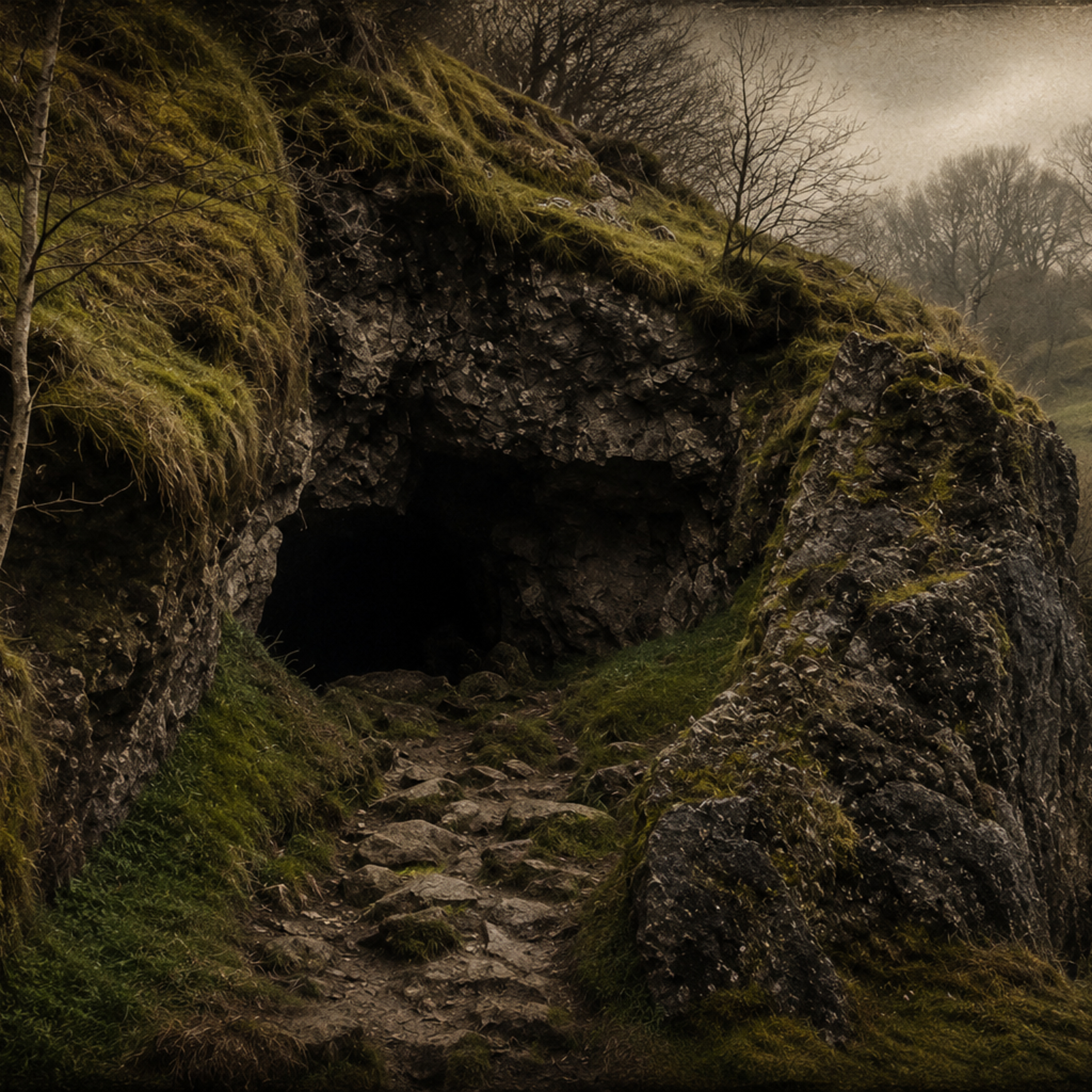


 Podcast Addict
  RSS Feed
  Apple Podcasts
  Spotify
  Amazon Music
  Overcast
  Castro
  iHeartRadio
  PocketCasts
  Castbox
  Podchaser
  TuneIn
  RadioPublic
  Goodpods
  Podyssey