0:00
Welcome to Haunted History Chronicles.
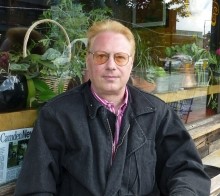
In this episode I'm honoured to welcome Kieran Farrell, long standing Council member of the Society for Psychical Research and a distinguished investigator with decades of hands on experience exploring some of the most perplexing and chilling cases of the paranormal.
0:22
From a childhood marked by vivid and often terrifying encounters with ghosts and poltergeists, to his scientific pursuit of understanding cold spots through both instrumental and intuitive methods, Kieran brings a uniquely rigorous and personal lens to the study of hauntings.
0:41
His method?
Treating each haunting as a case, much like a detective, methodically, confidentially and with the precision of a physicist and the insight of a medium.
In this conversation, we delve deep into the mysterious phenomenon of cold spots, sudden localised drops in temperature often reported during paranormal encounters.
1:08
What exactly is a cold spot?
Can it truly be distinguished from other ordinary environmental effects like poor insulation or a draft?
Kieran guides us through the complexities of these anomalies, exploring whether cold spots may carry a conscious presence, how they might correlate with apparitions or shadow figures, and how he developed the concept of using his own body as an instrument to detect and evaluate such phenomena.
1:40
We'll explore questions rarely addressed.
Could a cold spot be more than a passive symptom?
Could it in fact be the manifestation itself?
Do such anomalies occur in controlled environments like seance rooms?
And what if the idea of a warm spot?
1:59
Join us for an extraordinary conversation.
Hi Kieran, it's so lovely to have you back on the podcast for tonight's chat.
It's really good to be back.
Thanks, Michelle.
This obviously this podcast is about cold spots.
2:16
And before we kind of get into that, I was in the British Library the other day looking at a book by Thomas Charles Lethbridge, TC Lethbridge and his book, his book was Ghost and Ghoul.
In it, he quotes a small passage for a well known poem, but it doesn't attribute attribute it.
2:37
I found that poem and it really sums up a lot of what this is about.
It's called Antigonish, which is a poem written by William Hughes Manns, which some listeners may know as it's quite famous.
2:53
It was after his experience in a haunted house.
It was featured in a play and was even made into a song.
I'm not going to burst into song to recite it, but here we go.
Yesterday upon the stair, I met a man who wasn't there.
He wasn't there again today.
3:10
Oh, I wish he'd go away.
When I came home last night at 3, the man was waiting there for me, but when I looked around the hall I couldn't see him there at all.
Go away, go away.
Don't you come back anymore.
3:26
Go away, go away.
And please don't slam the door.
And he slams the door.
Last night I saw upon the stair a little man who wasn't there.
He wasn't there again today.
Oh, how I do wish he'd go away.
3:44
That, I think, summarises people's reaction to often what TC Lethbridge describes as a ghoul.
By ghoul he doesn't mean the sort of things in from Hammer Horror films, you know, flesh eating humans or monsters or whatever.
4:03
He means a nasty place, a cool spot where people feel uncomfortable, they get goosebumps, and they also experience other symptoms.
So to come back to the first kind of question for all this in terms of how do you investigate it, Well, the basic problem with exploring or investigating the paranormal on the ground in a practical way is the gap between what we as human beings experience with our minds, bodies, and brains and what we can objectively see, measure, and account for.
4:44
As scientists and investigators with equipment, we search for a means of finding this objective evidence beyond the witness statements of people who have had a paranormal encounter, like this chap with the Invisible Man on the stairs.
5:01
This objective evidence would therefore be independent of personal viewpoint or opinion of the observer and quantifiable, so we could build up a picture in numbers and ultimately in mathematical equations, which would provide us with a complete scientific model of the phenomena.
5:19
When I was at university studying chemistry and physics, one of my tutors, Dr. Beazer, always used to maintain that there was only a very simple philosophy in science, which was you experimented in order not to experiment anymore.
5:37
And by that he meant exactly this process.
You start by looking at things, observing them, making deductions, drawing conclusions, and seeing how you can describe a process, how you can control a process and monitor it, and ultimately how you can turn a description in words into a description in mathematics.
6:00
The object of the exercise being that after a certain point in time, you no longer needed to carry out any experiments.
You could calculate whatever you wanted to know with pen, paper and a calculator, or these days with a smartphone, I suppose.
But that was the whole object.
6:17
And that is largely what science in a sense sets out to do.
And the big example here is obviously physics.
But science of course has brought us the modern world.
But all the science in the world cannot hope to duplicate the plunge of a diver into a cold lake of icy water.
6:36
And how that actually feels to the person involved.
Well, maybe we might be able to do that one day, but certainly not.
My point here being that science is not so good at describing, defining and predicting personal human experiences.
6:53
Although of course the psychology is the science of human behaviour and parapsychology, the sort of fringes in a sense of psychology, the psychology that verges on the paranormal and describes the paranormal and the way people have paranormal experiences.
7:12
So in some senses science is moving towards people who have these paranormal experiences in order to be able to describe and define them.
What I have done in my own personal investigations and research is to try to bridge the gap between the human experience of people who experience the paranormal and particularly with cold spots, with what can be gained empirically about them through the application of the scientific method in order to bridge this large gap between human experience and the objective measurements that we can make with instruments.
7:56
I think Einstein at one point actually was asked, you know, can what can you do with, say, one of Beethoven's symphonies?
Can you objectively describe that?
To which Einstein, I think replied, Oh well you can, yes, you can describe it in terms of pressure wave curve, but what would that mean?
8:17
It would be a scientific description of music, which would have no meaning in human terms.
So it's bringing these two things together, and the only way of doing that is really through detective work, because this integrates both what can be found through instrumental means and the paranormal experiences that people have.
8:42
And to investigate how the paranormal as if it were a crime to be solved, but in the manner of Sir Arthur Conan Doyle's famous character, Sherlock Holmes.
The testimony of human witnesses as well as evidence from instruments, you know, forms a practical means of investigation.
9:04
But that shouldn't end that.
There are other techniques as well, which can involve methods from mediumistic techniques and also from, you know, psychical and other data that can be gathered through using psychics and mediums to provide a more human angle to the whole investigation.
9:30
Again, bridging the gap between what we can see with our instruments and what we can perceive of various matters as human beings.
So Kieran, just before we kind of dive deeper then into the the topic of cold sports, do you have any specific areas within psychical research then that you find most compelling?
9:55
And again, why that is why those are the areas that particularly interest you.
Yes, I do.
And apart from cold spots, it's basically it's hauntings and poltergeist activity.
10:11
And the reason for that is behind what goes on within haunting or poltergeist activity.
There is so often a human story and quite often again one that is very tragic.
And it is the human side of this interests me, partly the human side of ghosts and hauntings, and also the way in which people act or fail to react or integrate with haunting phenomena.
10:42
Are people afraid of it?
Do they walk on bypassed it in their lives?
Do they want something done about it or are they forced to live with it?
And if so, what can be done about it?
So there are also other psychical phenomena of various sorts that can explain hauntings in terms of psychokinesis and telepathy and so on.
11:04
So through investigating hauntings and poltergeist activity, 1 can sort of bring in all the other areas of psychical research or go from wanting into all those other areas.
I think it is a great mistake on the part of paranormal investigators and psychical researchers to think from the top down in terms of, oh, I know what's going on here.
11:30
This is a case of a class typical haunting or a poltergeist activity.
Things get thrown around and they have very set ideas about what a ghost is, what a spirit is, what a poltergeist is, and these descriptions or definitions can end up being dogmas.
11:48
So I always prefer to work from the bottom up and make observations and then deductions from them and build from the ground up rather than trying to categorize from the top down.
So what is a cold spot then, and how do they typically affect people experiencing them?
12:06
Cold spot is in the sense exactly what the name implies.
It is a very specific location spot, as it were, in a given room, could be outside, could be anywhere in one sense, where there is a collection of symptoms which usually accompany the sensation of cold.
12:28
So there's an odd sort of nausea and the sensation of sickness.
The nausea is a bit like going over a humpback bridge very fast in the car. 1 feels as if one's stomach has been physically displaced and has moved within one's own body, and it's not of course true, but the sensation suggests this together with a secondary sensation.
12:51
When the 2 are correctly reunited, hairs on the back of the neck and on the arms and in other anatomical locations can stand up and one can experience goosebumps.
It is like and yet different from experiencing fear and anxiety, but there is no obvious cause, no specific object of the fear or anxiety 1 feels.
13:13
Or alternatively, people are scared, sometimes to the point of actually being terrified by some unknown and often unseen threat to them posed by the cold spot.
This fear, dread or nameless terror is out of all proportion to the danger that exists and it is part of the cold spot experience.
13:36
There is also usually a sort of sick, nauseating, spinning type of headache.
This accompanies stomach churning and one feels as if there is a great weight or depression pressing down on one's head which dampens one's ability to think and to act and react. 1 feels as if the ground in front of you or even under your feet is going to open up and swallow you up.
14:00
This list of symptoms, once experienced, becomes quite recognisable as being like nothing else one has previously experienced.
They are unique to the situation and so to the phenomena of cold spots.
Cold spots may be small or even extensive areas that do not only feel cold.
14:21
They can be physically cold and a temperature reduction can be measured within them.
This can be as much as 10°C or possibly more on very rare occasions.
Usually it is small.
This perceptual or actual drop in temperature cannot be accounted for in terms of any expected or normal environmental factors, such as cold breezes or drafts, sunlight and shade, or heat retention or the lack of it by various structures in the natural or built environment.
14:56
So it's a combination of doing two things.
It's the question of finding the positive diagnosis were of a cold spot with the effect it has on people and also see if you can get some physical measurements to back that up.
15:13
And it is also a question of ruling out or trying one's best to rule out these other factors that might explain the cold spot.
It is for this reason that cold spots are sometimes referred to as being preternaturally cold, which, as many listeners may know, means cold for physically unexplained reasons which may possibly be linked to the paranormal.
15:37
People are really quite good at sensing changes in their environment, or a change in temperature that might take place on moving from one room to another within a building.
This change is composed partly of a change in temperature combined with a change in humidity.
15:55
Basements feel cold and damp and hot, sunny rooms feel warm and dry.
People can generally sense temperature differences on going from room to room, for example of about 3°C.
This is often sensed more readily on the face, as facial skin is more sensitive than skin in many other places on the body and is not usually obscured by clothing.
16:21
This innate environmental temperature sensitivity is roughly comparable with the accuracy of thermometies made for general use.
I mean by this the stated tolerance of plus and minus in degrees centigrade, which defines the tolerance band.
16:36
The thermometer was manufactured to work accurately within in a given temperature range.
I don't think there is any particular mystery surrounding this.
It is difficult and more expensive to make precision instruments and they are not always needed for many general uses.
16:53
And besides, if what is required is generally achieved from using these general and everyday instruments, then why bother to go any further or spend more money or make more complicated instruments to do a basic job?
17:11
What people are not good at is putting a number by way of disagreed centigrade or Fahrenheit against the comparative warmth or coldness of their environment.
Temperature changes which can be produced by cold spots can and usually are small to moderate, so more sensitive and accurate equipment needs to be used in their study and investigation.
17:34
This also emphasizes the point that cold spot phenomena is more of a human experience in relation to temperature, rather than a purely objective 1 as measured by some temperature measuring device, thermometer, thermocouple, or whatever it may be.
In formal medical terms, the cold spot symptoms I have described could constitute a cold spot syndrome.
17:58
This is essentially the core of the symptoms, but there can be other effects and symptoms as well.
Cold spots are not always that cold, but there can be a large and significant physical temperature drop within a cold spot, which can be measured with a thermometer.
18:16
As I've described.
The boundary of a cold spot can also be intense and physically sharp and precisely defined.
And I found that it is possible to extend my hand and arm into it and observe the effect on the part of my arm I have inserted into the cold spot with the portion of my arm that remains outside it.
18:40
In other words, put, you know, particularly in summertime, I can put my hand and arm into the cold spot, watch the hairs of my arm rise up and the ones outside the cult, there's sharp demarcation of the cold spot won't and you can move.
I have actually done experiments and I have moved my cold, the arm within the cold spot and seen the hairs of my arm go up and come down.
19:03
It can be that reliable, but obviously it's not a pleasant experience to to do this because you're subject to the cold spot symptoms.
Many people regard cold spots as bad or evil because of the effect they have on them.
One does experience a sense of impending doom and disaster, which can be very strong, but generally speaking, it is not directed at the person in the cold spot.
19:27
It is simply part of the phenomena.
It's not meant personally in that way.
So in one sense one shouldn't take it personally.
So it is simply an effect produced within the cold spot, like the sensation of being depressed and the way one feels on one's head.
19:44
This can make the act of thinking difficult, and one's thoughts tend to be fuzzy and lack focus.
In this respect, it is like having a bad cold or flu.
Now if you start thinking about a cold spot as being or representing the sort of volume, as it were of the human body where a person might stand, then if you start to do some calculations saying, well, a few degrees drop in temperature through that column of air.
20:15
Which would represent human body.
That column of air is obviously shared to a certain extent by the in, by the air around it and it relates to it through conduction principally.
So if you start thinking how much energy would it take, then you start to get an answer, which is about the same amount of energy that it takes to run a domestic, large domestic refrigerator.
20:43
That might sound alarming, but if you think about it again, a refrigerator has a great deal of insulation around it, whereas the cold spot doesn't and exists in an open environment.
So you end up having but the same amount of energy.
21:00
Now that energy is being can be sucked out of that environment.
Why is that?
Because there is an intention behind the cold spot, a presence, something there?
Or is it just remnant energy?
That's something else, you know, we need to come on to.
21:18
Because the issue here is, is that energy being drawn out of the environment in order to affect a partial materialisation of a ghost or spirit or whatever, to go beyond the the ghoul that TC Lethbridge describes, to get to the ghost, as it were, in terms of an apparition.
21:41
So how do you then differentiate between a genuinely anomalous cold spot and 1 caused by natural environmental factors such as drafts or insulation issues?
Really, by process of elimination, firstly you've got to study that environment and you've also got to experience it.
22:04
By study it I mean go there at different times of the day and possibly night to see the pattern of sunlight where the sun comes in, what heaters are used, and study convection currents coming up from things like radiators or other heaters where there may be a pattern of sun coming in through windows heating parts of the floor for example.
22:29
And also to examine drafts.
For this it is obviously better to do it alone in the house or room because as people move around, they're a bit like ships sailing in the ocean.
There's a sort of bow wave of air and there's a tail to them just like you see sort of the wake of a ship.
22:49
So they stir up the air. 1 old fashioned and quite sophisticated way of checking on draughts in the old days.
Seen some of the late great investigators in the field like Peter Underwood.
23:05
I'll do this because obviously there are smokers.
Light a cigarette, just place it very carefully or put it on pin and put the pin in some plasticine or something like that and see whether the columns work goes directly up or whether it is moved gently to one side or another.
23:24
I wouldn't recommend you, you know, people smoking or anything like that, but I mean, incense and incense sticks are a great substitute.
So umm, you can use that to examine drafts.
You can also find out about the environment.
23:40
I find it quite easy and useful to do some quick sketches, which is one of the things that TC Lethbridge used to do for various sightings of ghosts and his ghouls.
And I, I would recommend doing that and also taking temperature measurements not only inside the cold spot but outside it as well, and to define that cold spot by physically walking in it and around it to gauge its extent.
24:08
So you check on the physical environment because you need to know the pattern of heating and sunlight partly from the convection current point of view.
But obviously if there's sunlight pouring in through a window, that might only happen for a couple of hours, for example, then of course the surface that's heated will give off some heat when the sun moves on, moves away.
24:31
So it might feel comparatively cold compared to the spot which the sunlight is now trained on.
So you need to know that pattern and you also need to know the location of the building or whatever the location in relation to the compass points naturally enough, and dusk and dawn when the sun rises and sets and so on.
24:53
So basically you need to make a good environmental study.
In some instances it will be quite easy to do in other in other situations it could take quite a bit of time.
So that's essentially the means of being able to differentiate the two.
25:11
So in terms of investigating cold spots, the remarkable thing about them is that the syndrome can begin and intensify within seconds as one moves into the cold spot.
Then syndrome will resolve itself pretty much as quickly when one moves out of the cold spot and stands a few paces from it.
25:32
It is really that specific.
This phenomena is remarkably consistent, and one can walk through a cold spot from different directions and experience the same syndrome in the same way more or less each time.
25:48
This experience of phenomena is therefore repeatable in scientific terms for a given individual and across many individuals.
Therefore, people's experience of cold spots can be generalized to form a profile of the phenomena itself, which is independent of the single viewpoint of a given individual experiencer.
26:10
I have used a number of test locations in and around London over the years to conduct experiments with willing participants to do exactly that.
I have noticed that there can be a certain amount of variation due to the time of day or night, the season of the year, and a certain amount of fade over the course of the great many years.
26:29
However, cold spot phenomena are stable and the basic human experience of them remains stable for a given individual over a reasonable span of time.
The perception of where the cold spot begins is not usually the same as its physical boundaries as described by the onset of the syndrome.
26:50
Now coming back to the experiments, what I would do is I would ask someone to simply tell me how they feel at a given place.
Then I would direct them to say take 10 to turn around, takes 10 paces away from me, turn around, wait 30 seconds, tell me how they feel.
27:13
There may be a slight implication that they might feel different in one location to another, but I don't tell people what to experience, they tell me.
So I will then use this technique to walk them around an area with a cold spot and then they will describe to me when I place them in the cold spot that they are experiencing these symptoms as a result of the cold spot phenomena.
27:38
I'll then ask them to move out of that cold spot by simply saying take 5 paces towards me for example and tell, wait 30 seconds and tell me how you feel.
Often to their surprise, they will find that the odd sensations they've experienced a few moments ago, a few paces back are gone, vanished.
28:02
So that is a very clear indication that you have a cold spot rather than somebody who's just sort of, I don't know, got a bit of indigestion or whatever it is, might not feel particularly good that day.
So in doing this, you can do it with a number of people.
28:18
You can build up a profile in part.
There have been some experiments to look at this in a more broad based way.
This was started off really by Professor Gertrude Schmeidler.
And there's a thread in the psychical research literature about the quantitative investigation of haunted houses.
28:36
This is literally asking people to walk around a potentially haunted house and provide a questionnaire with their experiences to show the difference between what some people experience and what others experience.
That was a general sort of thing.
28:51
But you know, people do tend to experience the same things in the same places.
Therefore, again, this is saying something about the space and the place rather than the individual, because each report adds up and build up.
Build up that picture.
So in your experience, then, can cold spots carry a sense of human or conscious presence, and how might that be detected or interpreted?
29:16
Oh.
Yes, they certainly do.
The way in which you kind of detect this is partly through people's experience and partly also through what I can only really describe as a sort of a mediumistic type type test.
29:38
But before we get to that, one of the techniques that I've used is a numbering system.
So you get into greater contact with the cold spot.
In order to gain a greater understanding of it, you've got to climb up to the next level of engagement with it.
29:55
So the psychical explorer, for example, might want to test by largely physical or mediumistic means whether or not there is any reaction if you go into the cold spot.
But what you can do is take note of the actual severity of those symptoms that I've mentioned by simply putting number against them.
30:19
Zero would be, for example, no problem at all outside the cold spot.
One would be on its fringes, 2 inside or whatever.
You build up a picture.
It's a sort of like a mapping technique.
I, I originally thought about this when I was as as young boy and I was watching a lot of the Apollo space missions and they were mapping the moon in this way, the craters on the moon.
30:43
So they produced the first digital map of the moon in this way.
So I thought, can I apply that?
So I tried it.
It's quite a sophisticated technique because you've got to remember where you were at a particular place.
Was that a one or was that a 0 or whatever it was.
But anyway, the coming back to how do you test for whether there is something in a cold spot now that is essentially moral on a mediumistic level, a cold spot can be simply a trace of some form where a person was like experiencing someone walking up behind you in a queue.
31:20
You were aware that somebody's there, you don't know how they got there, and that can be a little unnerving.
Or when, of course, Q moves up 1, you move into the space that had been occupied by somebody else, and again, you can sense that little bit more about them as a person.
31:39
Again, that can be a little bit unnerving.
It's not just what you can pick up with your 5 normal senses.
More than that.
So are we talking about here an environmental recording of some sort?
And here I'd like to to bring in somebody called Edward Lecard, who was a scientist, a forensic scientist and a criminologist.
32:03
And he came up with what was known as the Lecard exchange principle, which basically says that every contact will leave a trace.
That isn't quite what he said, but that's what he was interpreted as being.
32:19
What he meant was that if violence is done by one person on another person in a given environment, then that cannot be a silent process.
There will always be a trace left by the perpetrator on the victim and the victim on the perpetrator and by both of them on the environment in which that deed happened.
32:42
Now normally in forensic science this is taken to be things like hair fibre, blood and other physical traces that can be found through physical investigation of the environment.
But what if the saying is true for psychical contact everywhere we go, that forms part of our set of memories.
33:08
But does the environment, too, have a sort of memory, as it were?
And are we connected to some greater form of consciousness, whether that's God or our deity or simply some kind of cosmic consciousness, I don't know.
That's perhaps a series of questions for another day, but my point is, if there is this natural ability for people to pick up things from an environment that occurred there, that is because somebody somehow has left a trace on that environment.
33:39
This is the Stone Tape theory.
But previous to the Stone Tape theory, which was really something that came to prominence with this 1972 film called The Stone Tape and that drew heavily on the work of TC Lethbridge, it was a question of anything which left an A mark on the environment.
34:00
Long enough contact, period of contact, or the contact was traumatic enough that would be ingrained, etched into the environment and somebody who was psychically sensitive could read that.
This, in a sense, is what the art of psychometry is about, the ability of people to be able to provide vertical information about a person who has owned an object merely by seeing or handling that object.
34:28
They know something about that person, and that is beyond the normal methods of detection used by such characters as Sherlock Holmes, for example.
So the idea of an environmental recording is a very valuable 1 here because are we dealing simply with this kind of environmental trace, psychical trace of somebody's presence, Like the invisible person in the queue?
34:53
You know that they're there, you sense them behind you, you feel their presence when you take their place in front, in front of somebody who's just moved on.
But that, of course, is to experience the trace of the living.
35:09
But of course, the deceased were once alive and they could have left their traces too, which people could read or experience as they walk into that environment, depending how sensitive they are.
My point here is that if you walk into a cold spot, abstract yourself away from the cold spot symptoms, Then of course you might be able to pick up these other traces, these psychic traces that were left on the environment that you then want to pick up to see if there is some sort of recording that is being played back there.
35:45
Or can you make contact with a presence that exists within that cult spot?
Is this the person, the remains of a person, as it were, the human trace of a person, not the necessarily the bones, but the psychic, psychic trace where a person has been, whether that person is currently alive or dead.
36:07
And in order to do that, you have to try and make contact with them.
So you have to feel for their presence and that maybe you can make contact with them, maybe you can't.
Maybe you're dealing with a recording.
So all you will get is simply a bit of the same thing over and over again.
36:25
But what would trigger such a recording?
Now again, when I was a young boy, I used to bunk of school and I would hang around in old haunted hospital buildings.
As a young boy.
36:42
There were other people, usually older boys, teenagers who were there with girls or whatever, doing what teenagers kind of get up to in places like that.
So between them and the old truancy officer, I used to want to go to get off the streets and where did I go?
36:59
Well, this haunted buildings, one of the places I used to hang out was the old, the what is now the Royal Free Hospital.
What was the old Northwestern Fever Hospital?
One of the buildings there?
A small building, some more or less came out of the wall built next to the wall fascinated me.
37:17
It also repelled me, but it was somewhere that I could hang out if I chose, because nobody else wanted to go there.
It was known as being the Laughing building.
Laughing.
Why?
Seems strange.
An old deserted building, because if you went close to it, you'd hear this sort of hysterical laughter.
37:40
Now out on the sort of lawn between the main parts of the building that were slowly being demolished and this little building at the periphery of the estate, I would see ghosts.
A couple of them in particular, two men carrying a stretcher and one in particular.
37:58
I would also see him in the window of this small building and I wondered if there was any connection with him.
So I've devised various different means of approaching the door of the small building.
And as I did so, I would hear this laughter.
38:15
So what triggered it?
Was it me?
How close could I get to the building before it started?
Was there a presence inside that detected me?
Was it just a recording, you know, in terms of a sort of a psychic trip wire?
38:31
So I approached the building in different ways and different speeds.
I also found that I wanted to measure just how close I could get to the building, so I would drop a stone from my side when I did so, over the course of time, I found that I would put a little twig where that stone dropped and I measured them and they were all remarkably consistent within about half a pace or so.
38:57
So it did appear that there was some sort of psychic tripwire involved.
But was that related to this chap, Old John, who could be seen in the window of the small building?
And there was a scene in which I often saw he would come across the lawn carrying a stretcher with a dead person on the stretcher.
39:21
And one day he fell down dead of a heart attack and he was cross taken to the small building which was the Mortuary.
What a terrible end to a career.
It was only a few weeks off retirement.
I was told later when I was caught and you know, various people wanted to know what on earth I was doing, messing around, and they thought that I was had a thoroughly morbid interest in such things.
39:51
But my point here is if this was merely just a recording, then this, the presence of old John would not be necessary.
Or would it?
What would trigger the recording?
Of this laughter, my presence or the presence of another person.
40:09
I went into the the Mortuary on many occasions and to me I experienced it in a different way.
I could see it as it was all ruined.
I could see it also as it had been some time ago when it was a working building.
40:25
I could see men, John and his colleagues, bringing in bodies, putting them on slabs and so on.
People coming in and out.
I'd sit there and I would wait in this rather morphic way.
I'd just watch this almost like a television show.
40:42
And after a period I'd just get up because I was cold, tired, hungry, probably needed to find a tight nut or something to substitute for it.
And that's what I did.
Now, sometimes John would be in the window, sometimes he would, sometimes I would see him, sometimes I wouldn't.
40:59
Sometimes I could see him coming and going, so partly out on the out on the lawn and partly he would be in the building on different occasions.
So I thought how substantial is he?
If if I go up to him, what would he do?
Would he see me?
41:15
Would he recognise me?
Would he tell me to go away?
And sometimes, most of the time nothing happened.
I could walk right through him.
I felt very sick when I did it, but that's what happened.
But when I when this happened to me, I was able to get a greater insight into who he was and his life.
41:34
It was only a fraction of a second as we were both together.
But nevertheless it happened.
And that gave me another means of inquiry into things like cold spots.
Trying to make contact, trying to figure out if I can tell the difference between a recording that is triggered by my or somebody else's presence within a cold spot, or is there some sort of psychic or presence of a person there, a ghost or whatever, or is it just remnant energy?
42:09
So that's the way really of telling the difference between the two.
And that is not an easy thing to do, but it's something that you can learn.
So that is essentially my test.
42:25
Can you trigger a recording?
Can you prod and pack the recording or the possibly the person responsible in order to be able to get a reaction which would show that you're talking to a person, not a tape?
So are cold spots.
42:41
Then often reported in conjunction with ghost sightings or spiritual manifestations.
And have there been record, you know, recorded examples in controlled settings like seance reams for example?
Well, basically yes, because one way of looking at a ghost is in a sense a movable cold spot because they do carry cold spots with them.
43:07
Now the reason I know this is because I have carried out many experiments where I've sort of travelled walk within the presence of a spirit.
As the spirit has moved, so I have moved and I have walked within the sort of presence of the spirit, so their spirit body and mine coincide again.
43:31
The object of the exercise was to gain information.
Now when I did this, I found the in part of the problem was in order to gain that information I had to abstract myself away from the cold spot symptoms.
So you have to do that now.
43:47
It formed in my mind that maybe in that sense, ghosts and spirits were synonymous with cold spots, because although you can have a cold spot without a presence, you can't really have a presence without a cold spot of one form or another.
44:07
This is particularly important when it comes to things like seances because obviously the object of a seance is for the medium with the sitters to communicate with the spirit and therefore to bring the spirit into the seance room in order to be able to communicate with that spirit.
44:24
In science rooms and control settings there have been quite considerable reductions in temperature, not always, but it it does happen and as far as can be ascertained that is the result of a spirit either being there or materialising or partially materialising.
44:45
So again, this shows that there is a correlation between a ghost spirit in seance room and out in the wider environment, should we say, rather than the environment rather than community, which means that the cold spot is generated in sense or is connected with a ghost or spirit.
45:06
So the answer there is a most definite yes.
So when a cold spot then is perceived, how can we tell whether it's associated with a conscious intelligence, human or otherwise, or if it's more likely to be an environmental residual imprint like the the Stone Tape theory suggests?
45:29
Essentially, as I have described, it's a question of working through the possibilities here, firstly to make, try and make contact with any presence that may be within the the cold spot and be able to work with that.
45:50
Assuming one can, if one can, then it's not likely to be a residual energy.
A residual energy will not react at all.
And that's how in a sense you know that because there's no sense of a human presence there.
46:07
It's simply a remnant energy.
But the next stage up, where there is a human presence there, it's a question of being a psychic listener, as it were in the first instance, and seeing whether you can pick up on whether or not there is a person there.
46:26
And something about them might be able to whether you know, the cold spot is masculine or feminine and so on and so forth.
Little things like that.
Is that a person or is that an inanimate sort of thing, as it were?
46:42
That's the first step.
The second step is to reach out with your mind and try and engage with whatever may be there, he, she or whatever.
And in order to do this it's, it is naturally enough a mediumistic technique.
So it's dependent on the skills, knowledge and experience of psychic explorer or paranormal investigator.
47:05
When someone does this, it is a really good idea to have a couple of other people there as well with the various instruments and so on and so forth.
EMF meters to see if there's any changes in the environment and other environmental measuring techniques, and also to see if there's temperature changes or temperature drops.
47:26
And to carry out some audio recording work to see if there are are any unexplained or spirit voices through making recordings.
Because sometimes these things aren't just a question of being a psychic or telepathic impression.
47:47
They can leave physical traces, as you know my analogy with Edward Lucard, and every contact leaves a trace.
So there may be more to the matter than simply a psychic impression or residual energy, in which case you want to try and and capture that.
48:05
Hence the equipment.
But the standard techniques of pen and paper and just writing down exactly what you're doing and why and what responses you may or may not get is a tried and trusted one which I've often used.
And I've usually worked alone doing this kind of work and written up my notes afterwards.
48:25
So essentially for this kind of work, you need a psychic or a medium or a sensitive, and that's how you tell the difference.
Are there documented connections?
Historical documented connections between the the cold spot and, you know, visual anomalies such as shadow figures or full apparitions that you're aware of.
48:47
Yes, and that's because essentially all these other phenomena carry with them cold spots.
Essentially there are three types of cold spots, the sort of the static 1, the dynamic one, and the mixed or bimodal or bi locational 1.
49:07
The first one, the static one.
It is relatively straightforward proposition to equate that kind of cold spot to the profile of some sort of watcher in the corner of the room or a dark corner, or even the presence in the basement.
49:23
This is a cold spot, which may be remnant energy, but it may have a residual kind of human aspect to it.
The watcher, if people feel that they're being watched, people feel uncomfortable.
They don't like going into that room or environment.
49:39
It feels creepy, spooky, and so on.
That's the first time, the dynamic one.
It can usually be equated with an intelligent form of a haunting by using the methodology I've described and it matches the profile of the phenomena.
49:56
And these tend to be to move around and coincide with shadow form, figures, apparitions, sometimes full body apparitions and so on.
So essentially these are ghosts and spirits walking around moving, have the ability to move and with them they carry cold spot phenomena.
50:19
So if you go into them and you walk around with them, that's what I've done, walk around within them so that my physical body exists within their spirit spirit body.
Then of course you find that there is or there are the cold spot symptoms.
50:37
And you also find that you can make contact with them to a greater extent than if you were just to stand in their way and they move either through you or around you.
The third type, the mixed or bimodal or bi locational is that if you come back to the idea of the stone tape and environmental recording, then a person might make a recording or you know, a recording might be etched into the environment at different places at different times relating to different activities carried out by a living person or by someone who is now deceased.
51:16
And therefore you can get a pattern which relates to the activity of a person when alive.
For example.
As a result of that, you might find that there are more than one actual presence of the same person in a given room or environment.
51:35
Now normally most people would throw their hands up in horror and say this is impossible, People can't be two places at once.
No, they can't.
But of course, if you're thinking about a person making or etching into the environment a recording which is as the result of their activities, their activities could take place over years.
51:57
For example, a known activity, somebody sitting down writing or using say a sewing machine, whatever it might be, they would sit in a given place.
That was one activity.
But of course, that might be their home or workroom or whatever.
They might be doing other things, for example, cooking or whatever.
52:15
So they may, you may experience this kind of cold spot activity at two places, one where the table was, where the sewing machine was used, and in the kitchen where they would have been preparing food, for example.
It's this kind of business.
Obviously, if you've got a haunting, you might find that you've got a combination of static cold spots and the dynamic ones because you're dealing essentially with a ghost or spirit shadow form figure that moves around, as well as one that is static relating to the activities that that person carried out when they were alive.
52:55
So trying to tack this down takes time and it takes a great deal of inquiry.
I have to say that cold spots are a relatively common finding within any paranormal investigation because of course they can be left by both the living and the deceased.
53:11
So I spent a lot of time tracing cold spots for people and giving them advice to how to how to handle them over the years.
So the thing about this is that you can have more than one cold type of cold spot or cold spot related to the given personality of the deceased person, ghost, or spirit.
53:35
If you were to apply Occam's Razor to this, you'd just say it was impossible.
But if you think in terms of the environmental recording, then of course, you know, everything becomes a lot clearer.
In terms of resolving some of those, in terms of the documentation of some of these things, the answer is yes.
53:57
There are many documented sightings, of course, of ghosts and spirits and the way that they've affected people.
One of the people that has looked into this more than the other is to a certain extent it's been Hilary Evans because he wrote a book about experiencing ghosts.
He was looking at the human experience of ghosts, what actually happens to the person who experiences them.
54:17
That's very much the approach that I've I've taken.
But often paranormal investigators and psychical researchers don't always put the bits of the puzzle together.
And that's where there is the evidence and there is these various strands within the literature, but there isn't the integrated whole of putting the pieces of the jigsaw together to say, OK, when somebody cited the ghost or saw an apparition, it's often thought that naturally enough, it was their reaction to the ghost that made them cold.
54:48
It might very well be, but there could be more than that going on as well.
So that there's often multiple things going on which needs to be investigated and documented within a given investigation.
And this would lead on to further enquiries in terms of psychical research.
55:07
There's one other thing I wanted to mention that these shadow form figures are often seen as an overlay on people's vision.
And this can be the same for apparitions in that there's two, there are two mechanisms at play, the normal vision which people would normally see through their own eyes and be interpreted in their brain.
55:30
And the overlay on that is direct information coming in to their mind and therefore their brain, constituting 2 separate overlapping images combined within the mind rather than the brain.
And therefore people will see a shadow form figure, see the shadow form figure imposed over the normal background that they expect to see.
55:56
It is that shadow form figure which might induce the cold spot symptoms, and if you walk within the body of the shadow form figure, you do experience the cold spot symptoms.
So there is a good correlation between the two.
56:13
Is there such a thing then as as a warm spot in paranormal research, and if so, how might it then relate to or contrast with the with the cold spot phenomena?
Yes, I have experienced warm spots.
Warm spots are basically cold spots where the sort of warmth of the spot out outweighs the coldness, if I can put it that way.
56:39
If you can, if you think about the stone tape or environmental recording aspect, a lot of those recordings which are inched into the environment are from either repeated actions building up.
So from a tiny infinitesimal amount there is an accretion every day and so on and so forth.
56:59
So they build up, or it can be through a traumatic event, which leaves a far deeper impression on the psychical ether, as it were.
Well, what if instead of something that was traumatic, there was something that was beautiful, something really nice happened in that place that, you know, two people experiencing love together or whatever it is, feelings of love, compassion and so on.
57:31
Because something you know of great human positive value happened in that place.
That is a warm spot.
And they do exist and I have experienced them, which shows to me at least, that these phenomena are not always nasty, bad or evil because most of them have an adverse effect on people.
57:53
They can be nice and kind as well.
So there is such a thing as a warm spot, but it is a combination of the warmth of that remembered residual contact, or maybe that's there's there is still there, the psychical trace of a person, a persona in that moment of loving and giving.
58:16
And that can be a very valuable thing to have experienced.
One of the things that I'd also like to mention at this point is that two separate theories about say for example, churches.
Now this all depends on how you look at things.
58:35
One interpretation, you walk into a church or any temple, but stick with Christian churches for a moment.
You walk into the church, you feel a lot of power from the altar.
Why is that so?
58:50
That could be because obviously the church is the centre of the communion which takes place, the power of God, the influence of Jesus manifesto.
Or possibly it could be all the feelings of all the parishioners that have come into that church that have invested emotional and psychological energy and psychical energy into the church, the altar, the cross.
59:18
And therefore, when you walk in, you might not be feeling the power of Jesus or of God.
You might be just experiencing that collective accretion build up of all those thoughts, feelings, prayers and whatever.
59:35
Either way, it makes for a can make for a quite a powerful experience for psychics and mediums and also for ordinary people who are, you know, don't have that sensitivity.
But if you think about it in that way, then you start to think, well, hold on, wait a minute.
59:53
If being in church is when people go to church for various reasons, but if people go there largely for good reasons, to be positive, to get more out of life, to celebrate and be with other people, to do that, then it should be a positive experience.
1:00:11
And there have been many people who've had positive spiritual experiences in churches or indeed in various other places.
Which have been of a very warm nature and again that could be another aspect of a warm cold spot.
1:00:27
So can cold spots then be be sensed remotely, say through a wall or across a room?
And what might that then indicate about their true psychical presence versus the way we subjectively experience them?
Yes.
1:00:44
They can be regarded fastly through the Stone Tape theory as an etched presence or remains of a presence within the psychical ether.
And that can be sensed through walls and it can also be sensed outside of the building.
1:01:01
I've often done this, walked around the building and sort of thought, ah, ah, look up there.
In that particular room there is a cold spot.
And then I've gone there and I've worked out that was the room that I saw from the street and I experienced the cold spot remotely from the street that I'm now sort of in or, you know, a couple of places from.
1:01:28
I've been able to do this.
And there are other people who can do it as well.
I'm not the only one.
And it is often one of the reasons why people don't like going into places because they naturally sense the cold spots they go.
Oh, no, I don't.
I don't want to go in that house.
No, no, no, no.
There's something creepy about it may only be in one cold spot in one place, but cold spots are are pretty common within domestic houses and residences as well as of course businesses and so on, all places where people are.
1:01:55
So the idea here is that you can actually tell where cold spots are and you can sort of diagnose them as well using maps and diagrams.
So again, maybe that's picking up on an etch in the psychic Khalifa, maybe that's some sort of relationship with some sort of cosmic mind or group hind hive mind or whatever.
1:02:18
I don't know.
I do know that it's one is able to do this.
I've had some quite good success with diagnosing the presence of people's spirits, ghosts remotely using maps, diagrams and plans, as have other people.
1:02:36
Sometimes dowsers will use rods or pendulums or whatever.
I I find I can just do it, you know, myself through the application of my own mind rather than using an instrument of any description.
But there are many people who do use instruments and they can be accurate as well.
1:02:55
So you can sense these things remotely.
As to why and how it works.
Well, perhaps let's back down to this business of etches in psychical ether that can be picked up red, but it's certainly possible to do to sense cold spots remotely because a cold spot has a hinterland around it.
1:03:14
So it isn't just the immediate vicinity in which people would experience the cold spot symptoms.
In a sense, there is this dread and expectation that within the cold spot, that's what's going to happen to you.
1:03:30
So it's a bit like suddenly finding out, you know, like I did the other day, I had to go to the dentist to get the tooth sorted out.
So when the tooth broke, I thought, oh God, now I'm going to have to go to the dentist and that's going to mean drilling and blah, blah, blah.
I'm not looking forward to that.
So it's a bit like having that appointment, a bit like knowing you're going to be sitting in that chair and all the stuff in your mouth and whatever.
1:03:54
So you know, it's there, you feel it's there.
Intuitively, you can start to define and describe exactly what you feel and make a note of it and compare that when you go onto the inside of the building, assuming you can, and then find out if you're right or not.
And you know, almost without exception I have been right.
1:04:12
And as I say, there are other people who can do this as well.
And you can also work out how far from the cold spot you can detect it at different levels and different ways.
So it's something that is a bit like a beacon of dark light, as it were.
1:04:29
You can work out how far you can see it from, and of course you can perceive these things through maps and diagrams as well.
Now, whether that happens because the person who's drawn the diagram or handled it or whatever knows about that, and there's a sort of a psychical imprint made on the map or diagram.
1:04:50
And then they hand it to you and say, well, what would you make of this?
But it's a bit difficult when you're working, say, for example, printouts from the Internet and so on and so forth.
So there's got to be more to it than that.
But I've often found that I can, for example, perceive a presence in a cold spot from outside a building.
1:05:08
I mean, a great many years ago I heard a friend who became very extremely famous and she took me outside the building where she lived, Coleraine Court, and I was able to predict.
Oh, yes, look there, there's your flat up there.
1:05:25
Oh, you've got a nasty cold spot there round here by the Oh dear, round here by the by the bins.
Crikey, that's really horrible.
You know, some, I think somebody was probably killed there or whatever.
It all turns out to be true.
So I've often found that you can obtain good psychical impression data at a distance from a cold spot.
1:05:46
You don't necessarily need to be within it, although it's usually best to because the phenomena are more intense and you can pick up more, you know, psychical impression data if you are within the cold spot.
I mean, you're trying to communicate with any presence that may be in it.
So what role then, do you believe cold spots play in the the broader context of paranormal investigations?
1:06:09
Are they merely indicators, or could they be manifestations themselves?
They could be both.
Firstly, finding cold spots is a very common thing within any paranormal investigation.
Some investigators don't take them particularly seriously because they think they're simply anecdotal or worthless human experiences.
1:06:33
But try living with them and you soon find out they're not as easy to put to one side as you think they are.
When I was very small we lived with several of them in our flat and I got to know them quite well.
1:06:50
And again, it's a question of whether or not they're remnant, they have contained remnant energies or more than that.
Part of learning to cope with cold spots is trying to establish whether or not they're active or passive.
1:07:07
If they're passive, then it's a bit like a sleeping dog.
You walk past it quietly and you won't do anything and barouse it and you know you could be in for trouble.
So it's quite often that paranormal investigators will find cold spots.
They often do not pay them the attention that they really deserve and they don't investigate them properly.
1:07:30
Because if they're investigated in the way that I've described, then you know, you can get a far full of picture not only of the paranormal phenomena that's going on, but also the human experiences that people are having of those phenomena.
And therefore it would be in a far better position to give people advice about how to cope with the situation or to be able to possibly get something done about the cold spot itself.
1:07:54
Sometimes blessings and so on will help, but they sometimes need to be directed specifically towards the cold spot or conducted within the cold spot.
Then they tend to be more effective.
But going back to the main thrust of the question, not enough attention is paid to cold spots.
1:08:10
And there's also an issue about their investigation from the instrumental side of things, which is that very few people have actually done comparative studies of them.
For example, by using double sensed double the temperature probe instruments.
1:08:27
So that you can have one probe of an instrument going into the cold spot and 1 immediately outside of it to log temperature and humidity over time just inside, inside and outside the cold spot to measure the differences and one or two other places as well.
1:08:45
To be able to measure the difference between the cold spot and elsewhere in its immediate environment.
To see if you can find these physical traces as physical clues to its its existence.
It can also show on other environmental measures as well.
1:09:03
I mean, in a recent investigation that have been involved with and various environmental measurements were taken and there were small but significant differences between the measurements taken within a cold spot and outside it, even though there was only a couple of feet between a normal spot and a cold spot, few feet.
1:09:29
How how can one possibly explain the differences between a range of cold spots with significant but small differences in them and normal spots couple of feet away where there are, you know, no cold spots.
1:09:47
So shouldn't that be saying something about the cold spot itself in that in that there are these environmental traces to its presence.
So they can be picked up through those environmental physical measurements which do back up the the differences that people actually feel when they are involved with those consports.
1:10:09
Either by, you know, standing or sitting in them or just sort of being aware of their presence at a distance, whether that's on the other side of the room or, you know, in different room.
So there needs to be an integrated approach to the investigation of cold spots, bringing everything together, environmental measurements, human testimony and investigation, detective work and of course from the Psychicorp side and combining everything to get a good all round picture of the cold spot phenomena.
1:10:44
So where would you like to see further research into cold spots and similar phenomena go in in the future going forwarded, say in the next decade or so?
Well, I would like to see investigators take cold spots more seriously, carry out a lot of environmental measurements, and to start to investigate cold spots on a more systematic basis.
1:11:09
I would also like to see what has become known as Project Schmeidler.
The systematic and quantifiable investigation of haunted houses not only continue, but a series of experiments to be carried out whereby people walk around a haunted house or a potentially haunted house, noting down what they think, what they feel and what they experience.
1:11:32
And trials can be carried out through people who would be a control group, who don't consider that they're psychic sensitive and psychics and mediums to see how many people are picking up on cold spots and the presences within them or just general haunting type psychic or phenomena.
1:11:53
And those sort of haunting phenomena are relatively common and they can be found in many investigations, although many investigators don't take them as seriously as perhaps they should because not much shows on the instruments and therefore they tend to think there's nothing there worth carrying out a serious investigation of.
1:12:14
I think that could be a mistake.
So I'd like to see an integrated approach.
I'd like to see more of these project Meidler type investigations and that's to be done on a systematic basis and reported in the literature however and these temperature studies that I've mentioned.
1:12:31
But most possibly most importantly, that's most important thing would be that there's been a a new device that has come about within the last few years, which has sought to overcome the problems of the past in relation to the use of random number generators.
1:12:54
This little device called a weirdoscope and it uses a Raspberry Pi computer and two random number generators.
So the object of the exercise is to see like ordinarily random number generators would just do their own thing.
They would just generate numbers randomly.
1:13:12
So there are two of them are known as Alice and Bob A&B.
They would just go on their usual kind of random walks.
So they would go up, down, down, up, blah, blah, blah.
There would be no relationship between them because you wouldn't expect one, would you?
The random number generators, simply because you've got two of them in the box, shouldn't make any difference.
1:13:29
Yeah, but the there's a growing, growing body of evidence to say that, well, actually what you do does influence them.
I suppose people have taken them out and and found that human contact, human experience can influence the operation of these random number generators.
1:13:52
There is a very sophisticated statistical program which calculates if the Alice and Bob are walking, as it were, alongside one another, crossing over each other's path or moving away from each other or moving outside, and the envelope of expected statistical significance and so on and so forth.
1:14:20
This presents a wonderful tool to be able to investigate cold spots with.
So some initial experiments which I've done with a device indicate that it will be of some use in these investigations and forms of psychic experimentation and inquiry.
1:14:39
Now will have been April 2024.
Kirstie Allen, who is a member of this the weird organization who produced these devices, came to the SPR to give a talk about the device.
And there was a she demonstrated that the device in the SPR library, I was there.
1:14:59
There was also a friend and colleague of mine, Chris, and there was a Reiki heeler there.
And she said, oh, I'd like, like to see if I can actually influence this device by treating it as a patient and sort of directing psychical energy into the device.
1:15:16
And she carried out this sort of technique or Reiki type technique on the device.
And it appeared to show that the random number generators had reacted to what she was doing.
They went outside the statistical envelope and there were various sort of complex statistical pictures of what occurred, but what did occur wasn't what would have been expected in the sense that it wasn't a blank and nothing.
1:15:43
There was a definitely a something there.
So if psychical energy beamed into one of these devices or taking it to a football match or whatever, and the spirit of the crowd when you know something happens at one team or another, scores a goal or something like that, does have a statistical effect on the statistics of the device, then maybe, just maybe, we found an instrument that would be able to say, yes, we've now got the means of being able possibly to detect ghosts because you can leave it in a cold spot.
1:16:19
You've got the courage.
You can sort of walk around with it in a haunted house and see what you want to do with it and how the environment effects you, how you affect the weirder scope and so on.
Or just leave it in a cold spot, see what happens to it.
These are the experiments that I'd like to be able to engage in, obviously in collaboration with other people, and I look forward to being able to do so.
1:16:43
Kieran, it's been fascinating to talk with you again.
Thank you so much for your time.
It was honestly a really interesting journey in terms of exploring something that I don't think often often gets talked about enough.
So thank you so much for your insight and your knowledge on on the subject here tonight.
1:17:01
Thank you.
Thank you very much, Michelle.
I'm glad you've given me the opportunity to be able to explore some of my thoughts and theories about cold spots, which I'd very much appreciate.
Thank you.
Thank you for joining us on this journey into the unknown.
1:17:17
If you enjoyed today's episode, please subscribe, rate, and leave a review on your favorite podcast platform.
You can follow us on social media for updates and more intriguing stories.
Until next time, keep your eyes open and your mind curious.


 Podcast Addict
  RSS Feed
  Apple Podcasts
  Spotify
  Amazon Music
  Overcast
  Castro
  iHeartRadio
  PocketCasts
  Castbox
  Podchaser
  TuneIn
  RadioPublic
  Goodpods
  Podyssey