0:00
I think that the vast majority of people who have an extraordinary paranormal type of experience, it is highly likely to happen during the night time, a night time waking, a sleep paralysis event, etcetera.
And so it is something of an entry point for paranormal experience.
0:21
For people who do have these experiences, I think it's important to remember that someone else doesn't have to validate it for it to have been an experience that you went through.
We all sleep, we all dream, yet the moments between sleeping and waking remain some of the least understood aspects of human experience.
0:42
Could these strange encounters simply be creations of the mind?
Or might they be pointing us towards something we've yet to explain?
That's exactly where this conversation begins.
Last week, I was joined by Taileen, a PhD researcher in psychology, a council member of the Society for Psychical Research, and an investigator with its Spontaneous case committee.
1:09
Together, we challenged many of the assumptions surrounding possession, exploring why these experiences are often far more subtle, complex, and deeply human than the dramatic portrayals we see in films.
As we finished recording, one fascinating question refused to disappear.
1:26
Why do you so many reports of hauntings, apparitions, sleep paralysis and other extraordinary experiences seem to occur while we're asleep or in that strange space between sleeping and waking.
In this week's.
1:43
Conversation We pick up exactly where we left off.
We explore the remarkable relationship between sleep, dreams, and altered states of consciousness, asking whether these experiences are simply products of the sleeping brain or whether they might represent something we still don't fully understand.
2:02
Tylene explains why she believes sleep may be one of the most important gateways into extraordinary human experience.
Discusses the role of brain wave states, examines recurring reports of shadow figures and sleep paralysis from around the world, and reflects on why cultures throughout history have treated dreams as meaningful rather than meaningless.
2:26
We also explore the importance of listening to people who have had these experiences without immediately dismissing them, and how recurring themes appear across cases of possession, hauntings, apparitions.
And other paranormal encounters this conversation asks us to reconsider one of the most.
2:48
Familiar parts of our lives.
After all, we spend almost a third of our existence asleep.
Perhaps it's time we.
Started paying closer attention to what happens there.
Hi, Tylene, thank you so much for coming back onto the podcast tonight.
3:08
Hello, thank you for having me back.
So in our previous conversation, you were completely challenging the Hollywood image of possession and encouraging us to think about it as something far more subtle and complex. 1 area we didn't have time to really explore properly in that discussion was sleep.
3:30
Why do you think sleep is such an important place to begin when discussing extraordinary experiences?
I think that the vast majority of people who have an extraordinary paranormal type of experience, it is highly likely to happen during the night time, a night time waking, a sleep paralysis event, etcetera.
3:53
And so it is something of an entry point for paranormal experience.
You mentioned there that sleep is one of these kind of earliest points of entry.
Is that because of the the kind of the altered state of consciousness that kind of experiences there coming through because of that state of consciousness being different?
4:14
Is it partly to do with that?
Yeah, I believe so.
In my opinion, I think the brain wave state plays a very large role in not just accessing the altar states of consciousness, but particularly in bridging that divide between the material world and that paranormal or shadow or spiritual world.
4:35
And so when we sleep, basically we're going into the SATA and the Delta waves.
We actually alternate between them with SATA being the R.E.M. and Delta being just a really deep unconscious state.
And so my belief is, and obviously there is some evidence to back this up as well, I believe that there is something really important happening that we don't entirely understand yet in terms of entering these brain wave States and why things become more accessible to us at that point.
5:08
And interestingly, the same is true of like gamma states where we're actually hyper aware does the flow state well, we're really engrossed in what we're doing.
And in those type of states, we could actually have access to information that we can't even quite explain how we know it.
5:27
And there is just an unbelievable list of profound things that have been brought into the world from these people who we think of as geniuses.
And then when you actually look into how did you come to this solution?
How did you find out this extraordinary piece of information?
5:43
They will quite often say that it came to them in one of these states.
And but yeah, there's something, there is something profound about the extreme ends of the brain wave state, which I don't really fully understand, but it is very fascinating.
6:00
And I have no doubt that there is something very important.
Most people actually lack the ability to see in the shadow realm.
And this includes psychics and mediums as well.
A lot of people who even do have this gift of sight, as we say, they don't necessarily see it with their physical eyes.
6:19
They are quite often seeing it through their third eye in their mind's eye.
But there's something about sleep state that allows people to be able to see in a way that we do not normally have access to, or at least most of us do not normally have access to.
6:35
Some people do, but it is it is quite rare, even among psychics and mediums.
So do.
Many people dismiss these experiences and simply because they're occurring while they're asleep.
Do you think?
Oh, without a doubt, without a doubt.
6:51
And I think when people do that, it says more about them than about the experiences.
And for people who do have these experiences, I think it's important to remember that someone else doesn't have to validate it for it to have been an experience that you went through.
7:07
And it can quite often be really difficult for people to even share these things in the 1st place because any time that they have attempted to, people have dismissed it.
Oh, no, you were just sleeping.
Oh, but even if they were just sleeping, it was a profound experience.
It's something that they have to deal with and they have to process, but they're not necessarily sleeping.
7:28
And that person who is saying that to them can't possibly actually know that.
Like, how do you know that?
How do you have that information?
You know, it's being committed to a particular way of decoding what has happened where, you know, they, they think that they're being, I don't know, scientific or something.
7:47
But actually you're just shooting things down out of the gate.
You have no idea what actually happened in that moment because you weren't there.
I mean, to me it seems so profound though, this question of of dreams and this state of being that people enter when they go into dreams.
8:05
I mean, when we think about dreams through history, you know, we just see that their importance, you know, how they've been regarded as this place where they can receive messages from the gods, you know, warnings, visions, just all of things, psychological processes depending on the culture.
8:23
I mean, I was only just in the last few days looking at ancestor veneration, for example.
And again, just the question of that dream state coming through where that was the place where they might see their ancestors if if they weren't doing enough of a good job to honor the dead, to give them their food, all those various different things as part of that culture that the dream state might be where they then receive those messages.
8:49
So like I said, through history, we just see the importance and the significance of dreams as this conduit.
And I don't know if you have any have any other thoughts on that as in terms of why dreams have always occupied such a special place in in human history?
9:06
It's a major aspect to human experience.
I mean, we spend a third of our lives asleep.
I just don't.
Of course it's going to be important.
Of course it's going to be important because most of us dream.
And I think if you want to like ignore or just diminish that, you're just siloing off a huge part of the experience of being human.
9:28
And so I think that there is an element of needing to embrace it in order to completely embody humanity, if that makes sense.
Oh, absolutely.
So do you think we've become dismissive of those dreams then?
9:43
You know, if we think about the insights that they can give, you know, regardless of whether they're to do with the paranormal, do you think we've dismissed that?
We kind of lost some of that.
We've become too skeptical of them.
I am not a big fan of modernity, so I'll try not to be too acerbic here.
10:00
But yes, to put it just very bluntly, yes, we absolutely have become completely dismissive of dreams.
I think in no small part because we are trying to dismiss our very nature really.
10:18
And I'm going to just see it all the time, all the time in everything is self hatred.
Humans hate themselves.
And I don't know if it's unique to the point of civilization in which we sit right now, or maybe it's always been there.
10:38
I don't know because we have such limited understanding and information from the past.
But it is something that I particularly see.
Even spiritual people talk in this way as if they just absolutely hate humans and they absolutely hate humanity.
So I think it is an extension of the fact that we have all become tremendously self hating creatures and so we want to box these things all from ourselves.
11:04
You know, the Nietzsche quote, God is dead isn't actually where it ends.
The full quote is God is dead and we will never wash the blood from our hands.
Something like that.
It might not be exact.
So he's sort of quoted as being this person who's celebrating God is dead, but in reality he is lamenting that we have lost something which is profound and which has greatly disturbed us.
11:33
And I say this not as a religious person, I say this as a person who actually has serious problems with religion and beliefs.
All of these things.
I, I personally, on an individual level, I struggle with massively, but I can still recognize the truth of the situation that we have a real problem in that we are constantly denying spirituality in the modern age and we're not even fully ourselves because of it.
12:07
And in fact, people are desperately always trying to fill that hole, that void, that emptiness inside of them.
They quite often deal with politics and you cannot fill that God shaped hole with politics.
Some people will fill it with a love of money.
12:23
It manifests in all sorts of ways, but it ultimately comes back to this problem that we have in modern life that we do not have unifying monoculture religious type belief.
12:40
And it doesn't necessarily have to be religious in the churchy sense of it, if that makes sense.
You know, it could just be that we have a very strict set of guiding values and also cultural rituals that we go through that we all agree on.
12:56
And we all know how it works.
And it's the source of a lot of distress right now in the world because things are so broken down and nobody knows how to behave anymore because so many people don't know how to behave anymore.
And we don't have this unifying thread of songs that we can all sing and things that we could talk about that we all know about, and even just behaviors in everyday life.
13:22
And we see arguments like this online all the time between the generations because generation to generation, they're almost becoming unintelligible to each other.
And it's really quite difficult to relate to somebody from a different generation.
And that was not a problem 40 years ago.
13:38
You could relate to people from any generation because we had this monoculture.
And I'm not necessarily advocating for the monoculture, but I'm saying there is a real deep problem.
And I think everybody actually knows this, even if they can't articulate it.
13:57
I think the Sheila in their gut and it manifests this feeling manifests in the rejection of things that are intrinsically very human.
And they are not to be shield away from and they're not to be put in a closet and they're not to be.
14:14
It's just part of who and what we are.
And so I don't know why you would dismiss it, and yet people do.
So sleep paralysis is something that obviously many people experience at least once in their lives.
Yet for those who haven't experienced it, it can sound almost totally alien and unbelievable.
14:37
Do you want to just explain what kind of happens during that sleep paralysis state for those that are maybe unfamiliar as to what it actually is like and what's happening to someone who's going through it?
Right.
Well, there's actually two things that are happening at the same time when a sleep paralysis event happens.
14:56
And I'm not sure why they can't both exist at the same time, but you will often see people argue for one over the other when I think it's perfectly acceptable that they are both happening at the same time.
So on a physiological level, what's happening is when you're asleep, your body actually produces, your brain produces a chemical so that when you're dreaming that you're walking around, you're not actually walking around.
15:21
So people who sleepwalk, they have a sleep disorder where that is not being produced.
Now in sleep paralysis, it's actually being over produced.
And so you wake up, but your body is still producing this chemical and that is why you're paralyzed now.
15:40
That's the official explanation.
Personally, I have another take on it which I'll get into a bit later with my own experiences.
But the other side of it is, well, it depends on your religious interpretation of it.
15:56
But there is another realm, and there are entities in that realm, and they are coming to you in the middle of night and they are harvesting of some sort.
They are taking something from you.
In those moments, we have to think of emotion like currency.
16:14
It's actually kind of like Monsters Inc, really.
Certain emotions carry different energetic frequency and they are able to harvest that somehow.
I don't know what they do with it, but they clearly need it and this is what they do.
16:31
Now, my personal opinion is that it's actually a fight, flight or freeze.
It's happening during a sleep paralysis.
So.
OK, yeah, we have the idea of your body's producing this hormone and it's stopping you from waking up.
16:48
And perhaps that is true in some cases, particularly one off, you know, people who only experience this once or twice or few times in their lives.
But I think what's really happening, at least in subsequent episodes of it, is that there is there is a there.
17:06
I mean, you see a creature of the foot in your bed, of course you're terrified.
You're already laying in bed.
You can't very well get up and run and you you can't fight.
So what are you going to do?
You're going to be paralyzed.
You're going to go into a Free State.
And I mean, I guess back to body chemistry though, of course, because that's how the body produces these sort of states.
17:28
It's all down to your body chemistry and your body doing what it's actually meant to do because it is facing an an existential threat, something you've never seen.
It's absolutely terrifying.
Now why I have this opinion that what it actually is or can be in any case is a fight, flight or Free State is because I have had so many of these experiences.
17:54
So many.
I am not kidding when I say like I've easily had 1000 of them.
You get used to it.
To put it bluntly.
When I was young, I started experimenting with it and that led to some very interesting results because first of all, I had read the official explanation that Oh no, it's just your body is producing this chemical and you know, it's paralyzing your body and you're absolutely fine.
18:24
This is just a hallucination.
So I taught myself the next time this happens, I'm just going to go with it and have fun because it's a hallucination, right?
Boy, was that a mistake.
I had the sleep paralysis event and the entity, it kind of looked like a haystack.
18:39
It's just this big lobby masses.
It actually looked like the big thing at the end of critters, like it was just this massive black haystack looking thing.
And I acknowledged it.
And I acknowledged my body is completely frozen.
I cannot move.
18:55
And I said, right, OK, yeah, fine.
I'm hallucinating.
Yay.
And I sort of got punished for that because I guess it wasn't the right response.
I was supposed to be afraid.
And so it grabbed me by my feet.
And now this happened as an out of body experience from this point.
19:14
So it grabbed me by my seat and it ganked me out of the bed and it dragged me down the stairs of my house.
It's really hard wooden stairs.
And so I experienced being dragged out of my bed and down the stairs.
This was also in broad daylight.
This was not like a three AM thing because I worked night shift.
19:33
And yeah, so that was absolutely terrifying.
So it was almost like a, it was almost like a punishment for not being afraid, for being defiant.
And that was utterly terrifying.
Let me tell you, it was a very jarring experience many years later because this sort of phenomenon has followed me my entire life, no matter where I've lived in the world, including my atheist period, my atheist years, right?
20:01
My 8 years of pure cope and just calling myself oh.
Oh God, I just have psychological problems and I have problems and that's why I see things like, no, I don't have psychological problems, I'm absolutely fine.
I just see things.
20:17
So yes, through experimentation, I have discovered that the emotional state plays a very critical role in these creatures, both how and why they show up, how and why they stay, and how you can get rid of them as well.
20:36
And there's something called the Hawkins Consciousness Scale.
They have gone through and done a scale where they have labeled emotions and given them an energetic frequency and sort of put them in a stack.
And anything within the Gray zone of that chart is sort of crime, shadow entity territory.
20:58
That is what they either generate or what attracts them or perhaps a combination of both.
Although I have had paralysis when life is actually just great and they show up and you know, these events take place.
The breaking point is courage.
21:14
And I had one episode in particular.
It's just a very intense night because they just woke me up like every 30 minutes and they like my bed was surrounded by them or just tons of them.
They're mostly very small, but there was one that had kind of a lion face and I just wasn't acknowledging them.
21:34
They would wake me up and I'm not paralyzed at this point because I'm not afraid.
I just oh God, you again, leave me alone.
And so I kept doing that all through the night.
You know, every half hour they, they'll grab my, I'll feel them, they will grab my feet or something like that.
21:50
And I was just getting really annoyed.
And so eventually I guess they weren't getting what they wanted from me.
And so the lion 1 left in my face and rather than be scared, I actually I lurched myself forward to punch it.
22:08
I actually hit my husband less on the legs.
I hit my husband, but they went away for the night.
So they came for a fear response.
They didn't get it.
They just got an annoyed, you know, it was almost like dealing with a bratty child or something.
You know, it was just like, oh God, just go away to leave me alone.
22:25
And then I eventually approached it with sort of courage and almost like the fight response and they went away for that night.
Anyway, yes, I I've done a lot of experimentation, different experimentation with crystals, all sorts of stuff.
22:42
I have a master sheet related all various things that can and do work in various circumstances, some of them better than others.
So just picking out some of the, the experiences that you shared in your own experiences there.
22:57
I mean, dark figures, the shadow people, that sense of, of an overwhelming presence.
You know, other people report voices and pressure on their chest.
I mean, these reports, are they kind of fairly consistent when we look at them across different time zones, different cultures, different moments of history?
23:16
Are they fairly similar in terms of that kind of range of experience of of people reporting experiencing these sleep paralysis maintenance?
Yes, there is variation, but when you strip it down to what's really happening is very consistent indeed.
23:34
At least from what I've read, I've not really come across anything that really blocks the trend and experiences that come through the STR as well.
I mean, they come from all over the world and there are things that we can perhaps question like Hat Man for instance.
23:50
I doubt hat man always had that hat because it's from a particular time period, but I'm sure that people saw hat man before hat Man had the hat.
So where does that come from?
And I reckon that there is a strong amount of when we perceive these things, they still have to be in a form that we can recognize them.
24:12
And so they come the it's really an energy and how we perceive the energy has to be filtered through our consciousness, our what we have available in our own memory banks.
And I think that has, if there's any variation in the way that things look or come across, I think it largely has to do with that.
24:33
However, I also have a theory.
I believe that there are a lot of energies and entities that are tied to the land, the way that, you know, we evolve and develop and acclimate to the lands that we come from.
24:51
And so that may account for some variation as well because for instance, when you look at accounts from the Appalachian Mountains, people in the Appalachian Mountains, they overwhelmingly came from Scotland, the north of England, IO and Cornwall, etcetera, but particularly Scotland in the north of England.
25:12
And so they took a particular culture with them, including feuds, family feuds, actually.
And there's some really fascinating connections of things that survived in the Appalachian Mountains that are long since gone in the north of England and Scotland.
25:30
But they took the idea of the XI with them.
However, when they got to the Appalachian Mountains, yeah, OK, they saw things that were still comparable to things like the banshee, but they were different and they were a bit more, well, they became a bit more Cryptid really, and a little bit more nefarious as well, a little bit more vicious.
25:59
You also see variation in like the fae between England, where they're a little bit more, I guess not so offensive.
Whereas in Ireland, the fae are folk that you just stay away from and you don't interact with them.
26:17
And it's the same in places like Iceland and Scandinavia where it is recognized.
Like you didn't put offerings out for the Fay because they're just lovely and aren't they so cute?
26:32
Like in the Disney films, you put offerings out for them to keep them away because you do not want them interfering in your life.
And this sort of mentality is very similar to in the Middle East, the way that they think of the jinn, because of course, there are people who will go out of their way to invoke these sort of things.
26:52
There's always the the sorcerer kind of type person in every culture.
But for the most part, it is not something you invite into your life.
It would be a very foolish thing to do so because it will cause absolute chaos.
And I think in different areas of the world, they seem to be a little bit more dramatic and a little bit more nasty.
27:14
And I think it's really interesting that, yes, that belief of the sheep was taken from Great Britain and taken across the ocean to the Appalachian Mountains, and yet it evolved into something a little bit different, a little bit nastier, and a little bit more nefarious.
27:35
So you kind of mentioned a moment ago the SPR, the Society for Psychical Research, when you were, you were talking through your answer there.
And I know you're currently helping to collect accounts or sleep paralysis and other related experiences, you know, while someone's asleep through the Society for Psychical Research.
27:56
Do you want to tell listeners about that particular project?
Yes, In fact, actually the spontaneous case committee now has a project called Project Sleep, which is actually run by Sheila Price Brooks and she did her PhD on sleep paralysis.
28:13
She is also an experiencer of sleep paralysis to a rather extreme degree, even more extreme than mine because she can experience it like she could be awake and then all of a sudden she's having sleep paralysis.
So there is a very lively amount of activity going on around sleep paralysis in particular.
28:35
But the SPR takes account of all sorts of experiences.
Any paranormal experiences welcome, including poltergeist, ghost sightings, cryptids, possession cases generally come to me.
That's my particular niche for the sort of cases I pick up.
28:52
Sometimes people report UFOs, even just all sorts of things.
So we have a lot of different people looking at who have their areas of expertise, and they're looking at areas that they're particularly passionate about as researchers.
29:08
Now, it's kind of interesting because I'm actually not on Project Sleep.
I'm not one of the investigators involved in that project because I don't actually have that much interest in it because it's so mundane for me.
That makes sense.
29:25
I would particularly like to do a PhD on something you have to be so driven and so obsessive about it that you just can't stop thinking about it.
And because sleep paralysis and the entities that venison us through the night and hat man and all these things like I just, it's just so a part of my existence and it has been since I was a very small child.
29:47
So, and I've done all these experiments myself on myself, with myself.
I've also had political experience, experiences where you know, this is quite unique really to have a quote UN quote sleep paralysis type event, although I'm not necessarily always paralysed and someone else experienced it as well at the same time.
30:10
Yeah, I, I feel quite confident in my belief of what's actually going on.
And so I'm not particularly compelled in that area.
So I tend to not take the sleep paralysis cases, however.
Yeah, if you do have a sleep paralysis experience, please do report it to the SPR.
30:30
The Society for Psychical Research has a website and it has a tab report and experience.
And if you do, there's actually a question that asks you if you've had a sleep paralysis, because what we have noted is that many cases of other things coming through sleep paralysis is a feature.
30:49
In fact, in one reporting period, I think it was like 80% of cases also had a sleep paralysis associated with them, even if it was actually a ghost sighting or a poltergeist kind of activity or premonition or something like that.
So there's undoubtedly some sort of a link.
31:05
And it may be that people who are more susceptible to a sleep paralysis event in first place are more quote UN quote sensitive and therefore more able to get into that space where you are able to see these things.
31:20
The overlap between some of these experiences is really quite incredible when you start to look at it.
And I think this is where the Society for Psychical Research has this real ability to be able to track these things because you are being so rigorous about cataloguing, collecting these different experiences.
31:39
Collecting these first hand testimonies is so important because when you do, you do start to see these these threads and how they are sometimes very interconnected.
And I was speaking to somebody not so long ago about UFO experiences and they have been in that field for a very, very long time.
32:03
And again, collecting, speaking to people, collecting these first hand experiences having experienced something for themselves as well.
And they came away that same kind of profound overlap whereby in something like 80% of the cases, people were experiencing disturbed sleep paralysis.
32:26
And then after this event, they would then experience poltergeist type activity.
So they would have this cycle that he was kind of starting to see with sleep this UFO experience.
And, and again, like I said, poltergeist activity that would follow these events almost in this kind of linear fashion that again, I just, I think when you start to see these trends and see these patterns, it becomes so clear as to why this type of collecting of data and speaking to people and testimony gathering becomes so critical.
33:03
And again, just allows you to, to see some of this in a, in a much broader picture in the overlap between these different experiences.
Just following on from that then Tylene, after people complete the questionnaire, obviously I know from our discussion last time that people sometimes speak directly with those that are kind of reporting these incidents.
33:26
Has there been anything that you've learned from listening to experiences about sleep and sleep disturbances in some of the possession type cases that you've looked at or other things that you've looked at and explored?
Yes, dreams often often come up in my cases, even though my cases are not necessarily about sleep paralysis or dreams, because dreams, well, dreams, nightmares really we're talking night terrors are a rather important feature of the onset of possession.
34:01
And the person will go through a period generally in the very early stages of very disturbed sleep.
There may be sleep paralysis events, but quite often it is the entity is contacting them and communicating with them through their dreams.
34:18
First of all, and there are particular patterns that I guess it's a little bit too early.
I don't think I've looked at enough cases to say that there's a solid pattern, but there's definitely something developing in terms of, I would say a progression of trying to get a consent to the possession is what I would say.
34:48
So in a few cases, it's been a matter of the entity showing up in the dream.
And maybe it's a bit horrible, but it may do something to also at the same time be sweet or look innocent or get pity or sympathy or something from the individual.
35:08
And so they'll start to have sort of a soft spot for the entity as well.
They may feel protective of it.
Sometimes they even start to become attached to the entity themselves because they get used to having it visit them every night.
35:26
And what it's actually doing throughout that process is it is working on them psychologically to get them to agree to the possession event.
And it's not like it comes on in an instant and, you know, just snap of a finger all of a sudden someone's head spinning.
35:43
It's a much, much more protracted and actually quite grueling experience because of people end up being quite sleep deprived and it really imbalances their lives, but in a very slow and insidious kind of way.
And there was a case recently that the person actually invited it into a chair.
36:05
And then when she moved house, she invited it to come with her.
And of course, that was really a mistake because she was already, she was just sort of placating it by having it live in this chair and then avoiding the chair to avoid having any kind of basically, if she bumped into the chair or something, she would end up having nightmares with this entity.
36:29
And if a friend would touch it, they would end up with bruises on them, things like that.
But when she moved house, she invited it to come with her.
And now she's having a very different experience indeed.
And it came from a place of genuine care and concern because this woman was coming to her in the dreams and she she thought she was helping.
36:46
But what she actually needs in this instance, she actually needs someone to talk to, stick the spirit through and release the spirit.
And there are many different types of people who can do that sort of thing.
Spirit release therapist do it quite explicitly.
Shamanic practitioners do that sort of work as well.
37:04
I'm hesitant to recommend priests because back it's very tricky.
You know, it's don't even believe you if they won't send you cocking.
But if you can get a good one, if you know a good one who takes these things seriously, they could move it on as well.
But it's a sort of thing that, yeah, I'd say it's a little bit early to say.
37:23
It's necessarily a pattern, but dreams definitely feature, nightmares feature.
There's also something to be said about the cultural interpretation of the symbology of the dream as well.
So like 1 case I had, it was a Muslim man who has been dealing with possession for quite a while and he's had several exorcisms now and it's just not gone.
37:46
It's just not working.
He was having dreams of a dog and it was terrifying him.
Now, that's rather important because it wouldn't come in the form of a dog to someone like myself who grew up in a culture that absolutely adores dogs.
38:02
But him being a Muslim man from a culture that doesn't actually regard dogs very well at all, that was terrifying to him.
And likewise some individuals, it might be having nightmares of being attacked by snakes and things that's not really going to work on a person who actually adores snakes and they have snakes everywhere, you know, like they have like just loads of pet snakes and things like that.
38:26
So there is something to be said for what is culturally and personally relevant to you.
But of course, these things sort of have access to what that would be for you as an individual.
38:42
And I think it comes back to something that you said earlier.
There is, there's an element of, like you said, culture, personal experiences through which then you're interpreting these experiences too.
And there's this element of, you know, this entity tapping into that understanding that energy, feeling that energy and using that, harnessing that.
39:05
And again, this is where personally, as someone who has a real interest in historical cases and, and records of this type of phenomena, when you look back through history, you know, you can't help but question some of these experiences where again, you see very similar accounts that are reported with a much different modern lens, for example.
39:26
But when you take a look at the details, you see the overlap, you know, early accounts, for example, of interactions with the fae, which you mentioned earlier, but also interactions and accounts of vampire experiences.
You know, these early experiences were discard things like the the modern Hollywood version of sparkling vampires and you know, other kind of examples of vampires like that.
39:50
We're talking about reports of somebody, a presence sitting on their chest.
You know, again, you're seeing the same motifs coming through in these earlier accounts that.
Just begs the question, are these the same experiences but just interpreted and given different language, the language of the day to explain what was happening through shared cultural experiences and belief systems at that time?
40:17
You know, if we were to kind of put them all together, would we kind of see something that has a much heavier significance and connection?
And again, this correlation that maybe hasn't been explored before?
I don't know.
It's something that fascinates me.
40:34
Yes, No, I think there's definitely, I mean there's a through line to all of it.
And certainly I mean I see the patterns of we're clearly talking about the same things here, even if they maybe use slightly different language.
And we have to remember as well that like particularly different languages have different ways of expressing things like to the degree that there may be colors that they don't even have words for, but we do have words for, or they have, may have colors that they have words for, shades that we don't have words for, that we only have this.
41:10
And it's really the way that language is set up.
It's what allows us to communicate these experiences in the 1st place.
And so, sorry, studying languages is kind of kind of a thing for me.
I'm, I'm just obsessed with studying languages as well.
41:29
It's an aspect that I think does have to be mentioned with with regard to these massive zoomed out views of patterns of this sort of activity and why things may be slightly different, even though we're really mostly talking about the same thing.
Because the language shapes your entire way that you're able to view the world.
41:49
And the complexity of just how different a language can be at describing its world can really be quite mind blowing.
And I think that there's just, there's so much complexity.
But even despite all of that complexity, the pattern is just undeniable.
42:09
So when you speak to people and they share these experiences, are they sharing an experience with you that typically they haven't spoken of with others before?
For me personally, yes, almost 100, yeah, 100% of the time.
I don't think there's been a single one who hasn't said I've, you know, I've never told anybody this.
42:28
Or they tried, but they were shot down.
And so they weren't able to go into that kind of, you know, really explaining it because even when they just put their toe in, they were just completely rejected usually by the end in church.
Actually it's a bit, it's a bit of a post code lottery when it comes to the Anglican Church and whether or not you have a deliverance minister in your area who actually believes and takes their job in dealing with this seriously or if they just sort of want to push everybody off into the mental health realm.
43:00
But yeah, definitely for me and my case is, yeah, 100% of the time they have not told somebody or at least certainly not in any kind of detail.
And again, I think This is why then it's so important when someone does open up and does speak to you or someone else that, you know, being listened to without judgment becomes so important in cases like this because it's it is something that is disturbing.
43:25
It's frightening.
It can challenge your worldview.
And facing harsh judgment around something like this must be the kind of the equivalent of running into a brick wall.
Just that sudden kind of sensation of being shut down must be totally and utterly debilitating when someone is brave enough to speak out and share an experience that they had like this to someone else.
43:49
And it's finding the right people for whom you can speak about them without that fear of judgement.
And unfortunately, many of our, as we talked about last time, you know, many of these institutions, whether it's the medical profession, whether it's, you know, if you're seeking spiritual guidance through religion, you know, sadly, many institutions kind of shut down these conversations.
44:12
We just don't look at these experiences enough and talk about them openly and freely.
And I think that causes a whole host of other problems then when it comes to those that are experiencing situations like this and having these experiences.
44:28
Yeah, yeah, absolutely.
And I think doing this kind of work, it's casework, is in large part therapeutic.
And I'm not so sure that everybody really understands that or is on the same page that I'm on that regard.
44:46
That is something that I really hope is changing in the future, that paranormal investigators can behave pretty badly, to put it bluntly, and they can treat people pretty badly.
I anybody who wants to report and experience, I would say do so.
45:06
But please have an element of protecting yourself before you feel that person out and you've built some rapport with them because it's, it's a new emerging thing.
Clinical parapsychology and so there's a recognition of the fact that it's not just about you going in and extracting your data from the person and getting what you want.
45:27
So you can go off and I don't know, do whatever parapsychologists do, write their books or what have you podcasts.
You know, doing the sort of ego driven thing like you are dealing with a human being who has gone through perhaps the worst experience of their lives or certainly one of the worst experiences of their lives is something truly terrifying for which they do not have sufficient language or cultural knowledge to be able to express it.
45:56
And you should be as a paranormal investigator, you should be very sensitive to that.
And there should be an element of building rapport.
It gets very tricky, however, because as parapsychologists or case investigators, there has to be a strong element of personal protection as well.
46:15
Because to put it bluntly, you also do get a lot of crazy people and sometimes some dangerous people.
And so you do have to sort of protect yourself.
But at the same time, you have to make it comfortable for that person who is bringing that account to you.
46:32
And the more that you do that, the more the better the goods.
They will give you everything that they have if you can make them feel comfortable and not just makes them feel comfortable, actually create true comfort and true trust with that person.
46:50
So it's it is scary.
And I suppose maybe I have more compassion for that because I have had so many experiences and I have been there with regard to the absolute sheer terror.
Because when I had experiences like this when I was young as a child and my mother was very sensitive, she saw things as well.
47:11
But the problem is that my mother was a Christian.
And why is that a problem?
Because her interpretation was one that just sensationalized it and made it absolutely terrifying.
And that is not what I needed.
47:27
And I really needed to know that everything was OK and I don't have anything to be afraid of.
And it was her fear that ramped up my fear about what was going on and the sort of things that happened in her household.
47:42
To be brutally honest, in the middle of the night when you get up, you know, to go to the toilet or do whatever you do, get a glass of water, etcetera.
I don't think there will ever be a moment in the middle of the night when I go to turn a corner in the dark that I don't expect to see Cat Mountain standing there.
48:00
It is it heat and sad.
Man lives bread free in my head and will always do so.
And I have my own questions about why.
Why did this creature come to me and me and me and my mother together?
48:16
Actually we both saw him together.
Not just came to me, came to me as an actual man.
Like completely formed man.
We didn't know it was an entity until it appeared he even had footsteps.
Why?
Why did that happen?
48:32
Why me?
Why any of the events that happened afterwards, which are quite dramatic actually, because our house nearly burned down three days later and I woke up absolutely gagging on smoke.
You couldn't even see the smoke was so bad.
And my parents both work night shifts.
48:50
So I woke my my sisters are a lot older than me.
I woke my older sister up and she put the fire out and everything.
But yeah, I I don't know what was that?
Was that a warning?
Was that actually being, was that actually saving us by that pre visit three days before or didn't actually 'cause it, I don't know.
49:13
Like these are these are things I don't know, but I don't think any amount of research is ever going to answer it for me.
Actually.
I think that's just something that I have to sit with that I don't actually know why this came to me at such a young age and is such an integral part of my experience in life.
49:33
Just all the time.
It just lives there it is.
It is somehow part of my identity and that's really weird.
But having had that experience really changed everything quite dramatically.
And just kind of following on from that and your experiences and, and thinking back to our conversation last time where you spoke about your background in in method acting and how it gave you that first hand experience of deliberately entering this altered state of consciousness.
50:05
Do you see any similarities between those States and that transition into sleep, you know, again method acting and that kind of entry into sleep, although is that kind of that that shared experience, do you think it's similar?
Without a doubt.
I mean, initially that was what I actually wanted to do my PhD on, something that looked at the overlap between the spiritual experience and the highly creative experience, shall we say.
50:32
But particularly method acting, because it is quite deliberate in what it's setting out to do.
I mean, artists of all sorts are always accessing these kind of states.
This is what makes them artists.
This is what makes them great.
But in method acting, it is broken down and taught to you in such an explicit way.
50:53
And not necessarily that what you're doing is actually a deeply spiritual practice, but in how to get to that state and how to be able to access it.
So you don't really have to have a whole lot of talent to become a method actor like pretty much anybody can.
It's just a matter of going through this extended and really quite brutal process of making yourself have these reactions.
51:15
And it's, I mean, at the time when I first started training, my friends were deeply concerned that I was in a cult and I needed to quit and I needed to get out.
And maybe they weren't wrong, but yeah, it does.
It profoundly rewired your brain.
And the key thing that it does is it makes it possible for you to access these creative states, these brain waves states at the stop of a finger.
51:45
Not initially, obviously in the beginning, it's a very drawn out process and it takes a lot of practice.
But as you get really good at it, you can do it very, very quickly, really quickly.
But you can get into whatever state it is, whatever emotional state or character state that you need to be in.
52:03
And I think part of it is the relaxation, because you have got to completely relax your body, Needham.
And then in order for it to be responsive to you when you need it, because you need to be highly impulsive and you need to be able to follow that impulse very quickly.
52:21
Which is why method actors become very unhinged and get into a lot of trouble because they've gone to an awful lot of work to actually make themselves that keyed up, that emotionally responsive and that impulsive.
52:37
You can't just turn it off at the end of the day.
There's actually a rant in one of Lee Strasper's.
Well, it's a book, but I don't it wasn't written as a book.
It was actually a series of tapes that were transcribed and then put into a book.
And he goes on a rant about he doesn't understand.
52:52
I think it's quite specifically in relation to James Dean.
I could be wrong on that, but why so many of his most brilliant actors, why they end up dead very young and in very tragic ways.
And he's sort of, you know, he's questioning and he doesn't understand it.
53:08
And of course, I I read that and I think, well, why do you think, you fool?
Because you did that to them.
Obviously that's what you're messing with you.
But yeah, I think that the crossover to me, I see it clear as day.
It's the entering of the full body relaxation, just like we have when we're asleep.
53:27
That's part of the sleep process that we go into these deep body relaxation and we're not actually shut off when we're sleeping.
That's the thing.
Our body's doing really important stuff when we're asleep.
It's eliminating toxins and all sorts of things are going on.
It's a really important time of the day, which is why if you don't have good sleep hygiene, your life is going to start to get a little bit messy because it is so important.
53:52
That critical phase of detoxing the body and, and chunking the information and transferring stuff to long term memory and all of this stuff that has to go on while you're sleeping.
Like you might not be conscious work, but your body is dizzy during that period and it requires the relaxation in order to do it.
54:11
Just like it requires the relaxation in order to be a completely fluid method actor where your body is completely responsive and able to take the action before your mind can even think about it.
And I think the brain wave state has something to do with it.
54:27
You're also practicing dissociation and absorption.
You're going over the process of fine tuning them.
I don't know if I like that word actually, because it's not necessarily a good thing.
But dissociation, Everybody's experienced dissociation.
54:42
It exists on a scale.
There's the mild kind of one off association where you know you gave you, let's say you drove home and you don't actually remember doing it because you wanked out.
And I think many people have had that sort of experience all the way to the full blown.
54:58
You have a complete fugue of you have no memory of what you did, but there's evidence of what you did and maybe you didn't even use your normal identity when you did it.
And so when you are method acting as well, you are pushing the bar up on that spectrum of dissociation on that scale and just how far you can take it because you do have to have this really high level cognitive work actually because you have to keep all of these things in your head.
55:28
It was where the camera is, but you can't look at the camera unless you know very rare circumstances where you can break the 4th wall.
But generally speaking, you cannot look at the camera and that is actually a lot harder to do than you think.
This did not look at the camera.
55:45
The cameras there have to be completely aware of it because I have to perform especially angles and everything you have to, you have to.
There's a bit of a model thing going on as well because we look terrible on Cam otherwise, if we're not aware of how we actually look and if we hold our body in just this way, it's going to look up.
56:03
But at the same time that body has, it has to be responsive so you can see where it starts to get really messy.
All of this stuff look to hold in your head and a stage actor has to be they, you have to be aware of the audience and how they're responding to you and you have to respond to them as well.
56:20
But at the same time you can't be aware of the audience and you have to be aware of your Co star and you have to be attentive to yourself and what's going on inside of yourself.
Not to mention the pro UPS prop handling.
Prop handling is not always that easy.
Sometimes it's quite complicated depending on the technical aspects of what's going on.
56:37
Where the camera is with light, is there so many things costume getting in the way for us.
It's all sorts of stuff that has to be practiced and thought about, and you have this freezing circus going on in your head.
Well, while you're delivering this performance, it has to look completely real, embodied and live.
56:58
And so you're really upping your report for dissociation massively, which obviously comes with consequences.
And absorption is another one.
Everybody's propensity to be absorbed in some things.
So that's why you're so focused on the item, whatever is that you're doing.
57:17
It's like a flow state, but not necessarily the acts of doing something.
It could be like when we're training for method acting, we have objects that we'll pick up and we study them in great detail and say pencil.
And we're absolutely studying the grain of the wood and racer and how there's all the little bits of eraser.
57:39
They're kind of on the end just hanging off because somebody had used it to rub something out and where the metal is and how the metal feels and the tip, how blunt is it?
How sharp is it?
How long is this pencil?
How long does somebody use this?
Like this is the sort of level that you take studying this object in your hand while you're doing that is you are developing presence because presence, one of those things that is difficult to articulate, we performance absolutely hinges on it.
58:14
And so this absorption, this ability to be completely drawn in to something also has to be practiced.
There's actually a technique, I think Nicholson uses it to this day, he does every morning called breakfast drink.
And so if you drink a cup of coffee, you go through the practice of drinking a cup of fluffy, but without an actual cup of coffee.
58:38
And so you hold it in your hand, you seal it, you seal the white mug, you seal the heat of the liquid as you lift it up, you seal it, you feel the entire sensation.
And you go through that for being priority of the Drake.
And so you're actually developing high cognitive abilities to be completely absorbed in that environment that you can give the illusion of not just what performance of the act with emotions, but that you believe the environment that's around you.
59:07
That you aren't on a sound stage, that you're actually in this house or this castle or what have you.
That you aren't standing in front of a blue screen or that you are on a stage.
And the more that you do this, the more that makes life actually a normal, real It's difficult.
59:28
And that kind of altered state that you were detailing and describing, it's one that, like you said, I think when you look at artists and you kind of hear how some artists have spoken about their craft, whether it's musicians or actors, it's it's fascinates me how when you, you hear that kind of process.
59:47
I mean, I've heard, for example, from a few different very famous artists, bands, musicians, how this information that comes to them that, you know, that group of songs that they've written, that piece of music that they've composed just literally almost downloads in these moments of meditation of altered states of consciousness.
1:00:08
This kind of process, this, this kind of way into that kind of world, you know, where they are disconnecting, they are disassociating.
And to them, it's almost like this experience then of suddenly everything coming in simultaneously, that whole song just being there in their brain, just at their fingertips.
1:00:26
They can feel it.
And it's, it's one that, you know, I've, I've heard and I've heard other people kind of speak of in terms of how they have to really practice it.
And once they practice and practice how, you know, it's that thing that they can do then when they want to tap into intentionally, you know, if they're walking down the street, for example, that they can get themselves into that same mindset.
1:00:51
And again, that download continues in different environments because they've become so attuned to that process that they can almost take it anywhere.
And, and it's that kind of mindset, that kind of state of mind of knowing how to get into it and get out of it is the bit that they've owned and they've really perfected.
1:01:12
And like I said, hence then they just have this catalog of songs or this catalog of different musical pieces.
And, you know, again, it fascinates me how when we look at history, when we look at different cultures, how they have precisely explored manifesting that same set of circumstances, that same meditative state through taking of drugs like ayahuasca and so on, in order to intentionally have these kinds of experiences.
1:01:43
You know, it's kind of undeniable.
I think the, the, the kind of the importance and the significance that these moments have had culturally through history as well.
It's a, it's a kind of a much bigger question and a much broader topic that, again, I just think doesn't get as much focus as it should.
1:02:04
It doesn't have as much discussion around it as it should.
Absolutely.
Yeah, absolutely.
Kind of following on from that one, you know, thinking again about this, this altered state of consciousness that we've been thinking about and how that can be this moment where people receive then information, this download of information.
1:02:25
Like I was just mentioning or having some of these other experiences that we've mentioned.
We've been mentioning through things like night nightmares and night terrors and sleep paralysis and so on that that same kind of question on this spectrum of sleep experiences.
1:02:44
Where do you think, you know, reports of people dreaming about events before they they kind of happen?
Do you see how that falls into this same question, this same kind of broad spectrum that we've been thinking about?
Or do you think it's something different, Something other?
1:03:00
No, I was thinking it is the same sort of accessing of so that world doesn't actually stick to the space-time continuum that we experience in our day-to-day life and things are mushy in that space.
1:03:18
So like in shamanic practice, for instance, I've interviewed a lot of people who are shamanic practitioners as well as people who received feelings and things like that.
And the healing is not, it does not take place from the first rattle or drum beat until the end.
1:03:38
It's actually began.
It will begin a day, 2 days, maybe even a week beforehand.
And it's quite obvious that it started because things will come up, entities will show up, people will start to get into a very strange emotional state because of the thing that's about to be purged.
1:03:58
And a lot of these accounts are really quite fascinating that it just does not adhere to time and space the way that we would like it to.
It is so much more mushy than that.
And so, yeah, absolutely.
Of course, I think, I mean, I don't tend to take premonition type cases when they come through, but they certainly do come through and other people pick them up.
1:04:23
But I think with premonition cases general from the researchers point of view, hard evidence kind of rules the day.
And so if someone does have a premonition that needs to be documented in some place that is unalterable and undeniable, you know where it's time stamped in some way and could not be falsified after the fact.
1:04:45
And then that is obviously going to grab some researchers attention because there is evidence that you said that the thing would happen before the thing happened.
Now, in reality, with premonition type information, it's not always as clear as that.
1:05:04
Sometimes you don't realize it was a premonition until after the fact.
Or maybe it just it happened, but it happened moments before it happened.
And, you know, not really enough time to be able to do anything with it.
And so it's it's a very mushy thing.
Yeah, I think it's the same.
I think it's ultimately the same soup, but it's drawing on, and that soup just does not conform whatsoever to our idea of the 24 hour clock.
1:05:29
It's an area that intrigues me because I used to have precognitive dreams when I was younger all the time.
And I would talk about them before events happened.
I mean, I was only 789, kind of 10 years old when I would say they happened the most frequently.
1:05:48
But yeah, I would.
I would talk about people arriving at the house or I knew, for example, when my my nan was going to die before it happened.
I had that dream where I I came downstairs and I saw my dad upset, which was very unusual because I'd never seen my dad cry once in my whole life up until the actual morning when I came downstairs and saw him crying because he'd just been told that his mum had passed away.
1:06:16
And I had that dream in the run up to that actual event.
And yeah, I would have moments like that.
And so it's it's an area that intrigues me and it's one that I think is difficult because for all the reasons that you just talked about, you know, you have to have this data recorded, written down before it happens, you know, because it's one of those areas that I think otherwise people will always question.
1:06:42
It can be altered, it can be changed.
You can be, you know, you can have your experience shaped and it can be altered by the process of then going through it.
You know, your memory of that dream and what actually happened can become blurred.
1:06:57
There's so many things that people will throw at us to try and explain it away.
But for me, it does kind of, again, just like you were talking about, it just kind of fit into this melting pot of this spectrum of experiences that people can have just in this altered state of, of consciousness, which obviously going into a dreamlike state allows us to be in.
1:07:19
And it's that kind of broader question of what can those experiences tell us?
You know, how are we being shaped by them?
What are the significance of them?
You know, what can we learn from them more than anything?
What can we take away from them?
How can they kind of help our understanding of these different states of consciousness and why, why that again, is, is important to kind of examine and look at from a side perspective?
1:07:44
Yeah, it's it's one of those ones that I have that kind of personal connection to because like I said, it used to happen to me all the time when I was younger, less so when I kind of hit my teen years and kind of started going through puberty, etcetera.
But certainly prior to that, it was a really regular thing for me and one that I remember vividly because people used to think I was quite frankly mad because I would talk about things that hadn't happened and as if they were very real things that had happened because I'd already experienced them.
1:08:14
They were as real to me as, as other things.
So I remember getting upset about my nan passing away even though she hadn't died.
So there's that kind of, again, that kind of emotional state that it kind of put me into for various different things.
It was, it was really, it was an interesting time.
1:08:31
Shall I was, I shall say when again, like we talked about earlier, when nobody believes you, Yeah, when you're kind of sharing these things and you're not being heard and it's in maybe not getting the validation that maybe you should just to help understand it and process it.
Because again, being so young, that's quite hard to understand what was happening and being able to articulate it and understand it and understand the big feelings that often came with some of those strange dreams that I was having it, you know, having about a family member, a birthday party or whatever it was.
1:09:03
It was a lot to kind of process and kind of digest.
It's hard.
And I think with any of these experiences, it's hard to digest as a young child, as an adult.
I don't think that I don't think that ever changes.
It's it's difficult.
And again, this is where, you know, the work of what's happening at the with the SPR is so crucial because I think otherwise we could be leaving people in a very vulnerable state, still trying to process and digest these things for many, many years, their whole lifetime in some cases.
1:09:35
And that's a really frightening position, I think a very vulnerable state to leave somebody in.
Yeah, it's an unfortunate fact of humans that if they have their belief structure challenge, they can behave very badly indeed.
And I think what quite often happens is if you confide in somebody were just mentioned in passing that you have these experiences or it can challenge what they currently believe.
1:10:06
And that includes the atheist because they still have a belief, they have a belief in non beliefs, if you will, but or scientism, it's quite often scientism.
And if you challenge their beliefs, they're not, they're going to behave pretty badly, generally speaking.
1:10:25
Obviously the more emotionally mature type of people won't do that, but a lot of people aren't very emotionally mature and they will go into a highly reactive coping state.
It's actually identity process theory is one of the areas that I'm quite interested in.
1:10:42
And when identities are threatened, we go into cope states in order to deal with it.
And they could become really reactive because you, what you've just said might require them to examine themselves otherwise.
And so this is what leads on to the gaslighting, the dismissiveness, etcetera.
1:10:59
And they, they just don't treat their fellow human very well as a result.
And I mean, this happens across the board.
It's not just within the paranormal realm.
Anytime a person has a belief and you have just challenged that beliefs.
1:11:15
I mean, we see this with politics all the time, all the time This is happening in people's real home.
Relationships are just breaking down.
Friendships are breaking down all the time because of things like this.
Because what it ultimately comes down to is you've just showered someone's beliefs and they're going to behave really badly.
1:11:32
And if they did that in the 1st place, there's a very good chance that they're not going to reflect on it and come back and apologize either.
Admit that maybe they were a bit silly and can we maybe make up whenever people just aren't very emotionally mature, unfortunately.
1:11:48
And yeah, I'm sorry to say it is such a blanket statement, but I don't really see evidence to the contrary.
So if these experiences are linked to altered states of consciousness, why do you think some people experience them repeatedly while others just never?
1:12:05
Do?
You know, is there some kind of element of trauma that's kind of needed in this mix or genetics or personality trait?
Is there something else going on?
Do you think that kind of adds to who gets these, has these kinds of experiences and others who don't?
1:12:24
But it's it all matters.
But at the end of the day, we are not all born with the same cognitive profile and we all have different abilities and different things that we are sensitive to.
1:12:39
And it does require a certain kind of cognitive profile in the 1st place to be, I believe, to be naturally accessible to these things.
I think really we can all do it.
I don't think there's such a thing as a person that has no sigh ability whatsoever.
1:12:56
I think it's just a matter of it being dormant really.
And a bit more inaccessible for that particular person that they would have to go through some sort of intense training to be able to access it where some of us, we had come out of the room with this stuff.
In fact, one person I interviewed actually remembers being in the womb, which is was absolutely fascinating.
1:13:15
Wasn't right.
I was interviewing him at Total, but it came up and I was just blown away.
But yeah, I think some of us have the cognitive makeup that we are significantly better adapted to it.
1:13:30
And MBTI actually explains this really well.
The Myers Briggs, which people will dismiss really quickly as I was, you know, it's just a cold reading or something.
It really isn't.
I suggest you go back and look at it again.
1:13:46
And interestingly, there's a reason why it is poo pooed and dismissed the way it is, and it's because it was put forth by two women, and in particular two women who did not have a high level of education.
And so this was always used to attack them and their work, even though their work was based on Carl Jung, who of course people have tremendous amounts of respect for and reverence for.
1:14:09
Even so, in their work, which has since been picked up and developed by many other people, what has been discovered is that we have particular cognitive function stacks.
And so it's not so much about, oh, introvert, extrovert, this that.
1:14:26
Yeah, OK, it looks like that on the surface.
But what is going on under the hood is that we all have very different default settings for what our primary, secondary, tertiary preferences for experiencing the world.
1:14:43
And so like for myself, I am a person who lives in the abstract.
I live in a massively zoomed out way of looking at this massive big picture and I am very comfortable there.
1:15:00
I can stay there all day actually.
And you could just throw the most abstract stuff at me and I will keep spitting it back out at you and just sitting there and doing this pattern recognition and all those really out there stuff.
And that is my default existence.
1:15:18
That is where I am most comfortable.
Now.
By contrast, doing things that require being deeply in my body, very sensory involved, things that have a huge amount of detail involved for an extended period of time.
1:15:34
I can do anything temporarily, but it's the extended period of time.
It's too long in that state and I can't really cope with it.
It sort of blows my system out because that's not where I'm comfortable.
I can do it for a little bit, not for too long.
And then I have to go back to my default state, which is this massive, Zoom found out, highly sensitive state.
1:15:55
And not many people are built like this.
And that's just how it is.
And there's nothing wrong with that.
You know, we're not all built to be able to run marathons or compete in the Olympics.
And that's just how it is.
1:16:11
And there's a lot of people, in fact, the vast majority of people, they have a much harder time accessing these states because they don't like, I can dip into the subconscious all day long, you know, and things like dream interpretation, I don't even need a book for that.
1:16:27
Like it's just obvious.
And then and people will tell me my their dreams and oh, well, yeah, of course this is related to this and this.
And it just all is very clear to me because I have such a deep connection, I can I can dip into that subconscious stuff very quickly, very easily.
1:16:44
Symbolism is just another language that I'm able to speak.
But symbolism to someone who is one of the other cognitive types who is really better at that sort of sustained, maybe fine detailed stuff, they're going to have a much harder time doing the opposite.
1:17:02
And maybe it's completely inaccessible to them all together because they can dip into it, but it's much harder to understand this the side of it than it is the other way around.
And I think that explains an awful lot of it, that there are people who simply do not have the cognitive makeup to be able to access it very easily and certainly not for prolonged periods or repeatedly.
1:17:30
And so I think that has an awful lot to answer for.
I think there's obviously a genetic factor to that as to why you would be born like this in the 1st place, and I don't know, everything really brings something to the table in terms of why a person ends up being susceptible to this sort of thing.
1:17:54
The trauma issue.
Interestingly, this came up in an interview that I was actually coding earlier today.
It was interesting how this particular person phrased it.
He said that being a highly sensitive person, that you are going to be much more susceptible to wounding in the 1st place because you are so sensitive.
1:18:16
You take things so deeply, you feel things so deeply.
Whereas one of these other cognitive types, they'll brush it off much more easily.
It's just not going to get in.
It's not going to Pierce some of the books.
You live in this sort of state of being very in touch with the feelings and the sensations and the subconscious and the symbolism and all these things that we are set up to get for probably more easily in the 1st place, but to maybe have a hard time getting over it as well.
1:18:51
And I don't mean to say that as dismissive of people who go through traumatic experiences because believe me, I have been through some very severe and serious traumatic experiences that I wouldn't wish on my enemies.
So I don't mean that to dismiss, but at the same time, perhaps there is something to it that we we can't let the thing lie and just forget about it.
1:19:19
We have to keep going back and picking at it because we are not going to be happy until it is healed and it is resolved.
And there's a lot of people that they are happy to just let things lie in the past and move beyond it and not and not go and revisit it and pick at it and make it all better.
1:19:36
But I am not a person who could do that.
I've got to fix it.
I've got to go back in my mind and work it all out and then get over it in my own way.
And if it hasn't been done, I'm not really going to be very happy about moving on until that is done.
1:19:51
And so I'm quite thorough as well.
I'm very much a, we've no stone unturned kind of person.
So that sort of, you know, that sort of way of being, I mean, it's just not how most people are.
And that's nothing wrong with that.
You know, we'd all types to have functioning families and societies and everything.
1:20:13
But without a doubt, there are some people way predisposed to it, and I think predisposed to trauma as well.
And I do believe that world sees you.
I think if you're a person like this, you're a bit of a lighthouse for those sort of entities and things.
1:20:31
Not to mention like narcissistic people and everything in 3D realm too.
You are a very big soft heart, very sensitive person.
And my God, there are the creatures out there that won't rain you of everything you have.
And every single person I know who gets through the earlier years and gets on a bit, we're pretty much all agree that the you really only have the option of really shoring up who you let into your life at all.
1:21:02
And so we all become increasingly kind of insular because you have to protect yourself.
If you are a person who has a great deal to give to others or who is highly sensitive, etcetera.
It's just survival.
You just have to be very careful who you will let in, not just the people in human bodies, the entities as well coming back.
1:21:24
To something that we were talking about earlier with regards to a kind of modern life.
And just thinking about that question that I asked you just a moment ago, do you think there's an element of, you know, our modern lifestyles?
If we think about the, the chronic stress and anxiety that most people in society now kind of seals when we think about the, the chronic poor sleep that most people have, you know, the constant screen time that people have, Are we changing how people experience sleep and these vivid dream states?
1:21:59
I'm just wondering if we're kind of creating this perfect condition for these types of experiences in the way that we Live Today.
I actually call smartphones Black Mirror scrying devices.
That is my name for them.
I TV's weren't really developed so that we could broadcast the way that we do.
1:22:20
That was just like, oh, hey, look what we can do with these things.
I mean, really what they were trying to do is communicate with spirits when we develop those and a lot to not believable amount of technology actually was.
And I wouldn't be surprised the people who are developing AI right now, I mean the people are really high up.
1:22:36
That's what they are actually trying to do is communicate with and create a home for God forces because they're all very deep into the occult and everything as well.
Anyway.
So I the people who are doing these things, going right back to the Victorians, their motives are always a little bit suspect in the 1st place as to what is it that they're actually doing.
1:22:59
Because the occult influence, if you bother to look, is pretty undeniable with the people who are doing these sort of things.
So there is that aspect, and I think even without that, however, there's plenty to be deeply questionable about.
1:23:19
For instance, when we look at a screen, we perceive it as a constant image, but it is not a constant image.
It actually has a flicker and the flicker rate hurts us into other states of consciousness because it puts us into a trance state.
1:23:36
We can't really perceive it with our eyes, but our brain is perceiving the flicker and that flicker is very triggering for the trance state.
And God, we all do it.
At the end of a really grueling day, you've just, you've done so much work.
It's been a chaos state.
You just want to Netflix and chill or whatever it is that you've watched or whatever it is.
1:23:56
The reason why you're talking it is because you want to switch off.
You want to switch off because you want to be restorative.
Now, the tragic thing is that it's not actually restorative.
You think it's restorative because you're not doing anything, but it's not as restorative as if you were doing something like having a long hot bath or a massage or something.
1:24:16
That's actively restorative, but we tend to think that it is, even if it actually isn't.
And what we're craving is just shutting down from a day that has just been too much.
It's overloaded our senses.
It's overloaded everything we want to switch off.
1:24:32
And that state is actually quite dangerous because of course, if you're in that state and you're not practicing not being in the deeply hypnotic states or slightly lightly hypnotic states, if you're not actively practiced to not go into that, then you are incredibly susceptible to really have pretty much everything implanted in your brain, whether you want it there or not.
1:24:56
And when you start to question, you know, how much of it's you and how much of it's been put there by a whole lot of marketing people and other people with purposes that are for anybody's good but your own.
And so I'm a person who has been pretty anti mass media for a very long time.
1:25:15
I have not had ATV since I was, Jesus, 23.
Yeah, it's like 20 years.
I I don't even have a television pay TV tax.
Are you kidding me?
I think I'd rather cut my own mask.
But yeah, I think we know that the flicker rate affects us.
1:25:32
It puts us into a very switched off state.
We know this is individuals.
We know that this is actually what we're seeking when we do it.
And I mean, there's no judgment.
I coming from.
I do it too.
I had an exhausting day.
I just want to watch something and every.
We're all like this because our lives are just a bit too much.
1:25:49
It's just a bit hard to keep up with the constant change.
And there's not, there's no certainty, but everything is constantly changing and it's exhausting.
It's absolutely exhausting.
And yes, I think that not only does it disrupt our sleep blue light from the screens, we knew it did not disrupt, disrupt our sleep.
1:26:10
And we really should not be on devices for a certain period of time before going to bed because it will upset our sleep.
But people are like hopelessly addicted.
They're doing scrolling until they go to sleep, of course.
So the last things you put in your mind before you actually drift off are super important.
1:26:29
Like me, I'm planning, if not my next day, then like my entire life.
That is what I do in the moments before I go to sleep.
I am relentlessly planning.
I am going through the details like if it's a really intense next day, it's the next day.
And usually I'm I'm off, I'm asleep before I even got to the end of it.
1:26:47
Or it will be what what I want to do, you know, hugs and dreams and stuff.
This is what I do in those precious moments.
But too many people are doing strolling.
Why would you want that cancer in that raw of other people's nonsense?
They're verbal diarrhea.
They're not verbal.
1:27:03
You know, their fingers.
Whatever.
I well, I guess yeah.
But TikTok and stuff, why would you want that in your head in that incredibly precious moment?
Because when you put that in there, you're actually giving yourself fodder to work with overnight.
As I said earlier, when you are asleep, you might think that your body's doing nothing, but it's actually doing a lot, a lot of work.
1:27:27
And what you put in that brain is so important before you go to sleep.
And it's just tragic that people are doing it.
And they're not only doing it before they go to bed, they wake up in the middle of the night and they reach for the phone and then they are blasting themselves blue light.
1:27:43
And then God knows what nonsense they're putting into their heads.
Then other people's opinions and everything's like, Oh my God.
I think I actually said at the end of the last talk that please be intentional with your life, with what you're putting into yourself, etcetera.
1:27:59
Like be intentional, inhabit yourself.
And in that sort of crisis, modern life, we're not, we're lost.
We do not have connection, not with ourselves, not with each other, not with our wider culture, because our wider culture is not even a culture anymore, because it's disintegrating faster than we can even cope with it.
1:28:25
We have to be really intentional.
It is so important because none of these things are good for us.
And people don't like to hear it because it's, you know, it's like they're cancer, strict sticks or alcohol or, you know, like they're addicted to it.
They're addicted to it, but they're not good for us.
1:28:43
And I think absolutely, they set us up for a very bad time with the spirit room, without a doubt.
Someone is listening who has experienced sleep paralysis or recurring nighttime experiences, terrifying dreams.
You know, something that they can't explain.
1:29:00
What advice would you give them?
Would you tell them to keep a diary?
Would you tell them to document their experiences?
Would you tell them to speak, to speak to someone?
What would your kind of go to of advice that you would suggest to someone who's maybe having something on the lines of what we've been Speaking of tonight?
1:29:21
It's difficult to give us a blanket advice because each situation is different.
And so I mean, yes, speak to someone, but maybe that person doesn't have anyone to speak to on.
So that's difficult.
I mean, you're always welcome to report it to the SPR.
1:29:39
Someone may then contact you and then that's a person who can perhaps discuss it with you, who has an understanding of the sort of experiences that you have.
So it's a tricky one.
If you do have someone you can talk to, then absolutely you should, you should do that.
Unfortunately that it's not common really, but people do have good people in their lives so that they that they can talk to like that.
1:30:01
And that is that is an absolute tragedy of the era that we live in.
There are many things that you can do to combat it, though.
I think the very the most important thing that you have to understand is that you are actually in control here.
And I know that that's really difficult to see.
1:30:20
That's the position that you're in right now because you most certainly do not feel in control, but you are.
It just takes practice.
And yeah, I'm saying this as someone who has been in that position of being utterly terrified of the experiences that I was going through.
1:30:39
And it's come through net a lot of experience, a lot of experimentation and I guess just wisdom of knowing that actually I am in control here.
And I actually have a really unusual relationship with the entities because I sort of don't mind them being around me as long as they behave my, themselves.
1:30:59
And I have very strict rules of what that means.
You know, that cannot be waking me up all night because I need my sleep.
It's very important.
I have, I'm doing a PhD my, I need my brain activity to be optimal.
I do not have time for days where I'm a zombie.
1:31:15
I'm totally zombified because I barely got any sleep.
That is not an option.
Leave my children alone, things like that.
Like, you know, because I understand that they're not necessarily demonic entities.
Some of them are, a lot of them are not.
They're quite often dead humans, really dead animals as well.
1:31:35
And so I actually have a bit of compassion for the entities themselves.
And I think they're just doing what they have to do in their position.
But as I say, I have strict rules about it and I don't know, I guess just over time come to an understanding about that the things, things must be maintained in a particular way or else I will clear you out.
1:31:57
And they don't like that.
And so we get to the clearing part.
So all sorts of things could be used.
Some people use sage, holy water, salt.
Salt is very important for purification purposes.
One of the most powerful, powerful things that I have personally found is the crystal called Moss Sit sit.
1:32:19
And basically since I got one of these crystals and I've put it by the side of my bed.
I, I think I'm, I mean, it's been sitting here for about 6 months now and I've only had one instance.
And I'm a person who they wake up several times a night if they get a bit out of control.
So they were doing that.
1:32:35
I put them on sets that they don't really, they just don't show up now.
They don't like it.
There was something about that crystal they do not like.
My son was having problems as well and so I got him the same stone but put it on a necklace for him and that sort of just problems out.
1:32:52
They stopped, they left him alone.
So they really do not like that stone Moss.
It's it.
So The thing is, it's a little bit, it's not exactly a cheap stone to pick up and you'll probably have to order it from India or somewhere.
I mean like on eBay and Amazon stuff.
But it's going to come probably from out of the country because it's not a particularly popular one.
1:33:11
But I actually experimented on this with other people before I got it for myself.
Of course, obviously, if you do have religion and there are various prayers that you can use and if you have or if you're part of a church, of course, you know, speak to the person at the church.
1:33:28
If they do give you a bit of a not very helpful response or they don't believe you or something, please do not take it personally or like an indictment of your experience.
It is a projection of their own problems.
1:33:44
And unfortunately this does happen where they don't, they just dismiss people really quickly.
And it's very curious.
I mean, I think, I think it's the end of the day, a lot of people who are in the position of being beggars and priests and pastors and everything, I think a lot of them actually have a bit of a crisis of faith themselves.
1:34:04
And so when they're in these kind of positions, they have a very hard time believing it because they're already in a crisis themselves.
Actually, the in the movie The Exorcist, I mean, that's why it's called the Exorcist, because it's actually about the exorcist turmoilism and, and the other exorcist for which they have this sort of long vendetta.
1:34:24
But The Exorcist, Damien Karis, the whole thing, he is going through this crisis of faith throughout it and he just denies the evidence right in front of his face.
And there's so much going on in that film.
I could talk about that film for a week straight, I swear, because there's just so much going on in it.
1:34:44
But that is just one aspect in the book as well, of course.
So there's so many little tips and tricks that you can use and it doesn't always take a sledgehammer to deal with it.
Most of the time people are dealing with some fairly low level stuff and one or two little tips or tricks will go a long way.
1:35:04
He's very conscious of what you are putting in your head though.
This is important.
Like if you're watching a lot of horror films and I love me horror film.
I am, I am an absolute horror fanatic.
So it's not like, it's not like I'm saying give up on it forever, but maybe during a time of intense activity, stop watching horror films because the more you put yourself into a state like that, the more you are going to track that energy into your life.
1:35:33
Watch comedies instead or read comedies or whatever it is that you do is try to keep the mood light because that will stop them from coming in in the first place and the intentional with particularly that time before you go to sleep.
1:35:50
Do not be doomed scrolling.
Do not be doing things like that.
Do something light, do something lovely, do something like, I don't know, travel, bath and read a book that's really uplifting or something before you go to bed.
Put yourself in a good causative mental state that can go a really long way to addressing what what is coming in in the 1st place.
1:36:13
And then bring in these other implements and as it applies to you and what is culturally relevant to you and personally relevant to you as well, whether that's calling on Jesus or Bishmila or whatever it is.
But there are many things out there and you can, I mean, God, you can even go on YouTube and just search up, you know, how to clear spirits.
1:36:34
And there are people who have videos that they've done sort of a Reiki energy clearing.
And some of those I absolutely swear by.
In fact, I have them on tabs, sorry, not on tabs, but on the bookmarks permanently on the screen.
So that if there was a particularly bad night, right?
1:36:52
Lastly, I'm putting the video on.
I told you, I told you, I'm going to clear you out and it's quite, it's quite effective.
It's very effective.
It does work.
There's so many resources.
So do not feel helpless.
You are in control and there are things that you can do and there are things that they just don't like and it will help to chase them on.
1:37:11
And if you're dealing with a very nasty, entertained dude, something poltergeist or demon related.
I mean, do get in touch with the SPR or another reputable being the word here organization that may be able to help you with that and get you the help that you need to clear it out.
1:37:27
And just to kind of finish and to draw our conversation together, just kind of thinking about future research, future kind of areas of, of what maybe can be looked at when it comes to the question about altered states of consciousness, You know, dreams, sleep paralysis, all these kinds of things that you've touched upon.
1:37:47
Are there things that kind of you're hoping over the next decade start to be looked at, start to be examining things that you're hopeful for?
Are there areas that you think really do need more rigor and scientific investigation and study, just kind of that question of the feature of research, What do you hope for is, if anything at all?
1:38:07
This is probably going to make me a heretic because you're supposed to end every paper with a call to more research in your own area, or else it's just not going to get approved.
You have to call for more research.
I don't actually think we do need to research anymore.
1:38:23
I think a lot of it's it's rediscovering what we already knew.
Anyway, I think this it's time for application.
Yeah, it's time.
But we know enough and we don't need to prove anything, really.
Who's who's approving it to your heart.
1:38:40
Your most hardened skeptics will never accept it.
No matter how much evidence you put in front of their face, they're never going to accept it.
Why?
Why do you care anyway what they think?
Like, OK, they're skeptical.
Whatever.
If you as an individual believes, then fine, take that and do something with it because there's a lot of people out that actually need help because they are going through these situations and our culture does not support them.
1:39:05
Other cultures would have mechanisms in place to deal with the sort of thing, but it's been so stripped out.
I think we took a wrong turn at the Enlightenment, to be honest.
We've taken it too far.
We've gone too far and we have to bring the spiritual element back to ourselves because we're not actually whole without it.
1:39:26
And we, if we had that part that's really missing, we would deal with these experiences so much better anyway.
But a lot of why it ends up becoming an utter crisis is because we we're not equipped for it.
1:39:42
And so I think, yeah, I guess maybe because personally, I don't have anything left to be convinced on really.
So I guess it's easy for me to say that maybe someone who doesn't have the level of personal experience and political experience that I do, it's a little bit harder.
1:40:00
So I think a lot of them, they push forward because they're looking to prove it to themselves perhaps.
But I, I personally, I'm beyond it now and I'm much more interested in just getting help to the people who need it because I have lived through it.
I have lived through the terror of that sort of paranormal activity.
1:40:16
And it is.
Utterly terrifying, and I don't like the idea that there's children out there that are going through that sort of thing.
So I think it's more about dissemination of information at this point.
And that's the part that I completely agree with you.
1:40:31
I mean, I am all for research if there isn't that information, but there has to come point where, like you said, you know, why is it all being done?
You know, is it simply to try and and prove something that someone else is never going to believe, no matter how much evidence, no matter how much data you have, no matter how many people in their experiences you can share with them, you know, what is the purpose of it?
1:40:56
And I think that's the the question that sometimes gets missed in this.
Why do we research these areas?
Why do we look into these things?
Well, a big part of that should be to come back to those that are experiencing them and to offer that help, have that guidance.
And sometimes that's the part that I think in, in terms of the paranormal investigating that can oftentimes get overlooked.
1:41:18
And it's kind of bringing those worlds together and recognizing that they should be hand in hand that, you know, for those that are experiencing sleep paralysis and these, you know, terrible visions that are something that they can't make us reason and sense from.
1:41:34
And they might be having other experience of poltergeist type activity, whatever it is, that's what they need support with.
That's where I think again, just that connection is so vital.
Rather than just simply being, being there to try and prove something, capture something on video or whatever else, it's recognizing the person behind that experience at the heart of that in the 1st place.
1:41:59
And I think, like I said, I think that's oftentimes the part that's overlooked.
Yeah, absolutely, absolutely.
Could be completely, completely forgotten sometimes that the person's even as human.
Yeah, I've seen it not within the SPR, thank God, but I've seen it from other research organizations.
1:42:17
Just the way that they've treated and handled people and the spirits as well, because we're not always dealing you, even ones that are behaving a bit nasty.
We're not always dealing with a demonic spirit.
We're dealing with a dead human.
And they should be treated with respect as well because we're all, we're all going to be 1 someday.
1:42:36
Yeah.
So, yeah, I think Sally forth and let's help people.
Honestly, Tylene, it's been so.
Enjoyable to talk to you again.
I can't thank you enough for coming back to to share your own experiences and to kind of go through some of the questions that we have tonight.
1:42:52
It's been really insightful and I've really enjoyed it.
So thank you so much for your time.
I know how busy you are, so like I said, I just really appreciate you finding the time to come back and talk to me about this.
It's been a real pleasure, so thank you.
Thank you for having me back and for doing the work that you do because you are disseminating the information and I have no doubt that there are people who will find help from what you're doing, so thank you.
1:43:20
And I will say goodbye to everybody listening.
Bye everybody.
Thank you for joining us on this journey into the unknown.
If you enjoyed today's episode, please subscribe, rate, and leave a review on your favorite podcast platform.
You can follow us on social media for updates and more intriguing stories.
1:43:41
Until next time, keep your eyes open and your mind curious.
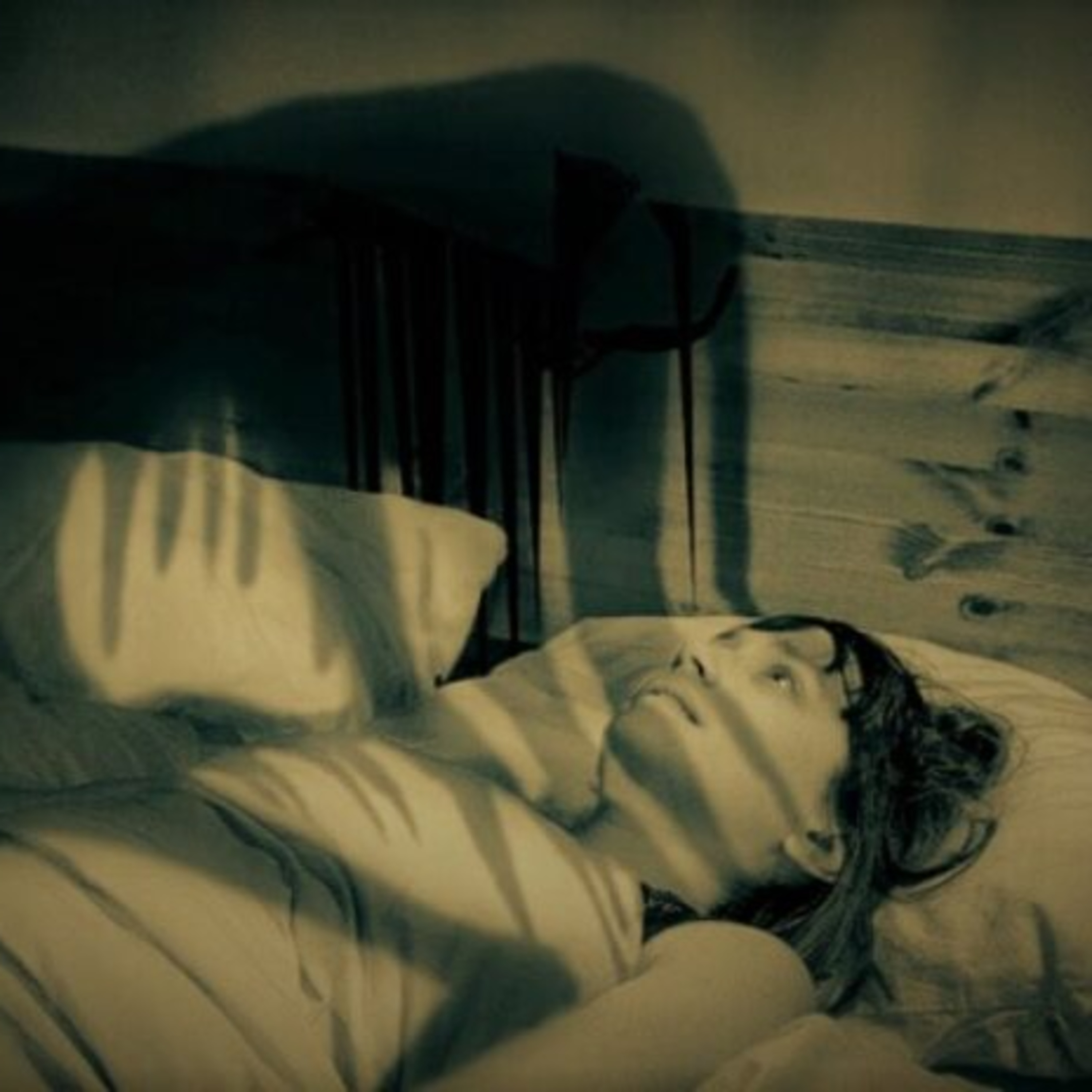


 Podcast Addict
  RSS Feed
  Apple Podcasts
  Spotify
  Amazon Music
  Overcast
  Castro
  iHeartRadio
  PocketCasts
  Castbox
  Podchaser
  TuneIn
  RadioPublic
  Goodpods
  Podyssey