0:00
The biggest misperception is that it is something that has a 100% total usurption of your body.
And I've even spoken to priests who are exorcists who believe this.
In fact, they believe that you couldn't possibly come to them for help because if you were possessed, the entity wouldn't let you do it.
0:22
And that is just so mind blowingly misguided.
It's unbelievable because possession exists more on a spectrum and there are two types really that we talked about. 1 is pathogenic and the other is executive.
0:38
And so with executive possession, that is the total possession, you have lost control of your faculties.
You are not the one in control of your body or your speech or whatever anymore.
And yes, that can happen in the totality of your body, but it could also just happen in one sense.
0:58
For instance, there are cases of people spontaneously becoming deaf.
And it is to do with with the entity in the possession.
And I actually had a research participant who experienced this or it could be the opposite.
1:14
It could be that well, you're hearing a voice and so you can only hear this voice.
And so it's, it has control of your ears, but the rest of your body's may be OK.
And with pathogenic possession, that's what is more commonly referred to as attachment.
1:32
And so this is more of a spirit around you, spirit entity, etcetera around you that it affects your life, but it's not necessarily taking control of your body.
And so this may come across in bad luck, things just never going right for you or really freakish things happening to you.
1:54
It could also be that they do manifest themselves to you.
So you do see this entity, but it's not necessarily taking control of your body.
However, as I say, it is a spectrum.
It's not like in Everything, All or nothing.
And it could move between those two as well.
2:12
So I had one case through the Society for Psychical Research, because I'm a spontaneous case investigator, and I had one case of a person who absolutely has episodes of complete amnesia, total possession, and it's really quite serious for this gentleman.
2:34
However, in between these periods of total possession, he is also experiencing periods of it being an attachment.
It just never leaves him alone.
It's just always there and sometimes it will take control of his body.
Most of the time it's not though.
2:49
Most of the time it's just bothering him and it's harasses him a lot.
It belittles him a lot.
So it's really very rare that there's going to be a complete and total possession with amnesia.
There could also be a total possession, an executive possession where it has your body but you're Co conscious with it and so you're able to actually see what's going on, but you can't interfere with it.
3:14
And there is another aspect as well, which is positive versus negative possession.
And with positive possession, that sounds like a good one and a negative possession sounds like a bad one.
But that's not actually what they mean.
What they mean is welcoming, unwelcome.
3:32
And so with a positive possession, we are talking about welcoming the spirit into your body.
And negative possession means you did not welcome it in.
It has afflicted you against your will.
But even this is not necessarily as straightforward as it sounds because there are instances many, in fact a lot of people become possessed to record practices.
3:56
They initially invite this thing in, but then later sort of changed their mind and it goes from a positive possession, meaning invited it in.
They may have even had a benefit from it, but it becomes negative eventually because there's a lot of love bombing, shall we say, love bombing.
4:16
Yeah, there's a lot of love bombing kind of things that go on with people who court these sort of entities and then later on really becomes more trouble than it was worth.
So we have these two different vectors on which to consider possession and where it falls and how it affects people.
4:36
And between those two vectors it gets incredibly complex and it gets incredibly muddy.
It does look an awful lot like mental illness, and that is not to say that mental illness is possession, but that mental illness can be possession, and possession can cause mental illness, and teasing that out is no small task.
5:01
For centuries, stories of possession had been shaped by religion, psych, law, and popular culture.
Films have taught us to expect spinning heads, Latin praise, and dramatic exorcisms.
But what if the reality is far more complex?
5:20
In this episode, I'm joined by Tylene, APHD, researcher in psychology, whose work explores possession and altered states of consciousness, drawing on academic research, case investigations for the Society for Psychical Research, and her own experiences.
5:38
Tiling challenges many of the assumptions we hold about possession.
We explore where psychology and spirituality overlap, why possession may exist on a spectrum rather than as a single phenomenon, and why compassion and careful investigation are essential when approaching these extraordinary experiences.
6:02
Hi Charlene, welcome so much to the podcast.
Thank you so much for being here today.
Hello.
Hello.
Thank you for having me.
Before we kind of dive into the discussion tonight, could you maybe introduce yourself to the listeners and tell us a bit about your background and explain the focus of your research and work today?
6:21
Well.
My background is pretty diverse.
I'm the sort of person who's always got, I always have a lot of plate spinning at once.
So it's really tricky to cover my background because it does all factor in, but it is so voluminous.
6:41
I will just try to hit on the bits that really matter, really matter for the research.
So I'm sort of, I'm a researcher.
I'm like 1/3 researcher, 1/3 experiencer and a third investigator.
So I'm also somebody who approaches this sort of material from multiple perspectives at the same time.
7:03
And that can be incredibly confusing even for me.
I can't even imagine what it's like for people who are trying to listen to me and understand what I'm talking about because I am constantly changing hats and thinking about things from different perspectives.
7:19
The bulk of my career I was a singer, musician, recording artist, actress, very much in the arts, in the music business, touring musician, a film and television actress, etcetera.
And at one point I decided that I really wanted to go off and do method acting training.
7:42
And it's really important to explain that method acting training, whatever you think it is, you do not know what method acting training is unless you personally have done it.
Because a lot of people have this idea that to be a method actor is to be like Daniel Day Lewis and go off and learn how to make shoes for five years so that you can do a role.
8:03
That is not method acting.
That is research which she takes to the NTH degree, which is Hearts method acting.
We're really into researching the role, but that is not the method.
And one could actually argue he's not a very good actor if he has to go do that for five years in order to prepare for a role, because it's really quite unnecessary.
8:24
If you do the method.
The method is that you don't act, you live, you live the experience.
So none of the reactions are faked.
They are not muscle memory, they are not rehearsed.
They are live and they are in the moment and you are feeling it for real as it happens.
8:42
And in order to do that you have to go through a process of deconditioning your body.
So the method in large part is actually the training to become the method actor.
And then there's sort of a condensed version that you then use because you have been through this intense training process.
9:01
It uses deep and intense meditation techniques and it also uses a lot of movement and movements such as we use in somatic therapies.
And so as you go through this process, what you're doing is you are removing blockages from within yourself so that your instrument, meaning your body can respond in real time without any inhibitions.
9:27
You become an incredibly impulsive person and you actually become very unhinged, which is why method actors become the way that they do.
And the most smart ones will actually maintain as private of a life as possible.
9:44
But when you see actors go off the rails, This is why it is because they are flirting with these not not as flirting with they.
They have embedded into everything that they do this process that is actually for monks.
It's not for an actor for a Hollywood machine process.
10:04
And it can be incredibly difficult to juggle this when you become this person who has become extremely reactive to your environment, but yet you have to live in a real world and you also have to do things like auditions and deal with sleazy directors and all sorts of things.
10:21
And it's incredibly difficult.
It chews people up very quickly.
But in addition to that, if you are a highly sensitive type of person, so someone like myself who has actually experienced sigh and paranormal phenomena my entire life since I was a very small child, you're opening up something else entirely.
10:42
You're not just accessing all of the trauma and all of the things that have been living within your body.
You are opening up to the spiritual realm.
That's going to happen whether you believe or not.
It's going to descend on you like a pile of bricks.
11:00
And it's incredibly difficult.
It just so happens that I actually come from what is generically called a shamanic line.
So my mother, my grandmother, my mother's mother, she was actually struck by lightning and she survived.
11:17
And then she was taught by Native Americans how to do healing.
And she, I don't, I don't know if she actively taught my mother, but my mother may have just tacitly learned this from watching her.
My mother would do laying on hands healing as well.
11:34
And she just had this natural ability to do these things.
And so I really rejected all of that and all of that sort of, I actually had eight years of being an atheist, not particularly healthy when you're someone who experiences sigh phenomenon.
11:52
Because then how do you explain it?
Will you explain it by saying that you're mentally ill, you imbibe the mentally ill mindset and that is so toxic and so awful and just it's just not true.
And then, well, how do you explain the vertical experiences, meaning the experiences that multiple people saw?
12:09
It's not, you can't just say that this is in your head because you experienced it alongside other people.
They all witnessed it.
Yeah.
It it requires a lot of cognitive dissonance and a lot of gas lighting, self gas lighting.
So I was still in this period when I went into method training.
12:26
So Needless to say, I mean, aside from the fact that they're training actors, they're not taking people through a spiritual process.
So they are in no way prepared to deal with this was someone becomes very unglued and unhinged.
Not that I anybody knew I was on glutaron hinge.
12:42
This was an internal thing.
People were aware, but internally I was breaking apart.
And now in hindsight I realize it was because that practice had initiated the shamanic Dark Knight of the soul.
12:58
And it's a very long, intense and actually life threatening process to go through that.
Everything fell apart.
And I, I mean, everything fell apart, even my health fell apart.
13:14
And I've never really been the same since.
So in the process of that, I got to the point where I physically I could not be a touring musician anymore.
I could not do the 16 hours on set, you know, and I'm was never a name that could have stand insurance or anything.
13:31
You know, more more likely, you know, I would have the role of the stand in.
So it was just not possible.
There was no way.
I was physically too compromised at that point to be able to continue that work, which really tore my heart out because I loved it.
13:46
I absolutely loved it.
But psychology was always a thing for me.
I always like, I would take classes.
I wouldn't be in a degree program or anything.
I would just decide, Oh yeah, I'm going to take a class on psychology research methods.
I would do that for fun because I'm a big nerd and I would just read on the subject all the time.
14:07
I was really interested in psychology always and took loads and loads of classes and all sorts.
And it found its way into my music and art and things as well, because it's almost all entirely themed on psychology and sociology and an examination of the human condition really.
14:27
And so it became, it was a thing I always wanted to do.
I always wanted to really get into psychology properly as a researcher, but the time came for that because I was no longer able to do acting and music and singing and all the things I'd done my whole life.
14:44
So that's what I did.
And originally I wanted to be a critical psychologist, which means someone who completely tears apart every place working points, all the holes in it.
Because there is a lot, a lot of criticism to be lobbed at a lot of work that is done in psychology.
15:00
And don't get me started on psychiatry.
But throughout this process, I became more basically the various size phenomenon got so out of control that I just couldn't.
I couldn't deny it anymore.
15:16
It was so obvious and it was so in my face that this is just the lot that I've been given.
I am one of these people who experiences sort of the one for in each world.
And yeah, it became a process of trying to understand my own experiences, but also what actually happened to me when I did method training and became a method actor.
15:42
And one of the things I'd come across in my research was physio Kundalini syndrome, which was very fascinating about.
And that was originally what I wanted to do my PhD research on.
But when I approached my supervisor, David Wilde, yeah, I had my proposal, which I sent to him, but I included a list of other areas that I'm keen on researching.
16:06
And it included possession.
And David was very excited about this.
He really liked the idea of possession.
And so I thought, oh, OK, I guess it is that possession then.
Here we go.
And I had no idea once again, but I was actually embarking on it has been breathtakingly fascinating to research this area.
16:28
It is just an unbelievable well of information to process.
And that's despite the fact that it's the bastard cycle, tough researchers, nobody wants to look at it.
There's very little quality goodness in this area and a lot of what does exist, well, it's not coming from the psychology.
16:49
It's quite often coming from anthropologists or it's coming from psychologists or psychiatrists.
It's not quality work.
It's them passing judgement through their bias and Lenin's on situations that happened hundreds of years before they even were born or to a pulse and they personally never met as their opinion really isn't very valid.
17:16
I'm also very passionate about qualitative research, and as a qualitative researcher I am interested in people's first town accounts because you can't begin to developed a way of studying and testing empirically until you actually truly understand the experience and what it is that's there to test in the first place.
17:41
It's fascinating though, to kind of understand the journey that you've been on to get to the point where you are and again, the the kind of experiences that you've had that have kind of helped shape and lead you to where you are today.
So it's, it's fascinating to understand some of that background.
17:59
Just to kind of follow on from that, what would you say, you know, at this point you think the biggest misconception people have that about possession?
The biggest misperception is that it is something that has a 100% total usurpation of your body.
18:17
And I've even spoken to priests who are exorcists who believe this.
In fact, they believe that you couldn't possibly come to them for help because if you were possessed, the entity wouldn't let you do it.
And that is just so mind blowingly misguided.
18:36
It's unbelievable because possession exists more on the spectrum and there are two types really that we talked about. 1 is pathogenic and the other is executive.
And so with executive possession, that is the total possession.
18:51
You have lost control of your faculties.
You are not the one in control of your body or your speech or whatever anymore.
And yes, that can happen in the totality of your body, but it could also just happen in one sense.
19:07
For instance, there are cases of people spontaneously becoming deaf and it is to do with with the entity in the possession.
And I actually had a research participant who experienced this.
Or it could be the opposite.
19:23
It could be that well, you're hearing a voice and so you can only hear this voice.
And so it's it has control of your ears, but the rest of your body's may be OK.
And with pathogenic possession, that's what is more commonly referred to as attachment.
19:41
And so this is more of a spirit around you, spirit entity, etcetera around you that it affects your life, but it's not necessarily taking control of your body.
And so this may come across in bad luck, things just never going right for you or really freakish things happening to you.
20:03
It could also be that they do manifest themselves to you, so you do see this entity, but it's not necessarily taking control of your body.
However, as I say, it is a spectrum.
It's not like in Everything, All or Nothing, and it could move between those two as well.
20:21
So I had one case through the Society for Psychical Research, because I'm a spontaneous case investigator, and I had one case of a person who absolutely has episodes of complete amnesia, total possession, and it's really quite serious for this gentleman.
20:42
However, in between these periods of total possession, he is also experiencing periods of it being an attachment.
It just never leaves him alone.
It's just always there and sometimes it will take control of his body.
Most the time it's not though.
20:58
Most of the time it's just bothering him and it's harasses him a lot, it belittles him a lot.
So it's really very rare that there's going to be a complete and total possession with amnesia.
There could also be a total possession, an executive possession where it has your body but you're Co conscious with it and so you're able to actually see what's going on, but you can't interfere with it.
21:23
And there is another aspect as well, which is positive versus negative possession.
And with positive possession, that sounds like a good one and a negative possession sounds like a bad one.
But that's not actually what they mean.
What they mean is welcoming, unwelcome.
21:40
And so with a positive possession, we are talking about welcoming the spirit into your body.
And negative possession means you did not welcome it in.
It has afflicted you against your will.
But even this is not necessarily as straightforward as it sounds because there are instances many, in fact a lot of people become possessed to record practices.
22:05
They initially invite this thing in, but then later sort of changed their mind and it goes from a positive possession, meaning invited it in.
They may have even had a benefit from it, but it becomes negative eventually because there's a lot of love bombing, shall we say, love bombing.
22:25
Yeah, there's a lot of love bombing kind of things that go on with people who court these sort of entities and then later on really becomes more trouble than it was worth.
So we have these two different vectors on which to consider possession and where it falls and how it affects people.
22:45
And between those two vectors it gets incredibly complex and it gets incredibly muddy.
So the idea of only a total executive possession where the person has middle memory of it and extreme sigh phenomenon is going on.
23:02
That is Hollywood ridiculous.
That's not the reality.
That's not how it presents even in really bad cases of possession.
Yes, that there are extreme, really extreme cases.
They have happened, but for the most part it happens more in fleeting instances.
23:21
So if people could forget everything that Hollywood has taught them about possession, what do you think people would need to understand first?
What do you think are the starting points to this discussion?
Nature abhorbs.
Nature abhors a vacuum.
23:39
You cannot have a vacuum.
And critical to this, of course, is a discussion of souls.
Do we have a soul, etcetera.
So we have to assume for this conversation that we do in fact have a soul and it has, it occupies a space somewhere within our body.
23:56
So any time that we have soul loss, shamanic practitioners explain this better than what we've done.
So I will use their lens to explain this, although I think it applies to absolutely everybody.
24:13
So when you have soul loss, there's something traumatic that has happened to you and part of your soul that perhaps can't deal with it.
It's sort of detaches and it goes away to hide for a while until it can come back to you.
24:33
And so we can think of this through modern psychology language as dissociation.
You know, a bit of your consciousness has gone away, a bit of your consciousness comes bad after the fact when it's safe again.
So there's a real survival sort of element to this.
24:52
So the soul can usually come back to you eventually when you're safe again, but there are times when it can't do that because there are there any, any number of circumstances that may cause it to not be able to come back.
25:08
But ultimately it is because the body is not ready for the peace of the soul is not ready.
And so you end up with all of these scattered bits of souls sort of living in the spiritual ether and not in your body.
25:23
But then within that is a vacuum, and nature abhors a vacuum.
So something will fill it.
And in that process all sorts of external energies and entities and all sorts of things can find their way in.
And it gets so ingrained within your being that you can't even tell the difference.
25:43
What's you and your soul and what isn't.
And one of these phrases that I hear people say a lot these days is they'll go on about discovering who they truly are.
I hear people say this all the time.
25:59
And when I hear people say this, what it sounds to me that they're saying is that they're desperate to get all these pieces of their soul back and inject the things that have been put there, the things that have found themselves there.
So I think that that's really important to understand that we're not really talking about like 1 entity and it comes or, or, you know, a legion of entities, whatever it may be that come and just count, come within the housing of your body just for no reason.
26:32
There actually has to be space for them in the first place.
And in order for them to be space for them, there has to be a degree of soul loss.
There has to have been something that happened but made you vulnerable to that in the first place.
And then this is where it gets really incredibly muddy because of course, when you're talking about people who have trauma that 'cause that sort of thing in the 1st place and the trauma or the event was ongoing long enough that the soul, bits of soul never found their way back.
27:03
Well, of course, that goes hand in hand with various mental health problems, whether the person ends up with addiction issues or they end up with see PTSD or any number in any of them.
It goes hand in hand.
It's it feeds each other.
27:20
And so this is part of why Christian exorcism doesn't work particularly well.
They will quite often go on forever and they don't have a great success rate.
And even when they do deal with it, you know, they haven't actually dealt with it because they don't address it in a holistic way and they don't acknowledge that there was something within that person that was missing to begin with to create that hole for the entity or whatever it may be.
27:49
Get into that in a bit.
The different things that it could be to come in and house themselves there.
I mean, there's also people having out of body experiences is a big one.
So a lot of people end up picking up hitchhikers if they're doing like really deep meditation and the sort of cultic practices of leaving their body and things like that.
28:11
And that's not to say it can't be done in a safe manner, but you, you have to be aware of this.
You actually have to be trained to do this.
You shouldn't dabble.
You should really know what you're doing before you embark on these sort of practices because there is actually a lot at stake.
28:28
And in fact, the gentleman that I mentioned earlier with the rather extreme total possession, he picked his up specifically because he was a spiritual seeker and he was courting his out of body experiences and whatnot.
28:45
And that is how he got it.
And he's aware of that.
And I mean, the entity tells him that's all that's him as well.
There's lots, but also people who have near death experiences is quite often they can they can pick things up as well.
So yeah, I think that would be it would it would be the understanding of how it happens in the 1st place.
29:04
Because once you understand how it happens, then the Hollywood ideas, it's just, it's completely lost all credibility.
Forget about that.
It just doesn't even matter anymore.
It's not part of the conversation.
So just to kind of follow on from that again, once we move past, you know, the popular and religious assumptions surrounding possession, what do you think though the wider picture begins to look like?
29:29
Christian, you know, we'll say Christian because we are in a culturally Christian place.
Obviously this is more diverse than this, but this is our perspective and our lens.
This is our experience, the culture that we live in.
They have this sort of idea of possession being caused by an army of demons that are working for the devil.
29:57
And I'm not saying that that doesn't exist, but it is definitely, definitely not the full picture.
So spirit release therapists who are doing this sort of work day in and day out, if she asks them to give you kind of a rough idea.
30:15
So these are not like hard statistics that have been studied.
This is just, you know, off the top of their head, four out of five people who need a spirit release, it is actually deceased humans.
That's what it is.
And some of these stories are really heartbreaking as well, because quite often it's children and about of those deceased humans, something like 25% of them, 30% of them don't even know that they're dead.
30:42
So they're really confused and that what they do is they attach to people in the area because they just don't know what to do.
And they may be like in the, in the case of children, why you get a lot of children who end up as attachments because they're looking for the mother or they're looking for whoever it was when the terrible thing happened when they got hit by a car and ran over or, you know, so there's often an element of shock and trauma in the death itself that causes the spirit to just not know what to do and what spirit release therapists and doing shamanic practitioners as well.
31:25
But it's, it's significantly more explicit with the spirit release therapists is they are actually doing trauma counseling for the dead because they don't have a body anymore to process any of this and they get stuck in a loop.
31:42
I have a friend, a really brilliant investigator actually, who said, think of it like having a snapshot, a Polaroid photo at the most traumatic moment of your life and you're frozen like that.
It's really quite a terrifying thing to think about.
32:01
And so the spirit release therapist goes in, they calm the spirit down, they talk them through the process, they find out what happened and then they help to move them on.
And that's how that work is carried out.
And that is pretty much the the bread and butter of what they're doing.
32:18
They are working with moving on with human deceased souls.
Now the other 20% gets a little bit more trippy.
So we have things like thought forms.
Thought forms can actually be generated from other people.
32:36
And so this sort of lines up with the idea of curses and hexes, but it could come just from gossip.
I personally consider gossip a form of black magic.
When you gossip about people because you're you're tainting energy about them and you're tainting your own energy as well.
32:53
So these thought forms this nasty, negative, hateful energy that's being sent to you from another person.
It's not like a developed sort of intelligent force.
It's more of a loop.
And so for people who are afflicted with these sort of things, they get stuck in a loop like a negative.
33:13
They're always thinking the same thing over and over again and seem to not be able to move past it.
And that can quite often be the thought form attachment energy that sort of invents itself in.
And it doesn't have to be, but it's quite often actually generated from someone who didn't mean doesn't like you very much doesn't doesn't mean you.
33:34
Well, I suppose it could be generated from a person themselves as well.
If they just have a very negative experience and then can't let go of that and they start to get into a loop and they create it themselves.
They create this energy that fills that that void.
Another one is aliens.
33:54
Aliens come up a lot and quite often again with see the people who are kicking up entities because they're doing out of body experiences and deep meditation States and things like that.
And that's what's really interesting about the alien attachments and possessions is that from what the spirit release therapists tell me, it is not them, the spirit release therapist who identifies it.
34:23
It's usually the client who identifies it and they may have no idea.
They may be there for something else entirely because they're usually offering many modalities.
But then all of a sudden they're going through, you know, some sort of a hypnotherapy session and all of a sudden the person saying I'm, I'm strapped to a table.
34:44
There's, there's an alien here, you know, they're talking about that.
And so they get handled a bit differently than other entities, but they're definitely an element to what people are dealing with when they go to these sort of practitioners.
34:59
And last but certainly not least on the actual demonic entities.
So they are out there, they do exist.
They are a thing.
They're usually minion type.
They very much talk about hierarchy and having a master and having to do the masters bidding and things like that.
35:19
And they generally don't even want to be doing it.
So more often than not, the vast majority of the time they can actually be convinced to be converted as it will not necessarily to a religious conversion, but that they they don't have to keep doing what they were told they had to do.
35:36
They can actually make a different choice.
There's one spirit release therapist that I know who she always asks them what they want to name themselves because identifying the name of what you're talking to is a very important part of exorcism and dealing with entities.
35:54
You have to find out the name of what you're dealing with.
And with these dark, demonic sort of entities, they will have names of function like desolation or destruction.
And she'll ask them do you want to rename yourself?
36:14
And she says they always come up with really silly names like Flower or Keith.
It is really sweet actually.
However, sometimes the entity absolutely refuses.
36:33
It just refuses.
And so it gets moved on to the light.
It gets 2 choices.
It can either self destruct or where it will ultimately end up in the light anyway, or it can be moved into the light, but it's happening against its will, sort of, which they don't like dealing with spirit release therapists when it has to happen that way.
36:54
But it does occasionally happen.
And some of these entities actually claim to be neutral.
They're neither dark nor light, which is very interesting.
So the landscape is significantly more diverse than the Christian scope would have you believe.
37:13
And if a person is dealing with this sort of thing and they do bring in an exorcist or a priest, and it is an old school one, shall we say, Imagine if you are the spirit and you are attached to the person and then all of a sudden you're getting treated very badly and you're getting exercised like a demon, you're not going to behave very well over you.
37:37
It would be very offensive.
I personally would be very offended if I got treated like that.
So there are actually, however, quite a few priests, exorcists, ministers, etcetera, who have realized this and some of them either with the knowledge of the church or not are moonlighting in a shamanic sort of practice to deal with this outside of the church sanctioned way of dealing with it.
38:13
And I have found quite a few of those people.
And I actually think it's really beautiful that they, they maintain their faith and they maintain their religion and they are still functioning as priests and ministers and reverence and you know, the various faiths.
38:29
But yet they recognize they can see that this is not working.
You are not actually dealing with the problem in coming at it this way.
And even if it once worked several 100 years ago, it's not working now.
And they're adapting to that and they're bringing in different methods however they can because they're really committed to helping people.
38:55
And I think that if they are called to that priesthood or to be ministers or reverends or pastors or whatever, if they're called to that, then they are called to be of service.
And they're finding a way to do it, despite what the establishment says, which I really take a lot of hope in.
39:16
So if we strip away the the cultural imagery and the assumptions, what does real possession actually look like from your perspective?
It does look an awful lot like mental illness, and that is not to say that mental illness is possession, but mental illness can be possession, and possession can cause mental illness, and teasing that out is no small task.
39:43
It's really very difficult because one feeds the other.
It's a vicious cycle and people get into a place where they drop farther and farther down the whole of mental, mental health problems that it becomes more and more difficult for them to even communicate with people or for people to listen to them, for people to take them seriously.
40:08
For people to consider that you can give this person all the mental health treatment in the world, but you are not addressing the spiritual side of what they're going through.
Because there's two elements at play here.
And.
It's really quite interesting that people who are doing spirit release, priests, exorcists, liverance ministers, shamanic practitioners, some people, even Reiki, there are people in Reiki who are dealing with depossession.
40:42
There are people who these are all people who recognize that sometimes the mental health is too poor to be able to carry out their work, that this person has to be stabilized first.
And they are more than willing to put that person into the hands of the allopathic professionals to deal with her.
41:02
But it doesn't really happen in order if there's a one way straight and allopathic people was I mean, yes, there are exceptions.
I have met some of these people who are the exceptions and you know, they're really they're really wonderful people.
41:18
But on the whole, you know, you feel good at the NHS and say yeah, I think I might have a demon.
They're.
Not going to treat you, they're not going to help you.
They're most definitely they won't even begin to know how it is.
So outside of their wheelhouse, they do not consider the spiritual and I'm personally, I believe a lot of mental health is fundamentally spiritual.
41:42
It's not how many like forget chemical imbalance.
I mean, not that that's that's debunked ages ago.
I can't believe people are still repeating that.
I mean, that is that is not that has not been in the textbooks for decades.
People have normal human reactions to actually quite miserable living circumstances.
42:01
So there's a fair amount of people medicalizing what is actually quite normal.
But there are also some people who they are in, they are in a spiritual decay of some sort.
They, they are, they need spiritual assistance and they are all too often turned away from the church.
42:20
And then what do they have?
You know, what do they have left the NHS of the church?
And maybe maybe if they're lucky and they've done enough Google searches or something, they will fall across my inbox through the Society for Psychical Research or something like that.
42:36
And maybe I can get to talk to these people and maybe I can help get them lined up with what would be most appropriate to their situation, their religion, their beliefs, and also what they're actually experiencing.
Unfortunately, all too often these people are too far gone by this point.
42:56
The mental health elements.
And of course, it might be that it is 100% a mental health element.
I don't discount that at all, that there are certainly cases where I thought this is so much more mental health than it is spiritual.
But by the time they get to me, they're quite often too far gone from me to be able to help them.
43:16
They need to be stabilized from the allopathic practitioners.
And that would be really great if there can be a two way St. and not a one way St. between these two professions because they are both needed.
But it's incredibly difficult.
43:32
It is incredibly difficult to tease out.
And even when I'm able to do it, I'm not even entirely sure how I'm able to do it, to be perfectly honest with you.
It's, it's, it's a lot of intuition.
It's a lot of yeah, I don't, I don't know, like I'm, I'm kind of relying on huge bed of wisdom from having studied from so many different angles, but also having the element of me that is still a skeptic that does want to poke holes and everything that does want to explain everything as purely psychological, etcetera.
44:04
And when all of that is brought together, I mean, even men, I undoubtedly I get it wrong a lot.
I do get it right sometimes, though.
So I try.
I try.
So do possession cases go unrecognized or misunderstood then do you think?
44:21
Absolutely, absolutely.
Just without a doubt.
The key thing being that people don't recognize the trauma that causes that shamanic soul loss and the possession, which is something coming in to fill that vacuum, that void within you, that these go hand in hand.
44:43
And it is so quick.
Every people are so quick to dismiss someone as having a spiritual episode of spiritual crisis just because there is some element of trauma in their past.
And as soon as they discover that, that person is dismissed, which is utterly ridiculous in no small part because you go poking around and they're do introduce me to the person who has no trauma.
45:08
I would love to meet them because everybody's got something.
Everybody has something that they've been through.
Obviously some people significantly more than others, but it's just too easy to dismiss people and it's really cruel because these people are so unbelievably isolated.
45:27
They, they don't have the resources, they don't have the infrastructure.
They don't know what they don't know.
So they're sitting there, they're having this problem, even if they can articulate it themselves, that they know that there is something in them, that there is something attached to them.
45:44
If something from their past gives them enough information to be able to identify that still, where do they go?
Because so often if they do go to the Anglican Church or many churches really, they will be fobbed off, they will be sent away.
46:03
And I know this because they turn up at the SPR, they, they turn up through the spontaneous case committee.
And when they get to me and they talk to me, but I went, I went to a priest, they just won't listen to me.
They won't help me.
And it's, it makes me sad and it makes me angry because regardless of how much mental health dilemma the person is in, they are still coming to you in a spiritual crisis.
46:32
And it's your job.
Like you went into that, you went into that faith and that job to do this.
This should really be your bread and butter.
But they don't do that.
And it's really very, very frustrating.
As I say, there are, there are exceptions.
There are some out there that are really great and there are quite a few that even recognize that you cannot actually just treat the persons who are exorcism.
46:57
We're going to have to get them in various therapies to make them more stable and robust.
Otherwise the thing will just keep happening.
And some people, there's actually a psychiatrist named Richard Gallagher and he wrote a book called Demonic Foes, which is a really interesting book because he has, at the time you wrote the book, I think it was 25 years of experience of being called in as the psychiatrist for Catholic exorcisms to be able to clear these people so that they could go on and do the exorcisms.
47:28
And he is a complete believer because he has seen too much with his own eyes.
He has seen the levitation, he has seen the accidents, cost all sorts of stuff.
It's a really good book.
And he makes the connection, and I completely agree with him on this, that in the cases where the exorcism does work and it does stick, it is because the person who is afflicted dedicates themselves completely to their faith, which is Catholic more often than not because he's, he was brought in as an assistant to Catholic exorcist.
47:59
And it is through that individual's devotion to their faith that they're able to beat it.
It's like the priest alone just conquered the job done.
The person has to be dedicated to actually fixing the problem.
And that is paralleled exactly with mental health and mental health practitioners because you can lead a horse to water all you want, but that horse has to want to drink.
48:21
And if you go to a therapist, but you don't give them anything to work with or you don't take anything that they say on board, you've given them all the money in the world.
They can't fix you.
You ultimately actually have to fix yourself.
They can help you, they can give you the tools, they can give you the guidance, but you are the person that's got to pick the tools up and do something with it.
48:41
And the same is true with exorcism, possession, etcetera.
You can only be given the tools.
You've got to pick them up, you've got to do something with them.
So, have you encountered cases that completely challenged your expectations?
48:59
I'm an unbelievably open person.
I don't, I don't get surprised very often.
I wouldn't say necessarily that challenged my expectations, but fascinated me, really fascinated me.
49:18
And cases that sort of live rent free in my head now and people that I will think about probably until my dying day because their experiences have been so incredible or because some element of it actually crossed over and affected my life.
49:36
So the one that I've mentioned several times, actually the gentleman who occasionally experienced total possession, he actually served time in prison because the entity which was an interdimensional entity that knew him from a past life, apparently it took over his body and caused arson.
49:59
And so he went to prison for arson for this crime that he has 0 memory of.
And I completely believe him.
Why do I completely believe him?
Because that entity that was there throughout the whole interview.
Well, you know, the interview was broken up because of things like the entity cut in power and things like that.
50:20
But it kept allowing kept allowing the conversation to go on.
But it did manifest itself in my in my home just to, you know, flex a little and they will sometimes do that.
And so I think, I don't think I'm surprised.
50:36
I don't think it defies my expectations.
But you have experiences like that and you have to remind yourself that if you were going into this field, you actually had to be insane.
I'm saying you just why would anybody do this?
50:53
Why would anybody go look at this particular area?
And particularly if you're going to be working with people going through it actively, you have to be nuts.
But there is an element of danger to it and there is an element of you just have to be super careful.
51:09
You really have to be very, very careful.
And I'm really blessed, blessed, really blessed that I have managed to build an incredible network of people around myself.
So I have got support from every Ave. imaginable.
51:26
If and when they inevitably do go a bit wrong, I do have sort of personal problems in that I don't have, I don't really have religion myself.
And I it's, it's a thing of tremendous resistance.
51:42
I really, really can't get on with any religion at all.
So I sort of float out in this this really weird place of, you know, I can step into those shoes and I can understand and appreciate and even really respect various people's religious beliefs and how they see the world.
52:00
But at the end of the day, I keep stepping back out of that perspective.
And my own is something so contrary to theirs.
But that's, it's troublesome because it would be significantly easier if I could just be a Christian, if I could just call in the protection of Jesus or whatever, Mary God, if I could just be a shamanic practitioner and call in spirit and spirit will protect me and spirit will do that for me.
52:32
But I just can't do it.
I can't bring myself to do it.
I have real issues with it.
And so it does make me super vulnerable and it does put a tremendous onus on me to be responsible for my own spiritual protection and making sure that nothing hitchhikes on to me.
52:55
We've obviously talked so far about the what I think is the most sensitive aspect of this topic, which is that, you know, some experiences associated with possession can overlap with symptoms seen in certain mental health conditions.
What do you think are some of the the biggest challenges then in navigating that overlap?
53:15
What do you think was the most responsible approach for researchers and practitioners to take then when assessing these cases?
I think the best thing that anybody can do is realize the realize that you are working with a human who is going through an experience and that experience is extreme and possibly even terrifying.
53:42
And you lose nothing by being compassionate and understanding.
Regardless of what you personally think is going on with that person, whether you just think they're a Nutter or you think they actually do have a possession element or something else, anything in between, there is an element of people you do have to be very, very careful with.
54:05
However, there are, well, I mean, I would just call them cluster bees.
I'm generally like, why split hairs about which which type they are?
But there are cluster bees that you do have to be really careful, particularly the type that's are sort of overlap with Munchausen and things like that.
54:27
There are people who will sort of use this experience in order to gain access to you.
And so this sort of loops back to be energetic protection issue.
You have to have really firm boundaries when dealing with people like this.
54:42
And it is out of sheer survival and self protection, not just for you, but actually for your entire family.
I have actually a death threats against myself and my family and like police have been involved in all sorts of things.
So it's really not a light joking matter like it is serious if you're going to work with people like this.
55:02
And I don't think you should do it unless you are super strong in your resolve, confident in who you are, stable and you have that network around you to catch you when you fall because you've just been dealing with too much and it's just been absolutely overwhelming.
55:24
So it's it's a tricky balance.
And I understand, I understand why people can actually be a little bit harsh with these people because they can drain the license really, really quickly actually.
And compassion fatigue, compassion fatigue is absolutely thing.
55:42
So I think the person also has to consider that there are times when you need to have a break and you have to recharge, but it's better to keep showing up any state of compassion.
And it's recognizing that regardless, even if the person behaves horribly and it's kind of par for the course, you know, if they've got, you know, one of the actual total demonic possessions which does happen, they're going to be nasty.
56:08
They're going to do terrible things from time to time.
That is part of the diagnosis.
So in order to keep showing up attentively and with compassion and recognizing that regardless there is still a person in there and they need a bit of dignity, I think the thing to do is to acknowledge it.
56:29
First of all, make sure you have your network in place, that you are as stable as possible and you take breaks as often as you need to to recharge and get yourself recalibrated in order to do it.
Because that boundary setting is so unbelievably important.
56:46
And it's, it's important in life in general.
It's a word that's thrown about all the time now, but not for no reason.
It's thrown about four reasons, because we do all sort of have problems with boundaries and saying no and making sure that we're looked after first.
57:04
And there are a lot of predatory people out there.
So yeah, that would be my advice in a way that we could go forward and work that way.
And I appreciate that it is going to rob a lot of allopathic types the wrong way because it requires various spiritual beliefs to be acknowledged.
57:24
But you don't have to believe it just to acknowledge the other people do.
And I don't know why that even has to be stated, but yet I do find myself having to say it to people all the time.
You are not signing off on this as your belief just because you acknowledge that it is somebody else's beliefs.
57:45
And belief is an unbelievably powerful thing, and you have to work with it.
So how does the Church's approach to possession differ from that of spiritualist therapists or or shamans?
Huge is enormous, yes, on the tin, they're doing the same thing.
58:05
They're going in, they're identifying an entity, they're extracting the entity.
And when I say entity, I mean that as a catch all.
So obviously we are talking about deceased humans and all sorts of things, but when the shamanic practitioner or the spirit release therapist does it, they do it in a holistic and a compassionate way.
58:24
And so they are in service to that entity just as much as the person that is laying or sitting in front of them.
And they began in a process of engaging in trauma work, soul retrieval, etcetera, all sorts of work for the entity to be able to help the entity to resolve its problem and move on.
58:47
The objective being that that entity is now cured from being a possessing entity.
It is not going to go on to do it to everybody else.
The church by extension, they engage in a process which on the tin is very similar, particularly because in all practices there is an element of hypnotic stages.
59:11
And so the person is brought down into a hypnotic state.
There is a lot of guided geometry.
It's very, it's, it's done expressly with the shamanic practitioners and spirits release therapist.
But with the church, they are doing it Lord's repetition because the Catholic exorcism, right, which is a fascinating read, incidentally, but it's very repetitive.
59:38
And that sort of repetition, repetition will put us into a trance state.
I mean, even like trance music, trans music is trans music because it's sort of sits at that note, the 4th, and it never goes on to the 5th to give you that resolution.
59:55
And by staying there for a very long time, it can really excite your body and take you into an ecstatic, an ecstatic state.
And these are ecstatic states that people are going to, not necessarily ecstatic in the Dionysian sort of sense where people are.
1:00:15
Tearing about and doing terrible things, but more of a low level emotional ecstasy sort of state and a very high, I mean, they actually what they're doing is they're going into higher brain wave States and in doing this they are so highly flow focused.
1:00:36
They're all in flow and that includes the person that's experiencing it as well because you can't help but get sucked into it, which is quite interesting because that's what goes on with method acting as well, that you are constantly, constantly drawing these comparisons to method acting because that is, that is my point of reference.
1:00:56
That is my experience, although I have done a bit of dramatic training now at this point and the parallels are just unbelievable.
But it's the same, like you almost create this vortex of ecstatic sort of emotional state that when there's a troop of actors and they're all doing it together, I mean, it's actually delicious.
1:01:16
It's delicious to get swept up in this thing that you're all creating simultaneously and they're both doing that.
Well, three of them are doing that spirit release therapist, the shaman and the priest.
But where it changes is the priest goes into a combative and commanding mode whereby they are channeling God and Jesus and Mary and the Holy Spirit to purge this person of the entity.
1:01:47
They actually go through a process of divinizing the individual, which is very akin to the divine kingship rituals.
So it's, oh God, I could talk about this all day.
Let's not get into divine kingship, OK?
It's a particular area I just love, but it would just take too long.
1:02:06
But they go into this combative state and their goal is to remove the entity.
They'll even insult it, and they do not engage with it.
They do not speak to the entity as a matter of procedure.
It is part of the process that they do not engage with it.
1:02:24
They just compel it to do things.
And absolutely, night and day, the shame and the spirit release are because they go in and have a conversation with it and they resolve its problems.
And so therefore you get the entity that even if you do successfully remove it, it quite often will come back to the person because the priest didn't do that element of soul retrieval.
1:02:45
They filled that void with the Holy Spirit, the Spirit of Jesus, God, Mary, etcetera, but they didn't sell it with the person's soul.
And so it's going to be a temporary sleeting thing.
In the book of Matthew, actually in Jesus teachings, he actually talks about being possessed with the Holy Spirit as the only inoculation against other possession.
1:03:10
And so that is what they're engaged in when they're doing these exorcism and deliverance rituals.
But it doesn't last because it's not the person's soul that's been brought back in.
And so it will either come back to that person, it quite often will move on to another family member, but it's going to go on and do it again.
1:03:30
And with any luck, the spirit release therapist and the shaman, they have actually cured that entity.
And that entity then gets to move on and have another existence.
Doing what, I don't know.
Obviously, many of them believe that they come back as children.
1:03:46
I don't know what a demonic entity would do.
What what what happens when it goes into the light?
I have no idea, but presumably it's converted in some way.
So in your view then, why do some approaches succeed where others fail?
1:04:03
I think it all comes down to the engagement with the entity, and it does bear striking resemblance to modern talk therapy as well.
So when spirit release therapists do this, the client is Privy to the conversations that are going on.
1:04:22
So even if they're talking to the entity, the client hears all of it.
And so the client is receiving all of that processing and dealing with and packing all of these things.
So it can all be a matter of metaphor and symbolism.
1:04:39
However, maybe it's not a matter of metaphor and symbolism because quite a few of them will do what is called remote depossession.
And so in a remote depossession, they're taking care of entities either from afar or poltergeist.
So a poltergeist is basically possession of a house, whereas possession as we know it is possession of a human.
1:04:59
So they can be dealt with through this remote depossession process.
And if it is just a matter of the client processing through a matter of symbolism and going through this talk therapy and dealing with and processing emotions, even though that may well be happening as well, it's not the whole picture because remote deep possession seems to work pretty well as well.
1:05:25
And there's also the question then of, well, why is this work in these intense sessions?
I mean, people aren't going on having this forever.
They go on to have a session.
Maybe it's you.
It's generally done very, very quickly and the healing event is dramatic.
1:05:46
I mean extreme dramatic healing events.
You would have to see it to believe it.
And So what is causing that?
It's this incredibly condensed healing that is being pressed down into this really and very intense ritual process or very intention hypnotic process in the case of the spirit release therapist.
1:06:11
And so I, I mean, I don't know, I don't have, I don't have all the answers.
I am still working it out.
I'm still working out.
But talking to the entity directly is definitely a big part of it.
Whether that is because it allows the client to the person who is possessed or has the attachment, it allows them to go through that therapy process at the same time or because that is what they needed all along.
1:06:37
These poor entities, most of which are deceased humans, they just need some therapy.
They need a human to talk them through in process and grieves and understand the thing that happened to them, which is quite often very, very traumatic, incredibly devastating stories.
1:06:56
But then quite often they will give details that are verifiable as well.
And so, yes, people will want to say, oh, but it's just the imaginations of people creating these things.
Well, OK, maybe that is happening some of the time.
At the end of the day, if it's helping people, who cares really?
1:07:15
But sometimes there are details given that are gone after the fact.
Sessions over, it's the evening, everybody's had their dinner.
And then go on to Google, like, did that ever actually happened?
And it is sometimes verified that, yeah, you know, this, this person actually did live in this place or this thing did happen and stuff that they they had no, no idea of whatsoever.
1:07:38
Oh, a battle did happen there, yes.
And so on.
And it is really quite mind blowing.
I mean, it's the really, the most confirming thing about it that really makes people believers very quickly is the rapid and incredibly dramatic healing that can be witnessed through these intense compressed ritual ceremonies, therapy and.
1:08:05
It works.
So looking across cultures and history, are there patterns that keep appearing in possession experiences?
Yes, there's actually a 400 year cycle and it tends to go in tandem with your rich trials, societal dissolutions, civil wars, etcetera.
1:08:28
And so it's basically times of high societal divide, high societal neurosis, and weak divine kingship.
So divine kingship is not understood really at all because we're taught that it's this idea that the monarch is the head of the state and they're, you know, the embodiment of God or something, yada, yada, yada.
1:08:49
But it's actually ancient.
It's across all cultures and it goes back in time, basically earliest recorded history.
There is possession, experience and divine kingship going on.
The idea being that the person who is the monarch, they are the embodiment of the God, the God force, and they have a direct connection to everybody in the realm.
1:09:16
And so by the monarch embodying the deity, what they're doing is they're giving everybody direct access to divinity through them.
And so it keeps people's spiritual lives intact.
And it's something that they can see in real time, in real life.
1:09:36
There is my monarch.
I can go touch my monarch.
I can receive a blessing from my monarch.
I can take my problems to the monarch.
Now in times of yore, the monarch was directly responsible for the sins and so the monarch would generally be selected or would be prepared for this rule through very intense ceremonies, but also may have been selected or prepared in a way that they were physically very outstanding.
1:10:08
You know, no blemishes, etcetera, because the whole time sitting as a monarch, they were accumulating the sins of their their tribe.
Also bear bear in mind the context of the idea of this hyper globalized mass of societies is so very new, so very modern.
1:10:26
We don't have to go back that long to find much more small, tiny societies where no really they'd have known their monarch because it's a very small society.
It's nothing like what we deal with now, which is sort of problematic in its own right.
1:10:42
So everybody has access to this monarch to have their little piece of divinity, but also as they commit sin, it transfers as a transference to the monarch and the monarch accumulates it.
And if the society gets too riddled with sin, it's a bear in mind as well, this is a time that didn't have forensics.
1:11:03
So if a crime was carried out, very unlikely you're going to catch the person and actually do something to them that they have they they have actually paid for the crime that they committed.
And so it's actually quite clever that you have this one individual who is accumulating all of the sin.
1:11:20
And when too much of that sin accumulates, there's an expiation.
The king is murdered, the king is ritualistically sacrificed, and the next king is brought in.
And in some cultures that's done on a regular system.
So for instance, every seven years, the monarch, maybe even his entire retinue is killed.
1:11:38
The new one is brought in.
And societies across the globe functioned like this forever until fairly recently.
And so when we get a weak divine kingship, what springs up in its place is the priest class.
1:11:57
And in modern times, that doesn't really just apply to the priest class because of course, one could say, ha, well, you know, the church isn't very strong now.
No, but our modern priest class are academics and the professional classes.
And so if we have this strong priest class, things tend to get incredibly corrupt.
1:12:17
Sin is not being accumulated, sin is not being expiated and people start to lose the plot.
And actually some people have put forth the idea, McNamara in particular put forth the idea that people who are being afflicted with extreme possession experience, people like Annalise, Macau, they are actually martyrs.
1:12:41
They are offering themselves up in the absence of shaving that divine monarch to go through this procedure of accumulating sin and then having it expiated through the exorcism ritual.
And in the Catholic exorcism rite, there is this entire process of divinizing that person as holy.
1:13:03
So they're not just an ordinary person afflicted, afflicted with this, this entity, this demon, this isn't someone on par with Mary or Jesus, a real divine vessel.
And so they go through this almost quasi divine kingship kind of ceremony in order to expiate it.
1:13:21
And so there's sort of an idea that when people are doing this, what they are doing is they're trying, individuals are taking upon themselves to sacrifice themselves to try to expiate all the corruption and all the sin of the society, which is sort of going out of control.
1:13:38
And so This is why you get this rise in not just that, but also witch trials, witch hunts, mass delusions, all sorts of things.
People just start losing the Freudian blah, because this isn't how we're built and this isn't how it's supposed to function.
And I might sound like, oh, I'm, I'm sitting here arguing as like a monarchist or something.
1:13:59
I mean, I'm not, I'm not like please to say this, that this is what the research says and this is what history says.
It's very it to me.
I don't really like it, but that is what it is.
And there is no denying that when you look at across the course of history, it is moving in this cycle.
1:14:19
Corruption gets really bad, divine kingship gets really weak, the priest class gets very powerful, people start losing the plot.
And it manifests in all of these ways, possession being one of them.
And it's sort of everybody's just desperate to get back to the natural order and the way things are supposed.
1:14:38
To be so, thinking about the totality of your research in this area, is there one case 1 discovery that stayed with you the most well?
I think, I think it's actually my experience when I did a shamanic training course, which I embarked on several years into studying this.
1:15:02
So it wasn't like, oh, I discovered this sort of shamanic spiritual stuff.
It is the other way around.
It is the research that led me to shamanism and other things.
This, this is going to be a really personal now.
So when I did the shamanic training course, we did a healing circle and I've received several shamanic healings as well.
1:15:30
And there is there something else?
Let me tell you, there's there's nothing like them.
They're very difficult to describe, but I wanted to be on the other side of it.
I did not want to be the person getting the healing.
I wanted to be the person who was partaking in this healing circle and to experience that that energy actually come through me, which is a positive possession event.
1:16:00
I mean, this is this is the thing that when when people are treating possession, what they are actually doing is becoming possessed themselves because they are channelling from another place, because we as individuals don't seem to really be capable of doing this.
We can only be vessels for the energy that can do it.
1:16:16
It moves what and shift what needs to be shifted.
And that experience is so difficult to describe.
It's sort of at the core of what I am trying to do in my, in my PhD research to, to get an accurate representation.
1:16:34
I, I quite often use the word delicious because it is just amazing.
It is like you, you feel the divine inside of you and it's amazing.
And I mean, some people, some, some of them come through the SPR, through the spontaneous case committee.
1:16:53
Some people get really drunk on it, they really get carried away with it and they become, they go into a spiritual psychosis and it's, you know, they're happy, they're the loving life, they're enjoying it.
But they are really carry away with the fairies as it were because they are living within that energy too much.
1:17:14
So the tricky thing is to hold yourself in that place, but simultaneously hold yourself over here in the three-dimensional realm and be firmly grounded.
And that actually takes a very high cognitive ability of dissociation and absorption at the same time.
1:17:30
These are very high level mental processing states.
And I was, it was incredible.
It was absolutely incredible.
And it kind of, it does.
It does.
It's like a drug.
It does leave you wanting that.
Again, you want to be part of that.
1:17:48
But I have this personal issue of being so resistant to it.
At the same time, I don't want to get carried away with it.
I don't want to be like that.
But it is really a profound, I mean, just move you to tears kind of emotional.
1:18:10
It's connection.
It is actually feeling connected.
And I don't think anybody realizes how badly none of us have that.
We're all desperately seeking feeling connected.
And once you've had a taste of it, you know, you know what you're missing.
1:18:29
You know what the answer is.
It is to actually feel connected.
Is there anything that you believe now that you didn't when you first started?
Yes, I don't know.
I, I don't, I don't know what I believe, to be honest, because they come, it comes back to wearing all these hats and being so, so very resistant to that religious idea.
1:19:01
I keep stepping in and out of mindsets and ways to view it.
And there are days where I mean, absolutely, like this is, this is a thing, it happens, etcetera.
And it's, I think it's happening a lot actually.
1:19:16
I think a lot of people are afflicted with this and they don't know it because it manifests in all these other ways, which is nothing to say, you know, with Tico, with Tico's, kind of another subject altogether.
It's this incredibly invasive because it's ever so subtle possession across the whole of the population.
1:19:33
But then I have days where I am so very, very, very skeptical.
And no, I think really we are just manifesting, you know, like we are, we are making the matrix.
That's what we're doing.
We are manifesting this stuff ourselves.
And some of us are incredibly gifted at it and some of us are a little bit more fixed in our bodies.
1:19:53
I mean, I have, I have a hard time being in my body anyway.
I am a very dissociative person.
I don't, I just don't live in my body and.
I appreciate that's really hard for people to understand if they don't experience it, but being in my body is a very weird experience when I am.
1:20:14
I'm sort of kind of always just floating my own shoulder.
That's just what life is like for me.
So I do have times where I think of just surely the psychological and then I remember, Oh yeah, but there's all this radical experiences that other people saw at the same time.
1:20:34
So it is real.
It is real.
I definitely, I am convinced it is real and it is happening.
I don't know.
I'm still so mushy.
I'm still so in the mushy middle of it all and I have no conclusions and I don't know that I ever will, actually.
1:20:52
So if listeners take away one thing from this conversation, what should it be, do you think?
I think that people should really take seriously that you actually have to be present in your own body.
This is really important.
1:21:08
And this is not something that happens to other people.
It's something that can happen to anybody.
And I think sometimes with these things, people who think that they're impervious to it are actually the most susceptible.
And it comes back to that idea that's in the book of Matthew that we have to be inoculated against these things by actually channeling our own energy, our own.
1:21:34
Well, obviously in the book of Matthew, it's, it's the Holy Spirit and and Mary and God.
But plus, in the modern day area era, regardless of your religion, even if you're listening to this and you're an atheist, we, I think we have a crisis of people not being present in their body in no small part because you're staring at these freaking devices all the time.
1:21:57
I'm not a person who has a smartphone.
Unfortunately, I am married to my laptop because I am a PhD researcher who is doing qualitative research.
So I am constantly working with documents all the time and interviews and stuff.
1:22:12
So I am unfortunately staring at the screen all the time, but I am keenly aware of the effects that that has on me as a person who has a propensive propensity to dissociation anyway.
And it is so on grounding and it is so discombobulating.
1:22:30
And I think we have to be really intentional with our lives now because we have all of these playthings and distractions and everything is going 1000 miles an hour.
And it's really more than our bodies or our psychology are evolved to deal with.
1:22:50
And I think the more we can be intentional and present, and that is easier for some people than it is for others, like for me who are, this is really, really difficult.
So some people are going to struggle more than others.
But the more that you can be grounded and intentional and occupy your own mind and occupy, yeah, that live, live with the intention of what it is that you want to do with your life.
1:23:16
And the more that you can do that, the more that you inoculate yourself against that.
And that is true whether we're talking pure psychology and the empirical allopathic explanation of the world or we're talking about the spiritual, either or.
1:23:31
It's the same sort of solution.
You have to be present and you have to be intentional with your life and what you're doing with it and stop squandering it.
So is there a question that nobody asks you about possession that they absolutely should?
1:23:49
Yeah, I think it's really my research question for my PhD, which people don't ask this question because they don't even know that it exists, of course.
But my question, and the question that other researchers should be asking as well, is where is the sweet spot between the positive possession experience, person who's wielding it on purpose, and the negative possession experience, the person who is afflicted by it and wishing to get rid of it?
1:24:18
Where is the point at which those two things meet?
And what can we learn from it?
How can we apply it more widely?
How can we help more people?
And I hope over time, get information like this into the hands of the people who do actually need it because there are a lot of people out there.
1:24:38
They're, they're looking, they need this information, they are desperate for this information.
And it sounds like, oh, I'm just sitting here, I have all the answers.
I mean, this is, this is 8 years in the making of me being, well, quite an obsessive researcher, really an absolute bookworm on someone who is fosterly relentless.
1:25:01
I wouldn't really expect other people to, to do that, to do what I've done and dedicate themselves to this pursuit of learning about this subject on the level that I have it.
It is bringing together a whole lot of information from a whole lot of disparate places.
1:25:19
And.
Yeah, I just hope that in the future people do start to take it more seriously.
So for anyone who's found today's conversation fascinating, what other areas of your research should they be keeping an eye out for in the future?
1:25:38
Well, at some point I'm going to have a PhD thesis, so that'll be good.
Gosh, it feels like so far What from where I am right now because, well, I'm in my, I'm in my fourth year of a four year PhD and it just feels like, it just feels like I have so much more to do.
1:25:59
But that will be in the repository.
So people who do have academic access, they will be able to find that.
Please don't pin me to this because I don't know.
Life is nuts.
But at the moment I do kind of have a vague idea that I may republish the information in a more digestible format for the masses.
1:26:23
Because obviously a PhD thesis is, you know, not exactly something most people want to read.
It's written for a particular audience, and that audience is your examiner's.
So I think I may do that because a lot of people have said that they would really like me to.
1:26:40
And my, my hang up being I don't want to write something that nobody bothers to read.
And I'm not really interested in in vanity projects either, just to say I wrote a book.
But I, I think, I think people do want it.
1:26:56
And so I may do that in the future.
Yeah, I'm a bit terrible.
I'm not really on social media.
You may find some zombie accounts here and there, but I don't, I don't really have inhabit them.
Perhaps they're collecting entities of their own.
I don't know.
I don't know.
1:27:14
I do have two websites, but they're mostly related to my previous work in music and acting, which is tailing.com and tailing tile.com.
But at some point they may get turned over to the research if I do end up doing a book.
1:27:30
And of course, if you are having an experience yourself of this sort of nature and you do need help and you do want to get through when you do want to talk to me, the best way to do that is to go on to the Society for Psychical Research website and there is a report and experience tab.
1:27:48
Go to that tab, go through and report your experience.
State clearly that it's you think you might have a possession so that I will see it and I will pick it up and I will I will make an appointment and talk to you and see how I can help you.
1:28:04
And I will make sure to include those links because I think they're important ones to include and to to kind of make people aware that there is that resource there if they need it.
To be able to, to report something anonymously, to then know that someone might be picking that up on the other end might be of some comfort and huge relief just to know that there is a place that you can go to.
1:28:30
So like I said, I will make sure that those links are available in the podcast description notes and on the website when this goes out so that people can easily access those if they need to.
Brilliant.
It's honest, honestly been such a pleasure to be able to talk to you because you are so knowledgeable in this area, but also so passionate.
1:28:50
And you come at this discussion with such integrity and compassion and sincerity that I think it's made this conversation for me so thoroughly enjoyable.
And this is just kind of the the touching the iceberg, I think in terms of how deep this conversation could go, how much further this conversation could go because it is such a, a misunderstood area, I think.
1:29:14
And so under discussed, which is such a huge shame, but I'm just so privileged that you've been able to come on to start this narrative, to start this conversation so that people coming to the podcast and listening have this other other perspective.
1:29:30
I think that's invaluable.
So thank you so much for giving up your time to come and chat with me tonight, Eileen.
It's honestly been absolutely thoroughly engaging for me and fascinating for me.
So thank you so much.
Well, thank you for having me, and I do just hope that it helps.
1:29:47
I mean, you know, of course I'm interested in this and I'm in my own little world, but the reason why I would come on and do a podcast, like I'm not really into the whole vanity thing of, Oh yes, I want a name and I want to publish a book.
No, it genuinely is.
1:30:04
I think my research helps people and I just want to get it into their hands so that they can do something with it because there's so much suffering.
So thank you for having me.
I really do appreciate it.
And honestly, you are welcome back anytime.
The door is always open.
1:30:20
So thank you so much for your time again.
And I'll say goodbye to everybody listening.
Bye, everybody.
Thank you for joining us on this journey into the unknown.
If you enjoyed today's episode, please subscribe, rate, and leave a review on your favorite podcast platform.
1:30:38
You can follow us on social media for updates and more intriguing stories.
Until next time, keep your eyes open and your mind curious.
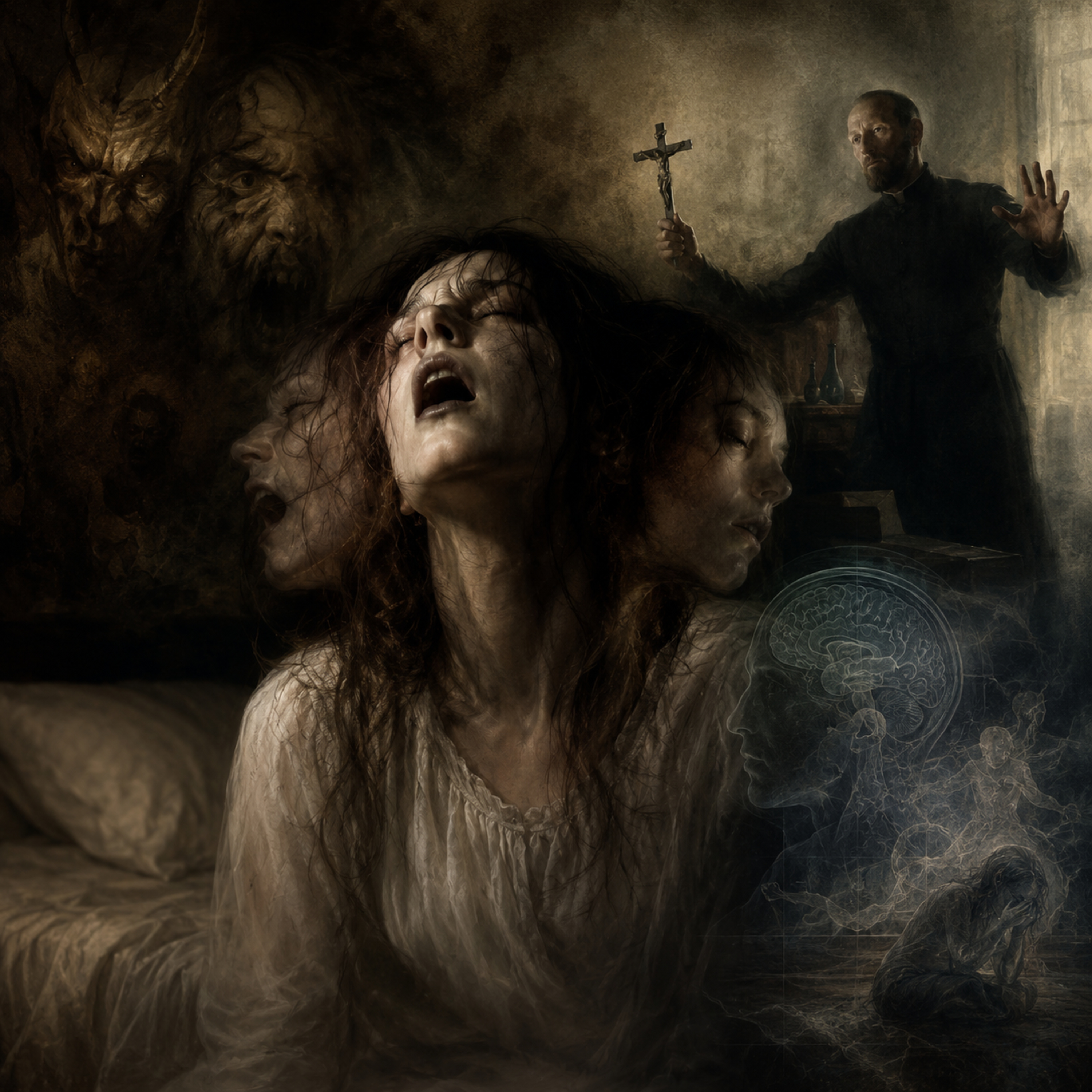


 Podcast Addict
  RSS Feed
  Apple Podcasts
  Spotify
  Amazon Music
  Overcast
  Castro
  iHeartRadio
  PocketCasts
  Castbox
  Podchaser
  TuneIn
  RadioPublic
  Goodpods
  Podyssey