New Orleans: Where the Dead Are Never Far Away
There are cities where the dead seem carefully separated from the living. They are placed behind cemetery walls, remembered on particular days, spoken of in lowered voices and largely kept at the edges of everyday life.
New Orleans has never quite felt like one of those places. Here, death is written into the landscape. Cemeteries rise rather than sink into the earth. Funeral processions can become celebrations. Saints, ancestors and spirits inhabit overlapping religious traditions. The architecture preserves generations of lives within the same rooms and courtyards. The Mississippi presses against the city while storms and floodwaters have repeatedly reminded its inhabitants how precarious the boundary between security and catastrophe can be. And everywhere there are stories — of footsteps, apparitions, voices, dreams, warnings, visitations and those who, in death, apparently remain attached to the places they knew in life.
Perhaps that is why New Orleans has become almost synonymous with ghosts. Yet to describe it simply as one of America's most haunted cities misses something important. Its relationship with the dead is richer, stranger and far more complicated than a collection of haunted houses. In New Orleans, the supernatural belongs to a much larger conversation about history, religion, ancestry, memory, suffering and survival.
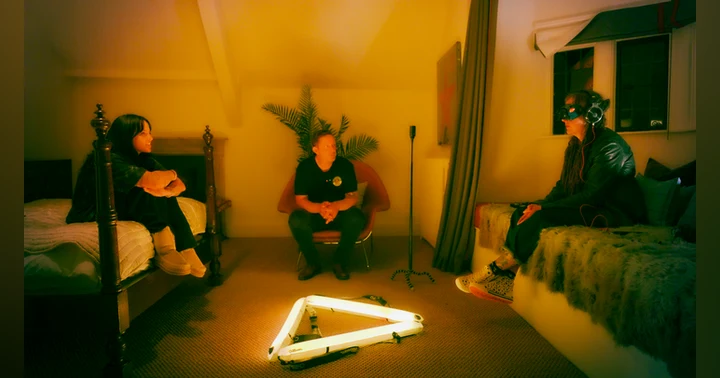
It was this that struck me during my recent conversation with New Orleans mother-and-daughter authors Dr Rosary O'Neill and Dr Rory O'Neill Schmitt about their Haunted Guide to New Orleans. Both grew up surrounded by ghost stories — and, they say, by ghosts themselves. Rory described the city simply: it “feels like it's filled with ghosts.” Rosary remembered being raised by an Irish-descended grandmother so frightened of entering her own mansion alone that she would wait outside for the young Rosary to arrive before going in. From childhood, Rosary told me, she developed “a terror of the unseen.”
But perhaps the most revealing part of our conversation was what happened when they began asking other New Orleanians about their experiences. Ghosts, it seemed, were everywhere in private memory too. Rosary described belief in returning spirits as something generational, permeating the culture. Mention that you are writing about ghosts over lunch, she suggested, and seemingly everyone has a story from their own house. Rory found the same while researching their book. Relatives revealed experiences she had never heard before; interviewees shared stories anonymously that they had been reluctant to tell publicly.
Beneath the colourful ghost tours and supernatural reputation lies something much more intimate: generations of people quietly negotiating their own relationship with the possibility that death might not constitute an absolute departure.
New Orleans has good reason to have death close at hand. Water has shaped the city from its beginnings. The Mississippi River, lakes, bayous, wetlands, rain and hurricanes are inseparable from its history. During our conversation, Rosary described the extraordinary compactness this creates: people know their neighbours, but they also know their dead neighbours, because cemeteries are woven through the city itself. Hurricanes reinforce the awareness that “death is around the corner”; churches that might otherwise have empty seats can fill as threatening storms approach.
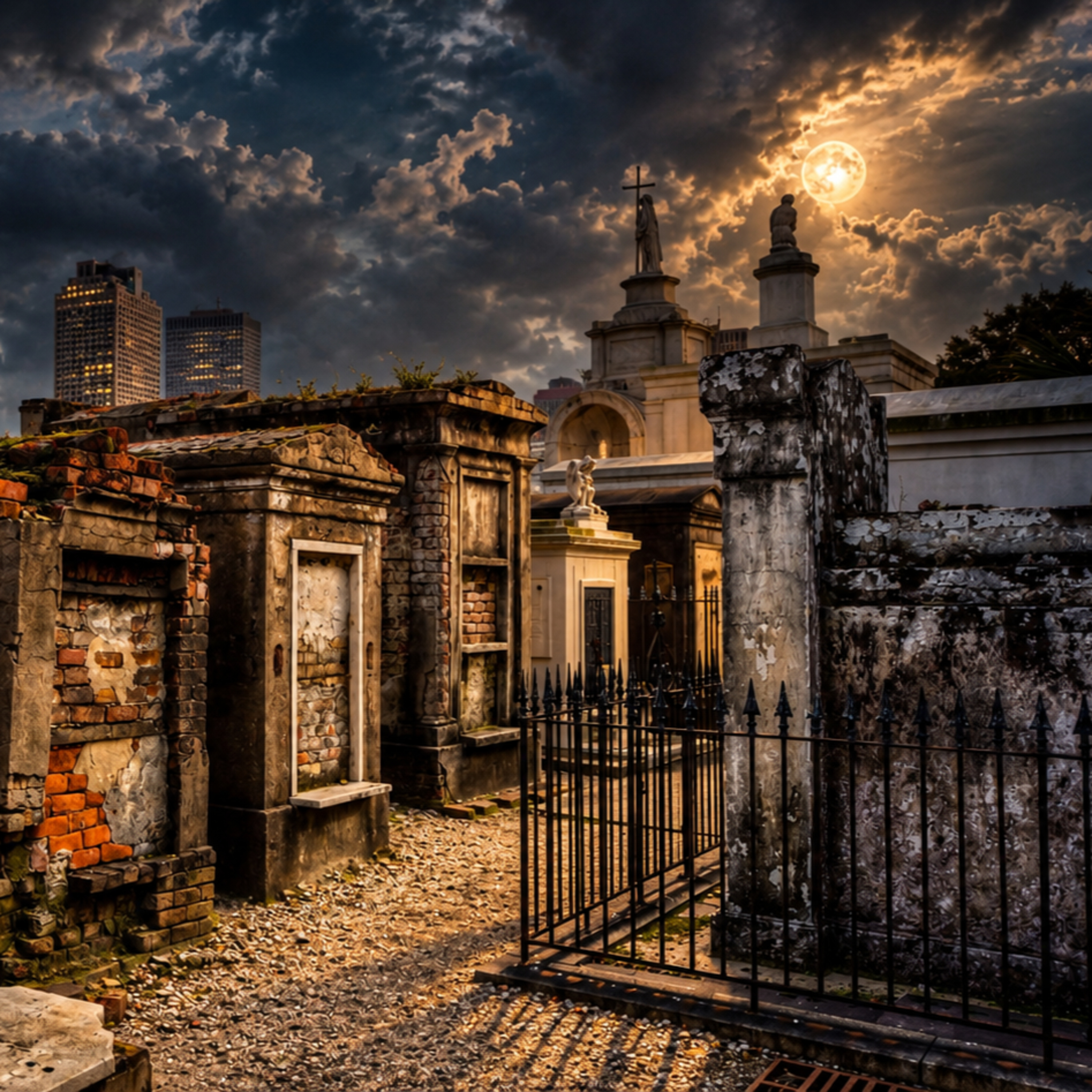
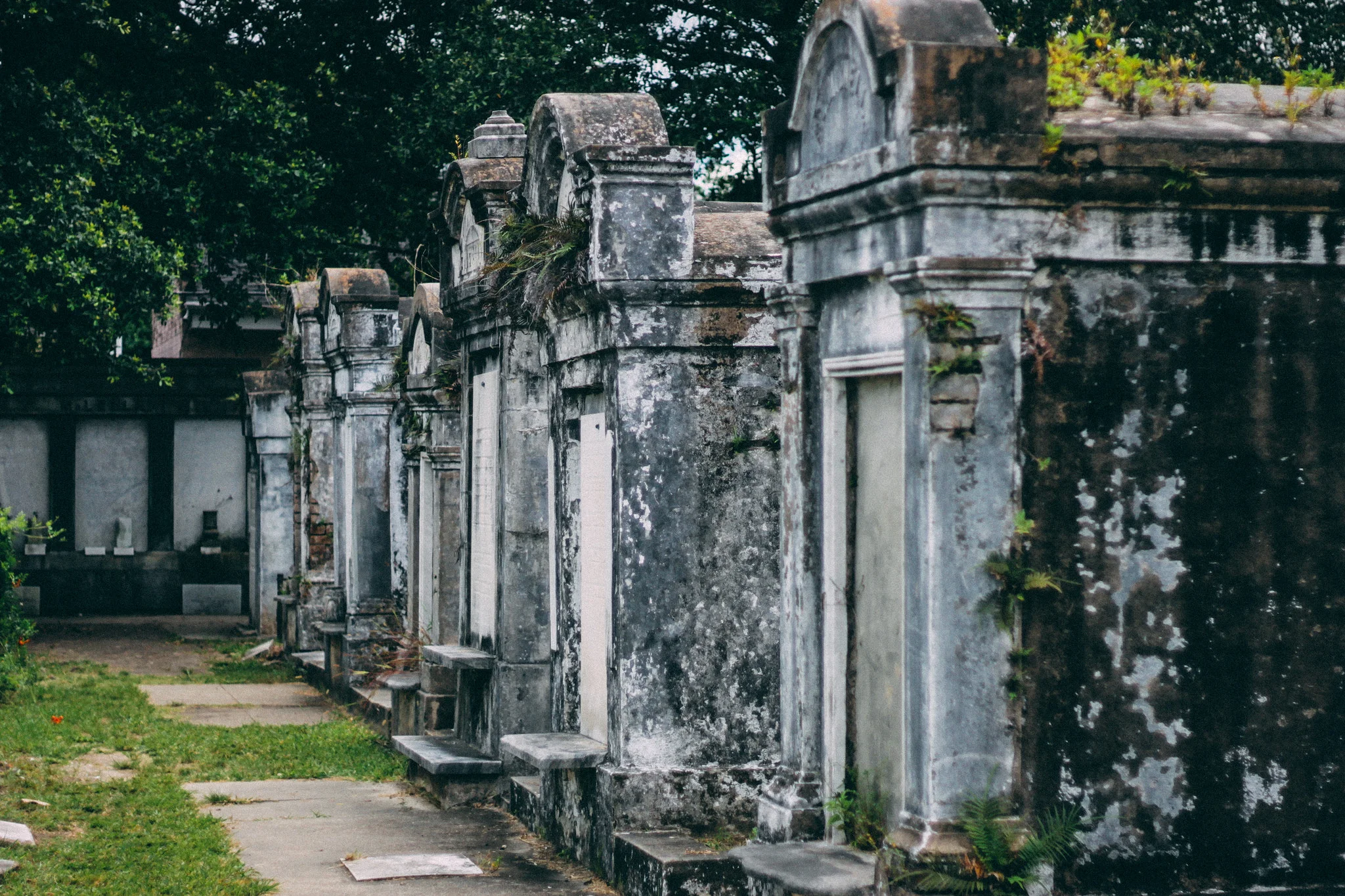
And the dead themselves have presented a very physical problem. The familiar above-ground tombs of New Orleans have become one of its defining visual features. Rory spoke of the city's landscape as almost a “deathscape”, recalling the historical problems created when storms and water disturbed burials. Yet these cemeteries are not necessarily places of unremitting gloom. Visiting her grandparents' grave in Metairie Cemetery, she expected sadness and instead found beauty, peace and quiet. Other burial grounds, she acknowledged, can feel altogether different — grittier, heavier and more unsettling.
That contrast feels particularly New Orleanian. Death can be beautiful and terrible, sacred and theatrical, mournful and exuberant, sometimes all at once.
Rosary recalled visiting Metairie Cemetery and seeing a tomb with a curtained opening and a row of chairs arranged before it. To her it resembled a stage awaiting a performance: an almost surreal example of the way the living continue to gather physically around their dead. Rory, meanwhile, remembered someone returning from what she enthusiastically described as the best party she had ever attended. It was a funeral. There had been food, music, dancing and celebration. Rosary recalled another funeral in which a coffin was carried in a white glass enclosure accompanied by horses with plumes. And then, of course, there are the jazz funerals and second-line traditions in which mourning and music occupy the same streets. Death has not vanished behind closed doors. It processes through the city.
Their book captures this contradiction beautifully. New Orleans, they write, is simultaneously “a party place and a death place.” The French Quarter can erupt with weddings, Carnival, trumpets, tambourines, banjos and cymbals; at another moment, an uncanny quiet can settle across those same streets.
The city's spiritual landscape is equally layered. New Orleans has a long association with Voodoo and Hoodoo and important figures like Marie Laveau, the celebrated Voodoo Queen, is inseparable from the history, legend and supernatural folklore of New Orleans. When a relative once asked what she had learnt from studying Voodoo, Rory's answer was strikingly simple:
“Death is not the end.”
That phrase perhaps unlocks something much larger about New Orleans. If the dead remain ancestors, if they can still be remembered, spoken to, prayed for or asked for guidance, then the boundary between the living and the dead looks very different from one in which death means complete severance. The supernatural is not automatically frightening because the presence of the dead is not automatically hostile.
That does not mean all encounters are considered benign. Rory described calling Voodoo priestess Sallie Ann Glassman after a series of disturbing experiences in the basement of a relative's home. She remembered waking and seeing what appeared to be an extraordinarily ancient-looking man standing in the room. When she turned away, hoping the experience would end, the figure seemed to circle the bed and lean towards her. She screamed at it that it should not be there, and it vanished. On other occasions she heard children and believed a small boy had pulled her ponytail. Eventually Glassman performed a ceremony in the house. Rory recalled that afterwards the basement felt noticeably “lighter” and “brighter.”
The French Quarter is a landscape of balconies, courtyards, narrow streets, shutters and buildings that have witnessed generations come and go. It is part of what makes New Orleans such fertile ground for ghostlore. Here, Catholic saints can stand alongside ancestral altars; prayer alongside protective objects; cemeteries alongside houses, restaurants and bars; solemn mourning alongside brass bands and dancing.
Even Jackson Square becomes a kind of symbolic crossroads. In their book, Rory and Rosary evoke it as a place where realms seem to touch: Saint Louis Cathedral, the Mississippi, the Pontalba buildings, tarot readers and the memory of public executions occupying the same relatively small landscape. History is not somewhere else. It is underneath your feet, across the square and built into the walls.
This, ultimately, may explain why the ghosts of New Orleans feel so numerous. Not because we can establish that its streets objectively contain more spirits than those of London, Edinburgh, Savannah, Paris or anywhere else. Such a claim is impossible to demonstrate. Rather, New Orleans has preserved cultural spaces in which the dead can remain conspicuous. In many modern societies, death is increasingly hidden: moved into hospitals, funeral homes and distant cemeteries, tidied away from the rhythms of ordinary life. New Orleans has certainly changed too, but its history continually resists that complete separation. The living city and the city of the dead occupy much of the same ground. They have tombs among the living. They have names, saints' days, stories and family altars. They have music. They have food and drink offered in remembrance. They have religious traditions in which ancestors remain capable of relationships. They have houses that pass through generations and families who continue telling what happened inside them. They have streets where funeral processions do not always demand silence. And they have ghost stories.

Host, author and producer
Hi I’m Michelle.
Teacher, podcaster, history and paranormal enthusiast and woman who wears many hats and spins many plates including dog whisperer- as you will often find Archie my dog- joining me during podcast recordings where he promptly falls asleep clearly not as enthusiastic about the subject as I am. It does mean his dulcet snoring can often be heard gently in the background- his contribution as occasional co- host needs a little work.
I live in Oxford in the United Kingdom and I love travelling and exploring historical sites throughout the UK for its history and haunted activity. One of the best gifts I ever received was English Heritage vouchers to use to explore various different historical sites. I had the best summer that year. (For friends and family possibly reading this please note that hint for future gift ideas!)
I started this podcast as an adventure through some of my passions. It has been immensely exciting getting to know lots of other people around the world who have these same common interests. I’ve been humbled by the encouragement and support from strangers and people who have become new friends! I truly could not do this without you.
This isn’t something I have done before and I’m learning everything as I go along - from equipment, to editing, to even creating this website. I’m loving it though- it’s a lot of work - but worth every second. Thank you for being patient as I learn and improve along the way. I have big dreams of where to take this podcast and community I hope we build here. If you wish to support that dream and this c… Read More
Silver Birch’s Medium: Restoring Maurice Barbanell to the History of Modern Spiritualism