Burford Priory: The Woman Who Watches Over Us
Set behind its walls in the beautiful Oxfordshire town of Burford, Burford Priory has stood in one form or another for more than eight centuries. Medieval hospital, Tudor mansion, political power base, religious community and family home: generations have altered it, inhabited it, loved it and left their marks upon it. Historic England describes the present building as a largely Jacobean gentleman's mansion incorporating fragments from the thirteenth century and around 1580, built on the site of the medieval Hospital of St John the Evangelist, first recorded in 1226.
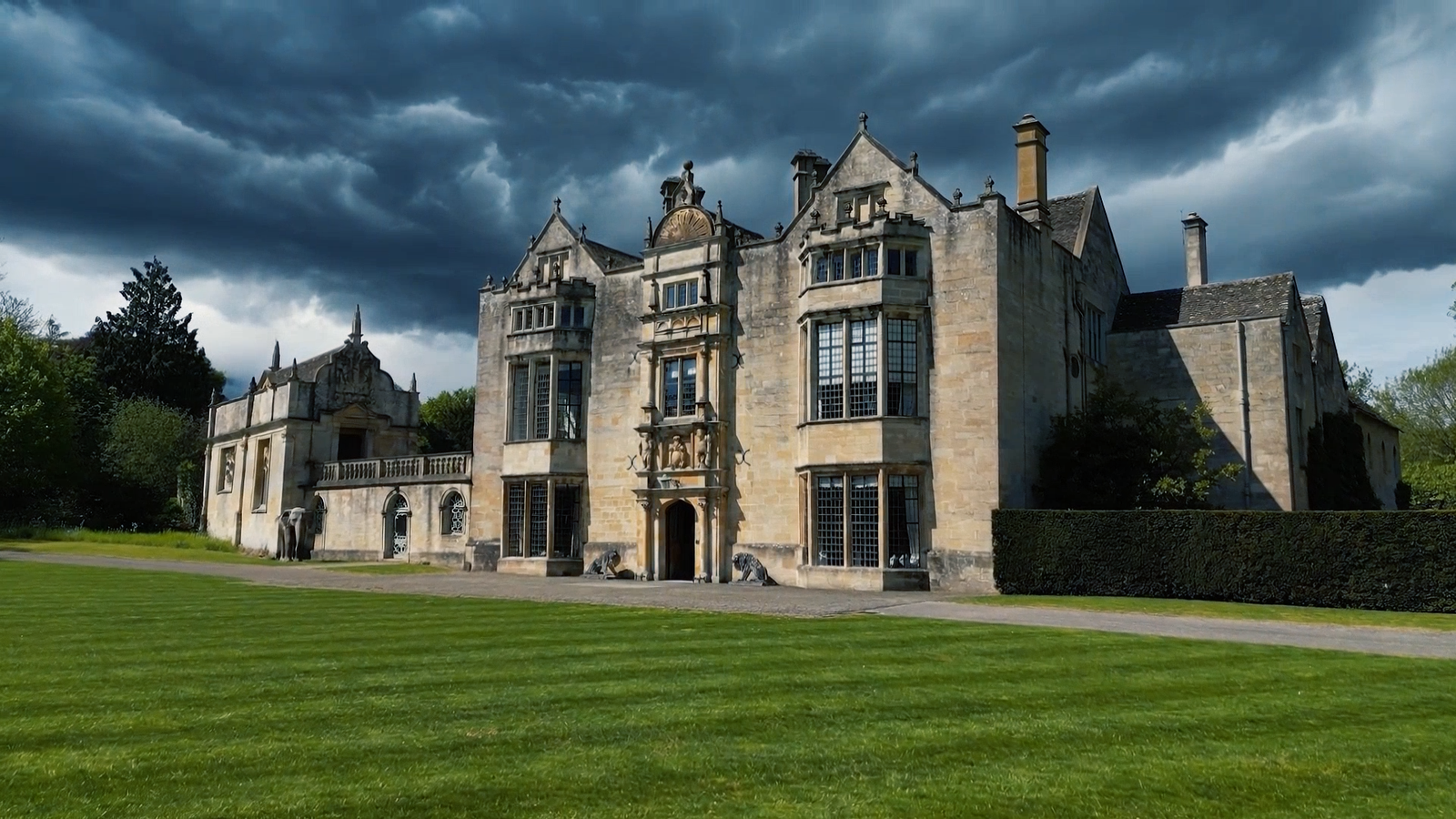
It is exactly the sort of place around which ghost stories inevitably gather.
But Burford Priory: The Woman Who Watches Over Us, the remarkable new film from The Supernatural UK, is ultimately interested in something rather more intimate than asking whether an ancient building contains ghosts. It asks what happens when a haunting becomes part of a family's relationship with home.
I was fortunate enough to be given advance media access to the film ahead of its public release, and having followed The Supernatural UK since its beginnings — and previously interviewed some of those involved about both the original Somerset Supernatural project and the philosophy behind the subsequent series — this feels to me like one of the clearest expressions yet of what John Shackleton and the team have been trying to create.
There are strange moments here. There are coincidences and apparent connections that made me sit forward. There are moments when scepticism is voiced rather than conveniently edited away. There are pieces of information that appear unexpectedly and subsequently acquire significance. There is history, experimentation, humour and genuine unease.
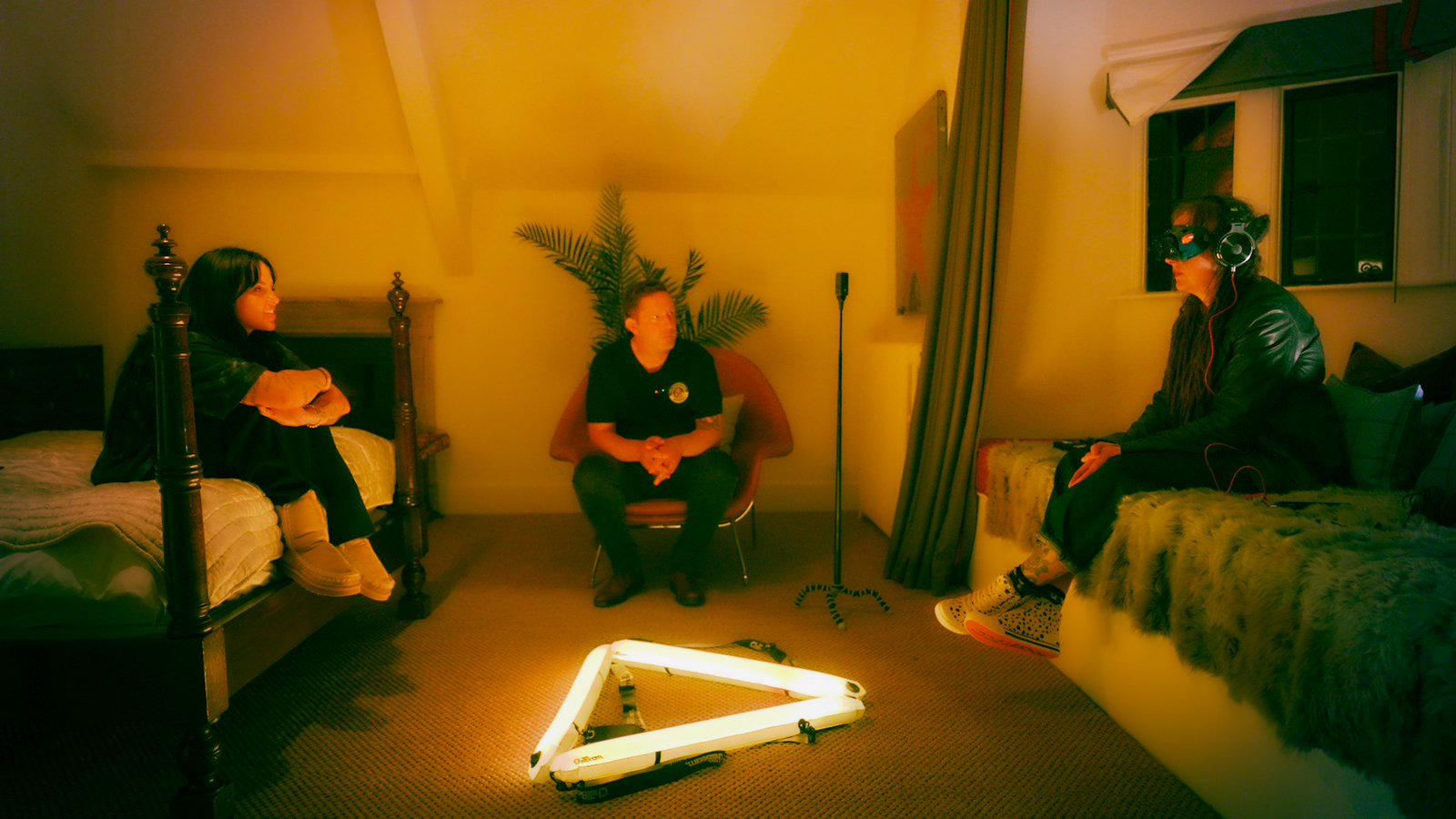
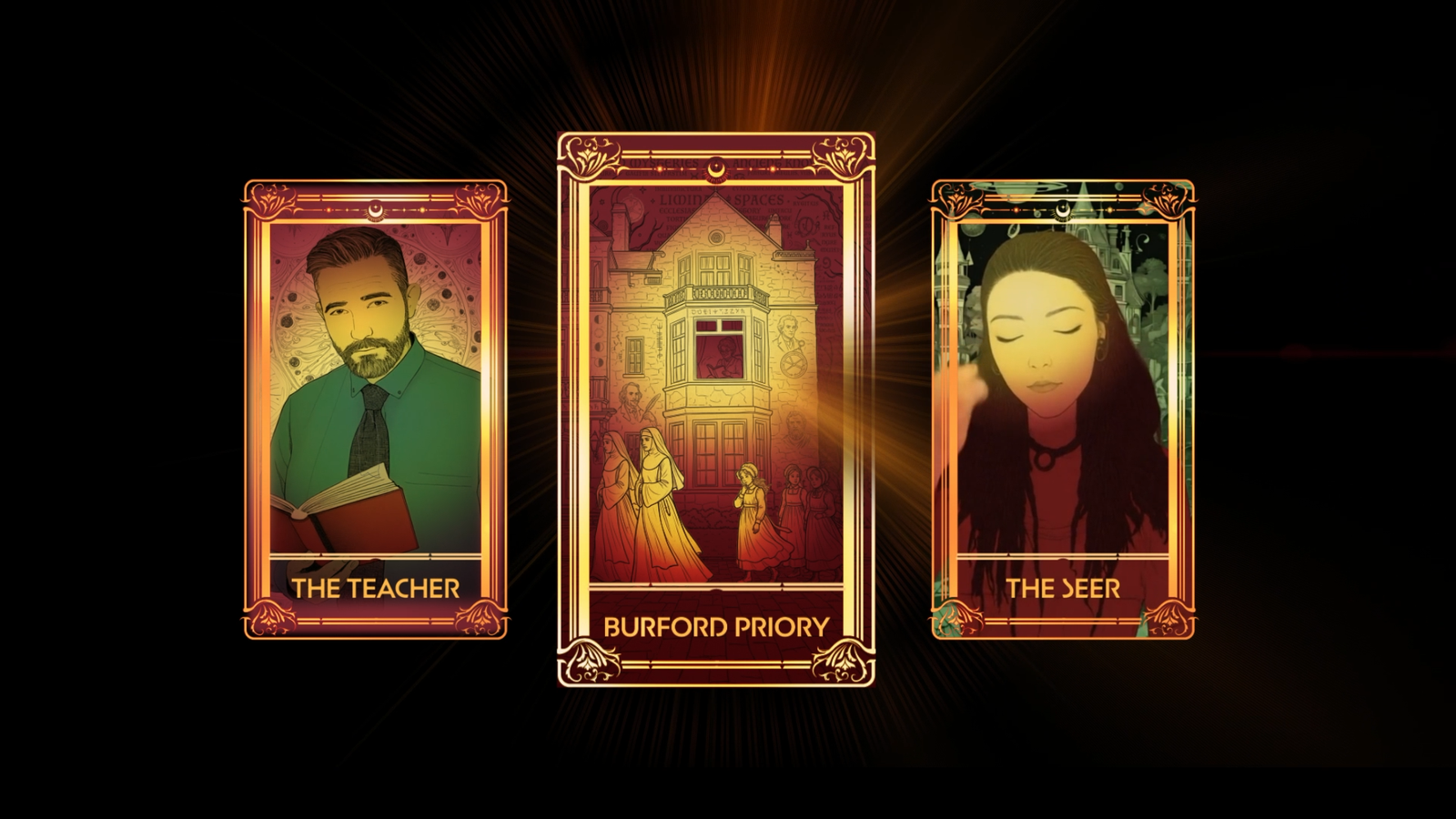
The 55-minute documentary sees Charlotte Freud open the doors of the house in which she grew up to filmmakers John Shackleton and Andy Bourne and an investigative team including sensitive Kate Ray, sceptical investigator Justin Cowell and paranormal investigator and historical researcher Karin Beasant. It premieres exclusively on The Supernatural UK YouTube channel at 7pm on Friday 4 September 2026.
And Burford Priory gives them an extraordinary canvas.
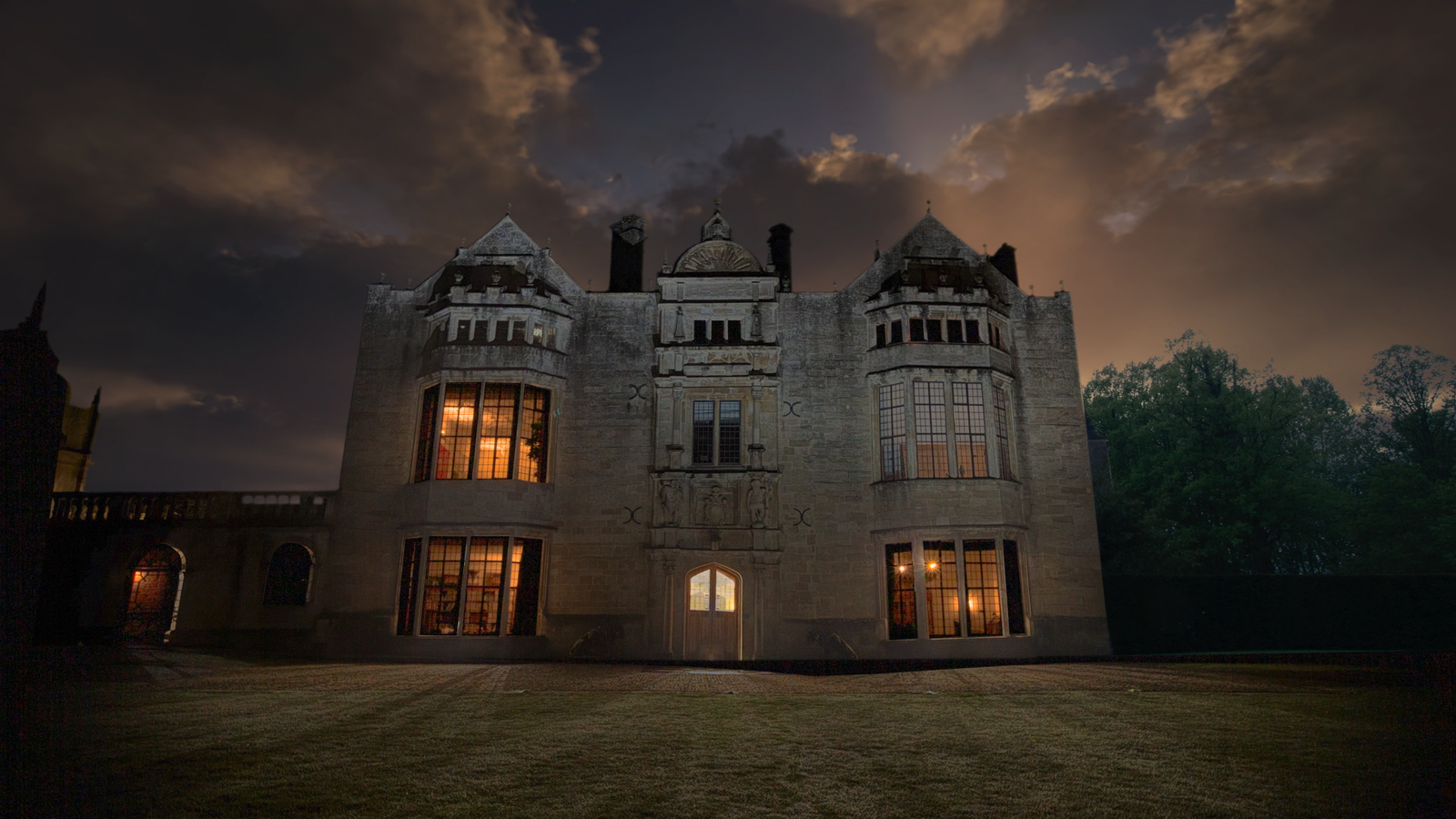
Long before the Freud family arrived, the site had already accumulated enough history for several documentaries. The medieval Hospital of St John the Evangelist stood here by at least 1226. Following the religious upheavals of the sixteenth century, the property was granted in 1543 to Edmund Harman, one of Henry VIII's barber-surgeons. It subsequently passed to Sir Lawrence Tanfield, Lord Chief Baron of the Exchequer, who entertained James I here in 1603. In 1637 it was acquired by William Lenthall, Speaker of the House of Commons, who extensively remodelled and enlarged the house. Charles II later dined here in 1681 while travelling to the Burford Races. Burford itself also occupies an important place in the story of the English Civil Wars. In 1649, Leveller soldiers involved in a mutiny were pursued into the town by forces under Cromwell; three were executed there. The film uses this wider history carefully, allowing the politics, religion, wealth and violence surrounding the Priory to establish something far more interesting than a generic "old building equals haunted building" formula. The house subsequently endured periods of alteration and neglect. Historic England records that it was considerably reduced in size after 1808 and was rescued from near dereliction from 1908 onwards, with further restoration after Emslie John Horniman acquired it in 1912. It later became home to an Anglican Benedictine community. The building we see today is therefore not one frozen moment from the past but an architectural palimpsest — medieval fabric sitting beside Tudor and Jacobean work, later alterations and the imprint of successive inhabitants.
Charlotte moved into the Priory as a child and describes an atmosphere that immediately made an impression upon the family. She recalls certain rooms being frightening and says that her six siblings have their own stories from living there. Another family member describes footsteps, unexplained knocking and the particularly eerie experience of hearing what sounded like movement on a staircase that had once occupied the space subsequently converted into a bedroom.
Charlotte herself recounts perhaps the most striking visual experience: seeing what she interpreted as the figure of a monk in the grounds. She and another witness apparently observed it simultaneously, describing a seemingly solid, heavily clothed figure standing only a short distance away. The encounter lasted, she estimates, perhaps twenty seconds before the figure disappeared.
Elsewhere there are stories of footsteps, doors, unexplained noises, things being moved, uncomfortable areas of the property and a reported gamekeeper. Yet Charlotte's relationship with the house isn't one of uncomplicated fear. Quite the opposite. At one point she says something that subtly changes how we understand everything that follows. Despite the strange experiences, she says she has “felt God in this house more than I felt bad things”. She talks about periods of fear but also about asking whatever benevolent spiritual presence might be there to protect her.
When The Supernatural UK first appeared, I wrote about how refreshing its stated ethos was: “No agenda, no staged scares, and no exaggerated claims.”
When I subsequently interviewed John Shackleton for Haunted History Chronicles, we discussed why the project feels so different from much paranormal television. John described himself not as someone interested primarily in shock or jump scares, but in “wonder and awe”. More importantly, he explained that he had no desire to sensationalise or make an incident appear larger than it really was. When something apparently extraordinary emerges during editing, his instinct is to start questioning it and attempting to debunk it before presenting what remains to the audience. That philosophy is particularly visible at Burford. There is an important difference between documenting an investigation and producing a programme that has already decided what its investigation must discover.
As John explained when we spoke:
“It's not an outcome that's already been designed and created for TV and put into the location.”
Instead, he described allowing what actually happened during the hours of investigation to provide the spine of the story. I think that distinction goes to the heart of the ethics of paranormal filmmaking.
Burford Priory is perhaps the clearest example of that approach yet. On paper, its eight centuries of history offer any number of ready-made paranormal narratives: the medieval religious foundations, political upheaval, the Levellers, stories of a spectral monk and gamekeeper, reports of poltergeist activity and generations of unexplained experiences. Any one of them could easily have been chosen in advance as the story of the episode. But that is not what happens. The history provides the landscape in which the investigation begins; the investigation then determines where the film goes.
Gradually, connections emerge that could not have been known at the outset would become significant. Some lead backwards into the history of the Priory. Others move unexpectedly towards the much more recent and personal history of the family who call it home. The film follows those threads rather than forcing them back towards the haunting it might originally have expected to find.
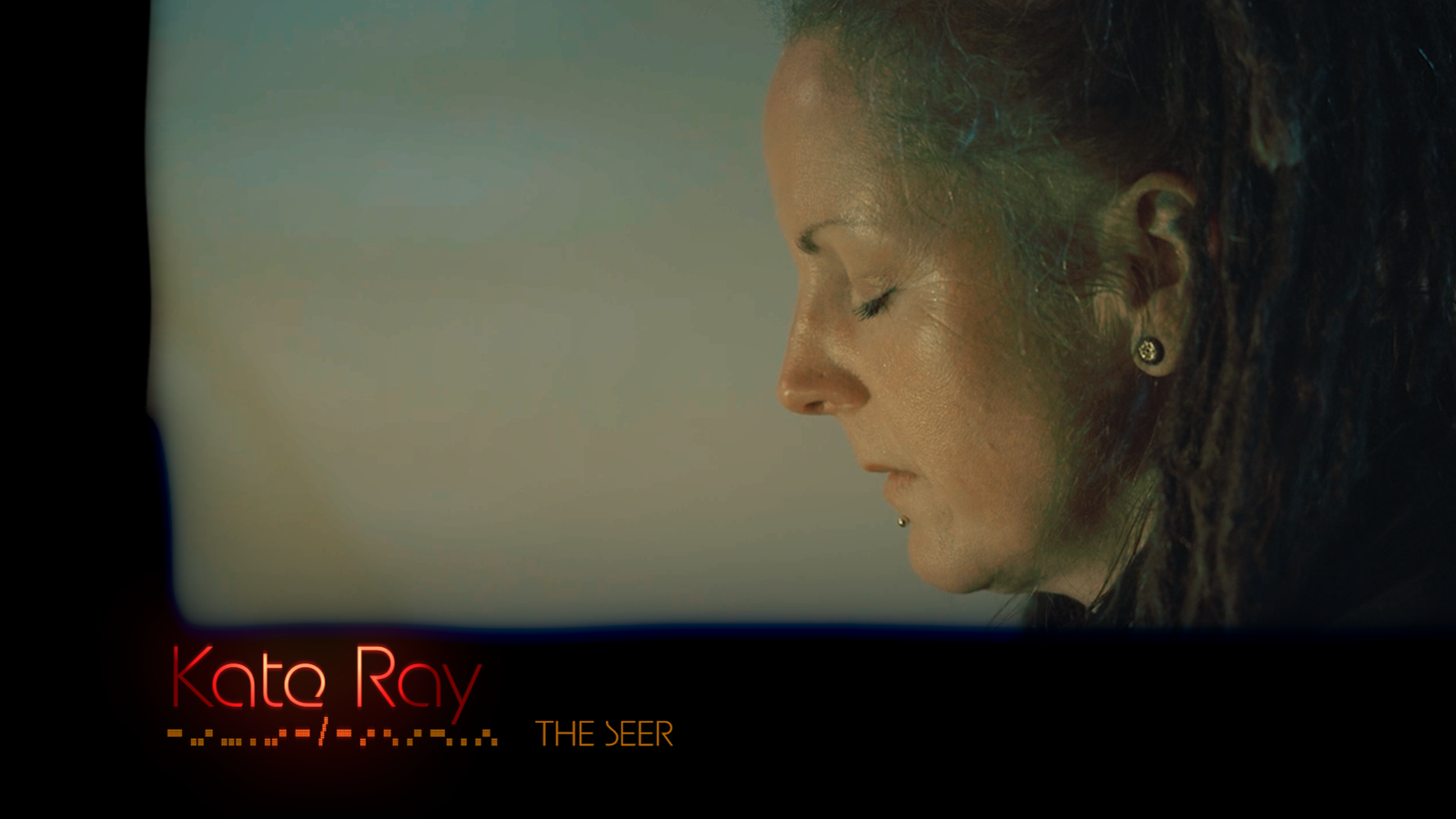
Before arriving, Kate conducts what she describes as a psychic scan or remote viewing exercise, recording a number of impressions without knowing how — or indeed whether — they will relate to the Priory. As the team begins to explore the house and grounds, some of those impressions start to acquire unexpected significance. There are apparent links to aspects of the building, its history and spaces she had not previously been shown, while other threads lead somewhere considerably more personal.
I am deliberately not going to catalogue them here. Part of the pleasure of the film is watching those connections emerge in the order that the investigators themselves encounter them. Some are intriguing in isolation; others become far more interesting because of what subsequently follows. And, importantly, the programme does not demand that the viewer interpret every correspondence in the same way.
That is precisely where Justin Cowell becomes such a valuable counterpoint to Kate. His scepticism is not the rather tired television variety in which somebody is brought along simply to dismiss everything. He participates, experiments and is perfectly willing to acknowledge when something puzzles him. Equally, when there is a mundane explanation available, he says so. At one point an uncomfortable sensation within the Priory is investigated and an architectural feature provides an entirely plausible reason for it. It is a small moment, but one I particularly enjoyed. Not every strange feeling is required to become a ghost.
That balance is one of the film's strengths. Kate approaches the location intuitively; Justin continually interrogates what is happening; Karin Beasant brings paranormal and historical experience to an investigation taking place within an enormously complicated historic site. Around them, John Shackleton and Andy Bourne allow the camera to observe rather than constantly instructing the viewer what to believe.
It creates an investigation in which very different approaches can exist alongside one another rather than competing for victory.
There are experiments with environmental monitoring and trigger objects, as well as objects discovered within the fabric of the Priory itself. There are moments when equipment behaves interestingly and others when the investigators stop to consider perfectly ordinary explanations. But the technology never becomes the star of the programme. Burford itself remains central: its architecture, its past, the people who have lived there and the experiences attached to it.
That also reflects something John discussed with me previously: approaching locations relatively “light footed”, rather than saturating investigators with every piece of folklore and every reported haunting before they begin. It matters methodologically because paranormal investigation is extraordinarily susceptible to suggestion. Tell somebody exactly where the monk is supposed to stand and every shadow in that doorway risks becoming a monk. Tell someone a particular room is oppressive and they enter it already waiting to feel something.
The investigation at Burford is at its most intriguing when information emerges before anyone knows why it might matter. I am going to leave most of what happens there for viewers to discover. What begins to emerge is not particularly frightening. In fact, it is surprisingly warm. Details surface during one of Kate's sessions that appear to resonate very strongly with Charlotte. There are further attempts to explore what has happened, and there are later discoveries that add another layer to it. To describe them all here would rob the film of the very thing that makes the final section so effective: the gradual accumulation of information and the moment at which seemingly separate threads begin to sit alongside one another.
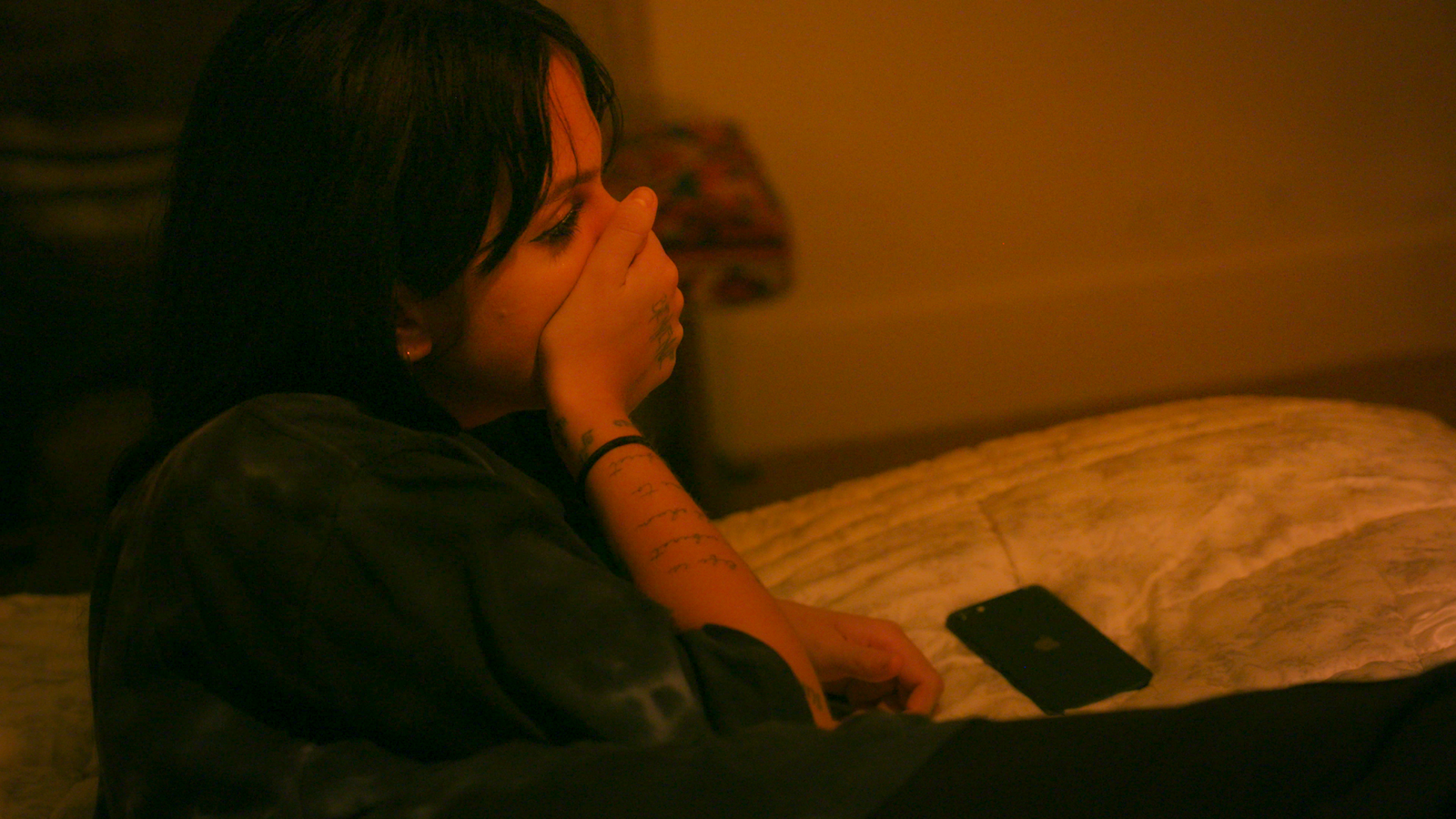
Producer-director John Shackleton perhaps describes what emerged at Burford better than anyone:
“It became a film about home, family, memory and the possibility that the people who matter to us may never entirely leave.”
Burford Priory: The Woman Who Watches Over Us premieres exclusively on The Supernatural UK YouTube channel at 7pm on Friday 4 September 2026.
It is beautifully made, intriguing, funny, thoughtful and, by the end, unexpectedly moving.
5 stars, you won't be disappointed!
Haunted History Chronicles
Watch the official trailer TRAILER: Burford Priory - The Woman Who Watches Over Us
Visit The Supernatural UK on YouTube TRAILER: Burford Priory - The Woman Who Watches Over Us
For more about the ethos behind the series, you can also revisit Spotlight On: The Supernatural UK, listen to my conversation with John Shackleton in Filming the Paranormal: The Making of The Supernatural UK, or return to the project's earlier roots with Somerset Supernatural: Discovering the Paranormal.

Host, author and producer
Hi I’m Michelle.
Teacher, podcaster, history and paranormal enthusiast and woman who wears many hats and spins many plates including dog whisperer- as you will often find Archie my dog- joining me during podcast recordings where he promptly falls asleep clearly not as enthusiastic about the subject as I am. It does mean his dulcet snoring can often be heard gently in the background- his contribution as occasional co- host needs a little work.
I live in Oxford in the United Kingdom and I love travelling and exploring historical sites throughout the UK for its history and haunted activity. One of the best gifts I ever received was English Heritage vouchers to use to explore various different historical sites. I had the best summer that year. (For friends and family possibly reading this please note that hint for future gift ideas!)
I started this podcast as an adventure through some of my passions. It has been immensely exciting getting to know lots of other people around the world who have these same common interests. I’ve been humbled by the encouragement and support from strangers and people who have become new friends! I truly could not do this without you.
This isn’t something I have done before and I’m learning everything as I go along - from equipment, to editing, to even creating this website. I’m loving it though- it’s a lot of work - but worth every second. Thank you for being patient as I learn and improve along the way. I have big dreams of where to take this podcast and community I hope we build here. If you wish to support that dream and this c… Read More
Silver Birch’s Medium: Restoring Maurice Barbanell to the History of Modern Spiritualism