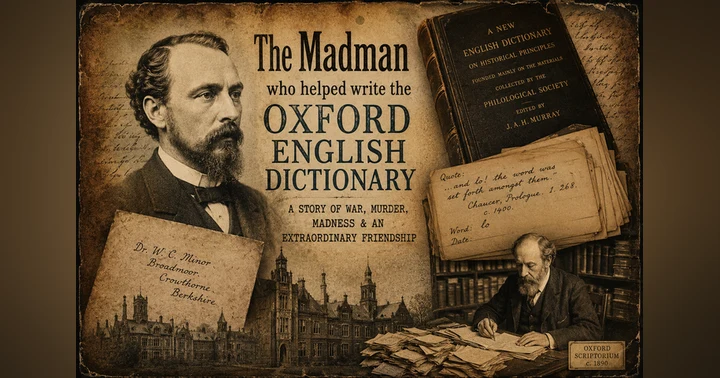
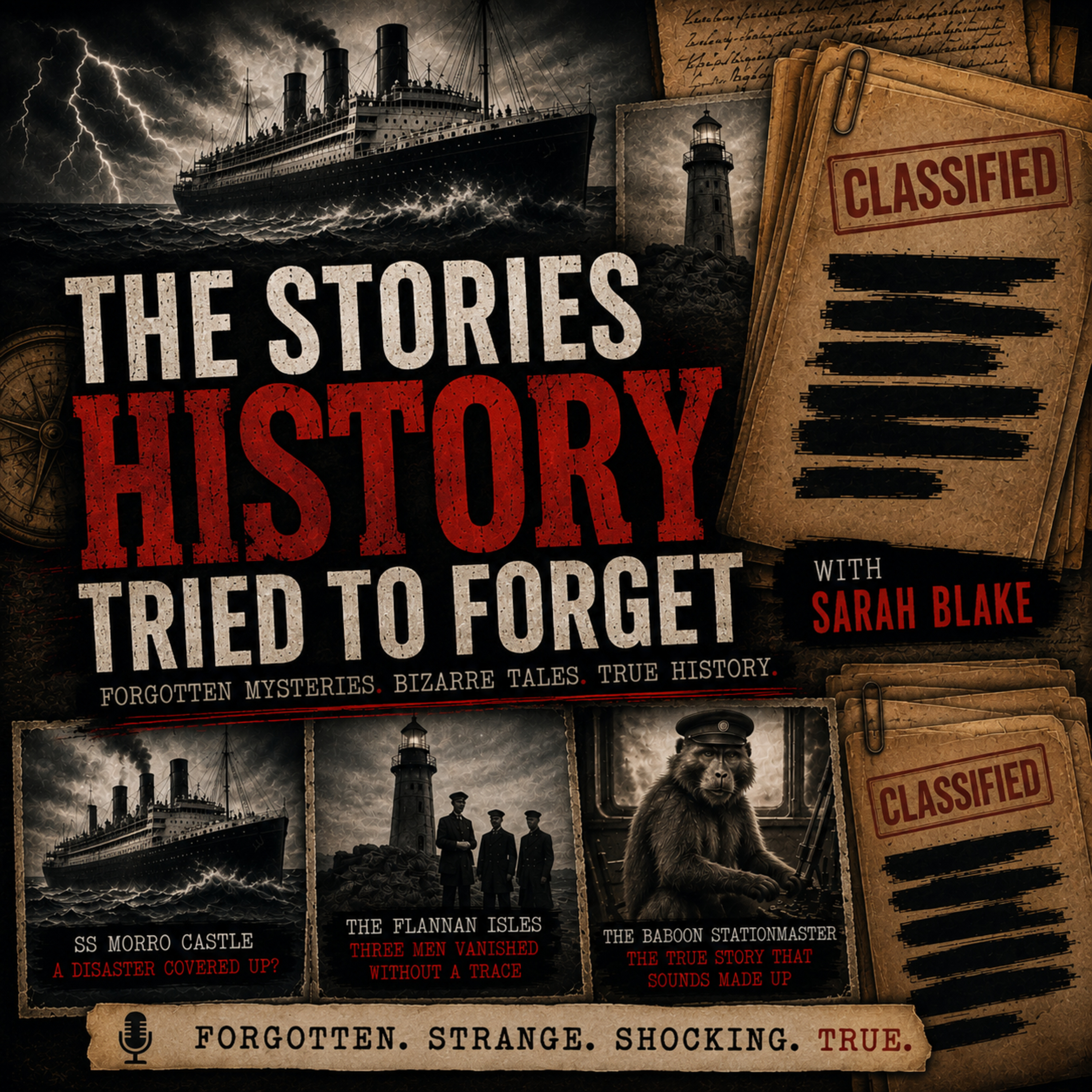
The Stories History Tried To Forget With Sarah Blake


 Podcast Addict Podcast Addict
  RSS Feed RSS Feed
  Apple Podcasts Apple Podcasts
  Spotify Spotify
  Amazon Music Amazon Music
  Overcast Overcast
  Castro Castro
  iHeartRadio iHeartRadio
  PocketCasts PocketCasts
  Castbox Castbox
  Podchaser Podchaser
  TuneIn TuneIn
  RadioPublic RadioPublic
  Goodpods Goodpods
  Podyssey Podyssey
 Some stories dominate the history books. Others vanish into the margins, buried beneath time, tragedy, controversy, or simple neglect. In this episode of Haunted History Chronicles, I’m joined by historian, researcher and storyteller Sarah Blake to explore her fascinating new book, Hushed Up History: Volume 1. Together, we uncover the strange, shocking and often unbelievable stories that history has quietly left behind.
From the catastrophic final voyage of the SS Morro Castle and the enduring mystery of the Flannan Isles Lighthouse keepers to bizarre true tales involving baboons, murder, maritime disasters and forgotten corners of local history, Sarah reveals how these overlooked accounts continue to speak to us today. We also discuss why certain stories become famous while others disappear from public memory, the challenges of uncovering hidden histories, and what these extraordinary accounts reveal about human nature itself.
My Special Guest Is Sarah Blake:
Sarah Blake began Hushed Up History in October 2014 as a way to tell the dark, amusing, surprising, and forgotten true tales hidden inside history's discarded pages. She currently lives in New Jersey and when she is not writing about all things weird she works in cemeteries and museums, studies tarot and mediumship, paints nightmares, and devours everything she can about the history of her ancestor's home of Salem, Massachusetts. She also drinks way too much tea and has absolutely no regrets about it. If learning about tarot floats your boat she can be found at Twin Crows Tarot on Facebook, Instagram, and TikTok.
If you value this podcast and want to enjoy more episodes please come and find us on https://www.patreon.com/Haunted_History_Chronicles to support the podcast, gain a wealth of additional exclusive podcasts, writing and other content.
Links to all Haunted History Chronicles Social Media Pages, Published Materials and more: https://linktr.ee/hauntedhistorychronicles?fbclid=IwAR15rJF2m9nJ0HTXm27HZ3QQ2Llz46E0UpdWv-zePVn9Oj9Q8rdYaZsR74I
NEW
Podcast Shop: https://www.teepublic.com/user/haunted-history-chronicles
Buy Me A Coffee https://ko-fi.com/hauntedhistorychronicles
Guest Links
Websites: https://husheduphistory.com/
Link To Book: https://www.amazon.co.uk/Hushed-Up-History-Sarah-Blake-ebook/dp/B0F7ZXF6JF
Tonight, we open the door to a place for history's discarded pages,
as we're joined by historian and storyteller Sarah Blake from Hushed Up History,
whose new book, Hushed Up History, Volume one,
brings long forgotten accounts back into the light.
Explores shocking crimes,
impossible survival stories,
strange encounters and unsolved mysteries.
Some of the chapters of history she explores are just how the final voyage of the SS Morro Castle ended in such catastrophe.
What truly happened to the keepers of the Flannan Isles lighthouse?
And did early settlers in New England encounter something unexplainable in the woods?
And yes,
can a baboon really run a railway station?
From the incredible to the unsettling,
from the forgotten to the unbelievable,
these are the stories history tried to hush.
Hi, Sarah. Welcome back to the podcast. It's lovely to have you back on the show.
Hello. I'm so excited to be back. Thank you for bringing me back.
Honestly, it's always such a pleasure to be able to chat with you and,
you know, since you and I have spoken, it's just,
it's just been such a whirlwind in terms of what you've been doing. You are never one to be idle and of course.
Oh, God, no. Yeah.
And the last time we were speaking, it was,
you know, you're kind of preparing and writing and bringing together your, you know, your first book,
and now it's out, which is incredible.
It's out? No, it's. It's out in the world. It's unleashed. And there it is.
It's a thing of beauty, isn't it? I mean, it's just, it's gorgeous. It's such a well put together book and I was eagerly anticipating it. So I'm just so blown away with what you've put together and I just can't wait to have that chance to have a bit of a deeper dive in terms of how you brought the book together and,
you know, the, the journey of the book and so on, you know, just to have that chance to pick your brain about it a little bit further is something that I'm so excited to do with you today.
Oh, that. That's awesome. I'm so excited to talk about it. It's you. I think you use the perfect term. It's definitely been a journey.
It's definitely been a journey. Bringing hushed from the little,
little seed of thought. And now it's,
you know, at least part of it. It's like a. It's like a monster with many arms. And at least one of those arms now you can hold in the palm of your hand.
And it's.
It's definitely been a journey. It's been fun, though.
To help set the scene and give our listeners a real sense of the atmosphere and themes in volume one,
could you share one of the accounts from the book that really captures its essence?
Let me tell you the tale of Antoine Leblanc from New Jersey. And it was a spring day in 1833 when Mr. LeBlanc, who had just arrived in New Jersey from France,
had decided he had enough.
He arrived and he took a job at a farm, feeling that this was going to be the start of his new life. This was going to be the beginning. He was going to be rich, he was going to be successful, he was going to make a name for himself.
Except the people he was working for didn't feel that way. The people he was working for saw him as a farmhand, a laborer. You do what we tell you to do.
And when at the end of your day, you're going to sleep in this dark, dark basement, this is your future. This is your life. Sir. Don't know what you pictured coming over, but this is your reality from now on.
And he decided one day,
no,
no, this is not what's going to happen.
But I'm not just going to run away.
No, no, no, no.
I'm going to take everything out.
All this aggravation, all of this rage, all of this disappointment that I've had since I got here, which what was supposed to be a grand new life.
I'm going to take that out on this family,
and I'm going to do so brutally.
And one night, after spending some time at a local bar, Mr. LeBlanc went home.
But he didn't go right into the house immediately. He rushed in and told this family that he was working for. You have to come out to the barn. There's an emergency.
One by one, they went out to the barn, but they never left the barn. And that's because Mr. LeBlanc brutally and in a very ****** way made sure that they would never leave that barn.
Then he went into the house again for the last time, and he took what he wanted to take,
all of the items that may have represented what he wanted, his luxury, his. His grand new life. If they weren't going to give it to him as part of his wages, he was going to take it.
So he did. He took their items, they shoved them in a pillowcase, and he left,
left the farm,
feeling that this was now the new beginning,
the new beginning that he wanted it got delayed a little bit,
but now he's free, and he's going to go about and he's going to do what he wants.
The problem was the pillowcase, that he took all of these items and was making his way toward this new grand life he envisioned. The pillowcase had a hole in it,
and it dropped the family's items in a path.
And when someone found one of these items, they recognized the initials. This was their. This. This family. They knew these people. This was a friend of theirs.
Why was their friend's personal items in this dirt road? What happened?
So they went to the farm,
and that's when they discovered their friends brutally murdered.
But then they also realized, well, if there's one item, there's got to be more.
And there was. And they followed these items. Almost a Hansel and Gretel type of thing, of breadcrumbs. They followed these items, and they found Mr. LeBlanc. And he was arrested,
brought to trial. There was no case here.
You killed these people,
and now we're going to do the same to you.
Mr. LeBlanc was sentenced to death. He was hung, but that wasn't enough.
After he left this earth,
we're gonna do more.
Mr. LeBlanc had some experiments done on him.
And after that, he was skinned,
and what they did with his skin was they made items. They made wallets, they made lampshades. They made things out of this man.
And then he was buried.
He went into the dirt, but his items stayed above the dirt.
And now there's a couple of them that are known.
There's some that live in libraries and historical societies, but it's very few, and it's definitely less than was ever made.
So if you happen to live in these parts of New Jersey and you happen to be in your attic, or you happen to find a dusty old box in your house, and you open it up and you find a wallet or another weird, leathery item, and you're not sure where it is or where it came from.
You may want to ask yourself,
did this come from the man who murdered a family and is now buried in New Jersey?
Have a good night, kids.
I was just gonna say move over law and roll in Hushed up history.
It's. I mean, it's just. It's so compelling, though, to hear you tell that story.
The firsthand experience of listening to someone is sometimes just so captivating, and it's a different experience than reading it on a page. Both are equally,
you know, invaluable.
But there's something sometimes that you just,
you just need that some something extra sometimes, don't you, of listening to it, hearing someone else tell it with all their,
you know, the intonations and the way they express it that just has that something, something extra that just, yeah,
you recognize it for the kind of account that it is, let's put it that way.
So do you want to maybe just start by maybe telling the listeners about some of the other things that you've been up to in the, in the last few months since we've been,
you know, since the last time we spoke and maybe some of that journey of what it was like researching and writing Hushed Volume 1. And you know how you kind of brought all of that to life really?
Sure, sure. So the last couple months have been,
have been very active for hushed. So.
So Hushed Up History has been around since 2014 and for the vast majority of that time it was just a word format, it was a blog, it was writing a story, putting it on the website,
you know, throwing the link all over social media and that was it.
Well, last year we kind of branched out now into a lot more video.
So I'm in front of the camera now telling, telling these crazy stories and I post them on.
You know, I started a TikTok account that's been pretty successful and I've been posting stories there,
both very long term, you know, half an hour stories or quick little seven minute oddities that I found that wouldn't necessarily have a place otherwise that I would really have anywhere to put them.
Now I've been doing that and part of the,
the kind of video era of hushed up history is back in October I joined up with signal network on YouTube. So now every Thursday there's a hushed up history episode of these bizarre crazy tales.
And Signal Network is a lot more of the paranormal and the spooky and the creepy side of things.
So if that's the part of hushed up history that someone really likes is when I put something up that deals with some of that more paranormal spooky stuff.
Signal is your home. That is where you can go.
I'm not saying that stuff also wouldn't be included in the website or on TikTok or anything like that,
but Signal is very much the place where the majority of my, my spooky stuff has, has now been living and it's been a good time.
I've, I've actually, I have a background in media production, but it was something that I hadn't really touched in many, many, many years. It was one of those things where I did that.
I went to school for it. Great. Well, now that's, that's over with. That's a past chapter.
I don't do that anymore.
And if you had told me a year ago, two years ago, you know, you're going to go back into media and you're going to be recording and you're going to be editing these video projects,
I would have laughed. I would have been like, no,
that's a long time ago there, friend. I'm not doing that again. But here I am and it's actually been a blast. I've been having a really good time with it.
And on top of that, now I'm going to events,
I'm giving little talks on bizarre stuff. So it's, it's been a lot of growth over the last six, seven, eight months or so. And I'm, I'm really having a good
time with it,
which I think is fabulous because,
you know, you tell these stories with such integrity and such heart and, you know, we need a kind of a space to be able to share these kind of forgotten bits of history for, you know, whatever reason, they're forgotten,
why they're lesser known. But to have that platform, but to have someone like yourself who is advocating and sharing these stories is so important because,
you know, they, they still resonate. There's still importance and significance that we can take from them. So I think it's fabulous that you just have these different platforms now. And I think it's great that you know, from the origins of hushed up history, where it started,
it's now pushing you into these other spaces that I think just gives that spotlight and that platform for what you're doing, which is fabulous.
It's funny because even when I was in media, even when I was doing that, I was purely behind the camera.
I never. That would have been like a whole second part of it is, hey, you're going to be doing media stuff. And I would have, I would have giggled a little bit.
And then it's, oh, and also you're going to be in front of the camera telling these stories. I would have flat out laughed and been like,
that's a fantasy world. That's not happening. That's absolutely, that's on another planet somewhere. And no, here it is.
You never know where things are going to take you. But, but like I said, I'm having a really good time with it. I'm enjoying it a lot more than I think I would have.
So. And it's, it's interesting to me when I'm recording these episodes,
watching it back and doing all of the editing and seeing how I vocalize these stories, how I actually speak them out instead of just typing them.
It's. It's been interesting.
It's been a really interesting thing to see.
But, you know, I hope my enthusiasm for these stories comes out even more when you see me actually telling it to you face to face.
So do you want to maybe just tell the listeners about what they could expect if they picked up Volume one of Hushed Up History?
I mean, it seems to cover such a wide variety of themes and areas.
Yes.
But just to give that flavor of what someone could expect, you know, why they resonated for you personally, why you wanted to share them.
Sure. So Hushed up History, Volume 1,
it is 34 stories.
One of the things that's been very, very important to me has been taking stories that are all over the place in, in a good way, like a good chaotic way in the sense that, like, you never know what's next.
You never know what the next story is going to be coming out of Hushed Up History.
So with the website, if you scroll through the archive of the website, you'll see a lot of these stories I try very hard to like, okay, well, this story took place in this part of the world.
The next one is going to be somewhere completely different. Or okay, this story kind of looks at.
This story is more of a true crime story. So we're not going to do true crime for the next couple. We're instead going to go in a total opposite direction.
So I really work hard on giving it a wide variety of things that it's always kind of a surprise. And I wanted to do the same thing with this book.
So when I was going through the stories for this book, I put that same kind of thought process into it of,
okay, well, this is about a shipwreck.
We're not going to talk about shipwrecks again for another 15 stories down. And we're only going to have two and they're going to be very different.
Or okay, now we're going to put in a feel good story about an animal that happened during World War II.
So it's 34 stories, but it's 34 very different stories. They're all over the map.
And I wanted it also to be something that you didn't necessarily have to go straight through if you just wanted to pick it up, look through the table of contents, read a title and go, I don't know what that is, but I'm going to dive in you can do that.
You have the ability to just kind of pick and choose or go straight through and hopefully every one of them entertains in the best way possible.
I think it's great because you,
you can't anticipate what comes next.
And I think that's what's so wonderful about a collection like this because,
you know, you have every theme possible. You know, there's mystery, there's the unexplained, there's, you know, accounts where there's that kind of criminal element to it that you share with what you do.
And here you have something that gives space in these different chapters just to the wide array of historical accounts that fascinate,
that intrigue us for different reasons.
And again, it just makes it such a perfect, you know, book to dive into because you can't anticipate what you're going to get next because you, you bounce around those different topics and themes, but also geography, place, time.
Yeah.
And so it's, it's a fabulous, A fabulous read because it's just every, every section is something new, something that you can anticipate.
Happy to do that.
Because I know I've had people say over these many, many years, like, you know, what if you just did this?
Or what if you organized it so that, like,
you know,
for six months you just write about this and then people will know what's coming and,
you know that that's fine.
But me personally,
I like that idea of surprise.
I like that idea of here is just a buffet of all kinds of madness,
all different,
all different kinds of stories, as you said, from all over the globe, from all different time periods. To me,
that's fun and that's part of the fun of it. And that's what I have always kind of wanted. Both the website and now the book and the social media accounts to be just a collection of all kinds of crazy stories.
And you never know what's coming up next.
I kind of think, like, it's a bit like a dessert at the end of the meal. There you go,
you look forward to the pudding, the dessert. If you can have more than one, go for it.
Here's 34, exactly 34 different types of
cheesecakes or different ice creams.
You know,
why limit ourselves? You know, again, it's that excitement that I get, I think you get when there is, like you said, just that choice.
And I think it highlights exactly what you do with, with hushed up history, which is you're bring, you're bringing these unusual, these quirky, these interesting aspects that Maybe aren't so well known to people's attention.
And,
And I think with that kind of element of surprise, you do get that kind of extra element that kind of builds into this, which is that,
again, that level of anticipation, excitement for, for the next thing, the next chapter of what else you can share because you've just read something so truly phenomenal and bizarre and, and, and strange and out there, you know, it's that how can something top that?
But yet you find things that just are so. The other, Other kind of extreme that again, it's that you, you can't anticipate, you can't kind of begin to question and think about what could happen next, what you're going to bring, because you are just all over the map.
And again, it's that.
That rich sense of history and what there is out there that again, we don't get in textbooks in school, we don't get necessarily on our TV shows and documentaries and history channels.
You are bringing that huge array of interesting, quirky stories that again, just reveal so much about us as human beings.
And yeah, it's just, it's fabulous what you're doing. You know, I just, I've always loved your work and it just gets better and better and better what you're doing. It's just great.
I appreciate that. I mean, it's,
it's. You know, I said before how it's just. That's really fun for me and that's something that I would want to read is just like, oh, what's coming up next?
But, but I mean, I think that also just speaks to.
What I have always tried to emphasize with Hush is these crazy stories are everywhere.
They are everywhere. They're in every corner of the globe. They're in every moment of time.
And when you have something like that,
I think how random it is, at least I hope how random it is kind of hits home with like, oh, this is everywhere.
There's so much to find.
What's going to be found next? Because it literally could come from anywhere at any point.
And I think they bring up relevant questions for today.
I think they bring up relevant questions about connections between,
you know, different geographical locations and time and place and all those other things that we kind of mentioned a moment ago.
As weird and as random as they are, you can see something sometimes in the connection between them that I think is this kind of universal question of humanness, you know, what it is about us as human beings and how we behave and the kind of things that we do to each other.
And the kinds of things that we believe in or have concerns and fears around.
You know, these accounts just have something that draws us in that I think allows us to connect with those wider questions and those wider topics that. I get that, again, just provide that deeper little bit of a read into it and a thought process, which I think is important.
Yeah, I mean, we, we humans are a weird bunch, really. I mean,
we're a weird bunch of creatures. But you. I, you know, I hope exactly what you had said, you read these stories and you read enough of them and you start to see there are these broad strokes of survival.
There's a, you know, there's broad strokes of humans experiencing tragedy and how they reacted to that tragedy or seeing,
you know, there. There's a story in the book about one serial killer in particular.
And it's real easy to just be like, oh, monster. You know, boo.
But then you look into it more and you understand there was a motive there.
It wasn't just for the sake of being a monster. You find that there was actually a very human reason that this person chose to react to this way.
And it's,
It's. It really makes you think a little bit deeper into reason and cause and these things that I think we, as humans,
we want to know why,
we want to know the background of things, we want to explore things.
So hopefully that's some of these broad strokes that encourage people to look a little deeper.
So just kind of thinking about the accounts that you obviously researched and included in volume one, were there any particular stories which stayed with you the most?
Oh,
well,
there's.
So when I talk about how random I wanted this collection to be of 34 things,
it is very random. But there were two stories in particular that I knew I wanted to have in volume one,
just for my own kind of jumping off point stories that were important to me.
And one of them is the story of the Moro Castle, which I don't know if we have ever discussed before previously, but the story of the Moro castle. I am 100% in saying that if I had never learned about the Moro Castle, especially in the way that I learned about the Moro Castle.
It was a cruise ship that wrecked about an hour south of my house.
And if I had never learned about that ship and what happened with that ship hushed up, history would not exist.
100%,
that learning about that wreck was a turning point.
So that was one that I absolutely, 100% wanted to be in this book.
I always think shipwrecks and kind of naval Kind of tales of tragedy are really quite emotive because I just. It has that kind of element of whatever type of account they are.
It's that element of danger and unknown that comes with, you know, early navigation and,
you know, just traveling around the world in these different ways,
seeking out new places and just that kind of sense of adventure or whatever it is that they're trying to do at the heart of why they're traveling in these. In these manners.
And it's.
There's something, again, very human about that. But when you realize how vulnerable sometimes people are in these situations, the things that can go wrong, and in this case, I mean, it's pretty tragic.
It's really quite dark and harrowing. And again, it has that element of,
you know, that element of we can't help but feel that pull to what that would have been like, you know, to experience something like that, to.
To be powerless in that kind of moment of danger and harm. And again, it's that very human part of us that I think can reach out across time, across history,
and just feel the real sorrow and anguish of people just trying to do something. Whether it's, you know, traveling to new worlds, settling in new continents, whatever. It is just that element of adventure and wanting a better life for their families or whatever it is,
and then something terribly going wrong is.
It's just heartbreaking, isn't it? It's really quite cruel and heartbreaking that I think,
resonates on that emotive level in a way that I think is. Is really quite strong and quite powerful. So I'm so glad you included that one. It wasn't one that I'd actually come across.
And I've read a lot of different accounts of, like I said, different shipwrecks and the. And the different kind of experiences, because they're just ones that fascinate me. But that was not one that I had come across.
So it was a real joy to stumble across it in the book, which was.
Yeah,
just so powerful.
I've had a fascination with maritime disasters for forever. For a really, really long time.
But I think part of what shocked me about learning about the Moro Castle was how I had never heard of this before. It wasn't, you know, it wasn't like a ship that wrecked in, you know, 1816.
This was the 1930s.
This was a, you know, of the time, a modern cruise ship.
And,
you know, immediately I'm like, well, what happened? And when I dived into it, I don't want to give too much away, but, you you'll know what I'm talking about when I say it was one thing after another with this ship.
Just a perfect storm of factors that were so out of left field and so unexpected and so unbelievable that just all happened to collide all at once. It's to a point where if somebody submitted it for like a fictional story,
somebody would say, this is, this is too much. You got to pull it back. Like, this is way too much. No one is ever going to believe it,
but it happened.
And again, I guess that's just another thing about that I've tried to kind of show with hushed up history is that a lot of these, you know, you hear truth is stranger than fiction.
And that is something that I learn and have been learning over and over and over again.
So you never know what you're going to find. And sometimes when you do find it, it's still unbelievable.
Even when you have the documentation in front of you, it's still unbelievable things that we have had happen.
And I think part of the reason why, just to kind of touch on that as to why this was an account that was maybe not reported about in the way that you would expect and you would think,
again, it's something that fascinates me when we look at maritime disasters because, you know, sometimes you can see these really quite obvious reasons why sometimes they are lesser known. I mean,
kind of a standout example is, you know, we compare how well known the sinking of the Titanic is, for example,
and the fact that part of the reason why obviously that became so well well known at that time was because of who also went down with the, those on the ship.
You know, we're talking about the very wealthy. So it was so heavily reported on for different reasons.
And it's really striking that there were similar disasters around that time with huge loss of life that just did not get that kind of coverage, that if you mention the names of those ships to anyone around the world, they, they wouldn't know of them.
Whereas if you mention the Titanic, everyone, everyone would nod their head and probably know about it.
Absolutely.
And again,
the focal point of maritime disasters. And it's,
it's like there's, you know, it almost like the Titanic was like my first maritime disaster when I was a little kid, you know, and it says something about that, that I was maybe five or six years old and I knew what the Titanic was.
They were children's books about the Titanic.
And it's become such a,
like the symbol of the maritime disaster that it almost is like, you don't realize how much this has happened and how many ships have gone down. And so many crazy stories.
Like, there's a lot of shipwrecks. There's been a ton of shipwrecks and a lot of crazy stories. But it always comes back to the Titanic. The Titanic, The Titanic. And I mean, I'm still fascinated by the Titanic.
I probably always will be,
but there's just.
There's so much more than that one.
And again, this is why what you're doing with Hushed is so brilliant. Because you're taking these accounts that maybe aren't quite so well known,
that aren't in,
you know, the general understanding of the general public and bringing to life this very real life account. You know, there were people involved in this tragedy.
And that deserves a space and that deserves recognition to understand the factors that played out, like you said, just one thing after another after another.
To kind of begin to peel back those layers of history and not forget something that was of such significance for such a large number of people who were involved in that.
And the ripple effect of a tragedy like that in terms of how it will have impacted communities and families who lost loved ones,
that deserves just as much space as those involved in, like we said, the Titanic. But it's kind of having someone who puts that spotlight on something that doesn't have that shelf space on a library floor or doesn't get made into a big blockbuster film,
but to recognize there are stories like that all around the world that are just as impactful and should not be forgotten.
And again, that's the beauty of Hushed. You're.
You're raising awareness for these really important moments of history that shouldn't be overlooked and possibly were overlooked for different reasons. But, you know, you're bringing them back to our awareness.
And that's a great thing. It's a fabulous thing.
I so appreciate hearing that because, I mean, really, that was the genesis of Hushed up history.
I was writing for another website and I kept finding these crazy stories and I kept submitting them, like, look, we should talk about this.
And I understand why they couldn't talk about it. I understand why they couldn't use some of the stories. It didn't really gel with what their point was. But I, you know, when they came to me and were just like, look, we don't, we can't use this.
We don't have a space for this, it was instant. My immediate thought was,
well, they should have a space. So I'm just going to do it. I'm just going to give them A space.
So, you know, now over a decade later, I'm, I'm thrilled to hear that that still comes through,
that here is a space for these stories,
here is their home.
And just kind of following on from that, I mean,
given the amount of research that you've done over numerous years, when it comes to hushed up history,
um,
you know, has there been a particular story, some research that you've done that you've looked at it and you've just gone, how on earth is this not better known about.
Oh, almost all of them really.
I mean,
there's so many of them that I just, I mean,
not to go back to the Moro Castle, but I mean, that was just one example of one where I'm like, how, how, how is this not more well known? You know, But I think one, some of them that really are surprising to me are some that I, I've written about where it somehow involves like everyday items,
everyday brands.
The first story in the book talks about the origin of,
you know, the dictionary. And you say something like that, like, oh, it's the history of the dictionary. And that's way less likely to grab somebody's attention than if you just give a couple more of these sentences.
Well,
you know,
one of the major contributors to the modern day dictionary that we know today was a patient in what was then an insane asylum.
And that grabs somebody.
So I think that's been some of them that have been the most surprising to me are things like that where there are these items that you see every day, everyday items.
The dictionary is one that I wrote about. Another is the model that was used now to train people for cpr.
They all have these backstories that you would never know about.
The color of paint that used to be referred to as mummy brown.
You'll see paintings all over the world, in museums all over the world that used that paint. But do you know why it's called that?
So those are ones that kind of stick out to me in a very different way. Are these things where they're everyday, they're just everyday objects. Everyday things that you wouldn't think would have these crazy, crazy backstories.
And then you dig a little deeper and it's, it's kind of mind blowing to hear how some of these,
you know, things that people, some people might consider to be just mundane objects, mundane origins actually are not at all and just have fascinating things in, in their histories.
I think you kind of hit the, the nail on the head in terms of the, the elements that I find the, the Most fascinating because I think we have the same thing when it comes to local history.
You know, the everyday ordinary, the things that we use or we walk past every day that we've just become so accustomed to and yet oftentimes have something deeply fascinating or intriguing or something really surprising attached to it that again, just has been completely lost over time, that when you peel back,
some of those layers are just anything but ordinary. They are incredible.
And yet we've glossed over it. We've somehow missed all of that and we've just become so used to it and it's, it's so refreshing and interesting to suddenly see that ordinary, that mundane again in a totally different light.
It just makes you reevaluate, I think, the whole world.
Yeah, I mean, I work at a couple of small,
small town historical museums and just even.
I encourage everybody, I encourage everybody all the time.
Go visit these little museums. If you see these little plaques on the side of the road, go read them.
Because these are,
they're the stories that you will find about some of the quietest places.
And the most unassuming things can blow your mind.
It's in plain sight a lot of times. And it just. You would never think these stories that you'll find out just on a sign on the side of the road or inside this little building that,
you know, you may have never even seen anybody walk in or out of it, but you know that there's items in there and those items have stories. So. So everything has a story.
Everything has a story to tell. And a lot of them can be really surprising when you start to dig into it.
But this is why I think, you know, it just shifts the mindset because I think we live now in a very disposable world.
And you know, when we take the time to explore small trinkets, you know, if you wander into an antique shop or you go into a, you know, a shop that is like a charity shop with a collection of things that people have donated,
take a look around and you're bound to find something that has this personal connection and story to someone,
you know, their family, their life that again, shouldn't just be thrown away. That is something that is going to be meaningful to somebody else.
And again, I think something like hushed up history just flips that switch. It makes us recognize that there are stories in everything,
in the everyday, in these little trinkets that we pick up that have value, that again, just, I think, makes us appreciate what is around us and what we can learn from around us in a world that increasingly, I think,
takes us away from the present and the things in our kind of sphere and in our community.
You know, I think it helps us to recognize, to connect with the everyday,
to appreciate the everyday and to recognize these stories and these moments and to hold onto them. And so, again, I think it's just.
It's a fabulous kind of spotlight that you put on something so simple, like a dictionary that just turns it into something where you can look at it from this very different perspective and through this very different lens that I think just enables you to open up the world and see the world differently.
And, you know, that's what going through every chapter is like. You, you. You have this experience, this journey that just allows you to see different parts of human existence and.
And life and experiences that,
again, I think, is quite transformative.
Thank you.
I really, really appreciate that. I completely agree with you that,
you know,
these stories are everywhere in the smallest of items and the littlest corners.
They're just waiting there to be heard and to be told. And I think it's important that we put an effort into telling these stories.
So do you have a particular,
you know, personal favorite from the book that maybe just connected or that stood out for you in terms of having some personal connection or something that was just the one that you couldn't let go that maybe you would want to share with the listeners today?
Sure. So as far as a personal connection,
there's two in there that take place in New England.
One was in the 1600s,
one was in the 1800s, and the one that took place in the 1800s took place in Salem, Massachusetts.
And Salem, Massachusetts, is a place that is very,
very near and dear to my heart.
That is, my other home is Salem, Massachusetts. But when you say Salem, Massachusetts, was the first thing everybody thinks of. Oh, the witch trials. A hundred percent witch trials. Where are they?
Where were they? You know,
where did it happen? Where were they burned, even though they weren't here? But that's a whole other thing.
But everybody always has this very singular idea of Salem, Massachusetts.
But one of the things that I always tell people is there is so much more beyond the witch trials that have happened in that city since its founding onward.
And this is a story of It's a true crime. It was a very notorious murder that happened in Salem, Massachusetts, in the 1800s.
And this is. It took place in a mansion that is on the main walkway through the city.
This house gets walked past by hundreds of thousands of people every year,
any point of the year.
And they have no idea what happened here?
They have no idea that this was a murder that took place that had some far reaching consequences in terms of the legal system here.
But I wanted to tell that story because it, it's a place. Not only is it a place that just is very near and dear, but it's, it kind of emphasized what I always tell people is like, it, there's so much more than the witch trials.
Like you really gotta dig into the.
So many stories about this city that have nothing to do with the witch trials. And this was one that really stood out that especially because of its location being right there in the thick of it.
And it's, you know, I watch people walk past it every time I'm there and it takes everything in me to not be like, hey, you know what happened in there?
Do you want to know what happened in there? I'll tell you.
Um, so that was one that I, I definitely wanted. That was another. That was one of the two that I had mentioned previously that I knew I wanted in volume one.
That's the second one. One was Morrow Castle and the other was this one because it's a place that is so important to me.
And it's again, it's a huge story that just has gotten buried for so long and it's,
it's, it's a mind twister. It's, it's really,
it's, it's incredible.
And again, I think you absolutely said it so rightly. It just gets buried.
And you know, history does that, doesn't it? We have these, these moments that really do kind of hold people's attention and grip people's attention.
Rightly so in many, in many regards. But it's recognizing that places,
you know, countries, cities, towns, whatever they are,
are more than just that one moment in time.
And you know, again, these stories can reveal so much about human nature. They can say so much about that time frame and the mindset of thinking or something deeply troubling and worrying or something tragic or something weird and phenomenal, whatever aspect it is that you're trying to share,
they have something to offer that deserve that kind of little bit of attention.
And I think in the case of this story in particular, because of where it happened, Salem.
And granted, yes, it was well over a century after the witch trials, but this is a city that,
you know, was still dealing with that reputation. So I do think that's part of why it kind of got buried. I mean, not at the time, it was all over headlines all over the country, but this was still a city that was still very raw about this reputation of,
you know, not great things happening there. And here was just, here's. Oh, here we go again. Salem's in the news for, for something tragic.
So it's,
it's, it's really interesting. That's another interesting part of it is why were,
you know, these stories? Why were they buried? Why aren't they well known? Sometimes it just happens that way that it just gets lost in everything else. And,
you know, we, we just, you know, we, we pass it by and maybe we'll find it, maybe we won't. But there's other times that there are very specific reasons why some of these stories were, were kept quiet a little bit.
And now we, you know, we have the world at our fingertips with the Internet. So now it's.
You have the ability to kind of do this archeology and,
you know, dig some of these back up and, and tell them.
Tell the stories that have been waiting for so long that maybe didn't have the opportunity to be told the way they should have or, you know, as widely as they should have back then for any number of reasons.
Absolutely. And I think, you know,
again, this kind of raises that kind of element, that question of why we're so fascinated with these kinds of accounts, why we're so intrigued by these unsettling aspects.
And I don't know if you have any particular thoughts on why you think it is that,
you know, us as humans are so fascinated and intrigued by these elements, these, these kind of unsettling elements of history.
Well, I think, you know, I, I,
we humans want to understand what we don't understand.
We, we, you know, we want to understand the unknown. We, you know, we've been trying to contact the dead since, for centuries. We have, you know, documentation of rituals, of trying to speak to someone who's passed away going back to, like, ancient times.
And that's still one of our biggest things. It's the unknown. And I think we just.
We want to know about these things. We want to understand things. I mean, you see that now where, where true crime has become such a fascination and a focal point for people.
And when you hear about these, like, terrible things that have happened,
you know, some of the first things that you hear is, well, how could they do that?
It's right away,
it's a. Want to understand how this could have happened,
you know, and a lot of times right after that, you'll hear, well, I could never.
But you want to know how they could have. You could have. Could never.
But what's so different about us that they were able to do something like that or to find themselves in this kind of situation. It's this immediate kind of want to understand whether it's paranormal or human motives.
And it's just.
It's. It's this fascinating thing where we are drawn to these things that either shock us or that we don't understand.
Um, I mean, I feel like that's part of the reason why we always talk about. We hear the crime of the century. It's like we're already putting, like, a rating on what was more shocking or what was more this or what was more that.
But even if it's not that deep, because it doesn't always have to be that deep. It could just literally be. It's a break from the norm. It's beyond every day.
People.
People love horror movies that are fiction, but they still have that same kind of fascination toward it. So I think it's a big mix of pure, just fascination for any various reason.
But I think a lot of it too, is this.
This deep want to just understand and to see why things happened and how they could have happened.
And this is why,
coming back to what you were talking about previously, this is where I kind of see this connection. Because I think oftentimes these kinds of accounts,
these moments of history,
do get buried for. For odd reasons. And sometimes it. It does seem to be because of that fear that it's too personal, it's too close. It's like you, you know, you say with this particular account, obviously with this connection of Salem, and it's just another example of something terrible happening in this place.
So here we go.
Quieten it down.
But it's that bad stuff happening in
Salem,
but it's that need to distance from it. And yet, yeah,
for us in the present, I think oftentimes when we,
you know, we are listening to true crime or if we are uncovering something from the past,
it's that sense of, well, it's not here and now. It's not in my immediate historical timeframe, or it's not in my immediate, you know, geography.
This is a tale from America or Australia or somewhere. It's not my backyard type thing.
So there's that sense of. It's fascinating, it's intriguing, but it's not happening to me.
And for me, I gotta wonder if that distance makes people more comfortable with it.
And I was just gonna say the same thing. I think it's that element. Does it make you more comfortable to then dig deeper into these very difficult topics in A safer way.
Whereas for me, I kind of look at it from a completely different perspective because I think we walk history every day.
We are walking the same kinds of lives and experiences.
They may look slightly different, but the human experience is still the same.
And so that's. That sense of distance just doesn't quite resonate with me in the same way because I think these moments of tragedy, murders, whatever it is that we're examining when it comes to historical events from the past,
I personally just see the relevance in things that we take, do have going on in our everyday lives. There is something very,
very much the same about things that happen today. There isn't that much difference.
And that's the compelling part for me to recognize that us as human beings haven't evolved all that much.
Our experiences haven't changed all that much.
So, therefore,
we can examine these moments, we can understand these moments to help us understand ourselves.
And that's the bit that I find compelling about it. But I can really understand how, for some,
this is a safer way to explore things rather than maybe recognizing that we have similar atrocities, we have similar dark things that happen very close to home that are too difficult sometimes to examine, that we want to just turn and close the door to,
because it's too horrifying to recognize that.
Yeah, I mean, we, you brought up before,
like the, and I talked about, like, the broad strokes of things that we still see,
you know, a lot of things that I write about, I write about disasters a lot.
And we still have,
we are definitely, as a species, we are definitely familiar with,
you know, every kind of disaster,
you know, humanly possible. We see it every day.
So when you,
you know, how far away are we really?
We're still dealing with some of these disasters, especially natural disasters, and in some places and much more,
much more frequently and much more severe now than. Than we used to.
But it's,
you know, yeah, that happened in the 1700s, but it's also still happening today.
So there's a definite distance, but not with some of these things.
So just to kind of help people, maybe follow what you're doing in the future, you know, I know you've got more writing in the work.
You're always so busy. Where's the best place to find you, to follow you, to find Hushed up History Volume 1, or to find out more about when you're bringing out Volume two?
Anything that's kind of in the future? Where's the best place to find you and follow what you're doing? Sarah sure.
So you can find Me on Facebook. Hushed Up History does have a page. It has had a page for a long time, but now. And that it's not going away.
But now I do have a page on Facebook. It's Sarah Blake, Hushed Up Historian.
And on that page I'm posting stories, links to the new videos. Anywhere where I'm going to be talking, any other place where I may have published something,
all of the kind of collective things I've been doing is all going to be on that page.
And if you're just looking for stories themselves right now, the best place to find them, I will, of course, will still be posting them on husheduphistory.com but on my TikTok account.
Hushed up History is where I've been putting these videos that we had talked about earlier. There are some that are, you know, half an hour long or there's some that are six minutes long and they're going, they're up regularly.
And for some of the spookier, creepier things,
that is all being dedicated, not all, but mostly dedicated to signal network on YouTube.
And where's the best place to grab a copy of Hushed Up Volume? You know, Hushed Up History, Volume one, kind of. Where are they best stocked?
They are available. They're available. Amazon, Barnes and Noble.com, any online bookseller, they. They should have it. It's in. It's all over the place.
Fantastic. I mean,
I always like to ask that question because as much as Amazon is convenient,
sometimes it's nice to be able to support other.
Yes, other stockists where possible. Let's just leave it at that.
So. No, absolutely, I agree.
And especially if they're in local,
local little bookstores and so on, and just having that option to, you know, request it, request it at your library, request it at your local bookshop, get it in.
I am more than happy. If there is a local bookshop anywhere, I am more than happy to have it on their shelves. Any of them. I'd be thrilled.
So what can people look forward to maybe in the next few months? From you, Sarah, have you got any other plans for this year or going forward that you can let us know about before you.
Before we say goodbye?
Um,
just more of this controlled chaos that I've had going on.
Like I said, Signal is every, every Thursday night we'll have a new episode up.
That Facebook page will have random posts from me, videos from me,
any place where I'm doing a signing or if I am speaking somewhere.
I do have a couple of those booked now for the year. I'm looking forward to booking more.
But yeah, it's the last six months how we had talked about have been very, very different for Hushed in terms of now taking a turn toward the video and the media and the speaking and the appearances.
That is what I would like to do more of. That is the focus now.
So it's still stories.
God knows I've got hundreds of them waiting,
waiting to go on paper.
But I this year and beyond, there's going to be more ways to get to them. And that's, that's really what I want to do is spread that web out even further.
Honestly, it's been so fascinating to chat with you. We,
we managed to talk about so many different things when we get together and that's the real part that I love about being able to speak to you because it's, it's a bit of a buffet in terms of the conversations that we have.
Just like reading your book.
So thank you so much. Thank you. Every time we chat is fantastic. It's, it's such fantastic conversation. It's such a good time. I'm so happy anytime we get to chat, anytime.
It's been great and I will say
goodbye to everybody listening. Bye, everybody.
Thank you for joining us on this journey into the unknown. If you enjoyed today's episode,
please subscribe,
rate and leave a review on your favorite podcast platform.
You can follow us on social media for updates and more intriguing stories.
Until next time,
keep your eyes open and your mind curious.

Sarah Blake began Hushed Up History in October 2014 as a way to tell the dark, amusing, surprising, and forgotten true tales hidden inside history's discarded pages. She currently lives in New Jersey and when she is not writing about all things weird she works in cemeteries and museums, studies tarot and mediumship, paints nightmares, and devours everything she can about the history of her ancestor's home of Salem, Massachusetts. She also drinks way too much tea and has absolutely no regrets about it. If learning about tarot floats your boat she can be found at Twin Crows Tarot on Facebook, Instagram, and TikTok.