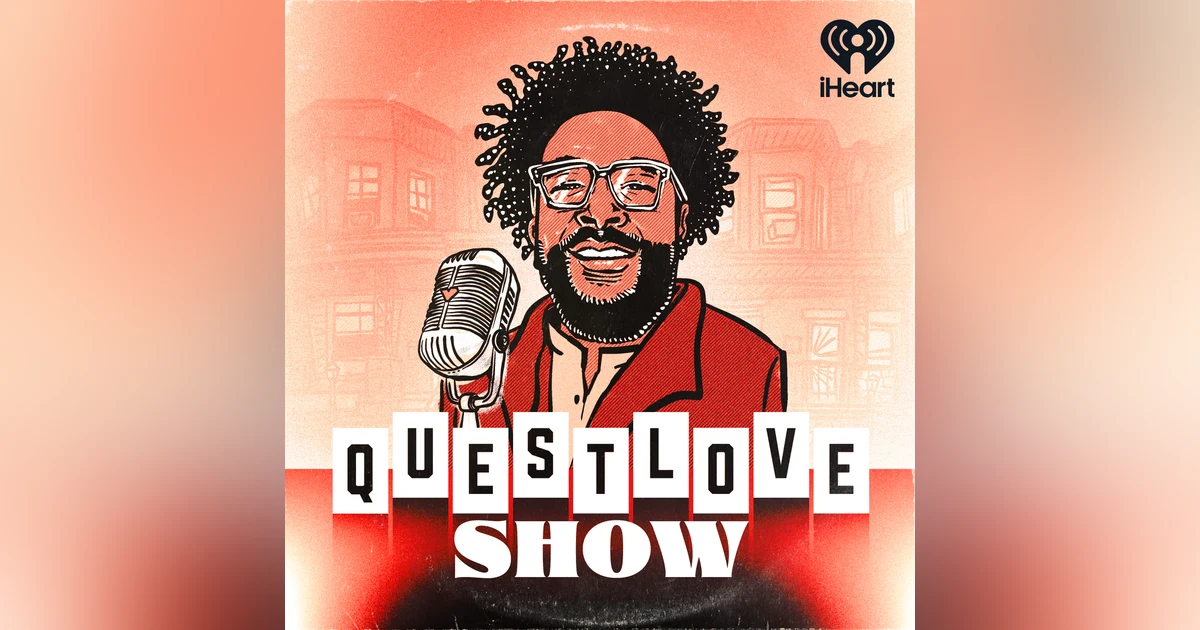
Joe Kay of Soulection

 iHeartRadio
 Apple Podcasts
 Spotify
 Amazon Music
 RSS Feed
 TuneIn
 Castro
 Questlove sits down with Soulection founder Joe Kay live backstage at the 2026 Roots Picnic in Philadelphia. The conversation traces the origins of a global movement that grew from zip files and SoundCloud posts into a worldwide community. Joe reflects on his earliest musical memories—from family deep cuts and white-label promos to discovering J Dilla—and how those influences helped shape the unmistakable Soulection sound.
He and Questlove dig into the craft of DJing, from set architecture and “go-to” records to reading the room and balancing nostalgia with discovery. Joe also explains why he left Los Angeles for Miami in search of a new international energy. Along the way, they explore the role of curators as culture-shapers, the artists Soulection helped amplify—from Brent Faiyaz to Kaytranada—and what it takes to build a movement that still feels fresh 15 years in.
See omnystudio.com/listener for privacy information.
00:00:00
Speaker 1: Questlove Show is a production of iHeartRadio. What's up, y'all? Good morning. Good afternoon.
00:00:23
Speaker 2: This is Questlove. We're here today in what I will say the Republic of Illidelf. This glorious May 31st of 2026, we are at the Roots Picnic, a gathering of minds and creatives.
00:00:40
Speaker 1: Name them.
00:00:40
Speaker 2: Yolanda Adams, Jay-Z, Andra Day, Erykah Badu, Lettucey, Kalani, Adam Blackstone.
00:00:48
Speaker 1: Oh, the Roots.
00:00:49
Speaker 2: DJ Cash Money, Jazzy Jeff, Sasha Keeble, Kareem Bailey Ray. I'm missing names. Wale, The Games here, Big Daddy Kane's here, De La Soul. I'm missing crucial names, but I will say that our illustrious guest today is a part.
00:01:06
Speaker 1: Of a movement. And you know me and movements.
00:01:10
Speaker 2: You know, oftentimes founders of the movements sort of go uncredited or unthanked. It's a thankless job curating, discovering, putting people onto. But our guest does just that. And I think it's rather apropos here at the Roots Picnic. that I sort of picked the brain kind of in a way that I don't think has been done before in the more traditional sense of the interview to talk to a person that basically has taken the baton of creative music to the next level for the last 10 years plus. We'll say 15. He's founded Selection, which is, Is it a vibe?
00:01:54
Speaker 1: Is it a movement?
00:01:56
Speaker 2: Is it a genre? How can you describe it? I know that when you hear it, it's a feeling, you know? I instantly know a selection movement based on even the engineering of the song or whatever, but we'll get into that a little later.
00:02:11
Speaker 1: I absolutely want to thank you, Joe K, for coming to the show. I've been waiting for this one.
00:02:17
Speaker 3: Thank you.
00:02:18
Speaker 1: Thank you. Okay, so.
00:02:20
Speaker 2: Tell me, what is your first musical memory in life, the first musical memory you had?
00:02:28
Speaker 4: First off, thank you for saying all that. We're celebrating Roots Picnic here. We're all here today, and you should be very proud, man, like what you've built. You guys have been going crazy on the lineups, by the way, like not just here in Philly.
00:02:41
Speaker 3: You know what I mean? The London lineup, crazy. The range is insane.
00:02:45
Speaker 1: Thank you.
00:02:46
Speaker 4: Three decades plus in the game, longer, however long, like timeless. And so I just want to say that I didn't even know that you knew about Selection or me. Not to say that you're not tapped in. You just never know.
00:03:00
Speaker 2: I've been friends with Andre so long. And I think in my older age, I might not be as immersed in... Various cultures and whatnot. But just socially, I knew Andre first maybe months before I'd seen him DJ before. Only because, you know, shout out Gila. Hello, if I don't give you your flowers. You know, and so I got to know Andre first. And then I did the research later. Like, oh, okay, you say he's a DJ? And then suddenly asking him to put me on his stuff. And then eventually... That's how I came in backwards.
00:03:40
Speaker 1: Right. But, you know, I'm still coming in, even though backwards.
00:03:42
Speaker 4: Right. So to answer your question, my first memories, probably growing up in the house, my parents, both of them playing, anyone from Badoo to DMX to Rage Against the Machine.
00:03:56
Speaker 1: I'm sorry.
00:03:58
Speaker 3: You know, like, there's a lot of different sounds.
00:04:01
Speaker 4: Sade.
00:04:02
Speaker 1: Sade.
00:04:02
Speaker 2: Okay, so on this platform, when I interview legacy artists, you know, like people are 70, 80 years old, and they'll say like, oh, you know, I grew up on like Little Milton and, you know, whatever.
00:04:15
Speaker 1: So I forget that.
00:04:18
Speaker 3: Yeah, I'm 36.
00:04:19
Speaker 2: My time period. So when you were saying that, I was like, wait a minute. Like, wait a minute. No, that's the end of my train.
00:04:27
Speaker 3: I feel you. I mean, you were in it. You were part of it.
00:04:29
Speaker 4: That's what makes this a full circle moment. But yeah, I mean, I was born in 89. So I was just old enough to appreciate it.
00:04:36
Speaker 3: You know what I mean?
00:04:36
Speaker 4: But that's what I grew up. My mom was super big on Sade's. And that's why a lot of the music, yeah. That explains everything.
00:04:42
Speaker 3: Right.
00:04:43
Speaker 1: If you say Sade, then that explains everything. Right.
00:04:45
Speaker 4: And so that, my uncles playing house and deep house and reggae all within the same couple.
00:04:53
Speaker 3: Hours at the crib.
00:04:54
Speaker 4: So I was always exposed to a lot of music early on, just a lot of different sounds. And I do feel like a lot of that is what makes up the Selection sound because you're hearing a lot of global sounds, but a lot of it's rooted in instrumental music and the producer.
00:05:09
Speaker 1: Right?
00:05:09
Speaker 4: And R & B and soul is what we're known for. And also the Caribbean sounds. But as we've gone on, the sounds have become more global, you know? So that's how it started though.
00:05:19
Speaker 2: Okay. Do you remember, and tell the truth, what is the first record that you purchased with your own money?
00:05:28
Speaker 1: And tell the truth. And look, this is what I'll say.
00:05:32
Speaker 2: I think in the beginning, of course, when people ask me this question, I'll be like, all right, yeah, the Jackson 5 was my first, that's the safest answer.
00:05:40
Speaker 1: Or you hear people say like, oh, Stevie Wonder. I already know.
00:05:43
Speaker 3: I remember.
00:05:43
Speaker 1: What is yours?
00:05:44
Speaker 3: Mine was the Diplomats, Diplomatic Immunity. I think it was like the volume one.
00:05:49
Speaker 4: That was the first joint I got that I purchased with my money. Because my parents were buying me CDs back then. Every time we go to Tower Records, that was my thing. Every week, I remember buying Blueprint. I remember buying the Nas CD. I remember buying all those records, the G-Unit albums. Because I grew up in that era, the Neptunes. But the first one I bought with my money was the Diplomats. And that's still Rockefeller at the time. So I grew up listening to all that. So last night was very nostalgic. Obviously, we're here in Philly, but just seeing State Property come out.
00:06:25
Speaker 3: It hit home.
00:06:26
Speaker 4: Even though I'm from L.A., I'm from the West Coast, I grew up listening to all that.
00:06:31
Speaker 2: I'm still getting over it right now. I haven't processed what I just went through. So you mentioned your uncle and your parents and whatnot. What three figureheads would you say are really responsible.
00:06:45
Speaker 2: For your, not your love of music, but just like, everyone needs an older figure to put you on to stuff.
00:06:53
Speaker 1: Yo, you need to check this out.
00:06:55
Speaker 2: So like, what three figureheads would you credit?
00:06:58
Speaker 4: I would say, I mean, there's so many people I can name, but I would say off top, one of my godfathers, Nerve1, he put me on, like just showing me around, taking me on his promo runs, because he worked at Universal at the time, so He would take me with him on his runs and I was exposed to just, you know, what it's like on a rollout.
00:07:19
Speaker 3: You know what I mean? So a radio run, so when the artist is in town, he would take me around.
00:07:23
Speaker 1: So he would take you from record store to record store to.
00:07:25
Speaker 4: When Wayne and Juvie first were coming up, he was taking them around. This is like when those records first came out. I think it was high.
00:07:34
Speaker 1: Oh, 400 Degrees.
00:07:35
Speaker 4: Yeah, all that era. So anyways, that, I remember G-Unit, when they were first coming up. So he was taking them around and so... I wasn't around all the time, but he would give me records. Promos.
00:07:46
Speaker 1: Yeah, I would get promos. A white label. There's nothing like an uncle that gives you the white labels you feel like.
00:07:51
Speaker 3: I just always had this nice goodie bag of just heat.
00:07:55
Speaker 4: And I think that's where a lot of me being someone that always is ahead with having white labels and exclusives and demos and things, that's always been my thing.
00:08:07
Speaker 1: Okay.
00:08:07
Speaker 3: Even since.
00:08:08
Speaker 4: High school, middle school, I was making CDs and I always had bootlegs. So I think that's how a lot of it started. Also, my guy, Eric Coleman, you know, Mo Chilla, and he's, you know, he shot the cover of Mad Villain and so many other legends. And he always had like, was always kind to play me exclusive Madlib and Dilla early on and his association with Stone's Throw and coming up in that pocket and me being from LA. So being exposed to that sound. So I was like a beat head, you know what I mean? And then, I mean, man, there's so many people I could name, but I would say those two were like very core to like my upbringing.
00:08:45
Speaker 2: Yeah.
00:08:46
Speaker 1: I got it. Yeah.
00:08:47
Speaker 2: Yeah. I had a sort of an uncle figure that worked for like Black Radio in the 70s. So I didn't know it then, but he would just always give me his throwaway records. Like I grew up, I was like the receptacle of the records that nobody wanted. So all the flop singles and and I think it's different when you the first 15 years of your life, you take in everything like you're not discerning or that's whack or that.
00:09:14
Speaker 1: I mean, there's things you like and things you don't like.
00:09:16
Speaker 2: But matter of fact, I would like as a five year old, right, like DJ promotional, like just because I thought those were special records, like those black and white, white labels and whatnot. So when did your love of compiling music start? Do you remember the first mixtape you made? What was your first creative project that you did?
00:09:39
Speaker 4: First creative was, I mean, I was already making CDs for all my friends, right? I was known as that guy in high school. I was on LimeWire, MySpace, all the blog spots, just downloading records.
00:09:50
Speaker 1: So you were just making compilations. Did you have equipment as a kid?
00:09:53
Speaker 2: Not yet.
00:09:54
Speaker 3: No, I didn't start DJing until college. So around 2010. 2010, I started DJing.
00:10:00
Speaker 4: I had got my first turntables, which I still have.
00:10:03
Speaker 3: And I still use them to this day. They're in prime condition.
00:10:06
Speaker 1: Damn.
00:10:07
Speaker 4: Got my Technique 1200s for like $ 500. You know what I mean? Got like a little DJM 400 mixer. That's still like my setup at the crib. I still thrive off... being in tune with what I started with. And I made sure like they're referred, like I got them, they look brand new. You couldn't tell. But anyways, before that I started doing a podcast, like a musical podcast where I was ill vibes.
00:10:30
Speaker 3: Yeah.
00:10:31
Speaker 4: That's where it started. The ill vibes for me, I wasn't mixing records. It was just more about track curation and track selection. So from that point, I was making these mixes. And within year one, I got like 30,000 followers on that podcast, you know, through the iTunes podcast.
00:10:48
Speaker 1: Yes.
00:10:49
Speaker 3: So I was able to get a nice following. And that was.
00:10:51
Speaker 4: Essentially the preliminary era in time of building my foundation and network.
00:10:57
Speaker 3: That's even how Andre and I met. He had listened to one of the mixes.
00:11:01
Speaker 4: And so long story short, I just built this like really global network of producers.
00:11:06
Speaker 3: We mainly focus on producers. You know what I mean? I came up.
00:11:09
Speaker 4: Listening to Flying Lotus and wondering like, oh, who's behind the Tribe records and who's behind Common and Badu.
00:11:17
Speaker 3: And then that's when I started learning about Dilla. You know what I mean?
00:11:20
Speaker 4: I'm like, oh, I've been a fan of Dilla this whole time. I just didn't know he was behind the records, right? So this was like 2007 when I was 2006.
00:11:27
Speaker 2: So you discovered Dilla like around 13, 14?
00:11:31
Speaker 3: Yeah, pretty much. And again, I was a fan.
00:11:34
Speaker 2: Did you know it was special then or did you just, Dilla was special to me only because he was the timeline, the Mason Dixon line of, wait, this sounds way different than everything else I'm used to. But I always wanted to know, what was it about his music that attracted you?
00:11:51
Speaker 3: It was just his swing, his snares. I don't know. His drums, to this day, drums and snares, I'm so picky about. It has to hit. And he had the crispiest snares.
00:12:03
Speaker 1: Perfect sounding.
00:12:05
Speaker 4: And his swing, we know about his non-quantized swing.
00:12:09
Speaker 3: He just has that effect.
00:12:11
Speaker 4: So I think it was his swing and the way he sampled and the way he flipped things. And then again, I just realized that all the records I loved, listening on radio at the time, You know, I don't have to, we'd have to listen.
00:12:23
Speaker 3: There wasn't streaming today.
00:12:24
Speaker 4: We didn't have control of the music like that. So we would have to wait for the top 25, top 40 records to go on rotation so I could record it on my tape deck at the time. And I'd have to like wait. But I was, I was realizing like, oh, okay, he's, He's like the mastermind behind the sound. Even if he wasn't credited properly, because we know about that too. You know, if he was responsible for the ideas. It was him that really I started to study. But I was already a huge fan of Neptunes and Timbaland. Those were like my top two. And still are people that I still play in my sets today. The Neptunes and Timbaland, those sounds were... So those three were like my holy grail, you know?
00:13:06
Speaker 1: How often are you asked to.
00:13:10
Speaker 2: make mixes or curate for special events? Like people coming up like, yo, I need a Quiet Storm mix or a car trip or like how often are you asked?
00:13:18
Speaker 3: All the time, all the time.
00:13:19
Speaker 4: And even when we're just in the car, like I'm always, you know, I'm sure you are too. Like, yo, here's the, like sometimes I just want to chill.
00:13:26
Speaker 3: You know what I mean?
00:13:27
Speaker 4: Sometimes I'm like, let me pass this and let's give someone else another chance.
00:13:31
Speaker 3: All the time.
00:13:31
Speaker 2: So when you're in the car with other people, Like me, are you secretly trying to put them on to something that they might not.
00:13:39
Speaker 1: Be hip to?
00:13:41
Speaker 3: All the time. All the time.
00:13:42
Speaker 1: Okay.
00:13:42
Speaker 2: So when you make a mix for a car mix, what are your three go-to songs that are like the best for, and depending on what time you drive.
00:13:52
Speaker 3: Right. What's the mood?
00:13:54
Speaker 1: It depends.
00:13:54
Speaker 2: And a day like this today, which is like perfect weather. What are the three records that come to mind for you?
00:14:01
Speaker 4: That's a tough one, because I was putting my set together in my room today, so I was just providing a lot of different sounds.
00:14:08
Speaker 1: Okay.
00:14:08
Speaker 3: I'm still high off yesterday, man, and so.
00:14:11
Speaker 1: Yo.
00:14:12
Speaker 3: And I know everyone's hit you.
00:14:15
Speaker 2: For those that don't know, you've seen the news. By the time this comes on, this is not even 24 hours after the Jay-Z performance, of which.
00:14:26
Speaker 1: There's still a high that I'm going through right now. Exactly.
00:14:29
Speaker 3: Exactly.
00:14:30
Speaker 4: So, I mean, one of my favorite albums was Blueprint. So, like, I love records like All I Need. And I love, I'm thinking about Freeway, like what we do. And I'm thinking about records that just nostalgic, but keep me going.
00:14:45
Speaker 3: You know what I mean?
00:14:46
Speaker 2: How often do you prep? for a DJ gig? Does it depend on it? Is muscle memory intact now where you automatically know what's working for now?
00:14:57
Speaker 4: I just played New York on Saturday at Knockdown Center in the Ruins. That was more focused on my Afro-electronic side. I have a deep love for music from South Africa and Lisbon. It's this very deep, spiritual electronic sound.
00:15:13
Speaker 3: It's not just I'm a piano.
00:15:14
Speaker 4: It's three-step and and Afrotech and GOM and Piano and Batida.
00:15:21
Speaker 3: There's all these different sounds.
00:15:22
Speaker 4: So I just did a set there, but I know today's a bit of a different crowd, right? I did Chicago last week. I played a festival. It was like an R & B festival. It was called Forever Mine. And that's more of my global open format set. So I have different layers to me where Today, for example, is an open format set, and I only have 45 minutes, which is hella short.
00:15:42
Speaker 2: Is it harder for you to do a half hour set or a five hour set?
00:15:49
Speaker 3: A half hour set.
00:15:50
Speaker 2: What is it that you would like to convey to people when you do a half hour set? Because I'm trying to tell a story, but I feel like under an hour is not long enough to let you see.
00:16:02
Speaker 1: What it is that I do.
00:16:03
Speaker 2: So for you, when you're given an hour or under an hour, what do you feel that you must get across?
00:16:10
Speaker 4: I mean, when you have under an hour, you have to be a lot more precise, at least for me. Precise, intentional. I got to have all my cues and loops in order. I never do a preset type of session.
00:16:25
Speaker 1: Now you busted me, but go ahead.
00:16:28
Speaker 4: If I have 50 tracks for today, it doesn't mean I'm going to play them all in order. I got to just know where I can find them. So I try to arrange them in pockets. So if I know this is more of my up-tempo sound, if this is my Jamaican, Caribbean joints, if these are my edits, I try to group them. And then I just try to, ideally, at least the tracks that I want to start off with, I try to put the first 10 that I really love at the top so I can find them. 45 minutes, I got to hit them with 30 seconds to a minute, 20 transitions.
00:17:00
Speaker 3: I got to wake them up. Okay, I got it.
00:17:02
Speaker 4: Yeah, and I go all over. My tempos are like, I'm going all over the map.
00:17:18
Speaker 2: So for me, I have five bulletproof stalling records because sometimes like I have to be my own opening act. Right. And I'll say that the difference between the way I DJ now versus then is I'm not sure what demographic I'm going to meet.
00:17:36
Speaker 1: You know, if it's. Older people, I know exactly what they want.
00:17:41
Speaker 2: Usually, I try to hit people when they're high school age. And sometimes, I need a stalling tactic to figure out who my audience is. So, I'll say like the Bam Bam Rhythm, like Murder, She Wrote. Like, that rhythm will never die. It works for old people, young people, so... Maybe I'll spend my first five records there. Is there a bulletproof starting five that you use just to figure out where you are and what your set's going to be?
00:18:12
Speaker 3: You know, it always changes.
00:18:14
Speaker 4: For me, depending what type of crowd I'm playing for, I'm always mixing up the records. But I do have a playlist called Go-To's. And in there is maybe about 20 to 30 records. that I can play at any time and.
00:18:29
Speaker 3: It'll, it'll move. And yeah, so I do organize.
00:18:32
Speaker 4: And when I notice these records really move crowds, no matter what their preference is, I keep sliding those into that playlist. And it's kind of like one of them everlasting as time goes on, it just gets bigger.
00:18:43
Speaker 2: Can you give an example of like three of your go-tos that like absolutely work?
00:18:47
Speaker 4: Ooh, I have this, uh, this one right now that I've been playing. Everyone knows the song. I played it so much. Uh, it's this, uh, Maxwell Ascension edit, but it has like a batida, like a Lisbon flow, like a house kind of flow to it.
00:19:02
Speaker 1: And it just has like- Andre gave me this.
00:19:04
Speaker 3: You know what I'm talking about?
00:19:04
Speaker 1: Yeah, I know. I played with Maxwell. I know exactly what it is. Okay.
00:19:08
Speaker 3: That one, I mean, it's universal and it gets the women going, man.
00:19:11
Speaker 4: Right. Like for me, I'm trying to move the women. Like if you can move the women, everyone else follows.
00:19:16
Speaker 1: Right.
00:19:17
Speaker 3: You get the women dancing and records, you get them sing along. You know what I mean? The line dancing, I mean, that's the goal. You get them early, too.
00:19:27
Speaker 2: My method of DJing for three hours is there's 10 songs that I want to be a pinnacle moment, but I learned early. I used to be an amateur where I would just.
00:19:38
Speaker 1: Do killer, killer, killer, killer, killer.
00:19:41
Speaker 2: But after 11 killers, people are numb, and I feed off the adrenaline of, holy shit, he's playing that shit. So after like the 11th record, then it's just like, oh yeah, he's a good DJ and there's no more, you're just numb.
00:19:56
Speaker 1: Are you aware of that? Like, are you, must everything be a killer? Or.
00:20:02
Speaker 2: Like right now, I'm obsessed with bad records. Like I'm in daredevil mode. Like I will play some shit purposely whack where they'll be like, all right, let's go to the bathroom.
00:20:12
Speaker 1: Knowing my next record is going to be like, holy shit.
00:20:16
Speaker 2: So for you, do you have that sort of method when you do that?
00:20:19
Speaker 4: My method, I'm not, no, I'm definitely not a every, I'm not like launching records. rockets every track, I pace it out. I take people on a journey. That's why I like to take people high. I could keep it up here the whole time. I might keep it there for three to 10 minutes max, but overall, I like to vibe them out. I like to bring them back home and build them up and just take them on this journey versus just high energy.
00:20:47
Speaker 1: Wear them out.
00:20:48
Speaker 4: Now, again, today, I wouldn't say I'm going to go like super hard the whole time, but there's going to be moments today, but since I have 45 minutes and it's a festival, Joe's a little different. Like how I play my intimate sets or how I play sold out show for a thousand to 2000 people for like, that's the people are coming to see me today. I understand there's a lot of people who don't know who I am and there's people that do, there's people that don't.
00:21:13
Speaker 3: So, and it's festive.
00:21:15
Speaker 4: It's a lot of, nostalgic but contemporary sounds, R & B, hip-hop, you know what I mean? Centric, soul music. So I know the audience I'm playing for, so everything I have, the edits, the blends, the originals, everything is in pocket for today. And a few left-field records that maybe they would never listen to, but are still in pocket, that I feel like there's still some music discovery going on.
00:21:41
Speaker 1: What, in your opinion.
00:21:43
Speaker 2: is the perfect closing record. Like when you're done, are you just spinning until the cops, like the club owners, like you got to stop now?
00:21:51
Speaker 1: Yeah. Or do you have an intentional closing record that's like.
00:21:54
Speaker 3: It always changes.
00:21:55
Speaker 4: Sometimes I lose track of time and I'm like, oh damn, I only have five minutes or only three. And I kind of just end where I'm at. But every now and then I have a couple. But for the most part, it just depends on the type of crowd. Like when I played again in New York the other night is different from... how I would end today because that one was in a certain theme and pocket. Here's more, like I said, a more global open format set. So it's gonna be different from this set to the last one.
00:22:23
Speaker 2: When you spin, do you watch your audience or are you just focused? I don't wanna watch the audience because I might get in my head if something's not working.
00:22:34
Speaker 1: So I always keep... You know what I don't like?
00:22:36
Speaker 4: My biggest peeve is when people are leaning against the rails in the front.
00:22:41
Speaker 1: Oh, trying to get you.
00:22:42
Speaker 3: No, no, no.
00:22:43
Speaker 4: When they're just leaning on their phone or they're kind of airing you out. Because that front crowd, they determine a lot of the energy. You can have people behind you dancing. You can have people on the side, in the back.
00:22:53
Speaker 3: But when these people are up there and they're looking at you.
00:22:55
Speaker 1: And just want to watch. Right.
00:22:56
Speaker 4: I don't... Man, that's personally one of my pet peeves. But yeah, I absolutely watch the crowd because... I mean, I'm not like staring at them the whole time, but... I constantly look up every record to see, are they feeling this? Do I need to take it somewhere else?
00:23:09
Speaker 3: Right. But I feel you.
00:23:12
Speaker 4: But I also use four CDJs usually, so I'm up there working. I'm up there lining all my shit up, and by the time I look up, I'm mostly focused on the mixer and what I'm bringing in.
00:23:25
Speaker 1: Got you.
00:23:26
Speaker 2: Tell me your journey of trying to get put on. Did it start with Stone's Throw, like trying to join the squad?
00:23:31
Speaker 3: Yeah, at the time I had tried to intern for them.
00:23:35
Speaker 1: Okay.
00:23:35
Speaker 4: Yeah, I never got a call back, and it's fine. I don't even think they probably even saw the resume. This was like two days.
00:23:40
Speaker 1: All right, Wolf. Now I'm playing.
00:23:42
Speaker 3: And it's cool.
00:23:42
Speaker 4: Me and Wolf and that crew, we're cool. I've had them on the radio show. We laugh about it now.
00:23:47
Speaker 2: But the universe clearly wanted you to be the leader of your own, which this is.
00:23:53
Speaker 1: Clearly the better option.
00:23:54
Speaker 3: Because I wasn't getting calls back.
00:23:55
Speaker 4: I had to apply to be an intern at Alpha Pub or Low End Theory. For the legendary Low End Theoryâ Not the album, but the event in L.A. that lasted about, what, 15, 10, 15 years? I used to go there. That was like my safe space to go to and hear about new producers and get beat CDs.
00:24:18
Speaker 3: There that no one had. That was another thing.
00:24:19
Speaker 4: I would go there and, you know, that's where I would see Flying Lotus or I would see, shoot, even Tyler.
00:24:25
Speaker 3: It's dope.
00:24:26
Speaker 4: You know, I saw a video. I didn't even know he's here, but seeing Tyler... to have the creator here as a fan. He's just a huge music fan. He pulled up to Low End Theory back in the day and was just there as a fan. And then he ended up playing when he was on his rise. And, you know, I just, I appreciate people like that. So that was my early stomping grounds. But again, the formation of Selection came because I didn't hear it back. So I'm like, man, I have to show my own proof of concept. If someone doesn't believe in this, I have to create that myself. I can't wait on other people. Um, so I ended up creating, that's how Selection, the foundation of it, and, and the podcast before Selection. It was like, I gotta just show people what I can do because I can sit here and try to explain, or they already have their resonance and stuff, I don't expect them to just put me on, but I have to show someone what I can do, and that's how, that's what I started doing.
00:25:14
Speaker 2: Did you intentionally say, okay, I wanna start this movement? I kinda accidentally just wound up in it, and then someone told me, like, five years into it, like, well, dude, this is a movement you got here, but.
00:25:26
Speaker 1: Then it was just like, hey, let's do it in my house.
00:25:29
Speaker 3: I never.
00:25:31
Speaker 4: Was like, okay, this is going to be a movement. I was just so passionate more so about the radio. It was always radio first and then the label side. And at that time, there was no streaming or distribution. There was no, you know, the services we have today where anyone could upload a record today. Back then, it was like, if you could put music up on SoundCloud and Bandcamp and get it up on the iTunes store and get like 100 records priced, it was a huge deal for people. But the format at the time was SoundCloud and Bandcamp. That's what we were using to drop every week. And that was our format.
00:26:04
Speaker 2: Okay, so I was going to say, I mean, you literally started from zip files to this global movement now. In those 15 years, like, is there a nostalgia for you? Like, in terms of, I mean, I'm sort of caught in between a digital world and an analog world.
00:26:22
Speaker 1: But I always want to know.
00:26:23
Speaker 2: For a person that, started in digital, is there nostalgia for a digital movement? Like, is there something that you had in 2011 that is not available now.
00:26:37
Speaker 1: That you miss?
00:26:38
Speaker 3: Like, in terms of a format?
00:26:40
Speaker 2: Well, I mean, is there something along the way that you miss that isn't there?
00:26:44
Speaker 4: Oh, I do miss that cosmic, that Flying Lotus, After One Sound, you know, that 2008 through 2011 pocket where I feel like they were the poster child of Dilla they were like young up and coming but they had this like new wave sound but it was still in pocket I'm like damn I really there wasn't enough music that came out in that pocket and beyond that I mean I just think that era of like I said 2010 through like 2015 pre-streaming was special I started DJing at the end of the analog vinyl era where it was still there but at that point Serato was already around Everyone had their laptop, so you didn't have to walk around with crates or bags of 45s and stuff like that, which is nothing wrong with that.
00:27:32
Speaker 3: It's good to see it come back.
00:27:33
Speaker 2: How do you feel about this 45 resurgence movement?
00:27:36
Speaker 1: Have you jumped on it yet?
00:27:38
Speaker 3: Yeah, I've been pressing.
00:27:39
Speaker 4: I've been laying down some of my white labels and stuff like that. I've been playing at Dante's Hi-Fi. I've always collected vinyl, even when I started digital music. I always had records. I just wasn't out doing vinyl sets. I wasn't trying to be. I was just like, man, I want this record.
00:27:55
Speaker 3: I want to collect it.
00:27:56
Speaker 4: When I went to Japan, Japan actually re-inspired me to get back and playing records again publicly. So Japan's a special place to me. And so I went to some kisas and some listening bars. And I'm like, man, this sound system is amazing. this Dev Ohas sound system.
00:28:15
Speaker 3: I got to play on this. You know what I mean?
00:28:17
Speaker 4: So it kind of got kicked back off there. And then my guys at Dante's Hi-Fives really would inspire. So I've been back on it. I've been pressing my own records.
00:28:26
Speaker 2: Yeah, you're going to force me back into this shit.
00:28:30
Speaker 4: Man, but it's been great because I'm such a digital guy. And it's because these records aren't all on vinyl, on wax. I've just been laying these down. And it's been nice to just have one of ones for myself to play out because I feel like when people listen to a vinyl set, especially the youth, I feel like they're more likely to actually sit there and listen to the record playing because they know it's on vinyl versus any of us could switch up a track in 20 seconds and it's just like, it loses that feeling.
00:29:01
Speaker 3: People are just like, oh, this is just another DJ set.
00:29:03
Speaker 4: Anyone could buy a FLX4 now, a $ 200 controller, and now they're They're playing at your local speakeasy that took you three years to get in. And they're playing that overnight because of a TikTok or a blend or an idea they had.
00:29:16
Speaker 3: So it's a lot different nowadays, you know?
00:29:18
Speaker 2: Tell me about the genesis of starting the Selection Coalition or movement, like hooking up with Andre and like- Just everything.
00:29:28
Speaker 3: The whole crew, the- like you said, you brought up Taku, Karmack. Yeah.
00:29:33
Speaker 4: It was literally just finding them on SoundCloud and hitting them up on a message.
00:29:37
Speaker 3: Hey, I love your music. This is what we do.
00:29:39
Speaker 4: By that point, we already had X amount of SoundCloud and Bandcamp releases.
00:29:43
Speaker 3: Just unofficial things.
00:29:44
Speaker 4: It's like, do you have a loose record that you're a demo idea?
00:29:49
Speaker 3: Send it over. We'll come up with the artwork. We'll put that shit out tomorrow. It was that easy. Man, it was about the music.
00:29:55
Speaker 4: And remember, at that era, in 2011... and onwards videos didn't even exist on, on Instagram. TikTok didn't even exist. So I remember it was just like, you had to post a still flyer. It was about the music. And that's what I loved. I missed that era, you know? And so that's how we came up, but it was really, like I said, I started doing this in 2008, 2007. And it was those four plus years of developing and networking that when it came to selection, I already had this network of friends from all over the world, that I had already been pushing through my podcast and on my own. So when it came to Selection, the foundation, the rapport was already there. And then after that, when I started Selection Radio, that was like the weekly bulletin that enabled me to promote the records that we were putting out and all my friends and music that I was finding on a weekly basis.
00:30:49
Speaker 1: Okay, so you're currently living in Miami right now? Yes, yes. Okay, so I gotta ask you this thing. What made you want to relocate down there?
00:30:57
Speaker 2: Because even to this day, I'll reject Miami gigs because it's one of the hardest gigs I've ever had to face because I usually just wind up compromising and saying all right let me play what they played just so i can get invited back again but.
00:31:15
Speaker 3: As of today what do you consider the sound of miami.
00:31:18
Speaker 2: Well the thing is is that also when i play miami it's also a niche party like if the do-over is there well first of all when when a music conference was a very active thing i would go down there and of course it's it's niche parties you know where you can be a hip-hop head and play on south beach or whatever but You know, for the most part, you know, I've always thought that movements start where there is no culture. Like, Philly's very easy. Now Philly's like, oh, neo-soul and all that stuff. But the reason why it works here is because we had nothing. We were in New York's shadow, and we were consistent. So my thing is that I was very curious to why would you want to leave the comfort zone of California and whichâ everything that you stand for, like as far as your movement is concerned is out there. Whereas I did not see any of that in Miami and what made you choose that?
00:32:16
Speaker 3: Right.
00:32:16
Speaker 4: No, that's a great question. You know, I've been going to Miami for, I want to say 12, 13 years. And so we've been building the selection sound there for a long time. And I built a community of people that support me. And then as I got closer to people like, like Sven and, And, you know, the guys at Dante's Hi-Fi, 1-800-LUCKY, Coyote Taco, you know, Allen and the crew and Shout Out Rich. And, man, there's so many great guys part of that team. It just, I started to feel more of a connection because Miami's smaller. It's a smaller regional proximity than, like, let's say L.A.
00:32:54
Speaker 2: L.A.
00:32:54
Speaker 3: Is massive. New York, massive geography.
00:32:58
Speaker 4: I feel outside of New York, Miami is one of the most international, if not the most international city in the U.S. And so for me, I can hop on a flight an hour and some changes that to Jamaica.
00:33:11
Speaker 3: Right.
00:33:12
Speaker 4: If I want to go to PR, DR and all the other the West Indies, I have access. If I want to pop into to Colombia or South America, I'm right there.
00:33:20
Speaker 3: If I want to go to London, I want to go to New York. I'm three hours out.
00:33:23
Speaker 2: Right.
00:33:23
Speaker 4: So I think geographically being on the East Coast time zone is good for my mind. And also, like I said, the community that I built. So I've been able to tap in and I've been tapping in with the Haitians. There's like the huge Haitian community. So I've just been learning about their, I knew about their culture and genres and sounds, but now I'm in it.
00:33:45
Speaker 3: Now I'm going to their parties.
00:33:46
Speaker 4: Now my boy Jason Pantons not just invited me to his Afro beats, Afro Caribbean party, but then he's taking me to this, up-and-coming, pure, I'm a piano party on Sundays that happens in this little shack, outdoor spot. And they're playing, it's like the closest thing to South Africa you'll get in Miami, right?
00:34:06
Speaker 1: Right.
00:34:06
Speaker 4: And then we did Club Space for 15 years of selection. We did 15 hours, right? And for us to bring the selection sound and the electronic sound together, having Benji B, Theo Parrish, Jada G, myself, Sango, and J-Rock, You.
00:34:24
Speaker 3: Know what I mean?
00:34:24
Speaker 4: From the beat junkies and all these legends and Coco Rocco, right? Having these people hearing horns in club space, you don't hear that.
00:34:33
Speaker 1: So you're saying it's safe to come back to Miami right now?
00:34:35
Speaker 3: It's safe.
00:34:36
Speaker 1: It's safe.
00:34:37
Speaker 3: And it's not just... Yeah, it's popping.
00:34:39
Speaker 1: And no offense to any of our people in Miami.
00:34:42
Speaker 2: I didn't mean like, I'll never go back. But it's just, you know, there's some markets where, at least in the market, when I was DJing, Vegas is harder. Miami was one of those things, a little harder. Atlantic City, harder. Like, there's some markets that were... Where I didn't feel like fighting. Like, I'm going to force you to dance to this J Dilla shit whether you want to or not. You know what I mean?
00:35:04
Speaker 3: Right, right, right.
00:35:17
Speaker 2: How would you categorize? Because that's the one thing I am confused about. In terms of deep house versus classic house versus South African house versus I'm a Piano versus reggaeton versus.
00:35:29
Speaker 3: There's so many sub-labels now.
00:35:32
Speaker 2: For you, if I hear a lot of compression in the sound, a lot of compression, then I'm like, all right.
00:35:38
Speaker 1: You know what I mean?
00:35:39
Speaker 2: So how do you categorize and know? And are the genres interchangeable or is it... The parties that you're playing and can you mix of the genres?
00:35:50
Speaker 4: Yeah, that's and I think that's my my superpower is that I'm not boxed into if I'm playing Again, if I'm in my afro electronic bag or if I'm playing for a crowd even at space I don't have to limit myself to just traditional house or tech house or whatever genres I kind of play all these different sounds and diasporas from different countries and And I kind of bring it all into one because they're all within the same range. They're all especially 118 to 130, right? Like they're all within that pocket. They just have different cadences and they have different styles of production. But I'm very front facing and leaning towards the percussion and the tribal drum.
00:36:33
Speaker 3: Like we talked about Dilla. I'm a drum guy.
00:36:35
Speaker 4: Right. So I love dirty drums. I love just some shit that wakes you up. It like wakes up the spirit. And a lot of it has swing. That's why I like Bathida because it's deep house, but it's soulful. But it has this Angolan, you know, rooted sound and Cape Verde and like all these different energies and surrounding countries and parts of Africa that people don't know about that the sound is it's a drum. That's why I love the log drum, you know, and I'm a piano because now you're hearing it in Afro beats and you're hearing it in different sounds because I don't know, there's something about that sound electronically.
00:37:13
Speaker 3: For me, it wakes me up like, Oh, what is that? I've never heard.
00:37:17
Speaker 4: It's like a grown, it's like being at, I got a grown rave for real music heads and they're hearing this like newer, not want to say techno sound, but it's just like a spiritual sound. And so, yeah, there's all these, sounds that now there's three step, which is like a form of deep house and Afro tech, right?
00:37:37
Speaker 3: So there's all these sounds that I'm constantly learning.
00:37:40
Speaker 4: About and there's always going to be a new one, but I just take the time to learn about them and about the artists and things like that.
00:37:46
Speaker 1: Who do you feel right now is the sound of tomorrow?
00:37:50
Speaker 2: And do you get nervous about it in terms of like not maintaining a lock on your movement? But pivoting, moving forward, you know, like, and there's a point in every creative's life.
00:38:05
Speaker 3: She's killing it right now, by the way.
00:38:06
Speaker 1: I know.
00:38:07
Speaker 4: K1' s killing it. That's definitely a sound that's been, she got the women on lock.
00:38:11
Speaker 2: So, yeah, but how do you know when it's time to pivot and when it's time to search for what's next?
00:38:18
Speaker 1: How do you know what to leave behind you?
00:38:21
Speaker 4: It's a feeling and intuition. I wouldn't say I leave behind. I still keep my roots. However, I think it's just where my spirit guides me.
00:38:29
Speaker 3: It's like magnetic.
00:38:30
Speaker 4: I just know this is what I'm feeling. I can't, I'm at my age. I don't feel like I'm not here to fake things.
00:38:35
Speaker 1: I'm fifth.
00:38:36
Speaker 4: I've been doing selection 15 years, but I've been doing this 18, 19 years now total. So for me at this point, I stay true to what I believe in. And I'm always trying to make it easier on my, on my audience to be like, Hey, I know maybe you're used to this sound through selection or you want to hear your R & B and soul and you want to hear the edits and blends, right? The blend culture that we know today and the stems, this is just a full cycle of what has been going on for ages. It's just more commercialized and digitalized now because of technology.
00:39:09
Speaker 3: You know what I mean?
00:39:10
Speaker 4: But I get off more. I'm putting people onto the unknown, the deeper sounds. I'm all about discovery and putting things on that they may recognize but are still unfamiliar with. And I think about finding that balance.
00:39:26
Speaker 2: So I'm sure you've been asked this before. You released your first album. first EP like kind of 15 years into your career. What took you so long to finally put yourself in the spotlight instead of you discovering the next person?
00:39:43
Speaker 3: One, I got out of my head. My management, man, shout out to my management team. They're the best.
00:39:49
Speaker 4: They just really coached me through it. And they're like, man, you have everything on lock, but you're missing music. You know, think about at the time, if I would have put out a record with Bryson Tiller or Brent Fiaz or Snow Allegra or Sir Daniel Caesar, right?
00:40:06
Speaker 3: Like Masego.
00:40:07
Speaker 4: Like, it's not about trying to attach my name and take credit for everyone, but it's like artists that we were really early on when they had less than 5,000 followers, hundreds of followers, and taking that risk and then having records out with them.
00:40:25
Speaker 3: Imagine where those records would be now.
00:40:27
Speaker 4: Even the records that I've helped push organically that weren't through selection, but I just loved them so much. And whether we played them over and over and helped grow them organically or flipped them and made them even bigger through remixes and the edit culture, those are still things that.
00:40:46
Speaker 3: It's like marketing that an artist.
00:40:49
Speaker 4: you could only hope for, you know, especially when you get a crew like Selection and myself organically pushing something.
00:40:54
Speaker 3: It makes those records reach millions of more people.
00:40:57
Speaker 4: So there's a lot of records like that that we got behind early on that I personally know and feel that I wouldn't say we are the sole reason these artists became who they are, but we were really early part of the foundation of these artists becoming more widespread artists.
00:41:12
Speaker 3: Through these edits or through.
00:41:14
Speaker 4: How I was playing them on the show and then having a moment online or something like that.
00:41:18
Speaker 2: Who would you say, and I know this is probably asking you what's your favorite breath you ever took, but of all the people that you've put on or gave shining light to, who would you say was the shining light that made it into the spotlight that you'd feel like, wow, I helped seed them.
00:41:39
Speaker 1: Even if you don't get.
00:41:40
Speaker 2: The credit for it, But who were some of the people that you, that your co-sign?
00:41:45
Speaker 4: I mean, some of the ones I just named. But when I look, I think about Sondra Brent-Fayez. You know, I think about Snow Allegra already had Motion and she was already with No I.D. on the label side. But I feel like she had like a rebrand. And man, like it was amazing to see her rebrand and us pushing that. You know, again, Bryson Tiller, when he put out Don't and Trap Soul.
00:42:10
Speaker 2: Yeah.
00:42:10
Speaker 4: There's actually Sango, Jay Lewis, and a couple other people that came from the SoundCloud era that came up in the selection pocket.
00:42:18
Speaker 1: You know what I mean?
00:42:19
Speaker 4: And I feel close to that. Again, Masego being really early on that. And then, who else? There's another name. I had mentioned Sir. I remember Sir early on.
00:42:29
Speaker 3: You know what I mean? Before he got signed to TDE. That was.
00:42:33
Speaker 4: It's just been a moment watching all these artists develop. And then one I can't forget, and again, this is a collaborative thing. He's done all the work, but just to this day, still play at least a couple of his records in my set is Keitra Nata. You know, when he was Keitra Damas pushing his records early on, but as Keitra, that's someone that I feel is, he's the face of this all. I mean, he's, he can literally do 10 to 30,000, people of his at his own show sold out he was headlining here last year that's what i'm saying you know and so i we just played together um he did the main stick same setup he did main.
00:43:14
Speaker 3: Stage i did the b stage.
00:43:16
Speaker 4: At in chicago and it was fire like i closed out when i finished he was coming on yeah so it was like a staggered thing i'm like this is a perfect way to end the festival yeah you know what i mean so.
00:43:27
Speaker 2: So what's a part of your creative life that we're unaware of that you have to go through in order to make this story work?
00:43:36
Speaker 3: It's a great question. To make this... Lately, for.
00:43:40
Speaker 1: Me, it's been.
00:43:41
Speaker 3: It's been a lot of traveling.
00:43:44
Speaker 4: When I travel, I'm getting inspired by different sounds and people and ideas. Or it's just life moves. Honestly, my move from L.A. to Miami, I didn't just sell everything and start over. I moved my whole house over. So it was very difficult to do that in the midst of our 15-year anniversary.
00:44:03
Speaker 3: This whole year has been a campaign for us. So those challenges.
00:44:08
Speaker 4: And these like time blocks really put me in a position where I'm like, I might still be getting settled into my home, but I got to hop on a flight to do this thing. So these challenges, uh, they make me more intentional with my time and my, who I have around me and things like that. So, I think the move has put me in a different headspace because I got out of my comfort zone. And so the creative has been like in my home because I spend the most time in my home. So I need to make sure that my space feels inspiring and motivational. So me just being there, being able to think as soon as I go home tomorrow, I'm going to sit there in my house. And sometimes I just I'm in silence. I just stare. I'm an introvert at heart, but I'm social by association and by my career. but I'm really an introverted person. So when I go home, I'm just, I need to sit like you, like you haven't even had a moment to reflect on what just happened. I don't know when you will, but hopefully you get at least half a day or like a day to yourself this week.
00:45:05
Speaker 3: And then it can kind of all just hit you.
00:45:07
Speaker 4: And I'm talking about like now where you're reflecting with your friends or the crew or with Jay, I'm talking about where you just get to sit there and just be present with what just happened. But then it's tough because like, This happens, and then like you said, you have that thing with Nas, you know what I'm saying? Or the whole, the Hollywood Bowl, right? You're always on to the next thing. So I think the biggest thing for us is finding ways to still be present and take it all in. Because there's always going to be the next thing. Like, fuck, I got to hop on the next flight, the next show, the next set, the next rehearsal. So I'm even wondering, like, how do you find time for yourself or to take it all in?
00:45:43
Speaker 1: Well, okay.
00:45:44
Speaker 2: Well, my last question to you is going to be, what's your self-care routine? You know, with me, I have a daytime routine and a nighttime routine. And both those routines require silence. I initially was the person that kept music playing when I fall asleep, keep music on when I, you know what I mean?
00:46:06
Speaker 3: And- You stopped that?
00:46:08
Speaker 2: Yeah, so once, well, my life changed during the pandemic where I discovered silence and meditation and only when silence came did other ideas come. And, you know, as a result- This is kind of why I'm in the lane of where I didn't expect to be, which is movies.
00:46:27
Speaker 1: You know what I mean? But for me, it's just having a routine.
00:46:30
Speaker 2: That I stick to, which is, you know, I got to spend my first half hour of the day just sitting in silence, not looking at my phone.
00:46:39
Speaker 3: You don't check your phone when you wake up?
00:46:40
Speaker 1: I haven't talked to Jay yet. You know what I mean? Wow.
00:46:44
Speaker 2: Like, I still have to allow myself to. to sit down you.
00:46:49
Speaker 4: Know i have so many questions we got to do a session where you come on my show but i would love to do it because i have man we don't have enough time unfortunately today but i was going to say the main question for you is how long did it take to rehearse what y'all did like yeah.
00:47:05
Speaker 2: Okay so i'll say that around january first of all asking jay-z to do the picnic has been an ongoing 18 year joke. And this year, usually we plan for the picnic. The picnic, we give ourselves a month off. This year will mark the first year in which I'm not taking a break in terms of more picnics. We wanted to always expand the picnic across the world. So this, you know, We're doing Philly, LA, London. We're doing Rotterdam.
00:47:42
Speaker 3: Oh, damn.
00:47:43
Speaker 1: And there's one more we might consider. We might do Tokyo. I don't know.
00:47:48
Speaker 2: So the thing is, is that usually we take a month off just to... No more curating, no more listening to who's next and all those things. And then come August, we got to work on next year. And usually it starts with calling the big guns. Hey, Mariah, you want to do this year? Hey, Janet, you want to do this year?
00:48:11
Speaker 3: Are you making those calls yourself? Some of them?
00:48:13
Speaker 1: The only... Listen, relationships are everything. Because this is.
00:48:18
Speaker 3: But only you can lock in Jay.
00:48:20
Speaker 1: Well, yeah. I mean, the thing is, is that.
00:48:23
Speaker 2: For this event and the types of acts we do, number one, we always wanted to keep the price down underâ well, before it was likeâ until three years ago, it was always under $ 100. And we don't have much sponsorship and those things, so a lot of this is look out for the cookout.
00:48:44
Speaker 1: Okay, we'llâ I mean, I don't.
00:48:49
Speaker 2: Wanna give people ideas like, hey, I'll drum for free on your next 12 albums, but it's really friendship.
00:48:55
Speaker 1: You know what I mean? Like, I'm friends with Usher. I'm friends with Jay. I'm friends with like anyone that's, Erica, yo.
00:49:02
Speaker 2: And so, you know, one, it's relationships, but really it's just constantly, I'll say the hardest part of it now is figuring out who's next. Now, thanks to the Tonight Show, I'm forced to know who's next. Because the thing that makes The Tonight Show special is... knowing an unknown Ariana Grande or an unknown, like anyone who's A-list now were unknowns back then.
00:49:29
Speaker 1: And here's a network debut, you know.
00:49:32
Speaker 2: So kind of being in The Tonight Show and by default, the SNL ecosystem, constantly puts you in the mix with other people. So at the end of the day, this is about your ears.
00:49:49
Speaker 1: And what you like.
00:49:50
Speaker 2: One, can you still listen to music as a fan? Now, you know, when you talk about Dilla, Dilla taught me how to actually absorb music because before I would just buy a record And then skip.
00:50:06
Speaker 3: Constantly searching, and you're just like, skip, skip. What's my next record?
00:50:10
Speaker 2: Right.
00:50:11
Speaker 1: And he, Sundays at his house, he would clean the house. He would drive around.
00:50:17
Speaker 2: He would listen to complete songs four, five, six, seven, eight times until he says every song has something to reveal to him. He just has to subconsciously, oh, that bass line, and make a note of it. And there was a part where I started being a machine and stopped being a music fan. Where are you versus being a machine and a human in terms of music is concerned?
00:50:44
Speaker 3: I'm definitely a machine.
00:50:45
Speaker 4: I was listening to music and digging for some music for today that I didn't have in my library. Still always finding new records. But what's been helping me listen fully is actually playing records at home. So every day when I wake up, I have my setup right where I spend 90% of my day. I have my turntables and I just been on, I buy like new records still. So I've just been hitting play and like stuff that I might skip on, on streaming or if I'm in the car, since I'm moving around, it just plays. And it's because it's kind of caused me to be a bit more patient and let the music, Speak and flow. So I'm in the middle because my job, I have a radio show every week that I do, and I have to find new music to play and program every week to the, to my people that listen.
00:51:32
Speaker 3: But also numb to that process. It's a muscle memory.
00:51:36
Speaker 4: But I would say I'm numb to, is it's very difficult because I've gotten busier and it's hard to still get these shows in every Friday.
00:51:45
Speaker 3: I pre-record them and then they air Sunday.
00:51:48
Speaker 4: It's hard while I'm in the middle of touring, but what's helped is when I have special guests and takeovers that will take filling the.
00:51:54
Speaker 3: Show for me.
00:51:55
Speaker 4: So like I had, I had a, I had someone fill in.
00:51:57
Speaker 1: For me this week. No, but it's real.
00:52:00
Speaker 3: And you're next. Come on. I definitely want to do it.
00:52:02
Speaker 1: I definitely want to do it.
00:52:02
Speaker 3: You got to do that now.
00:52:04
Speaker 4: And we need another real conversation because I have, 45 questions for you off top that I just, I feel like the people in the world, and I know people have asked this, but I feel like you laugh when I start talking about what generation I'm from.
00:52:17
Speaker 3: I feel like the generation I come from, plus older.
00:52:20
Speaker 4: Folks, I feel like there's a bit of an angle I can hit you with that maybe others, I've seen the Red Bull, the RBMA ones, like killed it. But I just, there's just some things, man, especially with new life events. I'm so curious where your head is at, you know?
00:52:33
Speaker 3: So anyways. Yeah, thank you for.
00:52:35
Speaker 4: Taking the time and being here after an incredible night like that. You could have easily been like, man, I love you, Joe Selection, but, like, I'm going to chill. Like, I just had one of my biggest nights last night with this. It's a rarity for Jay to play. And, like, for you to still show up, show up on time, I pay attention to that stuff, man.
00:52:53
Speaker 3: This guy was on time. We were walking in together.
00:52:55
Speaker 1: You know what I mean?
00:52:56
Speaker 2: Dude, like, getting to you, to me, is even more important because, like, I'm a fan of curators. So in this day and age, a curator put the roots on, like Giles Peterson, you know what I mean? And the way that he put on Benji B and seeing you do that and so forth, like I can only learn from that.
00:53:17
Speaker 1: And the thing is, I don't want to be the all-knowing know-it-all. I want to be the student. So, yeah, I appreciate that. Thank you, sir. Thank you for coming on the show.
00:53:25
Speaker 3: Thank you so much, man.
00:53:26
Speaker 4: Yes.
00:53:26
Speaker 3: Appreciate you.
00:53:28
Speaker 1: This is the Questlove show. Thank you, Joe. Okay. I appreciate this and I will see you on the next go round.
00:53:34
Speaker 3: Peace out.
00:53:39
Speaker 2: Questlove show is hosted by me, Amir Questlove Thompson. The executive producers are Sean G, Brian Calhoun, and me. Produced by Brittany Benjamin and Jake Payne. Produced for iHeart by Noel Brown. Edited by Alex Connelly. iHeart Video support by Mark Canton. Logos, graphics, and animation by Nick Aloi. Additional support by Lance Colvin. Special thanks to Kathy Brown. Special thanks to.
00:54:15
Speaker 1: Sugar Steve Mandel.
00:54:17
Speaker 2: Please subscribe, rate, review, and share The Questlove Show wherever you stream your podcasts.
00:54:23
Speaker 1: Make sure you follow us on socials. That's at QLS.
00:54:29
Speaker 2: Check out hundreds and hundreds of QLS episodes, including the Questlove Supreme shows in our podcast archives. Questlove shows a production of iHeartRadio.