JoJo
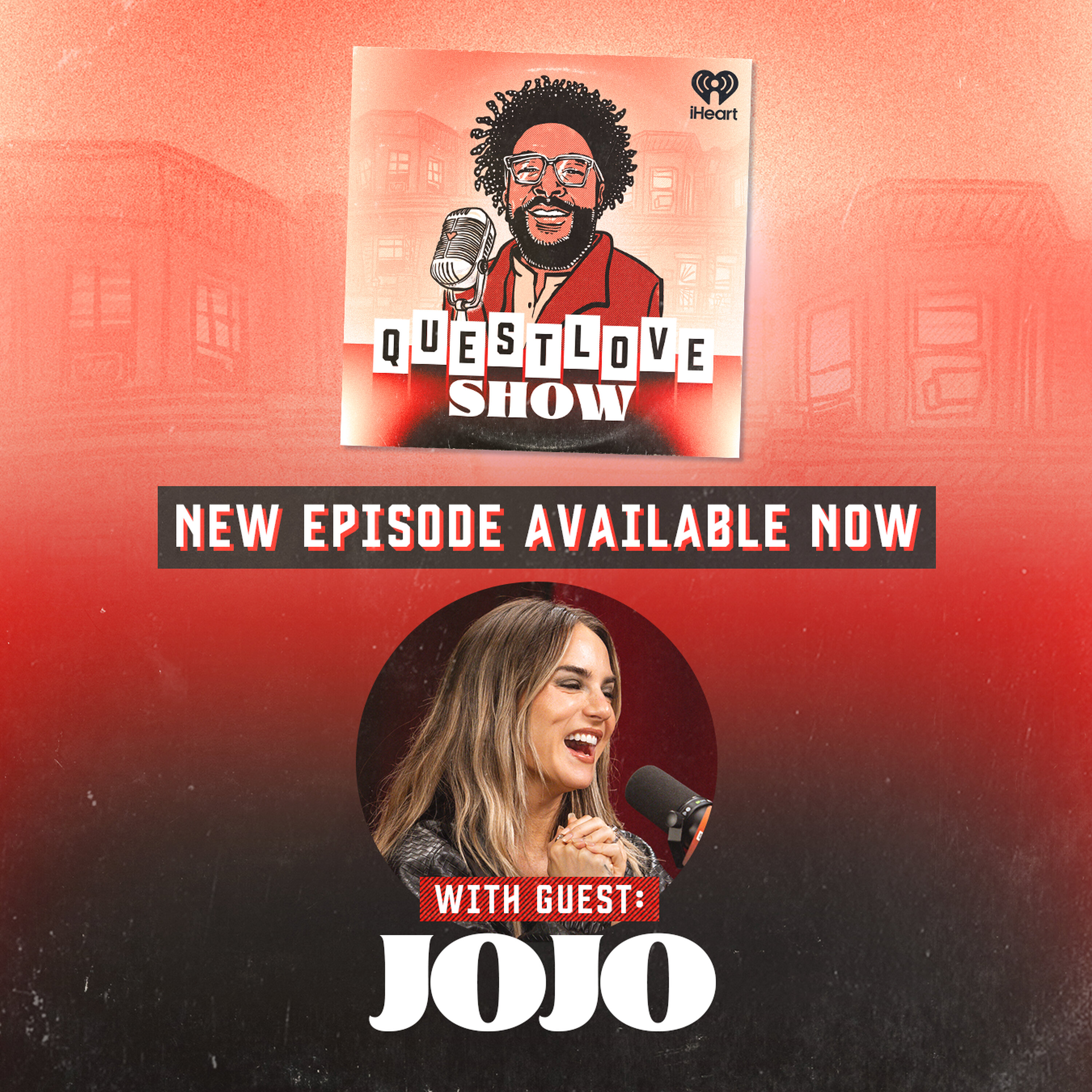
Questlove and JoJo are NOT close friends. They aren’t—or at least, that’s how they approached this conversation: two pals from different genres and generations who have bonded in recent years, sitting down to see what else they might have in common.
For The Questlove Show, the two get into JoJo’s evolution from teen prodigy to Grammy-winning, multi-platinum artist—songwriting camps, vocal discipline, Broadway chops, creative blocks, and what it means to define success on your own terms. JoJo also gets real about periods of feeling low, her family, and why she’s no longer interested in trauma-dumping in the studio—but still wants the music to hit you hard.
And, because this is QLS, we go everywhere: Boston accents, mermaid dreams, theater nerd deep dives, the standards for singing in the age of AI, and the story behind her viral flip of “Marvin’s Room” by Drake.
This is a conversation about craft, resilience, growing up in public, and choosing joy without losing the soul.

 iHeartRadio
 Apple Podcasts
 Spotify
 Amazon Music
 RSS Feed
 TuneIn
 Castro
 00:00:00
Speaker 1: Quest Left Show is a production of iHeart Radio. All Right, we're gonna anyway, lads, moment. Wait, this is starting off the way that I didn't want it to start off. Okay, we gonna breathe. All right, listen, Welcome to the Quest Love Show. So, as you know, I have personally spent the greater part of this decade buried in a lot of metaphysical books and self help books. I've said it over and over again, YadA, YadA, YadA, but at some point the brain actually needs a break. And those few times that I've taken a break and went left, and you know, my go to thing has always been music memoirs, and me picking up a particular music memoir also conveniently lined up with one of my very first game nights in Los Angeles, where are pal in front of the show jazz masifhas Jones. She basically rolled in with today's guests as her plus one, and I remember the rapid timing of gasps and that went around the room when our guests entered game night, and I will say that probably we hit it off famously. So cut to a week later, I'm bookshopping in the airport and boom, there she is on the shelf, staring back at me on her cover, and I thought, Okay, let me see what the journey has been for our guest, because I really haven't kept up since you know, her days of when I first seen her on TRL yesteryear and you know, in the early arts and whatnot. I got to say twenty years plus, you know, the resume that she's not going to brag about being the artist with the I guess the youngest artist with a number one single. She's gone multi platinum, a Grammy of course for say so, and not to mention Setina mullin Rouge on Broadway and h yeah, an instant New York Times bestseller memoir called Over the Influence and which not only I read as a book, but read with the companion audiobook, and which to me that was the game changer of it all, Like I basically had to read the book twice. And timing has really never worked before in the stars have aligned in which our guests has finally come to the show, and I'm gonna pretend we're not friends in real life. I'm gonna keep this really professional. Jojo, Welcome to the Quest.
00:02:56
Speaker 2: Listen, sare I can't.
00:02:57
Speaker 1: Believe how you doing.
00:02:59
Speaker 2: I'm tickled to be here. Thank you for having me. I'm honestly honored.
00:03:04
Speaker 1: Thank you. I'm going to try to keep this professional.
00:03:07
Speaker 2: Why well, okay, however you have, however you want to do it. I'm excited.
00:03:12
Speaker 1: You know, even though we've been doing this for I guess you can say this is ten years now in this particular format, I'm like shy of a year or a year plus, and so I'm still learning, still reading the comments. Yes, I'm still learning how to navigate this as a solo artist. You know, I'm still on off the wall now I've gotten the thrill of you. So the thing is is that since we first met and bonded at game night, I thought that I would do something a little bit different than I normally do, like I try to do it chronologically, but really I want everyone out there to get your book and read it themselves. And I really like second to Mariah's book, like her audio, a book like for me to hear the story to come from the person makes all the difference in the world.
00:04:05
Speaker 2: When you told me that you were reading my book, I couldn't believe it. And the way in which you you know, broke things down for me. You really paid attention. You gave me a whole new lease on life about this thing that I had done that I just thought was kind of just in the ethery.
00:04:20
Speaker 1: I just thought, like a book out there.
00:04:22
Speaker 2: No, I mean, I just you never know, And so just thank you.
00:04:26
Speaker 1: For I admire people that with a journey and the story to tell, and so and more than that, it's not only a journey, but I mean, you drop a lot of gems in there. You know, you're not shy about your shortcomings and a lot of them where you might have failed. So I mean, the human thing is happening. And plus I think at the time I was on my same journey of if we want to call it the righteous path, and so yeah, I really admired it. And it's weird for me to come in backwards. I had had to start with a memoir and then work my wa backwards to your music, whereas everyone got to know you first and did the opposite.
00:05:04
Speaker 2: Well, you were busy, so I get it.
00:05:07
Speaker 1: Yes, we were busy, but we're here now. So what I'm trying to do is I'm going to ask you some rapid fire questions that are mixed up that probably you haven't been asked before, because I also want to know like the human side of you. So I'm basically encouraging people out there to just read the memoir to get the soup to nuts story of your life. But yeah, there's a lot I want to ask you. So number one, what is your coffee order?
00:05:34
Speaker 2: My coffee order is a I'm in milk cappuccino, A simple, no sweetener, blah blah blah. I want a local coffee shop.
00:05:41
Speaker 1: Okay, you support mom and plops, I've got reference. I got you. Okay, But sometimes when you're middle of nowhere in at.
00:05:48
Speaker 2: The airport, I will get a quartado. I think some night quartads and just like just a little bit of likes espresso with a little milk, I think is kind of what it is, or quartado.
00:06:00
Speaker 1: I think the reason why I'm shotings sufferable. I'm not the coffee person that I should be because it's just too intimidating to know all those flavors and whatnot. And it is moclados and babados and there's no more small medium and exactly it's just really intimidating to me. So I just responded by not having a coffee preference.
00:06:22
Speaker 2: So yeah, and there's no reason you should. My first therapist said, don't should all over yourself.
00:06:28
Speaker 1: Okay, agree with that question Number two, what is your greatest fear when you start a new project.
00:06:38
Speaker 2: I think we've talked a lot about this.
00:06:40
Speaker 1: Just we don't know each other, Okay, we're strangers.
00:06:43
Speaker 2: My greatest fear when starting a new project is that I won't be able to produce what the feeling that I want to create.
00:06:50
Speaker 1: So what's inside here has a hard time.
00:06:53
Speaker 2: Yeah, and I won't be able to manifest that because also I am a communal creator. You know, I'm not a producer. I really enjoyed the co writing process, but I also love coming with my ideas and my lyrics and melodies and all that. But I worry that I won't be able to communicate what it is that is the desire of my heart, if that makes sense, Okay.
00:07:14
Speaker 1: I believe based on how I've been following you post pandemic and whatnot on social media, there's one thing I always wanted to know about. So I'm a communal person also, but ours is mostly the jam session on stage. Can you walk me through the process of a typical writer's camp. I've seen you do these things where you will gather with what looks to be like twenty maybe twenty five people. Maybe it's only eleven people in this.
00:07:45
Speaker 2: Yeah, like twenty five, Well it looks a lot, yeah.
00:07:49
Speaker 1: Yeah, And like this is a process where you just gather like three over here. Yes, all right, so walk me through that process.
00:07:55
Speaker 2: Yeah, So what you're speaking to is like a writer a camp for a project. I've actually I've been fortunate enough to be called into do When I was at a certain publishing company, they would like have they rented out a place in France and they put all of us in a castle. It was crazy. They do these destination things where they'll pair off an artist, a co writer, a producer. Three I find to be a good number, and three or four. Sometimes they'll put you in a room. You'll have a computer and interface and you know, keyboard or guitar or whatever, and you'll re'll write that way. And it could start with me saying I have this idea for a hook, or I have this concept, or I'd like to make a song that sounds like this, but with this type of percussive difference in the song or whatever, or sometimes we all go in and it's like, what are we listening to? What are we feeling? It could start from a conversation and then oftentimes if there isn't magic within the first hour or two, you'll go to the next idea. Because I'm sure you've read Rick Rubin's book and I love it. You want to try to follow that magic and that impulse and things like that. So camps can go in different ways. I've done it for my album before. Recently, I got some of my favorite creatives in a room together in Joshua Tree. That was about five of us. Thorow, Nephew Fiemster, Tommy Parker, Niki Flores, and David who works with neph And we just stayed up all night and made things in different rooms and I bopped around and we finished some ideas. And it can happen like that. I don't know if that makes sense.
00:09:39
Speaker 1: No, No, I can see it. Yeah, So when's the last time that, like, do you trust the process of just you and one creator? I like that. I'm trying to see this through.
00:09:51
Speaker 2: It's my preference. Actually, sometimes I can get overwhelmed. I think the older I get, the more I'm better one on one and the more I do trust myself and I trust my instincts, And that's been a long time of honing that, getting sensitive to that inner knowing.
00:10:10
Speaker 1: Yeah, how much of your soul do you want to expose to your collaborators? Like if songwriting is the cathartic killing process that songwriters say it is, like, there's got to be a point where at least, like the pre talk is where you talk about where your life has been, like Okay, well I got a divorce last year and I had to bury my animal, or you know, like whatever it is feeling inside. Is there even space for you to just lay out where you are in life so that the person knows what they're working with.
00:10:46
Speaker 2: I think it's cool, but I also think that using it as a therapy session is not always the most productive thing. It can kind of get in the way sometimes of what the actual objective is. Personally, I think that there's a time for therapy and this is just I feel right now. Maybe I'll feel different the next time we speak about this, but right now, I think that it can be a little self indulgent sometimes to go and dump trauma dump in a session and there's a time and a place for that, and I've done that so many times over the years, and then I end up writing songs that are about depression or about feeling like I don't know who I am or I don't know and you know what, I actually don't want to put that out in the world. That's actually not what I want my contribution to be right now, do you know what I mean? I want to act as if I want to project another truth within me, which is love and strength and resonance and empowerment and creativity and connection and all those things. So I think sometimes we need to come in and at least for me and fortify or make a decision about like what it is that we want to do, and we can get to the other stuff later. I think the after session download is sometimes a good thing too, But I like to be productive in a session and then let's go have a debrief O for a glass of wine.
00:11:58
Speaker 1: After How long is it typically before you know we got a song here? Ooh?
00:12:06
Speaker 2: I think that by the end of the session, if you've written and laid a first reference of that song, there's a song in you know that I'm working on in my new project. That I knew that day. I was like, this is special, this is going to set the tone for this new project. But then it really is the opening it up to other people too. Does it resonate in the way that it feels to the creatives, because that is an important part of it. Otherwise I'll just be making stuff for myself. But I want to connect. That's the desire of my heart is to connect with other people, whether it's one on one or whether it's you know, it's not that I want to pander or cater to what people think I should be doing, but I want it to resonate. So as I start opening it up to other people, is it eliciting a stank face? Is there a visceral reaction? Is there something that they walk away from it with? So that takes time to know.
00:13:03
Speaker 3: So.
00:13:03
Speaker 1: Quincy Jones basically said that his number one rule when working on both Off the Wall and Thriller in Bad was those three records that if he doesn't get goosebumps at one point, he'll throw it in the lamp, like it'll just go Are you that person where like the song has to hit you somewhere in your chakra where it's like hm, or is it no? Because I know some people that are just I know one songwriter is just a twenty minute person. He overthinks it, then the magic's going, so twenty minutes. It's like I stop, yeah, and that's the song.
00:13:40
Speaker 2: Anything Quincy says is a yes for me. I'm listening and I want to, you know, but everybody's process is different, right, But you know, I kneel at the altar of what Quincy does.
00:13:52
Speaker 3: I mean?
00:13:52
Speaker 2: So I am looking for some type of visceral reaction at this point in my life because I've done so much over the year years that has not felt in alignment, not really.
00:14:04
Speaker 1: Felt true authentically you, and not really.
00:14:07
Speaker 2: Felt authentically me. And I'm not saying that it needs to be like this is exactly where I am blah blah blah, but it has to feel true, it has to feel like and I'm not saying I've done that my whole career, but there's been pockets where I've compromised.
00:14:18
Speaker 1: So where you are right now from one to ten, and I know this is like you're relearning yourself, the adult version of you, and you break in the chains of like the studio system and all those things that held you bat before. So from one to ten, where do you feel you are on the number scale?
00:14:38
Speaker 2: As far as life got a number scale, you know.
00:14:42
Speaker 1: The ten representing you know your absolute destination point of this is where I am now and planning my flag or is it still like you're still trying to figure out, like what your favorite sound patches are if I like singing slow songs.
00:14:58
Speaker 2: Or I think I am a process of discovery. I'm in a season of trying things on, but not in the same way that I was trying them on in my twenties. I think my thirties have really felt like such a gift for making it through my uncomfortable, weird, messy, dangerous twenties, like even spiritually dangerous, you know what I mean, Or not not spiritual, but just like emotionally, like I was not a safe place for myself or others. And I feel like you're right about that in the book.
00:15:29
Speaker 1: Yeah, No, I wasn't like it's weird meeting you at because I see it a fascination like I can't fathom.
00:15:39
Speaker 2: Yeah, I mean, I was just like I was just really good for like just getting too drunk and just doing some weird shit, you know. What I mean, I really was, so I think now what you like, I'm so glad. I'm so glad we didn't know each other then it wasn't it wasn't the best. But I think that as far as my artistry, I really feel really to being at a place that I want to like really stay at and being like this is who I am and where I want to stay for quite a while. So I feel really close. I don't want to give it a number because seven is such a boring number. But I did not say that. No, I'm close. I'm close, And my intention with this, with a project that I'm making now is it could be the last thing that I make, you know, and then I just go have some babies and go f off. But who knows.
00:16:27
Speaker 4: I could never really Okay, say goodbye?
00:16:40
Speaker 1: What is the most air quote? DIVA request on your hospitality rider?
00:16:47
Speaker 2: Okay, you guys asked me if I wanted snacks here? And I thought it was like a cute thing because I thought you were like, I thought maybe you did that with your guests. You're like, what weird snacks do you get? So I asked for some weird snacks? I was like, could I have some crispy red grapes. Could I have a diet coke? Could I have an evyon? Could have a charcooterie board. Y'all did it? Y'all did it, but I didn't. I really literally didn't need anything.
00:17:07
Speaker 1: Shit is my show, and I didn know that we could have a rider. Cousin, Jake, Cousin really out, you were just like sharing your water with me, like you want some water.
00:17:17
Speaker 2: Mire You know, you are so generous though, especially with your food offerings and everything, so I thought that that was a part of the thing. So anyway, my weirdest request is that I really do like I do like really minerally water, So I ask for minerally water.
00:17:34
Speaker 1: Well mostly I asked that because especially at the tonight show, m M, I see the weirdest of riders when it comes to like serious singers. Okay, I've seen the weirdest thing. One particular soul singer wanted onions, actual red onions, honey garlic clothes like some people like they made. Shaka Khan's ride is real, like as far as like the right.
00:18:02
Speaker 2: Well, she's like very connected to the earth, a little witchy. She's kind of making potions and she wants.
00:18:10
Speaker 1: I feel like she's back there, like trouble, Like, what is your post like a cauldron of Yeah.
00:18:21
Speaker 2: I just like some manuka honey. I'll just take some minuka honey.
00:18:24
Speaker 1: Okay.
00:18:24
Speaker 2: Yeah, it's very anti microbial healing. You can put it on your face after you wash up your makeup.
00:18:30
Speaker 1: I've seen that before Tarika. When he's on stage. One of the funniest things I ever seen in my life is, you know, he'll because like his voice is his most important instrument, and you know he'll have like achanation and like all these sprays and whatnot. But also there are sprays that are like deodorant. Sprays are also in the same bottle hand sanitized. Our new tech version put the deodor in one stage and oh it was like we stopped this.
00:19:09
Speaker 2: It's hard to recover from.
00:19:10
Speaker 1: So that's when I became more Yeah, I became more aware of Yeah.
00:19:15
Speaker 2: I travel with like a singer pouch though, so I have my my things in it, like my vocal straws and like singer sprays. Yeah, so we often like phone eate through straws to kind of loosen up and you can warm up that way, just like a little straw that you can wear around your neck. It looks like like a coke straw or something like. Someone has been like, oh, is that a party thing? I'm like no, I'm a singer.
00:19:43
Speaker 1: I never knew this existed.
00:19:44
Speaker 2: Yeah, and you just to kind of like it's nice.
00:19:51
Speaker 1: Okay, again, this is all super random, so it's like non sequitary. What is the most beautiful video? This is a question I never asked before any artists. Oh wow, what's the most beautiful video that you've ever seen? Music video?
00:20:08
Speaker 4: Oh?
00:20:08
Speaker 2: God, the way my memory is set up not right. But I just want to call out something that I just recently saw that Jacob Collier did And he's a dear friend and one of my favorite artists, and he did a video for this song that is also a meditation and he's like flowed. It's a dream that many of us have had, just flying, you know, And he filmed it overseas and somehow they were able to like maybe he was on a string or something. They you know, got rid of the string. He's flying through the flying yeah, And it's it was really touching because I had a you know, reoccurring dream. I can't I hope to have this dream again. A flying yeah, what is.
00:20:52
Speaker 1: Your reoccurring theme all in your dreams?
00:20:56
Speaker 2: Lately it's been deep and I've been like bringing bringing it to my therapists and been like, what's the tea here? What's going on?
00:21:03
Speaker 1: What's the object that's always in your dream?
00:21:05
Speaker 2: Sharks? Lately about sharks, and you know what it is, it's been mermaid. Yeah, I'm a mermaid. I identify as a mermaid. Okay, No, I think the past couple dreams have been deep ocean and fear of what's underneath. So that's clearly my subconscious being like come hither, come get to know me more. Else you're going to be afraid of your you know, sea creatures coming and getting you or whatever. So I can't say that I have like a I used to have dreams of mummies like coming up from the you know, depths and coming after me and stuff, And most recently I had a zombie dream which is similar. So I don't know what's going on.
00:21:48
Speaker 1: Wow, your dreams are cool, like my dreams are dumb? Like yeah, right, until thirty five, I was always about to fail chemistry class. Really the way way past graduation. I would wake up of like a final and I'm like a mirror, you're thirty two years old, like you're out of high school. But in my dream for the longest, I was always about to fail a class or something.
00:22:16
Speaker 2: I was about to not graduate in my dream for a very long time because that was a like reality because I was homeschooled when I was on the road for a long time. So through my twenties, I would wake up in a panic and be like, you're not going to graduate, and it was really scary, like I just was, you know, not turning something in or right.
00:22:32
Speaker 1: So I feel that what irrational fear routinely scares you to this day. The part two that is also what actual fear. There's an irrational fear like you dying by Jello or I mean just like a childhood fear that you've you know, people imagine monsters, or you know, a fear of sliding boards. I had a manager who's definitely afraid of Select popsicle sticks. Huh yeah, like to the point where I offered her five thousand dollars cash just to hold Select popsicle sticks and she couldn't do it. And this is my DJ manager. I mean, you've never seen the clips on Mari Polvich with the woman's afraid of pickles. What you never seen this? No, wait a minute, you're of millennial YouTube.
00:23:27
Speaker 2: Yes, scared of pickles. No, I've seen my strange addiction where she's like eating the couch and stuff.
00:23:31
Speaker 1: But that's yeah, well that's dark. Yes, I remember that. But if you google Mari and they do it just like Jaws, like.
00:23:40
Speaker 5: Came like hold the thing and she sees it coming and she runs out in the streets and then the camera starts chasing her in the streets with the pickles, and.
00:23:51
Speaker 2: Yeah, that wouldn't fly today. That's unkind Google.
00:23:55
Speaker 1: Yeah, yeah, it's but like, what is there a fear that you have that's.
00:24:03
Speaker 2: A little irrational?
00:24:04
Speaker 1: Yeah?
00:24:06
Speaker 2: Yeah, I was like, you know what this is not. I mean, it could happen and it's scary, but of getting a paper cut in my on my eyeball, like it's unlikely.
00:24:17
Speaker 1: Fantasize paper cuts really not fit well when you think of something a lot that's also fantasizing.
00:24:23
Speaker 2: True, I guess I feel I.
00:24:25
Speaker 1: Often dream of like shards of glass. I hate walking the barefoot in my kitchen because I always imagine that shards of glass are going to cut.
00:24:34
Speaker 2: Okay, so it's that little cut. Yeah, similar, but for you, it's it's a paper cut in the eyeball. That's oh I feel that, yeah exactly. So that's kind of irrational because it's just like how that happened. But I can feel it right now.
00:24:49
Speaker 1: I can just feel like, oh, yeah, I feel it with you. What's your real I'm afraid of Doberman's.
00:24:54
Speaker 2: They're beautiful, but I was bit in the face by one my nana's Doberman and I see them on this street and I'm like, that's a beautiful bitch. But oh my god, like.
00:25:04
Speaker 1: I think you're you're you're a dog mom.
00:25:07
Speaker 4: Yeah, I'm a.
00:25:08
Speaker 2: Dog mom, but she's she's a much she's a rescue And yeah, Doberman's are scary to me. You know, sharks deep ocean.
00:25:19
Speaker 1: Then as a Boston thing, Like how much of your life is spent in the ocean?
00:25:23
Speaker 2: Not not much these days. Like I'm I would be afraid to like be on a big boat and you know, say you're you're in the middle of the a nice ocean somewhere and your anchors down and people, do you want to go snorkeling or whatever? Like I will go, but I'm terrified the whole time, you know, so trying to face those fears.
00:25:43
Speaker 1: But this previous weekend I just visited Martha's Vineyard Jaws and also went to the Ink well as well. So it was like my first time seeing it's way small than I thought it was, Like in my mind beaches are like the sprawling thing, like Jersey beaches.
00:25:59
Speaker 2: At least Massachusetts beaches are.
00:26:02
Speaker 1: Yeah, it's like a little bit of sand and then just water.
00:26:05
Speaker 2: Did you like it?
00:26:06
Speaker 1: It was the most surreal experience I've ever It was like walking in the Twilight Zone. Really. Everybody was so nice to me and like no, but in a weird like I'm running for president way okay. Everyone was really nice to me and like.
00:26:21
Speaker 2: It felt like the Truman Show or something.
00:26:24
Speaker 1: Yeah, or like the Stepford Housewives, like it's welcome, but it was like every other person like I just had to ease my way down there.
00:26:31
Speaker 2: So is I mean, people do regard you as like the mayor wherever you go?
00:26:35
Speaker 3: I think not.
00:26:36
Speaker 1: No, this way is it? I felt it strange?
00:26:38
Speaker 2: Yeah, I just went to Nantucket for the first time. Nantucket and Martha's Vineyard are like two sides of the same coin or maybe not. People would probably disagree with that, but me growing up in Massachusetts, these were places that were aspirational to me because it was you know, it's expensive to go there, so I just went for the first time.
00:26:55
Speaker 1: One of the reasons why I champion your audiobooks much is your ability to blend in and out of character. Oh and you did a Boston accent that was kind of like Lois Griffith of Family Guide meets oh oh my God, Mayor Quimby of The Simpsons, Like it's I want to use it so bad.
00:27:19
Speaker 2: Please cast me in something where I can be a boss.
00:27:21
Speaker 1: Yeah. I was going to say, did you ever have like you have an amazing speaking voice, especially for your your book. I believe that certain people have a channel place where when they speak, depending on where their chakra is, like, it's effective. Have you ever considered like voice acting work?
00:27:38
Speaker 2: Oh of totally yes. Wi mebe sending the auditions my way and I slang them out, and I'm you know, I really would love to do voice acting work. It's fun. It's fun. But particularly I have such an affinity toward the Boston accent, and I lost it at a young age because moved to La for a few months for like pilot season when I was eleven and and the kids teased me so bad. On that first day of school at you know in Lhobber Heights, I think is the place where we were near like Whittier. I was living there, and I said, excuse me, where's the bubbla? And they didn't know what that meant. There was another language to them, so it meant where's the water fountain? Excuse me, where's the bubbla? And I was like, and as the whole class erupted in laughter, I'm like, these kids, I'm never I'm gonna lose my accent. And I did.
00:28:31
Speaker 1: I guess, you know, how did you do that?
00:28:33
Speaker 2: I don't know.
00:28:34
Speaker 1: Oh this is self and prosed. It wasn't a coach.
00:28:36
Speaker 2: No, it wasn't a coach. I think that over the years, I just listened to the way other people spoke, and then I tried to speak more like that. Also, I could go in and out of it.
00:28:46
Speaker 1: You know, So come Thanksgiving or Christmas, whatever event that causes you to hang with family men, yeah, yeah, or go to Boston. Does it sneak in.
00:28:56
Speaker 2: Yeah, it does sneak in. I do coach switch Yeah. When I'm around my uncle Dale, it's you know, he's he sounds like he's speaking another language, you know, like another you know, another language, blah blah blah, and it's there's a lot of yeah, I think so, and there's a lot of uh and blah blah blah. It's interesting though, because the next generation. I think my generation might be the last to actually have regional accents. Because I listened to my cousins, who are the closest one in age to me is like maybe nine years younger. They don't have the regional Boston accent anymore anymore. It's I think it's because of the the Internet and you know, the interconnectedness of all things. But I find that really interesting from a anthropological standpoint of like, how did it become this way?
00:29:43
Speaker 1: We were losing cursive yeah, apparently losing reading as well.
00:29:48
Speaker 2: So anyway, I'm not saying I'm not like, I'm not saying it's a good or bad thing that we're losing a regional accent. I just think it's really interesting.
00:29:55
Speaker 1: You know, I think a lot of the things that we held near and deer my fade into the past. I had a question once, you know, because people are always coming to me and talking about which kind of sort of taps into a post that you made about singing. I too have had thoughts, and the one thing that I've always wondered, I think the key component to the soul music that hits our soul is Unfortunately, I believe that there has to be a level of trauma that the singer has to go through that shapes that voice. I mean, it's maybe it's not.
00:30:42
Speaker 2: I mean you would know, and so I think you're.
00:30:45
Speaker 1: Well, I think for the most part, Like Okay, when I was teaching about James Brown in school, one of the students ask like, does he always have to scream so much like to another generation? The screaming almost came off as humorous, and I'd explain to them that, like, for every time I hear James Brown's scream, that's some sort of anger that would have come out on another person, but this is his release, his pressure valve release. Yeah, that screaming, the pain that you hear Retha Franklin and that beautiful pain. A lot of this generation doesn't have that, which is a great thing. But this also might mean that that level of soul singing might also be in our past. I mean, unless it's also you know, but as far as vocal turns, Okay, last night I saw a baby rose before him and yo, she sounds like in the most respectful, greatest way ever, Like her voice is, it's like one hundred years old. It's so haunting. It's hauntingly beautiful.
00:31:58
Speaker 2: I wish I got to see that.
00:32:00
Speaker 1: And then when the song's over, what's up?
00:32:02
Speaker 3: Yah?
00:32:02
Speaker 4: Know it?
00:32:03
Speaker 1: It was like, wait a minute, what the hell?
00:32:04
Speaker 6: Like the contrast, yeah, like I hear like all of our ancestors, and it's it's one of the most haunting things ever.
00:32:15
Speaker 1: Speaking of which number six, have you ever had to ghost someone?
00:32:20
Speaker 2: Have I had to go someone? I probably didn't have to do it, but I did it. Okay, I'm not proud of it, but I keep it moving.
00:32:28
Speaker 1: I really do.
00:32:29
Speaker 2: I really do. I've done it.
00:32:31
Speaker 1: It goes to such a harsh term, but like, how do you spring how do you spring clean? To protect your space? You don't have to get specific, but.
00:32:42
Speaker 2: Maybe I will. No, I don't know how do I protect my space? I mean, sometimes I'm not proud of this, but I definitely have done a slow fade, you know, in friendships, or professional relationships or whatever. But I try to be really communicative up until the point where it's just clear that it's not gonna be fruitful for us to be in relationship anymore. And I don't even mean romantically, because romantically I am. I think I'm a good communicator. But with other things, what are you thinking?
00:33:16
Speaker 1: I think romantic relationships are the easiest chase to But it's even as I asked you that question, I'm like, where for you to ask that question when you yourself are actively goes to maybe four people that you haven't told. I mean for me, it's easy because like, oh man, I'm so busy right now, or you know that sort of thing. But you know, I'm learning how to properly confront someone without I'm literally reading a book on how to get your truth out without being rude or what book is that? I don't even know. I literally got this two days ago. Yeah, follow up. This is how well I share all my books with you.
00:33:59
Speaker 2: So I'm listening to but we're not friends. I'm listening to the big leap that you didn't send me.
00:34:05
Speaker 1: But wait, are you serious? Yeah? When you said I didn't, I was shocked because I could say you hadn't sent it.
00:34:11
Speaker 2: You hadn't sent it, and then we talked about it, and then you did send it because Brianna brought it back.
00:34:16
Speaker 3: Up to me.
00:34:17
Speaker 1: But anyway, shout out to Brianna. We yes our friend. Yeah.
00:34:21
Speaker 2: The slow fade the ghost is a product of the time that we live in and you know, us not being as confrontational and wanting people to like us or wanting to keep a door open, things like that. And I do want to be on good terms with all people and stuff, but sometimes I want to also acknowledge that people are going through their process in their time, and I need to be protective of myself. I have done that with certain family members. I've never been able to do the full cut off, the tough love blah blah blah. I've tried to do that. I tried to do that with my father, you know, and I'm glad that I didn't do that to the extent that some people are encouraged to do that. Every case is different, but you know, it'll be ten years since my dad passed, and I'm grateful that I continue to have a relationship of some kind, do you know what I mean? Yes, So that's how I feel.
00:35:16
Speaker 1: Okay, your bed, are you let me ask a question first your bed, Joe, Joe. Are you a out of bed immediately and onto your day or are you a must have bed made before my day starts. Person.
00:35:35
Speaker 2: I like to make the bed like after I do my things like drink my glass of water, brush my teeth, you know, walk a gape, do things like take a shower. I'll make my bed before I go. But I don't have a particular order of operations.
00:35:52
Speaker 1: I'm people that can.
00:35:54
Speaker 2: I'm not OCD.
00:35:55
Speaker 1: Okay.
00:35:56
Speaker 2: I like things nice. I like to do things in a certain way that makes me feel nice. But I have mixibility. I do snooze a bit. My current ring tone is carry On by Crosby Stills, Nash and Young. So I wake up to do do do this morning, I woke up and I knew it's so jar wake up song. Yeah, but it's so jarring. But I'm like, WHOA, let's carry on.
00:36:21
Speaker 1: So you immediately and you're not a You're not a snoozer as I am.
00:36:25
Speaker 2: I am a snoozer. I heard this song three times this morning.
00:36:29
Speaker 1: Okay. So when you set when you set your alarm, how much time do you do, Like when I want to get up at eight, I'll set it at seven seventeen. Yeah are you? Are you that person?
00:36:42
Speaker 2: I give myself like eight minute increments. Okay, yeah, okay, treacherous to some, but I like it.
00:36:48
Speaker 1: So this is something I just learned. I'm now I've been doing this all year. I actually now set my alarm ninety minutes before the time I did want to get up. So say I have to get up at eight, I will set my alarm for six thirty only because of that bewildered sleepy state. That is literally that's your twelve minute window to say the affirmation that you want to happen for your life against everything. And I'm a person that does not want to get out of bed. We'll make you know. Another five minutes, another five minutes, another five minutes, another five minutes. But now it's like the conscious thing of like I want to write a good song today. That's not the way. It's literally the you're supposed to do it. Like when you're dead tired and you want to go to sleep, if you can force yourself ten more minutes past the that is when your brain implements your thing in emotion. So it's a thing where you have to force this. But I promise you the first time you press news, just say the key affirmation and you can say it in a sentence like it doesn't have to be a long thing of five minutes or whatever.
00:38:02
Speaker 3: Wow, that's a gem.
00:38:15
Speaker 1: How do you handle creative blocks? I'm still trying to figure it out.
00:38:21
Speaker 2: How do I handle creative blocks? Right now, I'm going back to the Rick Rubin book. I'm going to his is it called the Creative Process or something? And I'm reading it, rereading it, highlighting things, highlighting new things and interfacing with that wisdom.
00:38:37
Speaker 1: And is there a time period of which you.
00:38:39
Speaker 2: Just absolutely yes. I mean I haven't written for the past field couple months. How do I feel about that? Concerned during the time, But I try to just live, just go, just absorb, be, you know, get a life, right, get a life. I was like, I was in such a rush for so long to be grown, to arrive, to create success, to you know, recreate the early success, and you know, letting that go is such a practice. But even of just trying to to make a good thing, you know, so yeah, get a life. That's that's a really succinct, great way of putting it.
00:39:22
Speaker 1: There you go. Number ten? Have you ever stolen something?
00:39:28
Speaker 2: Am I a klepto? Is that? That's what it is, right, eklepto? If I were stolen anything, not that I know of, Okay, not that I know of. Like, I don't have that in me where I like, I want to get away with stealing something like that scares me. Actually, I don't want to get in trouble.
00:39:45
Speaker 1: I don't want to.
00:39:45
Speaker 2: Steal something from a hotel. I don't want to steal, not.
00:39:47
Speaker 1: Even the hotels. Not a robe, not a robe.
00:39:51
Speaker 2: I've thought about it. What pillows?
00:39:56
Speaker 1: You know what I love more than anything on this earth.
00:39:59
Speaker 2: Okay, So at the fancy places where they put your initials in the thing or something, you can take those right, Yeah.
00:40:04
Speaker 1: I was like, I've been a few places where they put it on your pillar. Whatever you do, Okay. So I think I just started noticing at the Caliber hotels I stay at maybe the last two or three years, I didn't realize that they have these like these miss bottles that they spray on your bed to give it that downy fresh feeling. And one day I walked past the housekeeper cart and I just saw a whole box of them. Both of my things are a cart related, so yes, for seasons. I'm sorry. I took two boxes of Rose Rose Spray miss because I wanted my home bed to smell like this particular spot that I was in in Hawaii would just smell misty and whatnot. And the other thing is I might have, Uh, if you're a Delta flyer, you know what I'm talking about. Dog bisc Off cookies.
00:41:07
Speaker 2: Are a problems up.
00:41:12
Speaker 1: Yo yo. So there was two chunky box supplies of bisc Off cookies in the overhead next to my bag, and man, just literally what.
00:41:26
Speaker 2: I opened it, no regard, no regard.
00:41:30
Speaker 1: I'll even go further that a girl that was like really sweet one at the time loved those cookies and I just had to make a move.
00:41:38
Speaker 2: I just cookies.
00:41:40
Speaker 1: Yes, oh man, the way that I was like that, now I was like, I have a friend of Deltas, So yeah, what is the best compliment that you've ever received from a fellow peer.
00:41:57
Speaker 2: The thing that comes to mind is when I'm doing theater where I get to act and sing and embody someone new because now I've done mulaan Rouge, I originated something CYNDI Lapper's new musical based on the movie Working Girl. I've done some other workshops and things like that. The biggest compliment is when someone who I really respect their artistry has said, you know, I forgot it was you, you know, and you you weren't singing like you're like who I think Jojo is. You weren't acting like who I think you are. I really got to get lost in That's that's a real compliment to me, because I don't want to be self indulgent always with the runs or with things, or like with doing you.
00:42:44
Speaker 1: Know, I expect you to do.
00:42:45
Speaker 2: I want to embody like that's my desire to get lost. I want to get get lost, you know.
00:42:50
Speaker 1: Okay, So now I feel like I can ask you gave me an opening. I got to ask you this question, okay. So, of course, because your life, your life has so many like specific pivots and leading directions that you probably didn't dream of when you were eight or nine or whatever. But the reason why I was excited to see you participate in the chess play, the reason why I was excited to see you participate in it, is because the insane and I don't mean acrobatic like performative acrobatic where like you know everybody that we've seen on showtime at the Apollo Do. And I'm telling you I'm not going like or you know what I mean.
00:43:42
Speaker 2: Yes, right, I'm not going which yes.
00:43:47
Speaker 1: Yes, so. But there is a very intricate, I mean almost jazz level intellect of difficulty that every song in the Chess play. It's literally to me like if you conquer that, like seeing Liam Michelle conquer that she did. I had no expectations whatsoever. One I didn't know about the history of the play Chess, which was created.
00:44:17
Speaker 2: By two members and Tim Rice.
00:44:20
Speaker 1: Yeah, and so for me, I was disappointed when the play dissolved before you got a chance to get behind it. But I do want to know how deep into training camp did you get in learning those songs, because even I feel like practicing one of those songs will improve your artistry.
00:44:40
Speaker 2: Yes, that's what I was most excited for. So to give some context, Chess was a musical that was on Broadway and it was starring Lea Michelle and Aaron Tabate, Nicholas Christopher and like you said, written by two the guys from Abba and Tim Rice. The music is astounding Boom and we got to go see this together, and I was like watching the show and looking over at to you, I'm like, am I tripping? This is sick right? Like this music is. So that was the first time you I had never seen the show. I had heard. I had been studying and shedding and listening and stuff I had for the first time.
00:45:16
Speaker 1: Yes, yes, were you intimidated at any point, of course.
00:45:20
Speaker 2: The whole time, But that's what I was, That's what I was excited about. So to answer your question, I was already off book by the time, you know, I learned all the songs, and I was off book even in the script. I deep dived into it. I was gonna take over for Lea Michelle while she was out for the summer. And the role is is beautiful. The songs are amazing, and you spoke to like a jazz level of difficulty, but it's like classical to me. I think they're they're related.
00:45:50
Speaker 1: But the one thing that this play didn't have there was no Broadway jazz hands in it. No, there's none of that, or I guess now that version would be like post Weber Rent level, where every song is like frozen level, like it was it was not Broadway at all and barely like melody. Like you just had to. I had to catch up with you wherever you're saying so precise.
00:46:22
Speaker 2: Yeah, dun dun dun dun dun dun da dun dun dun dun dun dunt dun du really sick, really amazing. I enjoyed so much learning this material and really abandoning thoughts of you know, what I thought would like be showy or whatever, Like I just I.
00:46:46
Speaker 1: Don't think it even allows you this space to flex as a vocalist, like.
00:46:50
Speaker 2: You use some moments, there's some moments where you can. And what's cool about this musical is that there are many different versions. Like the history of the musical was interesting too. I think it was done for the first time in the eighties, and you know, I got to hear the versions from the eighties. I got to hear when Josh Grobin and Adina Menzel and some other people did it in London for like a stage just a reading kind of not a reading, but anyway, So there were different interpretations of it, and like you said, it really did allow me to expand my instrument and my artistry just by having proximity to it.
00:47:28
Speaker 1: Just by even going to the gym, I feel like you're a better singer for it. Yeah, it has to come back, and if it does come back and you're part of that, like, I'll be there front ruin center because it's you know.
00:47:41
Speaker 2: What was hilarious also is that you were texting me as I was preparing for it. You're like, are you nervous? Because I'm nervous for you. I'm like a mirror. Do you not think that I can do this? What's going on? Then I started getting my own head.
00:47:53
Speaker 1: Oh I did?
00:47:54
Speaker 2: No, No, I'm sorry, I'm kidding. I wasn't really in my own head. I was just like, he cares. That's really nice. But you were like, are you sleeping? Are you thing listening to it? Are you programming your subconscious? I was like I am.
00:48:05
Speaker 1: I literally would wake up some random nights and just hits you like, how are you doing with preparation? Because I thought I could take in music like a sponge and dictated back verbatim. But yeah, anyone that conquers that they have all my respect. All right. I have a question about one of your songs or lack thereof sugar and Carbs. Yes, is it purposely twenty one seconds?
00:48:32
Speaker 2: It's just a little interlude, but I should have been the whole song.
00:48:36
Speaker 1: Okay. So there's there's a part of our friendship that I've not really dived into, and I haven't gone heavy on. We barely talk about our craft with each other. I mean, we'll talk about music or whatever, that sort of thing. But I really wanted to wait for this platform to ask you these questions. See, I thought that you left it at twenty one seconds a most, because what I believe this twenty one second interlude to be is sort of your potent assessment of how toxic the music industry is as far as their treatment and expectations of how they want women to look and represent themselves. And I was like, wow, okay, there must be a reason why this is exactly twenty one seconds. So I thought it was like some sort of I'm an adult.
00:49:28
Speaker 2: Wow, you think I'm deeper than I am. It was literally, I am so literal. Sometimes Sugar and Carbs is literally. You know, you're speaking to a project like an EP that I put out called try Not to Think About It, which was I was in a blue space. I was depressed at the time, and the way that I like to self soothe is through food. Historically many different ways. Though I don't really have a I can be addicted to different things a moment a person of you know, eating blah blah blah. So I've experimented with all different things sugar and carbs. Was just like, this is my comfort right now, And it was literally that.
00:50:05
Speaker 1: Well, we thought it was a commentary on how toxic.
00:50:08
Speaker 2: The industry is, that that's where your mind.
00:50:11
Speaker 1: Man, I was reading so much into it.
00:50:14
Speaker 2: Really wasn't. It was just like I am so uncomfortable in where I am right now, and basically twenty one seconds because I want to go get another snack. I need to go another almond croissant to just nibble on.
00:50:30
Speaker 1: People often get joy of knocking my fantasy Jinga down of like how they took all night to craft this thing. And I'll admit I spit at least twenty minutes just trying to analyze your brain on.
00:50:45
Speaker 3: Wow.
00:50:46
Speaker 2: I appreciate that so much. I just wanted an interlude, you know, and I hadn't hadn't made one yet.
00:50:51
Speaker 1: I forgot the literal, just to let it be what it is, Okay.
00:50:55
Speaker 2: It's just what it was. That's where I was at at the time.
00:50:58
Speaker 1: Drake is the type of artist that will make those that participate in, you know, the mixtape game or you know now we just release singles and whatnot.
00:51:11
Speaker 2: Yeah, all differently.
00:51:12
Speaker 1: Your interpretation of Marvin's Room first, the forty or Drake ever reach out to you, Yes, giving you notes on your version of that.
00:51:23
Speaker 2: Or Yeah, Drake DMed me and said really nice things when I released that, And that was so long ago now, which is really wild what time does and just how it keeps going.
00:51:36
Speaker 1: Yeah, it's twenty ten, twenty eleven to me is still like not five years ago.
00:51:41
Speaker 2: I know, four years ago. So then after that, though, I worked with forty on because the label that I was signed to initially was doing a deal they were going to redo Aliyah's unreleased they were going to work with some of for unreleased material, Drake and forty and stuff. So I as a like another part of that. I was going to be working with forty and so I did a song called Demonstrate, went up to Toronto and did some stuff with him, and I was so nervous, had such imposter syndrome. But this was after I did Marvin's Room after I had already kind of accepted, Okay, people know that I'm not thirteen or fifteen or sixteen anymore. I was like nineteen or twenty or twenty one. But I was still like, how do I how do I be?
00:52:27
Speaker 4: Yeah?
00:52:27
Speaker 2: How do I make a statement?
00:52:28
Speaker 1: So you wanted to make as this was your thing where it's like like I want.
00:52:33
Speaker 2: To I'm an adult, I'm an adult. Yeah, yeah, yeah. Marvin's Room really was kind of like a turning point for me. It was a pivot point in my artistry of being like I curse and I'm out here having sex and I'm, you know, a bad girl. That's like kind of what I was feeling at the time.
00:52:50
Speaker 1: The response to it like what was it for you? In your circle? But also from the comments.
00:52:57
Speaker 2: I think in my circle they were like, yeah, this is who you, This is like who you are, You're out here, out here, and so they were like, that's cool that it's that's reflected as a little there's some edge and darkness in it, and it got a crazy amount of traction. It's not reflected in the views if you look on YouTube now, but it was taken down at like one hundred million, and it was a lot of attention toward it. So that was really cool that people were accepting something from me that was less like I looked at a record like Leave Get Out, which was my first single, I looked at that as kind of bubblegummy, and so I was like, Oh, I can do some like you know, dark stuff, and that's cool, It's what I'm I was definitely in a place of like, oh, looking for acceptance. Oh, people will accept this from me.
00:53:45
Speaker 1: That's good.
00:53:46
Speaker 2: Do you know what I mean? So it was it was a no because my my manager at the time, was in alignment with me and we were like so the fact that I had her approval, I was like, let's do that. Let's just go ahead and do it. And it was a great exercise for me as a writer too, because I took his song, his melody, and I wrote a response to it. So that was something that I learned and became a part of.
00:54:10
Speaker 1: My like everyone else. Like the fact that you essentially the person on the other line to whom he was talking to, like you're yeah, and it was a twist on it.
00:54:20
Speaker 2: So yeah, it was. It was a cool exercise and something that I still continue to do to this day. And something that I had done before, the Marvin's Room thing I did. I wrote to like a T Pain song, a Sean Kingston song. I would write female responses because it was inspiring.
00:54:32
Speaker 1: I'm like, well, what, wait, you did an answer to beautiful Girls or something.
00:54:35
Speaker 2: It's on the internet.
00:54:37
Speaker 1: Wait, how did I miss that?
00:54:38
Speaker 2: I'm glad you missed it. It wasn't that great.
00:54:40
Speaker 1: I'm gonna check it. Okay, I'm gonna search for that. No, let's get the white elfin in out of the room today. Okay, So recently you made a post on on social media about the state of singing today and whatnot. I'll say that your post definitely started a conversation. As far as it looks like Song of the Summer in twenty twenty six just very might well be a song totally created by AI and which one don't tell me, even not her rubbers. Uh uh, my fuck is bigger. It's basically if someone I guess, I try not to so to me if Max B who's sort of inherited the post, bismarcky old, dirty bastard, charismatic, horrible singing lamee. His hook writing is he's the greatest, but he's like he just sings any old way, like no tone. If Max b were prompt the spirit of Marcy in the Smiths Who And so right now the song called Rubbers in which Phoenix flex. But also, you know, Tiger has infamously released a record that it's also done the same way where everything's done in AI. So what are your feelings on You haven't spent a lifetime honing a craft and really putting care into your craft, and it might not necessarily.
00:56:34
Speaker 2: Matter, right, I completely agree with that, And I'm making these videos because I'm interested in what's going on and I like having conversations, as you do too. That's what this is about, right, having conversation, And I'm interested in examining like this culture that I'm a part of and that we're a part of, music of it. I'm a consumer of it, I'm a creator of it. I've been inside the music industry for a very long time. I also have a perspective where I can be somewhat outside of it. And so it's almost like these videos that I'm making and sharing across social media are a little bit of like an anthropological investigation. That's where I'm thinking about it from because I wanted to go to school and study that actually, and so this is just a commentary on it. I'm not really getting into the morality of it, of like this is bad. People in the comments can do whatever they want. And I actually love to see it. I love to see the helping debate and discourse about it. But I think it's interesting above all, I think that you don't need to be a great singer to be really impactful. I think it's fascinating. As I was listening to the radio last night and a song from the nineteen nineties came on someone who we deemed I'm saying we collectively, I think we're like, they're not a good singer, they're more of a dancer. Guess what, there was no autotune that was being used, then they sound pretty damn good if we're thinking about from today's standards, like what they had, what we used to like judge, it's actually pretty good and pretty impressive that they had their own sound, their own tone, their own like vibes for real. And I think it's very fascinating the what autotune does to and I use it, okay, I like melodine autotune. I've used all the things. I've experimented with so many different ways of being. But at the end of the day, I also like musical theater because it's one of the last frontiers that are untouched. It's really not being affected by these things that live, big concerts, festivals, even you know, content that's being made and deemed as live on the Internet. It's not like that. So I think it's interesting. I think that the pendulum swings like we're if the Song of the Summer is an AI song, maybe it'll swing in the next few years to to where we really want humanity. And that's why something like what Rosalia is doing is so cool, Like there's so many musicians that she hired to make that project, you know, Ray, there's such humanity in these things, and just plenty of examples of it. Bruno, as far as the way that he's I don't think interfacing with live auto tune and things like that or pre recorded vocals. So maybe I'm not hearing myself correctly, but it's my intention to not be judgmental or to not be on a high horse or anything like that, and just to be like we got and be like damn, that's really interesting, And how is it affecting us? And does that mean that less people will be interested in working on their craft because we don't need to work as hard. It's just interesting to me.
00:59:47
Speaker 1: Does it wear you that someone's artistic ability to give you the feels or goose pumps is now almost in diminished returns? Or like as each year goes by a certain level of where someone truly like a supernova talent, where that was like farm View, well that was deanelentiful great example. D'Angel is an awesome example, Like thirty years ago, there were no shortage of like, wow, that person can really singing their ass off, and does it get worrisome that well? I also believe that the really good ones, the ones who could be future Mavericks, just aren't above sea level yet. And somewhere on YouTube, yes, that person is there.
01:00:38
Speaker 2: That's my belief too. I don't really subscribe to this idea that like music's in a terrible place or things just you know, blah blah blah. That's just not my worldview. I actually get to interface with exceptional talent all the time, almost on a day to day basis, getting to live in New York City, being adjacent and a part of the jazz scene and being in that community, hearing great singers all the time, being in musical theater and hearing tremendous talent all the time. I'm just like, damn, I need to be better. Like all the time. I think it's inspiring. Getting to be at live shows, getting to go to the roots picnic, getting to be in small spaces and hear you perform, getting It's constantly inspiring. So I think that people do love soul and do love greatness, and they also love other things and there's room for it all. I appreciate that Leon Thomas, for example, is you know, out there with his instrument, with the songs he created, with his soul, with his own expression of things, and he's being influenced by a spirit that I was too with DiAngelo, And you know, from this and bringing it into to now, I think it's really dope.
01:01:47
Speaker 1: Thank you. What is the one pivotal moment that changed the direction of where your life is to where you are now?
01:01:55
Speaker 2: My life has been changed so many different times in beautiful, unexpected ways. Speak to the most recent change, I think, which is deciding to move to New York City that changed my life, and also realizing that moving away from a spirit of feeling like a victim of the music industry or feeling like a victim of oh I was born into a poverty mindset or you know, I never got I never learned how to do these things like I was. I didn't know. I squandered my opportunity. I didn't know because no one taught me whatever. Yo, Like okay, And then now what so I think that I was living in LA for thirteen years, I was just it felt like Groundhog's Day of just striving and just trying, and I was becoming more sensitive to the spirit of desperation that I felt even within myself and just kind of in Hollywood sometimes nothing against it. I love LA. I've had great experiences there, but against the suggestion of my team at the time and everything, I moved to New York and I just wanted to be back on the East Coast, which is where I'm from, closer to my family, and I wanted to be around theater. The first check I ever got was from the Huntington Theater in Boston, playing Mustard Seed and Shakespeare's Midsummer Night's Dream. I love theater. I loved seeing shows being around them. I love walking around New York and singing and nobody cares. Just I mean and just like you know, you're one.
01:03:26
Speaker 1: Of those people.
01:03:27
Speaker 2: I'm like in a musical by breakout and song. No I'm not breaking out song, but I'm just like you know, sometimes humming to myself learning a song. I'm breaking out in song. So no, I'm just like that sucks. But I am just in my own world because everyone's in their own world here, okay. And I like that, you know, like the city.
01:03:46
Speaker 1: I feel like you do the back of it. I feel like you're I think when you walk in your dog like one in the morning.
01:03:52
Speaker 2: Not where I live, but I just love that the city is like a simp and there's just constant inspiration wherever you look. So that changing of mindset and just saying, you know what, contrary to what people are telling me, is the right thing, and you need to be in LA if you want to take your career seriously and blah blah blah. I actually think I've taken my life less seriously and more seriously at the same time by following what by following an intuition which has led me to a life that I'm really enjoying right now, which is just a little bit more random, but also more dialed in and honed in. Does that Does that make sense?
01:04:31
Speaker 1: It makes sense? It does. How long does it take you to get ready for a big event?
01:04:36
Speaker 2: It depends. This morning, I put my hair in two braids, Like this is not a big event, this is this, but this is this is exciting. I've been looking forward to this. But I'm just saying, like there's a difference between like I guess a red carpet and like, you know, doing any.
01:04:49
Speaker 1: When you do a red carpet a big event.
01:04:52
Speaker 2: I would say, I like to get myself two hours because I don't like to rush.
01:04:57
Speaker 1: Okay, what is the last thing that you looked for yourself?
01:05:01
Speaker 2: A turkey burger? Like a turkey burger on a bed of greens, so like a turkey burger salad. That sounds very healthy.
01:05:12
Speaker 1: And it was it was okay? How did you rate yourself?
01:05:16
Speaker 2: It was dry, It wasn't good. Yeah, it was not bustling like it should have been.
01:05:22
Speaker 1: All right, Do you create better when you're happy or when you're sad?
01:05:28
Speaker 2: I think it flows more like just like more rapidly. When I'm distraught or going through something, when there's some type of friction, I'm in a very I'm in a place where I'm really really happy and I'm well, and I'm it's maybe I'm reaching my upper limit, like the Big Leap book by Gay Hendrix, where it's like you're experiencing such like things are going nicely and you're You're like, there's no way.
01:05:59
Speaker 1: Let me sabotage, you know, me sabotage so I can get some inspiration. I know many a person that will say, let me get back with an X or so toxic and just sucking have material to write about.
01:06:10
Speaker 2: What was the thing that we were all just in mercury retrograde? Yeah, I had some people knocking on the door being like, hey, where you at? Are you happy? I'm like, you know, just sin you know, are you in town?
01:06:25
Speaker 1: Yeah?
01:06:25
Speaker 2: So you're just never freaking know.
01:06:27
Speaker 1: The retrograde of the summer at twenty six was one for the record books.
01:06:31
Speaker 2: And I normally don't really indulge things like that, meaning like the oh, it's a retrograde really, but I actually like didn't sign a contract during that time because I was like, something's going on right now. Yeah, but yeah, I am finding a way to to allow myself to actually feel and not be afraid of joy and resonance and like things being good.
01:06:56
Speaker 1: I feel it. Okay, that's good to stay there. Your hometown has Boston, or.
01:07:00
Speaker 2: Specially the Boston Foxboro that's right, Okay.
01:07:03
Speaker 1: Whenever I take the train there, I never know which stop to get off.
01:07:08
Speaker 2: Back Bay or South Station.
01:07:10
Speaker 1: Yeah, and it's always I always choose the right one, Like is this one's supposed to get off or is it.
01:07:15
Speaker 2: Like you have to You could also get off in Mansfield, I think, or no, maybe that's a commuter rail.
01:07:20
Speaker 1: But in terms of like a car meeting me, like, there's always something when I travel to Boston. I love taking the train up.
01:07:26
Speaker 2: Yeah, just to look at the it's so nice.
01:07:28
Speaker 1: Yeah, it's my favorite thing. All right. Could you give me a fond memory of you and your mother?
01:07:35
Speaker 3: Oh?
01:07:36
Speaker 2: Yeah, Well my mom has a beautiful voice, and she was our soprano soloist at our Catholic church, Saint Mary's in Foxboro. And I just remember being in the choir loft, like up with where the organ is and like feeling Oh, I just love the way the organ sounded, and sometimes I think maybe I'm remembering this right. I hope I am. But like sometimes if you press the thing down Wally, like.
01:08:02
Speaker 1: You would hear the like a pipe boys, Yeah, okay.
01:08:05
Speaker 2: And then looking down and hearing my mom's voice reverberate and seeing her just be so in alignment with her gift that God gave her, and singing for God, and then being like outside the church afterwards, and people you know, coming up to her and me looking up and just being so in awe and her being so gracious, and then us you know, getting in the ford Festiva and going to get an ice cream at friendlies. And another fond memory is my mom reading to me all the time. She read to me every night she we would go to Is.
01:08:40
Speaker 1: That where this voice comes from?
01:08:42
Speaker 2: Maybe she Oh, I loved the way she read to me. I love I love sounds obviously, you know. So she had such a great voice for reading and still does. I mean I would like for her to read to me now. So we'd go to our public library, the Boyden and rent books And yeah, that's one of my favorite memories.
01:08:59
Speaker 1: Okay, in your hometown, what is the hidden gem?
01:09:04
Speaker 4: Like?
01:09:04
Speaker 1: Where must you go every time you go back to the old neighborhood.
01:09:10
Speaker 2: Damn, Foxborough has changed so much since I lived there. But let me try to think of something. Oh, Primos, there's a subshop that I believe is still there. Primos is still there, and it.
01:09:20
Speaker 1: Doesn't have to be just food either, like I go to Newberry Comics.
01:09:25
Speaker 2: When I go to you know, yeah, oh okay, it's not called the Ancient Mariner anymore. My uncle calls it the Nur but it's called something else. It's called like something like that's supposed to be like nautical. I mean, Ancient Mariner is nautical too. But it's a dive bar. You see some characters in there, and I really love it for that, Like it's you can also there's accommodations. You could stay there.
01:09:46
Speaker 3: I wouldn't.
01:09:48
Speaker 2: It's a bit dodgy, I think, but the Ancient Mariner and it's like Pike Place or something. Now you can go and get like a vodka soda, like a cran something, and you can also play like Keno and maybe get some lotsarella sticks or whatever. But I like going there too.
01:10:07
Speaker 1: So there's a dive bar. You have your hometown dive bar that you go to.
01:10:10
Speaker 2: Yeah, it's beyond a die, but I don't even know what to do.
01:10:12
Speaker 1: They know you when you walk in. Yeah, yeah, yeah.
01:10:16
Speaker 2: I probably wouldn't go there by myself, but i'd go there with my uncle.
01:10:19
Speaker 1: Okay, what is something that you've learned the hard way? Oh?
01:10:25
Speaker 2: My god, I I learned everything the hard way. I'm just the type that needs to like bang my head against the wall to be like that hurts that. I require preparation. I don't really like winging things. Okay, maybe it's ad D some type.
01:10:44
Speaker 1: Of environ you do a jam session, you would like to know ahead of time, like what songs are you going to do?
01:10:50
Speaker 2: And what would you I would like to do my own preparation of being able to be like so I can call some tunes and be like, let's let's do it in this key?
01:10:58
Speaker 1: Do you know what I mean?
01:10:59
Speaker 2: Just so I feel good. But I don't need you to necessarily be like I mean, I would prefer if you would be like, let's maybe do this, but no, I would just want to go through my own rollodex, my own do you know what I mean? I just require a little thoughtfulness. That's what I've learned about myself and that's not a bad thing. It's not a good thing. It's just like for me to feel most comfortable if I'm going to a jam session, bitch, warm up, don't drink, you know, just like.
01:11:22
Speaker 1: Do the thing. Oh you have to. So if you know there's a night where you're going to sing, there's certain things that certain disciplines that you have to.
01:11:29
Speaker 2: Yes, And that's just in respect of the opportunity and my gift and of feeling good.
01:11:35
Speaker 3: Do you know what I mean.
01:11:36
Speaker 2: I've learned that the hard way.
01:11:38
Speaker 1: I think you also know you're probably more aware that the internet is forever, that's it. So you can't afford that's it a bad night.
01:11:46
Speaker 2: I've had so many weird nights, so many bad squad you know. I don't want to think about it as squandering, but like where I've you know, particularly in my twenties, where I'd get up and I'd be like four vodka, SODA's in and that ain't that ain't it for me? Some people can do that.
01:12:03
Speaker 3: I can't.
01:12:16
Speaker 1: So when the universe shows you a sign that a particular project does not belong to you, how do you not take it personal? What's admirable about you is that yes, you are this established artist, but I also feel like you're taking new steps in territory that wasn't there for you, say, when you were ten or whatever. So you know, but I think all of us are doing that, like exactly this is new to.
01:12:45
Speaker 2: Get you, yeah, and instantly out there taking steps.
01:12:48
Speaker 1: So how do you not take it personal if a setback happens and you know, like something fell through.
01:12:57
Speaker 2: For example with Chess, right like where that I thought that was going to be the rest of my year. I thought that I thought that I was going to be going into this Broadway show and that was what my life was going to look like, eight shows a week. You kind of have these like future memories that you make, and that's kind of what the morning is for a while. But what I did was I just got real active in imagining something else and being like, you know what, You've wanted to make an album that you're really proud of, You've wanted to dive in, You've wanted to not fragment yourself, and here's your opportunity. Here's your opportunity. Also to have a summer, you have more time in New York, in this new place that you call home, to be with my elderly dog who's almost fifteen. That's how it is, isn't crazy. She's cooking, she's running, she's on Librella, this arthritis medication. She's mad dogging, she's like five. So I just pivoted and just got excited about the things that I get to do. And it's crazy the way that life is unfolded for me. That didn't happen. Now I've got to be a part of a workshop for a new musical, new works, which is ultimately what I want to do, which is originator role. So you know, now I'm in the room with some incredible heavy hitters, you know, egot winners, and getting to make something.
01:14:15
Speaker 1: Okay, what is your favorite guilty pleasure movie?
01:14:20
Speaker 2: The Sex and the City movies.
01:14:22
Speaker 1: That's a guilty pleasure.
01:14:23
Speaker 2: Yeah, I don't really feel guilty about my pleasures. That's always what I but I say, I really don't. I like to feel nice exactly right. But I would say the Sex and the City movies. I also recently just watched The Devil Wears Pradac second movie. I love that stuff. I love movies set in New York.
01:14:37
Speaker 1: Okay, have you ever been in a car accident?
01:14:40
Speaker 2: I have I got into like a fender bender, and then I also was like in one around Christmas time where I got whiplash and so that was pretty scary. Nothing really bad, Thank god, what year is this? I got into that one in like twenty twenty two, but it wasn't.
01:14:58
Speaker 1: Like, wait, since I've eating meat yet.
01:15:00
Speaker 2: I don't think so is that okay?
01:15:02
Speaker 1: What was that feeling?
01:15:03
Speaker 3: Like?
01:15:04
Speaker 2: What I what I wanted to do because it was my partner at the time was driving, and I wanted to like just get over it, and I just want to be like, it's good, it's good, we're gone, We're fine. I didn't want him to feel bad, which was really interesting.
01:15:14
Speaker 1: Were you driving?
01:15:15
Speaker 2: He was driving and I was in the passenger seat and the car hit my side and he kind of was not driving in a way that I liked, but he felt so bad, and I just didn't want to feel bad. So I was like, we don't need to go to the hospital. I'm good. I'm good. Good then, like pain said in later, Yeah, the adrenaline.
01:15:32
Speaker 1: Okay, who's the most out of character artist in your phone? Scroll?
01:15:39
Speaker 2: Out of character artist?
01:15:41
Speaker 1: Yeah?
01:15:42
Speaker 2: What do you mean?
01:15:42
Speaker 4: Like?
01:15:43
Speaker 2: Who do I know?
01:15:43
Speaker 1: That is the Pope, a texting friend of yours, or oh my god, just someone that's like a random, notable friendship that.
01:15:54
Speaker 2: You've I think people would probably think that this is a random, really notable friendship I have. I think maybe I'm trying to think of who else. I don't really know what's random anymore. My life is so random.
01:16:07
Speaker 1: Well, when newcomers come to game night, yeah, I'll get their numbers to make sure that they can come to the next game night or not. And I guess, like, oh yeah, the book when I was like, all right, let me find about Jojo because Zarah has Zarah or my man. For me, my moment there was making her hand on a wat right, But for her it's like oh my god, oh my god, my god, Jodren the.
01:16:33
Speaker 2: I love her girl. Yeah, nothing's ringing about I wish I had the Pope's number. He seems like a little pumpkin.
01:16:40
Speaker 1: There you go.
01:16:41
Speaker 2: Alright, I'm not like super Catholic, by the way, I just raised that way. Just a very Catholic coded podcast for me. Well really right, I've dropped a few Catholic moments. God bless everyone.
01:16:54
Speaker 1: So this might be your future. You're I don't think you never know what you It's true. Who are the five voices that you feel that they haven't been given enough light?
01:17:10
Speaker 2: The first artist that comes to mind, and you said voices, So you kind of mean in any capacity, right, just like people that I think you'd be platformed bigger maybe.
01:17:18
Speaker 1: Oh okay, we expanded that singers.
01:17:21
Speaker 2: Okay, there's this artist, Sonny Cologne.
01:17:23
Speaker 3: Do you know this? I love.
01:17:26
Speaker 2: One of my favorite projects is Juju in the flower Bug, and I just really feel like I'm his biggest fan. I really want more people to know. I think that Victoria Monet is perfection to me. I love her so much. I think that she's having a wonderful season. I just wanted to continue to grow. I admire her so much. FOW five Cecil mclaurin's Sealvant Joe incredible jazz singer Samara Joy already getting so much attraction. I absolutely love her, so curious to continue to see what she continues to do. God, this is yeah, that's four. Lastly, Damn, I wish I could look at my phone. Maxb No, yeah, Max By, There's so much dope music out there.
01:18:10
Speaker 1: All right, Well, we'll leave the last one blink.
01:18:13
Speaker 2: Kelly forty seven.
01:18:14
Speaker 1: Nice Okay, obsessed, that's the name you don't hear often in.
01:18:18
Speaker 2: People's just brilliant.
01:18:20
Speaker 1: Okay. I have a general thought on the art of karaoke, and if a person rips it at karaoke, that's unfair. I like karaoke bars in which it's it's a hot mess. Yeah, yeah, yeah, one. Are you a karaoke singer and what is your go to karaoke song?
01:18:41
Speaker 2: Don't invite me to karaoke. I'm gonna make it weird. Someone's gonna try to sing leave, get out or too little, too late or baby it's too and I'm gonna be like, okay, cool, but I'm gonna be like, this is so whack.
01:18:55
Speaker 1: Why is this happening?
01:18:56
Speaker 3: Is that?
01:18:57
Speaker 1: Does that always happen? If you show up at a bar like somebody will.
01:19:00
Speaker 2: Sing it always happened. I don't want to speak hyperbolically but or in absolutes or whatever, but like it's been known to happen, and.
01:19:06
Speaker 1: I'm just like, you get ambushed with love and.
01:19:08
Speaker 2: Then they want me to sing it, and then then I'm like, now this is going to end up on the internet and that I look stupid, but like whatever, so okay, but if I were to do a karaoke song, it would probably be like a TLC song or I don't know, I don't love it. I don't love it. I don't love karaoke.
01:19:23
Speaker 1: Okay, I'm fine with it.
01:19:25
Speaker 3: I don't.
01:19:25
Speaker 1: I'm fine with singers not loving karaoke. Yeah, okay, So the irony isn't lost on me that you'd name pedialyte. You know, this is something that we use to survive whatever happened the night before, right yep. And you know you made it sound moody and sexy and all those things that you were going for. But when you sing it now, is it still a song that hits you the same or is it a symptom like where does it fall now you sing it?
01:20:01
Speaker 2: So that song is from the Good to Know album, which she came out during the pandemic, And what really resonates with me about it still is that I wanted to kind of do like an Irish drinking song in the course, like I really loved right, damn, I really loved Rihanna's cheers. Yeah the freaking weekend I drink. Yeah, Yeah, I wanted to do something in that vein kind of But This was more down. This was more blue, or more like a depressed episode of it. So I'm like, every day is like a melancholic thing. Every day is another celebration. Life is the occasion, party till the sun, blah blah blah. So what I what does resonate with me is that kind of Celtic heritage in the melody, and that's something that I'm really interested in exploring with this project too. Is just my lineage of being a little, a little clover in the I don't know, you know, it's somewhere in deep in my ancestry. So that's what I like about it. But I don't dig getting drunk anymore. I love a glass of wine, but I just don't really like feeling completely out of my mind. It used to be my desire to get out of my mind, and now I much prefer reality.
01:21:14
Speaker 1: Okay, I'll delve into the tipsy part, but I haven't been like ship Face drunk. Yeah, I don't actually wanted to know what that felt like.
01:21:23
Speaker 2: You've been drunk.
01:21:24
Speaker 1: Nah. I'm such a lightweight that if I were to drink like Bailey's Khalua ice cream, I'll be ship Face drunk like I'm that light.
01:21:34
Speaker 2: Yeah, I folded very well.
01:21:37
Speaker 1: Yeah. The second I start feeling smooth criminal leany, then I'm right. Yeah. Is it hard forgiving yourself sometimes?
01:21:47
Speaker 2: Yes?
01:21:48
Speaker 3: Yeah.
01:21:49
Speaker 2: You know I even used the word earlier, like squander an opportunity, you know what I mean. Yes, it's hard to forgive when I felt like I didn't rise to the occasion of a moment that I didn't see was presented to me at the time, or where I felt like I should have stepped through something, I should have stepped up into something and I wasn't able to do that. There's that. Then it's when I've hurt somebody unintentionally or just through negligence or selfishness. Yeah, so that is hard to forgive myself for. I'm still actively working to forgive myself for not being, you know, a friend that I should have been, or a partner that I should have been. You know, particularly through my twenties, I was just really I was in so much pain and only able to kind of see my own I was just up my own ass of just like feeling bad for myself.
01:22:33
Speaker 1: You know, what is the greatest song of all time? One one that's really hard.
01:22:43
Speaker 2: But I'm just gonna say, like a favorite of mine that I think deserves to be part of the conversation, and it's Give Me the Night by George Benson. I know that's a really weird thing to say. I love George Bay. That's Rod Temperton, right, is it Quincy too?
01:23:02
Speaker 1: Yes, Quincy Jones, Rod Temperton.
01:23:04
Speaker 2: I think it's so beautiful and I love that he's that George is scatting on it and playing the guitar like he did on the on Broadway.
01:23:10
Speaker 1: In the video, he's doing it in skating backwards. He's skating backwards.
01:23:13
Speaker 2: That's just that's just what comes to mind for me. I'm sure that they're you know, we could reference to Stevie song or MJ song. There's so many songs, but I.
01:23:22
Speaker 1: Just for me, that's all checks everything. It's a great melody, The bridge is awesome, it's so nice. Everything is inside that song. I accept that answer. Cool, Okay. I would like to talk about your I won't say your advocacy or your your I don't even think it's social work, but I believe that is. It's quietly admirable the way that you handled the comeback situation.
01:23:49
Speaker 2: Wow.
01:23:50
Speaker 1: And you know especially in the case of what happened to make the Stallion. People were slow to really get by behind her, especially in the very beginning, in the very beginning. And I would like to know the decision making process that went into you deciding to because that could have been an easy win for you in terms of, like, you know, like you establishing a new song.
01:24:20
Speaker 2: And standing on that.
01:24:22
Speaker 1: Yeah, it could have been easy to.
01:24:25
Speaker 2: First of all, I had no idea what you're talking about. I'm like, the comeback situation, what do you mean, like when people have said, I don't say no totally, I know what you mean. Now, that's okay. So I had a song called Comeback, and I'd like to give some context to that and see, and this.
01:24:36
Speaker 1: Is the problem with us, like because right now it's just you and me in a room right now, and I forget that. I have to clue them in.
01:24:42
Speaker 2: Well, I'll help fill in feell in a little bit. So I had a song called Comeback, which was about spinning the block with an X and being like, you know what, now it's time to come back and you make me come and all that stuff and just being just a little freak. And I don't really love that song. But that's how I felt at the time and what I want to share, and I want to increase my tolerance for being misunderstood, but I still struggle with it. So I'm just going to try to explain some of this. So my label at the time wanted to feature on it, and I was excited about that, and I had some ideas and they proposed. They were like, what if we go out to Chris Brown for this, He'd be perfect for it. I said, I am uncomfortable with the history of violence and particularly against black women that there has been, and so many of my fans are are black women, and I don't feel comfortable with that, So let's keep looking. Tory Lanez had been doing dope stuff and he's an amazing creative. I like a lot of his music. This was before anything happened with Meg the Stallion, so I was like, what about Tory. He just reached out about something, you know, I think he'd be perfect for it. He delivered a really dope verse. So we put out the song with him on it. It was during the pandemic. Everything was shut down. We shot parts of the video like virtually and everything. Then what happened with Meg the stallion happened, and I was just like, oh my god, the fact that first of all my intention to not be aligned with someone that is perpetuating violence, Wow, that is really crazy. My heart was broken. It was inconceivable what Meg went through. And it wasn't even a question of I'm pretty sure this is the version is still out there with him on it. But when it came to like I think it was the deluxe version or continuing on with that, I pulled it. I just it made me really uncomfortable. So that's kind of it just made me really uncomfortable, and like my original intention, which was to try to do the right thing was I was like, oh, I'm just going to continue to try to do the right thing. And then he was like, oh, nobody gives a shit about you any way, you know, and he said some disparaging comments about me, and I did not know. Yeah, And I was like that.
01:27:06
Speaker 1: Oh, you made the right decision and it may or may not.
01:27:08
Speaker 2: Be true, but I have to be able to look at myself in the mirror.
01:27:12
Speaker 1: So you made the right decision. Oh, you know, you're to be commended for that. When you were a child, what were your dreams of in terms of like I made it, yeah, versus what do you feel right now? Is success?
01:27:28
Speaker 2: So I made it really young, and I've been singing since I was two and making money from uh performing since I was like six years old. So by the time I was thirteen and my first single came out, I was like, yeah, it's about time. I've been doing this my whole damn life, right, So I made it. I had a number one single. I got to tour the world. I opened for Usher my first tour ever on his Confessions tour in Europe. You know, I got to see the world. I had people giving me diamonds, putting clothing on me, and like, you know, I got to wear like baby fat and go to the you know, fashion week and stuff. I was like, wow, you know, I really that's all I could have dreamed of. And then I had another amazing success with my second album, Were Too Little, too Late, and I just felt on top of the world and MTV and all this stuff, and then things slowed down with my label not being a functioning record label, not letting me go. It's all out there, and if I didn't change my definition of success, I would never be able to feel successful. Again, because if it's chart positioning, If my self worth is determined by being on the Billboard two hundred or being or not being in the Kia Asylum or you know, chasing that pop thing, I would not experience joy. I would not experience happiness. And I refuse, I refuse to go through this life and not experience pleasure and joy and resonance and alignment and the fruits of what life has to offer. But your work can offer so long winded way of answering your question. If I like what I'm doing and I know it's to the best of my ability, and I can see or I can feel that it's resonating with who is there, and that there's conversation about it, and that I can be paid, and that I can live a life that is a little more than comfortable, you know what I mean. Like, I'm not asking for a whole lot, but I want to be able to make a living from what I love. I find that to be successful living. Yeah, a good living. You know that I feel respected and appreciated. That's success to me. Like I look at my life and I'm proud of myself.
01:29:57
Speaker 1: What is your hidden talent that has nothing to do with your career. What's a hidden talent that you have.
01:30:04
Speaker 2: I try to put all my talents out there because I'm just trying. No, okay, I don't know if I can still do this, but no double joint.
01:30:11
Speaker 1: Yeah yeah, yeah, just say you make good sourdough bread or something.
01:30:16
Speaker 2: Come on, man, uh, just that hurt. I used to be able to literally light at flat back.
01:30:21
Speaker 1: What I hate you people.
01:30:22
Speaker 2: I'm so sorry, Lamy supports.
01:30:24
Speaker 1: He used to do that in the fourth grade, like like bendy. Yeah, okay, I.
01:30:30
Speaker 2: Don't know if that's a talent, but something I.
01:30:33
Speaker 1: Got what I asked for. Can you share with me a fond memory about you and your father?
01:30:42
Speaker 2: Oh? Yes, I love thinking about us being in the car. He would drive from Nashua, New Hampshire to Foxboro, Massachusetts to pick me up like every other weekend, you know, child of divorce, only child, and on those cars rides from Foxborough back up to Nashua, we would harmonize and there's nothing like family blend.
01:31:06
Speaker 1: Would you sing with your mother ever? Yeah?
01:31:08
Speaker 2: But my dad and I would sing more like cool songs, like you know. He had like a Blues Brothers type of voice, and he'd play the harmonica and the guitar, and so we would we would sing more classic rock and soul, and I'd play him some hip hop I was listening to. He didn't quite get it, he didn't quite like it. I'd play him some R and B and stuff that I was listening to. We loved to bond over music, so that was definitely. Those are among the fondest memories.
01:31:36
Speaker 1: Okay.
01:31:36
Speaker 2: You know, rooted to music, and both with both parents, the memories are music based.
01:31:41
Speaker 1: Okay. I would like to know how did you convince or pitch to Zelda Williams, daughter of Robin Williams, the Great Robin Williams, to direct the video for Save My Soul, and and just the cathartic process of both of you kind of having your relationships with your dads in common and just that whole process. How did that come to be?
01:32:14
Speaker 3: So?
01:32:14
Speaker 2: Zelda is one of my longest friends, one of my closest friends, like a sister to me. Her mom, Marsha, and the whole tribe of people that they roll with. And I remember when her father passed and I played his daughter in a movie. And I'm not going to say much more about it other than I remember when it happened. I remember how I wanted to be there for her, and I remember how she was there for me when my father passed. So in the Save My Soul video, which was like or the song, I took it to be about addiction and about feeling like you are really just lost in the sauce of feeling like you're not in control.
01:32:59
Speaker 1: And you made this for your dad before he passed away.
01:33:02
Speaker 2: Which I think so yeah, or maybe it was after. I really don't remember when we did it. I might have been after, but anyway, I was in a really dark place too, And Zelda and I always talked creatively and we always shared things that we were watching. And she's really not only is she an amazing creative, she's an amazing critic as well, Like her assessment of things is really helpful, so she can be really constructively critical and she's a brilliant woman. And I was like, would you ever direct something? I think she was telling me she wanted to get into directing, and I ended up being the first thing that she directed. It happened to be music video. Now she's gone on to work with like Focus Features and do Lisa Frankenstein and she's developing her next project, and so I am honored to be a part of her journey with her creative output, because she really is brilliant. But it just started through conversation just friends.
01:33:58
Speaker 1: What's the best advice that you've ever given a younger artist?
01:34:02
Speaker 2: Well, do as I say, not as I did, and I'll explain what I mean, because the advice that I would give is learn how to engineer and produce yourself. And I can't do those things yet, not proficiently.
01:34:17
Speaker 1: Really, No, I thought you were a war.
01:34:19
Speaker 2: Logic and stuff. I mean. No, I love to be with my engineer and camping my vocals and doing all the things. But as far as me doing it myself, no, I love seeing Ariana Grande do that. I love seeing my good friend Tory Kelly do that. I really admire that. And the advice that I would give younger musicians is learn how to do learn how to be self sufficient so you don't have to, you know, depend on like me doing a show and trying to track down this MD or this producer and be like, can we get the stems separated for this? You know, have them on a hard drive, like collect your things, be organized and get really obsessed with with your craft, whether your instrument is, and learn and how to play an instrument so you can accompany yourself, which is something I don't do. And it's never too late for an old dog to learn new tricks, but you know, it's really wonderful to have that from a young age. That's the advice I would give young creatives. And get comfortable with promoting your music.
01:35:16
Speaker 1: How hard is it for you to cut ties? Especially? I mean this could be also personal, right, but in terms of you know, just knowing the history of your journey from record label to different managements, to people and your team and your staff, you know, like confronting people. That's like my Achilles hill. I'd rather I'd rather be underground, hiding under the rubble than to have to like and to relate, like to advocate for yourself. How hard is it to advocate for yourself and let someone go?
01:35:57
Speaker 2: It's so hard, right it is? It takes time, and I have stayed in dynamics that I knew had an expiration date, but I was just waiting for something like really bad or really I couldn't live with it anymore, to rip the band aid off. And sometimes you never get that really bad thing that happens. So you're just like in a state of dissatisfaction with the status quo. But I've tried to increase my tolerance for, sorry, increase my tolerance for the discomfort of having the hard conversation, and oftentimes I need to like write it out and almost rehearse it, or sometimes be like, hey, I want to share something with you. I'm going to send it in a text or an email. Sit with it, let me know what you think. Then let's talk about it, because I'm going to stumble over my words, and sometimes I'll try to and sometimes I'll try to plant seeds of like discontent and be like.
01:36:56
Speaker 1: You're passive aggressive judgment.
01:36:58
Speaker 2: I just mean a plan to see it off, like you know, and obviously this isn't working right, you know what I mean? I guess that is passive aggressive. I'll be like, you know, and clearly the way that this is needs to be reconfigured. So let's I get so dead ass too.
01:37:13
Speaker 1: Oh my god, the way even a hypothetical example, I have me scared, like, Okay, no.
01:37:18
Speaker 2: I really I'm so intense sometimes but it's it is challenging too. But I like to think about it like this right now, because I want to be on good terms with all people and especially people I respect. It's not that I want to I want them out of my life. It's just like, let's find the new correct place for us to be in each other's lives, perhaps work together, but maybe with a new perspective on it, and maybe with you focusing in this area and I take more of it. Right now, at this point in my life, I want to be in a more CEO position in my life and career. You know you want that? Yeah?
01:37:57
Speaker 1: Wow, Like for me, I've such a fear of really becoming a suit and I'm going to be a suit. Well's I know. But it's just, you know, in my mind, I need to be one hundred percent immersed inside of my creativity and whenever any logistical like things I have to sign or have a meeting about this or you know, it's the business end of it like pulls me out of it.
01:38:28
Speaker 2: And Okay, so yeah, maybe when I say CEO, I really don't mean that. I just mean that I just want to be way more inside of and across all things.
01:38:36
Speaker 1: But I got this.
01:38:37
Speaker 2: I don't like the logistical stuff either, That's why a chief of staff, you know, ahead of operations, is really really important when you have different plates spinning. I don't know how you do all the things that you do. I truly truly don't, but even just being in proximity and in friendship with you has been very inspiring in my own job.
01:38:55
Speaker 1: I just wake up.
01:38:56
Speaker 2: No, you don't.
01:38:56
Speaker 1: All right, these are my last three questions. Okay, what is the most awkward thing you ever said to hear of yours when you first met them?
01:39:05
Speaker 2: Oh my god, Well this thing came to mind because I love Destiny's Child. I love all three members, and Kelly Rowland is so talented, so beautiful, so gracious, so stunning all the things. And I was so awkward because I thought her husband was her makeup artist. So I was like, oh my god, I love him. He does such beautiful work. And I think she was just like, that's my husband. I was like, oh my god, that's not who I thought that was. That's a different that's a different guy. Okay. I still think about it to this day. I'm just like, why did you just shut up?
01:39:45
Speaker 1: This out? They're finding out.
01:39:47
Speaker 2: I'm sure she still thinks. Maybe she doesn't think about it at all, but I was just I'm like, oh my god, he's so sorry. I thought someone else.
01:39:56
Speaker 1: Who But I'm also the king of that. What is the most treasured item you've ever collected?
01:40:03
Speaker 2: What treasured?
01:40:04
Speaker 1: Yes? What's what is? What's your soul train? What's your vintage cars?
01:40:10
Speaker 3: Or?
01:40:10
Speaker 2: Oh man, I don't think that I'm much of a collector, actually, but someone got me.
01:40:15
Speaker 1: A real No, I'm not. I'm jealous. Okay, yeah, likewo.
01:40:20
Speaker 2: Like literally, I lived in la for thirteen years. I had a storage space. I let almost everything go when I moved to New York. I just keep it moving. I don't know. You know, people are like, do you have those outfits that you wore, you know from the you know, from the thing. I'm like, no, I don't know where they are.
01:40:36
Speaker 1: None of your clothes, none of your concert posters, none of yours.
01:40:40
Speaker 2: I have a few plaques and stuff that I'm thankful that my mom kept at her boyfriend's like basement or something like. We just I just moved so much. I've moved twenty two times in my life, and it's it makes me sad actually a little bit. But this is my answer to the question. My friend got me oppressed for Leaf Clover, and they're really rare, and I think that's really cool. Is it sad that I'm not sentimental?
01:41:05
Speaker 1: No, it's it actually tracks because I know many of the artists like that.
01:41:10
Speaker 2: Just got to keep going.
01:41:11
Speaker 4: All right.
01:41:12
Speaker 1: Last question, when all is said and done, what do you want us to know about you?
01:41:21
Speaker 2: I think that's a hard question. I mean, what do I want people to know about me? That I am passionate and curious and always wanting to evolve and grow. And I love music so much. The industry of it can sometimes suck the joy from it, not so much, but music is so awesome and I love to be around people who are passionate and evolving too, And that's really my Yeah, that's what I'd like, I think.
01:41:53
Speaker 1: Okay, this wasn't that hard, was it. This was so from one to six. We did a nice we did a we did a six point eight.
01:42:03
Speaker 2: This is so great. I appreciate all these questions.
01:42:06
Speaker 1: This was really you know, I want to I want to get to the service of someone being a human being, not just so tell me about your new record totally. What was it like doing you know.
01:42:15
Speaker 2: We covered so much ground and all so many of the things that I that are important to me and that I want to talk about, from just the state of the music industry and singing and theater and coast to coast and all the things. So thank you for giving me the opportunity.
01:42:30
Speaker 1: Thank you, Thank you my friend Joanna, And yeah, this is the Quest Love Show and we will see you in the next go round. See y'all. Wow, that was sweet day. We did it.
01:42:42
Speaker 2: You pulled out some song.
01:42:48
Speaker 1: Quest Love Show is hosted by me a Mere Quest Love Thompson. The executive producers are Sean g Brian Calhoun and Me. Produced by Brittany Benjamin and Jacob Payne. Produced for iHeart by Noel Brown, Edited by Alex Khneman. iHeart Video supporting by Mark and Canton Logos Graphics and animation by Nick Lowe. Additional support by Lance Colman. Special thanks to Kathy Brown. Special thanks to Sugar Steve Mandel. We subscribe, rate, review, and share a Quest of Show. Wherever you stream your podcast, make sure you follow us on socials that's at q LS. Check out hundreds and hundreds of QLs episodes, including the Quest Love Supreme Shows and our podcast archives. The Quest Love Show is a production of iHeart Radio.
01:44:00
Speaker 3: I Do