Kevin Parker of Tame Impala
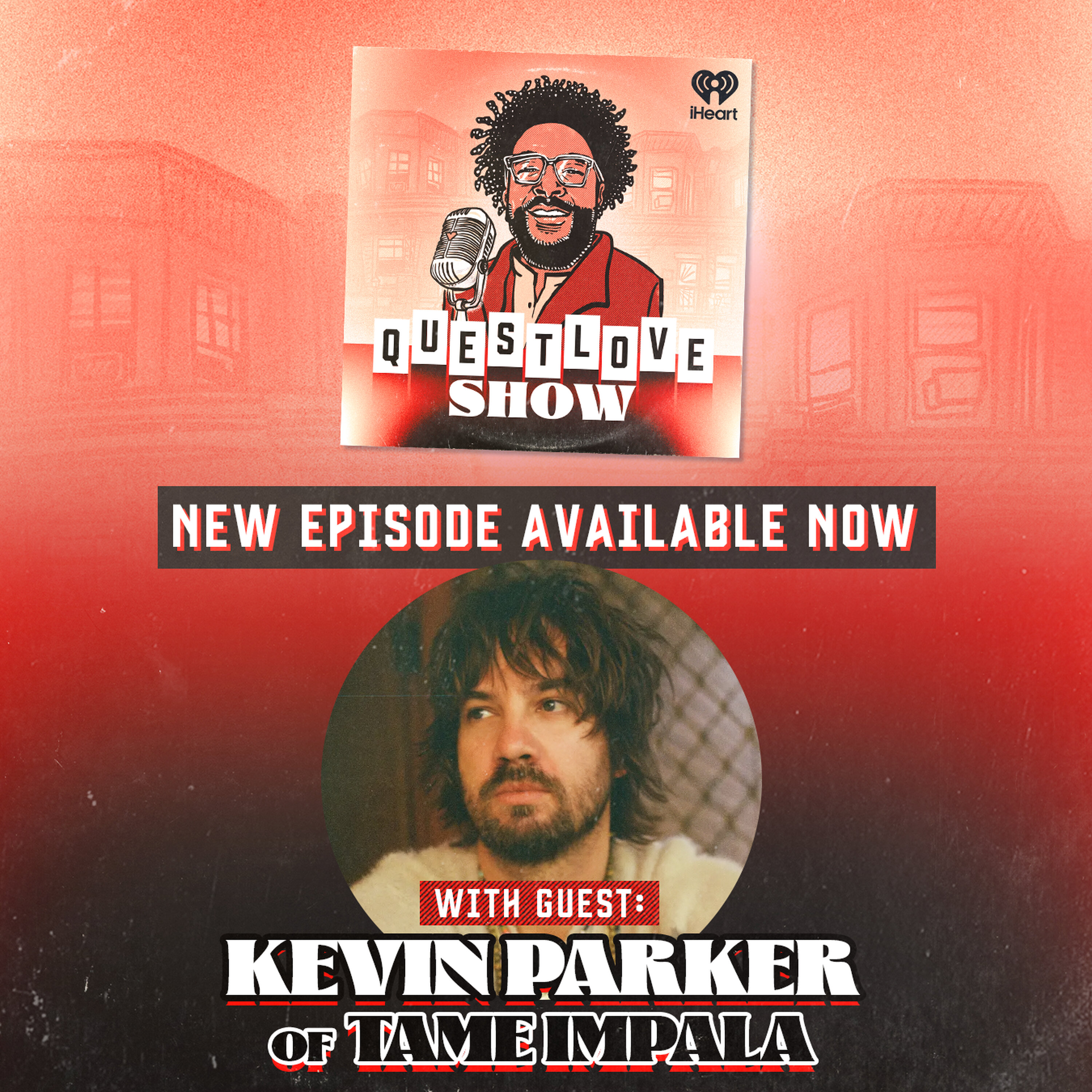
Questlove sits down with Tame Impala’s Kevin Parker, the multi-instrumentalist from Perth—one of the most isolated cities on Earth—who spent years letting the world believe his one-man project was a band.
Parker talks about turning down a big-name producer to make Innerspeaker alone in a beach shack he later bought, the more than 1,000 voice memos labeled “this will change my life,” and why he devotes 90% of his time to drum sounds. He also unpacks the idea behind Tame Impala's latest, Deadbeat, the feeling of always being on the outside—no matter how successful he becomes—and the strange ways stress and anxiety fuel his best work.
Along the way: sneaking into a White Stripes show with his brother’s ID, a Batman Forever soundtrack confession, and his new life building synthesizers.

 iHeartRadio

 Apple Podcasts

 Spotify

 Amazon Music

 RSS Feed

 TuneIn

 Castro
00:00:00
Speaker 1: Questlove Show is a production of iHeartRadio. Ladies and gentlemen, what's up? This is Questlove. Welcome to the Questlove Show. Our guest today, is, well, from halfway across the world. Right now, he's across the pond. He's a multi-instrumentalist, a singer-songwriter, producer, coming live at you, bringing his creativity to you from the place that I dub one of the loneliest places on earth. He's made some of the, in my opinion, some of the coolest, most interesting music genre-bending music of the last two, almost last two decades, decade and a half, since I've had this platform. He has been someone whose brain I've been dying to pick. His name is often mentioned and sort of like a small circle of genius, DIY, bedroom musician circle. We talk of Sly and Prince and Todd Lundgren and Trent Reznor and Stevie Wonder and Beck and Even up to Steve Lacey and Phineas, you know, Gene and Dean Wien. The list goes on and on. It's not bad company. I'd like to welcome to the Questlove show, one and only, Kevin Parker.
00:01:36
Speaker 2: Thank you, man.
00:01:36
Speaker 1: How are you doing, man? How are you?
00:01:39
Speaker 2: I'm good, man. Thank you. That was quite an introduction. It's always hard to like... do like an interview or something after you get like introduced like that it's like oh fuck now i gotta now i gotta live up to the hype you know.
00:01:50
Speaker 1: It's weird to hear your accomplishments and and get your flowers at the same time in an intro i know.
00:01:55
Speaker 2: Yeah that's interesting though what you're saying about the sort of the lineage of like you know one person things you know bedroom producer whatever you want to call them because it's funny it is quite a it's quite a history isn't.
00:02:08
Speaker 1: It No, it is, you know, and to me, okay, so for the few of you that don't understand, and I've mentioned Perth a few times on this show, for those of you that skipped geography class, you know, Australia is sort of structured like, I guess you can say, the size of two North Americas, two United States states. Of which I would say the Northeast side, the Boston to DC side are where most civilization is. Little parts of the Carolina is in Florida, but then Perth would be where San Francisco is. But in between that is like at least 5,000 to 6,000 miles of just- straight desert and I mean like the hottest unbearable like you have to fly there and I know that trucks and people drive there and I don't know how it happens but anytime I go to Perth it's just a different feeling over there you know I've done the longest DJ set of my life in there oh yeah when was that like 2006 2007 I think I was just supposed to do like maybe three to four hours and by the time I was done I was totally unaware. I was so in the zone and no one left that when I stopped, I got a page like lobby calls in an hour. And I'm like, huh? And I looked and it was like 10 a.m. So I started at midnight and ended at 10 a.m. And I was telling everybody, why didn't you tell me it was way past four in the morning? They were like, oh, we just enjoyed it. You kept on going.
00:03:53
Speaker 2: Yeah, Perth goes hard sometimes.
00:03:55
Speaker 1: You guys go super hard. So I guess, you know, for me, there's always this like Amir versus Questlove thing. When are you Kevin Parker?
00:04:03
Speaker 2: That's an interesting question. I feel like more and more I'm learning to be the same one, you know. Like for a long time, Tame Impala was kind of this like weird thing that I wrestled with or that I sort of like, you know, that was like the official name. And I didn't really pay much attention to the fact that I am that I am that or that that's what people know. Do you know what I mean?
00:04:30
Speaker 1: What was the thought behind the giving you yourself that moniker?
00:04:34
Speaker 2: Oh, well, I mean, like, well, it's funny talking about like bedroom producers being like a one man band or whatever you want to call it. Like when I started making music and I was like, okay, I really want to, and I had like ambitions for it. And I was like, started to see it as something that was like, you know, good enough or whatever you want to call it. I still really struggled with the idea that I was a one man band. Like, because I, Other than Stevie Wonder and a couple of other artists that I knew of, for me, there was no real scene for what essentially sounds like a band, but it's just one guy. I just didn't think people would click with it. Do you know what I mean? So I always just instinctively pretended it was a band. And even named. Tame Impala was the name of the band.
00:05:23
Speaker 1: Right.
00:05:23
Speaker 2: You know? on like our myspace page there was like three of us the record label even like believed it was a band and we were a band because we played shows but the set of the the secret was that like it was just me making the music by myself so that was this kind of like uncomfortable truth about it for a long time for me it was like oh and that's kind of like why that why the whole Tame Impala is just one guy meme to me is so kind of funny because it's like you know, that's something that's like, oh, you're supposed to know it's just one guy that, you know, it's like, it's like hilarious or whatever. But I also kind of feel like I'm the reason that kind of started, like, you know, that's my fault. I'm the one to blame for that, you know, in a hilarious kind of a way.
00:06:06
Speaker 1: Got you. What is your first musical memory that you recall in your lifetime?
00:06:14
Speaker 2: Oh, I mean, like my dad was very musical. Um, you know, he would always be like playing guitar and stuff. He wasn't a musician, but he loved to sort of like pretend he was one. And so he would always have music going. Like one of my, one of my first like memories of, of like, um, really feeling music was just being in the back of his car. Um, he'd have like the shadows of the Beach Boys or something playing. It was kind of just like, you know, that was kind of, that's one of my earliest memories of being like affected by music, not just being aware of music, being sort of like, you know, moved by it or yeah. But it was this sort of like really intense, important thing going on. But yeah. So I mean like, yeah, I mean that was, that was probably it. Okay.
00:07:07
Speaker 1: So, you know, as I mentioned earlier, you know, Perth is called the most isolated city on earth, but you know, I always viewed it as a creative superpower. Because to me, Perth is like, it would be like a laboratory where ideas can grow without being colonized by global trends. And, you know, of course, now that the internet has sort of digitally colonized us all, like a song that we have, you guys can have instantly because we all live on the planet of the internet. But growing up sort of before that, did that isolation feel like a void that you were trying to fill with music or did it feel like a protective bubble that allowed you to develop a sound that couldn't have happened anywhere else for you? Like, were you even aware of the position that you were in the world?
00:08:06
Speaker 2: No. I mean, like essentially the effect of like Perth being so isolated and, even the fact that it was so isolated was something that I only realized when we, when I like started traveling, you know, which was sort of like for me, it was later.
00:08:22
Speaker 1: You know, I was like, Oh really?
00:08:24
Speaker 2: I didn't travel a lot. Yeah. Well, I mean like when you're from an isolated place, you don't feel isolated because you have nothing to compare it to, you know, you're not aware that like over in Europe, there are countries that are like an hour's drive away, you know, or in America, there's just like tons of cities next to each other. I didn't think that it was out of the ordinary for like the closest city to be like a four hour flight away.
00:08:49
Speaker 1: How long was it before you set foot into like Sydney or Melbourne or Gold Coast or any of those?
00:08:55
Speaker 2: Oh, I mean like I went there, but I didn't realize that, that it was far away comparatively. Do you know what I mean? It was like, it was far, but it was just, it wasn't on my sort of radar. And so like when we started traveling, we went to America and England and the UK and like Europe and stuff. That was like the number one question that I got asked in interviews. Like, what's it like being from such an isolated city? And I was like, I don't know. I have no idea. I didn't even know that it was. I did not evenâ I reckon I learned that it was the most isolated city in the world in an interview. It's like, we just found out it's the most isolated city in the world.
00:09:31
Speaker 1: We were all treating you like an alien. Yeah.
00:09:33
Speaker 2: Basically yeah and i i was always sort of just like palming off the question like oh it doesn't have an effect like we have we we get rock music you know we get like we get all the music right now so it's like you know like obviously the music that i was making was super kind of spaced out and it was quite isolated sounding music and it was different some people were like oh it must be a result of Perth. But like I came from a music scene where there were, there was like every kind of, everyone was making everything. It was just coincidence that at the time that the one that was making it out of Perth was kind of sounded like it was from a isolated desert town. You know what I mean? So it was only later that I realized that, you know, I like, they were probably onto something. You know, the question was, the questions were kind of like on the money because I probably wouldn't have made the kind of music that I did or in the way that I did. Had I been from any other city, because it's like the thing about growing, like being a musician or being a young person in Perth, like back then was kind of like, you, we, you make your own fun, you know? So there weren't like a hundred clubs to go. So like house parties were a thing, you know, Just like house gigs even.
00:10:50
Speaker 1: In school, was there a scene where you could have started a band with your friends like at 12, 13 or in like a high school band thing?
00:11:01
Speaker 2: Yeah, definitely. That's kind of what I was just completely obsessed with, the idea of like starting a band, being in bands. Yeah, Dom, Dom, who's in Tame now, was in my band when we were like 13 or whatever.
00:11:14
Speaker 1: Okay. Yeah, yeah. So name me five records. that were in your household growing up?
00:11:21
Speaker 2: Oh, Beach Boys.
00:11:24
Speaker 1: Which one? Pet Sounds?
00:11:26
Speaker 2: Probably earlier than Pet Sounds, I have to say. It might even have been a Best Of, I think. that was the era of like CDs when like best ofs were coming out and like our parents were like, Oh, all our favorite songs were on one CD, you know? So like, okay. I reckon there would have been a beach boys, but like they weren't listening to the albums of the sixties in the albums for, by that point, it was like super tramp, best of beach boys, best of Beatles, best of, you know, Fleetwood Mac, probably a best of. So a lot of my early memories of those, those songs are like, the songs are in completely different orders. They're from different decades, even.
00:12:03
Speaker 1: What was the first album that you purchased with your own money?
00:12:10
Speaker 2: Go ahead, let it out.
00:12:11
Speaker 1: Let it out, man.
00:12:12
Speaker 2: Let it out.
00:12:13
Speaker 1: Everyone starts somewhere. You start somewhere.
00:12:15
Speaker 2: What I would love to say, like what I tell in a sort of like a promo interview is like Silverchair or like, you know, Smashing Pumpkins or something.
00:12:23
Speaker 1: What was it really?
00:12:24
Speaker 2: In reality, it was the Batman Forever soundtrack, which, by the way, is sick, is a sick collection of music.
00:12:32
Speaker 1: There's nothing wrong with that. Okay.
00:12:34
Speaker 2: Flaming Lips. Okay. Mazzy Star. Method Man, I think. U2. Okay. Nick Cave, I think. No, I don't know. Maybe. Whatever. Anyway, it's actually, I was always embarrassed to tell people, but it's actually got some good music on it.
00:12:50
Speaker 1: No, it's not bad. Yeah, I used to, of course, you know, it's easy for me to just say like the Jackson 5.
00:12:57
Speaker 2: Mm-hmm.
00:12:58
Speaker 1: But really, the answer was Neil Sedaka. But there was nothing sexy about saying Neil Sedaka. So I used to always say the Jackson 5. But I will ask, what album or song changed your life in terms of this is my calling, I want to do this for a living?
00:13:18
Speaker 2: To name one song would be extremely difficult.
00:13:22
Speaker 1: Is there an album from front to back that really just floored you?
00:13:25
Speaker 2: Well, in terms of me deciding that like music was my identity now and that this is me would definitely have been like a silver chair album uh this is like australian rock.
00:13:36
Speaker 1: Band they were young when they started right like they were.
00:13:39
Speaker 2: Totally which yeah they were like 15 which so.
00:13:42
Speaker 1: That had an impact on you guys like.
00:13:44
Speaker 2: Yeah definitely i could just see oh you know i remember being like i was like 12 years old and i was like right i've got three years you know i mean i got three years until i'm their age you know got you Yeah, yeah, it would be like Freak Show or something. I just, you know, probably listened to that album more than any other album I've listened to since.
00:14:04
Speaker 1: What is your morning routine? What's the first thing that you routinely do in the first, like, half hour of your day when you wake up?
00:14:13
Speaker 2: Well, since five years ago when we had our first kid, it's been a lot different, you know?
00:14:21
Speaker 1: Okay.
00:14:21
Speaker 2: Because we've got two kids now, so. Mm-hmm. it's very like family based, you know, it's.
00:14:26
Speaker 1: Like, gotcha.
00:14:28
Speaker 2: Get the baby out of the cart, you know, give him a bottle of milk. Yeah.
00:14:34
Speaker 1: So has, has fatherhood changed your creative kind of, uh, um, approach?
00:14:43
Speaker 2: I don't know. At the end of the day, music and like creativity for me is such an internal thing. It comes from a place that's like, separate to what's going on in life you know it's always just this sort of like this entity in my mind that uh spits out stuff you know and i feel like that runs separate to like whatever's going on in life but it's obviously it's it's changed it changes your perspectives on life undoubtedly like how you see yourself and like how important you are i think like what's important about being an artist like not important but kind of necessary is that you have a little bit of a like I'm the center of the universe, you know, like, and when you have kids, you are immediately aware that you are not the center of the universe. Like they very much are. And you, your life is like in service of them. So I think that shifts, you know, your creativity in a way. And then like, aside from that, it's just a, like a time thing. It's just sort of like, rather than being able to work like until you just can't stay awake anymore, it's like three in the morning. It's sort of like your time is more structured. So, you know, It's like a time thing.
00:15:53
Speaker 1: How do you divide the timing between being present, but also continuing to grow as an artist yourself?
00:16:04
Speaker 2: That's a good question.
00:16:05
Speaker 1: Are you now a morning creative person? Like I used to be a nighttime creative person and now pretty much all my ideas come at me like four or five in the morning.
00:16:14
Speaker 2: I think that my creative blob in my brain is quite stubborn. and unchangeable in that way. Like I'm still instinctively a night person. I've just got to find opportunities to make music at night. I've just got to sort of, you know, allow myself that time.
00:16:31
Speaker 1: Okay.
00:16:31
Speaker 2: Um, and not just be overruled by like life, you know, but that's, that's the funny thing about making music and creativity or whatever you want to call it. Um, is that, is that like one way of looking at it is that you need to be in like a sort of a a mental space where you're up, where you're free, you know, and like distractions are removed and you're sort of like, no, I'm, I'm being me now. I'm being, I'm doing music or I'm allowing myself to create. And then the other, the other side of the coin is that like music can come to you in the most unexpected times. And I find it frequently does. It comes when you, in the most inconvenient times when your brain is just overloaded with shit in life, stress you're anxious you know and music is this thing that just sort of like this light turns on it goes hello it's a sort of like a little like um escape hatch opening it goes like you know and so i find that getting the most out of music is like nurturing those two things because like if i was to just do what i wanted i was just to disappear for you know months at a time or whatever the music would stop because there'd be no counterpoint to being a friction, you know?
00:17:52
Speaker 1: Right. So when you, when you are in an inconvenient place and an idea does hit you, are you the type of artist that has like voice memos of ideas that were like mind blowing at the time when you're documenting it? And then when you return to it, it's like, what the hell was this?
00:18:10
Speaker 2: Oh man. Story of my life. Yeah. Get out of my head.
00:18:14
Speaker 1: Okay.
00:18:14
Speaker 2: Get out of my head because that's what I'm trying to do with my ideas. And that's the hard part. Like sometimes I'm doing a voice memo and I'm literally just like, Kevin record this. I know it sounds shit. Like, you know, like I know this is going to sound like, like, like, like garbled nonsense.
00:18:33
Speaker 1: Right.
00:18:35
Speaker 2: Yeah.
00:18:35
Speaker 1: I do write notes to myself that you'll come back to this and you'll be like, you'll pass it up. But I swear to God, if you just try to work through it, this is the one. Okay. I'm not the one.
00:18:45
Speaker 2: Okay.
00:18:46
Speaker 1: I'm glad to know that.
00:18:48
Speaker 2: That's like, I have to have, I reckon about like over a thousand voice notes on my phone at this point. And only a handful of sort of like gone back and pursued. But the funny thing about this, there's like behind every single one of those voice notes was a moment where I went, holy fuck, I've got to record this.
00:19:08
Speaker 1: Right.
00:19:08
Speaker 2: Like I can't let this idea go. If I let this idea go, I'm missing out on, you know, like it's like sliding doors in my life. Like my life, You know, like all the songs of mine that were like sort of like my, let's say, biggest songs or, you know, most sort of like career changing or whatever. Sometimes I think about like, well, what would happen if I never had that idea? Like if someone just sort of stole my attention like moments before I thought of that or whatever, you know, it's like that might not happen. So behind every one of these voice memos is me going like, this song is going to change my life.
00:19:42
Speaker 1: Most of the time, you just come to the studio with absolutely no idea whatsoever and just you'll figure it out on the spot. Or do you have to have something that you've been toying with?
00:19:55
Speaker 2: Yeah, that's a good question. Because being in the studio is like those two things intersecting, right? It's like having the ideas. Because I simply don't. start working on something for the sake of starting working on, like, I don't really say like, like just sit down at a keyboard and go, okay, I'm going to write a song. Like I just never do that. I know that some people do. And that's an amazing ability in my opinion, to be able to sit down at a piano with absolutely nothing in your head and then just write something because you wanted to, like, I just, my brain, it doesn't work that way, you know? But yeah. So usually like the meeting in the studio is like, I'll go through, if I haven't already got something in my head by the time I got to the studio, then I'll go through voice memos.
00:20:45
Speaker 1: Okay. Same. And you got to be alone. So no one hears you.
00:20:49
Speaker 2: Yeah. That's been a requirement for forever. Again, something that it's something it's an, it's like a skill that I would love to build. And in fact, like this last album, I wrote a couple of songs with my friend, Sarah, and she's kind of like the closest thing that I've had to a songwriting partner.
00:21:20
Speaker 1: Do you remember the first concert you ever experienced?
00:21:24
Speaker 2: First concert? Yeah. Well, I mean, that was, would have to have been, I mean, we went to a lot of like underage kind of like punk rock gigs when I was growing up, just sort of like small mosh pity underground things. But the first like real concert that was sort of, yeah, like an artist coming to town kind of thing was The White Stripes.
00:21:49
Speaker 1: 2005? Or when was this?
00:21:52
Speaker 2: It would have been 2003. So it was an overage gig. It was 18s only. And I borrowed my brother's driver's license to get in because we sort of looked alike.
00:22:05
Speaker 1: Okay.
00:22:05
Speaker 2: Yeah, it was just after Elephant came out. Their album, Elephant.
00:22:10
Speaker 1: You know what? I think Perth is the one... Date we didn't do, but I believe for the rest of their tour of Australia.
00:22:20
Speaker 2: Really?
00:22:21
Speaker 1: I remember opening for the White Stripes for at least, the Roots and Jurassic 5 opened up for the White Stripes. Yeah, like 2003, 2004. But we were just on the other side of Australia. We didn't do Perth until the second time around.
00:22:40
Speaker 2: Classic story.
00:22:41
Speaker 1: Yeah. No, those shows were good.
00:22:43
Speaker 2: Yeah, well, I mean, I was just obsessed with the White Stripes. Their albums, there was a period of my life where everything that I was doing was being influenced by them. You can kind of hear it in early music of mine. You can hear the White Stripes influence 100%. But that was just one of the ones where I went alone because none of my friends were willing to try and sneak in with fake IDs. I was like, I'm going to the show. I'm just, I'm going. However, I have to do it, you know? So I had to, you know, I was, I was, yeah.
00:23:17
Speaker 1: Okay.
00:23:19
Speaker 2: So I just went alone. It was sick. It was the best night of my life, you know?
00:23:23
Speaker 1: What is the significance of the movie Empire Records in your life?
00:23:28
Speaker 2: Well, I mean, like the movie is just such a, such a potent vibe, right? I had to just say vibe, but it was just one of those movies where you watch it and you're just like, I want to be there. I want to be one of them. you know? Okay.
00:23:44
Speaker 1: Have you ever worked in a record store or like anything that's close to that?
00:23:49
Speaker 2: No, no. Well, I mean, that was it. I think that was kind of just like why it just seemed so romantic. Yeah, exactly. Something that you, so you can just like, yeah, exactly.
00:23:58
Speaker 1: Okay. So what is the bravest thing that you think you've ever done? I ask introspective questions. Sorry.
00:24:07
Speaker 2: Yeah, no, I like it. I like it. Well, I mean, you know what? Like people would think that. No, I was going to say like my first answer is like quit it, like dropping out of uni to like pursue a career in music. But but the thing is that we've been offered a record contract. So it's like you would have been stupid not to, you know. Do you know what? I think it was probably a mix of like bravery and like just sheer stubbornness and like, you know. delusion or whatever, but deciding to make the first album by myself, I look back and think that was pretty ballsy because everyone around me was like, you need to get a producer. And so it's like, oh, so you got a record deal? Okay, cool. So now what you need to do is- Find you a producer. Yeah, find you a producer. So I had a bunch of calls. It was like Dave Stardy, Dave Sittek. Guy produced a lot of Queens of Stone Age albums. That is named. Chris Goss, that's it. That's the one. So basically it was like, you know, the expected thing was like, oh, you've done an EP by yourself. Cool. Now we need to level up, you know, because I'd never made an album before. I didn't know how to make an album. I just made recordings in my bedroom. And I basically just had the audacity to say, no, fuck you guys. I'm going to just find me a shack on the beach and I'll do it myself, you know? I'll give you your album. Because I signed a contract. It was like, yeah, you're on label now. You need to deliver a set of a world-class recording. And I was just like, I need to do this myself. I got this.
00:25:46
Speaker 1: Speaking of inner speaker, so if you could go back to the bedroom, the room where you recorded inner speaker, what is the one object in that room that holds the most ghosts for you And what did you record it on?
00:26:06
Speaker 2: The object. I mean, there are so many objects from that room that I've still got. And every time I look at them, I'm like, Oh wow.
00:26:13
Speaker 1: You know, it's not changed since then.
00:26:16
Speaker 2: What the room or the object, the surroundings, the surroundings was actually this house that we rented. Uh, because, because that's kind of what we spent the album budget on was just renting this like house by the water, like, like in the middle of nowhere. Um, called wave house, which I ended up buying nice in the pandemic because, you know, when we were there, it was just a magical place. And I was like, Oh man, if I ever, if I ever make any money, I'm going to, I'm going to, I'm going to buy this place, you know?
00:26:47
Speaker 1: Nice.
00:26:47
Speaker 2: Okay. And so I ended up doing that years later. So, I mean, to be honest, I think the object that holds most ghosts is, is the room itself. You know, it's like we renovated a bit since, but, It's still, I still walk past it every day. You know, like sometimes kids are playing in there or like have breakfast there or whatever. It's like a different, a different atmosphere now, obviously. But it's still like, I still look at it. I'm like, that's, that's where I was sitting for like seven weeks or something.
00:27:15
Speaker 1: When you were first recording, like what equipment were you, what were your weapons of choices? Like what equipment did you start with?
00:27:23
Speaker 2: I had a, I had this digital multi-track recorder. this little H track that I got for Christmas when I was like 16 or something. And I just had that. I just, I didn't get anything. I didn't replace it for a long time. You know, like, so I made the first EP on that, just this, this box, you know, and I just knew it at the back of my hand. It's still really, yeah. It's a boss BR 864. Just this like chunky little thing. All I had was like pair of headphones and my guitar plugged in like straight into the thing. And I would just overdub and overdub and overdub.
00:27:57
Speaker 1: I got to ask, how do you get, and I know you're not going to give me a scientific MacGyver answer, but how do you achieve your drum sound? Because I'll say that when I first started getting hip to you, I loathed too much sheen, too much polish on. So instantly, just the texture of what you were going for you know, came through to me at least it, it felt vintage almost like, how did, how did you achieve, achieve your drum sounds?
00:28:32
Speaker 2: Well, yeah, I mean, like that was always something, I mean, like even then drums and the drum sound of the drum feel was the thing I spent 90% of the time on and, and still is today. Still is today. It's a thing that I just go back and tinker and fuck with just the most, just like, you know, tell him. Yeah. I mean, what's funny is back then when I had the 8-track, I didn't really know what I was doing. There was EQ and compression and distortion and all that kind of stuff. And I would just sort of like plug in the mic to the drums and record them. And then I would just sort of turn shit and adjust shit.
00:29:11
Speaker 1: Until you feel it?
00:29:12
Speaker 2: Until it sounded like Portishead, you know? Until it sounded like some sort of fucking breakbeat or some sort of.
00:29:19
Speaker 1: Nice.
00:29:19
Speaker 2: Yeah. I didn't know what I was doing. And then I sort of had to like... I slowly got an idea of what I was doing, but... At the end of the day, it's just, I don't know what the key ingredient is, but I mean, like the feel of playing it, as you know, that is the thing that cannot be diluted. in. Right. You know, it's, it's obviously you can move beats around and you can, you can perfect in that way, but like the, the, the feel of playing it is the, is the most important thing. And then it's just like, you know, I, yeah, I, I, I care a lot about way that the the drums and the frequencies interact with each other and they like crunch into you know compressors and distortion boxes and stuff like that.
00:30:06
Speaker 1: When you're recording this is strictly by yourself on your own or is there an engineer there at least to you know?
00:30:14
Speaker 2: It's almost always by myself.
00:30:16
Speaker 1: Okay okay.
00:30:18
Speaker 2: What's funny is like the studio like as I've sort of gotten as I've gotten sort of bigger and bigger studios or like the space that I record is more kind of fleshed out. You know, it used to be, so the eight track was just sitting next to the drums. And so now I have to leave, I have to leave more space, you know, before the start, before the song. So I hit record on the computer, run over to the drums and like, I'll leave like 16 bars, you know, as like pre-roll. Okay.
00:30:43
Speaker 1: So for you, Has there ever been a temptation to upgrade? All right, I don't want to jinx you, nor do I want to plant a seed of jinxing.
00:30:58
Speaker 2: Don't worry, there's nothing inside I haven't already thought about.
00:31:01
Speaker 1: I feel like we're the same person.
00:31:05
Speaker 2: Yeah, yeah, yeah.
00:31:05
Speaker 1: Well, because the thing is, you know, sometimes the Prince fan community gets upset at me because, you know, I have a bracket of my favorite Prince era. And, you know, for me... I always felt that whenever... But this is not only Prince. This especially happened with the Wu-Tang Clan. When you upgrade, sometimes the best isn't the best. And oftentimes, when I record, I'll say that 80% of my output, I like crappy places. And no offense to Electric Lady Studios, but because they're vintage, that's why I like Electric Lady. But For the most part, like when musicians upgrade and go to professional, air quote, studios, they kind of miss the sauce. Like there's a part of the ingredients that's not there. So will you keep all of your archive, the equipment that got you there? Do you still keep that near and dear? Do you buy multiples of those in case?
00:32:16
Speaker 2: Oh, man, that is a question that, like, it would take days to fully unpack because it's something I think about a lot and, like, there's just so much. There's so much to unpack there. But I think, first of all, I fully, man, like, you're speaking my language with a space that needs to be a bit crappy or it just needs to feel kind of real or something.
00:32:42
Speaker 1: I don't know. I mean, I don't like luxurious studios. Yeah, exactly.
00:32:47
Speaker 2: A friend of mine sort of helped me, like, not renovate, but sort of, like, rejuvenate the visual aspect of my studio. Right. And she would come to me with sort of, like, references and stuff, and I was like, no, you see, it's, like, it can't be too visually dialed in, you know? It needs a little bit of, like, garishness, because psychologically, when you're being creative, the feeling of, like, or the feeling of like that I'm in this perfect zone. Like, you know, that studio, I don't want to like bad mouth a studio or anything because everyone's different. Like some people need that sort of the platinum, you know, feeling. They need that sort of platinum space. But the studio just opened up, I think it's in France and it's like a renovated sort of like classic studio. It's quite curvy, a lot of glass, a lot of white. I've seen pictures of it. I know that I like, I would not do well in that studio, you know? Because like, just that that's the psychology of imperfection. And I think it's important when you are making music that you don't feel like what you are making needs to be perfect. You can just make whatever, like fuck it, just do it. Just do it. Because all the best shit happens when it's like, just do it.
00:34:07
Speaker 1: How do you deal with the need to grow as an artist? I mean, because obviously- Yep. Deadbeat is, in my opinion, probably, I mean, aside from certain remixes that you've done, Deadbeat to me is definitely a pivot, a step forward way past where you were when like Lonerism was out and all those things like you experiencing with new patches and new rhythms and all those things. So how do you know as an artist when it's time to grow? And try new things, but not to the point where you sort of isolate your previous self.
00:34:49
Speaker 2: Yeah. Well, I think ambition plays a big part in that. I'm like, again, part of being in a space that feels smaller or like not fully perfected or whatever, it's that feeling that you're making music that is bigger than the space you're in. It's beyond, you know, it's like all of those, when you see like footage of artists that you love or whatever, making like classic albums, you know, like when Oasis made their like breakout album, it was just some little studio, you know, it's like, you can sort of sense that the inspiration in the music was to sort of like be bigger than the space that it's in, you know? And so like being ambitious is very important. to me like both being sort of musically ambitious and also just having ambitions for the music which is why I loathe the idea of doing the same thing twice because there is no unknown future for it there's no unknown possibilities it's like it's a road you've already been down so you know what's going to happen the unknownness is what's exciting so whether you are doing something to be bigger and better or whether you're just doing it to be different because you want to go down a different road. I just feel like that is the part that keeps the fire a lot.
00:36:31
Speaker 1: So when you are creating an isolated in a studio, who in your mind is the imaginary critic that sits on your shoulder?
00:36:42
Speaker 2: Well, I mean, when I get stuck, I like to imagine what artists or producers would do in that scenario. Weirdly, like Outkast, like Andre 3000 is someone who I think is just such a unique thinker in music. And so I'm like, what would Andre 3000 do here? Or like Pharrell even. The last time I made, I was like really big on the sort of the Pharrell Neptune's approach to making music. I was like, there's this sort of like bootleg YouTube series of them making Justified, first Justin Timberlake album. It's like just like fly on.
00:37:27
Speaker 1: The wall footage.
00:37:29
Speaker 2: It's like six videos of it all, like hours long or whatever. And I watched it. It was just so incredible to watch these sort of like, basically just like beats, you know, it's like a sort of a loop of music. turned into a song. And it was, what was really interesting was that like the way Pharrell puts music together, it's like really similar to the way I do it. He was like, you could see him playing the drums. You can see him like just trying out different beats until it was like, oh fuck, that's the one, you know? Yeah. So yeah, I mean like at the end of the, like in terms of being of like critics, like imaginary critics, I turned to my friends because they are still the ones who are like brutally honest. Like my wife is brutally honest. Jay is brutally honest. And it's hard getting brutal, honest criticism on music that you're making is hard. And you resent it sometimes. You're like, fuck you.
00:38:23
Speaker 1: So how comfortable are you with playing music? I know for me, I'm going on my third decade. And probably this time around is the most guarded I've ever been with sharing music. You know, previously I just play shit on the tour bus, see if anyone taps their foot or that sort of thing. And now it's like, ugh, like, are you the person that has to say it's the rough mix? I didn't finish the third verse yet. I'm going to add a bridge. Oh, yeah.
00:38:55
Speaker 2: It's a classic pre-clang spiel. Right. It's a classic spiel. Like, this is just a rough mix. It's not mixed. A lot of the lyrics are just garbled, you know, classic. I mean, yeah, I'd say that's it. But I've never played a piece of music to someone and not given that spiel first, even if it is finished.
00:39:14
Speaker 1: How do you manage stress?
00:39:18
Speaker 2: Probably not well, but stress. As I was saying before, one of the funny things about music is that I fight stress. can create little eggs. You can lay a little egg of stress and it's like a beautiful piece of music. A lot of the best music that I've made has been from a stressful time when I'm just sort of like overloaded or whatever. So to me, things like stress and anxiety I don't hate them because they create things that help me. You know, it's sort of like a, it's a strange symbiotic relationship.
00:40:02
Speaker 1: So I've heard a few artists tell me that like, they have to get back into a toxic relationship.
00:40:08
Speaker 2: Exactly.
00:40:09
Speaker 1: In order for, wait a minute. So are you one of these artists that have to be in a melancholy space to so that you can create music so that it's a cathartic experience for you. Do you think you could ever create music from just a happy space?
00:40:26
Speaker 2: Short answer, no. I don't think that, well, again, everyone is different. Some people make music that they can only make when they're happy or whatever. Everyone's different. I just, I don't know. I don't really like the music that I make when I'm happy. It's like, You know, I don't make happy songs. I don't feel the need to listen to happy songs. But I am not the sort of person that will sabotage my own life to sort of like harvest the torture. You know, I would just... Okay, you got that part. Okay. Yes, I would never do that. There is always, there's always stuff, you know, like I'm the kind of person that my mind will always find things to be tortured by. Which is kind of where the idea of deadbeat lives, right? It's like, the way that I justify calling an album deadbeat, and so everyone looks at me and is like, dude, you're not a deadbeat at this point.
00:41:28
Speaker 1: Yeah, I was about to say, can you explain the logic behind the deadbeat sound?
00:41:33
Speaker 2: Well, I mean, yeah. The deadbeat sort of, I don't know, like fucking philosophy or whatever you call it. It's kind of like me realizing that I will always feel this way. you know, no matter what circumstance I'm in. I call it deadbeat, but it's sort of like just the feeling of being, you know, just like behind the eight ball, you know, in life, struggling to connect, struggling to feel like you are, like you're it, you know. That's something that like was like really tough for me growing up and becoming like a young man or whatever, struggling to connect with people and stuff like that. And struggling to feel i guess not struggling to feel but always just feeling on the outer you know feeling like you are you're not you're not one of those people that's just fully switched on that's kind of for me that's like kind of that that that that that is deadbeat and i still feel like that now you know it's me realizing that i always will and so it's like stories from when i was sort of like early 20s stories from now for me that's kind of like the ethos or whatever of it and then there's the deadbeat sound which is like just like that's the music part of it which i'm got like really focused and obsessed with as well i was.
00:42:52
Speaker 1: Going to say what bass are you using on currents.
00:42:54
Speaker 2: Like bass yeah bass is almost entirely uh hoffner bass that i love that sound it is man to this day that is the the only object that i'm sentimental about.
00:43:12
Speaker 1: I was going to say, like, I know you're going to go different places in your creativity, but dog, the jealousy I felt of, like, I think when I heard the last, I know better, man. I was just, I was so, I was angry. No, I just, okay. So I'm a big fan of Carol Kay, especially the work that she did on all those, you know, pet sounds, all those, aforementioned records that you talked about. And for me, just the perfect EQing of a plucked bass is so hard to capture. And I was like, damn, he has it.
00:43:57
Speaker 2: Well, yeah, I mean, I guess it's kind of one of those funny things, right? It's like, again, I think the way that you play a bass is is more important than any way that you can EQ it. I get really particular about how I palm mute the strings when I'm picking it. It's got to be the right amount of pressure that my palm puts on the strings to get that.
00:44:21
Speaker 1: So you have one of those foam things in between the frets?
00:44:25
Speaker 2: Oh, you're not that far? I didn't really know that existed until just recently. It's always been the palm mute. And then, so it's like the way that it sounded, I was loving the way that it sounded. So that made me confident enough to play bass like a badass, you know? So it's one of those sort of like cyclical things.
00:44:43
Speaker 1: I love it, man.
00:44:44
Speaker 2: It's, and it's the same with everything. Same with drums. Like if you are playing the drums and you can sort of, you've got a mix in your head or the drums sound good, you know, you'll play better. Cause you're like, oh fuck yeah, I got this. Same with everything really.
00:44:56
Speaker 1: How do you feel about, you know, when you first came out, you were instantly tagged with like, well, you're psych rock or whatever. Of course, people don't know what to... I'm still trying to figure out what Neo Soul is. But for you, what do you consider the most overrated virtue in quote unquote psych rock? Or do you even own that title?
00:45:19
Speaker 2: I mean, from like lonerism onwards... I didn't think people were going to call it psych rock, but you know, it's like the first album I was like, yes, the sort of psych rock, I guess, but compared to the psych rock that we were listening to, like back in the share house, that was like the real shit, you know, just some sort of like weird German fucking late sixties, like, you know, jams that went on for 20 minutes or whatever. Right. Real, real stoned shit. Um, to me that was like psych rock. So inner speaker was sort of like, to me it was, it wasn't even really psych rock. It was like with psych rock instruments, but you know, it was like, it was more sensitive or more sort of like.
00:46:01
Speaker 1: It was emotional.
00:46:02
Speaker 2: Yeah.
00:46:03
Speaker 1: Yeah. Yeah.
00:46:04
Speaker 2: Cause psych rock has always been, has always had a sort of a lack of emotion, I guess in a way.
00:46:09
Speaker 1: Like the earlier work of Ken or.
00:46:10
Speaker 2: Ken. Yeah. Yeah. Take your pick really. It's always been sort of like, it's more about the cerebral, you know, like the sort of the, just like losing your mind, you know? That's always been the sort of the intention of psych rock, I guess. It's just like float away, be in outer space, which is what I love about psych rock. Like when I made Lonerism, I was like, oh, no one's going to call this psych rock. It's got synths in it. You know, I'm like singing about deeply personal shit. So for me, it's always been this thing. It's like, it's like, I just, I just accept it. You know, I don't, it's going to take too much energy to sort of argue with people about what to call Tame Impala. I mean, I still don't know what, to call Tame Impala. If I'm in the back of a taxi, it's like, oh, yeah, what's the music you make? I'm like, you know, what do I tell my Uber driver? What's the music Tame Impala is if he doesn't know what Tame Impala is?
00:47:04
Speaker 1: In terms of your collaboration, speaking of Jay and Cam and everyone, what do you look for in terms of collaboration? Because I can imagine that it's one thing to create the record for the studio for the album but it's a whole nother thing in terms of delivering that sound live to where you feel it's perfect. How hard is it leading or does everyone just have the agency to create on their own? What do you look for when you collaborate with other musicians?
00:47:42
Speaker 2: Well, for putting stuff together for the tour, we are amazingly on the same page these days. It took us many years to get there. And like in the early days, there was a lot of tension and a lot of friction, a lot of confusion about like what we're doing here. You know, it's like, are we a band, Kevin? Or is this the Kevin show and we're just your session musicians? You know, there was a lot of stuff like we couldn't work out what it was and what it was supposed to be. So I think for a long time it was difficult and caused a lot of arguments and just like, you know, bad vibes.
00:48:21
Speaker 1: Are you stickler for like sonic perfection in terms of the sound that's on the album you would like to have that feel the same way in concert.
00:48:30
Speaker 2: Or these days not really i like we like some things yes some things no but at the end of the day i like i've just gotten really good at just we just perfect the vibe you know it sounds really cheesy but the most important thing is that we are feeling good playing the music. If that is not happening, then we're dead in the water. It's not good. Like, I used to be such a stickler for sounds, drum fills. When Jay was on drums, he'd be like, oh, Jay, I noticed you didn't do the drum fill that's on the album coming into the second verse. And he'd be like, oh, yeah, I just did my own drum fill. Is that OK? It's like, well. The kids are going to want to, the fans are going to want to hear that drum fill. So maybe just do that one. He's like, well, fuck you. I'll do every drum fill on the fucking album, you know? There's a lot of that. And now it's just like, we've kind of like really dialed in the instruments that we've got, like the synths we've got. I can be like a Swiss army knife. I can make them fucking sound like anything. So now it's like, we appreciate the live versions as like, they're just sort of like, another existence. They're its own thing. Like I'm big on sort of like recognizability. It's like when we, when that song starts, people are going to know it's that song straight away. Like when, when fucking less of the better comes in, it's gotta be like instant, right? Like that's gotta be the, like everyone fucking hands in the air moment. But for the rest of the song, it's like, it can be its own thing.
00:50:04
Speaker 1: Gotcha.
00:50:04
Speaker 2: Whatever, whatever works best. I mean, like, Playing music in the arena is a completely different musical experience to headphones on in your bedroom. It should reflect that.
00:50:21
Speaker 1: You're telling me that you've gotten growth and you've learned to let some things go.
00:50:27
Speaker 2: Exactly. Rehearsals are really fun now.
00:50:33
Speaker 1: Pleasant.
00:50:33
Speaker 2: Yes.
00:50:33
Speaker 1: Okay.
00:50:34
Speaker 2: Very, very pleasant. Like we're all just so totally.
00:50:37
Speaker 1: I now get it.
00:50:40
Speaker 2: Right. Yeah, yeah, for sure.
00:50:41
Speaker 1: How do you know when a project is over and it's time to let it go and not keep building it, not keep circling or rabbit holing?
00:50:52
Speaker 2: I mean, I think that's up there with the most difficult things about the most difficult parts about making music.
00:51:03
Speaker 1: Do you believe in deadlines? Like, I'm going to turn this record in April 1st, or is it just when it's done?
00:51:12
Speaker 2: I believe that deadlines are one of the only ways to get things finished. What did Brian Eno say? He was like, two things ruin albums, unlimited budget and unlimited time. Oh, God. Yeah. Have you ever heard that one? I thought that was incredible.
00:51:29
Speaker 1: Well, not that. Look, I'm one year down. 11, so.
00:51:33
Speaker 2: Oh, okay. Oh shit, did I touch a nerve there?
00:51:39
Speaker 1: Yeah, you did. I was like, ah, fuck, okay.
00:51:42
Speaker 2: I mean, yeah, one of those things, I mean, some of my favorite music was made, some of my favorite albums were made in like two weeks, you know, because they could only afford that much time in the studio or it was just from a time where they were like, we just got to do it, you know? Like was Thriller made in two weeks?
00:52:03
Speaker 1: Technically four months, which is kind of like two weeks for the album that it wound up being.
00:52:08
Speaker 2: And even then- I just meant like recording sessions, like not like writing and everything.
00:52:12
Speaker 1: Two months. Well, two months of tracking and then two months of mixing. No, there's a story of, I believe Bruce Wadean said that there are 41 final mixes of Billie Jean. Yeah.
00:52:29
Speaker 2: Yeah.
00:52:29
Speaker 1: Louder shuffle, louder clap, louder kick, lower, you know. And then at the end of the day, Quincy's just like, dude, mix two was the mix. Like, we don't have to do all this. So my final question to you is, are there any kind of bucket list creative venues that you want to explore as far as genres are concerned or even mediums are concerned? Film, scoring, music? screenwriting, something other than music, like another creative venue?
00:53:02
Speaker 2: Oh, well, I mean, I've got my little synth company that me and some friends started a couple of years ago. We make this thing called an orchid, and it's like a songwriting tool. It's a chord generator sort of little box.
00:53:23
Speaker 1: Nice.
00:53:24
Speaker 2: Yeah, you should check it out.
00:53:26
Speaker 1: I definitely want to check that out. Okay.
00:53:28
Speaker 2: We've been selling them for like a year now, just over a year. Okay. Always building on it and making cool new features and stuff. So that is like, that's an amazing thing to like sink my teeth into because it's just so different to making albums. But at the same time, so many like weird parallels, you know, it's so similar. Like releasing like an electronic hardware box is like weirdly similar to releasing an album. You know, just in terms of like the mental processes and like the emotional rollercoaster of it. So yeah, other than that, I don't know. I don't really have any ambitions to score an album or a movie, although that wasn't really one of your questions, was it? Yeah, I don't know. I don't know. I'm like, I'm always thinking about, you know, what would come next if music was no longer the thing. I do think about that sometimes.
00:54:25
Speaker 1: Got you. Well, Kev, dude, I'm a longtime fan. It's been a long time coming, and I really, really appreciate your work. I'm such a big fan, and thank you for doing us the solid by having this conversation with us. Kevin Parker on the Questlove Show. Thank you very much, and I appreciate it. See you all in the next go-round.
00:54:45
Speaker 2: Appreciate it. Thanks for having me, man.
00:54:47
Speaker 1: Gotcha.
00:54:48
Speaker 2: All right.
00:54:55
Speaker 1: The Questlove Show is hosted by me, Amir Questlove-Thompson. Executive producers are Sean G., Brian Calhoun, and me. Produced by Brittany Benjamin and Jake Payne. Produced for iHeart by Noel Brown. Edited by Alex Conboy. iHeart video support by Mark Canton. Logos, graphics, and animation by Nick Aloi. Additional support by Lance Coleman. Special thanks to Kathy Braun. Special thanks to Sugar Steve Mandel. Please subscribe, rate, review, and share The Questlove Show wherever you stream your podcasts. Make sure you follow us on socials. That's at QLS. Check out hundreds and hundreds of QLS episodes, including The Questlove Supreme shows in our podcast archives. The Muscle Up Show is a production of iHeart Radio.