Arthur Baker Part 2
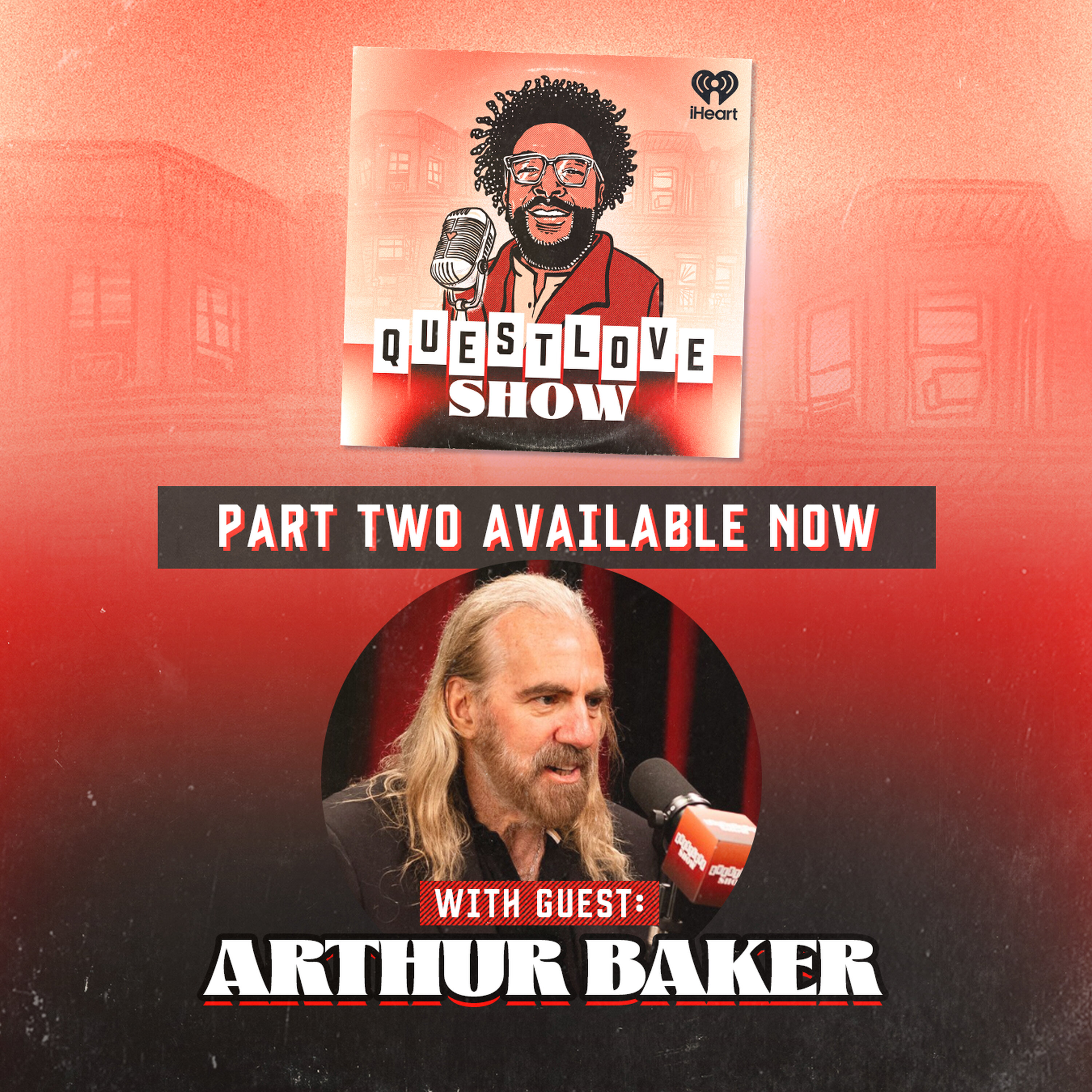
We said we’d come back for Part 2—and we did. Arthur Baker, the architect behind “Planet Rock,” “Confusion,” and so much of the ’80s dance-floor sound, returns to The Questlove Show to finish what we started nearly a year ago.
Arthur takes us from carrying crates of vinyl onto airplanes to the Synclavier sessions for Hall & Oates’ Big Bam Boom, the clubs and DJs who shaped his sound, and the Brooklyn studio sessions that led to what he jokingly calls “New Arthur” records with New Order.
He also opens up about Streetwise Records, the making of Beat Street, the story behind “Sun City” and Artists United Against Apartheid, his connections to Miles Davis, Diana Ross, and Little Steven, and why he wrote his memoir, Looking For The Perfect Beat, for his daughter.
Arthur Baker is back.

 iHeartRadio

 Apple Podcasts

 Spotify

 Amazon Music

 RSS Feed

 TuneIn

 Castro
00:00:00
Speaker 1: Questlove Show is a production of iHeartRadio.
00:00:13
Speaker 2: You know, whenever I abruptly stop the show and I'm like, oh, man, I got to come back in the future for part two. And you listen are always like they're never coming back. Well, guess what? It's happened, ladies and gentlemen. This is part two. of our interview with pioneer Arthur Baker. I will say that I believe when we last left, well, there's so.
00:00:38
Speaker 1: Much we left off.
00:00:39
Speaker 3: We didn't make it past 83. Right.
00:00:40
Speaker 1: We didn't even start.
00:00:42
Speaker 3: With Candy Girl. It's 2026 now.
00:00:44
Speaker 2: But wait, I want you to finish your thing because we were kind of in the middle. You were talking about you're still DJing in Miami.
00:00:50
Speaker 3: Yeah. I'm DJing last night carrying records on the plane, Amir.
00:00:54
Speaker 1: You would not. How would you do that to yourself, man?
00:00:57
Speaker 3: Well, if you want to DJ in somewhat cool places, they're all vinyl now. See? They are.
00:01:04
Speaker 1: Here's the thing.
00:01:05
Speaker 2: I mean, the world knows my affinity for collecting wax and whatever.
00:01:11
Speaker 3: Yeah.
00:01:12
Speaker 2: Sure, it's on record that I have a couple hundred thousand records. However, now I feel like a fraud. Because I don't think I've ever subscribed to the theory that... Yes, I do believe that at home, the frequency of music from vinyl is just way better. However, for nightclub life, and I'm certain that... Let's give an example. Def Jam definitely wasn't helping matters much by pressing Public Enemy's Fear of a Black Planet on single vinyl.
00:01:44
Speaker 1: The grooves were this small. So.
00:01:47
Speaker 3: you know, even back then, no one did double albums for a single album. Right. Which is what they should have been.
00:01:54
Speaker 1: Exactly.
00:01:54
Speaker 2: So my thing was that I, a lot of times because I wanted to spin album cuts, I just hated the whole readjusting my EQ to keep the humming out and.
00:02:05
Speaker 1: All that stuff.
00:02:06
Speaker 2: And so I guess once I started spinning digitally with Serato, at least, all my prayers were answered sonically.
00:02:16
Speaker 3: Yeah.
00:02:16
Speaker 2: But, now that there's this movement of cats returning to 45s and whatnot, it started with the 45 movement, and I get where I believe the genesis of it came from, which was basically to separate the music lovers from the button pushers.
00:02:35
Speaker 3: But there's no way.
00:02:37
Speaker 1: You're going to tell me it's a better sonic experience.
00:02:39
Speaker 3: But also owning those records that other people don't have. So your records now are your... your weapon now. And anyone could have it digitally.
00:02:48
Speaker 1: But now cats are pressing up 45s as if... Yeah. And I blame that on the post-Bismarck-y Mardi Gras.
00:02:57
Speaker 3: Right. I hear you.
00:02:58
Speaker 1: That whole thing.
00:02:59
Speaker 2: But for you, you still find pleasure in carrying records?
00:03:04
Speaker 3: No, of course not. Come on. When I'm doing it in Miami, it's fine. I drive up in my car. I wheel them into the club. But Going on a plane with two boxes of records like I did and not wanting to check them in, obviously, because you know they're going to get stolen. I mean, I don't know how many people lost their records. Paul Okenfall lost all his records going to Brazil and he had to make a call out to anyone out there to get his set. And this is like 25 years ago.
00:03:32
Speaker 1: I can't even imagine.
00:03:33
Speaker 3: I do play different stuff, though. I totally play different stuff because I play more for the heads, for sure.
00:03:40
Speaker 1: You also have to commit. And that's, that's the thing that worries me now.
00:03:43
Speaker 2: Like right now I'm in a place where this computer has eight terabytes of music.
00:03:48
Speaker 3: Yeah.
00:03:50
Speaker 2: Which, you know, it's almost like where I am now where I don't know what audience.
00:03:57
Speaker 1: I'm going to meet. Right. Now, normally I know at.
00:04:01
Speaker 2: Least for, and I can, I will say our era. I mean, I've been DJing since 83, 84, like as young.
00:04:07
Speaker 3: Yeah.
00:04:07
Speaker 1: But, I know the general rule is house rules. Like the DJ is the tastemaker.
00:04:15
Speaker 3: There's a selector. They're going to pick their.
00:04:17
Speaker 2: But I think now at least past 97, 98, suddenly the customer is always right thing. Now I will say that 95% of the time I will ignore request or whatever.
00:04:29
Speaker 3: However. If it ain't going right or if it's a little slow, you might.
00:04:35
Speaker 1: Right.
00:04:36
Speaker 2: But at least with this, I have the insurance of, I can either play the Fat Boys or Taylor Swift.
00:04:41
Speaker 1: Yeah, yeah. But when you pick those records.
00:04:43
Speaker 3: No, you're screwed. You're screwed. And you have to, like, select for, like, anything that could come up. So, you know, I got my LCD sound system. It looks like there's some old punks, you know, old electro punks. And I got a lot of jazz. And I get my, you know, I get my own records that I produce. So I got all the electro stuff. So I can always, if all else fails, I go to, like, Playing a rock, playing your own risk, you know, confusion, new order, I'll play an electro set.
00:05:11
Speaker 2: Are they aware that Arthur Baker is spinning? Or you're just like the cool guy in the club?
00:05:16
Speaker 3: No, the old guy in the club. Occasionally they do. Like at Dante's in Miami, you know, people come out to see me DJ. That's it. But, you know, like at New Blue now, they're trying to get that crowd, but it didn't happen yet. But occasionally, like if I'm playing at a club, they don't know who the hell I am, you know? But at a vinyl bar, they do. That's the difference. When you're playing vinyl, people, it's more of a thing to come to hear me. When I'm playing at a place in Ibiza or wherever, which I don't do often, but when I do.
00:05:47
Speaker 1: They don't.
00:05:48
Speaker 2: There's a vinyl bar in New York City that I'm in love with, in which it's called All Blues, and they actually treat their records like concert here. Like, they'll announce, like, 8 p.m. tonight, limited seating only, like, Miles Davis live at the Plug Nickel.
00:06:04
Speaker 3: Right.
00:06:05
Speaker 1: And literally, we walk in there.
00:06:07
Speaker 3: Yeah.
00:06:08
Speaker 1: It's like a movie theater. We'll sit.
00:06:10
Speaker 3: Wow.
00:06:10
Speaker 1: And you must be silent. You can't silent talk or anything.
00:06:13
Speaker 3: No phones.
00:06:14
Speaker 1: Yeah. They'll have food and drink there for you.
00:06:16
Speaker 3: And a great sound system.
00:06:18
Speaker 1: Yeah.
00:06:19
Speaker 2: And it's done on top end. You sit there and you listen to a jazz concert.
00:06:26
Speaker 3: Yeah.
00:06:27
Speaker 1: They have live records. night on one particular night where you'll see.
00:06:30
Speaker 3: They have all those sort of bootlegs of Miles all over the world with his lost quintet.
00:06:37
Speaker 2: Each night is a different theme. One night, it's all about romance. It's all slow music. So it's a great date night spot.
00:06:43
Speaker 1: But for the most part, they will play....
00:06:47
Speaker 2: I think the first time I went there, Commodore's Live from 77 was the thing.
00:06:51
Speaker 1: They'll do all live vinyl.
00:06:53
Speaker 3: They pick the music you go to yes.
00:06:55
Speaker 2: They pick the music and you sit and listen well it's not like being at a bar and dancing or whatever so there's no pressure to make people dance but oh god if you're doing this then i i don't want to return.
00:07:07
Speaker 1: The vinyl have to do it man i don't want to return the vinyl you.
00:07:10
Speaker 3: Know i would stay with that i would stay no vinyl bambada used to have a guy with He had three people carrying like eight crates. He traveled with eight crates.
00:07:20
Speaker 1: Oh, you're supposed to have your boys with you. Yeah. I'm definitely not doing that. Okay.
00:07:24
Speaker 2: So one day I plan on interviewing Trevor Horn and picking his brain. But for right now, I mean, yes, I know that he kind of holds the technical crown as being the first person to sample a break and use it because he had access to what the Sinclair here.
00:07:44
Speaker 3: Yeah.
00:07:45
Speaker 1: Okay, so from what I've heard.
00:07:47
Speaker 2: About this machine is that, you know, when it came out, it was this very unattainable, only select few privilege that had the money to afford it, i.e. Herbie, Stevie, Prince, Trevor himself had access to it. Would studios happen to have, like, when you first saw Sinclair got used to it or working with it, like, when did you first come across it?
00:08:13
Speaker 3: Okay, to just... The Fairlight, we had one at Intergalactic before Planet Rock. We used that for the orchestra. Okay.
00:08:22
Speaker 1: So the Fairlight was invented back in 81.
00:08:24
Speaker 3: Yeah.
00:08:24
Speaker 1: Okay.
00:08:24
Speaker 3: And that was a preset. They had samples. You couldn't really sample, but it was okay. Right. Sinclair Clavier, I worked with the Sinclair Clavier with Hall & Oates on Big Bam Boom.
00:08:35
Speaker 1: Out of touch?
00:08:36
Speaker 3: Out of touch.
00:08:37
Speaker 1: Okay.
00:08:37
Speaker 3: But the whole album, we were sampling. We went in. With Jimmy Braylower, who was a drummer, but was also getting into the sampling. We had a sample guy from Sinclair come in. We were at Electric Lady Studios. We brought Sinclair in. And then Hall & Oates actually bought one.
00:08:53
Speaker 1: How much were they?
00:08:55
Speaker 3: I don't know, $ 100, 000. Oh, it was over $ 10, 000?
00:08:56
Speaker 1: Oh, it was way over $ 10, 000. You'd have to check, but it was.
00:08:58
Speaker 3: Definitely way over $ 10, 000. How big was it? It was like this, you know. But my point is we bought one, they left it in my studio, and we just kept plants on it. It was like Daryl said, it was like the most expensive plant holder. We didn't end up using it.
00:09:20
Speaker 1: You buy an exercise bike for your crib and it becomes a.
00:09:23
Speaker 3: When we got it, it was like the novelty of sampling vocals and making like drum beats. We were using it as a... human beatbox holder you know we were sampling we'd go ah boom ah and we'd do that and there's a few songs.
00:09:39
Speaker 2: So is that the reason why i mean i've had bing bang boom but i know the out of touch video yeah had those sort of latin rascally.
00:09:48
Speaker 1: Yeah yeah that's all you that's all you.
00:09:51
Speaker 3: Were yeah what i i was hired to be the arranger i didn't get a production credit because i already had a clear mountain hall and oats and T-Bone Walk. They were all producers. So Mottola was managing me at the time and basically said, listen, you know, pay me like 50 grand to be the arranger and do all myâ I did sort of the remix stuff for the album. So a lot of the tracksâ And adult education. No, that wasn't on there. Method of Modern Love.
00:10:19
Speaker 1: Okay, cool.
00:10:20
Speaker 3: So that was my beat and that was my edits and stuff. But luckily, Daryl and I one night went in and we wrote a track. And the intro of Out of Touch, that sort of metal thing with Chichabala, I got half the writing and publishing on it. So basically, I had a song on the album. So I actually, instead of having a point on the album, I had publishing, which at least I got paid. Got you.
00:10:41
Speaker 1: Okay.
00:10:42
Speaker 3: But technically, we messed around with it. And Mickey Curry, who was the drummer in the band- Mm-hmm. He was not happy.
00:10:48
Speaker 1: Yeah, I was going to say, how do you feel?
00:10:50
Speaker 3: No, he was the least happy of anyone. We sampled his drums. Claire Mountain made it all sound amazing, obviously. But that was a moment because that was probably the first record that used that technology. And we did use it, but it was definitely a marriage of both, of the samples and of Mickey's live playing, if you listen.
00:11:12
Speaker 1: You know. Okay, so I knew of Bob and Malcolm... The Stevie Wonder guys. Yeah, doing stuff with Stevie Wonder and the Isley Brothers.
00:11:20
Speaker 2: And they explained to me that synthesizers, like the early age of computers in which a computer was a room.
00:11:26
Speaker 1: And now it's inside this one box.
00:11:28
Speaker 2: So was the Sinclair supposed to be like, now you can make your Stevie Wonder dreams come true in this one?
00:11:37
Speaker 3: I don't know if it was sold that way. I just think it was sold as this thing where you could actually now sample and program. And you could.
00:11:46
Speaker 1: How long did it take you to learn, like go through the writer's manual and figure out what it was?
00:11:50
Speaker 3: I'm the wrong guy. I was not a tech. I'm the anti-tech tech guy. I like, we had the guy and I forget his name from Sinclair. Okay.
00:12:00
Speaker 1: So somebody would come in.
00:12:01
Speaker 3: He came in and he did it all for, I mean, we told him what we want. I mean, with the 808, I programmed the 808, but this was way above my pay grade. There was no way I was going to sit and do it. I mean, we would, Let's sample that. Let's sample that. You know, it was more of a gimmick, I thought. But I mean, Trevor Horn made amazing records using it. I didn't do that.
00:12:20
Speaker 2: Now, at any point when you are kind of first out the gate to this new technology, at any point did it ever occur to you like, oh, I can make new records out of old records, i.e., what would happen if I sampled an entire four bar of this thing and looped it or whatever?
00:12:41
Speaker 1: Or was it just from the.
00:12:44
Speaker 3: I'm trying to think. I mean, we were already sampling with the emulator, you know, pre.
00:12:49
Speaker 1: But you were sampling sounds. But I mean, in terms of like a loop.
00:12:52
Speaker 3: The loop thing did not come into my mind until maybe 85.
00:12:59
Speaker 1: I think. Okay.
00:13:01
Speaker 3: When it became more easier, accessible to loop stuff, you know. Back then, with the Synclavia, no, I didn't. I'll be honest. I didn't think of it. Even when I did put the needle to the record, that track, We weren't even looping then. We had Gayle Sky King, the late Gayle Sky King. She rode the record in. We did the same type of thing, but she rode the record in. We'd stop when it would go out of time, and we'd keep riding the record in.
00:13:25
Speaker 1: Really?
00:13:25
Speaker 3: Yeah.
00:13:25
Speaker 1: And just punch in?
00:13:27
Speaker 3: And punch in, yeah.
00:13:27
Speaker 1: For what song?
00:13:29
Speaker 3: Put the needle to the record, Criminal Element Orchestra. Put the needle to the record, and the drum beats go like this. Really? Yeah, and we did it with that. And Keith LeBlanc was playing live drums, so she had to a click, but she had to ride the bass line from- that Motown classic disco break record. Really?
00:13:46
Speaker 1: Yeah. Okay.
00:13:49
Speaker 3: And then after that, we got looping in 86, I think, and I made a Criminal Aluminum Orchestra record, and I was looping Prince beats, and that was then. Okay.
00:14:01
Speaker 1: There's an EP of it.
00:14:02
Speaker 2: There's six versions of the song on it, but from soup to nuts, can you... Tell me the story or the chaos of how you managed to organize the James Brown Bambada sessions for.
00:14:19
Speaker 3: I didn't do that.
00:14:20
Speaker 1: No way.
00:14:21
Speaker 3: Nope. That's got to be you.
00:14:24
Speaker 1: Nope.
00:14:24
Speaker 3: It was meant to be me, but it wasn't me.
00:14:26
Speaker 1: I mean, but as your drum patches- Yeah, well, I did it all, man.
00:14:30
Speaker 3: No, that was Tommy Boy. I think Tom and his wife at the time did it. Really? Yeah. I did not do it.
00:14:37
Speaker 1: I would have put my entire- Well, I'm glad you didn't. How did you feel about it when you heard it?
00:14:42
Speaker 3: Well, what I felt even worse about was I had signed James Brown before Tommy Boy. I signed him the streetwise. Wait, what? I had the contract and we promised him some money and then my partners messed up with the payment time. And I have the contract which said, well, blah, blah, blah, blah, blah. You didn't send the check.
00:15:05
Speaker 1: Boom.
00:15:06
Speaker 3: So I have the proof, but yeah.
00:15:09
Speaker 2: What would you have imagined that you would have done with James Brown on Streetwise Records?
00:15:14
Speaker 3: Probably very similar to what the thing he did with Bambaataa, really.
00:15:18
Speaker 1: I don't know.
00:15:20
Speaker 3: You know, I mean, it just.
00:15:22
Speaker 1: Oh, my God.
00:15:22
Speaker 3: Yeah, yeah. It's okay.
00:15:25
Speaker 2: This is one of those Mandela Effect moments where I swear to God, like, that was, like, one of your.
00:15:31
Speaker 3: Influenced by our records, for sure. But I didn't. Listen, I didn't care. You know, I said to Tom, we went up to hear New Edition. I brought Candy Girl up to the Bronx River.
00:15:43
Speaker 1: Right.
00:15:43
Speaker 3: Bambada plays Everyone Goes Wild. It was the night that Force MDs, but they were called the Force MCs.
00:15:50
Speaker 1: Right.
00:15:51
Speaker 3: And me and Tom both hear them, and I go, they're really good. And, you know, I said, but Tom, you can have them because I have New Edition. So I probably should have signed them too, and then when New Edition came, Left the.
00:16:03
Speaker 1: So as you were taking the Candy Girl Wax to test it in the Bronx.
00:16:06
Speaker 3: Yeah. Jazzy Jay played it, actually.
00:16:08
Speaker 1: That's where you saw.
00:16:10
Speaker 3: Force MDs.
00:16:23
Speaker 1: When you complete a record and you give it to... Who are your three go-to guys?
00:16:28
Speaker 3: Mark Kamens.
00:16:29
Speaker 1: Okay. Where did he DJ?
00:16:30
Speaker 3: Danceteria. Okay. Okay. He was the guy who discovered Madonna. He produced everybody.
00:16:36
Speaker 1: Okay.
00:16:38
Speaker 3: Jelly Bean. Okay.
00:16:39
Speaker 1: Where did he mostly spend?
00:16:41
Speaker 3: Just the Funhouse.
00:16:42
Speaker 1: Okay.
00:16:43
Speaker 3: So I had Dance Terrier, Funhouse, and Paradise Garage, Larry Levin. Okay. So those were the three, and I would be able to get them.
00:16:49
Speaker 1: And they would blindly trust you?
00:16:50
Speaker 3: Yeah. Well, they wouldn't, like, not listen to it. They wouldn't just drop a needle on it. They would, like, yeah, and then they'd play it. But not only that, Jelly Bean would play the real, the real. which was like sort of a commitment. He had a reel-to-reel.
00:17:04
Speaker 1: So you could take a half inch?
00:17:06
Speaker 3: Yeah, I would bring a, no, it was a quarter inch tape. In the confusion video where I bring him the tape, that's reel. That's what we used to do. I'd bring him the tape of New Order Confusion, hand it to him.
00:17:17
Speaker 1: He could really play a reel in the club. Yeah, yeah.
00:17:20
Speaker 3: Larry had one too. Yeah, the quality was fine. They were right from the studio.
00:17:26
Speaker 1: Would they just let the song fade out?
00:17:27
Speaker 3: No, they were like, They knew what they were doing.
00:17:31
Speaker 1: You could spin a reel? Yeah.
00:17:33
Speaker 3: Jelly Bean did.
00:17:35
Speaker 1: Wow.
00:17:35
Speaker 3: I don't know if Larry did. I mean, Mark would play cassettes. He didn't have a reel at Danceteria, but he would play a cassette.
00:17:42
Speaker 1: Hiss and everything.
00:17:43
Speaker 3: Out of touch. I brought his first play out of touch on a cassette he played.
00:17:48
Speaker 2: Is it like when you finalize a mix before you master it, you want to see how it works or what should I do?
00:17:52
Speaker 3: No, this is when I was in the middle of the mix. I didn't know if it was done. My studio was on 37th. All the clubs were like 12 blocks away.
00:18:01
Speaker 1: You would play rough cuts.
00:18:02
Speaker 3: We'd play rough mixes and then we would like, it's the arrangement. It was more for arrangement when I'd do the drops because back then no one did these drops like we were doing. We'd take the drums out and people would go, you can't do that. But obviously that's what made the mixes. We drop out the drums and then the bass can. So basically I'd see how the crowd would react. If it reacted the way I thought it would, I'd keep the arrangement. But sonically you'd hear, is there enough kick? Is it, you know, and we had the key to the funhouse. So we would go down, Jellybean did, we'd go down there with it empty, which wouldn't really be great for judging sound.
00:18:38
Speaker 1: And test it.
00:18:38
Speaker 3: Yeah, but we could test it. So we, yeah, Jellybean wouldn't play everybody's record. We were working on records together.
00:18:44
Speaker 2: So, you know, he, Number one, what was the best year for New York City club life?
00:18:51
Speaker 3: I would say 82 or 83. For me, for my world. Studio 54 was not my world.
00:18:56
Speaker 1: I know that. So I want to know that close period.
00:18:59
Speaker 3: That was Jive. I mean, the thing was, you could do those three clubs that I mentioned, which is Danceteria, Funhouse, Paradise Garage. You could do all three in one night. And to me, those are three of the best clubs ever. And you could go, you could travel amongst those. Because Larry was playing until, you know, daybreak. And Danceteria was like, you could go early. They had food. They had a bunch of floors. And there was a reggae floor. You know, I mean.
00:19:29
Speaker 1: They had food?
00:19:29
Speaker 3: They had food. They had some food, you know.
00:19:32
Speaker 1: Like, I hear the one thing, oh, they had food there. But that's the thing.
00:19:35
Speaker 2: I want to know soup to nuts. All right, number one, could you get in? I mean, the Laura's Studio 54 is, you can't get in.
00:19:42
Speaker 3: The Studio 54, you had to look right.
00:19:45
Speaker 1: Right, so for these three clubs, for Paradise Garage, whatever, is it still the whole.
00:19:50
Speaker 3: Well, Paradise Garage was a members club.
00:19:52
Speaker 1: How do you become a member?
00:19:53
Speaker 3: You- Became a member. You know, you were a member.
00:19:57
Speaker 1: You got to know a guy that knows a guy.
00:19:59
Speaker 3: Yeah, you remember. I mean, you could be industry like me and I just know the person at the door. You would get love. Yeah, I could get any.
00:20:08
Speaker 1: But a Bridge and Tunnel person. No. They still had to stand in line.
00:20:12
Speaker 3: Bridge and Tunnel didn't go to Paradise Garage. Paradise Garage was gay, black, Puerto Rican.
00:20:19
Speaker 1: Right.
00:20:20
Speaker 3: It was that. And it was really, you know.
00:20:22
Speaker 1: Okay, so where are the Bridge and Tunnel top 40 people going?
00:20:26
Speaker 3: More the Funhouse.
00:20:27
Speaker 1: So the Funhouse is a little more commercial?
00:20:30
Speaker 3: Well, yeah. I mean, Jelly Bean, then you saw what records he was mixing. You know, he was Paul McCartney and, you know. He was an unbelievable DJ. Jelly Bean doesn't get the. The love as a DJ, he played everything. But Larry, the three of them, that's the other thing you got to realize. They were all playing Clash records. You know what I mean? They were playing Clash and they were playing James Brown and they were playing Freeze IOU. They were all playing across the board.
00:20:57
Speaker 1: So they were all open format DJs?
00:20:58
Speaker 3: All open format.
00:21:00
Speaker 1: Okay.
00:21:00
Speaker 3: So that was my vibe of what I wanted to hear. Obviously, Larry would end more disco music. and Mark played a little bit more rock and electro and jelly bean played across, but each one of those clubs was very different, but you could travel amongst those clubs in one night. That was the thing. There was so many clubs in New York, better days, T Scott. I mean, there were these amazing clubs everywhere, you know.
00:21:26
Speaker 1: What was the better club for strictly just dancing?
00:21:30
Speaker 3: Ooh, not dance at area funnily enough. It's called that, but, uh, For sort of, well, you wouldn't even call it house dancing. No. Okay. B-boy or sort of early B-boy breaking and kick dancing and all that. The young kids, they were all underage anyway, you know, at Funhaus. They were kids who were 15 years.
00:21:51
Speaker 1: Louis. Was carding a thing back then or was this.
00:21:54
Speaker 3: Like- It was a mafia club. I mean, they didn't card anyone, you know.
00:21:57
Speaker 1: Okay.
00:21:57
Speaker 3: But Louis Vega tells me the story of him sitting in the base bin at the Funhaus and listening to Rocker's Revenge, How Did They Come, the first time he heard it. And he was in the basement, and he was just like, you know, I would just come there. How old were you? 15, 16 years old. So that was all young. It was Puerto Rican and Italian.
00:22:20
Speaker 1: Okay.
00:22:20
Speaker 3: That was the thing. It was a racist club. Black kids.
00:22:24
Speaker 1: Could barely get in.
00:22:25
Speaker 3: Could barely get in, yeah. I'm being totally like, the Funhouse was Puerto Rican and Italian.
00:22:33
Speaker 1: Was it mostly freestyle?
00:22:35
Speaker 3: Well, we started freestyle. There was no freestyle.
00:22:37
Speaker 2: I was going to say, you pioneered, damn near two genres that I don't think you even parade that like, hey, I helped like, what we know is Miami-Base comes from your contributions and what we now know as freestyle.
00:22:52
Speaker 3: Yeah, that sort of merged off. One was sort of more Latin and one was more black. That's the same thing. And then they went off like that.
00:23:00
Speaker 2: How long did it take you to track and record Candy Girl. I'm so triggered after the James Brown thing. I have to like, wait, he did produce Candy Girl, right?
00:23:11
Speaker 3: Yeah, yeah, yeah.
00:23:12
Speaker 1: Did you produce the entire album?
00:23:13
Speaker 3: I produced with Maurice Starr and Michael Johnson. They were the producers. They brought me demos, which we turned into the record in New York at Unique Studio. They were like demos.
00:23:25
Speaker 1: That's where it's recorded at?
00:23:26
Speaker 3: Well, that's where we finished it and where a lot of it was Mission Control in Boston, Maurice's studio.
00:23:34
Speaker 1: Have you seen this clip?
00:23:36
Speaker 3: Rehearsing? The rehearsal clip?
00:23:38
Speaker 2: They're playing drums and they're messing. So just working with them.
00:23:42
Speaker 3: Yeah.
00:23:43
Speaker 2: And I'm assuming that it's Ralph, Ricky, and I'm assuming that Michael and both Michaels are singing background because there's no way those guys' voice.
00:23:55
Speaker 1: Is that low.
00:23:56
Speaker 3: No, Maurice and Michael were singing backwards.
00:23:58
Speaker 1: Oh, Maurice and Michael. I said both Michaels.
00:23:59
Speaker 3: Yeah, yeah, yeah.
00:24:00
Speaker 2: And actually, I think I do remember us talking about this before, but I wanted to talk about the actual tracking of it. Like, how long would it take to, and pre-Pro Tools, pre-Auto-Tune?
00:24:12
Speaker 3: Well, you've heard the vocals, right? They're not really all that well in tune. We didn't even tune.
00:24:19
Speaker 1: Yeah, but there's still something charming about it.
00:24:22
Speaker 3: Oh, listen, listen. the charm, I'm not talking about charm, you know, like Latin freestyle, there isn't one song where the singers are in tune. I mean, come on, they're out of tune. That's the charm. But, um, no, Maurice and Michael did sing most of the backgrounds and, you know, they did it, you know, you know, it took some time for sure. It wasn't, it wasn't easy, but you know.
00:24:45
Speaker 1: How long did it take to knock out the entire record?
00:24:48
Speaker 3: God, it was really quick. Once we, we signed Candy Girl and then, It blew up so quick. We had to like finish the album. I was working on mixing it in New York. We mixed everything. Maurice and Michael had done most of the vocals in Boston. That's why they lost the group because the group was signed under Boston law and it was done in Boston, Massachusetts. So the law, I mean, did.
00:25:14
Speaker 1: We- That's how they got, no, no.
00:25:16
Speaker 2: I didn't know how they, we lightly touched on, we talked about you getting the demo.
00:25:21
Speaker 1: But you brought something up. And yes, I know I'm skipping Beat Street to refer to another film.
00:25:27
Speaker 2: But I always wanted to know, the story of Crush Groove is in that film, the Russell character has a successful record. It's so successful, he doesn't have enough money to feed the entire nation and the world.
00:25:44
Speaker 3: To do it. Yeah.
00:25:47
Speaker 2: Is the Candy Girl album a great example of the burden of not being prepared for a massive moment?
00:25:56
Speaker 3: Yeah.
00:25:56
Speaker 1: How do you handle it?
00:25:57
Speaker 2: If you own your label and suddenly, is there a burden when you have a successful record?
00:26:02
Speaker 3: Yeah, because first of all, you have to give people, people want credit. Like the distributors want credit. We need 25,000 records. We'll pay you the cost of the record for the pressing, but we won't pay you Some of them were fronting us the money just enough for us to pay the pressing costs.
00:26:21
Speaker 1: So you didn't have to have the upfront money to order the records.
00:26:24
Speaker 3: Well, we did. But then at one point, we said, forget it. It's fine. We were just like thinking, we want to sell records. And then a few of the distributors ended up going bankrupt, owing us like 50 grand, 100 grand. And that's why Streetwise ended up going bust because- New Edition album killed the label.
00:26:45
Speaker 1: Okay, explain to me, is that a good thing or a bad thing?
00:26:49
Speaker 3: It's a horrible thing because our team wasn't prepared and had never experienced that kind of success so that they didn't know what to watch out for. We were pressing, pressing, pressing, and we were paying the pressing plant until we weren't because we weren't getting paid. So it was just like... How can one.
00:27:13
Speaker 2: sort of navigate that wave. Like Motown did it. I don't know how they did it, but they somehow managed to stay in business and all those things. But when something gets so successful, like when did you know that Streetwise was over because you're too successful? And how do you nuance that to benefit you? Like such a victory.
00:27:33
Speaker 1: That you failed.
00:27:34
Speaker 3: Listen, I'm the wrong... In the book, I talk about the disaster because basically what happened was, in a nutshell... I started doing a lot of remixes. I stopped paying attention to the label, right?
00:27:46
Speaker 1: Okay.
00:27:47
Speaker 3: So basically, we're having the success. I'm out there remixing the Rolling Stones for $ 25, 000 and doing a lot of drugs. And then my partners start signing records and throwing money around. And before I know it, they're doing A & R, and we've got like 10 acts. They put out $ 100, 000 on new music that is shit. So basically, I just lost focus on the label. And so I'll blame myself for part of it. And then the other part was giving people too much credit on the new edition on the album. Because, you know, the album sold over, definitely sold over a half a million, you know. And a lot of people left us holding the bag. Distributor called Stans, and I think was in.
00:28:34
Speaker 3: Louisiana maybe stands, and there were a few that went bust owing us hundreds of thousands.
00:28:40
Speaker 2: Back in the mid-' 70s, early-' 80s, how many distribution centers were there?
00:28:47
Speaker 3: Well, each region had at least one or two. They'd have big distributors. I mean, there'd be distributors and one-stops. Like the one-stops would get the records fromâ you would sell your records into a one-stop becauseâ Why they're called one-stops is it was one-stop where mom-and-pop record shops could get any label from the one-stop. Some distributors just had specific labels. One-stops had every label. Like Warner's would sell in. Streetwise would sell in Tommy Boy. But it would be for a small record label, you couldn't get credit from the major directly.
00:29:24
Speaker 1: You had to go.
00:29:25
Speaker 3: Through these things called one-stops.
00:29:28
Speaker 1: And I'm only asking because... I didn't realize. Okay, so I'll say probably in my lifetime, I might have Stevie Wonder's songs in the key of life eight or nine times.
00:29:39
Speaker 3: Yeah.
00:29:40
Speaker 2: And I noticed that each record has different fonts, different. And when I asked, it wasn't Iris Gorey, either Suzanne or Iris, I asked like, how come you guys never had a consistent font or hue.
00:29:54
Speaker 1: Color for your labels?
00:29:55
Speaker 3: Right.
00:29:56
Speaker 1: And she would say, oh, because we would.
00:29:58
Speaker 3: Use- Using different pressing plants and stuff.
00:30:00
Speaker 1: Various pressing plants. And it was up to them on how- Yeah.
00:30:05
Speaker 2: Was that just typical of like, if you want to sell Candy Girl in Florida, do you have to press it at the plant in Florida to get it?
00:30:13
Speaker 3: We were pretty much using Soundmakers in Philly. That was the big one in Philly. We may have used others, but to me, that's the one I remember. Right. Because the more you use, the more the chance that they could just press up unlimited records. I mean, that was the other thing that.
00:30:29
Speaker 1: When would you have power to button line? Like, hey, I have a new Prince record. Oh, sorry, guys. Yeah, you could.
00:30:35
Speaker 3: You could.
00:30:35
Speaker 1: Okay.
00:30:36
Speaker 3: But what I'm trying to say is you were trusting people who you really shouldn't be trusting. Any pressing plan could press up 5,000 and sell them- Oh.
00:30:47
Speaker 1: The whole Morris Levy situation.
00:30:49
Speaker 3: Yeah, well, he was my partner in Streetwise, right?
00:31:03
Speaker 1: Back to my crush group question. Like, at what point do you go to a guy that can help you?
00:31:10
Speaker 3: Somehow he came to me, I think. Like, you know, it is a long time ago, but all I remember is Tommy Mottola, who was my manager at the time. He said, you don't want to do this with Morris.
00:31:21
Speaker 1: And Tommy Mottola's telling you this.
00:31:23
Speaker 3: Yeah, yeah.
00:31:25
Speaker 1: Wait, wasn't he also managing Hall & Oates at one point?
00:31:27
Speaker 3: Yeah, at the same time. That's how I knew.
00:31:29
Speaker 1: Oh, that's, okay.
00:31:30
Speaker 3: So he was managing Hall & Oates, myself, August Darnell.
00:31:34
Speaker 1: Hence the Tommy Mottola.
00:31:36
Speaker 3: Yeah, lives down the road. But yeah.
00:31:39
Speaker 2: She, by the way, she is our financial person at the Tonight Show. My first month at the Tonight Show, Tariq and I happened to be on the elevator going somewhere. And this woman's on the elevator.
00:31:55
Speaker 1: And she's like, oh, my God. Like, I'm a fan of the Roots and all that stuff.
00:31:58
Speaker 3: Corey Day? No.
00:31:59
Speaker 1: Who? She ended it with, oh, you guys wouldn't know me. I sang a song. Oh, the rapper sang, you know, Tommy Mottola lives on the road.
00:32:06
Speaker 3: Corey Day was.
00:32:07
Speaker 1: I was like.
00:32:07
Speaker 3: What?
00:32:08
Speaker 1: Wait, we know who you are. And I told her, like, she said, hey, don't. I was like.
00:32:11
Speaker 3: Yeah.
00:32:12
Speaker 1: I own Dr. Buzzer Records. I know. And she, yeah.
00:32:15
Speaker 3: And she had that solo record with Pow Wow.
00:32:17
Speaker 1: Yes.
00:32:18
Speaker 3: It's a dope track.
00:32:19
Speaker 1: Yeah, yeah. But no, she's the reason why we get paid every week at the Tonight Show. Wow. She works there.
00:32:24
Speaker 3: That is random.
00:32:26
Speaker 1: So random.
00:32:26
Speaker 3: But yeah, Tommy said, you don't want to do this. And I was like, yeah, but otherwise the label's just going to go under. So yeah, I have the Morris stories. I'd go to have a meeting with him flying out of my mind on cocaine and And I'd walk in and say, hey, Arthur, come on in. And it'd be like the Sopranos, the guys.
00:32:46
Speaker 1: Right.
00:32:47
Speaker 3: The real guys.
00:32:48
Speaker 1: Uh-huh.
00:32:48
Speaker 3: With the chains and with the sweatsuits. And they'd be there. And then I'd be there knowing that I'm really fucking drugged out. And him telling stories about Tommy James and the Shondells, how he got Tommy, he got him clean. And then he never had another fucking hit. Yeah. I went up to the farm. I had the sausages. And then he sort of took the label.
00:33:16
Speaker 2: How long did Streetwise last after you left it?
00:33:21
Speaker 3: Well, they didn't sign new acts. It became just swallowed up as a catalog. They still, the people he sold it to, Well, his son had it, then another company has it now.
00:33:34
Speaker 1: So to this day, if I want a Candy Girl record, like who owns it?
00:33:39
Speaker 3: Candy Girl is MCA.
00:33:41
Speaker 2: So they- Yeah, they got- So when they went to MCA, did they also subsequently have to pay you to get out the label?
00:33:48
Speaker 3: Well, they paid Morris. That was the whole- Got you. The whole game was he got Streetwise so he could get a shitload of money out of MCA when- the new edition signed and, you know, he, MCA was known as a, as a mafia major. So, you know, I mean, we could say that now I would say it, you know, so they had, you know, it was, it's, it's, it's a moment in time that I don't like reliving really.
00:34:19
Speaker 1: No, no, it's okay.
00:34:21
Speaker 3: It's just like, I so messed up that whole thing that I, you know, I had ADHD and on cocaine.
00:34:28
Speaker 2: Like, I know as a band, like, you know, this New Order, Depeche Mode, like, I don't even know what to categorize it.
00:34:36
Speaker 1: It's part electro. It's part rock.
00:34:39
Speaker 3: Indie, indie, schmindy, electro indie.
00:34:43
Speaker 1: All right. So can you talk about working with New Order and how, like. How it happened?
00:34:48
Speaker 3: Oh, God.
00:34:48
Speaker 1: I can't believe I sound like it. such an amateur here. Like explain to me the relevance of it. But like, I know they mean the world to people and I've seen them.
00:34:57
Speaker 2: They've been on the show a few times, whatever. But just in general, like how did they come to your attention?
00:35:03
Speaker 3: Well, a friend of mine, Michael Schamberg, the late Michael Schamberg, he knew, we knew each other from Danceteria. We just, just knew each other. And he was, he started factory New York. Uh, they had a factory records was, um, In the UK, in Manchester. And basically, New Order had been Joy Division. And on the eve of them coming to America to tour, Ian Curtis committed suicide. They shift, make a new group called New Order. They're making records. They're releasing them over. And they have an office here, a small office. And Michael was like, you should work with New Order. And he brought them up. And I had had Planet Rock. And they loved the idea. Now, this is why they wanted to work with me, which is actually pretty funny. We had to settle with Kraftwerk for the melody on Planet Rock.
00:35:56
Speaker 1: Yeah.
00:35:57
Speaker 3: And Tom Silverman decided to charge a dollar more than what we would... Basically, the fans, the buyers, had to pay a dollar more for Planet Rock so we could pay Kraftwerk.
00:36:10
Speaker 1: Right, okay.
00:36:10
Speaker 3: Now, New Order thought that was so cool. Obviously, I had nothing to do with it, but that's why they wanted to work with me, which is.
00:36:18
Speaker 3: That's the order.
00:36:19
Speaker 1: Because you charge more money?
00:36:20
Speaker 3: Well, because we worked, whatever. That's what I was always told. Then they come over and they'd send me all these demos. I'd never even listened to the demos. I was like, let's write together. Started writing with them and we wrote Confusion and Thieves Like Us at Fred Czar's studio in Brooklyn, demo studio. And then we went in and we recorded and, you know, I mean, you know, Confusion is like, I always call it new Arthur, not new order, because it's really my record, all the beats and a lot of the chants and the rat-a-tata, you know, it was all that stuff from Planet Rock. You know, I incorporated that into their sound.
00:37:00
Speaker 1: Was the big deal of it all the fact that rock groups were, I mean, now that I understand.
00:37:07
Speaker 3: But they weren't a standard.
00:37:10
Speaker 1: See, that's the thing. If I see white people, I just say, oh, rock people or pop people.
00:37:14
Speaker 3: But you have to understand that Manchester is closer to New York than to London in a way at that time. And they were very open. And that's why the Housienda, which is probably the most famous club in the UK, was in Manchester. Because they were influenced by Danceteria, Paradise Garage, and Funhaus, all of which I took them to. And they opened up a club that would be their version of it.
00:37:43
Speaker 1: So this is also why, like, Pet Shop Boys and all these groups that are coming out the time. Yeah.
00:37:48
Speaker 3: And, well, even to the point where, okay, Happy Mondays.
00:37:52
Speaker 1: Right.
00:37:52
Speaker 3: Stone Roses. These are rock bands that were dance groups, too, you know? They all played dance music. To the extent that Noel Gallagher is a fan of when he met me, he was like, Because of dance music.
00:38:05
Speaker 1: You humbled Noel Gallagher? Yeah, I did. Tell this story.
00:38:08
Speaker 3: He kissed my ring, I have to say. Nice. He did, you know.
00:38:12
Speaker 1: Okay, so he is humble.
00:38:14
Speaker 3: He grew up in Manchester and all those guys were going to the Hacienda, doing ease and partying. And that was like 88, 89, you know. So the British culture is so different than here because, I mean, a few rock bands, Red Hot Chili Peppers, there are rock bands here that are into... Funkin'. Funkin', you know. But in England, it was because all the music was played on Top of the Pops, Radio 1. And you would hear everything growing up. It's totally different than here. You would hear, and it was all played because it was all in the top 20, you know. And you would play it, and you'd see the groups, and people of all ages would sit there, your parents and your granny, and everyone would watch Top of the Pops. So I think that had a lot to do with the fact that rock acts... will want to make dance records. I mean, they, you know, they did.
00:39:06
Speaker 2: I think maybe in the last 10 years, especially, there's a lot of content on social media and some documentaries in which, I mean, I've always heard about like the Disco Demolition Night or whatever. So I never once put it, like I always thought the anti-disco movement.
00:39:23
Speaker 3: That was racist though. Right.
00:39:25
Speaker 1: Here's the thing, though.
00:39:26
Speaker 3: And the music thing in England, there's no racism. That's what you have to, like, think that in England, musically, there was never any racism, okay? Everyone was open to everything. I'm telling you, the reggae thing, you know.
00:39:41
Speaker 1: That's the thing.
00:39:41
Speaker 2: I just thought, oh, disco sucks because they hate the arrangements or it's repetitive for 14 minutes.
00:39:47
Speaker 3: Stevie Wonder and Marvin Gaye weren't disco. They would burn anything with a black face on it.
00:39:52
Speaker 1: Right.
00:39:52
Speaker 2: I didn't realize that it was the whole, our guitars won't get replaced with your dance music. So now that I saw it in that context, then I got more curious at this movement that was more about big beats and Because even when the Pet Shop Boys were on Soul Train, Don was having a hard.
00:40:12
Speaker 1: Time wrestling it.
00:40:14
Speaker 3: You guys are like a rap group, but you're... No matter what, that doesn't work for me, you know?
00:40:19
Speaker 1: Well, yeah, but I mean.
00:40:20
Speaker 3: Well, it must have been West End Girls.
00:40:23
Speaker 1: Well, no, it was West End Girls.
00:40:24
Speaker 3: Because they were doing a rap on it, you know? They sat outside at Unique. They were like listening to us recording Confusion. I mean, but Neil Tennant's favorite New Order record is Thieves Like Us, which I did the beat for. So it's sort of... We've been friends forever, but they were into dance music. They were a dance group.
00:40:41
Speaker 2: There's a shout out to Eka Wright, who did a documentary on this group called Sparks, of which I didn't realize the whole Pet Shop Boys versus Sparks controversy to that.
00:40:56
Speaker 1: Okay, so- We got the New Order part out the way.
00:40:59
Speaker 3: Yeah.
00:40:59
Speaker 1: I got to get to Beach Street.
00:41:01
Speaker 3: We got to make it to Sun City.
00:41:03
Speaker 1: No, I'm going back to 83.
00:41:04
Speaker 3: Let's do it.
00:41:05
Speaker 1: I'm going back to 83.
00:41:06
Speaker 3: To get to Sun City.
00:41:07
Speaker 1: All right. So how did you meet Stan Latham and Harry Belafonte?
00:41:11
Speaker 3: Well, Stan Latham wasn't involved in the beginning. Okay. There was another director who... It was... Okay. Quickly, Stephen Hager, writer, Village Voice writer.
00:41:23
Speaker 1: Okay.
00:41:23
Speaker 3: Did an article called The Perfect Beat using... The title of Looking for the Perfect Beat that I've also used for my book. And it was optioned by first Jane Fonda. But she let it go. She let it go. I wasn't involved yet. Okay. Then he got to Belafonte and David Picker. So he had a meeting and they offered him like the same bad deal that Jane Fonda did, like $ 500 or something. Right. But we were friends, me and Steve, Stephen. And he said, do you want to be involved? I'm doing a film. I want to call it the perfect beat from your song. And I want you to be the music supervisor. So basically, I get in and go meet with Harry Belafonte. And I walk into the office with Steve. And Harry Belafonte is there. Harry. larger than life, unbelievable. And then he asked me a strange question. He goes, are you Jewish? And he asked us if we're Jewish, right, me and Stephen. And Stephen's like, no, no. I said, yeah, actually I am. And then he goes, okay. All right, Jaime, it's okay. You can come out of the closet. And David Picker jumps out of the closet.
00:42:43
Speaker 1: What the hell was that?
00:42:44
Speaker 3: I have no idea. Why? I have no idea. But David Picker was Jewish.
00:42:48
Speaker 1: I don't know.
00:42:48
Speaker 3: Maybe, no, it was just some madâ Crazy shit.
00:42:52
Speaker 1: Okay.
00:42:53
Speaker 3: No, no, I'm just saying. That was my first meeting with Harry Belafonte.
00:42:57
Speaker 1: I see. Very weird.
00:42:58
Speaker 3: So he was sort of funny. It was funny. I don't know what it was meant. It was meant to be funny, you know?
00:43:03
Speaker 1: Okay.
00:43:04
Speaker 3: But, yeah, I mean, Stephen reminded me of that when I talked to him about Beach Street recently. Not recently, before I wrote the book, because.
00:43:12
Speaker 1: You know.
00:43:13
Speaker 2: Was it a hard sell to try to convince anyone not even in proximity of what the hip-hop movement was? I mean, by 82, 83, it was still like.
00:43:25
Speaker 3: Yeah, there was no hip-hop movement at the time. There was some records and some labels and there's some acts, but it was still very early because we started the film in 83.
00:43:37
Speaker 1: Okay.
00:43:38
Speaker 3: So 83 was pretty... I mean, you know, Soul Sonic had had their records. Things have happened. But the fact that we were making a film about this new culture, which is what it was... Obviously, we didn't have the foresight to know in five years, are people even going to be making these records?
00:43:57
Speaker 1: No.
00:43:57
Speaker 3: People say they thought it, but we didn't really know at all, right?
00:44:00
Speaker 1: Did the higher-ups at.
00:44:02
Speaker 3: It was Orion Pictures.
00:44:04
Speaker 1: Orion. Did the higher-ups at Orion Pictures treat it as such?
00:44:09
Speaker 3: Well, but David Picker had a big rep. He had done huge films. So basically, he wasn't inside.
00:44:16
Speaker 1: He was a suit. Okay.
00:44:17
Speaker 3: So we had a suit and we had... Crazy Harry with his Jaime story. No, but we had Harry who was like unbelievable guy. I mean, that story, it's just mental. That's why I told it. But he was amazing. But we, you know, basically I decided not only was I doing the music, but I was also picking the groups who were going to be in the film. And the thing was, through the years of writing the book, I went back to a few people and someone like Bernard Follin said, you don't remember you brought me in to meet Harry because you thought I should be in the film. I go, no, I don't remember. He said, yeah, you got me in the film. And then Harry saw, you know, Bernard Fowler.
00:44:57
Speaker 1: Yeah, the Peach Boys.
00:44:58
Speaker 3: Yeah, but he's been with the Stones for like 40 years.
00:45:01
Speaker 1: Oh, I know. I know well.
00:45:03
Speaker 3: But I always thought Bernard Fowler was the mega star that never happened because he was an amazing singer, looked great, was great personality, but he ended up being a, background singer.
00:45:15
Speaker 1: Is he part of that audition montage? Uh, no, no.
00:45:18
Speaker 3: He's at the end when they do the gospel thing. He's the, that's it. That's him. That is killing it, man.
00:45:27
Speaker 1: I don't know what young Bernard Fowler looks like.
00:45:29
Speaker 3: Yeah, that's him. And, and, and Harry would go, always call him Mr. Fowler. Like Harry related to him because they looked a bit similar. I mean, it was like, it could have been his son, you know? And, uh, I brought in, obviously, I brought in Melly Mel and Fletcher, who were friends of mine, and Soul Sonic and Lisa Fisher and Cindy Meidel did songs. They weren't in Brenda K Star. So basically, not only did I did the music, but I was also doing a lot of cocaine at the time. So I had no patience with a lot of the bullshit. I mean, I'd get in the studio and just sort of. Make music. Break is Revenge being the most successful album.
00:46:10
Speaker 2: I was going to say, the scene in which they're battling in the club, is that Funhouse or Danceteria?
00:46:15
Speaker 3: No, that's Roxy.
00:46:17
Speaker 1: That was the Roxy?
00:46:17
Speaker 3: That's the Roxy.
00:46:18
Speaker 1: Okay.
00:46:19
Speaker 3: That's the whole story.
00:46:20
Speaker 1: And the subway battle scene?
00:46:22
Speaker 3: Battle Cry. That was in the subway. Okay. I don't know. I wasn't at the shoots. I mean, I was at the Roxy, but.
00:46:28
Speaker 1: But you provided the music for that?
00:46:29
Speaker 3: Yeah.
00:46:29
Speaker 2: But you also, anything that Guy Davis did- Like when they're doing the ballet thing or whatever.
00:46:36
Speaker 1: Like you did anything that.
00:46:37
Speaker 3: He- I did a lot of it, but then also Harry had his son do some.
00:46:41
Speaker 1: Okay. David.
00:46:42
Speaker 3: So then we sort of fell out over that because he brought his son in. But also Diodato did a lot of music too, randomly. Really?
00:46:50
Speaker 1: Lala.
00:46:51
Speaker 3: He had that girl Lala. I did not know that.
00:46:53
Speaker 1: Okay.
00:46:53
Speaker 3: Yeah. So there's a few. And he did some of the scoring. And I brought in Webster Lewis. So he did some stuff too.
00:46:58
Speaker 1: Man, he brought in the heavy hitters. Yeah.
00:47:01
Speaker 3: Okay. But we had a budget, man. Okay.
00:47:15
Speaker 2: You guys didn't exploit Dougie Fresh in a way that.
00:47:21
Speaker 3: We discovered him. I had him signed to Streetwise, too, but that was another.
00:47:26
Speaker 1: But my whole thing is that I remember, like, when B Street came out, we saw it the day after it opened.
00:47:33
Speaker 3: Wow, okay.
00:47:35
Speaker 1: And so when watching the Christmas scene with the treacherous three and Dougie.
00:47:42
Speaker 2: I was like, how come in the audience I didn't realize that beatboxing was like this undiscovered territory?
00:47:50
Speaker 3: We thought it was a gimmick, you know?
00:47:52
Speaker 1: How come I didn't like, oh my God, it's like the wheel or fire.
00:47:58
Speaker 3: When you saw it, it just sort of went by you.
00:48:01
Speaker 1: It went by me. And then I think....
00:48:05
Speaker 2: And then I interviewed Doug on this platform and he was like, well, I was the first beatboxer.
00:48:10
Speaker 1: Like a lot of people thought the Fat Boys were first.
00:48:12
Speaker 3: No, he was first.
00:48:14
Speaker 2: But the Fat Boys exploited like, yo, I'm making drums. And then when I rewatched Beat Street, I was like, yo.
00:48:20
Speaker 3: A missed opportunity. Yeah.
00:48:21
Speaker 2: It was just five seconds of me not noticing, oh my God, this guy's drumming with his mouth or whatever.
00:48:26
Speaker 1: But I mean, how did you guys know of Doug's reputation?
00:48:31
Speaker 3: I mean, you'd probably have to ask him, but I mean, he was in the film. in like dance scenes. He was like hanging out.
00:48:38
Speaker 1: He told me, I hit him up. I'm like, you're all over this film, but I didn't read. That's why I asked.
00:48:43
Speaker 3: But I think he probably came to the, I'm assuming, see, I wasn't at all the things.
00:48:49
Speaker 1: Oh, so it was an open call, like backstage?
00:48:51
Speaker 3: Yeah, it was an open call. Yeah. Brenda Kay Starr came and she sang. I mean, people.
00:48:56
Speaker 1: Is this how you got to meet Mariah eventually through Brenda Kay?
00:49:00
Speaker 3: Yeah, through that.
00:49:01
Speaker 1: Okay.
00:49:01
Speaker 3: But the thing is, we had an open call.
00:49:04
Speaker 1: Mm-hmm.
00:49:05
Speaker 3: At the Roxy. And people came and auditioned. And Brenda auditioned. She got in. And Dougie, I guess, auditioned. He got in. And I signed both of them. Who was the audition committee? Like Harry- David Picker, Michael Holman was there, I think. Okay. My partner.
00:49:24
Speaker 1: Were you allowed to?
00:49:26
Speaker 3: I was there, but I don't remember a lot of it. I was really on cocaine.
00:49:31
Speaker 1: Okay.
00:49:31
Speaker 3: I'm sorry. I'll admit it. I can't take any blame for that. Okay. Yeah. You know, I made some really good tracks. I made some crappy tracks. And, you know, basically, you know, I did my job. And then when the movie came out, well, the other thing was that the artists hated the process, like Soul Sonic, all the guys.
00:49:54
Speaker 1: Hurry up and wait.
00:49:55
Speaker 3: Well, it was more like they wouldn't let him smoke a cigarette. They wouldn't let him have a beer. You know, yo, Artie. It was like Biggs, Mr. Biggs. Yo, Artie, man, shit ain't right, you know? We want to have a beer and smoke a cigarette. They went, you got to talk to Harry. So I'd go to Harry and go, the guys aren't happy.
00:50:15
Speaker 1: So Harry was hands on for this whole production?
00:50:18
Speaker 3: Harry was the producer. He was there at every shoot.
00:50:22
Speaker 1: Some producers are rubber stamp producers.
00:50:23
Speaker 3: Yeah, but man, think about it. He's put his ass on the line for this hip hop culture thing to a major film label. Mm-hmm. And he was out there promoting it. He went to Cannes with it. He went all over the world. B Street went to Cannes?
00:50:39
Speaker 1: Yeah. Yeah.
00:50:41
Speaker 3: It premiered at Cannes. And they brought the New York City Breakers.
00:50:44
Speaker 1: Oh, okay.
00:50:45
Speaker 3: Yeah. And a lot of the acts went. And I didn't go because I was like- Went to the next? Yeah. It was an experience. I mean, I'm really happy we did. Did it, and now I'm happy we're doing.
00:51:00
Speaker 1: I was going to say, talk about bringing it to Broadway. Yeah, we're bringing it.
00:51:04
Speaker 3: Nine years ago, myself and my wife, Annette, after seeing Hamilton, she said, you know what? Why don't you do a Beach Street musical? And I said, you know what? No reason not to. So I went to Holman because he had been involved in the dance stuff.
00:51:20
Speaker 1: Right.
00:51:21
Speaker 3: And we started working on a presentation, and we got our partner, who's this guy, Richard Fern from the U.K., An old B-boy, he was like 12 when he saw it, and he loved it. And he was like, okay, I'm in. So we had like a month. We had the idea a month we get funding. And then it's taken us nine years to get it. Well, you know.
00:51:43
Speaker 1: That sounds about right.
00:51:44
Speaker 3: So it's taken us nine years. Two years ago, my friend Faye had seen Nas on The Daily Show going, Trevor Noah went, what's your favorite movie? And Nas went. Well, you probably don't know it, but it's this hip-hop film. It's called Beat Street. My friend called me up. Hey, yo, Arthur. And then I threw Peter and Mass Appeal. So two years in, he came. Two years ago, he came on board. We showed it at Tribeca. And now we're getting there. We got a great writer. We got Christopher Diaz, who did Hell's Kitchen.
00:52:19
Speaker 1: Oh, cool.
00:52:19
Speaker 3: So he's on there. We got Shelley Williams, the director. She's directing.
00:52:23
Speaker 1: Okay.
00:52:23
Speaker 3: Yeah. So we're Jason Michael Webb, who did MJ. We got our super squad. So very exciting.
00:52:30
Speaker 1: So coming soon.
00:52:31
Speaker 3: Well.
00:52:32
Speaker 1: You know, man.
00:52:34
Speaker 3: Where's Soul Train?
00:52:36
Speaker 1: Dog, it's always such a hard hill to climb.
00:52:41
Speaker 3: But we had our first table reading yesterday. Nice. And it sounded amazing.
00:52:47
Speaker 1: Okay.
00:52:47
Speaker 3: And we got great characters, and it's great. Really exciting because it's this dream.
00:52:52
Speaker 1: You're doing all the music or?
00:52:53
Speaker 3: I'm doing music. I'm doing, I'm one of the lead producers right now, but.
00:52:59
Speaker 1: And is it staying to the 83, 84?
00:53:00
Speaker 3: The same time. Yeah, a little earlier actually. It's actually, what we want it to be is sort of Rapper's Delight has happened. Okay. It's right, it's before Planet Rock. It's definitely that era, just the birth of it all, you know?
00:53:17
Speaker 1: Does it plan to show hip hop aesthetics, i.e. DJing and all?
00:53:22
Speaker 3: Yeah, the whole culture, b-boying and graffiti and everything. Well, the way we're going to do it is obviously you're living in a world, it's the world of that time and you're living in this world and it's, you don't know hip hop starting, but it probably isn't even called hip hop yet, you know, it's at that moment. And then, you know, obviously later on at some point we, look back and celebrate where it's gone. But, you know, it's still trying to tell the story of the kids in the Bronx who created something that is now the biggest musical movement of our lifetime. So, you know, it's exciting.
00:54:02
Speaker 2: So I briefly want to just ask you about party time and Def Jam.
00:54:07
Speaker 1: But before I get there, during this time period, are you rubbing shoulders with your small circle of contemporaries. Yeah, of course. Your Larry Smiths, your... Where's Rick Rubin and all this?
00:54:22
Speaker 3: Yeah, Roddy Way, Green Street, you know, because John Roby would work at Green Street Studio. We'd go down to Chung King, with John King, you know, his studio. So there was like, you know, because we were all like hanging out together. Yeah, I think I probably knew Russell before. I knew Russell when I made Swept Away, because we were at Bentley's one night, and he heard Swept Away. He goes, yo, man, that beat's too nervous. That beat, I don't like that beat. It's too nervous, Arthur.
00:54:54
Speaker 1: I love that a Diana Ross song is getting judged on the beat.
00:54:58
Speaker 3: Yeah, well, Swept Away, you know, it was a pretty hectic.
00:55:02
Speaker 1: What was that session like?
00:55:03
Speaker 3: What, with Diana? Yeah. Amazing. She was so great. She came in, first time we met, it was me and Daryl, and she came up to Shakedown Studios.
00:55:12
Speaker 1: Uh-huh.
00:55:13
Speaker 3: And Tommy lent us, Mottola lent us his limo. And we listened to some music. Daryl plays the demo of Swept Away. She loves it. Get in the limo. Have a bottle of wine. We're driving around New York drinking red wine. And then we cut her vocal in that studio underneath Studio 54. I forget the name of it.
00:55:35
Speaker 1: But there's a studio at Studio 54.
00:55:38
Speaker 3: So basically she showed up in a Bentley. She had a Bentley. Right. And she comes in wearing a floor-length mink stole, mink coat. And she comes out.
00:55:51
Speaker 1: I hope it's February.
00:55:52
Speaker 3: It was February. Okay. Yeah. But then she goes in the bathroom and comes out and she's wearing like a sweatsuit. And she's hopping up and down. And she's like, I'm ready. I'm ready. So, basically, she startsâ she's going out with Gene Simmons at the time.
00:56:06
Speaker 1: I remember this period.
00:56:07
Speaker 3: And heâ she had like a box he had given her. And it was like aâ she opened up, it was like a chocolate cock, like a, like a, like that, like, you know.
00:56:16
Speaker 1: This is a very Gene Simmons thing to do.
00:56:18
Speaker 3: To do. And then we're like, okay, you know, and then, her and Daryl go in and they're doing backgrounds and I'm like, they're out of tune and I'm like, Who's going.
00:56:28
Speaker 1: To be the person to tell her?
00:56:29
Speaker 3: Well, it was me, you know?
00:56:31
Speaker 1: Okay.
00:56:32
Speaker 3: They were out of tune. But making that track was really fun. She came to the studio.
00:56:37
Speaker 1: And you got Nile to play on it. Did you not?
00:56:39
Speaker 3: Not on that track. He did a track, but he's not on that track. That's Gene. The guitarist from Hall & Oates was on Saturday Night Live forever. G.
00:56:48
Speaker 1: Smith. G.
00:56:49
Speaker 3: Smith. G. Smith. So G. Smith was on that. Robbie Kilgore, who had played on Let the Music Play, Shannon, I brought him in on it. And then he became part of the Hall & Oates group. So he was a Hall & Oates, uh, he plays that great arpeggiator line on Swept Away. It was like, but it was great. And then we went in to mix it and she wanted to be involved and she was there and she had a couple of glasses of red, fell asleep, snoring behind me and Chris Lord-Alge as we're mixing it. But, uh, She was great. I mean, I only did the one song, so it was still fresh. If I had done more, it would probably... Lead single. Yeah. And it was her last top 20 record.
00:57:29
Speaker 1: It was.
00:57:29
Speaker 3: Yeah.
00:57:30
Speaker 1: I brought that for my mother's birthday.
00:57:31
Speaker 3: Yeah.
00:57:32
Speaker 1: Yeah. So did you at all work with or know of Larry.
00:57:37
Speaker 3: Larry Smith.
00:57:38
Speaker 1: Larry Smith. He's one of the mythical figures that.
00:57:40
Speaker 3: I met him at Green Street because they were doing those records at Green Street. Okay. And yeah, he was... He was amazing. He was like totally slept on and, you know, he was the guy. Before Rick brought rock to rap, he did it before.
00:57:56
Speaker 1: As technology is moving at the speed of sound. Yeah.
00:58:00
Speaker 2: Like at this point, are you just acquiring every drummer scene possible? Like when DMX has come out, you're like, okay, 808, goodbye.
00:58:08
Speaker 1: Yeah, I did.
00:58:10
Speaker 3: DMX, I love the DMX.
00:58:11
Speaker 1: I know. I associate you with that more than anything.
00:58:14
Speaker 3: Because everyone was biting on the 808. Everyone was using the 808.
00:58:20
Speaker 1: How did you feel about.
00:58:21
Speaker 3: When I heard Jim and Lewis, when they did the SOS band, Just Be Good To Me, and I was woken up by my alarm and I hear the beat and I'm going, oh no, fuck, they've discovered it. Someone's discovered the 808. Well, how could they not? But when I did the 808 film, they were saying, you know, When they heard Planet Rock, that was like a big, a huge moment for a lot of people who made records at the time because it was a cooler sounding machine. I mean, it just sounded cool. But then once everyone was using it, and then when I heard the DMX, I was like, that sounds like the drums. It had a tight snare. It really, so, but then, and so on Breaker's Revenge- I used mostly DMX, but then listening back, I used a lot of the percussion from the 808. because that was really unmined territory, I thought. It was still really, you know.
00:59:16
Speaker 1: Could you, with MIDI technology, could you marry the two together?
00:59:19
Speaker 3: Yeah, you could, yeah.
00:59:20
Speaker 1: Was it ever nightmarish or just like MIDI will solve everything?
00:59:23
Speaker 3: Yeah, it was pretty nightmarish. It would slip. Like I'm walking on sunshine. We had the DMX, and by the end, and some of the keyboards were programmed by Fred Czar, and by the end, it had slipped a bit, but then I had Pee Wee Ford do the bass line live and Bashiri, so they played to the slippage, so it was fine. It sounded like a live band, really.
00:59:47
Speaker 1: Were you ever a Linn guy at all, Linn drum?
00:59:50
Speaker 3: No, just Linn samples, like once I got samples of Linn's because I thought like the clap and, you know, I guess Prince, what was he?
00:59:58
Speaker 1: Well, the Lindrum.
01:00:00
Speaker 2: I found out that the claps on the Lindrum are Tom Petty and the Heartbreakers.
01:00:07
Speaker 3: Were they? Yeah.
01:00:08
Speaker 1: Like he recorded Tom Petty in the hallway of whatever studio.
01:00:11
Speaker 3: He was in.
01:00:12
Speaker 1: Okay.
01:00:13
Speaker 2: So one of my favorite memoirs that I've read in the pandemic was Little Stephen's journey.
01:00:22
Speaker 3: Right in music great great great book great book yeah.
01:00:25
Speaker 2: His positioning of everything is like everything i ever wanted he remembers everything yeah he talks about how he hated mixes yeah he was honest about leaving during the glory period and all that stuff um but no story like had me on the edge of my seat his tale of getting sun city made it's a movie.
01:00:49
Speaker 3: Well there the There's going to be a movie? A biopic, supposedly. And a doc. There's a doc happening, too. But the biopic, when he called me up and said, hey, Arthur, there's.
01:01:03
Speaker 1: Going to be a biopic.
01:01:05
Speaker 3: There's going to be a biopic. Am I in it?
01:01:09
Speaker 1: Yeah, yeah.
01:01:09
Speaker 3: It's me and you, man. You know, so it's like, it's... Okay, so.
01:01:17
Speaker 1: Tell me from beginning to end.
01:01:18
Speaker 3: Okay.
01:01:19
Speaker 1: First of all, explain to people why there was a need for- The record. A song called Sun City.
01:01:26
Speaker 3: Okay. At that time, Sun City was in Botswana, which South Africa said it was a different country. They were like, it's a different country. There's a casino called Sun City and- American acts could play there, British acts, because it's not in South Africa. But it was in South Africa. So Stephen and I had been introduced to each other by Jimmy Iovine. See, he forgets a few things. Like, that's how we met. We were working together. I had done Springsteen remixes before that.
01:02:02
Speaker 1: Right.
01:02:03
Speaker 3: And basically, I was working with Cyndi Lauper on a remix of Good Enough for the Goonies, and She told me she thought it sounded like African, whatever. And then she started talking about South Africa. She did, in fact, start talking about South Africa to me. I called Steve and I go, hey, you know what? We should do a record about South Africa, anti-apartheid. He said, I've already got the song. I already wrote it. I go, what? So this was like this random occurrence. Mm-hmm. And then he brought me the demo over to Shakedown. And I was like, I'm in. Let's do it. Let's make this record. And from there on, we were like partners in this and just went on without thinking anything through, really. We financed it by my studio.
01:02:52
Speaker 1: Is this in 84? It was 84. Well, that album came out in 85.
01:02:57
Speaker 3: 85. It was 85 or late 84.
01:02:59
Speaker 1: I was under the impression like it took a year to even- No, it took like six months maybe.
01:03:03
Speaker 3: It seemed like a lifetime, you know? Because his idea from day one, okay, so we get the demo and then I said, well, we should get another voice on it. So Will Downing, who was signed to my production company, he was the first voice on Sun City other than Steven, right?
01:03:23
Speaker 1: Okay.
01:03:23
Speaker 3: So we do the demo- And then Steven goes, you know, I want it to be rockers and rappers. I want it to be all inclusive. You know all the rappers, which I did. So basically.
01:03:34
Speaker 1: That explains.
01:03:35
Speaker 3: That's how. But we got involved because I have my studio. So my studio's in. I'm all in. And then me and him start meeting to make our wish list, right, of the acts. And we'd meet at the Sunrise Diner on 57th Street. Because he lived on one side of 57th and I lived on the other. Okay. So literally between 8th and 9th or.
01:04:01
Speaker 1: 7th and 8th.
01:04:02
Speaker 3: And we would meet at the diner. We'd make a list on one of those, you know, table things, paper things.
01:04:09
Speaker 1: So obviously this is based on like having seen We Are the World and the effect ofâ Do they know it's Christmas?
01:04:16
Speaker 3: Yeah, I mean, I guess. I mean, we always wanted to be more inclusive, and it was very important that we gave rappers their voice, which they had no voice in either one of those records.
01:04:27
Speaker 1: Well, I just meant the idea of getting a whole bunch of people together.
01:04:31
Speaker 3: Yeah, but his idea was we'll get four rappers and four rockers. And I'm like, what are you talking about?
01:04:37
Speaker 1: Go bigger than that.
01:04:38
Speaker 3: You know who you are, and you know who I know, so we can get whoever we want. And it was like... me having to sell him on the fact that- It can be bigger. It can be bigger. Okay. Because he was sort of in this odd place at that point because he had been in Springsteen's band, obviously forever. He leaves the band and then he's like starting in on this thing, a journey that we don't even know if it's going to end up coming out.
01:05:05
Speaker 1: Right.
01:05:06
Speaker 3: And we would make these lists and gradually the rappers were the guys who came in first, you know, Run DMC- Melly Mel, Duke Booty, Ed Fletcher, you know, Bambada, Curtis Blow. I mean, you know.
01:05:22
Speaker 1: Like, how do you know that it's going to be four bars of rapping here and then Miles Davis is going to say something here?
01:05:28
Speaker 3: No, we rearranged it in the edit, but we recorded it long so that we recorded it too long.
01:05:35
Speaker 1: And then we'll chop it up.
01:05:36
Speaker 3: Okay. Whenever anyone would sing, see that, okay, let me, before I get ahead of myself, so we Get the rappers on. They're in the intro and they're in the breakdown, right? Yeah. And then we start going for singers and we gradually get like the most incredible lineup, Bobby Womack and George Clinton and Joey Ramone and Nona Hendrix and, you know, Peter Gabriel. I mean, they were like, everyone's on, you know, it was like the coolest record that you could imagine. And obviously Miles showing up was.
01:06:10
Speaker 1: What was that like?
01:06:11
Speaker 3: Because you even got him to speak? But he did that on, no, I'll do it quickly, but okay. We're thinking he's going to show up, but we never know when he's going to show up. Right. And then one night there's a buzz on my intercom. Yo, man, it's Miles. Let me in. And I look and it's in. And Barney Raiders and they're singing. And I look, I go, Steven, Miles, Miles. We're like, shit, you know, because we were all intimidated by him, you know, the stories of Miles Davis. So we go and we get him, and he's like got the polka dot, you know, scarf, and he's like so cool. Miles is, you know, as a motherfucker, he's like walks in, and he walks back to my control room, and Kashif and Bonnie Raitt are there.
01:06:58
Speaker 1: Kashif's there?
01:06:59
Speaker 3: Yeah, he's in the record. He's on the record.
01:07:01
Speaker 1: Okay.
01:07:02
Speaker 3: So he's there, and like Bonnie's like, okay.
01:07:05
Speaker 1: It's okay.
01:07:06
Speaker 3: She gets out of the booth and she goes, Miles, I love what you do with your horn. And Miles is like, yeah, baby, it's just my thing, you know. It's just like anything. The Miles, you can be with Miles Davis for half an hour and you got 10 stories. The guy was like a walking, you know. I mean, so basically he goes in there and, you know, Steven and me are behind the board and Steven, you know, do one with, you know, one with a mute, one with this, you know, so we did three takes. And then we have a cameraman.
01:07:38
Speaker 1: And you just let him?
01:07:40
Speaker 3: Well, we said, you know, we want something for the intro and something for this breakdown, but you can play all the way through. So he played all the way through, like three takes over like seven minutes, right? Which becomes important after this bit of the story. So basically, you know, we already had Herbie Hancock on the track. He was playing like So somehow we got him. And then there's a cameraman in there, a white cameraman in the control, in the performing room, in the vocal booth. And at some point he said, you can't come in here. You're the wrong color. And we're thinking, we're like, we don't know what to think. Is he talking to the cameraman? So Danny Schechter, who is such a big part of the story, He was a 2020 producer, but when I was growing up in Boston, he was the news guy at WBCN, which was the radio station that influenced me and many other people. Okay. And he was what was called Danny Schechter, the news dissector. And this was during the Vietnam War, and he was like the guy. So he was working at 2020, so he was getting us the whole camera crew. But Danny had noâ he'd say anything to anyone Cause that was, he was like a punk journalist. So he goes up to Miles, Hey Miles, you know what you just said, could you do that again? So we could get you on camera doing it. So Miles, yeah, sure, man. Yeah. So we did it and it was like amazing. And we ended up, Using it.
01:09:14
Speaker 1: I was wondering how y'all got that out of him.
01:09:16
Speaker 3: Yeah, no, he came up with it. And we were like, it was like his moment that he, it came into his head. He was being, he was the voice of South Africa. You can't come in here, you're the wrong color. And it blew us all away.
01:09:31
Speaker 1: I totally, yeah.
01:09:32
Speaker 3: It blew us all away. And then, you know, he was smiling at the end of the session. We got a photo. me and him and Steven, and he's got the biggest smile. He had a great, I mean, it was a great moment for sure. And then to continue, we had a whole performance of him. So we ended up getting Herbie, Tony Williams, Ron Carter. You reunited the- We did the thing.
01:09:55
Speaker 1: Classic quintet.
01:09:55
Speaker 3: Yeah, and they played under his solo. I gave you a copy of that for your birthday a few years ago.
01:10:02
Speaker 1: No, I know I have the album.
01:10:03
Speaker 3: You have the album.
01:10:03
Speaker 1: Yes.
01:10:04
Speaker 3: And literally, we had them play under his solo. And that's the song, The Struggle Continues, which is amazing. It's an amazing song. Yeah.
01:10:26
Speaker 1: So when you get and this is everyone like i know springs he's on it was.
01:10:33
Speaker 4: Ruffin ruffin and kendrick's eddie ruffin and not hauling all the notes yeah david okay so this is everyone my wish list of my favorite.
01:10:44
Speaker 1: Anyone on the wish list that Didn't do it orâ I.
01:10:48
Speaker 3: Think we reached outâ well, we wanted Cindy Lauper because she had been like somewhat in my mind of why. The impetus ofâ Yeah, and she didn't want to do it. And I think we got in touch withâ God, it was eitherâ I mean, we did reach out to Prince. We did reach out toâ Stevie, Michael Jackson, I think they were saying they wanted to do their own. Ashford and Simpson, they were going to do their own song.
01:11:14
Speaker 1: Got it.
01:11:15
Speaker 3: So basically there were a lot of people who wanted to do their own thing and didn't turn it down. Steven talks about Frank Zappa who totally dissed us. He went to Steven like, you're just doing this for the press.
01:11:29
Speaker 1: Like a performative.
01:11:30
Speaker 3: Yeah, no, like he was really nasty and Steven was like, And he was a real fan of Zappa's. And Stephen said, you know, if I wanted press, I just left the biggest band in the world. I'm doing it because I believe in this thing.
01:11:44
Speaker 1: Right.
01:11:45
Speaker 3: So Zappa was an asshole, you know, which.
01:11:48
Speaker 1: It's always the contrary.
01:11:49
Speaker 3: Yeah. But for the most part, everyone, yeah, we had Pete Townsend playing guitar on it. Ringo Starr and Zach played drums on it.
01:11:57
Speaker 1: But also at this time period. Ray Barreto.
01:11:59
Speaker 3: I mean, we had, and Gil Scott Heron. Yeah.
01:12:02
Speaker 1: It was huge. I mean.
01:12:03
Speaker 3: Big youth.
01:12:04
Speaker 2: I mean, we, once you completed it, how hard was it to get mainstream coverage of it and get the support of the press so that the world can be aware?
01:12:17
Speaker 3: No, the press, we had no problem with press. Cause what a story it was. I mean, I sent you a clip of Greg Tate writing about it. That was amazing. I was like, that's one of my favorite reviews ever. Cause it's just like such a great review. I'm like, Whatever. That was just magic. But we didn't have a problem with press. We had a problem with radio. And the thing was, we had MTV because we had gotten MTV to come on board with us and help us finish the video and the making of Doc.
01:12:51
Speaker 1: Got it.
01:12:52
Speaker 3: So basically, we went up to see Les Garland, me and Steven, and he was like, Oh, yeah, we'll get involved. Because Stephen was a bitâ he was on top of the world because of Springsteen. It was that moment. So basically they came on board. So we had them playing it. How we got to finish it really quickly, we had a deadline that it was going to be world premiere on MTV and wasn't really finished. I finished the edit of the video the night before that. We're finishing up, me and this guy Hart Perry, who was one of the producers, finishing it up. Stephen comes in. He's had a full night's sleep, and me and Hart have been up doing drugs and finishing the thing. And then that day, we walk it over to MTV and hand it to him, and two hours later, it's on MTV. World premiere.
01:13:45
Speaker 1: It was just two hours over before? Literally.
01:13:48
Speaker 3: We walked it over, gave them the tape.
01:13:51
Speaker 1: What took so long in order toâ Well, have you.
01:13:54
Speaker 3: Seen the video?
01:13:55
Speaker 1: I've seen it.
01:13:56
Speaker 3: It's like pretty crazy video.
01:13:58
Speaker 1: It is.
01:13:59
Speaker 3: And it's seven minutes, right? And we, it just took a long, well, Godley and Cream were hired to do the edit.
01:14:06
Speaker 1: They, okay.
01:14:07
Speaker 3: So they were doing the edit and me and Hart were there with them and they smoke a lot of marijuana, as you know.
01:14:13
Speaker 1: You can tell by their videos.
01:14:14
Speaker 3: So basically, so basically we, me and Hart go and, and, and they're like packing up. It's the night before we're supposed to do the premiere. They're packing their shit up. And I'm like, yo, where you guys going? Oh, yeah, mate. Sorry I didn't tell you. We got a paid gig in London. We got to leave. I go, but it's not done.
01:14:34
Speaker 1: It's not done.
01:14:34
Speaker 3: Yeah. Well, sorry. You know, like, sorry. So they leave and me and Hart are there. And we're like, oh, shit. And Hart is a filmmaker. And there was a tech there. And I just call up. a guy to bring us something to keep us up all night. And the two of us finished the edit. So when you see Bono kissing the fat boys in that, that was me. The last two minutes, me and Hart did the edit. We decided everything in there. So you'll see, I got all my boys in there. Fletcher, Mel, Doug. Now I got to re-watch this again. No, watch the end and you'll see where I took over the edit. But we got it in. But the record company, okay, I'll, you know. I could talk about this forever, but the record company was Manhattan Records, which was Bruce Lunville, who, amazing guy.
01:15:27
Speaker 1: He was my boss at Blue Note, I think. He used to work at Columbia, signed Bill Withers.
01:15:32
Speaker 3: Yeah, and then he took over. He had EMI, and they made this new label, Manhattan.
01:15:39
Speaker 1: Got it.
01:15:39
Speaker 3: Who I had tried to get the Beastie Boys signed to Manhattan. That's a whole other story, but basically, it's on Manhattan. and they have their promotional department. And there was one guy who was obviously a racist. He was like, I can't play. I'm not going to be able to get this played. And we had to do different edits and all that.
01:16:01
Speaker 1: Yeah, I was going to say, why so many edits on the 12-inch?
01:16:05
Speaker 3: Well, there were lots.
01:16:06
Speaker 1: Well, there's a lot of people.
01:16:07
Speaker 3: Well, because I couldn't make a decision because I was on cocaine, probably.
01:16:12
Speaker 1: So is each singer... singing the song down, and then you decide who gets what line.
01:16:18
Speaker 3: Yeah, exactly.
01:16:19
Speaker 1: Oh, my God.
01:16:20
Speaker 3: No, don't even go there.
01:16:21
Speaker 1: So it wasn't the we are the world method of this is your line, this is your line.
01:16:24
Speaker 3: Because I was like.
01:16:27
Speaker 1: Oh, my God.
01:16:27
Speaker 3: I was like, put off the decision until the end. And Stephen couldn't make a decision. Some singers would be like, okay, you focus on that. that verse. But when you have Bobby Womack and George Clinton and Eddie and David, we're like, sing the whole thing. We'll figure it out. You know, with Bruce, I think, you know, being that we're doing this doc and I'm getting all the tapes because I want to hear the version with Bruce singing all the way through.
01:16:55
Speaker 1: We could, we just missed the 40th. Like, yeah, yeah. You could do a version with each person singing it.
01:17:01
Speaker 3: We should. We'll do it when the doc comes out. But some of the people who sang it, I mean, Bobby Womack, what a singer. I mean, they were all in my studio. And they were in my studio together, Bobby, George, Eddie, and David.
01:17:14
Speaker 1: I'm afraid to ask.
01:17:15
Speaker 3: And they followed me in the bathroom.
01:17:17
Speaker 1: Yeah, I was going to say.
01:17:18
Speaker 4: They're like, who's holding?
01:17:23
Speaker 1: You hold him in?
01:17:24
Speaker 3: You hold him in? Yeah, I was the ringleader. I was definitely the ringleader on it.
01:17:30
Speaker 2: There's a story inâ George Clinton's memoir about, it's the start of a great joke, which is Sly Stone, George Clinton, David Ruffin walk into a cocaine czar's house in Detroit.
01:17:43
Speaker 3: Yeah.
01:17:44
Speaker 2: And somehow Sly manages to, walks the czar to the back of the car and lifts the trunk and shows him like six two inch reels. And says, this is the unreleased Sly and the Family Stone record from like.
01:18:04
Speaker 1: 1973 or whatever.
01:18:04
Speaker 2: And the guy's like, eyes got bigger, like, you're giving this to me? He's like, yeah, a trade-off. I'll give you the unreleased Sly and the Family Stone record. You can have the masters release it, make all the money. Just give us this key.
01:18:17
Speaker 1: And later that night, they're back in the house.
01:18:20
Speaker 2: And then George realizes that Sly basically gave that guy six blank reels. And George woke up at four in the morning to sort of broker a deal like, this guy will kill me.
01:18:31
Speaker 3: Yeah.
01:18:32
Speaker 1: This is real. Oh, it's in the book.
01:18:34
Speaker 3: Oh, okay.
01:18:35
Speaker 2: And when George admits like what happened, it was like, I'll pay the money back. And it shows you how charming and charismatic Sly was because anyone else would have just like killed George on the spot. And the guy is like, oh, wow, man, that guy's so charming. Like literally he could charm the pants off you and got away with that. But yeah, I can only imagine George Clinton, David Ruffin, Eddie Kendricks.
01:19:04
Speaker 3: And Bobby Womack.
01:19:05
Speaker 1: And Bobby Womack.
01:19:06
Speaker 3: Bobby Womack, who's- You know, the Rolling Stones, he's a seventh member or whatever.
01:19:12
Speaker 1: I know.
01:19:13
Speaker 3: Yeah.
01:19:14
Speaker 1: The only time I've had, I don't even know how to get in the story. We did a show with Bobby Womack one night and let's just say- You got pulled in.
01:19:24
Speaker 3: You got pulled in, you got sucked into the abyss.
01:19:26
Speaker 2: Let's just say that when the ambulance arrived and carried him out.
01:19:31
Speaker 1: I ran home. I'm like, I'm not going to jail. I'm not going to jail. Like, literally.
01:19:35
Speaker 3: Yeah, yeah.
01:19:36
Speaker 1: We're like, lay down. Bobby Womack. And it's your worst nightmare.
01:19:40
Speaker 3: Yeah.
01:19:41
Speaker 1: And he falls out on stage.
01:19:43
Speaker 3: Oh, really?
01:19:44
Speaker 1: I ran down the street to Manhattan to my hotel room.
01:19:46
Speaker 3: Wow, wow, wow. Yeah. It was an experience that, it's my favorite, obviously. It's the thing I'm most proud of having done. It's my favorite project because it was just the people I got to interact with in the studio. Peter- Peter Gabriel, again, he showed up on his own, walks in the studio. He had just had the biggest record in the world, you know, and he came and he just gave him the log drum and the beat, and he just created this thing out of thin air. And then we went in with Steven and with Doug Winbish, and they played a track, and that became, you know, No More Apartheid was the name of that song. So the album is really magical because it all came out of, you know, The stuff we'd recorded, it was sort of the first remix, in a way, remix album. Because it really, each song, except for Silver and Gold, which Bono wrote for Stephen. But it was amazing. It was an amazing experience.
01:20:46
Speaker 1: So knowing, well, I don't know what you know.
01:20:49
Speaker 3: Now, but, you know, Don't do drugs, kids.
01:20:55
Speaker 1: No, no. I'm still talking about the music business.
01:20:58
Speaker 3: Yeah, yeah, yeah.
01:20:59
Speaker 1: Okay.
01:20:59
Speaker 2: So, you know, I often wonder, you know, had we waited five years, you know, we could have benefited from like the wave of the internet and all of a sudden we, I'm talking about the roots or whatever, but.
01:21:13
Speaker 1: With you seeing how.
01:21:16
Speaker 2: Music is made today and you can create something literally on this device and you could share it with billions of people.
01:21:25
Speaker 3: Oh, you can sing. I used to sing my ideas on a cassette and bass lines and stuff like that.
01:21:32
Speaker 1: Or your answer machine.
01:21:33
Speaker 3: Yeah. And now I can take that cassette that I did, which I've done. I've I've got a bass line, which is in a way how I always did write because I wasn't a trained musician. So I would sing parts to my collaborators and they would do it. So I sort of- So are you still a tech head?
01:21:57
Speaker 1: I'm not.
01:21:58
Speaker 3: I was never a tech head. I will use technology, but I'm not a tech head.
01:22:03
Speaker 1: But you came as the 808.
01:22:04
Speaker 3: You're a tech head.
01:22:05
Speaker 1: Well, sort of, I think.
01:22:07
Speaker 3: Yeah, but I'm not a tech head. I used it and I'd fall into it. I would never master it. I would totally.
01:22:14
Speaker 1: So you never considered yourself a tech head or a gear head?
01:22:19
Speaker 3: No, I used technology.
01:22:21
Speaker 1: But everything about you.
01:22:23
Speaker 3: But I used it, but I wasn't like, I have to have that thing. I was never that guy. I was not that guy. I wasn't that guy. I was more, I was an artist. I am an artist. I will take that. I want to make my own music. I was never a producer per se.
01:22:39
Speaker 2: Is there an example of a song that you worked on that didn't rely on big beats or?
01:22:47
Speaker 3: Al Green, Message is Love, that I wrote the song. Is that 87? 80, 89. Okay.
01:22:51
Speaker 1: Yeah, I wrote the song after quitting drugs and I had.
01:22:52
Speaker 3: This vision in my head and I wrote the song with my friend and we went in I mean it's a drum machine but it's not a drum machine record I mean you use I use technology as tools but even on play your own risk and all those records I made early on there was always acoustic piano I always try to keep it grounded in real musicians you know I mean really even new edition you know it was a drum machine but everything else was played you know so I don't find myself, I embrace technology, but I'm not all about technology, you know. There are other guys who are all about technology.
01:23:37
Speaker 2: Well, this ruins my question because my thing was like, well, my thing was like, have you ever like thought about developing your own drum sounds, your own drum machines?
01:23:50
Speaker 3: Like, you know, like little John called up and said, oh, you got all your samples you should do, you know. I'm ADHD. I can't do it. You know, if someone else, you know what I mean? I don't, I, I, I've had ideas on tech ideas that I won't mention because someone will steal it, who hears it, but more to do with DJ culture, that there's things that actually, that you, you actually said something about something that would, this would take care of it. But you know, it's just when you're playing different records, you know.
01:24:21
Speaker 2: You said something, I forgot to ask you this long ago with developing party time.
01:24:26
Speaker 3: Yeah.
01:24:27
Speaker 2: Like, did you knowingly give the baton to Rick Rubin to take over? Because you really didn't go far into hip-hop as I expected you to.
01:24:37
Speaker 3: Yeah, and I'll tell you why.
01:24:39
Speaker 1: Tell me why.
01:24:40
Speaker 3: Because I wasn't really bored with it, but the thing was, right, I was making hip-hop records or rap records that were dance records.
01:24:50
Speaker 1: Right.
01:24:51
Speaker 3: They were all of the Renegades of Funk- Perfect Beat, Planet Rock. I made those like I was making a dance record with rap on it. When it started going downbeat and more, you know, it's always being the perfect. I wasn't really, I mean, I liked them, but that wasn't what I could make. You know what I mean?
01:25:12
Speaker 1: So when you heard It Takes a Nation of Millions.
01:25:14
Speaker 2: To Hold Us Back or whatever, from a production standpoint, was your mind blown?
01:25:18
Speaker 3: Yeah, it was because, yeah, I loved the production on that. original concept when they were using the 808 yeah but when I heard it's yours Jazzy J played it for me I was like because they had obviously listened to Planet Rock and been influenced with the crowd right with the hook it's you know so basically Rick has said you know that was like the first rap record with a hook you know with Rock Rock the Planet Rock so when I heard it I was like wow this is great I want to put it out I want to put I and I had started Party Time as a rap label but With ADHD, I couldn't focus on it, so I started putting out all these other dance records on it. So I really lost the focus.
01:25:59
Speaker 2: It's just hitting me right now that you put out a record of my godfather. So my dad's best friend was a gentleman named Billy Jackson.
01:26:11
Speaker 3: Billy Jackson and the Christmas record, yeah.
01:26:13
Speaker 1: Have a happy Christmas. Yeah, so I was putting.
01:26:17
Speaker 3: I put out records.
01:26:18
Speaker 1: Oh, God, I can't believe.
01:26:19
Speaker 3: Yeah, Billy Jackson.
01:26:19
Speaker 1: Like, it literally hit me at this moment.
01:26:21
Speaker 3: Yeah, you just realized.
01:26:22
Speaker 1: Oh, God, you're responsible for that record.
01:26:24
Speaker 3: So, Billy Jackson, I had Dr. John Jetset. Have you ever heard that?
01:26:29
Speaker 1: No.
01:26:30
Speaker 3: That's amazing. That's Ed Fletcher, Duke Booty, wrote the rap on it. You've got to, I mean, you've got to go listen to it now.
01:26:37
Speaker 1: Okay.
01:26:38
Speaker 3: It's amazing. It's amazing. Like, Ed Fletcher was the percussionist in Dr. John's band, and he wrote, obviously, the message.
01:26:46
Speaker 1: And- So Duke Booty was a drummer first?
01:26:49
Speaker 3: He was a percussionist.
01:26:50
Speaker 1: A percussionist, okay.
01:26:51
Speaker 3: So he was a percussionist, jazz percussionist. He played with Dr. John, with Mac. Got it. And then once he hit, he was writing a lot of stuff that he had done for Sugar Hill.
01:27:03
Speaker 2: Uh-huh.
01:27:04
Speaker 3: And then he fell out with Sylvia. Yeah. And then he brought me New York, New York. I was going to take that and then put it out on Streetwise. Okay. But then he got scared that they would kill him, you know. So he gave it back to them. But Jet Set.
01:27:18
Speaker 1: It was that real back then?
01:27:20
Speaker 3: I don't know if they'd kill him, but he wasn't going to risk it. He wasn't going to risk it.
01:27:24
Speaker 1: Or find out. OK.
01:27:26
Speaker 3: So yeah, Rick Rubin. And the thing with that record, that blew up. It's yours. And Rick had wanted his own sleeve. He had that like totally, I want Def Jam. I want Def Jam party time. And then what happened was we pressed up 25,000 sleeves because we thought, oh, it'll sell about that. And then the sales were through the roof.
01:27:49
Speaker 1: So is this the second time you've gotten burnt by success? Like something so successful?
01:27:54
Speaker 3: It was more that he wanted us to wait to get the covers. And we were saying, well, we're going to lose all these sales. So we put out some of those not in the Def Jam sleeve, which he was pissed off about.
01:28:08
Speaker 1: Got you.
01:28:09
Speaker 3: And then the company, I think, went under before they ever got their payments or something, you know, so. Yeah. Yeah.
01:28:16
Speaker 2: Like, I forgot my introduction to Party Time was. So the quickest backstory is that in my dad's oldies days, another group from Philly is a group called The Times.
01:28:27
Speaker 3: Yeah.
01:28:27
Speaker 1: You little trustmaker. So in love. Yeah, you little, oh God, you little trustmaker. Okay, here's even the weirdest part.
01:28:34
Speaker 3: That was a disco era.
01:28:36
Speaker 1: On that same record.
01:28:38
Speaker 2: There's a song called We Are Under the Same Cloud.
01:28:43
Speaker 1: Are You Looking?
01:28:44
Speaker 3: Yeah. And I.
01:28:47
Speaker 1: Hate to say this. You know, it's a song about a John cruising the streets.
01:28:54
Speaker 3: Yeah.
01:28:54
Speaker 1: Are you looking?
01:28:55
Speaker 3: Yeah.
01:28:56
Speaker 1: And I forgot that my sister... There was like a skit at the beginning.
01:29:01
Speaker 3: Yeah.
01:29:01
Speaker 1: And your sister's on it? My father's driving the car. My sister's like, Daddy, look at that woman over there. And then you hear, hey, sugar. And that's my mother.
01:29:10
Speaker 3: Oh, my God.
01:29:11
Speaker 1: So I'm like, great.
01:29:12
Speaker 3: Is that on RCA Times? Yes.
01:29:15
Speaker 1: Yes. I have that record. I got to go find it.
01:29:17
Speaker 3: It is.
01:29:17
Speaker 1: It's called Are You Looking?
01:29:18
Speaker 3: Wow.
01:29:18
Speaker 1: But Billy has always been... Anytime he comes around the house... He's basically trying to convince my dad to... My dad's sort of just been kind of heartbroken over the industry and all that stuff and kind of just not wanting to do anything. He keeps coming over like, let's make music.
01:29:38
Speaker 2: And I remember one time he gave me a box of these records in party time.
01:29:43
Speaker 3: Oh, wow. Okay.
01:29:45
Speaker 1: And I just remember, have a happy Christmas. Have a very happy Christmas.
01:29:49
Speaker 3: I didn't sign that one. Put it that way. That was my partners who were just signing random stuff.
01:29:55
Speaker 2: Well, look, for you to gather your memories and sort of make this book, what is the feeling of finally getting this out, especially now that you're in a state of sobriety and going through all this stuff in your life?
01:30:11
Speaker 3: Yeah.
01:30:12
Speaker 2: Just like in general, like what's the process of why did you feel the need to?
01:30:16
Speaker 3: My wife told me to write the book for my daughter because my daughter is 12. So she can't read it yet. But when it came out last year, I go into her room and there's like a light like from under her blanket. And I go, and she's got the book, and she's reading it. And she goes.
01:30:35
Speaker 1: Does she know who you are? Or you're just still daddy?
01:30:39
Speaker 3: Well, I'm still daddy. She knows I made records. She gradually is knowing that, like, when she hears Planet Rock or anything that sounds like that, she goes, that's my papa's beat or whatever. But she's in there looking, reading, and she's at this chapter in there. And she'd go, is this one I shouldn't be reading? And it's the one, Too Much Drugs, the chapter. So I go, yeah, you can hold off on that. But I did write it. I wrote it for that reason.
01:31:07
Speaker 1: That's a beautiful reason.
01:31:08
Speaker 3: And I got a publishing deal for it before I had written it. I had a couple of chapters, and they thought you can write pretty well. And at first I was going to work with someone, and then I was working with a really good friend of mine who became an editor, but He put it in more British because he's English. And I was like, I would neverâ I didn't say that because we talked through a few chapters. I never said that. So I said, I'm going to write it, which again, I wrote it myself. And then that was really difficult for me because of the ADHD. But I had the check and I had likeâ A third, a third, a third. So I actually did it and did it pretty much in a timely fashion. But it was great because I remember a lot, right? I do remember a lot. But then I had kept all track sheets and cassettes that were dated. A dated cassette is very important because- I know this. You're in the studio. I was making that mix with Bruce Springsteen on that date. But wait a minute. I was working with Hall & Oates- On that day, too.
01:32:13
Speaker 1: Right.
01:32:14
Speaker 3: I went to two studios in one day. Oh, shit. How did I, you know.
01:32:17
Speaker 1: So this helps you remember your timeline. It was the only way.
01:32:19
Speaker 3: And all the press clippings that my dad had kept.
01:32:23
Speaker 1: Nice.
01:32:23
Speaker 3: So I went through the press clippings, and I had a song called Leave the Guns at Home with Al Green that I wrote, right?
01:32:29
Speaker 1: Uh-huh.
01:32:30
Speaker 3: With Greg Fillinganes. And the day that I was meant to go to write with Greg, I was in the Mondrian in LA, and I pick up a copy of Rolling Stone magazine. I had no idea for the song. I'm like, okay, I'm reading, reading, reading. And KRS-One, there's an article, KRS-One, he's talking about when his fans come to his gigs, he tells them to leave their guns at home. And I thought, oh, my God, that is the perfect chorus for this song. I had totally forgotten about that until I found some press from 30 years ago With me telling that story. I didn't remember it at all. Oh. So reading my old press where I had said this stuff, it gave me, you know, half, not half, but quite a bit of the book would not have existed if I wasn't a hoarder. Wow. I hoarded- Thank God.
01:33:27
Speaker 1: From one hoarder to another.
01:33:28
Speaker 3: Don't throw away your press clippings, you know?
01:33:31
Speaker 1: Never. Arthur, thank you very much for this.
01:33:33
Speaker 3: I'm glad we've done it. We- It's taking forever. From day one, you had just started. We're on the roof at the Soho House in Miami. I know. I'm going to get you on, man. I know.
01:33:45
Speaker 1: We made it happen.
01:33:46
Speaker 3: And then when the book came out and you had like stopped the podcast, I was like, oh my God. Sorry.
01:33:51
Speaker 1: I'm sorry.
01:33:51
Speaker 3: But no, this is great. And thank you. And it's always a pleasure to sit down and chat with you.
01:33:57
Speaker 1: Good, sir. Thank you. Arthur Baker, ladies and gentlemen. We'll see you on the next Go Around Questlove Show.
01:34:07
Speaker 2: Questlove Show is hosted by me, Amir Questlove Thompson. Executive producers are Sean G., Brian Calhoun, and me. Produced by Brittany Benjamin and Jake Payne. Produced for iHeart by Noel Brown. Edited by Alex Connelly. iHeart video support by Mark Canton. Logos, graphics, and animation by Nick Aloi.
01:34:35
Speaker 1: Thank you.
01:34:36
Speaker 2: Thank you.
01:35:05
Speaker 1: Questlove shows and production of iHeartRadio.