Sept. 19, 2026
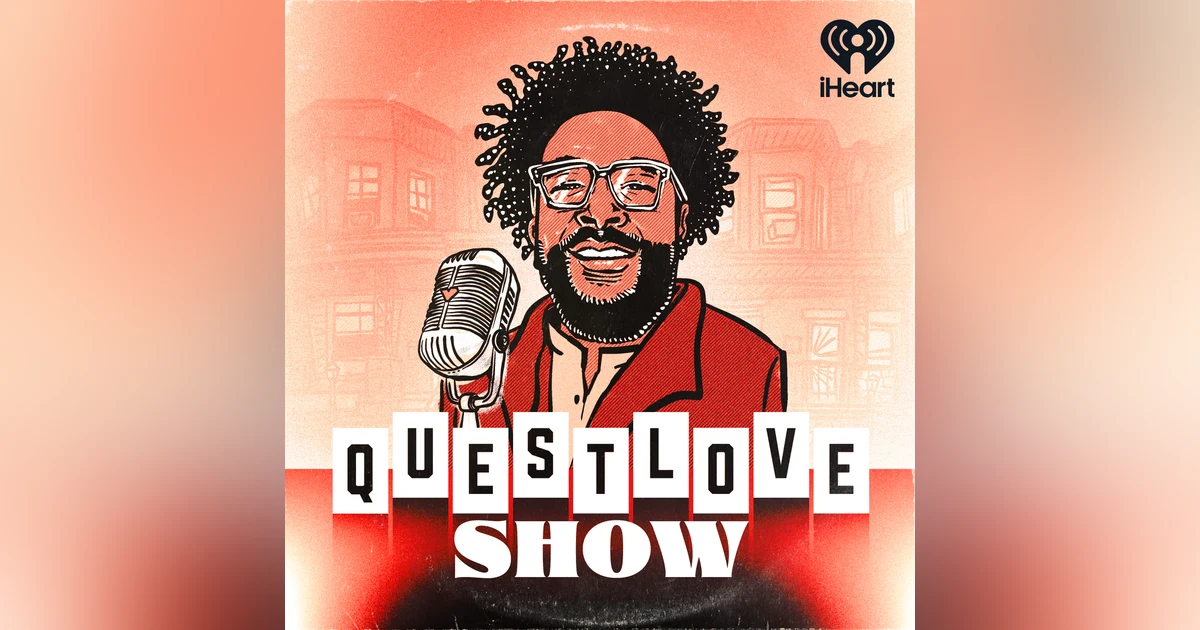
A Reaction To The Joe Kay / Soulection Episode Of The Questlove Show

 iHeartRadio
 Apple Podcasts
 Spotify
 Amazon Music
 RSS Feed
 TuneIn
 Castro
 Following the Roots Picnic backstage conversation between Soulection founder Joe Kay and Questlove, Open Mike Eagle and Cousin Jake unpack the discussion and its broader significance. They trace L.A.’s beat scene from the Good Life Café through Sketchbook and Low End Theory, and examine Joe’s thoughts on Stones Throw Records’ early influence.
See omnystudio.com/listener for privacy information.
00:00:00
Speaker 1: The Questlove Show is a production of iHeartRadio.
00:00:16
Speaker 2: What up, Mike?
00:00:17
Speaker 1: What's happening, Jake? How you doing, man?
00:00:20
Speaker 2: I'm all right, man. This is another Questlove Show mini. I never really know how the calendar works with equinox and solstice and all of that. But everyone's been posting their summer playlist, their summer reading list. Was there a piece of art, a book, an album? Obviously, you released an album.
00:00:41
Speaker 1: I did release an album. So that's probably what would come to mind first. But so many good albums came out in August, especially. The Erykah Badu and Alchemist album is crazy. I like the Denzel Curry and Kenny Beats album.
00:00:56
Speaker 2: Playing it an hour ago.
00:00:57
Speaker 1: I mean, you know, Hyrule just released an album. Oh, yeah. They released an album last Thursday.
00:01:05
Speaker 2: Okay.
00:01:05
Speaker 1: The Czar Face album with Frankie Pulitzer.
00:01:09
Speaker 2: You put me on. I mean, you gave me warning back in early summer, late spring. I keep playing the Homeboy Sandman Jack Splash album.
00:01:17
Speaker 1: See, I haven't heard that album yet. That's on my list. I need to get to that immediately.
00:01:21
Speaker 2: Yeah.
00:01:22
Speaker 1: Because that's the homie. And I love the singles off of that. So I need to peep that album. rhapsody's album is.
00:01:26
Speaker 3: Crazy yes so glad you said that man i truly and i've been covering rap since the days of cooley high i really believe it is her.
00:01:39
Speaker 1: Best work it's it's amazing it's absolutely amazing.
00:01:42
Speaker 2: And i've been a fan the whole time i thought eve it could get no better but here we are it's just amazing amazing amazing it's such a good lean back experience and Denon Porter as a producer, wow.
00:01:54
Speaker 1: I mean, because he was already dope.
00:01:57
Speaker 2: Yeah.
00:01:59
Speaker 1: Leveled up, like, incredibly. Like, I didn't see that coming from him.
00:02:05
Speaker 2: Right.
00:02:05
Speaker 1: Like, that kind of sound. And it's so good and so polished. Like, I really can't wait to hear what he does next, too.
00:02:12
Speaker 2: You know, I'm going to ask you a question on the fly. You know, like, I remember, whatever it was, 10 years ago, like, a lot of people attribute this to Drake. But there's been this thing where people don't sample, but there's these vocal allusions to other songs. And Rhapsody does a lot of it on her album. You've done it in yours. Where do you think that comes from? Is it just a way to get around just doing it in the beat? But vocalists are doing this thing now where they're referencing other things very cleverly, and it's something I'm really enjoying right now. And I don't know, like, if you would have said to me 15 years ago, I would have blamed it on the iPod. But where do you think that trend is coming from? Did I just put you in a weird spot?
00:02:49
Speaker 1: I mean, I have been hearing rappers do that my whole life.
00:02:53
Speaker 2: Yeah.
00:02:53
Speaker 1: I was always surprised. Okay, so I'd be listening to, like, a Wu-Tang song.
00:03:01
Speaker 2: Coming around the mountain when she like, or, or, or dirty, like dirty talking about, um, go down in history.
00:03:09
Speaker 1: That's the baddest one you ever did. And I'm thinking this is just dirty being crazy and being old school. It's like, Oh no, he's actually referencing another song. Cause then the way hip hop has worked in my life is that I'll get into a rap song and in different phases of my life, I'd get into, you know, I go back and listen to older stuff. or I'd listen to songs that were sampled into songs that I like. And so it opens up my musical palette like crazy, but I also start to see that like, oh, so many of these songs that I love had lyric references to all this other music, you know? So I feel like it's just kind of always something that's been around. I think that because there aren't really covers in hip hop, not for real, I feel like part of that, the desire to cover, you know what I'm saying? Becomes shout outs. It becomes ways to flip lyrics from other songs. Yeah, exactly.
00:04:09
Speaker 2: And I mean, you make a really good counterpoint because yeah, BDP, you know, from Billy Joel to Hey Jude, you know, Slick Rick with Walk On By, like, yeah, you're right. You know, it's funny. And I still, I mean, that is still one of the best feelings. Like, funny enough, I don't know if it made the final episode, but when we had the quest love show interview with Chuck D, um, earlier this year, earlier this season, he mentioned something about the band pleasure, um, funk band. I actually don't know where they're from. I'm going to assume Ohio. Cause it's great.
00:04:42
Speaker 1: It's always a good guess.
00:04:43
Speaker 2: But this weekend I was just playing some pleasure albums as I had to run some, I don't know. Yeah. And I'm hearing things that I've heard referenced in another songs, both musically and lyrically. And that's still the best feeling to connect the dots. And, um, But we are not here to talk about that. I love our rabbit holes. It's very emblematic of the QLS brand.
00:05:03
Speaker 1: You know how we get down. We're music fans, man.
00:05:05
Speaker 2: Yeah, man. This is what we'd be doing anyway. But we had an interview with Joe Kay, the founder of Soul Action On. And we're here to talk about it a little bit. And I wanted to ask you, I mean, you've been in LA a number of years, as we've talked about, and I've gotten wrong a number of times.
00:05:22
Speaker 1: In our conversations.
00:05:24
Speaker 2: I'm always making it sound like you moved there yesterday.
00:05:26
Speaker 1: It was a lot of yesterdays ago.
00:05:28
Speaker 2: A lot of yesterdays ago. But, you know, I know Selection has, first of all, a major global impact. But I know that there are a lot of L.A. roots to that movement. And I'm just curious, for you being a mover and shaker, any familiarity with that brand there as a record label, as, you know, an online kind of radio station curation, live show, et cetera?
00:05:52
Speaker 1: Well, because I've always been very connected to the low-end theory, the weekly sort of beat scene showcase out here, I was exposed to a lot of it that way. I never really connected with any of the acts in Solection, but I feel like I saw Sango play. Mr. Carmack is the homie. We've never made any music together, but my collaborator for my last album, Kenny Siegel, him and Mr. Carmack, they used to live together and they made all sorts of music. So it's like, I'm very familiar with their impact. I'm familiar with the shape of them. I didn't have too many direct experiences with them though, because that side of instrumental hip hop ended up sort of going in a direction that was like almost away from rap music, but that's, That's part of the story of LA is like the rappers sort of pushed all of the producers out at a certain point. And the producers all started cooking their own things, which became this event called Sketchbook, which became Low End Theory, which became Selection over time. Even though that was more from a DJ perspective, a lot of the stuff that they were playing was coming out of Flying Lotus and the Low End Theory dudes.
00:07:28
Speaker 2: You had a conversation in april with amir the two of you were you never we made it about three years and 30 minutes but you talking about the good life cafe into low-end theory into some of what you're talking about the the fracture of mcs and producers and i love that history so much um just because that's something that you need a first person account of but um yeah it's interesting to kind of I've been hearing a lot about Selection for a number of years. And I met Andre Power very briefly at one of Amir's game nights in LA and just watching his impact and how people respect him and how many records these guys have broken and artists that they've broken. I'm just fascinated with the platform. And I know Amir was too, and it's funny. I don't know that I would encourage taping interviews backstage at any event, again, especially on a platform like ours, I will say shout out to Matt Stillo from the iHeart team. He was able to use some incredible technology where you can, you couldn't hear what we heard real time. Wow. Because at that exact moment, that conversation took place. It sounded like one of those, uh, so-so deaf bass all-star albums. You couldn't hear nothing. Like I'm literally watching mouths move, trying to read. And one thing I will say about selection is that squad moves with precision. Like I am so impressed. Like you hear stories, especially in hip hop of like hammer in his prime or like naughty by nature of like the true or, you know, public enemy, like the true, uh, physical movement of like they're here everyone has a role everyone selection is like that there were about 15 people around they had their own photographer and they really brought this conversation to life and it was interesting because one of the things that comes up is is joe is in his 30s amir is in his 50s they are both attached to movements in cities that have since gone globally right And they're both DJs. And they're comparing notes. And then there's a generational reminder at times when Amir's like, yo, what music influenced you? And he was like, well, D'Angelo and DMX and some of the things you've done. So that was really fun to watch. It was fun to watch a brotherhood forming real time. But there's a moment in that conversation that I want to ask you about. Because I think it speaks to, you know, and this is an audio only podcast, but you are wearing a j dilla donuts shirt and so as you speak about kind of beat culture in la um in southern california Joe speaks about how Stone's Throw really influenced him. I mean, he said that him and Peanut Butter Wolf were very cool, but he originally applied in the late 2000s to intern. Never heard back. And I just thought, I was thinking of you with that, when I listened back, can you speak to how Stone's Throw, before there were people just creating playlists and before beat culture runs away with a legitimate label behind it, kind of drove that side of things?
00:10:40
Speaker 1: Man, it's been amazing to watch because it starts with the same hip hop that I'm, you know, loving in Chicago, right? Same sort of like, sort of East Coast centric boom bap hip hop. And like, you know, so I move out here in 2004 and that's the year that they dropped Mad Villain. I want to say J lib came out that year too, if not the next year. And so, you know, and you, you had loop pack before that. And I want to say yesterday's new quintet. So you saw this whole other thing happening and it was really interesting because it felt like at the time for me, anyway, it felt like it was all kind of revolving around mad lib sound, which was interesting because like I said, it, it takes the, meat and potatoes, boom bap and jazz stuff, but it just goes somewhere else with it. And I was always so interested in wherever that was headed. But it starts from there. And then it starts to go into this dance music almost kind of direction. And I think the foundation of that is about Peanut Butter Wolf and how seriously he takes DJing. You know what I'm saying? Like there, I always have to get reminded sometimes, especially because my avenue of hip hop is so heady and, and niche and very introspective. And a lot of times really slow that hip hop is, is essentially it's dance music. You know, that's, that's what it is. Like definitionally it's like a dance music and, Stone's throw never lost sight of that and made moves in that direction. And I feel like I'm always so grateful for that because when we do the stuff that I like, we lose people. You know what I'm saying? As a cultural force, we tend to push people out when we take it too far in the direction that I actually like the most because it's very insular. You know what I'm saying? It's not inviting to a lot of people, but when you, when you're reminded of like, like, I don't want to say that just the dance music aspect, but when you're pushing it in the direction of DJs and people having a good time and knowing what songs to play to get people moving and dancing and just having that being one of their core values and finding the people today that that still do that.
00:13:35
Speaker 2: Right.
00:13:35
Speaker 1: And, and a way that you can mix that with Madlib and mix that with Dilla. You know what I'm saying? Like that to me is where Stone Stroll started to take on this whole other life of its own. And I'm grateful for it. Like they have a, there's a bar out here, Gold Line that they.
00:13:52
Speaker 2: Gold owns that, right? Or something. Yeah.
00:13:55
Speaker 1: He owns it. And it's dope. It's just dope. It's just a dope bar. Like, and this is kind of what I'm saying. Anytime you go to that bar, it's full of people. I would say that at any given time, only 10% of people know that that bar has anything to do with Stone's Throw. Got you. But there is always somebody DJing, and the place is literally full of records. The music is always fantastic, and everybody's always having a great time. And it's like, oh, I have to be reminded of that sometimes.
00:14:28
Speaker 2: Yeah. I get what you're saying. Because in a way, that is the Stone's Throw ethos. And that seems to be the selection ethos, too. And it was cool because it made the animation that folks can see on IG. But Joe makes this point of not in a disparaging way, but he was like, for me, my sets always start with making women move. Because that's going to make the place lively, spirited, where you want to be. And, you know, I've gone even 20 plus years, close to 30 years ago, seeing Wolf, DJ in Philly, seeing Dane Funk, seeing, you know, some of that. And you can have that. You can play, you know, records that get everyone on the floor, regardless of whether they know who's playing them or not. And then they can also do what Amir talks about a lot of like jam in a Roscoe record or jam in a, a Percy P join or like other things from the catalog. And that, the world needs that because that's the foundation of hip hop. Right.
00:15:29
Speaker 1: I mean, it's, it's, there's a breakbeat connection and there's instrumentation, the vibes with all of that. And it's just the spirit of keeping it all together and keeping a place rocking like that. I'm just always so glad that there are, you know, musical outposts like Stone's throw that still exist. And I can see that that's part of why they still exist when so many other you know, indie rap record labels have gone to the wayside. It's like, that's kind of how you have to adapt is you have to not be narrowly laser focused into beats and raps, but also think about the other types of music that people like, you know what I'm saying?
00:16:12
Speaker 2: Yeah. I mean, I remember when Stone's Throw had that moment with Mayer Hawthorne, you know, and I knew him as a dude from the athletic mic league. And then he has this moment kind of making the soul music that, you know, inspired him. And then Stone's Throw has the audacity to put it out on a heart-shaped red vinyl record that we can give to people on Valentine's Day.
00:16:32
Speaker 1: How about it?
00:16:34
Speaker 2: And those are the things. And, you know, Peanut Butter Wolf was one of the early guests on Questlove Supreme long before I was part of this team. But I love that they have been able to supplement with a number of different things and continue. You know, it's funny enough, I just read our mutual buddy, Jeff Weiss, put up a thing of like, who was it? was it blue? Somebody who said their favorite LA records.
00:16:56
Speaker 1: I think it was blue. I think it was blue, yeah.
00:16:58
Speaker 2: And they had reminded of the Strong Arm Steady, Mad Live, and Search of Stoney Jackson album. So I just saw it as I'm scrolling. And I'm like, that is a great reminder to put this album back on. And I did. And I'm like, and I look at what the numbers are, numbers, on Spotify. And I'm like, man, not enough people are listening to this. But that got to come out in its own place and time, even when these other things, a Mad Villainy or a Mayor Hawthorne might have had a bigger response. But Stone's Throw always made making music fun. And I think Selection is doing that. And Flying Lotus gets a number of shout outs in the conversation of just how much of an influence he was. And I know he's another person that we want to have on QLS.
00:17:38
Speaker 1: Oh, I'm sure that'll happen easily. He's a great guy. He's a very, very thoughtful guy, too. So I'm sure when that conversation eventually happens, it'll be epic.
00:17:46
Speaker 2: Have you and Fly Low made joints together?
00:17:48
Speaker 1: We have made plans to make music, but we have not done it yet.
00:17:53
Speaker 2: Let me ask you this question. How does, from your perspective, and I only ask this as an artist and a resident today, the type of music that a fly low makes and the type of music that, you know, I'm trying to think of more like on the nose hip hop. Do those worlds coexist well these days in LA?
00:18:14
Speaker 1: You know, I think somebody like Kenny Siegel and I, I keep bringing them up, but it's also, you know, making this album with him has sort of been a reminder how deep his bag is too. And, and we've done a bunch of interviews together. And what I started to realize is that he sort of coalesces a lot of that, you know, like he's got the chunky, the chunky, you know, meat and potatoes drums, but his his interest and his values and bringing together musicians and his like musical acumen. I think it's, it's a lot, there's a lot of that low end theory, flying Lotus influence there too. This part of his style. Okay.
00:18:54
Speaker 2: Um, and he was very much, I'm asking, but he was very much a part of those gatherings as well. Yeah, yeah, yeah, yeah. Yeah.
00:19:02
Speaker 1: Yeah. Segal was too, but, uh, you know, yeah, it was like mine sign. Like, you know, I don't know if you know, but like he's, he's another, he's like a perfect sentences of like, this sort of electronic free jazz, but also very hip hop, you know, very hip hop.
00:19:18
Speaker 2: Nice. And that's spelled for, for myself and those out there just with no, no, no vows.
00:19:23
Speaker 1: There you go.
00:19:23
Speaker 2: All right.
00:19:24
Speaker 1: Yeah.
00:19:24
Speaker 2: Yeah. That's what's up. And I always admire LA like that. And I've, I've never gotten, I've never had much time to myself alone in LA to kind of get immersed in the scene, but I've always wanted, And, you know, it sounds like Gold Bar might be the place. Gold Line, excuse me.
00:19:40
Speaker 1: Gold Line is great. And, you know, it's tougher now because there isn't something weekly like low-end. So it's tougher now. It's like now you sort of have to be on the lookout for when something's happening versus when you used to have the weekly consistent. I think that's.
00:19:58
Speaker 2: Everywhere now, man, between the pandemic and just culture moving online. People, that weekly thing to look forward to just doesn't seem like it's quite there.
00:20:07
Speaker 1: That's really sad.
00:20:09
Speaker 2: Well, I encourage everyone. It's a really cool conversation. We gotten a lot of, um, gotten a lot of love on it. And a lot of people are recognizing kind of the generational thing. And I know sometimes when Amir speaks to folks that are younger, there is that moment of like, Oh my God, what you were listening to. I was already in my thirties, but you know, that's bound to happen. But I just think when you find that common ground, it's really cool.
00:20:31
Speaker 1: And, um, so.
00:20:33
Speaker 2: Encourage everyone to listen to it. Please drop us a line. Um, questlovesupreme.com or hit the DMs for Facebook or IG. You have some shows coming up soon, right? This will run in the next two weeks. But I mean, are you still on tour? Just a couple of dates in the East Coast.
00:20:49
Speaker 1: I'm about to be on the road pretty heavy.
00:20:52
Speaker 2: Oh, that's right.
00:20:54
Speaker 1: So coming up in October, do Montreal, Toronto, Cleveland, Chicago, Carrboro, North Carolina, DC and Baltimore and Brooklyn. And in November, Tucson, Phoenix, Santa Ana, and Los Angeles.
00:21:10
Speaker 2: Nice, man. Well, I might have to see you if I don't see you. It's either Brooklyn or Baltimore, and.
00:21:14
Speaker 1: They're both wins.
00:21:15
Speaker 2: But I got to look forward to it, man. But it's always a pleasure. We'll do this again real soon.
00:21:20
Speaker 1: And thank you. Thank you, man. All right, man.
00:21:22
Speaker 2: We'll be in touch. Yes, sir.
00:21:42
Speaker 1: The Course Love Show is a production of iHeartRadio.
Speaker 1: The Questlove Show is a production of iHeartRadio.
00:00:16
Speaker 2: What up, Mike?
00:00:17
Speaker 1: What's happening, Jake? How you doing, man?
00:00:20
Speaker 2: I'm all right, man. This is another Questlove Show mini. I never really know how the calendar works with equinox and solstice and all of that. But everyone's been posting their summer playlist, their summer reading list. Was there a piece of art, a book, an album? Obviously, you released an album.
00:00:41
Speaker 1: I did release an album. So that's probably what would come to mind first. But so many good albums came out in August, especially. The Erykah Badu and Alchemist album is crazy. I like the Denzel Curry and Kenny Beats album.
00:00:56
Speaker 2: Playing it an hour ago.
00:00:57
Speaker 1: I mean, you know, Hyrule just released an album. Oh, yeah. They released an album last Thursday.
00:01:05
Speaker 2: Okay.
00:01:05
Speaker 1: The Czar Face album with Frankie Pulitzer.
00:01:09
Speaker 2: You put me on. I mean, you gave me warning back in early summer, late spring. I keep playing the Homeboy Sandman Jack Splash album.
00:01:17
Speaker 1: See, I haven't heard that album yet. That's on my list. I need to get to that immediately.
00:01:21
Speaker 2: Yeah.
00:01:22
Speaker 1: Because that's the homie. And I love the singles off of that. So I need to peep that album. rhapsody's album is.
00:01:26
Speaker 3: Crazy yes so glad you said that man i truly and i've been covering rap since the days of cooley high i really believe it is her.
00:01:39
Speaker 1: Best work it's it's amazing it's absolutely amazing.
00:01:42
Speaker 2: And i've been a fan the whole time i thought eve it could get no better but here we are it's just amazing amazing amazing it's such a good lean back experience and Denon Porter as a producer, wow.
00:01:54
Speaker 1: I mean, because he was already dope.
00:01:57
Speaker 2: Yeah.
00:01:59
Speaker 1: Leveled up, like, incredibly. Like, I didn't see that coming from him.
00:02:05
Speaker 2: Right.
00:02:05
Speaker 1: Like, that kind of sound. And it's so good and so polished. Like, I really can't wait to hear what he does next, too.
00:02:12
Speaker 2: You know, I'm going to ask you a question on the fly. You know, like, I remember, whatever it was, 10 years ago, like, a lot of people attribute this to Drake. But there's been this thing where people don't sample, but there's these vocal allusions to other songs. And Rhapsody does a lot of it on her album. You've done it in yours. Where do you think that comes from? Is it just a way to get around just doing it in the beat? But vocalists are doing this thing now where they're referencing other things very cleverly, and it's something I'm really enjoying right now. And I don't know, like, if you would have said to me 15 years ago, I would have blamed it on the iPod. But where do you think that trend is coming from? Did I just put you in a weird spot?
00:02:49
Speaker 1: I mean, I have been hearing rappers do that my whole life.
00:02:53
Speaker 2: Yeah.
00:02:53
Speaker 1: I was always surprised. Okay, so I'd be listening to, like, a Wu-Tang song.
00:03:01
Speaker 2: Coming around the mountain when she like, or, or, or dirty, like dirty talking about, um, go down in history.
00:03:09
Speaker 1: That's the baddest one you ever did. And I'm thinking this is just dirty being crazy and being old school. It's like, Oh no, he's actually referencing another song. Cause then the way hip hop has worked in my life is that I'll get into a rap song and in different phases of my life, I'd get into, you know, I go back and listen to older stuff. or I'd listen to songs that were sampled into songs that I like. And so it opens up my musical palette like crazy, but I also start to see that like, oh, so many of these songs that I love had lyric references to all this other music, you know? So I feel like it's just kind of always something that's been around. I think that because there aren't really covers in hip hop, not for real, I feel like part of that, the desire to cover, you know what I'm saying? Becomes shout outs. It becomes ways to flip lyrics from other songs. Yeah, exactly.
00:04:09
Speaker 2: And I mean, you make a really good counterpoint because yeah, BDP, you know, from Billy Joel to Hey Jude, you know, Slick Rick with Walk On By, like, yeah, you're right. You know, it's funny. And I still, I mean, that is still one of the best feelings. Like, funny enough, I don't know if it made the final episode, but when we had the quest love show interview with Chuck D, um, earlier this year, earlier this season, he mentioned something about the band pleasure, um, funk band. I actually don't know where they're from. I'm going to assume Ohio. Cause it's great.
00:04:42
Speaker 1: It's always a good guess.
00:04:43
Speaker 2: But this weekend I was just playing some pleasure albums as I had to run some, I don't know. Yeah. And I'm hearing things that I've heard referenced in another songs, both musically and lyrically. And that's still the best feeling to connect the dots. And, um, But we are not here to talk about that. I love our rabbit holes. It's very emblematic of the QLS brand.
00:05:03
Speaker 1: You know how we get down. We're music fans, man.
00:05:05
Speaker 2: Yeah, man. This is what we'd be doing anyway. But we had an interview with Joe Kay, the founder of Soul Action On. And we're here to talk about it a little bit. And I wanted to ask you, I mean, you've been in LA a number of years, as we've talked about, and I've gotten wrong a number of times.
00:05:22
Speaker 1: In our conversations.
00:05:24
Speaker 2: I'm always making it sound like you moved there yesterday.
00:05:26
Speaker 1: It was a lot of yesterdays ago.
00:05:28
Speaker 2: A lot of yesterdays ago. But, you know, I know Selection has, first of all, a major global impact. But I know that there are a lot of L.A. roots to that movement. And I'm just curious, for you being a mover and shaker, any familiarity with that brand there as a record label, as, you know, an online kind of radio station curation, live show, et cetera?
00:05:52
Speaker 1: Well, because I've always been very connected to the low-end theory, the weekly sort of beat scene showcase out here, I was exposed to a lot of it that way. I never really connected with any of the acts in Solection, but I feel like I saw Sango play. Mr. Carmack is the homie. We've never made any music together, but my collaborator for my last album, Kenny Siegel, him and Mr. Carmack, they used to live together and they made all sorts of music. So it's like, I'm very familiar with their impact. I'm familiar with the shape of them. I didn't have too many direct experiences with them though, because that side of instrumental hip hop ended up sort of going in a direction that was like almost away from rap music, but that's, That's part of the story of LA is like the rappers sort of pushed all of the producers out at a certain point. And the producers all started cooking their own things, which became this event called Sketchbook, which became Low End Theory, which became Selection over time. Even though that was more from a DJ perspective, a lot of the stuff that they were playing was coming out of Flying Lotus and the Low End Theory dudes.
00:07:28
Speaker 2: You had a conversation in april with amir the two of you were you never we made it about three years and 30 minutes but you talking about the good life cafe into low-end theory into some of what you're talking about the the fracture of mcs and producers and i love that history so much um just because that's something that you need a first person account of but um yeah it's interesting to kind of I've been hearing a lot about Selection for a number of years. And I met Andre Power very briefly at one of Amir's game nights in LA and just watching his impact and how people respect him and how many records these guys have broken and artists that they've broken. I'm just fascinated with the platform. And I know Amir was too, and it's funny. I don't know that I would encourage taping interviews backstage at any event, again, especially on a platform like ours, I will say shout out to Matt Stillo from the iHeart team. He was able to use some incredible technology where you can, you couldn't hear what we heard real time. Wow. Because at that exact moment, that conversation took place. It sounded like one of those, uh, so-so deaf bass all-star albums. You couldn't hear nothing. Like I'm literally watching mouths move, trying to read. And one thing I will say about selection is that squad moves with precision. Like I am so impressed. Like you hear stories, especially in hip hop of like hammer in his prime or like naughty by nature of like the true or, you know, public enemy, like the true, uh, physical movement of like they're here everyone has a role everyone selection is like that there were about 15 people around they had their own photographer and they really brought this conversation to life and it was interesting because one of the things that comes up is is joe is in his 30s amir is in his 50s they are both attached to movements in cities that have since gone globally right And they're both DJs. And they're comparing notes. And then there's a generational reminder at times when Amir's like, yo, what music influenced you? And he was like, well, D'Angelo and DMX and some of the things you've done. So that was really fun to watch. It was fun to watch a brotherhood forming real time. But there's a moment in that conversation that I want to ask you about. Because I think it speaks to, you know, and this is an audio only podcast, but you are wearing a j dilla donuts shirt and so as you speak about kind of beat culture in la um in southern california Joe speaks about how Stone's Throw really influenced him. I mean, he said that him and Peanut Butter Wolf were very cool, but he originally applied in the late 2000s to intern. Never heard back. And I just thought, I was thinking of you with that, when I listened back, can you speak to how Stone's Throw, before there were people just creating playlists and before beat culture runs away with a legitimate label behind it, kind of drove that side of things?
00:10:40
Speaker 1: Man, it's been amazing to watch because it starts with the same hip hop that I'm, you know, loving in Chicago, right? Same sort of like, sort of East Coast centric boom bap hip hop. And like, you know, so I move out here in 2004 and that's the year that they dropped Mad Villain. I want to say J lib came out that year too, if not the next year. And so, you know, and you, you had loop pack before that. And I want to say yesterday's new quintet. So you saw this whole other thing happening and it was really interesting because it felt like at the time for me, anyway, it felt like it was all kind of revolving around mad lib sound, which was interesting because like I said, it, it takes the, meat and potatoes, boom bap and jazz stuff, but it just goes somewhere else with it. And I was always so interested in wherever that was headed. But it starts from there. And then it starts to go into this dance music almost kind of direction. And I think the foundation of that is about Peanut Butter Wolf and how seriously he takes DJing. You know what I'm saying? Like there, I always have to get reminded sometimes, especially because my avenue of hip hop is so heady and, and niche and very introspective. And a lot of times really slow that hip hop is, is essentially it's dance music. You know, that's, that's what it is. Like definitionally it's like a dance music and, Stone's throw never lost sight of that and made moves in that direction. And I feel like I'm always so grateful for that because when we do the stuff that I like, we lose people. You know what I'm saying? As a cultural force, we tend to push people out when we take it too far in the direction that I actually like the most because it's very insular. You know what I'm saying? It's not inviting to a lot of people, but when you, when you're reminded of like, like, I don't want to say that just the dance music aspect, but when you're pushing it in the direction of DJs and people having a good time and knowing what songs to play to get people moving and dancing and just having that being one of their core values and finding the people today that that still do that.
00:13:35
Speaker 2: Right.
00:13:35
Speaker 1: And, and a way that you can mix that with Madlib and mix that with Dilla. You know what I'm saying? Like that to me is where Stone Stroll started to take on this whole other life of its own. And I'm grateful for it. Like they have a, there's a bar out here, Gold Line that they.
00:13:52
Speaker 2: Gold owns that, right? Or something. Yeah.
00:13:55
Speaker 1: He owns it. And it's dope. It's just dope. It's just a dope bar. Like, and this is kind of what I'm saying. Anytime you go to that bar, it's full of people. I would say that at any given time, only 10% of people know that that bar has anything to do with Stone's Throw. Got you. But there is always somebody DJing, and the place is literally full of records. The music is always fantastic, and everybody's always having a great time. And it's like, oh, I have to be reminded of that sometimes.
00:14:28
Speaker 2: Yeah. I get what you're saying. Because in a way, that is the Stone's Throw ethos. And that seems to be the selection ethos, too. And it was cool because it made the animation that folks can see on IG. But Joe makes this point of not in a disparaging way, but he was like, for me, my sets always start with making women move. Because that's going to make the place lively, spirited, where you want to be. And, you know, I've gone even 20 plus years, close to 30 years ago, seeing Wolf, DJ in Philly, seeing Dane Funk, seeing, you know, some of that. And you can have that. You can play, you know, records that get everyone on the floor, regardless of whether they know who's playing them or not. And then they can also do what Amir talks about a lot of like jam in a Roscoe record or jam in a, a Percy P join or like other things from the catalog. And that, the world needs that because that's the foundation of hip hop. Right.
00:15:29
Speaker 1: I mean, it's, it's, there's a breakbeat connection and there's instrumentation, the vibes with all of that. And it's just the spirit of keeping it all together and keeping a place rocking like that. I'm just always so glad that there are, you know, musical outposts like Stone's throw that still exist. And I can see that that's part of why they still exist when so many other you know, indie rap record labels have gone to the wayside. It's like, that's kind of how you have to adapt is you have to not be narrowly laser focused into beats and raps, but also think about the other types of music that people like, you know what I'm saying?
00:16:12
Speaker 2: Yeah. I mean, I remember when Stone's Throw had that moment with Mayer Hawthorne, you know, and I knew him as a dude from the athletic mic league. And then he has this moment kind of making the soul music that, you know, inspired him. And then Stone's Throw has the audacity to put it out on a heart-shaped red vinyl record that we can give to people on Valentine's Day.
00:16:32
Speaker 1: How about it?
00:16:34
Speaker 2: And those are the things. And, you know, Peanut Butter Wolf was one of the early guests on Questlove Supreme long before I was part of this team. But I love that they have been able to supplement with a number of different things and continue. You know, it's funny enough, I just read our mutual buddy, Jeff Weiss, put up a thing of like, who was it? was it blue? Somebody who said their favorite LA records.
00:16:56
Speaker 1: I think it was blue. I think it was blue, yeah.
00:16:58
Speaker 2: And they had reminded of the Strong Arm Steady, Mad Live, and Search of Stoney Jackson album. So I just saw it as I'm scrolling. And I'm like, that is a great reminder to put this album back on. And I did. And I'm like, and I look at what the numbers are, numbers, on Spotify. And I'm like, man, not enough people are listening to this. But that got to come out in its own place and time, even when these other things, a Mad Villainy or a Mayor Hawthorne might have had a bigger response. But Stone's Throw always made making music fun. And I think Selection is doing that. And Flying Lotus gets a number of shout outs in the conversation of just how much of an influence he was. And I know he's another person that we want to have on QLS.
00:17:38
Speaker 1: Oh, I'm sure that'll happen easily. He's a great guy. He's a very, very thoughtful guy, too. So I'm sure when that conversation eventually happens, it'll be epic.
00:17:46
Speaker 2: Have you and Fly Low made joints together?
00:17:48
Speaker 1: We have made plans to make music, but we have not done it yet.
00:17:53
Speaker 2: Let me ask you this question. How does, from your perspective, and I only ask this as an artist and a resident today, the type of music that a fly low makes and the type of music that, you know, I'm trying to think of more like on the nose hip hop. Do those worlds coexist well these days in LA?
00:18:14
Speaker 1: You know, I think somebody like Kenny Siegel and I, I keep bringing them up, but it's also, you know, making this album with him has sort of been a reminder how deep his bag is too. And, and we've done a bunch of interviews together. And what I started to realize is that he sort of coalesces a lot of that, you know, like he's got the chunky, the chunky, you know, meat and potatoes drums, but his his interest and his values and bringing together musicians and his like musical acumen. I think it's, it's a lot, there's a lot of that low end theory, flying Lotus influence there too. This part of his style. Okay.
00:18:54
Speaker 2: Um, and he was very much, I'm asking, but he was very much a part of those gatherings as well. Yeah, yeah, yeah, yeah. Yeah.
00:19:02
Speaker 1: Yeah. Segal was too, but, uh, you know, yeah, it was like mine sign. Like, you know, I don't know if you know, but like he's, he's another, he's like a perfect sentences of like, this sort of electronic free jazz, but also very hip hop, you know, very hip hop.
00:19:18
Speaker 2: Nice. And that's spelled for, for myself and those out there just with no, no, no vows.
00:19:23
Speaker 1: There you go.
00:19:23
Speaker 2: All right.
00:19:24
Speaker 1: Yeah.
00:19:24
Speaker 2: Yeah. That's what's up. And I always admire LA like that. And I've, I've never gotten, I've never had much time to myself alone in LA to kind of get immersed in the scene, but I've always wanted, And, you know, it sounds like Gold Bar might be the place. Gold Line, excuse me.
00:19:40
Speaker 1: Gold Line is great. And, you know, it's tougher now because there isn't something weekly like low-end. So it's tougher now. It's like now you sort of have to be on the lookout for when something's happening versus when you used to have the weekly consistent. I think that's.
00:19:58
Speaker 2: Everywhere now, man, between the pandemic and just culture moving online. People, that weekly thing to look forward to just doesn't seem like it's quite there.
00:20:07
Speaker 1: That's really sad.
00:20:09
Speaker 2: Well, I encourage everyone. It's a really cool conversation. We gotten a lot of, um, gotten a lot of love on it. And a lot of people are recognizing kind of the generational thing. And I know sometimes when Amir speaks to folks that are younger, there is that moment of like, Oh my God, what you were listening to. I was already in my thirties, but you know, that's bound to happen. But I just think when you find that common ground, it's really cool.
00:20:31
Speaker 1: And, um, so.
00:20:33
Speaker 2: Encourage everyone to listen to it. Please drop us a line. Um, questlovesupreme.com or hit the DMs for Facebook or IG. You have some shows coming up soon, right? This will run in the next two weeks. But I mean, are you still on tour? Just a couple of dates in the East Coast.
00:20:49
Speaker 1: I'm about to be on the road pretty heavy.
00:20:52
Speaker 2: Oh, that's right.
00:20:54
Speaker 1: So coming up in October, do Montreal, Toronto, Cleveland, Chicago, Carrboro, North Carolina, DC and Baltimore and Brooklyn. And in November, Tucson, Phoenix, Santa Ana, and Los Angeles.
00:21:10
Speaker 2: Nice, man. Well, I might have to see you if I don't see you. It's either Brooklyn or Baltimore, and.
00:21:14
Speaker 1: They're both wins.
00:21:15
Speaker 2: But I got to look forward to it, man. But it's always a pleasure. We'll do this again real soon.
00:21:20
Speaker 1: And thank you. Thank you, man. All right, man.
00:21:22
Speaker 2: We'll be in touch. Yes, sir.
00:21:42
Speaker 1: The Course Love Show is a production of iHeartRadio.