515. Why Podcasters Need a Publicity Plan
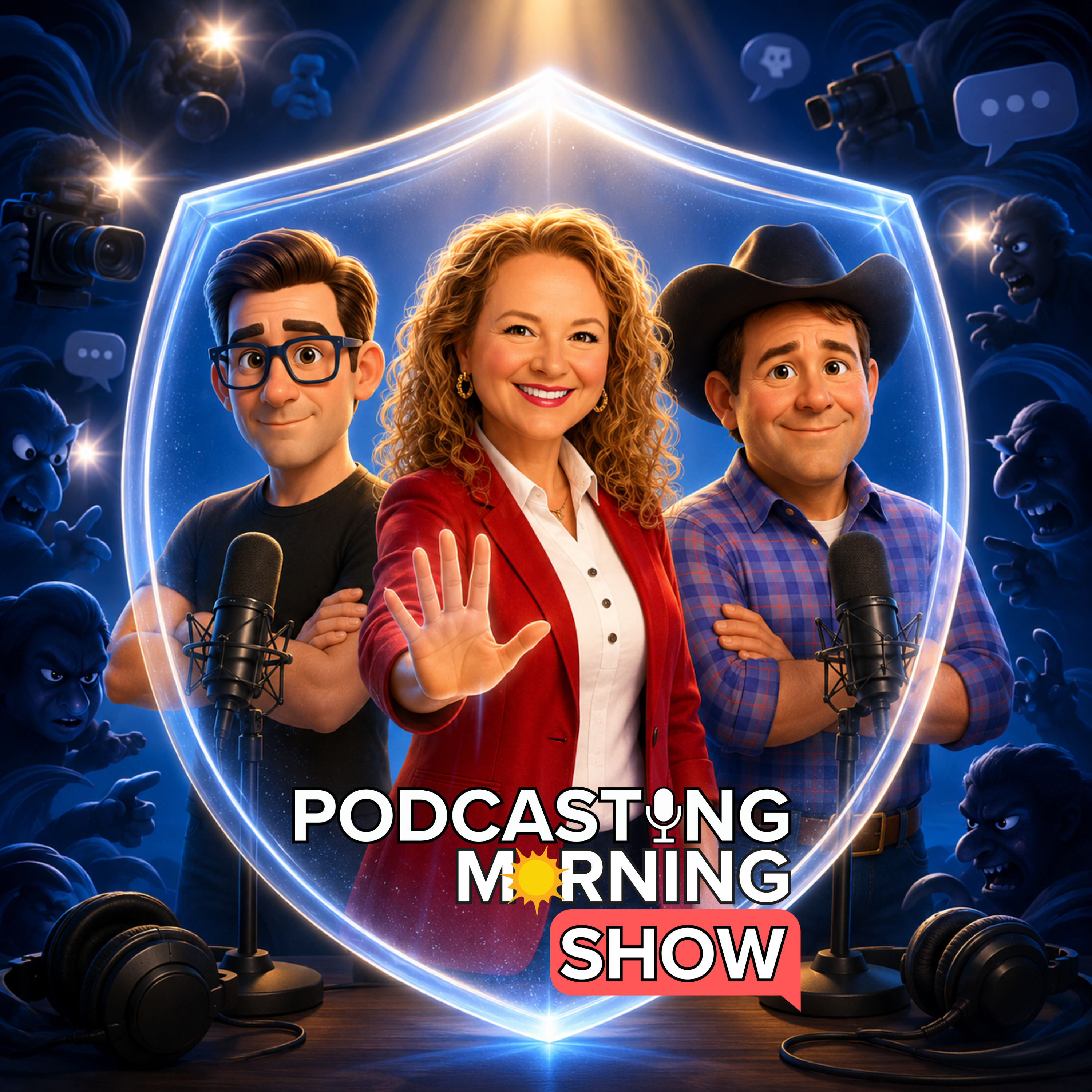


Growing a podcast gets exciting fast, but the moment podcasters need a publicity plan is usually the same moment things start feeling a little more exposed than expected. In this episode, our cast and crew talk with publicist Cyndee Harrison about what happens when your voice starts reaching beyond your own audience and why visibility brings more than just opportunity. We get into reputation, media attention, handling criticism, difficult guest moments, and the reality that people may judge your entire brand off one clip or one headline. You know the one, that comment or moment that sticks in your head way longer than it should. We also talk through practical ways creators can prepare before chasing more exposure, from media kits to personal branding and knowing what your show actually stands for before things go sideways. By the end, the conversation keeps circling back to one uncomfortable truth: the bigger your platform gets, the more important it becomes to know who you are before everyone else decides for you.
Episode Highlights:
[00:00] Welcome and Setup
[02:50] Meet Publicist Cyndee
[05:06] What a Publicist Does
[06:25] Why Podcasting Is Going Mainstream
[10:17] Publicity Strategies for Podcasters
[14:55] DIY Media Outreach and HARO Tips
[23:19] Visibility Risks and Guest Controversies
[28:26] Crisis Lessons and Emotional Fallout
[31:47] Think Ahead Before Publishing
[40:54] Preparing for More Exposure
[44:49] When to Get PR Help
[53:52] Community Invite and Wrap-Up
Cyndee's PR Firm:
Feature Your Podcast on the Podcasting Morning Show:
https://PodcastingMorningShow.com/spotlight
The Podcasting Morning Show:
www.podcastingmorningshow.com
Ways to Watch or Listen: https://www.podcastingmorningshow.com/joinus/
Meet the PMS Cast and Crew:
https://podcastingmorningshow.com/people
Join The Empowered Podcasting Facebook Group:
www.facebook.com/groups/empoweredpodcasting
Book A Free Call With Marc:
https://calendly.com/ironickmedia/freestrategycall
Application To Submit Your Show For Evaluation:
https://podcastingmorningshow.com/eval
Join us every other Monday at 8 AM ET for the Obsession Worthy Podcasts:
http://podcastingmorningshow.com/owp/
Join us LIVE every weekday morning at 8 am ET (US) on Clubhouse:
https://podcastingmorningshow.com/clubhouse
EPC3 Speaker Application: https://empoweredpodcasting.com/speakers
Powered by iRonickMedia.com and ContentCreatorsAccountant.com
Send in your mailbag questions: https://www.podcastingmorningshow.com/contact/ or marc@ironickmedia.com
Want to be a guest on The Podcasting Morning Show? Send me a message on PodMatch, here:
https://podmatch.com/hostdetailpreview/1729879899384520035bad21b
0:04 Marc Ronick: Good morning Today is Tuesday May the 12th, 2026 and today we're talking publicity and reputation with publicist Cyndee Harrison and why podcasters need a plan before their growing visibility brings public exposure, responsibility and new challenges. So if you're listening live on clubhouse, hit the share button top right hand side of the screen and share it And if you're catching us via please share this with a fellow podcaster. And now give us about 30 seconds and we'll get things rolling.
0:49 Thanks for being here. The podcasting morning chat is powered by ironic media, helping podcasters launch polish and grow great shows, and by content creators accountant, helping creators build real business behind their content. Good morning again, podcasting morning show. Thank you for being here. I am your host, Mark ronick, and currently on stage with me. We have Ralph Estep, DR Fay, Sid Meadows, Alex Baellish, BC babbles, and we also have our guest here, Cyndee Harrison, who So yes, like I said, joining us today, Cyndee Harrison and she is going to help us dig into and how to handle that. So we'll dig in to that in just a second. First, I want to dig into some housekeeping items for you. First, empowered podcasting, live, our live stream every other Wednesday returns tomorrow, Wednesday at 1pm Eastern.
1:57 That's Wednesday the 13th, with one of our events creator partners, and somebody I think may be familiar to many of you, Sid Meadows is joining us. monetizing his podcast in 2026 share at the conference, as well in podcasting, and, of course, his experience at empowered podcasting. So join us. All you got to do is go to podcasting morning show.com/epc, live and get all the info there, and that just reminded me, I think I need to update that page for tomorrow's show, so I will make sure to do that first thing after this show.
2:46 So we got Cyndee here today because Ralph actually just hired her recently as his own publicist. So I think the best way to do this is to go hand it to Ralph to introduce our guest, and then we'll get things going. Go ahead, Ralph, good morning. Ralph Estep Jr: Good morning. Mark, good morning, Cyndee. And today, joining us is Cyndee Harrison. Cyndee is a publicist who works with individuals and brands on publicity, reputation, messaging and public exposure. podcasters should know before spotlight. Now today's conversation is especially important for podcast hosts, for creators, business owners and anyone using media to grow their voice.
3:29 We're going to talk about how publicity works, what can go wrong, how to prepare, and why having the right support matters. So that's exactly so Cyndee, so glad that you could be here today. Cyndee Harrison: Thank you for I'm really excited for the conversation. Marc Ronick: And what a great Like if you're not watching the video right now, she's got her microphone like she knows how to be a good podcast guest. We have no audio problems. The video looks great. This is a great example of a good guest right out of the gate. Well, Cyndee Harrison: it's early yet. Marc Ronick: Great to be here. things off with your first Ralph Estep Jr: Sure, And Mark You and I had talked a little bit before the show.
4:11 We talked about why I hired Cyndee, and I think we can start there. Marc Ronick: Yeah, let's see. Ralph Estep Jr: So the reason are starting to grow. My influence is starting to grow. And I said, you know, I need to take it to the next level. And I met Cyndee through the podcast Professionals Association, and I had just reached out to her, and I said, Cyndee, is this something you do? Is this something you could help someone grow their influence, get me in front of new audience? And she said, Oh yeah, Ralph. She said, that's exactly what I do. So we struck up a conversation, and we become fast friends. I would say, you know, we bounced a lot of ideas off each other. She just got finished her team building, I guess you call it a press kit, and super impressive press kit, she makes me look better than I could ever have been. So I'm super excited about how having her help me really take it to the next level.
4:56 I've shared with her, sort of my want to accomplish. Much in podcasting, in the greater, you know, sphere of influence. So that's really the reason that I hired Cyndee. But Cyndee, I want to jump into our first question, because a lot of people don't know what a publicist does. Can you explain your role, the types of clients and situations you typically help people with? Cyndee Harrison: Sure, well, and really excited, Ralph, you are such a great use case, because there are so many business owners, creators and leaders who work so hard to build a brand and to build in the case of podcast hosts, to build an audience, and so for podcast hosts specifically, it's always interesting to see what a bank, if you will, of content is But so many times that Bank of content, those videos, those show notes, those blog posts, tend to live within four walls, and at one time, that wasn't such a problem, because the audience would come and step into those four walls with that podcast host and enjoy that content, and then business could transact or, you know, it just sort of played out really naturally. You know, we all build these silos around ourselves unintentionally, so a publicist can help you stretch out of that, and is typically known for connecting you with mainstream media.
6:25 So, and I use that word very, very carefully, and I would love to hear how you guys agree or disagree with this, I feel like podcasting is now mainstream, and so I am open to calling mainstream media something else, but when I am using that word, I am thinking of what we have traditionally called mainstream media, like newspapers, magazines, places and media that have broader and different audiences who are interested in what you're doing. Marc Ronick: Yeah, I think that a lot of us, or a lot of people, are now accepting podcasting more as mainstream media. I don't think it's quite there, just in this just in the sense of the perspective of the public I don't know that everybody yet considers it mainstream media, but for all intensive purposes, I think, I do think it is, now these days, lot of people referring to that as their source for information, etc. So we'll see.
7:21 But I think before we know it, everybody's gonna just lump that in with the rest of the media out there. Cyndee Harrison: I agree. Yeah, when I first started my first foray into podcasting, I was an internal publicist for someone who had a really big audience, and CBS actually came to him and said, you know, we're dipping a toe. This was in the play.it days. Does anyone remember play dot? Marc Ronick: I don't. Cyndee Harrison: At the time, they were calling it syndicated, which I think would now be essentially a network anyway. I'm just interested to see if anyone remembers that. But it was C It was a CBS product, and we were so fortunate because we would show up at the local radio station. They would provide all of the infrastructure. We just lined up guests, spoke to them. It was a great show.
8:12 And what they kept saying repeatedly was we have to, in order to find that podcast audience, we've got to get you on other podcasts, and we have to figure out. And it was so funny because at that time, the podcast listening audience, the population that was engaging with podcasts, was such a specific and tiny slice of of everyone. And it's been really nice in the past few years. That was in 2015 and it's been really nice to kind of re these were the days that folks forward to, back when I was on, how do we grow this thing?
8:56 How do we get advertisers like, how is this so it's been really an interesting time. It's like, I've time hopped in. I Marc Ronick: hear ya. So let me ask you when you hear the word, well, I should say, when people hear the word publicity, they often think it only means press or attention, right? How would you define publicity in a more complete way. Cyndee Harrison: So I tend to reputation, because reputation, if you think about the good old days, reputation used to be a So I'm from a small town in East Tennessee, and I grew up knowing and believing that if you do the work, you earn the reputation, and the rest will take care of itself.
9:43 And that applied to pretty much everything. And nowadays, like, if you do a Google search for reputation management, which is what I really call what I do, what is it talking about? It's all talking about AI, online visibility, the ability to be found. Found as the subject matter expert that you are Marc Ronick: awesome. Anyone else have another question along these lines? We have plenty of questions for her, but I just want to make sure that everyone else can pop in if they'd like, Oh, all right. Well, Ralph, do you want to take the next Ralph Estep Jr: one absolutely and so the next question is, from podcast is a powerful platform now, and from your perspective, why should podcasters think about publicity different than someone with their traditional business?
10:27 And actually, this goes along the lines of what you and I've had many conversations about now, and that is, how do we you know, one of the things you said to me when you were building my press kit is like, well, we're not going to be starved for material for you. But how do we bridge that, you know, how should podcasters against the audience we're talking to you today? How should podcasters think about publicity differently than someone with a traditional business? I know you've worked with traditional businesses. We talked a little bit about that before the show. You actually work with some pawn businesses that they actually had a reality TV show, which is really cool, but you know, how do you bridge that gap between the podcast and the traditional business? Cyndee? Cyndee Harrison: So that's a great question. I think it sort of goes back to what I alluded to a little earlier.
11:12 How podcasters put so much into building their show, right? They pour everything into growing and sort of feeding and watering that audience, and now there are so many golden nuggets that tend to be buried within that podcast ecosystem. So what I think my job as a publicist, specifically for podcasters, is is to help them take that and mine that gold and share it with journalists and others who are are looking for that content. You know, all of us are old enough to remember the days when reporters, you know, I mean, television news, was the way we got our information every single newspapers to start their day, it, but now we're seeing like in AI tools are looking for verifiable sources, so media is scrambling to make this huge comeback, and as a result, there They've been starved of They've been starved of all the luxuries of their timeline.
12:31 They're hungry to connect with people who can lend expertise and lend a unique kind of AI, which is authentic insight to the stories that they are now charged with producing. So that's the media side of it. And what's really nice is that that findability, that that look that is coming from the perspective of media, is really beneficial for an entirely different audience. And I want to talk a little bit about what podcasters goals are. And I don't know if any of your audience, ever you know, states this as a goal, but nowadays opportunities, whether that's a brand partnership or an advertising partnership. And the reality is that a lot of those network executives or sponsors or brand partners, they may never have the time to take a deep dive into all that gold that's laying there in your So they you need to make sure that you are serving them up little golden nuggets in the highly visible media hits.
13:46 It's really, really an important way to make sure that you're tapping into that second audience, that non listening audience that has a lot of influence over your your show's success, and Ralph Estep Jr: that's kind of what you're doing for me, right? I mean, that's the whole point. anybody when I say, you, you Frogs. And I thought that was a really interesting way to put it, but it is the truth, right? Cyndee Harrison: It's 100% It's much like taxes. I could do my own taxes. I could paint my own car. I there's a lot of things I could do myself. And so we live in a world where darn near anything is available to us. And so I do believe that the work of a professional publicist is helpful when you reach a certain level of and Ralph, I'm not pandering to you, but I mean, you have reached a certain level where you have built a bank of content, and you've built an audience that it's time for you to take that step up. But not every podcast host has to start there. There are a lot of things that you can do to get that media attention entirely on your own.
14:55 Marc Ronick: Can you give us an example Cyndee Harrison: for sure? So there are two. Tools. Have you heard of HERO Help a Reporter Out? Yes, that's one of my favorite tools, for a number of That's one of many. There's muck rack and quoted and But there are all sorts of tools where journalists go to try to connect with people who can serve as a source, and so that's a great place to start. You can subscribe to heyro. Heyro Originally, they've originally stood for Help a exactly that. So imagine the job of a journalist and you have been assigned a story and you have fleshed it out. Now, if you're a journalist, you It is your job to connect with people who are experts in the field and do your research. You've put it all together, and then your editor says, not enough sources.
15:58 So what do you do? It's like, I'm at deadline. I'm freaking out. So someone very smartly invented this system for just putting the word out, and if you it will teach you how journalists operate. You'll see in real time, the types of angles that they work on now in your field. example. In the personal finance for or creator economy, you can just start watching what are articles that are the angles that align with his expertise, and then you're very welcome to now in those examples, those are deadline, so you're that's when I say it's Kissing Frogs, because you have people like me who employ an entire team who do time for opportunities. This not the only way you can also just find, oh, there's a reporter who just wrote an article about my area of expertise.
17:10 I'm going to give them a couple of days to finish this, and I'm going to just reach out and introduce myself and say, Hey, noticed this article. I saw the finished piece, I really align with this perspective. And next time you need a subject matter expert, I'd love to collaborate with you. Marc Ronick: Very cool. Thank you for the examples. I think that's really helpful for a lot of us, because I think there are plenty of people in our audience that may not be ready yet for a publicist, but they're intrigued by this conversation. So, yeah, the more we can provide, I think the better. But Dr, I think you had a question. D.R. Fay: Yeah, I have a question. As soon as you mentioned HERO, I perked up because I have access to Haro through press. I forgot the platform that I belong to. I just don't know how to use Haro.
18:02 YouTube video tutorial or Cyndee Harrison: well. And I am not in it every day. My team spends a lot more time in it. So just the quick so I'm certain that someone has invented a YouTube tutorial. The basic premise, though, is that they want you to submit responses, typically in very specific answers to questions. And so they, also, most of the journalists that we work with, are very, very deliberate. They are trying to figure out, how does AI play into all of this.
18:43 separate yourself. If you are responding to a hay row in you say, it hay row? What do I say? D.R. Fay: I say, HARO, but it's, it might be HERO. Cyndee Harrison: I have an accident, so I D.R. Fay: I'm in Nashville, so I know girl, I know Cyndee Harrison: rep down south. I have lived in the Midwest 25 years, never know. Like anything. I say I'm like, I don't know with my and so, you know, when I've done it, I think the biggest benefit is, and I'm the spot, but I'm curious, how D.R. Fay: I don't, because I don't know how to use it, and it, every time I go into it, I'm reminded i i really need help on this.
19:25 Cyndee Harrison: And it's like, every darn thing. Every time I learn a new system, I'm like, dang it, they either move the D.R. Fay: Yeah or update it to where it's no longer applicable. Yeah, Cyndee Harrison: yeah. So I'm the same, and I'm sure that those tutorials, you know, there's probably some influencer out there who will explain the step by step, but I think it's the best way to learn it is by doing it every single day. And that's the thing, that's why I call it Kissing Frogs, is there's really no magic to what we do. It's like a matchmaker. There's no great magic to any of ready. Party to be responsive. And here's here, I will tell you this secret sauce, we don't waste their time. So last week, I just did a presentation from stage with two it was such an honor, with two journalists, one of whom has won 30 Emmy Awards.
20:16 I'm like, What the heck? And this guy was an investigative journalist, and Kelso. It was Brad Edwards and Steve Kelso. And Steve used to manage the newsroom, and he was there to lend perspective into what actually makes its way to a desk. And I think that is the secret. What he shared would be the secret sauce that I would what we call spray and pray and so so many times, when you've worked so hard on something and you've built, you know, whether it's a podcast or the local hard on this thing, and this newsworthy to you that you want to tell every reporter, and here you go. You're Googling, you know, what's Anderson Cooper's email? And you're just really trying to tell that story. I think that the secret sauce is not over reach and to really preserve that, that inquiry to times where you really have something that is newsworthy.
21:29 Now the question is, what is newsworthy, and that, believe it or not, is more, is more subjective than it sounds, but newsworthy? Well, let me ask you guys, what do you think the word newsworthy? Marc Ronick: Well, I mean, I that is in the mass public Would that be a fair way to put it? Cyndee Harrison: Yeah, yeah. I think that's exactly it is that it's broad. We live in a world where everything is based on audience numbers. So but D.R. Fay: could you create something and make it newsworthy? Cyndee Harrison: Absolutely, so I'll give you a good example. So we told a story. Brad told a story from the stage of a Lebanese restaurant. And this was, it was a beautiful immigrant story. It was a beautiful living the American dream story, and but it was a local restaurant on a corner in Chicago, and there was just nothing that was newsworthy. And then there was a violence, an eruption in Beirut. Well, this restaurant owner was from Beirut, and so he connected the local news station that was looking for local relevance stories to the fact that there was this, you know, story from very, very far away.
22:54 And they came to the restaurant, they asked for his perspective. He still had family over there, and so you can, I don't know if it's so much about creating the news, although we do hear a lot of that of people create news every single day, typically with their phone in their face. But yes, so that's all about crafting an angle. Yeah, that's a great question. Marc Ronick: All right. Cool. Well, then my next question, when we think about a podcast, it's something that gives us a really public voice, right? So what kind of opportunities does that create? And I also want to find out, what are some of the risks that come with that visibility. Cyndee Harrison: So that's a great question, and I want to make sure that we get to both of missed opportunities I see so many podcast hosts maybe skip is they invest so much into the sort of neglect their personal Do you guys ever see that where everything is about the show and what's happening again, going back to when there is a journalist or a network exec or a future brand partner, they're probably Googling your name. So that would be one missed opportunity that I would see with podcast hosts, and then you risks. Cyndee Harrison: So the thing we
24:29 you get placed and you are growing this, then there are vulnerabilities, and I think that it's important to always anticipate them. And I would love to hear you guys probably have a ton of stories, but one of the biggest vulnerabilities I see with podcast shows are the vulnerabilities that come along with guests. And I'm curious if you guys have any stories of guests who they come particularly with a. Live show. They come on your show and they maybe unintentionally, perhaps intentionally, they say something that's really controversial that ends up being a sound bite that goes viral.
25:12 I think that's a very real risk in your space. Have any of you ever heard of that sort of thing happening? Marc Ronick: BC I see your hand is up to an example. BC Babbles: So I shared the show, but I actually, few years ago, got myself in quite a bit of trouble and actually lost a a host in the kind of with a couple of co workers I a lot of similar aged, worked with, and so I found a who could talk about growing in a space that ships and you know how to adjust to new workflows there was a particular toxic And I had two people on who were element of the atmosphere. And while typically, I had known better to curve away from that make sure the conversation was productive and whatnot, I let it go a different direction, and I did the dumber thing, which was produce it and put it out there. And the morning it went out, I got a call from my trainer from the job, and said, Hey, I don't know if you made the best move here.
26:30 You might want to bring this down a little when you get to the office, which I did, spent my entire morning and taking it down every place that I found it. And that's when I That's the day that I learned about the dangers of secondary distributors for podcasts, but I conversation to get too toxic. I was not smart in how I facilitated it. I did not curb it the right way. And yeah, that was a big learning moment for me as a podcaster, which is why I'm interviews, planning ahead and go a place I don't want it to put a pause on it, redirect and make sure the conversation ultimately is productive and is actually providing Something to the public, as opposed to really Cyndee Harrison: Wow, I'm sorry that happened to you.
27:28 BC Babbles: I needed to learn like, you know what? I fully owned it. I was like, You know what? I gave them the mic. Don't fire them. They still fired them. All three of us got. But D.R. Fay: you know what? It really speaks to the knowledge of the host, because there are some things that you wouldn't mind it going in a different direction, and you have to make that split second decision as to, is this going to be detrimental to my job, or is this just going to be, like a really big thing that might be the name of the business out there.
28:08 So it's really a split second thing that you have to, as a host be able to to manipulate. BC Babbles: Oh, and boy, howdy, did those numbers go start rising quickly, because once people within the in the workspace learned who was on the numbers, I think, in the history on it and what they presumed we were likely talking about. So lesson learned that was like back in 2022 but I have definitely grown pretty well Cyndee Harrison: Well, I'm glad to hear it, and that's the thing. In fact, the first the way I got into I learned about crisis communications was, as Ralph sort of alluded to, I had a job that was in a high risk industry, and I was working for people who were at the height of field had a problem, they're like, oh my gosh, I'll just call Cyndee. She knows what's going on.
29:06 And so I would always think if I had only talked to you before, if I could turn back time, because we do. We learn so many lessons the hard way. So the good news for you is that you experienced what I always say, whenever I talk to a crisis, which is, everything So that was temporary, but at that moment, I want to talk more. Now I feel like I'm digging into your psyche, but just want to hear it from you, instead of me telling you, but tell me about how did that feel for you? Like, what was were you emotional? Like? BC Babbles: I felt very disappointed in myself because this had been, I mean, this is my the show's my thought, baby. This is my, like, my creative passion, and I had done so well up to that moment, to bring in people from the space that really added to the conversation provide. And so when I realized how unexpectedly I slipped up in such a way that I hadn't before, and we're not just talking about a force, we're not just talking about me having a full blown conversation station for an hour and not hitting record.
30:16 This is me hosting a very toxic conversation. I'm just like, wow, I This sucks in the moment, as I am, like pleading to the hiring managers, like I understand what I did. This is my fault, you know, give me all the onus and whatnot. I think emotionally, I was just surprised to simply worded is just surprising myself, surprised in my capacity to falter in that way as a host and as a producer, and to let that kind of thing go out there into the ether, as I call it, a lot of times, the digital ether, and let it get any kind of attention I don't often learn the lesson the easy way.
31:03 I had to learn it the hard way, and this time was the hard way. So just take, Marc Ronick: you know, Cyndee Harrison: and so you're not alone in that. Let's use your example. So thank you for sharing that very vulnerable moment. And let me tell you something. It is so common. In those moments we get so things that you're feeling. We feel disappointed in ourselves, we feel betrayed. We feel like we betrayed ourselves. We feel stupid. And then when those outside forces, either it's in your case, you lost a job, in a we lost a partnership, we lost a advertiser. So I think I'm really glad that you articulated those so that's why the very, very first thing that I always teach people is to anticipate.
31:53 And it sounds so simple, you'd be shocked. How many people just fail to anticipate whatever their endeavor is, whether it is a business or they're building influence, influencers tend to growth, and I'm talking about influencers, who I'm hearing Some podcasters also consider would be shocked at how little fail to do that anticipatory think just spending a little beforehand, you were having to And none of us are as good on our feet, no matter how much we believe ourselves to be, we're never as fast on our feet as we are with a little bit of forethought.
32:53 And so that's why I always recommend just anticipate. And that includes for you, particularly you were, am I right? You had a podcast that you weren't like, Buck didn't stop there. It was on behalf of a brand that you didn't necessarily own. Right? your job? BC Babbles: No, it was my show. Cyndee Harrison: Oh, BC Babbles: so I had a show that started way before the job and but when I found myself amongst all these similarly minded folks, I thought, Ooh, a nice pool of guests. Cyndee Harrison: God, BC Babbles: that's what happened. Cyndee Harrison: Okay? I understand. Oh, well, then, ah, then that leads me to that whole thing I was talking about before of the second audience. So I am willing to guess, and we will never know, but, and, or perhaps they told you, but so many people have influence over, in this case, your job, your life, quite literally, who will never take the deep dive and hear your full show in all context, Right?
33:59 So maybe if they had gone back and listened to all the prior episodes, they would get a feel for and they would understand like, oh, okay, I get it. This is sort of how, if we just trust we're going to follow BC down this path. And these are the types of conversations that he has. But they never did. They judged your entire persona based on sound BC Babbles: wise. So, Cyndee Harrison: yeah, yeah. So anticipating that and recognizing that this is the You can't, you know, like I say a tax accountant has to sit back and go this. I can't be afraid of the IRS.
34:39 This is the work I do. And so a podcaster, you have to anticipate that sort of thing going sideways. Now, what would you have done differently when it comes to as we said, we're talking about the topic of guests and the vulnerability that guests bring alongside them. If you had it to do over Would you. Have hit publish. Or would you retool? What would you do if you could go back in time? BC Babbles: Basically, I would the episode. Do I have anything here that caters to what I'm supposed to be using this platform for? In that case, I would have said, No, hey guys, can we come back at some point? Re record, redirect the conversation. This thing cannot go out as it is, Cyndee Harrison: yeah, yeah.
35:23 I've seen that happen. And, you know, larger media shows will do that quite frequently. A lot of things end up on, you know, the proverbial cutting room floor that we never end up seeing for exactly that reason, and it's because what they do, they anticipate. They also have the they not always, because we see a lot of missteps in the media too, but they have an idea of the values and the purpose of their show. And so when things go a little sideways, they're able to ask themselves, okay, does this align with what I'm building, and if not, then we either need to redirect, which it sounds like that's what you chance to do it over again.
36:12 cut it all together. They make a decision on the fly. And so sticking with that whole anticipate theme. It's important that when you are setting up your show, and you're deciding on the focus of your show, and you are deciding on, will your show include guests, if so, is it live, you know, and you're walking through all this show is going to be, you really should anticipate and consider all of those things. If you talk about controversial topics you can there's only one mouth that you can control, so maybe you reconsider how you invite guests spent a lot of time on Marc Ronick: that's okay. I think real life examples are important here for this conversation, so I think that works well, and I know that Sid has a question for you as well. Go ahead.
36:58 Sid, Sid Meadows: good morning, everybody. Thanks, Mark. So the situation that BC described the to the extreme is kind of the fear that I get when reaching out to podcast guests, because I My show is basically energy show, and I hear all the time, oh, I can't do that. My boss is going to get mad or what if I say something wrong. So it's a real thing that I think guests go through on a regular basis, and as hosts, I think especially if they are, you know, have a full time job, it's something we have to be very cognizant of how we approach that and how we handle it. But my question is really more about outreach. So I probably get five to 10 emails a day from publicist pitching someone on my show Marc Ronick: you can't see, and Cyndee is giggling right now. Sid Meadows: And like, I published a show about, like, I published a show about AI.
37:57 And goodness gracious, my email fills up with publicists, and the problem is, out of all these, I get less than 0.005% of very niche in a very niche community, and I'm not really, I mean, I just ignore them, honestly, is what I do with them. And so I get a few occasionally, probably I've had two people on my show that actually came from a publicist, and those people were actually in my industry, are related to it, so I could have them on board, but it's extremely frustrating, and I'm not sure as a podcaster what I could do differently to help these people understand that, hey, this is not my Show.
38:38 This guest is not for my show. Cyndee Harrison: Deep sigh. I don't know what. I don't know how to make it stop. They're giving us all a bad name. It is a really common problem, and at least Sid have a show that does have guests, you'd be shocked. all at how frequently I hear guests, and they are alone on every single day to to bring a It's a real problem, and I wish I had the solution. I don't. All I can do is, as I said earlier, it's really important that we not replicate that and kind of stop the madness. When you engage with a professional publicist, that's the very last thing they want to do. Because if you think about it, and if there are any publicists out there, I wish they would hear me say this. I've been at this game a long, long time, and here's the truth. When that podcaster receives that email, they are not only going to kind of mentally cross you off of their list, but that impacts every client that you have. And so that impacts everyone that you work with. And so it goes.
40:00 Back to Ralph, I do say, and I have a little statue of a frog prince, because a publicist job is to know which frogs to kiss, so that one will eventually turn into, in this case, your show about AI. So it's disappointing to hear that I wish I had the I really wish I had the solution. You know, what I do in those situations is I just have like a canned response of try, trying to live into like a BE THE CHANGE moment, like letting them know, stop this. This is not a solid practice for Marc Ronick: The best is when I get emails asking me if I want to, how I want to grow my want to grow your podcast? I got all the solutions.
40:45 It's like, Hey, I help people do that too, buddy. You know, they just don't pay any attention. And, yeah, it's usually AI that's doing it. Yeah, Ralph, take it. Ralph Estep Jr: Cyndee, I wanted practicality. So what should podcast hosts have in place before they start seeking more exposure. Because a lot of people say, Well, I want to go get more exposure, but Cyndee, what are the things that you need to have lined up before you do that? Because I think it's real easy to say, Well, yeah, I'm going to go out there and get that viral moment. I'm going to do this and this to broaden this exposure. But there's some things you got to have in place correct before you go and make that reach, Cyndee Harrison: you're right. So that's a great pivot. Look at you. You should have a show or two, Ralph Estep Jr: you know, I think I might know what I'm doing here.
41:28 Man, I'm not sure. Cyndee Harrison: So that's a great question, and I think it's a really important takeaway for any podcaster that's listening. So it's really important that you anticipate, that's my favorite word of the day, that you anticipate that when you reach out to media, they have a responsibility to vet you, and so you can very easily do exactly what you know they're going to do. You can anticipate that they are going to search for you, and they're going to hear me very well. They're going to typically search for you by your name, your human name, not necessarily your show name. So it's really important that you have a personal brand that is findable. Because it used to be that whatever we stuck on our just take our word for it and in these keywords. And so the interwebs were like, Okay, here's your expert in these keywords, like, whatever. Now, of course, we know the algorithms are highly sophisticated, and so search is all and Sid is an expert in these things.
42:37 He's probably forgotten more than I'll ever know about AI. But these AI tools are now generating answers based on 360 degrees of visibility. And so to your question, Ralph, what we need to do is make sure that we have a vetable and verifiable personal brand. Guess what it is? Old time we talk Marc Ronick: about it all the time. Cyndee, it's not in this not in these circles. No, we say it's not old timey at all. We encourage it to our community. Cyndee Harrison: You have to again, realize it is not their show. That's your job. So make it easy for them. So make yourself or have someone make for you a media kit and keep it updated.
43:22 You need to make sure that your media hits your expertise is extremely digestible for them, they need to be able to put their finger on it fast so a media kit can be I mean, you could start with a simple body of an email with links to your snippets of your own show, your appearances on other shows, whatever you've got to do to make yourself easy to vet, because they are certainly not going to put you in front of their editors if their editor verification that you are who you presume to be. So that that's the that's what it boils down to. You have to be vetable and verifiable. A really fast track way to do that is LinkedIn posts. LinkedIn is being, you know, really, really Reddit is also really, really searchable.
44:22 It is responding well to AI And again, I get a little bit self conscious when I talk too much about AI tools, because I'm like, Yeah, you know, I'm I'm learning these as as I go, too. But the fact of the matter is that you have to be easily found in well beyond the four walls of your show or even your website, so you have to make sure that you are growing your personal brand. Marc Ronick: So then what are that a podcaster might need when publicity support? Cyndee Harrison: So. Wow, that's it. That's a great question. It's, it's fairly nuanced. I'll tell you.
45:04 When is the wrong time? The Wrong time is when you already are battling the alligators, when you have already stepped into the swamp, right? BC, when you when you're It's very, very difficult for a publicist. Now, what a publicist can do in those moments, and I've actually built a lot of my career doing this, is a publicist can help you that moment, but what I am avoid them, because the best PR crisis is the one that never happens. So if a good publicist does their job, then it looks like as on the crisis end of the scorecard, nothing much happens, you know.
45:51 And and doesn't mean that things don't go sideways. Things are going to go sideways. You are going to get haters. You can't grow without the haters. imitators, and you are going to get detractors. Things are going to go wrong. You're going to get negative feedback. Sometimes the robots are giving you the negative feedback. If you're growing a show, then things are going to go sideways. All you are able to control is how you respond to it, and the best way to respond to it is to anticipate what could go wrong. If you have a show about AI, for moment ago, you should probably be anticipating. What would the haters say about you? What would haters say about you if you had a show about AI?
46:32 I can't answer that off the top of my head, but you can, because you know your that's about gardening, what What would a hater say about your show? Spend some time anticipating that, and then the next step is to fortify your brand position so you see big brands. I mean, think of any big, major podcaster, whether it's Mel Robbins or what, who are some of the big names that people throw out all the time, these big podcasters. Do you think they never mess up? Do you think they never have that goes sideways? The only difference between them and you is they have a really fortified, strong brand position, and they have that position as a person, their Ralph Estep Jr: Cyndee, I want go into a little deeper here as we start to wrap up, because this is the very conversation two very different worlds. As you know, I have a very big faith based podcast, and at the same time, I'm a financial professional. And you and I had a long discussion about what the order, what the sequence is in this.
47:41 And one of the things that I worry about sometimes I'm almost I'm also an emotional person, and I think it's real easy for a podcaster to get themselves in a strong emotional avoid doing that when you feel attacked or you feel criticized or you feel misunderstood publicly, because this happens to me all the time. call it, YouTube presence, and I and people say some of the most rotten, disgusting, nasty things that you can imagine. And when I first started this, even my wife would say to me, she goes, Why do you do that? Like people just, they just, they hate on you constantly. I said, but that's not my audience.
48:21 So how do you train the person I'll put myself in under the looking glass here? How do you train me to not respond emotionally when I'm being attacked in a way that makes me want to just put the know, the bully on the Cyndee Harrison: Well, it does that's a great analogy. So I am a former school teacher, and I can remember my first career was teaching, teaching elementary school children, and I can remember telling them you will never be better at bullying than the bully, because the bully is practicing all day long. All you can do is just avoid being in their crosshairs. And so that analogy somewhat translates to podcasting, because you you just need to remind yourself you're never going to out troll the trolls. And so having that knowledge and going into that does help tamp those emotions a little bit.
49:19 Also, it's really important to maintain focus if you have launched a show, and hear me, well, if you have launched a show, then you are doing it, and you are doing it a heck of a lot better than any of the trolls who are in your feed. Like, what I always want, I is, yeah, well, what have you Show me what you're doing. That's better. I'm coachable. So what have you got? So I think it's really important. But my best advice for anyone who's in the creative space is tap into a network who can be your sounding board. So for you, Ralph, that's me. I'm your publicist now.
49:59 Now, and I'm honored to do so, and we'll navigate those things together. But not every podcast is ready for a publicist, and so make sure that you have someone who understands what you're doing. They understand the values, as we talked about earlier, BC like, what's the purpose of this show? What are the values of this show, and what's the audience that we're aiming for, they understand and align with that so that you don't feel alone. Because building something, whether it is a podcast, show a brand, it is a lonely endeavor. And so I think those emotions, that means you're passionate about your show, and so without them, you'd be pretty lousy at it. I think your emotional connection to this audience is probably a big reason behind your success in the space. So you're not going to be able to check that at the door, but it's like the famous words of Dr Seuss. Those who mind don't matter, and those who matter don't mind. So focus, focus, focus on the audience you're aiming for, and then you can also to kind of mitigate that. I always tell my clients to sort of gamify it instead of looking at and I do this myself, to be responsive. So if you can gamify it and remind yourself that if you engage, you're not talking to
51:32 this troll, you're talking to after and so use that as an You have a very broad audience in the faith based space, and what you may be doing is faith responds to controversy So look at it as a challenge, like a branding challenge, and take that as an opportunity. And at the end of the day, take a walk. You know, I always like, take a beat. We feel like we build so much, and everything's got to be in real time that they just posted, and I got to post back. No, you know, there's no law about that. Just give yourself a minute, and Marc Ronick: By the way, PR, learn more about Cyndee and what the show notes as well, in case you forget.
52:24 So go check that out. Check out Cyndee. Show her some support. And one more question for you, Cyndee, before we wrap up here. And this actually comes from the YouTube chat, and I'm guessing this is somebody who may know you, Rachel, just because of an earlier question or an earlier comment she made, I'm guessing she knows you, because I think she was saying hello to you. So with that, it's what's the best part of being a publicist? Cyndee Harrison: Oh, I love that, and I do know Rachel. Marc Ronick: Okay. Cyndee Harrison: Rachel is my daughter, but she is a very well right. The very best part of being a publicist is seeing people be seen.
53:08 It is so nice to be able to be brought into someone else's world and see their passion about something that I may have never even considered. I've talked to people who've dedicated their lives to endeavors that I had never previously heard of, and to watch that passion convert into visibility and growth, and see that this storytelling conveys into them being able to I'll take it all day long. Marc Ronick: Yeah, Cyndee Harrison: very privileged. Marc Ronick: And Cyndee, I know I mentioned your website, but is there anywhere else, anything Yes, Cyndee Harrison: yes, yes. So I'm starting a school community. I talked about it a little bit beforehand, and I'm nervous about it.
53:57 I have had a I've had school for a really long time, and I just don't pull the trigger on it, I don't tell anyone about it. And guess what? If you don't tell anybody about it, they don't just accidentally It's pretty empty. audience to come and build it community and allow that will be and say, oh my gosh, look at me. How should I proceed from here? And you'll be surrounded by a community that gets it. awesome, very cool. and we can check that out at the shield.com, or Okay, great. Cyndee, thank you so much.
54:39 I am so glad you and Ralph connected and that you were able to come here and join us this morning. Great conversation, and we'd love to have you come back sometime. Cyndee Harrison: Thank you. I really enjoyed this. Only one cup of coffee. I'm so Marc Ronick: yeah, well, the good news is that we could have asked you a couple weeks ago, and that would have meant that you'd have to join us in our. Earlier because we made our time later, just so we could get more the first to do that. Cyndee Harrison: Yeah, well, thank you. On behalf of all the lazy bones like me, thank you. Marc Ronick: You are welcome, and we are back tomorrow's 8am Eastern Time. We are doing all the news and headlines around the world of podcasting. We will share our thoughts and opinions on those stories. So come join us.
55:23 Be in the know as a podcaster. I think it's important for us to know what's going on in this crazy world of podcasting. So come join us then, and you can find us at podcasting morning show.com/join, US, and you can choose whether or not you want to watch Listen Live or catch us as a podcast on your favorite podcast platform. So until tomorrow, make it a great day. Everybody. Take care. Bye.


