552. Which Podcasting Best Practices Still Work?


Key Takeaways
- Not all traditional podcasting best practices remain effective; creators should audit their routines to ensure they still serve their current audience.
- Long, standardized intros often act as barriers to entry, and testing shorter, more direct starts can improve listener retention.
- Ratings and reviews no longer carry the weight they once did for podcast growth, making them less critical as a primary call to action.
- Multiple calls to action often dilute effectiveness, so creators should focus on one primary, high-value conversion per episode.
- Instead of reading lengthy, generic guest bios, creators should focus on better, more personalized introductions that establish immediate listener trust.
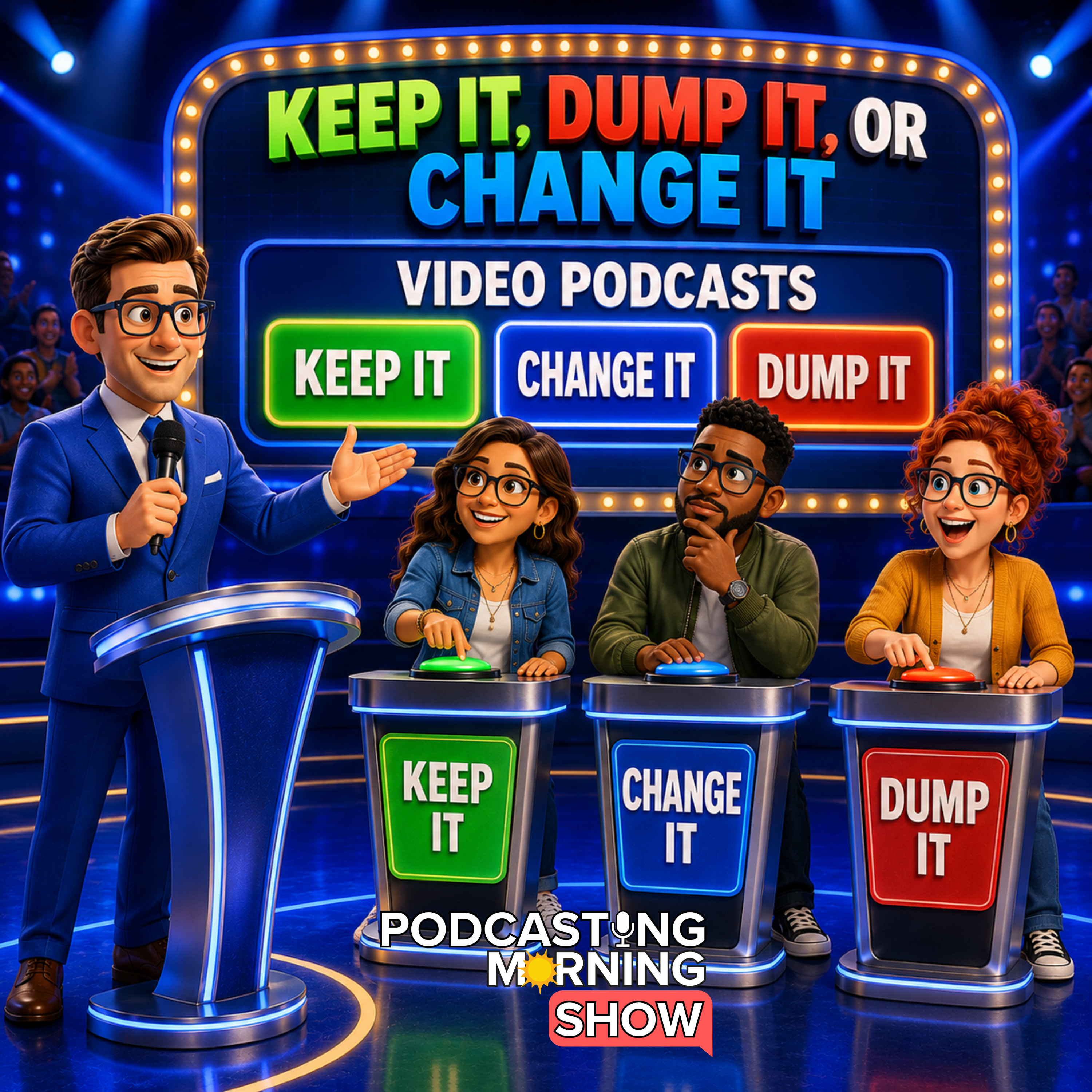
Some podcasting habits have been around for years, but are they still helping your show today? In this episode, the morning show cast and crew debate which podcasting best practices still work, putting common habits like podcast intros, guest bios, ratings and reviews, and calls to action on trial. Instead of assuming the old rules still apply, the conversation looks at what actually connects with listeners and what may be worth rethinking. By the end, you may find yourself questioning a few of your own podcast routines and deciding what's worth keeping, changing, or leaving behind.
Episode Highlights:
[03:08] Game Rules Explained
[06:13] The Traditional Intro Debate
[12:21] Intro Length and Testing
[18:30] Ratings and Reviews: Do They Still Matter?
[31:51] Multiple CTAs Explained
[35:48] Mentions vs. True Calls to Action
[37:29] Research That Improves Conversion
[38:38] CTA Delivery and Building Trust
[45:09] Should You Read Guest Bios?
[46:48] Better Guest Introductions
[54:20] Why You Should Kill the "Tell Us About Yourself" Prompt
Links & Resources:
Feature Your Podcast on the Podcasting Morning Show:
https://PodcastingMorningShow.com/spotlight
The Podcasting Morning Show:
www.podcastingmorningshow.com
Ways to Watch or Listen: https://www.podcastingmorningshow.com/joinus/
Meet the PMS Cast and Crew:
https://podcastingmorningshow.com/people
Join The Empowered Podcasting Facebook Group:
www.facebook.com/groups/empoweredpodcasting
Book A Free Call With Marc:
https://calendly.com/ironickmedia/freestrategycall
Application To Submit Your Show For Evaluation:
https://podcastingmorningshow.com/eval
Powered by iRonickMedia.com and ContentCreatorsAccountant.com
Send in your mailbag questions: https://www.podcastingmorningshow.com/contact/ or marc@ironickmedia.com
Want to be a guest on The Podcasting Morning Show? Send me a message on PodMatch, here:
https://podmatch.com/hostdetailpreview/1729879899384520035bad21b
Frequently Asked Questions
Are traditional podcasting best practices still effective?
Many long-standing habits, such as long intros or relying on ratings and reviews, may no longer provide the value they once did; it is essential to re-evaluate them based on modern listener behavior.
How should I structure my podcast intro?
Focus on keeping your intro concise and engaging. Testing shorter intros can prevent listener drop-off compared to long, repetitive, or overly formal introductions.
Do ratings and reviews matter for podcast growth?
Ratings and reviews are significantly less impactful for organic growth today than they were in the past, so prioritizing them as a primary call to action is likely an ineffective strategy.
What is the best way to introduce a podcast guest?
Avoid the common 'tell us about yourself' prompt, which can lead to stale responses. Instead, provide a curated introduction that highlights why the guest is relevant to your specific audience.
0:05 Marc Ronick: Good morning, Today is Thursday, july 16, 2020-six and today, keep it, dump it, or change it. We're putting podcasting's most common habits on trial, forcing everyone to pick a side before defending everything from video to ratings, reviews, and more. So, if you're listening live on Clubhouse, hit the share button, Clubhouse lets you. And if you're catching us via podcast, YouTube, etc. please share this episode with a fellow podcaster. seconds, and we'll get things Thanks for being here. The podcasting morning show is powered by Ironick Media, helping podcasters launch, polish, and grow great shows, and by Content creators' accountant helping creators build real business behind their morning show. Thank you so much for being here. I am your host, Mark Ronick, and We have Ralph Eastep, D.R. Fay, Philbetter Beastie Babbles, and I'll tell you why I'm laughing in a second.
1:38 We also have Janaid Ahmed and Dan and Rez from the audience are here on stage as well. Okay, I did get everybody this time. I think so. BC, you were telling me that I totally skipped you last. I guess yesterday. BC Babbles: Yes, yes, yes. But you know, I'm not salty about it. It's all good. It's all Marc Ronick: right, all right. maybe a slight salt. BC Babbles: Okay, a little salty, a little salty. We're all, but it's all good now. Marc Ronick: All right. Ralph Estep Jr.: I think I think we should play BC's jingle just to make sure everybody feels good. So let's do it.
2:21 Audio Clip: Yeah. BC Babbles: There it is-the jingle for the guy who has fallen asleep on the show once or twice, half a dozen times, Marc Ronick: Yes, and that was actually, I think, since the the but who's counting? new change, since we started an hour later, you do much better now, BC. BC Babbles: There's been no need, so I suppose we'll go back to our. I'm sure our normal schedule later in the year, so we'll see what happens then. DR: We need to find a new jingle We need to find a good, a better jingle. Marc Ronick: Look, it works to the morning, right? Just to like wake everybody up a little bit, give us a little pep in our step, even though I think our theme music does that. But okay, yes, it is a good groove. All right, let's do it like this. So you heard me tease it at the top of the show. I came up with today's.
3:12 I'll call it a game because most podcasters follow a lot of practices. I'll call them, and those practices start to become standard or routine, right? Like, for example, we publish every week. We create clips. We some of us record video. We read guest bios on our shows. We add calls to actions. Some of these practices absolutely still serve us and still serve our communities. Some may have run their course; others probably just need some kind of update. So this morning we're putting seven-ish common podcasting practices to the test. I say seven-ish because we'll see how many we actually get through today.
3:59 But for each one of these, we have three choices for all of you who want to participate today. Those choices are keep it, dump it, or change it. Now, this is in the spirit for those of you who may know the not so PC game F Mary Kill. Okay, I'm sure some of you have heard of that game before. usually it's a celebrity, and celebrities, and you have to marry, kill, or have intimate We'll go with that. Dan: I'm not sure what that means about your thoughts on marriage?
4:42 Dump it is replacing Marc Ronick: these days. Yeah. Let me give you the details of how it works. Thank you, Dan. So each panelist gives a quick vote. I'm going to tell you the topic or the routine, and you're going to each. Of you, I'll go down the row and give you guys a vote. All I want you to do, because this is a very chatty group, is tell me keep it, dump it, or change it, and then I'll go back and I'll ask a couple of you, or maybe all of you, depending on how heated the discussion gets, to explain your choices, and then the team will discuss and and perhaps challenge each other.
5:25 chat and don't you know not on up on stage to participate with your voice, feel free to chime in in the chat. And then we're going to move on to the next topic. So I really want to try to follow this format because I know that we go in with a lot of usually stray from that. So we'll see how we do. But Ralph Estep Jr.: did you, Marc? Did you just say podcasters are a bit chatty? Marc Ronick: You know, I've Yes, Ralph Estep Jr.: I think you might be right. Marc Ronick: Yeah, yeah, I think Okay, so with that, let me pull up my notes here, and let's play. And you know, it's funny. I was looking for something I could play.
6:06 I'll just do this. Let's play. Keep it, dump it, or change it. So, with that, let's go with the Okay. So, what do I mean by that? Because a lot of people I think have different definitions of intros, and by the way, I know let me bring Junaid in. Junaid wants to join us over on video, so I'm bringing him in. There he is. So now we've got five of us on camera. If you want to watch us live or catch us on video after the fact, just go to and you can find all the us here on video or if you find us that way as well so the traditional podcast intro that's in my opinion starting every episode with theme music like ours theme music a produced explanation of the show. Now I say like ours, but you know I think there are various versions of that.
7:10 But that's what I'm talking about. It's pretty much like the standard intro that you do on every show, and I know that not everyone does, but typically that happens a lot. And again, remember, it's keep it, dump it, or change it. I'm going to start. I'll just start with Janaid since he's the first person in. Oh, actually, DR. is on my screen, so I'm going to go with DR first, ladies first. DR. So, what say you? Traditional podcast intro. DR: Change it. Marc Ronick: Okay, DR. says change it. Junaid, Junaid: dump it. Marc Ronick: Okay, Ralph, Ralph Estep Jr.: double dump it. Marc Ronick: Okay, we got a BC Babbles: I'll say keep it. Marc Ronick: Keep it.
7:51 All right, BC's keeping it. So now we've got at least one for every category. Oh, here comes Sid. All right, and I'm going to fill Phil, Phil: change it. Marc Ronick: Okay, Phil says, "Change it. Phil, for some reason, I have a vision of you laying in your bed right now. Am I right? Phil: Will not confirm or deny said vision. DR: Marc, why are you imagining him laying in bed? Marc Ronick: It was the sleepy voice. I heard the sleepy voice, and I'm like, he's got to be in All right, Dan, what say you Dan: keep it Marc Ronick: and Rez, do you want to play along? Rez: 100% keep it, Marc. Marc Ronick: 100% keep it. That emphatic keep it. Sid Meadows, welcome. How about you? Sid Meadows: I'm gonna say change it. Marc Ronick: Okay, change it.
8:34 I feel like that's the leader right now. I should be keeping score, and I'm not. And and we also have Knikki, aka Tide Tutoring. Knikki, do you want to play along? Knikki: Absolutely. Marc Ronick: What would say you keep it, change it, dump it? Knikki: I say keep it. Marc Ronick: Okay, so I think as the winner here. And Ralph, since you said double kill it, let's start with you. Give us a reason why. Ralph Estep Jr.: I just think it's been played out too much. I think that people want you to get right to the point, and especially me because I'm video first. Is I think you got to get right to the point and say, "Here's why I'm going to cover on today's show. So I'm going to I'm going to throw you for a loop. I think you can do the traditional introduction, but you start off with that teaser at the beginning that says, "Here's what we're going to cover on today's show. Then you might play your jingle and go into why you're here. But I think that the traditional play that jingle first, people just zone out.
9:30 That's my personal opinion. Marc Ronick: That's fair. And Ralph, what do you think? Do you think then that people are zoning out? And you can be honest of our our show, like because of that intro. Ralph Estep Jr.: I think that we way. I think we should test having a tease. Here's what we're going to cover on today's show. Make sure you join. You know, stay tuned. Here we come. Then play the sound. It's just an idea. Marc Ronick: Yeah. Hey, this is just a hypothetical situation. Doesn't mean we're going to do it for sure. And I know that there would probably be several people that would be pissed off that the music wouldn't play. to chime in on all this? DR: Yeah, so I'm coming at it from two different roads here. For video, I say dump it, but for audio, I want to keep it, but I want to really shorten it.
10:20 to have a client that used to go guest. Well, she likes walks on the beach and crocheting, and oh my god, it was horrible. So change that, keep it, but change it, make it more precise, and dump it for the video. Marc Ronick: Okay, okay, and see, Tide Tutoring is laughing over there at your some of your comments. I guess BC, go ahead. BC Babbles: I want to say I like giving it like a little tease first and then doing an intro if we still do one. I say keep it though in general because I think it's still an undeniable way to really set the tone of what your show is, especially if you're a video first like me, and depending on the visuals you include in that sequence, people can get a good idea of what's happened, what to expect before you begin.
11:10 But I also want to mention because someone just mentioned giving saying in this episode because I think we recently just decided that saying something like that can kind of kill the interest. Marc Ronick: Yes, that was from our interview, and we talked about doing that in your show notes. And yeah, I think that can apply to your intro too. I do. I will say I agree that it with the people that say change it. I don't think you get rid of it altogether. And really, Ralph, that's kind of what you ended up saying here and suggesting here, right? You're not saying just get rid of it. Ralph Estep Jr.: You played a little wiffle ball there, Marc. Marc Ronick: Yes, you did, and that's okay. We all do here sometimes, but yeah, I think that short intros is really where it's at.
11:53 Your audience does need to get your new audience needs to get hooked in, right? And I think if you're just going to dive into the episode with no intentional start, right? To really get set the table for the audience, I think it feels a little empty. a new audience. I think if you've got an established audience that keeps coming back every week or what have you, then yeah, maybe you could get away with just diving in, but I think if you're really trying to grow your your show and your audience and community, I think you need something there at the top. Yeah, Ralph Estep Jr.: I would just throw in there though. I think you need if you're going to use a jingle, you need to make it super short because I think there's there's a tendency to have a long and gated jingle, and I think that is the button to just to drop out. Marc Ronick: Okay, I'm going to give DR: strategy having to do with our theme song though about because we're live. You, I remember you mentioning one time, Marc. Marc Ronick: Yes, yeah, we do.
12:53 That's why sometimes I will say here on the show, "Do as I say, not as I do, right? Because yes, we are a podcast first. I consider us podcast first, but I also-it's actually maybe it's side by side. I don't know that I have a first, a clear first, because yes, I consider us a podcast first, but we're a morning show, and we do-we like to go live, right? We like to do it like a morning show does it. So that live component is just yeah, those longer intros feel a video to me for some reason. Yeah, for some reason, it's just with the music, the fanfare a little bit. It just makes it feel more like a morning show to me.
13:36 That's the DR: rez has a comment. Marc Ronick: Yes, I saw that. rez and Junaid. So first, I'll go to Rez, and then Junaidl have the final word, and we'll move on to the next one. Go ahead, Rez. Rez: Yeah, I think for me, it's my favorite thing to do. Like it's like your tagline. It's like it gives your episode a consistent identity. It reminds listeners what they're watching. I just think it should be something that like you're proud of yeah, something like your Marc Ronick: it's part of your Marc Ronick: Yeah, I'm with you there, and that's why I think I'm with the consensus. I think if you're doing long intros, and what's a long intro, right? What's a long intro? I think if you're going honestly beyond 30 seconds, that's probably nowadays a little too long for my taste, for my recommendation.
14:22 DR: Did you see Tim's comment? share it. Yeah, DR: my intro used to be three minutes, but I've cut it down to 15 to 30 seconds. Marc Ronick: Yeah, DR: because I had to get an I had an audience member tell me it was too long. Marc Ronick: Ooh, I like I to your audience, and that can Because it's easy-at least for me-it's easy if I get one piece of feedback where a listener says, "I don't like this, even if they're doing it constructively. It gets in my head, and yes, they might be representing a portion of your audience, but is that the majority that this person's representing? Presenting, I think. Just make sure that if you're gonna make a change because of one person, make sure you're doing a little research first to make sure that's maybe not the only person that doesn't like what you're doing. DR: And Marc, actually, your head is a little different than most other heads because of the ADHD thing. Marc Ronick: Well, yes, that's true. But where are you going with that? I'm not sure.
15:19 Where is your head? You said it DR: gets in your head and you can't get it out. Yes, that's true. I Marc Ronick: could get Yes, yeah. Tide, I think you had something. have the final word, but I'm first. Knikki: Yeah, I was just going to say that the game that we were playing, keep it, dump it, change it. For me, whenever I hear the word change, it's not necessarily synonymous with improve, so that's the reason why I picked keep it because change for the sake of change does not equate to improvement. But if you're looking along the lines of dump it, keep it, improve it, then yeah, I think helpful. Marc Ronick: Yes, and consider that improve it. I'm going to still call it change it, but for the definition, let's just say that's what it means. Yes.
16:02 Okay, Junaid, final word for you, and then we're moving to the next category. Junaid: So dump it because we're Have you scrolled? Like, if you just go back to your past 24 hours, how did you consume content? Did any of those videos have an intro. Marc Ronick: Well, they had a A lot of them. Junaid: That's not an intro. It's not the same. Marc Ronick: But isn't it like for social media? Isn't that maybe considered an intro when it comes to a short form video? Junaid: I mean, then why do you call it a hook? Marc Ronick: Yeah. I mean, I'm getting a little. These are semantics, and you're right. You are so. Junaid: I mean, yes.
16:42 Change it, improve it is definitely better. But again, get that feedback If you've watched Netflix or Apple TV, they have a big ass button right there: skip intro, skip recap, all of this. Because people who are coming back to your show over and over every single day, they don't need that fanfare. Sure, they might like the music, like the thing you mentioned and Who doesn't like their own intro or own stuff? Marc Ronick: Right, be a little self-serving. Right, it's Junaid: self-serving. So from that perspective, test it. Right, maybe that should be no test change it.
17:25 would be the first choice that because you're right, Janaid. I think before you really decide any of those three, I think, or maybe once you've decided one of those three, it's important to test it before you actually pull the trigger on it, yeah, I'm with you there. Dan: And this is why you can't That's so true. Now we have 14 different options, and who was it? Tim in the chat instantly put depends. Like five seconds into before the show started, I think. Marc Ronick: Yes. So everybody, listen. We know that we we are the king of it depends right like we say that all the time and I know that our friend Ariel name called Well It Depends and it's all a podcasting business so yeah it does and again gang go with it just go along with with keep it, dump it, or change We're defining those a little bit as we go, and that's the way we're playing the game. So the next topic up for debate: Right, so we hear this all the independent podcasters shows listeners to rate and review the So let's go down the line: keep it, dump it, or change it.
18:53 Going with you again, DR. DR: Change it, Marc Ronick: change it for DR. Ralph. Ralph Estep Jr.: Dump it. Marc Ronick: Ralph says, "Dump BC. BC Babbles: Dump it. Marc Ronick: Okay, two dump its. Let's go to Phil. Phil: I'm going to say keep it. Marc Ronick: All right, keep it. And Sid Meadows, Sid Meadows: keep it. Marc Ronick: All right, we got a All right, so it's get kind of getting. We're getting a mixed bag. Dan, Dan: dump it. We do it twice a year, and we've got like 200 reviews. Marc Ronick: Okay, there you go. How long has your show been running? Dan: 11 seasons. Okay, Rez, how about you? Rez: 100% keep it. 100% keep it. All right, and Knikki, Knikki: I missed it.
19:34 What were we Marc Ronick: ratings and reviews? Asking for ratings and reviews on your show. Knikki: Dump it. Marc Ronick: Dump it, okay. Kind of a mixed bag. What? So I'm going to stick with you for a second, Knikki. If you have a second, why dump it? Knikki: For me, it comes across as desperate. I have supreme confidence in everything that I do, and I have supreme confidence in my podcast. So I, if I ask for something, it. It's not coming from oh please do this for me and I feel like sometimes it can come across necessarily in yours but just in people they come across as like very desperate like please follow me please subscribe and that and they might not have to say please but it still gives that energy I just don't like it it's because I know that you too what you do. I've really liked your content, and I don't want to miss it.
20:27 And if I come at it from that angle, I just feel like it's better. It's better for the listeners, and it's not begging. It's not asking for something. It's it feels like it's sort of like asking for a favor, and I just don't like that. Marc Ronick: Yeah, I can feel that. I mean, I think if anyone here has, anyone listening right for any period of time, sometimes I kind of feel guilty about it because here's the deal: I just saw John ask in the for your show? It's just an ego boost for the podcast host. Yes, I think it serves that as that, but I do also believe it's social proof. I will most of the time, if I'm picking between two shows that are talking about similar things, I'm gonna go first.
21:16 If they're both new to me, I'm gonna go first with the one that's got more reviews, That's going to be the deciding factor for me. If they are truly, if they are apples to apples, right? Like it's not about the guests. It's it just they're evenly matched except for the ratings and reviews. I'm going with the one that's got more reviews and better reviews, just like I do when I'm shopping on Apple. Ralph Estep Jr.: But can you trust shopping on Amazon? But can you trust those reviews, industry of people out there in the podcasting realm who are offering to to do reviews for Marc Ronick: Yeah, I mean that's And I think what I like example, if I'm shopping on Amazon, I don't just look at the overall five star reviews.
21:59 You know, I don't see if it says okay, 4.6 I'm in. I mean that that is step one, right? And that's the same for a podcast. If I see it's got a high review rating, I'm like, I'm in. But then, but I'm not going to hit play yet. I'm going to then go and read some of the actual reviews, and if they feel genuine to me, that's going to be enough for me. I know that there are people out there that are paying for phony reviews, and I'm just doing my best to to make that discernment and and make my choice accordingly. Anyone else want to chime in here? You know, yeah. And Dr. You and I were talking right before the show, and I was asking you because I know you listen to a lot of the big name podcasts as well, like Conan O'Brien, like Good Hang, and Good Hang is a newer show for me as far as regularly listening, so I couldn't remember.
22:49 But like my overall feeling, my impression is most of these big name people don't ever really ask for ratings and reviews, DR: right? But you just said big name; they don't have to. They don't have to adhere to any of those quote unquote rules that us indie people have to. For instance, SEO, AEO, all of those things-they don't have to do that. They have big budgets. They can advertise. They have mounds of you know people to advertise for them. And there's one other thing that I'm coining this phrase, so if you ever hear it, you know it came from me, and I call that ECO, and that is eye-catching optimization, which has it's a direct correlation to your title and your cover art, and you know, I mean, think of the Beatles' white album; they're the Beatles.
23:39 Who gives a damn? I mean, it's the Beatles. I'm going to buy the white with these big name podcasters. They don't have to adhere to any of that stuff. Marc Ronick: Yeah, and the big So we do know, especially from some of our news and comment episodes, that there is a large percentage of the podcast listening audience out there that are listening to the big name shows, the small shows, smaller shows, quote unquote, are not making up the vast majority of podcast listeners. So where I'm going with this is, if the majority of that audience asking you for rating ratings and reviews, and then they come find a quote unquote smaller show, and they hear these hosts asking, "I'm kind of with Knikki.
24:31 I'm. I wonder if the audience is thinking these guys sound desperate. DR: Well, you know what? One of the things for us indies is that at the end of the show it rolls off hosts tongues just so naturally just like how are you I'm fine thank you it rolls it doesn't mean anything leave a rating and review leave a four four star review it doesn't mean anything so I'm trying to get my clients and. Habit of maybe not every episode, but maybe every other episode, and it's not a It is a matter of fact kind of tone that you take. Listen, the reason why we need you to do this is because it helps our blah blah blah, and you just get really transparent and really real with them, and you slow it down.
25:21 It's not raise a review. It's listen, rate and review. It's slowing it down, making it a little bit more granular, and I think the transparency will, you know, will help. Marc Ronick: Okay. Okay. Fair. I'm I'm with you there. And BC, you wanted to chime in. BC Babbles: Yeah, and I agree with everything that's been said so far. Is social proof? It does help with rankings, but I think it also depends on what the ultimate goal for the podcaster is. I think that you know reviews can definitely help. You know if you want to be up on the leaderboards and whatnot, but I think when it comes down to what you want to leverage, let's say with your trying to get sponsorships, will it be the couple of ratings you got X amount of months ago, or will it be the consistent number of downloads and listeners that you can almost guarantee to expose a necessarily be reliant on those reviews?
26:18 Those are your actual active audience members, not the few that you got to give you this social proof. So the thing comes down to that individual necessity or need, depending on the person. Yeah, Marc Ronick: Joe. Yeah, that makes a lot of sense. Thank you, BC and Rez. You wanted to chime in as well before we move on. Rez: Yes, please. I think if I am a DJ, you're hiring me as a DJ, right? If I don't have any Google reviews, would you really hire me? Marc Ronick: No, Rez: I would rather have rather had a ton of bad reviews than no reviews at all. That's just my opinion. Marc Ronick: Well, I mean, to of the same, right? Because if you got a lot of bad reviews, majority of bad reviews or no reviews, at least when it comes to me, you don't.
27:02 You're not getting my business. That's how I feel about it. But yeah, I'm with you on the other side of the coin. Like like you said, whether it's a DJ service, a restaurant, or a podcast, I think that when there are visible ratings and reviews, I think it has influence. I really do. Ralph Estep Jr.: Marc, can I Marc Ronick: Yes, Ralph Estep Jr.: I just think you have to be wise in choosing your call to action because the thing we need to understand is your listeners will only do one thing. If you're giving them a basket of stuff to do, like hey, this, do that. I think you need to be very intentional, and this is one of those places I think where there are a lot of people are not as intentional as they could be. Marc Ronick: Okay, yeah, fair.
27:43 DR: So I will say on that that one CTA, one CTA only. Call time. I happen to think that listeners can handle two. I happen to think that is underestimating the capabilities Marc Ronick: Yeah, I agree with you. I really try not to worry so much about it. Like if I've already done one call to action, I used to kind of get in my head about it, about wanting to do another one and holding back because I've already done one, but honestly, I just what I try to do is if I've got more than one, I try to follow it up by reminding the listener to go into the show notes and pick their poison. Right, right.
28:32 That's ultimately the call to Exactly. Go check the the show notes, and you've got your menu of choices what you want to do. And I get it. they're not doing anything at But I just-it's one of those things that I can't get in my head about. I got to just if if there's something important that I want to share with you, I'm going to share it. Yeah, it's up to you if you want to actually take action on it. Sid, I'm going to give you the final word. Sid Meadows: So I think to think about with this, and your intention around it. And for me, I suck at this, and I'm going to be the first to admit that I suck at putting call to actions in my show. I forget because I get so engrossed in the conversation and so focused on what's in front of me that I forget to do it.
29:19 And sometimes I do it at the end, but we know that the ending is not necessarily the best place to put it. But I'm absolutely 100 okay with asking a listener to leave a rating and review of the If you're really enjoying this content, please leave us a rating and review. It helps our show get discovered. For me, that's about it. When I say it, that's about it. I did have a listener who I had coffee with in Chicago a few weeks ago. Said said, "How can I? He's a longtime listener. He said, "How can I support this show? And I said, "That's a really great question. Thank you for asking it. And I said, "The best way that you can support the show and support me, because actually he framed it, how can I support you? I said, "Share the episode Share an episode that you think will help somebody.
30:01 Just share it one time, because that gives me reach, right? And so, and I started including occasionally that in there in my call to action when I do it, because I forget, admittedly, that hey, if you got some value out of today and you know somebody that could that could enjoy that would I forget how I say would enjoy this or whatever, blah blah blah. Then please share this episode with them. Marc Ronick: Yeah. Sid Meadows: So I mean, I think the intention behind it is really to Tide's point earlier about it sounding sleazy. I will also say, in my sponsor package, when I sent up my media kit, was second page, third page of my media kit was nothing but a page full of reviews that people had left me on my podcast.
30:42 Marc Ronick: Yeah, Sid Meadows: Is it impactful? I don't know if it helped them make a decision or not, but at least they could hear what my community was saying about this show, whether it was five years or one year old. I still put them out there because I felt like it was credibility that could benefit the list, the sponsor from seeing. Marc Ronick: I think it does help subtly to include that. Let me clear my throat. Subtly to include that in a media kit, those those reviews, and because I think what's going to happen is, yeah, I don't think that the sponsor is shuffling through a media kit looking to see, okay, what are the ratings and reviews for this show? But I do again think that there is some influence there. I think that it only can help the cause if you're going to try to close somebody.
31:28 Yeah, subliminally or what have you. Yeah, absolutely. Did anyone else have? I know that I saw Gabe said in the chat here. I sometimes forget to use a CTA. I mean that we'll get to it. I think that's one of the topics. The CTA itself is one of my topics here. I'll see if we can get to that one. Actually, you know what? Let me see here. Let me see. Yes. All right. You know what? Let's just do it. Calls to action and multiple calls to action. Right. So ending just for those who may be a little unclear for our newer podcasters, ending an episode by asking listeners to follow, subscribe, rate, review, maybe join your course or buy your course, follow you on social media. However, that looks, you're asking your audience to do something.
32:17 Okay, so let's just focus on multiple calls to action since Dr. and I kind of went there for a moment. Keep it, dump it, change it. Multiple calls to action through the show. Let's hear from some others for this one. Since we already started touching on it, I won't do the formal part of the game. I'm just going to let some people chime in. Tell me if you want to keep it, dump it, or change it. DR: Can you define multiple? Marc Ronick: Yeah, you say you have like what we do here every so often. I'm talking about something. It reminds me, ooh, this would be something that I think my community would like, and then I give them something to go do. Go check out our website. Go check out this news article we're talking about, et cetera, et cetera. So it's happening more than once. You're asking your audience to do something more than once. So, DR. you've already weighed in.
33:05 weigh in? Keep it, change it, dump it, and why? Sid Meadows: Yes, I agree with DR. No more than two. Keep them. They're important, but no more Marc Ronick: And why is that? happens? Sid Meadows: Again, I think about my behavior as a listener. And if I'm listening to a show because oh do this oh go do this oh buy my show buy my buy my course like oh buy this at the end of the thing at the end of the episode I don't know what the hell to do Marc Ronick: yeah okay like Sid Meadows: I'm just like I'm lost like okay I'm not going to do anything because give me too many things to do I'm just not going to go do anything so if you strategically place one in the middle and one in the end not stack them right behind each other, but one in the middle and effective. So, Marc Ronick: but let me ask you this: let me ask you this. So, you're listening to a podcast about podcasting. You're looking to level up the podcast again, and that it there are multiple CTAs in there, and one of those CTAs says, "I guarantee you, I have a method to get real organic growth with your podcast.
34:06 By if you go to this link and check out this service, I guarantee you that service is But then there are other calls to action, like check out this news article we're talking about. Go to my website where I'm offering X, Y, and Z. If you heard that one that guaranteed you something, or just really got your interest, don't you think you would still go do that during or after the show? Sid Meadows: That depends on who to a lot of podcasts about who the host is. But that also comes across as cheesy to me. Come buy my $99 course for it. I'm gonna tell you how to use AppSumo to get all these great things into one thing. Blah blah.
34:49 That just sounds cheesy to me. Promising me growth. That just I would not do that. I'd probably go read an article that they referenced rather than actually making that purchase. Marc Ronick: Well, okay, and maybe it's maybe I'm not. Choosing the topic of most interest, or maybe you're skeptical of that topic. But my point is, if they say something that is of extreme interest to you, and then follow it up later in the show with other calls to action, I'm willing to bet that you and most people, if they've truly piqued your interest, you're going to go do that. You might not do the other calls to action, but if you are giving the calls to action the right fit calls to action to your audience, I think they're going to pick and choose the ones that really pique their interest. Sid Meadows: Okay, so I need to know who put something in Mark's coffee this morning, making him all spicy this morning.
35:39 Do I seem spicy? Just kidding, Marc. I'm just kidding. I'm just kidding, Marc. I'm just Marc. Ralph Estep Jr.: Mark, I've got some. Wait, hold on, hold on one second. Marc Ronick: Let's go to finish Sid's thought. Sid Meadows: I want to know what's a call to action because oh hey, somehow another episode gets referenced in the recording that I'm doing, and I say we'll drop the link to that episode in the show notes for you, so you don't have to go looking for it. Is that a call to action, or is that just a yeah? Marc Ronick: That's what I was I mean, I feel like it is in the sense it's like go to the show notes, get the link. Like that is a call to action. You're asking your audience to do something. Now, Ralph, you wanted to chime in. Actually, I'm just Sid Meadows: saying, but I'm but I'm just saying, hey, we'll drop it in the show notes for you if you'd like to so for easy access or with something to that effect, right? I'm not saying go to the show notes and click that link and go listen to that episode.
36:26 That's not what I'm saying. Marc Ronick: Okay, so you're saying what? DR: There's a way of liminally to you know put it in there. Marc Ronick: Yeah, yeah. And Sid, you're saying what? And then I know a lot of people want to chime in. I'm going to get to all of you Sid Meadows: because you're like take a fight with you. No, I just say when somebody references or somehow it comes to that episode. It's number, if I can remember, it's one number 102 We'll drop the link in the show notes for you. That's all I say. Marc Ronick: Okay, Sid Meadows: I don't say go to the show notes and listen to it. I'm putting it there as a reference point. The same thing about somebody's book. If I've interviewed somebody that wrote a book, we'll drop a link to the to this book in the show notes for you. I'm not saying go do it, but it's there if you want to. Marc Ronick: Okay.
37:12 Sid Meadows: So that'sfor me the a go rate and review the show. Go leave. You know, like take this action. Go buy this product. I think they're different mention versus a true call to action. Marc Ronick: Okay, Ralph, what say you? And again, I see all of you wanting to chat to you. Ralph Estep Jr.: I wanted to look at some actual research here. Edison Research Podcast weekly podcast consumers said podcast ad by visiting a using a promo code, or was the top driver of attention. But then there's a prodigy that says the last distinction is repetition of one ask is fine. Multiplication of different asks than enrich. So listeners hearing review us, join us on Facebook, register for the website, and rate the five stars. Typically, do nothing at all.
38:06 That's what the research is showing. Marc Ronick: Yeah, and so Because those are ad specific, But if we're really getting into the semantics, isn't a call to action more or less an ad? It's just a really short and sweet one. Ralph Estep Jr.: That's what I was getting at, and it just-I mean-so they work, but if you throw too many of them, the research seems to say that you overwhelm people and they do nothing. Marc Ronick: Yeah. Okay. Let me check in with Dan. I know Rez wants to chime in, and Junaid, and I see others do as well. Go ahead, Dan. Dan: Sid, first to you. We have a saying. At least I have a saying: Timid salespeople have skinny kids. You've got good stuff. You should be able to say, like, I don't want to bug you, but you could maybe I don't buy blah blah blah. Like, be proud.
38:53 You've got good stuff to say. You're a smart guy. You should actually just make sure you're being clear. Secondly, when it comes to CTAs, I usually just weight them in importance of what's in it for the listener versus what's in it for me. I usually do our social media. I think that's our main call to action right now. We do it at the very end. It's like, oh, follow us on Blue Sky and tell them how to do it. Offer a little bribe to get them to do it, but we put it to the very end because that's why that's where our diehards are. As far as like just the other calls to action said it, you know, you said it. What did you say? I'm doing incognito mode, just organic. I mean, you're there if you always remember that Subliminally, yeah, subliminally.
39:37 I wonder why I went to incognito mode. Doesn't say a lot about me. And why are you laughing? Oh, you're the okay. But like, if you can work organically, all these things in organically, you can have a billion calls to action because the goal should always be to you know serve the listener. And if you have a thing that's going to serve the listener, you don't have to just be. Latent and say go here and buy this. Instead, you'd if you're a chiropractor, you might just say something like, "No, and that's exact. Listen, if you have a sore back, that's why I did the how to stop a sore back thing in a weekend. Go find it. You don't even have to tell them how to get it, where to get it. If you're doing it organically, they're gonna find it because you've already served them, they're probably listening because they have a pain point, and you just said, "Hey, I'm a chiropractor.
40:27 If your back hurts, I got this Go find it. It's why everyone loves my "How to Stop Back Pain in a Weekend" thing. Go find it, then keep going. honestly, powerful. You're going to sell more of them. Marc Ronick: Okay, fair fair point. Thank you, Dan Rez. What say you, sir? Rez: Appreciate it. I think it's the way you say it. It's like anything else. Like first of all, it's part of the sales process. If you're not asking for it, then you never know what's going to happen. So if you're saying like, "Hey guys, don't forget to like, subscribe, leave a five-star review. That might be a little bit cheesy, but if you say like, if today's conversation gave you a new perspective or helped you in some way, please subscribe.
41:09 All I'm saying is it's the way you say it, so just make sure you're saying it in a way that is offering value instead of taking value. If that makes Marc Ronick: yeah, that makes sense. Thank you, Rez Junaid. Final word, because we got to I know, I know, DR. I know DR. She wants to really chime in. Okay, go ahead. So every Junaid: episode, Mister Stephen Bartlett is talking. Start with you. The first thing he asks, Marc Ronick: Okay, Junaid: this is a show that has multi million. subscribers. He's still asking at the beginning of the show, please go subscribe because it helps us. So I don't think it matters if you have them or you, or if you have too many, because the audience who is listening to you is listening to you because they trust you. So if you tell them the assumption that we're making is all for new people's perspective, which is fine, makes sense.
42:07 But once you have that rhythm down, I think having all these call to actions bring the listener closer to you than anything else. Thank you. Marc Ronick: Okay. Yeah. So it's sounding like I'm going to go to you, DR. Because I know how desperately you want to chime in. Yeah, it sounds like we're agreement to change it, or yeah, It sounds like is really where everyone is is leaning. So it's not nobody. I don't think thinks we should just get rid of it, or at least the majority don't. DR. What did you want to add? DR: So if we take a page out of Courtney Elmer's book, Courtney Elmer, one of great podcasting guru, when she came out with her course on SEO, she did an entire She broke it down what each you know module was about so in a way that entire episode was a call to action.
43:05 It was an infomercial Marc Ronick: sounds like it sounds like an infomercial. DR: Well, it spoke to me. I mean, I purchased it, and then at the end, oh by the way, if you want white glove service, we do this as well. And if you make that second call to action, because a lot of us agree that two calls to action is appropriate. If you make that second call to action more of like go to the link in the show notes, and that link leads you to like a link tree where there's a bunch of choices, and they can have their choice of what they really want. I like that one. Marc Ronick: Okay. Yeah. yeah. Sid Meadows: Can I add to that for a second? Marc Ronick: Yeah, go ahead, Sid. Sid Meadows: Because DR. should thank Sid for referring her to that.
43:48 Yes, DR. Some affiliate links for that nonsense right there. But here's what worked about Courtney's show. Like she's one of my go-to every week listens, and what worked about that show is it was packed with value. It was packed with value, and then she sold you $149 I think it was $149 course, and she promised you 45 minutes course, and it was 45 minutes, and she promised you X, Y, and Z, and it worked because I did I did the work to go along with it, and it worked. And but she she added value. She made a promise. She lived up to that promise, and it was a 20 minute selling episode.
44:29 But it worked because of the value that was associated with. DR: That's right. It didn't feel like a infomercial. I gained a lot of knowledge just from that episode. Marc Ronick: Okay. Yeah. Fair enough. I'm just making a note here. Sorry for my pause there. get Courtney on the show. We've had some back and forths. Positively, it's just we haven't So hopefully, this will be a sign that we can make this happen and get her on the show. Yeah, she's a very well respected person in this industry. And yeah, like you've heard, Sid and DR are big fans. Yeah, we have time for at least one more.
45:12 Let's dig into reading a guest's full bio. Okay, so this is opening an interview, right? You've done your intro, or maybe you haven't. If you've dumped intros, opening an interview by reading the guest's formal professional biography and a list of accomplishments. Okay, so keep it, change it, or dump it, and then we'll talk about why. So only want your keep it, change, or dump answers right now. Let's go to DR. again. Go ahead, DR. DR: Dump it, Marc Ronick: dump it, okay, Ralph. How about you? Ralph Estep Jr.: Oh, I think you Jr.: absolutely not. Marc Ronick: Okay. Oh, okay. You were. Ralph Estep Jr.: I'm just It's horrible. It's horrible if you do that stop yesterday. Marc Ronick: Okay, we'll talk.
45:54 And BC, how about you? BC Babbles: Change it. Marc Ronick: Change it. Okay. How about you feel better if he's not sleeping. Phil: I'm not. I'm not. I'm not. Marc Ronick: Okay. Phil: Swear. I'm awake. I say change it because it's well. Marc Ronick: Don't say yet. Just give me your answer right now. Phil: Change it. Marc Ronick: Okay, got it. Sid, how about you? Sid Meadows: Dump it and burn it Marc Ronick: Okay, I think we How about you, Junaid? Junaid: I would say change it. Marc Ronick: Okay, Dan, what say Dan: Dump, Marc Ronick: rez. Rez: Oh my God! Keep it, keep it for sure. Marc Ronick: Wow, he's very. I don't think he said change it yet. It's either an emphatic keep or dump. Okay, how about you, Knikki? We lost you.
46:35 We didn't hear you. It. What is it? All we got was it. Knikki: Oh God, my phone will Sorry, dump it. Marc Ronick: Dump it. Okay. All right. Knikki: Sorry. Marc Ronick: No, no worries. All right. So it sounds like the majority say dump it. I want to go to BC first because BC says change it. What are you thinking, BC? BC Babbles: Yeah. At least from my perspective, my show is not about just showing off the guests. They're there to take their credentials and add to an actionable conversation. I'm more than happy to give like a small two three sentence paragraph intro. Like this is this person. They've done this. They do this, and they're here You can find their expanded bio in the description.
47:18 But otherwise, for the airtime, let's make it quick and easy. Get them onto the show, and then conversation. I don't want to spend. I want to talk about them a little bit, but not spend like two minutes doing so. Marc Ronick: Okay. Okay. So that feels a little similar to what we do here when we have our guests. And you know, Ralph, I know you were saying dump it, dump it, dump it, and I know you, Ralph. Also, usually do our intros for our guests a lot of times because you end up being you've ended up being one of the ones that are consistently booking our guests. So I figure let's give Ralph the setup. Do you agree with BC? Because I feel like what BC is saying is kind of what we do.
47:58 Ralph Estep Jr.: No, I don't. I think that you should dump it, and here's why I think you Because honestly, the value is what your audience gets from the person coming there, and you don't have to tell them why they're there, who they are, and what those things are, because nobody cares. Are you giving them value? If at the end of the episode the person's gotten value, then you can plug it. Go find out more information about Joe. If you do it at the front, I just don't see any value in because the value comes with show. And if you're a good steward of your audience, you're not going to bring somebody on your show who doesn't bring value. Marc Ronick: Okay, I do hear you And then my question is, why does say I love them, like them, or indifferent doesn't matter?
48:49 Why does a late night talk show host like a Jimmy Fallon, for example, when every guest is about to come onto the stage, he does some kind of intro, and for the most part, we all know who the guest is already, right? Because they're always celebrities. They're famous, but it's just-I Ralph Estep Jr.: think that's just a sacred cow. They've always done that, so that's what they're going to do. And I don't think they're thinking outside the box. To be blunt with you, if I'm listening to a podcast and somebody is pontificating about somebody's bio, I'm like, this person doesn't know anything because I want to hear what they have to say. I want to hear the value for me. You want to put a buy at the end. I could almost buy into that, but I want to hear value from the start. Like when I go on other people's Here's something that you didn't know before you tuned in today that you're going to be able to take and use.
49:42 I think that's where the value is. So, Ralph, what happens if? So, let's say you're going to purchase some new software, okay? And I say to you, Ralph, Marc Ronick: here's this the the commercial is here's the software. It's going to help you with your podcast. Are you going to buy it? Ralph Estep Jr.: No, but I would Going to help you with your podcast. Okay, so the guest is going to bring the. Here's why they're going to bring the receipts. Marc Ronick: Okay, I like that. Ralph Estep Jr.: So that's what I'm saying. I think that your guest brings the receipts. The receipts equal the bio, and it's much more valuable than that because if you have to tell about everybody, well, here's what I've done. Here's what. Okay, who cares? What is the value for me? We're living in a culture right now. People want to know what the value is for them in 30 seconds. If you don't deliver that, they're tuning out. Marc Ronick: So, Ralph, it's sounding then to me, honestly, and you can correct me, but it's because you're suggesting at least what you just said.
50:39 It's important to at least tell the listeners why you have this guest on. Ralph Estep Jr.: No, I don't think so. No, no, I think it'd be fair to say I'll give you a great example today. We're joined by Sam Sethi, who's CEO of True Fans. All right, Sam, what do you got for us today? I think that's enough of an intro, and then let Sam go into here's why I'm here, here's what I'm proposing, here's what I'm doing, and here's the value you get from it. I think it's that simple. Marc Ronick: I feel like so. I respectfully slightly disagree with you because I do believe it's change it, and I believe it's short and sweet. I think that's. I think the. I think it's courtesy to let the guests know. I'm sorry to let the audience know why you've chosen this person. Like, what is who is this person? Why are they there?
51:22 But I don't. I want to be very clear. I can't stand it when bios are read. I cannot stand it. I will either tune out or skip. Ralph Estep Jr.: You're right, Marc. And some of the most quote accomplished people in I tune into their show and they're reading bios, and I'm like, "What are you doing? Marc Ronick: Yeah, yeah. Ralph Estep Jr.: It just doesn't You and I don't disagree that much, Marc Ronick: right? Ralph Estep Jr.: I think that make it small. But again, I go back to Mark: if your audience trusts you, you don't need to tell them why the person's there. They are going to trust you because Mark Ronick has Ralph on the show. Ralph is bringing receipts. I don't need to tell the audience why I'm here. That's just my personal view, Marc Ronick: right? And then we have to think about yeah, DR. agreeing, but what about the new people who don't trust me yet, but trust me enough just to press play, but don't know me? And that's fine.
52:13 Ralph Estep Jr.: They're going receipts, and they're going to knows what he's talking about. who gave me something I can use today to make money to make my life better take away a pain Okay, Marc Ronick: I'm gonna. I know that it's so funny because Janaid really wanted to chime in. I saw him constantly flashing his emoji, and now he's on the phone. I think is that true, Janaid? Let me make sure. Okay, Dan, go ahead, and then Sid, I'm coming to you. Dan: I've been following BC. BC is 100 right how he does his show, he basically will come up with the topic. Here's the thing I want to talk about. Here's the guest I want to talk to. I'm going to work his bio into a listen. It's super short, super sweet, or succinct. Maybe sweet.
52:55 I'm not going to say anything He just gets to the point, and it's like basically it's kind of what Ralph is saying too. But it's like you need to introduce the person, but you definitely don't need to read the bio because even half of the time they don't want you to read the bio because they're bored with it and they're never going to share it. So you always want to take something that you can turn into something super unique, so the guest is going to want to share that episode, but then also pays BC really does it right. Marc Ronick: Okay, yeah, there you go. There's a little shout out for yeah. Go ahead, respond, BC. BC Babbles: I will say I've had I have had one guest ask me like, where'd you get that bio Can you like send it to me? I want to use it later.
53:38 I've had that one request. Marc Ronick: Yeah, yeah. I've had guests back in the day when I did longer bios or clients. occasion. As much as I try to get them not to do a long bio, I think some of them like to keep it because their guests respond to it really well, and it helps their guests really lean in more. They're like feeling like and they're excited now to give their answers. That said, if that's your strategy, more power to you. And I would probably still find a way to edit that down or edit that out in post production. So yeah, give you those flowers to your guest if it makes them feel good and you But then cut that down. There was one thing.
54:21 Oh, and here's just a little. I'm not going to go to a vote. I'm just going to put my foot down and say, "Kill it for asking your guest. Please tell us about what you do. Do not do it. Kill it. Kill it. Kill it. You are going to get a long, drawn out answer. A lot of stumbling. No, DR: don't introduce yourself. You're gonna cut it BC Babbles: anyway in post. Marc Ronick: Yeah, and you Ralph Estep Jr.: lose all credibility with your audience because now your audience is wondering: Does Marc even know who's on the show today? Do not know exactly. Marc Ronick: Right? Yeah. Okay, Junaid, you're back from your phone call. Go ahead, chime in. Junaid: Yes. So what I was saying is one of the reasons why you want to. Introduce the guest is because again the audience trusts you more than the guest.
55:06 Even if the guest is popular, they want your opinion. So if you set the stage right for your guest, and then the guest comes and speak, they're like, "Okay, here's why I'm listening to this guy. Even if it's Mel Robbins introducing Jay Shetty. People who listen to Mel Robbins, they like her. They don't know Jay, right? So having that intro is so important because the audience you're essentially lending your credibility to that guest, and that's why it's so important to have a concise intro, concise saying that hey, here's why I'm bringing them on, and here's what my audience loves, and this is why I've introduced this person. Like for example, I'm bringing two special guests on my show today to promote Empowered Podcasting Conference. Marc Ronick: Hey, let me give you a ding for that. Yes, I knew about that because I was trying to coordinate a meeting with my business partners, and they're both and separately, individually.
56:05 I was talking to them about day and time, and I asked them about today, this afternoon. They both said no. I'm meeting with Janaid. I'm doing his show, and I'm like, wait, how is that? I didn't even know I wasn't invited. Although I just saw my LinkedIn that you had invited me as well. But they are two separate interviews. I get it. So look, I think, and I still want to hear from two more up here. But I think what I'm hearing most is there should be an intro, but we really want to make it short and sweet, and we want to make it sound like we know who this person is, even if we don't, right? We don't want to sound like, "Hey, they're new to me, just like they're new to you. We want-I like my audience to feel like I know my guest, and I hope that you have seen that, seen me demonstrate that when I try to be as comfortable as much as myself as I can be portrays to my audience that relationship with the person, All right, so I want to go to Phil because Phil, you were going to give us your reason, and I stopped you.
57:08 So I want to hear that reason, and then I'm going to give Sid the final word here. So Phil, why did you give your answer? And please remind me what your answer was for the guest intro. Phil: I say change it because if That's their things they want to show off, and they're promoting it. has continually said. It's what value are you giving your audience? So you need to take that bio and you need to change it and word it in a way that will be beneficial and show the value of having this guest on. Now I know Ralph mentioned like having the guest show the value right away. Sometimes I prefer knowing who the hell is going on a podcast.
57:52 Like there's a few podcasts that I'm subscribed to I don't listen to all the time because their guests don't interest me. But I love hearing the intro that the host reads, so that I can be like, "Oh, this guest is some someone interesting to me. Because I'm not going to spend the time jumping into the show notes looking. I'm not someone who reads show notes. I want to get straight to the point. So I think taking the bio they give you, changing it up into the an interesting intro for the guest, like BC said, two to three sentences. Make it quick, but demonstrate the value that this guest has. But don't read their bio word for word. It's nothing but PR. Marc Ronick: Yeah. So to sum up what Phil's saying, it depends.
58:33 And yeah, ask your audience. I mean, I know you didn't directly say that, but look, everybody's different, right? Like Ralph is emphatically like, no, you can't do that. It's boring. There, your audience doesn't care. But then we have somebody like Phil, who's like, well, that's listener. I like to lean in and hear who my guest is about. So that's why it depends, and that's why ultimately it's important to communicate with your audience. That's what it comes down to. Sid, I'm going to give you the final word. If you still have so, Sid Meadows: yeah, I do. So first off, Mel Robbins is the worst example in the world about reading bios because she reads word for word for word for like feels like five pages. So just for clarity, don't benchmark her. Marc Ronick: Yeah, Sid Meadows: but you know what?
59:18 I think, and that would be "Hey, Mark, you know one of the reasons I wanted to have you on today's show is that you're a talk today about business and And so I'm really excited for you to share your insights on this. I just set you up, right? Yeah, without reading your bio, and I feel there's an easy way to do this. Yep, that establishes that credibility. Marc Ronick: I love that, Sid, and I'm glad I gave you that final word there. I think that is spot on. You can kind of give the credibility with the question, and then like we're talking about here, as far as like they want you to read those bios because those are the things that they love talking about.
59:59 Those are the things that Well, then ask them questions about it, so we can learn about it and why it's so important to them, why it's so valuable. Ask questions around that. I think that's so key. Thank you for that, Sid. So great conversation today, gang. And we'll do this again because, like I said, I had like seven or good to do it. I hope you can see what makes what we did so valuable, because your podcast habits might be holding your show back-the same intro, the same publishing schedule, the same promotional routines. At some point, intentional choices, as we discussed, intentional choices can turn into habits that we never question. Every part of your podcast deserves a check-in. Ask what each practice is actually producing. Is it helping people find the show? Is it strengthening your relationship with the community?
1:00:58 Is it sustainable for you? We didn't even talk about that. Keep what's working. Dump what's draining your time without producing a meaningful return. but needs a better approach. In my experience, my podcasts get stronger when my choices are the people I'm trying to serve. Remember that we're back next week with all new episodes on Tuesday, Wednesday, and Thursday. Bring your podcasting knowledge, and let's dig into it And until then, make it a great day, everybody. Take care.


