526. Are You Growing Your Podcast or Just Staying Busy?
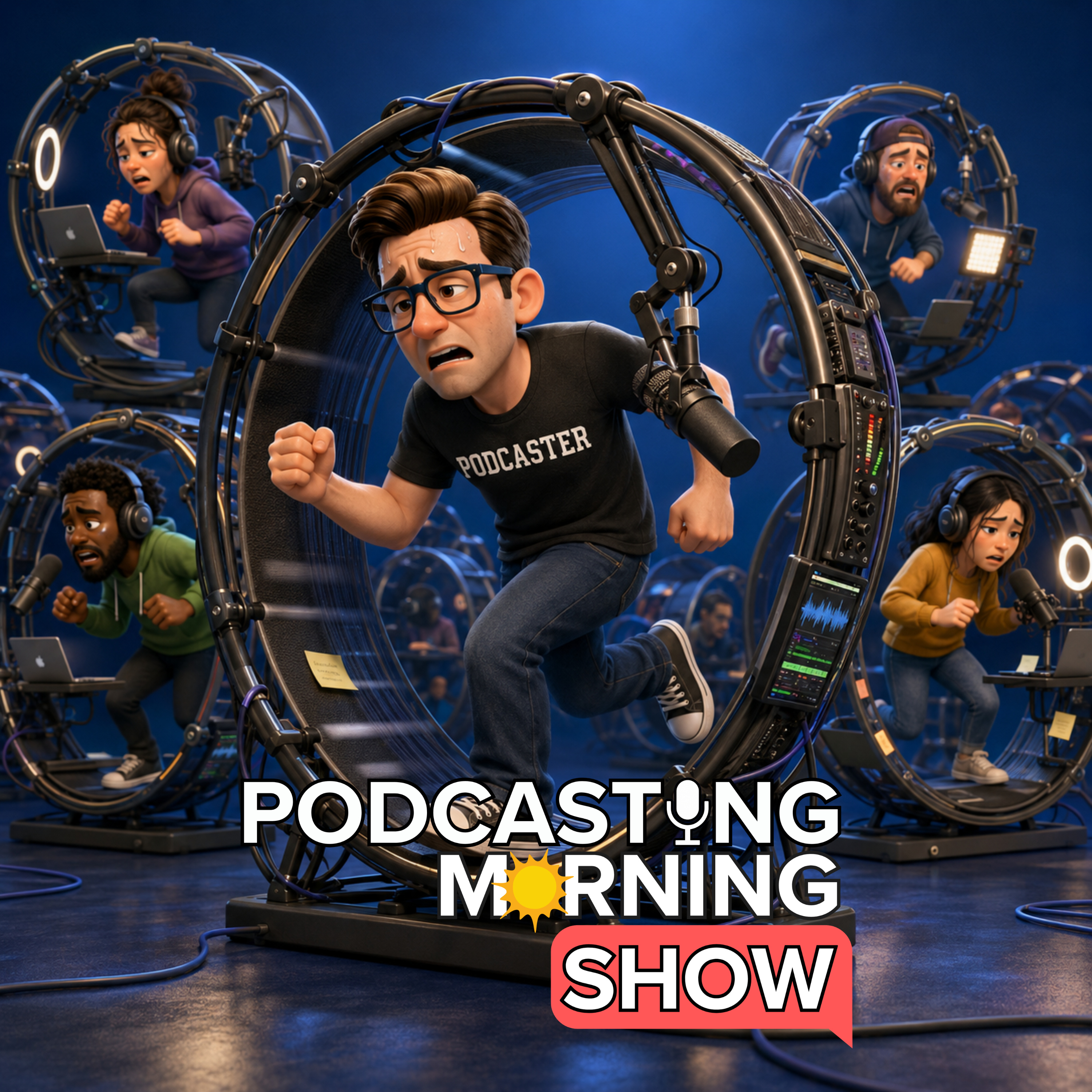


A lot of podcasters stay busy because busy feels productive, but there’s a difference between constantly posting content and building something listeners actually return to. The morning show cast and crew talk about why so many creators feel stuck even while publishing nonstop, and how growth often comes down to knowing your audience instead of chasing every trend. There’s also a bigger conversation about patience, strategy, and whether the work filling your schedule is truly helping your show move forward. By the end, you may start asking yourself: are you growing your podcast or just staying busy?
Episode Highlights:
[03:24] Survey Stats on Podcast Growth[06:06] Audience First with Ralph[11:00] Less Content, Bigger Milestones[15:53] Escaping the Hamster Wheel of Growth[18:48] Monetization Backwards Explained[26:21] Why Podcasting Feels Harder Now[29:43] Consistency Alone Is Not Enough[31:31] Stop Chasing Algorithms[33:01] Get Them and Keep Them[51:02] What Is Working Right Now
Links & Resources:
RSS.com Podcast Hosting:
https://rss.com/blog/podcaster-insights-survey/Ralph's blog post link:
https://www.contentcreatorsaccountant.com/blog/is-podcasting-dead/
Feature Your Podcast on the Podcasting Morning Show:
https://PodcastingMorningShow.com/spotlight
The Podcasting Morning Show:
www.podcastingmorningshow.com
Ways to Watch or Listen: https://www.podcastingmorningshow.com/joinus/
Meet the PMS Cast and Crew:
https://podcastingmorningshow.com/people
Join The Empowered Podcasting Facebook Group:
www.facebook.com/groups/empoweredpodcasting
Book A Free Call With Marc:
https://calendly.com/ironickmedia/freestrategycall
Application To Submit Your Show For Evaluation:
https://podcastingmorningshow.com/eval
Join us every other Monday at 8 AM ET for the Obsession Worthy Podcasts:
http://podcastingmorningshow.com/owp/
Join us LIVE every weekday morning at 8 am ET (US) on Clubhouse:
https://podcastingmorningshow.com/clubhouse
EPC3 Speaker Application: https://empoweredpodcasting.com/speakers
Powered by iRonickMedia.com and ContentCreatorsAccountant.com
Send in your mailbag questions: https://www.podcastingmorningshow.com/contact/ or marc@ironickmedia.com
Want to be a guest on The Podcasting Morning Show? Send me a message on PodMatch, here:
https://podmatch.com/hostdetailpreview/1729879899384520035bad21b
0:05 Marc Ronick: Good morning, Today is Thursday, may 28 2026 and today we're asking the uncomfortable podcasting question: Are creators focused on the right growth strategies, or just staying busy with more tools, more clips, and more content, so if you're listening live on Clubhouse, hit the share button, top right-hand side of the screen, and share it however Clubhouse lets you, and if you're catching us via podcast, YouTube, etc. please share this episode with a fellow podcaster, and now give us about 30 seconds, and we'll get things rolling. Thanks for being here. The podcasting morning show is powered by Ironick Media, helping podcasters launch, polish, and grow great shows, and by Content Creators Accountant, helping creators build real business behind their morning show. Thank you so much for being here. I am your host, Mark Ronick, and D.R. Fay, Ralph Estep, Matt Bliss, Sid Meadows, and BC Babbles. We also have on stage from the audience Dan and Tide, Tide aka Knikki, on stage.
1:25 Thank you, guys, for joining us already. And good morning to those of you who've already joined us live on the video, live on Clubhouse. Gabe, Jessica, Tim, Rich, thank you for being here. Spent some time with Rich yesterday afternoon doing Empowered Podcasting Live on all the video streams, and that was a great time. BC Babbles joined us as well. If you want to check that out, by the way, you can go to Podcasting Morning show.com/epc Live. We have the latest edition with BC posted there, so you can hit play. And also, before we dig into the main content of today's show, this rss.com article, I wanted to share with you something I've shared yesterday as well. Sometimes it's hard to know what's actually working in your podcast when you're the only one really creating it every week, or at least maybe you're the point person. Sorry, my voice is crazy this morning. Ralph already called me out on it before he got started. So, anyway, this is why we created our podcast evaluation series.
2:40 If you want honest and constructive feedback about your show, all you got to do is submit your podcast at Podcasting Morning show.com/eval We'll review your application, listen to your podcast, and if selected, our team will discuss what's working, what could be stronger, and what other podcasters can learn from your show. Again, that's Podcasting Morning podcast today, and let's dive right in, so this, like I said, and we'll get into this article, but podcasters are doing a lot right now, and they're publishing consistently, they're experimenting with video a lot more these days, using AI, building tools, and promoting, I should say, buying tools and promoting on social media, they're trying to grow, they're trying to monetize, improve their workflow, keep up with everything that's changing around them, and we know even just from yesterday's show, covering all the news, how much things are changing, and yet, according to this rss.com article, or actually, it's a survey, it's called the Podcaster Insights Survey.
4:00 Audience growth is still the So, that brings us to today's big question: Are podcasters doing too much? rss.com surveyed 195 podcasters in quarter two of this year, and a few things stood out. I'll give you some, some ideas here of where we're going with this, and then we'll break some of these down as we go today. 62% of current podcasters publish weekly or more. 46% of those surveyed say growing an audience is their main podcasting goal right now. 70% of them say that growing their audience is one of their biggest challenges. 51% record video in some way, shape, or form.
4:44 And among the podcasters who publish video, 63% say video has helped grow their show. 56% Those AI tools, 39% are podcast, and 72% say they're services related to that or So, this is what makes the article interesting to me. Podcasters aren't sitting around doing nothing, clearly they're showing up, they're publishing, they're experimenting, they're investing the time and energy and money into their shows, but even with all of that activity, growth still seems to be that big struggle. So we need to ask questions, maybe we'll get to some of these today.
5:32 Are these efforts actually helping us grow? Are they helping us make Are they helping us connect more deeply with listeners and viewers, or are some of us just stacking more tasks onto an already heavy process? I'll say, so I want to start with this for the team, and for everyone here in the room, for that matter. When you hear that podcasters are doing more than ever, but growth is still the biggest struggle. that? Yeah, Ralph, go ahead. Ralph Estep Jr.: Yeah, thank Good morning, Mark. And I'll give everybody a baby update. We're still in, we're still in the holding period. We should have some movement on that today. Things are progressing, so thank you for all the people that reached out.
6:18 Anyway, to answer your question, it's interesting. I had a call yesterday with a content creator, and when you talk about the biggest struggle doing more than ever, I think the problem is people have neglected the first thing, and that is who is your audience and who are you trying to reach. I think it's almost easier to do a stuff, it's easy to put stuff out, it's easy to do this and do that and do this, but have you taken the time to really focus in on who is your audience, and the reason I say that this guy's first thing to me yesterday was like, he says, "I'm making videos on YouTube, Ralph, how do I make money with this? And I said, "Who is your audience? And he says, "I'm not really sure. And then I said, "Okay, what are you trying to share with them? He says, "That's a really good question, but how do I make money with this, and so I think you've got to start out with who is your audience, because you can do a ton of things, Mark, and I think that's where you're going with this, you can do a ton of things, but if you don't have an audience, you don't, and I said something to him, I said you don't monetize a show, you monetize an audience, and so I think that's part of what the struggle is that we're facing here this morning.
7:22 Marc Ronick: Interesting, by the he's shocked that only 39% are I'm wondering, Gabe, which direction you're shocked, because I say that because I was kind of shocked too, just in the sense that it unfortunately that feels a little high to me. I don't see enough podcasters monetizing really at all around 40% seemed a little surprising to me, and in a good way, I suppose. Dan, did you want to chime in? Dan: Yeah, just trying to figure Marc Ronick: By the way, the hot Clubhouse thing, that's how we get each other's attention here on the virtual stage. Go ahead, Dan. Dan: Two things, first, just can be pretty hard to monetize a nobody's doing it, because it can be really tricky.
8:09 There's a lot of moving parts. I wanted to add to what Ralph said, and it is like, you do want to know who your audience is, for sure, but like, what I found is more of a psychology thing, and I've been doing like just direct response marketing for about 35 years now, and it's not knowing just who your audience is, but it's like actually knowing how their brains are wired, and I found that your listeners aren't exactly who you think they are. There are two types of people, and you've got to pretty much talk to them different, because their brains are wired different. Every show is made up of audiences that either run toward benefits or those that run away from pain, and how you're doing all of your calls to action and how you're doing all your messaging really is like one of the key things.
8:59 Like, I created a chart a long they have a primary audience and want to talk to both of them in all of your messaging, so like a true crime podcast, for example, the primary audience there, believe it or not, are made up of people who are pain avoidance, like they're largely I love true crime, but it's like I always talk to my co-host, who is female, and she just goes crazy about it, about true crime, and I asked, well, why do you like this so much, and she said, I don't want to find myself waking up, waking up chained to some psycho radiator in his garage, so I would like to know if that ever happens. What can I do, Marc Ronick: preparing in just in case, Dan: right?
9:53 Exactly right, it's just like I gotta avoid pain at all, you know, at all costs, where I. Like true crime, and it's because I'm benefit-oriented, like at least in that niche, like, what am I gonna watch on Netflix this weekend, or whatever, but the secondary audience for even a movie show would be pain avoidance, which, and I fall into both of them, like, and then spending 45 minutes trying to figure out what am I gonna watch, and then at the end I listen to podcasts instead, and nothing changes, and it's just bs, you know what I need, exactly. So understanding the primary and the secondary audience is like, then when you're doing your messaging on social or whatever, it's really easy, like, because you just craft one kind of call to action specifically for people who are motivated by running away from pain, and you create the other I want to get something out of Marc Ronick: Thank you, Dan.
10:54 I gotta keep moving. If several people want to chime in, so thank you for, I appreciate the insight, and I want to go to Matt Bliss. Matt Bliss, good morning, Matt, and I were having a chat, a side chat here in the Clubhouse room. And Matt, what did you say? I can't find it here, and I don't want to misquote you. Matt: Is this the monetization So I said the first comment when the monetization thing came up, I said, if I make $2 a week, I'm monetized, and Mark responded with, even if you don't make any money, and I pointed out that perhaps defining monetizing compared to being profitable is an important distinction that we should probably make, maybe. Yeah, with regards to the data in the article, too. Marc Ronick: Yeah, and that's fair, you know, because, yeah, technically, by definition, yeah, if you're making any kind of money, that's monetizing, and monetizing our show, and I think then a lot of other people will assume, oh, well, they're making some money, but the real goal here is not just to monetize, it's actually to be profitable with that. So, yeah, I think we both kind of see it the same way, it's just making sure we're clearly defining those two terms, but what did you want to add to this, and again, just for question I started with is, when doing more than ever, but growth what's the first reaction? What say you, Matt?
12:17 Matt: Thank you so much for that far down the path. Yes, we got what I was going to say. Two things: less is more. I think podcasters, even considering growth and stacking all those tactics that you talked about, I think it's always good for them to pare back and analyze what they're doing that's too much, and then bring it back down to the key stuff, the main drivers, back again. But also, with growth, you have to set milestones for yourself, because growth is infinite. If you're hunting for more of something and you never reach the asymptote of whatever that infinite number is that you never set, then you're always going to be seeking growth, and I think that's one of the things It's because we always want more, and if you listen to enough podcasts where talk about money, the ones that get there and talk about being happy is that they hit their they hit their number and they They don't just continue making more money again, because you don't hit a number that you set for yourself as a goal, then it's never going to be a thing. Now, to say that it's not going to be you hit a growth milestone and then you've achieved podcast and then you stop, or you just ride that wave, but I think that hits that perception that there's always growth that's needed, but for us setting a goal for ourselves helps. Marc Ronick: It's a really good point. It's a really good point, Matt.
13:45 Like, I'm thinking about some clients that I've been working with lately that hired me as a consultant, and their goals - there's two in particular I'm thinking of, and their goals are they want to grow, they want to keep growing, and they've been at it for a couple years, they have a steady audience. They have a few 100 people that tune in every single week, but they're still wanting I want more, I want more, I want more. And it's at some point, it's like, well, why, and how many do we really need at that point, right? Like, they're not even trying to monetize. There's one client I'm thinking of, they're not even trying to monetize, like they don't care about monetizing, they're doing fine. They just want to reach lots and lots of people, but I feel like that will eventually could just lead to insanity, because again, it's like, when do you stop, and why do you stop, right?
14:34 Like, I think that's a question for all of us to think about, when do we stop, and why? Matt: It's why there's a practical, or at least a good one, a practical component to any algebraic course in mathematics. You can talk about x equals, you know, five plus y all day, but if you're not filling in the x and the y, then what's the point in filling out the formula? And Ralph was filling in the formula for his client, he's. Dude wanted more money. I don't know about that stuff, but I want more money. And you're like, well, X, Y, and leverage that into what becomes money. But they wanted money, they need to fill out the variables so that they can get there. Define the value, DR: Matthew, for the win with the word algebraic, Marc Ronick: should we hit the jingle? Jingle: Epistemological, antipodean, multifactorial, slightly Tasmanian.
15:29 Yeah, hyperbolic, bureaucratic, bit dramatic, existential, mate. sesquipedalian, mildly still conversational, big words, small patience for Marc Ronick: It's a longer groove the whole time. I'll take it. Thank you, Matt. Now, I know a lot of people still want to chime in. I'm gonna go to Sid, and then I know, BC, you had something as well. Sid, good morning. What did you want to add? Sid Meadows: Good morning, Before, can you please add, I believe it was acetate or acetop to the wheel of jargon, please. Marc Ronick: Okay, Sid Meadows: and got it. Explaining it the way Matt used it, please.
16:10 So I am.. Is this conversation about monetization, or is it about growth? We went down monetization, but I thought your question was about growth. Marc Ronick: Yeah, I mean, it was essentially about growth, but it quickly moved over to monetization, and you know, pick your poison. Sid Meadows: So I'm gonna answer my show is growing, and we're really happy with where it's it's growing, and the reach like I'm on a treadmill, or I'm on a, you know, I'm a hamster on a spinning wheel, because it always is nonstop, always happening, always having to do email idea, always testing this post idea, changing, you know, formats of newsletters and blogs So, for me, it's a hamster wheel good, because I'm seeing the you know, strategic, of my show, and it's happening. Marc Ronick: So, Sid, you know, this hamster wheel analogy - it's like, when do you get off the wheel Sid Meadows: in December?
17:15 When they quit publishing, really? I mean, actually, that's really the best time to grow at your show, honestly. When you're not publishing, or when you should be doing it, remembering January of this year, my show grew exponentially, and we did not publish at all, like exponentially. Like, we had 3000 people listen to the show in the month of January with no publication and very little marketing or advertising around it. So, I don't know that you ever really get, uh, I'm just little bit. Marc Ronick: Okay, that's fair. And again, I think where I'm getting really infatuated here and hyper fixated on is again this idea. It's like, when do we say when? When are we satisfied, right?
17:58 And even to Matt's point, it's like, you know, yeah, we can set Like, once we hit those goals, then when we just, more and more, more, I feel like, where we set ourselves up for disaster, DR: isn't that just like life? I mean, when I was in the nine to five world, I was constantly, Oh, that Christmas bonus is coming out, so I got to shine. Got a shine. don't mind that, because I am It's like I'm in a competition with myself. Do you know what I mean? Marc Ronick: Yeah, DR: yeah. So, Marc Ronick: I mean, there is such a thing as a healthy, a healthy dose of that too. Yes, yeah, I'm with you there.
18:44 That's a good point. Thank you. Dr. and BC, hold tight. Tide has been raising her hand multiple times around this particular part of the conversation, so I feel like Tide, go for it. Good morning. Knikki: Good morning. Yes, I apologize. I was just gonna say that I think that my fixation on the monetization part comes from an experience that I had yesterday, and that is, it was a client who came to me, it was actually a friend, a colleague, and he wanted to grow his audience, and it wasn't specifically for podcasting, but He's never engaged in any level of entrepreneurial activity before, and so, but he was all about the money, all about the money. How do I, how do I sell this?
19:31 What, what do I sell it for? And he said that he went to YouTube, and the videos that he had listened to were, you know, just of randos, basically saying charge what you're worth, and don't under charge yourself, don't do this, don't do that, and he came in with that kind of mentality, and so I had asked him, I said, well, sort of like, like Ralph, I said, do you, do you know who you want to get this product to? For the record, I think you have a good product, it's just you're so focused. On the price of everything that I want to know, like, how you're expecting to, a, I want to know how you're expecting to sell this, and I also want to know who your audience is, like Ralph said. So we started talking about the how he wanted to monetize, and when we spoke about the how first, then it became clear to me that his particular audience was three segments: it was community colleges, homeschool moms, and public and private school teachers, but the product itself would have to be specifically tailored to each one, and when it came to the growth aspect, there was no way in his mind mentally, because he was so focused on the dollar amount and monetary monetization, he was so focused on that, that there was no way to get him to realize that I could think of anyway to realize how important his audience was until we started talking about the how and what monetization actually meant for him.
20:55 What did it? What, what are you actually looking to monetize? How are you looking to monetize it, and and where do you see yourself selling your products and services, and all of that, and once those questions were asked, it opened his eyes, because he realized what he didn't know. He said, "Oh, shoot, I don't, I don't know what I don't know, and that helped the growth of him personally, and then also it helped him realize that he could sell his products successfully if he understood that piece first, and that's why I say, if you're talking to someone and they say, 'Hey, I want to monetize my show, I want to monetize this, I want to monetize that, it might be important to consider, especially if they're stuck on that and they're stuck on the dollar amount and they just want ask, How do you want to do this? Are you thinking about running ads? Are you thinking about doing webinars? Are you thinking about having your own website, those types of things?
21:50 How do you want to monetize? Because then that person will realize, oh shoot, I don't know, I have no, no idea. And then once that becomes clear, then the audience factor may be a successful byproduct of that. Marc Ronick: Nikki, thank you It's interesting that happened Matt Bliss is agreeing with you, If you work backwards from money and the price point, it's a rough time. Yeah, agreed. And thank you again for that, Tide, and BC. Thank you for being so patient. What did you want to add to all this? BC Babbles: Good morning, I want to take a slightly different approach to this real quick, and I'm wondering if part of the growth issue for podcasters is the perspective or the perception of what podcast nowadays even is. We talk so much on the show about how different evolutions in the industry are pulling the definition of podcasting every which way, and think if I'm not a podcaster and I'm hearing all these things about like what Spotify is doing, what Amazon's doing, and hearing about how so much content nowadays is becoming so AI non-human driven.
23:05 in me looking for a podcast I staying with it and helping it And so I feel like the way things are changing, that it creates this kind of cacophony of all this AI sound, all this saturation sound, and it kind of, I think it might limit the perspective of being loyal to a creator and even helping any kind of particular show grow over time. Marc Ronick: I see. Okay, so I think what I'm hearing is just to be clear about this. So, you're basically saying, is it that the, you feel like the market is so saturated that it's hard for audiences to really stay loyal to one or couple of their favorite shows. BC Babbles: Saturation is part talked about Spotify yesterday, and how the definition of what a podcast is, or what a podcast is being so stretched in so many directions. I think it's hard to determine what people should expect from my idea of podcasting.
24:01 Marc Ronick: Yeah, that's fair. Yeah, and Matt, you had something else you wanted to add. Matt: So, the definition of podcast, I think we get, we get caught up on that a lot, and we're in a space here where we have access and understand a little bit more about what the more than what the listener and the audience member might interact with. I don't know about you guys, but there are still so many people that have no idea what a podcast is, but they love Amy Poehler's new show, or you know, Andrew Huberman, he's the bomb. I love listening to him for three hours talk about one very specific routine or subsystem in the human body. I think focusing on what the listeners interact with, or the watchers interact with, is probably the most important part to focus on, and one thing you did say there, BC, was the idea of the parasocial relationship. You didn't say it explicitly, but creating a relationship with your favorite host or creator, I think doing that is the key part.
24:59 I don't think starting with podcast and working backwards from there to make that happen with the general principles that get thrown around at the beginning of a podcaster's journey. I think every creator is a little bit different, and if they're open to doing all the things we've talked about so far that everybody's talked about in kind of stepping back and reflecting and analyzing how your content connects with whatever audience you need, I think that shows you the path to getting more people into your show to listen. That doesn't talk about monetization specifically, which is seems to be a big topic, but like that parasocial relationship that's going to loop back, bc and I think if I had advice for you, I would say capitalize on that, because Patreon, for example, it's more of a social platform guided towards listeners and consumers, the creators are taking a back seat to the platform, but the next iteration of that will be creator first, better focus on parasocial relationships and creating personalities. Now, that's that's a very ambitious take from me there, but I think parasocial relationships, that's that's what we should be focused on, and it's what I think That's the hamster wheel that I think you'll love running on.
26:16 Does that make sense? Marc Ronick: Yeah, that makes a lot of sense, Matt. Yeah, and I think Ralph wanted to add something too. Ralph Estep Jr.: I want to drop a bomb in here, and don't be seriously, because when I, when I actually wrote a blog article about this article today that everybody can check out, we'll put a link in the show notes. But I think the thing that stood out to me about this article, because I want to get back to this article, because there's a lot of good stuff in here. I think what this article is telling us is the easy era of podcasting is over. We've been telling people that when you buy a microphone and you be consistent and you show up for your audience every week, that it's just going to magically happen. Guess what, friends, that era is gone. We are in a much different place now. BC alluded to it, the saturation of the market, the professionalism of what's going on in the market.
27:00 We've got to realize that what we have now, and I've said this on the show many times, are media companies. It's not as simple as just the way it used to be. It was simple before. Get a simple microphone and just start talking into a microphone, and your audience will come. We've gotten beyond that, and I think that we have to recognize that, because there's a lot of people that think, because I talked to one yesterday, they think they're a simple microphone and start people are going to appear, but growth doesn't work like that. Growth comes with clarifying yourself, promoting what you're doing, and you've got to build a reason for listeners to come out how to get them to your of the things that I want to hardest part of growing your because all of us have been in trying to make this work. What has worked for us, because the thing it talks about in this article, and I agree with this, is it says video is no longer optional, it's very bold in this article, and says it.
28:03 I agree, because I think there's discoverability in there, but I think we should pivot this, because it's real easy to get stuck on monetization, because honestly, the people that I talk to, everybody focuses on that, because everybody wants this to be a side hustle or be their main job, and that's fantastic, but I think we've got to go a little deeper and say, how do we So, what has been the hardest part of growing your podcast? Because that's what I think is going to be valuable to people here this morning. Marc Ronick: And Ralph, I just want to add something to just as far as how things are changing when we talk about growing an audience, and I think you were saying something around - at least I wrote this down, so I don't know if it came from my head or you, but the idea of really making a solid effort into growth, like putting the time and effort into finding ways to grow, if that's your goal, and I think this is the other point that gets missed a lot. If it's not working, try something else. I see so many of us in this community, outside of this community, in the overall podcasting community that focus on, okay, I got to keep doing this over and over and over again, and eventually they'll come, but if they're, if it's not working now, the chances of it working later are slim to none, so I think I think a lot of us just get, including yours, truly.
29:24 I do this sometimes too. and the routine and applying the originally, and just thinking think at some point we have to do we need to try something Ralph Estep Jr.: Mark, you're And that's the truth. Is we have to accept that things have changed. Yes, we still have to give remarkable content. We still have to have clear audio. Those are givens now. Consistency is a given. We used to tell people, well, just show up. Every week, and if you show up, it's going to happen. You can be showing up with garbage content that nobody's interested in, and it's not going to magically grow. I could stand out front of my house here and look at my pickup truck and say, "You're a Lamborghini. Well, guess what?
30:14 I can do that for 10 years straight. It's still going to be a pickup truck. This is just the way of the world, and people need to stop buying into this facade of, if you build it, they will come. You've got to figure out, are you building something that people want? Are you building something that they find value in? And if you're not, change what you're doing, because consistency alone is not going to get you there, Marc Ronick: right? And that's the key, right? Like, consistency, consistency alone won't do it, but it is a factor. It is important, but so it's new things. If the things that you're already doing isn't working, in my opinion, Ralph Estep Jr.: and have a strategy. Mark, that's the other side. Well, sure, I think a lot of people don't have a strategy.
30:57 You've got to have a strategy. like a business from the front If you opened up a hot dog strategy to how to get people to from you. If you sit there every day and nobody walks up the window to buy a hot dog, you got to go figure out what's going on and how to fix that. I think with a lot of content creators, they don't do that. They say, "Well, I just keep doing it. I'll post on social media, I'll write blog posts. If nobody is connecting to it, stop doing what you're doing, it's not working. Marc Ronick: Yeah, I'm with you there. And we've got lots of people chiming in. Some Baza says in the chat, my question is, if you remain the same and constantly keep making the same content, we know that YouTube and all the other content providers change their your content will become you're already looking for if Ralph, you're disagreeing. And then, by the way, Sid, you're on deck. Ralph Estep Jr.: I think I don't agree with that, because what is going on on YouTube right now is, you got a bunch of clowns out there just chasing the algorithm. Well, let me go do this, and let me go do this, but no one is putting out stuff that is actually changing the dynamic, and if you just follow the trends, guess what happens? The trends stop, and you're waiting to see when it's going to catch up with you.
32:18 So, I respectfully disagree with that approach. Marc Ronick: Yeah, I mean, may, that you may never win, Because if you're going to just sit back and wait for the algorithm, and I know you're not necessarily some buzzer saying sit back and wait for the algorithm, but if that is kind of a sidebar thing that's happening, I think you're just going to be waiting a very long time. Sure, you might pull that it might win one time, but it's not a strategy in my opinion, and I do say that, like you say, because somebody, I love you, that strategy, but I think it's going to drive a lot of people crazy. Sid, what did you want to add? And then Matt, you're on deck, and then we'll hear from Dr.
33:00 as well, Sid Meadows: and so one of the things we have to remember about growth is, you know, you can get them there, they hit play and they start to listen, right, but you got to keep them, and you got to be sure you got the doing the right things to keep them, so they come back and hit play the next time you publish, or they go into your back catalog and they start to listen to others, so, and I mentioned this followers on Apple, but 900 and something listeners, my job is to convert those listeners to followers, they're coming to listen, they're just not following the show, they're maybe about coming back or not, and so I think that growth is a multi-pronged approach, but if you get them there, you got to keep them there, and that to me a completely different strategy.
33:48 it to earlier conversation, I My spin, I call my hot takes the spinny wheel. People love that episode, and it's a lot of fun to create. I really enjoy it. There's a lot of laughs, there's some disagreements, and my audience can't get enough of it. And I get messages every time we publish one of those, right now, which is only once a month. And so we're trying something new, and we've done a lot of, we've done a lot of new things, but that used to be is the biggest new thing that we've done that I think is helping to attract new people, and then hopefully keeping them. So you do have to always be trying and testing. Marc Ronick: Thank you, Sid. Let's check back in with Matt. Go ahead, Matt.
34:28 Matt: I'd like to step back with the nature of things. I've set a timer for three minutes. When that goes off, my time stops. Do we agree? Marc Ronick: Is Matt: three minutes okay? Marc Ronick: That's fine. Matt: Very good. So all the stuff that has been covered so far, like particularly Ralph's stuff, very on point about how the nature of podcasting has But if you're in podcasting for long enough, and I don't feel like I have, but I've observed it for long enough. What you realize is that the podcaster's journey doesn't vary all that much. At the very beginning, they seek out information, they get enough information to begin, then they seek to optimize, and they end up in places like this, a place with experienced community of podcasters to find out more information, then they find that information that they need, they start trying stuff, and I think if they do the right things, they do what Sid is talking about.
35:26 They test, they iterate, they reflect. Did it work? No. Toss it. Try something new. Getting on that treadmill is really important, but the thing we need to recognize is that the industry has been constantly they will come mentality. They do look for the best quality microphone to start with. They do wonder why no one's all the platforms. This is an experience that I don't think anybody disagrees with when they come in as a podcaster, brand new and fresh. This is where, and controversial opinion incoming, where I think podcasting, if it was more gate kept, if there was a gatekeeping aspect to this, where you had to get a podcast license to be able to start creating your podcast, then we might be able to fix this problem, but no matter how many consultants we get, no matter how many intro to podcasting courses, they're all layered with opinions, they're layered with experiences across 25 years. Who knows how long that time has been going on?
36:39 shifting. The only thing that you can rely on explicit is your own experience, that internal struggle that you have, the way that you cope with it, and informing that struggle with the experiences of others. So, the thing that really triggered me there, Ralph, was you saying that podcasting has changed, build it and they will come. It hasn't been that easy since 2014 I think people never see that, though. Once they become from a go from a listener to a podcaster, that journey is huge, and the misconceptions are even bigger. But how we address that problem, I don't know. I think the best place to start is a show like this, where you hear all of the great opinions, and just really think about yourself and do what Sid's doing. Marc Ronick: That was my there goes the timer, Matt. Thank you.
37:27 Well done, I appreciate that. did make me pause too. And with all due respect, Ralph, yeah, I mean, look, I've been doing this for over 20 years, and I agree with you. I mean, even the first 10 years were not easy, they were easier, maybe than they are today, but those first 10 years weren't as easy either, because those first 10 years we were just trying to convince people of what a podcast even is, like no clue what a podcast is, you know, now we're trying to define podcasts these days, back then people would look at me like I was crazy when I would say I have a podcast, right? So it's, it was easier, yes, but I don't want people to think that there was a point where it was super easy to do, it just wasn't, Matt: and we're all figuring it out. I think the best way to think about it for yourselves is a video game overhead map as a fog of war, and the more you things to consider, and no one's They just look successful from the outside, but if you got on the inside of the Rogans and the of thing, you'd find out a whole Ralph Estep Jr.: So, Matt, Then, Matt, let's talk about you're going. Is what's the hardest part?
38:43 If it's always been hard, which I disagree with, by the way, I think it's harder now than it's ever been, because there's more competition than there's ever been. But what do you think the hardest part of growing a podcast is now? Matt: I think the hardest part is people realizing it's their own personal journey and not an extrinsic one. There you go. Add that to the board. The so much of what podcasters do when they come into the space is look for the external things, because the more they discover, the more that they don't know, the more that they rely on outside sources that they don't understand yet to tell them what they need to do. This is like a this is a pet theory that I'm putting together. I call it podcaster knowledge divergence.
39:24 There has to be a point in time where the podcaster becomes empowered enough to trust their own instincts to inform themselves, so that they can answer their own questions, and then seek and set all these milestones of growth that we're talking about, I'm not going to be able to give you the answer of what's the hardest thing to do, because anything that I say will be the hardest for me is going to be easy for someone else, guaranteed. SEO and marketing, not my bag, but someone else here is going to say, oh man, easiest thing in day, but at the same time they might struggle with their audio quality, but I'm in here going, well, it's super easy, you just drop 400 bucks on an AI algorithmic machine learning plugin, and that just dulls that sucker right up.
40:15 I think it's all about the intrinsic internal experience. The hardest thing is trusting yourself when you learn enough about podcasting to inform your own experience, and that feeling of saturation and collaboration, which I think is what it should be, that feeling like you're in an overwhelming I think we can see everybody's desks in that study room, but if we just focus on our own desk, we're going to pass the test, and what we get as a score isn't going to matter. There is a finite number of resources, eyes, hours in the day in the universe, but ultimately it's your own journey. Now, that isn't to dismiss that there's external things as part of this that will help inform your internal growth, and this is why I think Sid is the secret winner of this about getting on the hamster The key about succeeding in podcasting today, and the hardest thing that people find in podcasting itself, but the hardest thing is getting comfortable with that testing and iteration process, and more importantly, setting the goals for yourself to find the results you want, and then not necessarily settling, because Mark, Mark asked us earlier, When is the when? When are we done?
41:33 We're never done, but we can be happy with our process and seek the flourishing we want from our podcast, when we have that system and process in place to inform our intrinsic value, now all of that super philosophical, hard to justify taken of this episode, and like to hear it, and I'm not gonna come at me for it, and you for your opinion on that is valid. It's why the most common answer to anything in podcasting is still it depends, and forever we're trying to reduce that down to something closer to maybe of these three things. There is still so much unknown, and so many car paths we can carve for ourselves.
42:22 I think that's going to change in the next five years, where there'll be more opportunities to become more. I think the biggest problem is trying to define podcasting at the very beginning, but it's all journey for ourselves. Dan: Camera, stay with me now. Ralph Estep Jr.: Come back to me Dan: Yeah, right now, Marc Ronick: now we're playing that because we noticed someone on camera was dozing a little bit, bc BC Babbles: gotta keep that three minute mark, man, gotta keep I'm only human in the Matt: it's all good. Everything I just said, if people have just like put their phone down and gone to make a coffee and come back, absolutely fine.
43:08 This is not a, this is a like way many years down the path kind of I have to sit down and get comfortable and listen to something like that to be able to pass what I was saying. It might even only make sense to me. Marc Ronick: Before you chime I just wanted to say I don't think that it was necessarily you, Matt, that BC was falling asleep. It happens on occasion, that's why we have a jingle for BC. Let me blame somebody, Mark. Dang, all right, go ahead, Ralph. Ralph Estep Jr.: Matt, I just want to say I agree with you and disagree with you at the same time, and we could spend an hour talking about the philosophical parts of that, because one of the things I think that a lot of someone to help them to get past the stuff that there are things that you can't just find on your own journey.
43:53 I'm the definition of that. When I first started out, what I should have done first was go and hire a speaking coach, I should have went and hired somebody to help me with my tech. I should have went and hired somebody, or found a group like this, or mentored with somebody to help me build stuff, because on my own journey I wasn't getting where I needed to get. But I want to take it back, the hardest part of growing your Is it getting discovered in the first place? Is it getting people to stick around, is it getting people listeners to share the show? Like, for example, Mark sent me a message yesterday, said we got to put this on our list to talk about how can we get a guest to share the show when they're on the show. What are those things that are the stress points for you right now?
44:34 That's question one. And question two, what are you finding right now that's actually working? Because what I'd like to give people today is some things that are actually working, so that if you tune in to watch this episode or listen to this episode, you can say, "Oh, that's some great idea, let me try these couple things out. Marc Ronick: Yeah, I think that that's a great place. Where are things working for you? I think, and that's a great way to wrap up this episode today, is take a few minutes to really. Find those things, share those things that are working for us, and yeah, we'll share some of mine in a moment, but I want to hear from others as well. Think about your answer. I know Tide wants to chime in too, and I think it was around what we've just been discussing.
45:15 So, Tide, go for it, and if you want to share anything that's been working for you as far as growth or success with your show, please share. Go for Knikki: it. Sure. Thank you. I was gonna say that I agreed with Sambaza in the chat when he lead me to my right audience eventually, and I think that is a fair point to make, because if you're jumping around, which is what a lot of people do, they put out a couple episodes, it doesn't stick, then they try something new, and then they put out a couple episodes, and it doesn't stick, and then it doesn't, and then they keep doing that, and they're on that hamster wheel constantly, I know we've said the hamster wheel a couple times today, but they're on that hamster wheel constantly jumping around trying to figure out what sticks, and the most I would say prominent indicator of failure is that mentality. It's let me throw paint against the wall, let me see what sticks, and then just kind of figure it out from there, but that is such a poor mentality. If I did that in any aspect of my life, whether it's teaching or something else, and I said, "Well, let me just try a bunch of stuff and see, see what sticks that, and I did that continually.
46:33 How much success does anybody think that I would actually, or anyone else, would have in this room if that's what they did throughout their life, you have to have sometimes, and I'm saying, emphasizing sometimes, sometimes you have to have a singular focus, and you're going to make tweaks and modifications along the way. Of course, as you get smarter, more data comes in, more insight more wisdom, more experience. and you're going to develop and change and grow, and you know, evolve, but if you're sticking to you, you can feel the success So, like with you, Mark, I'll use you as an example. You could feel that calling your show the podcasting morning chat wasn't the right move anymore.
47:18 There was a shift, something you knew probably couldn't something necessarily that calling your podcast the right move, and you knew decision, no matter what anybody else, and then you also knew that moving your show to eight result for you in different feel that you knew somehow, some Now, some of it may have been algorithmic and analytical, and through conversations, all that, that's that's all fine and dandy, that's part of the process, but there was something innate in you that realized if I change my podcast to 8am I can feel the success knocking on my door, I can feel the people, the guests, the opportunities, the all the stuff that's going to come with it.
48:13 I know it's there, and that's what I think Sambaza was trying to get at with his comment, is that if I can feel that I'm headed in the right direction, and I know intuitively that that success is going to come if I keep trudging along and I keep putting this stuff out there. I know it's going to come eventually. Then I think you should stick with that, because changing it up and trying new things and all that is wonderful, and you have to do that 1,000,000,000% But there is a level of success that come from focus, focusing, concentrating on what you want to do, rather than jumping around like some ADHD lunatic. Marc Ronick: Well said, Tide. And, yeah, I think, look, if we're talking about patience, and if that was what Sambaza was ultimately getting at, not being super specific to being patient for an algorithm, but just being patient with the systems, with the strategies, with the approach. Yes, I say yes, we've got to be patient.
49:10 really see significant growth show, and I'm not blaming Like, I think that there were some instances that I blame myself for that, right, that it took up to four years to start seeing real growth, but I was patient, and yeah, I think that there is something to be said about intuition, and when you just feel like this is the right move and it's nagging at you, I think it's worth exploring. So I'm with you there, and by the way, I did want to quickly share what Jessica shared in the chat about her strategy. She said, "My strategy is to create a bridge between literature and human healing. I want to be a reflective companion for as long as my heart is called to be.
49:55 Personal development and parentheses it says, because. lives in the purpose of just walking each other home, so I think that's beautiful, Jessica. Thank you so much for sharing that. Yeah, and Dr, you've been want to chime in? DR: Yeah, so we all have kind of pivot with the method that you're, you're trying to do, but time to change things up? Marc Ronick: Yeah, that's a fantastic question, right? Like, some people I'm sure would have given up if they were on my path with the podcasting morning show. They probably would have given up a year or two into it, DR: I think a lot depends on Are you doing a show every day? Are you doing a show once a week? Are you doing a show once a month? I think a lot that has to factor in. Marc Ronick: Yeah, I agree with you. I agree with you.
51:01 BC, did you want to chime in? BC Babbles: Yeah, and I think for me, two things that have helped my growth, and I got two shows, one that I've been working on for years, one that I've been working on only since September, and I hate to say it, of that is because one, I found a capacity to be a little not super PC, I talk about, you know, job seeker chaos and whatnot, and I think people, you know, are going to come, come to love that, let's delve in. Other part of it is also, it's I never just post the episode on distribution, it's a three-step hit, it's on Substack, so it's immediately a blog post, so there's SEO there for search engines.
51:44 It's going to Apple and immediately shared to socials boom, boom - three-step hit in And I think giving every single episode that opportunity to shine in as many spots as possible every single time has helped me see the better numbers with shorter term show than my long term years show, so it's about now I gotta swap that around and make it work for both. Marc Ronick: Yeah, and it more recent show is the one you've had all the experience from, whether you knew it or Like, you just, you had a different approach toward this second show than you did, probably when you first started that first show. So that makes a lot of sense.
52:31 I see that kind of thing happen all the time. Yeah. And then, so, yeah, just to go back to what's working for the podcasting morning show lately, I think it is that consistency that I've already touched on, and it's also trying those new things right, like we've added a what's growing my audience, but it's adding something, it's adding character to the show, it's giving people another way to connect with us, not the only way, but another way to connect with us, right. We've started bringing back more interviews, we used to do interviews for a short period of time, a couple years ago, and then I got away from it. Ralph has encouraged me to let's bring more interviews back, and they are working growth a lot, not just with our audience, but also with making connections within the industry.
53:21 That's taking us a long way, because now those people are starting. I'm seeing it. They're starting to recommend our show, and they're starting to come back and listen to our show, right? So I'm making those kinds of steps, and I'm being as patient as I can. Sure, behind the scenes, sometimes I'm banging my head against the wall because I want something to happen, right? But it does happen. It's just. it's not usually that viral hit that's making the difference. It's the slow growth that we're impatient with that's actually making the difference. So, yeah, it is sticking with it. And, Dr. To your point, I don't know that there's a magic answer to when you know, when do we say when is it enough, or when do we?
54:03 How much time do we put into something? I don't know. It all depends, because some audiences might react quicker than others. Some strategies may never work, but it just takes time. You got to give things a few months, at least. I think, generally speaking, you got to take a few months to see if something's actually going to take really cool conversation today, everybody. Thank you. And I know that, as we tend to do here, we go in different directions, even after we ask a question, we tend to stray a little bit. Good job, team, in bringing us back to some of these questions and making sure that we answer them. our audience member today, and means, reach out to us at There's lots of ways that you this conversation too. And a reminder that you can come back tomorrow, because we do this every Monday through Friday, seven or 8am Eastern time, and you can find out how at Podcasting Morning show.com So, until tomorrow, make it a great day, everybody.
55:06 Take care. Bye.


