The Womack Sisters
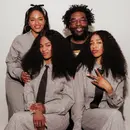
The Questlove Show breaks from its usual one-on-one format to welcome Zeimani, Kucha, and BG—The Womack Sisters. Granddaughters of Sam Cooke and daughters of soul duo Womack & Womack, they released a self-titled album on Daptone that’s among Questlove’s favorite records of 2026.
The sisters talk about growing up on tour and living in Ireland, London, Kenya, Thailand, and Paris—including how their father’s intuition helped the family get to safety ahead of the 2004 tsunami. They also discuss years of label rejections and driving for rideshare services while staying true to their sound. Along the way, there are surprises: a photo of Sam Cooke with Questlove’s mother, and Questlove’s story about a Roots show with their uncle, Bobby Womack, that went off the rails.
Photograph by Rachel Kaplan for iHeart.

 iHeartRadio

 Apple Podcasts

 Spotify

 Amazon Music

 RSS Feed

 TuneIn

 Castro
00:00:00
Speaker 1: The Questlove Show is a production of iHeartRadio. We're ready?
00:00:19
Speaker 2: All right, ladies and gentlemen, welcome to the Questlove Show. We talk a good game about personal growth, and this episode right here is proof that of that promise. My comfort zone on this show is strictly a one-on-one format. Groups kind of scare me because they tend to clam up in front of each other. And I like my guests with also a lot of mileage under their belts, which explains why I tend to lean towards legacy artists. However, I am human and, you know, full disclosure, I'm also smitten. I haven't been this collectively in love with a group of singers in a good minute. The 70s version of me, that crown went to Sister Sledge and High Energy. The 80s, of course, this is strictly coincidence. Vanity 6 was inescapable. The 90s, of course, there's For Real, Good Girls, I Put My Money Where My Mouth Is with the Jazzy Fat Nasties. And rounding out to the aughts, of course, we can name Floetry, 702. Of course, Destiny's Child. But, you know, I first discovered our guest today through Solange's St. Heron site, which prepared me for their first EP, which was entitled Legacy. But what a difference a four-year rebrand makes. And their self-titled, full-length follow-up, in my opinion, is pure musical manna from heaven.
00:01:48
Speaker 1: I never thought.
00:01:50
Speaker 2: Anyone younger than me would be emotionally capable of creating a solid soul album. It's been a really great musical, 2026, being as though I could probably name five non-hip hop albums of artists that moved me. This is damn near a miracle. Caught them live three nights ago from this particular taping. And I'm an absolute believer. A few years back, these ladies might've been your Uber driver.
00:02:22
Speaker 1: I hope you tip them well. Please welcome Zamani, Kucha, and BG.
00:02:27
Speaker 2: Otherwise known as the Womack Sisters.
00:02:30
Speaker 1: Ladies, thank you very much for coming here.
00:02:31
Speaker 3: Thank you for having us.
00:02:33
Speaker 1: Thank you, thank you, thank you, thank you, thank you.
00:02:35
Speaker 2: Okay, so I purposely left your lineage out on purpose, as with anyone else that would interview you guys would surely put that at the forefront. But even without that bloodline, I'd Definitely still be singing praises and singing from the mountaintops.
00:02:55
Speaker 1: Thank you so much. Thank you. You know, the vocals are real.
00:02:58
Speaker 2: I love unison singing in addition to sprinkles of harmony, but unison singing also is a lost art that people sometimes lose. The lyrics, the arrangements, the productions, the sequencing, everything about this album I love to death.
00:03:14
Speaker 3: Thank you.
00:03:14
Speaker 2: But for the folks at home who do not know, I will recapitulate that.
00:03:19
Speaker 1: Of course, your grandfather... It's Sam Cooke, your uncle, Uncle Bobby. It's Bobby Womack.
00:03:27
Speaker 2: Your uncle, your dad and your uncles are the legendary Valentinos. And your mother, of course, along with your father, Cecil, of course, formed the legendary Womack and Womack. I will ask you guys, I guess I could say, wait, speaking of Womack and Womack, I have to always add this when I add this. If you're ever DJing in Chicago, And you don't play all five minutes and 38 seconds of Baby, I'm.
00:03:53
Speaker 3: Scared of You.
00:03:56
Speaker 1: You're not going to make it to your car.
00:03:58
Speaker 3: No.
00:03:58
Speaker 1: That's all I got to say.
00:04:00
Speaker 3: No, no, no.
00:04:00
Speaker 2: But if someone heard your music without knowing your family lineage and your bloodline, what is it that you would like them to know about you?
00:04:13
Speaker 3: I would like them to say them girls can sing.
00:04:15
Speaker 1: Yeah.
00:04:16
Speaker 3: First and foremost, musicality. I would like them to say that it was gritty, it was soulful, it was well prepared and thought out. And it gave you something that you could connect with in your own life. Yeah.
00:04:31
Speaker 1: Rob Markman, This has always been your ethos as far as like your- Yeah. Yeah.
00:04:35
Speaker 3: From day one, when we came out here, we kind of had to separate ourselves from our parents and their company because we grew up working with them on the road. It was a lot of hard nights on tour. And we wanted to branch out at that point. So we left London, came to LA, and we were met with a lot of rejection around the idea of us doing kind of like, they called it a throwback soul sound. And we're just like, this is just, this is how we are. This brand of soul is what we were raised on. And it's just what comes out when there's a guitar and the three of us. Yeah.
00:05:11
Speaker 2: Okay, so because I also come I don't know what the musical version of a preacher's kid is. My father's group was around around the time of the Valentinos. So I was tricked into the family business. Would you guys say in hindsight that you were tricked into the family business? And I say this trick mainly because parents of my age, you know, they didn't believe in babysitters. No one else is watching my child.
00:05:39
Speaker 3: So would you generally say that you.
00:05:46
Speaker 2: Gravitated towards their business as a natural thing?
00:05:50
Speaker 1: Or were you guys tricked into their family?
00:05:53
Speaker 3: They were very clear about immersing us, 100%. Oh, yeah. It was everyday life. We were with them.
00:06:00
Speaker 5: Much like your dad, we didn't have really babysitters either.
00:06:04
Speaker 3: So we were in the lobbies. We were in the studio. They just had us right there.
00:06:07
Speaker 1: Keeping in line with kids. Yes. Okay.
00:06:09
Speaker 3: We didn't grow up going to school. They had tutors on the road. Because it was that important for us to be in the studio with them, at interviews, on stage at television shows. So it was very much so, I don't feel like it was a trick. It felt like, this is what you know, and this is pretty much all you know. They were 100% trying to make us a part of WOMAC and WOMAC.
00:06:30
Speaker 4: Damn.
00:06:31
Speaker 1: Now it's Prodigy from Mobb Deep was here.
00:06:33
Speaker 6: We can all have a common bond of being kids of legends from that era.
00:06:39
Speaker 2: What's the first music... that you remember hearing in your household? Was it your family music or do you specifically?
00:06:47
Speaker 3: A lot of Soulsters. They played it all the time.
00:06:50
Speaker 1: Still?
00:06:51
Speaker 3: Oh, yes. For sure. Yeah, Soulsters. We heard a lot of Tracy Chapman in our family. Miles Davis. Like on a daily basis, our father would be putting us to sleep to West Montgomery. Yeah. Bumping, you know.
00:07:05
Speaker 1: Okay.
00:07:06
Speaker 3: Yeah, they controlled our musical taste to a T.
00:07:10
Speaker 2: When did you guys discover that singing was your path and not just something that your parents did? When did you discover that you had voices as well?
00:07:23
Speaker 3: I was about five. And I was like, I want to do this. And at that age, our parents, our dad was like five when he was in the Valentinos, the Warner Brothers. So he never really looked at us as kids. He was just like, you have to make your decisions. And you have to stick with them. So if you say you want to do this now, you know, this is the path you're going to be on.
00:07:44
Speaker 5: Yeah, I was like 12. I started writing a lot, songwriting. And so I was like, oh, this is moving me.
00:07:50
Speaker 3: Okay.
00:07:51
Speaker 1: Yeah.
00:07:52
Speaker 2: Who would you say were your North Stars as far as like someone outside of your family?
00:07:57
Speaker 1: I mean, because... Obviously, your kids of the era, you had to have liked.
00:08:03
Speaker 3: Lauren Hill. Oh my God.
00:08:05
Speaker 5: The first record I bought by myself. I was like, I'm buying this record.
00:08:08
Speaker 1: Okay. Yeah.
00:08:10
Speaker 3: Definitely Michael Jackson.
00:08:11
Speaker 1: Okay.
00:08:11
Speaker 3: Oh my God. Yeah, for me, it was a lot of Michael Jackson.
00:08:14
Speaker 1: Okay. As sisters, I would like to know what the roles are.
00:08:19
Speaker 2: Who's the more subdued? Who's the problem solver? Who's the problem solver? Who's the daredevil? Who's the provocateur?
00:08:27
Speaker 3: Daredevil, problem solver. And this lady, she keeps us just together. I'm a visionary. Yes. Very creative. I have a lot of dreams and goals.
00:08:36
Speaker 1: Okay.
00:08:36
Speaker 3: When we first came out here, everyone was like, this better work. Beachy. Because we hadn't left our parents' side for our entire lives. So they came out here and were like, okay, so what are we doing now? So I just had to keep coming up with things. I'm going to do this.
00:08:51
Speaker 5: She got us online. We weren't singing online. We started seeing covers and things on YouTube. We just got all that started.
00:08:57
Speaker 4: Okay.
00:08:59
Speaker 1: All right.
00:08:59
Speaker 2: So first of all, whosever idea it was for you guys to do the singular clips of the music. I mean, I know there's a proper show for video, but the singular clips, which I'm trying to figure out, wait, is this real or not?
00:09:13
Speaker 1: And there's this.
00:09:14
Speaker 2: I'm going to tell you what's interesting in telling about that. Of the two versions, of course, I love the complete narrative of the chauffeur video. But if you watch the singular clip, and search this, guys, if you will, there's a bunch of clips of their individual songs. There's no edits, no cuts or anything. It's just them performing. And if you watch... your hands, your collective hands, everyone's telling a different story of who they are.
00:09:49
Speaker 1: All right, so when Bee Gees sings, there is.
00:09:51
Speaker 2: An emotive gospel things that you do with your hands, like you're emphasizing words of this way.
00:09:56
Speaker 1: Yeah.
00:09:57
Speaker 2: But when Zemani does it, it's more a soulful, like.
00:10:05
Speaker 3: You got her down.
00:10:08
Speaker 2: However, like at any moment, I felt that a freestyle battle was about to happen. Because the hand motions and stuff like that. And I was like, wow, just based on the hands alone, I saw three different personalities. I didn't know if that was by design or just a natural.
00:10:24
Speaker 3: That's our personality coming out. Now, you mentioning to us, I'm going to be looking at that video.
00:10:30
Speaker 1: From now on.
00:10:31
Speaker 4: We don't rehearse like that.
00:10:34
Speaker 3: No, we just let it flow. We've been singing together since we were little. The body do what it does.
00:10:37
Speaker 2: Yeah.
00:10:37
Speaker 4: Yeah.
00:10:38
Speaker 3: Yeah, no, that's completely, I think it's the way we sing. It's kind of how we exude our sound. Yeah, how you express it. Resonate. And when I move my hands, it's kind of like to show you the emotion I'm feeling. Yeah.
00:10:49
Speaker 2: I guess now that filming and making movies is kind of my.
00:10:54
Speaker 1: I'm not giving up music, people. Calm down.
00:11:00
Speaker 2: But I'm more aware of things visually that I wasn't before. And actually- The reason why I love that idea is that it's so simple, but you guys know exactly what to do. You could have overacted, you could have overdone it, and literally, I love the fact, I encourage more of that. Even if you get super established. Okay, so this is what I didn't know about you guys. What year did your family.
00:11:29
Speaker 1: Leave the United States?
00:11:31
Speaker 3: I was like 92, 93? Was London the first place you went? No, Dublin, Ireland. Yeah. We moved on to a sheep farm. It was a beautiful experience. It was so green. You know, it was new. It was exciting because we were leaving West Virginia. Yeah.
00:11:48
Speaker 1: Where in West Virginia did you grow up?
00:11:50
Speaker 3: Bluefield.
00:11:51
Speaker 1: Okay. I'm sorry. Don't say Saltport. I've heard. I know that Bill Williams is from Saltport.
00:11:57
Speaker 3: He's a family member.
00:11:58
Speaker 5: Wow.
00:11:58
Speaker 3: Yeah, I think he's a cousin of ours.
00:12:00
Speaker 1: Really?
00:12:00
Speaker 3: Yeah, that's what I've heard.
00:12:01
Speaker 1: You know. Makes sense.
00:12:03
Speaker 3: Could happen.
00:12:04
Speaker 1: When did you guys move to London?
00:12:06
Speaker 3: Our parents started around Love Wars going back and forth, and they noticed that they were getting a great response as far as their music because they had the same struggles we had. We were trying to convince people at record companies that we know what we're talking about and we want to sing soul music. Our parents were fighting that fight back then. We were in those meetings, and they didn't even want to put out Baby, I'm Scared of You. And I don't think it was officially released as a single. It just blew up on the underground.
00:12:34
Speaker 5: Really? Yeah, they didn't really believe in it. Our dad was like, well, I'll pay for it with my own money.
00:12:40
Speaker 3: He was serious. They've never been able to convince people that this is going to go. So they've always had to put their own money behind things. That's where we learned that from. To do it yourself. Yeah. That's why they moved. Don't wait on anybody. They moved to England because they went with it. They were like, we love soul music. They were very into that. So everything, our parents.
00:13:02
Speaker 1: This is crazy to meet someone that goes through the same thing.
00:13:05
Speaker 3: Yeah.
00:13:06
Speaker 1: What part of London did you live in?
00:13:08
Speaker 3: We lived in Camden. We lived in Hyde Park.
00:13:11
Speaker 1: Wait a minute.
00:13:11
Speaker 2: Did we pass each other? You know that we moved to London. You were in Camden?
00:13:17
Speaker 1: We lived in Kenishtown. I know exactly where that is. It's almost the same thing. We got a record deal. We were on Geffen.
00:13:28
Speaker 2: And the passing of Kurt Cobain kind of spooked my manager into the fact that The label might drop us if we don't make something happen soon because they invested all this money in the black department, black music department that they didn't have. So we kind of took our publishing money. We booked three nights at the Jazz Cafe. And during that weekend, we just kind of walked in the neighborhood in Camden. And when we got to Queens Crescent in Kenishtown, we found a five bedroom flat and we pretty much.
00:14:05
Speaker 1: lived in London from.
00:14:06
Speaker 2: 94 until I think we gave it up in 98.
00:14:10
Speaker 1: Wow.
00:14:10
Speaker 5: We probably definitely crossed paths. That's crazy.
00:14:15
Speaker 1: So your parents were living there at the time? Oh, yeah. Yeah.
00:14:18
Speaker 3: They were making music. They made their last album there. Moving to London is actually how they got up with Chris Blackwell and made Conscience. Yeah, he was way open to their ideas.
00:14:31
Speaker 1: Okay, so this thing happens in 93. Mm-hmm.
00:14:34
Speaker 2: Where it's the name change and the, like, did they move to Africa or?
00:14:40
Speaker 4: Yeah.
00:14:41
Speaker 3: Yeah, we lived in Kenya, Nairobi.
00:14:43
Speaker 1: So you guys were nomads.
00:14:44
Speaker 3: Oh, yeah. Literally. We were the wild thorn berries. Constantly moving. Yeah, for a little while we were living in a hut. No electricity or running water. And they had us learning how to make fires and get our vegetables from. Get our water from the river. Yeah.
00:14:57
Speaker 1: What was that like?
00:14:58
Speaker 3: It was beautiful. We learned how to use lanterns. Our dad was like, this is fun.
00:15:02
Speaker 5: They wanted us to be very down to earth. They were like, you're not going to be like a celebrity off in the corner somewhere. You're going to live like the people.
00:15:08
Speaker 3: Yeah. We were always off the beaten path. You know, they were clear adventurers for sure.
00:15:13
Speaker 1: And there's other, how many siblings are in total?
00:15:16
Speaker 3: Seven. Seven. And they traveled with every last one of us.
00:15:20
Speaker 1: So when you travel.
00:15:21
Speaker 2: That much, a cat like me is very sentimental. I am a pack rat to the bone. I'm the opposite of, like, I have friends now who, I mean, I have employees that never had a house because now in the age of just Airbnb or whatever, they're just like, oh, I'm going to move here for a month. The thing that I would love that, however, because of my need to collect history.
00:15:53
Speaker 1: I have 200,000 records. I go to tariff auctions and whatnot.
00:15:58
Speaker 2: It makes it harder for me packing and just moving on a whim. When you're moving to another part of the world, do you at least have a warning?
00:16:09
Speaker 1: Or is it just like, we're moving next week?
00:16:11
Speaker 3: Our dad was a get up in the middle of the night kind of. We were the roadies. So he had us pack up the house.
00:16:18
Speaker 5: And he was spiritually connected. He would follow his intuition. He felt like he was a prophet. So when he felt something, he moved.
00:16:25
Speaker 3: And we all moved with him. So if he got up in the middle of the night and said, we're clearing this place out, we're leaving. And it was proven with the tsunami in Thailand. We had a home in Phuket.
00:16:35
Speaker 1: Y'all were there?
00:16:35
Speaker 4: Yeah.
00:16:36
Speaker 3: We were there. Our parents left the night before. The night before the tsunami.
00:16:39
Speaker 4: Our dad got up and he woke up in the middle of the night because he felt something. He put my mom and my little sister on the back of a motorbike.
00:16:47
Speaker 3: Drove to the airport. Drove to the airport. They came down to Bangkok to meet us because we were living in the city.
00:16:51
Speaker 4: Yeah.
00:16:52
Speaker 5: And it happened the night after that. Everybody in our area passed away.
00:16:56
Speaker 3: Ah.
00:16:57
Speaker 1: What the?
00:16:58
Speaker 3: Yeah. That was proof that his intuition really is. He really was a clairvoyant. For sure.
00:17:03
Speaker 2: Oh, biopic going to have to happen now.
00:17:05
Speaker 3: Oh my God. Yeah.
00:17:18
Speaker 2: How many places would you name home? How many countries or how many cities have you lived in?
00:17:22
Speaker 3: Let's go off the top. Definitely London. Yes. Thailand. Definitely Thailand. Amsterdam. And Paris. We've been there for a long time. We lived in Paris for a long time. And honestly, Kenya.
00:17:31
Speaker 1: What part of Paris?
00:17:32
Speaker 3: Oh my God. 37 Avenue Hush. It was right across the street from the Roman So Hotel, which was their favorite hotel. We used to live in that hotel, actually.
00:17:42
Speaker 6: Really?
00:17:43
Speaker 4: Yeah.
00:17:44
Speaker 3: Wow.
00:17:45
Speaker 1: I'm sorry, guys.
00:17:47
Speaker 2: I'm processing this as I hear it because I didn't know that much. Of all the places that you've been to, what sort of felt like home? What did America feel like if you, like, at what point did you immerse yourself in American culture?
00:18:02
Speaker 3: Going back to L.A. finally. Yeah, that was like 2000. When was this?
00:18:07
Speaker 1: 2009.
00:18:07
Speaker 3: Yeah.
00:18:08
Speaker 1: Oh, you came back in 2009.
00:18:09
Speaker 5: Yeah.
00:18:09
Speaker 3: So we came back first.
00:18:11
Speaker 1: Okay, okay.
00:18:12
Speaker 3: That was a visit, but really moving. Yeah, yeah, yeah. The full move was in 2016 where we didn't leave again.
00:18:18
Speaker 1: Right.
00:18:19
Speaker 3: But, you know, we came back in 2009, you know, and it was a beautiful environment, you know. The country was peaceful and it was lovely. But at the end of the day, we got immersed in the culture and felt like LA was our new home.
00:18:36
Speaker 1: What was the adjustment like?
00:18:38
Speaker 3: Having to drive. Yeah, it was different. Not being able to get on the tube.
00:18:42
Speaker 1: Yeah.
00:18:42
Speaker 5: In London, because we came straight from London back to LA, we were like, wow, the streets are so big. So we just used to like this small amount of space and we could take the tube everywhere.
00:18:51
Speaker 3: I was like, wow, we actually need a car now.
00:18:52
Speaker 1: Did you guys get your driver's licenses in.
00:18:55
Speaker 5: I got mine in America, but they were driving on and off, weren't y'all?
00:18:59
Speaker 4: Yeah.
00:18:59
Speaker 3: And it was interesting, too, because, like we said, we're not Silver Spoon. So trying to figure life out, your parents not close by, it was interesting. It definitely was... It was a grind, for sure.
00:19:13
Speaker 1: But technically, you were born in West Virginia, correct?
00:19:16
Speaker 4: Yeah.
00:19:16
Speaker 3: All different places. We were all born in different places. I was born in Virginia.
00:19:19
Speaker 4: Yeah.
00:19:20
Speaker 3: She was born in the Bahamas. Nassau.
00:19:22
Speaker 1: L.A.
00:19:22
Speaker 5: Yeah.
00:19:23
Speaker 3: Our dad delivered all of us. Yeah.
00:19:25
Speaker 1: So, home doula, like... He was the doula.
00:19:29
Speaker 3: He was the doula in the midwife. Yeah.
00:19:31
Speaker 1: When did you have this spiritual.
00:19:34
Speaker 2: Because people often talk about like, I want to go back home to Africa. And I hear this, but I never hear anyone that actually.
00:19:40
Speaker 1: Sees it through.
00:19:41
Speaker 3: Oh, they did it before. A lot of people were checking their DNA, trying to find out where they were from. I think it was like 91, 92. 91, 92, our parents started traveling to Africa and we went on all these explorations. We went to the Ngorongoro Crater and that was beautiful because the animals were out.
00:20:01
Speaker 5: Kilimanjaro.
00:20:01
Speaker 3: Yeah, Kilimanjaro. It was beautiful. They were taken with it.
00:20:06
Speaker 2: Were you guys fortunate enough to find out what your actual lineages.
00:20:11
Speaker 1: As far as like.
00:20:12
Speaker 3: Oh, yeah. It's a little mixed up as far as my mother and father are concerned, but they found some Nigerian history there.
00:20:17
Speaker 1: Okay. I just found out I'm from Benin. Oh, lovely. Yes.
00:20:22
Speaker 3: Same as our dad. What?
00:20:24
Speaker 4: Yeah.
00:20:25
Speaker 3: Nice.
00:20:26
Speaker 6: Okay, cool.
00:20:27
Speaker 3: Well, you might be related.
00:20:29
Speaker 1: Right? I'm going to show you something.
00:20:30
Speaker 3: Right.
00:20:31
Speaker 1: I'm going to show you something I discovered this morning.
00:20:33
Speaker 3: Really?
00:20:34
Speaker 1: This is actually speaking of your family. In... Googling photos of your grandfather. I'm going to show you how small the world is. Okay, so the great Sam Cooke is on the left side. We'll turn it.
00:20:50
Speaker 3: Okay.
00:20:51
Speaker 1: On the right is my mother.
00:20:55
Speaker 3: Get out of here. No way. That's your mom? What the hell?
00:20:59
Speaker 1: My mother was a quasi-notable print model.
00:21:04
Speaker 3: Wow.
00:21:05
Speaker 1: In Pittsburgh.
00:21:06
Speaker 2: And I guess he was doing a show and they threw a party for him and people were lining up.
00:21:10
Speaker 3: Wow. What a small world. That is amazing.
00:21:12
Speaker 1: When I looked, I was like, wait a minute. Yeah. Wow.
00:21:16
Speaker 3: That is so cool.
00:21:17
Speaker 1: A very small world.
00:21:18
Speaker 2: Yes.
00:21:19
Speaker 1: Yo, I could spend the whole three hours just like.
00:21:22
Speaker 3: On- That is amazing. Seriously.
00:21:24
Speaker 1: All right. All right.
00:21:26
Speaker 2: Because there's so much more to ask you about the album and whatnot, but this fascinates me.
00:21:31
Speaker 1: Okay. I know when you have a family of seven.
00:21:33
Speaker 4: Mm-hmm.
00:21:35
Speaker 1: You guys wind up being each other's friends.
00:21:37
Speaker 4: Oh, yeah.
00:21:38
Speaker 1: I've learned this from, I'm friends with the Smolletts as well. Same situation.
00:21:43
Speaker 2: How do you connect with wherever you are? Like, are you making other friends as well? And of course, okay, you guys are way younger than me. So, of course, like technology is, you can contact people. Like I was in Europe at the time when I had to use a phone card.
00:21:59
Speaker 1: It was like $ 300. Oh, yeah. Oh, yeah, yeah, yeah.
00:22:01
Speaker 3: Yeah.
00:22:03
Speaker 2: But what is the wear and tear of that like when you have to leave a territory and you've made friends and connections?
00:22:11
Speaker 3: We didn't date. Yeah. Up until, was it, when we came back to the States.
00:22:16
Speaker 2: Yeah.
00:22:16
Speaker 3: We started having personal lives and stuff. Yeah, but other than that, it was a lot of work and a lot of hanging out with our parents. Like, our dad was our best friend, to be honest with you. Okay. And our mother, you know, our best girlfriend in the world. But we would meet up with kids. you know, ride our bikes around the neighborhoods. I remember hanging out with a group of girls in Miami and they were all great friends, but we, you know, we never kept in touch. Some of the friends that we had from Thailand, which was a little later on, everybody was on Facebook. Yeah. Thank God for Facebook.
00:22:46
Speaker 5: We're able to keep in touch with people because growing up, we weren't able to really keep friends. Like you ended up moving and you lose touch with people. And luckily we have the internet now to kind of keep us there. But I would say our real self-discovery of getting to know different people was when we came back to America. We started, like, dating, working a job. Then you start having, like, your own different little, like, social groups. Yeah.
00:23:09
Speaker 1: Yeah.
00:23:10
Speaker 2: So what did you learn from your father, and what did you learn from your mother? Especially, like, as women, as artists, just solving life problems, how to.
00:23:25
Speaker 1: fix, blah, blah, blah. What did you learn from them?
00:23:28
Speaker 3: They always taught us to listen to our inner voice. There's a lot of noise. They taught us so many things. As far as being a woman, our mother was a very natural person. She was very spiritually connected to herself. So she wanted to make sure that we meditated every day. And that was like a part of our ritual. They were very- That's physics.
00:23:50
Speaker 1: Nice.
00:23:51
Speaker 2: Yeah.
00:23:51
Speaker 3: They were very spiritually grounding. She always taught us that less is more, even with your vocals, your singing, your makeup, your clothes, just try to stay focused on what you're doing in life. They taught us so much about the business before they ever taught us about how to deliver a vocal or how to produce an album. They were putting books in front of us about music business and publishing. And our dad used to always say, don't feel pressure to be famous or anything like that. It's more so about your creative contribution and preserving that.
00:24:29
Speaker 1: None of you.
00:24:30
Speaker 2: Had any FOMO feelings. Because, I mean, again, you're also growing up in the digital age. And it's easy to get influenced by what everyone else is doing. And I would imagine that it's harder to have your own individuality.
00:24:46
Speaker 1: Yeah.
00:24:47
Speaker 3: They kept us out of. That, for a long time, we weren't even watching TV.
00:24:51
Speaker 4: Yeah.
00:24:52
Speaker 3: And I think because we were tutored, we kind of had our own little bubble.
00:24:54
Speaker 5: So we were a little very different until we started like kind of experiencing different people in life.
00:24:59
Speaker 3: We were kind of just like off to ourselves.
00:25:01
Speaker 1: Okay. Yeah.
00:25:02
Speaker 3: They weren't promoting us getting online or anything. No. Good. Good. All right.
00:25:08
Speaker 1: So, of course, you guys have never met your grandfather.
00:25:12
Speaker 3: No.
00:25:13
Speaker 1: So who was Sam Cooke to you guys growing up? Like was he... a picture on the wall? Was he this legend figure? Was he a ghost?
00:25:23
Speaker 2: For my generation, especially after watching the Malcolm X film in 92, the way that Spike uses, a change is gonna come as a foreshadow.
00:25:36
Speaker 1: It haunts us to this day.
00:25:38
Speaker 2: We can't help but think of the Audubon scene in Malcolm X, but also, a lot of musicologists note that probably one of the greatest examples you know oftentimes black people in america don't speak of their experiences of the amount of code switching we have to do just in order to survive and probably one of the greatest musical examples that historians use is your grandfather's live of the copa album yeah which of course if you're a fan of goodfellas and you know they're in that small nightclub and they bring the table to you and all that stuff. The Copa was a very respectable place where.
00:26:19
Speaker 1: Some friends of ours hang out.
00:26:21
Speaker 2: So there was a sort of way that you had to conduct yourself professionally. But then, of course, on the flip side of that, the Harlem Club, which is in Miami, I believe, it was a whole nother language that he spoke. And to me, just to listen to both live albums done back to back, where he's clearly communicating to different audiences is like one of the most astounding things. And some songs are the same, but the way.
00:26:47
Speaker 1: He delivers it, it's very respectful, very polite, and he's joking with the audience. Yeah, you know, let me talk to you.
00:26:55
Speaker 2: Like, just like all the preaching that your uncle does before he, you know, 12 minutes before he talks, before he gets to the song.
00:27:03
Speaker 1: To me is so amazing. But what is it, what did he represent to you? Like, how do you discover....
00:27:10
Speaker 2: Who this person is and when did you discover like, oh Jesus, like our grandfather might be God or, you know.
00:27:17
Speaker 3: What I mean? You know, our mother always told us, you know, the flip sides of the stories. So she was educating us about his mindset, his goals. You know, she wanted us to continue thinking and reading the way he did. He was, he was obsessed with books and we were taught that he was more of a revolutionary than anything.
00:27:41
Speaker 2: I was going to say, of course, when we refer to him, we refer to the voice and all that stuff. But really, probably his biggest contribution was the fact that he was one of the first early people to own his label, run his publishing and all that. So to you, what holds more weight with you? The business acumen or the talent acumen?
00:28:04
Speaker 3: I would definitely say the business for us. They pushed that to us. They were like, he had his own business. Ownership. Yeah, ownership.
00:28:10
Speaker 5: Even before they talked about what he did talent-wise, contributing to the industry, they were like, he owned this, he owned that. He believed very strongly that artists should be in the driver's seat of their career.
00:28:20
Speaker 3: Okay.
00:28:21
Speaker 1: Yeah.
00:28:22
Speaker 3: Yeah, he was definitely a great singer. We could hear that from the music because they played it for us from the time we were born.
00:28:28
Speaker 1: Was it easy watching.
00:28:31
Speaker 2: Leslie Odom play him in One Night in Miami, or usually when biopics come out, families are very slow to watch it.
00:28:40
Speaker 1: I lived it. I don't need to read the book. Like, were you guys able to watch it?
00:28:44
Speaker 4: I didn't really connect with the actor.
00:28:46
Speaker 3: He didn't really look like him, but, you know, he did a beautiful job. He did a great job. And it was a lovely story. You know, we were kind of told, you know, in advance that this was kind of an imaginary night. So we were just like, okay. This could have happened. That could have happened. But it was definitely a beautiful story. It was very entertaining. I knew that he had those group of friends. And they were talking a lot about the future and what they want to do for the community. So it was entertaining.
00:29:17
Speaker 1: Technically, where do you have citizenship?
00:29:20
Speaker 3: Oh, we're dual citizens. We're U.S. citizens and then citizens in Africa. Just had to clear it up.
00:29:24
Speaker 1: Okay.
00:29:25
Speaker 3: Yeah.
00:29:26
Speaker 5: Cool.
00:29:27
Speaker 1: On the new album.
00:29:29
Speaker 2: Weird enough, which I wasn't expecting, the influence that I truly hear is actually Sam Cooke. Especially, I don't think it's, an accident that my sisters and me closes the album because to me that's the song that clearly is derivative of his, like was that by design or just?
00:29:53
Speaker 3: You know what it was. It just came out that way. He was in the gospel like we were. So when we say we're pulling from our experience in music, it will sound similar to him because he was pulling from his experience in the church. Five generations. We always push gospel music as the backdrop to everything. Yeah, it's unintentionally. Because from the time we were kids, they would always say, oh, you know who your tone is like? Cousin this or uncle this. And my mother has always said, you know, you guys. Y'all have that vibe. You know, you hit where the Womack brothers were hitting.
00:30:28
Speaker 2: It's seven of you just from your mother and your father. But what's the totality of all the 12?
00:30:36
Speaker 3: Okay.
00:30:36
Speaker 1: Yeah. Okay.
00:30:37
Speaker 3: So our dad was married to Mary Wells of Motown.
00:30:42
Speaker 1: Did not know this.
00:30:43
Speaker 3: They had three kids. And those are our half-brothers and sisters.
00:30:46
Speaker 1: Well, I didn't even go there. I just meant, like, the Valentinos, Bobby Womack. Like, how many cousins do y'all got?
00:30:51
Speaker 5: Oh, yeah.
00:30:52
Speaker 3: We got a lot of people. My grandmother's... A lot of people don't know that our grandmother's brother is Don Cornelius. So I want to throw that out there, too. A lot of soul in the family. What?
00:31:03
Speaker 1: Yeah.
00:31:04
Speaker 3: Yeah. Yeah, our cousin Tony just hit me a couple days ago.
00:31:07
Speaker 4: Right?
00:31:08
Speaker 1: Wow. Okay.
00:31:09
Speaker 5: Yeah.
00:31:11
Speaker 2: Oh, man, I hate when I'm knocked off my professional, like, I'm just like, so.
00:31:16
Speaker 1: Tell me more, God.
00:31:18
Speaker 3: No one knows that, you know. Just like I didn't know that that was your family in that photo. We've been seeing that picture all my life. That is crazy.
00:31:25
Speaker 1: Really?
00:31:26
Speaker 3: That's crazy.
00:31:27
Speaker 1: My mom is going to love this episode.
00:31:29
Speaker 3: Oh, yes. Yes.
00:31:31
Speaker 1: All right.
00:31:31
Speaker 2: At what point are you leaving the family business and finding your own steps? Like, at what point is it like, is it like, I'm going to go solo, I'm going to go solo, I'm going to go solo, or we should be a duo, we should be a trio?
00:31:46
Speaker 1: Where's the genesis of the Womack sisters? Wow.
00:31:48
Speaker 3: I think it was coming to the States. BG started that, BG. Yeah. Okay, so.
00:31:52
Speaker 1: And you had another name as well, right?
00:31:53
Speaker 3: She was tired of taking over. So our dad put us together initially as Egyptian Queen.
00:31:58
Speaker 1: Yeah, I was going to say, what was the initial?
00:32:01
Speaker 3: He was recording us at the house, just kind of like writing songs for us. getting us in the idea of being a group, you know, letting us open for their show. I think them going to Egypt, too, inspired the name, too.
00:32:13
Speaker 4: Yeah.
00:32:13
Speaker 3: Yeah. They wanted us to have that statuesqueness of a queen. Yeah.
00:32:18
Speaker 1: Okay.
00:32:20
Speaker 3: They named us Egyptian Queen. And we went to a couple of places to, you know, check things out. Our father always influenced us to not get into a contract with anyone. He was always saying, don't sign anything. He said, just Figure out who you are. Figure out your sound. Do it as much as you can by yourself first because then you can mold who you are and what you want to be. So I think we had finished up one of their, they were doing independent music at the time because they were kind of like, these labels. Yeah, they were done with the labels.
00:32:53
Speaker 1: Yeah.
00:32:53
Speaker 3: For real. So I was engineering for my dad and we were recording in Phuket. And yeah, like he had me up for like 16 days. straight and I was like, oh my God, after this I'm taking a break. So I was like, we gotta call your other dude back. I need a vacation. So we went back to London and I was just like, I started chatting online with my brother Meech, Meech Wells, who's a producer in L.A. He was working with Snoop Dogg. Don't forget about Patrick with the underdogs. Oh, yeah, yeah, yeah. He inspired us coming back to the States as well. Really? Yeah. And I was like... Adele Smith was working with us on our dance moves and stuff.
00:33:34
Speaker 4: And we were like, you know what?
00:33:35
Speaker 3: We love this. We need to pursue this.
00:33:38
Speaker 5: Every time we would meet someone from America, we were like, wait a second, this feels like it's a kinder ship here. So we were like, we can imagine that if we could just get back there, we could kind of find ourselves.
00:33:47
Speaker 3: And I thought for sure that we could do a lot more networking and that we could find ourselves here. So I sat down with my dad one day and I said, you know, I think I'm thinking about striking out on my own. And he was like, where are you going to go? And I was like, It's either California or I'm going to post up in London. And he was like, you already did London. You know, maybe California will work out for you. We kind of struck out and left Ohio and went to California when Sam called us out. And our lives changed. And I was just like, okay, if I go to California, maybe my life will change. And he was like, he wished us luck. And I reached out to my brother and I was like, can I stay with you when we come out? And he said, yeah, just come on out. And it was crazy because we went to London and somehow or another, the girls and like a couple of my brothers were like, we're going with you. And my dad was like, okay, y'all got to watch out for each other. Because really BG was going by herself. She was trying to strike it out.
00:34:55
Speaker 1: You're going, I'm going.
00:34:56
Speaker 3: And they just kept following. Hey, it seemed like a good idea. And you know what? To be honest with you, I wasn't comfortable being by myself either. So I'm happy that everybody came.
00:35:07
Speaker 2: How jarring was it your first week, like really in the United States.
00:35:14
Speaker 1: As an adult?
00:35:15
Speaker 3: Oh, scary. It was kind of scary, but it was exciting, you know, because I didn't know what I was going to do, but I was like trying to figure it out. And we ended up meeting people in studios.
00:35:25
Speaker 1: Yeah.
00:35:25
Speaker 3: Yeah, we met our first group of producers that we ended up making some demos with. We made demos with Meech, too. There's like a project that no one's heard that we recorded.
00:35:36
Speaker 1: Okay.
00:35:36
Speaker 3: Yeah, it's very West Coast influence. I was telling him at the time, I was like, I love this sound, but I just need to keep looking. You know, just to figure out what we can do.
00:35:45
Speaker 4: Yeah, we define ourselves.
00:35:47
Speaker 3: Discovery. Yeah, we did some songs with Battle Cat. That was very beautiful because it was jazz-influenced. And that's where I realized, oh, I like a little bit more musical instrumentation. But we did all the open mics we could find. Yeah. We did taverns. We did little pubs.
00:36:05
Speaker 1: Right.
00:36:06
Speaker 3: We were singing in exchange for drinks and food. Which one did you get experience on our own?
00:36:11
Speaker 5: Because we were just so used to being with our parents, so everything was kind of curated to them.
00:36:14
Speaker 3: But we were like, what does it look like for us? Yeah. Oh, God.
00:36:29
Speaker 2: I can't believe I'm saying this. This is the first time I'm telling this story. There's an organization called Red Hot.
00:36:36
Speaker 1: Red Hot. The Red Hot organization.
00:36:38
Speaker 2: They were raising money for AIDS research, especially in Africa and whatnot.
00:36:45
Speaker 1: And they would often do, each year, they would do a themed.
00:36:49
Speaker 2: Album one year or D'Angelo and I did the Red Hot and Riot for Fela's music. The first year, I think, was Cole Porter in 92 or whatever. So this particular year, I think in 2000, they chose George Gershwin. And they were like, okay, let's pair the new with the veteran.
00:37:12
Speaker 1: And we remade Summertime with Your Uncle Bobby.
00:37:18
Speaker 4: Oh, my God.
00:37:19
Speaker 2: And, of course, there's a record release event where we're all going to perform together.
00:37:26
Speaker 1: And we're headlining.
00:37:28
Speaker 2: Like, Bob is probably the most legendary artist of the whole lineup.
00:37:32
Speaker 1: But, I mean, it was everyone. Michelle and Dickie. Michelle was there.
00:37:34
Speaker 2: Like, there was a whole bunch of artists playing. And so, we're going to do summertime with them. And, you know, the day before, we rehearsed it, like, three, two, three hours.
00:37:44
Speaker 1: Knocked it out. Cool. Get the sound check. Knocked it out. Cool.
00:37:48
Speaker 4: Cool.
00:37:49
Speaker 2: Okay, we're the Roots, okay? I'm the one member of the Roots that doesn't smoke weed, all right?
00:37:56
Speaker 1: Okay. But the rest of my band is very, very, yeah.
00:38:03
Speaker 2: I don't know what happened between the soundcheck and the beginning of the show. However, when we played the opening vamp, And we did the long intro bit.
00:38:14
Speaker 1: Because he was going to come out and do his usual, let me tell y'all something. And he does this whole monologue thing.
00:38:21
Speaker 2: And we're playing the groove. Like we're doing the build up. Now, ladies and gentlemen, we have a legend in the house. You know him from the.
00:38:31
Speaker 1: Ladies and gentlemen, give it.
00:38:33
Speaker 6: Up for the legendary Bobby Womack. We're playing the riffing, riffing, riffing. And then like, okay, 20 seconds go by. In the riff, 40 seconds.
00:38:45
Speaker 3: Still riffing.
00:38:46
Speaker 1: Maybe in here you say it again. All right, as I was saying, and we're just doing the riff.
00:38:51
Speaker 4: Somebody gave him something small.
00:38:56
Speaker 1: Oh, no.
00:38:56
Speaker 3: Did he ever come out?
00:38:58
Speaker 1: Cousin Jake.
00:38:59
Speaker 3: Oh, my God.
00:39:00
Speaker 1: Have you ever seen The Jerk with Steve Martin? Many times. Do you know the very end of that movie? Where?
00:39:07
Speaker 3: Yeah.
00:39:10
Speaker 1: If you know, you know. It was a very strong week.
00:39:14
Speaker 3: Oh, my gosh.
00:39:17
Speaker 4: Oh, yes.
00:39:17
Speaker 3: Somebody gave him a duty.
00:39:18
Speaker 1: I can imagine. Three times in my life, I've run off a stage.
00:39:23
Speaker 2: Weird enough, these three incidents have happened in New York City, and Sixth Avenue is always my escape.
00:39:29
Speaker 1: Wow.
00:39:30
Speaker 2: Show once where we forgot all of Jay-Z's lyrics for a tribute, one of those.
00:39:36
Speaker 1: $ 50, 000 play tables. And when it ended, I ran out the door and just ran up Sixth Avenue.
00:39:46
Speaker 2: The second time- The second time that happens, mid voodoo recording, a figurehead. All I can say is that when I opened my drum booth, I took in secondhand crack.
00:40:02
Speaker 1: Smoke for the first time. Oh, God, no. Yeah, it turned. And I ran like, oh, I'm on drugs.
00:40:08
Speaker 5: I'm on drugs.
00:40:09
Speaker 1: Like running.
00:40:10
Speaker 2: However, the third time my ass ran up, I thought, They were going to throw us under the jail and I want no parts of it. Yeah, he, the weed was a little too strong for Uncle Bobby. And the next thing I know, he falls out. I'm like, oh my God, we killed Bobby Womack.
00:40:31
Speaker 1: And I ran off stage, ran downstairs.
00:40:36
Speaker 2: All I know is that your cousin's, They put him in the ambulance.
00:40:41
Speaker 3: Oh my God, no. Oh my God.
00:40:44
Speaker 1: And I'm like, I'm in my outfit running up 6th Avenue. Oh my God. Yeah, basically he... He was just high.
00:40:53
Speaker 3: That was some strong weight.
00:40:54
Speaker 1: Very strong.
00:40:56
Speaker 3: That sounds hilarious.
00:40:57
Speaker 1: And part of me was like, I wonder if it was that.
00:41:00
Speaker 2: Because it was the least I know that it was like six women.
00:41:06
Speaker 1: Four of them were, you know... eight, nine, 10, 11, 12, like.
00:41:11
Speaker 2: And I was like, oh my God, I wonder if it was them that was also there.
00:41:16
Speaker 3: It's just so crazy. I would've remembered that.
00:41:19
Speaker 1: I would've remembered that.
00:41:20
Speaker 3: That sounds crazy.
00:41:21
Speaker 2: Oh, they didn't forget it. I've seen them throughout the years. Hey, remember that time you tried to come out?
00:41:26
Speaker 3: That was hilarious. We made a Christmas album. In 2011. And that's when he invited us out to tour with him. Yeah. That's when we started hanging out.
00:41:35
Speaker 5: We actually didn't grow up like seeing him. Our dad, you know, they kind of raised us out of the States.
00:41:40
Speaker 1: Right.
00:41:40
Speaker 3: So, yeah, it was kind of.
00:41:42
Speaker 1: Like a new thing.
00:41:42
Speaker 2: I was going to say, how did you, were you at all familiar with any of your other family members if you're not at home?
00:41:48
Speaker 4: Not really.
00:41:48
Speaker 3: Just me. When we were younger, when we were younger, they would get together, family, you know, and we would have reunions. But it was like our parents were always working. And we were in a bubble. Honestly, we didn't hang out too much with any of our cousins until we got back to America.
00:42:07
Speaker 2: So I know this was a long time coming as far as you guys forming a group, trying to find the right songs, trying to find the right sound, trying to find yourselves and all that stuff. And I know, like how hard is it to convince labels that, the way that you envision your creativity is the way to go. And I know, especially for Black women, there's nothing worse than being ignored or unseen. So, you know, for a lot of your audience today, they might think like, oh, you guys just popped out of nowhere.
00:42:44
Speaker 3: No, it's been a grind.
00:42:46
Speaker 2: So how many years would you say is from soup to nuts to the point where you are now, where you're Gaining a lot of momentum.
00:42:55
Speaker 3: I would say we really started taking control of things in around 2011. Okay.
00:43:00
Speaker 1: Right?
00:43:01
Speaker 3: Because we had decided at that point, because we had went around just prior to that and went around to all the record labels that would see us.
00:43:09
Speaker 1: Right.
00:43:09
Speaker 3: And it was the same thing.
00:43:11
Speaker 4: Probably 2008, we started going to labels with the demos we created.
00:43:14
Speaker 3: It was all old school stuff. They didn't like it.
00:43:17
Speaker 4: They didn't even like our live performance in the office. They were like, No claps, they just walked out.
00:43:24
Speaker 3: It was tight. Yeah, nobody was feeling it. We were not getting it. They were like, these broads are not it.
00:43:28
Speaker 1: So how do you.
00:43:32
Speaker 2: Because oftentimes, when people get rejected, it's disparaging. So how do you ignore the voice that's sort of like, I give up or... this isn't working and I could have went to college or I could have after 10 years after like how do you ignore that inner voice this.
00:43:56
Speaker 4: Is I'm so glad that we had each other yeah and then there is a voice in each one of ours heads that nobody can tell you what your life is supposed to be about yeah and I'm so glad that the three of us have that that strong belief in ourselves I thought it was just the wrong timing maybe I was like okay I know that we're we're capable of doing this.
00:44:16
Speaker 3: Maybe they just don't see the vision yet. And you're like, okay, maybe we should package it differently.
00:44:21
Speaker 2: I also have come up with many artists, like our journey starts in 93.
00:44:28
Speaker 1: And I know artists.
00:44:29
Speaker 2: That we came up with that are still like, nope, this is what I want. And I'm now learning how pivoting is important. If something doesn't work, okay, well, let me try it this way. Let me try it this way.
00:44:43
Speaker 3: Exactly.
00:44:44
Speaker 2: People like their comfort zone of what they built. How do you guys regroup and pivot? Like the journey that led from the legacy album to here.
00:44:55
Speaker 3: We did make different music and they responded a lot better to everything pop and everything, a slightly more modern R & B. Because they're thinking, oh, we can sell this easy. So they were like, okay, now you're doing something. And yeah, they just weren't feeling the whole band vibe. We had a lot of tracks that we recorded over like, We recorded this song over Green Onions just to give them an understanding of where we were going.
00:45:19
Speaker 1: Green Onions with lyrics?
00:45:20
Speaker 3: Yeah. And we were like, think of this.
00:45:22
Speaker 1: What the hell does that sound like?
00:45:23
Speaker 3: It was beautiful. We did our own version of Eleanor Rigby.
00:45:27
Speaker 1: I saw it.
00:45:29
Speaker 3: Yeah, and they were just like, oh, no. But they were like, okay, can you work with this producer, though? And we pivoted. We were like, okay, let's do that. Maybe we'll do the songwriting thing.
00:45:39
Speaker 1: Yeah, unfortunately, what I learned is.
00:45:43
Speaker 2: With the rare exception of maybe a Jimmy Jam, a lot of the execs in music, film is different, but music is, and I don't know if I'm to blame for it. People like me that care and love music so much, we're supposed to be in those gatekeeping executive positions, but our stubbornness to not get out the game and move will now render it that a person, a suit now gets it and that suit has to answer to the corporation.
00:46:19
Speaker 1: Yeah.
00:46:19
Speaker 4: Oh, yeah.
00:46:20
Speaker 3: And they want their bottom line. And they also want you to work with people they've already invested in. Right. Yeah.
00:46:25
Speaker 1: So where you are now creatively is this.
00:46:28
Speaker 3: It's where we started. We came back. We were like, well.
00:46:32
Speaker 5: Yeah, we just returned and then we were like, if they don't like us like this, then it's whatever.
00:46:36
Speaker 3: Before it got given to Zendaya.
00:46:38
Speaker 1: Yeah.
00:46:39
Speaker 4: Our A & R recorded that on us the exact same way. So, yeah, we tried different stuff.
00:46:45
Speaker 3: And even Legacy. Legacy, all those songs are remakes because they weren't modern enough. So, yeah, I actually went back in the studio. Actually, I wasn't even in the studio, but I had recorded A Change Is Gonna Come, and it was just all live instruments. And they were like, no, this one's not going to work. So we had to go back in one week before it came out and just throw a track on it. And I was just like, okay, this sounds good too, so. We just go with that because the people who are funding it were like, we're not going to pay for that. Yeah, the strings and all.
00:47:18
Speaker 1: Yeah.
00:47:19
Speaker 3: And it was a long battle to find a label like Daptone where they were like, oh, you're going to send a band out with us? Or we're going to record in the studio with musicians? Because I love all kinds of music. I'm a hip hop fan. I'm a pop fan. I love country music. But like what we wanted to do was sold from day one and it was just no, no, no, no, no. So, you know, after a while you start.
00:47:45
Speaker 1: Yeah.
00:47:45
Speaker 3: You're just like, I don't care if you don't like this. I'm going to do it because it makes me happy. Yeah. So Legacy got us a lot of attention from labels. So there was like a bidding war going on and we still went with Daft Punk.
00:47:55
Speaker 1: Yeah.
00:47:56
Speaker 3: So it was beautiful.
00:47:56
Speaker 1: Nice.
00:47:56
Speaker 3: Because we realized like that's really, really where we belong. Like we can grow there.
00:48:00
Speaker 1: We're even creatively. Yeah.
00:48:01
Speaker 3: And we felt like, okay, we've created the hype we need to create.
00:48:05
Speaker 4: It really was a remix. Those songs were tied up in a lawsuit. So we had to pretty much throw out a cheap remix.
00:48:14
Speaker 3: Of them all.
00:48:15
Speaker 4: Really?
00:48:16
Speaker 3: Not all of them. Not all of them. Yeah, not all of them. There's other versions of everything. Particularly for Legacy, right? We've recorded these songs about three times over. Just simply because of the genre.
00:48:27
Speaker 1: In various ways.
00:48:27
Speaker 3: In various ways, yeah. And a few of them, it was like, We either have to move with this right now, because we like to take our time in the mixing process, making everything right, you know? And everyone was like, we need to get this out now, you know? And it was a very discouraging experience for our first time working with, you know, somebody funding it other than us. Because we're darling. We got to fund that.
00:48:52
Speaker 5: Something we love about Bosco Man is we took our time with this record. It took about two years, like, to really finish it.
00:48:58
Speaker 3: No, from the time we signed. To the time it came out, it took two years. But I'd say we spent about... Well, you know, it had been the process. First meeting him. We had to record two songs. It was even longer than that, actually, because we did a few of the songs back in... Oh, I'm not even talking about the first time we met him.
00:49:12
Speaker 4: We met him right after Darwin.
00:49:17
Speaker 3: For a straight year, we were just meeting up listening to music.
00:49:20
Speaker 4: During that time, we had signed to somebody because Gabe was still healing from losing Sharon. So we went with this guy that really believed in us. He was very amazing, but he didn't handle the business right. All the songs we recorded in Atlanta got tied up in a bad deal. So we couldn't use any of that stuff. That's why Legacy came out. It was kind of like a, I call it.
00:49:44
Speaker 5: A cheap remix of the stuff.
00:49:46
Speaker 3: Not all of it though, yes. Because Garland is blocked for songs. Some of the songs were in the demo condition. But we had planned to go in and add more and it just wasn't there. And we realized we're going to need somebody to stand behind us on this.
00:50:01
Speaker 2: So coming to Daptone, how many of the songs did you... What's the vision of labor as far as the process of writing the songs?
00:50:11
Speaker 3: Long conversations about where we are in life. Right. Gabe on his guitar. Yeah. Just sitting with Bosco, man. Talking about his life stories.
00:50:20
Speaker 5: Yep.
00:50:21
Speaker 3: His life stories. Our life stories. And then how that comes together is the end result.
00:50:28
Speaker 1: Is there a connection with Shofar, especially with the way.
00:50:31
Speaker 3: The video is?
00:50:32
Speaker 4: Oh, yes.
00:50:33
Speaker 1: Tell me the story, please. Tell me the story.
00:50:36
Speaker 3: When we decided we weren't going to take any of these bogus, weird deals or sacrifice our sound, we said, well, we have to support ourselves somehow, but still have freedom to get out there and do the shows.
00:50:48
Speaker 1: Right. You don't have to answer somebody.
00:50:51
Speaker 3: Make our content, keep things going. And I started Ubering. You know, because before that, I was doing elderly care. And I was locked up for a week, you know? Yeah, that was tough, too.
00:51:02
Speaker 4: You get attached to people when you're taking care of them. And to lose them, that was stressful.
00:51:08
Speaker 3: Yeah.
00:51:09
Speaker 5: Yeah, so we all started actually Ubering and just different apps, like these amazing apps.
00:51:13
Speaker 3: We have now.
00:51:14
Speaker 4: It allowed us to do the music when we needed to because working a regular job, they always try to control your hours. Even if you give them that prior notice, they're like, oh, we're going to fire you. You're taking off too much. So thank God for the apps.
00:51:26
Speaker 3: Cleaning jobs. We just hustled it up. Yeah. Stuff we could do at night was helpful.
00:51:34
Speaker 1: I'm going to carefully ask this question. Very respectful.
00:51:39
Speaker 2: You know, on this platform, I mentioned a lot about epigenetics in terms of, you know, we all carry the trauma of, since our ancestors got here, to our grandparents, to our families, to us now. And of course, most musicologists know every aspect of tragedy and controversy that's hit your family before you even came on earth.
00:52:05
Speaker 1: And what I.
00:52:05
Speaker 2: Really love about what you guys just represent is that I feel that you guys are, I guess you could say the generational healing of a story.
00:52:19
Speaker 1: And I'm on the social, so I've seen wild.
00:52:22
Speaker 2: Takes of, your uncle's memoir and all the stories and whatnot. How do you honor the beautiful part of the legacy.
00:52:35
Speaker 1: Without having to carry the weight?
00:52:40
Speaker 2: And the thing is, is that, look, I've been completely transparent on this platform, the pandemic.
00:52:48
Speaker 1: Put me through, like I had to get a lot of therapy and all that stuff.
00:52:51
Speaker 3: Oh my God, that was crazy, right? Crazy time.
00:52:54
Speaker 1: But it was necessary.
00:52:55
Speaker 2: I believe that once we get to the 30s and the 40s, we'll look at the 20s and like, wow, that was the most healing, like for.
00:53:01
Speaker 1: Those that did the work.
00:53:03
Speaker 2: But for you guys, being aware of what is being passed down to you guys, what does healing look like? And what does being I mean, this is your mere existence now is breaking the cycle.
00:53:20
Speaker 1: But, you know, was your mom instrumental in.
00:53:22
Speaker 2: Like, protecting you guys in this business in ways that none of your family was protected?
00:53:29
Speaker 3: I feel like she was.
00:53:30
Speaker 4: That was probably why she didn't.
00:53:34
Speaker 3: Our careers. No, I'm just talking about as far as being exposed to whatever drama was going on in the family.
00:53:39
Speaker 1: Yeah.
00:53:40
Speaker 3: We were never spoken to about any drama. They kept it on a positive note. I know that our Uncle Bob and our dad were estranged for a little while. And we never were told why. They had a very classy way of being like, okay, this is the reason, but we're not going to go too far into it. Coming back to America, very late into the process of going into music, we really didn't understand... a lot of what had happened prior to our existence. Some of this stuff, we're finding out. Well, I will say in terms of protection over the family, our grandfather actually was one of the... Our mother used to tell us this all the time. He was like, I've seen women be treated a certain way in this industry, and he was like, it's not going to happen to you.
00:54:32
Speaker 5: And so she then passed it on to us. She was like, you need to make sure that you're in the right environments. You're not caught in certain rooms. You get out of there after a certain hour. So I always have that in the back of my head.
00:54:43
Speaker 1: In protecting yourself.
00:54:45
Speaker 4: Oh, yeah.
00:54:45
Speaker 3: And staying together with people you can trust, which is basically your brothers and sisters. Our dad used to always tell us to stay together. And yeah, just keep your guard up. There's a lot of people out there trying to take advantage of you. They're dangling a carrot of some kind of success. I feel like I was expecting this to take a while because... My father was very honest. He was like, it's going to be a long time. They're going to hold you out. You just have to keep going. Because he's like, they did it to me. He showed me exactly how many people he tried to pitch Love TKO to and did not work out. But he said, when it finally came through, it came through. So just stick with it. Your time is your time. You'll get it.
00:55:28
Speaker 1: Beautiful.
00:55:29
Speaker 3: Yeah.
00:55:30
Speaker 1: When your father passed in 2013.
00:55:32
Speaker 4: Yeah.
00:55:34
Speaker 1: How were you guys able to regroup as a family and take care of things? Where does your mom live now?
00:55:39
Speaker 3: She's in Bali, between Bali and London. And our sister, she still lives overseas in London. They came back a couple of times after our father passed, but she just went into her retreat at that point mentally and emotionally. She needed to take that time for herself. And we were kind of spiraling, to be honest with you. after our father passed.
00:56:01
Speaker 5: Yeah, it was a bit of a moment there. I kind of just had to sit. I actually got some therapy, too. Because it's a lot. You grow up with someone so close to you, and then all of a sudden, they're no longer around. So you're just trying to figure out, what does that mean for your life?
00:56:12
Speaker 3: Yeah, it was crazy to not have that connection anymore. And it felt like the family was missing the glue.
00:56:19
Speaker 1: Where were his services? What city? I don't know where he passed away.
00:56:24
Speaker 3: Yeah, South Africa. Yeah, he was... cremated and he wanted his ashes spread in the Nile River.
00:56:31
Speaker 1: Yeah.
00:56:33
Speaker 3: Nice.
00:56:33
Speaker 1: Okay.
00:56:45
Speaker 2: In regrouping, I love the fact that you guys covered Teardrops.
00:56:51
Speaker 6: Oh, yeah.
00:56:52
Speaker 1: You know what's so weird?
00:56:53
Speaker 2: I didn't realize, Teardrops was, was it a top 10 hit in.
00:56:57
Speaker 3: Yeah, I think it reached number two on the worldwide chart.
00:57:02
Speaker 1: I was so unaware of that.
00:57:04
Speaker 2: In my mind, I knew it as an album cut, but just not knowing the status of it all.
00:57:10
Speaker 3: Yeah, that made their success. That song was huge. It kept us living. We went through a period of time where one of the record companies that my parents were signed to, unfortunately, you know all the businesses, they were collecting dropped the contract, still collecting, new labels collecting.
00:57:27
Speaker 5: That song kept us afloat. People wanted to see them everywhere because of that song.
00:57:32
Speaker 1: Really? Yeah. Okay. I was absolutely unaware because even when you covered it, I.
00:57:37
Speaker 3: Was like, wow.
00:57:38
Speaker 1: Yeah, yeah. How unusual. And then when I went online, I was like, wait a minute. How come I didn't know? You know, I was never, I.
00:57:46
Speaker 2: Was always an album person. As a DJ, I had 12 inches and whatnot, but I just hardly never knew that. But I love the way that you guys honored the history with that. Is there a song that's the hardest to record emotionally? And how do you decide who shares the lead and who gets lead and who sings background?
00:58:13
Speaker 1: As far as the vocal arrangements are concerned.
00:58:15
Speaker 3: We'll play with it for a little while. Play with it. The person who's most passionate about that, they're singing. We'll all kind of test it out. Yeah. At the end of it, we'll come together and we'll either say, this feels like Bonnie. This feels like Kutcha. Sometimes we've recut stuff. Like, we met one person singing a lead.
00:58:31
Speaker 1: There's all versions?
00:58:32
Speaker 4: Oh, yeah.
00:58:32
Speaker 3: There's a couple versions of all versions. I like this. For real. But, you know, it has a lot to do with range and style, too. A song kind of calls to you when you know you can do it.
00:58:45
Speaker 1: Yeah.
00:58:46
Speaker 3: Step up.
00:58:47
Speaker 1: All right. I want to do a lightning round thing.
00:58:50
Speaker 3: Okay.
00:58:50
Speaker 1: This is fun. Who is the voice of reason of the three?
00:58:54
Speaker 4: Me. Her.
00:58:55
Speaker 1: Good job. You're the center. You're the anchor.
00:58:57
Speaker 4: Yeah, she is.
00:58:57
Speaker 3: I keep them calm. She's a peacemaker, too. She's like the water and fire over here. Yeah. Literally our star sign. You know. Wait, what are well I'm an Aries and she's a Gemini so.
00:59:09
Speaker 5: You know I'm a Virgo so I'm the one to bring it all in yeah I'm.
00:59:13
Speaker 3: A good person I'm a good person.
00:59:17
Speaker 2: The way Kill Bill's Ironside just came out.
00:59:21
Speaker 4: Right yep I still love you anyway thank you I appreciate that right.
00:59:27
Speaker 1: Are you June Gemini yes Seventh. Why?
00:59:32
Speaker 3: I think it's added to my spirit.
00:59:36
Speaker 1: Wow. What are you?
00:59:38
Speaker 3: Virgo.
00:59:40
Speaker 1: Okay.
00:59:40
Speaker 3: Yes. I feel like it's quite true to me.
00:59:43
Speaker 1: Okay.
00:59:44
Speaker 4: Yeah.
00:59:44
Speaker 5: I'm an August Virgo, but I feel like in terms of not controlling, but I like things to be where they should be.
00:59:52
Speaker 3: And I like structure. I like to know what I'm doing.
00:59:54
Speaker 1: You're OCD?
00:59:55
Speaker 3: A little bit.
00:59:57
Speaker 1: Got it. What hidden talents do you guys have that's non-musical?
01:00:02
Speaker 3: Oh, we love to cook.
01:00:04
Speaker 1: Who's the best cook?
01:00:05
Speaker 3: Me. It's all the time. It depends on what it is. I love Jamaican food, so nobody's cooking Jamaican food like me. You know, it's good when it comes to Jamaican food. We'll all cook our own separate dishes.
01:00:13
Speaker 1: Okay.
01:00:14
Speaker 3: At the end of the day, I would say... Because I've eaten their food so much. She's really good at Italian food. I'm really good at Italian food. Kutcher loves Caribbean food. Manny has these clean, beautiful steak dishes. Yeah, she'll make like a salmon or a steak. Lobster. But I would say we all pretty good because our dad was, you know, he had us in the kitchen. He was like Chef Ramsay in the kitchen. He was like, everybody's doing this. You're doing the plates. He really was. He was so serious about getting the food on the table when it was hot. I felt like we were in episode. It really was like being on a line.
01:00:43
Speaker 1: Well, what is the... Not that I would expect you to.
01:00:48
Speaker 2: I mean, some people still use Thanksgiving as a family gathering time. So what is the whatever family gathering holiday you choose?
01:00:56
Speaker 1: What is that like? Okay, New Year's.
01:00:59
Speaker 3: Everybody's on the same page. New Year's. Basically, yeah.
01:01:02
Speaker 1: For sure.
01:01:03
Speaker 3: We'll go all out. But it could just be like a random Sunday. Decorations and all that stuff. Yeah, the tree.
01:01:10
Speaker 5: For us, our parents were Jehovah's Witnesses. So we didn't celebrate any holidays, no birthdays, no nothing. But when we grew up, we started saying, okay, we deserve a birthday.
01:01:20
Speaker 3: Right? See some lights up, you know?
01:01:23
Speaker 1: Okay.
01:01:23
Speaker 3: Yeah.
01:01:25
Speaker 1: Which member has the oddest hobby? Archery, fire eating, skydiving, knife throwing. Wow.
01:01:35
Speaker 3: I love all this. We need to get into it. I actually love archery. If that's an odd hobby. My stomach is growling. I'm good, yeah. We were breeding Pomeranians at one point. That was really cool. That's an odd hobby. I mean, it was fun. It was a great hustle, too.
01:01:50
Speaker 4: Yeah.
01:01:50
Speaker 3: It was.
01:01:51
Speaker 1: You're the most interesting person I've ever met in my life.
01:01:53
Speaker 3: That's awesome.
01:01:55
Speaker 2: Living across the globe, which one of you three has mastered the most languages?
01:02:01
Speaker 1: Kutcha.
01:02:02
Speaker 3: Probably, yeah. You think Kutcha? A little bit of everything. But don't ask me anything when you're talking to me.
01:02:09
Speaker 1: All right, what do you dabble in? How many languages can you.
01:02:13
Speaker 3: I know Thai the most.
01:02:14
Speaker 1: Can you survive in? Okay.
01:02:15
Speaker 3: Because we lived there for so long.
01:02:17
Speaker 1: How many.
01:02:18
Speaker 3: Go Spanish, too. Yeah, I passed the class. I don't know that I remember anything.
01:02:22
Speaker 1: Okay.
01:02:25
Speaker 3: I'm a little French.
01:02:26
Speaker 1: Yeah.
01:02:26
Speaker 3: I'm a little French.
01:02:27
Speaker 1: Yeah.
01:02:28
Speaker 3: I can survive in Thailand. Yeah. Nitnoy. Nitnoy.
01:02:31
Speaker 6: Okay.
01:02:32
Speaker 1: You? You?
01:02:33
Speaker 2: Hood.
01:02:34
Speaker 1: You're just a Gemini. I was about to say, you're just a Gemini.
01:02:40
Speaker 3: Oh my God.
01:02:40
Speaker 2: Hey.
01:02:41
Speaker 3: Yes.
01:02:41
Speaker 1: All right. I got you.
01:02:43
Speaker 2: In this part of the journey, which hero figure or historical figure or just straight up peer kind of rendered you speechless?
01:02:53
Speaker 1: I mean, I know you guys just opened for Al Green.
01:02:55
Speaker 3: Oh my God.
01:02:56
Speaker 1: But I mean. It's a poet.
01:02:59
Speaker 3: He's amazing.
01:03:01
Speaker 1: Gosh.
01:03:02
Speaker 3: There are a few people who Really noticed us early on.
01:03:06
Speaker 1: Ah, God.
01:03:07
Speaker 3: People that we've met?
01:03:09
Speaker 1: Yeah.
01:03:09
Speaker 3: Okay. I was going to say Maya Angelou, but I've met her.
01:03:12
Speaker 1: Really?
01:03:12
Speaker 3: I love her, though. She inspires me.
01:03:14
Speaker 4: Oh, okay.
01:03:14
Speaker 1: She inspires you.
01:03:15
Speaker 4: Okay.
01:03:15
Speaker 1: I thought you meant you met her.
01:03:17
Speaker 4: No.
01:03:17
Speaker 3: No, I wish. We really, honestly, I was so surprised and really honored that Solange came and reached us.
01:03:24
Speaker 1: Oh, my God.
01:03:24
Speaker 3: Yes. Because we're big fans of hers.
01:03:27
Speaker 1: That's how I knew you guys existed. Okay.
01:03:29
Speaker 3: Yeah.
01:03:29
Speaker 1: She came to you guys?
01:03:30
Speaker 4: Yeah.
01:03:31
Speaker 1: Oh, word, okay.
01:03:32
Speaker 3: You know, and we were like, oh, my Lord.
01:03:34
Speaker 6: Yeah.
01:03:34
Speaker 3: You know?
01:03:35
Speaker 1: Nice.
01:03:35
Speaker 3: It was just great to be involved, you know, and it felt like we were being embraced, you know, because we hadn't felt embraced, you know. So, yeah, she really understood. She understood us. Mm-hmm.
01:03:48
Speaker 2: For you three individually, what would you say, I mean, besides the present, because we're living in the present.
01:03:56
Speaker 1: What year.
01:03:58
Speaker 2: Is your favorite year ever as far as like fond memories or just?
01:04:02
Speaker 3: Oh, wow. Oh, my gosh. Well, I'm a mother.
01:04:06
Speaker 5: So I have to talk about the years that I became a mother of two amazing little girls.
01:04:11
Speaker 3: Okay. So 2024, of course, was a great year. And then 2026, you know, I had a little lady.
01:04:15
Speaker 1: Nice.
01:04:16
Speaker 3: I know this is going to sound strange, but it was like 2020. Wow. It was strange.
01:04:22
Speaker 1: Okay.
01:04:22
Speaker 2: Yeah.
01:04:23
Speaker 3: It was very, I felt like my life became a little unhinged. But I grew the most in that year of my life, you know? And I felt like a lot of doors were opening for me.
01:04:36
Speaker 5: At that time.
01:04:36
Speaker 3: And I'd have to say 2017.
01:04:37
Speaker 1: Okay.
01:04:37
Speaker 3: What was it about?
01:04:41
Speaker 4: Personal life and us finally investing in our music and putting it out with Darling.
01:04:47
Speaker 3: Yeah.
01:04:47
Speaker 1: That's true.
01:04:48
Speaker 3: We took control. We were like, we're tired of y'all guys not believing in us. We're going to pay for our own stuff.
01:04:53
Speaker 1: It was beautiful.
01:04:53
Speaker 3: Yeah.
01:04:54
Speaker 1: Who wakes up the earliest?
01:04:57
Speaker 3: Me.
01:04:57
Speaker 1: Me.
01:05:00
Speaker 3: I have to be up. Them kids. I got a toddler and an infant. So, yeah, I got to be up. I don't go to sleep.
01:05:07
Speaker 1: Well, who's the nocturnal one? Who's the one that.
01:05:11
Speaker 2: Is.
01:05:11
Speaker 3: I'm not nocturnal. I'm sleepy all the time. I'll go to bed at like 3. AM?
01:05:16
Speaker 1: Mm-hmm. Well, we're the same person. Okay.
01:05:22
Speaker 2: What song makes you cry every time you hear it?
01:05:28
Speaker 5: Oh, man.
01:05:28
Speaker 3: Oh, my goodness.
01:05:30
Speaker 1: Is there a song that has the power to bring you to tears?
01:05:34
Speaker 3: There's a song called Story Story Night.
01:05:35
Speaker 4: Is this love?
01:05:36
Speaker 1: Who sings it?
01:05:37
Speaker 3: It's Vincent, right?
01:05:38
Speaker 2: Yeah, yeah, yeah.
01:05:39
Speaker 3: It's called Vincent. And me and my dad used to listen to that all the time.
01:05:44
Speaker 4: I think it's Is This Love by Bob Marley. It brings me like a joyful cry.
01:05:49
Speaker 3: Okay. Oh, that's beautiful.
01:05:52
Speaker 1: An act of God. Well, you guys just. Escape the Tsunami.
01:05:56
Speaker 2: An act of God is about to wipe away your entire house, and you have 45 seconds to grab one item.
01:06:06
Speaker 1: A non-human item. Okay. I know you're instantly like.
01:06:10
Speaker 3: All those answers in my dog.
01:06:12
Speaker 2: A non-life album, but a material item. You have 45 seconds to grab one material item.
01:06:18
Speaker 3: One thing?
01:06:19
Speaker 1: What is it?
01:06:20
Speaker 3: I think I grabbed my phone. I hate to say it. I can't live without it. It's always somewhere. I'm grabbing my dad's guitar. Oh, I love that. Thank God, a material item.
01:06:31
Speaker 1: That acoustic guitar?
01:06:32
Speaker 3: Yeah, yeah, yeah. He gave me his acoustic, his electric, and his bass. So I'll grab the acoustic guitar.
01:06:39
Speaker 1: Nice. Okay.
01:06:40
Speaker 3: Well, I don't know. That's still spiritual, right?
01:06:42
Speaker 1: Ashes? Yeah. Yeah.
01:06:46
Speaker 3: You mean that house?
01:06:48
Speaker 1: You have his ashes.
01:06:49
Speaker 3: I have my husband's ashes.
01:06:51
Speaker 1: Your husband's ashes?
01:06:52
Speaker 4: Yeah.
01:06:52
Speaker 3: Okay. Yeah.
01:06:53
Speaker 1: That's the first thing you would grab?
01:06:54
Speaker 3: Yeah.
01:06:55
Speaker 1: Okay.
01:06:55
Speaker 3: That's beautiful.
01:06:56
Speaker 2: What is the last concert that you truly enjoyed as a fan?
01:07:02
Speaker 3: Oh, the Sacred Souls. Oh my God. Oh my God, yeah.
01:07:05
Speaker 5: We were on tour with them, but we were like in awe every night.
01:07:07
Speaker 3: I was like, does that count?
01:07:08
Speaker 1: Like, you guys are there. No, but we were.
01:07:09
Speaker 3: Watching the show every night. Because we're fans. We were on the side of the stage like, ah! We had their records. We were listening to the music before. So we were just like happy to be on the side of the stage.
01:07:20
Speaker 1: Okay. Yeah.
01:07:21
Speaker 5: You know.
01:07:21
Speaker 3: Yeah, for sure.
01:07:22
Speaker 4: Yeah.
01:07:23
Speaker 1: Well, you guys said that you didn't watch TV, but I was going to say, now that you're in America, what television show are you ashamed to say that you secretly watch?
01:07:34
Speaker 3: Love Island?
01:07:35
Speaker 2: Yeah.
01:07:36
Speaker 3: I was watching Love and Hip Hop. I'm not going to lie.
01:07:38
Speaker 1: Okay.
01:07:39
Speaker 3: Love and Hip Hop. So, ashamed to admit or just be like? He said ashamed.
01:07:43
Speaker 1: Oh, okay.
01:07:45
Speaker 3: Because I'm going to say Love and Hip Hop, too. I'm sorry.
01:07:47
Speaker 1: Right, yeah.
01:07:48
Speaker 3: It's a little crazy.
01:07:49
Speaker 5: Yeah, somebody comes in and you might turn it down.
01:07:51
Speaker 3: I'm obsessed with Love Island.
01:07:53
Speaker 1: Okay.
01:07:54
Speaker 3: Oh, I love Love Island. I'm not ashamed of that at all. Oh, but can I go back?
01:07:57
Speaker 1: Yes.
01:07:58
Speaker 3: Because we came to the Fabulous Roots show with Nas. Oh my God, that was incredible. In San Diego. We saw you. Wait, did one.
01:08:06
Speaker 1: Of y'all reach out to me?
01:08:08
Speaker 3: That's right. Yeah, we didn't get to see you there. And we were dancing all the way to the end. So I'm going to say I need to add that in there. That was the show right there. Yeah, that was the most recent. That was amazing. Oh my God. The reason that kind of left my mind is because we did not know. that we were going to that show until the day of. That was phenomenal.
01:08:30
Speaker 1: We were all in town at the same time.
01:08:31
Speaker 3: We were. We performed the next day. We performed the next day. We were out there cutting a rug.
01:08:37
Speaker 1: We were getting down. It was amazing.
01:08:39
Speaker 3: Live energy.
01:08:40
Speaker 1: All right. Wow.
01:08:43
Speaker 3: Thank you.
01:08:43
Speaker 1: I appreciate that. Who is the most famous person in your phone?
01:08:49
Speaker 3: Oh, God. Can we say that?
01:08:51
Speaker 1: Pass.
01:08:51
Speaker 3: I don't know.
01:08:52
Speaker 1: Wait.
01:08:52
Speaker 3: Okay. Eddie Murphy?
01:08:53
Speaker 1: All right, does he send you a lot of GIFs and memes and clips?
01:08:58
Speaker 3: We used to work with him. We sung background. So it's more of like a business slash friendship. It's nothing like crazy. No, it's definitely a casual kind of like.
01:09:07
Speaker 2: Because he texts me like a 13-year-old. Every day is just new.
01:09:12
Speaker 1: GIFs, new YouTube clips.
01:09:14
Speaker 4: I would say Johnny Gill.
01:09:15
Speaker 3: We don't bother him.
01:09:17
Speaker 2: Okay, okay.
01:09:17
Speaker 4: Yeah.
01:09:18
Speaker 1: Okay.
01:09:18
Speaker 3: Johnny's a homie.
01:09:19
Speaker 5: All right.
01:09:21
Speaker 1: What is your last meal on earth?
01:09:23
Speaker 3: Pad Thai noodles. Chug chicken, peas and rice.
01:09:28
Speaker 4: Okay.
01:09:29
Speaker 3: That's a good one. I'm having a seafood boil, heavy on the snow crab. Okay, okay. Y'all make me hungry. Honestly, you know what? Even though I love Pad Thai. You want seafood boil too? Fogo de chow is like one of my favorite places. She goes there all the time. Y'all be getting down up in there.
01:09:52
Speaker 4: Okay.
01:09:52
Speaker 1: Yeah. That's it?
01:09:53
Speaker 4: Yeah.
01:09:54
Speaker 1: That's the last meal? Mm-hmm. All right. Tell the truth.
01:09:57
Speaker 2: Are there various, and the key word is various, are there various WOMAC group chats in which one sibling is left out of the other?
01:10:08
Speaker 3: Yeah, it's me. I don't really like texting. I like personal, like, talking. She's on there. She's honest. She just doesn't reply.
01:10:16
Speaker 2: No, no, I mean, like, I know there's, like, nine rich chats because there's one where we might talk shit about Tariq.
01:10:23
Speaker 1: There's one where they definitely talk shit about me.
01:10:25
Speaker 5: Oh, yeah.
01:10:25
Speaker 1: Oh, no, no.
01:10:26
Speaker 3: We're brothers. Sometimes we don't include them. Yeah. No, yeah, because usually they've done something we have to talk about. Yeah, now we're talking about them, so we can't have.
01:10:35
Speaker 1: Them on the group chat.
01:10:36
Speaker 4: No.
01:10:37
Speaker 3: Yeah, they're a mess. Our brothers. Real stress. They definitely work. Yeah. We love them, though. Yeah, definitely love.
01:10:46
Speaker 2: Finally, now that you are on solid ground and that you guys are getting a lot of traction, what are your hopes or dreams for the future as far as manifesting?
01:11:05
Speaker 1: What is it? Where is it that you would like to go?
01:11:08
Speaker 3: Wow. Just more touring. You know, we want to get out and tour in Europe. Put out more albums. Definitely. You know, keep connecting with people who love our music. Keep doing amazing content. Yeah.
01:11:21
Speaker 1: Yeah.
01:11:21
Speaker 3: And we just want to remain happy. I want to work with Kendrick Lamar, if at all is possible.
01:11:25
Speaker 1: Yeah, right?
01:11:26
Speaker 4: Hey.
01:11:26
Speaker 3: And we would love to be- Affirmations from Europe. On the Fenty Runway show.
01:11:30
Speaker 4: Yeah.
01:11:31
Speaker 3: That would be an honor. Yes.
01:11:33
Speaker 1: Really? Yeah.
01:11:34
Speaker 3: And we would love to do something with you in the studio. That would really be an honor. There we go. For sure.
01:11:40
Speaker 1: I'm honored.
01:11:41
Speaker 3: Yes, we really would.
01:11:42
Speaker 1: I'm really shocked I got through this in one piece. I was really nervous about this interview.
01:11:47
Speaker 3: Same here, because you're a legend in your eyes.
01:11:49
Speaker 1: We were just like, I'm going to mess up.
01:11:50
Speaker 2: I'm a major, major fan, so I wanted to- Thank you. still be professional. And really, I thank you guys for your gift. I thank you guys for sticking to your guns. And as I said, I try not to sound like the grumpy old guy that always complains about the state of music. And I know for a lot of black artists in fight or flight, there's the need to survive first. And often in our need to survive, we will tend to compromise our creativity. And, you know, oftentimes I will hear all artists always say, like, well, you know, I wish I had it like y'all. Like, y'all get to do what y'all want and da-da-da-da-da.
01:12:29
Speaker 1: But I love that you guys are sticking to your guns. And I'm just praying that the creative osmosis effects runs off. Ladies and gentlemen, these are the Womack Sisters. I want you to run and see them live. Support them. And I thank you for coming on my show.
01:12:50
Speaker 3: Thank you. Thank you so much. What a dream.
01:12:52
Speaker 1: Thank you.
01:12:53
Speaker 3: Thank you so much. All right.
01:12:54
Speaker 1: I'll see you on the next go-round. Thank you.
01:13:03
Speaker 2: The Questlove Show is hosted by me, Amir Questlove Thompson. Executive producers are Sean G., Brian Calhoun, and me. Produced by Brittany Benjamin and Jake P. Special thanks to Kathy Braun. Special thanks to Sugar Steve Mandel. Please subscribe, rate, review, and share The Questlove Show wherever you stream your podcasts.
01:13:47
Speaker 1: Make sure you follow us on socials. That's at QLS. Check out hundreds and hundreds.
01:13:55
Speaker 2: Of QLS episodes, including the Questlove Supreme shows in our podcast archives. The Questlove show is a production of iHeartRadio.