Aug. 21, 2026
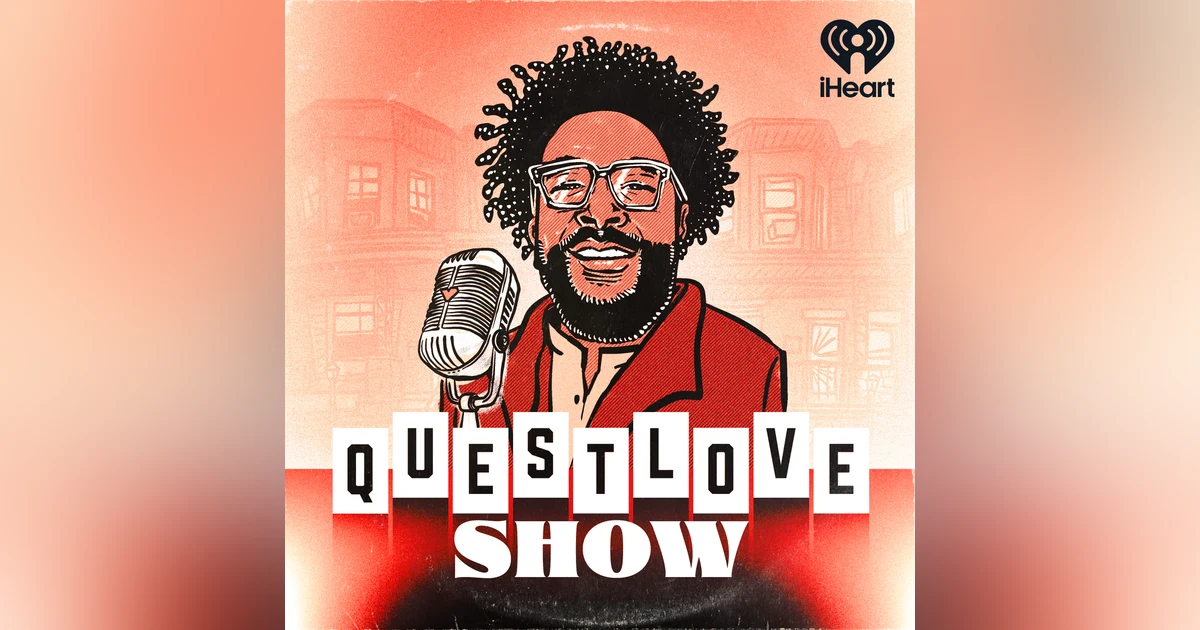
A Reaction To The DJ Muggs Episode Of The Questlove Show


 iHeartRadio
 Apple Podcasts
 Spotify
 Amazon Music
 RSS Feed
 TuneIn
 Castro
 In this Questlove Show mini episode, Open Mike Eagle and Cousin Jake unpack their recent sit-down with legendary producer DJ Muggs. They explore Muggs’ evolution from boom-bap architect to self-mastered, independent creator who—as he told Ahmir—built his own musical universe. The conversation digs into the so-called “drumless” beats wave, how lowering drums in the mix opens new space for MCs, and what artistic maturity and freedom really look like after decades in the game. Along the way, the two QLS affliates touch on some highlights and key points from the episode, and the power of real, in-person collaboration in Hip-Hop.
See omnystudio.com/listener for privacy information.
00:00:00
Speaker 1: Request Left.
00:00:00
Speaker 2: Show is a production of iHeart Radio.
00:00:15
Speaker 1: Open Mic. Man. How are you to do? Man?
00:00:17
Speaker 2: How are you?
00:00:18
Speaker 1: I'm all right, man, I am. It's hot here in Philadelphia. It's probably hot in l A too.
00:00:24
Speaker 3: Yeah, it's been crazy like and you know, everybody champions the weather out here as they should, but when it gets hot, it's real hot.
00:00:33
Speaker 1: You're going to Tucson tomorrow, so it's.
00:00:36
Speaker 2: Oh gosh, yeah, it's it's it's yeah. Yes, I'm trying to not think about it, but that is where I'm going to be.
00:00:43
Speaker 1: I mean, this will have run after that.
00:00:44
Speaker 4: But you got some amazing tour dates and an album coming, So I encourage everybody you know, do your do your Google's pre saved, share, pre order, all.
00:00:54
Speaker 2: That, preoccupy, pre pre judge, prejudice.
00:01:00
Speaker 1: Yeah, so you and I are both huge music fans.
00:01:03
Speaker 4: I was in the studio when it happened. You had the opportunity to listen. We had DJ Muggs on and I love the outpouring of love this episode is getting. It was really cool to be in the room and help book the show. But just initially, did you have any takeaways or any thoughts that jumped out of you?
00:01:19
Speaker 3: I mean, you know, it's funny. I've never met mug Actually no, I never met him. I've been in the same room with him, but I've never met him. But gosh, he just reminds me of so many people I know, like so many dudes that age, you know, my Latino ogs here in LA that have been in and around rap music. It's like, oh, it's that same energy. But it's the interesting thing to me is like most dudes I know who have that energy, even some of the ones that are very talented, they never really figured it out. And that's why I really liked what he was saying at the end of the conversation when he was talking about having mastered himself and figured out when he needs to take vacations to figure out what his workflow is and figure out how he like stays inspired, because I feel like that was just really really dope to hear. Like, I just think it's really easy for a lot of people in this environment that have those sorts of talents and gifts, and especially when you came up in the era where there was a lot of money in music too, Gosh, it's so easy to end up on an off ramp. You know what I'm saying either from life or you know, creatively just missed the boat or missed the opportunity to adapt. So his way of constantly checking in with himself like what feels to me to be very like clear communication with people that he works with, Like it even seemed like he's he's perfected ways of disagreeing with people.
00:03:00
Speaker 2: In little stories he tells.
00:03:01
Speaker 3: He talks about, you know, him working with a younger artist and them not wanting to listen to his advice, and it's like when you pull back on that, it's like, that's insane, but of course that's what happens because younger artists have a lot of ego. And he's like and he sort of perfected this way of telling him like, Okay, everything that you've done and thought brought you to where you are, and if you want to keep stay where you are, then don't listen. But if you want to go somewhere, I'm like, oh, that's so hard, And like what a way to get through to a knucklehead, you know, not be.
00:03:33
Speaker 1: Not be hot headed?
00:03:34
Speaker 4: You know what's funny is like there's a moment in the interview where a mirror points something out really interesting of you know, a mirror allegeners and I always am fascinated, you know, a mirror has all these He always jokes, Now he's got twenty five jobs, but before the Roots get signed, you had twenty five more.
00:03:49
Speaker 1: You know.
00:03:49
Speaker 4: You hear these little flashes of him working at Sam Goodie or we're working for an insurance company. Yeah, and in turning a rough House and he tells the story of like.
00:03:58
Speaker 1: Man the reels.
00:04:00
Speaker 4: I'm always curious, like the drums on Chris Cross's first album sound a lot like mugs.
00:04:04
Speaker 1: Drums and mugs as he's asking the.
00:04:06
Speaker 4: Like mugs smiles yeah, and you know, and there's obviously in the House of Pain jump around, there's you know, the shots taken at Joe Nicholo, one of the rough House's co founders. But Muggs said, like he had a I won't even say abrasive, but you know, a direct conversation with rough House at the time, which was his label, and then they move on from it.
00:04:27
Speaker 1: And I was just looking.
00:04:29
Speaker 4: I'm not a Facebook user, but I you know, often look at the QLs Facebook and make sure you know we're staying on point. And Chris Schwartz, you know, one of the founders of rough House twice commented.
00:04:39
Speaker 1: Like, what a great conversation, What a great interview. And I'm like, that's how you.
00:04:42
Speaker 4: Know you can you can you can stand up for yourself, being og hold yourself a certain way, but also, you know, thirty five years later, maintain those relationships.
00:04:53
Speaker 1: Like that's a goal that I aspired to.
00:04:55
Speaker 2: I mean, it's it's a real marvel of maturity.
00:04:59
Speaker 3: And I think that's what I'm saying, is like I just don't I know a lot of people with you know, with that. When I say energy, it almost makes it sound like I'm saying it sound negative, but it's it's not. It's just like it's a sort of like street smart, you know, wise you could tell he was probably a little wild when he was when he was younger, but to get to this this place, to be so lucid and so clear, you know, I just inspired isn't quite the right word. But I was just really really happy to hear that, just really really happy.
00:05:36
Speaker 1: To I relate to that.
00:05:37
Speaker 4: I mean, it's funny, you know, you and I exchange little anecdotes of our childhoods, but I think it's safe to say we both, you know, grew up I don't know if idolized is hyperbolic in your sense, but like I grew up looking up to so many the artists that were in my headphones, and they were bigger than life for me. And to still now in my forties encounter some of those same artists and be able to look up to them, like your point about you know, a few years ago, even before this conversation, I got hired to do a press bio for Mugs and I love those jobs. I've done it for twenty some years because you get an artists on their terms. You know, you're there's no agenda, like you're letting You're helping them tell their own story, right. And Mugs brought that up of like if I get bored, I go to Italy. If I get bored, I go to Hawaii. I get inspired. I come back and I make music. And I thought, what a cool.
00:06:26
Speaker 1: Life like that?
00:06:27
Speaker 4: That's what stardom looked like to me when I was eight years old, and you know, and to hear him echo that and the point you made of like I make an album, I make sure we own it.
00:06:38
Speaker 1: I don't go to a label for it. We shoot amazing.
00:06:40
Speaker 4: Jason Goldwatch directed videos to it, we put it out and we move it on to the next and I'm like, that's what that's the dream, that's the final level.
00:06:49
Speaker 3: But I bet, I bet that's not what the dream looked like to him when he was younger. Hell, you know, And that's sort of interesting to think about because when you think about following the dream, especially, like I said, in that era where there was so much money in the system, I don't know if he would have thought that freedom and true sort of freedom and fulfillment looks like, you know, controlling his own musical ecosystems, like smaller projects, even though you know a lot of them are very impactful artistically, it's not like everything's a big, huge major label released. Like you hear him talking about making that second Cypress Hill album and like what a month or something like that, you know, like and to go from that to this very measured and intentional way of living and way of creating. I bet he didn't think that's what the dream looked like. But it's so dope that that's what he found.
00:07:52
Speaker 1: Yeah, that's very well said.
00:07:53
Speaker 4: And I love those those juxtapos anecdotes, you know. And I was always curious, like I've lived in Philly twenty five years now and Cyprus. A lot of the rough House acts have history in Philly, even if they came from other cities. And Mugs in that conversation, it was really fun to watch him in the mirror smile and reflect on some of the session players and different folks in the in the rough house ecosystem. But the hotel that Mugs mentioned staying at with one of his bandmates from seventy three happened to be there and they talk about I think, you know, writing hand on the pump and all these things you and I talked about relics recently, it's still here.
00:08:32
Speaker 1: I think it's a holiday and express now.
00:08:33
Speaker 4: I drove by it this morning, and to imagine this group walking, it's not a short walk, it's a studio four and Mugs is talking about getting a little soup in the basement. I love that image because you need that to get to what you and I are talking about. And if you don't have that arc A, the story isn't as interesting, and B it doesn't it doesn't ground you the way that and Mugs just seems super grounded to Yes, really, it's my first time meeting him in person, and I just really you know, Mirror was wanted to do a few last minute things getting his intro rights. Muggs and I were just hanging out. We were talking about ramo Z, We're talking about you know, all these different things, and I'm like, man, this guy still lives it. It's like you and me talking. It's just true fanship. So what else in the conversation really kind of stuck to your ribs.
00:09:23
Speaker 3: I really thought the conversation that Mugs and the Mirror were having about like the drumless wave and you know, in the current sound of hip hop. I thought that was super fascinating because Mugs is one of the early, you know, masters of that boombap sound. And again, if you were to go back then and fast forward, you wouldn't think that Mugs would be somebody who's making beats now that have that sort of less aggressive drums or drums completely out of the equation. But then you heim reminded me, no, I did drumless back on a couple of the early Cypress Hill records, and in a mirror of course being a drummer, right, so of course him having a soft spot of sensitivity for the drum's place in the thing. But you hear that a mirror is sort of embracing the new style of the new sounder right now too. But I thought the really interesting thing was Mugs being very clear on something that I hear a lot, but I don't hear a lot of people say, and it's not. What he was explaining was that it's not so much that the new sound is drumless. It's that the drum, the snare particularly is way lower in the mix. And that sort of defines modernity. It defines like like he was saying, letting the sample shine to me as an MC, it defines like, given the rapper more space right to where you could be a little bit more conversational if you're not having a fight through a super loud snare, you know, every bar or whatever. And I just thought I thought that was interesting. I haven't heard a lot of people say that out loud, that it's not without drums. It is a different way of looking at where drum sits in a mix, and I thought that was super insightful.
00:11:22
Speaker 1: It is.
00:11:22
Speaker 4: It's funny because I, as a writer and as a fan of hip hop, I don't like using the term drum list, like I just I don't want that to be a subgenre unto itself, like it's the new beats to study to. But the first time that I noticed drums were different, And in prepping for our conversation today and just analyzing what Mugg said was a former label made of yours, the Apollo Brown Planet Asia Anchovy's album. I think that was the first one of the several they did. And I remember when that came out ten years ago. I was with Justin Hunter, mutual friend of you and I and some folks in New York.
00:11:58
Speaker 1: And they were like, man, the drums are just it's just different here. And I listened to it this morning.
00:12:03
Speaker 4: I'm like, there are drums there at Echo Mugg's point, or you go to somebody like Brownsville.
00:12:07
Speaker 3: Car you know, yes, yes, and it God goes there. Yes, there are drums there, but they're subtle and traditionally sample based hip hop. There was no subtlety to the drums. The drums were just like very on top of everything. And I like, I I follow the development of the genre with a lot of interests, Like that's what interests me especially, you know, I can track hip hop's development pretty much along the lines of my own age, right, and so I'm watching this still sort of new genre going different directions and that like that, that little bitty change, to me represents such a pivot towards a kind of sophistication, and I think that Muggs was really putting it smartly when he was saying, try to approach the drums now how you used to do it. It just sounds like it sounds old school like and not in a way that's like necessarily good.
00:13:10
Speaker 1: Right, right, I get what you're saying.
00:13:13
Speaker 4: It's interesting too, Like you know, one of my favorite Muggs productions and a lot of people kind of mentioned this in the comments as being their jump off is how I could just kill a man, And you know, it's a the beat before the beat and then both of them are amazing and they're very drum driven, and it's that pocket. But it also it lends itself to the type of rhyming for the time of the d dun. You can almost predict the next line because you know what you have to work with versus what you're talking about, which is giving the mc more parameter to be more conversational.
00:13:43
Speaker 1: So absolutely, I mean, are we saying the same thing.
00:13:46
Speaker 2: I think, yeah, I'm saying.
00:13:47
Speaker 3: I think that's the part of it that's particularly interesting to me as an mc gotch, you know, is is that you get more space to paint when the drum is more subtle. It gives you, it gives you license to have a different tambre. You don't have to be necessarily hollering either, right, you can, like you're saying, you can be a little bit more conversational.
00:14:10
Speaker 2: But then I think.
00:14:11
Speaker 3: There's a there's a pullback overall sort of directional thing that happens too, where the form itself is moving in that direction.
00:14:22
Speaker 2: And I think that's interesting too, you know, I would agree.
00:14:26
Speaker 4: And the thing that stands out to me about Mugs is I think of his class, he's the most prolific. You know, you look at guys from you know, I think seventy three comes out there on the color soundtrack. I think the first album is eighty eight, but their first single might have even been eighty seven.
00:14:41
Speaker 1: But you look.
00:14:42
Speaker 4: At your Dre's, your Eric Sermons.
00:14:44
Speaker 2: Your.
00:14:47
Speaker 1: Marley.
00:14:47
Speaker 4: Yeah, I mean In Daylight is a good counter but like Muggs is putting out multiple projects every year. Oh right, yes, yes, So I love that he has that freedom and that he's I think that some sometimes artists get hung up on legacy that they think of every ad bat, you know, like, oh my god, I gotta get on base, just to use a bad sports analogy. But Muggs is like, I'm going to keep just coming up to the plate. Some are going to be singles, someone will be home runs. And I just love that mentality and it sounds like he's challenging himself. And on the last Soul Assassins before this current one, he did a joint with Scarface and Freddie Gibbs called Street Made, which hard as hell drums, I mean, just right back right, you know, give you that flash. It's almost like you know, Scorsese's making all these different movies, but then you know he'll make it.
00:15:36
Speaker 1: Departed exactly exactly.
00:15:51
Speaker 4: I'm curious for you, just on this subject as an artist, you and I. You had mentioned something to me a few episodes ago about you know, previous dush and just like butting heads with bandmates overbeat selection, something that everyone.
00:16:04
Speaker 1: Who's ever been in a group can relate to.
00:16:06
Speaker 4: In you know you're soon to releasing an album, but in making your own albums. When you're listening to beats, how mindful are you of things like what we're talking about just in listening?
00:16:18
Speaker 1: You Know?
00:16:19
Speaker 3: What's interesting is like a lot of the producers that I work with, even if it's not necessarily pronounced their fare, they're they're following these lines too, and not in like a chasing after it since But like most of the producers I know have been around for a long time and they're very aware of the changes and things. It's interesting sometimes I'll try to connect with the producer I've never connected with before. I remember I had this experience, I'd say maybe a year ago. I go sity with my homie I've known for years, and he makes beats all the he makes hundreds of beats all the time, but I haven't worked with one of his beats on my own. And I'm sitting with him and he's playing beats. He's playing beats, and he's playing beasts, and I'm like, got that loud snare on all of these and he's like yeah, but he's he's old school, like like that's his whole thing, Like he really likes that era the most, So his whole thing is wanting to continue that, but I find it really difficult. And it's not like I can't rap over something with big drums like I still you know, Kenny Siegal's drums are huge, and that's who I'm making my project with.
00:17:31
Speaker 2: But there's a particular approach.
00:17:32
Speaker 3: To starting with a sample and putting drums super on top that I find it really difficult to use the rap styles that I want to use these days over that. It doesn't feel like it meshes.
00:17:49
Speaker 1: Well.
00:17:50
Speaker 4: You know, I'm curious, and it's funny. Last time I saw him, I told him that your work with him was some of my favorite on the beat side that he done in years, and I meant that as a compliment. It might not have landed the way I meant it to. But Diamond d somebody I've known a really long time and you worked with And I'm just curious because Diamond fits into sort of what we're talking about with mugs, like an innovator, a mainstay, somebody who came up Djang wasn't even producing but kind of producing, and then it moves into production and rhyming and all the things. And when you worked with him on a number of songs a few years ago, I'm just curious it was there a direction or were you operate on your part or were you operating off of beat tapes?
00:18:31
Speaker 3: No, we sat together and he was he was adamant that we sit together, and it was it was obviously not a problem to me because I mean, that's a that's.
00:18:40
Speaker 2: A real legend, you know what I'm saying.
00:18:43
Speaker 3: Like, so you know, I was like, yeah, if you're if you're down to work with me, we could do it however you want to do it. And so I flew out to his spot and he was sitting and playing beats, and you know, he kinda like it was not only just for me to pick what I liked, but it was also like he kind of wanted to hear what I was gonna at least start doing on it, do you know what I'm saying, And like he wanted like it wasn't that he was trying to guide it, but he wanted to be like on board from jump, And to me, it felt like the sort of old school thing of still wanting to feel like you made songs with a person, you know, which has not been my experience really, like most of my experience has been like doing stuff by email, but that was one of the really fulfilling things about that experience, was like, no, we're gonna, We're gonna do it this way. And then I don't know, like there's more satisfaction for me having sad with him, having like you know, not only him offering what he's offering in terms of beats, but knowing that I have his approval on what's about to happened with him too, Like that felt, it felt really good.
00:20:02
Speaker 4: You know, that's really cool, and that underpins with something Mugs that I don't think it made.
00:20:09
Speaker 1: I don't think it made the.
00:20:10
Speaker 4: Final conversation, but like you know, Muggs goes to work every day, like he goes to work as a pretty and to your point, I mean, if he's not feeling and he doesn't, But there's a space that so Sol Assassin's has which has a studio in it, and Mugs like I treat it like it's a job. I go in and I make beats and some of them I keep and some of them I don't. And to hear and I think in a lot of his you know, collaborations over recent years, be it you know Makami or meyhem Lorn or you know, rock Marciano, on and on and on. I think that there's value and I think he emphasized the value of no, let's get together, let's share air, and I think.
00:20:47
Speaker 1: That comes out in the music.
00:20:48
Speaker 4: I mean, I know so many great albums these days are made over email, but I just love that folks are being so intentional about it.
00:20:54
Speaker 3: I do too, And one jewel that I thought was so fascinating in that too. It's it seems little things that really to me give me a peek into somebody's artistry. How he arrived at yeah, I make twelve beats a day, but I don't finish them. And when he said it, I was like, what do you mean you don't finish them? But then he explained, like, oh, I took stock of how much time I was spending finishing beats that nobody ever used. So basically, he's making twelve sketches at this point, and if somebody wants to use one of them, then he finishes. I love how that came from a probably very unprompted self inventory, you know what I'm saying. Like, it wasn't like somebody, you know, send him a memo like, hey, you're spending too much time in the studio. It was like he's just looking over his process, looking over his time, and like trying to find ways to be more efficient.
00:21:50
Speaker 2: I'm like, God, that's sick.
00:21:51
Speaker 1: Yeah.
00:21:52
Speaker 4: But if I'm TF or you know, he has an artist that when I spoke to most last he said, yeah, I got the TF Don't Call Me Lucky album, and then I got this one called an artist out of Memphis named Heartbreak jac and very a.
00:22:04
Speaker 1: Lot of blues samples and stuff. I've really been enjoying that one.
00:22:07
Speaker 4: But if you're the MC and you come in and almost is like picking a suit out, like it's there, it's kind of got your dimensions. Now we tailor it sort of like what you had with Diamond of like show me what you're gonna do, because maybe out here something and move something around, and you know, for the music, for the fans, for the collaborators, that is that is the beauty of it.
00:22:25
Speaker 2: So yeah, it's real collaboration.
00:22:28
Speaker 4: Real collaboration. Why I encourage everyone out there check the episode. More than that, go watch the Jason Goldwatch. You know you talk about in a previous episode, we spoke about bugged out videos and soundguard and Jason Goldwatch is a visionary.
00:22:40
Speaker 1: He did a.
00:22:41
Speaker 4: Feature film with Mugs called Don't Call Me Lucky and the La MC named TF and yeah, just check out the music, check out the episode, and please folks give us some give us feedback. Questions for Mike, questions for a mere you know, suggestions on the show. It all gets, it's reviewed, vetted, it lives someplace, yeah man. And as always, I just thoroughly enjoy.
00:23:04
Speaker 1: Rapping with you.
00:23:05
Speaker 2: Yeah man. It's always a pleasure.
00:23:07
Speaker 1: Safe travels on the road.
00:23:08
Speaker 4: Go catch open Mike Eagle and Clipping and get the album Doomed right ye August fourteenth out now, grab it all right, Mike, thanks so much.
00:23:18
Speaker 1: I appreciate you. Questlam Show is a production of Imart Radio
Speaker 1: Request Left.
00:00:00
Speaker 2: Show is a production of iHeart Radio.
00:00:15
Speaker 1: Open Mic. Man. How are you to do? Man?
00:00:17
Speaker 2: How are you?
00:00:18
Speaker 1: I'm all right, man, I am. It's hot here in Philadelphia. It's probably hot in l A too.
00:00:24
Speaker 3: Yeah, it's been crazy like and you know, everybody champions the weather out here as they should, but when it gets hot, it's real hot.
00:00:33
Speaker 1: You're going to Tucson tomorrow, so it's.
00:00:36
Speaker 2: Oh gosh, yeah, it's it's it's yeah. Yes, I'm trying to not think about it, but that is where I'm going to be.
00:00:43
Speaker 1: I mean, this will have run after that.
00:00:44
Speaker 4: But you got some amazing tour dates and an album coming, So I encourage everybody you know, do your do your Google's pre saved, share, pre order, all.
00:00:54
Speaker 2: That, preoccupy, pre pre judge, prejudice.
00:01:00
Speaker 1: Yeah, so you and I are both huge music fans.
00:01:03
Speaker 4: I was in the studio when it happened. You had the opportunity to listen. We had DJ Muggs on and I love the outpouring of love this episode is getting. It was really cool to be in the room and help book the show. But just initially, did you have any takeaways or any thoughts that jumped out of you?
00:01:19
Speaker 3: I mean, you know, it's funny. I've never met mug Actually no, I never met him. I've been in the same room with him, but I've never met him. But gosh, he just reminds me of so many people I know, like so many dudes that age, you know, my Latino ogs here in LA that have been in and around rap music. It's like, oh, it's that same energy. But it's the interesting thing to me is like most dudes I know who have that energy, even some of the ones that are very talented, they never really figured it out. And that's why I really liked what he was saying at the end of the conversation when he was talking about having mastered himself and figured out when he needs to take vacations to figure out what his workflow is and figure out how he like stays inspired, because I feel like that was just really really dope to hear. Like, I just think it's really easy for a lot of people in this environment that have those sorts of talents and gifts, and especially when you came up in the era where there was a lot of money in music too, Gosh, it's so easy to end up on an off ramp. You know what I'm saying either from life or you know, creatively just missed the boat or missed the opportunity to adapt. So his way of constantly checking in with himself like what feels to me to be very like clear communication with people that he works with, Like it even seemed like he's he's perfected ways of disagreeing with people.
00:03:00
Speaker 2: In little stories he tells.
00:03:01
Speaker 3: He talks about, you know, him working with a younger artist and them not wanting to listen to his advice, and it's like when you pull back on that, it's like, that's insane, but of course that's what happens because younger artists have a lot of ego. And he's like and he sort of perfected this way of telling him like, Okay, everything that you've done and thought brought you to where you are, and if you want to keep stay where you are, then don't listen. But if you want to go somewhere, I'm like, oh, that's so hard, And like what a way to get through to a knucklehead, you know, not be.
00:03:33
Speaker 1: Not be hot headed?
00:03:34
Speaker 4: You know what's funny is like there's a moment in the interview where a mirror points something out really interesting of you know, a mirror allegeners and I always am fascinated, you know, a mirror has all these He always jokes, Now he's got twenty five jobs, but before the Roots get signed, you had twenty five more.
00:03:49
Speaker 1: You know.
00:03:49
Speaker 4: You hear these little flashes of him working at Sam Goodie or we're working for an insurance company. Yeah, and in turning a rough House and he tells the story of like.
00:03:58
Speaker 1: Man the reels.
00:04:00
Speaker 4: I'm always curious, like the drums on Chris Cross's first album sound a lot like mugs.
00:04:04
Speaker 1: Drums and mugs as he's asking the.
00:04:06
Speaker 4: Like mugs smiles yeah, and you know, and there's obviously in the House of Pain jump around, there's you know, the shots taken at Joe Nicholo, one of the rough House's co founders. But Muggs said, like he had a I won't even say abrasive, but you know, a direct conversation with rough House at the time, which was his label, and then they move on from it.
00:04:27
Speaker 1: And I was just looking.
00:04:29
Speaker 4: I'm not a Facebook user, but I you know, often look at the QLs Facebook and make sure you know we're staying on point. And Chris Schwartz, you know, one of the founders of rough House twice commented.
00:04:39
Speaker 1: Like, what a great conversation, What a great interview. And I'm like, that's how you.
00:04:42
Speaker 4: Know you can you can you can stand up for yourself, being og hold yourself a certain way, but also, you know, thirty five years later, maintain those relationships.
00:04:53
Speaker 1: Like that's a goal that I aspired to.
00:04:55
Speaker 2: I mean, it's it's a real marvel of maturity.
00:04:59
Speaker 3: And I think that's what I'm saying, is like I just don't I know a lot of people with you know, with that. When I say energy, it almost makes it sound like I'm saying it sound negative, but it's it's not. It's just like it's a sort of like street smart, you know, wise you could tell he was probably a little wild when he was when he was younger, but to get to this this place, to be so lucid and so clear, you know, I just inspired isn't quite the right word. But I was just really really happy to hear that, just really really happy.
00:05:36
Speaker 1: To I relate to that.
00:05:37
Speaker 4: I mean, it's funny, you know, you and I exchange little anecdotes of our childhoods, but I think it's safe to say we both, you know, grew up I don't know if idolized is hyperbolic in your sense, but like I grew up looking up to so many the artists that were in my headphones, and they were bigger than life for me. And to still now in my forties encounter some of those same artists and be able to look up to them, like your point about you know, a few years ago, even before this conversation, I got hired to do a press bio for Mugs and I love those jobs. I've done it for twenty some years because you get an artists on their terms. You know, you're there's no agenda, like you're letting You're helping them tell their own story, right. And Mugs brought that up of like if I get bored, I go to Italy. If I get bored, I go to Hawaii. I get inspired. I come back and I make music. And I thought, what a cool.
00:06:26
Speaker 1: Life like that?
00:06:27
Speaker 4: That's what stardom looked like to me when I was eight years old, and you know, and to hear him echo that and the point you made of like I make an album, I make sure we own it.
00:06:38
Speaker 1: I don't go to a label for it. We shoot amazing.
00:06:40
Speaker 4: Jason Goldwatch directed videos to it, we put it out and we move it on to the next and I'm like, that's what that's the dream, that's the final level.
00:06:49
Speaker 3: But I bet, I bet that's not what the dream looked like to him when he was younger. Hell, you know, And that's sort of interesting to think about because when you think about following the dream, especially, like I said, in that era where there was so much money in the system, I don't know if he would have thought that freedom and true sort of freedom and fulfillment looks like, you know, controlling his own musical ecosystems, like smaller projects, even though you know a lot of them are very impactful artistically, it's not like everything's a big, huge major label released. Like you hear him talking about making that second Cypress Hill album and like what a month or something like that, you know, like and to go from that to this very measured and intentional way of living and way of creating. I bet he didn't think that's what the dream looked like. But it's so dope that that's what he found.
00:07:52
Speaker 1: Yeah, that's very well said.
00:07:53
Speaker 4: And I love those those juxtapos anecdotes, you know. And I was always curious, like I've lived in Philly twenty five years now and Cyprus. A lot of the rough House acts have history in Philly, even if they came from other cities. And Mugs in that conversation, it was really fun to watch him in the mirror smile and reflect on some of the session players and different folks in the in the rough house ecosystem. But the hotel that Mugs mentioned staying at with one of his bandmates from seventy three happened to be there and they talk about I think, you know, writing hand on the pump and all these things you and I talked about relics recently, it's still here.
00:08:32
Speaker 1: I think it's a holiday and express now.
00:08:33
Speaker 4: I drove by it this morning, and to imagine this group walking, it's not a short walk, it's a studio four and Mugs is talking about getting a little soup in the basement. I love that image because you need that to get to what you and I are talking about. And if you don't have that arc A, the story isn't as interesting, and B it doesn't it doesn't ground you the way that and Mugs just seems super grounded to Yes, really, it's my first time meeting him in person, and I just really you know, Mirror was wanted to do a few last minute things getting his intro rights. Muggs and I were just hanging out. We were talking about ramo Z, We're talking about you know, all these different things, and I'm like, man, this guy still lives it. It's like you and me talking. It's just true fanship. So what else in the conversation really kind of stuck to your ribs.
00:09:23
Speaker 3: I really thought the conversation that Mugs and the Mirror were having about like the drumless wave and you know, in the current sound of hip hop. I thought that was super fascinating because Mugs is one of the early, you know, masters of that boombap sound. And again, if you were to go back then and fast forward, you wouldn't think that Mugs would be somebody who's making beats now that have that sort of less aggressive drums or drums completely out of the equation. But then you heim reminded me, no, I did drumless back on a couple of the early Cypress Hill records, and in a mirror of course being a drummer, right, so of course him having a soft spot of sensitivity for the drum's place in the thing. But you hear that a mirror is sort of embracing the new style of the new sounder right now too. But I thought the really interesting thing was Mugs being very clear on something that I hear a lot, but I don't hear a lot of people say, and it's not. What he was explaining was that it's not so much that the new sound is drumless. It's that the drum, the snare particularly is way lower in the mix. And that sort of defines modernity. It defines like like he was saying, letting the sample shine to me as an MC, it defines like, given the rapper more space right to where you could be a little bit more conversational if you're not having a fight through a super loud snare, you know, every bar or whatever. And I just thought I thought that was interesting. I haven't heard a lot of people say that out loud, that it's not without drums. It is a different way of looking at where drum sits in a mix, and I thought that was super insightful.
00:11:22
Speaker 1: It is.
00:11:22
Speaker 4: It's funny because I, as a writer and as a fan of hip hop, I don't like using the term drum list, like I just I don't want that to be a subgenre unto itself, like it's the new beats to study to. But the first time that I noticed drums were different, And in prepping for our conversation today and just analyzing what Mugg said was a former label made of yours, the Apollo Brown Planet Asia Anchovy's album. I think that was the first one of the several they did. And I remember when that came out ten years ago. I was with Justin Hunter, mutual friend of you and I and some folks in New York.
00:11:58
Speaker 1: And they were like, man, the drums are just it's just different here. And I listened to it this morning.
00:12:03
Speaker 4: I'm like, there are drums there at Echo Mugg's point, or you go to somebody like Brownsville.
00:12:07
Speaker 3: Car you know, yes, yes, and it God goes there. Yes, there are drums there, but they're subtle and traditionally sample based hip hop. There was no subtlety to the drums. The drums were just like very on top of everything. And I like, I I follow the development of the genre with a lot of interests, Like that's what interests me especially, you know, I can track hip hop's development pretty much along the lines of my own age, right, and so I'm watching this still sort of new genre going different directions and that like that, that little bitty change, to me represents such a pivot towards a kind of sophistication, and I think that Muggs was really putting it smartly when he was saying, try to approach the drums now how you used to do it. It just sounds like it sounds old school like and not in a way that's like necessarily good.
00:13:10
Speaker 1: Right, right, I get what you're saying.
00:13:13
Speaker 4: It's interesting too, Like you know, one of my favorite Muggs productions and a lot of people kind of mentioned this in the comments as being their jump off is how I could just kill a man, And you know, it's a the beat before the beat and then both of them are amazing and they're very drum driven, and it's that pocket. But it also it lends itself to the type of rhyming for the time of the d dun. You can almost predict the next line because you know what you have to work with versus what you're talking about, which is giving the mc more parameter to be more conversational.
00:13:43
Speaker 1: So absolutely, I mean, are we saying the same thing.
00:13:46
Speaker 2: I think, yeah, I'm saying.
00:13:47
Speaker 3: I think that's the part of it that's particularly interesting to me as an mc gotch, you know, is is that you get more space to paint when the drum is more subtle. It gives you, it gives you license to have a different tambre. You don't have to be necessarily hollering either, right, you can, like you're saying, you can be a little bit more conversational.
00:14:10
Speaker 2: But then I think.
00:14:11
Speaker 3: There's a there's a pullback overall sort of directional thing that happens too, where the form itself is moving in that direction.
00:14:22
Speaker 2: And I think that's interesting too, you know, I would agree.
00:14:26
Speaker 4: And the thing that stands out to me about Mugs is I think of his class, he's the most prolific. You know, you look at guys from you know, I think seventy three comes out there on the color soundtrack. I think the first album is eighty eight, but their first single might have even been eighty seven.
00:14:41
Speaker 1: But you look.
00:14:42
Speaker 4: At your Dre's, your Eric Sermons.
00:14:44
Speaker 2: Your.
00:14:47
Speaker 1: Marley.
00:14:47
Speaker 4: Yeah, I mean In Daylight is a good counter but like Muggs is putting out multiple projects every year. Oh right, yes, yes, So I love that he has that freedom and that he's I think that some sometimes artists get hung up on legacy that they think of every ad bat, you know, like, oh my god, I gotta get on base, just to use a bad sports analogy. But Muggs is like, I'm going to keep just coming up to the plate. Some are going to be singles, someone will be home runs. And I just love that mentality and it sounds like he's challenging himself. And on the last Soul Assassins before this current one, he did a joint with Scarface and Freddie Gibbs called Street Made, which hard as hell drums, I mean, just right back right, you know, give you that flash. It's almost like you know, Scorsese's making all these different movies, but then you know he'll make it.
00:15:36
Speaker 1: Departed exactly exactly.
00:15:51
Speaker 4: I'm curious for you, just on this subject as an artist, you and I. You had mentioned something to me a few episodes ago about you know, previous dush and just like butting heads with bandmates overbeat selection, something that everyone.
00:16:04
Speaker 1: Who's ever been in a group can relate to.
00:16:06
Speaker 4: In you know you're soon to releasing an album, but in making your own albums. When you're listening to beats, how mindful are you of things like what we're talking about just in listening?
00:16:18
Speaker 1: You Know?
00:16:19
Speaker 3: What's interesting is like a lot of the producers that I work with, even if it's not necessarily pronounced their fare, they're they're following these lines too, and not in like a chasing after it since But like most of the producers I know have been around for a long time and they're very aware of the changes and things. It's interesting sometimes I'll try to connect with the producer I've never connected with before. I remember I had this experience, I'd say maybe a year ago. I go sity with my homie I've known for years, and he makes beats all the he makes hundreds of beats all the time, but I haven't worked with one of his beats on my own. And I'm sitting with him and he's playing beats. He's playing beats, and he's playing beasts, and I'm like, got that loud snare on all of these and he's like yeah, but he's he's old school, like like that's his whole thing, Like he really likes that era the most, So his whole thing is wanting to continue that, but I find it really difficult. And it's not like I can't rap over something with big drums like I still you know, Kenny Siegal's drums are huge, and that's who I'm making my project with.
00:17:31
Speaker 2: But there's a particular approach.
00:17:32
Speaker 3: To starting with a sample and putting drums super on top that I find it really difficult to use the rap styles that I want to use these days over that. It doesn't feel like it meshes.
00:17:49
Speaker 1: Well.
00:17:50
Speaker 4: You know, I'm curious, and it's funny. Last time I saw him, I told him that your work with him was some of my favorite on the beat side that he done in years, and I meant that as a compliment. It might not have landed the way I meant it to. But Diamond d somebody I've known a really long time and you worked with And I'm just curious because Diamond fits into sort of what we're talking about with mugs, like an innovator, a mainstay, somebody who came up Djang wasn't even producing but kind of producing, and then it moves into production and rhyming and all the things. And when you worked with him on a number of songs a few years ago, I'm just curious it was there a direction or were you operate on your part or were you operating off of beat tapes?
00:18:31
Speaker 3: No, we sat together and he was he was adamant that we sit together, and it was it was obviously not a problem to me because I mean, that's a that's.
00:18:40
Speaker 2: A real legend, you know what I'm saying.
00:18:43
Speaker 3: Like, so you know, I was like, yeah, if you're if you're down to work with me, we could do it however you want to do it. And so I flew out to his spot and he was sitting and playing beats, and you know, he kinda like it was not only just for me to pick what I liked, but it was also like he kind of wanted to hear what I was gonna at least start doing on it, do you know what I'm saying, And like he wanted like it wasn't that he was trying to guide it, but he wanted to be like on board from jump, And to me, it felt like the sort of old school thing of still wanting to feel like you made songs with a person, you know, which has not been my experience really, like most of my experience has been like doing stuff by email, but that was one of the really fulfilling things about that experience, was like, no, we're gonna, We're gonna do it this way. And then I don't know, like there's more satisfaction for me having sad with him, having like you know, not only him offering what he's offering in terms of beats, but knowing that I have his approval on what's about to happened with him too, Like that felt, it felt really good.
00:20:02
Speaker 4: You know, that's really cool, and that underpins with something Mugs that I don't think it made.
00:20:09
Speaker 1: I don't think it made the.
00:20:10
Speaker 4: Final conversation, but like you know, Muggs goes to work every day, like he goes to work as a pretty and to your point, I mean, if he's not feeling and he doesn't, But there's a space that so Sol Assassin's has which has a studio in it, and Mugs like I treat it like it's a job. I go in and I make beats and some of them I keep and some of them I don't. And to hear and I think in a lot of his you know, collaborations over recent years, be it you know Makami or meyhem Lorn or you know, rock Marciano, on and on and on. I think that there's value and I think he emphasized the value of no, let's get together, let's share air, and I think.
00:20:47
Speaker 1: That comes out in the music.
00:20:48
Speaker 4: I mean, I know so many great albums these days are made over email, but I just love that folks are being so intentional about it.
00:20:54
Speaker 3: I do too, And one jewel that I thought was so fascinating in that too. It's it seems little things that really to me give me a peek into somebody's artistry. How he arrived at yeah, I make twelve beats a day, but I don't finish them. And when he said it, I was like, what do you mean you don't finish them? But then he explained, like, oh, I took stock of how much time I was spending finishing beats that nobody ever used. So basically, he's making twelve sketches at this point, and if somebody wants to use one of them, then he finishes. I love how that came from a probably very unprompted self inventory, you know what I'm saying. Like, it wasn't like somebody, you know, send him a memo like, hey, you're spending too much time in the studio. It was like he's just looking over his process, looking over his time, and like trying to find ways to be more efficient.
00:21:50
Speaker 2: I'm like, God, that's sick.
00:21:51
Speaker 1: Yeah.
00:21:52
Speaker 4: But if I'm TF or you know, he has an artist that when I spoke to most last he said, yeah, I got the TF Don't Call Me Lucky album, and then I got this one called an artist out of Memphis named Heartbreak jac and very a.
00:22:04
Speaker 1: Lot of blues samples and stuff. I've really been enjoying that one.
00:22:07
Speaker 4: But if you're the MC and you come in and almost is like picking a suit out, like it's there, it's kind of got your dimensions. Now we tailor it sort of like what you had with Diamond of like show me what you're gonna do, because maybe out here something and move something around, and you know, for the music, for the fans, for the collaborators, that is that is the beauty of it.
00:22:25
Speaker 2: So yeah, it's real collaboration.
00:22:28
Speaker 4: Real collaboration. Why I encourage everyone out there check the episode. More than that, go watch the Jason Goldwatch. You know you talk about in a previous episode, we spoke about bugged out videos and soundguard and Jason Goldwatch is a visionary.
00:22:40
Speaker 1: He did a.
00:22:41
Speaker 4: Feature film with Mugs called Don't Call Me Lucky and the La MC named TF and yeah, just check out the music, check out the episode, and please folks give us some give us feedback. Questions for Mike, questions for a mere you know, suggestions on the show. It all gets, it's reviewed, vetted, it lives someplace, yeah man. And as always, I just thoroughly enjoy.
00:23:04
Speaker 1: Rapping with you.
00:23:05
Speaker 2: Yeah man. It's always a pleasure.
00:23:07
Speaker 1: Safe travels on the road.
00:23:08
Speaker 4: Go catch open Mike Eagle and Clipping and get the album Doomed right ye August fourteenth out now, grab it all right, Mike, thanks so much.
00:23:18
Speaker 1: I appreciate you. Questlam Show is a production of Imart Radio