0:00
I would consider that this is perhaps one of the clearest and most problematic areas in which contamination of investigation can take place, as the investigator concerned has crossed the boundary between investigating and researching the case, and instead has decided to take action to solve the case as an active participant in it, rather than simply guiding the clients.
0:25
Can an investigator unintentionally make a haunting worse?
What happens when an attempt to help becomes part of the very phenomena being investigated?
And how much of what we believe about a paranormal case comes not from the original experiences, but from the people who have subsequently become involved.
0:47
Welcome back to Haunted History Chronicles.
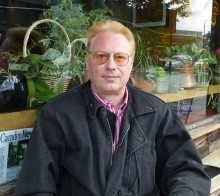
In this instalment of my ongoing conversation with Kieran Farrell, we're exploring some of the more complicated and controversial ways in which paranormal investigations can become contaminated.
1:04
Our discussion takes us into the world of spiritual clearances, religious interventions and the difficult boundaries between investigating an experience and attempting to resolve it.
But the influence of outsiders doesn't end there.
1:20
Previous investigators, paranormal groups, journalists, and social media can all contribute to the developing story of a haunting.
Their interpretations may help those in bold make sense of their experiences, but they can also introduce expectations, assumptions, and competing explanations.
1:44
So how can investigators distinguish between what originally happened and the interpretations that have accumulated around it?
And when an investigation becomes public, who ultimately controls the narrative?
It's a fascinating exploration of the ways a case can change long before anyone begins collecting evidence.
2:06
So let's rejoin Kieran for the next part of this conversation.
Kieran, we've touched on the use of spiritual clearances and cleansing rituals in cases of alleged hauntings, where practitioners attempt to remove or resolve whatever might be causing the disturbances.
2:24
But what do these interventions actually involve?
And perhaps more importantly, do you think they really work?
They sometimes work, but often do not.
There can be various reasons for this, but one of the problems that can be encountered is that the practitioner will often insist that their clearance will only work if their clients believe in it.
2:50
This is problematic as people will often take a pragmatic attitude or approach to these things in that if a procedure or rich works then it was successful and they find that believing in ritual or procedure in order to make it work really amounts to having a certain amount of confidence in the practitioner and the way that they go about their work.
3:12
So it's essentially a self fulfilling prophecy.
Either you're prepared to jump in with both feet on that one, or you're not, and if you don't, well then you can get blamed afterwards if it doesn't work.
Not a very helpful situation.
There are a range of different practitioners who all have different theories and practices who offer to be able to bring about the requested result.
3:37
So either the wrong approach might have been taken in that the clients engaged the wrong kind of practitioner for the job, or the practitioner use an inappropriate theory which led to an ineffective clearance, leading the clients straight back to where they'd come from with a problem that they can't solve on their own.
3:59
I've been there with a number of people, quite a few cases actually, and sometimes clearances do work, sometimes they don't.
Selecting a practitioner is a real problem.
Some Sometimes people have a particular liking for a particular thing, sometimes they don't.
4:18
So it's a question of trying to find something that the clients actually work.
But leaving the decision to who exactly that practitioner would be is really their decision, not that of the investigator, because their view these are the clients should always be respected.
4:36
There is also a thread within the literature of paranormal investigation and psychical research that the clearance can be affected through psychological means, simply by an investigator sitting in a haunted house, for example, and doing nothing.
The investigator would then declare that he or she has affected a clearance and that it is necessary for the clients to believe that this is the case.
4:59
This is the sort of extreme example.
This sort of approach is often taken where it is thought by the investigator that the disturbances are largely psychokinetic in origin and driven by stress on the basis that if one can remove the problematic mindset then one will resolve or solve the problem through what could loosely be termed as a psychological inoculation.
5:26
One of the well known investigators who pioneered this approach was Tony Cornell.
From my experience both as someone at the centre of poltergeist case or cases and as a paranormal investigator and psychical researcher, I would say that there are ethical issues involved as it is all very well to engage in this purely psychological form of clearance but it can have consequences, particularly if the paranormal activity in question re establishes itself or alternatively the pattern of paranormal activity is not changed in any way through this event intervention.
6:04
Well in a sense why would you think it would be only through pure confidence in the paranormal investigator or clearance practitioner?
One of the consequences of this is the various people involved might start to point fingers to blame at each other for not fully believing in the investigator, or that the investigator had rid them of the problem, or for reintroducing the problem through their own psychological make up, stress and the desire or need for attention or to settle scores, real or imagined within a family for example.
6:41
It can be, and in my experience has been, an extremely damaging and destructive intervention which gets everybody arguing with everybody else and eventually the one thing that they can agree upon is that the investigator involved either did not know what they were doing at best or engaged in deliberate deception at worst.
7:04
So it sounds from the outside like a very clever fix.
Actually, in practice it ends up being anything but there.
Therefore, I would consider that this is perhaps one of the clearest and most problematic areas in which contamination of investigation can take place, as the investigator concerned has crossed the boundary between investigating and researching the case and instead has decided to take action to solve the case as an active participant in it rather than simply guiding the clients.
7:36
So I I really wouldn't recommend that kind of practice.
This blurs the lines between the role of the investigator as being an impartial observer or a semi impartial guide or advisor to the clients and someone who is prepared to use psychological techniques involving deceit in order to be able to effect a clearance and therefore presumably remove themselves from any further involvement in the case.
8:03
On the assumption or rather presumption that the intervention is going to be successful.
And if it doesn't, well, that's the fault of the clients again, because of they didn't believe in it or somebody reintroduced the problems.
8:19
So, you know, they can't be held accountable for the results or lack of them.
I consider that there should be a clear demarcation between the role of paranormal investigators and psychical researchers and clearance practitioners of whatever description, including shaman and priests whose job it would be to affect a clearance.
8:40
There are, of course, other types of clearance practitioner, Feng shui practitioners, for example, although it's difficult because many of them don't want to engage in clearances where there is some sort of active energy involved, in other words, some sort of ghost or whatever.
9:00
They don't, they really don't like it.
They want to deal with sort of static energies.
The concept of psychological inoculation, however, is not limited to certain paranormal investigators and psychical researchers.
It also has currency within the deliverance ministries of the Anglican and Catholic Church.
9:21
One of the difficulties with the involvement of the Church in cases is that it is often very difficult to get them involved in the 1st place.
The usual way in which this is done is through contact with the local parish priest, who might be prepared to come out and carry out an initial assessment and then engage in some blessings of the home or business which might be afflicted by a haunting together with the people who live and work at that address.
9:50
It's actually a fairly exacting process in the sense that the priest has to come into the house, everybody in the house must wait outside.
They go around each room, blessing the room and they work their way right around the house and they then they come and they bless the people outside the house, then they bless the people inside the house.
10:10
So this can actually take quite a bit of time and I can understand a certain reluctance on the part of parish priests to do this.
That is actually, incidentally, about the most that an individual parish priest will do on their own.
And the rest is done by the diocesan and deliverance ministry.
10:30
And you need a referral from your parish priest to go to the diocesan ministry.
Sometimes diocesan authorities have a website and you can leave a message, but it's often very doubtful if anyone will get back to you.
So again, there are issues here.
10:46
The blessings may or may not work, but this isn't to a certain extent another story.
However, if one is faced with a difficult high end poltergeist case, it may be that the case itself could be a demonic one, in which case the involvement of the local priest or diocese and clergy could by means of tackling this kind of case.
11:09
And that would be a good thing in the sense that it would largely be beyond both the skills and knowledge of paranormal investigators and often many priests as well.
One of the reasons for this is that there is a reticence to believe in the demonic in part of the on the part of the paranormal investigation or investigation team.
11:33
And psychical researchers and psychical research communities are often driven by different different and opposing attitudes towards the demonic.
They often don't believe in it because they often want to find other explanations.
But how in the end can you tell the difference between a a really high end poltergeist case and the demonic case?
11:58
That's not an easy thing to try and figure out.
So sometimes you need somebody from the church to help you do that, but whether they will actually get involved to effect a clearance may be another matter.
I think in relation to all of this, it is very important to be able to talk through all these different options with the client and experiences so they can make informed decisions about the way in which they want investigation to be carried out.
12:25
After all, it is their lives that are affected by the paranormal activity concern and they will have to live with the consequences of their decisions to a far greater extent than the investigator or investigators will.
So it is a very important thing that the client and experiences note, understand and own the courses of action that may be decided upon in collaboration with an investigator or investigators.
12:55
Many of the well known exorcists from both the Anglican and Catholic traditions in this country have often practiced that in the sense that even if they don't believe a house to be haunted or a person to be haunted or whatever, they will as a matter of kind of confidence in the church and its institutions and as a public service, come and carry out some initial blessings or whatever.
13:25
So they will do that, and they'll do that on that assumption, rather than on the assumption that they're actually going to face a ghost, poltergeist, wandering lost soul, or a demonic entity.
If they think they're facing a demonic entity, then they might decide the case isn't for them.
13:46
This creates a problem, since the Church are supposed to be the people who will actually want to take on the demonic.
They're there to do it because the demonic, you know, demons and all the rest of it stand in opposition to everything the Church believes in.
But in order to get around to effect a practical solution, sometimes it's necessary to work with clergy who will say to you as an investigator, well, not sure there's really anything there for me to, to clear away or to bless away or whatever.
14:19
But I'll come out and do it anyway, you know, because I've got a public role and, you know, the church is there for everybody.
But part of the deal is usually the people concerned, the clients, the experiences will then have to engage in going to church, taking communion and so on and so forth.
14:42
They've got to become born again Christians because there's again coming back to this.
There's a question of there is no such thing as no fault help from the church.
You know, it happened because you're a bad Christian.
Therefore, you've got to become a good Christian in order to ensure that your priest can get rid of the wolf from inside your house and keep it from your door.
15:01
So there are many issues in that.
And it's somewhat surprising that you would think that seeing some of the TV evangelists or YouTube influencers and some, most particularly the American exorcists who really from the podcast and other material like to engage with battle in with the demonic, you know, in the name of Jesus and so on.
15:29
That often in this country we find that actually the reverse clergy are very reserved in that sense, very British.
And they tend to do things in order to instill confidence in their institution rather than wanting to, to take on the devil and his minions.
15:49
So all of this means that what 1 needs to do as an investigator is basically be there for people and to take a long view of a case if that's needed, and simply be somebody that is there to listen, Be somebody that is there to understand and also to ensure that whatever decision that they make, then they can still call on you for help and support.
16:15
That's absolutely vital.
So when there is a team of investigators, it's therefore vital that the team discusses all of this and degree approach and approach that should be taken and therefore liaise with the clients and experiences on the basis of a team view of a given matter.
16:34
Because one of the things that comes out of this and the complexities of it is that for high end cases in particular, particularly those that are verging or may verge on the dark, dangerous and demonic, which are very rare, but they're still there anyway.
16:51
You need to take a team approach because you need a multidisciplinary team to help you.
It's not sufficient to attempt to try some of these things on your own, although I have to say that in the past I have.
That's how I can speak from a certain amount of experience.
So essentially the message is stick with your experiences, work with them and also ensure that hopefully they will work with you and understand that you're not there to come in and deliver a quick fix and, you know, get something out of it for yourself rather more than helping them.
17:26
And this for me is relatively easy because I've been through the thick of it.
But some people, they just want to get involved.
They want to have an experience, they want to have a bit of a thrill and so on.
And therefore when they find either that it isn't there, they have a tendency not to want to get involved with the case of to any great further or very deeply.
17:48
Or on the other hand, they feel they want to move on and find something more exciting than the UN field or whatever it might be.
How serious, then, is the impact of prior involvement with other spiritual or paranormal groups on investigative integrity?
18:06
Kieran.
The 1st and most obvious area in which contamination might occur is if the client has been in contact with various paranormal or spiritual groups.
These groups may have carried out their own investigations or they may have provided the client with some very different ideas about what the paranormal is and what it is not and how it might manifest if it were present.
18:33
So again, these are some of the groups that will come in and say, oh, there's either nothing here because they'll, you know, they're skeptical and they'll try and rationalise it away, or there will be people who come in and say, ah, you know what?
You've got some demons running about here and so on and so forth.
18:50
And some of the time what they will do is they'll certain if they do think it's dark and dangerous, they might decide that, you know, they can't handle it.
On the other hand, if there's nothing going on, well, you know, they'll decide to move on elsewhere.
So that's a problem.
19:07
The other problem about this is in terms of some of those ideas as fixed ideas, you've got demons.
This is the work of a demon.
No, not necessarily.
How would they know?
How can anyone tell?
It's an extremely difficult thing to be able to figure out, and often you might need the services of a priest.
19:26
This is because one of the telltale signs of a true demonic infestation is that people become, or the person affected becomes severely adverse to the church and it's ministers, it's symbols and so on, crosses and consequently, that's one of the things that people look for.
19:49
However, it's difficult to tell because this could be due to mental health rather than the demonic.
So again, there may be a need for a multidisciplinary team, but some of the paranormal groups don't work in that way.
20:06
They're out there to, you know, Chase.
You know, a little bit of ambulance chasing as it were, trying to find the hot cases and then find out exactly how bad they are and if they can handle them, maybe they will.
And if they can't, well you know, they'll turn to walk out and leave you.
20:21
I know a number of people this has happened to and it can be extremely distressing for the clients or experiences.
So part of the whole business is often coming into a case when you realise there's a background to it.
20:39
And again, it's a question.
Listening to people working your way through things and explaining that things aren't always the way that they've been put across.
And sometimes this is, this is easy because people actually are very disenchanted with the last lot who came in, but they're obviously as a result of that very sceptical and wary.
21:02
But the reason they called you is because they haven't got any choice.
The problem is there.
It's got to be sorted and they can't do it on their own.
So these ideas some investigators consider might become fixed in the mind of the client, at least to a certain extent or in an altered way.
21:19
Then if a client does not obtain the result they consider is justified on their assessment of the evidence in their own case, they may go looking for another group or organization they consider might help them.
So, you know, basically being being a bit of a consumer and seeing what the other lot have got down the road, does that help them?
21:41
Well, maybe it can, maybe it can't and probably won't because a lot of these groups are not particularly well constructed or set up.
And that's another issue because it's a question of who you're actually dealing with.
Had contact with some of these groups and some of people I've dealt with have and they've been told things evidence has not, have not been looked at properly or may even have been faked in order to prove a point.
22:09
That's not what in, you know, good investigation is about.
That's, well, I won't go into exactly what I think it is, but I think everyone can figure out for themselves what they reckon it would be.
So some organisations and investigators dislike this practice of clients shopping around.
22:25
But unfortunately in the modern world, with so much information that can be gained through the use of the Internet, it is in my opinion, one of the facts of life that investigators and psychical researchers as well as organisations have to live with.
Also experiences and clients with predetermined ideas that have come from previous groups that they've been involved with.
22:51
So to a certain extent you have to stuff argue second hand was the the last people who were there, you know, or having your discussions with the clients in front of you when they put to you.
Oh, but so and so said, oh, but so and so did oh, they thought this and they thought that.
23:09
So the important thing there is to say, well, this is a new look at the situation.
This is fresh bears of eyes on it and we want to start over again, which will mean a certain amount of repetition.
But you know, the good side of that for the client's experiences is they get to tell their story, their way and perhaps meet in more in a more informed way.
23:30
Therefore, there needs to be, you know, 1 needs to be mindful of the client's past involvement with other organisations.
Although I do not think that any previous involvement ought to deter any of the groups and organisations, particularly like the SPR, from taking on people as clients simply because of the previous history of their case.
23:52
Because otherwise I would think basically the organization is failing in its duty.
So there we are.
That's really as I see that one.
It's a question of working things through with people and that's really the key to it.
Social media can both inform and distort.
24:10
How do you think it influences client expectations and the perception of legitimacy and modern investigations then?
Another way in which the concept of contamination can be seen or applied is if third parties are involved, such as newspapers or the use of social media, Facebook or whatever big, big long threads about what's going on in people's houses or whatever what the cause of it might be.
24:36
This might mean that because the newspaper or social media outlet or blogs written about or written by the client may exist, that the client may consider themselves constrained by what they've said or may have been say seem to have said in public.
24:54
In other words, having said this stuff and put it out there on the Internet, they feel that they can't kind of take it back as it were.
They have to stand by it.
Now sometimes this can be an issue.
On other occasions, people are willing to listen because again, if what you come to them with is sort of you offer them a new start and therefore everything is on the table.
25:18
Nothing is off the table.
So of course you're going to look at what's happened there on, on social media.
You may not necessarily be aware of it in the first instance.
So there may also be certain members of the client's family or the client's relations who see matters in a particular way.
25:34
And therefore the client may also be constrained in what they consider they may need to say to the investigators about the case.
So again, it's it's a different form of sort of steering people, if you will, in the sense that if you have put stuff on social media and get back certain answers and so on, then you start thinking along certain lines, you make certain commitments and so on.
26:01
You don't necessarily want to have to say, oh, I got another group of paranormal investigators and they thought something completely different because it looks like the individuals concerned may have changed their views when that may or may not be the case.
And it can make people feel a little bit, well, sort of silly if they have to, you know, do some sort of U-turn on something.
26:25
But in reality, if you can talk things through with them sometimes, then that the carrying out of AU turn is the least of your worries.
It's something that people do obviously invest quite a bit of social in, you know, social sort of capital in.
26:44
And it's also something also something that people invest quite a lot of sort of, I don't know, confidence face whatever.
And therefore it can become a problem.
A variant of all this may be that the client may be in possession of various professional reports written in order to assess and therefore address problems within their home.
27:10
An example of this may be that an electrician has given a clean bill of health to the wiring in the accommodation in which the client lives, and therefore the disturbances the client has experienced in their home must therefore be paranormal in origin.
27:28
In other words, there's nothing wrong with the electricity supply.
The electrician has certified that.
Therefore when when the power goes off and all the rest of it, then you know, that's the ghost or whatever it is.
It could very well be true.
27:44
The difficulty is that the electrician comes in and we'll look at what he, he or she's asked to look at, you know, the fuse board and the basic electricity supply.
But if there are dodgy appliances or whatever, or there's something else going on, then an electrician generally speaking won't look at that.
28:02
Or if they do, they'll simply say Oh well, look, the the problem here isn't with the electricity supply, it's with your appliances.
And sometimes they can be malfunctioning appliances which can cause issues.
But if you're talking about a high end case, you're unlikely to find that it is one single simple thing, despite what some of the skeptics might, might actually try and make out.
28:27
But you have to you have to therefore go and explore and investigate to try and find out about these things in order to be able to say, OK, yeah, look, of course the electrician had a point, you know, and of course your plumber had a point.
28:43
It's not, you know, we're not dealing with anything in in the electricity supply and that the plumbing is basically OK.
So those funny noises can't easily put be put down to plumbing not working right or the electricity cutting off.
28:59
And there's obviously a reason for that.
Let's see if we can find out what that is.
So the client has obviously experienced all these things in their own home and they've got a pretty good idea of what's involved.
I remember many years ago being involved in the case as a sort of a consultant, a kind of a fifth wheel.
29:19
The actual team of paranormal investigators wanted me to do the obvious thing from their point of view, which was to sit and have a cup of tea with the experiencer and listen to their story, which they didn't think was particularly important because they thought they knew more than the experience I did.
29:36
Meanwhile, they ran about their house trying to find out where the problem was and what the problem was, and they did a few basic tests.
They flushed the toilet, they turned on the taps and so on, and they heard various noises.
29:52
Meanwhile, downstairs, I was talking to the experiencer and the lady's just saying to me, you know, I know what they're going to say.
It's the plumbing.
Yeah, I know what it I know the noises that my plumbing makes.
I've been living here for years, and every time I go to the toilet or my husband does, yeah, we hear those noises.
30:12
It's the plumbing.
But that's got nothing to do with the ghost.
So the team comes back down, says we, we know what's going on here, Kieran, your job's basically done.
And we're going to have a team discussion.
We're going to then we're going to communicate our findings.
So we had, we went to work outside to a cafe, had a, you know, a bit of a discussion.
30:33
And I said to them when they said, oh, it's, it's misunderstanding, it's misdirections, you know, it's the plumbing and various other things.
I said, she really knows about the plumbing.
They know about the plumbing.
That's not that's not what's going on here.
When they say they're hearing noises, they don't mean the plumbing because you know, they know, know themselves the plumbing makes.
30:53
But the weird noises they're hearing, you know, the voices and all the rest of it.
That's why they've called us in, or rather, they've called you in.
And my job here now is to tell you that you should have been actually listening to the person themselves because they've given me a lot of information here.
31:12
And with that permission, I've written some notes and I'd go through those with you.
And that shows you that this is not as simple as a bit of peculiar plumbing or whatever.
So they they said, OK, that's your opinion.
And then there was the lead investigator got a call and there was something happening and some of them didn't want to go back because then they realised first two things, firstly they were wrong.
31:37
And secondly, there was something serious there.
There was something that.
So I said, well, I'll go back.
No, you can't go back here and you're not, you're not officially part of this team.
Well, OK, that's the way it was.
But the person involved, I left them my details and I found when I got home, there was a message on my answering machine.
31:59
So I got back in contact with a person and then can some they want the the other lot won't come back.
Will you come back?
Yeah, I'll come back.
So I ended up taking up a case where a group didn't want to get involved with all of this happened simply because they didn't listen to the actual experiencer.
32:20
Because we all know our own homes, there are various noises that are made here and there.
OK, sometimes something like that might spook you in the middle of the night.
But the point about this is that you tend to know when things are not usual.
32:37
And again, most people tend to be honest or accurate about it, may not know what's going on, but they know that what is going on isn't the normal stuff that they usually experience.
It isn't just down to the plumbing or whatever.
So again, you've got to talk to people.
32:54
And that's the, again, the message here is talking to people and working things out with them in order to be able to figure out what's going on.
In that sense, there's no substitute for being, you know, a good detective in in these matters.
33:10
So All in all, it's a question of spending time with people, going working things through with them and also explaining some of the things to them and allowing them to explain things to you, like the plumbing or whatever it is.
Or well, you know, when I switch this thing, this appliance on or whatever, then, you know, the the electricity cuts out.
33:33
And there's another case many years ago, which it was thought that again, it's a similar sort of thing.
The washing machine when it came to the end of its cycle, it would go through spin and then there was business last sort of bit at the end.
And then the electric, the electricity would be tripped, fuse would go.
33:53
So what was that about?
You obviously think, oh, well, that's a defective washing machine.
You know, either get, get in a mechanic, you know, washing machine, mechanical engineer to sort it out or just get a new one.
Well, family did get a new washing machine.
Same thing happened.
34:10
So now it's under guarantee they send someone out.
There's nothing wrong with the machine.
Don't understand this.
And then it's sort of like, well, I don't know, it could be something to do with the, the, you know, the pipes, the plumbing or whatever.
Getting a plumber.
So they've got a plumber, plumber looked at the pipes.
34:28
Nothing wrong here.
I don't understand it.
So what was all that about?
Well, one of the issues of it with it was that the washing machine was under a counter.
And obviously when he goes into spin, particularly the final spin, there's a lot of vibration.
34:45
And it was the vibration that was actually responsible for disturbing a little crash of bits and pieces in what was unknown at the time, which related to a previous family that had lived in that house.
35:03
So that's what the problem was, because those items there were kind of related to the previous residents, and they wore those little things up.
And it was something that was essentially haunted, and that was what was causing the problem.
35:20
So in that sense, you've got a physical cause for paranormal phenomena.
The easiest thing to say is, which is what I didn't say, is obviously don't use your washing machine and your phenomena won't occur.
But obviously people have got lead, lead lives.
35:37
And obviously the wider picture here is, you know, sort out the problem.
And, you know, I've started thinking along those lines.
There's got to be something that's gone here.
So I'd usually start off by inquiring along sort of physical lines.
35:52
What is doing things in parallel, trying to rule certain things in and certain things out?
Hopefully the 2 will kind of meet in the middle.
So I can then say, Oh yeah, I think probably there's something paranormal going on.
And to me, I use sort of mediumistic means of inquiry as an individual practitioner.
36:11
And I knew that there was something wrong somewhere.
There was a lot of psychical energy coming from a particular place, which seemed to me a little bit further, you know, along the counter under the floor from the washing machine.
And the difficulty with that, of course is don't want to start pulling up floorboards in search of we don't quite know what.
36:33
But because of a problem with a washing machine, which is actually a new one, one of the pipes came off and caught it caused, but caused a problem because there was a lot of water everywhere.
So the family was mopping up the water and so on and so forth.
36:50
And then it's sort of things, how much damage has been caused by this.
So, but at the back of the some of the kitchen cupboards or whatever, then there was a problem because, but it was only until that point, it was that we managed to find or they found that under the bottom of one of the kitchen cabinets, there was a path of the floorboards that had obviously been taken up and inside those little hide with a box which contained all these sorts of things.
37:22
So it's a sort of a day book box or whatever spirit kind of box perhaps, but probably not probably was just various.
There were various personal items there that related to a young, a girl, young woman who used to live there.
And those were her personal things and that therefore part of her personality as some sort of ghost or whatever was retained in the house as a result of that.
37:47
Again, the message here is don't always think along the lines of the obvious.
Start out with the obvious in order to either rule it in or rule it out.
If you're looking for a paranormal cause, then you want to rule it out.
If you're looking to find a normal course, you would be looking to rule it in.
38:05
But you always need to bear in mind that there's often no smoking guns in the paranormal investigation business.
So you have to keep an open mind.
And one of the ways of keeping an open mind is actually talking to people about it and sort of sharing your thoughts and experiences with them, just as they're going to be sharing some of their thoughts and experiences with you.
38:28
So coming into a case with fixed ideas, whether it's on the part of the investigator or the part of the currents and experiences, is usually not a good thing.
But it can end up being a good thing in the sense that you can work through things.
38:43
It's only a real problem when one side or the other doesn't want to do that.
And that's why I'm sort of advocating through this podcast that, you know, people should be more open minded and be prepared to listen to one another.
So what role then, Kieran?
38:58
Should public facing documentation like media reports, blogs and the like play in evaluating the credibility of a case, do you think?
There is a further way in which the concept of contamination can be seen and might be applied.
39:15
Clients often engage in a search for truth and therefore for answers, but in a different way to investigators.
The client is on the inside of the problem, as it were, looking outwards, whereas the investigators are on the outside of the problem looking in.
39:31
If I can use that analogy, in order to be able to successfully attract the attention of a spiritual or paranormal group or the SPR or other organization, it is often necessary for a client to be able to couch their experiences in terms that those knowledgeable with a paranormal field will know, understand and accept.
39:55
So you've got to be a bit of, you know, an investigator on your own behalf before you can actually call in a paranormal investigator.
A bit like going to the doctor really, in that sense.
You've got to be able to figure out exactly what to tell you, what to tell the doctor about your symptoms and what your problems are and so on.
40:13
And then the doctor can listen to you and say, yeah, OK, I think I know what's going on here.
And that may send you from some tests or whatever.
But you've got to be able to be in a position to put your case.
This acceptance does not necessarily imply a validation of the client's experiences.
40:29
It simply means that both sides can begin to talk to one another in the same language and hopefully using that they will both understand and agree upon.
So often people experiences, clients will use certain words which have a technical meaning, you know, within psychical research or paranormal investigation.
40:51
They might be right about that, but they might often be wrong because one of the reasons why they're called in the experts is to get an expert opinion about these things.
So again, it can be a, a sort of an issue in that they might say, oh, this means that it may, it may not.
41:09
But an experienced investigator will say, will say usually that not all of these cases are of a particular type.
And therefore, you know, you can't always stick a very different label on things.
And again, this is a process of discussion and to a certain extent negotiation.
41:29
So once we're everyone's talking about things more or less on the same page as the result of being able to share some of the terms and terminology.
And that's obviously where the investigator needs to take the lead.
41:45
From a professional point of view, then you can also make significant amount of progress.
So this is vital if a scientific investigation is to be carried out.
And it will of course avoid misunderstandings and misperceptions further down the line.
42:01
So again, there's this issue of people looking at what's on YouTube and paranormal reality TV think that their case is necessarily a demonic one or dark and dangerous one.
But it's difficult for experiences to be able to put things into a broad sort of framework in that they know one case essentially their own, an investigator, particularly an experienced, an experienced one should be able to say, OK, Yep, there's a problem here.
42:31
But you know, we'll help you sort this out what and figure out what it is.
But in the grand scheme of things, you're sort of less than sort of halfway towards the real hell that could break out.
So that's good news.
So, you know, it's bad in the sense of you've got the problem, you have to live with it, we have to help you sort it out.
42:48
But it's good in the sense it's not as bad as you think it might be, not on the sort of more kind of professional scale of the sort of way in which the paranormal can discuss can disrupt people's lives.
Therefore, as an impartial investigator 1 is faced with a chicken and egg type of situation in that either a given case cannot be adequately assessed due to the way it is presented or it has been presented if it's been presented sufficiently well, what does that actually mean?
43:19
And that's, that's really what your business is trying to assess what the case actually means.
In order to do that, you might probably have to knock on someone's door and make an appointment to do that and, you know, go and see them, which enables you to do 2 things, enables you to basically talk to them and be able to look around, you know, home or business and start to figure out, you know, what's going on.
43:40
That will also give the opportunity to kind of making friends with them and they can get to know you a bit.
So it may mean that someone knows what they're talking about and needs help in the form of investigation of one sort or another.
Or it may be that the potential client is simply telling the investigator what they think they would like to hear.
44:01
Then there can be almost a return, as it were, to the previous sorts of contamination in that through their own research, the client may have formed their own ideas about what is happening to them and why, and therefore that the experiences they have have a paranormal cause.
44:20
Sometimes that is often the case, but again, it can often be that things may not necessarily be paranormal.
Actually, I found that most of the time, the vast majority of cases that I have been involved with or you know, as a, an independent paranormal investigator, when people told me that something was going on which was paranormal, I'd say basically they were right.
44:49
So again, this is something that a lot of investigators don't always think about because they think in terms of people not understanding things and not seeing things in a proper or professional way.
Well, no, because the experiences aren't investigators.
45:08
They haven't spent years studying psychic or research or whatever.
Why would they necessarily know what you know?
But on the other hand, they will probably tell you about a problem that they've got that you haven't, and therefore, again, you need to listen.
45:23
It is the purpose of a scientific investigation to decide, usually on the basis of the balance of probabilities, whether or not there is a definite paranormal problem.
Sometimes there are ways of being able to figure out whether this is actually happening or not.
45:42
Sometimes it's a question of taking a sort of watch and wait type of approach that sometimes things will show themselves over time and you can establish things on the basis of a pattern emerging rather than anything else.
45:59
Because especially with things like JOTS, it's difficult to assess whether that's just something that's happening, somebody is going through a difficult period in their life or whatever.
So it may be some kind of psychokinetic type effect or whatever, or it might just be the way things are at that time where you've got those things allied to other phenomena.
46:25
It's more suggestive that of a haunting or poltergeist activity.
So again, you've got to be careful.
Don't try to isolate things or, you know, cut them away from each other.
Even if they didn't, they don't appear to be actual connections between them.
46:43
I came across a theory a long time ago which was that basically if you've got some psychically A psychically sensitive person in a given environment which might be haunted or whatever, that might be OK.
And what goes on might be at low level or whatever.
47:01
And then another psychically sensitive person with whom the ghost or whatever can interact comes into the house, and that's when things happen.
Well, maybe, but it's a sort of a 0 sum game in the sense that there is a notional sort of level, a trigger level, which would trigger phenomena that has a value, but I've not found it works particularly well in practice.
47:24
And you go hunting around for what the trigger is rather than hunting around for what the phenomena is.
So again, I would base my assessments on the phenomena.
If you don't actually observe enough phenomena AT11 particular time, then you need to to go back or need to maintain contact with the experiences.
47:44
And maybe over time things will emerge.
On the other hand, maybe things will calm down.
And obviously that's the best solution because if things naturally fizzle out, then as an investigator that's a bit disappointing because you know you haven't really been able to do your job.
48:01
But on the other hand, if you don't have a job to do, then the problem is solved.
So you can use that as a bit of a a consolation.
So all of this could lead to a situation where client and investigators are not seeing eye to eye because the investigators may consider that the client has a gain through a different route, gained fixed ideas about the paranormal, ghost, poltergeist, etcetera.
48:26
Therefore, they might not be open to suggestions made by the investigator as things are not always the way the client has worked them out to be.
Again, you know, we're all human.
We all start to try and figure out what's what's going on.
You've only got to look at some of the perils of modern life printers that jam.
48:46
Can you work out where that you know, where the piece of paper is in the machine?
And if you can, can you get rid of all of it and all the rest of it?
And then the printer might sort of click and where and then print out your page.
But it might decide that it's not going to do that for whatever reason.
49:03
So you then start to go back around the same old processes all over and over again.
And eventually, hopefully, you get your printer to work.
The paranormal can be a bit like that in that something happens.
You go round and round trying to figure out what's going on.
Sometimes it's a question of, yeah, you can sort out that printer on that occasion.
49:23
But if it's always happening, then there's a problem.
It's a problem with your printer.
You might need a new one, but you can't get a new life or, you know, it's big thing if you have to sort of say, well, the ghost is driving out of my house.
I think I need someone to help me get rid of the ghost.
But before anyone can do that, you have to really find out whether there's a ghost there to be gotten rid of.
49:41
And then even if you do, there are a lot of issues with clearances and some of which I've described.
An extension of this is when the client becomes involved in ghost hunting or other paranormal groups themselves and therefore start to to gain a breadth and depth of knowledge which would start to equal that of anyone who would investigate the case.
50:02
In it's in these instances you really need to work with the experiencer as a colleague and therefore to accept what they say.
But on the other hand, you've got to be a bit careful because there's a huge difference between paranormal investigation and ghost hunting.
50:17
Obviously if you are experiencing phenomena and you're brave enough to be able to to face that or tackle that to a certain extent.
Even if it works out that you essentially want to try and figure out if your house is haunted by going on organised ghost hunts and seeing what you can experience there.
50:35
To compare that with what's going on in your own home.
You need to give people credibility for that credibility.
First to have the courage to do it.
And secondly, what they may think are based on their experiences, not only in their own home, but as a ghost hunter, because that's and then coming into your own kind of profession and you need to acknowledge their status with that.
51:00
And again, sometimes it can make things easier because you can talk to them on a particular level more as a professional to another professional.
But on the other hand, it can also cause some difficulties and misunderstandings because there are certain basic techniques that use and go something that aren't always appropriate for paranormal investigation.
51:20
And paranormal investigation is a very different discipline because you're trying to find out what's going on, why it's going on, and then try and figure out what the causes of that are.
The hardest question in science is the why question.
51:36
And often science actually sort of shies away from that by looking at processes.
Figure out a process, what's going on.
A leads to B leads to C leads to D or whatever.
And therefore you can look at that process and go, oh, the reason why C didn't happen was because B, the process at B was interrupted or didn't finish or whatever.
51:55
And therefore you can work things out on that basis.
And again, that can be some very useful kind of thinking.
But one of the problems with this is that it's, it is entirely driven by that process orientated mindset.
52:12
So the problem with that is that therefore you think in those terms rather than thinking maybe those that process doesn't apply or maybe there's something else going on in parallel with this or whatever, whatever.
52:28
It can lead to too much micro thinking and therefore micromanaging of a situation when you need to be more of a generalist and take a broader view of things.
So then there's this issue about ghost hunting in the sense of people go on ghost hunts in order to have experiences.
52:48
If you you live in a haunted house and you want to get something done about it, you don't want to have experiences.
You want a normal life.
So it can lead to tensions.
But nevertheless, if somebody is getting involved with paranormal groups and going on ghost hunts, you need to relate to them more one to one as professional to a professional, rather than thinking, Oh yeah, they don't know what they're doing, which quite a few paranormal investigators will take that route.
53:15
So I would advocate not doing so.
So here again there is the perception that the client may have formed rather fixed views about themselves, their case and the paranormal.
The reason I'm highlighting this is that in such cases I think that the investigators should do what they can to meet the client halfway and establish or re establish a common ground for the investigation.
53:40
In my view, this would best be done through a partnership of equals so that professional help, support and expertise can be brought to bear on the problem as a joint enterprise.
And that brings us to the end of Part 4 of my conversation with Kieran Farrell.
53:57
We've explored how spiritual interventions, previous investigators, and even media attention can influence the course of the paranormal investigation, sometimes changing the very story researchers are attempting to understand.
54:14
My thanks once again to Kieran for sharing his knowledge and insights.
In Part 5, we'll turn our attention to the practical challenges of gathering evidence, from everyday household noises and environmental disturbances to recording equipment surveillance and questions of privacy.
54:36
How can investigators distinguish genuinely unexplained activity from the ordinary sounds and movements of a lived in space?
And just how much can the evidence we record really tell us?
See you next time.
54:54
Thank you for joining us on this journey into the unknown.
If you enjoyed today's episode, please subscribe, rate, and leave a review on your favorite podcast platform.
You can follow us on social media for updates and more intriguing stories.
55:10
Until next time, keep your eyes open and your mind curious.


 Podcast Addict
 RSS Feed
 Apple Podcasts
 Spotify
 Amazon Music
 Overcast
 Castro
 iHeartRadio
 PocketCasts
 Castbox
 Podchaser
 TuneIn
 RadioPublic
 Goodpods
 Podyssey