How to Turn Any Meeting Into the Best Hour of Someone’s Day | Meeting Scientist Steven Rogelberg
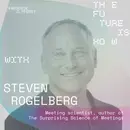


When Google made every calendar meeting 50 minutes instead of 60, nothing changed. We kept meeting for the full hour. So what if the problem was never meetings themselves?
Steven Rogelberg is a Chancellor's Professor at UNC Charlotte, where he founded the Organizational Science program. For over 25 years he has studied thousands of employees across hundreds of organizations to build the science of why we meet, why meetings fail and what makes the rare great one work. Adam Grant calls him the world's leading expert on how to fix meetings. His new book, The Even More Surprising Science of Meetings, tackles what has changed since 2019: hybrid work and AI.
If your days are full of meetings and still end without a sense of accomplishment, this episode is for you. Steven shows you how to become a steward of other people's time, and why the mindstate a leader brings into the room shapes everyone in it.
In this episode, you'll discover:
Why almost nobody wants a meeting-free day
Why the more a leader talks, the worse the meeting gets
Why agendas are a hollow crutch, and what to use instead
The one question that tells you if you need a meeting at all
What to do with zombie meetings, and why meetings cost more than IT
Why Steven is wary of sending a digital twin to your meetings
This episode is for every leader, manager and team member who wants their time together to count. You'll leave with a simple way to plan your next meeting and one thing to change before you walk in.
Chapters:
00:00 Coming up
00:43 Larry Page and the 50-minute meeting
02:57 200 to 350 million meetings a day
04:42 Why bad meetings drain us
07:20 The meeting epidemic
11:12 Why nobody wants a meeting-free day
13:54 What the pandemic taught us about virtual meetings
20:10 Talk less, listen more
22:58 Agendas are a hollow crutch
25:46 Do I need a meeting?
27:25 Zombie meetings and their hidden cost
32:03 Offsites that actually work
36:52 The real cost of an unneeded meeting
39:13 Digital twins in meetings
44:07 When the purpose is connection
47:03 Meetings around the family table
48:29 Fast future round
50:02 What Steven knows now that he didn't 25 years ago
51:05 One thing to change before your next meeting
52:08 Closing
Connect with Steven Rogelberg:
Website and his books, The Surprising Science of Meetings and The Even More Surprising Science of Meetings: https://stevenrogelberg.com/
LinkedIn: https://www.linkedin.com/in/rogelberg
Two free gifts from Frederik:
Mindstate Moments: one small practice every morning. Takes two minutes. Changes the rest of your day. https://frederikgpferdt.link/join
Where to Start: you know that feeling of wanting to change something but not knowing where to begin? 30 doors into the best of this podcast, matched to how you feel right now. https://www.frederikgpferdt.com/where-to-start
Frederik: There are somewhere between 200 and 350 million meetings happening on this planet today, right now, while you're listening to this. Back when I was at Google, Larry Page decided he had enough of back-to-back meetings. So he did something very Larry Pagey about it. He changed the default. So Google Calendar meetings would now default to 50 minutes instead of 60. built-in 10-minute buffer system-wide for everyone. And you know what happened? Nothing. We kept booking 60-minute meetings anyway. And we kept meeting for the full 60 minutes or even longer Even though the technology itself was telling us to stop 10 minutes earlier. The default changed. The behavior did not. And here's the strange part. When my guest today asked people to design their own ideal workday, no constraints, total freedom. Almost nobody chose a day with zero meetings. And even when we complain about them constantly, we don't actually want them gone. So, what if the problem was never meetings themselves? What if we've just been asking them to do the wrong job? As AI starts taking over everything transactional about work, what's actually left in the room when we meet? And are we ready for what that leaves behind? My guest is the person the data belongs to. Steven Rogelberg is a Chancellor's professor at UNC Charlotte, where he founded the Organizational Science Program. And he's spent over 25 years and surveyed and interviewed thousands of employees across hundreds of organizations worldwide, building the actual science of what happens in a meeting, Adam Grant has called him the world's leading expert on how to fix meetings. His first book on this, The Surprising Science of Meetings, was named the Washington Post number one leadership book to watch for in 2019. And he actually testified before the US Congress on organizational effectiveness. And he's just released a second edition that I had the pleasure of actually receiving and reading. Steven, welcome to The Future is HOW.
Steven Rogelberg: Thank you so much. And thank you for that amazing lead-in. I've done a lot of podcasts. I think that's my very favorite lead-in I've ever heard. So I thank you so much for that.
Frederik: Thank you for being here. Yes. Very much looking forward to meeting with you in that sense. So let's start with that number, right? Two hundred to three hundred and fifty million meetings a day worldwide. When you first landed on a figure like that, did it change how you thought about the problem or just confirm what you already suspected?
Steven Rogelberg: I would generally say it confirmed, but it reminded me that humans are inherently social creatures. We meet. That's what we do. And we've done it since cave person days. Humans gather. And we have lots of historical records showing humans gather. We can't stop humans for gathering. That is our humanity. So the drive is there. The goal is not to eliminate meetings. The goal is to eliminate wasted time in meetings, frustrating moments in meetings. That's the ultimate hope, to elevate the time that we have together. So instead of people leaving the physical or virtual room saying, man, I've lost another 30 minutes or 60 minutes of my life, they say, Wow, that was well time well spent.
Frederik: When was your first meeting today? And how did it go?
Steven Rogelberg: it was earlier. And Frederik, one of the greatest things that I did not know when I wrote a book about meetings is that the meetings I'm in are now so much better. Because generally, when someone knows they're going to meet with me, they feel pressure. It's not pressure from me, but implicitly it is. They don't want to get it wrong. So I have I get the most unexpected bonus for writing a book on meetings. I definitely find that the meetings I participate in are tighter and more effective.
Frederik: when you look back on on the many meetings you had in your life, was there one that you felt like a total waste of time? And why was that?
Steven Rogelberg: Yes, I'm one of these researchers who loves to research things they hate. And I hate meetings. I recognize they're needed, but I still a bad meeting drains me significantly. And what really drew me to the topic was my own meeting experiences, but really more broadly, Concern for humanity. Concern that as people have their days filled with meetings, that they're ending their days not feeling a sense of accomplishment. And that's a different type of epidemic. Right? That's a very concerning epidemic. If people don't if they're grinding at work, right? They're doing all these meetings, and yet at the end of the day, they're saying this was a wasted day. That is not our hope for our society. So I absolutely Can think back, because remember, I work in a university, and I think that we may have the very worst meetings anywhere. So I absolutely have so many lived experiences of meetings that are way too large. meetings where the meeting leader hasn't thought about the flow, the process, the agenda is the exact same. Meeting after meeting, the only thing that changes is the date. meetings where just one or two loud voices dictate the entire conversation, with no attempt to truly bring in other voices. meetings where conflict, which is essential to meeting effectiveness, if resolved constructively, stays at the personal level. So you don't get true understanding of people's ideas and thoughts. And those meeting experiences were extremely common, especially the bloated size. That is enigmatic of university meetings. They are just larger and larger. And what's so fascinating is that we often over invite with very good intentions. We over invite because we want to be inclusive. And but what the research shows is that the larger the meeting, Not only is there more dysfunction and lower quality, but people report actually less inclusion. So our intention goes unrealized. And larger meetings, as opposed to feeling inclusive, come across as inclusion theater. And no one really wants to be part of inclusion theater.
Frederik: there's so many things that you just shared. Let me step back for a moment because you mentioned something that I found fascinating, and that is the epidemic that you described. and there's I think many epidemics that we can we can find currently, right? There is a loneliness epidemic, right? But you describe something where there is an epidemic that looks very differently. Can you give us a little bit more? insight into how you're thinking about that epidemic and what might causing it.
Steven Rogelberg: Well, work is generally even if we meet in teams and are part of a team, generally work is still an individualistic activity. We're still evaluated generally as individuals. Our salary is generally individual based. So we're in a work environment trying to pursue an agenda that is tied to us as people. Our meetings and teams could help progress that or not. And generally, this is one of my very first research studies where we had people keep a diary, a daily diary. And this diary had people identify how many meetings they had, when were the meetings, gaps between meetings. And then we had them assess at the end of the day, how did that day feel? Do you feel like you accomplished a lot? Do you feel a sense of satisfaction? Do you feel like you actually got work done? And we saw a really strong relationship that. The more meetings they had, feelings of accomplishment just kept decreasing. And then we did another study. And this was such a neat study where we had people, when they woke up, look at their calendar and share what their impressions of the day would be. And in those days where they had a lot of meetings scheduled, they basically would say, this meeting is this day is going to be terrible. and I'm not gonna feel a sense of accomplishment. That's actually noteworthy because one of the things we know about humans is that we are prone to self-fulfilling prophecies. And so, really, when you think about humanity and what humans, most humans, especially from a Western orientation, most humans evaluate the quality of their days based on what they were able to accomplish. Right? They're not as process oriented, they're outcome oriented. Now, granted, that is a very Western orientation, but it still subsumes a great deal of people. So as meetings fill our days, and as meetings are not being productive, and this great deal of frustration, you have these individuals who end their ending their days not feeling like it was a useful, a useful day, a meaningful day, a day of accomplishment. And that matters not only to the job, but that's what people bring home. Right. That's the lens. That's when we see our partner, our children, our our propensity to exercise, all these things. Right. When we exit work and we generally have a more negative mindset, that's going to impact our out-of-work activities. So this notion of meetings, not Truly fulfilling so many human needs has longer and more meaningful consequences than we think. Related to that, I recently I but just published an article and I talked about this notion of meeting hangovers. And I think this is relevant to the conversation. Basically, when people have a bad meeting, they don't just leave it at the door. It sticks with them. negatively affects their productivity. But what's fascinating is that when you have a bad meeting, you generally don't keep it to yourself. You have to tell someone else about your bad meeting. So we engage in this co-rumination behavior, which can then bring other people down. So our bad experiences actually become somewhat contagious on others' emotions. So bad meetings do have societal implications.
Frederik: You've also found that people don't actually want a meeting free day, right? Which
Steven Rogelberg: Mm-hmm.
Frederik: is so fascinating. So, what does that tell you about what a meeting is really doing for us underneath the stated agenda, As you just stated that meetings, in general are leaving us with a feeling of We haven't accomplished something, it was not a fulfilling day, and so forth. And it is contagious that we talk about that to others if we had bad meetings too. But still, people don't want to have a meeting free day.
Steven Rogelberg: No. To me, that just speaks to our humanity. our core nature is to gather. And this is also why organizations that have some wholesale edict of no more meetings, those initiatives fail. They don't work. Right? It's just going against human nature. And that's just not. It's never a good idea. So humans recognize that they need to gather. They recognize the small chance that something really special occurs when you gather. And so we are constantly drawn to meetings for good reasons. And no person truly wants to eliminate, well, I shouldn't say that, most people. Do not want to eliminate human contact. And now whether that's nostalgic, whether that's hardwired. but I do think most all humans do want to have time be invested with a good return. And now whether that investment are is good outcomes, or whether that investment is good process, whether that investment is Elevating relationships. But we do seem to relish the potential value that can emerge. and so the data that we collected when we had people design their perfect work days, yeah, it was not a day absent of meetings. Now we did collect some new data that also looked at how people would want their meetings scheduled, which actually really matters too. Right, because when meetings are generally spread out throughout an entire day, with no meaningful gaps to allow that human being to have deep work time, to have flow time, those days really had negative effects. So, yes, they want to meet, but ideally, they'd like their meetings to be clustered together so that they also know that each day. provides the promise of some uninterrupted time to engage more deeply in whatever they want to engage in.
Frederik: One of the biggest experiments we as humankind recently experienced was the pandemic, right? Where meetings really shifted for everyone, right? some people really saw the value of being together with other people. Some people felt that how we are meeting is just not not working, right? And I remember two things. The first one was at Google we tried to set up Meetings where there was no agenda. You just could dial in and you could feel that there's somebody else in that virtual room as well. So you have that feeling of connecting with someone because a lot of people felt lonely, to be honest, And the other thing what I found fascinating was my kids learned how to read during the pandemic, and what the teachers did is they set up Zoom calls and put every child into their individual breakout room. And they gave them a reading assignment. And they didn't tell them when their teacher is gonna return to the breakout room to check in on them, right? So you saw these kids sitting at home, right, reading in front of the camera and just being in a in a meeting room, right, by themselves.
Steven Rogelberg: Mm-hmm.
Frederik: Which had a very specific effect on them because they felt like, I need to, continue reading, I'm
Steven Rogelberg: Mm-hmm.
Frederik: being watched and so forth. It was just purely fascinating. And so what's something that you, when you look at the research, was something that changed how you view meetings during the pandemic? What was something where you said, this is really fascinating insight that we need to to do more research on.
Steven Rogelberg: I think the main one was that virtual meetings can actually be better than face-to-face meetings. Going into the pandemic, if you looked at the data, the lowest rated meetings were virtual meetings. Coming out of the pandemic, we actually saw a reversal of sorts that in general virtual meetings are rated similarly in terms of overall quality or even better. So what's amazing about virtual meetings is it actually through its structure addresses a host of problems that exists in meetings. For example, everyone's box is the same size. There's no head of table effects. Everyone's on an equal plane, right? No matter what your title, your position, your your race, your sex, you're on an equal plane. Then you have alternative communication mechanisms, right? The use of chat. That's actually very significant. Right? Chat allows more voices to participate. It also allows those individuals who feel much more comfortable with a written word to have meaningful influence. So, what was exciting is that what initially was a band-aid, right, to get us through. Provided a really meaningful avenue to elevate the time in ways that we had never done before. Even the use of plugins, right? The ability to have anonymous voting, all these things are really healthy for human engagement. So I'm not saying that virtual meetings solve all problems, but they actually solve quite a few problems. So from a productivity perspective, and I know productivity is not everything, but from a productivity perspective, virtual meetings were great. Now, from a socio-emotional perspective, virtual meetings still have some challenges, right? It's just harder to read someone's emotions, to read their anxieties. The communication is not as rich, right? You can't. So if you look at my image, you can't see my hands, for example. Right? These things matter. So there were some downsides too from a socioemotional perspective. And going back to your example with children, right? That was one of the challenges. Right. So teachers just couldn't connect at that socioemotional level. And that's a big part of education. So, our constant challenge with technology, and you know this. Way better than me, is every technology we have, there are benefits and there's challenges. And we just need to understand those challenges and see what we can do about them. But ultimately, what I talk about in my research, or I'm back, let me back up. Ultimately, when we've interviewed people about the qualities of the best meeting leaders, there was something that emerged. The best meeting leaders inherently recognize that they are a steward, a steward of others' time. If you think about that, a steward, if you're a steward of something, then the thought of people leaving your meeting saying it was a waste of time is so uncomfortable to you that you give it some intentional thought beforehand. I would say, Frederik, that you exemplify stewardship. Right? When I've listened to your podcast in the past and I see how you prepared for this and the intro and the questions, right? You thought about this. You wanted your listeners to hear meaningful comments and content of value. So you are behaving like a steward. And so we know that to run effective meetings, the leader has to act like a steward. But the fundamental problem that we have seen so often is that leaders believe they're acting like a steward, but they're not. Leaders think they're good at leading meetings, but they're not. They generally believe that bad meetings are due to others, not themselves. This is so problematic because, in the absence of self-awareness, the same problems will repeat themselves over and over and over again. So, across those 200, 300 million meetings, the bad practices just keep replicating. And that replication matters, right? Because people take cues from their leaders on how they're going to run their meetings. So you could just imagine. Right. This problem is a domino effect. And we f we wind up in the same place, despite all of our frustration.
Frederik: What struck me is that you mentioned that virtual meetings helped us to be more productive, right? That things like chat and other tools really helped also to make the meetings more inclusive, right? To give it give voices to more people than we usually give voices to. but I think The technology alone doesn't make a meeting inclusive, So what can a leader do to really make a meeting the most inclusive gathering that they could?
Steven Rogelberg: Great question. So the big the biggest is talk less, listen more. The more the leader talks in the meeting, ratings of effectiveness just keep plummeting. This is really important, right? Because when we're talking, we're not listening. When we're talking, we're not facilitating. Ultimately, a leader needs to dial back their amount of talk so that they can attend to the dynamics, right? They have to notice who's not talking. And they have to notice body language. they just have that's their role, that's their job. That's what everyone is hoping they will do. And what we find is if leaders aren't doing those behaviors, basically they're not being done. And as a result, the meeting can quickly go off the rails. So that's really a critical one. Second is to avoid that theater of inclusion. Overinviting is not the answer. Leaders have to really think carefully about who needs to be there and who doesn't need to be there. And invite strategically and thoughtfully. But there's a challenge with that. As much as people dislike going to meetings, there's one thing that worries them more: not being invited to a meeting. So ultimately, what has to happen is that we need to start talking to our teams. Yes, I am talking about a meeting about meetings. We need to talk to our teams and actually talk about meeting size and who needs to be there and not. We need to create norms that when you're not invited to a meeting, that's a sign of respect, that we want to val we value your time. We need to have practices where everyone's in agreement what keep what keeping in the loop means, right? So that when we have our meeting summaries. They provide our non-attendees with what they need. Meeting summaries are really not for attendees. They were there. Meeting summaries are to help those who are not there still feel in the loop. So we want to start changing norms around this. And by having conversations with our team, we can change the perception of what not being invited to a meeting means. Then I want to let me share one more with you. 'Cause this is my favorite one. One of the surprising things early on in my research was that was really finding no consistently positive effects of having an agenda for a meeting. And this was strange because every single book, not mine, but every single book generally has a first chapter about having an agenda. Our research shows that having an agenda in and of itself. doesn't do much to improve a meeting. And
Frederik: Fascinating.
Steven Rogelberg: if you really step back and think about it, why would it? Why would a piece of paper with a set of topics fundamentally change a meeting? What really matters is what those topics are and whether they're truly relevant and strategic. What really matters is do you have the right people there to talk about those topics? What really matters is the leader facilitates conversation around those topics. And so in my book, the the chapter was called Agendas Are a Hollow Crutch. Because so many leaders thought by having this piece of paper, I've done it. I am a great meeting leader. There's an alternative approach that changes everything. Would you like to hear the alternative approach? I was hoping you would say that.
Frederik: Absolutely.
Steven Rogelberg: So the alternative approach, which exemplifies stewardship, by the way. The alternative approach, instead of Organizing your agenda as a set of topics to be discussed. Organize your agenda as a set of questions to be answered. By organizing your agenda as a set of questions to be answered, now you have to really stop and think. Why are we gathering? It's to answer these questions. By framing your agenda as questions, you have a much better sense of who has to be there. They're relevant to the questions. By framing your agenda as questions, if the meeting has been successful the questions have been answered. By framing your agenda as questions, you create this engaging challenge that draws attendees in because people love answering questions. And here's the most important kicker. If you just can't think of any questions, it likely means you don't need a meeting. So making that change, right? Framing your agenda as questions is a phenomenal technique of creating a more inclusive meeting because the questions draw them in, because it creates a litmus test of who to invite and who not to invite. So there's a variety of things. If we plan carefully through this questions approach, if we get into that meeting and we keep our mouth closed, if we constantly are looking around and helping to facilitate, we can make these positive. We can make this meeting truly work.
Frederik: Fascinating. I'm so glad to hear this because I didn't send out an agenda to you for our meeting
Steven Rogelberg: Yeah, yeah.
Frederik: here, but I gave you a couple of questions to think about. And
Steven Rogelberg: You did.
Frederik: and I'm trying to listen more than I speak. So
Steven Rogelberg: you're you're a natural at that. You're one of the best I know.
Frederik: One question keeps coming back and that is I think an essential question that most people will ask many times during their day and that is do I need a meeting? And you just hinted to a couple of things that help us to think through that question. But you also developed a decision matrix matrix that help us really to answer that question. Do I need a meeting? Right? So what's the first filter? how can you help our listeners to use that matrix to really answer their question? do I need a meeting?
Steven Rogelberg: Thank you. So, first, it's always it's important to recognize that there are so many different communication vehicles for engaging with people. Meetings are just one of them. Right? We have all kinds of different approaches that we can do that can be meaningful. So having given we have so many tools, defaulting to any one tool is not thoughtful. Right? We want to make pick the right tool for the job. So fundamentally, you would call a meeting when the topic or question to be answered requires engagement and interaction. does it truly require interaction? We've all heard the saying this meeting could have been an email. When do people say that? They say it when the content didn't require interaction. It was just one way. And so to me, that interaction, engagement criterion is really the first one. And if it does require engagement and interaction, then that tells you, okay, we need to gather. I need those voices. But if not, there's other mechanisms for doing.
Frederik: One of the things that we all see in our calendars are these what you call zombie meetings, right? It's the recurring meetings. It's the, let's just meet every Friday at ten
Steven Rogelberg: Right.
Frederik: AM and you don't even know what you're gonna talk about, but it's still in the calendar.
Steven Rogelberg: Yeah.
Frederik: what can we do with those zombie meetings?
Steven Rogelberg: While I absolutely am not in favor of these edicts to eliminate all meetings, what I am in favor of is people looking at their calendars and making choices. Do an audit. We get into these habits. We repeat the same patterns all the time without thought. Now that's human human nature. Right, because it's by not thinking about things we then have additional resources for other types of activities. But every once in a while it's okay. It's okay to stop and reflect and to look at these things which we've assumed to be normal and question their existence. And that's what zombie meetings are all about, right? Our calendars are filled with these reoccurring meetings that are artifacts of decisions that perhaps were made years before. And we assume it to be normal. But it's not necessarily normal. And so I am keen on eliminating a recurring meeting for a period of time, framed as an experiment, and then seeing whether it was truly missed. Because it's often the case that it's not. We assume certain things are needed, but until we eliminate them from our lives, right? That's the true test. So, with anything that is taking people's most precious resource, time, we need to evaluate it and make sure that there's not unintended consequences. So those zombie meetings, those reoccurring meetings, are the perfect target for reflection. And we don't necessarily have to do this by ourselves. We could do it with the people who are consistently in them, We could say, hey, we have this meeting each week. Are we really deriving value? Can we do it differently? does everyone need to be there all the time? talk about it. I I think you're probably hearing a bit of a theme of we don't talk about meetings constructively. Conversations around meetings are typically grousing. They're typically about, I hate meetings. I had a day full of meetings, another bad meeting. Good leaders should change those conversations to let's talk about our meetings. Let's see how we can make them better. And interestingly, and I think you'll appreciate this maybe more than most, meetings cost most organizations more than their entire IT budget. But think about because of sheer time, salaries, opportunity costs. But think about it. In the world of IT, we evaluate our IT. We ask people for their input on IT. We have chief technology officers, right? All kinds of things to make sure this tremendous investment is being realized. Meetings cost more, and yet we do none of those things. In fact, You can't find someone in an organization that will raise their hand and say, I own meetings. Meetings are the single largest cost expenditure on a company's financial statement that is completely and utterly ignored.
Frederik: So I'm hearing that correctly that we need a CMO or a new definition of a CMO, the chief meeting officer.
Steven Rogelberg: So I do talk about that. And I don't where I have moved is I think it has to be part of someone's responsibilities. So while we don't need to have someone with a chief meeting officer, even though if you think about it, a chief collaboration officer is not the worst idea, especially given dispersed work environments, right? They could have a very strategic role in a company given that people and collaboration are the lifeblood of organizations. At the very least, I just want to see it baked in to whether it's the chief human resourcer resource officer's role, whether it's the chief operating officer's role, the CEO. I just want someone to say they own this. If this is the crazy thing is if you know your employees are spending all this time in an activity and there's all this frustration. Why are we just assuming it's how things have to be? Doesn't make much sense.
Frederik: Absolutely, yeah. Before we dive into AI, digital twins and technology, which I'm very excited about to hear your your thoughts on, let's expand meetings a little bit outside of an office environment, right? We do these things called off sites, Which we name after going somewhere else to experience something different, to hopefully learn something about ourselves or others that we can bring back into our work in our lives. So what have you learned about offsites and which ones have you probably experienced that really work?
Steven Rogelberg: So the research base on offsites is not large. but we do have some insights, and I obviously have my personal insights too. But in general, off sites have to be used strategically. They have to be some content that is so different than the typical content that you are making the statement we need to go off site. We need to have fully focused time to do it. What typically derails off sites is that you don't have this really good intentionality around the planning of it. So instead of just one or two hours of bad meetings, it becomes eight hours of bad meetings. Related to that is that we pack these offsites with activity after activity after activity, and we lose, we forfeit one of the greatest values of offsite, which is downtime. Downtime where people can actually engage and talk about issues and problems, not in a structured format. Generally, off-sites, the meeting piece should really end around four o'clock or earlier, so that people have time to decompress, to really think about what was talked about and to talk to their people and others around it. So you often see these off-sites just packed. And you don't realize the full value of them. So we want to have the appropriate pacing of it. This is not a this should not be a grind, right? People shouldn't feel like this is just, this incredible heavy lift of just constant cognitive time, minute after minute, starting at seven, eating while you're having a meeting, right? All these things is just beyond human capacity. So have an off-site. If there's something unusual and special that's not part of the daily fare. Mandate preparation in a different way. Right. So if you define an off-site as we're doing this off-site because we have to tackle these three questions, Success of this off-site is if us we come back with clear strategies around these questions. Right now you've set the stage. Expect people to prepare, give them the requisite materials, and then be thoughtful in how you design the day, right? Build in that downtime. Don't look at downtime as a bad thing. Build in lots of breaks. Don't wear your people out. Right? Because if you wear their your people out, not only are you taking them away from work, right? Which is a big ask, but then you're draining them even further so that when they go back to work, they're even more miserable. So find the right pacing to really allow people to engage fully in it. And hopefully it can be a positive experience. Offsites absolutely can be transformative when done well. But it a good off site is just not saying tons of meetings and then a golf outing. That's not a good off site.
Frederik: Love that. And I think that's a good reminder in how we actually met, right? it was not an off site, but it was a a gathering of of some incredible minds at President Summit in Copenhagen. And we had a lot of downtime together, right?
Steven Rogelberg: Mm-hmm. You did?
Frederik: talk to each other, connect with each other, talk about challenges but also opportunities and I still have very good memories of how well this was organized, what the intention behind it actually was. And so it really pays out, right? Or pays off as we are meeting today, in a in a very different way, but in
Steven Rogelberg: Yeah.
Frederik: a in a way that really was set set up a couple of years back, right? And still gives us that. that mutual connection that we are holding, so
Steven Rogelberg: You're so right. And that is such a great example. Cause even if we go back to your introduction, so I met Kim Scott there. So you wound up doing the foreword to my newest book. Here I am with you. And so often in events, right, it's just transactional. You go on your stage, you do your speech, you say hello to the other speakers, and then you move on, right? You finish your speech and you check your email, whatever it happens to be. This event was designed be beyond that. It was actually, for some interesting reason, designed to allow speakers to actually spend time together with no agenda. And it really worked.
Frederik: Speaking about our mutual friend Kim, Kim Scott, she wrote the foreword to your book, and she singles out your 4D framework: decide, discuss, debate, and develop. Which two of those get confused for each other most often? And what does that confusion cost a team?
Steven Rogelberg: don't know if I could say which two get most confused. I don't think I it's a very interesting question. I I need to think more about that. I don't have a a quick answer to that. But I would probably what I would where I would go is that the cost of calling a meeting when there isn't a compelling agenda is Much more significant than we think. It really is much more significant. So when we think about those four Ds, those are help us figure out whether we need to gather. When we gather inappropriately, we really are stealing the resource that people often prize the most, right? Their time. And What often gets forgotten is that the parallel with it is the opportunity cost, right? It's how people could have been using that time. Right? They could have been using that time to support others. They could have been using that time to truly think about a problem in a meaningful way, which could lead to innovation. So, yes, if those Ds aren't met and we're gathering, we're wasting time. And wasted time absolutely has financial implications, fatigue implications, all kinds of things. But I I do think we forget about these opportunity costs. There are things that we could be doing to better serve our customers, our stakeholders, or even better taking care of ourselves. And that's okay too. Right. The better we take care of ourselves, that's how we come into work as well. And so giving people that time to take better care of themselves helps. w one of my favorite little findings is the importance of mood state, and that when meeting attendees are in a better mood state, it tends to result in more innovation. It tends to result in conflicts that don't become personal. They say task related. Better mood states are associated with better listening. So investing and providing opportunities to get into a better mood state is actually really good business.
Frederik: Thank you, Steven. So a couple of years back, some of some of the students at Stanford University really explored the future that we probably might be living in in a couple of years out. And what they did is when most education happened over Zoom meetings or Google Meet or other technologies, what they developed. was a little bot that actually allowed them to participate in those meetings to show you know that they participated, which was basically part of the grade. and they could stay in bed or do other things that they wanted to do. So I think that was the first exploration of digital twins and what we see currently being
Steven Rogelberg: Yeah, yeah.
Frederik: developed in that in that area. I myself have also in the last six months developed my own digital twin called Futuric. I don't know if it's the best name, but it's a it's
Steven Rogelberg: Yeah.
Frederik: a prototype. And so it's really a fascinating area I think we're exploring because imagine in or even today you can send your digital twin to the meeting to act on your behalf, run the meeting, being a good steward of everybody's time, probably, do some great facilitation, being inclusive and all the good stuff that we want our meetings to to look like. And then the digital twin twin can come back and give you a summary or give you some decisions that you can then make moving forward. So what are you seeing in that area of digital twins and what is your own personal experience with it?
Steven Rogelberg: Digital twins, very intriguing. Absolutely has some interesting applications. Most notably, I love the idea of a digital twin being a first round of feedback providing to someone else, right? If someone wants to get feedback, right? We can train the digital twin to really be very similar to how I would provide feedback. I like that as a wave one feedback, not to replace all feedback. But I like it as a wave one, and then that person can make changes, and then I need to jump in. Humans still need to be humans, but I like it from a feedback perspective. I like it from an information dissemination perspective. I don't, I don't mind a digital, a leader having a digital twin to provide that critical one-way information and allow someone to ask questions about it and get those needs met, Digital twins and meetings, I'm less keen on. Namely, they don't fundamentally address the problems that we have in meetings. They become a band-aid. To me, they're the white flag. We're calling surrender. What I would much rather have is elevating an organization to run their meetings more effectively, shorter, inviting more carefully Meetings provide the value that they can, that meetings can live to the potential that they have. Because there is greatness in meetings. We do know that, and this is what the data generally show, that around 10% of the time in meetings, something happens that no individual could have done on their own. There was something synergistic, something special that emerged. That is the promise. We see it in sports all the time as well, right? Where you have a group of individuals. Who don't have the talent to win the competition, but they do because something special and synergistic. Eliminating that opportunity for those potential effects by sending digital twins is giving up. I would much rather have an organization think more deeply about when they should be having meetings, how long those meetings should be and what the size and what good facilitation look like looks like. So my fear with digital twins is that it could symbolize retreat. And that's the mistake. Because ultimately humans do need to gather. Greatness can happen through gathering. And we can make that time more valuable with that intentionality and much better systems to prepare, train, give people feedback. so digital twins can be a complement, but they shouldn't be a replacement.
Frederik: Do you have your own digital twin?
Steven Rogelberg: I do not. I have thought about it from the feedback. I really so I've seen that used in some context. I'm really intrigued. I I really actually like the idea. I think it'd be more supportive to my directs to have that digital twin wave one feedback because then they might feel more comfortable being their authentic self, right? Because it wouldn't be me evaluating them. So maybe they would be more willing to take risks. And to try out some new things without that fear of evaluation. So I I see I'm I really it having humanity in work and in supervising people is really important to me. So I don't want to eliminate that. So if I can figure out a way of digital twins being part of a a healthy human strategy, then I'm all for it.
Frederik: So I'm a very introverted person. so everything you see in here is a learned extroversion. But I like to be around people, Because I see the value of connection. what does a meeting look like when its whole purpose is connection, not a decision or deliverable? Do your same design rules actually even apply, or does something else take over?
Steven Rogelberg: In general, they still apply because just putting people in a room and say connect often doesn't lead to anything. now I don't at all believe you have to over-architect the experience of connection. But thinking through how can you help promote connection is a worthwhile effort. so I have companies often ask me, should we build in lots of team building into meetings and such? I'm like, No, meetings are about getting stuff done. If you want to have connection, let's create a strategy around connection. And there's lots of different ways that we can build connection. Meetings do not have to be the vehicle to create connection. They can help or they can hurt. Interestingly, one of my favorite findings is that we often think that when a group is cohesive, they'll lead to better outcomes. But the data actually Support just as much this notion that when a meeting is super productive, people feel really connected to one another. Right. It's the effect of winning together, builds bonds. So productivity can actually build connection. so building connection matters, especially now, right? People are craving to feel seen. And but let's think about that carefully. And again, not over architect it, but I think that if we want people to gather to have meetings, okay, let's do that. Let's maybe think about how food could be helpful in that, right? Food is a vehicle for connection. Let's think about new experiences together could do that. Right. So all those are examples of us thinking about it, but not over designing it, because you have to let things emerge organically. But some, some scaffolding. can increase the chances of you getting the outcomes that you're hoping for.
Frederik: I love that connection to food, yes, and that's why I every evening try to gather as many people around me to cook together.
Steven Rogelberg: Yeah.
Frederik: Mostly it's just my just, but it's my three kids and my wife. But we have many friends over and obviously you're invited. just share a meal together, yeah. But actually prepare it together too, right? I think there is some some value in building that connection, cutting some onions
Steven Rogelberg: Great. A
Frederik: together and and preparing that meal and then enjoying that. Fantastic.
Steven Rogelberg: I love that. I love that. And, this is where just going into the family, when we think about just having our children in the same room with us, watching TV, is not about building connection. Right. We actually have to invest in building meaningful connection with our family members, right? With our partners.
Frederik: So let's explore that briefly too. how do these meeting, I don't want to call them rules, but meeting guidelines probably or principles apply to a family or friend setting, right? and I'm thinking about, the the Thanksgiving table, right? Where we're together with uncles and aunts, aunts, the friends of the family and so forth, and we we gather, right? How can we make those more inclusive, maybe even more fun, right? So that we
Steven Rogelberg: Yeah.
Frederik: build that connection around the table.
Steven Rogelberg: First and foremost, it's about asking questions and being curious. I don't know why that's so hard. But those are the keys, right? That's the key to real meaning is listening, being curious, realizing that everyone, no matter what their life circumstance, no matter what their level in the organization, has something to offer you. And you can learn from them. And grow from them. You can learn what you don't want to do, right? Every meeting is the every meeting with an individual is really an opportunity to grow. So we just have to stop talking. We need to be curious and listen. But it's harder to do than we realize because brain scanning research shows that when we talk a lot, it triggers the same parts of the brain as good food and sex. So we talk a lot because it feels good. And what we need to do though is give that gift to others.
Frederik: So let me get curious. I want to go into what I call a fast future round.
Steven Rogelberg: Okay.
Frederik: So before we close, I want to do something we always do on this show, and that is short questions, fast answers, first instinct, obviously
Steven Rogelberg: Okay.
Frederik: no wrong answers, right? It's whatever comes to your mind first.
Steven Rogelberg: Okay.
Frederik: First one: the future of meetings in three words.
Steven Rogelberg: man. And I have to do this fast. more, more, more.
Frederik: The worst meeting habit you can't fully kill in yourself.
Steven Rogelberg: Comfort with conflict. That's a tough one for me. I've worked on it. I've really worked on it, but that's a harder one because I I don't want people to be uncomfortable. And but I need to allow for discomfort.
Frederik: A meeting you'll never forget, good or bad.
Steven Rogelberg: The right people doing important, meaningful work to help vulnerable populations. So I'm very involved in nonprofit work and recently reached out to eight close friends who don't live in my community. I said, Hey, will you all come to Charlotte and let's figure out how we're gonna help nonprofits? And we all did, and that was a beautiful meeting.
Frederik: Yeah.
Steven Rogelberg: Care.
Frederik: Human or AI facilitator in ten years.
Steven Rogelberg: Human helped with AI.
Frederik: question every leader should ask before hitting send on an invite.
Steven Rogelberg: Do I really need to do this?
Frederik: And last, finish the sentence. The most important thing I know about meetings now that I didn't know 25 years ago is.
Steven Rogelberg: The mindset that the leader enters into the meeting turns out to be the biggest predictor of the mindset that emerges in the meeting. When a meeting leader comes in in a negative mind state, that is highly contagious. If the meeting leader actually comes in there in a more positive mood state, you see the meeting elevate. So that leader needs to ground themselves. Before we started this podcast, what your guests did not see is that you took a big healing, cleansing breath to center yourself. Meeting leaders need to do the same thing. They can't go from meeting to meeting, just running around saying, okay, now I got something else to do. They have to center themselves. Realize that they have a unique and special role, that everyone in that room has given them a gift of their time, and they need to handle that gift with the kindness that it deserves.
Frederik: Beautiful words. And you close the book with the line about meetings being a decision choice, not a fixed feature of the universe. If someone listening has one meeting on their calendar tomorrow, what's the one thing they should change about it today before they walk in?
Steven Rogelberg: that's a toughie. Because it will depend on what that meeting is and who the person who they're meeting with. I'll just go with just be curious and open minded. Look for value. And if you're not getting value, don't give up. Help provide value for others. So we keep looking to a meeting leader to always save the meeting. But we all can help, right? Each one of us in a meeting could still turn to John who hasn't spoken and say, Hey John, how are you with things? Right? We can help. We don't lose all of our agency. So look for opportunities. If the meeting is not doing what it needs to do, look for ways of making it a little bit better.
Frederik: Steven, thank you so much. Thank you for your enthusiasm, for your thoughtfulness, for your research, and for letting me push it somewhere past the usual meeting hacks conversation.
Steven Rogelberg: it was so much fun. I really appreciate it. It was great seeing you. Thank you so much for everything. And it was just an honor to be on this podcast and have this conversation. Thank you.
Frederik: Thank you so much. listeners, if you got value out of this, which I'm a hundred percent sure you do, the next time you're starting a blank calendar invite, ask yourself Steven's first question: What job is this actually meant to do? If and if you can't answer that, you already have your answer. That's this episode of The Future Is How. And if this changed how you're going to walk into your next meeting, do two things for me. Leave a review. It's the fastest way to help someone else find this conversation. share it with a friend. Maybe even send it to them right before your next meeting together. That's it. That's the whole ask. Until next time, go build the future you want to be part of. My name is Frederik and this is The Future Is How.


