Loved, But Not Feeling It | Sonja Lyubomirsky on Connection, Vulnerability & What Makes Us Happy
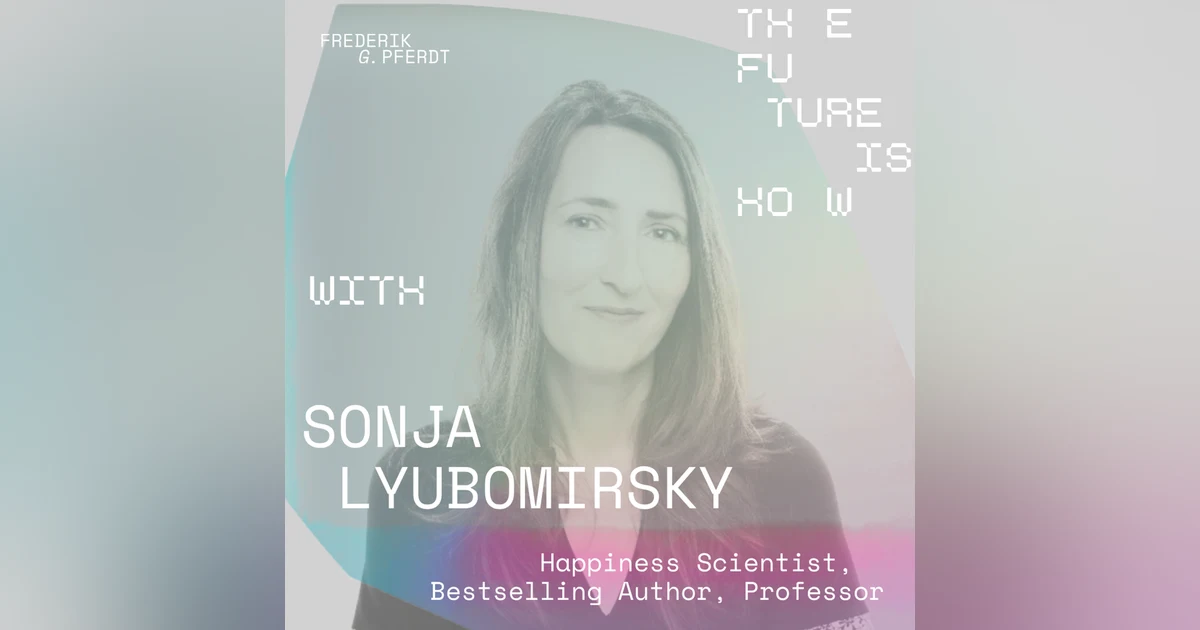
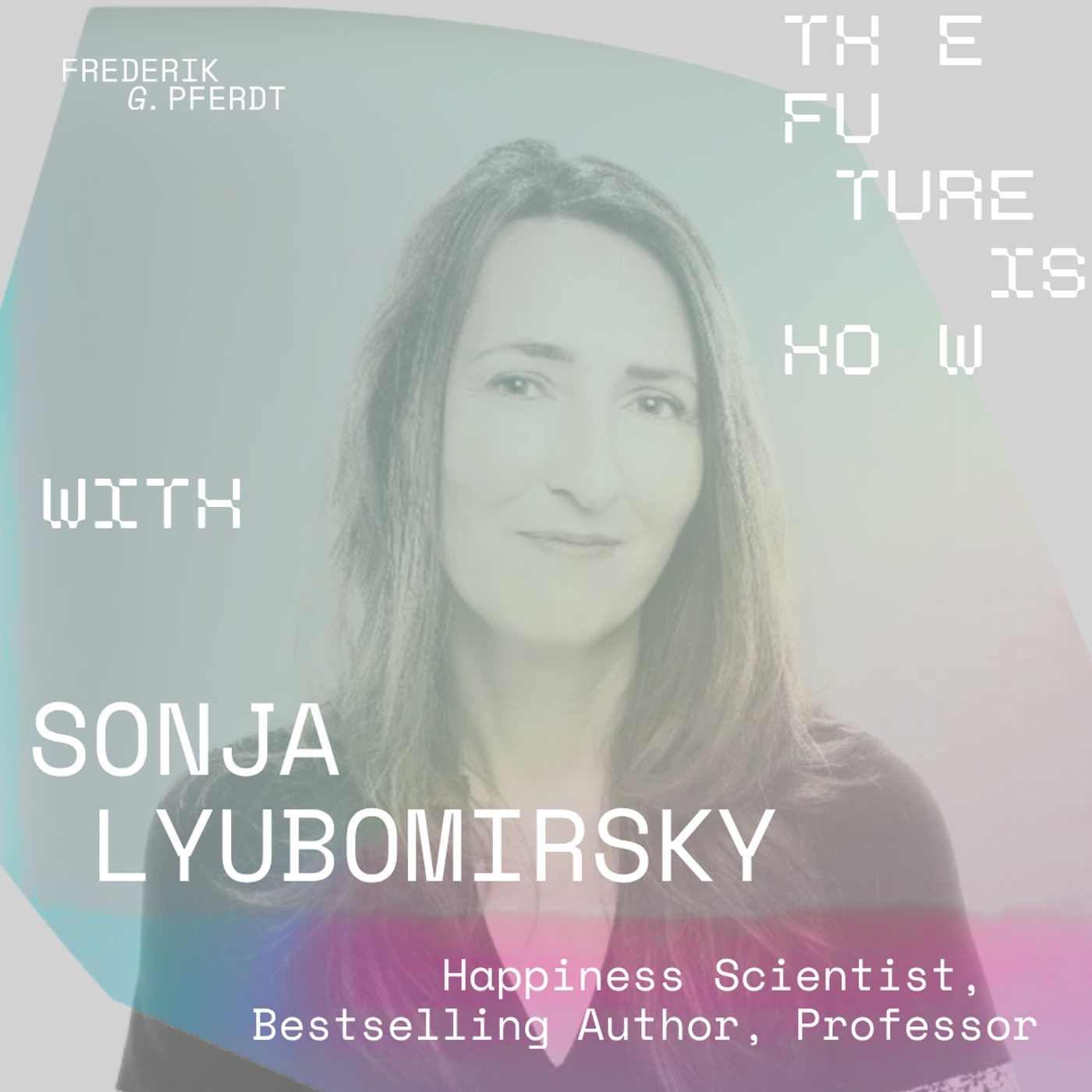


Sonja Lyubomirsky is a Distinguished Professor of Psychology at UC Riverside and the author of The How of Happiness, The Myths of Happiness, and her new book How to Feel Loved (with Harry Reis). Her work has reached readers in 39 countries. In this conversation she shares the five mindsets that help us feel more loved, why being known matters more than being impressive, the vulnerability paradox, what her research says about control and the future, and her own daily practice of presence and radical curiosity.
This is a future built from within: less about better tools, more about the human capacity to connect. It is the Future-ready Mindstate turned toward the most personal question of all - how we love and let ourselves be loved.
Chapters
00:00 Cold open: when did someone last make you feel loved?
02:33 Welcome - and how Frederik and Sonja met in Copenhagen
03:27 Waking up happy and loved: morning anxiety and the "magic potion" of a friend
04:50 What Sonja was most wrong about early on: social comparison
06:23 Social media and the comparison trap
07:56 What to do about it: "Excessive self-focus is the door to all misery"
11:06 Being genuinely happy for others
12:09 From happiness to love: why feeling loved is the key
13:47 Loved vs. feeling loved, and why the answer is to be known
19:42 The vulnerability paradox (and JFK after the Bay of Pigs)
21:58 Our relationship with the future: expectations and losing a future
24:07 The sailing story: handing over the wheel and the power of control
27:11 Self-love: the open-heart mindset and treating yourself like a kind friend
29:21 Sonja's own rituals: deep intimacy, presence, curiosity
31:20 On boredom and going beyond the words
33:49 The nature of love (Fast Future Round)
36:49 The smallest first move you can make today
39:06 NEXTletter outro
Sonja's Website: https://sonjalyubomirsky.com/
Sonja's New Book: https://howtofeelloved.com/
Sonja at UCR: https://profiles.ucr.edu/app/home/profile/sonja
Frederik
The Future Is How: https://www.frederikgpferdt.com/#podcast
NEXTletter: https://www.frederikgpferdt.com/nextletter
Online Courses: https://www.frederikgpferdt.com/course
1:1 Coaching: https://www.frederikgpferdt.com/coaching
Books: https://www.frederikgpferdt.com/book
Awareness Test: https://awareness.frederikgpferdt.com/
Ask Frederik: https://www.frederikgpferdt.com/ask-frederik
Contact: https://www.frederikgpferdt.com/contact
Shop: https://shop.frederikgpferdt.com/
Frederik: When was the last time someone made you truly feel loved? Not just liked, not just needed, loved. I'm not asking about a grand gesture. I'm asking about the moment it actually landed. When you felt it in your chest, in your body, and thought, yes, this person knows me, the real me. That thing, that feeling is what today's episode is about. Because here's what I've learned. Love is the one thing everyone wants and everyone can give. And somehow, most of us are not really good at either. I live off the grid in the Santa Cruz mountains with my wife, Angela, and our three kids. And if I'm honest about where love actually lives in my life, It's not in the applause after keynote. It's not in the message after a book was published. It's in the morning when I go from room to room waking up the kids. I lean in close and I say, it's a beautiful day. It's your day. Let's make it the best one yet. Three kids, half awake, not yet performing anything for anyone. Just there, just real. And it's in the evenings when we are all in the kitchen making dinner together. Nobody's being impressive. We're chopping and steering and talking over each other. And somewhere in the middle of all that noise, I look around and think, this, this is it. This is what actually love looks like. Today's guest has spent 30 years studying that feeling, not as a poet, as a scientist. Sonja. Lubomirsky is one of the world's leading scientists of happiness, a distinguished professor of psychology at UC Riverside, who has spent 30 years figuring out not just why some people are happier than others, but how any of us can actually get there. Her work has reached readers in 39 countries and her new book asked the question at the heart of today's conversation. Why do so many of us feel unloved even when we are surrounded by love? This is The Future Is How. I'm Frederik and this is Sonja. Sonja, welcome to the show.
Sonja: It's a pleasure to be here, Frederik. And that was the most beautiful introduction I think I've ever â had for a podcast or a talk that I've ever given. Thank you. â It really moved me. Thanks
Frederik: Thanks for being
Sonja: for being here. â
Frederik: here. â Sonja and I in Copenhagen. We were both there to speak at a conference, â which sounds appropriately until she told me the real reason she'd come. She wanted to eat at the best restaurant in the world, â and the conference how she got invited. I don't know a more honest thing I can say about someone. â We shared an to a rooftop, looked out over the city, and I thought, I need to get this person
Sonja: to this podcast. Well, Sonja, you're finally here. â Welcome.
Frederik: this podcast. Well, Sonja, you're finally Welcome. â
Sonja: â Thank you. think it's been a year. Yeah. A year or two years â conference. â Thank Thank you.
Frederik: Yes. And so before we go anywhere, I have to ask this morning when you woke up, did you feel happy? Did you feel loved? Because you spent 30 years studying both and I'm genuinely curious, what's it like to live inside that research? â
Sonja: â Yeah. â Well, of course, doing research something doesn't mean that you're always feeling bad something, but I am a generally happy person and I do a of love in my life. Tons of love. Love is everywhere. â We'll talk about But actually, â usually when I wake up in the mornings â to be vulnerable, I feel a little anxious. I have a little when I wake up in the mornings. As I'm waking up. And then when I get up and get going, it's gone. So it's actually very interesting. And someone told me, well, maybe it's because cortisol levels are high when you're waking. But this morning, actually, had a Zoom with â new friend that I feel very, close to. I up thinking about it and feeling kind of the love of that friend. So actually did feel loved when I woke up this morning.
Frederik: Amazing. Two things we learn immediately. Get out of bed
Sonja: Two things we learn immediately. Get out of
Frederik: talk to a friend.
Sonja: Exactly. which is like a magic potion. When you think about like, you know, have you ever been like heartbroken or really sad about something or really anxious or really angry? And then you talk to a friend and you go from like a negative seven to a positive four, you know, how much money would you pay if there was a pill that had â to that? Right. And, then yet we have that with friends and people we love.
Frederik: Amazing, thanks for sharing that. So what's something you were most wrong about early in your career? A belief about happiness that the research eventually overturned?
Sonja: Wow. I don't know how to answer that question. Thank you for stumping me right the beginning. What was I about? Well, I guess the very first thing that I was wrong about is the very first thing I studied was actually with social comparison, how people compare themselves. We all compare themselves to others. And so I thought â that happy people compare down and unhappy people compare up. So unhappy people are comparing themselves to those who are better off than them, who are more intelligent, more beautiful, et cetera, make more money. And then happy people compare down. That's why they're happy. They compare themselves to people who make less money and who are less intelligent and less beautiful, et cetera. And I was completely wrong with that about that. And when we interviewed people who are happy and unhappy, when we asked happy people, well, who do you compare yourself to? They almost like didn't understand the question. I mean, of course we all can help with notice differences, but it's just not something they did. And unhappy people were like, oh yes, mean, they gave us a whole monologue about who they compare themselves to. So basically unhappy people compare both up and down to everyone and everything, and happy people just don't tend to compare much. So anyway, that was my first mistake. Well, my first sort of hypothesis, but I was happy to â it right. â think we're now living times where we â probably have more at our disposal to compare ourselves. We on social media and we see
Frederik: I think we're now living in times where we probably have more tools at our disposal to compare ourselves. We go on social media and we see â a thousand ideas, a people, â millions of opinions, â and we start comparing Is that making us unhappy?
Sonja: Yes, and you're absolutely right. And even actually with the advent of like television really is when it started happening where you could be living in a culture country where you don't have that much, but maybe you're pretty happy. And then you start watching like Lifestyles of the Rich and Famous, you know, that happens to be carried on your TV in your little village. And now you're like, â I could have more than I have before. suddenly it led to what's called relative deprivation, where you suddenly feel like you're deprived when you weren't feeling that before. And now it's a thousand times worse, right? Because now the comparisons are kind of like customized to us. So when we go on our social media feed, we're literally, you know, getting, yeah, we're seeing the things that actually make us unhappy. People who are, you know, having these wonderful vacations or who are... â posting selfies that have been, it's like the selfie that they took. And they look most attractive. â And of my favorite studies was done with â first college students â who that like most first semester college students think that all the other â sort new college students are having a better time and adjusting better than they are because they see on social media. People like, here's me at a party. Here's me with my new roommate that I'm really excited about. And so, yeah, so just, gives us a very â misleading impression of other people's lives. Anyway, I'm not telling you anything you don't know, but â it's just absolutely true.
Frederik: Perfect. There's always a difference between knowing something and doing something, right? So if we know that it makes us unhappy to compare ourselves, what can we do?
Sonja: Yeah, good question. So my dissertation a long time ago â was on this topic. Yeah, there's lots of strategies, right? To sort of try to compare less. I want to start by saying, you know, it's natural and human to compare, you know, and there's, some, you know, important functions that comparison serves that it kind of helps us know where we are sort of know what to aim for. really when it's sort of chronic and like when it's too much that it can, you know, can really interfere with our happiness in our life. And so, yeah, you just sort of try to, I mean, like some people meditate, you learn to meditate to kind of learn to Yeah. When you find yourself comparing, â just distraction, you know, you can try to distract yourself. â you know, and really, it's really focusing on yourself, you know, â focusing on your own internal standards as opposed to someone else's, right? So when I go for a run, I'm like, you know, I want to beat my last, time, as opposed to like, â damn, I'm not, you know, as good as that. that person, because there's always someone better off than you. So if you use comparison as a way to sort of regulate your emotions, like you're always going to be unhappy because there's always, and I remember actually hearing a radio show about, I think it was an NPR episode about people who are very wealthy. And they were talking about this person who has this huge mansion on a hill, really like the nicest house. you could ever possibly live in. And they said, that person with that huge mansion, you know what they're thinking about. They're thinking about the house across from them that has maybe a slightly better view, know, slightly or slightly nicer cars in the garage. So there's always someone better off than you. So, yeah. So just try to focus on yourself and your own standard opposed to comparing yourself with others.
Frederik: Love that. does that mean instead of comparing ourselves to others, we should compare ourselves to the version we were yesterday?
Sonja: Well, that's one way. And by the way, that could be that could become toxic too, I guess, if you're too obsessed with that. In fact, now people are doing all this data tracking, right? They're like, oh, you my sleep is getting better. It's getting worse.
Frederik: Interesting.
Sonja: But, know, another way of saying it, this actually sounds like the opposite, is that, what I found in my research and lots of people have found that the too much self-focus, and by the way, when you compare yourself, you're basically focusing on how well you're doing relative to someone else. So it's still self-focus, too much self-focus and self-absorption is â toxic. fact, I had the pleasure of meeting with the Dalai Lama, His Holiness, a couple of years ago. And one of the quotes that he said that I wrote down was, excessive self-focus is the door to all misery. Excessive self-focus is the door to all misery. So anything we can do to turn our attention away from ourselves and onto someone else or something else. So it could be, you know, being of service to others. It could be focusing on a passion, you know, but it's of off of ourselves and onto something else in the world.
Frederik: I love that it's so less about comparing ourselves in terms of that we should be envy and maybe being happy for someone else, right? Looking at someone being happy about their success, â life they're living, the vacation they're going on, the relationship they're in, â healthy experience. So being â happy for someone. Is that something we should do more often?
Sonja: often? Exactly. It's the recipe for happiness. There's some research on the importance of celebrating other people's successes and good news. That's something we actually aren't as good at that. â Even in our relationships, right? You wife tells you, hey, I got a new job offer. You know, that actually can be threatening, Because does that mean we have to move? Does that mean you won't have as much time for me? And really, the So what we have trouble doing sometimes is really truly celebrating other people's successes and good news or being inspired by them. So you're a violin player and you look at someone else as a better violin player instead of saying, oh, damn, I'm not as good as them. Baby, be inspired that you could become as good as being motivated and moved and inspired by others instead of feeling kind of deflated by other people's success.
Frederik: So you moved from happiness research to love. And love is such a big word. It's an emotion. It's, in movie titles. â It up in â everything in our life. So why the move from happiness to love? And what did you find?
Sonja: Well, I've been doing most of my research most of my career. I've spent doing what I call happiness So happiness interventions are basically clinical trials. They're experiments with human participants. testing hypotheses about different happiness practices. So like, is it true â writing letters of gratitude makes people happier? And when and why? it the case that doing acts of kindness for others makes people happier? Is it the case that simply going to a party or calling up a friend makes people happier on average? So this is what we've been doing for decades. And it hit me a number of years ago, that I guess I hadn't seen before, which is that almost all of the interventions that work. to make us happier, work precisely because they help us feel more connected to and loved by others. So basically feeling loved and feeling connected was really the key to happiness intervention. So when I write a gratitude letter to my best friend, I feel more loved by my friend. When I do an act of kindness for my mom or my colleague, I feel closer to them. And so â most the things that we do that make us happy, work because they make us feel more loved â more connected. And so I realized, wow, feeling loved is the key to happiness, which sounds like a cliche, â but true. And so, so then I thought that now I have to turn my attention to what makes people feel loved and feel connected.
Frederik: And that made me stop because you said you can be loved and still not feel loved. So say more about that gap
Sonja: and still not feel loved. So say more about that gap.
Frederik: because most people
Sonja: Most
Frederik: are trying to make themselves more lovable, You're saying that's the wrong direction entirely.
Sonja: people are trying to make themselves more lovable, right? You're saying that's the wrong direction entirely. Exactly. there's sort of two points you're making here. So one is that many of us are loved, but we don't feel loved. And in fact, my coauthor and I, Harry Reese, conducted a survey expressly for our book. And we found that 70 % reported having at least one relationship in their life where they don't feel as loved as they would like to feel. And 40 % said they'd like to feel more loved by their romantic partners. That's a lot. That's a lot of people. I actually think that's probably an understatement, those numbers. So yeah, we often are loved, but somehow it's not that love is not getting in. And so there could be reasons for that. so what do we do when we don't feel as loved as we want to be? think, â I need to somehow make myself more lovable. Maybe I need to be more successful or beautiful, maybe desirable, or I need to somehow show how wonderful I am to the other person. Maybe I hide my weaknesses and shortcomings, because that person might love me more, or they wouldn't love me. you know, any more if they knew, about some of my faults and so and that's really the approach. So as you say, it's really the wrong approach because it's not it doesn't actually make us feel more loved. And it's because really the key to feeling loved is to be known. so Frederik, if you don't know me, I can't really feel loved by you. Because I'll always want, cause like, cause then what are you loving then? Right? Like I can then always wonder if he knew me, then maybe he wouldn't love me. So really, if you're only showing your most wonderful qualities and hiding your shortcomings, you know, then I'm not really showing my. true self, if you will, to you. So I'm not really known. So the key to feeling loved, according to our book and lots of research, is to be known. It's for you to really know me and for me to really get to know you. And so most of the book is really about how to really know each other opposed
Frederik: Is that radical curiosity?
Sonja: Well, that's part of it. So we have, again, â book is called How to Feel Loved, and we talk about five mindsets to kind of embrace and sort of, it's like a coat you put on. you really start with radical curiosity, right? And that's the first one. And I start because I want to get to know you, Frederik? So I start by finding something of interest that's of interest to me in you, right? And maybe it's a passion that you have, or maybe it's, I'm always wondered, you know, where, how you, you know, your background. or where you grew up or why is it that when you talk you often say this or that? So I ask you questions. It really starts with asking questions, but they have to be authentic and motivated by genuine interest because you'll be able to tell. if I'm faking it, right? And so that as I'm asking you questions, you hopefully will feel like really, is it a gift when someone is genuinely curious about you? Like it doesn't happen that often actually. So you'll be, hopefully you'll feel like excited and inspired and safe and trusting to share more of yourself with me. So you start sharing more of yourself with me. This is called the sharing mindset, which is really important, which is you're really sharing. more of yourself. You're not just sharing the positive things. And by that, don't mean that you have to like dump your traumas on me or your secrets, but just sharing what really matters to you, you know, sharing what you believe yourself to be on the inside, you know, and so it doesn't have to be negative. It could be positive. It could be neutral. then â you're sharing, â that's called the sharing mindset, that I'm listening, right? That's really important step. I'm truly listening. And most of us, think we're good listeners. It's actually kind of funny. One survey showed that most people think they're good listeners, but everyone else is a bad listener. We think we're good listeners, but we're not. We're not so good. I'm not so good. I think most people are not so good. Because when we're listening, we're mostly rehearsing our next thing that we want to say. So we're not quite there. We're not 100 % present. So when you're sharing your story, you're telling me more about yourself. The idea is that I'm really listening. We call this the listening to learn mindset. Listening to learn, because I really want to learn about you, like there's going to be a test tomorrow, because most of us are listening to respond instead of listening to learn. So that's the mindset. And there's more. basically, this is the basic idea. That's how we get known and â become with each
Frederik: So let's stay with the sharing mindset for a moment. Becoming known, not just being good to someone. Why is that so hard? What are we protecting ourselves from?
Sonja: We have walls around us, â And it's so interesting because once you see it, you see it everywhere. Everyone has walls around them. And if we build these walls to protect ourselves, they serve a useful function. They're good for us. our self might just kind of collapse if we didn't have those walls, but maybe we overdo it. it's cause risky to lower those walls. â We don't them down completely, right? Cause then we probably would like to disintegrate. It's risky, Maybe it'll be uncomfortable. Maybe we feel like we'll be judged. It'll be used against us or worse. people won't care about what we have to share, right? But yet we really want to be seen and heard. I mean, that's like the nature of being human. And how can I really feel seen and heard if I have the wall in front of me and I don't really show you who I am, right? What are you seeing and hearing? Nothing yet. And so it's risky. And we all know people, right, who like just really have a hard time lowering â that you with almost anyone, but the research suggests that it's so worth it. â I was actually talking this to a friend this morning, like almost anything worthwhile in life has a cost, right? You have a child. huge cost, right? You could suffer, know, having any kind of relationship or a passion, â some things go So your life is full of risk and we need to take those risks.
Frederik: What's something that truly surprised you in your research? And maybe it's something that you also have a hard time to live by in your day-to-day life.
Sonja: it's funny. I get this question sometimes and I always have trouble answering it because, because when you're doing research for many years, you sort of... stop being surprised so much, right? But one â thing actually I will which is really relevant to what we just about, is something the vulnerability The vulnerability paradox, which is that we think that people will like us less when we reveal something negative about ourselves. â And actually, if done right, people like us more. That's why it's a paradox. And so even now knowing it, I still find it a little surprising because I think it doesn't make sense. Like I want you, like right now we're talking, I want you to think that I'm smart and interesting and funny and kind. Right? I want you to think all those positive things about me. And yet it's, and if I show all those things, I might impress you and I might actually succeed at getting you to admire me. But that doesn't really forge a connection, sort of true connection comes from Showing a little bit more of myself, but it just seems a little, it's counterintuitive. You one â little I like to tell, when John F. Kennedy, after the Bay of Pigs, â went TV, because it was a huge disaster, and those history buffs know about what that was in Cuba, â and admitted to everyone that he made a mistake. And apparently his approval ratings shot way up after he did that. And so that's a little bit of paradox, right? You think if you say, â my God, I was, this is a stupid thing that I did. I'm sure that's not how we put it, but you know, why would that get people to like you more? It does have to be done in the right time in the right place. it's not just sort of dumping all the negativity onto someone else. You have to read The Room.
Frederik: I love that. Thanks for sharing that paradox. So we talked a lot about â love in relationship to each other, To another person. â I'm curious about is the relationship that we have with our future. I think most people have a love hate relationship with their future. When we feel like we are creating it, we're in control, we love it. When we feel like it's happening to us, when it's out of our control, we fear it. Does your research have anything to say about that emotional dynamic?
Sonja: When we feel like it's happening to us, when it's out of our control, we fear it. Does your research have anything to say about that emotional dynamic? So interesting. I love questions that are, that I haven't gotten before, right? So, cause I get a lot of questions that are the same. So, and I know your podcast is really about the future. So you're talking about, I just want to clarify it, like an individual's future, not necessarily the world's future, although obviously they're related. Okay. Yeah, mean, the future is so important. people say that that's â one major difference between humans and animals is that we really, yeah, we think about the future, right, in a way that animals don't. one to about happiness is it's all about and it's about expectations. And so you're happy when your expectations are fulfilled, positive expectations are fulfilled, and you're unhappy when they're not. And so that's one way to relate, I guess, my work to the future thinking, at least thinking about the future. It's kind of all about, yeah, it's all about expectations. In fact, for a long time, Denmark was the country that was happiest. The last few years has been Finland. The differences are basically not, there's no difference really between the Nordic countries. They're all very happy. But I read an article that said that Danish people have lower expectations. And so that's why they're happier. So it's all about expectations. So does this really matter? â you expect everything to be all wonderful, hunky dory all the time? And then you're going to be disappointed, right? â doesn't mean that we should have low expectations either. It's of a calibration question. that's one thing that I wanted to mention. The other thing I want to mention is that the future is so important. â I think a lot about relationships because I really think happiness is found in connection.
Frederik: Interesting.
Sonja: And by the way, that can be a connection to an institution, it can be connection to God, it can be connection with yourself. But mostly it's about connection to other people, humans. when you think about a relationship, â the future that you have about the â is so critical, which is partly why when relationships end, I think a lot of the heartbreak, if not most of it, is that you're losing a future. Right. You're losing a future. â cause the past you'll always have, you know, you always have, you can be grateful for the past. â and so that, so that's another way I, I think about the future. â but, but yeah, but it's, will say more. Cause I, I would love to talk about this more. Cause that's, I haven't really thought about that as much as other factors.
Frederik: â So to give you a quick story, we went out on the water last weekend with a couple of friends. went sailing. The waves were incredibly high, â Most people recommended not to go out, but we felt like let's give it a try. And one of my friends was scared. I was, â at the steering wheel and â I asked him, what can I do, to make him less scared? And he said, I don't know. â I'm just anxious right now. I don't know, what's going to happen next. And like, if the wind is going to pick up or the waves are going to be higher and if we're going to arrive in the harbor that we wanted to go to. And so I thought like, what's the one thing I can do. And I handed him over â the steering wheel. Even if he cannot sail, but like he picked up and I was standing right next to him and said like, I'm here, but now you're in charge. You're in control. And over the next half hour, hour, his anxiety reduced. So he felt more comfortable. And so what I feel is that as soon as you give someone perceived control of what's happening next, Right, they're feeling less anxious.
Sonja: was a great â And we actually did huge project looking at factors that predict happiness and the one that kept it was really like the biggest other than relationships. And it was a sense of control. And so I completely agree with you, but it could also become pathological. We all know people who just have a, right, it's like they have to control everything. know, so surrendering â like when you don't have control is also very difficult and sometimes necessary, right? But that's so fascinating. â I another thought, I'm only like a third of the way into it, Michael Pollan's new book. a world appears about consciousness, which is just blowing my mind. But he talks about theory of consciousness is that consciousness is felt uncertainty, literally consciousness is defined as felt uncertainty. It's and basically you need consciousness to navigate uncertainty. And anyway, so that, that made me think of what you're just talking about.
Frederik: Absolutely. And the future is by definition uncertain, right? So there's a relationship there too.
Sonja: Of course. And now â really we're living in a time of history that, yeah, â even more uncertain than ever been. I would hate to use that kind of language, but I â may, â it may be appropriate. So, so there's so much uncertainty now. Yeah. So it's appropriate what you're focusing on
Frederik: So let's come back quickly to the self-love. So tell me more what you found in the research â and how we can become better in â feeling that we're â enough, â we are enough, â that we can accept ourselves. â what's one thing we can â
Sonja: Sure. So I was talking about sort of mindsets to embrace if you want to feel more loved. And one of the ones I haven't mentioned is called the open heart mindset. And it's really having warmth and compassion and a belief in another person. But also it's very important to turn the open heart mindset towards yourself, which is what I think your question is about, which is believing in yourself, trusting yourself. Some people actually think that trusting yourself is the key to everything. It's like, no matter what happens, I trust myself to get through this or to make the right decision. So compassion and warmth and love towards yourself is very important. I don't believe that you have to love yourself before you can love someone else. I think it's bidirectional, but it And so you asked about what you can do. There's a whole of research on what's called self-compassion. â And my favorite exercise is to treat yourself like a kind friend would. So you think about a kind friend in your life, someone who believes in you, right? Who shows warmth and love and kindness towards you. And when you make a mistake, for example, or you're beating yourself up about something, we all have a self-critic inside of us. And the self-critic is very useful. We need to have it. We don't want to get rid of it completely. It serves a purpose. But sometimes it's a little too much. How would the kind friend respond to your self-critic? What would they say and do? Because we're usually much harsher on ourselves than a kind friend would. So I think that's my favorite kind of practice, is treating yourself with compassion like a kind friend would. And another one â is remember that we're all human and we all have, we all suffer and we all do bad things â and make decisions and just kind of remember that common humanity among us.
Frederik: Thanks for sharing that. What's Sonja focusing on in her next couple of weeks, couple of months? Because you've researched happiness, love, most essential things in our lives. What are you doing maybe on a... daily basis, on a weekly basis, what are some of the rituals that really help you to find that happiness, to feel more love, and to give more love?
Sonja: I think what I'm on is first of all, continuing to have what I call deep intimacy with other people in my life. And by deep, that is really what I'm seeking for, what I'm seeking all the time. And deep intimacy can very different, it could be just, you're looking at someone's eyes and you really feel like you see them, you know? And it often is in the form of a conversation or affection. So I continue to do that. And that comes fairly easily, not actually easily to me, â it's something that I very practice that. What I really need to grow more in that I'm working on â is listening and presence, and to really be in the moment. â Because my you yeah, my brain is just going really, really fast. And my friends and I talked about this. like, need to slow down our brains to really be present with someone. And I think I certainly can be at times, but sometimes I find myself, you you find yourself, your mind wandering. Actually, there's another survey I read recently said that showed that at least 25 % of the time on average, our minds are wandering when we're trying to listen. So that's what I'm working on is really to try to be more present rather than thinking like what about what I have to do tomorrow or just my mind wandering. to really be present with that person, to truly listen. And the third thing I'm working on a lot is actually curiosity. of my biggest fears is boredom. And I feel like I get bored easily. I feel like I â could predict conversations when they're happening. I can predict what people are going to say, which can be really a barrier to curiosity. yes, trying to figure out how to. not be bored basically and to find something of interest in every conversation, in every human, right, every situation, which I think is challenging sometimes.
Frederik: Tell me more about the boredom piece because â what I hear from my kids too, Like daddy, I'm bored, â And I think it's something we unlearned just to â sit with to sit with something that's not exciting, something that gives us a pause. â So how we become better with boredom? â
Sonja: I was talking to friend about this who also said, â yeah, I remember when I â was a kid, I used to say, I'm bored all the time. So I definitely had that and I got of it. And then of course, as an adult, there's so many that are capturing our attention and we're so lucky depending on our work â and our... â social network, to be surrounded by lots of activities things we're learning and all of that. I think more about conversations. So it's really boredom during conversations. Because I think if I'm just alone with myself, yeah, I think that could be wonderful. I'm not bored. So here's the problem that I'm having. I feel like, and I don't know, maybe this is going to sound boastful or somehow elitist, but I feel like I can predict how people are going to finish their sentences 80 % of the time. I kind of know what they're going to say. Now, not necessarily in the exact words, but I kind of know the gist It's not magic. I'm not brilliant. Is it just machine learning? It's just pattern recognition, right? It's just like the older you get, the more conversations you've been in, the more people you've gotten to know. I just know what people are going to say, again, roughly 80 % of the time. And that's what leads to boredom because I'm like, I know what they're going to say. So it's not interesting. Yes. Can you also predict how people will feel at the end of the sentence?
Frederik: Can you also, yes, can you also predict like how people will feel at the end of the sentence?
Sonja: I'm going to write that down. That's interesting because I'm not sure if I can. And by the way, even when you could be sorry, go
Frederik: the more interesting question could be could be
Sonja: ahead.
Frederik: like trying to â be very intentional how you want to make feel at an end of a sentence right because that's the radical curiosity probably that we talked about
Sonja: about. I love that. It's actually one of the practices I remember reading about is in a conversation to really think about, what is this person thinking and feeling right now? What are they all about? in itself is interesting. So I think that might be one of the thank you, that might be one of the answers. And by the way, even when you can predict what someone's going to say, it doesn't mean that you don't want to have that conversation. So actually one of my examples is we're talking about Trump. And I know much of the time exactly what people are gonna say. And I read a lot, I'm very well informed. So I often know more than what they're gonna say. And yet it still can be cathartic or it could still be a conversation that I wanna have. So just because I can predict it doesn't mean, or sometimes like emotionally supportive conversations, right? You know what someone's gonna say. But as you say, there's an emotion behind it that can be very... whatever, powerful, rewarding, compelling. You're right. It's not just about the words. So you're right. I need to go beyond the words.
Frederik: Amazing. We all need probably. We do this in every episode. call it the fast future round. short questions, first thing that comes to mind, â long answers allowed, â but just maybe a breath between â each of those questions. So. â the future that you want to create in three words.
Sonja: Peace, love, happiness. â
Frederik: belief about
Sonja: a belief about love you held for years â that now completely let go of.
Frederik: love you held for years â that now completely let go off.
Sonja: love isn't black and white, that love is everywhere, that I can love a stranger for a moment, yeah, that love is in everything and in everyone, that it's not just, you either love someone you don't.
Frederik: the loneliness epidemic, failure
Sonja: the loneliness epidemic failure
Frederik: or failure of courage.
Sonja: Maybe both, but I actually am not sure I believe that it exists. Can you tell a little bit more? curious.
Frederik: â can you tell a little bit more? Now I'm curious. â
Sonja: I mean, I do think some statistics show, and I talk about in my book, that people are more lonely. But I'm just not convinced in those statistics. think in some ways we're less lonely because we're more connected. Some people are a lot less lonely. Even people who are using AI companions are reporting to be less lonely. Not that I'm necessarily recommending that as maybe a first round option. in the world have always been lonely people have been living in isolated places having very you know Not seeing their family for years or decades Not being able to communicate with their loved ones So I don't I just feel like they're sort of pros and cons and technology has â some ways made us a little more lonely in other ways has made us less lonely So â just see it as a more nuanced way Yeah, yeah
Frederik: sharing that. So what people think will make them feel loved, that actually won't.
Sonja: to show off how wonderful you are. There's a screenwriter who once said, if you want to write a character that no one will connect to, make them perfect. being perfect, your wonderful qualities is not going to make you feel loved.
Frederik: one quality in a person that tells you that they know how to love.
Sonja: I would say an open heart or curiosity, openness and curiosity in others.
Frederik: something you do every day that would surprise people coming from a happiness scientist.
Sonja: Something you do every day that would surprise people coming from a happiness scientist. I guess I would say waking up with a little bit of anxiety.
Frederik: So finishing this sentence slowly. The most important thing I know about love that I didn't know 20 years ago is...
Sonja: is love is everywhere. Kind of what I said before, you can have drops of love even with a stranger for a moment. Love is everywhere. Love is in all of us. You can love everyone.
Frederik: Amazing. to slowly come to a close, for someone listening right now who realizes they don't feel loved, not because they aren't loved, but because something is blocked. What is the smallest possible first move, something they could actually do today?
Sonja: one relationship in their life where they don't feel as loved with something's blocked and â ask seek that person out and ask them deep questions about their self themselves in their life. So show curiosity in them, ask deep questions to that person. That's the first step.
Frederik: Last question, not the research answer, your answer. What does being loved feel like for you right now in your life?
Sonja: life? Yeah, well, first of all, the other of love is On the side of love is grief and loss because it's very risky.
Frederik: â
Sonja: So when I think about love, I was thinking about this morning actually, it's like an open heart, it's an openness, you're really opening yourself up to risk and loss. So feels so beautiful and expansive, but also there's a tinge of sadness to it. because it might end or you might lose it. And that's okay, because that's part of life. So yeah, so that's how I feel. kind of expansiveness and abundance, but also with a tinge of grief and loss and sadness.
Frederik: Thank you so much, Sonja. That was â beautiful. That was with a lot of love. And I think today three things from Sonja and from this conversation that you can actually do. One is tell someone something true about yourself that you usually keep quiet, not dramatic, just real. Watch what happens when you let yourself be a little bit more known. The second thing, The next time you're with someone you love, ask them a question you generally don't know the answer to. Not, was your day? Something you're actually curious about. Radical curiosity is a practice, not a personality type. And three, make love visible in something small today. A morning whisper, a meal made together, a moment where you stop and actually look at the person in front of you. Love doesn't need to be grand to land. It just needs to be real. That's the future is how from within. See you next time. Thank you so much, Sonja.
Sonja: Thank you. That was beautiful. I loved seriously, Frederik. I love talking to you. You're so deep and thoughtful. Thank you. I can only mirror that
Frederik: Thank you, I can only mirror that back.


