AI Can Give You Every Answer. It Can’t Find a Problem Worth Solving | Natalie Nixon


Frederik taught futuring, innovation and creativity at Stanford for ten years and built the creative culture at Google. Here is what he gives away for free:
Mindstate Moments: one small practice every morning. Takes two minutes. Changes the rest of your day. https://frederikgpferdt.link/join
AI can give you every answer. It can’t find a problem worth solving. That part is still yours, and it starts with how you treat your time.
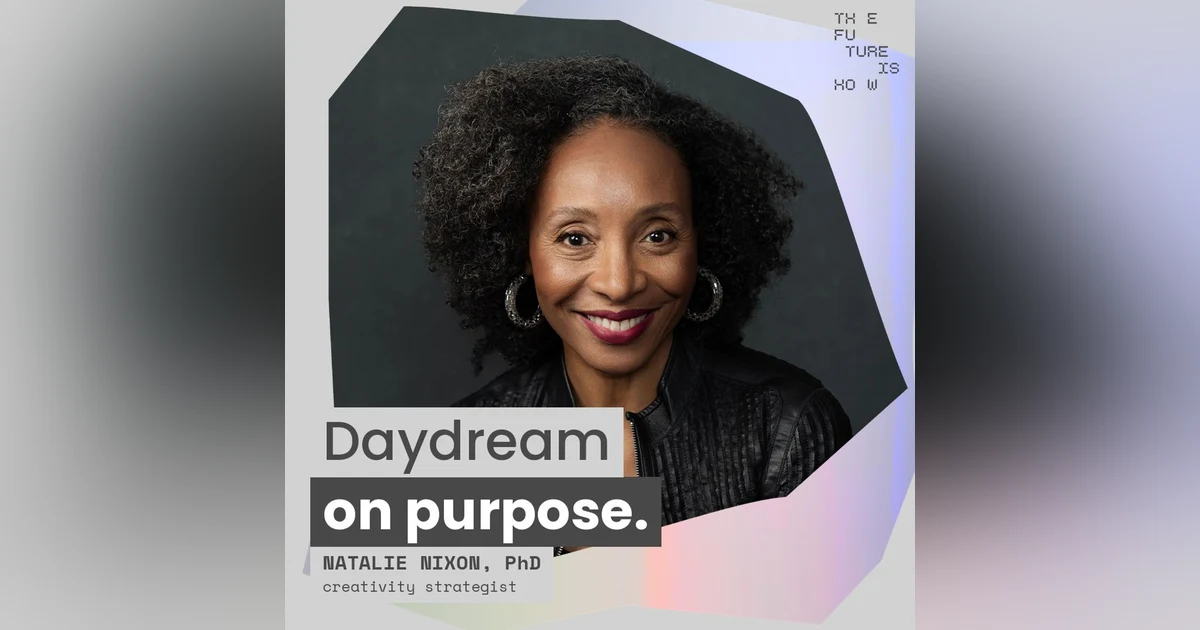
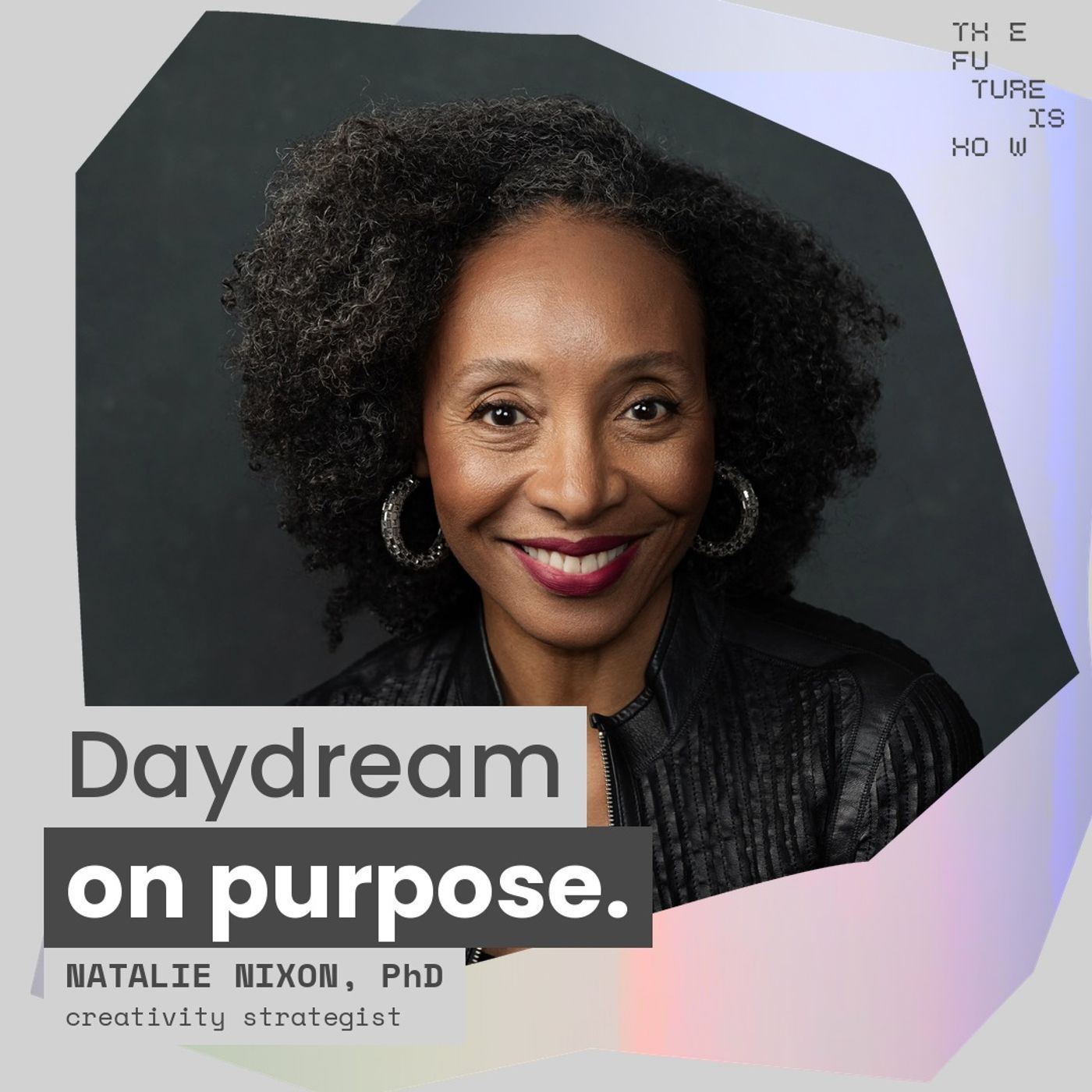
Dr. Natalie Nixon is a creativity strategist, the founder of Figure 8 Thinking and the author of The Creativity Leap and Move. Think. Rest. Her work redefines productivity and shows why our best ideas need movement, wonder and rest.
If you have ever filled every free minute with more work and wondered why your ideas dried up, this episode is for you. Natalie shows you why rest is not a reward for productivity but part of it, and how a few seconds of daydreaming can change the way you think.
In this episode, you’ll discover:
Why AI can give us answers, but only we can find the right problems
Why we’re in the middle of a human revolution, not a tech revolution
The 90-second daydream break you can take at any window
Why moving your body moves your ideas
How wonder and rigor work together, and why goals are dreams with deadlines
This episode is for every leader, creator and team member who feels busier than ever in the age of AI. You’ll leave with a new way to see your time and a simple first step you can take today.
Please note: due to technical issues during recording, Natalie’s audio quality varies in parts of this episode.
Connect with Natalie Nixon:
Website and her books, The Creativity Leap and Move. Think. Rest.: https://www.figure8thinking.com/
LinkedIn: https://www.linkedin.com/in/natalienixonphd/
Two free gifts from Frederik:
Mindstate Moments: one small practice every morning. Takes two minutes. Changes the rest of your day. https://frederikgpferdt.link/join
Where to Start: you know that feeling of wanting to change something but not knowing where to begin? 30 doors into the best of this podcast, matched to how you feel right now. https://www.frederikgpferdt.com/where-to-start
Listen on Spotify, Apple Podcasts and wherever you get your podcasts: https://www.podpage.com/the-future-is-how/
Chapters
00:00 A human revolution, not a tech one
00:36 Welcome, Natalie Nixon
01:21 Introduce yourself as your future self
03:14 The two-day micro retreat
06:27 Why daydreaming isn't wasted time
09:00 The 90-second daydream break
10:02 What dance teaches that a desk can't
12:59 Starting with movement at Stanford
13:51 A Monday that starts like a dance
15:41 Wonder and rigor, explained
17:44 Where wonder hides in a normal day
19:54 When to stop dreaming and start doing
22:44 Natalie's two books
25:53 Rest: the one we skip most
28:05 What readers changed after the book
30:33 The five-minute doodle sprint
34:50 The human, AI, human sandwich
37:20 Finding problems worth solving
39:33 Try this week: read fiction
41:31 We're in a human revolution
42:06 Why in-person experiences gain value
43:46 What's next for Natalie
44:41 Three ideas to take with you
Frederik: Most of us have a version of the same problem showing up. We're busy all day, and somewhere in that busyness our best ideas stopped showing up. Today's guest says that's not a talent problem, it's a rhythm problem. And the fix doesn't add anything to your day. She was a dancer, an anthropologist, then spent years in fashion factories in Sri Lanka and Portugal, taught for 16 years as a professor, and wrote The Creativity Leap and Move, Think and Rest, which turns one. next week. Natalie, I'm excited to welcome to you to the show The Future Is How.
Natalie Nixon, PhD: Thank you, Frederik. And thank you for remembering the one year anniversary celebration for Move Think Rest. I really appreciate that.
Frederik: So I wanna try something with you before we dive in. forget the bio that lists what incredibly accomplishments you've already done. Introduce yourself the way your future self would, the version of you a few years ahead who has already lived what is coming next.
Natalie Nixon, PhD: well that's a great question because I just have come off of a two-day micro retreat that I gave myself. I gifted myself at a really wonderful hotel FYI in Philadelphia called the Hotel Anna and Belle. It's an oasis in the middle of the Fishtown neighborhood in Philly. And I was doing a lot of dreaming and forecasting prompts for myself. I was doing I started up some what I call backcasting, what I think gives me a lot of courage. One exercise that I did, Frederik, is I had two pages with a title Describe How You Felt, where you were physically, socially, mentally, spiritually. This was but it would have been back in it was the first the first marker was the year 2000 and then the next marker was the year 2020. And what was so cool was that I could see evidence of the growth that happened. Things like I had wasn't married yet in 2022, I was actually getting over a terrible breakup. I wasn't a homeowner, I wasn't a professor yet. So many of the things that I associate with my identity now were not there. And then even so from six years ago, a lot of growth. So if I were to describe how many years into the future, did you say?
Frederik: You choose a couple of years, yeah.
Natalie Nixon, PhD: A couple of years? meet this lifelong dancer, open water swimmer, and builder of creative capacity, Natalie Nixon, who loves building and designing experiences that help you to dream larger and and decide more boldly. Something like that.
Frederik: Wonderful. wonderful. Tell me more about that two-day retreat because I think that's something probably we should all gift ourselves. And I love that you frame it that way. That's a gift to yourself. so tell me
Natalie Nixon, PhD: Yes.
Frederik: a little bit more, but also tell me how many gifts do you give yourself each year and how do they look like?
Natalie Nixon, PhD: Well, I'm I I I always plan on doing a quarterly micro retreat and I'm probably averaging about three. And this particular micro retreat I actually cordoned off four hours each morning. On the afternoon of the first day I had a ballroom dance class, a one-on-one lesson and then a group class. I was really looking forward to that. I rode my bicycle down to the property. They were able to store it. So for me, riding my bicycle was just it is the beginning of the retreat. And I sat by water. I sat by a beautiful, we call it here spools, small spools. there's something very generative about water for me in my life. I think for all of us, but you know, for me, I really intentionally try to be near water as much as possible. And I was I did a few things. So I did that exercise I just described and I had a two by two on the bottom of each of those prompts where was I two thousand and two twenty. And I was asking myself to reflect on who I was socially, emotionally, physically, mentally, spiritually in each situation because I it's it's important for me to reflect on that in a multi dimensional way. So that's kind of what I call back casting. And then the forecasting piece was everything from I've started launching Leap Labs because it's really tapping into the inner teacher in me. I taught as a professor for 16 years, and in my 20s, I was a middle school English teacher, which was probably the best training I ever seen to go on to do everything I went on to do to be a middle school English teacher. But in the forecasting, I was really dreaming ways that my leap labs would be super impactful. I was dreaming of partnerships because you know, we don't get anywhere alone. And I was thinking about business partnerships, I was thinking about strategic partnerships and being very audacious in the way I did that. I also want to show you, I actually have the book here. This is a great book, it's a really large size book, and I bring different sorts of pens with me. So I was, you know, lots lots of writing and scribbling. But also trying to doodle things out and thinking in mind maps and those sorts of things and using colors. was thinking about my ideal retreat because I will start to give retreats and host retreats that really break down my principles that support wonder and rigor and how to toggle between that. And those are six principles of inquiry, improvisation, intuition. movement thought and the rest and they're they interweave wonder and rigor of the overarching principles. So if it's an opportunity to dream, I think we have to we have to give ourselves permission to dream. We have to set aside the time and the space to dream because where our mental models begin to shift. And once our mental models shift, then our behaviors can start to change and then culture changes either, internally when our small collective and even larger. But it has to start with the permission to dream and pretty audaciously.
Frederik: Let's stick for let's stick to that notion a little bit more about daydreaming, right? We dream at nights, that's for sure, but we don't give us enough permission, I think, to dream during the day. So what is a good practice that you would recommend for us to do to really engage in that daydreaming? And what's the what's the benefit of that? Because we I remember when we were probably a little younger, right? When you were daydreaming, that was not really welcomed, right? In school or in other contexts, in the professional world, if you're just daydreaming, right? People thought like you're not productive, you don't do the work and so forth. So what is what is daydreaming really about?
Natalie Nixon, PhD: Daydreaming is a version of mind wandering and now the the neuroscience research demonstrates that mind wandering is essential for the most For the greatest synchronicity in our in our neural synapses in our in our brain. So we we tend to focus on it only on the cognitive load in the frontal neocortex, and we tend to emphasize that that's where our best thinking gets done. But it turns out that in different regions of the brain, we're probably only optimizing, utilizing 20% of the brain each day. There are some deep dimensions and recesses, and even the way the brain looks. See all the crevices in the brain where mind wandering, daydreaming actually helps to spark those different neurosynapses. And what's really happening is that the default mode network is being activated. So the default mode network It's connected to I'm forgetting it was either the parasympathetic or the sympathetic nervous system, but it's connected to the nervous system. And the default mode network only gets activated when we get out of our head and drop into our body, when we detach from the world. And so that can happen during sleep, that can happen during a nice shower, it can happen during a rollicking. laughing conversation with an old friend. It can happen when we are immersed in an incredible book of fiction. It's essentially any activity that takes us away from the really important work at hand. And so as a child I was an excellent daydreamer. I still daydream a lot. And even before I learned the neuroscience research backing, how essential mind wandering is for the ultimate optimal synchronicity of things clicking into place. All of a sudden things are foggy and just a conundrum all of a sudden just getting clarity. I take daydream breaks and they can be as short as 90 seconds and all it requires is that you stand by a window, you go outside and maybe you sit on outside on some steps and watch an ant crawl. You have your timer on for 90 seconds and you just you just observe. Observe isn't the right word because observe does require cognition. You just let you let you let you let what I call sentient intelligence take over. So sentient intelligence are the sense making signals that we have that are related to our senses, that are related to our intuition, which is you know, powered by the vagus nerve, the lar the longest cranial nerve in the body. And I always come back to the work at hand with sharper thinking, I feel a bit revived, if I've started feeling bedraggled. And a lot of the time a problem, an idea that's been stymieing just it clicks into place. Or I something new comes into my mind that is helpful. But daydreaming is really essential so that we can do our best cognitive work.
Frederik: Thanks for sharing that. So you mentioned that you were an excellent daydreamer and you still are, but you were also an excellent dancer first. So most of us sit all day, you know, at our desks or we sit a lot, right, as human beings. So what did dancing teach you that a desk cannot teach you? And what would change if we use it more?
Natalie Nixon, PhD: I love that question. What did dancing teach me that a desk cannot teach me? First of all, I I like to clarify, I was I was not an excellent dancer. I did not start out as a great dancer, and I still don't think I'm a great dancer. I know that I love to dance. I know I'm a decent dancer. I know that I'm dancing has taught me to be very teachable. Dancing has taught me to be very coachable and trainable, and it gives me a lot of humility, gives me a lot of joy. dance is the gift that keeps giving because it helps me to be, you know, what we call a lifelong learner, what I call a clumsy student of something. And we actually are not designed as humans to be sedentary. And I write quite a lot about that in Move Think Rest, where the movement part is not about going to the gym every day, although that's what you'd love to do. Continue doing that. Movement is about movement hygiene. What are the ways that we're integrating movement standing, stretching into our day? Because when we move physically, our ideas move because the the spinal cord is an extension of the brain, that's an extension of the medulla oblongata oblongata. we are a system. so dance has taught me how to think in abstract. Dance teaches me pattern recognition. Learning choreography is a way to learn pattern recognition. Dance teaches me how to be brave about asking, raising my hand, asking the silly question. Dancers are nerds, right? So I have right now I go to on Monday nights, I go to a group West Coast swing class. The teacher Abby is married to a mechanical engineer, and she's also really smart in how she understands physics and how she under understands gravitational pull and forces and counterbalance and counterpoint. And I learned so much about life. There's so many life lessons. One of the Biggest life lessons that I've learned from dance that sitting in a chair in the same room can't teach me are the reminders to slow down. that caution comes up to me over and over again. It's also something I need to do in my life. I learn, I get lessons and admonitions like let me help you, right? Which is a lesson I've had to learn in my work. So those are the the gifts that answers, but but it could be it, I think for any of us, whatever your jam is, whatever it is that brings you joy, or you are a clumsy student, you look forward to showing up, there's so much transferable knowledge and there's so much happening in the neuroactivity of the brain that just becomes a light for the work we have to do that we're paid for, that we're paid to do.
Frederik: Incredible, yes. That inspires me to to dance more. And I remember one of the classes I taught at Stanford at the d. school was on creativity. And you know, most students think like we're starting with our minds, right? We th starting to brainstorm ideas and trying to look at like how can we generate more ideas and better ideas and so forth. But we started with the opposite. We started with a teacher, her name is Aleta Hayes. She was from the dance and performance department at Stanford. And so for the first 30 minutes, we were literally in the atrium dancing. And she taught us how to move our bodies, how to get energy in our bodies, right? How to become aware of our bodies and so forth, which then led eventually to better and more ideas, right? So starting with a a dance, right, or like some body movement really helped what you just were sharing as well to actually generate better ideas.
Natalie Nixon, PhD: that's a great example of embodied learning.
Frederik: So most Monday mornings start with a phone and a rush, at least for me, right? You're getting that, adrenaline, you're thinking you're behind, you're thinking about your your list that you wanna accomplish throughout the week and so forth. If yours were a dance, how would you start it instead? So the day gives you energy rather than takes it.
Natalie Nixon, PhD: So so you're asking how would I are you literally asking me to describe an ideal Monday as a dance?
Frederik: Exactly.
Natalie Nixon, PhD: I think that it would start as a slow limbering stretch from the floor. I would then make my way up to a standing position, and then I would welcome a partner to engage in a slow waltz to get me moving and to fill the expansiveness of the space. And then I would to engage in something like hip hop or the hustle or west coast swing in a little day where I'm really starting to get energized and then I would like to cool down by the end of the day and be mindful again of where I started of my heart rate of how my muscles feel how my feet feel on the floor And every dance every good dance class starts that way. It starts with with a slow warm-up of your where dancers are really good at reverse engineering the body, deconstructing the body, and then into an adagio, and then movement across the floor, and then the metal choreography, and then a cool down. So I would I would mimic that, but I've just plugged in some of some of the the my favorite dance. I actually waltz is not one of my favorite dances. I'm learning to love waltz. It has a lot to teach me, but I right now I find it cumbersome. But my instructor is trying to get me to love it more.
Frederik: So explain to us wonder and rigor, you would explain it to someone who has never heard those words together. And why having both makes you better at work. So let's take a group of maybe 10-year-olds. we just had back to school night the other day, and I was at all three schools of my my kids. And it's always interesting that there's some terminology right that shows up that If you would explain it to a ten year old, you would probably explain it differently than your in your professional environment. So help us with wonder and rigor explain to us like what they actually mean.
Natalie Nixon, PhD: Hm. If I was explaining it to a ten year old, I meant who I guess about being about fifth grade, I would say I would try to remind them of a fun kitchen experiment to explain to explain wonder of of like how a a mist appears from some something falling out. I might explain wonder. Actually, I might even use something like Legos. So play is actually a really great way to explain wonder and rigor. And the wonder would be the the one would be the joy and the fun of sticking different shapes together and different colors and being really curious about what's going happen next and waiting to see what happens next and seeing what starts to come together that you didn't plan on. The rigor is realizing that you actually intend it to try to create a circular shape. And how are you going to do that? How are you going to remove things? say goodbye to something that you thought was a good idea, start all over again. Or maybe you're trying to create a shape out of the Legos that looks more like a truck and it looks more like a lopsided wheelbarrow or something. I don't know. The rigor is asking for help, it's breaking it all down again, it's starting over, and then creating something pretty awesome, which brings you back again to the wonder. that might be one way I'd explain to a 10 year old.
Frederik: Great, great. So where does wonder actually hide in a normal day?
Natalie Nixon, PhD: for me, wonder is hiding in the pauses. Wonder often hides in the rigor. I I'm fond of saying that wonder is found in the midst of rigor and rigor can't be sustained without wonder. They are copacetic. These are these are kind of two corollaries. So when I say wonder is found in the midst of rigor, I'll give a really specific example. My bookkeeper has been asking me for two weeks to reconcile. Some lines in my my financial statements that were credits that she said she called it mystery, mystery line items, or she called it like suspense. She she didn't know what they were. And I was just dreading having to open up my bank account, go through bit by bit, and figure out where does this number come from, what was the source? About 11 items to go through. And what was so cool, I was about 10 minutes into it, and I found. That through for me that's rigorous. That's not that's not a space that I automatically and willingly go to is to look at balance sheets and and spreadsheets. But I I carved out 30 minutes. I said I'm just gonna I'm late on getting this getting this this information back to her. And there was a moment by 10 minutes in where I found myself really calm, something really soothing about every time I realized how the numbers aligned and clicked it into place, and then I typed in what the answer was. There was this wonder, there was this delight, there was this awe that was happening inside of me. So sometimes the wonder actually can be found, and the rigor makes sure that you are not conflating rigidity for rigor, right? Rigid being rigid is very different than being rigorous. So rigidity is not adaptive. Rigor is adaptive. Rigor likes to specialize, it likes to focus, it likes to get into the details. But it also has an agility to it that that rigidity doesn't have. So I experience multiple times during the week that that my wonder is in the midst of rigor. And it definitely happens when I decide to step away from the desk, when I take a daydream break, when I pause.
Frederik: So let's come back one more time to daydreaming. as we're living in a world that really is built around doing, right? So we we wanna do stuff, we wanna get things done, and we you know start off with our to-do lists and so forth. So, how do you know it's time to stop dreaming and start doing so ideas actually get finished?
Natalie Nixon, PhD: deadlines are really good instigators for stopping the wonder. goals are dreams with deadlines, and deadlines are the rigor. So if you spend too much time with your head in the clouds, you'll never get traction. But if you spend too much time in the weeds, focus on the minutiae, you'll miss the point, you'll get too myopic. So, one of the the best ways to ensure that you're designing in time to toggle back to the rigor is to assign a deadline. So I mentioned at the top of our conversation, when you take a daydream break, have a timer with you. Just set it for 90 seconds. If you have more time, five minutes, but there is a there you are making it you you're making it into a container. You're giving it boundaries. so that's the other thing about creativity that I think a lot of times people miss. One thing people miss is that people assume that creativity is a nice to have, not a must-have. Another mistake people make about creativity is something only artists are great at, but it all of us are our birthright as humans is to be creative. But the other third thing that people often get wrong about creativity is that it's somet it's only the wonder that it's something that you a a a blessed few people are anointed with creativity, but that's not true. creativity requires attention to detail. creativity requires knowing the rules so that you can break them, so that you can extend them and stretch them. The American choreographer and dancer Twyla Tharp, she wrote in her wonderful book, The Creative Habit, that before you can think out of a box, you must start with a box. And she said as as a dancer, as an athlete, as an engineer, as a scientist, you spend months, years, decades honing your craft, really understanding the principles, the fundamentals, and you go back to them over and over. so, you know, one of the one of the ways to make sure that you are tacking away from the wonder into the rigor of deadlines another is to make sure you've really grounded yourself in the fundamentals and the principles so that you have that ability to check yourself. and then a third way is by working in a team, right? And teams will help question your assumptions, team member will help you to pull away and dig back down into the details when necessary if there's been too much time and wonder.
Frederik: So you wrote The Creativity Leap a couple of years back and has been a big success. And now we are celebrating the one-year birthday of your next book, which is Move, Think, Rest. So, how does how do these two books basically represent you and your evolution, maybe as a human being in this world?
Natalie Nixon, PhD: Well, the Creativity Leap was born out of an observation that at the end of keynotes people would start to ask where can I read more about this? And I and I still use my keynotes as a way to prototype ideas. And it got to a point where I couldn't only direct them to my Inc. articles. I used to write for Inc. Magazine, now I write for Fast Company Magazine, same family, same company, but different different brands and that's when I was gosh I think I have something here enough of my own content in IP that to to write a book. So The Creativity Leap was at a moment in time in my career in my growth as a creativity strategist where I had the opportunity to give shape and form and rigor and a name to all these ideas that were bumbling around in my head. I was testing on different what I call microethnographies, sharing out about them on keynotes. The creative creativity represents the first foundational framing of my original ideas and work. MoveThink Rest is a reflection of my growth as an entrepreneur. And I don't know about you, Frederik, but I experienced that. Being an entrepreneur has required a level of mental fortitude that is very different from when I was a professor. And the mental fortitude requires greater self-awareness, it requires deeper reflection, it requires me to ask for help. It requires me to know what I don't know and to be excited to learn more. And as I even start out and Move Think Rest. I was just observing that whenever I stepped away from my computer to air quotes procrastinate, empty the dishwasher, go for a short five-minute walk, just just take put a time on the read that book of fiction for 10 minutes and then go back to the work. My thinking was clearer and sharper. And as I started to connect the dots between that, I thought maybe there's something to that. So this offering of a human-centered Operating system that helps us to not just produce more but to cultivate grit of work is an outgrowth of my own stage where I am in my business. How can I what can I be cultivating differently? How might I go about doing that? So, in those ways, each each of the books is is is a reflection of that. And then the second edition of The Creativity Leap, the first edition had no reference, of course. to AI or COVID or anything like that. And so the the new chapter really interweaves what does it mean to be creative in a in a time of ubiquitous technology. So yeah.
Frederik: So when I look at these three words, move, think, and rest, I wonder which of those do I skip most, right? And what does it cost me? So you've probably talked to many, many people who read your book around which one of those is the one that actually most of us skip and what does it cost us? So tell us what did you what did you find?
Natalie Nixon, PhD: The majority of people self-describe as skipping rest, as not taking enough breaks and pauses during the day, as not really getting enough sleep because we've got these phones by our bedside, of not taking the sabbatical, even though their company offers the sabbatical. And So it's it's the rest part that I find it's pretty ironic because in my view, this stage where we are with so much rapid change of technology, the opportunity with AI, because it gives us answers so much more quickly, is actually time. But what I observe, what we're doing is we're just filling the time with more busyness, right? We're not taking the found time to pause, to have more eyeball eyeball. conversations, to reflect more, to have more metacognition and critical thinking, to imagine a step further after whatever the LLM gives us as an answer. So That that that is an interesting irony that we complain we don't have enough rest, but we actually limited time with the technology could afford us a bit more rest. Now, a lot of this in my view is because we the the pendulum hasn't swung even to the other side yet in terms of figuring out how do we redesign work in light of AI tools and burnout and new rules for work. but if we start to prototype and experiment in small ways and as as teams and later as organizations, we can begin to have different KPIs, different incentive schemes that really reward rest and what comes out of the rest. But it's going to take some brave managers and leaders to begin to prototype those new ways of working.
Frederik: So one year after the book, what did a reader do with it that changed their week, month, year, or even life? As you've been on book tours, you've talked to a lot of people who read your book, right? You probably received some messages from from readers too, and how it changed something in their life. So what's something that you remember was kind of like surprising what they took away from the book?
Natalie Nixon, PhD: One is definitely leaning into a micro retreat. So I did a basically a two day retreat, even though I was kind of cording off to the mornings. But when I say micro retreat, it could be committing to a half day every quarter that you won't begin work until 1 pm. What whatever is easiest for you, but people leaned into that suggestion. People also leaned into starting with the largest artifact of organizations, which is the meeting, and leaned into different ways to design meetings. So everything from starting meetings with questions and question storming, for example, is actually integrating both thought and rest because thinking in questions, that's a that's a different way of thinking. tend to evaluate our progress, our performance only on the answer, on the solution. But if we haven't, as we haven't even asked the question, it doesn't really matter. So really exercising that muscle of thinking very different thinking questions is something that's really exciting for people. It's exciting for them to realize I don't owe it, I don't need to only have answers, that actually the start of something pretty new and big and different is going to be the questions. They've moved into that as well.
Frederik: I just had the leading expert on meetings on the podcast and he shares some incredible insights around some of that you've just shared as well, right? Like how do you actually run better meetings and how can you make meetings not just more efficient but also more enjoyable, right? So that people actually want to want to meet. Because what what he found when asking people to design their perfect work day, he found that everybody was still including meetings, right? So people want to meet. But when they meet, they basically don't know how to meet in a way that you know is valuable, that is enjoyable, and that actually makes everyone happy on the meeting too. So his name is Steven Rogelberg.
Natalie Nixon, PhD: Nice.
Frederik: And he should definitely check that out. Yeah. He has some incredible insights and how to meet better. Natalie, you also invented something that is the probably the shortest sprint that I I read about, which is the five minute doodle sprint. Can you talk a little bit more about it and maybe you can lead a quick exercise with me around that.
Natalie Nixon, PhD: Okay. Well, we have to start with a prompt. We have to start with a conundrum, a question, a challenge, an opportunity i i in an organization, a business could be a better marketing strategy, or have it collaborate with a former competitor or the company holiday party, it whatever it doesn't matter, right? But instead of asking people to share their ideas as sentences and as a paragraph or as bullet points, what we're asking people is to share their conception of what the answer is visually. And there's like there's a some important reason to do this. Number one, as humans, we are highly visual. We are visual creatures. And that goes back to the way the brain is designed to survive on the savannah and be able to see from far, far distance a different movement. on the landscape to be able to react to that. So we're highly visual beings and and and creatures as humans. But doodling I always have to remind people has nothing to do with your ability to draw. So if you and your viewers and users just right now let's just start with a short exercise. Everyone they have got a piece paper, a sharper I just have a regular pen, just draw on your piece of paper a circle, then draw a straight line Draw a triangle. Draw a happy stick figure person, a smiling stick figure person. How about a square? Draw a straight line arrow. Then draw a squiggly line out. And finally, draw a Venn diagram, three intersecting circles. So just drawn the circle, the line, the triangle, the smiling stick for your person, the square, the straight arrow, the squiggly arrow, the Venn diagram. You have just demonstrated that you have the ability to visually communicate. And you awesome. And here's mine. Alright, and if you can visually communicate. Then you actually have mastery of abstract complex ideas. So, for example, what if I'm trying to demonstrate to my team that in our current state we are, you know, behaving in a certain way, and I'm suggesting that we add in a different element of behavior, and that's going to lead to change. I could say all that, or I could doodle. Something like this, show you in a second. And you can see this from a mile away. This is in the background. We start with this idea, we add in this other element, and that leads to change, delta, shift. This is really crude, it's not impressive, it's not a sparkly PowerPoint. And what it begins to do is invites clarifying questions, it's not intimidating. And so this a five-minute doodle sprint can is just asking us to visually, crudely with doodles, dream up the answer, scenarios to the prompt, and then to share it with someone. And if you don't have someone to meet you to share with, take a photograph of it, can email the photograph, ask for people to share feedback. If that's if you're working as a distributed virtual team, but if you're working In person, this is a great way to start a meeting. And also what you now have is a physical artifact that you can tack up on a wall, you get a caption of of what this idea is, and you can invite people to ask post this more clarified questions. So it it democratizes a problem-solving process. It uses a very different part of your brain that you actually are quite excellent at. Dare I say it's fun. So it really helps to recalibrate the nervous system. And it it it just is a way of clarifying how much of this do I actually understand. Because if you can't explain it to a five year old or to your grandmom, you probably don't understand it, which is not a bad thing. That that's it that's an insight, right? It helps us to it reveals what more we need to explore further.
Frederik: I love that. Shanks for thanks for sharing that exercise with us. incredible. and it reminds me, and I haven't done that, but probably if you take a picture of that circle, the square, and the triangle, and you upload that to your preferred AI, right? The ChatGPT, Gemini or Claude, maybe AI will ask you those clarifying questions. What do you mean by that? Can you give me some more details? what does the circle stand for? What does it represent? Right. So you can use AI as your partner here to really
Natalie Nixon, PhD: That's right.
Frederik: help you think deeper about what you actually want to communicate in a visual way.
Natalie Nixon, PhD: Right. What a asking the AI, what have I missed? Right? And then that way the AI becomes the augmenter, the co-creator, the amplifier, the accelerator, all the ways that ideally we can be using the I I and I keynote keynote lately I've been calling them human AI human sandwiches. Instead of thinking of it as an AI human AI sandwich. We begin with a human. We insert the AI tool and we end with the human, right? To really make sure that it's an augmenter, it's not the end all be all.
Frederik: That sounds quite yummy, I have to say. it's it's a it's
Natalie Nixon, PhD: Yeah.
Frederik: a good metaphor. Yes, the human AI sandwich. Yes, we start with the human with a question that you know they care about. We add the AI into it, but also we end with the human, right? So
Natalie Nixon, PhD: That's right.
Frederik: let's stay a little bit more in that In that AI space. So if someone listening feels AI makes their ideas matter less, right? What would you tell them so they stay confident in what only they can bring as a human being?
Natalie Nixon, PhD: To do is to ask the AI tool to ask you questions, right? Because in that way it's prompting more from you. So that kind of resolves that. The other thing to do is to make sure that you actually are treating it as this human AI human sandwich it that you're that and that the the the next level human can be daydreaming about it. A bit further on it with someone else, with another human being, to build on it. It's all it's all about the build, which is what improvisation teaches us. It's what all creative acts teach us. Creative acts also teach us that you never arrived. So just reframing in that way by making sure that you are not ending with that answer and that you're asking prompting prompting the tool to ask you questions also ensures that it doesn't just end there.
Frederik: Yes. What's one thing that a machine will never be bored by? And why is that our advantage?
Natalie Nixon, PhD: That a machine will never be bored by. Well, that's assumed that machines have emotions, which I don't know that machines have emotions. but if I maybe like build on your question a bit, something that it that that the the machine learning will never will will not be able to do as well as we do. And I learned this by listening to a Wall Street Journal podcast with the CEO of Y Combinator. I think his name is Garry Tan. And he is very bullish about AI and technology. I mean they're investing in those sorts of companies. But he pointed out that AI cannot figure out what the problems are. We have to come up with the problems. And we can only come up with problems by getting out of the building. We can only come with the problems by, being an anthropologist for the day, diving into qualitative research, deep observing of of of of people and and and letting questions emerge for us. And that then those problems fed into the AI tool, it will not be bored by that. But we can't depend on the AI to think of those problems. We have to engage in the world and with each other. to discern what the problems are.
Frederik: I love that framing, yes. It reminds me that w one of our jobs as human beings is to be problem finders
Natalie Nixon, PhD: Yes.
Frederik: and not just problem solvers, right? Because AI can help you solve some of these problems, at least kind of like conceptually, thinking through some of these ideas, but like finding a good problem that's worth solving, that's up to us humans, right? Because we have a value
Natalie Nixon, PhD: Right.
Frederik: system and when we think, you know. There is injustice out in the world, there is climate change, there are many, many things that we are literally not just bothered by, but annoyed by, right? That we want to find a solution for. That's that's the human advantage, right? Because a machine can never find a problem that it's bothered by, maybe a technical problem, right? But humans they they can go out into the world as you described and they can find problems around injustice, again around climate change, and many, many other things that really we need to find a solution for.
Natalie Nixon, PhD: Right.
Frederik: So I wanna make this very practical for people, right? And we already have I think many, many things that people can try out, not just kind of like a daydream, starting your day with a dance, get some more rest, do a one minute doodle that really activates your your mind in a different way. But what's one thing people can try this week to get their best ideas back? What's one thing that you probably put into your week or into every week?
Natalie Nixon, PhD: one recommendation is to start reading more fiction. I think a lot of us are very proud of the nonfiction we read, and and yes, please read a lot of nonfiction. And fiction is the cauldron for helping new questions emerge. It's the cauldron for building curiosity, which leads to empathy. You get to pretend, you get to imagine. And again. You may think this has nothing to do with the work that you're tasked with at your painting, but it absolutely does because it's exercising different neural synapses that actually lead to greater synchronicity and synchronization for that frontal neocortex. So making sure that you read a great work of fiction is important right now. I'm reading I I was paying I love mysteries and thrillers, so I was really excited to listen to the New York Times daily podcast about the The 50 best thrillers of the 21st century, and an author who's three of her books made the list was your name is Tana, T A N A French. I think I have her name correct, maybe. and I'm reading a book she wrote called The Searchers. It's from the point of view of a middle-aged white guy from Chicago, it takes place in Ireland, it is not my world of. And yet it is so interesting, it is so intriguing, it it draws me in, it it helps me to have to say, what would I do in that situation? this that reminds me of extra I wonder if I could if I try something similar in this sort of interaction. So that that is that is one takeaway. And and I really we also the big takeaway I really want people to understand is that we are not in the middle of a technological revolution. Most people think we are. We are actually in the middle of a human revolution. The technology is a tool. And it's a tool that, if we play our cards right, could be the greatest reckoning with what makes us uniquely human. It could be the greatest catalyst for us to really ramp up what makes us uniquely human. So diving into those human activities that all that I've talked about with you over the past hour is going to be increasingly essential. And and I'll just leave one more point. I I'm not a big basketball fan, although in Philly I love my 76ers, I love young football, American football, I love the birds, the Eagles, and my husband is a big sports fan, follows them closely. But I was very interested in reporting on the recent sale of the LA Lakers, the Los Angeles Lakers, for $12.5 billion. And while it's mostly a story about The business of sports, economics of sports, which is fascinating and of itself. Here's the part that I think was really very interesting. Why was sports valuated so highly? Like that's the question that stuck with me. And they touched on it, that wasn't really the focus of the interview. But the reason is because high yield investors have determined that in a time of AI, ubiquitous technology. It's high touch, in-person, engaging experiences that will increasingly have greater value. And sports is like one of the biggest areas where we see that. And so that to me is a really important signal that we have to pay attention to. Now there's a lot of challenges with that large of a divestive. But to me, that signal was really interesting. So I that's what I read some fiction, understand that high touch in person and ways if you're a manager, how can you really spark that among your team? It's it's it's it's gonna allow you to stand out and to make sure that you can hire and attract the best people.
Frederik: Wonderful. Thanks for sharing that. So Natalie Nixon, what's next for you?
Natalie Nixon, PhD: next is my November 7th Leap Lab in New York City. And I hope that anyone who is even vaguely inspired by, curious by, provoked by our conversation, go to figure8thinking.com and check out the Leap Lab on November 7th in New York City. And we actually are having a nice promotion right now before Labor Day, September 7th. But it's a really Highly curated deep dive mastermind, help people go from ambiguity to clarity and leave with two prototypes to then develop over the next year. And you get to be in a room with people you don't know, so you get to ask naive questions, you get to answer the naive question, you're not in competition with the people there, and you're and you are gifting yourself the space and time to think deeply and differently.
Frederik: Amazing. Definitely gift that to yourself. Natalie, you are a gift to all of us. So thank you for sharing your wisdom, your experience, and sharing three things that we all can take with us so our best ideas come back without adding a single thing to your day. We learned that the one we skip most is rest from Move, Think and Rest, your latest book. We learned about a one-minute doodle that everybody can try to really activate their mind in a different way. And a Monday that starts like a dance, which I really enjoyed. So we can all start our Mondays with more energy, more refreshed, and and just go into the week differently. So try one this week and notice what shows up. Thank you much so much for joining us here. On The Future Is How podcast. And listeners, if you enjoyed that show, please share it with a friend who probably also needs different ways to just tap into their creativity and that their best ideas come back without adding a single thing to their day. So this is The Future is How. My name is Frederik, and I'm very excited that we can all shape our futures in ways that we can't imagine yet and that we have the power to create a better future.


