From Doing to Being | Ruchika Sikri on Mindfulness, Connection & Tech That's Good for Humans
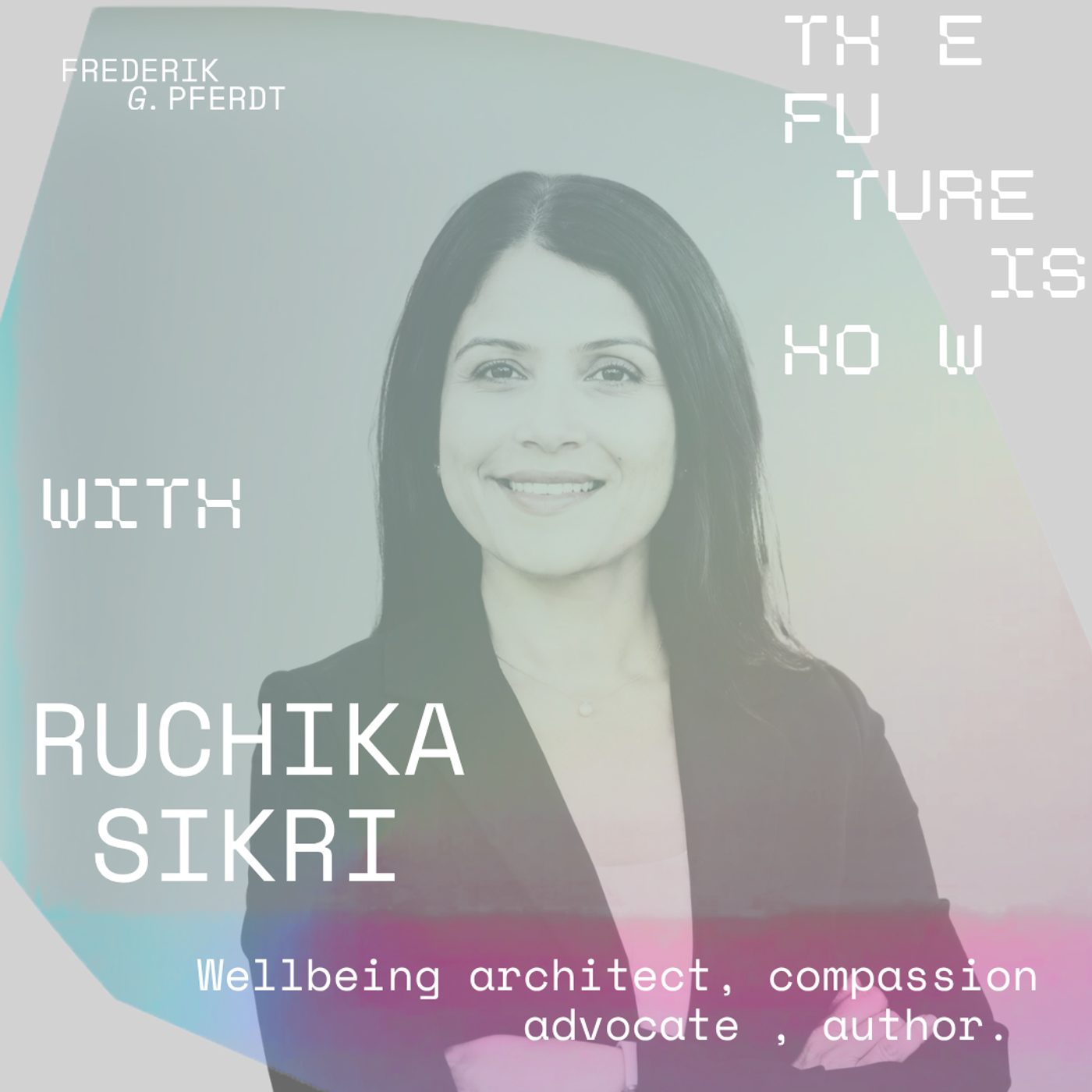


Ruchika Sikri spent 25+ years in tech (Google, Microsoft, Cisco) and led wellbeing and mindfulness learning at Google for 15 years, scaling programs like Search Inside Yourself and the gPause community of practice to more than 120,000 employees with a community of 400+ volunteers. Today she is a Founding Partner of Wisdom Ventures - which recently closed an oversubscribed 77.7 million dollar fund, with Dr. Vivek Murthy joining as a partner - and the author of Brain Fitness Blueprint, which connects ancient wisdom with modern science. This episode is a future built from within: clarity, compassion and connection as the foundation for navigating what's next - the Future-ready Mindstate, turned toward how we work, lead and care for each other.
Chapters
00:00 Cold open: congratulations on the book and the 77.7M fund
02:45 The geodesic dome: why no one builds anything alone
06:09 How it began: a heart palpitation and 20 painful minutes of sitting
08:35 Finding gPause and Search Inside Yourself at Google
10:35 Scaling mindfulness: Thich Nhat Hanh fills Charlie's Cafe with silence
14:34 Guardrails: keeping it secular, science-backed and real
16:16 What worked: growing wait-lists, quiet rooms, Googlegeist results 18:10 Caring for humans at work (and the "nine-to-nine" worry)
20:57 Teachers: Sri Sri Ravi Shankar, Thich Nhat Hanh, and Jack Kornfield's candle
27:10 Practices she's experimenting with: cooking, roots, connection
29:35 From doing to being
31:16 Loneliness: what's really underneath it
38:51 Why Wisdom Ventures - and how a 2M plan became a 77.7M fund
44:27 What she looks for in a founder: sincerity and "jugaad"
51:36 A short mindfulness practice
59:10 What gives Ruchika hope for the future
Ruchika online
LinkedIn
Book - Brain Fitness Blueprint
Frederik online
Podcast - The Future Is How
Newsletter - NEXTletter
Learn & Experience
Awareness Test
Engage
Frederik: Welcome. Thank you. It's â something I've been really, really looking forward to spending time with you and Talk about things that I think we're both passionate about. First of all, congratulations many things. Congratulations to your new book. Thank you. That you've just â published and â you're now bringing to people around the world. It's wonderful. And also congratulations on Wisdom Ventures second funding that we just closed with an oversubscribed 77.7 million. dollar fund so congratulations. Thank you. And â also congratulations to just â always bring your calmness, your wisdom â time you visit here. And so I'm I'm deeply grateful that we today can actually record our conversation and give people access to your wonderful mind and your wonderful heart. Thank you, Frederik. Yeah. It's a joy to be here with you. And know we share so much passion and interest in certain on how we want to see the world. And gave so much to co-creating the book we wrote. Yes, and that â truly speaks about how you are as an individual, You give the credit immediately to other people and today wanna shine a light on you. all the that you're doing, all the mindfulness, And you're on a big mission. You're on a big mission to bring the world closer together, right? You wanna have the world be more connected. wanna bring compassion to the world through access to well-being programs and initiatives. And so it's just wonderful to see that this mission is something that you really drive forward, but also that you have a lot of people that you're helping to really bring their own ideas that they have in this world to And to all the listeners, Rushika Sikri here, a very good friend of mine. we've been at Google together â working on seem to be different initiatives, You specifically on mindfulness, â my initiatives were driven on innovation, but I feel like It's the same thing that we've been doing, Just through different angles. â And we're here today in a geodesic dome. and when you look at these triangles, â you see that â all these triangles basically the whole building together. So there's not one beam that only holds the whole weight of the of the building, It's all these triangles working together. â And reminding me of the work that we've been doing. Trying to have â many, many working towards a more innovative, a more creative, a more mindful culture in an organization like Google. And you've been doing that for over 15 years. And â you had more than 400 people helping you to build programs that really touched â everybody in the organization from the CEO to the leadership teams to interns to partners of google and â it's just been incredible to see that so let's us back a little bit before we talk about the future what was your initial motivation to really more mindfulness into an organization like google Thank you, Frederik. I think the analogy that you just painted on, know, these triangles holding this building together and, you know, any building, like you look at it, the beams and all of the things that come together is what brings things life. No one of us, n none of us can just do it alone. And I think that is another that you and I share, the trust in building communities â and knowing that the power of â that community is so much more. My grandmother used to tell me, like, you know, you try to lift something with one finger, like if you try to f lift something, it's hard, right? But if you put all your fingers together and multiple hands join, like we can move mountains and you know, really like shift things in the world. so but then each of us have to come together to do that. and I think we had such a Beautiful opportunity to be in a position and have the support at Google to be surrounded by not just executives who believed in the programs we launched and scaled at Google, but the community that came along. Like so many volunteers came and you know trained in the program that you were teaching and saying with mindfulness and compassion. We had these 400 amazing Googlers doing regular jobs, like being an engineer or a salesperson or finance. Finance operator and they found something in my meditation and mindfulness and they to share it with their peer groups. And motivation was no different to be honest. I joined Google 2006 and â you know still settling down in America even though I had moved here in 1999, close to that time, but it really really hit me when I became a mother that how important health and well-being and a community is. you know, when you're raising a child. I was reading somewhere today that, you know, it takes a village to it always has taken a village to bring up humans, you know, but we have now become such isolated satellite families or individuals that it's hard to kind of live in that pattern anymore. And â lo and behold, I was managing â home life, bringing up a kid, my beautiful daughter, and the intensity of working at Google. I was not doing mindfulness learning at that time. And â day I just this like massive heart palpitation and I was probably in my early thirties â and that quite concerning. â And I to an on-site doctor, all the privileges we had at Google. Like right around the corner, we had a doctoral office and the doctor told told me like, you know, just to manage my stress. She didn't ask me to go do blood work or get she said, do your normal test, but I think you know you might be experiencing stress when she asked me certain questions. I was working 14, 15 hours a day, taking care of home stuff and trying to like spend time with my daughter beyond just feeding her food and giving her a bath. and that was all kind of weighing on me. So when I did that, and so she said, like, go â this box breathing, like mindful breathing. And had never heard of mindful breathing or anything like that, even though I grew up in India the first 23 years of my life. I had heard about yoga, I had heard about breath work and meditation, but my family didn't practice it, so I didn't know. And so I Okay, â I started doing some That practice before I went to bed, like lying down on the bed. And then I found this group at Google who was meditating in a conference room. I was walking by the hallway and I saw a sign on the Zaragoza conference room in Building 40, as if you would remember, â where said, We meditate here every Thursday at 2 p.m. And I walked in one of the Thursdays and I sat there, and as I've mentioned before, â you know, in my book as well, that it was the Most excruciatingly painful 20 minutes of my life because I didn't know what was going on. And later I realized the agony was like sitting with all of the craziness that is going on in our brain, in our body, the sensations, the thoughts, the feelings. And the way we I used to cope with it is to move more fight more and be more feverish. And I kind of just stopped, all of it was like the demons that just showed up in front of me. But towards the end of it, when the bell rang, I felt some sort of calm. And I'm like, what was that? Like I was feeling so unsettled through these twenty minutes, but something shifted. And that was the ori origination of like my own journey on the path of mindfulness and meditation, working in a high tech company, very high-paced. and I volunteered in that space with some of our colleagues like men. That's when Bill and I kind of just came together and started doing some mindfulness â programs of scaling, search inside yourself, which was our marquee mindfulness program at Google. And then also created this community of practice called GPAuse where people can actually go and sit because mindfulness works not only when you read the book or listen to a talk, but when you sit in practice. And that's when we started developing a community of all the Googlers who were so happy to come and join us. And have the permission to do this. Who knew? Amazing. Yes. Thanks for sharing that story. Yeah. So powerful to hear that from your own experience, Being stressed and feeling starting to engage in mindfulness practice and joining a very small group, right, in a conference room. probably by accident, right? passing by and seeing like what they're doing and and joining them to now scaling that to a whole organization and bringing that to everyone. What did you find hardest when trying to really bring GPOS as a program or initiative to to many, many people who probably experienced the same, right? They were overworked, â stressed out, â had many, many hours of of work in a company that â grew incredibly in a very short amount of time. So what were some of the the the that you â discovered on Yeah, I'm trying to jog my memory. I think we very unusually â of the roadblocks were actually being removed when they started doing, you know, scaling GPAs as if it wanted to enter Google. It wanted to be present. And I think everyone who was involved in it like just really firmly believed that this needs to exist all the way from leadership giving us headcount, dollar. â teachers to teach this beyond Meng, who was only the first trained teacher, because he wrote a book on it. And I would say we had really smooth run. I remember when we launched G Pause at Google, â we invited wonderful Vietnamese Buddhist Tignathan. Were you present for that event? â I was not, but â I watched the years afterwards. And that was yes, I think â I think often about â things that I have missed in my life and this was one of the the things that I definitely feel that I would have tremendously benefited from being present at that at that end in that event, yeah. But tell us tell us more how that how that went. â I'm sure you I'm glad you caught up and you were so know, part of the heartbeat of these programs at at Google with teaching empathy and compassion in your programs too. But the it started was like so we got we had a meeting with the leadership team â and they Well, well if this works and if it supports employees help And well-being and helps people build emotional intelligence and and better teamwork skills and leadership skills. Let's it run â through taps. â And was our â SVP of people oper operations at that time, Laszlo Bach. He really supported and understood that this has potential to support Gogra's health and well-being. and we're like, we were off to the races â and â with Hoss. So when we launched it, I think it was August twelfth, if I'm not wrong. I remember that day very well. And so someone knew Tignathan. people lovingly called him Tai, which means teacher. â in Vietnamese, I think. â he was invited and we organized an event around him to launch GPAs. We printed like this life size â like you know, probably sixteen feet tall, like ten feet wide, and we put it in Charlie's cafe â few days before, like announcing that this is coming and everyone was just curious. And it only said G pos. It didn't say anything else. â then Tignathan â and he brought like his Sangha of teachers with him, the nuns and the monks, and they sat in Charlie's cafe. We had to vacade, no food served in Charlie's cafe that day. And there were 500 people in his presence. And led the whole day of mindful activities where we he a discourse, we had â mindful lunch. â Where it was served. And I think that was the first time Charlie's Cafe had been so quiet. Like you know, the you know, commotion. You know, it's like a place where people go and talk and mingle and chat. It was just pin drop silence. And then we did a mindful tea ceremony, â and got up and he walked to the courtyard right between the building 40, 41, and 42, and he went everybody started filing behind him. Like as if it was just some kind of energy. Carrying us all. And he sat down in the middle of the courtyard with his bell, and everyone sat down and he rang the bell, and everyone just went into deep meditation. And people who were not part of the event were walking from one meeting to the other in between buildings, and they also sat down with us. It was just a phenomenon to observe. Like you know, having the the belief in it, the faith that this needs to exist, and not questioning it, and putting the resources behind it, not even knowing, like, what is the like we didn't have any idea on how we're gonna measure the effect of mindfulness and compassion learning at Google, â we believe that this needs to exist now, and the roadblocks were not faced like early on, obviously, just the operationalizing of it, like you having the visiting offices to launch was â I think the only thing like I think down the line there was like this healthy mysticism and healthy skepticism when it comes to practices, any spiritual mindfulness practices. â And where it kind of became a little bit challenging for me to like manage, okay, â what's what's not okay in an office setting. â So set some guardrails there, like, you know, it should be a secular offering. It should be backed By neuroscience, it should be integratable to companies, you know, deliverables. So that was, I think, some of the tug of the war. Like we had to play sometimes because Googlers are passionate people. I was two, I am still. there are myriads and millions of ideas, but we had to just be very selective on resource management, the integrity management of our programs. So if you would share with us like what's a powerful teachable moment or experience that you found in the programs that really had a tremendous impact? either in GPAS or in Search Inside Yourself or other programs, what were some of the the things that people really, really engaged in? Yeah. to it, I would say that was like a great, you know, indicator and a win if we want to call it that initially. And secondly, like the whole word of mouth like spreading was also kind of phenomenal, like wow, we're continuing to offer more classes where the wait list is not going down, â is a great indicator. Then when we started doing â started like kind of reflecting on how people practicing? Where do they go when they get this knowledge? â were just kind of these like signals we were getting that this is important for Googlers and they want to not just participate in a program but offer it ahead. then we started seeing improvement in our Google Guised wellbeing survey results as well. and which is a compounding effect of the organization started stabilizing, we had more leadership presence and vision was clearly communicated. And we a lot more resources within People Dev, through our team and â Rue's real estate and workplace benefits team, we worked very closely with them also on coming up with some great ideas on helping Googlers have a quiet room. I know if you noticed, like by the time we left, every new building of Google had a quiet room. And that was a big â contribution that, you know, GPA's and kind of programs could create at the physical level. Amazing. So what are other organizations â I think it is so important to pay attention to humans in your organization. Your organizations wouldn't exist if these people were not there, you and I were not there. â right I worry right now that what been hearing from the grapevine is that the expectation right now in tech companies is going back to nine to right nine a to nine pm in some companies it's like thinking rather than post â management of the negatives that can come through if you're not paying attention to how humans are cared for in your organization. Wonderful. let's go back briefly to some of the teachers that you've engaged with and that you've learned you say had the biggest impact on your life? Yeah. My teacher Shri Shi Rabbi Shankar, he is the founder of Art of Living, has had profound impact in my life. I have been practicing in â tradition for probably 20 years now. Two thousand six is when I did the first program. Tiknad Han has had big impact on my learning. You know, there is just such a beautiful way he narrates Buddhism and the application of it in our real everyday life as a parent, as a co. I recently read or listened Jack's conversation and I he that he also worked with with Google leadership how he did it was fascinating he entered the room, conference room, you know. 10-12 leaders were sitting around the table. before anything started, and before any conversation started, or even introductions, he put a candle in the middle of the table and he lit the candle. And he just invited everybody to just be quiet for some minutes. And I think that whole or ceremony just changed the whole conversation. And It's just a beautiful act to do something like that or as we prepared some tea together â before we have our conversations and had a a nice cookie, a matcha cookie together as well. And I think those little little things that we do really have a tremendous impact on how the conversations are going. So us into that conference room that you joined, right? After you felt stressed out and joined a group â of meditators. And taking us into the present moment, how has â changed? and how has the work that you've been doing changed you? So that be a cool question. â â remember I was in eighth grade â I â like wow it's so hard for my mom to every think about filling â the with grocery, right? Like how much lentils and rice and things like that. since then, you know, I've been in this kind of mode of like doing things so that I can like earn. So I started helping her, like, you know, do some home business. Like we would go to these wholesale markets like in New Delhi and buy clothes in wholesale. And then she would put up like a pop up shop in the house and that would bring community and friends to our home, which was so beautiful. â you know, she would also end up making money. â so I would do projects like this with her. â in summertime. I don't think I've ever shared this story â before, â ever. But so, you know, I've been kind of in that mindset of like do, do, do to get, get, get, and so you can survive. Right. So, even, you know, when I started at Google, it was such a blessing to like get a job. Even my first job at Microsoft in like in nineteen ninety seven, like Microsoft was the thing, you know, to be the place. â I felt like my doership actually got me into those companies because I was you know very on my education you know being presentable getting the interview processes learning growing and I that all by doing and I think we just talked about how we have finite resources and if you keep doing your heart is gonna give up on you or your brain is going to give up on you or we're gonna fall sick and have chronic and acute diseases that can happen. shifted of all the years of work and still there's so much to do is going from like am I in the doing mind just mindset again what can I do to just be â and as we were just having a side conversation before we started the podcast you know I'm trying to break out of the pattern of doing my meditation doing my yoga and doing social connection and like how can I just be in meditation? How can I be in yoga? can I be in the human connection like this? And I think that is the fundamental shift that I feel I hope I can deepen and embrace more between that Richika and now. What are of the practices that you are experimenting with too as you said, get out of this doing doing doing â just being like are some of the the practices a very generic level like I like to cook â I cooking was also a doing for me but I'm trying to be with cooking so that is a shift like really feeling the texture of the onion I'm feeling or the garlic I'm mincing or vegetables I'm chopping really like s sensory pleasures of cooking rather than like â let's the dinner on table and sometimes that happens too. I do have steady meditation practice so it has been very uprooting for me to in this grief and sorrow state. So I'm looking for avenues â to with my family members back in India, calling my dad's sisters, my cousins, my brother who lives there, just to keep my roots connected. And I'm also trying out this app which my wonderful friends Richard and Teresa have been at it for like multiple years called Puur â That releases so much of this anxiety of like I'm alone, I'm lonely, because that is a big epidemic that no one talks about. And our dear partner on our fund, Dr. Vivek Murti, who's just joined, he has done so much research and work on â loneliness. which we can discuss and hopefully you can interview him on your podcast someday. But is such an important ingredient, almost as equal as eating good food every day, to have the good social connections. So those are some of my practices that I'm trying these days. Wonderful. I actually experimented with getting rid of to do lists, which I have never been a big of, to be honest, to create a to be list. Which I feel like is a a shift away from kind of like listing out all the things that you need to do and then feeling stressed about it, right? Because list is usually very long, right? Our brains are just wired to to put everything on a on a list that we want to do or we need to do â or we to do. And don't engage in a to-do list at all, but starting a to-be list, How do I want to be? â and creating that list and I think that's a very simple but â better way of approaching â life general, And so thanks for that. And I love the the cooking aspect of it. â I will definitely try that tonight. â I think when engaging in something that you feel the pressure of like to perform because you want to make it good, You wanna prepare a good meal or it needs to be on time, â And just that and just be in the moment, With whoever you're cooking with, I think is also very important. So how do we build connection? How do we create communities? How do we out of this sense feeling lonely into feeling a sense of connected? is true is we're social beings. We from anthropology â study his history study that we've been surviving because lived in tribes and communities. â I think people who tried to live alone were eaten up by the tigers â or bit the snakes, right? Or were taken somehow. but the world has of flipped on its head right now. Where you know we're finding a lot more loneliness. And I often ask question, like when â am feeling lonely or someone is feeling lonely, â is underneath it? Is fear? Is it guilt? Is it shame? what is it that Allah does not allow us to reach out and ask for help? And you can reach out to each other to connect. Richard and Teresa â talk lot about it in their app. â about â how we feel shame or fearful of like reaching out and making a connection when the other person might be craving it too you just don't know right you're thinking you're imposing yourself or why should I take up their time because time is love is what Richard was telling me recently is like you know why would if you are willing to give love to someone else why would you not expect them to also have the capacity to love you back right understanding that there is an issue with people â feeling lonely and they're trying to solve it like by either in person gatherings or creating these modalities and platforms where people connect online as groups as one to ones when they need it in the time of need. I think COVID a big role also in creating a more like the after effect of loneliness. I would say it was brewing. reach out and make a true connection. So in a minute we're gonna talk about what you're really looking for in a founder, An entrepreneur. Because â you're â the founder â of â Ventures and â you get exposed to a lot of ideas that people are having and â I hope that we reveal something that entrepreneurs are bringing to these â ideas how they share these ideas with you and â what you're truly looking for in a in a founder. But before we do that, I want to talk a little bit about your book, which is called Brain Fitness Blueprint, where you really connect ancient wisdom with modern technology. So tell us more that connection and how How does that connection help people as describe, kind of like have a peak performance? Yeah, I think the things we're practicing right now, meditation, mindfulness, healthy eating, â existed like for thousands of years. The knowledge, the practice has existed. Now medical science has actually brought so much data in front of us to tell us how eating good is helpful, how you know exercising can change our life, how meditating â can help have better relationship with ourselves first and then also with others. And when I was doing the work at Google, we realized that the most important organ part of our body that we were using in technology industry is our brain, if you imagine, â Frederik, we're sitting on a seat all day, our hands are moving and fingers are moving to write the code, but most of the work is happening over here. And when we start feeling stress, our resources are depleting in our brain. We just don't have enough bandwidth in our prefrontal cortex to make you know good decisions to even take a break. Even if we have to go to the bathroom, be like, no, let me just do one more email and finish this document. And you know, we don't realize we're actually causing more harm to our body, to our brain, and to the work that's happening. We could be actually more efficient if we did take a break to go get some fresh air and water. â people did that naturally. Like in olden times, you know, â had to go to the fields and sow the seeds and everything was â movement and then they whatever they sowed they ate. They didn't send the food to factories for it to become Cheerios and things like that to then eat. They consumed what they ate. So it's like, you know, that ancient wisdom and mapping it to all of the modern technology and the breakthroughs that have happened in science has become really important because over time we humans have become Very you know, cognitive. We're very left-brained, and many us try to prioritize you know the logic of it over the intuitive feeling that we already have. Like if we see cucumbers on our plate â and chocolate brownie, you know, are if you're stressed out, we're probably gonna reach out for chocolate brownie and not eat cucumbers, right? Who wants to eat cucumbers? But we that if we continue doing that over and over again, it's not good for us, so that's where. So that was our intention of writing this book. And I hope people are finding it helpful. Absolutely, yes. â found it â tremendously helpful. And â thank you for for putting that energy into into â a book and then â sharing this this with the world. So thank you so much. Of course. So â the founder of â Wisdom Ventures. â I'm curious why ventures. What what did you see in the world that was missing that put your energy into creating that fund? I think â it was mainly technology â â in between us, around us, with us for rest of you know our lives and our children's lives. And my Motivation to co-found Wisdom Mentiors came from when I was just about to leave Google. It was post-COVID. all the things we created Google around mindfulness really came to bear and was helpful people because of technology. And I'll share â how â Worried, like, well, how are my parents doing? I don't have milk in the fridge. How do I get to get food for my next meal? You could dial into Jeep WhatsApping in Singapore and talk to your colleagues and manage your anxiety. â that wouldn't be possible if technology was not with us, right? And at that time, because the demand for wellbeing programs were going so high even before COVID, â had started like subscribing Googlers to free headspace, free calm. â many other avenues for them to â well-being practices if they can't go to a GPU site to practice. And started seeing this trend that technology can really be directed in this direction of helping people live better, be more connected to themselves. Then I met Soren after I left Fugal, who is the founder of Wisdom 2.0, and that's how the name for Wisdom Ventures also came through, and where he was hosting conferences. about darkness light a candle I borrowed this from Soren and Jack because they use this analogy a lot and we lit a candle. We were like okay it was Soren me Cecily and â who we call our sensei Gus wa has â had been very seasoned VC in the valley he had led many important rounds and and investment and he was guiding us and I had no idea Frederik on how to do venture. I was like a a lead at Google, right? â and I've had â experience in big tech companies but I believed in it and I created like a v two pager project map on how we're gonna do this and everyone was like okay let's just do it and then we created a vision. We hired someone external like you know a very insightful person like you who could just help us sit in the space of openness with lot of curiosity and then leaning into that divergent thinking and then convergent thinking like how you teach us and we came up with a hypothesis, a mission and a vision and we were off to the races to raise one and we like â can raise two million dollars and like give hundred K checks to the founders. â We up raising ten million as our first round and â grateful then as you said, we've just recently closed a seventy seven point seven million fund and â Dr. Gabek Muti joined us. You know, it's just the intentionality and conviction and hard work â is feel brings out the results, you know, that help everybody else gets impacted by it too. Wonderful. So what are you looking for in a founder when you know, you listen to all these great ideas, I imagine that you wanna see the human and â how that human is the idea they're pitching, So first are looking â for in a but also how are you looking for the things that you feel make these founders successful. We are eight of us on the team now. and I'm sure each of us have very unique lengths towards that, but there is definitely overlaps on how we see it. We never discuss it, like, you know, in out in open like what's the rubric of evaluating a founder? â So there's I no, we don't have a rubric, but we have an intuitive sense â of what it is. So for it is You know, I was just thinking about it the other day, sincerity of the person. know, sincerity of And how do you sense that? It's so intuitive. You can it comes across â there are some signals. I would say if a founder would come â pitch an idea to us, â does that idea matter to them? What they experienced as a problem? like in we have this concept of Jugar. Have you heard of Jugar? No. Okay, you we should talk about it â a bit more, but â so J-U-G-A-A-D in English, obviously you know there is a different way to say it â spell it in Hindi. But the reason bring up is â But if an if a tap would break in my family, we wouldn't call it plumber because sometimes we couldn't afford it. But my dad would have a some way of doing the jugar to close the tap if the water was getting wasted or find another tap even though he was never trained to be a plumber, to go fix it himself. And we all have it in us. â Like call it like this resourcefulness of like, I believe in this idea, I think it matters, it needs to To be a founder, much harder, you know, than I have been as a VC, I would say. You know, I sit on the other side of the chair and I look at the deals. But my God, like every day you have to wear a different hat. Like one day I'm the chief executive officer, second day I'm the chief legal officer. The third day I'm the janitor of the company. I have to do some cleanups, you know? I have to figure out how to do you know, pay people and for advisors to come us give us advice and give them an allocation in the company and things like that. So and the other day I'm a finance person, right? So founders w work with very minimal resources, especially when they're at the pre seed seed idea. And so it's very important to be resourceful â know, you know, this kind of art of jagar somehow. â I feel hard work, you know. I think these things don't happen like, you know, know, each of us come up with our assessment and we share confidentially our own vote and comments and then you know we make a collective decision as a team whether to move forward or not. So if you believe in in an idea and the founder How are you supporting them on the journey to making their vision come true? Are you sharing practices with them that you found helpful? Are you Teaching them in some way? Are you â connecting them with some teachers that you find â insightful? What what are the mechanisms that they receive support? I'm from Wisdom Vengeance. Yeah. So once we decide to invest in a fountain, know, they have open doors to come to us for anything they want. They know the bench we have and diversity of â skills we have on our team as well. Some people are really good connectors to other BCs to other avenues which would help their business succeed or their ideas â better. Some like are better at organization design and development if they're growing their team, how to build a leadership bench, who to hire, â connecting them the right people. Jack Cornfield I would say is like really good at like going in how you shared the example which I didn't know. Like did that with Google Leadership force our way in. we just wait for well our founders know that they are we're just a phone call and â email away if they need anything. â Collectively â are organizing a community gathering at least once a month with our founders and we now and then do live events where we invite our LPs and our founders to come together and meet with each other because it our investors also want to know the companies we're investing, the quality of people and the ideas. and I think it's beautiful to see their connection come through as well. but founders gathering are great, like we leave a lot of open space for them to learn from each other because these some of our founders are â early stage. Some of them have jumped through some of the hopes that, you know, these new founders are just starting to begin to evaluate how to get their product through that line. So a lot of wisdom present. And we're also bringing some experts in the room every now and then to come. And hold the space, give a presentation, and then â post like an Ask Me Anything type of session. So we are resour we are re we're learning, I would say. I think there's a lot we can do. but we're offering what we can and when we get asked. Thanks for so I had the great joy to participating many experiences that you hosted and â taught at Google. I think every leadership meeting had you offered â you know mindful practice or a couple of minutes â of â a mindfulness moment and so Would you share one with â our listeners right now? Anything that you feel help you, would help some of our listeners that â in various emotions as you've shared, right? Everybody has â a set of emotions that they're experiencing right now, right? It might be feeling stressed, it might be feeling lonely, it might be feeling joy, it might be feeling happiness, right? Any of those. Is there something that you would feel feel would be â fitting this this moment. Yeah let me think thank you for the invitation yeah we do a little practice and hopefully that would be helpful for our listeners also today. Yeah okay. All â right â â let's And one of the anchor we can use to give a gentle invitation to our attention by it in our breath. And if that feels too fleeting, can even simply place our attention. Simply that you're breathing in this moment. Reconnecting with our breath, our body. So I wanna close with question that maybe gives you, maybe gives us, maybe gives everyone hope for the future. So what's one thing that gives you Rushika hope for the future? So much, you know. I think I may be wearing colored glasses, â community I live in, the people I meet, you Frederik, our children, amazing founders who are creating with so much kindness compassion in their hearts. It gives a lot of hope. I feel there's a collective awakening happening right now. You have a chance to give many, many founders the opportunity to make their dreams come true â and technologies and initiatives and organizations that help all of us â here on planet. So thanks for who you are. Yeah. And if this episode has sparked something in you, if feel maybe a little more calm, maybe a little bit more confident. confident if you feel better in general please share it with a friend. you find â Hushika Secretary with Wisdom â online. You find her book Fitness Blueprint everywhere where books are available. This is the future is how I truly enjoyed this â conversation. So thank you so much for being here. what a pleasure. Thank you so much, Frederik.


