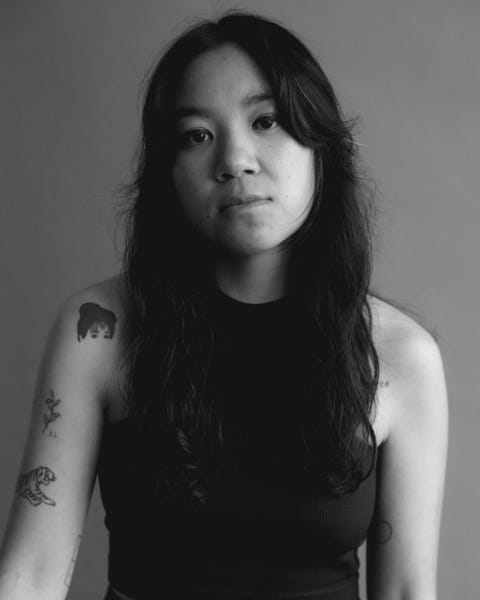
TRACE on Saigon Jazz Revival, Her Mother’s Musical Legacy, and Finding Her Own Voice

 Apple Podcasts

 Spotify

 Amazon Music

 Overcast

 Castro

 iHeartRadio

 PocketCasts

 Podchaser

 RSS Feed
What does it mean to honor your parents’ legacy while they are still here?
Returning as a guest on my show for the first time since 2020, singer/songwriter, filmmaker, and creative TRACE chatted with me about preparing the upcoming Saigon Jazz Revival with her mom, Carol Kim, a legendary Vietnamese singer known in the Vietnamese music scene for decades. We talk about the anticipation for the Saigon Jazz Revival, partnered with the Vietnamese Association of Illinois (VAI), that’s coming to Chicago on Sat, August 29th at Live Bash. TRACE goes into the process of working with her mom and collaborating with the New Orleans jazz ensemble. She shares more about her relationship with her mom while finding ways to honor her mom’s legacy in the Vietnamese community. I got to chat with her about TRACE’s own music and filmmaking, and so much more!
If you’re in the Chicago area, please get your tickets now to the Saigon Jazz Revival below.
Purchase your tickets to the Chicago Saigon Jazz Revival here
Bio:
Trace is a second-generation Vietnamese American artist and writer who has spent the last decade in Los Angeles immersed in the music industry. Since 2016, resonating with themes of longing, belonging, and queerness, her music has reached over 84 million streams, including major-label releases and a partnership with NAMI to spotlight mental health.Her love for storytelling naturally evolved into filmmaking, showcased by her semi-autobiographical debut short film, No More Sad Songs, which premiered in the fall of 2024. Trace's second short, Cry, Baby, premiered this past August in anticipation of its 2026 festival circuit run. In the meantime, she is developing a documentary about her mother and, in tandem, writing her debut semi-autobiographical memoir.
IG: TRACE
Website: https://listentotrace.com/
Information about the Vietnamese Association of Illinois (VAI):
* IG: vai_chicago
Get full access to Bánh Mì Bites at randykim.substack.com/subscribe
0:00 So, before we begin this podcast with Trace, I want to share a few things about the Vietnamese Association of Illinois, otherwise known as VAI, and how they are in partnership with the Saigon Jazz Revival. With the Saigon Jazz Revival and VAI, we hope that this event will bring attention to the growing needs and changes in our Vietnamese American community and celebrating 50 years as an organization while celebrating the legacy and culture of the Vietnamese American community and how it continues to evolve over time. For VAI's mission statement, it's about building a more equitable and inclusive society by meeting the challenging needs of the Vietnamese American and broader community.
0:47 Honoring our cultural heritage and building community alongside other communities of color. I've been a proud member of the board for VAI for two years now. And this is an organization that helped my mom obtain her citizenship where I got my annual physical shots and where my mom would find a community of folks to socialize with in her later life. So today, the Southeast Asian nonprofits across the U.S. are slowly disappearing with the changing demographics and landscape of the Vietnamese community. In the Asia and Argyle neighborhood, there are many changes happening to the Southeast Asian communities.
1:27 And as there have been gentrification happening, but also many of the community members moving into the suburbs, into different parts of Illinois. And despite it all, the Vietnamese Association of Illinois continues. And continues to build on the legacy that our elders have built and continues to seek out the future generations of Vietnamese Americans in Illinois. So I hope that you get to listen to this interview with Trace and learn about the Saigon Jazz Revival and why we are so excited to bring them to this event. The Saigon Jazz Revival will be held at Live Bash. On Saturday, August 29th, from 6 to 9 p.m., tickets are available.
2:14 If you follow VAI underscore Chicago on Instagram, you can purchase your tickets from there. So, all for a great cause, but also a great way to celebrate our culture. Thank you. Hey, everyone. So, welcome to the Bánh Mì Chronicles podcast. And I am joined by a returning guest. And it's been a long, long time since I've had her on. So I want to introduce you to Trace. And Trace is a second-generation Vietnamese-American artist and writer who has spent the last decade in Los Angeles, immersed in the music industry. Since 2016, resonating with themes of longing, belonging, and queerness, her music has reached over 84 streams, including major label releases and a partnership with NAMI to spotlight mental health.
3:06 Her love for storytelling naturally evolved into filmmaking, showcased by her semi-autobiographical debut short film, No More Sad Songs, which premiered in the fall of 2024. Trace's second short, Cry Baby, premiered this past August in anticipation of its 2026 festival circuit run. In the meantime, she's developing a documentary about her mother and in tandem writing her debut semi-autobiographical memoir. So welcome back to the show. It's been fun. Nearly six years since you've been on as a guest, and obviously so many things have happened to you since our last conversation. At that time, I know you were very focused on your music career, and... You also recently got married to your partner this year.
3:48 So congratulations. And how are you feeling this year? Thanks. Thanks for having me. I cannot believe when you said six years, I was like, that's before COVID. It was actually after COVID. Was it after? Yes, it was after COVID. I can't even calculate the time. It's 2026, everyone. Six years after COVID. Yeah, I've been good. Thank you for the congratulations. I got married like seven weeks ago. No one's counting. Some weeks ago today, depending on when this airs. Yeah, it's been a very good six years of learning how to be my most self.
4:28 Yeah, you know, I think it's kind of the word of Ocean Vuong. Time is a mother. And I just feel like it's been very disorienting. And, you know, you and your mom, Carol Kim, Are coming to Chicago on Saturday, August 29th to take part in the Saigon Jazz Revival. And this will center around her as an icon, as someone who has been performing for decades. And the Saigon Jazz Revival is in partnership with the Vietnamese Association of Illinois VAI, which I currently serve on the board for. So how are you feeling about coming to Chicago? What do you know about Chicago in terms of the music scene or what you...
5:08 Maybe perhaps understood about the culture of Chicago so far. Yeah, I mean, I've been to Chicago once and that was when I was on tour. Well, I don't know, 2017 maybe. And that was a fun, oh my gosh, I'm going to say the venue and it's not even the venue. Is the Lincoln, something Lincoln in Chicago. Is it Lincoln Hall? Yeah, it's Lincoln Hall. Wow, that's a beautiful venue. Yeah, so it was very beautiful. That was the only time I've been there, I think, like maybe another time, but I don't know anything about Chicago. I am excited to go to Chicago because I like food. The music scene, I'm very curious to see. This is the second jazz revival show my mom's doing.
5:52 The first one was in New Orleans last November, and that was the first time we kind of tried this with Marion, who we probably will, you know, Yeah, Chicago, I don't know much about it. I didn't even know you were on the board. And so I loved seeing that you were, because I was like, oh, yay, a friendly face, because I don't know much about, yeah, what's happening over there. Yeah. And I am also very curious about your mom's understanding of Chicago, too, because obviously there's a Vietnamese community, maybe not as on the size of Houston or Orange County or or the coastal cities. But what is her understanding so far about maybe in anticipation for the Chicago stop?
6:35 Well, first off, she was she was her first city. Oh, I'm going to mess this up and I'm definitely doing a documentary on her. The first city that she came to in America, like from Vietnam, I want to say was DeKalb, Illinois. Oh, okay. That's like in Northern Illinois University, which is like... Okay, perfect. Yeah. So that will be something interesting for her, I think. I really can't imagine how she feels about revisiting this area, but I do know she's excited. Yeah. To go to Chicago, I think she's always excited to go and sing and perform. I think she's very hesitant or maybe I would say nervous, don't tell her I told you, about who's going to show up to these shows because she's very like, if I'm not in Orange County or where there's a lot of Vietnamese people, which I'm sure you'll give me more education on that, she feels like, who would want to see me sing?
7:31 And I'm like, girl, people want to see you sing. In New Orleans, it was like, A shock to her to see like people who are not Vietnamese come to her show. So I think she's very excited. I know that because she loves to sing and I think she likes to do this type of show. She doesn't do this type of show very often, which is like a full band, you know, with like a jazz, like a full band. You'll experience it and you'll see it's just really wonderful and magical. So I know she's excited, but I don't know how she feels, you know, emotionally about it. Yeah. And I will say like, you know, The Vietnamese community, like where VAI is located is on the Asia on Argyll. So this is where a lot of the Southeast Asian refugee folks came into that particular block.
8:13 It's a small block and it's a neighborhood that's been changing because of gentrification and also with... Vietnamese families moving out into the suburbs, way out into the suburbs. I think this is very common among different Asian immigrant communities over the years where you're in a part of the city and then once you obtain Some level of financial wealth or stability, then you move to the suburbs. And I think that this is what I think is so important because I think that we are at a moment where...
8:55 Our parents' generation are aging. This is like the survivors, the adult survivors of the Vietnam War. And it's something that I think about. What do we do to become stewards of their legacy, their history? What does that mean to you as you're working on your mom's legacy? Yeah, I mean, I think this is a big part of it because... I met Marion, who had started the Saigon Jazz Revival. I met her at a film festival. We both, she's a filmmaker, and I am a new one. And we got to meet and connect and just really hit it off. And so she kind of chatted to me about this idea. And I just felt very, you know, I think like legacy is interesting because as an Asian kid, you want to make your parents proud.
9:44 I also am learning too that I can't, Do everything and I can't force anything that isn't mine to do. And so I think legacy is heavy on me. So that is why I've been doing so many creative things in my career life because I don't know how else to hold things. So I tell stories, right, through music and now through film. So in terms of like currently, like legacy, how am I like kind of, how does that impact me or, you know, how am I holding that? Like I think it is being able to Make this trip to Chicago happen. I'm with her. I take her. I book the Airbnb.
10:24 I'm her little manager because it's very foreign to her doing something like this that's more like me or like American. And so I think on a very technical level, I think opportunities like this, I'm really glad that I can be a part of it. I didn't start this thing, but I'm collaborating and And can help my mom do the things she wants to do, which is like sing her little heart out. So I think that's one piece of just like how legacy impacts me of just seeing like our parents are getting older. So how do I, you know, seize the moment and make sure my mom gets to sing until she can't, you know, she's talked about it a lot recently of just like wanting to sing forever until she can't.
11:06 And you're kind of like, Okay, interesting. Like, parents do get old. And as much as she looks and is quite vibrant and, like, just the youngest spirit, you know, life is precious. And I'm so grateful that she's here and healthy. And so I think this show will be a big blessing to her and for me, too, to let her just do what she does best, which I think. Yeah. And, you know, actually I was bringing up your mom to my mom and it's like, oh, do you know Carol Kim? I'm trying to convince her to go, but she hates the idea of staying out late, you know? Me too. Yeah. And I'm that same way too. And so, yeah, she's like, yeah, I do know Carol Kim. It's like, yeah, she has been performing forever, you know?
11:47 And she did not think that younger people would know her. And I think that it's very interesting because, you know, For us millennials, we think of Linda Chung-Dai. I mean, I know you're very familiar with the Paris by Night Circuit because of your mom's involvement. But we think of some of the more people in their 50s. And Carol Kim's from a different generation, from the Kun Lee generation, that era too. And what does it mean to try to educate? Like our peers, our Vietnamese peers about her music and her impact in the diaspora and back in the homeland.
12:29 You know, I think it is just hoping that people have curiosity of where they came from. I don't I don't know. That's a that's a very hard question. You know, I think creating music and creating film and TV with Vietnamese characters in general, I think stirs Vietnamese people with like their own history. I know it did for me because I didn't grow up seeing too many Vietnamese people singing, like, you know, like pop stars or big actors, like Hollywood actors and stuff. So I think being curious of just your Vietnamese culture, I think that comes from wanting to perhaps understand yourself more. So how do we educate people? I mean, outside of like making something really cool that everyone wants to watch, That, that's, that's probably like the best start, you know, with New Wave, like that, that really started, kickstarted so many people our age and younger, and maybe older too, to look into their, to their background.
13:26 And Elizabeth, you know, I did such a great job at creating a community around that, because everyone was like, oh, there's so much more of me than I thought around here, like in this city, like there's Vietnamese people everywhere. I'm still learning where Vietnamese people are in the US. So I think educating people is essentially Done through creativity and storytelling and making it feel personal and honest and interesting. But it doesn't work if no one's curious about where they came from. And I would say I wasn't always curious about where I came from. And for Carol, I'm curious about how the collaboration with the New Orleans Ensemble came about, especially in trying to pair up with different musicians from different backgrounds in the jazz genre, which is a Black genre.
14:12 And for a lot of the Vietnam War era or the Cambodian, what I've learned is that during the During that time, a lot of American soldiers would play a lot of rock and roll music and different kinds of genres that were influencing a lot of the younger adults in Vietnam. And I think of the Cambodian rock scene back in the 60s and 70s and how You know, Santana is like a big staple in our community. I'm curious about like where or how were you able to or how we are able to pinpoint like the kind of collaborations and and a way that works for Carol and also for the musicians.
14:58 Yeah, it was an experience for sure. I recorded most of these things, so it'll be, you know, visually. Told in some form of a documentary someday, I hope. But it was a very hard and interesting process to, you know, get my mom on board to do something that she's ever done before in a way. And so if I remember correctly, you know, talking to Marion, she worked with all the musicians in New Orleans because she lives there. And she was just kind of telling me like who she's brought on. They're the best of the best, and they really are the best of the best in New Orleans.
15:38 They're amazing musicians. And it was me just being like, Mom, these are people who are professional. They're great. You can trust them. And she's like, OK. And we had a FaceTime call with everybody. And my mom had such a fun time talking to the band leader, Steve. And he was amazing. He is amazing. And I think the more she spoke about just where she came from and her love of jazz music, I think that that was enough to kind of build the trust to know that this process is going to be different. So that was like the emotional like connection first of like, do you trust this band? Do they even know who I am? Can they do what I do? And my mom, you know, I think my mom will never show nerves, but I think she doesn't want to let people down.
16:23 So she's kind of like, what do you expect from me? And we're like, well, it's, it's a, it's not a chill, it's a chill show, but it was being recorded and everything. But it was a big show, Mom, and we're going to sing songs that only like that you've sung before. But some of these songs that we picked was collaborative because my mom hadn't sang a lot of the songs that she did in New Orleans in decades. So she was very curious of why these songs and Marion had her own reasons to just like really bringing back the revival years, you know, like what was the what are these like, like, like, Even prolific and like legendary iconic Vietnamese songs like back in the day.
17:06 And so she had a list. My mom saw the list. My mom would pick her favorite from the list, add some of her own. It was very collaborative. And so in terms of finding like a playlist, I believe she sang seven songs. It could be long. It could be one or two off. But we really did try to make sure she found music that she felt connected to and confident about singing. And Once we picked those songs, you know, the band got to work and it was a very hard journey, but it was really fun and I think a good challenge for my mom. And for your mom, I'm curious about how for the rehearsals, was it done mostly in person or did she have to travel to New Orleans or did they have to travel to where she was living at or was it done through like?
17:53 Online, like Zoom era, which I know a lot of musicians have also done, which I don't know how I feel about that because I do find it to be very disconnecting in some kind of way, but also it also affords more flexibility at the same time. Yeah. Yeah, that was a worry because we were going to fly out before to do like a rehearsal, but, you know, things cost. And we basically ended up having just demos for my mom to listen to on Google Drive. So she would sing to the demos and it was in her key. So it was like the band's responsibility to have a lot of stuff ready for my mom. And so my mom just kind of like rehearsed by listening to the Google Drive tracks. And then we got to New Orleans a couple of days earlier and she had like a day to practice.
18:39 It was very quick, but, you know, it was more just like, can I vibe with the band? You know, can I, can this work? It was, you know, I will say I'm excited for this Chicago show because my mom's done it before. But I think before New Orleans, it was like, oh, she's never done this before. And we weren't nervous, but we were just like, whoa, this is going to be, let's just see what happens. Yeah. And I think it's interesting that you chose New Orleans because it is also, it's known for its jazz scene. But also like a lot of the Vietnamese refugees were also living in the Gulf Shores. Prior to Hurricane Katrina and then, you know, the Gulf oil spill like in 2011.
19:20 And I say this because I have family members in near Mobile, Alabama. So, so there was a big fishing industry during that time. And, and I think it's kind of interesting to kind of, you know, have in a way. Um, honor that community in a way, because that was a community that was a fixture. And I think it still is to some extent. I think it's not as big as it used to be, but because a lot of the Vietnamese community went to like Houston or Dallas or maybe Atlanta as that, as that evolving from the fishing industry has changed. But yeah, I do think it's quite, you know, interesting to start out. Uh, how did, um, I know you were talking about the audience at that time.
20:05 What was the first show like? What did you learn from that particular experience? Or what did she also learn from doing this show in New Orleans? That people still like seeing live music. I think I know that. And I think I have my own trauma around touring. But I think like Someone to show up to a show, and I've never heard of my mom before, is very interesting to me. And I think the buzzwords around the streets were like, oh, she's the Tina Turner of Vietnam. So people had some reference onto what they were walking into. But I think if someone sees a poster that says Saigon Jazz Revival, it just sounds fun.
20:46 So I think my mom just was really humbled by the fact that music brings all types of people together. I think my mom... Probably felt very cool to see different races in the audience because I do think she probably thought, I don't know, that no one really cares about her music but Vietnamese people or something, which is not a bad thing, but I understand what she's saying in a way. So kind of just seeing that her music kind of can touch many people was really cool and it gave us a lot of confidence to do another show. You know what I mean? Yeah. And are you also looking at other cities, too, after Chicago? Are you looking at other potential opportunities to continue this?
21:30 I'm personally unable to kickstart this. I have a personality of wanting to do everything, but I'm also trying to do my life as well. It goes back to the whole legacy thing. I am, as you've noted, I'm working on a documentary with my mom and it's something that is really, really fun and hard to do. So I will say Marion has plans I don't even know about for Saigon Jazz Revival. I think she has other artists. Like I think it's really cool. She's so passionate about music in a really refreshing way. We kind of swapped in a way because she was more film and now kind of focusing on music and I'm kind of doing the opposite, but we're all doing it all.
22:15 So I would say I have no, personally, that sounds really fun. Personally, if someone was like, listen, here is a million dollars for you and your mom to tour the US for a jazz revival, I would be like, okay, six. I mean, let's talk about it. Maybe that's enough money for me. I'm not sure. But yeah, I think after Chicago would be a really good and important conversation to have to see like, how did that go? And is this worth doing again? I think there's loose, loose talks about doing one in Vietnam, which would be kind of cool. Yeah. And I think that there is such a growing, I know I went to Vietnam like less than two years ago and I've seen a lot of people of our age Coming back to visit on their own terms.
23:02 And I think that there's such power to reconnecting with the homeland. So I do think it's very interesting to see our parents' generation, despite a lot of the traumas that they have faced, to try to reconcile with a very difficult past. And I think that's certainly something that I've been observing. In doing the documentary with your mom, What have you learned about your relationship with her in terms of your own reconciliation, healing, and things that you actually didn't even know about her that kind of like that started to maybe solve certain puzzles? I would say, Randy, that no puzzles have been solved.
23:47 But I find her to be a very complex and beautiful and interesting woman. I think that I think that me getting married this year was interesting. I think there's something about... Building my own family there that I'm learning between what that looks like with your parents when you kind of move on, not move on, you know what I mean? You leave the house, metaphorically speaking. But I'm just learning, I'm learning more about my mom's stories. Like she'll tell me some things that she'll say very casually that I'm like, mom, that is insane that you just said that so casually. And so I think it's only solidifying what I already knew, which is There's a lot of grief coming from Vietnam and there's also a lot of joy.
24:38 But I bend towards joy and I don't know if my mom does and that's okay. It's our parents. I don't know if we have another like, if we have an optimism that our parents can't have or whatever, I think that's understandable. So yeah, I'm just kind of only, I'm only furthering the notion that our parents are wild mysteries and sometimes they'll give you some trinkets of truth that you can only kind of hold and And hopefully be compassionate around. But no puzzles are solved. I think loving my mom and her love for me is as potent as it'll ever be.
25:18 She's the best person I know. And it's also very hard. It's a hard thing to learn about your parents. And they're not people. You just can't. I want so much for my mom to see and learn and, I don't know, except, and I think she would want the same for me. And we're just kind of, we bump heads a lot if it comes to like, you know, specific issues that we won't need to raise here. Oh, yeah. But... A lot of us relate to that very, very much. It feels insane in that sense. And I feel sad about it, to be honest. And it's like you have to let it go and just love them the way you can.
25:59 Yeah, I think that's certainly something that I'm also reconciling due time. And I think that old habits do die very, very hard, old beliefs. And I wonder about how has your mom... I mean, you don't have to share, but also how has she been, especially with your marriage to your partner? Because I always get very fascinated by elders and how they respond to queer relationships. And I always feel like there's such a powerful... I did see a video of her walking you down, and I was like, wow, this is so beautiful to watch. And I love it. I think I really get so... Moved by it because it shows that there is this love and that this is on our side to the coin that a lot of Asian folks, especially in our own community, unfortunately struggle with in terms of queerness and relationships.
26:57 Yeah. Yeah, I would say that I have friends specifically. I mean, I have many friends whose parents didn't show up for them, unfortunately. But I also know some Vietnamese friends who didn't have their mom come. And I was kind of very stressed about that. And ultimately, my mom will say, has said, she's always there for me. She loves me. She'll be there for me. And she was. And I think that's true. And I think what also can be true too is that she still doesn't really understand queerness. And I think that she's still very like perplexed by it. And I don't want to say she's sad about it, but she's not, she's not doing cartwheels of joy.
27:40 And I think, but she, but she's happy for me, but you know, it's, so weird. I don't know. This is probably another podcast episode, but again, it definitely is obviously. Yeah. But I think that, It was nice to know that she would be there and show up there. And I knew in my heart that she would never not come, but I would have been devastated. You know what I mean? But she's learning and she, you know, again, it's, you know, old beliefs die hard. Also, like, if any of us lack curiosity or lack the notion that we could be wrong about something, like, I just don't know if I feel...
28:21 Completely safe around you. And I say that with love. Like, I love my mother. People know this. Like, whoever's listening, it's like, I love my mom. And I'm writing about this too. Like, it's such a complicated, interesting, intense love I have for her. But it's also like, whoa, you know, like, you won't understand. You don't really know me fully. And that's okay. Yeah, that's totally fine. It bums me out. But she was there and she celebrated me and I'm really grateful. And, you know, you kind of take what you can. Yeah, I mean, that's a huge step. So, I mean, you take what you can and, you know, hopefully that this kind of plants a seed and You know, help her understand more.
29:02 I mean, I know my mom, you know, she doesn't like to talk about it. I mean, she acknowledges it and doesn't, you know, shame me for it. But it's kind of weird, man. I think it's probably because after my grandma passed away, you know, and I think that kind of allowed her to feel at ease because, yeah, I mean, I come from, obviously, like my mom's side of the family is very Catholic. And I think a lot of my relatives are aware of it. And I'm, you know, like, I like you, I'm also very unapologetically queer and, and, And to the point where it's like, I know it makes people groan a little bit, but I'm like, look, I'm here to normalize it. And I think that's very important. So I'm really glad that you could share that, you know, of that aspect of your own journey. And, you know, like I...
29:44 I was very curious about your own music career because I remember when I interviewed you, you were releasing several songs in your EPs and you were getting a lot of plays and a lot of traction. Some of my favorite songs were Low, Anxiety, which I very much relate to. Feel Some More is honestly like really one of my favorite songs. I think I've had that song on repeat for quite a while and I think I might have to bring it back to the playlist now that I'm thinking about it because it is one of those songs I can just really groove to and you know it's also like you do sing from a level of vulnerability but there's also you know a sense of like hope and there's a sense of like trying to Mm-hmm.
30:48 And so I mean the last time we talked you know I was in the height of things and it was really fun and I had very lofty goals that I felt very like that were very doable and I think I think it was a mixture of expectations not being met and also just maybe I had a minute to think about what it is I really wanted to do and I think it's cool that even now, I haven't released an EP in a second, but I still have released music and I still get to write songs for shows and movies. So music's never gone, but it is different. When I was talking to you last, I was in the studio working towards an EP because I need to release an EP so people can listen to it so I can go on tour, so I can make money, so I can open for someone big, so I can, so I can, so I can.
31:41 And I would be lying to you if I said I didn't want to do that like ultimately anymore. I crave like performing at like big places. But I think it was really a good thing to kind of look at and re-evaluate my time and my energy and I started music later in life at 27, so I wasn't like a dodo head signing everything, but I wasn't perfect with my decisions, and I right-sized my expectations, I guess, maybe six years ago, and I kind of stopped doing the...
32:23 The strict schedule of like, I'm a musician, I'm releasing, I'm touring, but I kind of just was like, let me, during COVID, I wrote my first script because we weren't doing anything during COVID and I don't know how to write scripts, but I learned how to write scripts. So for me, it was just more like, okay, let's kind of pivot and see what else I can do with what's inside of me. And I wrote some short films and then I've been just kind of doing movie screenwriting ever since. But Music is so fun. And for every short that I've made, I've written an original song for. And I felt happy again. I wrote my first song in the studio two years ago for my film, my first short film, Norma Sad Songs. And I was like, oh, this feels really fun to make something without any label or distributor expecting it from me.
33:09 So yeah, it is different. And I'm surrounded by people who are still doing it, like my friends who are still doing it. And I'm like, that is awesome. And I'm also surrounded by people who are getting Grammys. And I'm like, man, I am around some great people. I am placed here perfectly. I'm very curious of my own music career still after 10 years. I have no idea what the landscape is for anything musical. But yeah, it's just your plans have to change when the climate of the industry changes. Yeah, I know, because nowadays it's like TikTok, you know, Billboard is like kind of obsolete right now. Algorithms are just, it just seems like it's a whole different playbook every year.
33:52 And I think you were talking about touring too. And I think like, like it's one of those ways to get your work out there, but it's also a very, and I've been reading a lot about what people have experienced in the touring industry. It's very interesting. I mean, venue prices are going up the sky roof, merch is way up, and so it's pricing out, unfortunately, a lot of the consumers or the fans, but it also puts a lot of stress on the artists, especially indie artists that have to travel by car, by van, and trying to crash at certain places and having to figure out how to do laundry, and I wonder, like, Do you always get fascinated by the idea of touring or just the idea of having to do the grind and figuring out the day-to-day and trying to have the energy to perform in front of an audience, especially if you're opening up and people are just trying to know your work?
34:53 Yeah, I mean, I did the grind for a little bit, so I feel like I know what that's like. My then-manager drove us in her Ford Explorer across the U.S. over the ice, like, It was insane and it was so fun and I had a blast. So that, I don't know if I missed that, but I know I can't just jump from grind to like bougie tour. I haven't put real thought into it, but I am pretty good at organization and I'm pretty good at, I think touring is worth it still because I love, love meeting people on tour. It's my favorite thing in the world to meet any One fan in like Minneapolis, like it is the highlight of my life.
35:37 And it has always been the thing that carried me through my music career, to be honest, meeting those fans in 2017. So I know I still remember everybody. So it's like, that's fun. And I want that. And I still find like new listeners on YouTube and the internet. And that's really cool to me. So that's sick. I'll take it. But touring, I haven't thought about, but I would be I don't know. I don't know. I don't know, Randy. If someone's like, hey, open up for us. I'm like, maybe. Depends who you are, but. Yeah. I mean, I'm not going to name names. There was this, there was a fellow Asian indie singer that I interviewed like maybe a few years ago and I was asking about touring.
36:18 She just did not seem like she even wanted to do it. I said, yeah, I'm going to your show like in Chicago when you're performing. And she was like, I said, are you excited about anything about touring? She said, I have to perform for 45 minutes. And I was like, yeah, I'm going to do these songs. And yeah, I said, do you have a favorite city? He's like, no, I don't. And I was like, I get it. For some people, they just want to be able to sit home and just perform in the studio and not have to be- Just recording artists. Yes, there's certain people. Unfortunately, I wish there was more leverage where it's financially viable, where you don't necessarily have to tore your butt off.
36:59 Sure. You don't have to give this away. Do you see yourself performing with your mom at any point? So at the jazz revival show, I sang Saigon with my mom. And so we'll probably do that again. It's fine. It's fine and fun. I'm not the best Vietnamese singer, but But yeah, I think people have asked like, you know, like, listen, if I was a really big performer and I had like an insane tour, like at stadiums, I would totally have my mom like sing, open up for me and she would be like so down.
37:41 That sounds fun to me. I think where I'm at in my career, I don't really have any desire to like sing with her. There's some plans though. Where I can just share here, I guess, for the public to hear. But I want my mom to sing one of my songs. Because they're originals and it's very complicated with the Vietnamese industry. I would say the horrible music. The music industry sucks in general, but there's frameworks to it. I think the Vietnamese industry is really wild to me. It's like the wild, wild west of rights and licensing. All that to say is there's a hope that my mom would cover one of my songs.
38:24 Yeah, I would love to see how she would cover a song like Anxiety. Oh, she would too. Or feel some more, you know, I would love to see how she would take on the more contemporary songs, especially from like our generation and younger and what that looks like. Cause I do think that fascinates me when I've seen older people cover or work with younger artists. And yeah. And I, I'm also wondering about like, like, Working with her and working with the musicians to do Saigon Jazz revival, what ways or I don't know if you pay attention to what other Vietnamese artists are doing, whether it's like of our age, of the diaspora, like the indie artists, and then maybe like your mom's contemporaries.
39:20 Do you pay attention to what they're doing and also how they're trying to grapple with the music industry in the U.S. or with the Vietnamese industry? I don't know if that's something that you do pay attention to or if your mom pays attention to that. Because I know that you had mentioned that the Vietnamese music industry can be very cutthroat and very restrictive for a lot of artists in terms of rights. Yeah, I kind of have to say I don't. I think in terms of I think I've been looking into how the Vietnamese industry was and the songs that come out from the era my mom sang, and I'm doing a lot of digging and archiving and stuff. But today, I don't have a great pulse on what's happening, to be honest.
40:05 I kind of don't have an interest in that. I don't know if that's a bad thing, but no, yeah. Yeah, and you talk about mental health through your music, film, and on social media. What has that journey looked like for you as of late in being able to be very open about it? Yeah, I mean... I... Didn't understand the role I had as a musician that people would listen to my music and feel a little bit better. And I think when I found that out, it's why I was so like gung ho about really doing music forever. And obviously I'm doing it, but you know.
40:48 So yeah, I think that I think that mental health is like actual wealth and I think that it's so important to know you're not alone and it's so important to find your community. You know, being, you know, you and I like being people of color and who are queer. It's like, there's so many communities for us. And I think it's important to know that there are people out there that kind of can understand the things that we go through and stuff. So I think mental health needs to not be communal, because I know it can feel isolating, but it is a communal thing. And I think it's important to know that. But yeah, I...
41:29 I think a big theme for me in terms of mental health is grief. I think it is where my mental health comes from currently. You know, I think I have anxiety in the sense of like, I love to control things and plan things, but I'm moderately healthier than I used to be. But I do think right now I'm in the season of grief of like, kind of just losing anxiety. Losing people, maybe literally, but also just losing friendships because of life and beliefs and growing up and becoming yourself. I'm experiencing a lot of grief right now, personally. But I feel a lot of joy in it because I feel very lighter because I'm seeing things for the way they are right now.
42:13 So I think mental health is important to be grounded in the reality of your life and know that, for me, My faith is really important to me. Therapy is important to me. Like understanding like who I was made to be is important to me. And I'm so happy to be here. And I think like, I need everyone to know that I'm happy they're here too. So how do I do that? I can't tell everyone that, but I can try through my music and through my movies. And I keep doing other things because I'm only doing other things because I want to reach more people. And I happen to be decent at things. I'm not like the best X, Y, and Z, but I've always been wanting to write a book.
42:55 And so I'm like, okay, this will reach someone else. This gets me jazzed because I want people to feel... Loved. Yeah. And I really appreciate you lifting this message and also your own journey because I do think that, you know, someone who has gone through my mental Gone through mental health trials and tribulations. You learn about therapies that's not an individual thing. It's a communal. There is a sense of connection. There's a sense of trying to make space for yourself, advocate, having to unlearn a lot of beliefs that do not fit you or that you're not aligned with. I think that's always the hardest part is trying to really Unwrap that and how to pivot away from that.
43:39 And so I do think that's a very powerful thing to go through. I mean, therapy is beyond just having a therapist but also being in community spaces and being able to do the things that you love in a very healthy way. I am curious, do you see yourself taking on different projects or areas that you have yet to explore? Because I know you've been dabbling into different mediums. Yeah. I'm intrigued by theater. I don't know, man. My favorite movies are movies that playwrights wrote. So I think there's a bubbling of theater right now around me anyways.
44:22 Because I like being on stage, right? I like performing because I like being around people. So I'm kind of like, huh. What does that mean? How do I do that without having to sing songs at you? So I don't know what that looks like, but I have thoughts that I am not ready to put into words. I don't know yet, but I do like, I think performance is interesting and I'm curious of how it would be as a performer that's not necessarily musical. Yeah, and you're a Gemini, right? Just like I am. I could see that because you're, yeah, I totally get it because, you know, you dabble and not to say that we, I think one of the things that we're known as being commitment averse and sometimes I do cringe at that, like some of it's true, but some of it's like, look, it has to align.
45:04 Like if it's not keeping me stimulated, then I can't go forward with it. So I do cringe at people saying that, well, you can't commit to anything. Like you're just very fighting. They say that to you? Yeah, I get told that. Not that they're completely wrong on it, but they're also like, I'd like to challenge that because I think that we are creatives. I think that we do like to explore and interrogate ideas and belief systems. I think that curiosity is a big part of what Geminis do. As we start to wrap up, I want to say, you know, I hope that people listening get to get your tickets to the Saigon Jazz revival at Live Bash in Chicago on Saturday, August 29th.
45:51 Check out the VAI Instagram site. I'm going to put the links out there and I think this is going to be a great intimate show and it's going to showcase so many different musicians along with your mom and her legacy and being able to give her flowers while she's still there. Because I do obviously think about how do we honor the people still here and making sure that they're part of our history and that we honor it in a way that keeps them permanent. So I hope that people get tickets to the show. Get them now. And also, I hope that people get to stream your music, especially Feel Somewhere.
46:35 I really want people to stream the hell out of that song. Me too. Me too. Please do. It's a good song. I actually like that song, so it's good. It is an amazing song. I don't think there's a song that had a chokehold on me for a couple of years in this song. I love that. I don't say that to kiss butt, but it's like, hey, if I love it, I really love it. I appreciate that. Yeah, but anything else that you also want to add in the anticipation of the Saigon Jazz Revival? Um, no, I mean, only just that I love what you're doing. And I love the stories that you seek out and platform. I think it's really beautiful to see you do this. And I know it's not it hasn't been easy, but it's been really cool to see you really pour into people's lives.
47:18 And I do feel like it's very important. So thank you for doing that. Yeah, and thank you for being on my show. And also, it's great. I'm glad that we finally had this conversation nearly six years later and seeing the different evolutions that have happened since then. So yeah, all the best to you. I look forward to seeing you in Chicago. And yeah, I hope this is going to be, I know this is going to be an amazing, memorable show for the community. So all the best. Thanks, Randy. Thank you.
