Directing Straight Adult Films as a Gaysian Comedian w/ Oliver Wong

 Apple Podcasts

 Spotify

 Amazon Music

 Overcast

 Castro

 iHeartRadio

 PocketCasts

 Podchaser

 RSS Feed
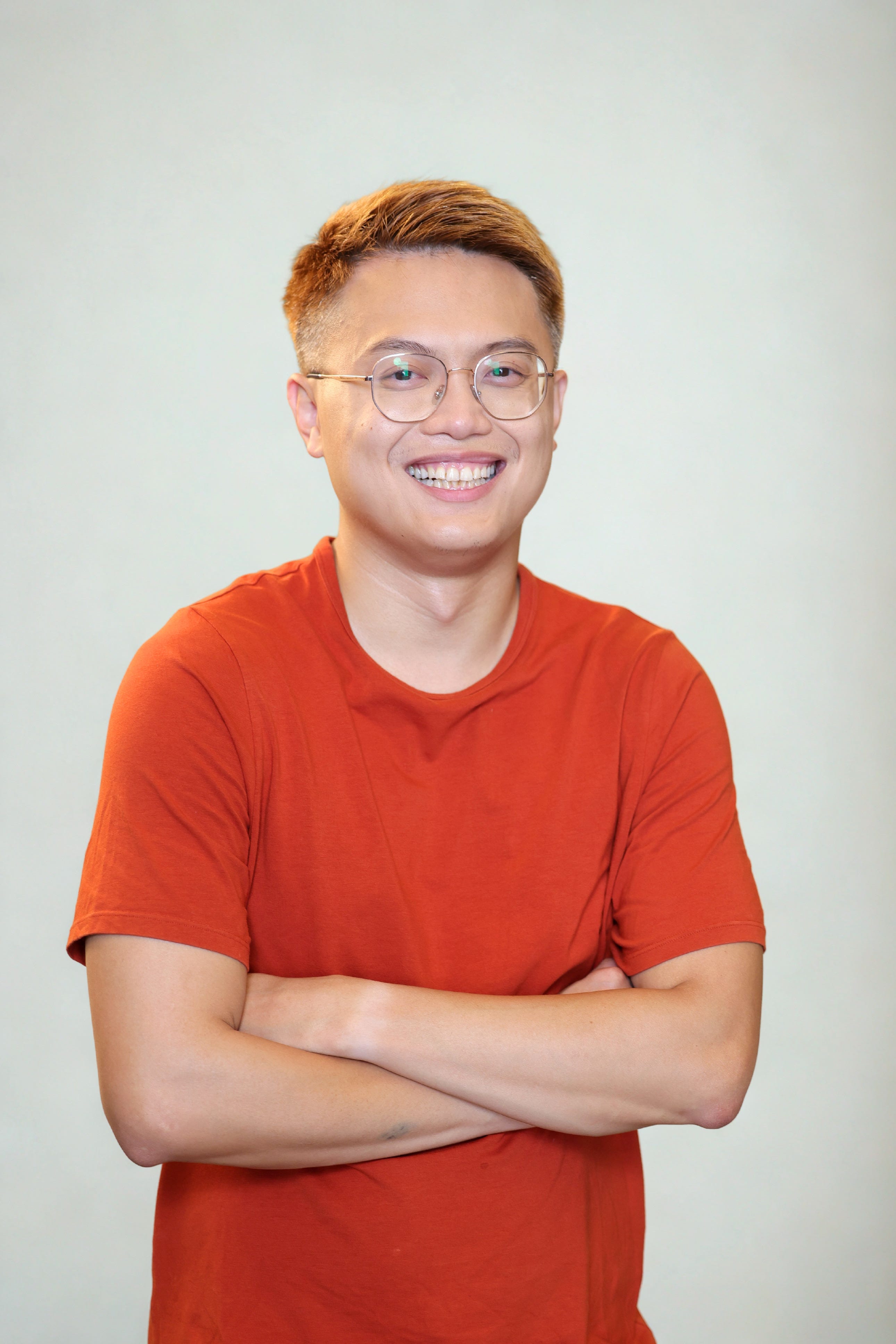
I’ve been following adult filmmaker and comedian Oliver Wong since the COVID era, and I was intrigued by his comedic storytelling about his days working in the adult film industry right after college. Oliver is confident, assertive, and holds no shame about his line of work. We discussed what led him to the adult filmmaking world and what he experienced along the way regarding racial and gender stereotypes in adult film. He shared more about it through his stand-up comedy. Also, we get into the hot topic of AI and how we are trying to make sense of this new reality. Listen to this full episode for more on our deep dive.
Follow Oliver on IG at oliverwongcomedy or through his Linktree: click here
Bio:
Oliver Wong is a Taiwan-born stand-up comedian who moved to the U.S. at 23 and learned to speak English by watching How I Met Your Mother.
With degrees in film production and screenwriting, Oliver came to Hollywood hoping to make movies—and somehow stumbled into directing adult films. For three years, he wrote and directed narrative-driven, cinematic adult movies that received recognition from AVN and XBIZ. Yes, they had plots.
Now he brings his love of storytelling to stand-up, joking about being an immigrant, being gay, stumbling through his 30s, and his experience working as a film director in the adult industry.
Oliver also produces Drunk on Boba, a monthly comedy show in Los Angeles.
He regularly performs at The Comedy Store, The Ice House, and Flappers Comedy Club.
Get full access to Bánh Mì Bites at randykim.substack.com/subscribe
0:05 Hey everyone, so welcome to the Bánh Mì Cronquist Podcast, and my name is Randy Kim, and so I am bringing on this next guest here, and his name is Oliver Wong. Oliver is a Taiwan-born stand-up comedian who moved to the U.S. at 23, learned to speak English by watching How I Met Your Mother. With degrees in film production and screenwriting, Oliver came to Hollywood hoping to make movies, and somehow stumbled into directing adult films. For three years, he wrote and directed narrative-driven cinematic adult movies that received recognition from AVN and XBIZ, and yes, they sure have plots. Now he brings his love of storytelling to stand-up, joking about being an immigrant, being gay, stumbling through his 30s, and his experience working as a film director in the adult industry.
0:55 Oliver also produces Drunk on Boba, a monthly comedy show in LA. He regularly performs at the Comedy Store, the Ice House, and Flappers Comedy Club. And I have learned about you for quite some time, like the last several years. I think this was like during... The midst of the pandemic where everyone's been like locked into social media and I stumbled upon so many creatives, especially in the AAPI community. And, you know, I came across your feed and, you know, as a gay Asian man, somehow the algorithms magically knows that I like gay Asian content. And so and I learned about your story about You getting into porn and also transitioning over to comedy ever since.
1:43 And I am really happy to have you on my show. So first of all, how are you doing this year and trying to navigate whatever is remaining of 2026? This year has been a big change for me. So I was in porn from 2021 to 2024. And then from 2024 to 2026, there is this burgeoning industry called vertical drama. And then I was directing and producing a lot of vertical drama. And then just up until this year of March, I decided I'm not going to do vertical drama anymore. I go back to do stand up. So it's been about like maybe five months since I go back to do stand up.
2:27 And it's a big change for me because I did stand up for five years in my 20s. And now this is my second time coming back. And then I realized this is what I really want to do for the rest of my life. So I just been great. It's been pretty busy. And then for the rest of 2026, I'm just going to keep doing comedy. Yeah. What is vertical drama, by the way, for those that don't know? Yeah. Long story short, vertical drama is shot vertically and then is released on the phone and then the story is very soap opera-ish. So it's very melodramatic and then it is like a bite-sized content. So every episode is only like one to two minutes and then you'll get addicted.
3:09 You keep watching more and more episodes and then eventually they will ask you to pay if you're not watching the entire show. Wow. And what do you find very exhausting about this particular platform? Because I can imagine how wacky and how unconventional it is. Vertical platforms? Yes. I think it's just the, you know, doing physical production is fun. I can do it. But I was doing physical production for five years because porn plus vertical drama is all physical production. I don't think my personality is suited for that in the long term.
3:52 I can probably direct a movie once every two years or once a year. But for me to be consistent on set every single day, that's too much for me. Yeah. I see. And, you know, before I even begin, I should have a disclaimer that this is a sex positive show. And also I want to, you know, warn any potential People under 18 and also any pro-clutchers that, yeah, we're going to dive into a little bit into the porn and into sex positivity and all the fun things. And so, yeah, I also want to talk about what brought you to the US.
4:32 I mean, you came to the US as an early adult, assuming during college. And what were you looking to accomplish being there? I came here because I want to study abroad. I just want to get away from Taiwan because I had a big breakup in Taiwan. I just want to leave Taiwan. So I started film production in Taiwan. So I'm like, if I'm going to study abroad, maybe I will pursue film again. So I just applied to a bunch of film school in the U.S. and then only one school accepted me. And then I just came here. I came here wanting to work in Hollywood like a lot of international students. We are all ambitious. We have unrealistic dreams.
5:14 And then we came here and then we found out so hard, so difficult. It's not impossible, but the chances are like one in a billion. So yeah, but somehow I just I guess I'm lucky I found a way to survive here and I found porn directing, which is also Or industry that I get to utilize while I learn in school. Yeah, I'm curious about this transition because you go into Hollywood wanting to like fulfill ambitions and learning about like especially the barriers that especially for Asian Asian diasporic folks and Asian American folks getting into this world and having to see these barriers in front of you in real time.
6:04 What made you realize that adult film was that direction for you? I didn't actively choose adult film director. It found me. So just a mutual friend of mine, he is Taiwanese and then he's a director. And then the pornography that found me was also a Taiwanese company. So the Taiwanese company found my friend. My friend said he doesn't want to direct, so he referred me. So I'm like, okay, sure. And at the time I was doing standout comedy. So I actually had a selfish reason to go into porn. I'm like, oh, if I direct porn, then I can talk about porn on stage. That would be a unique topic.
6:47 So I'm like, yeah, I can direct porn. I will be really open about it. I have no problem. Yeah. Yeah. Like when we think of porn, especially from an Asian queer Asian male perspective, we see the barriers clearly go how Asian men are being seen as in romance and Hollywood and indie films and so forth. And I'm curious about. What you were walking into and learning about yourself as a queer Asian man stepping into this world and also dealing with the stigma, of course, of being an adult film.
7:28 So the stigma I encountered, maybe I live in a bubble in Los Angeles. I don't think I encountered too much stigma, but I'm sure some people will assume because I work in poems so I'm less of a director. And I'm sure because I have background in porn that definitely have people stay away from me or they don't want to tell people that they have worked with me because they don't want to indirectly admit they have worked in porn. So that has happened. And then another question that you asked about how do I step into this space.
8:08 So I'm a gay Asian man. That's how I identify myself. And then the porn I was directing is straight porn. I was a gay person directing straight porn. People keep asking me, how does that feel? Is that weird or something? I don't think it's weird. I've seen straight people have sex on porn and stuff. It's nothing new. Growing up, we were immersed in heterosexual agenda. So watching straight people having sex in front of us or in front of me, it's not really a big deal. And people ask me, if you are a gay man, how do you know how to direct straight porn?
8:51 Same thing. We are so used to heterosexual culture. It's not that hard to portray heterosexual sex. Yeah. Especially when we have so much access to it, you know, when the whole world is like, you know, like, I don't know how well you remember growing up, but I remember the back rooms, you know, of a video store and, you know, the Girls Gone Wild videos are covered. So it's like, you know, it's like we see that all the time and we see this in movies, but we don't see gay sex. I'm very curious about this world of like learning about the gay sex world and adult filmmaking, because It was not mainstream during that time.
9:37 It was very hidden and, you know, it was kind of like this dark secret. And I wonder, especially in the Asian culture that you were kind of like, in the world that you were surrounded, what did that look like for you in trying to understand more of that subculture of adult film? You mean the gay pornography culture in the U.S.? Yes, yes, the gay pornography in the U.S., but also, like, adding the Asian American, the Asian element to that. Yeah, because I've never directed gay porn before. So, I mean, I have a lot of gay porn stars, and then I obviously, I also know a friend who has directed a gay porn.
10:23 And then I also met gay porn stars at, like, conventions and stuff. And I don't... I don't think too much of it. I feel like I should, but I don't. I can say this just from a friend's experience. This also happens in straight porn, and this is a topic that I often ask myself. There is sexual preference, there is fetish, and there is also racism. And this can be presented in pornography in different degrees.
11:03 Like sometimes we will book an Asian female performer because we will not cater to a certain type of audience. And that definitely happens in gay porn, I'm sure. You cast a gay Asian gay performer to cater to a certain type of audience. And we do that not just because out of financial reasons, but also we do that because there is a need from the audience to watch Asian performers. So that is a fetish. However, you can also argue that is a preference. And you can also argue, oh, is that a racism?
11:44 Because if you fetishize Asian, does that mean you have assumptions about Asians, like you think Asian are more submissive, or you think Asian are smooth, or you think Asian have this certain type of personality, so you want to have sex with them. And if that, that can be, you know, a subtle racism. And to me, it really depends on the context. And it's really hard to differentiate preference, fetish, and racism. They are all kind of intertwined. They are so many factors in play. Yeah. I'm also curious, do you and other directing colleagues in adult film try to go against the stereotypical narrative of an Asian person being submissive?
12:31 Do you try to change the power dynamics in the way that it's like, okay, let's also present another perspective? Yes. So I have an Asian female performer. Her name is Nicole Doshi. She's Chinese. And then I directed a lot of her. I work with her a lot. And then we made like a series and then the series is centered around her. So she is empowered. She is controlling the narrative of the story. So she basically chooses Who she gets to have sex with. Like in the story, that's how she was portrayed. Like she is in power.
13:12 Even though there was a scene where she has sex with five guys and they are all black dudes. I think to a lot of people, if you just hear this, you will think we are fetishize the Asian or we are fetishize the black people. But no, that's not what the series is about. The series is about she chooses to do this. In the story, there is a storyline. And then I intentionally portray Niko Doshi as a person who gets to choose what she wants to do. Who she wants to have sex with and how she wanna do, how she wanna spend her life, basically.
13:58 And then in the story, she has sex with five black dudes. That is her decision. Yeah. Do you find yourself in conflict with your other peers and colleagues being like, okay, well, this storyline is not going to work because this could be very problematic or this is not the creative direction that I'm looking at as a queer Asian person or getting pushback, being like, oh, this feels very racist, this feels very stereotypical. What does that discussion look like with yourself and with colleagues? I think as a film director, one of our job is we have to acknowledge. All the sexual preferences. Obviously, there are some lines we cannot cross, right?
14:40 But to just ignore or to just overlook the fact that there are a variety of ethnicity and races in this world would be just as counterintuitive. Yeah, it's impossible to just overlook that. Because I know the idea of we don't see color and we don't. I don't. I mean, I believe everybody should be equal. But in the sex world, in the context of sex, a lot of things are different because I think sex is a reflection of a lot of Human desires, but just because you have those desires doesn't mean you think that.
15:45 It's like in my personal sex life, I am pretty submissive. I want to be used. So when I watch porn, I would like to project myself as the person that is submissive. Mm-hmm. But that is not who I am entirely. And I think in my personal life, I can be really dominant. I control my life. I'm a standard comedian. I go after what I want. But there is a little part of me that wants to be submissive. And I think as a pornographer, our job is to find those parts and then help present those desires to people.
16:33 To just be politically correct in porn, I think it's just like being politically correct in comedy. It is counterintuitive. Yeah. And when you were going into the adult film directing world, what was it like back home having to have this discussion with your family and friends and saying that, yeah, this is the direction that I want to go into? Funny enough, my parents, they accept me right away. I just told them right away, hey, I'm going to be a porn director. And my mom was just like, okay, as long as you make money, as long as you are not in it, they don't care. I mean, even if I'm in it, as long as I make money, I don't think they care.
17:16 That's pretty awesome. That's pretty awesome to have parents who are like, you know, just make the money and just don't make us pay your bills. Yeah. And I think also because my parents, they had a hard time at some point in their life, so they know. They also have done things that are not accepted by the mainstream society so they understand. Yeah. And what did you feel about living in Taiwan and then having maybe gone back there? How do you feel about the sex culture and adult filmmaking and how people perceive it there versus America? Yeah, so I grew up in the 90s and early 2000s.
17:57 So when I was growing up, Taiwan is still a little bit conservative compared to the United States. But right now, Taiwan is probably one of the most open-minded countries in Asia. Most people have no problem with sex work. And then Taiwan has their own adult industry right now already. They even have an adult industry convention. I was even on the news of Taiwanese media. People were like, Oliver is an adult film director living in the US. I'm on the news.
18:37 My face is on the news. People don't have a problem with it. Even if they do, I don't hear them. Like, one of the things that you share about in your own comedy is being HIV positive. And, you know, like, you know, me being in my 40s, what I knew about AIDS in the early 90s was heavily stigmatized. I grew up in a predominantly white suburb. And so, you know, seeing HIV AIDS was like, like something that you don't talk about. And, you know, seeing the Bush era and I wasn't born, I wasn't like old enough to remember Reagan, but he was very silent on it. And, you It created this stigma that unfortunately led to so many deaths in the gay community, in the queer trans community.
19:27 And I wonder about what that was like for you to experience, you know, being positive, especially at a later time when there's been medical advancements been made and the things that you have to find yourself educating people on, especially when it comes to dating, hookups and whatever. Yeah, when I found out I have HIV about like six years ago and then I was devastated, but I was able to move on pretty quickly because all the medical advancement that is available right now, so I know I will be fine. What is disheartening is that I still have to educate people, especially people within the gay community that Having HIV is not death sentence.
20:12 Being undetectable means that I will not transmit the virus to you. But even after my explanation, I will still get rejected. People will still get scared. They do have a legit reason to get scared. And you know what's the reason? Crystal math. People on Hookup app or just like in general out in public, they encounter a lot of people who are on drugs. So they think Even if you have HIV, you claim you are undetectable. How do I know if you actually stick to your medical regimen? How do I know, Oliver, you are not on crystal meth? You told me you are undetectable, but I don't trust you. And the reason why I don't trust you is because a lot of people on Grindr, a lot of people on Sniffy are shady.
20:54 So you might just be one of them as well. So that is the reason why they don't believe me when I tell them, hey, I'm undetectable, I'm fine. Which I understand. I can see both sides. Yeah, because I can only imagine the frustration, but also like this idea that you have to keep disclosing, which I do think is important, but at the same time, it's also to the point of like, yeah, I'm spending all this time on labor and trying to prove that I'm safe, that I am safe. Being vigilant about my own medical safety and the safety of others. And I think that this is a conversation that we don't talk about.
21:38 How do you look to continue this way of expressing this? Because I do think this is a conversation that doesn't get talked about enough, especially among the HIV AIDS positive community. I will just keep talking about it on social media whenever I can. And then I think if you are living in a big city like Los Angeles, San Francisco, New York City, Chicago, most people are aware of PrEP. And then most people will either assume you're on PrEP or you are undetectable or you are positive. And here's the funny thing.
22:18 Whatever you are, everybody is on the pill. You are PrEP, you take one pill every day. You are HIV positive, you take one pill every day. And then the pill is not that much different. It shares a lot of the same ingredient. So I noticed a lot of people, they don't even ask you about your status anymore. They don't even really care because either they are on PrEP so they know they are protected. Or they know you are undetectable and you are on your medication, so they don't care.
23:00 And in California, it's also not a crime not to disclose your HIV status. So if you go on Reddit, there are two sides. There are people who are like, you always need to disclose. But there are another side, people are like, you don't have to disclose because You know, you are not putting the other person at risk. There is like, hey, I have a heart disease. Do you want to have sex with me? It's like, you are not going to get heart disease from me. So if you are not going to, why do I have to tell you? Yeah, it's like, I'm diabetic, but it's like, hey, I'm still safe.
23:43 I'm not going to get you diabetes. I might give you some sugar, if you know what I mean. Those are the things that, unfortunately, I feel like sex education, especially currently, It's unfortunately not reaching large populations outside of the big cities that have a large and well-established queer community. So I do think that unfortunately, especially like in red states or red cities, that Have abolished or tried to minimize sex education and eliminate the conversation around LGBTQIA issues.
24:26 It's, yeah, this is unfortunately a long, long task. But I do think that, again, like, yeah, this is a topic that I've always... Really needed to be front and center. And so when you go into comedy, especially when you're kind of going back and forth a little bit between adult filmmaking to comedy, what is it about comedy that made you sense that, yeah, you know what, I can be funny. I'm a good storyteller. What gave you the confidence to be on stage? Yeah. Yeah, the origin story is that I stood up on the stage for the first time when I was like maybe 25.
25:07 I did that because I was so depressed. I just need an outlet. I need to talk. I need to talk five minutes without interruption. So I'm like, let me do open mic. And I just start doing it. I didn't know I was funny, but now looking back, there are clues. Like, oh, I was funny in high school, I was funny in college, and then the story I write are usually comedy. So there are clues. But having the intuition to be funny is different than making comedy as a skill. Comedy is a skill that you need to hone. So I started honing my comedy. What I would say though, the reason why I really wanna do comedy or I think I should do comedy is because my personality is that I don't wanna be told what to do.
25:58 And standout comedy is one Of the few occupations where you get to control your own art. You are your own failure. You are your own success. It's all on you. And I say this because I was a film director, right? I went to film school. Making film is very different. Making film is a collaboration. Like you are talking to so many people. People constantly tell you what to do. Even if you are a director, people will still come up to you and tell you what to do. I just don't want to do that anymore. Comedy is hard because it is all on you, but the rewards can be very addictive. What do you notice and observe in your interactions with your peers in comedy versus in adult films?
26:47 My peers, I think comedians usually are very individualistic because it's kind of like, you know, comes with the territory, right? And comedians usually are more outspoken because it's their job to push the boundaries. Sometimes they get consequences, but I still believe you need to keep pushing the boundary. Otherwise, what are we doing? Like, are we just going to constantly say things they are safe, you know? And then filmmakers, are usually more artsy. And not all filmmakers, but some of them are a little bit pretentious. And I say this because I think filmmaking is considered high art by the mainstream society.
27:40 It's like, oh, you are making a film. You work in Hollywood. Oh my god, you're on HBO show. It's considered pretty respectable. But if you tell people you do stand-up, or if you tell people you are a stand-up comedian, people have different perceptions. People don't consider stand-up as high art. People consider stand-up as low art. So that is something that I do have to I don't know if that's the right phrase, but you know what I mean. When I tell people I'm a standout comedian, people would just not respect me as enough versus when I tell them I'm a director.
28:22 Yeah, I wonder about when you tell people... That you're a stand-up comedian, do you get the reaction like, oh, can you tell a joke right now? Which I do think, I'm not a comedian, but I would get very annoyed if someone responded to me being Vietnamese or Cambodian, be like, oh, I had someone that was in the Vietnam War, and I'm like, well... Well, thanks, but I'm not in the mood to talk about it. You know, I'm not in the mood to give you like this one-on-one history, but it feels like there's this pressure to have to perform your occupation in a sense, like right on the spot to be like, okay, well, I want to see if you really are who you think you are, you know? Yeah. Yeah.
29:03 I think most of these people when they say stuff like, oh, can you tell me a joke? I think they are mostly harmless. So I wouldn't, you know, take it personally. I think sometimes they are just trying to have a conversation. But I mean, it really depends on the context. Some people you can feel like, oh, they really think you should be funny all the time. Then you can feel that that's annoying. But I think a lot of times people are just trying to be, you know, friendly and have a conversation and that's fine. Yeah. Yeah. And when you perform in front of, let's say like white and non-Asian audiences, like what does it feel like to you when you're sharing your own stories or like maybe I should just be a little bit more broader, but like performing in front of So one of the Advice, principles in standard comedy is that you get on the stage and then you want to call out the elephant in the room.
30:23 I'm an Asian, I go up on the stage, I have to address that very quickly. I tell people I'm from Taiwan and I think I present myself Like in a pretty gay way. So I go up on the stage, I tell people I'm gay and I address that. So that way people will know your background immediately so they can be on your side. If I go up on the stage without addressing my Asian-ness, without addressing my homosexuality, that usually means I'm trying to do a bigger joke. And then later in my set, I will reveal the fact that I'm Asian.
31:04 I will reveal the fact that I'm homosexual. So it's like you are playing with people's expectations. People know you are Asian and people will anticipate you to address the fact that you are Asian. It's just a matter of when. I do have jokes where sometimes I think the crowd, especially the white crowd, might not like it. I have a whole bit about criticizing the gun violence in America. I can sense the energy in the room. Some people will be really acceptive of it, but some people, if they are gun owners, they might not like it. But, so what?
31:46 Our comedian, our job is not to please a specific individual. Like, you don't like my set, that is fine. We just move on, right? Yeah, because it's like, I've been posting a lot of content. I mean, I'm not a comedian, as I mentioned, but I do post a lot of provocative topics. You know, on what's been going on, like with the Ed Sheeran and Macklemore. And, you know, I got a lot of blowback, but it's like, okay, well, fine. Like, I don't, like, I think one thing, especially if you have a public platform, you have to see it as noise. It's like, okay, I might be interested in the feedback, but I'm also like, okay, keep scrolling, keep scrolling.
32:27 It's like, you just have to have like a short memory in some ways just so you can function. But I wonder about, like, Having to deal with the hecklers. Like I'm always curious about that because I know if I have to deal with the, you know, because I have done storytelling. I know that I have a temper. I would likely get into a fight or say something very mean. I might be funny if I, you know, if it comes to me, but I wonder how do you deal with like people who are very prone to react and want to take the attention? I personally have never encountered a severe case.
33:09 You know, usually it's more like you can see their facial expression. They are not happy with your joke. And that's why I just move on. But I've never had a full argument with an audience. I think it's because my onstage persona is pretty sweet and harmless. So people wouldn't want to get in a fight with me. However, a lot of my peers, they do A lot of crowd work or they sometimes get in fight with the audience. And I think as a comic, you have to control the narrative because you're on the stage, you are the person that is holding the microphone.
33:50 The fact that you are the person on the stage alone holding the microphone, that is a position of Like you, you already proved yourself, you are braver than a heckler. So whatever you say, other audience will most likely to be on your side than on the heckler side. Yeah. And then other audience will want a comic to attack a heckler because most audience know a heckler is on the run. Yeah. Yeah. And I really like that point too, because this is why, because I will watch Instagram reels of comedians going after hecklers. I know Steve Hofstadter is one good example because he gets heckled all the time and provokes a lot of white audiences as a straight white man.
34:39 You know, I think it's certainly something that never fails to intrigue me. And I wonder about like your thoughts on, you know, roast comedy, because one of the things that I, it's a guilty pleasure of mine, but I do watch a lot of roast battles, but I'm also very particular because I'm like, okay, this is like the same stereotype, like, oh, okay, so-and-so is bisexual, so-and-so, like, when you hear like the same, like, oh, 500 feet away from the school playground, I'm just like, okay, come on, just be... Be better than that. So, I mean, like for me, I like, like, it's kind of like, kind of an opposite of who I am, like in my own public persona. But I also do like really mean jokes, like how far can you go without being like, like just a horrible person in general.
35:27 So I wonder about your own thoughts on roast comedy, because yeah, it's something that intrigues me. I love rose comedy. I have done rose a few times in my life. I think rose joke is just a joke. As long as it's a smart, funny joke, it's just a joke and you laugh at it. And I do agree with you. I mean, just like any other jokes, even a rose joke needs originality. And some rose jokes don't. And I don't know if I can think of any rose joke right now, but I think when you are roasting somebody, I mean, personally, I don't want to see like really juvenile joke, like you attacking a person's appearance, like that is kind of like a low hanging fruit.
36:23 Yeah. Unless you are attacking the person's appearance in order to attack a phenomena, then maybe, or if you are attacking a person's appearance to point out something that It's wrong with the society, then sure. I think that, but that's just a personal preference. I'm sure some people, they love low-hanging fruit joke. Yeah. Yeah, because, like, I would sit through it, you know, and I'm just like, okay, alright, well, tell me something I haven't heard before. But also, like, I also think that that When you have comedies like roasting each other on stage, there's also a level of consent too. Like, okay, let's have a discussion. It seems like that there's this implicit agreement.
37:03 It's like, okay, well, I'm open to this conversation. Like, I know if I have like a big birthday party, I've always wanted to be roasted on my birthday because I know that I have done some really stupid things that need to be called out. And I know that there are certain friends that will, you know, gladly share it. And then there are those like, I can't do that to you. I'm like, uh, I'm giving you permission. Be nasty if you want to. Take your aggressions out on me. It's kind of a little kink of mine, too, because I do like to be kind of a dick, and I want to be reminded of how much of a dick I can be. Yeah, I like to be Rosie as well and I don't think I have any boundaries.
37:48 Like you pretty much can make fun of me, anything. Like I don't really care because I just have the attitude that I understand it's a joke. And if there is truth in every joke, yes. And I think our comedian's job is to do that, is to point out the truth, is to tell the things that a lot of people might potentially thinking secretly, but they don't have the platform or they don't have the permissions to talk about it. It's like we all know Asian stereotype. We all know gay men stereotypes. We all know those stereotypes.
38:28 And here's what I think. People, I don't know, stereotypes are bad, but they exist. Like, is it better to overlook those stereotypes than talking about it? I don't know. Yeah. And what is your favorite joke that's been done about you? Like anything that like stood out like, yeah, it's like, oh, okay. You know, this is really funny. And it's like, yeah, this is true about me. You know, I could take this. I don't remember every specific joke, but I think people usually People will make fun of me being really filthy. People will be like, oh, Oliver is the person to go to if you want a handjob, stuff like that.
39:12 And I'm like, yeah, sure. There is truth to that. So it's like, sure. Here's what I think. Just like, again, we cannot pretend things don't exist. We have to talk about it. Absolutely. And also, Moving forward, what do you see yourself wanting to do in terms of, given the background that you have in comedy and acting and directing, what do you look to take on next or what do you hope to transfer into in the next year or so? Yeah, well, ambitiously, I would love to have an hour comedy special within a year.
39:58 I don't know if I can find an indie producer or indie platform to produce it for me. I mean, I'm not going to be like delusional and be like, oh, I'll be on Netflix within a year. That's just too much. But I think it's possible I can find independent producer or I produce a half hour comedy for myself. I would love to do that. And then I think that's it because I just read this yesterday. This is from a comic. He was like, any goals you have in comedy, like you want to get on that show, you want to get the award, you want to get on Netflix special, those goals will not make you Because what makes you happy is comedy itself, is the fact that you are telling jokes and making people laugh.
40:47 You might think you want a Netflix special, but the moment you get a Netflix special, you'll be like, oh, that's it? This is not making me happy. And then now you are looking for another goal to surpass. So it's going to be like a never-ending cycle if you are always chasing a goal like that. But if your goal is to be happy, to make people laugh, Then you will always be satisfied. As a creative, what are your thoughts on AI, let's say, infiltrating in the adult film industry or in comedy? Because I know that this is a conversation that obviously needs more conversation on. Because yes, I have a strong adverse reaction when I see AI slop, like AI art.
41:34 It's like, okay, this is pathetic. This is really not good. And also... Yeah. Yeah. Yeah. Does not like, you know, take away daft, does not like steal away from creatives and researchers and so forth. But yeah, what are your thoughts on AI and those industries that you've been seeing? I have a lot of thoughts.
42:14 I have a lot of thoughts. So, I mean, I don't know if we have much time, but feel free to make this the clip. I think people will hate me for saying this. That's okay. Or maybe they will love me for saying this. So I... I think there are good things and bad things about AI, just like you mentioned. Let me start with the bad things, because usually people don't like AI. So I think when people say they don't like AI, they mean they don't like generative AI. They don't like when AI creates a painting, they don't like AI creates a photo, stuff like that, because it takes away the agency of the artist. And I agree.
42:56 But I often really want to ask these people, are you guys really against AI? Or are you guys just against... Okay, people are like, I don't like AI writing. I don't like the stuff AI write. And I will be like, okay, when was the last time you read a book written by a person? Like, you don't want to read the stuff AI wrote, but How many books do you have in your house? Have you read a novel written by a human being? You don't even consume art made by human beings. And now you have problem consuming art made by AI.
43:39 It's just like, OK, we don't like AI painting. We don't like AI art. We don't like any of that. I'm like, I agree with you. But do you consume paintings made by humans? When was the last time you go to a museum to appreciate art? It's like, you don't even appreciate art made by humans, and now you are against art made by AI. That is hypocritical. Yeah, and I think that also goes to your point, too, because I'm like, I also ask, like, are you investing in local art? Like, I, you know, I mean, I can speak to myself, like, yeah, because I have a lot of books written by human beings, and I have people who are creatives on my shop. All the time.
44:19 I don't want to sound like I'm flexing or anything, but it's like, look, if I'm going to say something, I've got to have the evidence that I've already been proactive on this level. But also, you have to weigh in the balance. Yes, I would like for it to be more on an ethical balance. I would like to not see techno-fascists run this and do it to do horrible things or damage our environment. But I also believe in the accessibility, too. And I know that people are going to debate me ad nauseum, whatever, but I'm like, yeah, there's certain things I have to give credit to. Yeah, I mean, I like to go to a Trader Joe's I like to have things being done, you know, at times that I don't have to like do.
45:01 But yeah, I think that there is a lot of like, we have to like, Like, I don't think it's not binary. I think that's the first thing people have to like, think about, like, okay, what are the different layers around it? And I think, how does it affect creativity? How does it affect our ability to make creative work? And yeah. And I want to mention the good things about AI.
45:43 And I think this is where people will hate it. Like, Oliver, they are good things about AI. I mean, they are. Just like you mentioned, AI can help you with captions. It saves you time. But those AI is not like generative AI, right? Those AI, just like you use those AI as a tool, right? And I use AI as tool as well. Like I will write a joke and then I'll be like, this joke sounds very Taiwanese. I have the idea of the joke, but just the word is not like right. The structure of English is not right. So I will ask AI to, I'll be like, how do I make this sound American a little bit? So that's one. And then another thing is like my dad, he recently, I found out He loves creating AI videos.
46:26 And he put his dog and my mom and himself in the video. Every day, he creates AI videos. And there's narrative there. There's like jokes in his AI video. And I know some people will be like, AI video is bad. But I'm like, I understand. But my dad is 60 years old. He has no friends to make film with. He has no film equipment. He has no formal education in film. And he has nothing to do at home. So what's wrong for this guy to make some AI video to fulfill his creativity before he leaves this world?
47:07 What's wrong with that? And what's wrong for my dad to occupy his time with creating AI video? He's still creating. Those stories are original stories. Do you even have this many original story to create with AI to begin with? My dad is literally pumping out AI video every single day. Yeah. Yeah. Yeah. And also like, I also think that like, if, if we're going to think about who do we punch on is like, okay, are we like, how are we punching up on? Like, you know, like the people that are running the system or like, like your dad in this case that is just using it to, you know, Fulfill his own creative time.
47:50 And I think that these are ongoing discussions that we're never always going to be in agreement on. And I've made my peace with that. I'm like, yeah, do I side eye really bad AI art all the time? I'm like, okay, this is pathetic. But I also have to use it as a tool. As we both talk about, it's... Like, I like to see it as like, okay, I wanted to be able to resource it. Sometimes I would use it to be like, okay, I want to see if I could prove this wrong. Because I'm like, okay, I have to fact check. I have to like do a lot of my own digging on top of it, you know, so I can kind of like get some more context. And so, yeah, it is a very never-ending complex question that would probably for like another podcast episode.
48:36 But I want to ask you like... If you have to go back to your 23-year-old self, what would you tell that person? Worry less. Everything is going to work out. Worry less. Yeah. And where would you tell people to find you? And what are you looking to promote right now? And hopefully people will be able to get on your journey. Where can people find you? Find me on all social media, Oliver Wong Comedy. And just like come see my show. I'm performing over in Los Angeles. I've made my days on my social media.
49:17 Yeah. Yeah. And I want to say that I really appreciate this conversation, especially around a topic that I haven't been able to like have yet. And so it's great to have an intellectual discussion on gay sex. It's like a dream of mine too. You know, it's like great. You have not done that on this podcast? Not to that level. And I want to have more of that conversation too. So I know that you will not be the last of that because, yeah, I do think that That queer sex, gay sex is fun sex in my, well, not all the time, but I think that we have to normalize the conversation because I know that when I go into a straight Asian space, like on Discord, for example, I have some good friends on there and I just present myself as like this, you know, this gay Asian man that has like basically no, you know, bounds.
50:15 And I'm like, okay, I could talk about Like, people I've hooked up with, you know, there's like a high body count at this point in my 40s. But it's like, I don't have that shame. It's not like I'm trying to flex, but I'm also like, I feel good, you know, but I'm also like, this is consenting activities. And I don't think it's any different from what you're doing. So why not normalize that, you know, or, you know, going to a K-Spot with your buddies, you know, and be like, okay, well, I don't think there's anything weird about Being naked in front of like your other buddy in a non-sexual manner. But it's like, those are things that I think that I like to, you know, provoke. And I think that you as a comedian and having worked in industries that are heavily stigmatized And I think that's very important to, like, you know, kick the door open.
51:04 I mean, I don't know if there were people in your life that you were, like, admiring. I know Madonna in the early 90s was, like, my hero from the Truth or Dare documentary. Yeah, that Truth or Dare documentary, when she said, I'm not changing my show, was, like, telling this little kid in me, like, you know what, one day you're going to be able to say these things. Yeah. So, yeah, who are your heroes? Oh, the D-boss. Yeah. Yeah, I mean, who are my heroes? I mean, I love, well, recently I've been loved Blackpink, I love Jamie, I love Lisa, I love everybody. I think just to see them being able to break through Asia and then be on the international stage and then it is really, I know they are Asian female, I'm an Asian male, so it's kind of slightly different.
51:57 But I don't know how to describe that feeling, it's like, If you are really good at what you do, people will see it. Yeah. Yeah, absolutely. And yeah, you know, thank you for your time. And I also want to say wish you the best in your journey. I hope that you get this big special one day. So we're all rooting for you. And yeah, thank you so much for this really amazing conversation. Thank you for having me. I feel like I talk too much.
