Redefining What Asian Masculinity Means w/Leo Xia

 Apple Podcasts

 Spotify

 Amazon Music

 Overcast

 Castro

 iHeartRadio

 PocketCasts

 Podchaser

 RSS Feed
What can creating healthier masculinity look like for all Asian men?
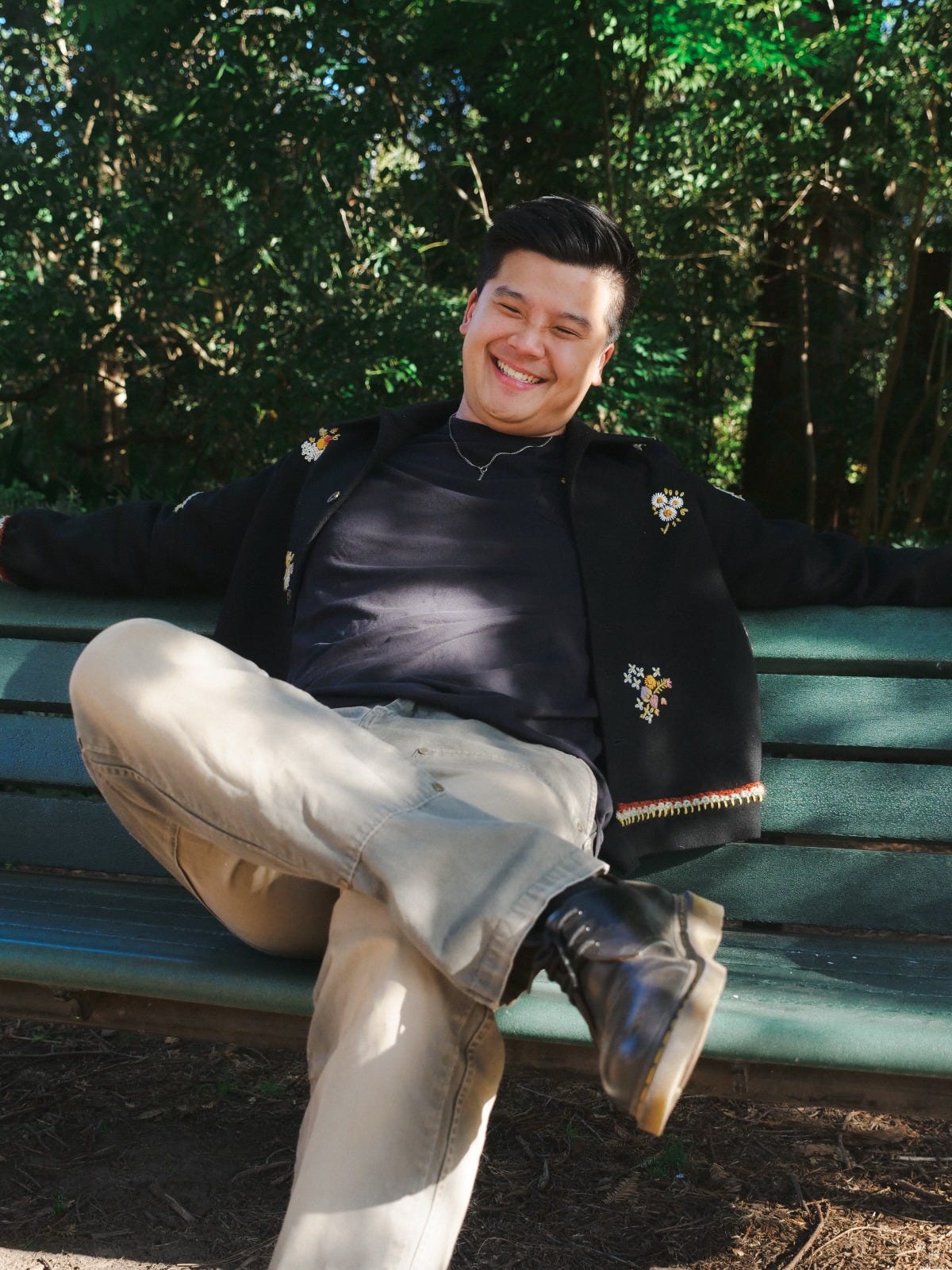
Leo Xia (IG: lowhiofficial), founder of JinShan Collective, joins me to discuss his personal experiences as a straight Asian man and what he has continued to unlearn and heal from over the years. We discuss the toxicity of the “manosphere,” the challenges that Asian men face, and how to create a safer space for vulnerability and empathy to happen. Leo shares what he observes in those spaces through his virtual groups, and I share a few of my experiences as a queer Southeast Asian and my relationship to straight Asian men. Take a listen to the full episode as we get into the nitty-gritty of what vulnerability and empathy can look like as Asian men.
To learn more about JinShan Collective, visit here
Bio:
Leo Xia is a men’s group leader and facilitator of support groups for Asian men. He has spent over 6 years holding conversations about masculinity, identity, and culture for 500+ men.
He facilitates his own men’s group, JinShan Men’s Community through his company JinShan Collective, as well as the Proud Asian Men group under Asian Mental Health Project.
Get full access to Bánh Mì Bites at randykim.substack.com/subscribe
0:00 Hey, everyone. So welcome to the Banh Mì Chronicles podcast. I'm your host, Randy Kim. And so I am joined by Leo Xia. Leo Xia is a men's group leader and facilitator of support groups for Asian men. He spent over six years holding conversations about masculinity, identity, and culture for over 500 men. And he facilitates his own men's group, Genshan's Men's Community, And I remember, I think we connected, or in some ways I ran into your Instagram, I think right before the pandemic, as I was kind of like doing a little detective work.
0:47 And at that time you were focusing on your music career under a low high, I believe. I want to say that you've made this transformation from going into music into the mental health work, especially among Asian men, which I have a lot of interest in talking about. And I want to say welcome to my show. And I really appreciate you for being on. And so how are you doing so far in 2026? And what have you learned so far this year? Well, first of all, thank you for having me. Quite an honor. And 2026 has been... It's been a testing year.
1:27 It's been a testing year. For me personally, it was a lot around learning how to ask for support for when I was doing this men's work for a long time. I did it alone, like very alone. That's just how I thought it had to be in a very stubborn Asian man way. But I think this year, thanks to the grace and support of a lot of men in my community that have been stepping up, They're like, hey, aren't you tired? Let me handle this. Let me handle this if you're open to it. And I've been letting other guys lead groups. So that's been a big learning lesson. So that's what 2026 has been like, learning how to ask for help, receive help differently.
2:12 Yeah, I think this is very relatable, especially for... For things that have happened in my life where I have struggled to ask for help. This comes from like at school or in the workplace or within family. And there's this idea like if you're asking for help that you're failing, that you're not getting it right. And so it's taken me a very long time to have to unlearn this practice as I'm sure it is for you to realize that like One of the biggest parts of our own toxic masculinity is the lack of trust that we have of other people and ultimately ourselves. And that creates this level of friction, this tension and how it affects the relationships around you.
3:00 And so I think that's a good thing to actually point out and what you're learning, especially when we all want to silo our own work and be left alone. But realizing that certain work requires collaboration. It requires having to step outside of your own comfort zone and having to listen to feedback and exchange ideas. And to get back into where it all started, so how would you describe your own upbringing and when did you realize that your experience was different from your peers? So... I was born in the Bay Area, but when I was six, my family moved back to China, actually. So I say I'm a weird mix of Chinese American, but also third culture kid.
3:46 And I owe a lot to the arts. As you said earlier, I used to be in music and was fully thought that was going to be my full-time thing. For the rest of life, I'd be doing music. But I was very fortunate to be really engaged with the arts as a kid. Joined choirs early on, started singing, eventually started songwriting, played instruments, piano, violin, joined a band, started a band, that kind of stuff. And I'm really grateful for that because I played sports as well. So I played basketball, played table tennis. And so I was in like very guy like locker room environments.
4:28 Like that's something that's pretty familiar to me as well. But I feel very lucky that I also had the arts side to balance it out because in a sports context, it's not. I don't really care who you are, just how well do you perform and then we value you based on that. Very clear cut where the arts introduced me to this idea of just self-expression, right? What do you want to say? What do you want to create? What is your inner voice saying? Like calling attention to that. So I think that's a big reason. I'm curious about, like, the...
5:15 The adolescent's experience of being a teenager, a teenage boy coming into his eventual adulthood. And, you know, I know that I'm from a different generation in a way because I'm an older millennial. You're on the cusp of millennial and Gen Z. And so, like, back in the day, like, At least from my own experience, and I'd like to get your own current experience, or at least the experience that you had, you know, being in a locker room that there is this sense of like, okay, like I grew up in a predominantly fairly white community. And so, you know, the white men that I had to be surrounded with, and then there's this scrawny Asian kid, like, There was a lot of struggle about, am I even man enough?
6:03 I mean, I got questioned by my own parents or my own family members because I was seen as too feminine in some ways. And I felt like I had to somehow toughen myself up. I started listening to hip hop music. I wasn't too basketball and sports, but But I mean, I still am a fan of it, you know. At the same time, I felt like there were parts of me that I felt like I wasn't fitting into that box. And then when you're in the locker room, you're kind of like feeling very uneasy. And I was also as a not out queer person back in the day. It was very much a challenge having to like, you know, put myself out there and then being exposed to, you know, the bodies of men and how to reconcile this weird feeling.
6:52 But I'm curious about from your experience as being a teenager, having to like really explore your own identity and also how it compares to your own peers and what that was like. Yeah, I mean, I think the privilege of growing up in China was the race element was a bit More out of it because I was just in a majority Asian context in Asia. But maybe in some ways that hyper shows the hyper-masculinity in a way. Actually, I'll make this point because I went to an international school in Beijing and even though we were in China, Beijing specifically, the influence of American culture and hyper-masculinity was very much there.
7:37 When we did our warm-ups, we still... We listened to Eminem. We listened to Linkin Park. The influence was very much there. So when I think back to that, I'm like, wow. Think about how far-reaching Western culture is in that way. That a kid, me, adolescent, teenager, playing basketball, we're listening to the same music. The guys in the US are listening to hype themselves up before a game. So I think about that a lot. But yeah, it was definitely, I felt like I was leading a double life. Like when I was in the basketball locker room, I would talk a certain way. It's like code switching.
8:17 Then I go into the choir room or I go to dance practice. And it's like all girls and I was the only guy on the dance team. So then I'm grateful for that because it means in a way I actually learned to speak two different languages. I didn't talk the same in the basketball locker room the same way I did. At choir practice or dance practice. And it makes me actually more grateful for the choir and dance practice because maybe the nature of being in an art space is like, just be yourself. We're all here to be ourselves, you know, to feel good in what we create. Where that openness, I'd say, wasn't as present in the sports world.
9:00 Yeah. Yeah. I really like how you bring this, these two worlds in, because especially with arts, like I think of Tupac Shakur, like the guy was an artist, wasn't a poetry. But then, you know, somewhere in his career, he decided to go more to a harder, edgier hip hop, hip hop scene that was growing very, um, Very honestly and very authentically in a way that represented that time period, which was very much a contrast to what he was dealing with as an artist, as a person who was doing poetry. So like when I think about like How my upbringing was that arts was in some ways, creativity was my saving grace in terms of my own expression.
9:49 But there is a code switching aspect of it. I felt like I knew how to talk to tougher people, I guess, in some way, you know, because I knew about the music, I knew about the sports, you know, I could talk about the Chicago Bulls ad nauseum. You're well-versed. Yeah, I could be very well-versed. It's the Gemini, I mean, you know, it's like I joke around, it's Tupac is the Gemini himself and... And Kendrick Lamar is a Gemini. I won't tell you who the current person is and president, but he's also a Gemini. But I think it kind of goes to show you how in some ways arts is opening up the idea of vulnerability and also being in a space where there is likely more women and other queer men or people who are not out at that time.
10:36 But how it seems to be inaccessible to Straight to a lot of straight men. That's what it feels like. It doesn't seem like liberal arts. It doesn't seem like it really penetrates into that. And I kind of wonder, was that really the difference for you when you start to realize your own vulnerability and how... Your family viewed your own masculinity, because I'm pretty sure, like, especially in Asian culture, there's a very high patriarchal, there's a patriarchal system that we all feel like we have to abide by, and I wonder about that.
11:19 Yeah, I mean, I want to credit my mom then, because my mom from a very young age, she was just like, Try everything. Something stuck for me, clearly. The worst for me was visual arts. Oh my god, I could not draw for my life. I was not drawn towards that at all. But my mom, from a very early age, she was like, do everything. Try that sport. Try all the sports. Try all the instruments. I definitely got a lot of very open messaging from her of just like, just do what you love. I think that really showed in how I went through high school because I was like the kid where, you know, like varsity practice Monday, Wednesday, Friday, you know, Tuesday, honor choir, like Thursday, you know, charity work, dance team stuff.
12:05 And I look back and I'm like, oh, wow, that is my mom's influence, right? When other kids were like, oh, shit, it's time to apply to college. I got to do all these extracurriculars to make myself seem like a 3D human being. I was like, no, I'm good. I'm already doing all the things. Getting to exist in both worlds, I feel like I didn't feel that pressure to just be myself. Again, the influence of my mom and all the different circles I was existing in, code switching between. I felt like I got to grow up very wholehearted. And I look back and I think if I had just been, I just do sports and school and that's it, and I don't do the art stuff, I think I would have been a very different person coming out of high school.
12:52 And what was your relationship with your dad and where was he in this picture? And did you also grow up with any siblings? Yeah, a little brother, three and a half years younger than me. I like to say that he picks up the stuff that I do and then just does it better. Yeah, such a good guitarist. My dad was really busy working growing up, so he wasn't super present, honestly. Maybe I look back at that now as a blessing. I didn't have the rigid father figure. Oh, that's not what a straight cis guy should be doing. Don't do that. There wasn't that influence, so definitely growing up.
13:33 My mom's influence was was a much bigger part of who I became as a person. Did you feel the peer pressure from from your male friends who felt like you were being a little too affirmative because you're into the arts and that or did you feel like there was this pressure for you to conform in a way? I think pressure. Yeah, definitely the pressure to conform. I mean, especially Looking back, it's just, it's amazing how, it's like, why did straight guy culture, especially in a sports context, become so homoerotic? Like, why do we do that, you know?
14:15 It's like that competition of like, oh, whoever can say the gayest thing. It's such a weird logic, like looking back now, I'm just like, why? Why? Why do we do that? And then maybe some of them were closeted and that was part of that expression, but maybe some of them weren't, right? So I think about that. I often think about those guys back in high school that, you know, the most, the enforcers of the masculine code, if you will. I'm like, I wonder how they turned out. I hope they're doing well. You know, maybe they had a mushroom trip and realized something about themselves. So yeah, I think about that. There was definitely the pressure. It was maintained as a group and...
14:57 It was good fun, of course, but I definitely think back, I'm like, oh man, if someone was truly closeted, probably not the greatest environment for them. Yeah, I think a person, especially in sports, that really, in a way, left an everlasting impression on me was Dennis Rodman, because I was growing up watching him playing for the Bulls, and there was something that was very eccentric. Yeah. Yeah. Yeah.
15:47 Being in a way very different, a different kind of masculine person versus a Michael Jordan who is very alpha and very competitive and has a no holds bar attitude and represents in a way the tough patriarchy and watching football, you see that as well in hockey and in baseball. And I think about how a guy like Dennis Robbin, in a way, like made it feel like, okay, I could actually in a way be myself in a different kind of way. I don't have to fit into this bubble. And I saw myself as a person who never really liked to conform because I never liked to be in cliques because it's like, I just don't want to pigeon myself to one particular group.
16:32 I want to know everything about everyone else to kind of get a sense of like where... Where do I find connections or where do I find commonalities with? And that was the mindset that I was going in. So you go into the world of music, including hip hop and lo-fi. What brought you to that particular world and how did other artists view you as an Asian American diving into Black music? Yeah, I mean, that's a conversation I always have with Jason Chu, right? It's like, what does he say? If you're going to pick the fruit, water the seeds as well.
17:13 So in that context, it's just honoring the context of where it came from, right? Not having this arrogant attitude about it, like, oh, we're coming in, creating something completely new. It's like, no, we're bringing our element in, but we're We're building on something that's been built and we're ultimately guests in that culture and to treat it as such. I mean, a lot of it was very accidental. I mean, talk about night market or Beijing Boys, as it was called at the time. It was actually me meeting up with a friend of mine from ISB, from high school in Beijing, and he became a producer.
17:53 Me, him, and Jason linked up, and I was just writing more melodic stuff for the group at the time. And eventually, it actually became the catalyst for me writing in Mandarin for the first time. Even though I spoke Mandarin fluently, grew up in Beijing, I just never... Pushed myself to write in Mandarin, so Beijing Boys Night Market, that whole journey was, obviously the cool opportunities were great, but for me, that cultural reclamation aspect, like hearing my own voice, writing what I wanted to in Mandarin, saying what I wanted to say, it was beautiful. I look back on that chapter with a lot of gratitude.
18:33 Yeah, and when you look back in this particular world of music, I mean, Especially in Asians, in the Western music landscape, especially, even still now, it feels like it's still in the infancy stage. Like, I mean, you can't really count K-pop, you really can't count the overseas, because this is the diaspora. We're talking about, like, you know, American-born, like, Asian-American, Asian-American, Asian-European, and so forth, and, like, Who were the people that you looked up to that were also Asian? Because there really weren't very many.
19:14 And if there were, it was very discreet. I mean, you wouldn't find out about it. Like, I didn't know that Karen Oh from the Yeah, Yeah, Yeahs was Asian until like maybe even a few years ago. And like, I remember like maybe... There was obviously Jin in 2000, in the early 2000s, of course, because I was watching BET back then. I was in a community college hanging out with black friends at the time. We were sitting on the couch and watching BET, 106 and Park. And, you know, he would always show up. And then, you know, there was Far East Movement, which, you know, shout out to Pro, to Roe. And also like how their music, you know, was groundbreaking for the EDM scene at the time, EDM hip hop scene at the time.
19:59 And so, yeah, what was your own inspiration? Who did you gather inspiration from, in a sense? And how were you trying to navigate a music world that is heavily very white in America? I mean, I'd say I was really fortunate that I got connected to the Asian American, like kind of creative community in LA very quickly. So even as I was performing in college, I was also going out to do open mics around LA. Shout out to, you know, Tuesday Night Cafe, Sunday Jump, like these amazing spaces. And I also found this space, at the time it was called Our Mic. So it was run by Bo Sia, a poet, and also Ariana Bosco. So it was not exclusive.
20:42 You could come if you weren't Asian, but it was a mostly Asian creative space. So I remember towards the end of my college, that's when I started meeting Jason as well. So obviously that was a role model of like, oh shoot, you're Chinese American rapper, you're touring, you're putting on your own shows, you're putting out your own projects, you're making it happen. So I actually interned for him my junior year of summer, just kind of like learning the ropes. But in Armike, I met a lot of To me, amazing Asian-American songwriters, acoustic singer-songwriters, just doing it at a very high level. I can rip off something like Fuzzy, the Matt Almadel, the Jessica Louise.
21:25 They're all doing amazing things. So I felt really lucky because I felt like I tapped into this pipeline of Asian American creativity and leadership of like, oh, that's what it looks like. That's what it can feel like. And they're not pretending to be anything other than themselves, but they're finding their blend of what they want to create and what feels good to them. So yeah, I felt like I, very fortunate, found that community and then just launched from there. What purchase do you feel That Asian men, specifically with straight Asian men have? In what context generally?
22:05 Well, I think, I think this is, I know it's a very loaded question. I'm going to think about this. Well, maybe I can reframe it this way. Well, when did you realize that the things you were taught about masculinity was no longer aligned with you? Oh, yeah, I can talk about that. I'd say post college for me. That's when my Yeah, my mental health was just at the worst it's ever been in my in my entire life. You know, I was trying to do music. I mean, I was doing music. I was working on an album and I was doing like a big creative, these big creative projects. But I just I was miserable. So and at the time I was really confused.
22:46 I was like, you know, I have friends, right? We hang out. We're OK. Like, why do I why do I feel so, so miserable? A lot of things came to a head very quickly. My grandma on my mom's side, my lala, she passed. She was a grandparent I was closest with. She's the main reason my Mandarin is still fluent. Because when I was in Beijing, she would come all the way from the city out to our family home, and we'd take the morning, Saturday and Sunday, and she would have me read these old Chinese texts and just teach me and just practice with me. So when she passed, I remember, I knew I was sad, but I just couldn't physically cry.
23:32 I was trying, I wanted to. I was like, if not now, then when? But it was just stuck. It was stuck. And that's when I realized that feeling, that sinking feeling of something's wrong. Something's wrong. Something about... How I'm connecting with people or maybe how I'm not connecting with people. Something isn't working, right? The feeling of like leaving a party with all my close friends and feeling really lonely on the walk back. Oh, these are my closest friends in the world. You know, we had all these amazing memories in college. Why don't I feel like better or okay after I hang out with them?
24:15 And I realized a big part of that was just like I just became so good at pretending. I became what I call a social chameleon. I have a good sense of this person in front of me. Oh, they want this from me. They want this energy. They want me to say this. I became really good at that. But then what it did, I think, was I learned how to meet other people's needs, but I didn't learn how to meet my own needs or ask for what I wanted or the ability to really open up to someone. Yeah. I got really comfortable in my role of like, I'm the person that people open up to, but I don't, I'm not really the one that opens up.
24:57 Definitely not with other men, other Asian men. So that was part of why Proud Asian Men was created because I was like, whoa, I think I need to do something about this. And then maybe if this is something I want, you know, deeper sense of connection and brotherhood with the Asian men in my life, maybe other people will too. So that's actually how Proud Asian Men started. I was going through that. Intense period of my life was doing some like personal development work and I put out a Facebook post of like, hey, if I do an Asian men's support group, does anyone care? Does this matter? And luckily a lot of people were very supportive, very, very appreciative.
25:39 So that's how we got started seven years ago. And to kind of go back into when you were at a very difficult point in your life, following the passing of your grandma, how did it affect the relationship with the people in your life? Or how did they view you when you were going through this? And how have they responded in a way that made you realize There's something that's really wrong. I mean, there's something that's really not healthy. That's not helping me become a person that I want to be because of the grief and because of the other external factors that comes with it.
26:23 And here's the thing. I think I would actually put it more on myself because, you know, my friends knew I was going through stuff. That was really hard. But I think all of us, you know, being younger, younger 20s, it's like we all had our stuff going on. It was like, Maybe we didn't have the capacity or the emotional skill set to ask, right? Like, hey, I'm really fucked up right now. Could you show up? Could you support or something? So yeah, but I mean, there are also friends that... I finally leaned on more because life just hit me in a very specific way. And that's sometimes the unfortunate truth about, you know, doing mental health work for Asian men.
27:07 It's like a lot of them come to this, arrive to this work when shit is going really bad, right? They're going through a divorce, right? Big grief, job loss, transition. I've made my peace with it in a certain way where it's like, cool, you know, I'm not going to chase people. Our job is just to be here when you're ready or when the time is right for you to seek that kind of help. Yeah. Did you have any vices as a coping mechanism during those very difficult periods? Oh, yeah. Yeah. Eating's been one of my vices. Porn addiction has been something I've been wrestling with for a long time.
27:48 It's been much better this year. This past year, through a lot of specific recovery work as well. But yeah, all these different ways to numb, right? Just to completely disconnect. Because if I didn't know how to connect with my feelings and feel through them, then the only way was around. And I got very, very good at using the roundabout methods. But very... I thank all my recovery work and all the people that supported me in that because I realized so many of my addictions were rooted in shame. I'm ashamed of a certain aspect of myself or this dark corner of myself where it's like, oh, if you knew that about me, if people knew this about me, then no one would love me.
28:37 So I better keep hiding that away, hiding that away, hiding that away. But now, I mean, it's kind of a funny moment because we're on a podcast, but I'm able to say, yep, there's these addictions. I've been working on and it's been up and down. Two years ago, I could not have said that publicly. I would not have been able to. This shame would have choked me up or I would have felt like it made me a bad person, a weak person. That's something I just need to handle on my own and just fucking fix yourself, man, and then come back to people where now the reason I'm better is And because I have really close relationships in my life where I can be open with them about this kind of thing, like, fuck, you know, relapse.
29:24 Yeah. I mean, cool. I hear you. Okay. You're not a bad person, but, you know, what do you want to do from here? Or curiosity, right? Like, cool, you relapse. How'd that feel? Is that really the direction you want to move through life in, right? There's, like, love, but there's accountability as well while, like, Not pressing into the hot fire of shame. It's interesting because two years ago, I went through a mental health crisis. And that changed a lot of things about me. Because I had a lot of people pleasing tendencies that I didn't realize how much I was storing in. And also, growing up from a very difficult household, I did not know how to be very loving as an older brother.
30:10 And I think that was something that I had to confront with my now late brother's diagnosis with kidney failure in his final months. And then I had to really go through this whole period of reconciliation with my other brother's twin. And so I think it really... Forced me to have to confront a lot of the deep seated issues that I did not know how to verbalize or name really. And when I think of what you were going through, like having to like even just two years ago, it really tells you how very present, how very recent a lot of these experiences are and how much we've had to like be in the process of one recognizing and then having to figure out how do I How do I start making the changes?
30:58 How do I start pivoting away from things that are not useful anymore or not effective in my own journey? I wonder about how did it affect you dating people too? Because I know from my end, I feel like in some ways People ask me about my dating life, and I feel like I tend to be the kind of person that just likes to hop around from people to people for the fun of it, for the joy of it. I'm very flirtatious and very tantalizing in kind of a way, and I have a lot of friends. So I never really feel lonely. And plus, I need my alone time quite a bit at the same time. But I wonder about like in like in your case to like, how do you view like the dating in your relationships, the intimate relationships with people, especially when you were dealing with, you know, porn addiction, because I wonder how much that also plays into this dynamic.
31:52 Oh, yeah. To be very frank, it does a lot of damage. I did a lot of damage through And here's what I realized about it. It's like, before I would think like, oh, it's the addiction that does the damage. It's like partially so, but it's more so the lying that comes along with the addiction. The lying and the shame, right? Of like, oh, I'm not going to tell you about this or I make a promise that I'm going to stop and then I don't. And then I realize that's the deeper part that destroys the relationship where the trust between me and a partner just gets so fractured.
32:35 My integrity within myself is compromised and then my integrity with the loved one is also compromised. I've experienced it. Unfortunately, it's part of why I am better because I had to experience the consequence of what it's like to Um, to hurt someone on that on that level, and then to have to reckon with the consequence of that to be accountable to my to my own action, or inaction, or accountability to my to my own word. So it It definitely was very connected to that because it revealed how much I wasn't willing to trust myself. It reveals how much I wasn't really willing to trust that person and fully open up to them.
33:22 So I think that's a part of the men's work as well. Can I be honest with myself first? If I can't be honest with myself, then I don't have the skill set or the capacity to be honest with my loved ones. Yeah, and going back to another question that I'm going to refine here, but when we think of pressures that Asian men, specifically with straight Asian men in this case, have from a society standpoint, from a Western, being in the diaspora, what does that mean in terms of how They view themselves going into dating, how they view themselves going into the professional working world, how they fit in within their own family community dynamics.
34:10 Yeah, in an umbrella way, I'll say what I see that really troubles a lot of these guys is very binary thinking. It's either this or that. The best guy in the room or the worst guy in the room. I'm either completely enough and amazing or I'm a fucking piece of shit and my family hates me. It's such a rigid swing where I can see the ways that it hurts themselves and it hurts the people around them to have such rigid beliefs about things. The only way for me to be enough is to achieve success.
34:51 X, Y, Z. The only way I can get a girlfriend is X, Y, Z if I'm this height or this ripped or something. So yeah, I'll say that just generally like that rigidity in belief, especially among my straight cis brothers out there. I think we're, I'll throw myself in the ring too. You know, we're famously rigid for some of our understandings, right? Right. And for me, I realized some of those beliefs, it made it hard for me to reach out for support. So the belief of, I only deserve love when I'm performing and I'm at my best.
35:35 Mm-hmm. Mm-hmm. I also wonder about white adjacency, because there are plenty of Asian men that want to subscribe to the white supremacy, this whole model of trying to perform whiteness, in a sense. Do you have these conversations with men to undo this Western-minded thinking, this assimilated thinking that is very, very harmful, not just to our own community, but also from a patriarchal standpoint, too? That's a big question. Yeah, and I think... To my understanding, a lot of that white adjacency or that need to assimilate, that's what shows up in its really rigid beliefs, right?
36:24 A very rigid understanding of what success looks like. Oftentimes very focused on the tangible, right? The monetary, I need to have this kind of career. And a lot of these guys, shout out to them, boom, you create an amazing career, but then your relationship skills are shit. Mm-hmm. So then all of a sudden you have, you have the six figure job X, Y, Z, but you're still depressed. You're still lonely. You still feel broken. And then you still don't have the ability to connect to yourself, men around you, or definitely not women around you. Right. I think, I think women are very intuitive, right? They can, they can, they can tell. Um, so a lot of, yeah, a lot of my, a lot of my work is trying to get these guys to get to know themselves.
37:09 Mm-hmm. Right. Sometimes I talk to I ask people like a very personal question about themselves. How do you feel today? How are you doing? And then there's a I call it a depersonalization that happens. Yeah, even the other day in session, I asked this question of like, you know, what makes you feel connected to your culture or disconnected from your culture? You. I'm not talking about a general political commentary, right? And this guy kept saying, well, I feel like we need to, you know, yeah, we need to do this. And I was like, speak for my. Okay, okay, okay.
37:50 Oh, you know, we need to speak for my. First of all, don't speak for all of us. Because you don't know what our opinions are. We may not agree. Don't lump us in with... That's presumptuous, right? And two, it's like, whoa, are you so afraid of revealing your own opinion that even when you're given the space to just be yourself, you're still like, oh, well, I'm not good enough, so let me present the opinion of something that I think is valid. I think a lot of men fall into that trap. I see the way men socialize sometimes. They just talk about things, right? They talk about sports, right? Sports opinions. Oh, this commentator said this. It's like, Well, no wonder you guys feel lonely because you leave a conversation only having exchanged opinions with each other and not exchanged an actual human interaction.
38:36 So that's like the challenge and the beauty of the work that I get to do, which is like, you guys know how to intellectualize shit. If you could have logically thought yourself out of your loneliness, you would have done that already and you wouldn't need our group anymore. But that's why our groups, it's like this arena where these guys... Me included. We can practice these skills that we weren't taught growing up. How to be good friends to each other. How to care for each other. How to be curious about each other. How to find out how to show up for each other in a way that matters. And to me, this is really important because then when these guys get into relationships, say with women, that they're better prepared to be a good partner.
39:23 That's the goal. The goal isn't just to stay within our circles and just Fluff about. That's why our slogan is helping Asian men heal inwards to serve outwards. This impact is meant to ripple out. And for some of these guys, they may not realize how insufficient their skill set is. Right. So sometimes we talk about, oh, you know, women have to do the work of the emotional labor sometimes of teaching men like basic emotional skills, like all these things. That's a problem we're actually trying to do, where it's like, let's actually create a space as Asian men, for Asian men, for us to check each other, but also to get better, to get better, get better, get better, and then hopefully turn around one day and we're like, whoa, I sleep good at night, you know, my relationship with my family is good, I'm in a relationship that I'm happy with, and I have a bunch of amazing friends that have that emotional skill set as well.
40:20 Yeah. What does it look like when you witness a person's vulnerability in real time and also how they handle feedback, the idea of accountability? Because this is an area that a lot of men, unfortunately, struggle with, which is kind of why we're in the environment that we're in these days. So I wonder about witnessing vulnerability firsthand when you actually get to see this in action. And then this idea of feedback and accountability. Because, you know, for a long time, I was terrified of feedback. I was very terrified about, like, you know, getting criticized or being caught up by my friend because I'm like, oh, shit, you know, this joke went too far. And I'm like, oh, you know, I'm thinking the worst case scenario, which I do a lot, you know, I mean.
41:02 And also at work, sometimes I'm like, oh great, my boss is going to think that I did this wrong and wasn't doing it right. So those things start to develop and create its own narrative. But yeah, I wonder about these situations that you see. Yeah, I think it's front-loading a lot of compassion and care, right? It's a dance, right? It's a balance. Like, every person's a different case. For some guys, you know, they come in, they're like, my life's fucked up. Give me the feedback. I want it. You know, don't hold back. And we're like, okay, cool, you gave us permission.
41:43 But with some guys, it's like, They've never had any positive male relationships in their life. Not with their father, not with their brother, not with their friends, not with their sports teammates. All their relationships with men have been destructive, competitive, all that stuff. So for some guys, it takes some more time of like, yeah, come to the group, let's share stories and... Over time, you can see that we're here. We're not going to leave. We're here consistently. We care about you. And it's important that you feel that we care about you and we know you to some extent so that when the feedback lands, it's not just like, oh, these guys are being an asshole.
42:29 They're doing this because they don't like me. It's like, oh, I can't use that excuse because I know these guys care about me. So I guess they must be. Reflecting something back to me that may be valuable for me in my growth within myself and in my relationships. But yeah, it really depends on the guy. I will say, yeah, lately I've been a bit more, been sharper about it. Like, you know, for the free group through AMHP, that's pretty chill. It's just, it's a support group versus the weekly group that I hold. It's more what I call men's work. Where it's like you're specifically here to get better at a certain skill set, whether it's self-love, self-compassion, relationship skill set.
43:15 So we're going to be a bit tougher on you about practicing that and being accountable to what you say you want for your life. And what about your interactions with queer Asian men that have been in this group? And what have you been able to observe, especially as a straight Yeah, I mean, my mentality about it is simply let's treat each other as humanly as possible, right? For Proud Asian Men, we go by an expansive definition of what it means to be an Asian man.
43:58 So if you're in the queer community, if you're trans, if something about Being an Asian men's community speaks to you as something that may benefit you. Come, we're open. And, hmm, how do I want to frame this answer? I think, I've seen that it becomes, when we do it right, it becomes incredibly healing for Asian queer men to experience, right? Because they get to experience straight cis men that will listen. Mm-hmm.
44:40 Caringness, right? And it raises the bar. And I always want to credit the queer community because I feel like I'm just doing the work that the queer community is like way ahead on. You know what I mean? So this is just the opportunity for the straight cis men really actually to do our homework. So when we come in connection with the queer community that it feels safe. Mm-hmm. Mm-hmm. Mm-hmm. Mm-hmm. Mm-hmm. Mm-hmm.
45:28 And we're just talking about emotional connection, right? And then it's like, yes, I could absolutely, we can just shit on you for it, kick you out or whatever. But as the straight cis men in the room, it's also our responsibility to educate, to check, right? Not in like a fuck you kind of way, but hey, let's think about why you said that. What does that really mean? Are you really trying to say like emotional intimacy is homosexual? Because that's not true. Let's unpack that. Where did you learn that? So that's our arena to really educate and interrogate within ourselves what you could say a very heteronormative masculinity has taught us.
46:16 And question whether it's really, one, is it right? Is that belief right? And two, is it useful for us? Does it help us be better men? Does it help us be better brothers, fathers, friends, partners? And if it doesn't, are we willing to let go of that? You know, it's very interesting because this is definitely dynamic that is very interesting to me because I know that, as I mentioned earlier, a lot of my queer Asian peers, you know, there's a lot of reluctance and resistance to being around straight Asian men. Now, as for me, it's a different story because I grew up around a lot of straightness or at least a lot of, you know, this masculinity and I've performed a lot.
47:02 Cisheteroness, whether people saw it as believable or not, you know, but at least growing up, that's what I was trying to somehow fit in and realizing that into my 20s, this was not working. This was not making sense to me. And I think once I became more Comfortable with my own sexuality and who I was in my phoneness or who I am in my phoneness, then I think that there is this level, especially as I've gotten older now, and I don't do this to my own horn, but I also do this because I know that now that I'm older, There is a self-assuredness that I've gained.
47:43 Like, I have seen, I have been around a lot of straight Asian men in my life. And, you know, some of them are really good friends of mine, you know? And I was talking to you, Leo, like in the DMs, you know? One of the things that shocks both sides of my friends from straight and queer men is that I will go to K-spas with both a straight Asian friend or a queer Asian friend. The thing is that the idea has never been sexual. It's not. I think that there's this weird idea. I think it started when I was living in Korea back in my mid-20s. I was really hooked on to the sauna culture.
48:25 I know it's TMI for folks, but I do not care. The thing is, what I learned is that Some of my more deeper conversations actually happen when we're in this jacuzzi. We're naked in the jacuzzi just having a chat. It's like I learn about people's relationships. Just the other week, I went to King Spa twice. So one from a friend out of town, I was talking about grief, about the loss of my brother and the loss of his mother, you know, like years ago. And then, you know, just the other day, I was with a queer friend of mine, you know, dealing with his breakup of his partner for like the past, you know, few years.
49:05 And so I learn a lot from those conversations. And I've noticed that over the years, as I've been going to them, there's something about it that feels very... That feels very comfortable, as weird as it sounds to a lot of people. But it's like I grew up in a culture like in America where we had to take showers after P class. And as a teen, as an adolescent, it was kind of terrifying. Because I did not know how to handle it. And, you know, I did not know how to handle the body that I was occupying and what that was going to look like, you know, as it was changing. So I felt in some ways it was kind of like reclaiming it.
49:48 Like, you know, I feel very comfortable just hanging around the nude with, you know, other men and being very nonchalant about it. But yeah, I'm curious about like even like, you know, about the spa culture, about some of the more places that, you know, where you have like Meaningful conversations that are about like very vulnerable stuff and you know just like sometimes even crying with each other or just being a shoulder to cry on. Yeah, I mean, I think I'm less familiar with spa culture in general. Even in Asia, I just wasn't in it as much. But I think about all the different ways. For example, this past year, we've really leaned into live events.
50:31 So that's kind of been our process of what kind of activity do we think would support these men in finding connection with themselves and others, right? So we've done a ton of different events. We actually have a Taiko, Japanese percussion drumming event this weekend happening in LA. So we've done percussion. To me, these very ancestral practices. Percussion, dance, singing, cooking. We gather to do these things, and that's the portal to connection. And that's what we found, is that some of these things are very simple on the surface, but can bring up really emotional things.
51:12 Right. Like, for example, we did a cooking event. I'm doing a couple now, but that first cooking event we did was really emotional because cooking is also it reminds us of like the table, the dinner, the dinner table dynamic. And, you know, for me, the dinner table was not an emotionally safe space for for me growing up. It was like, I'm you know, my dad's eating as fast as he can so he can leave and go watch TV. Cool. I'm going to eat as fast as I can to escape this environment as as well. So. For a lot of guys, Asian guys, to experience a cooking setting, and then we just sit down and eat together, and it's just cool. We can just be ourselves in this setting.
51:55 That was a novel and emotional experience for them. Because I think Asian men feel a need in a lot of areas of their life to perform. To perform masculinity, to perform competitiveness, to perform competence, to perform like, I know, I'm the best in the room. So where do they get space where they can just exist and feel truly themselves and not be punished for it? That's the question we're trying to answer in our work. And how can we create more spaces like that? And to be clear, there's nothing wrong with being competitive or ambitious or hardworking or fucking awesome and amazing at what you do.
52:35 It's just like... But where do you get to turn that off and just be yourself? To recharge so that when you wake up the next day, you can go be the best at what you want to be and also know that you're loved for who you are. Again, it's breaking that binary. What if you can be competitive and hardworking and also have the love and the relationships that you want to in life? That's what we're proposing. Is it going to take some work? Absolutely. But we're here to walk side by side with you as we ourselves do the work with you as well. Yeah, I really appreciate how you are looking to create different spaces that is very communal and also that that also gives space for conversations and also some level of vulnerability and also even the little things like because in like in some of your videos you talk about Hugging, you know, more than just dapping.
53:27 I mean, obviously with consent, you know, that is. And that's something that we always ask is like, okay, is this, are you okay with a hug? Or are you okay? Where are you at? I mean, I find myself doing it because I learn a lot from queer trans folks in those spaces. And it has helped to kind of inform my way of, you know, thinking about my own My own masculinity, my own power dynamic that I don't realize I always carry, whether it's on age, whether it's, you know, gender, height, or whatever, whatever that looks like. But those are things that I think about. But I also, you know, I'm a hugger, you know, by nature. I love giving hugs. And sometimes some of my straight friends or even my straight cousins, they're kind of like a little, like, a little taken aback by that.
54:14 And then on the other hand, I remember when I went to Korea a few years ago, I reunited with some of my, you know, male students, you know, they're in their late 20s going into their 30s. And one of them just gave me the biggest hug and I was like, okay, that's a lot. It was adorable. Even for me. It was adorable, but he was like, oh my, and he was like, can't see me in a long, but they haven't seen me in like ages, but, and I was like, oh my God. And I mean, now I'm watching him be a dad, a first time dad, like recently, and that warms my heart, but I'm like, oh my God. But even then I was like, okay, the one thing is I do not like hard hugs. I do like soft hugs, you know? And I'm a very tender person, but, you know, just remember, just don't get too carried away.
54:57 But yeah, like, I think that the idea of normalizing that, I mean, I like to dance sometimes. I mean, I have awkward uncle dancing at this stage of my life now. But it's also movement. It's also like, look, I, you know, I'm not, again, trying to do my own horn, but this is how I feel like I'm Trying to get rid of the idea of getting a performance grade. Sometimes on social media, there's this idea that We're afraid to be making mistakes because of how harsh the comment sections are, the DMs. And I get a lot of very nasty comments when I speak out about social justice work or what have you.
55:42 And I'm kind of like, well, it's all noise. It's like I've seen Black content creators and Asian content creators, especially women, getting some of the worst of the worst. And I pay attention to how they work with it. It's like, okay, well, this is how I'm going to have to work with it. This is all noise. I'm just going to protect myself. But at the end of the day, I can't let it stop me from being my full authentic self. I was denied that for a good part of like into like my teens, into my early adulthood. And I'm like, Why should I do it now at this stage of my life, you know? So, yeah, I think that is all to really say. What do you feel very comfortable doing that men are like, oh, taken aback by?
56:26 You're like, oh, I didn't realize that you were like this. I think it's just the openness. The openness to talk about the times in my life where I wasn't doing great. Or I wasn't proud of who I was, right? I think when we're not careful, a lot of straight men interacting with each other, it's like secretly a dick measuring contest, whether you realize it or not. It's like, oh, it's like it mirrors, I think if we're not careful, it can mirror our relationship with our father sometimes where it's like, this isn't a friendship. This is a proving ground of like, I'm successful and, you know, all that where I think that's the beauty of vulnerability, that it just takes one person taking the lead.
57:14 Hey, I'm gonna be honest, this week was kind of fucked up for me. I wasn't feeling top of my game this week. Not proud of certain things I did this week. Right, the energy in the conversation changes, the energy in the room changes, right? So, I think that's... That's obviously what I what I do in my in my groups. But yeah, even in a regular setting, I'm very grateful to now have that skill set because something my psychology teacher Rodrigo would say, he would say we can only humans can only love that which is imperfect. If something just love looks too perfect, it's like, well, why do you need love? You you got it all handled.
57:54 Right. So this when we when we show our imperfections, when I show my imperfections to someone, that's an opportunity for them. Mm-hmm. Mm-hmm. And I find that even the most toxic-seeming men, in some ways, it's like when they have the opportunity to open up and be human, of course they want it to.
58:34 Maybe they want it the most. That's why they're overcompensating so hard in the other direction. But at the end of the day, for men, it's like who doesn't want to be seen, acknowledged, and held for the fullness of your humanity? So that's the work. As men that have done this work, I try to live that example because that's what I realized at the end of the day. I can't force any of these guys to do anything or to live their life or to change and transform in any certain way. But the most powerful thing I can offer is my consistency, is my dedication to my values, to my vulnerability, to my To my truth, right?
59:20 And sometimes the truth is saying, yeah, I didn't have a good time or I didn't show up in my relationship the way I wanted to this week or I've been talking big things about this dream but I haven't been putting action towards it and I just want to put that on the table and not have you think I'm a perfect human being either because I'm not and I'm trying just the same as you are but hopefully we can try together and that makes it easier on all of us. Yeah, point blank question. Are you a crier? Are you a big crier? I have my phases. I think maybe I'm in a phase of pretty solid crying right now. You know when you're scrolling on Instagram and you see a video of like, I don't know, the abandoned puppy that's like restored to health or something.
1:00:07 Recently, I'd say yeah. I'd say yeah. Yeah, yeah. Movies get me. Yeah, and how do you How do you react when you start to get to the point where you're ugly crying? Because I ask this question because I've had my moments where I have openly cried many times, sometimes in public. And I know that when I start to cry, I really cry, you know, like to the point where I can't talk, you know, that's, that's, and that part I really hate, that part I don't like, you know, because I'm not going to talk about crying, but I think like last year when, you know, I dealt with, you know, my brother's death, I think the first, God, the first several months, I mean, I would, I, I, I would have a hard time talking about my brother around my mom when I'm in the car with her.
1:01:07 She'll bring it up a little bit and I'm just very quiet. You'll probably see a tear in my eye and I'm just looking straight. I can't talk. I just can't talk. Now, if I remembered I did a Q&A with an author and I was talking about her father and how she talked about how she never got to say I love you to her father. I couldn't do that to my brother. That one really hit me very hard. So I brought that up to Q and I just got very, very emotional. I think a lot of people in the room were crying too. But I think there were times when I would be out in the road and that's like, I was at When I'm at home, I don't get as emotional as I do when I'm driving. It's because most of my phone calls to my brother were in the car.
1:01:51 And also because I'm also getting reminded when I'm driving to place the place and it's like, okay, I can't escape it. So that was a good year of me being reminded constantly and having to work with that and go through therapy and talking to close friends. Trying to find ways to honor him. And I think this year, I feel like I'm at a better place to manage the grief. It still happens. I think that there are ways that I'm looking to honor him. I'm hoping to do a solo storytelling show, a monologue about grief and loss and healing journey. And so I do think that that is something that I think about. But yeah, I mean, I've had guests on my show cry a few times.
1:02:34 And I mean, there are times where, you know, even my own solo shows, I think when I first came back to the podcast a year ago, I was very emotional about that loss. And, you know, I realized that there is comfort in knowing that these are the feelings that I need to get out and that these are the feelings that are very real to me and that That this is the reality and that this is also my story that I don't have the shame of because I think part of it is trying to honor my brother at the same time. So, yeah, I see a little cheer there. I don't know if you're cheering up a little bit there, but no, but seriously. I'm feeling it. I don't know if I'm, it's not coming out.
1:03:14 I'm feeling it. See, I'm good at that. I've noticed that I'm pretty good at that part, too, because when I do storytelling, I do come from a place of vulnerability. And sometimes I have to be very careful because I don't want my vulnerability to overtake me telling the story where it really takes over. That's an art in and of itself. And I had this conversation with a storyteller. So you do have to process. You do have to give yourself time of distance in order for you to tell that story. So that's a whole other thing. You might have invited me as a guest speaker in one of your groups about that part. But seriously, I think that... We are discovering more about ourselves as men and what it can look like, you know, where we have to continually unlearn old practices that we were ingrained with and the privileges that we have to keep checking and really understand what that means.
1:04:12 And yeah, when I look at the Andrew Tates of the world, the Joe Rogans and Charlie Kirks that have tried to infiltrate with young men, like how do you I mean, I know this is very loaded and this feels a very unfair question, but how do you try to intercept or to disrupt harmful narratives coming from these toxic men that are trying to go for the younger generation of men? Because I know as a podcaster myself, I feel like in some ways, like, look, I don't like being associated with these people in that world. But at the same time, I also have a responsibility in some ways to To model vulnerability and that there are other ways to work through that.
1:05:01 Yeah, I mean, I think a big aspect of that is not Just completely judging these guys for resonating with those people and trying to understand why do they resonate with Andrew Tate, with these people. And there's so many layers, right? Because on the outset, you look at it and they say, oh, well, they just want power and control over women. It's like, yeah, that's true. That's a part of it. But let's dig deeper. Dig, dig, dig, dig, dig, dig, dig. And it's like, they want love. They want to feel useful. They want to feel in contribution to themselves and the world.
1:05:41 They want to sleep better at night. They want to not hate themselves as much as maybe they've been grown up taught to. And yeah, I see it maybe as our job to just speak to their humanity continually, continually, continually. Because At a certain point, I think why guys, maybe they enter the manosphere, but then they exit is that eventually they're like, these people don't give a shit about me. They could not fucking care less about my humanity and who I am. I've become a dollar sign to them. I've become a follower to them.
1:06:27 I can't believe I trusted them with that. And there's a shame associated, right? So on this side, if we shame them more, where are they going to go? They're going to find somewhere else. So that's where I see the goal. It's like, let's just take the shame out of the equation and be like, hey, that's what you believed was right at the time. I can understand that. You want a sense of control and fulfillment over everything. But now what? It seems like you know better now. What would you like to do now? I think a lot of it is handing agency back to these men. To be like, you're actually more powerful than you think. I fully believe in your capability to create fulfilling, really beautiful, fulfilling relationships in your life.
1:07:12 At the same time, it's going to take some work. Are you willing to do the work? Are you willing to be messy? Right, as you were saying, sometimes it's like the feedback, oh fuck, I wish I didn't say that, and then you apologize, and then oh fuck, I never learned how to properly apologize because I grew up in a fucking Asian family. Okay, let me try to apologize a little better this time, let me learn from the last time. When the guys in my group, I see them, they engage in that kind of like, the science, like trial and error of relationships, they're the ones where I see their life transforms. Their life completely transforms. Their family relationships transform. The way they talk, you know, the way they connect with even a stranger on the street completely, completely changes.
1:07:54 That's because they're willing to learn. And that's possible. That's truly possible. Randy, I've seen the most toxic men, like, transform. Mm-hmm. I truly believe it's possible, but it needs the right space, it needs patience, it needs belief, all these things for a true transformation to occur. Yeah, no, thank you for really lifting that and for really sharing the The work that you've been doing within your groups and what you've observed with the men that you've been working with and what they've been continually working on, you know, and the challenges, the barriers that you're seeing that they have to, you know, you know, work through.
1:08:43 What are you looking to do the rest of this year? Yeah, I'm where we've got our monthly events going on in LA and the Bay Area. I mean, this is a big transition that's happening because historically we've been housed under AMHP. So a lot of our work just goes through that nonprofit. But at this point, our next big goal is a facilitator training program. So to train up Asian men in different cities, organizations, schools to be effective peer support leaders in their space and to run events and to run groups and to literally build community. But now we're realizing we're growing really fast.
1:09:24 So basically we need to become our own company or our own nonprofit. So I'm slowing down at the moment, hoping to fully have like an LLC set up by the end of the year. But in the meantime, I'm running an alpha test of the facilitation training program with like the closer guys in the group that have already been facilitating. So they're going to be my guinea pigs just to make sure everything in the program is solid. That's the goal right now. We've done it in LA. We've done it in the Bay Area. We have a proven model of what works. So then can we bring it to different cities? Can we bring it to different communities of Asian men around the country, around the world, and see what we can do. See how we can magnify this conversation and help more Asian men.
1:10:10 What do you look to see yourself become in your 30s? Good question. It's connected to what I said at the start of the session where a lot of my 20s was just like running so many sessions. Like every week, run three sessions, four sessions and the wear and tear on my body and my heart and soul. I feel it because it's a lot of emotional energy. So that's what the facilitation training program would be where it's like I get to train more of the next generation of people to carry it forward. And I love facilitating, so I'm still going to do it as much as I can, but I see from my 30s that I get to build wider and create more things and be part of the exponential growth of things and have amazing guys, trusted guys that get to step into their leadership.
1:11:08 Yeah. And get to do what I do now. So that's what I realized, too, when before I didn't delegate, it's like, oh, I was not only making things harder for myself, I was actually depriving potential guys of these beautiful opportunities to grow into their own leadership. What is the one thing that you've been doing or that you've been partaking in that a lot of men are like, oh, it feels like it's something that doesn't seem very... Quote, unquote, manly or like that kind of surprises you. Because I could tell you what people get surprised about, which I mentioned sports. Like I remembered when I was visiting family in Boston, you know, I have cousins that are New England Patriots fans, which I have a lot of feelings about.
1:11:55 And, you know, I brought my queer friend with me. He was visiting. I brought him to see my family, you know. And when my cousin, we were just talking about The Patriot season, we're talking about the Boston Celtics and the trades and all that fun stuff. And then my friend took me aside and he's like, wow, I never thought in my life that I would get a straight version of you. And I'm like, wow, you know, it's kind of, it's like, see, but you know, the funny thing is that I've been wanting to like add some sports nostalgia elements so I could throw people off a little bit because I'm like, look, I've been wanting to flex this for quite a long time here, you know?
1:12:35 Yeah. You know, it's like, okay, not everyone's gonna like, that's definitely not my audience, but I just want to share like, yeah, these are some of the things that, you know, I also still enjoy. But what about for you in this case, you know? For me, it's been plants. Oh, okay. I have like 40 houseplants right now. Some indoor. Plant daddy. Yeah. My brother, Noel, he's been the one to introduce plants into my life. Oh, nice. He brings a couple plants. He never forced me to learn it, but I think naturally I was just like, I love this. Right? Because I think for my mental health too, even if I didn't do shit today or I felt like I failed the day, it's like, no, I watered my plants.
1:13:21 Took a look at them, you know, took care of them. I was attentive to them. And yeah, I never saw like plants, I guess, as a more masculine thing. But now I'm like, it's one of my favorite things to do. It's a big part of my life. It reminds me of being back in school where I'm like, I just love learning more. Not for the sake of a certain result, but just knowing more about this thing that I love. It makes me happy. So shout out to my houseplants. Reminds me to go water them again. Yeah, one thing that I would say about my brother right now, my living brother, is he's gonna kill me if he hears this, but like he's a very alpha male person, you know, he's very reserved stoic, he's taller than me, I'm six foot one, you know, so I mean, I'm the shortest of the three brothers, which, yeah, that, you know, think about that in your head, you know, but like But my brother has always been very stoic.
1:14:19 He recently got two cats with his wife. And now they just started an Instagram account for those two cats. And I'm just like, wow, I never would have imagined that my brother would also take a selfie with this cat. That's something my bro would never do is take a selfie of himself ever. So I was like, wow, this transformation, this cat is like really softening them up a little bit for a change, you know? That's right. So, you know, I think, so yeah, exactly. Again, example of like, you know, seeing the most hardened of hearts, you know, soften quite a bit, you know? And sometimes a cat will do that. Sometimes, you know, listening to, you know, A pop diva can do that, you know, or if I want to tap into my mask inside, I'll watch.
1:15:03 I mean, I used to watch pro wrestling back in the day. I don't do that anymore. But, you know, but I still have my moments, you know. So, yeah. But anyways, as we wrap up, where can people find your work in this group? Yeah, you can find all the stuff on IG at SLOHI Official. That's L-O-W-H-I Official. We also have an Instagram page for the group, Proud Asian Men. Just at Proud Asian Men, all in lowercase. And you can also check out our website, proudasianmen.com, and you'll get links to all the groups, all the events. You can also contact us there if you have a specific question about something as well, and we'll get back to you. Yeah, great.
1:15:44 Well, thank you so much, Leo, for coming on to my podcast. It's great to finally have a conversation with you and really discuss a lot of things that we have to unpack about masculinity and what it can look like. What does unlearning toxic masculinity mean? How do we define masculinity? Our own version of masculinity that is centered on vulnerability, understanding, accountability and empathy. So I really appreciate you coming in and shedding light into it. And I hope that, you know, people are connected to your group or at least, you know, try to start spaces that, you know, help to foster that.
1:16:25 Cheers. Yeah. Thank you for having me. This is great.
