Special Episode: Andrés Cepeda: 30 Years of Music, The Robust Colombian Music Scene, and His US Tour Kick-Off in Chicago

 Apple Podcasts

 Spotify

 Amazon Music

 Overcast

 Castro

 iHeartRadio

 PocketCasts

 Podchaser

 RSS Feed
Bánh Mì Bites is a reader-supported publication. To receive new posts and support my work, consider becoming a free or paid subscriber.
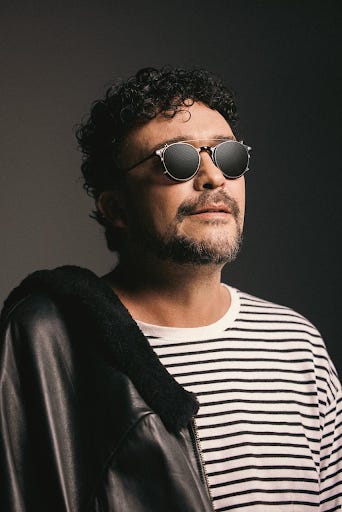
I’m super delighted to bring you a surprise guest on my show. He’s a Latin Grammy Award-winning singer-songwriter and one of Colombia’s beloved artists, Andrés Cepeda. He is set to kick off his US tour in Chicago on May 10th at the Riviera. As he is preparing for his tour, I caught up with him for a brief chat about his 30-year career legacy, his pride as a native Colombian, the growing success of Latin music on a global level, and his take on fellow Colombian peers Shakira, Maluma, Karol G, among others, who have achieved crossover success, and the legacy of Latin icon Celia Cruz. Andrés talks about the changing landscape for artists in the digital era and how he has been learning to adapt to the changes over the years.
For more on Andrés Cepeda and his upcoming US tour, please visit:
Instagram: AndresCepeda
Facebook: https://www.facebook.com/andrescepedaoficial
Website: https://andrescepeda.com.co/
Bio:
Born in Bogotá, Colombia, Andrés Cepeda is one of the most renowned singers and songwriters in the Latin American music scene. With a career spanning more than 30 years, he has toured the world and appeared on the covers of multiple magazines, newspapers, and playlists on major music platforms.
He has won numerous awards and served as a lead coach on talent shows, including 11 seasons of La Voz (The Voice) in his home country, Colombia. He has also topped radio charts with countless singles and starred in live shows and studio recordings alongside major Latin superstars. Cepeda has received nineteen Latin GRAMMY® nominations, winning five awards including Best Traditional Pop Vocal Album at the 2025 ceremony, and he also earned a nomination for the 2026 GRAMMY® Awards.
He recently released “La Pilanderas,” in collaboration with the legendary Celia Cruz, fulfilling a lifelong dream inspired by the Caribbean records of his childhood. His body of work celebrates sensitivity, creativity, and the power of song as an emotional bridge. His romantic musical style has become a unique and unmistakable hallmark, allowing him to blend various genres with ease.
Andrés Cepeda is also known for the creativity of his live performances. Among his most acclaimed formats are Guitarra y Voz, Cepeda Big Band, his jazz quintet Vivo en Directo, Cepeda Sinfónico, shows with his full band, and Cepeda en Tablas, a theatrical presentation where he shares the stories behind his songs. All of this has made Andrés Cepeda one of the most respected and beloved artists in Latin America.
Bánh Mì Bites is a reader-supported publication. To receive new posts and support my work, consider becoming a free or paid subscriber.
Get full access to Bánh Mì Bites at randykim.substack.com/subscribe
0:04 So it is such an honor. Our next guest is one of Latin music's most versatile voices. From Bogota, Colombia, Andre Cepeda has spent 30 years topping charts and crossing genres, from jazz and symphonic sets to his latest collaboration with the legendary Celia Cruz. With five Latin Grammys under his belt and 19 nominations to his name, he continues to be a defining force in romantic music. Here is the incredible Andre Zepeda. So it is a tremendous honor to have you on my show. And how are you doing so far this year? Thank you, Randy. It's a pleasure for me to... Yeah, it's been a great year because there's a lot of things going on.
0:47 We are just finishing our Bogota tour, which has lasted about almost two years since we began promoting our album and being touring around the world. And the last leg of this tour is right now in the month of May. There's 14 shows in the US and that's it. We... We turn the page and begin with another project, which I'm working on right now. And I have two projects ready to be released, a new pop album and a big band album I recorded live last year. And it's ready to be released on the second semester of 2026.
1:28 And yeah, we are touring, recording, everything kind of at the same time. But it's been a great year so far. Yeah, thank you for sharing that and for your current tour in the US. There has been a lot of emerging Latin American artists like Bad Bunny with his Super Bowl performance and we're seeing more of this explosion and this continuation of Latin music really entering the Western markets. Have you been noticing anything that you've experienced while on tour or anticipating this US tour so far? Well, my first date in the U.S. is going to be on May the 10th in Chicago.
2:11 But I've been in other countries with this album and definitely you can kind of feel in the air there's this notion of Latin music being the focus right now. Everyone is turning around to take chances with our fusions, with collaborations with Latin artists. And I think that's a great thing for us, for all of us. because it reminds us we have so much to give to the world in terms of culture, of rhythms, of sounds, of all the possible fusions you can do with Latin American music. And that's always exciting. And to see that the world is paying attention, that's really good. Yeah. And I think in the past, in order to break through the U.S. and Canadian market, for example, like Latin singers would have to sing songs in both English and Spanish.
2:56 And these days, you know, as I mentioned, like Bad Bunny doing entire Super Bowl in Spanish. That has changed a lot because people are listening beyond the languages to the music and trying to connect to the culture. Yeah. And I think that's a great thing. It's time for us to show ourselves the way we really are and how authentic we can be and all the things we have to share with the world. Yeah. And so since the turn of the century, Colombia has been transforming itself from its difficult past to now becoming a cultural hub. And, you know, we've seen so many Colombian icons crossing over to global markets like Shigera, Carol G, Maluma, Kelly Uches, J Balvin, Juanes, and they've become global icons.
3:44 So what does it mean for you as a veteran artist watching your peers find success outside of Colombia and how has it affected your work? Well, I think it's great. And it's a really large group of artists who have been representing our culture for so many years. I feel like I'm a part of it, too. And I'm really proud because most of the people you have mentioned, not all of them, but most of them are in the realm of the... urban general, you know? But there are so many other phases to it. You mentioned Juanes, who mixes rock and pop and Latin roots and all kinds of stuff. And I think it's fun because people overseas can begin to taste the different flavors of our musical approach.
4:32 We have many, many different styles and voices. And yeah, Colombia has become kind of a hub for that Latin music culture and lots of productions and lots of lots of content is being generated from from Colombia or by Colombians. Yeah, that's right. I think that's amazing. Yeah, and it is. I went to Colombia, actually, early this year during the holidays, and I visited Bogota, Medellin, and Cartagena, and I've learned so much about the history, culture, and historical places, and I truly, truly love. This was my first time in Latin America, and I really was blown away by Colombia. What makes Colombia very special to you? What makes you very proud of your homeland, especially in Bogota?
5:14 Well, we have had a complicated history. It's not been easy being a nation for us. And we struggle with it every day. But we have this luck to be positioned in a place geographically that has so many different climates and communities. cultures and racial mixes, that mixture makes us really rich culturally. And I think that's what makes me most proud of being a Colombian, being a part of a country which is so diverse and interesting. And you can look at it from so many different ways. If you visited Bogota, you know that it's a very completely different country as when you went to Medellin or when you went to Cartagena, which is in the Caribbean.
6:00 It's really diverse and unique in every one of its regions. Colombia is very special in that sense. And I think that's what I'm most proud of, being a part of such a big, interesting puzzle. Yeah. And who are the people that you've been influenced by in Colombian culture, like beyond music, but also in art and also with other figures? I think we have been lucky also to have great literature figures in poetry or in novels. We have great writers and we have had great composers, arrangers, singers. We have a great history of cultural achievement. And yeah, I grew up listening to Colombian music, to bolero, to cumbia, salsa, merengue, everything from the Caribbean, all the way to Anglo music, pop, British rock.
6:51 You name it. And it's kind of our culture. We are used to absorb all type of influences and sounds and things. And we find our own way to mix this up. But definitely there's been important names in Colombian music. starting with maybe a century ago, a little bit less people like Lucho Bermudez, who have been so important, Rafael Escalora, most recently people like Carlos Vives, who rediscovered this connection with our own heritage. It's been so important, his work on this. And yeah, there's a lot of influence to pick if you are growing up as a musician in Colombia, as I did.
7:32 Yeah, and you did a collaboration with the late Latin music legend Celia Cruz. And this blows my mind because Celia Cruz is the queen when it comes to Latin music. Absolutely. And absolutely a trailblazer. So what has she taught you as an artist? Okay, this was... To begin with, it was a great honor. And also, I got to it almost by chance. When I was very young, I worked as a studio assistant in a studio back in Bogota. And she went, that was maybe 20, 25 years ago, she went to record a couple of sessions to the studio where I used to work. And I remember the tapes were there, and they were never actually used.
8:12 They were just... put back in the studio store and I knew they were somewhere around and I started to look for those tapes and I found them and then I got to, I had to ask for permission with her family, the people that inherited her legacy, the record company, the publishing company, everybody to get the permissions to use her original voice because this wasn't made with artificial intelligence. It was taken right out of the original two-inch tape. And I used that voice of hers to put in a song that I arranged especially for her. And it's a very famous Cumbia song, which she recorded, but was never used.
8:56 And I had the great honor to sing along with the great Celia Cruz. That means a lot to me because, as you just said, she's the queen of Latin American music. And she represents so much of our... I don't know, you know, her charisma, her voice, her presence, she was just amazing and gigantic. And when you are in the U.S., what have you learned, well, in the past, like, what have you learned from your experiences interacting with the crowd and performing, like, in theater settings? I know that you have performed... That's very interesting because, you know, when we started visiting cities in the U.S., as in Europe as well, we noticed a phenomenon, which is people from Colombia and people from Venezuela, from Ecuador, from Peru, from Argentina, Mexico, who are in town where we go visit, obviously go to our shows, but they started bringing their fiancers, their couples, their sons, their friends, and that crowd has been growing.
10:00 in a sense that we didn't expect because each time we visit one of these cities, we find more local people attending our shows. And that's very nice because it's kind of a, you know, I'm going to see a Colombian artist. You want to come with me? Because, I don't know, they're wives, they're friends. And they invite them to the concert and they really get hooked. So I had to learn to present myself to an audience who has probably never seen me before. And I do that. I try to hook them up by the means of the narrative and the storytelling I do behind the shows. I usually sing my songs, my playlist, but I also kind of weave in a lot of stories that are behind those songs and that might be interesting to someone who has never heard my music before.
10:46 I've learned kind of to entertain the old folks, the people who's always been there with me, and to hook up with the new ones, the ones they take to the shows. And it's been really interesting and really fun. And it has added another dimension to my show, which is the storytelling behind the songs. Yeah, I think that kind of answers my next question. But with this story, which is titled Nuestra Vida and Cassiones, Our Life in Songs, how do you figure out how to curate a 30-year career into one set? I mean, this is something that I've always... get fascinated by when a artist creates a set list, especially if you've been around for over a decade or plus.
11:27 Obviously, it's not easy, of course. There's a lot of music to cover. But what I try to do is I have this main playlist, but it's modular. And if, for example, I go to a city where I know certain songs I better know than others, so people always ask for this particular song in those shows, I arrange the way to please... each of the series a little bit with my repertoire, with my playlist. And also I use other old tricks like doing medleys, putting some songs together so I can take advantage of those, I don't know, three hours of a show I got. Kind of lost him.
12:13 doesn't make it to the final show. But you try to please every crowd, every city with his preferences. Yeah. And also when you, you've also been a mentor on The Voice and I am curious about what it means to you, especially as someone who's been in this business for such a long time to mentor younger artists, but also like learning from them, like learning about the new technologies and learning about the TikTok and the different social media platforms. Like what have you, what have they learned from you, but also what have you learned from them? I've learned a lot doing these TV shows, being a coach and a mentor.
12:54 It's been really fun. You connect with these original, you know, impulse that made you become a musician yourself. And you see it firsthand with someone who's beginning their career. That's really exciting. I also learned a lot from them because there's different ways to see the world, the music business, the approach to the music business. Nowadays, it's very different as when I started. So it's really interesting. And I also have noticed that not only from them, but when I do collaborations with younger artists all over the world from different genres, there is a lot of... Craft exchange, you know, the way I write songs or produce them or perform them is not the way someone like Sebastian Yatra or someone like, I don't know, Maluma or Khalil Dand is going to do.
13:45 It's quite different. And I learn a lot from them on the way, you know, and I believe they also take something from me because it's been a long career. I have some things to say about this profession and we just share. Yeah. I think it's been very interesting because we've seen like the digital landscape, especially in music really changed the last 20 years. I mean, streaming has become the go-to now and although vinyl is starting to been uh been very much picking up how does this affect a lot of future artists now because this is a concern that a lot of independent artists are struggling with because they're not making money off of streaming um yeah it's very hard to go on tour and and it's physically mentally exhausting and also concerts and merchandise are very expensive but yet things are going up.
14:40 So how do you mentor? How do you talk to or have conversations about this with other artists? I've talked about this with other artists and I thought about it myself a lot because I had the chance to see and to be in the industry for the last almost 30 years. And I've seen all these changes firsthand. I've seen... Parade in front of me, all the different formats, the different ways to distribute music and how people use it. And it's changed so many times so fast that you kind of get used to change. And I think that's good for somebody like me who's been around so long.
15:23 You kind of get used to the change and are constantly trying to adapt to the new conditions that are brought in. And yeah, definitely it's harder for a new artist to... to get to be seen. You know, it's funny. There's the democratization of the possibilities to have your music published, recorded and published is immense today. Anybody can make music in their homes and upload it and have someone hear it. But it's very difficult to really have the attention of the audience. And it makes it every time a little bit harder for the new artists. I think that that's kind of a critical point point we are in, we who had the luck to have an established career before all these great changes benefited by that.
16:19 But the new artist is struggling a lot to make himself known to a greater audience. And I know that's a struggle for everybody. I think it's complicated enough. I try to worry for myself. I don't know exactly what advice to give because i was lucky to to enter this in better times um but that maybe that's why i always am trying to support and promote new talents uh um that's something that interests me a lot and if i find someone who i think it's worth hearing i i i will take every measure i can to to make sure that kind of happens no you know Yeah. How have you been able to adapt it with this new technology then with social media?
17:00 Do you see yourself being intimidated by it or do you see yourself adapting? Yeah, I think we have been very adaptive and flexible because, as I said before, we've seen it happen a lot of times. Everything, something is kind of established and running. Then comes a new change, a new possibility. And you have to be ready to adapt. up to it i think we have done it successfully i am not intimidated by social media i like to participate a lot i use it as a tool i use it as a communication tool uh also to measure what's going on around me and my career and um i'm actually used to it i i wouldn't have imagined it would be so important maybe 20 years ago and now it's something you just can't live without as an artist Yeah.
17:43 And also, I know you're coming to Chicago on May 10th. And what are your thoughts on Chicago so far? Because or at least from what you know, because Chicago has a very large Hispanic Latino population. And I'm curious about your own interactions with that city and what you anticipate. That's true. I've been playing Chicago many times before. Maybe this is my sixth or seventh visit to the city performing. And I feel really comfortable. Maybe that's because of what you're saying. There's a very large Latin community that takes the opportunity to see their artists as a chance to get in touch with their origins, their their roots, their own selves.
18:26 Most of them come from other countries and are making a new life in the United States. And culture and music is a way to have some type of bridge with who they were before they they decided to migrate. So it has a really special feeling when you have the chance to face those kinds of audiences. And my prior experiences have been very good. I hope this one is going to be as good as the ones before. A lot of enthusiasm, a lot of romanticism, people want to party in the shows. I really enjoyed it and I hope this year is not going to be very different from that.
19:10 Yeah, and also I would like for you to share more about this new upcoming music that you're working on. I know you mentioned that you're working on albums, so I'd like for you to share more about some insight on that. Sure. Well, I'm saying goodbye for now to my album Bogota, the tour. These are the last 14 dates of the tour in the U.S. And then I'm going to release new music. I have two songs ready to be released around July and August. And I have a live album for... December, which was recorded in several shows here in Bogota, which is in a big band format. And the other songs, which I'm going to be releasing one by one until I complete a next studio album that should be completely out on the first semester of 27.
19:55 And... These are two projects. One of them, as I told you, is a live show recorded with a big band playing Latin standards of Caribbean music. And the other one, it's a pop-oriented, very mainstream collection of songs which I've been writing the last two months and producing. I have around 50% of the album ready to go. And I'll be sharing these new songs very, very soon, in the month of July, as soon as I finish the tour and get ready to promote it. This sounds very exciting. And the last question would be is, if you had to go back to your younger self 30 years ago, what would you tell that person?
20:37 Okay, I'd definitely say that he should keep on going with all his might because it's worth it. Life in music, as tough as it might be, is so exciting and inspiring. And... I have a sense of fulfillment doing what I do. I really love my job. I love the craft of writing songs and performing. And I think the world, our societies need many more artists, sensitive people who can voice everybody's worries and dreams and all of that. I think it's worth being an artist in this world. Be it if you are making music or movies or literature or whatever, it is worth being an artist.
21:23 The world needs it. And I want to say thank you so much for being on my show. It's such a tremendous honor to have a living icon, you know, just really being able to share. like your own snapshot of your experiences and i also want to wish you the best of luck in your tour in america and i hope you enjoy chicago i think i mean i know you've enjoyed chicago but i hope that the audience is going to once again embrace you again once again embrace you and uh yeah i'm we're looking forward to the new music and i hope for audiences listening i will share um your information the website on the episode show notes so thank you please check it out but thank you so much andres it's no thank you for your time and i hope to see you in chicago i hope you do you're gonna make it to the show you're very absolutely thank you so much really appreciate it see you soon bye
