Revisiting Yellow Fever Culture w/Kaila Yu

 Apple Podcasts

 Spotify

 Amazon Music

 Overcast

 Castro

 iHeartRadio

 PocketCasts

 Podchaser

 RSS Feed
(Trigger Warning: Mentions of S*xual Violence during this recording)
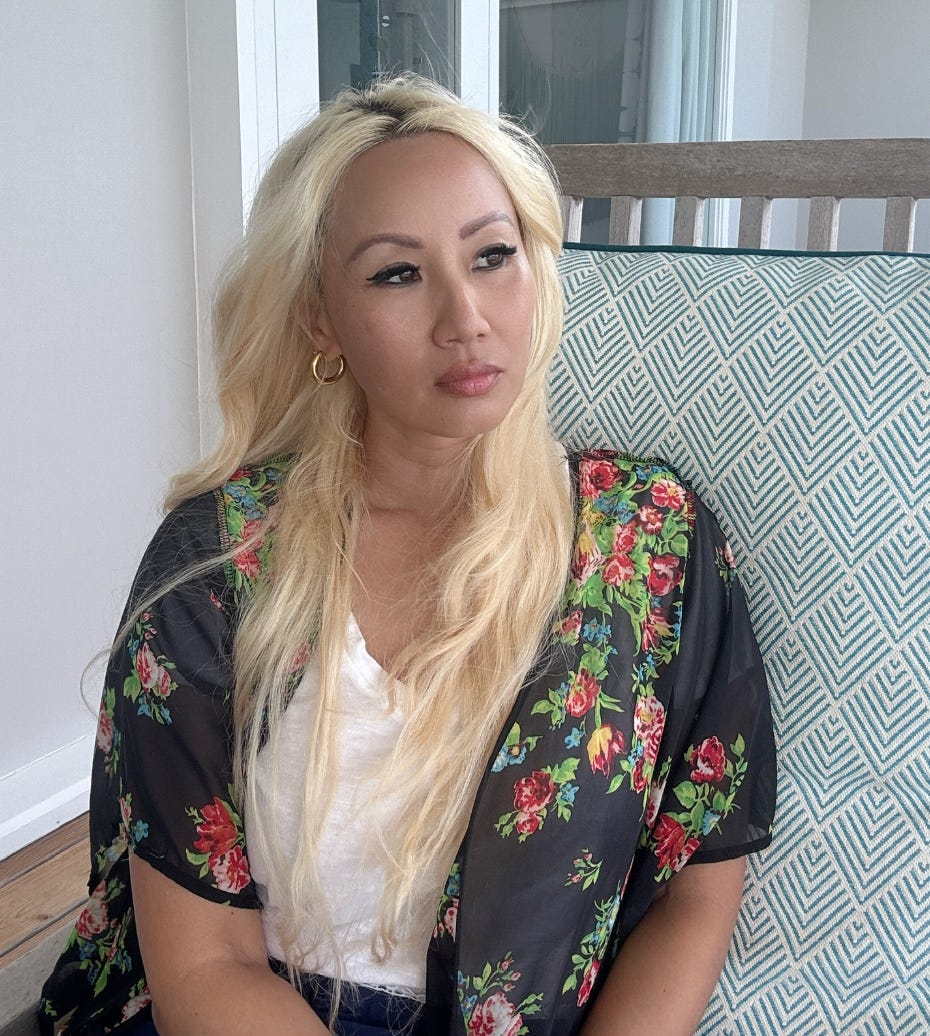
This episode is the last of 2025! It brings me great joy to invite former pin-up model and lead singer of Nylon Pink, who recently released her memoir, “Fetishized: A Reckoning with Yellow Fever, Feminism, and Beauty,” to wrap up the final podcast episode of 2025.
Kaila recounts her experience as a former pin-up model in the early 2000s, within the import car world that was closely associated with the Asian American “AZN” culture. Think of Fast and the Furious, the souped-up 1998 Honda Civic.
Bio:
Kaila is an author based in Los Angeles. Her debut memoir, ‘Fetishized: A Reckoning with Yellow Fever, Feminism, and Beauty,’ was published this past August with Penguin Random House’s Crown Publishing.
She is also a luxury travel, food, and culture writer and on-camera correspondent based in Los Angeles, who has written for The Los Angeles Times, The New York Times, Rolling Stone, Conde Nast Traveler, National Geographic, and more. She’s a certified PADI scuba diver, freediver, and mermaid.
Her former band, Nylon Pink, has toured in Australia: Melbourne and Sydney, played in Shanghai at the launch party for Havaianas in China, Costa Rica, played at the Hard Rock in Tokyo, Japan, Macau, China, and Penang, Malaysia.
Follow:
Instagram: kailayu
TikTok: kaila.yu
Website: www.kailayu.com
Get full access to Bánh Mì Bites at randykim.substack.com/subscribe
0:03 Hey everyone, so welcome to the Mummy Chronicles Podcast. My name is Randy Kim and I'm joined with Kyla Yu. Who is Kyla? She is an author based in Los Angeles. Her debut memoir, A Reckoning with Yellow Fever, Feminism, and Beauty, was published this past August with Penguin Random House's Crown Publishing. She is also a luxury travel, food, and culture writer and on-camera correspondent based in Los Angeles. You have written for the Los Angeles Times, the New York Times, Rolling Stone, National Geographic, and more. You are a certified scuba diver, freediver, and mermaid. We love that.
0:44 Her former band, Nylon Pink, has toured in Australia, both in Melbourne and Sydney, played in Shanghai at the launch party for Havaianas in China, Costa Rica, and played at the Hard Rock in Tokyo, Japan, Macau, China, and Malaysia. So I want to say thank you so much for reaching out to me and sending me a copy of Feather Size. I really, really thought it was such a great read. And, you know, I never really heard too much about you, only because even though I am like that generation of Asian-Americans, I'm in my early 40s now. And the reason why I say that's because I knew about the car culture, the import car culture and the AZN culture that, you know, that my cousins were into doing.
1:34 And it just never appealed to me because, I mean, I think it was a closeted gay man from living in the Midwest, in the suburbs, in predominantly white spaces. And I felt kind of like very disconnected. But I think over time, you know, and I actually did see Fast and the Fierce too. But I will say that it was... Such an interesting time because when I started hearing more about your work, it started recalling up some certain memories. I was like, oh, wow, yeah, this was what happened. This is what my cousin was into. These are some of what my peers, my Asian peers went through. And actually, one of my close friends, Kevin, was telling me, like, he was... you know, fangirling over you because he was a teenager.
2:17 He had a souped up Honda Accord and knew your work. So it's really interesting to see how this book has come together. And I want to take or get your reflections of this year and celebrating the release of your memoir. Yeah, it's been an amazing year. I think it's been a very difficult year, too. Like, putting out a book is super exciting and also really confronting, so... It was almost like some people just kept comparing it to birthing a baby, which I don't know about. But like there is like some postpartum feelings and excitement and anticipation and all of that.
3:01 And then it's like totally different than what you imagined. So but it's overall been amazing. Yeah. What does being an Asian-American woman mean to you now in 2025 than it did, say, 2000? I can't even fathom being an Asian American today who gets K-pop on the radio and like K-pop demon hunters dominating the charts. It's like I keep saying over and over like my little high school self could never have imagined that Asians would have taken over culture so much that like there are people who want to be Asian or want to go eat our food and like look up to asians a little bit even so i mean there's still a far ways to go because there are still people who don't feel that way about asians but the um fact that we've made such exponential progress is amazing yeah i think it's kind of interesting especially from like an east and southeast asian lens um and i think uh The last, I don't know, like what you just alluded to is that like, you know, back in my high school self, if I go back to that.
4:18 time it would have been just so shocking to you know see k-pop to see the emergence of bollywood to see like the different asian representations of western film and it's and also even the restaurants too like you know being being a vietnamese um and Cambodian, but there's like the idea of Vietnamese restaurants being very popular in the suburbs was really a foreign concept, you know, growing up. And I never thought that would ever reach communities outside of my own. And so it is kind of like jolting when you think about that and i'm curious about like maybe going further is like what have you observed of asian american women today and where they stand in our current society versus what you've experienced as a young adult well i would just say for asian fetishism specifically it used to be all these like horrible creepiest like 60 year old men who were like super pale and kind of fat were the ones that have Asian fetishes.
5:30 But like now it's like cool hipster guys and whatever. So it becomes a little bit more confusing because when it's like a disgusting man who has an Asian fetish, you're like, ew. But then when it's like a gorgeous man who has an Asian fetish, you're like, oh, is that more allowable? It's kind of the same thing. Like I'm looking on TikTok and I'm Like there's all these beautiful white girls with like a Korean man fetish now because of K-pop. And like the Asian men are very happy about it. You know, they are not at all. Men don't object to being fetishized is what I'm learning. Men celebrate being fetishized.
6:12 Whereas women, well, women don't sexualize men. At least I don't sexualize them men. the way men sexualize me. So there is a different creepiness, I think. Yeah, because in some ways, it kind of hits, because as a gay Asian man, I have seen fellow gay Asian men get third-sized by older white men to hipster white men. And so it's still something that, even in that community, it's still a current reckoning at the moment. For me, I never was into... like seeking out white men. And because I just felt like I grew up in a predominantly white community and living in Korea for three years, I saw a lot of the Asian fetishization from like white expat travelers you know uh hooking up with korean women and i was just like increasingly turned off to the point where i needed to be around in my own community and i didn't want to sound like i'm being insular from it but it just informed me like yeah i feel like i don't want to be seen as an object of desire and i wonder about um what you learned growing up about how you saw yourself as an Asian woman.
7:31 Because I think at the beginning of reading your book, you talk about your father early on and how he, you know, had a strict parenting ways. And how did you think that actually began to inform the way you view Asian men in your life? Yeah, I think in my family and in some Asian families of that generation, the men were very hands off, like the women did the child raising. So my dad was just kind of a he was a very kind man, but he was just kind of. more introverted um and we didn't have conversations and he didn't tell me I was he didn't compliment me that's that's maybe an Asian parent thing overall but um then I was watching tv and the Brady Bunch and there's all these like loving American families and I'm not getting that and I think from that point on I I'm someone who particularly responds to like verbal affirmation and I was getting none of that at home or from any male figures anywhere.
8:44 So I felt this like kind of need for male validation that I feel like originated there and then just developed more and more through media influences. And what, and what enticed you to enter into modeling and the import car world? Like, what was that conversation like with your family when you started to build that interest? My family and I have never had a conversation. I don't think, I mean, they know what happened, but they've never like verbally acknowledged it. Um, I, um, I did not enter the import scene, um, specifically, but I know exactly the origins point was that when I was growing up in high school, there was absolutely no Asian representation whatsoever.
9:33 Um, it certainly isn't like what it's like today where there's so many actresses that I can't even know them all. You knew all the actresses in, um, in the late nineties that were Asian. And, um, I didn't see anybody who I aspired to be like as a young girl. It was all blonde, blue-eyed, white girls on TV. And then the internet started. And then I discovered this Asian model named Sunghee Lee. And she was so beautiful. The most beautiful Asian woman I ever saw. And everybody online, all these men were calling her the most beautiful woman in the world. All these non-Asian and Asian men, just men.
10:15 Hordes of men. And then she became my idol because I was so invisible in high school. She was aspirational. So I was a fan of her for probably like several years. And then when I graduated and got to college, that's when I decided to pursue pinup modeling, which is what she did. She was a Playboy model. what was your relationship like or your encounters with her like because I know when they always say that never meet your role models I'm very curious about what that interaction was like you know stepping into the world but also what other Asian women that were also going into that Yeah, I mean, I idolized her, so I was very scared the first time I met her.
10:59 But the first time I met her was special because I had started pursuing pinup modeling. And then she I was a member of her website. Back then, models had pay websites. I guess they're only fans now, but back then they had their own websites with memberships. And I was a member of her website for many years. And so I knew immediately when she started casting for outside models to feature on her website. So the first time I met her was after I had submitted my photos and she had booked me to shoot for her website. And I was hoping she would take me under her wing and just like, you know, nurture me in all the ways.
11:42 But she was very, she was nice, you know, but very businesslike and very, um, not wanting to do anything besides business. And I remember I asked her if she would do a shoot with me because I had seen her do shoots with other models in the past. And then she was like, no, I don't do that. And apparently she hasn't done it. Maybe she just stopped doing them. But yeah. I think with the emergence of the Internet, I think this is something I go back to. Like, how do you think social media played a role in how Asian women are being seen now, actually how they're being seen back in pre-social media times, like say before 2005, which I think that's when Facebook and MySpace started to emerge.
12:33 But I'm curious to see how that has really started to play that role. Well, I feel like when social media came out, it probably really furthered the Asian fetish because then there was like forums and like websites and things dedicated to Asian women. Like maybe these individual men who had Asian fetishes had no way to like communicate about it in mass. Um, but there are websites specifically dedicated to just love of Asian women or whatever. I think how social media has changed it is now that, um, places like YouTube and like Instagram, Asian creators are coming on and showing multifaceted versions of themselves.
13:15 So it's not just sexy Asian women, it's Asian women who are fashion influencers, Asian women who cook, Asian women who are lawyers, you know, like it's every kind of Asian woman you can imagine in the world. has a place on the internet where they can find their own niche. So I would say that in 2025, there's much less excuse for being the Asian fetish. I can understand in the 90s why you might have an Asian fetish. The only media you had was Memoirs of a Geisha and that was super fetishy, right? And like what other examples could you see? There were so few. But now that there's like so much Asian media out there, there's no excuse to only see Asian women in that way.
13:58 Yeah, I think. it really brings back like, I've been kind of going down like memory lane because I'm, because like the struggle of being Asian, especially when you don't see representations of yourself feels incredibly isolating. Like I wanted to go into journalism and I had a hard time convincing my own dad to buy into this idea. And I know that to get out of the, uh, the STEM field felt, um, like it felt like it was not only your parents disapproval, but it's also like getting into that industry, trying to navigate and deal with the stereotypes. I wonder like in this modeling world, I wonder why does import, why does the import world seem so appealing to Asian men?
14:45 I'm curious about the origins from that, if like just from your own understanding. From my understanding, it's just what I was doing, which was like fighting against the model minority myth of the like unattractive nerdy Asian who is obedient. car culture is heavily masculine so it's like a way for Asian men to assert their masculinity not play into those stereotypes and I don't think it was purposely but in that way it also kind of objectified Asian women because women are always objectified in male car cultures whether it's low riders to like classic american cars when you go to these car shows there's always sexy women standing in front of the cars um but also another reason was that we had no community back then like no gathering place so the import scenes when hot import night started and it became not just a car show was also like b-boys came to perform and djs came it was like this whole community thing where it wasn't just cars it was like a big party so then um it was just a place for identity and I didn't ever try to go into the import scene I just started modeling as a pin-up model and there was like not a ton of Asian models so the minute you start modeling the import scene is gonna start calling you if you're an Asian model I wonder how it is now with that
16:16 world um because I know that I have not gone anywhere near it but I'm curious to know like what have you seen as far as where does it stand now in today's culture and with the Asian community I mean from what I hear it's nothing like it was before like I kind of call the era we were in which was about 10 years the golden age of import scene of the import scene I think partially like Fast and Furious series killed it because the import scene was a special place for Asian people to gather and then When Fast and Furious became mainstream and import cars were no longer considered rice rockets, people who weren't Asian were fixing them up, then they started to flood the car shows and then it was no longer our cultural space anymore.
17:06 So car shows still happen, but I think they're not the same as they were before. Often, we don't think about what women models sex workers go through in the industry that is led and dictated by men. What have you observed in some of these environments that not many know about, especially as an Asian woman? Well, I would say the import scene was fine. I don't think I ever... encountered anything terrible there. But I think in pinup modeling, it's like rife with predators who are trying to prey on very young women and coerce them to do more than they're willing to do.
17:49 I touch on it in my book just a little bit, but there was like a huge case that's still being tried right now um girls do porn is like this um real was this really huge um porn production company that was big on porn hub and they trafficked and coerced like hundreds of women who were college aged um they would book them for a modeling shoot um but when they showed up it was not a modeling shoot it was far more um they'd like take away their passports threaten them and like um force them to do much more than modeling and i guess the women who are like 18 didn't know how to report it back then or nobody paid attention i think women did report it but nobody gave a shit until like dozens and dozens of them got together for a class action um class action lawsuit.
18:53 But all those men in that ring have went to jail. You know, the the ringleader was just captured like five or last year, maybe. And like they sued Pornhub successfully for, I think, one hundred million dollars. But this was happening and nobody could do anything about it for decades. How were you able to navigate the darkness of that world? I mean, I think of Tila Tequila and her crash out the last 15 years, which is very tragic and just perplexing. There's no words for that. But I'm wondering, how do you think this has this long-term effect and how have you been trying to navigate and reconcile with that past history?
19:41 Yeah, I think writing a book was a big part of it. It wasn't like not intended to be healing, but it was very healing. But tons of therapy. I'm sober. So I spent 12 years in like recovery with like 12 steps and all of that. But it's been a lot of like specific work on that time. Mm hmm. And what do you think has been a credit to your survival from that industry? What do you think has kept you going just to survive that? To make sure of things. My mom's a tiger mom, so she taught me to persevere and push hard, so there's that.
20:27 I was on a lot of drugs and alcohol, so that helps numb a lot of the feelings. And then when I got sober, I got a whole community and like program of how to heal these issues. So it's a combination of factors, really. Yeah. Your band, Nylon Pink, came at a time when seeing Asian diaspora artists was an outlier in the Western music industry and also clashed with the emergence of K-pop. And how did this create challenges for you as an artist and with your group mates? Yeah, I mean, when we met with, it was interesting because it, I started a band and it wasn't Asian at first.
21:10 And then we had a hard time booking any gigs. And then when it was all Asian girls, then we started to book niche gigs, you know? So we found a niche that allowed us to tour the world. And then when we started covering K-pop that gave us, um, even more, I mean, it was just when K-pop was barely starting, but there was still a niche audience for it. But, um, What it the ceiling was that when we got to like talk to record labels, they had no idea what to do with us because there was no precedent and they didn't really understand what we were or could be. Yeah, like.
21:51 I think when. I think of Asian American or Asian diaspora artists these days, like Japanese breakfast, like the yeah, yeah, yeah, which, you know, Karen has been like the pioneer. I didn't even know that she was Asian until like a couple years ago. I don't count her as Asian because she didn't like really market herself as Asian, right? Like it was like we didn't know. Yeah. yeah yeah i think that also like in a way plays into it because no one knew about um i think it was eddie van halen or i think like he's he's mixed tie oh really yeah and i mean no one would have known that too or um and i think that is like what we have seen with the music industry how it's starting to slowly evolve outside of the k-pop if we're talking more like in the indie rock and Asian pop scene, Asian American pop scene.
22:40 I do see that it's starting to emerge a little bit there too. And Actually, the other day, I was listening to your song, Candy Coated Sugar Sucks. And, you know, hearing that song reminded me of that famous early 1980s song written by Prince, Nasty Girl by Vanity Six. I wonder, like, was that song kind of like inspired by Vanity Six in a way? Because, I mean, when I think of the lead singer or Vanity Six herself, she talked about how that industry, you know, being in that music industry in that rock and roll world, like nearly destroyed her. And then she went into church.
23:21 And I'm curious about, it just feels very much like in a way aligned with some of your experiences in some ways. What are your feelings now when you look back on that song and some of your music that you did as a solo artist and with Nylon Pink? yeah i am a songwriter but i did not write that song a producer named embryo who is brilliant came to me and just like had that song written for me but um the song was really based on the beat like the beat was like a club banger um so um i can't like take any uh whatever, I can't think of the word, but he came up with, I don't know his story about how he came up with that, but I think he pretty much probably just observed my Myspace image and then wrote a song for me.
24:17 And yeah, I do still like that song because it's so catchy in a club, but it's not authentic to me. Like I'm not like that person who sings candy. Like that's not my real personality. Yeah, you mentioned, like, performing as Nylon Pink, that there were many white male audiences. How do you think that really, in a way, affected your relationship with the band, but also the direction of your music and the audience you want to connect with? I mean, the really creepy part is like the majority of our fans were not older white men, but there were older white men at our shows, which is very strange because we were a pop rock act that appealed to young people.
25:07 So it was like jarring to see them there sometimes. And they didn't bother me because they were not a fan of me. They were a fan of my drummer who joined the band at 17 and really looked 14 years old and didn't wear makeup. Like it was very creepy. They were all fans of her. And mind you, my guitarist Kiki Wango is like an agency model, you know, like she's a beautiful woman. But all these older men were there for the childlike drummer girl. um and she has um I wrote a chapter called Lolita in my book fetishized and it kind of focuses on my relationship with Jamie the drummer and she um she's bisexual but she said after her experience in nylon pink she was just turned off from men and had PTSD so um she's married to a woman now and very happily married but I'm like know that those experiences affect her relationships with men or her views of men.
26:07 Yeah, I think it's kind of interesting because, like, you know, you were an important model for a number of years, and I was wondering why weren't, like, Why weren't older white men drawing towards you? Or was it because the drummer took so much attention in a way? Well, because I was older, you know? Oh, yeah. In the band, I think I was like in my late 20s to early 30s. So I had by far aged out of what they were looking for. When they were fans of me, I was like 19, 20, 21. So yeah, I was not in their target demographic anymore. Yeah, I think it's interesting because of the age gap between you and your bandmate, your drummer, and what was your relationship like with her during that time?
26:57 Because when you have an age gap, do you find yourself being a mentor or, in a way, a mothering figure? I think definitely at first, definitely at first. But I, you know, was a different person back then. And I started to actually kind of get jealous of her because she was getting all this attention effortlessly because she didn't even want the attention, frankly. Like she wasn't trying for it. She wasn't doing her makeup or like anything. She wasn't doing what I had to do at her age to get attention. So I was very jealous of how she seemed to effortlessly get the attention I so desperately sought at her age.
27:43 Where did the pivot began for you when you were transitioning out of both the modeling and music world into writing? That was purely accidental. I think I eventually quit the band because I realized that it was making me miserable and I didn't think it was ever going to get to the level of success that I wanted. And I only fell into writing accidentally because when my... We quit the band and we had no backup plan because we hadn't planned anything. So my guitarist and I decided to make our band website into a travel blog because we traveled the world and we had travel content and the website had traffic.
28:34 So we started like travel blogging and going on these trips. And as bloggers and creators, you're hosted on media trips. And on these media trips, I would meet journalists. And then I just thought what they were doing was so cool and so superior to blogging that I eventually just like learned how to do journalism by taking classes and pitching classes and just pitching. So yeah, journalism was very accidental. It was really just motivated by me wanting to go on better media trips originally. What are you discovering about yourself as a writer and after writing this book?
29:14 Yeah, I think writing is the most priceless thing in the world because it has no dependence on your outside exterior. And in the entertainment industry, you're like, as a woman, a depreciating asset, unfortunately, with the way it's set up right now. And with writing, you can write till you're 99, really, right? Yeah. just doesn't matter so i'm so grateful to have accidentally found this thing that i didn't enjoy writing very much at the beginning but i eventually fell in love with it like after doing it for many years as a journalist now i mean we've seen the emergence of ai and i wonder about how has that in a way challenged uh journalists right now as you speak especially with um like the unregulated issues with AI and also how it has affected the way information is being carried out and how it's been kind of like taking over the social media landscape.
30:16 I'm curious about your thoughts on that now. Yeah, I mean, it's extremely affecting journalism. Journalism was already crumbling as it is. Like it used to be built on print ads. And then they were trying to pivot to SEO traffic. And now I don't know how that's going to work anymore. Because are people going to go to websites anymore? Because they might just go to chat GPT. I don't know how... people are going to have consumed their journalism. I think you're already seeing like New York Times is having all its reporters now be talking heads on social media because like maybe that's how we're going to consume journalism.
30:58 But yeah, it is a scary time to be a journalist because all all there's just layoffs constantly at every. I mean, there was a huge layoff at L.A. Times and Forbes, like every every outlay you can hear is having layoffs like monthly. So I don't know what the solution is. It's kind of like the music industry has never recovered from streaming. It's no longer as profitable as it was before. But I think you just got to, in this landscape, be able to pivot and do different things. Like as a journalist, I have heavily invested in social media because I can't just depend on my written work paying the bills.
31:42 What would you say or what kind of content do you put on social media now? And what is your relationship with it, with your followers and people who stumble upon your work? Yeah, my social media since the pandemic has always been focused on Asian American issues, but kind of female tilted. But a lot of it's reminiscent of the 2000s Asian culture that I grew up with. And a lot of people are just feeling nostalgic about that time. It was a simpler time, it seems, where we weren't as stressed out about many issues that we're facing today. But yeah, I think it's fun to connect with my audience and kind of like reminisce about times and then talk about some current issues also.
32:31 How have people responded to your memoir so far, especially among Asian women? Yeah, it's been an amazing response. Like part of the reason I wrote the book was because how is there not a memoir about fetishization of Asian women when every single Asian woman here experiences it? Um, I think I was particularly suited to write it just because I leaned into the fetish so much more heavily than the average woman. But yeah, I think just a lot of the feedback I've been getting is that Asian women feel seen and they can really relate to things. And then there was a lot I learned because my memoir is not just my story.
33:15 It's a cultural criticism. So I break down movies like Memoirs of a Geisha. There's an entire chapter dedicated to Memoirs of a Geisha. I go through historical facts of like military occupation and how that perpetuated the fetishization. So as I was learning that, I put that into my book. And I think a lot of people are learning these facts that I was shocked to discover myself. What do you think was the most surprising or one that really stood out to you in your research, in your literary criticism or in your research? in your critical research in developing this memoir.
33:55 Yeah, I think a fact that was particularly shocking is that in Memoirs of a Geisha, which is written by a white man, he says he has the Geisha say, oh, the American soldiers were so much nicer than they portrayed them to be. But like the fact is that Japan has a history of comfort women where they would capture, I think, mostly Korean women. and have them as sex slaves for their military, where they'd have to service like 100 men a day in like horrifying conditions.
34:36 It was rape, you know, really. But the American soldiers were aware of this practice. And then when the American occupation or when Japan fell in World War Two, And the Americans were coming to Japan. Japan set up a comfort station to accommodate these American soldiers so they wouldn't rape local women, basically. And the prostitutes or not prostitutes, the sex slaves that work there said that the sex that they had was so ghastly and animalistic. And it reminds me of this thing where Filipino prostitutes, because this happened in the Philippines during the Filipino war also, said they were treated like an animal with three holes.
35:25 Like they were just used in the most degrading of ways. And then this comfort station had to be shut down, um, for rampant STDs. And then when they shut it down, I forgot the figure exactly, but the rapes, local rapes, like went up from 50 a day to 300 days and that, I don't know the exact statistics, but it was something like shocking. Um, But these are like American soldiers raping local women. The other shocking part is like this is still happening today. Like people are like, why are you talking about something that happened like 150 years ago or whatever?
36:05 But like in Okinawa, there are still a military occupation there and they are still raping local women. Like there was two cases tried this past year. Yeah, I mean, like, you know, being from the Vietnam, from my parents, from the Vietnam generation, like we like hear stories about what happened with the Milan massacre. And I mean, reading about that was just incredibly hard. I don't even know about this. That was that was like about 50 plus years ago. And I think the long story short is that the American soldiers attacked a town like in central Vietnam and they were sexually assaulting the women and murdered most of the women and children in that town.
36:47 Only a few did survive and there's like one I think American soldier that I think there's like maybe one or two American soldiers that somehow was able to hide some of the other women and It was incredibly upsetting. I mean, there was this photo, and I'll never forget that there's a teenage girl trying to put her mom's clothes on, and the kids, and it was just... And they were in this moment of shock and terror. And I think that's a picture that has never escaped me, you know, to this day. And I think about what militarization does.
37:27 I mean, you see what's going on with Palestine and you hear these stories of women and it just continues to go on. And yeah, I mean, I think it's something that It's something that I don't think we'll ever be able to understand in our lifetime because it's so shocking and so horrifying. And to kind of like maybe pivot, but... In writing this memoir and sharing it with audiences, do you find it difficult to hold space when, you know, readers will come up to you and share their own trauma?
38:08 Because I have read about Michelle Zauner's experience after writing Prang and HMAR that she would get people coming to her and sharing their trauma. How do you handle, like, the stories from folks, or how do you receive that? That's a good question. I don't know if I have an issue of it because I've spent years in recovery. And when you're in recovery, you sponsor other women and other women tell you the worst things that happened to them and you hold space for it and are not affected by it somehow. Yeah. Yeah, I've never considered that. I guess it's because it's like, I'm just here to hear and witness you, but it doesn't mean I need to take it on, you know?
38:57 So I think because of my years with that, I'm particularly already... used to that i guess hearing other people's traumatic stories yeah do you find uh folks from your past like after reading your memoir like come up to you like whether it's in the modeling world or um as fans of your uh music and do you also like run into like folks that are into or currently into the modeling world and i wonder about what that how have they um connected with your memoir Yeah, I definitely think people who followed me in the past in the 2000s have been giving a lot of feedback like they had no idea this was going on because it all seems so happy and glamorous.
39:48 And that's interesting. I haven't spoken to as many who are currently pursuing pinup modeling. I feel like there's just far less agents doing that these days. But yeah, I haven't heard back from like, say, a current import model and her feedback of the book. Yeah, I think what's so interesting is because where this is going, I mean, like TikTok and Instagram and like social media has like created so many different content creators and it's a very, like, it's a very overwhelming world because you're constantly creating, producing content and you don't necessarily have the full production that like a studio would have.
40:32 I mean, I mean, unless you are, unless you have enough followers and you, unless you get enough money coming in it is a very challenging, um hustle grind to be doing that work if you were to be your 17 year old self or 18 year old self now in this culture in this world how do you think you would have navigated it wouldn't have been good for me I don't think because when I was 17 and 18 I had such low self-esteem and desperate need for validation um it's tough. I can't even imagine growing up with social media because there's like all these pitfalls that we didn't have to deal with.
41:13 I didn't have to deal with like young men or like elementary school boys asking me to sex them photos like that wasn't a thing. And how do you know at like 12 years old that's going to follow you for the rest of your life? Or having to grow up in elementary school or high school and compete on Instagram and have that, you know, um i i don't know the easy i just okay so i guess i wish what kids were taught was like how to love themselves because we're all still in such a culture where we learn from outside or where we're still everybody's desperate for outside validation likes views and all of that um A book that I've been reading recently and recommending to everyone is called Love Yourself Like Your Life Depends on It.
42:04 And it's literally about reprogramming yourself to love yourself. So if everyone can come at the world where they love themselves first and then, you know, interact in this world, like we're in a time where we desperately need compassion outside of social media, just like, say, the administration, you know. So if that was something we were all taught, it would be a different world. And what projects are you working on and what are you looking to do in 2026? Yeah, I am still touring the book. So we're really like doing a lot of colleges and getting it added to curriculum and all of that.
42:49 And also a second book idea and then also possibly bringing it to film and TV. So yeah. A lot of things in the works. What would be your second book on? That's a good question. That is exactly what I'm trying to figure out. It's not immediately obvious because like I know I'm writing a second book and I've been brainstorming many ideas, but like Fetishites came about because that book didn't exist. So I don't know what other book. that I could write uniquely that doesn't exist. We're toying around with some like food ideas because I'm a traveling food writer, but that is a heavily trafficked space.
43:36 What's your favorite place to travel for food around that? Well, I'm biased because I'm Taiwanese, but I think Taiwan has the best food in the world. And like the street food scene is beyond compare. But all Asian countries, I like all Asian food. Yeah, I agree because I went to Taiwan like many moons ago and it was one of the friendliest places I visited. But it was also like it felt so accessible. The night markets were just astounding. And I think my favorite street food in Asia is Malaysia, Kuala Lumpur. I can't get enough of it. Because I love a little bit of that spice and I love a little bit of the heat that it brings.
44:21 And Oh my goodness, that's like gluttony for me. So yeah, and I'm a person that loves to travel too. Are you looking to do any future traveling as well besides the tour? Yeah, I'm a travel writer. So I travel like once a month usually. I definitely have a couple trips planned. I'm going to Bora Bora, which I go to every year because it's my favorite place of French Polynesia. I'm going back there mid-January. Then I work with PADI a lot, which is the diving association. So we're doing a trip to Krabi, Thailand. I've never been to, I don't even know how to pronounce it.
45:01 Is it Krabi or Krabi? And then going to Costa Rica. Yeah. So those are all places I've been before, but I always want to hit some new places. I really want your job. I think we need to switch places with you. You do it. You're a journalist. You just need to pitch travel publications. I am going to Columbia like next week after Christmas. So I'm like, okay, this, this, I mean, I think being in our forties, it's like, now it's like, let's take the vanilla. Let's not wait for other people to travel with. Let's just go for it. And I think that's kind of where I'm at. And last question is, what would you say to your younger self in 2000?
45:42 I would say that I wish you knew you were, you were loved because she did not know that. And that would have changed all her decisions. Oh my gosh. That's going to make me cry here. Just hearing that too. But you know, I just want to say, you know, thank you so much for being on my show. And for reaching out to me, I mean, this is an honor. I mean, an incredible honor to have you on. And I hope that people get a chance to pick up better sizes. It's in bookstores everywhere. It's an audio book and just support your local bookstores too, as I like to pitch out. Is it also available as a, I believe it's audio book.
46:23 Are you narrating it? I narrate it. Yeah, it was quite tiring. But yes, I did that. Awesome. So I hope that you get to check that out. And also, where can people find you? Yeah, I just go by my name, Kyla Yu on all social media. So you could really easily find my website or my social media by my name. Awesome, awesome. Well, best of luck to you in 2026. And I cannot wait to see what travels or your travel pictures and great food because at least it gives me an idea about where to travel to next. And yeah, I cannot wait to see more from you. And I think that most people who will read this will come away feeling informed and also really appreciate the work that you have done over the years.
47:11 Yeah, thank you so much for having me on.
