Nayantara Roy on "Sisters of a Halved Heart" and Complicated Sibling Relationships

 Apple Podcasts

 Spotify

 Amazon Music

 Overcast

 Castro

 iHeartRadio

 PocketCasts

 Podchaser

 RSS Feed
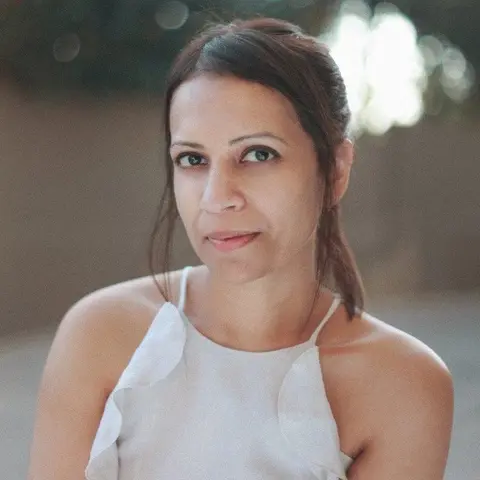
Photo: Bianca Catbagan
For this week’s episode, I sit down with author and television executive Nayantara Roy to discuss her new second novel, Sisters of a Halved Heart. We go in-depth into the chaotic nature of sibling relationships, what it takes to balance high-level TV development and fiction writing, and the art of telling stories across different mediums.
IG: tararoi
Website: https://nayantararoy.com/
Thanks for reading Bánh Mì Bites! This post is public so feel free to share it.
Bio:
Nayantara Roy (also known as Tara Roy) is an author and television executive. By day, she serves as the Senior Vice President of Television at Sandbox Entertainment (and previously worked at Endeavor Content and AGBO), where she acquires and oversees the creative development of original scripted television series.
As an author, she wrote the highly acclaimed debut novel The Magnificent Ruins (2024), which was named a New York Times Book Review Editor’s Choice, a Washington Post Notable/Best Book, a People Magazine Best Book, and a Gold House Book Club Pick. Her second novel, Sisters of a Halved Heart, was published by Algonquin Books on June 2, 2026.
Additionally, Roy won the Rick DeMarinis Short Story Prize in 2018 for her short story “8C,” and her plays have been performed internationally, including in the UK and India. She is a 2020 alumna of the CAPE Leaders Program and a jury member for the STARZ #TakeTheLead director’s program. Born in Kolkata, India, she currently resides in the Silver Lake neighborhood of Los Angeles, California.
Bánh Mì Bites is a reader-supported publication. To receive new posts and support my work, consider becoming a free or paid subscriber.
Get full access to Bánh Mì Bites at randykim.substack.com/subscribe
0:01 Hey everyone, so welcome to the Bunda Me Chronicles podcast. My name is Randy Kim, and today I am joined by Nayantara Roy. Who is she? So Nayantara is the author of The Magnificent Ruins, which was a New York Times editor's choice of 2024, an LA Times editor's pick, a Washington Post best book, a People Magazine best book, and Apple's best book. Book's best debut and a Hatchet Book Club pick, amongst others. And now this book is being currently adapted for television by Universal Television. Her second novel, Sisters of a Halved Heart, was just released in early June from Little Brown. In 2018, Roy won the Rick Deramaranus Short Story Award for 8C.
0:48 Her plays have been performed in the UK and India. By day, she is a senior vice president. She is an assistant of television at Sandbox Entertainment, where she acquires and develops original scripted series. Her television career has included overseeing shows such as Normal People, Nine Perfect Strangers, Mary and George, The Hunting Wives, and Outlander. Among others, originally from India, she lived in Silver Lake, Los Angeles, USA. And first of all, thank you so much for being on my show. It is a pleasure. I was just reading your new novel, Sisters of a Hath Heart, and I am very interested in getting into the weeds of sibling relationships because I have stories of my own on that one.
1:31 And well, first of all, how are you doing so far halfway through 2026 and with the release of this particular novel? I will say thank you for having me. It is such a pleasure. We're such fans of your podcast, but also the way you champion voices on your social media. And it's just really wonderful. And I'm so pleased to meet you. I have had a really eventful 2026. I, you know, there's promotion and publicity and the actual launch of sending your novel out into the world. But I also got married in May, and that was a big party to plan.
2:12 Congratulations. Thank you. Those two things kind of took over any spare time I had in my life. Yes. And also, so far, since you released this book back in early June, how has the response been in terms of audience, in terms of your own encounters or reactions from readers, but also from... From the kind of feedback that you would get from, I don't know, whether you're doing a book tour or doing interviews or, you know, reading the DMs from strangers, what has that been like with this book compared to your debut novel?
2:54 Yeah, I mean, I think we're in this extraordinary time where book publicity and critics coverage is at an all-time low. And with my first novel, that was not the case, although it's been dwindling over a decade. But I feel very fortunate because I've gotten so much press and love for this novel, even at a time when it's been hard. And I haven't had an external publicist, so all kudos to the Little Brown team. Yeah. I would say that I'm really, really, I've just really been enjoying it. I've already started book tours.
3:35 So we had our LA events. We had the East Coast launch in New York. I go to Texas. I go to Miami for the book festival. I will be hitting San Francisco. I will be going back to New York in the fall for a second big event. And so I think, you know, while the landscape of publishing has changed, I've been relatively fortunate in having had the first book acquire this readership and that carrying right over. Now, the truth is this book is very different from Ruins. You know, this is a New York novel, even though it's Indian American and Ruins was very much Brooklyn, then Calcutta, you know, which is different territory.
4:19 But I think they share the DNA of secrets, relationships, transformation. And interestingly, first person, which is a choice, certainly, to make. Yeah, and getting back to this landscape of publishing, the difference is because your book, Magnificent Ruins, was out two years ago and now we're into 2026 already. So what was the difference that you noticed in terms of how that landscape and publishing has changed dramatically? I think... Most of us who have had novels out in the last, let's say, five years span will recognize that book coverage has shrunk, most notably the Washington Post, which was sort of the stalwart of book coverage.
5:13 But people are Making it work independently. I think, you know, the Times coverage is always going to be important. The New York Times, the LA Times, the Boston Globe, you know, and the Washington Post sort of figured in that. But, you know, Ron Charles is off doing his Substack, which I religiously read. And I think there are folks out there who want to read about books and folks out there who will consistently write about books. Having said that, you know, I've had a lot of mainstream media, Apple Books, Cosmopolitan magazine, the book club scene, the Modern Mrs. Darcy book club, the festivals, all of them two weeks into publication, sorry, now we're at four weeks into publication almost, raised their hands.
6:03 So I feel like I'm reaching my readers and They are, you know, this is a complicated story and a lot of them are like, we couldn't put it down. And others have been like, love this book and really hated one sister over the other or loved one sister over the other. So it's been really interesting to watch. Mm hmm. Mm hmm. Yeah, and also with social media, too, especially in this day and age, because I know that there's a lot of authors who are very introverted.
6:48 The idea of having a market, having to talk to strangers online is very exhausting. But I think with the shift in the mainstream media, the legacy media of the Times, the Post, which is now owned by Bezos... We're also seeing the booktalkers on TikTok. We're seeing bookstagrammers. And what has that relationship been like? And what does that do as an author in terms of your relationship with social media? And how does that, in a way, inform your own creativity, your own ideas? Yeah, I think what legacy media did and, you know, continues to do is really hold space for the more, for the For serious literary fiction, you know, really celebrate the brilliant minds who may not be creating works that are easy to read or a quick beach read or this next summer book, you know.
7:44 And I miss more of that, you know. I miss space being held for challenging books that are outside of what you have imagined before. Isn't that the whole point of reading? But I think, you know, In reverse, BookTok, Instagram and threads or Twitter have really made it possible for the whole of the reading landscape to access a quick review. There's the flip side of that. It's easier than ever to express an opinion and that can catch fire in its own ways. But mostly I am really, really grateful to it.
8:26 I'm really grateful for folks as yourselves who I've been at the receiving end of so much championing of my voice because I come from a very specific point of view. And there's a lot of that. And there's also like, you know, the hot take crowd as I describe it and whether or not. You agree with something. It's really nice that there's discourse. I believe in holding space for discourse and it was inevitable given technology that this would happen. So I'm here for it. Yeah. And how does it feel of releasing this one versus your debut novel, Magnificent Ruins? I know we talked about the publicity of it, but like in terms of how you view your own expectations, you know, having to I always think that when you're releasing the sophomore, releasing a sophomore album, a sophomore book, there's always this pressure, this underlying pressure of having to, like, okay, am I going to follow up as good as this first book that I did?
9:31 Or can I excel? Or what does it look like? Because I think that that can always feel very... To get to that place of releasing your debut novel is a whole different journey than having to release it, having to release a new book, already having the experience. It was an interesting feeling writing the second novel because... Magnificent Ruins took seven years to write. I sent it to my agent. She went out on submission, I think, somewhere in January. And on day two of submission, a very big publishing house raised its hand immediately and said, This particular editor was like, I love it.
10:19 I love the book so much. I'm just going to pitch it to my bosses and I'll be right back. And we were like ecstatic. This is like the dream deal. And she couldn't convince her bosses. And that day I was like, I guess no one's going to ever read my book. It is not going to be published. And I should just start writing this next novel that I've been thinking about for years. What was their reservation? What was the executive reservations? Were you able to kind of get an idea? Honestly, I don't want to speak to them, but I think the book was, you know, it was a long book and it was an international book, you know.
11:00 Having said that, I really can't speak to it because ultimately a big five publisher did two of them actually did raise their hands for the book. So different houses, different, and it's also like different editors, you know. But anyway, so day two and I'm just like, God, I'm never going to be published. I might as well write the next thing. After all, isn't the joy about writing? So, you know, I had nursed this particular story with me since my graduate school days and started writing it. And very quickly after Magnificent Ruins was bought. And then there was this long lull period, which is what happens between selling a novel and actually beginning to work on copy edits and publicity and promotion and So it was really, you know, I was just writing my next thing through it without any expectation of what the first novel was going to do or, you know, understanding that here was my sophomore.
11:54 And by the time that sold, I mean, in a way, it is now sitting here, you know, nursing the very beginning stages of a third novel that I'm, you know, more reflective and really curious. Cognizant of what is it that I want to put out there in the world next. But in those days, I had these two novels churning inside of me for so long. And with this novel, I'm curious about what was the genesis of creating Sisters of a Half Heart? What was the mindset going into with this novel? Yeah, it's a story.
12:39 In India in the 80s, where I was born, really no one was getting divorced. It was just not the culture. You stayed together, ride or die, you know, which as I like to say often meant that You know, half siblings were as rare as happy marriages. You know, no one was really articulating what they were feeling inside. I had a half sibling. My parents were very Western and very sort of progressive and were the only divorced people that anyone knew in our community. And through our lives, I almost didn't even clock she was my half sibling, you know, and eventually when, and I didn't even understand what the difference between a step sibling and a half sibling was.
13:26 In adulthood, when we realized it, it didn't really change much about our relationship, but it brought home to me the differences, right? What does it mean when you have only one parent in common? What does it mean when The nature of the territory I like to explore as an author is the human condition, right? And some secrets form such a backbone off that. What do we keep from each other? You know, what does betrayal really become? And in this, what I discovered talking to authors and friends is that all half siblings have a certain push pull to them. There's almost a greater sense of belonging and a greater sense of separation that you start clocking over the years.
14:11 So the genesis was in writing about that. I had also, you know, nursed my first heartbreak in my late 20s, like really, you know, taken a year to get over that. And I don't know, I just didn't have the skills. It hadn't happened before. For various reasons. And so I just didn't have the skills to get over that. And I definitely wanted to write about what that feeling was like because it was extraordinary. I think where you still don't have the resources to accept that heartbreak doesn't always have anything to do with you. It does, but it really is about how you function in the world as an unreliable narrator and what memory and reliving an experience can trick you into.
15:04 So I wanted to write about that. And then I wanted to write about the territory of half siblings. And so this novel came to me in reconciling those two things. Yeah, I've always been interested in the dynamics of half siblings, but also like the family secrets that are also very intergenerational and how that really manifests itself, especially in the most critical of times. I don't have half siblings, but I have like two younger brothers. Well, one recently passed away. So I was like trying to. Yeah, I was trying to, you know, reconcile. Over the years of our differences, because, you know, we, like, in your book with your characters, it's like we live very different lives, in a sense, in our personalities.
15:49 And I think there were times where not only did we clash, but... There's always something that's telling when, let's say, for example, my mom had her stroke, like, you know, many years ago and survived it, but it changed our family dynamics, because a lot of things that we kept secret, like surface in a very, very toxic way. And I think it took us years to like, To forgive each other for that moment, for a very difficult time that we experienced together because it was challenging because there was a lot of things that we never talked about. There were a lot of things that our personalities couldn't understand at that time.
16:30 So I'm very curious about what it means to have a half-sibling and what you encountered in terms of trying to navigate this complicated, Very different lives that you were living in. And when you have like a family emergency that happens, how that all comes to the surface and how it forces you to have to confront that. Yeah, it's extraordinary, right? How none of us quite compute the life's too short philosophy until something happens that throws you into that territory of having to One, deal with all of the emotion that comes up in the middle of chaos or panic or the idea of loss.
17:19 And then two, just sort of like, Be your truest self, right? That's essentially what happens in both my novels. But here the sisters are really forced to confront each other in the face of their father's ill health. And I really relate to that. I'm so sorry about your brother. I feel like an incident like that, it can do two things, right? In my novel, the sisters are estranged, but there is this force, the familial force that keeps them from being entirely estranged, even when they would prefer to be, or one of them would prefer to be.
18:05 And having that nexus was so important to the structure of the show. It was always going to be one parent in the middle of two daughters. And to sort of broadly answer your question, both my novels, The Magnificent Ruins, for instance, is really about generational trauma and how it manifests in our DNA. And you can keep a secret three generations ago, but it will make itself clear eventually. And I think this is a more literal exploration of that because the secret is so recent and so new. But I am certainly fascinated, as it sounds like you are, about the territory of how secrets function within families.
18:51 I mean, just think about the way a secret transforms the room, right? If two people know something, that instantly transforms their relationship in conjunction to the rest of the room. And if someone doesn't know something, that alters the way they exist in the world. So that stuff is really fascinating to me. Yeah. And I think what's also very fascinating is when you learn of a secret, when you've been living a very different narrative and then having it revealed to you in a way that. I can only imagine how jolting having to hear a secret that has been kept from you for so long and then how it manifests.
19:33 It's like it makes you question everything that you already know up to this point, the person or the people that you grew up with and the I know that since my brother's passing, I think even my surviving brother and I, we have our differences even when we grieve. He's a very, very private person. I happen to be more vocal about my grief. And I think that we had this conversation about, well, I want to honor him more publicly because I feel like he deserves to be seen. My brother who is his twin would basically say, well, this is my personal grief and I don't want to be triggered by that. So it's like you have to like navigate the different kind of traumas that we both experience and how we react to it.
20:18 And I think that sibling relationships, half sibling, step sibling, birth siblings, it is a very... When you add to the generational trauma that comes with it and also how the parents, you know, the relationship they have with their own siblings, it's not necessarily the same too. I think we also have to forget that. Like how my parents treated me was different than how my brothers were being treated or how your parent treated your half sibling versus you. There's a very different dynamic in a sense, even though, yes, you're coming from the same level of strand of parenting, but It's not exactly the same. And that does make a huge difference.
21:00 It's so funny that you bring that up because I read somewhere that if you're talking to two siblings, it's going to feel like they came from two entirely different parents and two entirely different experiences of family because no one person's memory is the same version of anything. You and I will have different versions of this interview once it's over, right? Mm-hmm. And when you take an intensely close or fractured relationship like siblings and sort of put that lens in that, I think it makes for interesting territory. I also think, you know, novels that address families are hyper specific in what's going on in that family, right?
21:45 Like these are also Asian American siblings. These are also Siblings grappling with mixed race, you know, sort of like those tensions are, you know, if one has been chosen over the other for something or if one has been less loved over the other in whatever situation in their lives or if one is receiving more admiration for something or one is... The thoughts around, you know, does my race have something to do with it? Is it the way I look? Is it the way I am perceived in the world? Does dad really love me less or more? I've always found those things very interesting.
22:26 And I've always thought parents have this enormous work to do, you know, in the first, let's say, decade of an individual's life to really give love. I mean, that's the job, isn't it? Yeah, I think that that's such a great point, too, because, yeah, that is something that I, you know, experienced, too, with my own siblings. Like, okay, well, you know, I was treated a certain different way better than this brother. And I think that, you know, sometimes that will come and manifest itself or be reminded, you know, and this is kind of where, like, gosh... If we were treated all equally, would this have made a difference?
23:09 But, you know, it's neither here nor there because it's not really possible, you know, and especially the circumstances that you're born into and, and, and my role as an older brother and, and what your half-cell being's role is, you know, what does that look like? How does that shape the relationship that you have, you know, and also with your, um, with, um, Their stepparent that they have to navigate to and how that affects it. So something about what you mentioned is about holding a narrative or trying to stick with a narrative that is like believing in your own, what I would say, believing in your own lives, but trying to keep this narrative going and What does that really mean to you?
23:58 And what does that mean to anyone that tries to live up to a narrative that ultimately fails them? So to put it plainly, how does one eventually make sense of living a lie? Yes. Yeah. It's interesting, right? If you think about things like religion or politics, You know, or false identities, you know, let's say false sexual identity, false gender identity. It can be anything, right? But if you've tried to convince yourself of something, and I think Mira in my novel has convinced herself very well of the fact that she is the victim in this.
24:48 It happened to her, right? And I think Eventually has to reconcile with the fact that nothing is quite black and white in human relationships, in the human condition. You know, are people to blame, not to blame? In the end, does it even matter, you know? Mm-hmm. I think that's all territory that's very rich for an author. How does someone make peace with the fact that they're living a lie? I don't think they ever do. I think something's going to eat away at you inside until that thing is too big to ignore.
25:30 And then one day there's going to be what I like to call the big reckoning. It's going to be explosive or it's going to be a quiet Tuesday afternoon or You know, you're going to write a novel and but some sort of exorcism or catharsis will have to occur because I don't think human beings are programmed to live false identities. And if they do, how tragic. Yeah. And also when other people in your lives start to see that and you get confronted by that and it's like the facade that you've been carrying or led to believe It's falling apart and it is very tragic to watch.
26:11 I have definitely seen that, you know, in the modern day and age, but also in our political discourse too, where we live with people that believe in specific truths of what they believe to be their truths and hold on to that. And what happens when you hold on to something and when that reality does come to you forcefully, What does that look like? And how does that change a person's perspective or their lives ahead? You know, if they could survive something like that. So yeah, it's definitely very fascinating. I'm really glad that you bring these very important points up too. And I actually want to kind of switch over to like your work in television.
26:54 And I'm curious about what does that landscape look like as a South Asian diasporic person? And what does it mean to go beyond representation matters narrative? Because I've always gotten annoyed with the representation matters talk because I'm like, okay, well, what about equity? What about the leadership? In TV or film? And what does it look like when it's not tokenizing and not reusing the same characters? Like, what does that mean when we go beyond that network? Yeah. You know, I think when I started my career, I think Your brown parents aren't saying, definitely go work in entertainment.
27:42 That's, hooray. That's not happening. Having traveled upwards as an executive, I have been in predominantly white circles of leadership my whole life. I've learned how to speak up at boardrooms that are essentially White and male, frankly. And that has significantly changed now. I mean, off the top of my head, I can think of two senior executives who helm Netflix and Hulu. And there are so many other people around.
28:23 I'm not saying there's still like a handful of brown executives in town. But we're small but mighty, you know, like it's not that few of us anymore, especially where women are concerned. And certainly if you take, you know, all genders, there's, you know, I think it's a significant healthy voice and you're seeing that more and more represented. It's hard to find a show where not a single person. You know, there is no representation. Having said that, representation has a long way to go. You know, if you want a brown actress in your show, you're going to have to work on a list that is relatively short in terms of like, you know, a list of actors and then you go, you know, but that You're right that that is very much a part of my agenda and the voices and the stories I want to tell and the voices I want to put both behind and in front of the camera.
29:28 And I'm lucky to be living in a time when that is more and more everybody's in interest of everybody. Having said that, I think there's been a real regression in the last few years on What it means to have diversity, you know, in the face of a lot of fear and hatred, it is harder to say, you know, the land belongs to everybody, the world belongs to everybody and everybody should be in a television show because ultimately a television show is a microcosm of life, you know. The good fight, what I will say is the good fight is being fought very fiercely by lots of very good people and it continues to be my personal priority.
30:23 My novels, on the other hand, are purely coming from a voice that is very brown, very Indian. So far, they've been very Bengali and also juggles the fact that I am And that I've lived in many places. And I've never agreed with the fact that there isn't a place for that in India or here. You know, the truth is you want voices that can speak to the truth of what it means to belong to more places or no places or interrogate what the idea of a home or homeland might be, especially today.
31:04 When that is nebulous territory, when people have moved or are forced to move or must flee, what does home mean? And I think those are priorities for my work in writing. And how do you, as a novelist and executive, counter with the growing use of AI in film, television, and writing? So my work as a television executive involves buying ideas. Shepherding it through the creative process, so scripts, and then making sure that the finished product, I don't do production, but the finished product, let's say the episode, is following that creative vision.
31:48 So I'm giving notes on that. Outside of post-production or production that involves technology, there's no place for AI in my work. I do not use AI. AI, I actively look for things that may be AI. I do not engage with it and I would certainly not engage with any writer who said I used AI, not that they would, to come up with my idea, to generate it in any capacity or to, you know, clean up something or so on. It just, I think the human experience is what makes writing original and interesting.
32:32 And you cannot really make something original and interesting unless it comes from a specific world and a specific voice and a specific place. And a robot is trying to mimic something and that is just the truth of it. And so it will never quite be anything but a fake. And as in the art world, we've learned that fakes are difficult to distinguish from the original. But there's always somebody with an eyeglass who can tell. And that is what I assume will happen in writing. In the world of novels, I think, just pure plagiarism. Yeah. And I think it brings the point of plagiarism and also like the theft of artists and writers especially and how...
33:17 Does one have to counter that? I don't know. I mean, I know that I'm just kind of throwing spaghetti at the law here because we're still trying to figure out what the legality is. Are there laws going to be passed to protect intellectual rights, especially in regards to AI? Yeah. I don't think we have a quick answer to that, but I feel like the technology continues to change very rapidly. And how do we counter it? How do we still identify what is authentic and what is a pure human connection to this writing, into this piece? And what's considered also like...
33:58 That's not misinformation too, because I think that there's a lot of responsibilities as writers and journalists to be able to cover these truths and be able to support them with proper evidence. But I know I'm kind of talking on this long tangent here, but it is, it's still like the million dollar question right now at the moment, like where we stand. I actually think there's a lot of People taking it really seriously as a threat, who've been able to sort of pinpoint the bad actors. I think the Commonwealth Prizes are a great example of choices being made in that arena by writers and organizers alike and people in the industry.
34:44 I think booksellers are very clear that they will not touch anything with AI. But I think what will ultimately end up happening, because I did read that distressing to me, but perhaps not to everyone else, that New York Times article about the romance novelist somewhere in Australia, I think, who was churning out like, whatever, 80 books a year or something and had a big readership. I think, look, if you're doing that, and you have your audience And they are aware and you are aware and everybody is aware. It is the open marriage of your dreams. Certainly not something that I would ever engage with. And it's not the kind of thing I want to read, nor would I consider it.
35:29 But, you know, if that's who you are and if that's what gives you happiness, fine, you know. But I think the sticker will be really important in the future. I think that a law Needs to be in place for something to announce itself as what it is. And then after that, like anything else, you know, whether it's, you know, whichever one of the evils you're talking about, it's a choice, right? If you're going to smoke cigarettes, then do so knowing exactly what they cause, you know. You just have to be aware, you know. So Magnificent Ruins is currently being adapted into a TV.
36:12 What has the process been so far as far as the development stages? And also what has been your creative input and the decision making that you have when it comes to working with the producers and getting that squared away? Both the novels actually are under option to different producers. I think I write my novels from a different side of my brain than I work in television. Rufy Thorpe, in an event we did together, sort of read Sisters and was like, this is really jailbreak from like your television career, right?
36:53 Like, you know, it doesn't... I recognize that the television adaptation for something very rarely resembles the novel in... I think the usefulness for me working in the business is this. I don't feel like my novel has anything to do with that adaptation. They're just taking my novel, which is a different medium, and transforming it into an entirely different thing, which is a television show.
37:33 So I really have a pragmatic attitude towards I am glad and flattered and honored for your interest and go with God. I'm not really involved. I'm a little bit more involved in the new novel because it is early days and, you know, the producers are just in that space. Early stages of like, oh, who are the writers that could be interesting for this novel? And because I'm so well-versed in the writer landscape in television, it's natural we have a conversation about it. But I'm very, very aware that it's not my decision to make. And I have no interest in it being my decision to make.
38:16 Does it also feel very difficult to let go of, especially... Knowing that these novels are your firstborns in a way, is it hard to let someone else run with their own ideas through your work? Nope. It isn't. Like I said, they're two different beasts. The novel will never not be mine in its entirety. That novel... Outside of my editor and my agent, no one else is claiming ownership to it because outside of a reader's experience of it, that is a whole separate thing.
38:59 The television show is a different animal entirely. And like I said, because I work in the business, I am able to tell the difference between those two things. So no, I don't feel like they're going to destroy my story or make it better. They're going to do What television producers do. And I have a good idea of what that job is in a very fickle market, I would say for everybody and everything at this point. So no, I'm not precious. Yeah. And so what does it mean to bring stories that you didn't get to see in Western mainstream media and entertainment to this audience?
39:45 In my novels? In your novels, but also in your TV work, I should say, for both. I think, you know, it's two different sides of my personality, you know, like in novels, in the two books, and, you know, now in early stages of ideating a new book, it's really stories I feel like I must tell, you know, that are coming from a very urgent place in my life. Being that is sort of like, I've got to tell the story because it is my story to tell. There's a purpose to it, a fire to it.
40:27 And writing novels is an incredibly long, lonely process. And it's just you and your laptop. There's nothing very glamorous about it. So unless you're obsessed with it, with the idea, it's a very different thing. I will say for almost 90%, the economic reward is potentially not going to be, let's say, a decade of your life. You do it because you must do it. And it's coming from a very specific point of view as a result, one that has directly to do with my consciousness and it's very intimate.
41:08 It's just me and the laptop, right? In television, yes, we... We have an agenda, you know, all of us do because of the people that we are. But a lot of my work as a producer involves paying attention to the marketplace, to the buyers. And when I was a buyer to what was working for audiences and whether I'm in agreement of that or not. That remains the job, right? To create television shows that will speak to the whole, not just, let's say, the coasts or one area or the other. And I think within that, I mean, it's funny, I was having this conversation with a friend who is also an executive.
41:52 Within that, you have to be kind of subversive and sneaky in the way you tell those stories, right? If television is entertainment, how do you tell, I saw Baby Reindeer recently and I thought it was a magnificent show, but that's such a specific personal point of view that was then translated into wonderful television, right? Similarly, I think, how do you make a show that will appeal in that way, in that really entertaining, really gripping, compelling way, But will also sort of like be greenlit by a network who has to like look at their algorithm and say, okay, X, Y, and Z, is the pilot, you know, are the stakes high enough in the pilot?
42:41 Is the ending enough of a cliffhanger? Is it ongoing across seasons? So the work as a producer is really to balance my agenda with all of the needs of the marketplace in order to get something even off the floor in these times. The work as a novelist is to simply write, I think. I don't think about my readers until they become real. As a novelist, how has writing novels changed you personally and the relationships with the people in your life? I was always meant to write books and it finally feels like I'm living my true life. And so personally, I think that there's a quality in me that is like, oh, thank God, I can breathe better in the world, having acknowledged that identity.
43:33 And, you know, I read, I have always read widely and with great pleasure. I read sometimes to learn as well, you know, revisiting classics, looking at what my peers are doing in the field. Megha Majumdar, who I consider a friend now, has been working in the territory of these novels. We come from the same city, Kolkata, but she's been writing these just these magnificent books, just like really And to admire someone like that and to enjoy their work is also to learn from it.
44:24 You're not just reading. There's a jolt of recognition. You know, the old classics. And I returned to them often to sort of like revisit my child self who read those books and sort of the baby me that became a novelist and understanding what about them sparked my own journey. Yeah. What books did you grow up that you have been revisiting lately? I think the author Vikram Seth was very pivotal for me. He was the First Indian American, he isn't American at all. He was the first writer that sort of was writing in English for a global audience.
45:07 And it was this hyper lucid yet literary prose that I was in great admiration of, you know, through my teens and as an adult. And he has had a profound impact on, he's also a poet, on the way and permission I give myself when writing. I certainly read the white canon as I was growing up, you know, studying classics. So, you know, Cheever, Roth, all of the big sort of like literary voices, contemporary and past. And I read widely, you know, whether in the, the The Ferrantes, the Franzans, the, you know, when Jhumpa Lahiri finally burst into the ecosystem, it was sort of like, oh, you could also do this.
45:56 You know, I think all of that played as big a part as reading Charles Dickens when I was a kid in colonial, post-colonial India, you know. And what does forgiveness and reconciliation look like in your world to you? Huh. Wasn't expecting that. I know. I'm like throwing that. I was just thinking about that as I was like looking through like, you know, your second novel and what that really looks like, especially when you're dealing with very deep, fraught relationships. I think without forgiveness, it's impossible to really sort of grow as a human, right?
46:37 Like the minute you start holding on to one suitcase after the other, after the other of like bitterness or hatred, you And it becomes a tough little spot for yourself. And so, you know, my greatest triumph as a writer is when readers have written to me and said they love joy and they love Mira and they see the reasons they each acted in the ways that they did act, right? I think there's a great humanity to be excavated when you have done something unforgivable and wrong. When you are in charge of forgiving someone, right? You have to really bring your best self forward and put yourself in the other person's shoes.
47:25 It is not different from having a relationship of any sort, whether with a parent or a significant other or whatever. That is the greatest humbling, right? That is the greatest learning. Without forgiveness, there is no relationship. And that to me, I think, Has to be microcosm or, you know, in a big expanded way, be the fundamental nature of drama. And I know that you've been working on your two books into getting the adaptation. What are you currently working on for the rest of this year? And also any joys that you're looking to also include as part of that?
48:06 I have not been working on the adaptations, but very skilled producers are. I am in the very, very beginning stages of a new novel, which means that pen has not struck paper on a single page of the actual novel yet, but research and scribbled notes and a conversation with my agent, those things are happening and have happened. It is based on something I wrote in my 20s, a small idea which has sort of gripped me and works in a lot of the same territory as I think The Magnificent Ruins did.
48:57 So it's too early to say anything about it outside of the fact that it's a beautiful stage to be at. What topics have you yet to explore that has been keeping you up at night or making you very curious? I would say I think I'm writing or have written about the stuff that keeps recurring. Like a good or a bad one in all of my work. And I think most writers tell the same story many times over, right?
49:39 Yeah, so I can't say that anything's been keeping me up outside of the fact that I think you grow as an author with every novel and what you're trying to say and do with it. And I think that preoccupies me, the idea of I want to I want the next book to be better. I want the next book to be more powerful in what it's trying to say to my readers. And, you know, that's enough for me, I think. And last question is, where can we follow your work? I am quite active on Instagram, which is like joy because I like The imagery, and I don't know that I'm that good at promotional stuff, but I'm pretty good at being active on it because I like photos.
50:33 But definitely anytime anything new happens, it's on there. I'm also good at threads, decent-ish at threads and Facebook. Threads is interesting. Threads is a very interesting rabbit hole. The algorithms itself is quite a rabbit hole. I thought Twitter was wild, but Threads takes it to another level. Yeah. And you're probably more well-versed in it because I don't really engage with anything. But I am a lurker. I do read. And then, you know, I have a website and it will always have information on most things. But I think the Instagram handle, Tara Roy, and that's T-A-R-A-R-O-I, not Y, because Y was taken, you know, Is a great place to get to know me or to keep abreast of my events and work.
51:29 Yeah, and Nayantara, I just want to say thank you so much for being on my show. Okay, so I hope that you all pick up the Sisters of a Half Heart. It's available now and Also, all the best to you on this journey that you're currently on. And I cannot wait to see what comes out of this whole creative process, whether it's on your TV work and also with your novels. I'm really glad to have you on. This has been a great conversation. And I really hope that people get to follow and tune into your work because I do think that what you share is very important, especially if you are an Asian person. Asian-American, Asian diasporic descent, what does that really mean in terms of having to dig through the many different layers of our stories, the untold stories, and how sometimes that leaves us with question marks.
52:23 And I'm really glad that you have been bringing a lot of these questions to the surface through your creativity. So much love to you for doing that. Thank you so much. This has been such a pleasure. Thank you for having me.
