Hot Girls with Balls featuring Benedict Nguyen

 Apple Podcasts

 Spotify

 Amazon Music

 Overcast

 Castro

 iHeartRadio

 PocketCasts

 Podchaser

 RSS Feed
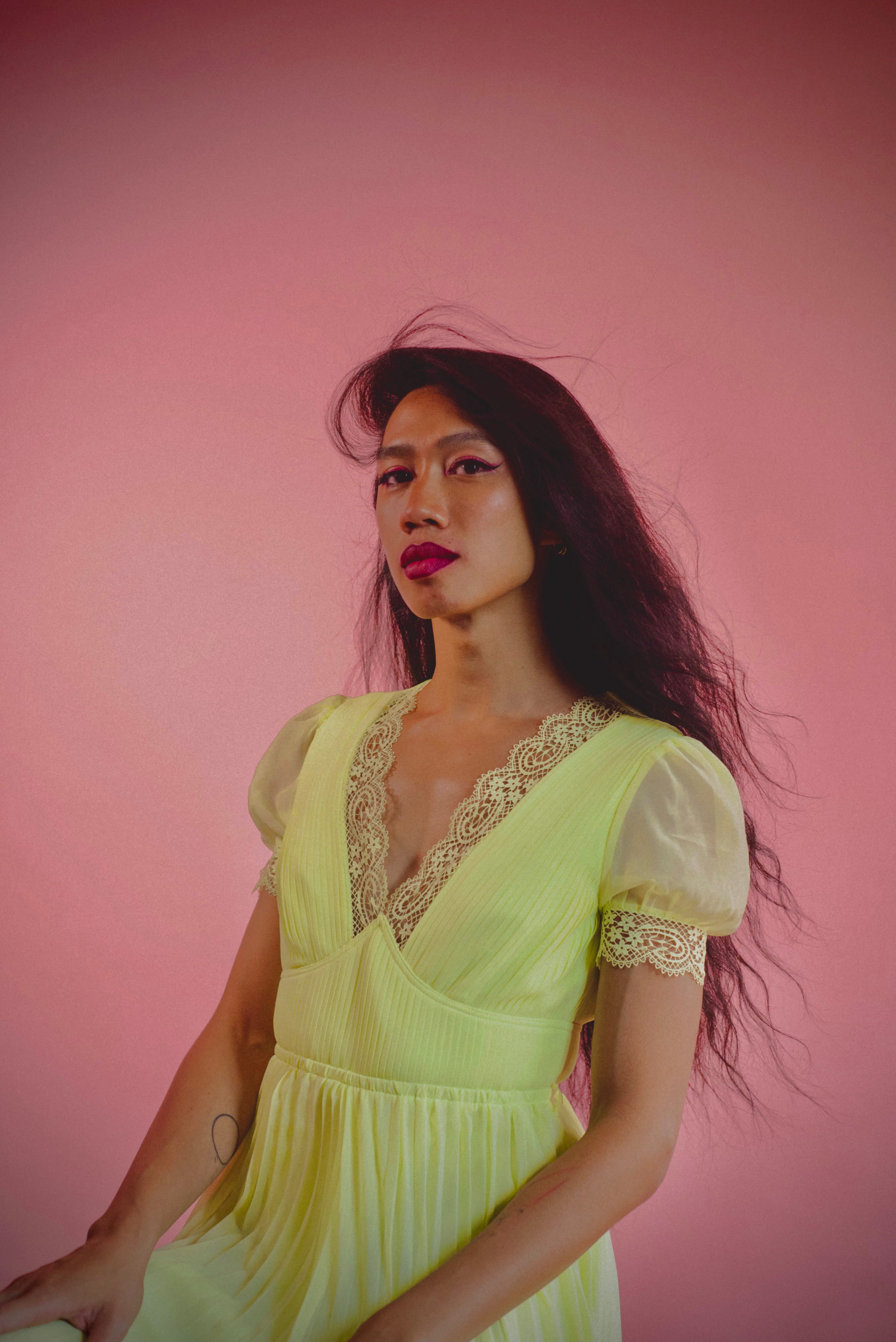
This week on The Banh Mi Chronicles, I did a total kiki with the multi-talented writer, dancer, and creative benedict nguyễn (she/her).
Benedict joined me as we dived deep into the genesis of her debut novel, Hot Girls With Balls (Catapult 2025). We explore the nuances of writing trans stories that center joy and athleticism, the reality of navigating social media as a public-facing creative, and why finding the right publisher and community spaces are essential for queer and trans writers of color.
In this episode, we discuss:
* The Genesis of the Novel: How Hot Girls With Balls went from an idea to a USA Today National Bestseller.
* Trans Athletes & Representation: Crafting a story that honors the reality of trans athletes beyond the headlines.
* The Dancer Life: Benedict’s background as a dancer and how movement informs her writing.
* Social Media & Community: Navigating the digital landscape and finding genuine connection through promoting her book.
* The Publishing Industry: The importance of working with publishers who advocate and support QTPOC voices.
About benedict:
benedict nguyễn (she/her) is a #freelanceflailing dancer, writer, and creative producer. A Publishers Weekly 2025 “Writer to Watch,” Benedict is the author of the debut novel Hot Girls With Balls, an ABA Indie Next Pick and USA Today National Bestseller.
She has danced in projects by Sally Silvers, Kris Seto, and Monstah Black, and appeared in the short film Don’t Fck with Bà* (2024). As a producer, she has supported projects at the New York Botanical Garden, Danspace Project, and the Bronx Academy of Arts and Dance! Her writing on labor and culture has appeared in The Baffler, Vanity Fair, and BOMB Magazine.
Connect with Benedict
* Buy "Hot Girls With Balls" Here
* Website:
https://benedict-nguyen.com/
* Instagram: xbennyboo
Support The Banh Mi Chronicles
If you enjoyed this episode, please consider leaving us a 5-star review on Apple Podcasts or Spotify! It helps other listeners find our community.
* Subscribe to my Substack
* Follow me on Instagram: BanhMi_Chronicles
Get full access to Bánh Mì Bites at randykim.substack.com/subscribe
0:03 Right. Hi, everyone. So this is Randy from the Money Chronicles podcast. So I'm here with Benedict Nguyen, going by she, her pronouns. Benedict is a freelance dancer, writer, and creative producer. She's danced in recent projects by Sally Silvers, Chris Settle, Monsa Black, and among other choreographers, who has also appeared in the short film Don't Fuck With Ba, and began developing the dance theater work Defense with Sugar Van Deal in 2025. As a producer, she supported projects that have been presented at the New York Botanical Garden, TBA21, Issue Project Room, Center for Performance Research, among many others.
0:47 Her writing on labor and culture has appeared in the Baffler, Bond Magazine, Vanity Fair, Los Angeles Review of Books, AAWW's The Margin, a publisher, Weekly 2025 Writers to Watch, Benedict is the author of the freelance labor zine, Nasty Notes. Her debut novel, Hot Girls with Balls, was an ABA indie next pick. There it is. And US Today national bestseller. So... Congratulations on the success of Hot Girls with Boss. I'm excited to talk to you about the genesis in creating this novel. And so looking back in 2025, what can you reflect about your growth as a writer while navigating through what was a very turbulent year for many?
1:38 Yeah, definitely been a strange year to be out there hawking a book. Yeah. I've been really thankful to get to wear so many of the hats that I wear in this world. I've been rehearsing as a dancer and choreographer's work, Sally Silver's, while preparing for the publication of this book. While I was on book tour, I was producing a project by the artist Will Rawls called Sicker. And so wearing both of those hats at the same time as well.
2:22 I've also been making my own work and I've been really thankful to be surrounded by so many artists in times when, in times that are deeply, deeply bad. And, yeah, been thankful for my friends, loved ones, community, as we're looking out for each other through fascism. Yeah, and thank you for shedding light into it. Actually, I'm curious, like, you are a dancer, and what dancing do you do? Like, what is your favorite genre?
3:03 How long have you been trained as a dancer? Yeah, I've been working as a freelance dancer in New York City since 2015. And yeah, I work in a lot of contemporary, experimental, postmodern projects. Those labels are all very broad and contentious, but they'll suffice as a shorthand for today. And yeah, it's been super rewarding getting to learn about different choreographers' visions and ethos through the body, the medium through which dance is made and shared.
3:51 And for your recent novel, what has the experience been connecting with readers and audiences since promoting Hot Girls Were Boss? What feedback have they shared with you and how have you responded to it? Yeah, I've been really lucky to get to meet readers across the US while on tour. I've zoomed into book clubs, libraries, and festivals. People have had such wide-ranging interpretations of the book. Some people find the protagonists, six and green, so compelling, and they fall in love with them, which is very cute.
4:37 And then some people find them, like, unlikable, but they couldn't stop reading, which is also very real. And, yeah, it felt super gratifying to be able to create characters on the page that people were able to form strong opinions about. What was the genesis in writing Hot Girls with Balls? I, yeah, in my dance life have always, I've also written criticism about dance and performance. And so since 2018 have been contending with the question of how to write about performance and transcribe it or translate it into language.
5:33 If a picture is worth a thousand words, an hour long dance work with so many like moving images and, and meet space, um, you know, can like a list of a bajillion words. Um, and so I've always been intrigued by the task of like capturing movement into language. And so when I, um, I rediscovered volleyball in 2021 and I just had a newfound appreciation for the physicality of the sport.
6:14 And yeah, it was like, how do you even put to words the beauty of what they're doing? Yeah, I actually am curious when you mentioned about your own criticism of dance, what was the experience that you had that made you realize that there are things that need to be examined with this dance form, with the genre? Yeah, like many art forms and There's been a decrease in critical engagement.
7:00 And I think we're seeing this in film and in literature and music. And I think of criticism as a process of archiving, as a process of engagement, of keeping a work alive and um also a process of interpretation and meaning making um and yeah like any art form i've been honored i i find it's important to like treat the work that artists create with reverence and critical curiosity.
7:50 And yeah, it's been an honor to be able to write about different works across mediums. Yeah. And I know that you had earlier brought this up, but I'm curious about your connection to volleyball and were you a former athlete? All dancers are athletes, so I'm still an athlete. As for team sports, I never really, you know, had the, or earlier on, I never really got the flow for ball sports, but was able, like at the stage in my life that I was in when I was rediscovering volleyball, was able to appreciate the choreography of a team and like the constant of the rehearsed plays that a team has in their toolkit, as well as the necessary improvisation that comes with the velocity of a ball flying through the air.
8:54 And how much did you connect with the main character six when you were developing your characters? What is it about the characters that you felt resonated with you? Yeah, in addition to the sports angle, I was also interested in the evolution of celebrity and online fame and especially since the start of the COVID-19 pandemic and how the mechanisms for building platforms and clout and clout chasing have warped like have created so many micro-celebrities and influencers.
9:39 And so I wanted the book's protagonists, Six and Green, to kind of, like, dance between, like, relatability and likability, like, you know, common metrics for, like... how cool a celebrity is while also at the same time necessarily being unrelatable to readers and myself and that they're professional athletes, they're like famous. And so they live lives that don't resemble most people's or mine at least. I think it's very interesting because the last several years, as you brought up, is that with TikTok, Instagram, and different social media forums, and how it has created the influencer culture, and also what does it mean to portray real life or a branded life, I should say.
10:44 I'm very curious about what has your relationship with social media been like from your observations and how do you think that affects the way you interact even now, when you are now promoting a novel and promoting your writing. Because I know this is something that I think about as a person who does podcasting and sharing content. And I think the question is, where does the line get drawn, I think. And I think this is something that's still an ongoing conversation about what does it mean to navigate through social media as someone that is now starting to... find an audience and and where people seek you out for uh advice um relatability and and whatnot yeah it's really slippery like a blurry line between like the words used like real and branded you know like like time spent that someone spends on on their phone is is real and like like the pixels on our screen, like our representations of real people, but they're not real, but they're also like the like thoughts that, and the parasocial connections that people form with people that they witness or observe on social media are real.
12:14 And yeah, and I think it's like, as a dancer and a performer, I think about that, that line a lot. I feel like the notion of authenticity is a really funny one to me in that like, I don't know, like everything is a little bit performance and that's not necessarily an evil thing. In terms of my social media, yeah, I've never been like a super huge power poster or whatever, but kind of like for the promotion of this book, created some reels that, you know, I had a vision for like a series of videos about like making fun of, you know, parodying sports influencers.
13:08 And so while, even if I like was creating these video files and editing them from like ironic distance, I was still going through the act of like, asking my friends to help me film them and like sitting in front of my phone and like going through the like real labor of like editing them and like stitching the clips together um and and it was it's funny how like for for some people i've already known in my life as well as for strangers that like those little 20 second clips for like an entry point or like a reminder that my book is, was coming out.
13:52 And welcome to marketing in 2025. yeah i think when i go on a rabbit hole with tech talk and especially with the algorithms culture that it has created it's like it's like i do content and i do these reels too like sometimes i just like dance on a whim and like i don't i think what i get very struck by is the production that people put on and it's like it is a lot of work and it's something that i personally don't have an interest in going for it because i feel like I feel like I come from like the millennial, the older millennial generation where like we are okay with being cringe, but now there's like this day and age where people are afraid to be cringe and it feels like there's this level of performance.
14:40 And I think that is- Something, something nonchalance, right? Yes, yes, exactly. I'm also very curious, like when it comes to parodying sports, I'm very curious, like what have you noticed with sports influencers that kind of makes you roll your eyes at? I mean, I could never roll my eyes at social media. Joking. Yeah, I mean, I love, like, I love the way that, that, like, my vantage point, but, like, the direct, the certain trends and, like, content and how um like even if we take the same sport but like the racial differences the gender differences and how people present like being an athlete and how they like reinforce certain stereotypes i find um amusing and i think like my book as well as like kind of playing into like like expectations like of femininity and masculinity and like girliness and um and desirability and how that is like expected of athletes but we expect or the market rewards desirability differently from different kinds of athletes and um yeah i
16:10 mean It's not enough to just go to practice now. You have to like film yourself waking up at 4 a.m. and like doing your skincare routine before you go sweat it off. at the at the arena all day so the hustle culture yeah the hustle the hustle and grind culture and I think that's the thing that I side the most too because yes and whenever I see the first few seconds of a person waking up it's like oh here we go again another hustle in a day in the life But sometimes you watch it past the first few seconds, right?
16:50 Yeah, and you're just like, okay, what am I going to get myself into? And then obviously with TikTok algorithms, it's like, oh, there's another video that's related to this. And it's like, great, now I'm stuck in this trap and I have to find a way to get out of this. But yeah, I think... Can I ask you a question? Yes. Do you feel like the willingness, unwillingness to be cringe as a generational divide? You know what, I think that's a really good question is something I'm still kind of marinating in. Because I know, like, like when I look back in my twenties, like for the record, I'm 42 years old. And like in my twenties, like I, there were, there was this, like, I used to go clubbing and I used to like, you know, dance wild to like, you know, pop songs of the, of the yesteryears.
17:38 And, and the thing is that this was before like camera phones and recordings and, and, And the way social media was then to now is vastly different. And the thing is, I think we were allowed to make more mistakes. We were allowed to like, you know, to really, I guess, in some ways be more free to be ourselves without the whole world examining us and critiquing us. And I think that the way it is now, even for, you know, I think all generations, is that we still, I think that there's a weariness. There is a sense of like, okay, we got to keep editing. We got to like, you know...
18:19 perfect this art, I guess. I think it's something that I'm still marinating in because I think about what we were allowed to do back then that's not captured to where if we make one little mistake or if there's something that happened, it goes viral within a minute and that becomes a whole conversation and what it does to people that are the recipient of that feedback. Yeah, the collective surveillance culture that people have, that people maintain, can't just make out with someone at a sports game anymore unless, you know, then the internet finds out you're a CEO having a public affair.
19:13 Yeah, it's kind of like how... Like what we share, like we're free from, like we're not free from the consequences. And, you know, like we live in a day and age of doxing and, you know, and also meme culture too. Like, there are people that are afraid to be a meme, obviously, you know, for many reasons. If we do something that's like, yikes, I shouldn't be doing this in public. Yeah, I think that it goes hand in hand. I think social media has definitely changed the way we present ourselves in public the minute that we get out of bed and how we present ourselves with what we like to do.
19:56 I'm very curious, as an athlete, were there other sports that you were into? Were you watching figure skating? Because I think when I was growing up, I was a big sports fan when it comes to the NBA, to NFL, baseball. But I also had a thing for figure skating and women's tennis. I'm trying to think of another sport. When I would watch the Olympics, I would watch the gymnastics team. And I was more into that part, but I remember my brothers were very hetero, hetero male. And, you know, they were like saying, well, you know, this is such a sissy sport and you can't be watching that. And I think that I still was trying to grapple with both.
20:40 But I'm curious about like your own observations with other sports and how that and how that in a way kind of like informed your perspectives of the different sports genres. Yeah, I feel like the artistic judge sports, figure skating, gymnastics, really draw our attention to the subjectivity in all sports. Even in basketball, like a more macho bro sport, so much depends on ref calls or lack of ref calls.
21:27 and then like track and field which is or swimming which are like timed sports that are maybe the least subjective and that you know the omega clock we we collectively agree that that clock doesn't lie um But I feel like with the judge sports, I think they draw attention to the importance of presentation, like in gymnastics and figure skating. On the women's side especially, of course, it's important to make the movement appear effortless, whereas in a soccer or a football, someone sweating, huffing and puffing, struggling to get the motion done, is just kind of part of like the the culture of the sport um whereas in figure skating you have to um do a triple axel and a pretty dress and a smile at the end and also being able to choreograph to the music too intricately and i think that's something that um that like as a person who loves listening to music it's like i love I used to be such an MTV guy and YouTube guy when it comes to music videos.
22:49 I was a big fan of Madonna on Janet and Britney. And I think about the choreography and what it requires. But I also think about what happens when athletes, especially when they get to a certain age, where they are past their prime. I have seen with former athletes that it becomes really hard. Once you are retired from the sport at the age of your mid-30s to 40s, the transition, it seems like it's very hard, especially for a person who's been training for years and days on end. And then to not only be able to do that, what do you do with that time?
23:34 Is that something that you think about as a dancer? Because I always think about that. When a person gets older, what do you do when your body is no longer able to physically carry that? And how that actually affects maybe your relationship with the sport. Yeah. To be an athlete competing at the highest level, I feel like you need some degree of tunnel vision and single-minded focus on on the thing day in, day out, that makes it hard to plan for other avenues in life. As far as my dance career has gone, I've always been doing other work.
24:19 I've never, I had the opportunity to take a dance job that would have been full time, once upon a time. And when I was presented that opportunity, I realized, oh, I actually, don't want to like spend 40 hours a week in the studio rehearsing i feel like that that would at the time i feel like i would have found that quite difficult um and so i've you know built a life and a career and doing other things and so even like with my book coming out like i never expected or i don't aspire to be like full-time writer like just sitting in front of my draft all day.
25:09 And so it was super grounding while I was like on book tour, like talking about myself and my work to have like that counterpoint with work that I was doing for other artists and supporting the realization of their visions and having both going at once has been, has helped, has been more sustainable to me in every way. What was the experience like finding a publisher, a literary agent that understands and supports stories from Asian, specifically Vietnamese queer and trans writers?
25:56 I'm curious about your relationship with Catapult and what was that, how did that relationship, that partnership begin? Yeah. I first had to find an agent and had to submit an excerpt from the manuscript. And then if an agent requested the full manuscript, then the full novel. And over that process, I realized I called my book Hot Girls with Balls. This is going to trigger a lot of spam filtering. um oops um very memorable too very memorable yeah uh many meanings thank you um and yeah was able to find an agent um whom i worked with to develop the manuscript and then we submitted the the book to publishers um And then I met my now editor, Alicia Kroll at Catapult.
27:04 And yeah, from our first Zoom chat, I could tell that they really understood what I was trying to communicate with this novel. And throughout our editorial process, we had so many rich, fulfilling, engaging, exciting conversations about how to further develop the characters and how to sharpen the pacing. And I felt super supported by Catapult throughout, throughout the process. I feel really lucky. Yeah. And what authors or books that you read that helped shape your own vision and creativity as a writer?
27:50 Yeah. I, I, I feel like there've been so many or, or, or while I was drafting and revising even books that seemed to not have much to do with my novel. Like I was able to put in conversation and see like, you know, any touch points. After a couple of drafts, then I read Lightning Rods by Helen DeWitt, which is a satire about, with a really kind of deranged premise. And then the narrative just takes that premise to its inevitable conclusion. And in retrospect, I was kind of writing, revising Hot Girls with Balls to just follow this provocative premise of trans women willfully choosing to play for a men's sports league and follow that choice through to its narrative endpoint.
28:56 or a narrative endpoint, at least, for the characters within the timeframe of the novel. Were there writers and creatives that you connected with the Vietnamese or Asian communities and or with queer and trans communities that provided support and encouragement for your work? Yeah, I've been lucky to meet so many writers in the world over the years. I think it was in 2019, I interviewed Monique Jung for the first time and for A.W.W.' 's The Margins. And she was, well, while we were talking about her book, The Sweetest Fruits, she was also super kind and has always been super kind and encouraging since.
29:52 When I attended Tin House a few years back, I worked with Patrick Cottrell. I also got to meet Casey Platt, and both of them have also been super encouraging over the years as well. Drew Perry Plus, the writer Andrea Lawler was my mentor. Andrea Bell takes the form of a mortal girl, and yeah, has been, they've been a super helpful person in my literary life. What were some of the most helpful advices that they have all shared with you that resonates with you in your navigation in this work?
30:43 Honestly, just the encouragement to keep going and to keep persisting. I feel like there's no publication process without obstacles and, you know, fear and hesitation and doubt and just having different folks and even just like fellow writer friends who are more my peers and having them encouraging me to trust the work, trust myself, trust the process and has been super grounding. like these days we think of the violent rhetoric that Republicans have been taking up on trans athletes in sports.
31:28 I know that this is something that you might have already addressed, but what were you hoping to share through your book in relation to the current climate regarding trans athletes? Yeah. The violent attacks on trans life and trans humanity have been the backlash to the trans tipping point of a decade ago has, I've been feeling it for many years now. Um, and I think satire can be a medium of social critique that, that addresses the systemic, um, transphobia that permeates daily life and culture.
32:21 Um, it's also a medium that allows for fun levity um that achieves that critique through through humor and through um yeah and i just wanted to write something that that was contending, that contends with these questions, but it's also like fun and engrossing, gossipy. And do you have a favorite athlete or a dancer that you admired growing up and who have you admired since? Yeah, I mean, I'm in community with so many dancers and choreographers in my life now.
33:13 Watching them and working with them, collaborating with them has been, yeah, the most rewarding. It's been a really rewarding part of my life. As far as like your plans for 2026, what do you hope to, what are your plans for that year? And in terms of like your promotion of your novel, but also with your future literary works, what do you hope to like tackle on? Honestly, I mean, live, laugh, love. I don't know. It's a scary world.
33:55 I'm always writing. I make art because I have to. And as far as plans, I'm taking it day by day. Yeah, and I'm very happy to see the success of your book, and also especially as a person who's Vietnamese and queer, and also seeing the emergence of more different writers and different voices. I think this is something that I think is so badly needed, and it's been long overdue. What advice would you give to writers of any age that are trying to get their voices out there?
34:48 Yeah, a lot of my early career was just experimenting and just trying things out, putting things, making little drafts of things and sharing them with friends. And I think the intimacy of Making projects for and with my friends has built a lot of courage and strength to think about doing that on a larger scale. So yeah, I love to just try something and see, and my own reaction to it will tell me a lot.
35:31 Is there like a story in mind that you would like to write or topics that really that grab your attention? That's like, yeah, this is something I really want to spend more time on. Yeah, I'm going to, you know, in the, you know, authenticity side. um cringe whatever like performance this is this is firmly in the in the drawer of you know things that i keep to myself till it's time yeah i guess it means like i guess it means going to tiktok rabbit holes like okay like let's let's take some notes here it's like okay um i yeah because i think this is the world that unfortunately ever since i got back into podcasting i've been sucked into that world for better for worse um And I'm like thinking, OK, this is like I'm trying to find a way to to to not get stuck into a world that may not always feel authentic, but also kind of like blur the lines.
36:33 And I think that's something, I mean, for me, I like to be entertained. You know, I love, I love laughing. I love, I love seeing, you know, I'm guilty of like looking to see what the people are seeing in the comments. I think sometimes it's very hilarious and sometimes it's like, yeah, like yikes, it's ick. But yeah, I think this is going to be a very interesting time. I mean, it's wild that we are like halfway past this decade, if you can believe that. Yeah. Who said that? I know, I know. It's like, I should be like Mariah Carey where she's like, I don't, I don't trust the time. I don't trust the existence of time. So maybe that's something I need to think about, but yeah, like, but yeah, I really hope that as we wrap up, I really hope that people get a chance to, I don't think you could see this, the hot girls with boss.
37:25 I think you can feel free to share. Yes. Hot girls with boss and you could find it anywhere, but I also hope that you, support your local indie bookstores. I have a huge need. I think this is a huge need that we need to lift that up because I feel like that they are the reasons why there's so many different authors that are able to get their books out there unlike Amazon or Barnes and Noble. But yeah, I really hope that all the best to you as you are sharing this. And I was wondering if there's anything lasting, things that you would like to say to the communities that you've been connecting with and what have you learned from the Vietnamese, whether it's in the Vietnamese or Asian communities or with the LGBTQIA communities or intersecting both or many others.
38:19 I'm curious to know what have you learned from being in those spaces and how does that kind of like, you know, make you think further about your work as a writer and dancer? Yeah, it's, I, having a book published has definitely been like a new scale at which I'm, into interacting with circles of people I wasn't necessarily in touch with before. Yeah, having readers who know about my book has been super gratifying and humbling.
39:01 It's been really encouraging to, yeah, meet, see, queer communities, see trans communities, see Asian communities, another affinity, you know, like just community not defined by like shared affinity or shared identity, but just seeing people be together, look out for each other, take care of each other, support each other. Yeah. Yeah. We got this. Thank you. Thank you so much. And it's so lovely to have you on. Thank you so much for being on, Benedict. And I hope that, again, people pick up a copy or go to a local library to ask for the copy of Hot Girls with Balls, which is now available.
39:49 And yeah, all the best wishes to 2026 and to your creative endeavors. Thank you, Randy. Same. Yeah.
