Grief, Trauma, & Healing: Learning Intergenerational Joy w/ J.S. Park


 Apple Podcasts

 Spotify

 Amazon Music

 Overcast

 Castro

 iHeartRadio

 PocketCasts

 Podchaser

 RSS Feed
TW/CW: Mentions of child ab*se, ICE v*olence, and other state-sanctioned v*olence. There was a brief mention of the late union-leader, Cesar Chavez during the recording of the episode on (3/10) before the recent allegations of s*xual assa*lt against Chavez came to light.
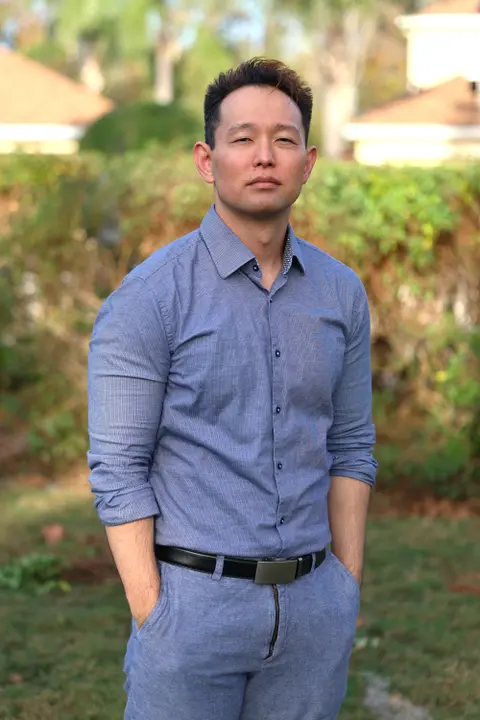
A great honor to bring in Joon “J.S.” Park to the podcast. J.S. is a Korean American based in Tampa, FL, and currently serves as a hospital chaplain. He’s a published author behind recent books such as 2024’s “As Long As You Need: Permission to Grieve” and 2026’s “We Are Made of Us.” He runs his IG account under @ JSPark3000 where he shares his knowledge and experience on grief and loss, as well as unlearning toxic masculinity and intergenerational trauma. We discuss these intimate experiences and how this is tied into his work as a chaplain and his deeper involvement in social justice causes. J.S. talks about why it was important for him to memorialize civilians k*lled in Gaza, under ICE custody, and other state-sanctioned violence through his social media.
Thanks for reading Bánh Mì Bites! This post is public so feel free to share it.
Bio:
J.S. Park is a hospital chaplain, published author, and online educator. For nearly eleven years he has been an interfaith chaplain at a 1000+ bed hospital that is designated a Level 1 Trauma Center. His role includes grief support, attending every death, trauma, and Code Blue, and end-of-life care.
J.S. has been interviewed by CNN, NPR, CBS News, Good Morning America, The Today Show, Bay News 9, and FOX13 Tampa Bay, among others, for his work in death and dying. He is the author of As Long as You Need: Permission to Grieve, published by W Publishing of HarperCollins Christian Publishing, and an upcoming book on contending with our family-of-origin and family dynamics, published by Tarcher Books of Penguin Random House.
J.S. served for three years as a chaplain at one of the largest nonprofit charities for the homeless on the east coast. J.S. is a board certified chaplain and has a MDiv completed in 2010 and a BA in Psychology. He also has a sixth-degree black belt.
J.S. currently lives in Tampa, Florida with his wife, a nurse practitioner, and their daughter and son.
Instagram: jspark3000
Get full access to Bánh Mì Bites at randykim.substack.com/subscribe
0:04 Hey everyone, this is Rainy Kim from the Bunmi Chronicles podcast. So I am very excited to bring on this next guest here and his name is June Park and otherwise goes by J.S. Park. And... J.S. Park is a hospital chaplain, published author and online educator. For nearly 11 years, he has been an interfaith chaplain at over a thousand bed hospital that is designated as a level one trauma center. His role includes grief support, attending every death, trauma and code blue and end of life care. JS has been interviewed by CNN, NPR, CBS, Good Morning America, and many other news outlets for his work in death and dying.
0:52 He is the author of As Long As You Need, Permission to Grieve, published by W Publishing of HarperCollins Christian Publishing, and has an upcoming book on contending with our family of origin and family dynamics, which is to be published by Tarture Books from Penguin Random House. So J.S. has served for three years as a chaplain at one of the largest nonprofit charities for the homeless on the East Coast. And J.S. is a board certified chaplain and has an MDIV completed in 2010 and a bachelor's in psychology. He also has a sixth degree black belt. And J.S. currently lives in Tampa, Florida with his wife, a nurse practitioner and their daughter and son.
1:35 So. want to say thank you so much for being on my show i have been following your work more recently especially on threads and then looking your post on instagram i have been very moved by your content and the level of compassion that's very um that's very present in your work and it's something that really speaks to me um especially in the work that i've you know been very adjacent to in the world of activism social justice um talking about history and what it means to be Asian American and dealing with trauma. And so this is something that really is something that I'm very eager to talk to you about.
2:18 And I also want to give a trigger warning to the audience that there will be mentions of mental health, grief, ideations, and state-sanctioned violence. So... Welcome, JS. And by the way, how are you doing with Navigating 2026 so far? And I know that you just got accepted to a master's program for therapy, if I'm not mistaken. So congratulations on getting in. Yeah, thank you, Randy. Thank you for your introduction. And I, by the way, I love the title of your podcast, Padmi Chronicles, because there's a place right next to me that I always order the Padmi and it's so good there.
3:02 But yeah, you know, your question, how's it going in 2026? I feel like quite a few of us, I'm sure, where I experience a level of privilege and stability that causes me some maybe guilt and moral distress in knowing that I'm in an area right now where generally I am safe. And always constantly wondering, how can I leverage any safety that I have for the community, for the people, whether that's online or across the street or across the ocean? And so there's a part of me that recognizes I feel safe, but right outside the window, the world is on fire. And so I'm constantly asking, what can I do?
3:43 How can I use my platform, my voice, anything that I've been given to give away? And I'm sure a lot of us are in that space where on the phone, it's no longer just doom scrolling. It's just scrolling. Scrolling just leads to images of doom and gloom. And that's our regular scrolling now. And so it's such a strange spot to be in where I feel, I would say, Mental health-wise, emotionally, physically, I feel pretty good. And at the same time, there's that burning sickness slash compassion slash empathy that splintered my heart that says the world isn't right.
4:28 And so there's something that I need to do about that. So every day, as much as I can, with the strength that I have, what can I contribute? That's what I'm asking all the time and trying to contribute. And I'm sure all of us feel that. Those of us who live with some measure of privilege, like what can I do to move the needle just a little bit for our children? Thank you for sharing that because what's very challenging about scrolling through social media and as someone who recently quit TikTok about over a month ago because of the surveillance issues and where it's headed towards, but also with Meta and seeing how the algorithms and and the content that we are being fed constantly, like, minute by minute about what's happening in Gaza to what's happening with ICE raids.
5:22 And I like to be a person that likes to keep my ears to the ground, but at the same time, it's also incredibly infuriating, exhausting, and I feel like sometimes I carry a level of... anger and confusion and just restlessness over it and and i wonder for you like especially since you're very um active on social media how do you navigate seeing the onslaught of trauma and trying to find a way to both be aware and be informed and helpful in this work but also how do you you know balance that for your own mental health and your psyche Yeah.
6:08 You know, Randy, I can't be the only person who would say this, but I personally, and I don't want to speak for anyone else, but I refuse to look away. And I know that that may be taxing or exhausting for my mental health, for my well-being, maybe a lot. But in the work that I do, I tend to deathbeds. I'm at a level one trauma center. So around the clock, I'm seeing gunshot wounds, fire, fall, stroke, car accidents. I'm seeing the worst of the worst. And I'm meeting people very often in the worst moment of their lives.
6:49 And when I see my patients, I can't scroll past them. They cannot scroll past their own tragedy and trauma. And again, like I was mentioning earlier, I do carry a level of privilege where I recognize I have resources. I have a stable home. I have a lot in abundance, you know, and so for me, I don't. I don't have the inclination or the want to try to look past the things that are happening on my phone without figuring out how can I help, without figuring out who are these people and how can I empathize with them and understand them and know their story.
7:34 And so I know that there is quite a bit of online talk about caring for ourselves and how do we regulate the, you know, what the dysfunction in our body or self-regulate. And I think those are important things and everyone's gonna have a different response to it. Everyone's gonna be at different levels. There will be people who are victims of disasters or abuse. There are survivors who will see, you know, what's happening on their phones and have to take care of themselves. So I don't wanna speak for them But I can speak for me in saying that I refuse to look away. And there are times, of course, when I need to watch myself and take care of myself. But I do that in conjunction with knowing what's happening in the world.
8:16 I mean, recently, I went on vacation for a week. And so I was in a place where I didn't have the internet. And it was a nice time away to be unplugged. And while I was gone, Just like with most of the world right now, a week is a long time. A week feels like decades. And so when I came back, plugged into the world again, so much had changed. And when I say so much had changed, at the same time, so much of what is predictable happened. So much of what is expected, which is the horror and tragedy that we're seeing every day. And immediately I just got to, hey, I had my vacation.
8:56 I need to figure out how to get plugged in, stay in solidarity with people who are hurting. So I recognize that maybe that's not the answer that maybe most people would want. Just for me, I know the threshold upon which I can stay plugged in and stay where the people are. And it does maybe, I think of my colleagues, my chaplain colleagues, healthcare workers, frontline responders, they're built for this. That's what they do. And I consider myself lucky to be among those kinds of people who can navigate this and walk through it. And I don't wanna talk a big game and make it look like, oh, I can stand all of this and that it never hurts me or that I'm always okay with it.
9:44 Of course it hurts. Um, but any strength that I have, any resolve that I have, I'm going to stay in it and I'm going to keep looking and I'm going to keep asking, what can I do? I think that is so powerful to be able to name that, but also to think about the work that you've been doing in the past, where you mentioned that it's hard to look away. You can't look away. And also that there are people that are dependent on your care and what you can share with them, especially in their most... trying of times and i i think about that with you know palestinians who are begging constantly for people to pay attention to them and to not forget about them and it breaks my heart and and then as someone whose family had to go to the vietnam war and then the cambodian genocide it it it really pierces my soul a great deal and And I think that I sometimes have to exit away for several hours, be outside, be in nature, ground myself until I get back.
10:59 And that was made more apparent during the ice race in Chicago back in fall, where I felt like I was in firefight mode constantly. And I was doing a number of episodes each day, talking to different community members and But I think that that felt like I needed to find hope in the people that I talked to that are doing the work. And I think for you in this case, I think that is, it's kind of like the Mr. Rogers thing of like, you know, look for the helpers. And I know that for you, June, you've been taking that call very seriously. And I'm very curious about two folks, what is a hospital chaplain and what does it mean in the Korean context?
11:40 That's a great question, Randy. Yeah. And let me, you know, I want to echo too what you were saying about taking a few hours for ourselves, grounding ourselves. Certainly I do that too. I don't want to make it sound like I never do that. But yeah, everybody's going to have a moment where we do need to step away. And I think you used the word, is it survival? I mean, that's what it feels like we're all doing right now. We're just in survival mode, you know. And we need those times to recharge with other people, whether that's mobilizing with them to do the work or to step away and process with them what's happening to us. But yeah, so hospital chaplain, technical clinical definition, non-anxious, non-judgmental comforting presence.
12:23 So if you think of like what a pastor does, a pastor in a church, they usually impart information from a pulpit and they do a kind of counseling where they're giving theology. And that's not all they do, but very often that they're a loud speaker for what they believe is, you know, quote unquote, the word of God. Whereas a chaplain, we are not preachers, we're a presence. So we enter in not imposing or proselytizing, but I do a lot of grief support and a lot of processing with people who have just experienced a traumatic event. or who are at the end of life or who have a chronic situation happening. And so a lot of times I'm there almost as crisis assistance.
13:04 Therapy is very long-term. There's sort of a longitudinal element to it where there's a client over time and there's directives that are given or processing that happens for someone to kind of confront their own trauma, their own biases, or sort of their own habits and why those things happen and how we can change them. But a chaplain often, I feel like I'm a sounding board and a soft landing and a way to be able to highlight the strengths of the person that I'm with, their worldview and beliefs that will carry them through what they're experiencing. I don't impose or add on to that. I assume that the person who I'm speaking with, if they have questions, they also carry their own answers.
13:47 And if there's a belief or a worldview that they have is harmful for them, we explore that. So, you know, some of the things that I hear very often are people saying like, God is punishing me with this, you know, or God's refining me through the fire or everything has to happen for a reason, you know, or other people telling the patient or the person in pain, like, don't ask for a lighter load, get a stronger spine or everything will be all right, don't cry. So we explore those things too, where when a belief is holding them back, holding them down and it's harmful, how do we unpack that? What does it mean when we say those things? So my job is incredibly difficult. My role, my calling, it's so hard.
14:29 And at the same time, I really truly do love what I do. I'm excited to come into work because for one, I feel like I belong in those rooms. But for two, it's like so many people, including myself, we don't have necessarily grief literacy and grief fluency and grief education. Everything about Westernized society is about rushing us past our pain, rushing us through our grief, getting us back to producing and consuming. And that's very much sort of where Western culture is, is the hustle and grind. It's basically just conquer and annexation that's turned into capitalism and accomplishment.
15:13 And so there's no time for grief, no time to pause, no time to honor our losses. And so I try to step in as a gap, as being able to be in slow motion and to say, let's process this thing that's happening together. And in that way, they're heard and they get to honor what's happening and what's being lost. I'm very curious about when you look at the flaws of Western healing and Western psychology and therapy, but also with Eastern with different non-Western practices, especially in the Korean community. I'm very curious about what flaws do you also see from, I mean, I know that you can't speak for all of the non-Western practices, but what have you observed in a way that you're trying to find balance between these different ideologies and belief systems?
16:09 Yeah. You know, I can speak to, I think, uh, Korean culture as a whole, and even larger than that, if we look at the macro of Eastern culture, You know, when we look at Westernized culture with grief, there is a lot of severance and jettisoning of the feeling of grief. You know, we bury, Americans bury bodies in a segregated lot six feet under and then have a garage sale and sell all their belongings. And there's, I've learned something called Swedish death cleaning, you know, very Eurocentric in which I get rid of all of my loved one's belongings, the deceased. I just get rid of them as much as I can. um and that is very much a westernized process in which i don't want to deal with death and i need to keep going the the average american workplace manual will give an average of four days of time off if you've lost your spouse your children your closest next of kin so if you lose a loved one on sunday you better be back to work on friday i got three when my you got three yeah Yes.
17:17 It's also why I... Which I will go into later. Which is why I left my job not long after that. Because that was... It was infuriating. Unbelievable. And to your point, it's something that just... it's it's perplexing it's infuriating yeah yeah well um i'm sorry randy and i want to lift up your brother and you and i'm so sorry that they did not your workplace did not give you the time for that to honor your brother um so i do want to take a moment for him and his life um Yeah.
18:00 You know, it is very much a Western Eurocentric thing to do that. And I do believe it comes out of... when the history of the Eurocentric Anglo-Saxon oppressor, oppressing smaller people, subjugating them, the first thing that they would do is not let them grieve their own dead because out of grief, retaliation and justice would emerge. And then the oppressor would also suppress their own grief because they're busy oppressing. So, you know, an oppressor would take out an oppressed nation by not allowing their culture, not allowing their grief, stamping out their language, no memorials, no statues, no funerals, anything.
18:40 And that has rolled into today where you have the oppressor and the oppressed and grief has been completely squeezed out of the language, squeezed out of our collective consciousness. But if you look at Eastern culture, even the concept of ancestors, just the idea that we would honor and understand and learn from the people before us, that's antithetical to the Western idea of letting go and moving on and turning the page, of saying that we need to get past grief as if grief were something toxic that needed to be worked out of our system. And in Korean culture, we have something called , which is death day. So just like birthdays, we honor death days. So our immediate matriarch and patriarch, those who have passed on before us, we take a day every year to do almost like a service together where we read like a timeline of their accomplishments and then share memories and share a meal together.
19:34 And I'm not sure that most Western cultures have something like that or are good at doing that, that they would have what's called death engagement. And when I see Korean context, Asian context, when I see the larger culture of the global majority, there's always been throughout history ways in which we incorporate the knowledge and insight and lives of our ancestors into who we are so that grief in some sense, as hard as it is, expands us and makes us larger. And I think because of Westernized white supremacist sort of perfectionist capitalistic hustle and grind and annexation and annihilation and conquest, that whole part of keeping our ancestors alive is lost.
20:23 And I think there's shame around it. If we honor our ancestors, can we contend with the bad things that they've done? To your point about Eastern culture also having like a not great element, There's the larger culture, which I credit to keeping grief alive and our ancestors alive in a way that's helpful for us. But there are also subcultures within Eastern culture, like patriarchy within Eastern culture is a problem. There are very misogynistic subcultures within Eastern culture. And so we have to ask, who are we honoring? And is patriarchy stamping out our processing and expression of emotions? And that's very much a thing in Asian households where emotion is very much questioned and seen as quote unquote weakness.
21:10 And so there's good and bad about it. I don't wanna say that our culture in totality is all good, but there's subculture and dysfunction within culture. And I've learned something, I think it's from Rast Momenicum, who says, you know, after a while, dysfunction becomes norm, which just becomes culture. And I would more so call that a subculture. And I think that's stuff that needs to be unraveled. But a lot of it is the same issue. When you see grief that isn't expressed, when you see grief that's often demonized or seen as less than, A lot of it has to do with patriarchy, with a culture of conquest and annexation and annihilation, of subjugating people and subhumanizing.
21:52 It's all part of that same kind of weaponry. So I very much love tapping back into my Korean roots because the more I read about it, the more that they were so in touch with and in tune with just... Our collectivism, not just in our immediate community, but our community across generations, our community across time, that we honor one another, not just in our immediate next of kin, but our ancestors and foremothers and forefathers. So that has been a discovery process for me that I feel like I'm catching up to, but that I've willingly dived into. Mm-hmm. You mentioned that you have been a former atheist and what was the catalyst for you to bring yourself into the faith-based world?
22:44 And how has that in a way changed the way you view your relationships, not only with your patients, but also with family and friends and colleagues? Yeah, you know, I came to faith very late in life and all love to my atheist friends and family. You know, there's still very much a part of atheism that is appealing to me because it is I feel like it's hard some days. to believe that there is a cosmos with a divine being who is love. Sometimes we look at the universe, we look at the world and it just seems like haphazard nihilistic chaos and that evil reigns.
23:30 And it doesn't seem like that there is a deeper and greater morality or that there is this kind of loving heartbeat of the universe. But for me, faith was understanding that what must bind us and what we want to bring into our reality is this cosmic and constant love, this divine benevolence that exists always, regardless of what we do or what we've done, that is detached from our performance or what we believe about our self-worth or what others may say about us. And that was a very slow sort of embrace of that idea of faith, that there's something bigger than us that must be loving, that must be cosmic and constant.
24:15 And I've written about it in my book and I've written about it online, but I have lost my faith at least once, at least several times. And that's because of things I've seen at the hospital where the suffering was too extreme and too deep where I just thought, Not only is God not there, but if God was there, God is an abuser. I can't trust a God that would allow this sort of suffering and just sign off on it. So it's been a back and forth journey. There are a lot of times where I feel like atheism is more comfortable. There are times where I feel like I'm not sure if I believe anything at all and I'm just doing the work. But I can say I have...
24:58 Really held on to I've worked now with so many different kinds of chaplains. I'm an interfaith chaplain. So we have all kinds of chaplains in our department. and we call on all kinds of people in our faith community. So whether that's a Muslim Imam or a rabbi or a Buddhist priest, we call on all kinds of people, Catholic priests. And the Christian language still speaks to me, but I grew up with a Buddhist grandmother and a lot of that language speaks to me as well. And so I'm glad to be in this interfaith space where I can have different languages and different lenses and different perspectives. And one of the beautiful things to me about Buddhism is the sense of mindfulness and being present that it really brings.
25:47 Because, you know, Christianity very often has like a whole wild, long, complicated backstory. And Christianity assumes... you are a sinfully depraved person. You know, there is that assumption there in a lot of evangelical theologies. But Buddhism, it's just, I am just present to this moment who you are and I'm beholden to you regardless of what you've done. There's no like backstory of like you're a sinner or you've done all these things, therefore you need forgiveness. It's just, I'm present to you in this moment. And that's so helpful for me at deathbeds and with patients who are, you know, where they feel like, oh, I need forgiveness. I've done all these terrible things.
26:28 I need absolution. But for me, I don't judge them for all that. And I don't kind of sense that I need to be the one to absolve them of all their stuff. I am just present to them and beholden to them in that moment. So I hope I'm making sense, Randy. It's a lot that I'm compressing in a couple minutes. But all that to say, faith language and faith worldviews have really helped me to expand my understandings of love and of being present. Yeah, which also brings me to like a hot button issue when we've seen a lot of Trump supporters and used Christianity and Jesus Christ as almost very weaponizing in a way that so contradictory because it feels like where is this where is this coming from where is this disconnecting happening because you know you see what has been going on with the epstein files with um with uh what's been going on to non-white folks or what's going on with ICE and, you know, seeing the inhumanity happen time and time again.
27:45 And, but why, and I can't, and I think it would be very unfair for me to have you answer that question, but I'm curious about your own perspective, about what have you observed from folks that are really tight with christianity or religion as a way to to be um to double down on their own belief system that trump holds i'm very curious about that yeah you know i think i alluded to it just a little bit ago where christian language sort of lends itself to an idea of Kingdom, militarism, of victory, of seeing things in terms of good and evil, that here's this greater good, but then there are forces of evil.
28:38 There's Satan, there's the devil, there's spiritual warfare. And so when you take all of this language of dominion and kingdom and the good news and people need to repent from their sin and that we are sinful and depraved, there is a sort of saviorism that is very, very prevalent. Christian theology in which I need to quote-unquote evangelize and convert other people to the right way of thinking to this uniformity of thinking and of doctrine and I did go to a Christian seminary and I think I've been an undercover progressive my whole life but when I went to this Christian seminary is very conservative and And they had these very, very stark fundamentalist beliefs.
29:25 And so much of it, it wasn't people sitting around saying, how can we do these terrible things today? How can we become Christian nationalists and oppress other people? And how can we hate gay people together? How can we hate immigrants? It wasn't that. A lot of these evangelicals sat together and they genuinely believed they were doing a good thing for the world by keeping it, quote unquote, pure. But it was their idea of pure. It was their idea of converting to my worldview, to what I believe is right. It was sort of this doctrinal, dogmatic baseline that they wanted everyone to be at.
30:07 And so necessarily when you have what is right and wrong, when you have right theology and wrong theology, when you have good versus evil, when you have these huge, almost militaristic type concepts of like, I am a soldier for Christ and we're doing battle and the world is a battleground and we have to go out there and make harvest of people, all these types of language are going to lead to a superiority in It's naturally going to lead to a type of self-righteousness, which Christianity claims that we need to repent of. So then you have, I think it was in the 19, I want to say 80s, you had, I believe it may have been Jimmy Carter who held a council for family values.
30:51 And when he held this council, he actually had a diversity of people. There was like Reverend Jesse Jackson was one of them. There are quite a few diverse people where he had wanted to establish how can we help families? You know, and he had this at the White House. It was like a conference. But to Jimmy Carter's credit and to this council, they refused to say marriage is between one man and one woman. They refused to define what a family is because they said, look, they're single mothers. You know, they didn't want to say there are gay families or gay couples, something like that. But they just wanted to leave it open ended. And then you had, I believe it was maybe Jerry Falwell. It was sort of the evangelical far right, basically saying, no, here's what a family looks like.
31:35 And then family values really took off. And then the far right was birthed, you can say, as early as the 80s or the late 70s even. And from there, the far right movement, that was sort of the inception of it or the embryonic form of the far right movement. But you had people basically saying, no, this is what a family ought to look like and everyone else isn't. So when you have that sort of separatism that occurs and superiority, you're going to have Christian nationalism. And now we're so far into Christian nationalism that you have people being proud of being fundamentalist, proud of being superior, quote unquote, proud of being white. And you have Trumpers that believe that they're literally saving the world from quote unquote woke people, from these liberals, from these leftists.
32:23 And they feel that it is their mission from God. And so I'm saying a lot, Randy, feel free to cut any of this. It's like a whole long anthropological religious lesson. No, it's... Yeah, but it's a whole rabbit hole. It's a whole thing that we've sped towards. Because when you think about it, 40, 50 years is not that long in the grand scheme and history of things. But it's been going on, you could say, as early as even the first century. You could say it was even before that with religion and the way that it sort of created this superiority complex. Yeah. But it's very difficult to unravel that sort of indoctrination when Christians don't sit around thinking, I'm so evil.
33:05 Instead, they actually think, I am so good. And that is therein where the problem lies. Mm-hmm. I really appreciate this in this framework too and what that looks like. I think this is very helpful because this has been something that has been so perplexing and just baffling. And I think that is something that I don't think we'll ever be able to understand for the rest of our lifetimes or the following lifetimes. And to kind of make a pivot, like as a Korean American, you mentioned in your previous interviews about coming from a very abusive upbringing. How do you think it affected your views on vulnerability, your relationship with your Korean identity and culture and your experiences with adults growing up?
33:55 Yeah, you know, I think I can probably echo many Asian Americans when I say that I am of two minds or maybe even two hearts about this. Like on one hand, I was very violently abused growing up by my parents who are, you know, first generation immigrant parents. And what they did to me was not okay. And there were many years that I did not talk with them. I've since reconciled with both of them. They divorced when I was 14. They sort of went about their own lives. But there were a lot of times that I felt alienated and lonely and like I didn't have parents.
34:37 And when I did have them, I was so scared of them. But then there's another part of me that was not just scared of them, but scared for them because they didn't have the resources that they needed. They were surviving assimilation. They came from deeply traumatizing backgrounds that I will never be able to fully grasp or comprehend. They both grew up in wars funded by the US that I will never really be able to truly experience or empathize with because what a traumatizing and difficult And tragic upbringing that they had. I mean, my dad, I think, was 10 when the Korean War was declared over.
35:20 But then Korea was split. And so, you know, I feel for my parents very much. On one hand, I was scared of them, but I'm also scared for them. and so i hope i'm answering your question randy but yeah i mean growing up in that in that context i try to be understanding of when i see someone acting out or lashing out when i see you know in a chart someone is called a non-compliant patient or combative or aggressive i try to look for the deeper story uh if they you know attack a staff of course that's not okay If they're aggressive or violent towards staff, it's not okay. But for me, I always assume there's a deeper story.
36:01 There's a reason why it's happening. And how do we get to that place where we can have open, vulnerable conversations about how has this trauma affected you? How has it changed you into a person that maybe you didn't want to be or acting in a way that you didn't want to? And so I think there does need to be room for the dialogue and safety around the ways in which trauma has adversely affected us so much that it extends through our fingertips and our voices and causes us to hurt other people. it causes harm and the trauma that they go through does not absolve them of the ways in which they hurt others but i hope we can have enough grace to be able to have those conversations around it and in a way that's not saviorific in a way that's not trying to rescue them but really just be on equal ground with them so my parents taught me a lot about i think um They were they are fully fleshed out, fully dimensional people.
37:08 You know, they're not evil. They're not as good as I would have wanted them to be. And so I do sometimes see patients who they have these backstories where it would be easy for me to judge them, but I don't. And so Randy, this may be like not a cool opinion, but I'm very, very unwilling to burn bridges with people. I'm very unwilling to cut off people. When I get a comment or a DM that is particularly violent, or racist, I do this less now, but I did this a lot more before and sometimes still do, I still try to dialogue with that person.
37:49 I still try to open a bridge and just try to understand where they're coming from. And I know that maybe that's not okay right now, because right now the rhetoric is so bad where it seems like, can any bridges still be saved? But I am by default, I think a bridge builder. And I want to have those vulnerable conversations. And there have been a few times where I saw a turnaround or I saw a mind changed or a heart changed. And not all of us can do it, but I hope that I can. Yeah, what is it like when you actually DM, when a person, when you respond to a DM that is vitriolic? And like, what happens? What is the reaction of the person DMing you in this case?
38:31 And what does that look like? Yeah, you know, so 90% of the time probably, nine times out of 10, it doesn't go anywhere good. You know, I'm just really opening the door to more abuse. And at some point, I'm like, OK, I got to draw a line and just block or I got to report them or something. Right. And to be fair, it doesn't work out a lot of the time. But there are other times where I feel like there is something reflected back to this person where they realize that their words or their approach or their belief is not okay, or it's not working out for them in a way that they thought it was.
39:17 And, um, these conversations, I don't expect someone ever to change their mind or that that one good conversation means that, oh, now they're going to become this, you know, uh, transformed person for the world and suddenly start to stick up for marginalized communities. I don't ever expect that. But sometimes those conversations, I will see a pause or almost like a, wow, I was being really rude or I was being really unkind or I wasn't giving a lot of room for that. And if I have the space for it that day, if I have the capacity, I do try to have those kind of conversations. I remember several times there were people who were just absolutely, I shouldn't have even given them the time of day to start with.
40:07 But by the end of the conversation, I felt like they understood at least where I was coming from. And I wanna be careful, Randy, because I know that on one hand, people, and they would be right, might say, hey, if you engage with a racist, if you engage with this bigoted, misogynistic, xenophobic person, you're essentially enabling them. You're basically gonna be labeled, quote unquote, one of the good ones, but then they'll still think ill of everybody else, right? So we wanna be careful with that, that I am not falling into exceptionalism with doing that. But then on the other hand, I still strongly believe in the goodness of people.
40:49 I do think that unraveling from propaganda and indoctrination has to start somewhere. I mean, who is talking to these people besides Fox News and other like-minded bigots? And so if I can be that one moment of reason, not even the voice of reason, just the moment of reason, Maybe that could start them on a path. I don't know where they kind of do the work for themselves. And if there's a 2% chance, a half a percent chance, maybe. But I say this as someone who is optimistically naive. You know, the Korean word is, I'm kind of naive slash gullible slash overly optimistic. but I'm gonna remain that way.
41:29 I don't want to get hardened by a hard world. I want to stay soft. And so when I can, with the capacity that I have, I try to engage in that dialogue. Yeah. And also kind of goes into what we were talking about earlier with your family. I think of intergenerational trauma and what the cycle of violence can do to generations following to families. And how does your own intergenerational trauma play into your life? And how are you trying to unlearn practices or beliefs that no longer work for you or that have been harmful to you and other people?
42:11 Oh, man, Randy. So, you know, I didn't, for the longest time, I did not want to have children. And, you know, people who choose not to have children, I completely respect. And man, shout out for that choice because For one, it's a hard thing to raise children. For two, especially in this world, how difficult it is. And three, you can live a full and complete life without children. That shouldn't be everybody's purpose. But for me, the reason I did not want to have kids, I was so worried about passing on my own trauma. I was so terrified of the day that they would look at me and say like, you knew how you were, why would you make another one? Or why did you give me this depression?
42:52 Why did you give me this anxiety? I was terrified of not only raising them in this world that is so hard and hardening, but raising them with my stuff, because they wouldn't come into this world a blank slate. They would come into this world with at least some of my DNA and some of that epigenetic trauma. But then I almost overnight, and it's very rare that I have like overnight epiphanies, but almost overnight, just something flipped where I realized or recognized or woke up believing I had the capacity to raise children in this world. And some of that I think had to do with You know, we don't just pass on our trauma.
43:38 We also pass on the stories that are worth preserving. We pass on our joy. We pass on our treasure. We pass on our ancestors and all the things that are worth keeping. And just like my own parents, there are things worth keeping about them. There's so much that I discard and so much that isn't good. But I can parse out the things that I know that are good. There's the stories that I know that are going to hold me. And I can give that to my own children. And I can give the things that I have to them that are good. So yes, they will enter into the world with some of the things that I have that hamper me. But at the same time, they will also enter the world with things that can hold them that have held me.
44:18 And so that gave me some hope. And I think we do talk a lot about intergenerational trauma. I've seen this joke like within Asian communities where it's like, oh, this movie has an all Asian cast. Let me guess, it's about intergenerational trauma. Like that's kind of the inside joke, you know? Where not every story, I wish not every story had to be about that, you know? And at the same time, like I get why it's about that. And I also would love more stories about passing on our joy passing on the stories of victory that we have rising against our oppressors and against conquests and how we survive colonization and war and genocide and also how we kept all the joyous things like pansori and the dancing and all the wonderful chants and like the stories that we have in the mythologies so for me intergenerational shouldn't just be followed by the word trauma there's intergenerational treasure there's intergenerational joy you know there's intergenerational love and so those things we can pass on too and that doesn't mean that it should like uh minimize or diminish the trauma because that's very real and we have to work with that too but along with that comes a whole host of other beautiful things earlier I was talking about the death of my brother about a year ago.
45:39 And, you know, this is something I've been thinking about because you and I are close in age. I'm also in my forties and, you know, and I've been talking about this more openly with people and on my show is that we are now at the age where there's expected and unexpected losses. I mean, I mean, aside from my brother who was like, um, who would have been 40 this past month, um, And then some of my colleagues and friends, over the last couple of years, I've seen people unexpectedly pass. And I wonder about how do you look at navigating grief, especially knowing that this is going to be the experience that we will have to be absorbed or and have to encounter along the way and how do we honor that grief each time because it's like it's like sometimes I feel like I feel like I'm not sad enough for this person's passing or I mean there's certain guilt about how I grieve too I know where my brother's passing it's still extremely overwhelming but but for other deaths it's like it's very different and I'm curious about what that looks like for you at this age and how you look to honor their memory and your experience with them.
47:08 Yeah, you know, I think for one, there is a shame around grief. You know, Bill Hooks talks about it in her book, All About Love, where we are told that somehow intrinsically or inherently grief is a bad thing. that needs to be solved or needs to be overcome. So I would say first that grief is not that, it is a natural response in our bodies to something that is so unnatural and unfair, which is loss. And I think sort of reframing that grief is something that our body needs and goes through and that we will express or anger or rage or guilt.
47:57 All of these feelings that we have around loss are, for lack of a better word, natural responses because loss is so hard and so difficult. And so when I hear grief talked about in a way where it's something that we just need to get past or get out of our bodies, that is what our body does when we experience loss. So I would say to reframe the negative connotations around what grief is, And I'd also say everyone grieves differently because, you know, just as we all need differently, we grieve differently. And the people that we lose and the dreams that we lose, the losses that we experience, they are shaped all in different ways.
48:42 They are shaped around our lives. So when you think of the people that you've lost, you have very particular memories with them. There is no other shape of loss like that person or like that dream. And so once they're gone, it tears away at every memory fixture at all the different ways in which they filled in your life. And now that shape of their life is gone in some sense. And so you are going to express and feel grief differently than the next person. And I think there is a judgment that occurs on others and ourselves when we experience grief.
49:25 Because there are some people that won't cry at all. Or there are some people that will scream and scream. I've seen people roll on the floor. I've seen people punch the wall. I've seen people singing, chanting, rocking back and forth. Some people just sit in a corner and go numb. There's cognitive fog. There are people who will just sleep for hours and hours. But the guilt that you feel, the sort of... intrusive thoughts that you have all of those things are part of what your body is going to go through and i would say have gentleness for yourself for all the ways that your mind and your heart are going to respond to that grief there's just so much judgment that occurs in which we thinking we think oh i'm doing this the wrong way these books and these people are telling me to do it this way And what I try to do in a room very often is I try to, quote unquote, normalize the grief experience.
50:21 But when I say normalize, I'm not trying to say your grief has to be like this room over here or that hospital bed over there, like this family over here. I normalized that person's individual grief experience to say, if you're screaming, that's okay. Do you need to punch a wall? That's okay. Do you need to throw a chair? I'm going to get you more chairs. That's what I do as a chaplain. And, you know, I used to have so much shame around when I would grieve. it's like I would apologize for crying. And that's a common thing that we do. I'll see men literally beat their chests with their fists and apologize to me and say, man, I'm sorry, I'm crying so much.
51:05 And they'll tilt their head up as if to let the tears go back in their eyes. You know, and I'll tell them, you know, I know it's hard to cry, but it's okay if you need to right now, it's okay to cry whenever you want. You know, that's not a bad thing. You're crying because it means that much to you. And to have that permission, especially like with ideas of toxic masculinity and ideas of like emotional expression, they're all considered wrong or weak. to have that permission, especially from someone who they would see as like a religious figure or a healthcare worker, for them, that's what they needed in that moment. So yeah, I think reframing it, that it's not a negative thing and reframing it and that we shouldn't judge ourselves for the expression that we need.
51:55 Really, really appreciate this. And one of the things I really appreciate about you is that like when I was following your work, I had noticed that you would always have memorials, remembrances of victims of ICE, you know, whether it's Party Law to Keith Porter, Renee Good, Alex Pretty, and the people of Palestine and Congo and Sudan and Ukraine. There's something that's so powerful about that. And I was wondering if you could kind of take me through the thought process as you were going through their lives and what you learned along the way, because I think there's something special about humanizing a person, you know, beyond the trauma porn that their name is attached to, unfortunately.
52:53 And I really think that's powerful. And I also wonder, have the victim's family reached out, families reached out to you too? Because I wonder if they have seen the beautiful remembrances and tributes you've put out Yeah, to answer that last question, I have had a family reach out to me or comment on those posts. And a lot of them, I would say all of them have, it's strange to say this because of course it's in the midst of such horrific tragedy, But they've expressed gratitude because a lot of times when I'm sharing these things, I'm sharing the GoFundMe. But even more than that, I'm keeping their name and their memory in discourse, out in discussion, out in the open.
53:35 I'm keeping their memory out in collective consciousness to honor them. And there is a temptation for all of us. to look at these tragedies and leverage them in a way that they become symbols or they become talking points. And I think on one hand, we do need to look at these losses and say, well, here is the reason why these are happening. Because here you have state-sanctioned violence. Here you have a department that shouldn't exist that is overly bypassing the law.
54:15 Laws that also should not exist in order to do public executions, in order to hold people and detain them for profit. So we do need to talk about that. But then when people become just symbols, just numbers, just stats, when their stories become ways in which we use them just for a talking point, that for me feels like I understand why we may need to do that. But on the other hand, I feel like their story and their life is getting away from them. And so I very much don't, that sort of almost objectification, I can even say as far as exploitation of a life to become a political talking point makes me uncomfortable.
55:01 And I always want to, and maybe there are people who are, you know that that's their calling that they they get into the law and sort of the granularity of it but for me i want to lift up their life and remember them as they were and the reason i started writing about this i mean for one i can say when i attend the deathbed i very much don't often meet the person the patient before my patient before they've died but i'll always ask the family or their community like can you tell me what this person was like And then they get to share. And as they're sharing, people will start smiling and start laughing. And in some way, when this family is sharing about this person that they just lost, they become alive and I get to meet them, this person who's died that I've never met, but I get to meet them through their family.
55:47 And so I almost do this sort of like resurrection in the room, this sort of eulogy where this person becomes alive for us. And I always thank them and I always tell them, thank you for allowing me to meet your loved one. I never got to meet them, but I wish I did and I got to meet them through you. And so in that sense, I have looked at these stories of people who were killed by ice and there, I wish that their death did not have to inform their entire life. It's like, here's this person lived their whole life and then they met this terrible end and that violence suddenly pierces backwards through their life and almost shadows over their whole story.
56:33 But I want to bring their whole story back to life, into light. And it started when Alex Preddy was murdered, when he was executed, people were saying that he was a healthcare worker. And then I saw a post that said Breonna Taylor was also a healthcare worker. And then I went and read about her life and she has a whole Wikipedia page. And unfortunately, like the biggest section is on her death. But there is a section about her life. And one of the things that really struck me and moved me that brought tears to my eyes was her friends called her Bri. And I thought she had a whole community, a whole family, people who loved her, who didn't just know her as hashtag Brianna Taylor.
57:20 They knew her as Bri. And so I wrote on my social media, Brianna Taylor was a healthcare worker and her friends called her Bri. And I wrote that not to like compete with or even contrast with Alex Preddy, but for us to remember that there have been people always taken by state sanctioned violence and we need to remember all of them. And then I started reading more about people who were taken by law enforcement, particularly those taken by ICE. And then I started looking at their GoFundMes. And then a couple of the posts went viral. And there was one in particular, Rodney Taylor. He has been in ICE detainment for over a year.
58:03 He's still there. He's still alive. He's a double amputee. He's a father of seven. His fiance, I believe maybe they're married now. Her name is Mildred. She and I have been in communication. I shared his story. I shared his GoFundMe. And I think it was able to raise about $10,000 in a week. And so I don't wanna say that's all my doing, of course, but I wanted to highlight his story because, hey, here's someone who is still detained for no reason really. And it's important for me that we don't lose the sight of the people. You know, the political points are important.
58:43 We need to talk about that. You know, the reason why these things are happening, we need to talk about that. But it's always about the keep me, keep me about the people. And I want to be kept where the people are. And I've written this before online. Every single loss belongs to someone. whether that's Palestinian or Iranian, whether that's Sudanese or Congo or Lebanese, all of these people, they belong to someone. And so how do we continue to lift them up? And sometimes people can't understand big numbers like 70,000 or 150,000. But when you look at one person, one family, one life, then it becomes graspable. And then we can do something one life at a time.
59:25 Thank you so much for lifting that. And I know that as we're starting to run out of time soon, but there's one question that really, it's a loaded question, but it's about the Black and Asian relationships, Black and Asian community relationships in America. And this is something that has stuck out for me for so long. And I've always said that a lot of what we have seen over the years is through colonization, militarism, and how that contributes to anti-Blackness, colorism, and Western assimilation that also enables the harm of Black people, Black and brown people in this case.
1:00:09 And I think about, you know, the LA riots and prior to LA riots was the murder of 15-year-old Latasha Harlins, a Black girl who was murdered by Soonjadu, a Korean storekeeper at a convenience store in LA. And for a lot of Asian communities, they were living in Black communities because Black communities would not allow Asian businesses to prosper there in most places. And so that, and also with the affordability, which also led to the displacement of Black families. And this was like a recipe for tensions.
1:00:52 And I wonder about what it means to have dialogue and to understand both of these communities and how do we start to eliminate a lot of the anti-Blackness and the anti-Asian and trying to like really to navigate this, because this was really showing its ugly head during the George Floyd, Breonna Taylor movement to the anti-Asian COVID-19 that followed after, or actually before that, before enduring. Yeah. You know, I think it's so important for us to be aware of at least two things.
1:01:35 I think one, anti-blackness, anti-black racism exists in every community and is incredibly prevalent and pervasive and in ways hidden to us and needs to be rooted out and confronted. And I wanna start by saying that, that there is so much anti-black racism in not just Asian communities, but every culture around the world. And you have a history of Black community, Black people being oppressed. And you have that oppression emerging out of anti-Black racism throughout history.
1:02:20 And so we do need to contend with that. For any sort of solidarity to occur, we have to start from the position of understanding that anti-Black racism is a problem. And it is probably, if not the biggest problem, the biggest, I would say most dominant form of bigotry and racism that exists. And we need to own that and confront it. And that is so pervasive in Asian communities, unfortunately, from pillaging music to seeing black people as less than to, as you said, you know when white store owners only sold to asian store owners back in 90s la it essentially displaced and forced out black businesses it essentially caused asian store owners to take in some way from the black community and they did not give back and so even that level of wedge politics Created a superiority in some Asian communities thinking, well, this is where black people are.
1:03:26 We are the Asians are the store owners and black people are just the ones who buy from us. But who caused that? It was white store owners, white supremacy. So the second thing that I want to say is we need to be aware of how a wedge has been driven between these communities. Because when you look throughout history, when there has been solidarity between communities, for example, Larry Itliong, the Filipino labor union worker, and Cesar Chavez of the Latino community, when you had those two forces get together and go on strike and say, no, we're not going to work for these white farmers anymore until we get better wages.
1:04:09 That power of solidarity caused all the white farm owners at that time to say, we better start giving fair wages and the things that they're asking for. When the communities come together, that's what white supremacy is afraid of. That's what it cannot stand. And that's why there's the narrative. Look at these model minorities. Look at these Asians who are so exceptional, who are doing so well, even though we were given handouts and a leg up. And we do need to be very aware of that, that whenever there is a narrative spun, for example, during the pandemic, or the first year of the pandemic, I should say, when we saw videos of Black people attacking Asian Americans, that was actually statistically a very small percentage of attacks happening against Asian Americans, but it was always the Black people who were highlighted attacking the Asian Americans.
1:05:02 And you start to think, well, it's only then Black people who are attacking Asian Americans, which isn't true. Because when they did the study, statistically, it's mostly white Americans that do that. But regardless, regardless of that, that narrative was spun in And when it's spun that way, then you start thinking it's Black people against Asian people. And so we need to be careful of those narratives because they are very, very deliberately and intentionally positioned and given to us in order to cause a breakage and a fracture in solidarity because they know how powerful marginalized communities can be when we work together. And so I would say, one, confronting the anti-Blackness in our own communities and in ourselves.
1:05:44 And then also look out for the narratives that we're given because there are narratives given that intentionally will create a wedge between communities. But if we really look, if we're careful and we discern and we think critically, we can see past that and realize this has been handed to us in order to set us apart and we shouldn't be. Yeah, no, I really appreciate you lifting that because I think during that period of time, most of the hate comments or DMs that I get actually come from Asian people, especially when I defend Black people. And I think that is very telling about where our community is, where it struggles with.
1:06:25 And I think this is a conversation that's still ongoing, that it has to, I hope, one day change and make some strong, you know, pivots. And I also want to say, like, as we start to wrap up, what are you looking to do for the rest of this year? I know you're going into your master's program. And also, I think another question would be, like, looking back in the last... several years of your life like what would you what have you learned about yourself as a person in in ways that you have seen yourself evolve yeah real simply i can say this randy you know um uh my daughter's going to be six this year my son just turned two and for me uh A lot of activism has been just parenting, you know?
1:07:20 And I know that there's a sense in which if I say that, it can be a little bit of a cop-out because it's like, you know, maybe somebody might think, oh, you know, if you just parent at home, that's what you're doing anyway already, you know? But I don't see it as a cop-out at all. I see that raising the next generation, where it has to start is in our home and in our hearts. And for me, raising a Korean American woman in the world and a Korean American man in the world, for me, and maybe one day whoever they wanna become, for me is a monumental, critical, important, probably the most important task of my life, the most important mission and purpose of my life.
1:08:07 And for me, that's activism, to raise people in a world who are critical thinkers, who will be advocates and activists, who will be liberationists, who will care about the community, who will live within community and be in solidarity with those who are marginalized. And so I'm hoping to raise children who really see beyond the window, who want to get involved, who want to be engaged. And that's not an easy thing. It's really difficult because part of me wants to protect them so badly from the violence that's happening in the world, even from the knowledge of it. But then on the other hand, I know that they are going to hurt be thrown into the world one day. And I hope to give them, hand them the knowledge and the compassion and the empathy, and to be able to have that critical thinking, to be able to get into the world and look past the propaganda and unravel the indoctrination that they're given daily.
1:09:01 So, yeah, for me, I mean, that's been on the forefront of my mind and my heart so much of in what ways is parenting political? In what ways is it activism? And then to act on it. Yeah, no, I really appreciate this. And I'm really so honored to have you on my show. And this is a conversation I've been wanting to have. I could really spend like three, four hours talking to you about, or endless hours, really, about any kind of topic relating to what we had just talked about. And I want to say that all the best to you in your grad school journey. I mean, as a person who had graduated with a master's like a few years ago, not for the easy of heart, but I also, you know, as I mean, I'm not a parent, so that so.
1:09:50 Any parent that goes into higher education, my hat's off. You know, it is a lot. It is a lot to contend with. But I really hope that this is a great experience for you and that the tools that you have, you know, been so graciously giving us. I hope that there'll be more tools that you can think of, too. And. And in ways in which we navigate grief and navigate dialogue and understanding how to deepen our compassion. And I think this is still a work in progress. So, you know, June, I really, really appreciate you. And I hope that people get to follow your work on Instagram, on JS Park.
1:10:31 and jspark 3000 right yeah okay gotcha jspark 3000 and also and also on threads too and um and and also picking up a copy of his book so yeah really all the best to you june yeah randy thank you so much appreciate you and your time and your voice
