Finding Abundance In My Identities w/Travis C. Lau

 Apple Podcasts

 Spotify

 Amazon Music

 Overcast

 Castro

 iHeartRadio

 PocketCasts

 Podchaser

 RSS Feed
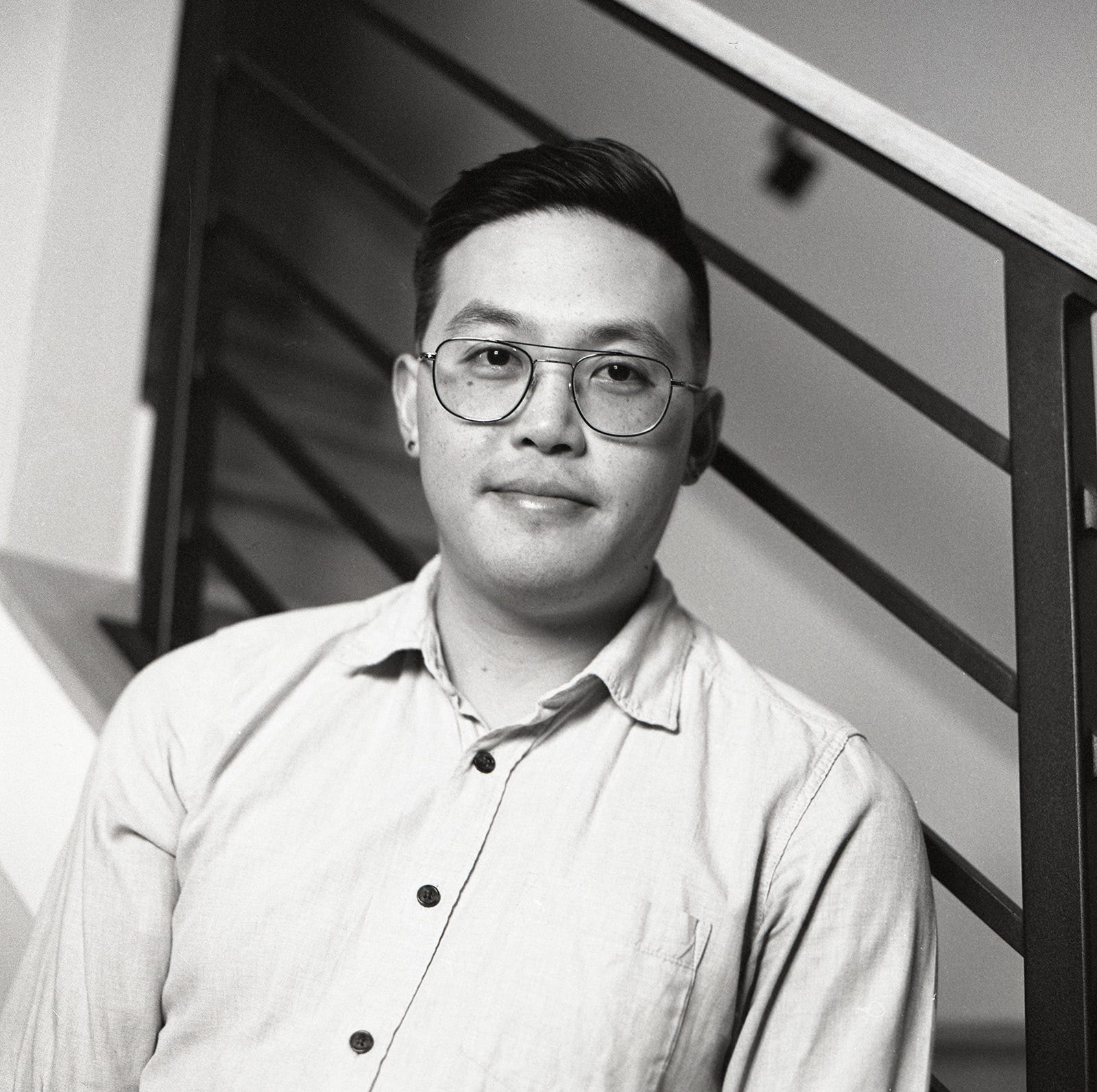
I’ve known Travis C. Lau since the beginning of the pandemic, as we follow each other on social media. My interview with him for this episode was the first real conversation I’ve had with him. From the moment I hit record, we hit it off like long-lost siblings discovering new things about each other. In this episode, Travis looks back on his complicated relationship with his parents and with the queer community during his college days, and how that affected his relationship to his own queer Chinese identity. We chatted about his poetry and how his disability and neurodivergence have impacted his work and a deeper understanding of himself. Travis talked about his friendship with the late Alice Wong, a disabled Asian American disability activist and author, and how he wants to remember her. Also, he treats us to a reading of one of his poems.
Bio:
Travis Chi Wing Lau (he/him/his) is Assistant Professor of English at Kenyon College. His research and teaching focus on eighteenth- and nineteenth-century British literature and culture, health humanities, and disability studies. Alongside his scholarship, he has been published widely in venues of public scholarship and poetry, including three chapbooks--The Bone Setter (Damaged Goods Press, 2019), Paring (Finishing Line Press, 2020), Vagaries (Fork Tine Press, 2022)--and a full-length collection of poems, What’s Left Is Tender (Harbor Editions, 2025). He is also co-editor of Every Place on the Map Is Disabled, an anthology of disability poetry and poetics, published with Northwestern University Press in 2026. He was the winner of the Christopher Hewitt Award for Poetry (2019), recipient of the Greater Columbus Arts Council’s Artists Elevated Award in Literature (2024), and the Ohio Arts Council's Artists with Disabilities Access Program Grant (2025). [travisclau.com]
IG: travisclau
Get full access to Bánh Mì Bites at randykim.substack.com/subscribe
0:04 Hey, everyone. So my name is Randy Kim with the Banh Mi Chronicles podcast. So I'm joined with a friend, Travis Chi Wing Lau, go by he, him, his pronouns. And Travis is an assistant professor of English at Kenyon College. His research and teaching focus on 18th and 19th century British literature and culture studies. health humanities and disability studies. Alongside the scholarship, he has been published widely in a number of public scholarship and poetry publications, including three chapbooks, The Bonesetter, Pairing, vagaries, and a full collection a full-length collection of poems.
0:46 What Left is Tender. He is also the co-editor of Every Place on the Map is Disabled, an anthology of disability poetry and poetics published with Northwestern University Press for this year. And he was the winner of the Christopher Hewitt Award for Poetry, recipient of the Greater Columbus Arts Council Artist Elevated Award in Literature, and the Ohio Arts Council's artists with disabilities access programs. So I am so glad we've known each other for a couple of years through social media. This is actually our first time having a real verbal conversation. So welcome, welcome, welcome.
1:27 Yeah. How are you doing, Travis? And how are you navigating 2026? Oh my gosh. I can't complain. I feel like 2026 began a lot less turbulently than I'm used to. The past few years have always had a really rocky start to the year. I've been telling people this, but I think the end of last year, I got this... I don't know, I've learned to start to trust my instincts on this, but I felt this... weird sense that 2026 was going to be a maybe not transformative year but a transitional year in some capacity and i feel like i've been really committing myself to sort of seeing that process through i'm rethinking a lot of the ways i do things i'm slowing down a lot um and i'm trying to reconnect with facets of myself that i've kind of let go um so i feel like i'm i'm going about things differently but thankfully things have been knock on wood fairly uh stable for me so far that allows me to sort of do some of this personal work.
2:21 But I'm up for tenure this year, so I feel like there's just been a lot of pressure to sort of meet the demands of my academic life. But for the most part, I can't complain. How about you? Yeah, I think it's been a very interesting experience so far. I feel like I am... weirdly in a mentally good place um although i will say that yes uh what you had just mentioned i feel like there's been like recalibration there's been practices that i don't align with um anymore and uh like i think about my people pleasing tendencies and same and actually i was just on my way to write a content about things that I've learned since turning 40, like the last two plus years.
3:09 And I think about how perfectionism is a tool of capitalism. And actually I remembered a couple of years ago when I was working for a foundation, a person one of our partners had said, perfection is the tool of white supremacy. And I was like, wow, that was very profound. And I thought about it because we think about having to perform our labor and to get approval to get short-term rewards and how much it costs at our expenses. And that's something that I do relate to you because it's something that you have shared about academia. It's something that you shared in your own work. And now that you're going into tenureship, how have you been able to navigate ways in which you try to lessen your people-pleasing perfectionist tendencies that we are unfortunately ingrained with.
3:57 Yeah, I mean, you've put it so perfectly. I think for the past five to seven years, I've been working really in survival mode because academia is so broken right now that I think a lot of us who graduated, you know, I finished graduate school in 2018 and I graduated to an academic job market that is so sparse and collapsing that many of us are just grateful to have jobs. So a lot of us, we enter into our jobs and feel like, oh my gosh, it's a miracle we even have a tenure track job. So I guess we need to throw ourselves into it to make it feel like it was worthwhile. And of course, we are extremely aware of all the people who don't get jobs. So we feel this kind of guilt, survivor's guilt as well.
4:38 But I started realizing that that's not a sustainable way of working. I'm going into my tenure year working at a pace that's not sustainable. I will burn out before I even have a long term career. And that sort of reality hit me. in conjunction to being relatively recently diagnosed with ADHD, where I realized that the cycles and pace of academic life is so against people who work and think like myself. So I think a lot of my changes lately have been being real about what I can actually do. And two, I think this is the work that maybe we both share, right?
5:21 is realizing how so much of our success and how so much of our way of surviving in the structures that we live in have involved us working against our own capacities the model minority myth is a really really mean drug and we feel as you know as the children of immigrants right that we have obligation to succeed and to be ambitious and to to use the word you to you used before to try to achieve as much perfection as possible but it is actively killing us right and i think enough is enough and i think it really hit me within the past year or so that i can no longer do it this way Yeah. And how does it feel to make that shift?
6:03 And what have you noticed in having to take different shifts in the way you have practiced before? Because it is a lifelong of unlearning and unpacking this whole, what you mentioned, model minority myth, and also how you know, we deal with intergenerational trauma, you know, dealing with the identities, whether it's disability, neurodivergence, and a multitude of identities that end up forcing us to try to outperform as some kind of way of belonging and feeling like you're worthy, that you have value in the society.
6:45 How have you been able, how has that been to kind of like to start transforming? What have you noticed about some of the things that you've made for yourself? Great question. So I think Just for some context, I have been in versions of talk therapy and psychotherapy since 2013 in the sort of very early years of graduate school when I realized, okay, I can't lie my way out of not believing that I was dealing with anxiety and depression. But I think over these years, I realized that something was missing. I was still kind of struggling with with my brain fog and cognition and I in general just felt really dysregulated lately I've been really immersing myself in I guess an area of therapy called somatic therapy and nervous system regulation stuff which has been and often is referred to as the missing piece for a lot of people how do you sort of find safety and and comfort in yourself that is embodied in a real way rather than only thinking about it in a sort of heady way where you can have the right narratives of what's happening to you.
7:56 But what about your actual body? And I think that shift to really thinking about the mind-body connection has been super important for me. But the first thing that I was thinking about when you asked that question was, it's amazing how much resistance we experience when we try to make shifts for ourselves this way. When we are used to people pleasing or having no boundaries, right, people are used to having these kinds of extractive relationships with us. And when we choose not to have it, people think that we've changed in negative ways or that we're not the same person anymore. Or people are skeptical of these changes. And it's interesting to deal with not just the struggle of doing it yourself, but the resistance from people who we would expect to support us.
8:38 And that resistance is something I never quite expected. Yeah. And I think something that I've also learned too, there's a power of saying no to things, especially with setting boundaries. And that was something I was thinking about too. Saying no can be a very liberating experience. And I have learned how being able to not go to events, hangouts have been actually good for my mental health. And also being able to say no to, okay, this is the work that I don't want to do. And this is why. And if you don't like it, I'm sorry, but not really sorry. But do you find yourself saying no quite a bit now?
9:21 And do you find being able to scale back without that guilt festering in? Because that was something I used to do all the time. Absolutely. I mean, that is totally it. I think when you're in the precarious position of being an early career academic where you don't know if you're going to have a job, the thought you always have is, I better say yes to everything because I may not be able to say yes later. But after a while, you realize that cannot keep going because eventually, I mean, as many people have been telling me over these years, when you say yes to one thing, you are really saying no to something else. Right. And I never I always understood that as a concept, but I didn't realize what that meant for me in a lived way when I started realizing I was actually saying no to my well-being in all sorts of other ways.
10:07 So I've been very, very deliberate in saying no to things, even things I sometimes want to do with the with the belief that I actually. have more ambition than my limits actually are so i've been trying to pare back even doing less on purpose right to give myself more room for unexpected opportunities like for instance if i packed my week like i usually do we wouldn't have been able to have this conversation and this was really important and meaningful to me but i had no idea it was going to happen when i was planning other things so leaving space i think has been really important even if that means inactivity i think boredom is really important i remember You know, being a kid, how important boredom was for creativity.
10:52 And I'm in a weird way trying to bring that back into my daily life. i think that's great too because yeah i mean i have a lot of gaps in my schedule at times and i'm and i purposely do not fill them and when i'm on social media like what i do is like i spend like a few hours touching grass even when it is cold because you know we live in the midwest and yes and and i and i feel like i need that space because the last thing i need to do like i have like when i had worked in non-profit or when i was doing development work and i would try to set up meetings with my executive directors. Like what I would notice is that the calendar is like tight for like about a good two weeks before I can even get a 30 minute conversation about like strategies.
11:34 And I'm like, yeah, like, do you even eat? Do you have time to go to the bathroom? I mean, do you have time to like have that? And I was like, yeah, this is not the life that I want to ever consume myself with because, you know, I mean, you know, my mom became stroke survivor you know when she had a stroke at work like um almost 15 years ago and luckily she survived that but it came at but her work life was so she was so consumed with work work work work and then my dad you know had been working years as a metal welder so I saw how that was detriment to their mental and physical health and then my late brother I mean he was obsessed with work he kind of made it his own identity yes and I would warn him about that like yeah I don't think you should be traveling to another city every other couple days, which he was doing.
12:26 And I think that that was his way of trying to prove himself that he was worthy because, you know, He wasn't academically successful, so he was always kind of like the black sheep. And so I think that in a way carried over and how this idea of willing ourself is so not only detrimental to our own existence, but it doesn't serve anyone that we are working with and doesn't give us our ability to be creative and it doesn't give us the ability to explore and to have time for self-reflection and to you know think of new ways of doing things or how we want to see the best value of our own journey along the way so yeah to kind of like start shifting you live in Columbus Ohio you teach at Kenyan College what can you share about like your relationship to the city and campus so far yeah so it's it's a really strange experience so i okay context i moved to columbus in 2020 for this job and i actually never once set foot on kenyan's campus for that first year because uh the pandemic we were in the thick of the pandemic and the college was essentially in this semi-virtual context so i chose to teach all my classes online uh and it was So bizarre to start a job in which I had effectively never met my colleagues and would never meet the students I actually worked with.
13:56 It was incredibly alienating. Now, of course, I commute to campus. And for those of you who are not familiar with the geography, in central Ohio, Kenyon is about an hour and 10 minutes northeast of Columbus. So I drive an hour and 10 minutes, and I thought I would resent it. But actually, I really love the separation, especially as we're talking about boundaries. I love the separation between work and life. And now that I've been able to better immerse myself in Columbus, I'm so grateful to be here. Something my partner and I have been deeply afraid of was ending up in a city, sort of not by choice, but because of my job, where we wouldn't be able to be ourselves, we wouldn't feel safe.
14:40 But Columbus is this, my partner and I often refer to it as this lovely open secret that we hope people don't end up discovering, that Columbus is actually not only affordable, well, less so now, but just such a thriving queer art city in the middle of what people think of as a really red state. And most people, when they think of Ohio, they think of Cleveland and Cincinnati. But I think Columbus kind of skirts under the radar, but it is just a, it's a wonderful place that has really embraced me. I've felt so empowered here as a poet and an artist. And that is the greatest wish I have for a place I'm gonna be calling home now.
15:21 Now that I purchased my home here, it really does feel like I can actually lay down roots, which is something I really have never been able to do for most of my early adulthood. So I'm very fortunate in that respect. Yeah, where were you living prior to Columbus? Yeah, so I did my, so I graduated from the University of Pennsylvania in 2018. So I was in Philly for six years. My first gig out of graduate school was a two-year postdoc at the University of Texas at Austin. So I was in Austin. And that was such a shift from the Northeast being... I grew up in the South. I was really spent most of my childhood in Georgia. So the South felt familiar to me.
16:02 But Austin, now I think it's changed so much. Austin feels like a second California in the sense that so many California transplants move there. It's also incredibly expensive and becoming less and less diverse, unsurprisingly. But it was also a really alive art and music scene. So it was a really great place to spend two years. But then I got my job here and I ended up moving to Columbus. And what has it looked like for you to be in academia when there's so much uncertainty going on with the current administration? And how are you helping students to navigate this current reality? Because I can only imagine, like, especially when you are worried about what's happening with your department and the university, where they're focuses at and also funding and how it affects you and your partner, but also how do you try to find ways to navigate this with your students who are clearly feeling the threat and scared of being adults in this unpredictable, chaotic world?
17:02 I mean, you've asked, I think, the hardest question over the past few years that I've been grappling with. So a little bit about Kenyon. Kenyon is a predominantly white institution. It is a small liberal arts college that's private. So we tend to draw a fairly affluent, well-educated, white demographic. But something that I've... realized is that I fulfill a weird mentorship role as someone who is one of the few faculty members of color. Thankfully, in our department, we have quite a few Asian American scholars. So students feel in some ways that they can turn to us. But I have become, in a weird way, an informal mentor to so many students who feel displaced or unwelcome or under supported.
17:52 Unsurprisingly, I am. a sort of shadow mentor to disabled, queer, students of color. And to be honest, it's been incredibly hard to feel like I am in this position of having to be a sort of voice of reason, someone who can reassure them when I myself am deeply uncertain about the future, right? I, you know, my mother, much to my mother's chagrin, I was joking with her that I said, wouldn't it be funny if I get tenure at the end of this academic year in May, and then tenure ceases to exist in the United States, my mother laughed for about two seconds and then asked me, are you serious? And I said, no, no, no, I'm joking about this, but it's partially because I think it's a very possible reality.
18:35 And I think learning to navigate my own deep sense of fear about what could happen in higher education I mean, I think I've mentioned this to you before, but my work, especially in academia and my advocacy, has landed me on all right lists before. I've been the target of hate mail. And that is not... foreign to me but the fact that we now live in a culture in which that is much more intensified and my students feel deeply unsafe it's been incredibly hard to sort of find safety in myself to then be able to impart safety to them uh but it is the more and more i think about it it is perhaps the most important work that i can do in this moment because i feel like um you know my research is one thing um but that feels like it has a such a small audience when I'm in the classroom working with students where I have real relationships with them, that feels like the most important work we can do at a moment where there are so few spaces for students to sit together across different experiences and backgrounds to really think about difficult concepts and to develop real relationships.
19:44 So I feel like I've been putting my heart and energy into this kind of work because it feels transformative for whatever future we hope to have. And what have you seen in terms of hopes and promises with the students that you're connecting with, but also with the university, the campus, especially in response to a lot of the visceral things that are happening. And because I know that when you look at movement work in the past, like it's always the young folks that have really stepped up and use their energy to fight for their futures. What have you seen and what have you observed so far?
20:25 Yeah. I think this has always been true, but getting direct evidence of it in my classrooms and in my office during office hours with mentorship, I've really seen it happen. I think there's the truism that the kids are just so much further ahead than we were. I think about my queer and trans students who have such a sense of who they are, such a sense of why things matter, and a fluency in the kinds of discourse that we have. in a way that my 18-year-old self, I came out at 18 and had no idea what the hell it meant to identify as gay.
21:06 I had no idea of queer history. I just feel like the students care in a way that I have such respect for. And I think because they, like our generation, have experienced the sense of disillusionment that their futures have been kind of taken from them and have been sort of falsely promised as a kind of meritocracy, I think a lot of them are coming into education and the work that we do with very clear and sober eyes in the sense that they are not, deceived into thinking that this is just going to come about by itself, that change is going to come about by itself, that it has to be actively made in the world.
21:47 And they're just so ambitious and active in their communities in a way that I have just, I don't think I had enough of a sense of who I was in order to be doing that work so early. and i know that you had mentioned or when i was reading your bio you teach 18th and 19th century uh british literature it's interesting because i was an english major as an undergrad um and i was never i did take a lot of classes in british literature And it never connected with me. And I used to blame my neurodivergence on that because I'm like, okay, if it's not getting to me, I'm looking at a bunch of foreign words that are irrelevant.
22:28 So I'm curious to know what gravitate you to that work. And then also with poetry. yeah i mean such a great question um so i i kind of running joke in my career has been people have so i wrote about this in an essay called me search and there is a kind of joke in the academy about you know people who tend to work on precisely what their identity experiences are and i feel like it cuts both ways people look at me and they meet me for the first time and then they assume that i must do asian american studies or queer studies uh or the opposite which is that oh interesting you work on like, why do you work on the work of your oppressor, essentially?
23:09 And I've been sort of navigating this split my entire career. And the answer I really give is that for me, I feel like something I've really been struggling with but also have been trying to do more thought about, and maybe this is a way of getting at the answer regarding poetry, is I've been trying to reconcile the fact that so much of my success in academia has been predicated on my proximity to whiteness. I study the white canon. I write, speak, and express myself in legibly white professional ways. And my parents, when I was growing up, insisted that English be my first language because they knew that was the gateway to opportunity.
23:54 So a lot of my work recently has been asking myself this very question. Why have I aligned myself with whiteness? How has my success been predicated on my capacity to assimilate? And to really ask the question, why is it that I'm drawn to this work? And I think... I have two answers for this. One is the period that I work in, the 18th and 19th centuries, this was the period of much of the colonial project in Britain. Hong Kong, where I was born and raised, was colonized in this time. So seeing the histories of how we arrived at this moment of colonization, but also seeing in this period how so much of our conceptions of race, gender and class kind of came into being.
24:40 I felt like I was getting a history, a genealogy of how we arrived at our current moment. And I think, you know, facing the reality that I am studying the literature of the very people that colonized my people, I feel like I'm better able to understand what my relationship to whiteness and how historically, right, this is a relationship that's been mediated through centuries of oppression, cruel education, violence, enslavement, all sorts of things. I needed to see those things for what they were. And for me, I had to look at the literature of my oppressor, really, to better understand that.
25:22 rather than, you know, explore that through the cultural production of people who look like me. And it's been painful work, but I feel like it's also been important work for me. And I'm glad that my studies have brought me closer to the histories of my people that I feel like I didn't really do justice to growing up because my parents wanted me to assimilate so quickly. It feels very relatable in that sense too, because, you know, I saw, well, my parents saw English as a gateway and it came at a cost. I mean, I wasn't able to speak Vietnamese or Khmer to my relatives and Vietnamese to my grandma.
26:02 And that was something that had always been a source of my own tension. I also, you know, thought about, I don't know if you ever read the book Babble by R.F. Quang. So good. Yeah. It is. And I felt like hearing what you had just shared about British colonialism and seeing how academia is also part of the colonial system, it really brings it to light. Also, what's also important, my dad never liked me going into journalism and being an English major. And I understood why, because it's like I'm assimilating myself like completely and i think that even though my dad knew that that was the gateway to my success it was also like at a cost like i was starting to be a very different person versus what he would have wanted and i always um i always wondered about um like like when we think of like Asians teaching English you know whether it's like abroad or at a university setting um what's very interesting is I there's that when I think of the Vietnam War when I think of the Cambodian genocide and all of you know the and also like the Asia Pacific, uh, wars in World War II, a lot of it has been written by white men.
27:32 The history has been recorded by white men, researched by white men. And I think it's very ironic, but it's also like, it tells you that, okay, well, they're doing it from their length, like the Ken Burns of the world, which, you know, I had a conversation yesterday with, um, with a director of a historical museum. And, you know, we both criticized, like, you know, Ken Burns was, like, having this obsession where, well, if the United States did this or that, they could have won the war. Well, yeah, without... while conveniently leaving behind the people who were deeply, deeply affected by it. So I think it's also kind of our way of saying that, okay, if we're going to learn British literature, why can't we do it in a way that also goes beyond the glorification of it?
28:20 Let's also talk about the impact. Let's talk about the people that... inspired you know these writings and why are they celebrated so I think that we also have to take a closer examination from a non-white lens too because we're used to our history being written and told in ways that are very consequential. So that's something I thought about too. Yeah. And so how do you think poetry can be used as a way to document history and elevating a lot of the the marginalized voices and the intersecting identities that you or folks that you know carry.
29:04 Yeah. I mean, first of all, I think you're absolutely right. I think one of the things I've realized that is my ethical responsibility now as a scholar of color in the academy has been to do that work of recovering the voices of the most marginalized. So when I teach British literature, people assume that the syllabus is almost entirely white. Yes, it's going to be quite white dominated in terms of what's been recovered from the archive. But I spent a lot of time telling my students that there isn't just one 18th century or one 19th century, but a series of multiple ones, depending on which subjects you're focusing on. And it's been a gift to be able to challenge my own education, which was very canonical, to realize that I have gaps in my own education that I need to, through my teaching, begin to mend.
29:54 And I think that that actually leads me to addressing your question about why poetry. I think... Academia was incredibly stifling to me. I started really writing and publishing as a poet in 2016. This is coincidentally my later years of graduate school when I was just so exhausted. And I guess I can say it now, I haven't really ever said it this way, but maybe this is the truth. I was kind of tired of assimilating on the level of thought and writing. My dissertation made me write in ways that I found restrictive. It felt I had so much imposter syndrome in graduate school for obvious reasons. And I think poetry for me opened up this avenue for asking really different kinds of questions, being more uncertain, speculative, without feeling like I had to do the kinds of writing that I do in academic writing, which is very argument focused.
30:48 It's very combative. It's very much about undermining other people. I wanted poetry was for me, being able to have conversations with other people, and with my history. So I think poetry, as I've understood it, right, has been an opportunity for me to reconnect with history, but also to I say this a lot with young queer people, that I think the one thing that comes with identification, so when we say I identify as, and in this case, I'd say queer, disabled, or Chinese American, we have an ethical responsibility to know the histories of those identifications. And for me, poetry has been the place where I have put my money where my mouth is.
31:33 to actually do that connective work with history while also thinking through the really strange interconnected experiences and oppressions of my multiple marginalized experiences. How does my Chinese Americanness, my queerness, my disability intersect in real ways that aren't clean, right? We are not these, um, uh, We often refer to intersectionality as this kind of term that implies that we're all just like a series of cross sections of different identities, but there's tension there. There's some beautiful moments of overlap, but there's tension there. And I feel like poetry is the place where there's space for me to explore those things, if that makes sense.
32:14 yeah yeah and i'm also like very curious because um you have different intersecting identities being neurodivergent disabled a queer and chinese american and so when you when you study like uh the poets and other writings and authors how has it in a way helped you to understand accept and embrace like all the identities that you carry like what have you learned about these writings and and being in this work So the book I just published, What's Left is Tender, was in some ways a challenge for me to break out of a mold that I have really kind of put myself in.
33:03 So when I started writing and publishing in 2016 as a poet, I was very much an out queer and disabled poet, but I, for many reasons, avoided writing about my Chinese American experience. And I think it's because And I'd be very curious what you think of this. But I felt like my Chineseness was the most legible thing on my body. So that I resented the idea that people assumed that when they saw me, they would assume that I would be either a writer who writes in Chinese or writes about Chineseness in general. I got very tired of a very particular kind of...
33:43 Chinese immigrant narrative that we saw so much at the time. When I started writing, it's usually about trauma, about the Cultural Revolution, or about sort of immigrant oppression. And to be very clear, those things are important stories, but I wanted to tell a different one. So I, for the most part, avoided writing about my Chineseness and turned to queerness and disability as a place for me to explore other facets of myself. But in What's Left is Tender, I... I promised myself that I would confront some of my own anxieties about why I didn't want to write about my Chineseness. And I think the reason for that was twofold. One was what I mentioned before, which is admitting to myself that I was successful as an academic and as a writer because of my assimilation and my disavowal of my Chineseness.
34:33 But then secondly, I think there was a part of me that was afraid of getting it wrong, that I would be... betraying or in some ways misrepresenting my heritage um i was afraid to tell their stories because i felt like i didn't have the right to especially as someone who has a very mixed relationship with many members of my family as a queer person um so i i avoided it for a long time but in this collection i i finally wrote about some very difficult things related to my family and it felt liberating um it felt It felt like a reconnection with a part of me that for many reasons, both positive and negative, I've had to keep at bay.
35:16 But I feel more in touch with who I am now because I confronted some of those demons, I suppose, that have followed me for many years in terms of being afraid to fully embrace my Chineseness or feeling excluded by my Chinese family that made me resent my affiliation with them. It is something that I resonate with to different layers, because like for a long time, I mean, you know, people would kind of assume like, well, what are you? And I have to say Vietnamese and then Cambodian. And and if they do know those two places it's also because it's a source of trauma that they are mostly aware of that's the first thing they think about no one's thinking about pho back then they're thinking about or banh mi they're thinking about like the vietnam war they're thinking about you know the gooks and the charlies and then for cambodia to think of like you know, Angelina Jolie and the Cambodian genocide, the skulls, like, undisplayed.
36:22 And so it's always very, it's very macabre. And I always felt like it was a very dark history that I have to contend with. And I think part of what you were mentioning of, like, disavowing, there was a period of time where I was disavowing a lot of it in my 20s, like, unintentionally in some ways, like, very passive aggressively, because I really couldn't speak the language very well. I was already shamed from community members and people I came across with for not doing it. And so I knew that I was not a part of them. And that was the language that I was given. I think I went to Vietnam one time.
37:04 The first time I went was in 2009 to visit family members. And it was a visceral experience. I felt like I had to rely on my uncle to do things to kind of help me around. And I was fairly new to traveling and I was like a deer in headlights. I really felt very restrained. I couldn't, you know, be, I couldn't feel free to explore and ask the questions that have been like burning inside of me. And, and then, you know, when you think about like the tragedies of, of our own, what's associated with our identities, it feels like this emotional burden. And I saw that when I was doing storytelling performances where I tend to be one of the only Asian or maybe sometimes even the only person of color performing while other white people from their transplants, Chicago transplants from the suburbs are just talking about like fun, trying to be, want to be comedians because Chicago help for comedians and they try to be funny and talk about bad relationship dating.
38:09 And I'm here talking about, you know, reconciliation with my father and talking about his genocide survival experience. So it's layers, layers different than other people who were telling it. I felt like, okay, well, you know, and I became very bitter by that and bitter for, for a number of years. And, and I think that's kind of what made me like, you know, shift completely from that world to find spaces of folks that, um, are understanding and more empathetic of the identities that I carry as also as a queer person so yeah I also felt like I was in conflict with my community for a number of years because of the language loss because of the queer identity and and because of the the tragedies that have happened and um and that's a lot to take on but I think when I try to do my work or when I think about what being a queer Vietnamese Cambodian American means I like to do it from a place of abundance rather than from a deficit based level and that's something I try to think about I mean you know I went back to the homeland both homelands like you know a year ago and it profoundly changed me I was able to do it on my own and discover people on my own and be able to understand certain things that I have been wanting to ask and experience all along.
39:38 So I think that, yeah, for a lot of us, it is again, like the unpacking and the unlearning of things that we used to tell ourselves and, and how disavowing has been in a way at the cost of trying to be accepted and to be successful like for you in academia for me like whether it's in the field that i'm in what is a non-profit um that that that we have to sometimes be okay with um irritating our um irritating the people that the powers that be that hold these spaces and i think that i think that is a very risky thing to do but i think it's also it feels very necessary and yeah i'm really glad that you got to a good place with trying to make peace or reconciling with a very challenging a lifelong challenge of understanding your own identities and how to work through the flaws and the trauma that you experience being in these communities.
40:43 Yeah. I mean, I'm grateful that I've been given the space and really the privilege to be able to do it in the ways that I have. And I mean, I think something that we share in common is the struggle of feeling like either or and sometimes neither nor, where I, you know, one of my favorite games that I play, and it's a rather unfair game, I realize, I often ask my students, as a way of sort of having them think a little bit about how academia works, I often ask them, you know, for a second, draw what you think a professor looks like, and I'm going to guarantee you that they do not look like me. So there's so many times where I felt like no matter how much I assimilate, I will never be the image of the authoritative professor that people imagine.
41:28 I've had students literally see me on the first day of class and then doubt my capacity to do this work because they're used to a bearded man in elbow patches and a tweed blazer who's going to be telling them about the history of British literature. And I... There are days where I'm like, wow, no matter what I do, I will always in some ways be an imposter. So I think on the one hand, this can feel really disheartening, like, well, I guess I'll never assimilate. But on the other hand, I think it makes me really remember that being an outsider also means that you have the opportunity to change things from within. So a lot of my work has been being this squeaky wheel or sometimes an agitator in academic spaces because I already stand out for different reasons.
42:17 But at the same time, right, on the other hand, I feel like I have not always... I've not always felt truly Chinese or Chinese American because I have not always been embraced by my own community for any number of reasons. And that internalized racism was stuff that I've absorbed from not just the white American facets of my life, but also from my shunning and feeling outcast from my Chinese side, right? It's on me to work through that rather than to continue that cycle where I use essentially one facet of my identity to re-oppress the other. And that for me has been the real shift rather than just letting it continue and perpetuate because I'm fully aware that I have reproduced some of that cruelty against members of my community and my family because I resented not being included in those ways.
43:10 But that's not a good way forward. It's not a life I want to live. Boy, that is incredibly relatable because a lot of the buildup of the resentment and the disavowal, it becomes a weapon to the people that you were very upset at. I certainly did that with my family, my parents specifically. I have lashed out like sometimes there's like when I've been on the board you know for you know the Cambodian Museum for example there were times when I would just lash out and have like very heated arguments but also because I know that I think it's also years and years of like not feeling for a feeling less than and it becomes like a weapon and and and I can be pretty cruel as i've learned over the years because you know like um it comes from a place of unhealed trauma and and i have had to like you know think about the harm and the impact that it has on other folks who are bystanders um to this and and so that's something i think about a lot and even what my the relationship i have with my brothers you know and how we had a very adversarial relationship at times.
44:24 And it was hard for us to be emotionally vulnerable because we were always, you know, trying to separate ourselves away from our family identity. And I think that kind of like also came into our relationship I also think of Bowen Yang, too, because I had this bitch fest about him the other day, you know, about assimilation and, you know, and I but I also think about like what it means to the cost of assimilating and knowing that no matter how much you assimilate. you will be at the short end of the stick when you try to be, you know, when you try to go in places that, that white people have, you know, in terms of being provocative and you're not afforded the ability to have mistakes and you can drop like a fly.
45:15 And I think, you know, Matt Rogers, who is his like mostly white counterpart on his podcast, basically, you know, took a lot of heat, but then, you know, Bowen, you know, agreed. to what he was saying and didn't fight back on it or didn't challenge him. And Bowen's taking a lot of the heat for it, you know? And it's like, yeah, this is what happens. Like, you know, no one knows who Matt Rogers is, but everyone knows who Bowen Yang is. I mean, so I think that there's a dynamic in play too that, yeah, he could be like the, like Matt Rogers is like the Justin Timberlake, you know, to Bowen's Janet, you know, it's like, you see what happens and how that really, you know, like no matter how famous, no matter how much access you have, You're always going to be reminded at the end of the day that you're not one of them and And that boot doesn't taste very good when you, you know, kiss it hard enough, I guess.
46:05 But yeah. That's a good way to put it. Yeah. I'm also very curious about, like, how does that transform into your relationships with, you know, with queer folks or in, you know, in your dating relationship? Because I think that that's something that I've also had to really... think about a lot over the years and and thinking about why these days white men are white gay men are very intimidated by me and and i think part of it's because i do put up a i don't want to say a facade but i also feel like i put up a very militant way of doing things.
46:47 Sometimes I'll say things to be very provocative and see how you can handle my viewpoints. Like first and foremost, you know, give you like this dead eye contact and be like, yeah, well, this is how I feel. And, you know, and if you, if you, if you really want to go along with it, then, okay, well, I'll give you a test on it. But other than that, like, I feel like I do a lot of like interrogating things. And I think it scares people for a good reason, you know, but it keeps people on their guard. But I'm curious about your own experiences of how that informs your dating relationships. Sure. Yeah. So...
47:29 A little bit of context for me, a lot of my queer identity formation was in the Los Angeles area. So I went to UCLA for undergrad, came out at 18, fresh out of the South, had no idea what I was doing, ended up in a gay Mecca that was for me just wildly out of my comfort zone. I had no idea that I could ever be around that many Asian people before, let alone queer Asian people who seemed way more sure of who they were than I was. But I think something that, two things happened when I was in LA. Number one was I realized very quickly the community sentiment of inclusion, of love is love, everyone's welcome, was in fact more of a political slogan than actual practice.
48:12 I... I was very indebted to a particular space in Los Angeles called Rage Nightclub. On Fridays, there was a particularly Asian night called Game Boy. And it was such a haven for me for those really formative years where I felt like I saw myself and the people who attended But I think always in the shadows of that was the ever-present reality that nights like that also drew fetishists. It drew voyeurs. It drew people who very much their entire purpose of...
48:54 engaging with me was to objectify. And being objectified in the worst forms in dehumanizing ways really taught me that just because I was becoming intimate with someone did not mean that they saw me as a full person. In fact, I could be satisfying any number of fantasies for them, but I ultimately would never be truly a full human to them. Um, and that, that haunted me for many years. Um, I, uh, I, as someone who has dated primarily white men, um, I, I, I have to be very, very vigilant about this. Um, I've been in a, now just over a decade long relationship with my partner who, um, is white, uh, grew up, uh, in the Midwest, um, sort of, uh, you know, a farm boy.
49:45 It was just such a different set of upbringings. And I think so much of our relationship over the past decade has been working through these fundamental differences and calling him sometimes on moments where racism creeps in in the most sort of unexpected and microaggressive kind of ways. But I think the hardest part for me learning to date has been figuring out when, what are the moments where a fight is worth having? And when should I just simply part ways or actually see it as an opportunity where I could invest in someone?
50:26 I think for a long time, I too had this approach of just being, you know, somewhat standoffish judgmental in advance because it was like a filter for whether or not somebody could really handle it. But I also realized that it was making me, I guess, more hardened as a person. I wasn't as compassionate and receptive to people. I was prejudging them very quickly. And I started to develop a bit of a reputation for, you know, when people would meet me for the first time, they would say, oh my gosh, I was so scared to meet you because I feel like you were just going to tear me apart the first time we'd meet. And I was surprised by that because I don't think about myself as that kind of person, but maybe for many defensive reasons, I was doing that. I was sort of projecting that.
51:08 So I think as I've created intimacies with different people over these years, I've realized that how important it is to sort of meet vulnerability where it is but then also not be the kind of person that i have been i'm more naturally inclined to be which is completely vulnerable at all times to people who don't deserve it right i need to be more selective and more thoughtful about who i share that vulnerability with uh while at the same time being more receptive and open to their vulnerability when they share it rather than assume the worst of intentions so it's about navigating trust, risk, and vulnerability, and being judicious about when those kinds of experiences ought to happen.
51:50 And then also accepting that not everyone has your best interests in mind, even if they might be sexually or emotionally intimate with me in some capacity. Yeah, no, I think this is a really helpful observation and experience that you've been sharing here because, yeah, it's like sometimes I always don't want to be seen as a feisty, as a chaotic demon as I can be, which, you know, I don't have shame on that part, but I also want to be seen as being tender, as being compassionate. And, I mean, these are things that I still continue to work on, but I also think like there is always a battle between like, okay, when, what this, when is this person capable of hearing me out?
52:36 Because I know that I get quick. I do get quick to judge and I do get quick to react, especially with things that do trigger me. And, you know, I've done this, but you know, people that I've been friends with that I've had to, that I've had to block on Facebook or social media. And I've had plenty of those moments and, But I think about, okay, what is my non-negotiable? What do I value most? What alignments and what does reciprocity mean in my friendships and my relationships? So I like to, like if a person's sharing their vulnerability, I feel like, okay, now I'm starting to feel like I could be safe with you.
53:16 Like I feel like there is a meaningful exchange. And I think that's something that I'm still... learning through i'm you know i feel like i don't know if i could be dating full-time i'm more like i'm just kind of i feel like i think i was talking with a friend i said i'm happy with platonic love to be honest with you because sure because i just don't have the time to mentally you know handle being in a full-time relationship i guess so it's work it's work it is a lot of work you know anything that it's not a traditional it's not by traditional hetero um practices that we were taught to value now it's like okay well there's different ways of how we handle our partnerships you know and what it can look like and what um you know what the negotiables are between each other on a consenting way in a very consenting way um I'm curious about your work through disability justice and for yourself, what does access look like to you in this world?
54:25 Because I know that disability can mean a multitude of things. it's also visible and invisible and yes i think that there's a lot to met to think about what does this ability look like but also what does access in the end look like you know yeah so I will preface this by saying that I can only speak to a very specific snapshot of what disability looks like for me. So I often, when I tell people in terms of how I identify as a disabled person, I often refer to myself as having scoliosis-related disabilities.
55:05 And you might be saying, well, what does that actually mean? So my spine has two curves in it. So if you looked at it directly, I would have a reverse shape in my spine. And the reason I use scoliosis related disabilities is actually I'm indebted to a colleague of mine, Mary Lisa Johnson, who started using this term to refer to the number of different conditions that are attached to scoliosis. So for me, it's not just chronic pain, for me it's brain fog, it's also my incapacities of breathing, my mobility issues, right? Disability for me is very embodied. And I think for me, I've been thinking a lot about what the disability activist Mia Mingus has described as access intimacy.
55:51 And Axe's intimacy in a nutshell, right, is the idea of entering into a space, being seen by other bodies and minds in the room and feeling like your needs are being anticipated and met with genuine desire to help. make you feel more at home. And we're really investing in relationships that the word you used earlier, I really want to emphasize, and I feel like this is something that we're sort of both thinking about in really real ways in our lives, which is reciprocity. I really think that that's where access starts. And I think whenever I've been asked to describe access, I think the broadest definition, right, is a sense of invitation and welcome for the broad sense of bodies, the broad range of bodily and mental, spiritual, emotional experiences that share a space.
56:45 And I think for me, the most important thing I try to emphasize in all of my work and my mentorship and my poetry and my teaching is that access is not a single thing. Unfortunately, because we work in structures like academia, for instance, that want to see things like accessibility or diversity as boxes they can check off. There's this implication that if you just do the following things, everything is going to be accessible. But no place is ever fully accessible. And ultimately, accessibility is a contingent thing based on the bodies and minds that are in that room. So what may be accessible in this moment for this group of people may not be accessible at all for other people.
57:29 So another useful term that I like to think about is if access intimacy is people's reciprocal relationship and support of one another for a more accessible space, Access friction is also something that happens where sometimes an accessibility measure for one person may actively disable someone else. So I can imagine, for example, someone who's a wheelchair user, they may need extra space to navigate a particular room or even a ramp, for instance. But someone without a mobility issue that is maybe sensitive to sensation or touch may find that room deeply inaccessible to them. So having space also for access friction alongside access intimacy, I think is really important.
58:14 And like, that's where the work is moving forward rather than seeing this like, everyone wants checklists, right? Oh, I like, I want to make sure I cover my bases so I can say that my event is fully accessible. But are we actually... addressing the real access needs of the people in the room or trying to do a kind of blanket one size fit all model when really we know we fundamentally know that everyone's bodies and minds are different um so i think that's how i would respond to that question if that makes sense oh it does it does because you know like it helps to kind of think about like access intimacy is something that i didn't think about in that terminology but i also think when you are in creating a space, you know?
58:58 I mean, this is something that I think about when I've had to do events or create events. It's like, okay, like how do we shift from like, okay, is this accessible? But like, but talking to the people that you want to bring that, what are their needs? How can we best emotionally support them along with that? How do we make sure that there's priority, that there's attention to what they're looking for and not making the assumption of what they need or don't need? I think about that too, because as a person who watches and takes care of my mom, I go to the grocery store in There are times when I would see the electric wheelchairs not working or at an H Mart or go to a seafood city.
59:49 I hate to call them up. Well, actually, no, I don't care. But like when I would go to a seafood city, like in Chicago, I remembered there was no wheelchair at all. And I was extremely livid, you know. There were times when I would go to certain places and I'm like, wow, you know. And actually, even my cousin's wedding, knowing my mom, it's like they had stairs to their church. There was no elevator. And I was really trying so hard to keep my cool. And because, you know...
1:00:29 I'm in a church, you know, and of course, the amount of expletives were about to explode. And, you know, and I'm just like, I'm angry for my mom. I'm angry for the lack of consideration that was given. It's like, you do know my mom's disabled, and I have been making it very clear, like, she can't go to this church. I mean, I had to, like, help lift her up or, you know, to get there. But, you know, was I very bitter the entire day? Absolutely. You bet I was. And I think about that, too, in places where, like, the labor, the intensive labor that folks who have disabilities that have to, like, do their research to try to figure out, okay, you know, the parking space, the, uh, is there an elevator?
1:01:19 How big is the elevator, the width? Um, there's a lot of work that goes into it and it's usually disabled folks that do the legwork on this and not the people that provide the spaces for it. So, I mean, I mean, I think it's a, it's a, it's an important call out and it's also an important conversation that we still need to have because, you know, access is everything. And it's all something that I'm learning because I'm, I'm mostly able-bodied, but I also recognize that my body is very conditional. My ableness is very conditional. I could have, God forbid, a stroke in a year and I may not be able to walk.
1:02:01 There are times when your body will just not be there for you in that full capacity. as it used to be, and it forces you to make changes in your life. But unfortunately, our society hasn't been able to build up a system and um a place where it can feel more accessible and inclusive and and and intimate so yeah um with that said I know Alice Wong um a long time Asian American disability advocate had passed away and I mean, this is a profound loss for the community, for all of our communities that really learned about her work.
1:02:50 And, you know, Alice has been a pioneer and has been able to frame ways of how we view disability and how we view people with disabilities. And you have had, you've struck a friendship with her over the years. And I know her loss was very profound on you. And I was wondering if you could share your own thoughts about your memories of Alice, but also what you feel her legacy has been or what should be her legacy overall after, after it's all said and done. Yeah. So I, um, It's hard to even begin to define Alice's impact on me as a disabled person, as a writer, as a member of this community.
1:03:42 I owe Alice such a profound amount of gratitude for the opportunities she's made possible. She's published my work as part of her anthologies. She has... referred me in so many different capacities as someone that people can consult and trust. Most recently, it was just before she passed away, in October, Alice had won the MacArthur Genius Grant, and through her endless generosity, brought a series of disabled scholars of color to meet in San Francisco. to have a real conversation about the state of the field and about what does it mean to be disabled and a person of color doing this work.
1:04:26 And Alice did this all of her own accord. And it was actually the first time I actually got to meet Alice in person. I got to go to her apartment, meet her for the first time, despite having connected with her for years. It was a powerful experience for me, not just because And I feel like this is something that is such a reflection of who Alice is. Alice, because of the apparatus of her breathing and what's actually accessible for her and for the risk given her immunocompromised state, she, you know, we were all masked, but she set up this really, really beautiful spread of sweets, desserts and drinks for us to gather together.
1:05:12 But I think the thing that really, touched me was the fact that we all knew and Alice knew herself that she wouldn't be able to partake in any of it. But she wanted us to have that experience of being together. And she invited me to stay a little bit longer to just chat. And we really connected with our sort of shared Cantonese heritage. But I think to answer your question about what her legacy is, I think I will never presume to define someone else's legacy for them, but in terms of the legacy that she leaves behind that resonates most with me is I think disability justice remains a very white enterprise.
1:05:56 And I think the sort of elite capture of disability justice terminology and accessibility as something that's marketable has been really sort of It's become very white. And I think Alice is a very powerful reminder of the fact that this work cannot be and will not be an entirely white project. But I think this is one thing that many people forget about Alice's work, that Alice was a very strong... advocate for not just the autonomy of disabled people, but also the right for disabled people to experience pleasure. I believe very strongly in Alice's vision of a world where disabled people are not imagined to be without sex or sexless, but actually empowered and should be empowered to have vibrant sexual lives.
1:06:49 And Alice is the one who would write an essay about the the sort of fraught experience of self-pleasure or being pleasured by someone else when you are sort of in the need of accessibility and accommodation, right? You are vulnerable in ways that are so different than for many able-bodied people. And I want that element of Alice's work to be alive and well. I can see... sort of more sanitized versions of Alice's legacy as omitting this fact. But I think of her advocacy for disabled sex and sexuality to be one of the most important legacy she leaves behind. Thank you for naming that.
1:07:30 And thank you for sharing your own memories of Alice Wong. And, you know, Alice, I hope that when you're hearing this, I hope that you are you know, carrying on in this journey and being an ancestor to all of us, to the work that you do, that you have inspired, that you have brought important dialogue on. So much love to you, Alice. And what ideas are you working on for this year? So I... Once I finished my first book, I truly entered this dry spell of being really unable to write any poetry.
1:08:16 I mean, I'm still, of course, doing my academic work. My research is still thinking about the history of the anti-vaccination movement and all of the stuff related to sort of anti-vaccine rhetoric, particularly the sort of anti-autism stuff. But poetically, I think I mentioned earlier when I was talking about how what's left is tender is dealing with my own anxieties about writing about my family. I started to turn to another area that I've always had deep anxieties about writing about, which is about my relationship to faith and spirituality. I was raised in a sort of half Buddhist, half Catholic household, but was indoctrinated in neither.
1:08:57 My parents wanted to give me the right to choose, which I now realize is a profound gift. But I think I've struggled most of my life feeling like I'm spiritual in nature, but don't have any sort of, I've never felt any resonance with organized religion, especially knowing the ways that organized religion has harmed me and people in my communities. And I've been trying for so much of my life to figure out what it means to be sometimes be faithless in a world that seems to have faith for everyone else. So the next project I'm working on is really thinking seriously about what does it mean to have faith? Where does faith lie for me?
1:09:38 And what are other forms of spirituality that can be receptive to and embracing of queer and disabled experiences? So yeah, that's the next project. And I've been putting a lot of my energy to figuring out what that is for me. But it's really hard. really really hard you know it's interesting because i also grew up in a half buddhist half catholic household and i was not indoctrinated with either and i kind of lean a little bit more on the buddhist side but more on the practices but not but i don't belong to an institution as you mentioned and it is a very interesting dynamic to be in both households i've seen the polar um the extremities of you know being in both worlds and And I think that in some ways it kind of is a gift because I get to kind of see what works for me.
1:10:25 But also I'm glad that I have the freedom to you know, make that decision on my own and not feel like I have to be subservient to a religious institution. And I am actually very curious, because I know that we had talked about seeing if you are willing to share a poem that you've been working on. And I was wondering if you could like, you know, share a little bit of context of the poem that you will be reading. yeah so i thought a lot about this actually um i wanted to read something from what's left is tender um one because it's the work i've been sharing most with the world right now um and as i was preparing for our conversation it occurred to me to pick a poem that i think will resonate with both of our experiences i know you've had a very fraught relationship with your father And a lot of the poems in the second section of this book have grappled with my own fraught relationship with my father, who I think is a sort of very classically stoic Chinese man who doesn't really wear his heartiness sleeves, hyperlogical, who never really knew what to do with a very emotional, vulnerable, tender, queer son.
1:11:39 So the poem I thought I'd read is a poem aptly named The Father, and it is for my father, Peter. It's a three-part poem, and it ends specifically with a voicemail that I... In my mind, imagine my father left me, but never really had the courage to ever leave me. So it's an imagined voicemail that he left after we had a very difficult conversation when I turned 18, when I was going off to college. uh my father stopped me and asked um you know if he could talk to me i was in that sort of rebellious place um and he you know he apologized for not being more of a father figure to me and in in that moment of cruelty which i acknowledge now i um i refused his apology and i ended the conversation and i know that hurt him immensely so in some ways this this poem is an attempt to sort of go back to that and imagine a different version of that conversation.
1:12:41 And these are all the things I think neither of us were able to say. So this is the father. One, when he witnesses the boy throw his new toy into the corner, something about the man changes. The box of tissues ends up in his hands and he throws it with the rest of him, narrowing into redness and a cloture of silence that permits nothing else into the room. How do you remember that which should have no referent, what a man refuses to name as anything more than that window incident, when he asked his boy of seven to decide whether a fall will free or will hurt? The boy never answers, but the question is never about the doing, but merely the never doing and the undoing, that which is left to be done, that which is left to a son.
1:13:32 two when your horse dies you learn to walk so you do raise a child mend your socks patch up your ego what capital has reserved for you to do instead of her among the rubber gloves packed lunches school plays your unfortunate inheritance like the tears you shed that come from some other well that you believed had long gone dry But the boy also does not know why he cries. So you tell him the best myths you can, even as you load that all as fiction, the very same fictions which splatter your apron with sesame oil and shame. Three.
1:14:12 Son, I'm sorry for the distance I made, for what I am trying to make up for now as your dad. I was never good with words because I never needed to be, because words are dangerous and repeatable. Say things enough times, and they might come true. Your mom and I did, and you came true, but I was not ready for that truth, and you were not ready for that. Now you may be more ready than I am because you did something with the words I thought were dangerous. We are an unhappy line. We are an unfortunate line. But maybe we are also unbound because of the words you dare to say that not one of us will even whisper.
1:14:53 Thanks. Thank you so much, Travis. That's beautifully done. And really appreciate, you know, just sharing an insight of your own experiences and your own imagination of what could be or what you would like to, or what healing can look like, you know, through our own visions and what it can look like. So I really appreciate that. And as far as as we start to wrap up soon, what makes you proud of the identities that you carry now? Yeah. As I was finishing reading, I am reminded a lot of, I think as you described of that work, you can imagine other ways of being and other ways that scenarios could resolve.
1:15:47 And I think across all three of the identities that really define me, I think there's always a sense of dreaming bigger and better. I think of queerness. I think about disability justice. i think about asian american activism as all fundamental practices of hope believing that a better world is possible and one that can actually be made right so much of the writers that i have come to love who have shaped my work have believed that our respective identities are gateways to other possible futures right it's telling right that so many queer disabled folks of color have turned to things like science fiction and speculative fiction because we can imagine better worlds that have more space for us in them where we can thrive where we exist and i think that's the one thing i've become most proud of is that we we are trained as dreamers and we are bold as dreamers.
1:16:53 And I think that's something we need now more than ever when despair and cynicism is a very easy position to have. If you were to go back to your 18 year old self, what would you tell that version? I think In truth, I think I would tell that 18 year old self that he needn't have decided between being disabled or being queer. I think when I was 18, in order to be the out gay man in Los Angeles, I felt like I had to embrace all the hyper able-bodied nonsense that being queer meant.
1:17:39 I thought I had to look a certain way. I thought I had to be able to be on a dance floor for four hours because that's where community was. And I felt all sorts of internalized ableism in the sense that I kept trying to disavow the fact that I was in pain or that my body wasn't going to meet the expectations of others. And I really... I often say that disability was the last identity I came into consciousness with. And I think if I were to do it all over again, I would tell that 18-year-old self, you can't be queer at the expense of your disability and vice versa. They have to be mutually constitutive. And the people that really care about you, the people that you want in your life, in your bed, are people who are going to embrace both.
1:18:29 I really appreciate all of it. And lastly, where can people find your work? I am much like other millennials all over social media in different capacities. Travis C-L-A-U is my handle for most things. But if you want a sort of easy place to find all of my work and the stuff that I do, Travis C-L-A-U.com is where it all is. Thank you so much. I want to say that this has been such a wonderful, thoughtful conversation and I'm so glad for having you on my show and for, you know, bringing your fullness into the space.
1:19:11 So I really appreciate it and I can't wait to see what comes next for your work and for what you will share next. Thank you for all of your community building and all the stories you've amplified with this series. I'm so grateful for you, Randy.
