Documenting History in Real Time: ICE Raids, Surveillance & Activism with Adriano Kalin

 Apple Podcasts

 Spotify

 Amazon Music

 Overcast

 Castro

 iHeartRadio

 PocketCasts

 Podchaser

 RSS Feed
What does it mean to capture the dark moments of our history in real time?
I’ve been witnessing the powerful work of Adriano Kalin, who has been photographing and documenting protests, including the ICE raids in Chicago, Minneapolis, and other parts of the US. Adriano gives us an in-depth and intimate look at what it means to give voice to what is happening in real time, to navigate the growing AI and state surveillance, and to be on the front lines risking safety while being both a person of color and disabled in this work. We unpack a lot of this here on this episode. Please share and follow Adriano on IG at adriano_kalin.
Bio
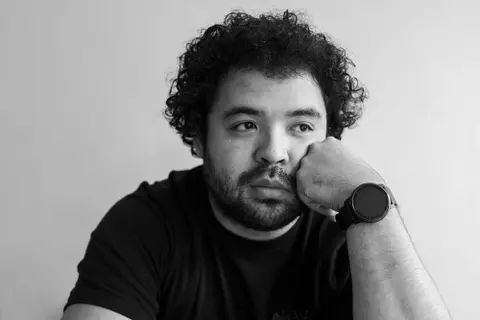
Adriano Kalin is a disabled documentary photographer specializing in social justice. He draws on his experience as an Afro-Indigenous Brazilian adoptee, with dual U.S. and Brazilian citizenship, to examine race, identity and oppression within the United States. Adriano’s current work is dedicated to documenting ICE abuses and atrocities in cities across the United States. Adriano graduated with a BFA from the School of the Art Institute of Chicago and lives in Chicago with his wife and three cats.
Get full access to Bánh Mì Bites at randykim.substack.com/subscribe
0:04 Hey everyone, so welcome to the Bunmi Chronicles Podcast. My name is Randy Kim and today, well, we are wearing the same shirts. I swear to God, we did not plan this, but also solidarity. And I am here Bánh Bánh Bánh whose work I've been following and Adriano has been doing a lot of amazing work and really documenting this. So to give you a background of who he is, Adriano Kalin is a disabled documentary photographer specializing in social justice.
0:52 He draws on his experience as an Afro-Indigenous Brazilian adoptee with dual U.S. and Brazilian citizenship to examine race, identity, and oppression within the U.S. Adriano's current work is dedicated to documenting ICE abuses and atrocities in cities across the U.S. Adriano graduated with a BFA from the School of the Art Institute of Chicago and lives in Chicago with his wife and three cats. First of all, thank you so much for, you know, being on my show. And I know that you've been, you know, not only documenting the work in Chicago, but you've been going from different states, namely in Minnesota to what was happening over there. And, you know, you've been documenting these ICE raids.
1:35 You've been also, you know, Brian Kim banhmibites Bánh bánh bánh bánh bánh bánh bánh bánh bánh bánh bánh bánh bánh bánh bánh bánh bánh bánh bánh bánh bánh bánh bánh bánh bánh bánh bánh bánh bánh bánh bánh bánh bánh bánh bánh bánh bánh bánh bánh bánh bánh bánh bánh bánh bánh bánh bánh bánh bánh bánh bánh bánh bánh bánh bánh bánh bánh bánh bánh bánh bánh bánh bánh bánh bánh bánh bánh bánh bánh bánh bánh bánh bánh bánh bánh bánh bánh bánh bánh bánh bánh bánh bánh bánh bánh bánh bánh bánh bánh bánh bánh bánh bánh bánh bánh bánh bánh bánh bánh bánh bánh bánh bánh bánh bánh bánh bánh bánh bánh I don't know how I'm feeling if I'm being completely honest. I think this is going to be something that we look back on of like, you know, I wish I should have done this, I should have done that.
2:19 When is enough being enough? But I'm doing okay. I think I'm with most Americans here as well as internationally abroad that just hoping to wake up for some good news, whether it's just a feel good story, whether it's just some sort of hope. But yeah, it's just, you know, I asked my mom this when I was with her the other day, and I was like, did you ever see me doing this work? And she was like, no, I know you wanted to help people, but I didn't see this track for you following school. But, you know, you just got to take it one day at a time because if you try to look too much in advance, I find I just get too overwhelmed.
3:04 Yeah. yeah and prior to these raids what has your photography work documented what stories does it tell through your lens and the people that you are documenting yeah so um so I think it's also really important to have like a ground basis of like the difference between like photojournalism and documentary photography because a lot of people especially not in this field aren't aware of the difference so photojournalism as it's a very Bánh Bánh A different basis.
3:48 So you don't really stick to one theme. Documented photographers may stay on a theme for a week, a month, years, decades. They really kind of work on a whole thesis. of what their work wants to do. So my work as a documented photographer is not just immigration, but civil rights, human rights, gentrification, redlining, really giving voice to a marginalized community. Because especially in the photography world, photography as its own art medium is It's an expensive medium. Let's just call it what it is.
4:29 Yes, granted, everyone has cell phones these days, but even a good cell phone, you're looking at, what, $500 to $1,000 on a good day? This barrier of accessibility that photography lends itself to. And no fault to its own, it's just the technology, especially with the materials, the tariffs, you know, et cetera, that, you know, to get into this field, it's gatekeep by wealth. Mm-hmm. So really, at least from my standpoint, I think it's really important that immigrants, which I am an immigrant by its very definition, are also able to tell their own story, not have the story told for us.
5:12 That is always something that from a photojournalism standpoint, you have these situations where people will document what's happening, but then not really be understanding the actual ground roots of how it got there in the first place. I really appreciate you being able to draw on that experience. And, you know, when the ice raves began to happen, what was the process in which you were about to go into this work, which obviously When there's chaos that was happening during that time, what did that look like for you in preparation and having to navigate?
5:54 Because I know that you've, I know you've done a lot of documentation, like with the Gaza protests or with other social events or with, you know, historical political events that are very charged. And what was that? What was the process like in trying to get that together? Yeah, so that's a really good question. So the first protest that I ever went to as far as documenting was after October in 2023 regarding the Gaza Strip and what was happening there. which I would you know go down to the loop which that's the downtown area of Chicago document and that was when I was just graduating getting my BFA in school so I was kind of mixing what I was seeing in real world with also making like a thesis for school so I was getting critiqued by professors at SASC so the fact that you know I was kind of being guided of like all right this is what you need to look for this is what you need to do yada yada yada But as things started escalating, especially when Trump won the presidency, that's when things really shifted.
7:07 And what I mean by that is that under the Biden administration, there was always an understanding that, all right, you can have your First Amendment right, you know, things might escalate, but there was some sort of Dequorum between, you know, protesters, the police. Yes. Can things get out of hand? Of course. Um, but under this administration, specifically when I started documenting at Broadview, that's when the shift really started happening. So I started documenting in Broadview, um, roughly of June slash May of 2024. Um, and at that point, um, The this was even before the Broadview building was even boarded up.
7:54 This was before the gate was up. This was really where you could literally be right in front of the building. So this Kristi Noem was at that time was the Secretary of Homeland Security at that point. And then once Greg Bovino came into Can you hear my cats, by the way? Oh, no. Oh, okay. So once Greg Bovino came in and there was really this theater of, hey, we are going to make pretty much a mockery of Chicago. Bánh Bánh Bánh Bánh Bánh Bánh or hopefully get there in time but there was a sheer escalation where just everything seemed to be performative so yeah I you know think back to that time and how chaotic it was and how little it spread to the rest of the U.S.
9:19 because there were a lot of people that were not aware of what was going on in Chicago at that time and you know people weren't talking enough about black children getting detained in the early hours of the morning you know like And having like and having like different kinds of very violent escalations that were that would be something that would be immediate breaking news, but didn't turn out that way. And I wonder about your responsibility, not only having to prepare for that, but what was Your own interactions like with ICE and Border Patrol law and local law enforcement when you were documenting these because I know that oftentimes media is generally a big target as we saw what happened with Gaza and how many press journalists were getting killed daily on a daily and.
10:14 And what was going on in Russia where a lot of, you know, the journalism was getting shunned out. So I wonder about what did the safety really look like for you in having to be out there and then also witnessing community members getting attacked and getting arrested. Yeah, I will say this is going to sound like almost an oxymoron, which is going to surprise a lot of people. This is me by no means defending Greg Bovino. Let me make this perfectly clear. But there were times when I would be literally six feet to three feet away from him. Like we could have pumped hands if we wanted to. We did not, just to be clear. But, you know, he would look at me. I would look at him because I'm obviously documenting.
10:55 And I could see him just seething of like... this brown man is taking my fucking photo um you can feel the hate of other ICE agents that look right at you but what I'm saying is the fact that when I was marked as press I never felt as safe to document ICE if I was marked as press where if I was going to the pharmacy or I was going to um or driving through traffic and I wasn't marked and had been like oh brown man in the car let me detain him um there was and I think it was very much a decision on Greg Bovino this is just my personal um opinion I think it was very much on Greg Bovino's benefit that he wanted everything documented um that he wanted that performance the tear gas the the flash bangs the the he wanted that theater um where you know other instances where I've been very close proximity of ICE I do have more fear because of the fact that you know there are times where they are detaining press um but there is um I don't know there's this weird feeling okay like I don't know if you remember when Governor Pritzker pretty much made a kind of directive to the community of saying hey can you please document ICE and we're gonna we're going to make sure
12:26 Bánh Bánh Bánh Bánh Bánh Bites Bites Bites But, you know, the, even with what's happening in Delaney Hall, Delaney Hall being in Newark, New Jersey, in Essex County, under Mikey Sherrill, sorry, Shirley.
13:23 I was seeing the exact same government taxed tactics that ICE was using than the state police were using. And I feel like a lot of people here who are not in these spaces, oh, ICE and Border Patrol are harassing or tear gassing or whatever verb you want to use or adjective. There's this understanding that the state and the city from a lot of Americans think that they do the correct job and then ICE and Border Patrol are the ones manufacturing the crisis and I will be the first one to tell you that is false um the state and local officials make it so the fact that ICE and Border Patrol can um exhibit their authority however Bánh Bánh Bánh Bánh Bánh Bánh Bánh Bánh Bánh Bánh Bánh Bánh Bánh Bánh Bánh Bánh Bánh Bánh Bánh Bánh Bánh And, you know, the more you do this work, you never want to become immune to it because I think that's also really dangerous in its own nature.
14:51 But the thing about documenting ICE and Border Patrol is there's no rules. You could just look at them wrong. You could just stand a little bit too close. There's no, like when we think about law and order, we think about our constitutional right to protest. There is, you know, in Chicago, at least from what I've noticed, it has been some of the most organized protesting in the sense from local officials to the police to the community, etc. And like, even for example, in Newark, I asked the state police and the Newark police and the Essex County, so A lot of people unaware of this.
15:36 There should be a police liaison. There should be a police liaison from the police to the protesters. So the fact that if the police have an order, there's a liaison, you know, communicating the directions to the protesters and vice versa. So there's that kind of like in between middleman. So the fact that, you know, things go smoothly. And Chicago, from what I've seen under Mayor Brandon Johnson, has done a very good job with this, where they have community liaisons to the fact that things don't get out of hand, and they're trained to not escalate. Newark was so Egregiously bad to the point where they were even trying to prohibit people, press included, that we couldn't have masks.
16:20 And when masks are included, they're talking about respirator masks. They're talking about goggles. they were talking about safety any safety PPE which is personal protective equipment also backpacks so they were and we press was even like hey how can we do our job if we can't bring a backpack and we're like we'll even voluntarily let you look through our backpacks kind of like you would at a security checkpoint and they were like no these are orders we kept asking who the orders from they wouldn't tell us I mean this is where we are mm-hmm Oh, there's a lot done back there. No, no, there is because I'm just trying to process this information too. And when you like observe community members, the protesters, especially like in your neighborhood or like in other parts of the Chicago neighborhood.
17:09 What is it like to try to document what's going on with the protesters who are being attacked or being confronted, but also trying to preserve their safety? Because we do live in a very highly surveillance state, especially with GPS, with AI and surveillance cameras everywhere you go. So I wonder about what does it mean in the ethical standpoint when you're trying to, you know, document protests and and confrontations and escalations that are happening and how do you also preserve the agency of those who didn't consent nor necessary consent to being documented. That's a great question.
17:52 First, I will say there has been a significant escalation of surveillance at protests. I'm starting to see more drones. I'm starting to see more flock cameras, flock cameras for the people who aren't aware of. They kind of look like a camera that's on top of a pole that's pretty much hooked up to a box that, you know, it doesn't say flock on it, but it will say like, Newark police surveillance, you're under surveillance, etc. We certainly live in a world where AI has been escalating, especially Palantir. But I want to bring up context to this photograph here. This is a photograph that I took. It was in October, but it was one of the months following October after what happened in Gaza.
18:38 And what is still happening Gaza that's not past tense it is still happening to this day um but if you are a photographer there are ways to document atrocities document people's voices without showing their faces so this is a mom with her daughter and I was very conscious of like I want to document this because I think it's important to be shown but you understand what is happening the the daughter's holding um the mother's like shoulder if you will almost near the um uh and you know there's this emotional standpoint and what I try to do and this is also a thing where I don't sell my photographs to the LA Times to the New York Times to whoever because I worry about my work being weaponized against the community that I'm trying to represent so this is very much a choice um but if you look at my photography number one I do a lot of black and white um Number two is I try to use the silhouette of people as a way to represent their themselves without being surveilled if you will I'm very I do my best to very intentionalize the composition of the photograph so the fact that there is some protection there are some photographs where I have to show the person who that's happening to just because either that's
20:11 the position I'm in I think it may be very important for their story to be shown but also and this might be you know people may agree or disagree about it but If you give, because a lot of people aren't aware of that, especially outside of ICE facilities, there is a videographer who works for ICE. You'll see him with a little ICE vest. He'll have a gimbal. A gimbal is kind of like the little stick that holds the camera to make it so the fact that it doesn't bounce everywhere. They are videoing you. And if you only let one side of the story be told, you will be villainized. It's just the nature of things, especially through this administration.
20:53 So I think there also is a real strong context of showing the other end of the spectrum. Like, for example, the journalists who... was had their both of their feet ran over outside Delaney Hall I was I don't know I was 20 feet away give or take but I took photos when they were getting bandaged bandaged up by street medics and like that evidence potentially could be used in court there are real I think there is a real stigma towards photography as a medium of like you know the peeping Tom the photography has and rightfully so We should be nervous of photography.
21:34 It can be used against you. It can be used for you. It just depends of who has it. But at this rate, what I will tell people is that every protest is surveilled. Every protest, there are agents within the crowd. There are plain, what I mean by agents in the crowd, there are plainclothes agents. There are agents that obviously you'll see where you'll see like CPD or whatever. But I think I'm doing the community a service if I'm trying to share their story, because a lot of these people who are at these protests want to be heard. If you want the masses to know about what's happening by its very definition, it needs to be filmed.
22:17 It needs to be photographed because you're going to have other people on the other spectrum saying, oh, this is fake news. This is, you know, but I think also Are we willing to learn from our mistakes? And the way I look at it is my photographs are for just, you know, hey, let me get, you know, 500 likes on Instagram. I don't really give a shit about that, if I'm being honest. What I care about, can we educate the next generation of what has happened? And I think that a lot of people aren't aware of and a lot of people don't think of is every A history book that we've ever looked at you know from the 1900s on you know you'll see the black and white photography and not once in any of my history class or even an art school has the conversation ever came up of was the person taking that photograph scared the only thing we ever care about is the evidence of what happened historically And what really opened my eyes to the importance of should I document this or not is that a lot of people aren't aware of this but after Vietnam Vietnam was the last war that was fully photographed where they actually had people from the US military documenting you had people from Life Magazine you know from Vogue you know from all these establishments to document what was happening
23:48 that changed the perception of war when they saw the atrocities that were happening in Vietnam thousands of miles away the Pentagon then realized oh shit we need to censor the what's coming out and Eli Massacre was a good example of that too that's something I think about all the time or the napalm you know of the naked girl running away you know that was very life-changing or what happened with you know I mean I'm also Vietnamese as well and and and uh and I can't remember the monk's name but obviously yes the self-immolated yes a I can see the photograph and I can't think of the photographer and I can't think of the monk's name because it was absolutely by chance that that photograph was ever taken because he wasn't supposed to have his camera with him in the first place Yeah.
24:59 And especially now with AI, it's even more important that there's clear definitive proof this is what's happening because as we can see with this administration or, and not just this administration, but just governments in general, they will dispute everything. Bánh Bánh Bánh Bánh Bánh Bánh I neglect 90% of the story. It's not because I want to. It's because I can only be one place at once.
25:40 Someone getting a different photograph from a complete 360 degree turnaround or 180 degree, they're going to get a complete different photograph and that might tell a different story. The more people documenting what's happening is better evidence to refute the propaganda that these people are terrorists or these people are the... Just bottom line, these people just want to be heard and want their neighbors to be seen and valued. Yeah. And you also went to Minneapolis to document what was happening there earlier this year. What similarities or differences did you notice from the community and the way ICE and federal local agents have been reacting towards community members versus what you experienced in Chicago?
26:26 Yeah. Number one, I will say the people from Minnesota are a different breed and I say that in the best respect. It was so cold. And I don't think people realize how cold it was in like December, January, February. I mean, we're talking about negative 40 with windchill. This is not, you know, 32 degrees. It got to the point where my camera literally broke because the fact that the the motors in the camera froze. But what I will say is it didn't matter if it was negative 40, if it was negative 10, they were out there.
27:10 protesting every day outside of Whipple Whipple is their version of Broadview a lot of also I will say between St. Paul Minneapolis and Chicago There's definitely similarities and there's definitely some differences. The similarities is the fact that the neighborhoods acted very much similar to the way Chicago kind of laid that blueprint out where we had the whistles, where we had first responders, where we had the signal chats, you know, go down the plethora of resources that the community came together. We saw that exact same thing in in Minneapolis.
27:55 But the one thing that was very much similar was also that Tim Walts being the governor of Minnesota and Governor Pritzker being the governor of Illinois, they both said very much similar things, but then the The State Police, which is the Minnesota State Patrol and the Illinois State Police, were acting in defense of ICE. And what I mean by that, they made it so the fact that ICE agents could go in and out of the facility unopposed. So by its very definition, they made an assembly line for terror. And I want to be very clear on that.
28:35 because when ICE originally came into Chicago and when I say in Chicago but in Chicagoland and then also in the Broadview Center that was when you know the press as well as journalists as well as protesters were getting tear gas as well as clergy a lot of people were very much willing to get hurt So the fact that they were using more resources away from the neighborhoods. People were willing to go and be like, listen, shoot me as long as you're not hurting my neighbor. And that's something that I think gets overlooked. And then when the state was like, all right, there's too much chaos. There's too much. This is not looking good on our part.
29:17 They made it so the fact that ICE could go in and out. We had no idea who was being taken. We didn't know the license plates. We didn't know... any of this information and but and I but I think that a lot of people are so unaware of that it is so hard it's very easy to document outside the facilities it's it's not hard because it's one place it is unbelievably hard as a photographer to document ice in action mm-hmm As you well know Chicago takes if you want to go from one neighborhood to another it might be five minutes it might be a half an hour you don't know and it's the Chicago being 77 different neighborhoods it is very hard to document what is happening in real time that's why you don't see as many professional photos of of ICE detaining people like in out in the neighborhoods you see it mostly outside the facility because that's where it's easier to do it um but I have the most respect for the neighbors of you know whether it's Los Angeles whether it's New York New Jersey Memphis Minneapolis Chicago New Orleans and I'm sure I'm missing other metropolitan areas um but realizing the fact that we're all going through the same thing is it makes you feel less alone but also it's horrifying yeah
30:54 and I think one of the things that we were talking about before I hit record is that you were also traveling from state to state and you were also trying to keep an eye on what was going on from a more X urban rural area small towns that obviously are not getting the kind of traction that say a Minneapolis or North or Charlotte was getting or Chicago was getting so what was your experience and you know going to like between states and different towns like in Wisconsin or whether it's in North Dakota or what have you yeah so one thing I think is really important so I was with two other photographers. Ken Cook Jr. who's a phenomenal photographer in his own right.
31:35 He does a lot of work in the west side of Chicago. And Dylan Yarborough who does great work as well. And we did a road trip from Chicago all the way to New Orleans which is pretty much down I-55 for those of you not in the Chicago area. but we went through you know we went to Missouri we went to Mississippi Louisiana Arkansas Tennessee and obviously Illinois and what was shocking to me I didn't see one Trump sign not one not one the only place I've ever seen Trump um Like Trump Signs were rural Wisconsin When I was going for Minnesota I've seen it in Northwest I've definitely seen some in Northwest Indiana Didn't see any And we took some of the Sometimes we were on the interstate Sometimes we went the back roads But we really noticed a huge difference In just the political climate But It is such a weird feeling Because If you look at a map of the United States, the United States is gargantuan.
32:49 It's huge. But these instances where immigrants or protesters or citizens are now being abducted They're happening in pockets. You can be in a small town 20 miles outside of Chicago and you'll never know any of this is even happening. And I think that's also one of the scariest things about this is the fact that unless you're adjacent to it, you don't know. And even people in this political space had no idea of the magnitude of what was happening in Delaney Hall. So with what we're seeing is the fact that even, and I guess this is a great example, but in Memphis, Memphis doesn't have that 237G agreement which is pretty much making it so the fact that local and state can work with ICE so pretty much in Tennessee they can work with ICE and what that looks like is you have ICE literally riding shotgun in traffic stops with local or state officials so they'll pull over a black or brown person The cop will get out.
33:54 They'll see that it's a brown or black person. The ICE agent will get out and they'll make sure that they're not an immigrant. And if they are, you know, you can guess what happens. They get detained. It becomes this spectacle. But I think it's also really important as a photographer to, I mean, just not even just as a photographer, just as a human being to remember what we're fighting for in the first place. So when I'm doing these trips, when I'm, a lot of people are like, why are you driving 13 hours, you know, across the country? I think it's important to not get overwhelmed with what is happening. Sometimes I'll take the back roads and just take photos of something that's beautiful. You need to do it for your own mental health.
34:37 I'm not immune to the trauma, especially being this. I'm very much aware that I'm putting myself at risk, but I can't What was the point of me getting an art degree and not doing anything with it that will help others? Why should I, if I was detained, why should I expect other people to help me if I'm not willing to help them? I think that is one thing that we are really seeing. I mean, similar to when we're hearing about different town halls in Idaho, Montana, Wyoming, where there are very small ice incidents that are happening.
35:25 And people are pushing back against AI People are pushing back against these town halls To the point where the executive branch And the legislative branch were like Hey Republicans stop doing town halls That's where we are I don't know if you noticed that But there's no data centers Signs in a lot of the rural communities I've been seeing When I would be driving And that's very telling too To see where their voices are at With this Yeah, so I just, I think, I don't know, it's very weird because like, you know, I'll go to different pockets of the country and then I, you know, check in with my wife of like, hey, I'm alive, I'm safe.
36:10 And there's times on Threads, which is like a meta platform, which I will literally say out loud, because I have quite the following, I'll say, hey, if you don't hear from me by 1am, there's something wrong. So, like, I'm being detained, I'm being illegally searched, whatever it may be, just because a lot of people think that, you know, if you're doing it the right way, you'll be fine. That's not what's happening. And has that ever happened to you where you were, like, where people haven't heard from you for, like, a couple of days? And, yeah, I'm curious about that. Yeah, so far, no. The one situation that did happen in...
36:50 Delaney Hall and I think it's either June 1st or May 31st it was either the second or third day I was there when the curfew was still up at 9 p.m. there was a point where the medics were like we need to leave excuse me they're going to arrest everyone um this is not safe they have horses they're going to beat the shit out of you pretty much uh and I called my parents and I was just like hey are you okay with me getting arrested what do you think I should do because again I am a U.S. naturalized citizen I'm at more risk of you know whatever this administration wants to do just for using my voice um and my parents are like you know I don't think this is worth you getting arrested um and I went with what my parents said and I I have regrets of not being there but also they could use just a traffic stop as a reason to be like oh you should be denaturalized because that is a very much a thing that's happening right now is denaturalization from a push from the Department of Justice so whether it's under Mark Wayne Mullen or Chrissy Nome which are the Department of Homeland Security predecessor it's there hasn't been a situation where I've ever thought I was going to get detained I've thought more I'm probably going to get hurt rather than get detained just from the odds of a projectile coming at me which in
38:21 I don't know a foot two feet away from me and I and I went where we are with this is like the Human Rights Watch or the Freedom Press Foundation has contacted me and other journalists of like this needs to be documented what happened, you know, etc. Like this is where we are. You mentioned about living with disabilities and how it impacts the work that you do in your interactions with people. So what does being a disabled immigrant documentary photographer mean to you in the world that we live in? Sure.
39:01 Well, I will say, we've heard this term invisible disability, or some people have. A lot of people think if you're disabled, you know, you have to have the conventional ideas of like, you know, you're in a wheelchair, Bánh bánh bánh bánh bánh bánh bánh bánh bánh bánh bánh bánh bánh bánh bánh bánh bánh bánh bánh bánh bánh bánh bánh bánh bánh bánh bánh bánh bánh bánh bánh bánh bánh bánh bánh bánh bánh bánh bánh bánh bánh bánh bánh bánh bánh bánh bánh bánh bánh bánh I also have, this is going to sound weird, but I have a spinal cord stimulator. So I have a computer underneath my skin, and then wires that go up my spinal column that help with pain signals.
39:44 I also have, um, another device here. So I have like almost two pacemakers under my skin. Uh, so like if I'm getting tasered or if I'm getting, you know, beaten, um, that is a significant health, uh, issue. Um, also I suffer from executive functioning, uh, with my traumatic brain injury. So like sometimes I struggle with, um, directions or I get overloaded. Um, but, uh, I've been thinking about this a lot that disability and rights and protesting never come in conversation with each other um we do we did see some protesting um from disability advocates like at the Capitol um like I don't know if you remember this on the Capitol steps I don't remember when this happened I think it was like two three years ago when they were trying to um revoke healthcare rights um but there's a very rare discussion of disability and actual protesting um like for example if you are deaf or you're hard of hearing there's never any um interpreter for the police or for protesters of like you know using sign language as a way you communicate um your disability never comes into um Brian C. Consideration.
41:12 Brian C. Consideration, thank you. Brian C. It's a very ableist view that pretty much means the fact that if you are able to go to a protest, you're fine. Brian C. Yeah. Brian C. Sorry. Brian C. Oh, no, go ahead, go ahead. Brian C. The one last thing I was going to say about this was when I made that comment about the mask and respirators that happened, there was another journalist adjacent to me who who was asthmatic and she was like I need to have a respirator and they were like well you shouldn't need a respirator if you behave I'm like she's like that's not my call I'm a journalist I'm not protesting I'm simply there to document what is happening and I need to be able to do it safely and they were like and she even asked I'm like do you guys have an ambulance do you have EMTs like if god forbid I go into like a respirator or sorry cardiac arrest for example And it's always like just an afterthought of that.
42:13 I mean, we still don't know about what this damage of these tear gas, these chemicals are going to do to us. I mean, sure, could I develop cancer at the age of 45? Sure. And a lot of people also aren't aware of that. Under the Geneva Convention, in 1993, there was a chemical weapons ban. Tear gas is chemically banned in war, but can be used domestically by local and state police as well as federal for crime. Bánh Bánh Bánh Bánh Bánh Bánh Bánh You should be able to use your voice, whether it's a calm protest with 20 people there, you know, singing kumbaya and doing their thing, or if it's at a very stressful, you should be able to exercise your voice.
43:10 It shouldn't be tethered to whether you can walk, whether you can listen, whether you can, you know, that's very discriminatory by its very practice. You know, it's interesting because like in the social justice movement and movement work, disability can get discussed, but it is never really enforced. It's never practiced. It's never really centering those who are the most marginalized, but also with those with intersecting identities on top of disability too. And I think that that what I Do See That Really Needs To Happen Is How Can Movement Work be not only inclusive, but also to ensure the safety, to make sure that there are considerations being made, especially for those who are immobile, who are hard of hearing, deaf, blind, low vision.
44:12 What does that look like? How can we best accommodate? Because when they're joining with people in protest, oftentimes they are the most, facing the consequences because of the limitations that they have to deal with and also because the way the state runs it I'm going to be very blunt here is that they're easy targets yeah and so it's like this is something that we do see again so what what would be the best way or if you ever had to advise like um and movement groups and community leaders. What would need to happen in order for disabled folks to feel safe and to feel like they can be seen and heard in this time?
45:02 Yeah, I think that's a really great question. I don't know if I have the 100% answer, but I can tell you from a very simple thing that Congress or whatever, is I think a lot of what makes people nervous in what is happening is there's no clear answers. From my understanding, yes, you can have your passport or your passport ID card or like, you know, your green card or whatever. The DHS has never from a congressional Senate hearing ever said hey this is to be clear this is what we will find acceptable documentation um and when I'm where I'm going with this I think what would make the community you know feel safer for people with disabilities or people with um or even able bodies is that if there was a clear directive from Todd Holman Todd Holman's the um the borders are under the Department of Homeland Security of kind of laying out the groundwork of like this is what we will consider okay this is what we consider not okay and also it shouldn't matter up to them and I'm not saying it should but what I'm saying is that I think it would alleviate a lot of people's anxiety and I think that there needs to be
46:38 Um Accountability Um And not just on the protesters being oh you're a pack you're terrorists you're gonna get jailed for x amount of time I think people for them to start feeling better about going to these protesters just in general is that hey they're gonna be just as accountable as we are it has to be a two-way street um it can't just be like oh well we're gonna imprison everyone who opposes us and we're gonna do whatever the fuck we want um But I think there needs to be a clear hierarchy from ICE, from Border Patrol, from state, from local of like, this is the commanding officer. If you have any concerns, this is someone who you can speak to.
47:26 No questions asked. There needs to be some way of doing this safely and obviously there are also is other standpoint of like well peaceful protests don't work and we've heard that argument and then but there needs to be significantly more resources uh whether that's like the National Lawyers Guild um so the fact that people feel like they're actually being represented um I think the state should be offering free legal services for people exercising their constitutional rights because it it shouldn't the burden is already on the protester of fear, of trauma.
48:08 The last thing that should be on the burden of them is the medical bills and the legal services that will come along with it. So I think that if these states are very much serious about, hey, this is not okay, then the state needs to shell out resources of actually helping. How do you navigate Those traumas that you accumulate that that have built up over time and still be able to continue to do this work and try to go back to it the next day. I mean, I don't think that there is a good answer to that. But yeah, For me, I game. I video game. I zone myself out. I game. I'll read.
48:48 I'll watch. One of my guilty pleasures is like, not rom-coms, but like reality TV show like Love Island. Like completely mindless. I'm a 2000s DH1 reality TV. No I don't think so I don't think Viacom VH1MTV I don't know where they are these days I think they're kind of in the sunsetting stage but my god those were the days But yeah, I'll just do that. I'll take walks and obviously I'll do a lot of street photography. So I'm doing photography.
49:29 I'll go to basketball courts and take photos of kids or adults playing basketball. You have to have an escape. You cannot do this 24-7. It is... And like there's times where I'll like like here's an example I'll go to a different area of the country I'll be there for a week week and a half I'll get home I won't do anything for a week Um I mean I'll hang out with my wife I'll um I also I will say this I'm also in marriage counseling I'm in therapy you have to be in therapy to do this work um so the fact that my wife and I have you know a common um way to communicate about this because it's not just the stress on me it's the stress on my family my friends my wife um um But yeah, I'll video game.
50:17 I'll game. It's much easier to do this in the summer. I will say that. Winter is hard. It's miserable, the winter. You don't want to do anything. You just want to sleep. Yeah like I mean what I would do I mean obviously my line of work is very different than yours but like when the ice raves were happening I was like I gotta do this because I was just coming into the podcast I was being away for a while I was like if I don't do it my nervous system is going to shoot up and I need to feel that there's hope I like to see what people are doing so that way like the narrative of us is like we never surrendered we are fighting back and we're protecting community members but I think that there were I think that it was also around the time that I was like you know what I am going to be touching grass if I'm going to be online for a while doing scrolling or being recording episodes like I usually will take two or three hours in science be in silence and and I learned that that has been very helpful or I listen to a lot of podcasts that are just kind of like fun I will listen to like nerdy stuff and actually I think one of the things I've been kind of introducing is like okay well let me just bring it and You know let me talk about some of the more funner things that I don't get to talk about because I think that there's a responsibility to keep myself sane to keep this thing going but at the same time I also don't want to feel like I'm losing listeners completely because I want them to understand that.
51:36 That yes, there's going to be some joy, but there's also like, I still need you to know what's going on. We can't afford to have you tune out. And I think that's also something I think you and I are kind of balancing. It's like, how can I also make my photography a place of joy instead of always being triggered by it constantly? You know, when you look at those photographs, I'm sure that you've taken a protest at Delaney Hall or Gaza protests or what was going on with the National Convention and... Obviously this Trump 2.0 administration. Yeah. What keeps you very hopeful? Like what are the things that you see that makes you feel very encouraged through the work that you're doing?
52:17 Well, I will say this, and this is more of what is happening now, like with the World Cup The World Cup is really, it's a political thing in its own right But it also makes me remember that a lot of the feuds our countries have is not with each other It's with our politicians, our state representatives, our governments But very much the people don't give a shit And I think we are seeing that of like that propaganda kind of breaking down of like, you know, you're seeing these TikTok videos of like, you know, a Brit who's in the United States and be like, oh, you guys are awesome. I understand why it's so hard, why you guys don't have as many passports is because the US is ginormous.
52:59 There's 50 countries practically in one. But what gives me hope is I will say there's so much so much trauma you can document to the point where you're most repulsed by it I've been noticing that lately my composition has been changing where I try to photograph some of the most quiet moments that don't seem exciting but might be sometimes the loudest but what I tell myself is and I've said this before is that after like the Catholic inquisition for example um where you know you have a pendulum that right now is swinging right it will always swing back it may be tomorrow it may be next year maybe decade from now I don't know um and if anyone says otherwise they're lying we don't know um Yeah, the Zoran Mondani effect in New York has also taken place.
54:10 So it's like, yeah, there are certain pendulums that are swinging too. It's like, okay, it's not static, you know, just because we have a right fascist government doesn't mean it stays that way. I hope it swings very quickly. But yeah, it's not sustainable. And I think if I was to give President Trump some advice, um I think the what the policies that him Stephen Miller you know etc I think they push too hard too quickly um granted they put this all in project 2025 but you can do all this shit through legislation doesn't mean the people are going to follow you and I think they did too much too fast especially now the fact that with Medicaid Medicare with um Trump just stopped a signing of a bipartisan bill to push through the SAVE Act Having warned what I ran Yeah, yeah, and then tariffs and it just this and it's just like I think people are getting really like even people who are not political are getting really sick of the bullshit I shouldn't know this much about like what is happening but I think but also there is a lot of people now getting involved politically um whether that's you know at the grand scale or even just like community um like okay here here's a great example for Hope Chicago when we were having Midway Operation uh Operation Midway Blitz
55:47 in Rogers Park Rachel and I just moved to Rogers Park um my wife is Rachel by the way um We moved here about a year and a half ago. For the first couple months, we didn't really know anyone because we came from Pilsen. And when Operation Midway Bliss came, we met so many neighbors. It was like Pokemon Go all over the time of 2016. I remember being in Rogers Park and I remember being in Rogers Park Beach and everyone was quietly looking at their Pokemon. I'm the only one that wasn't getting into it because I was like, this is really weird. but it's it's that's like one of the best things that has came out of this is that people are willing to stand up for me and not just for me but for my neighbors people and I mean this with 100% like people will die for their neighbor and I think that scares this administration and I think that there is a ton of hope.
56:58 People want to know what is happening. People want to know that people aren't going to be ridiculed for their faith, for their skin color, for their accessibility, for whatever demographic that you want to pick. I think that it has given me hope that Americans are not okay with what are what's happening I just think that what is collectively happening is people don't know what to do it's a very very um it's a very poignant point there and also uh where can people follow your work and anything that you're kind of doing for the rest of this year Yeah, so there's two avenues.
57:43 I have a substack. It's called the People's Aperture. So as kind of a journalist, as a photographer, I create photo essays. So each essay will have, I don't know, five to 25 photos, give or take. And then there'll be kind of an op-ed piece. These are all opinion pieces of what I'm exactly seeing on the ground. So I can use my own words to articulate what is happening. And then also on Instagram, our threads, our blue sky, it's Adriano, A-D-R-I-A-N-O, and then underscore, and then Kalin, K-A-L-I-N Last question, so since you were taking photos of Greg Bovino, are you taller than him?
58:26 No, I would say, I mean, I'm 5'6", I'm not tall. I think... I feel like everyone's taller than him, that's why. Yeah, yeah. I think he and I are probably, if we were back to back, I think we'd be very similar heights. The issue, I just don't have, you know, 5 to 25 men or women protecting me at all. But I will say... Go like whoever's watching this go to a protest there's always their protests have a have a um a kind of a scale of a moving scale of like there's some protests you I mean there might be five people there you're fine um the more people obviously more things can go wrong um and always you know always be careful um but I think that some of this stuff you need to observe yourself uh as a photographer as a videographer as anyone documenting this um it is a very different experience of seeing it in real life um and like for example I'm going to a protest and um I think it's Saturday in Grand Rapids, Michigan, which is going to be an armed protest.
59:49 That might not be the first protest I would advise someone to go to if it's their first time, but safety is everything. Be smart and just know that this is hard, but you have to ask yourself, are you The adult that you were looking up to as a child. And are you, if you have children, you have grandchildren, you have a neighbor who's a young child, in a couple of years when this all passes, because this inevitably will, can you definitively say, I did something?
1:00:34 It can't always be up to the next person because of that mentality, everything will fall. Absolutely and I want to say thank you so much for your time I'm so honored to have you on I've been obviously a fan of your work and and also seeing how important your documenting has been to a lot of our communities you're sharing the voices of our communities whose voices need to be amplified and to be elevated and so I really appreciate what you've been doing and thank you for representing Chicago and and doing this In this very necessary work and I hope that you do take great care of yourself and I hope that people who are listening take care of themselves.
1:01:15 I know that we talked a lot about the traumas and the very dark things that have happened under this administration, but I do hope that that listening to this will help to get some ideas and to think of ways where you could protect yourself, but also your neighbors. And I think that is a takeaway from all of this. So really, thank you so much from the bottom of my heart, Adriano. Thank you for having me and and I will say if anyone doesn't feel comfortable going to protest or just in general. Just make sure you're registered to vote. Make sure your peers are registered to vote. Read as much as you can.
1:01:56 Find out what what books are banned. Read them. Yeah, and also donate to grassroots organizations, volunteer your time. You know, do some safety or, you know, do some escorts, you know, for immigrant neighbors that are afraid to go to the grocery store to the doctor, you know, so there are many infinite ways. So, yeah, there is a great. In Memphis, there was a thing called the Immigration Pantry, which ended up, you know, getting local supplies, food, medicine, you know, etc, for community members who felt unsafe of going throughout the community. So there are, as I said, there's a moving scale and just know that just because your reality seems fine doesn't mean someone else's isn't.
1:02:44 Absolutely, absolutely. Thank you so much and I hope that you have a very safe summer. Thank you.
