Decolonizing AAPI Health: Reversing Diabetes and Hypertension Beyond the Western Lens

 Apple Podcasts

 Spotify

 Amazon Music

 Overcast

 Castro

 iHeartRadio

 PocketCasts

 Podchaser

 RSS Feed
Happy AAPI Heritage Month!
Everyday health advice is often written through a Western lens, but when it comes to chronic health risks, a one-size-fits-all approach is leaving AAPI communities behind and disregarding other key factors.
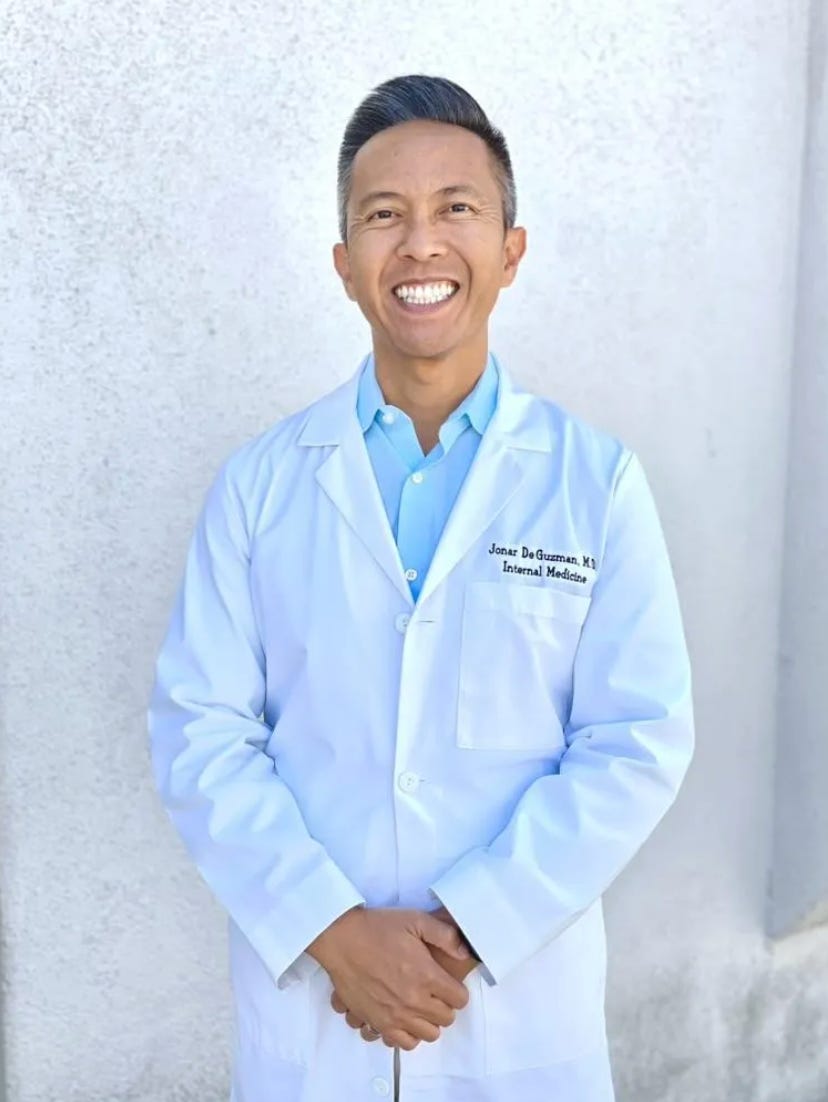
In this episode, I sit down with Dr. Jonar de Guzman, MD, to discuss the unique, often hidden metabolic and systemic health risks facing Asian American and Pacific Islander populations. Issues raised included the social determinants of health, such as food deserts, intergenerational trauma, language, and access to resources. We break down why standard medical benchmarks frequently miss the early warning signs of insulin resistance in AAPI bodies, and explore how we can advocate for our well-being without losing our cultural connection to food, family, and community.
What We Discuss in This Episode:
* The Hidden Risks: Why chronic conditions like diabetes, insulin resistance, and hypertension manifest differently in AAPI populations, and why standard BMI and metabolic metrics fall short.
* De-Centering Western Norms: How standard medical advice fails to account for traditional Asian diets, lifestyle habits, and familial structures—and how to pivot toward what actually works for us.
* The Power of Lifestyle Medicine: Dr. de Guzman’s philosophy on reclaiming health through sustainable, everyday changes rather than relying solely on a lifetime of prescriptions.
* Cultural Accommodation in Healthcare: Practical strategies for navigating conversations with your doctor, advocating for your specific background, and bridging the gap between heritage and modern wellness.
Bio:
Dr. Jonar de Guzman, MD, is a board-certified physician in Internal Medicine and Lifestyle Medicine, certified health & meditation coach, and founder of 4 Truth Health. Through his Diabetes Reset Protocol program, he helps Asians reverse insulin resistance and reclaim their health through sustainable lifestyle change. A former hospitalist and partner at Providence Medical Associates, he now hosts the Glass Half Healthy podcast, recognized among Board Vitals’ Top 25 Medical Podcasts in 2025. He also serves as Director of Sedona Butterfly Effect, a nonprofit honoring his late daughter and supporting children at risk for or living with cerebral palsy.
IG: drjonarmd or reversediabetesdoc
Additional Links to Dr Jonar de Guzman here
Get full access to Bánh Mì Bites at randykim.substack.com/subscribe
0:01 Hey everyone, so thank you for tuning in to the Bung Me Chronicles Podcast. Happy AAPI Heritage Month. By the way, so for my next guest that you'll listen to here, I made a slight error in calling our next guest Dr. Guzman. It's actually Dr. De Guzman, Dr. Jonar De Guzman. So my apologies there. And I hope you really enjoy this episode. It's very informative. Please feel free to share it. um this is in regarding to how uh we should consider our health specifically for those dealing with diabetes hypertension and and any cardiovascular issues that affect our bodies and I think this is something that we really need to talk about in our AAPI communities as a whole so um yeah thank you so much and uh Hope that you continue to enjoy the rest of this month and stay tuned for my little episode to wrap up AAPI Heritage Month.
1:08 See ya. Hey everyone, so welcome to the Bunda Me Chronicles Podcast. So I'm joined with Dr. Jonah De Guzman. Dr. Guzman is a board-certified physician in internal medicine and lifestyle medicine, certified health and meditation coach, and founder of Fort Truth Health. Through his Diabetes Reset Protocol program, he helps Asians reverse insulin resistance and reclaim their health through sustainable lifestyle change. A former hospitalist and partner at Providence Medical Associates, he now hosts the Glass Health Half Healthy, sorry again, Glass Health Half Healthy, ooh, that's a mouthful, podcast recognized among Bored Vitals' top 25 medical podcasts in 2025.
1:57 He also serves as director of Sedona Butterfly Effect, a nonprofit honoring his late daughter and supporting children at risk for COVID. or living with cerebral palsy so I am really glad that I came across your work and I think what you're doing right now is very critical to our own Asian Asian American communities because it's something that has always been kind of under the surface or in a way hasn't been I mean, at least from my point of view, hasn't been like deeply explored because I think that there's so many different factors of what affects our health. And I mean, I think about the social determinants of health, you know, also like the environment that we were raised in.
2:43 The intergenerational trauma that comes with it, the access to resources in the communities that you live in. So there's a number of factors and I feel like it's really good to kind of find a way to really step back and think about how these things work. I think it's not only important to celebrate our identity and culture, but also to create Bánh bánh bánh bánh bánh bánh bánh bánh bánh bánh bánh bánh bánh bánh bánh bánh bánh bánh bánh bánh bánh bánh bánh bánh bánh bánh bánh bánh bánh bánh bánh bánh bánh bánh bánh bánh bánh bánh bánh bánh bánh bánh bánh bánh bánh bánh bánh bánh bánh bánh bánh bánh bánh bánh bánh bánh bánh bánh bánh bánh bánh bánh bánh bánh bánh bánh bánh bánh bánh bánh bánh bánh bánh bánh bánh bánh bánh bánh bánh bánh bánh bánh bánh bánh bánh bánh bánh bánh bánh bánh bánh bánh bánh bánh bánh bánh bánh bánh bánh bánh bánh bánh bánh bánh bánh bánh bánh bánh bánh bánh bánh bánh Caused his passing and while his twin brother runs the Chicago Marathon is very religious about his own health so it's it's basically a yin and yang and and so I'm really glad to have you on Dr.
3:57 Guzman and first of all how are you doing with your work so far and with your podcast having to do consultations with clients and doing your content creation and so forth seems like there's so much going on in your world There is, but first of all, Randy, thank you for having me on your show. I appreciate it very much and giving voice to, you know, fellow Asian Americans like myself. So, you know, kudos to what you're doing and, you know, keep up the strong work you do through this podcast. The other thing is like my condolences about your brother. That's got to be difficult, you know, especially since he's younger. Yeah, and actually because family, the family history has been very, um, Difficult because, you know, my mom's a stroke survivor of 2012.
4:46 So we're 14 years and, you know, since then, even though she is disabled, she really keeps up with her diet very well. I mean, I think that it's kind of amazing because people who have survived near fatal strokes, the lifespan after that is not very optimistic or at least within the 10 year frame it tends to be very challenging and you know my mom is gonna be somebody this year and it's kind of amazing how resilient she is after the last 14 years being not only um Yeah, yeah, yeah.
5:42 You know, the South Asian community, Southeast Asian, East Asian communities. I mean, there's a whole different intersections that you're kind of like, you know, toying with here. But what have you been observing in the communities that you have worked with? Well, so, you know, it's complex, right? Because there's multi, you know, cultural angles to this under the umbrella of like Asians. And it's interesting too, if you compare Asians generally like Asian adults compared to like the US population we make up about like 10% of the US Asian adults but in terms of diagnosis of type 2 diabetes 40% were more than 40% more likely to be diagnosed with diabetes than Caucasians, you know, and at even like lower BMIs than, you know, What you typically would consider someone who has kind of like a multitude of chronic diseases, you know, either overweight or obese, the sort, but like even Asians who are thinner, they can develop what's called visceral fat.
6:58 That's that fat that wraps around the organs. And there's really, there's two types of fat when we talk about fat. Um, commonly, right? There's the subcutaneous fat, which is sort of that fat that you can see from the outside. And that's what people typically associate fat with. But there is this second type, which is actually the more toxic type that wraps around our organs. And unfortunately, Asians are at a higher risk for developing this sort of visceral fat than our Caucasian counterparts, even African counterparts, right? Um, And amongst those, actually, Indians, so in like South Asians specifically, right, and Filipinos, we are at the highest, we're like the highest prevalence when it comes to this.
7:47 So I'm Filipino, this applies to me very much so. And so, you know, there's theories behind why that might happen or might have happened. So With our ancestors, they were in areas and pockets of the world where there was a lot of constant civil unrest or warring countries, warring societies, in addition to famine. And so the theory behind it is that We Asians have developed this storage of fat to last us during those times where food was not abundant, where food was scarce, right?
8:36 At the same time, too, muscle is one of the most metabolically active cells in the body. And what that means is like, It requires more energy to survive and do work than other cells. So because of that, like our body types, we don't have as much muscle comparatively to other ethnicities. And so the combination of two, it's like it's a recipe for disaster when it comes to not even just diabetes, but, you know, high blood pressure, high cholesterol, heart disease, you name it down the road for for the chronic diseases. And so that's kind of the pattern that that we're seeing nowadays here in the United States.
9:18 The problem too is that a lot of these treatments that are geared towards treating, for example, prediabetes or type 2 diabetes, these are Eurocentric approaches. These were based off of people in studies that were Caucasian. And so they've developed these methods and specifically medications to treat that underlying disease process. But I think what gets lost in it is that maybe those treatment approaches don't fully work for us because of the fact that we have a different type of metabolism.
10:00 That we put on visceral fat more so than your, for example, Caucasian or, you know, African counterparts. Hmm. I think that's very it's an interesting observation too because I wonder about what it means when I mean you bring up like different factors especially with famine where our ancestors have experienced I know like being Vietnamese and Cambodian you know especially in the last 50 years like my parents experienced like systemic violence and it was also affecting their Access to getting medical resources.
10:43 I mean, there was issues about the quality of food and the scarcity of food and also the lack of trust with the community because of, you know, I mean, like, you know, you look at other countries, like, you know, what was going on during the Japanese colonization, but the medical experiments and how that also in some ways Amplifies a lot of the fears and the reluctance to going to see a doctor but also like the language barrier but like you know for a lot of refugees that come into the US or recent immigrants that have had to you know flee for for a number of reasons whether it's due violence or economic circumstances and and what have you a lot of the the resettlement happens and more in the in the city areas and and and and in low-income neighborhoods where there's food deserts, where there is a lack of food education, there's a lack of proper health care, and so, and also, obviously, the language barriers, which also plays into that.
11:56 So all of these factors, in a way, only heightens, like, the The risk that a lot of our communities are going through. So, yes, I'm very curious about like the thoughts on what diabetes type 2 diabetes mean for this particular community and also in the food that we eat and also how we, you know, navigate our own blood sugar, our A1C on a day to day basis. Yeah, great question. I think it becomes much more challenging in modern life, right?
12:37 Going back to this Eurocentric approach of diabetes treatment, and even before the treatment diagnosis, right? If you are looking for Folks that fit the build, quote unquote, who might have diabetes, they might not be looking at Asians because they're like, oh, that particular body composition, you know, usually is associated with type 2 diabetes or high blood pressure, high cholesterol. But someone who is, there's a term actually for it, it's called TOFI. So thin on the outside, fat on the inside. And the fat on the inside is that visceral fat that I'm talking about.
13:19 A doctor might not be looking at that person, that Asian person, and be like, oh, you know, they probably don't have diabetes, I don't need to screen them. So what ends up happening, they actually do, and they get caught way later. And so now it's kind of like you're kind of backpedaling and swimming upstream, so to speak, for those particular body type Asians. And at the same time, too, you know, you mentioned The food for us Asians, rice, noodles, dumplings, you know, breads, they're not just food for us.
14:02 They're memories, right? They're part of our culture. Celebrations like it doesn't matter. It could just be like family get togethers on the weekends, but even bigger ones, you know, Lunar New Year, Christmas, just you name it. And so it's it's part of the identity. And so when when you're talking about managing the diabetes, there's this prevailing attitude about limiting your carbs and or just cutting them out altogether. and I think that falls on deaf ears for a lot of Asians and you know the thing is it's not even just Asian there's a lot of other cultures too outside of the Asian umbrella culture where carbs are the main part of the meal so it's not even asking them to like stop that it's like oh stop stop celebrating your culture disconnecting with it but the thing is like You don't have to like you can celebrate your heritage and health can still coexist in harmony, you know.
15:14 And so what I've what I've come upon is, you know, just going back like I was pre-diabetic. This was so when I was in medical training, this was like 10 plus years ago. Medical training is very rigorous and I did it out here in Southern California and you're working a lot of hours It's high pressure environment You mentioned I was a hospitalist So I worked caring for sick hospitalized patients Like inside the hospital And a lot of times those are life or death situations And so that's what we were faced with every single day And I didn't have much time to eat So I turned to convenient but very unhealthy foods And sometimes I would just drown in the foods And I even used alcohol too to like drown out the emotions and just a very unhealthy way of living and you know I found myself January 1st 2016 this was New Year's Day I had just gotten off shift at the hospital I stepped on the scale and I was like 40 plus pounds overweight and for like my body type and we talked about BMI which is body mass index That even that scale is built for Caucasian body types That actually doesn't apply to us Asians Because in terms of like our stature, in terms of our muscle build And so someone with, you know, BMI of 25 who's Asian That might not apply in terms of like how
16:50 unhealthy they are But, you know, I was way past that scale Like I was, I think I was in the obese range And I looked at myself in the mirror and I was like, how could I be giving medical advice to patients when I'm not even following my own advice? And so, yeah, I did a lot of reading. I did a lot of research on medicine. Bánh Bánh Bánh Bánh You know, whether it's ketogenic diet, carnivore diet, 100% vegan diet, like those are very rigid ways of trying to get back to better health, but they fall short in the long run because they're unsustainable.
17:53 You know, my message, which, you know, I teach all my the folks that I've cared for, whether it's patients and currently right now in my health coaching program, I have a diabetes reset protocol program specifically designed for Asians, because the first person I helped was myself. And there was nothing like this out there for us. And so I thought to myself, well, hell, I'll just create my own. for other folks. And so that's what I've been doing and transitioned out of the health care model to start my own thing. And I think it can be done without extremes. I think it can be done without, you know, letting go of your heritage and still being able to get to better health and both can exist in harmony.
18:43 You don't you don't have to, like, turn your back on your culture for good. I think about being in America, having the Western-centric medical lens here, but also have you connected with Asian physicians, Asian health professionals in Asian countries, and what have you learned from them in terms of how they treat diabetes and how they treat our body types? Yeah, very good question. So I'd say I've had limited contact with those folks, but just doing reading and looking at trends like over the years, I think because of globalization and America's influence on modern culture, which includes a lot of food, right?
19:41 We're talking about fast foods. We're talking about like big chain restaurants. And that has been transported, exported over to all these countries, and especially in Asia. And so what's happening is, yeah, there is chronic disease epidemic everywhere. It's worldwide now. Whereas before, maybe like 10, 20 years ago or even beyond, it wasn't like that. And so, you know, we're all faced with this challenge of what do we do with this burden of chronic disease? Yeah, we're talking about diabetes, but man, we're talking about all the chronic diseases, high cholesterol, high blood pressure, heart disease, just down the line.
20:29 And yeah, I think one of the places to start really is the nutrition piece. It's not the only it's necessary, but it's not sufficient. You have to look at the other pillars of health that I typically focus on when when I help my clients through the diabetes reset protocol. But I think that nutrition is such a big part of this because that's that is what has caused the chronic disease from the get go. Like if you look at the way that our ancestors used to eat food, the majority of the plate was actually whole plant foods you know veggies fruits and meats was sort of like the garnish you know and you had your your carbs too but like that is now completely flipped in modern society right doesn't matter what culture you're talking about the main dish now is is the meat and the plants have become kind of like this shrunken side dish And that alone is one of the biggest factors is like the way that the proportions of the foods have changed in our modern diet.
21:48 And then not to mention processed foods. I mean, this is like a relatively brand new thing for us. You know, 50, 100 years ago, there's nowhere near the level of processed foods we have nowadays. So it's like the combination of those two when we're talking about nutrition. And then, you know, apart from food, it's like all the drinks and snacks, you know, boba. Boba is a big one, right, for Asians. But yeah, just down the line. So yeah, it's everywhere, unfortunately, these processed foods. And it's like, what can you do to improve your health? I think that like, it helps to just start simply.
22:30 I tell all the people that I typically help when they first enter my program is like, you got to keep things simple. A lot of what we do every day as human beings, we tend to overcomplicate things. And oftentimes that gets us in a point of overwhelm, and then we don't do anything at all. I think just starting simply And moving in that fashion towards healthier eating, I think is the way to go. Like you got to start with sort of the low hanging fruit first. Yeah and also I'm curious about where does exercise fitness start to come into play especially for our own communities and how we manage sleep and how we manage work life balance and when we eat when should we not be eating how much water should we be consuming what happens when we drink I mean for a while I have been drinking like Bánh bánh bánh bánh bánh bánh bánh bánh bánh bánh bánh bánh bánh bánh bánh bánh bánh bánh bánh bánh bánh bánh bánh bánh bánh bánh bánh bánh bánh bánh bánh bánh bánh bánh And seeing my blood pressure like go down significantly because of that.
23:51 So I'm curious about where the fitness and also where like just like the ritual or the way of when we eat, how we eat, what we drink, you know? Yeah. Yeah. No, all great points and great things to bring up. I think that when you're talking about health, It isn't just the food, right? It is like everything that you do on a daily basis. From the moment you wake up to the moment you go to bed, including your sleep. And so I think the best approach is a holistic approach where you're looking at everything.
24:33 Like I mentioned food before. Food is necessary. It's like one of the biggest factors when it comes to these sort of You know, triggered chronic diseases, you know, almost, I don't want to put blame on any one person, but it self-inflicted because none of us knew better, right? We're just trying to survive and these are the foods that, you know, we eat. We grew up knowing and some of it is like a cost thing to some of it's a comfort thing as well. So we didn't we didn't know better. But like, these are oftentimes the triggers for chronic disease. But it's, it's necessary, but not sufficient.
25:13 You have to look at the other elements like you just brought up movement on a day to day basis, like, you know, if we compare ourselves to our ancestors, our ancestors were out in the field, they were moving their bodies all day long. Nowadays, we're sitting at these desks in front of a computer screen for like seven to eight. Our bodies were not meant to live that way. We were meant to be moving around. That's how our biological bodies were built. They were built to be in nature and move around more. So that's a big one. And the thing is, you don't have to necessarily go to the gym.
25:54 You have to find times of the day to move your body more. Maybe it is setting an alarm for yourself every 60 minutes to just get up And walk around for like five minutes or even less, you know, but like moving your body around more matters a whole lot in this. And, you know, I build in strategic movement for the folks that I work with, because what's been proven, like the studies show that like, Moving especially after you eat a meal doesn't just help with blood pressure but blood sugar and your mood your overall mood and the more you do it like 10 minutes is better than five and 15 minutes is better than 10 minutes you get better stabilization of your blood pressure and your blood sugar after Like walking after a meal.
26:52 So building in strategic movement, especially around mealtime, is super important. If you're wanting to improve your health when it comes to your blood sugars and blood pressure and even mood, right? And then the other stuff too, like stress. Stress is a big one that we don't really talk too much about. I feel like the pandemic has helped to like open up the conversation, but I mean, especially in Asian communities, I feel like we still have ways to go when it comes to to this particular topic. And, you know, I think that with modern life, there's so many Triggers and stressors that weren't in existence 50, 100 years ago.
27:40 You know, we have these devices that constantly alarm us about like the 24 news cycle or like email notifications or social media notifications. And so we're bombarded with just all these like messages and warnings and alarm bells and our nervous system doesn't know better. You know, like when we were Neanderthals roaming the earth, we have this beautiful ability to sense danger. And when danger approaches, you know, the alarm bells go off in our body. There's something called the sympathetic nervous system. And that's kind of your fight or flight response.
28:22 Right. These mechanisms helped us evade predators, evade danger like way back when. But now in modern life, that works against us because our bodies don't know different, right? Like they sense danger with these alarms and notifications and we're constantly hit with these like stressors throughout the day. And none of us are taught skills to be able to effectively manage them. So what ends up happening is There's like this higher level of chronic stress that's never relieved because we were never taught the skills to do it. And so there's a hormone called cortisol that's elevated because of stress and that can lead to increased blood sugars, increased insulin resistance, increased blood pressure, so on and so forth down the road.
29:14 It leads to weight gain also. So like that's another big thing that I Harp on with the folks that I help is like coming up with micro practices like even if it's five minutes a day to effectively move through your day in a more intentional way rather than being on autopilot the whole time you know and then the last one is sleep like that's That's not the least one. I would say that's probably one of the most important ones. Your body needs at least seven hours of sleep a night. Quality sleep. Because if you're not doing that, what ends up happening is the sleep period for anyone's bodies is a time for your metabolism and the hormones to kind of recalibrate.
30:02 and rebalance. So if you're not giving your body enough time, what ends up happening is hormone levels stay elevated or lower, cortisol being one of the big ones. Cortisol remains elevated if you're sleeping like less than seven hours of sleep. So it puts you at higher risk of You know, high blood sugars, insulin resistance, you know, high cholesterol, heart disease. So it's so important, imperative that you get at least seven hours sleep at night. I'd say we're chronically under that as a society. Yeah. Yeah. I'm also curious about the caffeine intake, especially with If you go to work every day, you know, having to wake up and in the past, I've had to use coffee to keep me really awake, you know, because sometimes I only have like five hours of sleep, you know, because I'm very anxious and I would need to function.
31:05 But I also know that there's a crash effect, but it also doesn't help my own heart, you know, by doing that. And I'm curious about What ways can you try to avoid having to be so dependent on caffeine? Yeah, this is a big one, right, for many of us out there. And I think you have to start with the sleep, really, because part of the reason why we're chronically tired is because we're not resting enough. And I know for a lot of folks, sleeping seven hours might not be realistic, like off the bat, but you've got to start incrementally and find ways of better time management so you can get to sleep earlier and you can get that adequate sleep.
31:57 Now, that being said, irrespective of that, I think there's good strategy around caffeine use. And so And I actually just went over this with some of my folks in my program. We talked about the five morning rituals that can help just better start the day. That's based off of what the Japanese have been doing for like centuries. And so I don't know if you've come upon this on social media or read on it, but like one of them is hydrating first before you do caffeine. because what ends up happening is you have this neurotransmitter that ends up building up during sleep that needs to be cleared by the body before you take caffeine because the the enzyme that breaks down that it's called adenosine specifically is what I'm referring to that breaks down adenosine That same receptor can be occupied, taken up by the caffeine.
33:10 So if you're drinking caffeine right off the bat, right when you wake up, what ends up happening is like that adenosine just sits in your body, sits in your body until the caffeine wears off. And then guess what happens? At like 2 or 3 p.m., the adenosine is still there and you start feeling tired and sleepy. So like you've got to give your body Ideally about 90 minutes after you wake up, so from the time that you get up in the morning to the time that you take in caffeine, that's probably the biggest strategy, I would say, for allowing your body to utilize caffeine efficiently, if that makes sense.
33:56 And so the other part, too, is like avoiding caffeine You know, after a certain time, like, make 2pm the cutoff. For some folks, it's got to be like at one or even 12pm. Because that's going to affect your sleep down the road. Right? Like when you get to bed, like you're you might be wide awake, because there's still caffeine, caffeine circulating in your system. So I would say that like, If you're drinking coffee, try to drink it at least 90 minutes after you wake up, and then no later than 2 or 3 p.m. should be your last caffeinated drink.
34:38 And if you're really hell-bent on drinking something, I'd stick to herbal tea. in the afternoon or even early evening that way you're drinking something to kind of supplant that like ritual of like drinking something warm but you're not taking the caffeine that will keep you up at night I would say those are probably the two biggest things yeah or three thank you for that and when I think about the Southeast Asian community I mean we're all Southeast Asian I know in the Filipino community there is a lot of meat heavy portions and very carb heavy you know and then also for the Vietnamese side of things we also love using a lot of sweets too we love our desserts we love our coffee I am curious about Like when we're not trying to cut out everything from our own culture, but what does that look like?
35:33 What do we supplement it with? Does the supplement vitamins or, you know, the stuff that you see from Costco or GNC or what about... the abundance of certain vegetables that we need to like yes implement you know with our dishes or what kind of rice should we be looking to use more of or what should we use less of I mean I know it's like um there's no universal answer obviously so I'm curious what that looks like I think the overall approach like this goes back to what I was telling you about before with like the way our ancestors ate flipping the script in terms of the proportions we are eating making your plates more of plants and less of the processed foods, less of the meat, okay?
36:24 So one thing I'm going to tell you, and especially when it comes to insulin resistance, whether that's prediabetes or type 2 diabetes, very important for many of us out there that are listening to this that are Asian, right? Managing blood sugars does not equate to insulin resistance reversal. And what I mean by that is we're told this all the time. You go to a doctor, you see a lot of like health and wellness stuff online. When it comes to diabetes, it's lowering the carb intake or cutting out all the carbs forever for good. And not only is that like an unsustainable approach and not helpful for us Asians that do like to still eat carbs, but it's not complete.
37:10 Carbs don't cause insulin resistance. They don't cause prediabetes or type 2. They're a symptom of insulin resistance. Insulin resistance is actually due to inflammation, chronic inflammation, that's caused by some of these foods that I mentioned, the processed foods. A lot of fat, like unhealthy fats I'm talking about specifically that are often present in processed meats. And so I think the overall approach that you have to be able to take is minimize those inflammatory foods and maximize the whole plant foods like our ancestors did. I'm going to give you an example. So there is a book, but also a documentary based off of this book by Dan Buettner.
37:56 It's called The Blue Zones. I don't know if you've ever heard of it. I have not. No, I have not. So for folks out there listening that haven't, there's a book called The Blue Zones and they turned it into a documentary called Living Past 100 or 200 on Netflix. Okay. And what Dan Buettner he's the author of this this book he gathered all these these researchers because what he noticed traveling around the world there's these certain pockets of societies that the people live past 100 and so what are they in their living healthy like without chronic disease without diabetes high blood pressure you name it and so they gathered information from each of these societies one of them was in Okinawa Japan Another one is here actually in California specifically, Loma Linda, California.
38:47 So they gathered what ended up being nine common lifestyle factors. They call it the power of nine. And then in terms of nutrition, one of them was this approach called plant slant, which is essentially eating plant forward. The majority of food that you're eating is plants. And that's not to say like they were 100% vegan, like they still ate their spattering of but they are basically eating like how our ancestors ate and so if you can get to that point that's overall I would say that is the most practical approach when it comes to eating healthier now I would say like realistically what you can do is just add in a couple of vegetables or a couple of fruits each day throughout like the next week for example and see how your body feels eating more whole foods.
39:44 That would probably be the, like, just, I would say... Overall Approach When It Comes To Like I You Know I Want To Start Today I Want To Start Eating Healthier Like Looking To The Foods That You Actually Enjoy Eating That Are Plant Foods Whether That Is You Know Spinach Whether That Are Like Some Of The The Fruits That Might Be Like Lower Glycemic Index So Like Berries For Example But Doing It In A Way That You Know Gives You Joy Again With With The Foods That You're Eating Yeah, I also think about sodium versus potassium, like, you know, trying to up the potassium to kind of like lower the sodium. I'm curious about like someone who, you know, deals with hypertension, you know, in my family.
40:29 What does that look like? Because I know our foods are also very sodium based. We like our fish sauce, we like our soy sauce and whatnot. But like, what's also a good balance for that to what potassium especially? Yeah I would say that just lowering your salt intake overall is your best bet. Now this approach is you know built here in the United States. It's called the DASH diet. I don't know if you've ever heard of that, but it is a diet that helps folks that have high blood pressure work through it in a way where you're limiting the amount of sodium that you're taking in daily, sodium being salt, right?
41:12 And so, you know, I think that Being mindful of how much salt you're putting in your food matters a whole lot. I think that even if you can just cut out 50% of the sodium that you're already eating on a daily basis, that will help drastically. You know, if you're using regular soy sauce, using the reduced soy sauce. And for every meal, if you're adding extra salt in there, Try not to do that. Try to limit your sodium intake daily. And yeah, you mentioned it with the sauces. Some of the stuff that we eat, whether it's in restaurants or pre-prepared meals from grocery stores, they're chock-filled with what I call SOS, salt, oil, sugar, like added sugars, added salts.
42:09 You're better off eating food that you know what you're putting in there. Meaning like you're eating food from home, you're preparing it yourself. But like even if you're preparing yourself, oftentimes those like higher sodium sorts of foods you might be eating exist in sauces. So if you can make your own sauce or at least know how much sodium is in there, You know, make it your role to use only like 50% of what you were doing and then start reducing it like week by week. Yeah. As we start to wrap up, first of all, this has been a great conversation. I think that there's so much to unpack here. I'm glad that you're able to give us like a nice overview of what it looks like for our communities.
42:54 What advice would you give for someone that's just trying to Yeah, that is a very great question. I think what I would say is starting out with why you want to do this in the first place. And this is what I start with, with everyone I first start working with. You need to figure out what your deep purpose is of doing this. Like I haven't talked about like, or, you know, especially in our modern culture, when we're talking about getting healthy, we often talk about the what?
43:42 The diet, the exercise. We don't talk enough about the why. Why are we doing this? Because the thing is, if you want to change around your health habits, you have this existing health habit pattern that is very automatic. To be able to break that, you need some type of passion and motivation behind why you're doing it. And so getting to the heart of why you want to get healthier, what is that for you? You know, for me, it's I want to live a longer life for my kids. I have two young kids. You know, we lost a daughter back in 2023. And I know the meaning and the sort of, you know, preciousness of life.
44:31 And so I use that every single day that I live my life. in everything that I do, whether it's I'm helping people, but ultimately like my own health. Right. So digging deep to figure that out, I think is really important because once you do that, then that is like your boundless source of energy to be able to like be on the path of healthier living. OK, so I'd say start there first. Like, why do you want to do this? And once you figure that out, whether it's for your family, your parents, your kids, To, you know, to live a longer life without feeling, feeling ill, feeling sick. Yeah, more power to you.
45:12 Once you figure that out, then you can start working on this stuff. And I would start simply just start with with nutrition, you know, pick pick like one or two things that you do like an inventory of the next seven days of what you're eating. Just simply look at your the food you're taking in, whether it's food or drink. Take a log of everything. Figure out, oh, I didn't even realize I'm eating. Half the time, we don't even realize the foods we're eating, really. Because going back to my point about the health habits, these are automatic old patterns. We don't realize they're totally just ingrained in our day-to-day.
45:53 And unless we take note and we're aware of those things, we can't change them. So there might be like two or three things that you can be like, oh, I don't even know why I started eating those chips at night. Like throwing that out, you know, like getting rid of it in your pantry and just like throwing it out because I often say to the folks that I help, the foods in your house end up in your mouth. And so like just eliminating some of the unnecessary unhealthy foods is a great way to start. And then the other part too is just getting in more movement on a daily basis. Start with like a five minute walk, either after work or after lunch.
46:35 And then just start from there. See if you can do that for the next couple days. And if you can do it consistently, five minutes, then up it to 10 minutes and just increase it from there to 30 or 60 minutes. But I think starting small, simple, that creates sustainability. Thank you so much for this amazing conversation. Where can people find you and anything that you're currently working on right now? Yeah, thank you. So I am most active on social media on Instagram, Facebook, and TikTok. I'm at the same exact like moniker username and it is Reverse Diabetes Doc.
47:16 On TikTok, I have about 15,000 or so follows. And, you know, this is relatively new that I created these social media platforms. So if you want, you can follow me for, you know, more health tips. And I'd love the support too. Yeah, no, thank you so much for sharing your wisdom. And also, I hope that everyone for AAPI month celebrates and honors themselves and each other safely. And I hope that people get to check out your work and follow you on social media, because I think this is very insightful. So really, thank you so much for just giving us a lot of wisdom here.
47:59 Thank you very much for having me Randy I appreciate it and giving us Asians a platform to you know speak to a larger audience than we otherwise normally would not be able to so thank you for all that you do.
