Being 40 and Healing w/MILCK

 Apple Podcasts

 Spotify

 Amazon Music

 Overcast

 Castro

 iHeartRadio

 PocketCasts

 Podchaser

 RSS Feed
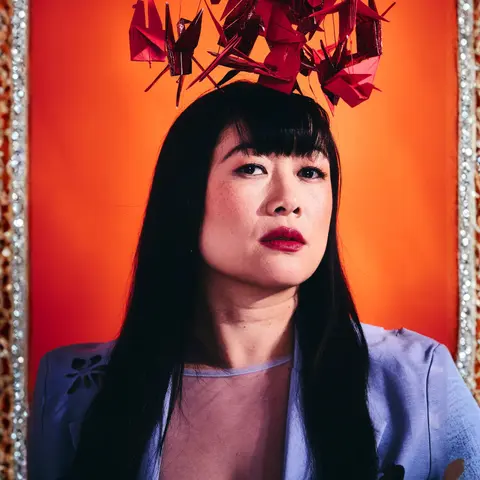
I’m reunited with singer/songwriter MILCK (aka Connie Lim) for the first time since Summer 2020, when I had her on my show in the wake of the George Floyd/Breonna Taylor m*rder and Anti-Asian v*olence. We caught up about what’s been happening in MILCK’s world since then, and how her own artistry and the current political and social climate have informed how she views the world and her co-creation work with her collaborators. We discussed about her mental health journey and how her healing has evolved as she’s looking back now on the 10 year anniversary of her viral song, “Quiet.” She is set to launch her musical, “The Family Album" this summer. Take a listen and follow MILCK’s journey.
Bio:
MILCK (Connie K. Lim) is a singer/songwriter/recording artist and humanitarian who pens anthems in hopes to spark healing and empathy. Her viral song “Quiet” was named a Billboard #1 protest song, NPR’s featured “American Anthems,” and a top feminist anthem of all time by Harper’s Bazaar. Recently Elle UK named MILCK as a top 40 Women of Hope. MILCK also composes songs for film, television, and artists, from John Legend to Natasha Bedingfield. MILCK has since gone viral again with another song titled “Sisters of Winter,” as featured on ACLU’s 2026 national campaign. In July 2026 La Jolla Playhouse will host the world premiere of The Family Album, an original musical co-composed by MILCK, and inspired by MILCK’s healing journey.
IG: MILCKMUSIC
Website: MILCK website
Get full access to Bánh Mì Bites at randykim.substack.com/subscribe
0:05 Hey everyone, this is Randy Kim from the Bumby Chronicles Podcast. And this really gives me such an honorable pleasure to bring back one of my favorite guests that I had on several years ago. Her name is Milk. Otherwise it goes by Connie K. She's a singer, songwriter, artist, activist who pens anthems in hopes to spark healing and empathy. Her viral song, Quiet, was named a Billboard No. 1 protest song. NPR's featured American anthems and a top feminist Anthem of All Time by Harper's Bazaar. Recently, LEUK named Milk as a Top 40 Women of Hope. Milk also composes songs for film, television, and artists from John Legend to Natasha Bedingfield.
0:49 Milk has gone viral again with Unearthed Song Titled Sisters of Winter as featured on ACLU's 2026 national campaign and in July of this year, La Jolla Playhouse will host the world premiere of The Family album, an original musical co-composed by Milk and inspired by Milk's healing journey. I gotta say, wow, talking about that last interview we did, that was in 2020. This one's in summer, during the height of the George Floyd, Breonna Taylor murder. And I think it was only like several months, I think it was close to a year into my podcast at that time. And it was a very, very different time back then with COVID, the anti-Asian hate.
1:32 And then, of course, what happened with the Black Lives Matter movement. You know I look back on this interview recently the other day for the first time in a long time and we were talking about the experiences that we were dealing with politically and socially and you had released an EP album at that time you had performed on NPR's Tiny Dusk for a second time um you were also a few years removed from your viral song Quiet which is now 10 years old and uh Since then, I know you've been keeping yourself very busy these days with the musical that you've been working on. And you have shared a lot about your own healing journey, whether it's on mental health, dealing with the care environment that we are living in, and so forth.
2:15 So, Milk, I gotta say that, you know, that interview was really one of my favorite interviews that I go back to. And when I've given presentations, I would always play that surprise clip of you playing one of your songs, which at that time, I'm not gonna lie to you, I was about ready to have a heart attack when you were performing because I wasn't sure if this was going to capture all the audio I was like oh my god I don't know if I have the right equipment to capture it but it captured it beautifully and that was like one of the best things that ever happened so thank you so much for coming on I know you've been extremely busy so I want to you know be very considerate of your time here thank you so much thanks for having me back and I know we're all busy so thank you for your time and Always your enthusiasm and your passion And yes, it's been quite a while since we've spoken Just thinking about all that has transpired since 2020 We were so young and innocent then Yeah, it's good to be here Yeah, and actually, congratulations on turning 40 Welcome to the decade I turned 40 about three years ago now Oh my god, awesome It's such a privilege, like So I was just telling one of my girlfriends that I now when I think about how I want to be in this world thing is like what kind of woman in her 40s do I want to be it's a different vibe I'm I feel like I'm putting myself to different standards but also and also doing it with more confidence and joy and it
3:50 comes from a place of abundance and strength versus like fear and uh insecurity you know so it feels I'm liking it so far and I've heard from so many people for the 40s are their favorite decade and I'm really feeling that I'm feeling like I'm enjoying my life right now yeah I think that resonates with me too because I think you know this past year I have been leaning more into my abundance just as you have just mentioned and like the 40s that our parents lived through was a very different experience to one I think as millennials we're kind of navigating or having to rewrite the entire playbook because what we inherited is obsolete now and how we take care of ourselves and what we vocalize I think has definitely played a part in how we view getting older especially now that we're in a position of providing guidance, which is a struggle for a lot of us millennials because we struggle with that.
4:55 But I also want to say, you know, without small little bias there that we're a very empathetic generation, you know, because of what we've had to endure, you know, Yeah, yeah. Of Assault and coming into your womanhood and I wonder about how do you feel about that song now 10 years later? What is your relationship to that song and how do you feel like it has stood over time?
5:38 It's a great question. I feel like Quiet was when I wrote it in my late 20s. I wrote that song to heal from my own experiences, as you said, with with sexual assault. And now as I've grown older and learned like a more specific term, too, is within the window of domestic violence. It was like in a domestic partnership. And being a teen when it happened was was its own own form of processing like understanding that I was a child and I spent my 30s And sharing that song with me and meeting people who also needed a voice for themselves to encourage their own healing.
6:24 And so in my 30s, I got to meet a bunch of people who agreed with me, who empathized with me as well. In that process I gained more confidence in my story and more so I gained this even deeper purpose of continuing to bring more healing or opportunities for healing for myself and then showcasing it for others so that if it is of value to them that they can use it for themselves and Part of my healing journey has been writing this musical called the family album Which quiet is in quiet is in the musical and another song I wrote part of my healing journey is called Oh Mother And that song is in there as well in the musical and I've been working on the musical from 2021 to now so it's been a five year project and we're mounting the musical on stage for this summer the opening night is July 26 and previews start July 13 to 26 and if people don't know Yeah, previews are a way for us to test what we're doing with an audience, but the audience knows that it's not finished.
7:48 We might make big changes. We might take a song, add a scene, and there might be big pauses because we're trying to figure out the routing of the actors backstage and the costumes and stuff like that. So it's kind of exciting. People can come watch that if they want. And then opening night is July 26th. And in the process of writing this musical, I was able to really hone in on each character within the family there's the sister character that's inspired by my sister it's not exactly my sister because my other co-writers have inserted their own stories of healing so it's not it's inspired by my family but it's a whole new family now if that makes sense and Being able to manifest these characters on stage and use these characters as ways to express even different parts of me internally and also being able to spend more time empathizing with what my family must have felt when I was going through my experience as a child has really healed a lot of me and so now when I look at Quiet, my relationship with it is from a place of gratitude and it doesn't relate to like being in my 40s it just feels like I'm looking at that song from a place of gratitude and abundance versus a place of like still processing a lot of the trauma I think now the trauma has
9:18 been largely processed I'm sure there will be little nuances of processing as I get older but Now it feels like I feel more like in the mother mode where I want to gift these lessons to other people who might find it relevant. So my job is to craft it in a way that feels most welcoming to others because I'm ready to be at that spot. So quiet really feels still the same like it feels like a mantra and a prayer as it did when I was singing it through my 30s and then now it feels like something I can offer as a tool for the next generation.
10:03 What do you feel has been, especially with working on this musical, what have you learned from taking this project on because it is a new venture for you. Was doing a musical, doing theater, something that was in the cards for you for a long time as well when you were working as a recording artist? Because I know that you had done songs for film and for TV shows in the past. So I'm curious about your own creative autonomy and being able to determine The artistic direction for this project.
10:43 I've learned a lot from making a musical because it is such a team effort. One of the scariest things, and if I had known what it really was, I probably wouldn't have done it, embarked on this project as my first musical ever. To mine my own trauma and life story for a first musical and opening it up where I have co-writers so that I'm no longer in full creative control because if I'm I'm inviting in these other artists to come express themselves as well it becomes a co-creation and that was really really really hard how am I going to relinquish the idea of these family members to become something new And something that was really scary for me is like what is my mom going to think about this because this mom character isn't actually fully her but it is based on some of her and so it's a very scary thing but I think that the healing that I've done with my family I can't believe I'm saying this, but I feel confident that we'll be able to walk through this process and that everyone will have an understanding and compassionate approach, which is so awesome and beautiful.
12:11 Working with three other genius A hyper intelligent woman on this project has taught me so much so Sam Chance is the book writer and then Adrian Gonzalez is my co composer for the music and Jess McCloud is has done a lot of like overall storytelling dramaturgy like consulting with us and she's also directing it. Working with three other forces of creativity has taught me the art of communication, the art of listening to myself when I'm like getting a little nervous about a disagreement or something's coming up for me because reminding my trauma, I'm getting triggered like And how to express that calmly and how to embrace other people's opinions and how to feel okay knowing that we may not be on the same page and that it's been such a powerful form of healing for me that my communication has just improved tremendously through this art form Making a musical was never in my deck of cards.
13:26 I always enjoyed musicals and I was always in awe of how a musical was created and I always thought that's way too big of a feat. I'm not going to be able to do something like that. But when we get under the hood, it's like it's totally possible because there's a village of people doing it together. And it just takes the patience because musicals are a slow art form. You know, when some people hear who don't work on this art form hear that it took five years to make this, they're like, holy crap, that sounds like a long time. That's actually considered a fast timeline. So like having the patience and the faith and the discipline to continue returning to something and continue advocating for it has also been something that's been really life changing for me.
14:16 It's taught me the value of patience in a different way. It's changed my life, that's for sure, and now I'm starting to work on other musicals. I like working on these really slow-growing things that I can continue. It's a garden. I can't force this to be done quickly. It just goes at its own pace, so I feel like I get to interact with the forces of nature more, and it feels spiritual to me, which I really love. Yeah, I'm looking forward to hearing all about it because I think this is so exciting for you to take a dive into this.
14:58 Are you feeling any kind of anxiety leading up to it, especially for the opening? I don't know if you've gotten any feedback from other folks that might have seen the preview or I don't know if it has gotten to that stage yet, but what are your feelings and what do you hope would be the outcome for audiences that are attending this? We have done three workshops which means that we will hire actors and they'll play out the parts and then we edit and we do rehearsals and then we invite a select group of people to come watch and give us feedback and then we also feel the room. And one thing that's very amazing about musical theater is that there's really no way to theorize how it's gonna feel until you just do it on stage with people in the audience and then the answers come.
15:46 So it's such a tactile and old school method of telling a story. I love it. I think that we've been working on it for so long and we've really put so much work into it I don't feel anxious. The most anxious I've felt was really about how my family will feel when they watch it because I do explore how my domestic violence and the experience was misunderstood in my family and how that impacted me and the importance of me reclaiming the story. And I've always asked myself, did I tell the story with care?
16:27 This is my story to tell but also involves other people who are still here still alive. So how do I do that? With as much respect without hiding and like making things vanilla, you know what I mean? So um I feel this oh like the best way I can describe it so um we had a reading a workshop in November last year of 2025 in New York and we at the end of the meeting reading we got a standing ovation and I was sitting in the back and I was like teary-eyed and I was like oh my gosh we did it and like oh my gosh what have I done you know it's because it's like so honest and so real it's like really me putting everything out there because Randy when Quiet came out I didn't have full control of what people perceived quiet to be because the media took it and made it whatever it was going to be.
17:31 And I have no qualms with that because I understand that media is a distortion. It can distort things. It was called the anti-Trump song. It was called the Me Too song. It was called all these different things. But with this musical, I get to tell the actual genesis of where this came from. It came from an Asian American family struggling with things that get lost in translation. A young woman who is encountering domestic violence and doesn't even know that she's getting abused and she thinks it's her fault. And we package it in this really quirky tone. There's a lot of playfulness. There's a punk rock cat band that yells obscenities to express her rage because the main character doesn't know how to express her rage and dissent.
18:21 It's really playful in its ways and we're really exploring what it means to stay quiet and what it means to break the silence. What's the cost of staying silent? What are the rewards of breaking that quietness? And we do it in the way that was the birth story for quiet for me. And that feels really cool. It took a lot more work but we've created a context where people can understand more where this song was coming from. I really appreciate you sharing so much of this whole process for you and what that has been like. And, you know, I think about the past 10 years and the last time when we talked, we have seen so much change and what little has changed.
19:08 Obviously we're back to that same president last time we talked to now. But how do you still continue to navigate this world as an artist and trying to find hope as an artist and as a person in this unbelievably unpredictable chaotic time? When I think about the challenges of the world and sometimes when it feels too daunting I then zoom I try to play with the art of zooming zooming in or zooming out and I think it requires this time that we're living in requires us to really zoom out out out and to look at a bigger timeline and so I think about my ancestors a lot my great grandmother and great grandfather who survived World War II In China and my great-grandfather was taken into a forced labor camp in China during the war and then he was forced into opium addiction and then my great-grandmother had to raise her three daughters on her own and not knowing where her husband was and all that trauma and then all of that getting passed down and passed down but regardless still creating life still making choices to help her daughters move forward was there trauma was there pain probably and there's a lot of stories that have been lost through the years because of some of the customs of traditional Chinese families of
20:40 not talking about the hard things because they're like we move forward we don't want to I think about my great grandparents a lot when I think about this time is there was a lot of treachery during that time as well and as the treachery that's happening now and then I hold on to some things of like you know I was talking to one of the I just want to share with you that movement shifted so much of the media that surrounded what it means to be Black.
21:30 What does Black beauty look like? What does Black joy look like? And that really infiltrated my life and the way that I was able to expose my parents to that and the conversations I was having with my fellow AAPI immigrant children's like, hey, we should tell our parents that because of Black activism in the 1960s, Asian people were able to immigrate here in ways that we weren't able to and how we're all so interconnected. And I was able to have conversations with my parents about that and be like, did you know that? And they didn't know. They didn't know. They had no idea. They didn't have the context. And it softens the edges between people who might be guarded against each other.
22:13 And that still remains. And it's also true that there's more People who feel permission to be outright racist or hateful in this time and I think all of it is a way to mask a fear and a pain that we're all navigating that I think really did get amplified during COVID. All the uncertainties, all the things that have forced us to Change and adapt have made us anxious and we don't know where to direct that anxiety. There's grief that we haven't really grieved Bo Sia is this amazing poet and he says like it's too tremendous of a cost to rob ourselves of the power of grief grief can it hurts and it's so scary to feel grief and it's so hard to hold it in our bodies but once we do we soften and we don't feel this need to blame other people as much but if we are guarding ourselves from it Then it's easier to just blame because we're trying to not go there.
23:24 We're trying not to feel that tremendous grief that every human feels of just being alive. Really, it's always been uncertain. There's never been a time of certainty, other than illusions of certain eras of time where certain populations had a sense of routine, but other people didn't. So that's all been an illusion. um so I think I look at it like that and then it keeps me and then I I look at like the music industry the amount of women that work together now is tremendous compared to what when it was before 2017's um Me Too movement I I can't tell you what a different landscape it is it used to be really isolated it used to be women working with the circle of men Versus now women are reaching out to each other we feel like we need to talk to each other like the myths of women being catty with each other I'm sure that happens like but it's not the main narrative in the studios now like we're daring to look at each other differently and question these stories that people tell us about ourselves like women are catty women are competitive like all of that has shifted It's slower than what we want because at the same time now we're watching this horrendous attack on brown folks through the ice attacks and it
24:55 feels so backwards and it is backwards and it's painful and it's terrible and so that's also happening at the same time so I don't know I'm just trying to hold all of it at the same time Yeah and I think about you know breaking generational trauma because I know that it's something I think about especially as like what you alluded to or what you shared about your own ancestors and what they've experienced during World War II my parents and as I've said many times in my own podcast you know my dad being from Cambodia and part of Vietnam and then my mom's family escaping from Vietnam and then the French colonization and there's a lot to unpack and I felt like You know, I was dealing with mental health issues more recently, like about a few years ago, and I thought about how much that generational trauma really affected me later on in life, and that I was never able to properly work through it until I had to, you know, And I wonder what does your own healing look like but also what have you been pivoting away from because I think in the last interview you talked about having these people pleasing tendencies I
26:27 definitely had that too and I think since I was since in my 40s I feel like I've had A lot of liberation and saying no, I think this is ridiculous. There's a joy of missing out or the relief of missing out. I think it's not quite Romo, which I feel like I don't need to be present for everything, right? And I feel like I wonder about what that has looked like in your own mental health journey and trying to understand your own traumas and how to have clarity and work through that. Thank you for sharing, you know, your own journey with your mental health. I think, especially in the Asian diaspora, the conversations of mental health are still, there's still, you know, there's still room for growth.
27:14 And the fact that you're sharing that publicly is very important. I'm a sister to an Asian man my brother's in his 30s and I'm really proud of how he shares about his journey as well because it helps to normalize some of the stuff I'd say that My journey of people pleasing is very much like yours where I'm able to just care less but care more at the same time. Like I care so much about the wellness of humanity that I know I need to be well for that.
27:57 And if I am compromising my wellness for short term successes of pleasing one person here and there, it's like it's not, it's actually kind of I'm veering off course and off focus so that's how I've been viewing it and I've been also asking myself like is is what I'm telling myself true I'm always asking myself what the story that I'm telling myself what are this like being aware of what the stories are that I tell myself Asking myself are they actually true and the art of meditation to grow the strength of my ability to notice myself and my patterns of thinking have really shaped me and have enabled me to be less anxious, be less fearful so I can be more present because my journey I think is redefining what wealth is and success and I think wealth and success for me means the ability to maximize amount of presence I can have in my life so whatever it's going to take so that I can be fully here with you or fully there with my niece fully there with my nephew or my co-writers and stuff what does that take and it takes millions of things to make a present like a feeling of presence happen has to feel like we have to understand we are enough we have to understand that um I am we are safe and we have to understand like we've worked hard to be here we deserve this like all these all these thoughts have to fuel me
29:28 in order to be able to be present here now you know and I spent like my 20s being not present with people because I was insecure and worried and feeling like I there's so much for me to prove and all that and I just I just want to be I want to be able to love people more deeply and truly Because that's really where the joy is for me right now. And so that means also making sure I fulfill my own dreams and wishes and making sure I rest and making sure I set boundaries and let go the people who don't understand and wish them well. I'm still working on that but it feels less difficult so if anyone's listening and they're in their 20s and 30s it's like oh man it does get it does get better if we are privileged to keep living and keep working on this yeah yeah yeah no I think you hit it on the nail and I think that I tell this to people in their 20s and 30s too it's like like it can get better when you build your self-awareness and when you start to learn to say no and push back and be like okay I don't think I have the capacity for this and not feel this guilt or this like oh well I shouldn't be taking up that much space and realizing well I actually did this work um and I think that there's a lot of rewriting the narrative and disrupting harmful narratives that go along the way and You know, you've been releasing a number of songs, EPs since 2020.
31:01 I remember Gold, which was like one of my favorite EPs. And I will say Slow Fate has really been one of my favorite songs. I would play the heck out of that song for a while because, I mean, especially when I would just go out for walks in the fall, you know, it's like it just felt like this. It felt like this was a song that I needed back then too when I was dealing with grad school. And yeah, Yeah, what has your music direction been like in terms of recording songs in your own process and releasing them? Because I know that you were working with a major label and then you went independent. So what has that navigation been looking like in terms of navigating the streaming world we live in?
31:46 The streaming world is definitely something that has really impacted artistry on so many levels for me. Um I would say that After Into Gold, the EP that I did with Atlantic, that was released March of 2020, and it kind of got overshadowed by the pandemic, and then I wasn't savvy enough on TikTok or then to kind of salvage the life of that EP because I was more of an in-person, live, go-touring, promote, old-school-away person. And over the years, I've had to wrestle with my own resistance of I'm putting my art online and making what people call content and and I'm I think embracing the change and really going through like almost like an ego death like getting over my own resistances and just surrendering to the times and knowing that I'm stepping into something that is not fully healthy but also has been something that's changed my life social media is the reason why I got signed to Atlantic Records and it's a way for me to reach people with an indie budget and so I think that embracing social media has completely shifted my creative process because the only way that I can
33:16 Justified Posting Stuff Online Like Four Times A Week That's Like My Max Right Now Is Is If I'm Creating Art That Brings Value To People So I've Been Singing These Hymns And These Battle Cries That Are Addressing The Times But In A Way That Can Maybe Soothe People's Central Nervous Systems So My Music Has become that. Now I've become kind of obsessed with these hymns and I'm orchestrating them with instrumentation and I'm crafting a new sound. So it feels like I'm just less precious with things now because it's like, okay, just share hymns online, share hymns and the ones that hit, okay, take those and Create Instrumentation is much more interactive with my supporters and what their feedback is and also just allowing myself to sing in real time in response to what's happening in the world.
34:20 I'm inspired by artists like Wells and he's very you know he's a different style than me in some ways but his approach has always been like if you go to his Instagram page it's just like all yummy content you know for someone to take into their lives to improve their lives versus like having it be super promotional if that makes sense yeah do you do live performances on the road? I don't think you have unless I'm mistaken I have, but I haven't been doing the traditional touring. I think that's going to change because of this new sound I'm cooking up right now. I'm like, oh, this might mean that I should tour.
35:01 Because I think in this exploration since 2020 to now, I have been experimenting and writing songs and releasing, but it hasn't felt like there's been this cohesive Big Picture Thing That I Want To Invite People Into So I Have Been Getting Hired For Events Like One-Off Events Weekend Warrior Events Where I Sing A Few Songs At Other People's Like Galas Or Fundraisers Or Film Festivals And That's Been Such A Gift Because I Get To Meet New People And People Appreciate My Art For What It Is And I'm Able To Make A Living But Now With These Hymns And This New Like Direction I'm Headed I feel like I am building a sonic world that I can invite people into.
35:48 So I am kind of like, wow, this is crazy. I'm like 40 and I'm thinking of reentering the artist touring space. A lot of people are like thinking about exiting the touring space when they reach 40. And I was like, am I insane? I was like, probably, and I'll probably be super tired, but also I'll be totally motivated because I see that there's an actual vision that's worth me going and touring and asking people to buy tickets to like come into a world but that's gonna take me a little bit to build and I need to focus on the musical for a second but it's like it's coming to life I can feel it um so more more to come yeah I hope you come to Chicago because I'm dying for you to come out there you know but I would love to you know my dad and mom in Chicago was where they immigrated to oh wow Special place in my heart so yes I'll definitely have to come to Chicago yes there's a lot of good venues there there's a lot of good venues there to perform at so yes yeah I'll be your hype person for that so I'll be trying to grab people yeah let's team up it'll be great absolutely and I know before you get going on well if you had to go back to yourself in 2020 when we had this conversation what would you say to that person hmm I would say I would say to her all all will be well like
37:19 All these instincts and confusions and anxieties you have, they're all valid and you're going to find your way. And the more you work with the flow of life versus trying to control it, the better. It's all going to pan out better than you thought. Better than you thought. Awesome and where can people find your work and anything that you can refer people to and obviously buy tickets to the latest musical? Yeah people can find I'm very active on Instagram so it's instagram.com forward slash milk m-i-l-c-k music and then My website, I try to update as much as possible.
38:07 I do a monthly newsletter where I have little hand drawn illustrations and personal updates and and professional updates so I love when people sign up for my email list because I get pretty I can get more personal I feel safer there like I don't post pictures of my niece and nephew or family on my social media as much but like on the email list I can get a little more personal um because it's just a safer container yeah totally and sign up on milkmusic.com yeah totally and also now you have I've been I think the last time I talked to you you were on the 50 000 follower mark on Instagram now you're over 150,000 which is pretty um disorienting if you think about that you know it's really crazy yeah I grew over this past year when I started just letting go and just following my instincts not over planning not trying to control I was just following like what feels right I was like I I don't want to promote my album so I'm going to sing these hymns and that's what that's what changed my Instagram life Yeah, that is so awesome.
39:11 And I'm so glad to have this conversation with you. All the best to you in this new project that you're promoting very soon and also with your own creative direction and such a joy to have you around and all the best to you, my friend. Yeah, you too, Randy. You're a joy and a light. I appreciate it.
