A Decade in the Works: Catching up with Anton Hur

 Apple Podcasts

 Spotify

 Amazon Music

 Overcast

 Castro

 iHeartRadio

 PocketCasts

 Podchaser

 RSS Feed
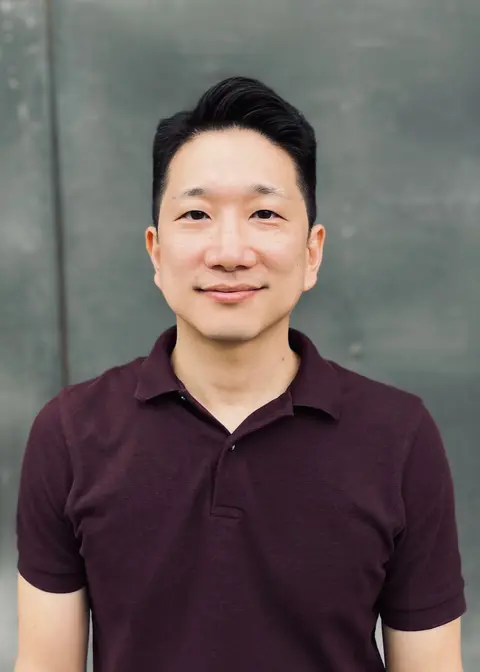
Award-winning, critically acclaimed queer Korean author and literary translator Anton Hur makes a special appearance on this episode from Australia, where he’s currently doing his residency. I’ve known Anton for the past 10+ years, and have watched his rise in the Korean and Western literary world. I asked him questions about his debut fiction novel, Toward Eternity, and what he has learned as an author after years of translating successful Korean literature for an English-speaking audience. We chatted about the art of translation in literature, AI’s consequential effects on writers, the responsibility in speaking out on social issues such as Palestine and anti-authoritarianism, Mariah Carey’s legacy, and more. Check this episode out, and follow Anton Hur’s work!
Bio:
Anton Hur is the author of Toward Eternity (HarperVia) and No One Told Me Not To (Across Books). He was born in Stockholm and currently resides in Seoul. He studied law and psychology at Korea University and specialized in Victorian poetry at the Seoul National University Graduate School English program under Dr. Nancy Jiwon Cho. He won a PEN Translates grant for his translation of The Underground Village by Kang Kyeong-ae and a PEN/Heim grant for Bora Chung’s Cursed Bunny, the latter of which was shortlisted for the International Booker Prize and a finalist for the National Book Award for Translated Literature.
His translation of Sang Young Park’s Love in the Big City was also longlisted for the 2022 International Booker Prize, making him the third translator in history to be double-longlisted in the same year, and he also judged the prize in 2025. Love in the Big City was also longlisted for the 2023 Dublin Literary Award, which Anton also judged in 2024. His translations of Kyung-Sook Shin’s Violets and Lee Seong-bok’s Indeterminate Inflorescence were consecutively longlisted for the National Book Critics Circle Awards. His other translations include Kyung-Sook Shin’s The Court Dancer, Violets, and I Went to See My Father, Sung-Il Kim’s Bleeding Empire series, Kim Choyeop’s If We Cannot Go at the Speed of Light, and Baek Sehee’s international bestseller I Want to Die but I Want to Eat Tteokbokki and its sequel. His co-translation of Beyond the Story: 10-Year History of BTS debuted at #1 on the New York Times Bestseller List.
He has taught at the British Centre for Literary Translation, the Ewha University Graduate School of Translation and Interpretation, and the Bread Loaf Translators Conference. Anton is represented by Safae El-Ouahabi at Rogers Coleridge & White in London.
Website: AntonHur.com
Instagram: AntonHur
Bluesky: @ antonhur.com
Get full access to Bánh Mì Bites at randykim.substack.com/subscribe
0:12 Hey, everyone, this is Randy Kim from the Bunmi Chronicles podcast. So today I am joined with a dear friend of mine who I've known for a number of years, and his name is Anton Hur. So he is the author of Toward Eternity and the translator of Bora Chung's Cursed Bunny. Beck say he's I want to die, but I want to eat the bokeh. Lee Sung-bok's Indeterminate Inflorescence, Gyeongsuk Shin's Violets, and others. He was double longlisted and shortlisted for the International Booker Prize, a finalist for the National Book Award, and nominated for the Dublin Literary Award and the National Book Critics Circle Award.
0:52 And he currently resides in Seoul, but now you're actually in Australia, so... Anton, I have known you actually for about a good 10 years. Most of it's been online. And it's kind of wild to see your evolution in your work as a writer over the years and to see you... get more visibility in your own work and and it's been an honor to watch to witness your growth and i'm very curious that you're currently in australia and you've been traveling quite a bit the last few years and how are you doing in australia right now what's going on and where are you where have you been in the last say several months Yeah.
1:44 Oh, thank you for having me on Banami Chronicles. It's always lovely to be on a podcast that you actually listen to. No offense to the other podcasts. But yeah, there has been a lot of travel. Something that I did not really anticipate when I got into literary translation as a job was the travel, because to me, it was always a solitary profession where You basically just stay in a room and in front of your computer all day and then you just translate. But when you become successful enough as a translator or as an author, people ask you to come to places. And I was asked to do a residency here, a writing residency.
2:28 Actually, it's not for translation for at the Korean Institute at the Australian National University. So that is why I am here. And a week before I was here, I was in Hanoi in Vietnam, where I did a brief residency there at the Eunice Hanoi, where Nguyen Phan Kimai, of course, our mutual friend, where she has spoken previously. And uh oh my god they love her over there of course they do we all love her yes and she and she was also kind of like recommending it to me she's like oh anton like you know you should do this and so i was like okay i will do it um and so that was really really fun and really great and um yeah there's a several translated books that i am working on currently and It's just so nice to just be here at ANU.
3:23 It's in Canberra, which is their administrative city. It's smaller than Melbourne or Sydney. And it's very peaceful. There are literally wild kangaroos about. I have befriended an Australian magpie that comes to our yard every day. asking for food it has this way of asking where you cannot say no like it just like comes up to you and just like looks at you directly in the face and you know that it's telepathy and please feed me like yeah they run the country in australia so those animals do run the country From what I can tell, because I visited Australia like, God, like 15 years ago.
4:06 It was to Melbourne, to Sydney, I think Newcastle was one of them. And yeah, it was such a beautiful country and I love the ocean views and... And the coastal views. And yeah, I was in love with it when I visited. But with Hanoi, how did you feel coming into the city? Because I visited a year ago, and it's such a uniquely charming city, especially the old district. And visiting train streets is one of my favorite spots, even though it is very touristy, but it is a fascinating spot. And were you able to visit the Ho Chi Minh Mausoleum?
4:49 I so like I went with my husband. I brought along my husband. He'd been to Hanoi before for work and but I have never been. And I actually never went to Vietnam until I visited Hanoi a few weeks ago. And the thing that I kept saying to him as we went around was, oh, I would live here. Like, it's a very nice place to live. I've got to say. And yeah, it just has really great like people say that it's touristy but i you know i lived in bangkok so what is touristy to someone who lived in bangkok um it's it's actually i don't really find it that touristy i actually find it like a better place to live maybe then i mean it's nice enough to visit but it's like even an even better place to live because um there's so many great restaurants uh so much great food and um just such a pleasant lifestyle, I want to say.
5:45 And the people are just really, I found, very accommodating. They're not like people in Seoul who are absolutely like, I don't know, like New Yorkers in the sense of like, oh, get out of my way. People in Illinois are actually like, we live in a city, we live in a community, we all have to get along. So let's be civil to each other. I really like that. Very sophisticated city, you know, citizenry. Because, you know, people in Seoul are like country bumpkins. So I really like that aspect. And I would definitely, yeah, yeah, I would definitely, definitely live there if I had a chance.
6:25 It's a great place to live there, I think. yeah it's actually a place that i've been pondering retirement one of these days it is a place that i'm like oh okay i could really see myself living there uh for my golden years and and you know the cost of living but it's also like there's just so many new innovations that are happening i haven't been to saigon in a long time but i know i'll go there the next time i visit but i think there's so much different opportunities and seeing the innovation of like younger folks and really trying to uh shape vietnam for what it is today and also even with the vietnamese diaspora folks coming in to now live there it's it's quite a transformation um it did strike me as a young city like there were people who like a lot of youth maybe i'm coming from seoul or everyone's old But there were a lot of young people.
7:17 I forgot to mention, I did try to visit the mausoleum, but some kind of communist congress was going on at the same time that I was there. And so they had kind of shut down the major monuments, but it was really ideal because you could still... walk into those areas but they were cordoned off for traffic but pedestrians could go it was very it was very democratic i should say maybe it's very communist but it was really nice because like they gave access to pedestrians but not cars and so we so i took my photo in front of the mausoleum it's a very impressive building and Yeah, it was just a very cultured, beautiful city.
8:01 Very nice to live in. I think the air will be better by the time that you retire. Because they are transitioning to electric vehicles. Yeah. I know you have lived in Seoul for many years and I have visited Seoul several times back when I lived in Korea. I actually visited you a couple of years ago in Seoul, but I have lived in Busan for three years and I've always been very biased about Busan. It has a special place in my heart and I always find it to be a little more hospitable and charming in some ways. Yeah, and actually a lot of my former students now live in Seoul because that's kind of where all the jobs are at, which kind of surprises me because Busan is the second largest city and I'm like, well, what's going on in Busan?
8:48 that makes people go up to Seoul. And I think every time I go to Seoul, and this is not a knock on it in a way, but it just feels very cold, not just the climate. It just feels very like... I don't want to say that people are very unhappy, but it just feels like the vibe... it's a very busy vibe like everyone's kind of doing their own thing they gotta get to one destination um there's like a cafe shop like every two stores and i don't know what are your impressions of seoul like the more that you've lived there as you have traveled to other places It's like Camp Section's Violets, I think, which is a novel that I translated.
9:30 And it depicts a young woman who comes up from the countryside to live in Seoul. And she is so isolated. She does make friends, a few friends, but she is so isolated. And the city is very cold. There's a lot of beauty around her as well, but it's also a very cold city. And I think, yeah, people there are objectively unhappy. It's not just your impression. I think there is research into how unhappy Koreans are and people in Seoul are. It's really nice to like the nice thing about Seoul is that it's very convenient.
10:11 Like everything is at your fingertips. The bureaucracy is pretty functional compared to other places. And, you know, the subway is great. I mean, it could be better, but it's like every time I go overseas, I'm like, oh, wow, Korea actually, Seoul actually does have the best public transportation in the world. It's a very convenient place, but I don't know if it's a superlative place. It's like for your students who have to leave Busan to get jobs. Seoul is very necessary and it's convenient and it's where everyone goes to make their fortune. including myself, because I'm not from Seoul. I'm technically from Gyeonggi Province.
10:52 And my hometown is so close to Gangnam district in Seoul that we share phone numbers. um but otherwise like i feel very much like i'm not a person of seoul like i'm from i'm from a very from a more bushier part of of um of of korea and so when i'm in seoul i'm like wow everyone it really is less it's not as it's not as intimate as it is like in in my hometown it's not as uh i don't know like i i've never really felt an affection for seoul i go there and it's convenient and i'm korean and it's where all the koreans go to make their money and i want to make money so but i have been becoming fonder of it in recent years I think life in Seoul is getting incrementally better in the past 20 years.
11:54 Helps a lot that housing prices are going down enough for my husband and I to put in a bid for a place. So it looks like we are moving to a new apartment in 2028. all of that yeah so it's getting better uh and i am allowing myself to like seoul more and uh the food is definitely a lot better than it was you know when i arrived 20 years ago oh wow i would never guess it because um I was always wondering because it feels like, and maybe this is my observation, that in Korea these days, you're seeing a lot of fusion of Western food and other introduction of foreign food.
12:36 And I don't know, maybe this is just me, but I feel like that there's... a lot of like some of the old mom and pop restaurants starting to disappear like the more traditional cuisine restaurants i don't know if this is just my obs if it's just my single observation but do you see a lot of like gradual shifts between these generations that are like very because it feels like it's so far apart you know from the korea of the 70s and 80s to where it is now and and And in terms of how it affects Korean culture as a whole, especially with the boom of K-pop and K-drama and a lot of things that have been exported to on an international level.
13:19 I think what exemplifies food in Seoul, restaurant culture in Seoul, is that a lot of it is still very much private enterprise. It's, you know, family enterprise. Like all those Takamari places in Namdaemun, for example, or Takalbi or, you know... pretty much every uh like there are people like cj and like you know those chaebol conglomerates are trying to get into are in food spaces and they do very well but still quite a large proportion of of food just you know restaurants that you see in korea are privately owned are owned by individuals are owned by uh small or medium-sized businesses so yeah i think um i think that is a really big kind of factor in um the sort of renaissance and food in seoul but for a long time it was it was really not great um there were like four thai restaurants 25 years ago in all of seoul um and they were all bad But now you have really fantastic places that are being opened by people who were Thai chefs and who were, for example, apprenticed under royal chefs.
14:31 And my favorite Thai restaurant is run by a place like that. So culturally, I feel like it is getting better. And again, falling housing prices, so important. Yeah. yeah uh yeah i like there's there's just been so much real estate inflation and speculation that um i think it's really been killing the culture of the city and um yeah but i don't know at the same time i feel like uh i may not i still don't see myself living there forever like i would rather retire in thailand or um maybe even jeju but Somewhere warm, basically.
15:16 I have been in the winters and it's really rough. I mean, I'm coming from the Chicago weather. I mean, Seoul weather, especially near Incheon. There were times I actually had to walk inside. I'm out for 10 seconds and I'm like, nope, can't go out. And this is coming from me because I feel like I have enough endurance to be able to handle it. And even that can feel a bit unbearable. So, yeah, to start making the shift here, but nearly two years ago, you released a fiction debut novel, Towards Eternity, after spending years being a Korean literary translator. Now, how has working on other people's writing informed the way you creatively write your stories?
16:04 It kind of takes the pressure off, I guess, because I think when you are I don't know, I guess most people are exclusively writers who are writers. And because when you are writing your own things, I feel like people and I see this in young writers all the time, like they get so precious about their writing. Whereas in translation, the really nice thing about translation to quote a translator that I admire very much, a Ukrainian translator, Boris Straliuk, it's like translation forces you to make a choice. Like it forces you to it forces you to work and it forces you to put something down on paper.
16:45 And I think that's like the number one thing, at least for me, at least, and for a lot of young writers that I see that they have trouble doing like you. There is a stage when you're working in the beginning where you really do have to force yourself to work and you really do have to force yourself to put down something, even though it's total crap and it probably will be total crap. But You have to put that down and you have to put, have something on the page in order for you to edit it. And there's a huge psychological hump that you have to go over because I think when you start a work, your focus, it's very difficult to focus on the work. Like your focus is very scattered.
17:26 Like, you know, we have different kinds of focuses neurologically as human beings. And we're coming from a state of very scattered focus when we sit down to work. And then we really have to figure out how to find the rhythm and when people say like find the rhythm of the work or flow of the work what they really mean is like to find the frequency the focus to to sort of figure out a way to concentrate in the moment so that you can produce the work and so I think when you're a translator you're so used to doing that like when you sit down and to do work to just like start working that you are trained to recognize work when it comes from you Whereas if you're a writer writing for the first time, maybe, and then you start writing, you're like, this is crap.
18:09 This can't possibly be work. This is a waste of time. But when you're a translator, you're not like that. You're like, I know this looks like a waste of time now, but maybe around page 50 or even 100, it's going to look like something that I can work with. And lo and behold, that is how my novels come to be. Yeah. And do you find inspiration when you work with other authors like, wow, this person's got a great idea. Bora Chung's got a process that I really like. Do you find yourself like, I think for writers, it's very common to, you know, I hate the word taking ideas, but at least to be like, wow, There's something about it that resonates with me that I feel like the style in a way mirrors closely to something that I've been trying to visualize.
18:56 But do you find yourself finding inspiration with the works of other authors you've been working on and how it, in a way, stimulates your own writing? Bora Chung not so much. I think Bora has this neat trick where she will present a fantastical situation and everyone, all the characters in the story will react to it as if this is something that happens every day. So that's kind of like a neat trick that I've used in like a short story, I think, at one point. But otherwise, the way that she works is just very, very different.
19:40 And our sensibilities are very different. And so when she was translating Toward Eternity into Korean, I was a bit apprehensive. And lo and behold, she complained a lot about it because she hates poetry so much. And my novel has a lot like poetry is kind of like a central theme of the novel. And so but she did a really great job at the end. And so Borah Chung, not so much like Kyung Suk Shin, I learned a lot from translating her because Kyung Suk Shin really is all about that focus is about finding the rhythm. and how rhythm trumps, you know, having elaborate language or elaborate metaphors or even a very complicated story. Like, it's all vibes, almost, for a Kyungseek Shin book, for a novel.
20:25 And those vibes, like, she uses very simple language and very simple words and a very simple rhythm, but, like, you find yourself crying when you're reading or translating her work. so that's kind of what i learned from from other authors you also learn from you know being in publishing like how to basically behave like a professional writer um because sometimes authors don't behave like professional writers and we won't say who And you kind of think like, oh, when I'm a writer, I'm definitely not going to do that.
21:07 And that also has been very, very helpful so far. Like in what manner, like what have you observed that was like, oh, this is definitely something I would never do as a writer when I'm in the publishing world. Well, I think certain writers treat people who are trying to work with them in a very strange, contemptuous manner. And I feel like I understand that writing is a solitary act and it's an artistic act and you're an artist, but publishing is a collaborative act. So you can be a solitary artist who starves all you want on your own.
21:49 That is completely your freedom to do. But if you decided to publish your writing, you have to be a team player. You have to be ready to collaborate and respect other people and acknowledge boundaries and make sure that you understand what people's jobs are and that you don't expect them to do everything for you or expect them to read your mind. Things like that. I think there's a lot of expectation management that I really don't like doing as a translator, but I'm kind of forced to.
22:31 And it's kind of like one of the things that makes the job like just really not great. And I generally don't recommend people be translators because I feel like it's like it is so much more work than you can ever imagine. Like you will be doing things that that really are not your job and should not be your job. But if you don't do it, no one else does. And I guess that's the same for like every job. But for translation, it's like much like it's really bad, like that aspect of it. It's the mission creep. It's like really, really bad. Yeah, I think what I'm also very curious about, because Korean to English is a whole other dynamic.
23:11 It's not just a simple Google Translate or like an AI translation. There's like context, there's massive context that really needs to be um that a korean audience is going to understand but but as a western audience going to understand that so i think that i'm very curious about what goes into psyche when you actually have to like navigate between the different worlds and trying to capture the con the korean context but not lose it completely to as a way for uh western or non-western audiences to understand i think when i especially when I interpret also when I translate, but especially when I interpret because I do simultaneous interpretation, people look at you like, like you're doing a magic trick.
24:02 And I guess to some extent that is true in the sense that, you know, magic tricks, that magicians do on stage, they're trained and they practice it. And so it's like any other skill. If you train and practice enough, and if you've done it for long enough, and I've been doing it for, God, over 20 years, 25 years, quarter century now, like if you've been doing it for long enough it kind of becomes second nature to you like you have an understanding of what the reader on the other end is like can understand or won't understand and how much you have to approach and every translator is going to have a different philosophy about this like some translators believe in approaching the reader a lot which is my philosophy and some translators believe that no that is a form of colonization or white supremacy or catering to the white gaze.
24:58 And so they do what is called a foreignized translation. And I respect that too. And that's another approach that's extremely valid and effective. Like when I was, excuse me, when I was a judge for the International Booker Prize last year, the book that we gave the Booker Prize to was an example of a foreignized translation where the translator is less, I wouldn't say less willing to be accessible because she writes, the translator writes extremely engaging prose and she's a wonderful artist, prose artist. But she did not want to translate certain, you know, terms, place names, honorifics, because she wanted the texture of the original language, which is Kanada, an Indian language.
25:46 And so... And she created this beautiful, extremely beautifully textured translation, which I was like, oh, well, this has to win the prize because this is doing something that every translator really should think about doing at some point in their lives. And so those are the kinds of things that go through our minds when we think about contextualization. It's not all about like making it the most readable as possible. Although I really make an effort myself because I tend to be a very commercial translator and I have a very commercial voice compared to a lot of other translators. Um, so I, because I feel like Korean is just so far away from English, like geographically, as well as it's not like translating French to English.
26:35 Okay. Like I have a completely different job than French English translators. Like I always, I always tell them that like, my job is very different from your job. My job is in fact, completely different from your job. My job is actually harder than your job. And yes, I should get paid more than you. That's what I say to French English translators all the time. And so, yeah, so I do think about contextualization a lot. And then it becomes a question of like, then who are you? Are you writing for? Are you translating for the white gaze? Like, who are you translating for? And in my mind, because I read so many books that have come out in the past few years, like I read a lot of recent literature as well as classics.
27:19 And so in my mind, the reader is kind of built up through that because I assume that this is the Anglosphere readership. So I have a very vague idea of like what the reader will like, what is available. out there and what's hit and what the reader might be amenable to. It's not about trying to detect the trend because once you detect the trend, it's usually too late. It's really trying to set a trend. It's trying to create something that is compelling enough for the reader to follow you. I don't really follow the readership. I try to figure out a way to make the readership follow me. something that will really intrigue them, something that will challenge them in a really fun, interesting way.
28:04 And so I have this sort of leader mindset when it comes to my translations where I'm like, you should be reading this. Like, that's my philosophy. It's not me going around trying to figure out what people are reading and what, you know, what I should be translating. Thank you for sharing and giving us a deep dive on this. And after releasing Towards Eternity, what have you learned about your experiences as an author? And what have you learned from your audience's feedback? Oh my God, being an author is like a translator with their brain removed. I'm sorry. It's so easy. Oh, my God. Being an author is so easy. I don't have to do anything.
28:46 I just have to show up at literary festivals or bookstore appearances and be like, hey, this is my book. Look at how glamorous I am. I don't know. It's so... yeah so easy like when you're a translator do you have any idea how much i have to do behind the scenes like i have like i'm working on the submissions i'm working on researching editors i'm working on researching you know agents sometimes and i have to figure out rights holder situation and you know i have to figure out like what is the best way to market and um position this author because quite sometimes i like because quite often i work with authors who don't have agents who do all that work So I have to do a lot of agenting work in that way, a lot of discovery work, a lot of scouting work.
29:32 And then in the promotional stages, I have to figure out my own funding. But when you're an author at a publishing house, they figure out funding for you. They're like, here is a list of hotels that you're going to stay at. here is a list of airplanes that you are going to take on the way to those hotels. Here are the people that you contact once you're there so that they will come and pick you up at the hotel to take you to your book event. Like, it is like, oh my God, like, you know, everyone caters to you when you're an author. When you're a translator, no one does that for you. No one. So it really is like, an extremely luxurious version of the life of such such an aries such an aries vibe that you have it matches your energy there yeah i mean this is this is why there's so many more uh authors than there are translators like yeah i bet but no i was just gonna ask you like well then how long did it take for you to write towards eternity The bulk of it took just a few months.
30:35 I think it took like, oh, wow, it must have taken about four months to to write most of it. Wow. Whereas, yeah, I had the idea for a long time and I had some versions of it like that I tinkered with. But most of it I wrote on a commute on my commute to my office because I have an office for translation or I used to until very recently. And so on my commute, I'd be on the subway and I'd write it by hand. And that took about four months at the most. It didn't take me a long time. Yeah, because I've seen people take years before they even released their first book. But the fact that it only took you a few months is pretty wild. But I guess when you've been so used to the translation world and you've been...
31:18 kind of like a i don't know i think when you're in an environment where there's so much creativity and you know being in those spaces it feels like it allows your own creativity to thrive in a way i don't know if that makes any sense If you're a writer, you're always writing in your mind. So even when you're not physically writing, it's cooking in your brain. So I had the idea for a long time. I had the idea for about 10 years. And it was always cooking in my mind. And one of the things that I think it was Stephen King. Yeah, Stephen King says, I don't know if he mentions it in this book, but he mentioned it on a social media post where... He never takes down idea notes for anything.
31:59 Like if he has an idea for a book, he never puts it down. He says, if it's an idea that's worth pursuing, it'll come back to him. So that's kind of like his rule of thumb in dealing with. So his subconscious mind will make the choice, the subconscious choice to keep cooking that idea. And then it'll come back to him in a more, perhaps in a more developed and more intriguing way. And so even if you're not a writer, I mean, I should not be saying this because this is just encouraging people to procrastinate instead of put things down on paper. But even if you're not a writer, even if you're not writing physically, if you are a writer, you are writing. And I've constantly been thinking, and there are all these ideas in my head that I always go back to.
32:44 And once I know that my brain keeps going back to these scenes and these fragments, that's when I know, oh, this is something that's worth pursuing. Mm-hmm. As an openly queer Korean, how do your identities and life experiences shape the world that you want to create through science fiction? Gosh. So... It's not something that I have to think about too often. Although our marriage is not recognized in Korea, it's recognized in at least... So we share three nationalities, my husband and I. I'm only Korean. He has two different nationalities that are not Korean.
33:26 And both of those jurisdictions now acknowledge gay marriage. So for me, I feel like it's not so much of a factor. I don't deal with any visible homophobia that I can really put my finger on in Korea. I'm sure I do every day. And I'm sure, for example, people at LTI Korea, there are homophobes there. And that's why I have such a hard time working with them. But there's nothing that I can quite put my finger on, although technically I am discriminated every day because, you know, it would be just so much nicer for me to get on my husband's national health insurance instead of having to pay for my own national health insurance, which is a lot because I am not affiliated with the big corporation like he is.
34:15 And so I think I don't really think too much about being queer, being gay. I think also this is probably, you know, cisgender gay male privilege, frankly. Like if I were a woman or if I were not cisgender, then I would probably have to think about it all the time. But when you're a man in Korea, you know what it's like. When you're a man in a very patriarchal society, like a cisgender man, you can totally just disappear into your privilege. And hopefully I don't do that too often. But I'm in the patriarchy. It happens. Mm-hmm. And so it hasn't been so much of a thing for me, like whether living in Korea or also whether I in my art, in my art, like whenever homosexuality like happens, it's very NBD.
35:09 Like these people are gay. That's it. Like there's no extra explanation for it or there's like there's no quote unquote reason for them. to be gay or to be queer or to be trans they're just there and i guess that's a political choice as well because i want to live in a world where it doesn't matter if you're in a wheelchair or if you're autistic or if you are gay or if you are trans or if you're non-binary like we should just be able to very casually live our lives you know with each other and be civil to each other I think one of the things that I really, really envy about Bangkok versus Seoul, for example, is when you go to Bangkok, you have a lot of people, a lot of trans people in front-facing retail.
36:00 You can go to Watson's and then a trans pharmacist will help you get the cosmetics you need and all of that. It's very no big deal there. And that's something that Korea doesn't really have. Although I was at a tea shop recently in Seoul, and they did have a trans person who was working essentially retail. And I was like, I remember thinking like, oh, my God, like it's I mean, I didn't, you know, make a thing of it. But in my mind, I was like, oh, wow, Korea is progressing. Like, you know, nature is healing. Like, this is so wonderful.
36:41 And we're going to be like Bangkok, hopefully. So it was like a really nice moment. And that's the world that I want to live in. I want to live in a world where it was essentially like the international schools that I grew up in. uh attending where you know everyone is different and it's not a big deal and we all can figure out what we have in common and we can build on that and have a beautiful diverse inclusive life together where we have beautiful art and wonderful innovations and we saved the world like that's kind of like the vision the political vision i have in my mind it's very star trek yeah i i wonder about like how do korean critics view your work um especially with your debut uh with your debut novel but also you as a openly queer korean person It's kind of glossed over a lot.
37:39 The queerness is glossed over a lot. I think the emphasis is more on the fact that I haven't won the Booker Prize, but the name keeps coming up when I'm in anything. Oh, double longlisted, shortlisted. He was a judge for the Booker Prize. And so the word, they're more focused on kind of that vibe and how many prizes I've been nominated for and, you know, how quote unquote famous I am overseas. So that's kind of like the Q factor for me. But no one really has written in depth about basically my identity.
38:23 I think people kind of, it's not hidden, but they kind of shy away from it maybe. because it's not you know it's not an overt theme in my work either although i feel like there's a lot of um trans subtext and a lot of non-binary subtext and a lot of queer subtext in toward eternity um and yeah i mean the reviews for toward eternity in korea have been they're really funny they're like Wow, you really get that he's a literary translator because he thinks about language a lot, which is their way of saying this novel was not as entertaining as I thought it would be because it talks in very technical.
39:05 It's a very technical novel about language or something like that. I don't know. There's a clone war in there. I don't know how to make it any more entertaining than it is. But they talk about the intellectualism of the work a lot, which I find really amusing because... I find Korean authors very, very intellectual, but maybe I'm just not as subtle as they are. Maybe I wear it more on my sleeve, which is not great. On the topic of activism, I know you've been very outspoken about supporting Palestine. You've been a critic of the American and Korean political landscape.
39:47 What significance is a play for you and fellow writers in the literary world as a translator and author? both back home in Korea and internationally. How do institutions and publishers view artists who are politically outspoken these days from your own observations? Well, I don't feel ambivalent or ambiguous about Palestine or about certain political issues in Korea. I feel like, well, this is a genocide. They are killing people, a lot of them. Non-combatants, not that killing combatants is... a good thing either but so for me it's what is going on is very very unambiguous and it's very very clear to me this is genocide and um these are the people who are responsible for it but what i'm more ambivalent about is writers and artists um i think we should to me A writer, especially novelists, and I consider myself as novelists, a novelist has to be political.
40:51 If you are an apolitical novelist, you're nothing. You're worse than trash to me. That whole Berlinale, those bunch of people who are filmmakers and who are trying to be apolitical. You people are trash. You people are worse than trash. Trash, at least, you can do something with. You can put in a landfill. I don't know. But people like you, you create trash. You're worse than trash. So I think if you're an artist, this is the pact that you have with society. You have to work with the truth.
41:32 You have to deal with the truth and you have to speak the truth and you have to platform the truth. else why are you an artist you can be so many other things like be a bureaucrat like obviously that's what you feel like you're more suited for like work in a consulting company you know they make a lot of money than authors do I can tell you that there's so many other things that you can do like why be an artist why be a writer why be a novelist but at the same time I'm like I don't know how much being a writer or being an artist really does for these causes. I mean, I'm still going to put my name on petitions and I'm still going to go to protests and I'm still going to make statements and be brave, whatever the F that means these days.
42:22 But I do acknowledge that, especially sometimes for young artists, I know that it's very, very scary. And I know that you don't have the resources that I have at this point. So it's a different situation for different people. And I do understand that. I also look at people who are like older than me, more privileged than me, have more money than me, who are white, who are, you know, like, I'm like, come on, you guys can do a lot more than I can, but you're not doing it. I don't understand that. And I am not going to make excuses for you on that.
43:05 And I don't know. I feel like there's a part of your question that I haven't answered. Well, I think the I think one of the question is, like, have you in a way or do you feel like you've been blacklisted or blackballed by like you know different publishers institutions because like during october after october 7th 2023 which was the uh um which is what happened uh when israel started its full-blown genocide on palestine There were a lot of threats from the powers that be that run a lot, like the big publishing companies or the entertainment industry itself that tries to put a lock on what people can say and can't do.
43:52 Did you experience... like the censorship as an author, that you've observed that there was a backlash to the things that you have been vehemently outspoken about? So when we did our protest for Palestine on the stage of the National Book Awards in 2023, this was a little over a month after October 7 happened. When we did that, for example, the National Book Foundation got wind that we were going to do this and then they lost a sponsor for the event. But they put out a statement saying, we can't censor our authors.
44:33 That's a ridiculous notion. Our authors are free to express whatever they want to express. And they're free to say whatever they want to say. And so, kudos to them and huge thanks to them. I've never had an editor that I've worked with. And I've worked with so many editors at this point. I think it's like 20, 25. I've worked with more editors than most authors have in their entire lifetimes. I've never had an editor come up to me and go, can you please shut up? I've never had an editor do that. I think also maybe I just have a very kind of combative, nasty demeanor that no one dares to sort of like say that to my face.
45:18 But on social media, I'm pretty well protected because, well, not well protected, but I do protect myself. I turn off comments from people who don't follow me and that kind of stuff. I use the tools that social media provides me to protect myself. But whether I lost any opportunities, I have no idea. I still have a lot of work. If anyone has ever rejected my work because of my political stance then um i think that's a good thing uh because i don't want to work with someone who would do that either and that kind of thing and i have so much experience in publishing at this point where i know that that kind of thing is just going to you know bite me in the butt down the line somehow that if you, if you, you really like, if you lie down with dogs, you do get up with fleets.
46:14 Like, so the nicest way is to just not lie down with dogs and, you know, make it very clear that, oh, you know, these are the kinds of beliefs that I have and you cannot gaslight me into doing others. And like, I would rather not have a career than, than have that kind of career. So, and, you know, and yeah, I have the privilege to, to say and do that now. So, Yeah, it's complicated. I am sure that I have been discriminated against, but it's not something that I necessarily... I think I can still survive. Yeah. And even thrive with that kind of discrimination.
46:56 And there are ways of... This is not going to sound so perverse, but this is a way of using that kind of thing against itself and using it for your advantage. For example, it self-eliminates people that you should not be working with in the first place. So, yeah. Yeah. And publishing has so many institutions that, frankly, I feel like need to go away, need to be burned down. And so I'm not enamored of like, oh, my God, I have to work with FSG. Oh, my God, I have to work with like like I don't have that kind of mindset at all. You know, I don't care how like what famous author published you or I don't care if you're a famous author.
47:39 period like you know if you are this kind of person then you're you're you know i don't want to work with you and i don't want to deal with the fallout i don't want to clean up after your mess because as a translator i know that i'm going to be asked to do that i don't want to do that so yeah for me it's it's obviously it's it's terrible to encounter that kind of thing at work um but at the same time In the long run, maybe it's healthy that we get all of this out in the open now, rather than further down the line. Yeah. Which also brings me, what do you see yourself writing about for your next novel or any short story pieces that you might have?
48:28 Any ideas, anything about the current... political social climate that we're in are there certain things that are that you feel like the itch to really bring up in your writing oh i'm like um i'm writing a novel now uh it's why i'm at a residency in australia right now um to write a novel and it's I guess, like, I didn't really think consciously about, like, putting any kind of political subtext into my work. I find that no matter what you do, it seeps in any way. And it's... I find myself, I just wrote a section about taking responsibility for genocide that is enacted by your nation.
49:19 And because I was thinking about how Koreans have the sense of collective responsibility where, for example, if one Korean commits some kind of deed overseas, all Koreans feel responsible for that. It's a very weird reaction that we have, but we're like, But it's also the same for certain atrocities. For example, Korean servicemen during the Vietnam War committed many atrocities against the Vietnamese people. And there's been a lot of discourse on that. I mean, there should be more. And there hasn't been enough compensation in that regard. And there are these interest groups in Korea that are trying to bridge this gap between, you know, Korean responsibility and also.
50:09 And so when I look at those groups and when I look at similar groups like that, it kind of like makes me think about how, like, Why do these people feel responsible? Why do these people feel like... Because it's not like the victims are asking them specifically for an apology. The victims are very specific as to who they want the apology from and in what form. They have very reasonable demands. They're very clear demands, specific demands. But these activists are not the people that... that should be that you know that they're asking apologies for but they still feel you can still feel that they feel very responsible and they're trying to take on some of the responsibility that we perpetrated as a people to another people and so that's a kind of like a wounding you know and a a wounding in another on another level like on a nation level and an acknowledgement that Yes, even though these people were not, some of these people were not even alive during the Vietnamese war or during the war in Vietnam.
51:18 Some of these people, they have nothing to do with the war. They did not really directly benefit from it. I mean, all of Korea benefited from the war in Vietnam, obviously, obviously, obviously. But they didn't directly benefit from it. But they still feel the sense of responsibility. So I've been writing a bit about that. in a recent section. And it's funny how these ideas, they surface as you write the language. And that's kind of been coming into my novel right now, which is about, I think the title is going to be Pax Peoples, in other words. So it's going to be about all these different kinds of people living together in an expansive universe.
52:06 And um it's going to be kind of like my international school vision for for the universe and so yeah that's that's what i've been working on most recently so we see ai changing the landscape for the literary world and i'm curious about getting your thoughts on it from both the translator and author's perspective and what that means to how publishers writers editors and how they view their writing and also protecting their intellectual property Oh, I think AI is complete trash and it should be put into the garbage dump. And people are like, oh, it has like applications. And I'm like, what applications?
52:47 Show me the applications. Like, what are these applications? Like, this is a product that does not have a use. Its only use is to attract as much venture capital as possible, as much investment funds as possible. Like that is literally its only quote unquote use. It exists to suck money from stupid people. That is the purpose of AI. The reason why companies like Anthropic or OpenAI are being sued by authors and specifically for all of that garbage that they produce for large language models for LLMs is because These AI companies, they have the technology to perhaps create an AI that can write or translate as well as a human being, but they don't have the data.
53:42 They do not have the data. You can see that they clearly underestimated how much data that they would need to have an AI of the kind that they have, the neural net AI that they have, to simulate an actual human writer or an actual human translator. Like you need, I call this the 1000 Anton Herr problem where if you had 1000 Anton Herrs constantly labeling data for AI translation, then you would be able to produce one AI who can translate as well as one Anton Herr. But the problem is you don't have a thousand Anton Herrs.
54:23 You only have one Anton Herr and he's very expensive. So that's my theory behind why Anthropic pirated all of these books instead of paying authors to license them. Because I feel like a lot of those authors would have licensed their books if they were paid enough. Not even a lot of money. I think some authors would have been like, oh, yes, please give me $5,000 so that you can feed my novel through the plagiarism machine. I feel like a lot of authors would have done that. Not me, but I feel a lot of authors would have been desperate enough to do that.
55:05 But they didn't even want to do that because they knew that that would be prohibitively expensive. They knew that that would be... And even if they did license every single book ever written in the history of humankind, and there are a lot of books that are out of copyright that they can probably do whatever they want, but even that wasn't enough. Even all of the out of copyright books that existed wasn't enough for them to develop an LLM that came up to commercial standard. And so that's why they pirated all of these books and found illegal means to get the data. So they have the technology, but they don't have the data. They just don't. And nothing they've produced has convinced me otherwise.
55:49 They don't have enough data to train the AI to the level for commercial viability. and you know it's just a money-eating machine destroying the environment and it needs to be burned down it needs to be stopped hopefully they'll find something to pivot to because that is a lot of hardware and there must be something else that you can do with it hopefully they'll find some other thing they can pivot to because i think modern ai right now is essentially cryptocurrency that's been pivoted to um because like a lot of the you know uh bitcoin mining opera like the cryptocurrency mining operations have to do with automation and ai essentially is automation not really intelligence so i feel like this was the pivot after cryptocurrency so now there's going to be another pivot and we'll see what that is Yeah, because I do struggle with AI, especially from the artist's perspective.
56:44 Like, I see AI, people casually just putting an AI slop. And it's infuriating because it's, like, it's not good art. It sucks. It's terrible. It's soulless. And that's what AI is. It's soulless. It's not a human being. It's literally just, like... I see, like, Gemini AI, and when I would type something through there inadvertently, and it'll give me, like, a lot of references from Reddit. And I'm like, really? Reddit? It was, like, for sources. And I'm like, yeah. So there is a lot of concern when it comes to misinformation and how it's being passed around.
57:26 And also seeing videos that are AI made, it's quite disturbing. And also what... artists are not saying, like in terms of what AI has been able to successfully do and recreate and reproduce a person's likeness. And it is very disturbing to me. So it's... it's disturbing that it's so bad like it doesn't do any of that well it is so how do one of those things well it doesn't do any of them well like how does it do everything badly and people are still talking about this trash application yeah it's just it's all money it's all about yeah how are the laws in korea like have they have there been laws like already being presented because i know the u.s it's a I mean, I don't even want to get into the federal government on that part.
58:18 But like, I'm curious about like with Korea, like in terms of how they are trying to or how they view regulation of AI. I don't know, actually. There is a huge push for AI in Korea. The president mentioned the need to develop an AI industry in his inaugural speech. um earlier last year so there is a push there is a kind of like uh drive but the legal environment is still pretty nascent i think and oh but you know korea is like the number one producer of deep fake revenge porn like by a huge margin apparently like most of the deep fake revenge porn produced in the world comes from korea And so I imagine that that's going to fall into the criminal law sphere and how that's going to be prosecuted.
59:27 And hopefully we'll see more legal advancement in that area. But yeah, it's right now, I don't know, like, I don't like how bullish the Korean government in particular is when it comes to AI. I think we need to be a lot more cautious about this particular technology because... Yeah, it's just so harmful. And it has not proven to do anything right. And it has not been proven to be profitable. It's just a huge scam. And I don't want my taxes going into that. And, you know, the Korean government has a lot of power in Korea, like in the US.
1:00:09 It's, I don't know. But in Korea, like, you know, the government, when it does something, it's a huge player, a huge stakeholder in Korean society. So it's a bit disconcerting. Yeah, so to change the mood of the topic, you and I, I know knowing you for a while, you are a fan of Mariah Carey. And I'm curious about what are your favorite songs, albums, what comes to mind? Because she's also an Aries, and she's like one of the first few artists that I grew up listening to. Her, Madonna, and Janet were definitely the first three artists that... I gravitated quite a bit towards. But yeah, tell me about your Mariah Carey songs and what is it about her that really...
1:00:53 I don't like to say the word inspires you, but like that really... gets you excited and curious about. Carrie is so compelling as an artist for me ever since I was young. She has such a beautiful singing voice and she's known for being a singer, but she thinks of herself more as a songwriter. and singing is kind of like the thing that is attached to her songwriting but she finds writing a lot more interesting than singing like you know in every interview she gives and you know on every album like you can tell that she enjoyed putting the album together but like when she has to sing live it's like okay great this is a chore that I have to do in order to sell my albums and write my songs like I have to sing them now like you can kind of like no one I mean I mean she's wonderful in concert but like you can tell that this is not the thing that she enjoys the most doing um and so I was always kind of like intrigued by that dichotomy I guess um and but at the same time like she's such an excellent singer to the point where you know there were times when quite often like in the 90s and throughout the 90s where she'd be singing live but everyone would be like oh she was lip syncing or oh she's like it's it's not that she was lip syncing it's not that she had a backing track she just sounds like that
1:02:25 in real life yeah like that's how she sounds like um she's that perfect and she's that professional and i always admire people who are at the top of their game and who are the best at what they do and who are very passionate about their work um i feel like some people are very cavalier with their talent and i think that's fine but i don't want to ever like i don't want to be someone like that like i i respect art and i want to be an artist and i am an artist and part of being an artist is being very serious about your art and so I guess that's what really, really has always appealed to me, to Mariah Carey, like her artistry.
1:03:11 And that's why a lot of like, it was not about fame for her. It was not about, you know, riches or whatnot. Although I'm sure all of those things are nice. It's really more about like, this is my art. This is what I've always wanted to do. And this is what I'm doing. There was something really interesting about what she said about Whitney Houston a couple of years ago where she was expressing her deep regret about Whitney's untimely death. She said something like, sometimes I think If only Whitney had songwriting, if she were a songwriter, then she may have had more of an outlet for certain emotions and thoughts that she had, and she would have been able to process them in the way that she obviously does in her own songwriting.
1:04:04 And I thought that was a really just interesting insight into the role of what art, the art of songwriting plays in Mariah Carey's life. I thought that was like a really interesting kind of like little... little glimpse that um people normally don't associate with mariah carey normally they're like oh she's such a diva like you know i don't know her we love everybody like you know wheeled out on stage on a wheelie chair like that's what they think of when they think of mariah carey that's the life you know i mean i've always joked around that like i'm kind of in my mariah carey era in my life where i just don't feel like walking you know and and and also there was an old video of her in the 90s where she was like running in high heels and i almost like had a heart attack i was like wow she ran in high heels i've never seen her work like that you know in the honey video where she does her own stuff yeah i mean she was like racing on mtv with another like with a reporter and i was like whoa wait a minute but you know um if i have to pick like particular songs that really stand out for me like i mean i love vision of love and i don't want to cry Can't Let Go is a very underrated song for me.
1:05:18 I have a lot of feelings to that song. And actually, one thing about Mariah Carey, Oh, Anytime You Need a Friend, that song gets me in my feelings. And I will say about Mariah, She has improved my vocabulary when I was in high school. Oh, yes. Because she would use like... She is a writer. Yeah, she uses incandescent, emancipation, oblivious, enamored. Inherently. Yes. So many great words. So many great words that I use to this day. Yeah, and I think that's kind of what rubs off on me. Do you have like a particular favorite song or songs that stand out to you that you can never get tired of playing?
1:05:58 I think Mariah is best when she sings sad songs. I also love I Don't Wanna Cry, Can't Let Go. One of my favorite songs by her that I listen to over and over again is Portrait from the album Caution. Also, there are certain very hopeful songs that she sings, like Runway from the same album. Always Be My Baby is such an interesting song in that it's a very sad song lyrically, but the melody is so bright and cheerful. There's an interesting irony in that that I can't quite unpack.
1:06:43 And then the video is all about being in summer camp. Yes. Yeah. And, you know, the sweet parting at the end of summer. And like, oh, this is actually a very, this is a brilliant vibe. It is. Yeah. So, God, there's so many, so many great songs. Like, We Belong Together. I mean, that song is just pure genius, pure R&B genius. Yeah. I really dug... I still love the Glitter album. I think people really stepped on it. And I got... Actually, fun fact. I got that album on 9-11. I kid you not. That's when it came out. It did. It did. And being the Mariah fan that I am, I went and got it that day.
1:07:25 And of course, 9-11 happened. And it was quite a time to be listening to that album during that... era um yeah like i do enjoy her sad songs and i have you know been very drawn to it uh for so for so long it's it's kind of amazing to see how her legacy has grown and how like our our favorite performers are now getting much older and it's hard for me to like see that air when that time comes, when they're no longer able to perform and they're sunsetting.
1:08:05 And so it is an interesting legacy. Yeah, but I feel like I'm kind of like starting to finally, I don't know, maybe it's a little premature for me to say it. I think I'm going to start like dwindling down my concerts these days because it's a lot of money and I feel like I've seen everyone that I need to see by this point. Do you see yourself wanting to go to a concert? Oh my God. So when I was in New York in 2023, I was on the subway and I look up and there's an ad for, it says Melissa Etheridge on Broadway. And I'm like, oh, I'm like, I didn't know there was a jukebox musical of Melissa Etheridge songs. That sounds cute. I look it up. No, literally Melissa Etheridge is on Broadway.
1:08:47 She has like a one woman, she had like a one woman show on Broadway, like about her life. Uh, and so I was like, oh my God, I, I have to, I was on tour at the time. I'm like, I have to go to this. And so I go and like, I, and I can't believe I'm about to see Melissa Etheridge live, which is, you know, a childhood hero. And I'm just like, I'm in line. Every single, every other person online is like this white lesbian in her fifties and sixties. Yeah. yeah like that's literally the only other people online and they're kind of like look at looking at me and then there are these ushers from the theater next door and they're saying wicked is next door this is not the line for wicked and you can tell whenever whenever that usher came by all these ladies will be looking at me and be like hmm i hope he heard that yeah and i'm Bitch, I have been listening to Melissa Etheridge since I was like 10 years old or something.
1:09:48 Anyway, so I'm like, and I'm sitting in the theater and with all these other, you know, white ladies. And I'm like, I refuse to believe that Melissa Etheridge is going to appear like five meters in front of me until it actually does. And then it does. And it's like the greatest moment of my life. Wow. It was... transcended she's so good and it was a really great show it was a really extremely well-made show wow anyhow yeah so i uh like i i still haven't seen janet like live i mean i've seen mariah live a couple of times but i haven't seen janet live i know i have seen her a few times yeah yeah i've never seen madonna live yeah i've seen her plenty i've seen madonna plenty of times there was one moment where i saw the manamax tour it was in the chicago theater so she was doing a residency in a theater and she had everyone's phones and locked in a pouch but she came by my section and i was supposed to fist bump her and her security hand knocked it away i was like you son of a and i like turned around and she's like right in front of me saying goodbye chicago and she closed and the door closes like right behind her and she vanishes and i was like wow this is the closest i've ever gotten to her janet you know i told you about my little I know you were aware about me meeting her for a few moments and that was really surreal because the ring light was so powerful and I was so blinded by it.
1:11:12 I was kind of disoriented and she just comes right to me and poses and I was like, oh. I had to try to talk really fast because I don't want to lose the moment before her security guard kicks me out. That was a fun moment. I have never seen Celine Dion live. I would love to see her. And I hope that she has some strength to do it. But also, I don't believe that she needs to overexert herself. I really don't want her to do it. The thing about Celine Dion, when I saw her live, it was really extraordinary in a very technical sense. Because she sounded exactly like she does in her CDs.
1:11:55 She wasn't lip-syncing at all. She was singing 1000% live. It's just that she was so overwhelmingly professional that she doesn't change anything. And she doesn't extemporize anything. She simply sings exactly... She does exactly what you're supposed to do. And that's it. It's a great, like, whatever. But... Yeah, it was like watching an Android thing almost. That's pretty wild, because I feel like her professionalism is very top-notch. But I also know she kept telling people, like, I'm going to come back. And I'm like, I just don't want you to do this to yourself. Don't do it at the expense of your own health.
1:12:35 you know and so i mean i feel a little protective on that you know but um i have seen grace jones twice but you know the funny thing is she touched my hand both times and i thought that was yeah the second time she came by my suction i was like wait a minute she's coming by my suction and and i like literally lost it i mean i'm a big fan of grace jones blessed by god I mean, I touched her hand, not once, but twice. You're going to heaven, Randy. Yeah, I saw her hula hoop. And I also, like, you know, I also watched her, like, you know, basically make Jenna Monet, like, worship to her. So that was pretty wild. That was pretty wild for seeing them both together.
1:13:16 But yeah, I know we're, like, living our queer dreams, our little... gay man's dreams you know and it's kind of wild to see that as an adult but yeah um as we start to wrap up now i know you're working on your novel right now but like anything else that you're currently working on anything else that you're doing for this year Oh, publishing this year. So many things. So what's the next thing that's supposed to come out? It's If We Cannot Go at the Speed of Light by Kim Choi-up. So Kim Choi-up has never published a book in English.
1:13:56 She's a bestseller in China, Indonesia, Japan, I believe, in Korea, obviously. But she's never been published in English. She's our Ted Chiang, I say. And she writes, it's this collection of very beautiful short stories that are science fiction short stories that are very human, like Ted Chiang's Exhalation or Stories of Your Life. So that's coming out in April, late April. It has a fantastic cover, beautiful, beautiful cover. Another exciting release, I think it's coming out in the summer, is The Bird That Drinks Tears. This is basically our Korea's Lord of the Rings.
1:14:40 We call it our Tolkien. And so The Bird That Drinks Tears is in Stories of Your Life and Exhalation. And they're very like heartfelt science fiction short stories and has a really, really amazing cover. And I really hope that English language audiences fall in love with her. She's a huge bestseller in Indonesia, China, Japan and Korea, obviously, like she's done very well in Asia. And so I hope that that crosses over and moves audiences in the Anglosphere. And the next big thing that's going to come out is book one of The Bird That Drinks Tears by Lee Yong-do.
1:15:24 And this is a tetralogy for novels. The first book is coming out this summer, I think in June in America. And this is our Tolkien. Like this is our Lord of the Rings. Yeah. And so really, really big deal. Fantasy, tetralogy. It's about essentially about four races who worship four different gods. And there's a big conspiracy. And this is our Tetian. And these are very, very heartfelt short stories, science fiction short stories about all these different emotions and feelings. And it's a very, they're science fiction, but at a very human individual level. And, um, And it's been a huge hit in Indonesia, Japan, China.
1:16:08 And so we're hoping that she'll cross over to English language audiences as well. And there's also The Bird That Drinks Tears by Lee Yong-do. This is a fantasy trilogy. This is our Tolkien, our Lord of the Rings. And it's about these four different races who worship four different gods and... a divine conspiracy occurs where they all go to war. And that's going to be really fun. And they're also releasing a video game version of this world sometime this year. They don't tell me anything. But yeah, it'll be based on the bird that drinks tears. And then there's going to be there's a gigantic like warrior chicken in the franchise. And people have been commenting on that.
1:16:49 So I'm very excited for it. for the Anglosphere to know the identity behind this gigantic chicken warrior. Yeah. And, you know, I want to say thank you so much for being on my show. And I really appreciate all the work and the knowledge that you have imparted, especially in this episode. But also, like, what you have shared, you know, what I've observed through your social media and through your writings. And just to really see you grow has been quite an honor. And I hope that people can pick up your current book, Towards Eternity. You can get it online. And also... feel free to follow anton her i will put that in the uh show notes and i really am so happy to have you on and all the best to you and your travels and and have fun with the kangaroos and koalas and hopefully you don't come across any life-size spiders or you know you know things i hear about in australia Oh, thank you for having me.
1:17:52 We actually have come across some wild kangaroos. That was really fun. Thank you so much for having me. And it's been so lovely having you on this journey of my of my growth and look forward to having you again. Awesome. Thank you.
