
How a Three-Month Trip Turned Into a Career in Sharks


 Apple Podcasts

 Spotify

 YouTube
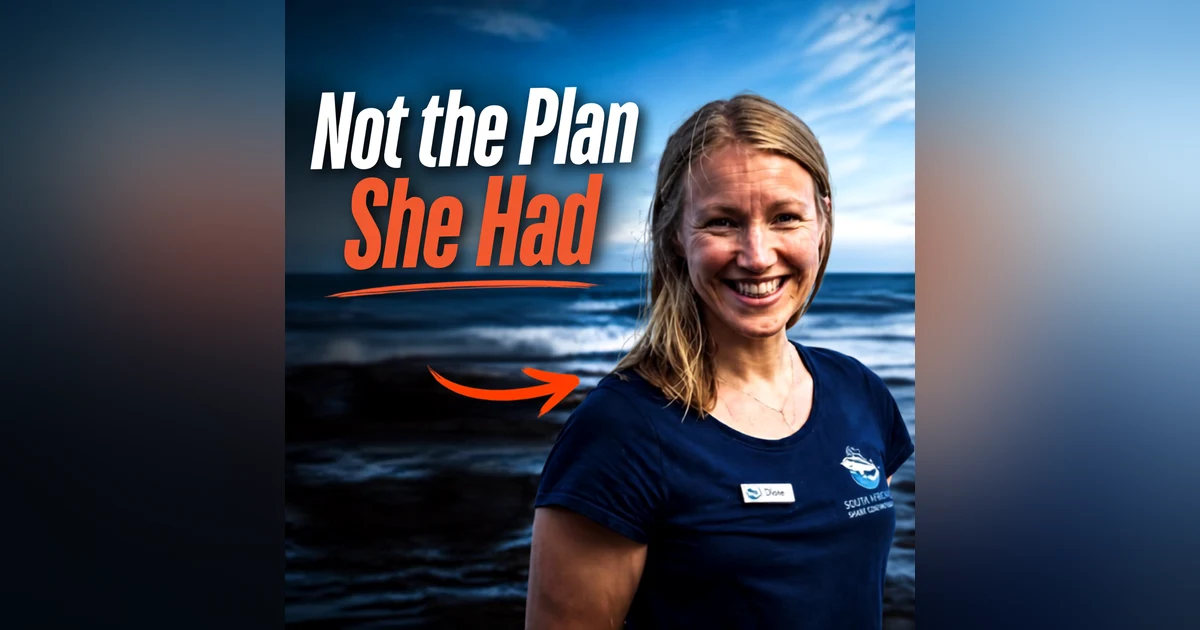
Dr. Clova Mabin never set out to become a shark educator. She grew up on Scotland's windswept, freezing beaches with no TV until she was 13, which meant a childhood spent outside with her nature-loving father, and an honors degree in zoology from the University of Edinburgh that ended up focused on bird behavior, not the ocean, simply because no marine supervisor was available. A three-month marine conservation placement in Madagascar gave her a first taste of the field. A chance meeting with a South African at a Scottish aquarium turned what was meant to be a three-month trip to South Africa into 21 years and counting. Today she's the Education Centre Director at the Save Our Seas Foundation's Shark Education Centre in Kalk Bay, leading a team that's grown from six people to more than a dozen.
Andrew and Dave trace the whole winding route with her: two weeks with ragged-tooth and tiger sharks on South Africa's East Coast and two and a half months working alongside Michael Scholl aboard the White Shark Trust's research vessel in Gansbaai, a detour into wildlife filmmaking that included a National Geographic shoot and three and a half years working under a longtime BBC Natural History Unit cinematographer, and a pivotal moment watching a mass whale stranding near her home in Hout Bay that made her question whether chasing dramatic film footage was really the work she wanted to do. From there it was a master's in conservation biology at the University of Cape Town studying invasive species hitching rides on yachts, a solo-adjacent transatlantic sailing crossing from Martinique to the Azores as a break between degrees despite never having spent a night at sea before, and a PhD at Stellenbosch spent leading a team that pulled 36,000 invasive European shore crabs out of a harbor whose official population estimate was 6,000, research that fed directly into South African invasive species legislation. She finished writing it up nine months after her first daughter was born.
Clova also talks candidly about applying for a different role at Save Our Seas and not getting it, only to be asked to step into the director's chair six months later, starting the job four months pregnant with her second daughter, and what it's meant to grow an education team into portfolios covering facilities, digital engagement, a nutrition program that feeds the school groups who visit, and a new research arm focused on how ocean connection shapes kids' lives. It's a conversation about what an unconventional, occasionally "unhinged" career path can look like when you say yes to almost everything that comes your way.
Takeaways:
- Clova Mabin is the Education Centre Director at the Save Our Seas Foundation Shark Education Centre in Kalk Bay, South Africa, a role she's held since 2019 after previously applying for and not getting a different position there.
- Her path to shark education ran through bird behavior research, invasive species work, a transatlantic sailing crossing, and several years in wildlife filmmaking, not a straight line through shark biology.
- Her PhD team removed roughly 36,000 invasive European shore crabs from a harbor with an official population estimate of 6,000, research that directly informed South African invasive species legislation.
- A mass whale stranding near her home in Cape Town became the turning point that pushed her out of wildlife filmmaking and back into graduate school.
- The Shark Education Centre's team has grown from six people to more than a dozen, now organized into education, facilities, digital engagement, nutrition, and a newly added research arm.
Save Our Seas Foundation Shark Education Centre (Kalk Bay)
- Website: saveourseas.com/sosf-shark-education-centre
- Instagram: @sharkeducationcentre
- Facebook: SOSFsharkeducationcentre
- TikTok: @sharkeducationcentre
- LinkedIn: Shark Centre
- X (formerly Twitter): @sharkcentre
Save Our Seas Foundation (global)
- Website: saveourseas.com
- Instagram: @saveourseasfoundation
- Facebook: saveourseasngo
- YouTube: youtube.com/saveourseas
- LinkedIn: Save Our Seas Foundation
Connect with us:
Website: https://bit.ly/37TMqeK
Instagram: https://bit.ly/3eorwXZ
YouTube: https://www.youtube.com/@beyondjawspodcast7591
Dave:
Website: https://www.lostsharkguy.com/
Instagram: https://bit.ly/3q1J9Q5
YouTube: https://www.youtube.com/@lostsharkguy
Andrew:
Website: https://www.speakupforblue.com/
Instagram: https://bit.ly/37g5WkG
YouTube: https://www.youtube.com/@SpeakUpForBlueTV
0:00 Today on the podcast, we're gonna be speaking to Clova Mabin from Save Our Seas. She's the director of education. We love Save Our Seas. We always have people on, and they always impress us to no end, and this is definitely no exception. We're gonna talk about her, uh, her experience and how she's an adventurer, and how she picked up, uh, going to across the Atlantic and going to South Africa from Scotland. And also, like, doing a master's and PhD with the projects that were just available to her on invasive species, and we're gonna talk all invasive species, all sharks. We're gonna talk about a bunch of different things because this career, I feel like is one of the, typical type of careers that people have throughout graduate school that I find that I've had an experience with.
0:45 So I think it's gonna be really interesting to speak to her. So let's start the show. Hey, everybody. Welcome back to another exciting episode of the Beyond Jaws podcast. I'm your co-host, Andrew Lewin, here with my co-host, Dr. David Ebert, also known as The Lost Shark Guy. And today we're gonna be talking to Save Our Seas Director of Education, Clova Mabin. Dave, like this was a kind of interesting one for me because, I felt like the path that she take, that she took is very typical of a lot of graduate students in terms of taking projects that are available through the funders. Like, a lot of the times, like, we've had guests on who have actually, like, sought out or have been referred to, to continue to do shark conservation or shark, theses, but I felt like this one was really apropos to what typically happens.
1:32 Uh, is this something that you've seen in your line of work? Yeah. I mean, that's very typical. Like, people listen to podcasts, you know, almost well, no one really ever has a straight trajectory from what they start out to do. I think what was unique with her is, unlike a lot of us, she really wasn't dialed in just on sharks. It was just more the marine environment. Uh, which is not unusual. I mean, some people- Right don't come till later. But she really was kinda, like, came kinda a little later to the game than a lot of people into the whole shark world. And none of her graduate studies really had anything to do with sharks really, or, you know, other than the, doing a, looking at invasive species, didn't really have a lot to do with the marine environment, or it was kinda minimal, I should say. Yeah. Um, so she wasn't even doing fish. She wasn't doing really anything related to sharks, which is kind of… Well, that, I would say that was probably the most interesting thing about her whole journey, was just where she was and, uh, how she ended up where she did because she really wasn't a, like, gung ho, "I'm looking for this ultimate shark job."
2:25 Right. Right. And, uh, and as you say, like, she's an adventure. I, I know her a little bit. I've known her for a while, but I had no idea on the, uh, just how wild a ride she's had to get to where she's at today. And, um, I think she also talks about, you know, finishing a PhD, becoming a mom, and,, all are all kind of interesting experiences, which you and I have never had to worry about and such. so, uh, but I think the women listening to this might be interested to hear a little bit of her story shared, uh, on that whole aspect. So, uh, so yeah. Yeah. So I'm looking forward to it. All right. Well, here's the interview with Clova Mabin. Enjoy, and we'll talk to you after. Hey, Clova. Welcome to the Beyond Jaws podcast. Are you ready to talk about elasmobranchs?
3:07 Yes. Thank you so much for having me. Yeah. You bet. You bet. Well, welcome to another episode of the Beyond Jaws podcast, and today is a great day because we have an amazing guest from South Africa. And you know whenever Dave has somebody on from South Africa, you know it's gonna be an amazing interview today. We have Dr. Clova Mabin, who has an interesting journey from her home country of Scotland to South Africa, where she is the, uh, director of the Save Our Seas Foundation Shark Education Center, and she's been there since 2019. It's located in Kalk Bay, which if you know that area at all, she's about to cross the street from the Brass Bell. And ah, do I have a lot of great memories of the Brass Bell, and I'm sure Clova must as well. And so we may have to share a story or two during today's episode, but I digress.
3:52 Clova's been in love with the ocean since she was a toddler, and has fond memories of windswept beaches, freezing water, and exploring rock pools until she couldn't feel her fingers or toes. This set her on a lifelong path, uh, where she started getting, earning her degree in biology with a particular interest in sharks. She came to South Africa in 2005 to work with ragged tooth sharks, tiger sharks, white sharks in the tourism and research, area. During this time she became involved with, in the wildlife film industry, developing her science communication and project management skills before returning to university to focus on marine education. Her subsequent master's and PhDs not only developed her scientific knowledge, but also allowed her to reflect on the importance in including people in the conservation dialogue and action.
4:34 Clova loves to travel, but when she's in South Africa she likes to spend her time outdoors, either underwater or in the mountains. She's a certified PADI Divemaster and scientific commercial diver. Uh, but since becoming a mom, she sees, uh, her field through very different lenses now. She understands the value of nature, connections, confidence and opportunities as early in life as possible. In addition to her role at Save Our Seas, she volunteers for several organizations that focus on environmental education. She enjoys teaching children about ecology and sustainable lifestyle choices, and she's passionate about sharing her love and knowledge of the marine environment, as she believes this is the best way to shape the future. Her educational background, she has a BSc and honors in zoology from the University of Edinburgh in the UK, a Master's of Science in Conservation Biology from the University of Cape Town, and a PhD from University of Stellenbosch, and she did a postdoc at SAAB, the South African Institute for Aquatic Biodiversity.
5:30 As I mentioned, she's currently the director of the Save Our Seas Foundation Shark Education. And well, with all that- … Clova, welcome to the show. Thank you so much. The organization, the name of our organization's a bit of a mouthful. Yeah. Yeah. It's okay. It's no problem. We have had, had plenty of people on from Save Our Seas, so I think everybody knows who we're talking about. Um- And, uh, Dave, I have to, I have to ask you- Yeah … I just like a clarification, and Clova you can clarify. You went to the University of, it's pronounced Edinburgh, right? Not Edinburgh. Edinburgh, yeah. I just found that out recently. That's why, not to, not to shame you, Dave. No, it's okay. I just found out recently, 'cause we're headed to the International Marine Conservation Congress, Oh Edinburgh, and I was told to say it that way, because then people will look at me funny if I don't say it that way.
6:15 Well, and I have- Well done. Well done. I'm from- And I, I have to s- I have to say, just as, from starting out, like, Scottish of the English language, is probably the toughest one I have to understanding. Interesting. So- Yeah … so I might, if I have to ask you for a definition or clarification, don't worry about it. I just, like, I have that, I have a hard one. Most of the other ones I get, but that Scottish I always seem to have a little bit of a issue with, so. Not Scotch people, just the language a little bit. Just the language. So, uh, um, the- I don't even have a strong accent, so I think you should be fine. Yeah, no. Yeah. I d- Absolutely. Yeah. Yeah, thank you very much. Oh, good. Well, so Clova, how did you get interested in sharks and the marine environment and all that conservation stuff? Yeah, I suppose, I mean, it started when I was very little.
6:55 My dad was, um, very interested in the natural world, um, so we were always outside. Um, so that's kind of how I found my connection to nature. Um, he had a particular interest in plants, and I'm sad to say I am not green-fingered at all. But we spent a lot of time outside. Um, I was thinking about this the other day. We didn't actually have a TV until we were 13, until I was 13. so we were just told to go and play outside. And I think that kind of really, yeah, cemented that connection to nature in general. And we didn't live close to the beach, but we spent, we still often visited the beach. Um, so I think, that kind of, yeah, I just loved the windswept, normally cold beaches in Scotland.
7:38 Um, and yeah, it just kind of kept becoming something that I kept going back to. Um, gradually getting warmer water as I went through my career. Although Cape Town's not that warm, so to be fair, I've gone backwards- Yeah … a little bit there. So I gotta ask, what's the water temperature up in Scotland? Well, um, it depends on the season, but, um, yeah, I probably, I did a lot of swimming when I was young in, like, And I was there recently. It was probably about six to eight degrees. Ugh. Yeah. That's, that's, that'll wake you up. Yeah. That'll wake you up. It's not c- it's not warm. I actually did my dive master in December in Scotland, in the Firth of Forth, which is just beside Edinburgh. Edinburgh. Right. and- Edinburgh, thank you … I remember it was so cold.
8:20 It was four degrees, the water, and we had to do multiple dives. And we would come out the water and, um, I remember we were mapping a wreck in the Forth, and, um, we would come out and we'd put our hands underneath, which we were in gloves and dry suits, and we'd put our hands underneath the motor to get the warm water that was coming out of the motor to try and warm up. It was, um, yeah. So it is quite chilly there. I learned to scuba dive and do a lot of diving in colder water, uh, here in California, sometimes you get down to 8, but 10, 10, 10, sort of 10 degrees. did you find it made you a better diver when you went to warmer climates, warmer water? I was not a massive, I was always a bit paranoid about dry suit diving. Um, and that added an element of, um, extra things to think about when you're diving.
9:05 So when you don't have that, I don't dive in a dry suit here, even though some people do. Um, but I think just removing that element means that you have so much more capacity to feel comfortable and to be able to do, and to, yeah, I suppose to be a better diver, um, without that. So I guess- Yeah … I guess it's easier, yeah, in warmer water. Yeah, 'cause you don't, you don't have all- You're less fear as well. It's, you're less clunky. Right. Yeah, you don't have- Yeah … the dry suit and all the other stuff on there and stuff. Yeah, I've, seeing most people when you learn, if you learn, like, in the tropical areas, then it's kinda like, eh. Then you go to the cold water, you really don't like it so much- Mm … um, on that stuff. So I'm just kinda curious how your, uh, your experience was. So when you started out, so you got interested in nature, environment early on, and then you obviously went on to university.
9:48 So after you got your bachelor's degree, how did you wind up going to South Africa? Uh, Mm … was there any kind of a straight line, or were you bounced around at all, or? Just between my third and fourth year, so I finished my bachelor's and then I did my honors also at Edinburgh. Um, I did a three-month, um, stint in Madagascar. it's doing kind of like, um, it was a marine conservation project with an organization called Frontier, I don't think they're around anymore. Um, where we lived, we basically lived on the beach, and we would go out every day diving, doing dive surveys, surveying the coral and, all the marine life. that was kinda my real first, like, immersion in the marine conservation space. Um, and also, I mean, I'd been to Tunisia and Morocco, the Northern African countries before, but that was, like, my first time in Southern Africa.
10:34 And yeah, I just kind of got a bit of a taste for it, being there for three months. And I did my honors, randomly on birds. Um, so not marine related at all. Um, but then I, because of that kind of time that I'd had in Madagascar, it set me up to, um, get some work as a diving aquarist at an aquarium just north of Edinburgh, um- Okay called Deep Sea World. And yeah, I was working, it was kind of, well, similar to a lot of these other aquariums where they have raggies, um, and we would take people in diving with the raggies. That would be kind of one of our- Wow … um, our job roles. Um, and so When I was there, I met someone, there was a South African that came, um, to the aquarium, and he had a Scottish girlfriend.
11:17 And between them, they convinced me to move out to-- Or to actually, I was only meant to go for three months. 21 years later. Um- Famous last words, yeah. Yeah. So I was all set to leave my job there and go for three months to South Africa. Um, and that's when I combined a trip to the East Coast to KZN, um, to work with raggies and tigers. Mm-hmm. And then also, working with, for the bulk of the time was really spending some time in Gansbaai, um- Mm-hmm … working actually with Michael Scholl, um, for the White Shark Trust, Oh, yeah. Okay … on his research vessel, Namidii. so- And this is part of the three months. This is all part of the three-month stint. This is all part of the three months, yeah.
11:58 Okay. Okay. So I had, I worked two weeks in, in, on the- Yeah … East Coast- That's amazing … and then two and a half months in, Gansbaai. So- Yeah. Okay. Okay. So that- Yeah, that's kind of how it all happened When you did your honors, when you did your honors, you went back to do your honors. That's like a fourth year in, for your- Yeah … undergraduate. Is that what that is? Yeah. Did you-- you mentioned birds, and I'm just curious, like, did you get a choice in terms of the project you wanted to do and you were just curious about that? Or was it just more of like it's assigned to you and this is something that you're like, "Oh yeah, I'll do this 'cause I wanna get my honors done"? I kind of was pushing for something marine, but there weren't any supervisors available in the marine- Gotcha … um, that had- Okay … marine projects that I could kind of slot into. Right. Um, so yeah, it was actually an animal behavior Something to choose.
12:39 It was a, a- Okay a prowess behavior project, so I was interested in behavior. Yeah, which is super interesting. Yeah. Um, and so I kind of thought, "Oh, well it's not really marine, but at least it's got some elements that are interesting." Yeah. mm-hmm. Now, do you find, like, going out of that, initial interest, do you find that's helped you in your career, you know, like afterwards, you know, just to have that perspective? Um, Yeah, I haven't really thought that much about it, to be honest, for a long time, but, um, I think any variety helps you- Right … in your career, um- Yeah … see things from different perspectives or think about things slightly differently, so- Right … I suppose in reflection it probably has. Right, right … but it's not something that I've reflected on myself. For sure. Yeah. It's a good point. I'll think about that now. So, yeah, when you, when you were in w- b- when you were back home in Scotland, did you ever see, like, basking sharks or have any experience with sharks there outside the aquarium?
13:27 Sadly, no, I haven't. Okay. I've been wanting to do the basking sharks for so long, and, uh- Mm-hmm I wanted to get together with Isla and, um- Isla's about to, yeah … go out with Basking Shark Scotland. But, um, actually one of the guy that started Basking Shark Scotland, Shane, he actually worked at the aquarium with me. He was one of the diving actors- Oh, cool … as well. Um- Okay … so it's a small world. But, um, yeah, I've been wanting to do that but haven't, I've just, and then, yeah, it's become a bit unpredictable, the window now, so every time I've gone back, I've kind of thought about it, and I thought about doing it for my 40th actually. Um- Yeah … just never really got, I didn't quite get the window in. It was getting smaller and smaller, and it was, yeah, it was just too tricky. but- So- … one day hopefully.
14:09 Yeah, so when you were, you were doing, you talk about you, you worked on birds and then you worked on, like, invasive species. Like, as far as with your master's or PhD, you really didn't work on sharks directly, did you? No. So other than the work as a research assistant, um, where I was working on sharks, and then- Mm-hmm … yeah, just kind of always kind of having kind of, like, a touch of it in my life, then, I didn't do any re- my own research on sharks, no. Yeah. And then so, yeah. W- I mean, 'cause that's really interesting but you had that interest, that passion to wanna work on sharks, but you just sort of take… when like came f- like your master's and stuff, like what kind of prompted you to decide, like, you're already in South Africa, you were doing shark stuff already, and I presume after the three months or so you decide, "Well, I'm gonna stay here." What was your thinking like?
14:57 Were you just gonna stay there and work on sharks, or what was your kinda thinking at the time? So actually, I did actually go home after three months. Oh, you did? I went back to Scotland. Okay, you did stay. Gotcha. I went back to Scotland for a week. Okay. It was meant to be back to Scotland for good, and then I actually got a call, um, from a friend of mine, um, who was working for National Geographic. I'd met him on the shark boats and he said, "Why don't you come out and," there was a shoot they were doing actually on baboons, um- Cool … for National Geographic, and he said that they were looking for a production assistant. So he said, "Why don't you come and do that if you're not doing anything?" so I went out again a week later, um, and stayed for another, three months.
15:37 And then so I did that for a month, and then I did another two months with the White Shark Trust, after that as well, So, so this is interesting. Now, okay, so you go back for a film, like as a production assistant, which is completely different than what you were doing and sort of on your other aspect. I love these sort of, these tangents. Was it just like, "Hey, this is a way to get back there, and I know I already have contacts so I can work with the White Shark Trust"? Or were you generally interested in wildlife filming? 'Cause that obviously is an interest that a lot of people go. You're working for Save Our Seas, which is definitely interested in wildlife films and so forth. I'm curious to know your thinking around that. Yeah, I was definitely interested in wildlife film. Um, and I kind of had immersed myself a little bit in that, um, as I'd been going along.
16:19 I always loved watching documentaries, and I never made anything of my own, but it was something that I was really interested in. so yeah, that kind of seemed like a ideal opportunity to try have a taste of it. Yeah. Um- Love it … And so then actually after those three months I then went back to Scotland again. I did a teaching English, English course randomly, for a month. And then I saw this job come up for a wildlife film course coordinator in Cape Town. Okay. And so they had started the Wildlife Film Academy it was called. Okay. And they were looking for a course coordinator. Um, and so I went back out again. This was kind of the start of it being more permanent now.
17:00 So then- Yeah … then I, and then I stayed there for, I was there for a year and a half doing kind of like all the logistics and the planning and the supporting, but I was also getting to experience all the courses myself. I would sit in on all the classes. Of course. I would go on all the field trips. They ran courses for a month at a time. Yeah. And each course would go on a week-long field trip, and then they would come back and edit, and I would be part of that whole process. So I had like a year's training, being trained up as well. That's amazing. Um, in this. And they're paying you to do it. And they were paying me to do it. Yeah. I mean, I was in my 20s still as well, so it- Of course … seemed like a dream. Um- Yeah. Yeah. And then I went from there, I actually, one of our lecturers on the course, um, Richard Matthews, I then, he had a wildlife film company in Cape Town, but he had been working for the BBC for the natural history unit as a producer for 20-something years.
17:44 on blue-chip films. And then he was looking for a researcher, and production manager. So then he asked me to go and join them. And so then I went from there to kind of a slightly different role. And then I was kind of in the wildlife film space- probably for the next three and a half years after that. Um- So you- Yeah … in a place where there's, like, a lot of filming going on 'cause there's so much diversity of, environment that you can film, right? To be honest, actually, it's funny you say that because, and I know that you're from Canada, um- Yeah. So I, and I've never been to Africa, so … we actually did most of our filming in Canada. Oh, really? That's hilarious. Yeah, so he worked on these big blue chip productions. Yeah. So he did some odd, like, odd, like, he supported other film crews that were coming to Africa, and he had a whole lot of, um, aerial work that they did.
18:27 Um, he developed one of the first, um, gyro-stabilized, for a- um, light aircraft- a camera system. Um, and but we actually spent a lot of time and we, we were working on a big film about wolves that took us almost the full time I was with him. so from start to finish, we were filming in both BC, both in the Great Bear Rainforest and in the Rockies. so you didn't really have any, like, set plans or, like, you wanted to be in production or film or anything. You just, it was sorta through opportunities, people you met, contacts. You kinda got off on this journey going into, like, the film industry. I kind of did, yeah. It seems a bit, unhinged when I think back about it.
19:07 Well, it- But I didn't really have a game plan clearly. But I was just kind of taking the different paths as they came along. 'Cause, yeah, a lot, obviously with a lot of young people they think, "I'm gonna become a wildlife photographer, and I'm gonna go-" Yeah … "do this and I'm gonna do that." And they, course nothing ever happens, and you sorta, like, I don't know what the right word is, stumbled or fumbled or whatever wound up in that world. That, that's- Yeah. So a lot of lucky breaks. You didn't do, like, a whole bunch of, like, photography or any of that stuff before you got involved in it. And then so you literally learned on the job. I was doing behind camera, but I wasn't doing much of the filming myself. Okay. I was doing more finding the content, developing the content, contacting the scientists, building the stories, writing all the supporting documents, and then the planning of the shoots.
19:52 Like, 'cause we would go for a month at a time to Canada, across different seasons. And so I would do all the kind of production management, the planning, the budgeting, all the kind of support work for the filming as well. So I mean, I've always been quite an organized person, and so that kind of, felt, came quite easily. I mean, I loved photography, but I- Yeah … I don't think I had the skills. But no, still you're in that who- you're in that whole world that, I mean, a lot of, again, a lot of young people coming up, that's what they wanna do. Whether you're working on content or filming and stuff, I think that's gotta be, is definitely one of the more interesting, uh, routes of anybody I've talked to get into that world. I must say, though, actually, that something like, one thing, I mean, maybe it's a tip for people that are trying to get into that field.
20:32 But something like Wildscreen, um, I volunteered at one of the Wildscreen film festivals in Bristol, which is the kind of like the Jackson Hole, that every second year then they do Wildscreen. and volunteering at something like that is also a great way to kind of get your foot in the door. I think I did it in 2005, um- Okay … or 2006. I can't remember now. Um- Okay … but yeah, that was also a really good way to meet lots of people, um- Mm-hmm … if you are trying to find your feet. So that could also be something that- Yeah yeah, is a good tip. So, so you, so you did that for a few years, and then at this point, you still hadn't gone back for your master's. You were just still doing mostly the filming stuff, right? Yeah, I kind of had a quite a pivotal, and I remember the moment, to a T, yeah, I was living in Cape Town, but in a different part of Cape Town, in Hout Bay, if you know Cape Town.
21:19 Mm. Oh, I love Hout Bay. Um, so on the coastline. And I remember hearing basically that a whole s- a whole pod of whales had beached themselves. quite close to where I was living. And I think there was 50 or something. it was huge. and they were looking for volunteers to help them. And actually, another thing which I've completely forgotten about was I'd once done in the UK, I'd done a marine mammal, um, what do you call those? A marine mammal stranding course to support- Oh, yeah … marine mammals and to get them back- Yeah … into the ocean. Um, and so with that, also that experience in the UK, I thought I'd go along and try and help. and I remember, the wildlife filmmaker that I was working for at the time, he phoned me as I was driving there, and he said, " Have you heard about this?
22:01 Can you tell me where I should come to get, like, the blood and the tears of people and, those important shots to build a story?" Mm-hmm. But for me, I just kind of thought, this is it. I'm not sure I'm in the right field anymore." I, I don't know if I, I want to be going for those shots, even though I understand they build a picture, and they have an impact, and they help people realize their emotions- Mm-hmm and possibly want to connect it with the ocean. But for me, I don't know whether this is right for me. Um, so kind of after then, after that point, I decided I was gonna go back and study more. Um, so then I applied to do this master's in conservation biology at UCT. Yeah. But now, and there you w- and what'd you work on there? Was it- Crabs or something, or?
22:44 No. That was my PhD. Okay. Um, so again, it was a bit of a similar situation to my honors actually, that, um, I wanted to do something on sharks, but there wasn't anyone available, who could support me in that at the university at the time. Um, It was a part coursework. That master's is a part coursework. It's over 14 months. Um, so it's a very intensive, 10 months or something of coursework, or nine months of coursework, and then, five months of, thesis. What was kind of available to me in the marine space was, actually looking at recreational vessels as vectors for transferring invasive species, marine invasive species. So particularly looking at yachts and their roles, um, in terms of fouling, um, for transferring invasive species around the world.
23:29 Okay. Yeah. Okay. I see. So it kind of combined a little bit of my diving. It was also an opportunity, and I was kind of realizing at this point as well, that I really wanted to do something applied. So I didn't want to do something, necessarily focusing on something just like, just behavior change, um- Mm-hmm … or something kind of very ecological like that. I wanted to kind of have something that I could see the application of it, from the get-go. Okay. Okay. and it was at a time also where, um, South Africa was really looking at its invasive species legislation, um, and it was becoming really important that they understood, um, how invasive species were getting in. Yeah. so you get your master's degree and, and then what? What'd you do? What'd your next step from there? So then from there, I decided to do… So my story does sound a bit unhinged.
24:16 Sorry. Um, then I decided to do a transatlantic, crossing. And I sailed from- Sure, why not? Martinique to the Azores, on a big, a big yacht. Um, there was only three of us as crew. Um, but that was, yeah, I kind of needed a proper break from the very intensive master's. Um, and so, yeah, sadly we didn't do much sailing because there wasn't much wind. So we- Yeah … ended up motoring. It was a delivery. Um, but we ended up sail motoring across. I've been a, a sailor for many years. and so- Oh, okay … that also was why I had chosen that, um, the recreational vessels, for my master's, because I had the links in the yacht clubs and I could, Yeah. Yeah. Oh, okay. It was quite easy to do.
24:56 I think it's really interesting- But yeah, so I did the, I did the crossing. That's awesome. Okay. Your story's very interesting because it seems like every once in a while you do these, like, adventurous things, like go down to South Africa, which is, you know, obviously a far place from where you grew up in Scotland, and then you go on this transatlantic voyage- because you had these ties, which obviously is, amazing and it builds, like, the character and adventure in your life. But when you're at the time and you're like, "I need a break," They can be difficult decisions because you're like, you can lose momentum in your career, some people think. Mm. I know I thought about that as well. and it happens. Like, I feel like your story's like we go in and out of these things, and we go with what's given to us and what's, presented to us. What do you think drives that sense of taking a break and enjoying life, for you in particular?
25:39 I could be off too. You might just be like, "No, no, I just did it 'cause I felt like it." Who knows? I don't know. That's a really good question. I think I'm gonna have to reflect on that a little bit more- … about why that. I don't know. I've never really thought about it like that before. It's a therapy session, Clova. It's also a therapy session. Yeah, I know. I do feel like this is- Yeah … this is good. People would pay for this. I mean, there's obviously something in my character that drives that. Right. Um- Yeah … I'm thinking actually even going forward, there has been quite a lot of that. It con- continues in my life- Yeah … these little moments. but I mean, also to be fair, I did actually already have a job lined up for when I got back from that trip.
26:19 so I wasn't completely, making kind of irresponsible decisions or anything like that. Like, I had the security- No of knowing that I had a job, um, to come back to. Um, and they were willing to wait for me while I sailed across the Atlantic. so yeah. I mean- And they were okay with that? Yeah. That's so cool. I mean, yeah. I'm lucky to- That's a good, that's a good employer … to do it. Yeah. That's awesome. That's awesome. Had you ever sailed across the Atlantic before you did that? No. Just promised- I'd never done any proper, like courses or any proper sailing. I'd only done races. And actually in Cape Town, with the yacht club there, they have, like, a Wednesday night series. So I'd done a lot of like Wednesday night racing yachting. Um, and then kind of day races. But I hadn't really, I spent that amount of time on a boat.
27:01 Yeah. so you haven't spent that much time on the boat, but you're sailing across the Atlantic. I clearly don't do things by half measures, do I? Clearly not, no, no. I have to admit, when I was younger, my first marine job, I was a marine technician on a boat, on a 100-foot boat in the Gulf of Mexico. And one question in my phone interview was, "Have you ever been on a boat before?" I said, "Yeah, yeah, of course." Like, "Have you ever been overnight on a boat before?" I said, "No." And they're like, "Do you get seasick?" I'm like, "I don't know. I don't think so." And they're like, "Okay, you're hired." I was like, "Oh, okay, great." So I lived on a boat for like eight months. It was awesome. Wow. I used to spend, go down to the, um, the yacht club there because, had some people I knew, were big in the sailing community down there.
27:45 And Cape Town has a big sailing community. One of the, uh, women that used to work at the museum where I was at, her husband was an around the world BOC solo sailor. Wow. And I tell you, those guys are a completely different breed of people, sailing all the way around the world by yourself, especially when you leave Cape Town, if you're sailing to Australia across the Indian Ocean. that's gotta be- Yeah … one of the most harrowing things- That as well … you can do. And, um, so- I mean, I would love to do something like that one day, but I don't know. Well- I have a different life now. I d- I can't quite be as adventurous. Well, what I was gonna say is I always thought it'd be kind of a cool thing. Like, yeah, I'll sail around the world. But I tell you, when you watch those guys sail into Cape Town that have been out sailing around, 'cause they used to come in there and stuff. And this guy, one guy who, the husband of one of the women that worked at the museum there, we'd meet these guys, and you see these guys come in, you're thinking like… And I was pretty young and adventurous, I think like, "No, I'll just do the day sailing around here." And I, I love being on boats, but man, when you hear these stories, these guys having to drop down the Southern Ocean to catch the currents to get to like Tasmania or some place, or Perth, man, it's like… and those guys used to sail in there, 'cause it's a big- Yeah … as you probably as you know, it's a big thing there.
28:55 So yeah. It's, um my hat's off to you to sailing that thing- Yeah … on, being out. Especially you didn't even know, like- I learnt a lot. I learnt a lot about myself. Yeah. Oh, I could totally believe it. I mean, it's, it's, uh … Well, I used to go out on the Africana there, like, we'd go out for, like, 30, 40 days at a time, like Andrew did. Like, I loved it I always thought, like, a good business to have is, like, you take couples out, kind of a premarital thing. Like, take them out for three weeks because you- Put them, put them on a boat put them on a boat, 'cause you hear, you al- Everybody talks about week three. Yeah. And, like, the first week or two it's okay, but about that third week you're either gonna get along great and got a good future, or it's like, "Get the fuck out of my life." It's gonna be like… Yeah.
29:36 So, um, anyway, I thought that'd be kind of a good, Well, I think also they should do field work, because it's not just being on the boat. It's- Well, no … even if you do fieldwork, as, arduous as it can be- But, yeah … doing the field work is, on the boat can be even, even worse- No. Oh, yeah. No, the- … just when things go wrong Oh, yeah. No, we'd start, like, 6:00 in the morning, go to, like, 6:00, 8:00 at night. That's just the stuff you had to do. And then, so no- Yeah you're working. I mean, I both, you guys spent time at sea, both, obviously. You're working pretty much on a boat. We're not doing, like, the Carnival Cruise Lines or something. This is like- Right. Yeah … you're doing something all day long. um, so okay. So y- you've sailed across the Atlantic. You've been to South Africa and Madagascar and Canada. And so you came back for your job after your sailing adventure, and- What fun stuff did you do now?
30:21 So then, in the life of Clova. Um- Yeah … then I was working for an environmental consulting company that had a marine focus. And, um, I actually, because of my invasive species kind of experience, I was actually brought on to work, testing a ballast water treatment system. Well, it was the first in South Africa, yeah, it was kind of going through the IMO, um, International Maritime Organization. and they were testing this system to be rolled for ships. It was quite interesting designing experiments and testing how it worked. Um, and then I kind of just got into a lot… So there was, uh, there were several other projects, mostly diving related, where we'd, I don't know, we went to Mauritius on a dive project.
31:04 Also surveying a lot of the ports baseline surveys, especially South Africa, looking for, um, invasive species. So documenting what we were finding so that they could look and see how that changed over time. but then just other also ecological surveys. Um, that was about another two and a half years there. and then I just kind of decided I wanted to actually go back and study some more. So then that's when I started looking at my PhD, um, at Stellenbosch. and that's kind of, again, because I'd got into the invasive species field, but sticking with the marine side of things, I then decided to do a, a very applied PhD looking at, um, the European shore crab, which is an invasive species here in South Africa.
31:46 Mm-hmm. Um, and it's invasive across many parts of the world, including States and Canada. and then, yeah, kind of looking at, it was listed as one of the species that the South African government needed to, um- well, was looking to manage. Um, and so my PhD was actually funded by the South African government to kind of- Mm find out whether it was possible to manage it. So looking at its current distribution, um, whether it was having any impacts both up and down the, food chain. Um, and then looking at management options for it, whether it would be possible to, eradicate. So yeah, I actually had a team of, had a team of 10 people working for me full-time for a year, catching crabs every day Mm-hmm in the harbors, um, in Cape Town, and, different harbors.
32:31 But we actually started with the smaller harbor where the population was only meant to be 6,000. the latest population census had brought it up as 6,000, but we took out 36,000 and the numbers were not getting much less. We never hit a day where we caught zero crabs. Mm-hmm. So yeah, it was basically the conclusion of that was that it wasn't possible, Yeah … to manage it. Um, so it's been, yeah. and that fed straight into the legislation. Mm-hmm … so yeah, it felt like very useful, useful research, to be contributing to. You went to Stellenbosch versus University of Cape Town. Do they have a program more geared towards that, education? So they had a, a center of excellence at the time. I think it's been changed slightly now, but it was in the CIB, the Center for Invasion Biology, there, which was part of the, Botany and Zoology department.
33:15 Um, but yeah, it was a very good, department there. And that's actually where the links to, um, SIAB, were. For my postdoc afterwards, I worked with Olaf, from SIAB. Oh, yeah. Yep … because he had the invasive links there as well. Yeah. Okay. That's right. Okay. I, I was kinda cur- I was gonna ask my next question, how'd you get connected with SIAB over there, so, okay. Mm. Oh, that's cool. So on this whole journey, other than your early on, you really haven't had anything to do with sharks most of the journey other than just like maybe as a side passion or something? Yeah, I mean, it kind of was like that, but it was also, it had a strong marine focus in South Africa, and I knew what was there and what shouldn't be there. and also then just building the very kind of applied and the science communication skills.
33:57 Um, I think, yeah. I did have a moment of panic when I heard about the job coming up, at the Shark Centre and thought, "Oh, am I a shark expert really, um, compared to everyone else?" Um, but yeah, it seemed like it's worked in my favor. So, so, so- The other skills that What was, kind of prompted you to want to apply for the job at Save Our Seas there? So actually, interestingly, I applied for a different role. Um, they actually had an education coordinator post come up. I didn't get that. Um, and so that kind of made me question things a little bit about what I wanted to do. Um, but I mean, also now looking back at who got the role, it was the right person.
34:38 It definitely was the right person for the role. but then, like six months later, the director, resigned and she, she said to me, "Are you interested?" and she said then at that point that I was actually-- she had thought that I was too senior for that role as well, and I probably would've lost interest after a while. Um- So yeah. Then-- and then I went into the director role. So- Okay … yeah, it's been a, it was kind of a, bit of a mixture of kind of the feelings, managing rejection and then, seeing it in a different light. So Was Michael Scholl still there when you went in there, or was it, or James taking over after? He, he was for a little bit, yeah. Okay. So he was there for the… He was… So also, obviously he knew me, um, which also- Yeah … which also helped.
35:20 Um- Right … so he, he was there for, I started in 2019. I think he left at the end of 2019. Yeah. Okay. Okay. Yeah. I was actually, I was actually four months pregnant with my second child, when I started. Which they obviously knew about. It wasn't a surprise. Of course. Right. Of course. Okay. Yeah. Yeah. Um, but yeah, I was actually on m- then, so then I started, and I was only there for five months, and then I took six months maternity leave. Um, and then by the time, actually, by the time I came back, um, Michael Scholl had already left. Um, so I was- Okay … only actually working with him for five months, um, yeah. so all this other stuff you had going on, PhDs and consulting and working on jobs, you, somewhere along the line you had your first child. And then you're pregnant with your second one now.
36:00 You kinda left out what seemed like a little bigger deal than you- Which was my life. Yes. Yeah, I actually, I actually fell pregnant with the first during my PhD, which- Okay … wasn't meant to happen, but, um, life has a funny way of going sometimes. Um, so yeah, I think I finished my, handed my PhD in when she was nine months old. She was just on the verge of crawling, and I was kind of thinking, "Just stay in one place a little bit longer. Don't move. I just need to finish this and get this PhD in before you, you get really mobile." Yeah. Yeah. Um, so yeah. Well, we just had, uh, Chris Dudgeon on there, and she was a similar thing. She had her, I think her first, first when she was finishing her PhD as well, and she talked a little about… becoming a mom, like trying to finish up your PhD and, and all that stuff, which is, um, I can't even- Which is like, let's be honest, it's insane because like a PhD, I've never done one.
36:52 You guys obviously have done one, but from what I've heard, it's like a job and a half. Yeah. And then you have this little human inside you that is growing and changing everything in your body. as someone who watched my wife go through two births, like it's gotta be a, a, an ex- I say extra challenge, but Did it play a big role in how you finished your PhD? Or, or how did you… I guess the question, how were you able to manage doing both at the same time? Because obviously, you know, you're doing it because you gotta do it, but like how did you get through it I guess is the question. I don't really know. Maybe that's my sense of adventure. Maybe that was my That was, that was where it came in again.
37:33 I was like- Yeah … let's just try this next adventure. Right. They're not sailing the Atlantic again, so what the heck? Right. Yeah. Scottish people also get the reputation of being quite stubborn at times, which helps with determination. Um- So, maybe there was an element of that in there. Um, I did also have a very supportive husband once she was born, then that was also very, very helpful, because, yeah, I mean, I remember I had a standing desk, and I would stand with her in the carrier, and I'd be typing at, like, 3:00 in the morning when she wasn't sleeping. Standing, writing up, trying to finish everything. but yeah, you do it because you don't really have a choice. Yeah. Yeah. Yeah. You- Yeah you just get on.
38:14 I knew I had to finish 'cause I also didn't want to, I mean, I still was, I was trying to finish up my lab work when I was still pregnant, and 'cause I also had a whole genetic component to the, um- Mm-hmm to my PhD. But, um, I was trying to finish that up and to be done with that so that I could just do the writeup afterwards. But it was, yeah, it was tough. Yeah. Yeah. And look, I, to be honest, in retrospect, I am kind of a little bit sad that I did it that way, um, because I did miss out on quite a few special times at the beginning. Right. Um- Gotcha. Like, I did have to- Understand … go through to the university on the weekend when my husband wasn't working. I would go through to uni, and, um, so I did miss out on some special times, Yeah … which, yeah, there's nothing I can do about that now- Yeah … but, make more special memories going forward- Yeah I suppose.
39:02 Yeah, it's going forward. Of course, I was there in Cape Town at the museum there writing up my PhD, whatever, a long time ago. So I, I can't even imagine trying to, you know, I've talked to n- women, like we had you, we had Chris Dudgeon on recently and we've had others that just, I don't, my hat's off to you how you're able to pull that off, 'cause it's a ton of work to do. And yeah, anyway, so well, congratulations, you got through that. Then you got on Oar To Save Our Seas. Do you have two kids now? Is it two? Two girls, yeah. Two girls. Two girls. Okay. A seven-year-old and a nine-year-old. Okay. Okay. Yeah They kind of sound like they're getting to a fun age now where you can have them, take them out, um, show them what mommy does. Yeah. Yeah.
39:42 I must say it's really special. Like, I mean, now they're kind of… They're at the age when they're comfortable in the water. We can take them, um, into the water. We went snorkeling at Cape Point the other day, um- Cool … well, it's summer now, and, um, yeah, took them to see some of the spotted gully sharks. And so yeah- Wow … those kind of things are really special to share with your offspring. Yeah. So it's like a different, yeah, it's a very different- Yeah … experience. I gotta bring up this before we get, before, let the show gets away from us. But the, um, brass bell. You ever happen to cruise? 'Cause the brass bell is like- What is the brass bell? My God You wanna explain it or do you want me to? It's so funny, Dave, because I think we've talked about this in person before, and I don't know whether you remember my response to you.
40:23 So the Brass Bell's a pub in, um- Okay. Yes … in Kalk Bay, which is close to where my office is. but I'm not a fan of the Brass Bell. Sorry, Dave. You're not? Ah. Well, it's- And it's actually- … it's been a long time … a point of contention between my husband and I, because he loves the Brass Bell. Oh, okay. Um, and he always wants to go to the Brass Bell, and I never want to go to the Brass Bell. Oh. I have a thing about rats, and it's in the middle of the harbor, and for me- Yeah … there's, like, I've seen too many rats there- That, that- … and it's an eating place, and it's just, ugh. I don't know. See, that's changed a lot. Now, I was there, like, back in the late '80s, early '90s when I was going there, and it was definitely a place to go. I've been to the center there at, uh, at Kalk, the Save Our Sea Center, but it was before you were there. And that's why f- remember, a couple times we walked across.
41:04 Well, this was when Leonard Compagno was still there, showing up there, and we'd go across and s- and that, and ha- the Brass Bell. But when I was a graduate student back in the late '80s, that was the place to go if you wanted to have a good time. And you go out on the weekends, you sit outside. They'd play some music. They have these amazing seafood buffets. And, um, Paul Calley and I were like, we had our own special corner they'd literally had set up for us. And the best part is that train pulls up right in front of the place- It is … so you can just, you just hop on the train. Just make sure you get off at the right stop. Somewhere, and I was living down in Rondebosch at the time, and so as long as I, as long as I got off at the right stop, we're all good. anyway, It is a beautiful part. It's- It's a, in a beautiful location. I don't remember the rats running around, though. That was a, a th- Now that you've mentioned that, I remember you, but I don't remember the rats.
41:47 But, maybe next time I'm out that way to the center, maybe if your husband comes by, him and I can go over and- You guys can go together enjoy a, enjoy a couple pints. Oh my God, I'm sure we'd have a few, we'd have a few times, like, old memories and stuff. Anyway, digressing. But as everybody knows, I have such a good time talking with South Afric- … people in South Africa, it s- just gets me going and stuff. So, Yeah, I have a question just about, you being the director, of education at, Save Our Seas. When you first started, I think it was there a team of… You can correct me if I'm wrong, but I believe it was, like, a team of six, and now it's, like, a bigger team. So I think it's at 14 or 15, uh- Mm people now. Yeah. like, what did you learn from building that team? and it seems like there's a lot of different levels to the education, right?
42:28 Mm. There's, there's from, like, the high school, primary level. How has that program grown along with the team, and how did Save Our Seas decide to go the route it did with the different scales of, educating the public? Yo, that's a good question as well. so I think it kind of just happened a bit organically. Mm-hmm. It wasn't necessarily intentional to grow the team that size. Um, I mean, I think James Lee, the CEO of the foundation, is always a little bit, shocked whenever the organogram's put up there. The Shark Center, the Shark Education Center team is, like, massive, and the other centers are quite small in comparison. but I think it just kind of happened, like it kind of… So we, we also have a, like the facility itself, so we've actually got a facilities and administrative team, um, and then we've got the education team.
43:17 Obviously, operationally, most of our programs are educational programs, but we also have the facilities team that supports all those, programs, as well as we've got the digital engagement side, and we've also got a nutrition program as well. Um, so because we feed the school learners and the community groups that come to us. It kind of happened that we actually had a big restructure at the end of last year. We actually just had educators and different levels of educators before, but then we split them up into the different kind of portfolios or programs, towards the end of last year. And one of the kind of things that actually, more recent change, which grew it even more, was that we've added a research arm to it now- Cool … Historically it was actually called the Shark Center. It opened in 2008, um, because in 2028- So it's a physical building it's our 20th anniversary.
44:01 Yeah. It was actually a research center to start with. Okay … and then the research fell away. Uh, so it was just called the Shark Center, and then it became the Shark Education Center in 2012. And then from that, it's kind of been mostly education. But now we're kind of building back into the research side of things, but mostly on the social science research side of things, and looking at ocean connections and heritage and how those all play a role in marine education. Okay. Okay, cool. Well, that's really interesting. So these are kind of your plans right now for your future? where you're looking to take Sea the Centre head towards? I mean, we're busy with the strategy at the moment. Um- Okay … this is our time of year where we're always working on strategy for the next year.
44:42 so yeah, I think really it's to grow that research kind of hub. We're wanting to grow this research hub where we-- because we have so many, school groups that come to us and so many, opportunities for learning about the role that, um, ocean connections can have, in education and, um, how positive ocean connections can be. I think there's a lot of interest from academic institutions, to work with us. Mm-hmm. So yeah, we've kind of had quite a lot of requests that's been building over the years, but we kind of are really kind of establishing this research hub at the moment. Um- Okay … and that's, yeah, it's very exciting. We started a really exciting project with Wits University and the Origin Centre, , towards the end of last year, beginning of this year, looking at, um, grade three learners.
45:25 So they're probably, like, seven or eight, maybe eight years old. Um, and looking at how connected they are to the ocean before they come to us, and then kind of following them on their journey. Um, and also working with the teachers and looking at their ocean connections and how it plays a role in their teaching. so yeah, there's some really exciting, exciting work that's kind of on the horizon. Neat. It's really cool. Like, uh, when, when you do this type of research too, obviously, like, you guys have a phenomenal, communications team, and I feel like education and communications are very closely related. Uh, is there research going on with how to communicate to different audiences or any research at all in line with the education and communication team?
46:06 They actually use our offices. Um- Right … so they have a office space in our building, but they actually report directly to HQ. So they kind of function almost as a separate center. Gotcha. Okay. Our communications we kind of manage science communication in our space and kind of in a slightly different way. And we have a very different target audience. So where the, um, the comms team for HQ is very global, our target audience is much narrower. Um, we're mostly working with under-resourced communities in Cape Town. Um, and so when you have a different target audience, you have a very different kind of approach. Um- Yeah, of course … and also we're working with much younger people. We have a very strong social justice element to our work as well. Gotcha. When you guys get this up and going, definitely we'll be talking.
46:48 I'd love to have you come back on the show and share a little more about this as you get this move forward, this program. It'd be really good to hear and hear how your progress is going and stuff. But for now, I'd like to just ask you kind of our sort of wrap up here. There's been an amazing talk with you, but what advice would you have for a young person starting out? Gosh, well, I think my journey my journey's anything to go by. I would probably say just try anything you can. Yeah. Yeah. Um, just jump at every opportunity that comes your way. I know that especially for a lot of young South Africans, there's not many opportunities, that come their way, but you've got to put yourself out there. Um, I do recognize, obviously I'm coming from a very privileged upbringing. but I do think a lot of it, some of my success can be kind of attributed to mindset.
47:34 Um- Yeah … I think, I think that if you put yourself out there and you keep trying and you've got to work so hard, you've got to keep trying everything hard- Yeah I think that's a massive- Yeah … massive part of it. I do have one more question, based off of that. You mentioned the program, that you, you know, you're looking at under-resourced communities in Cape Town and a lot of younger people in that. Do you find that as the education kind of pours into those communities through your center, have you seen like a more of an interest of those children, I don't remember the ages, but are those children wanting to do this, this type of work or go into either marine science or conservation, uh, as they grow up now that they've been exposed to this type of education?
48:21 Yeah. I mean, it's something that we often think about, what's the actual impact of our work- Yeah … and how do we know that it's working? Um, I mean, that's an important question for any NGO- Of course … any organization to consider. to be honest, like we haven't had a great tracking system- Right up to date. It's hard. So we haven't always tracked- It's difficult. Yeah … from, uh, it's also difficult with children to keep- Of course … personal information. Um- Yeah. Yeah, yeah … but I mean, we're kind of working out how to track things a bit better, and obviously safely and ethically for children. Of course. There have been a few stories where we've heard of learners that have come through the center and then gone into conservation. Um- Yeah … those kind of stories are very, they are quite few and far between, but to be honest, if you have a child that's had an amazing ocean experience and then ends up, I don't know, in politics or in law- Yeah.
49:10 Absolutely … like we don't just need- It transfers … passionate. It's about breaking those, breaking those- Mm-hmm um, like it's not just preaching to the choir. We've got to preach- Yeah … to all the disciplines, um- Yeah … so that it can be, yeah, that we can have the best success- Yeah … that we can. Amen to that. Yeah. Yeah. Good. Absolutely. Good. well Clova, thanks so much for coming on, and so we'll definitely have you back here as, and find out more about your program as you guys get your things off and going and stuff. And, um, all the best of luck and everything, and, um, and again, thanks so much for coming on the show. Yeah. It's been great. Thanks so much for having me. I've got some deep questions to go and reflect on over the weekend. Well, uh, next time you come on, we'll have a couch laid out for you, and then we'll just start asking questions.
49:52 Yeah. Awesome. It's been great. Thank you so- It's been wonderful. Thank you so much. Thank you. Thank you, Clova, for joining us on today's episode of the Beyond Jaws Podcast. It was great to have you on. Like, when we said at the beginning of this interview that she was an adventurer, like you can see, what I was talking was like, what made her think? I think we hit a deep sea. She's gonna be thinking about that deeply for a while now. but like, you know, it's interesting to see, like she goes from Scotland down to South Africa, then back to Scotland, then back to South Africa. She kept finding her way. She was very, determined in a way to just continue to go down there. And then all of a sudden, you know, after her research thesis, she goes off and she does a trip across the Atlantic. Like that's pretty impressive, Dave. Oh, yeah. Like you're an adventurer yourself, but that's pretty impressive.
50:34 Oh, yeah. Just decided like, "Oh, I'm gonna go sail. I got a chance to sail across the Atlantic, I'm gonna sail across the Atlantic." And don't forget she spent time in Canada too. yes. So, you know, so that, not that that was quite the same as sailing across the Atlantic, but it was still, it was, it was, uh- Be, could be adventurous. You could- Yeah, yeah, yeah … do some skiing in the mountains and everything like that. Yeah, you could be adventurous. True, yeah. It's good, good point. So yeah, dance with the polar bears up north, I guess so. Uh, uh, but, uh, yeah. You get the polar bears and grizzly mix, the hybrids. That, that, that- Oh, there you go. There you go … then you're really talking about something there. Yeah. So it, but it was a, it was a really, uh, it didn't disappoint. We got into it and it was kind of funny, she kept referring to like, it was almost like a therapy session for her, which I never really thought about our interviews as being therapy for people, so.
51:14 It's all, you never know. Yeah. You never know what we're gonna be- No … we're gonna be talking about. We'll definitely have her back on some point in the future to see if we, if any- Yeah … of the therapy helped, uh, whatever it was she needed therapy for. She sounded great- Oh, for sure … sounded great to us, so, and I was really glad. Oh, yeah, absolutely. Absolutely. Yeah, yeah. Well, I think too it's like that mix of types of research that she's done over the time, I thought it, it really set her up well for the position that she's in today to do education, like a director of education. Mm-hmm. 'Cause she has this really great broad scope of understanding of science and of research and even- Mm-hmm of sharks. Like when you start to study all these different things, you can start to piece things together. as you're educating people or, as she says, she does a lot of the admin stuff now 'cause she's director, but, helping building those programs with her team and stuff, I think it's really great.
51:58 Yeah. Yeah. No, it was g- it was really good. She, and she, uh, she obviously, you know, I, I was v- big fan of Cape Town. Steph lives in a beautiful part of the world, and she works, and even where she works, you know, the, the office is really nice there, the Save Our Seas facility there. And Save Our Seas are doing a lot of really terrific stuff, and she's one of the reasons why, you know, just- Yeah really getting out there and doing a lot of A lot of really cool, uh, outreach and educational stuff. Had to juggle around a little bit 'cause she has had kids and family and stuff. Of course. But it was really great to have her on the show, and, uh- Yeah … have her out there. And so, uh, I hope people enjoy this episode. It was great. It was a really good one for us to really enjoy. Oh, 100%. Yeah, it was so much fun to be able to talk to her, to g- to get to know her some more. We need to see more of this type of work.
52:39 Yeah. It's, it's awesome. It's, it's great. Yeah. So we appreciate Clova for making the arrangements to come on the podcast. We appreciate that. And of course, uh, Dave, we'll put her links in, and her, uh, for her socials in the show notes. And Dave, if, uh, if people wanna get a hold of you, what would they do? On Instagram, Lost Shark Guy, and on YouTube channel at Lost Shark Guy. And, uh, check out our series, uh, Searching for Lost Sharks: Extinct or Alive, that Andrew and Denise Sotomayor and I are producing. And, uh, please subscribe. We appreciate it. Perfect. And if you guys wanna get a hold of us on Beyond Jaws Pod, just go to Instagram, Beyond Jaws Pod. And of course, if you're watching this on YouTube, subscribe, and, uh, hit that notification bell so you don't miss any other episode on our YouTube channel, Beyond Jaws Pod.
53:20 Thank you so much for joining us on this episode of the Beyond Jaws podcast. Have a great day. We'll talk to you next time, and happy conservation.