
Inside Shark Week 2026: Jesse Colaizzi on Alien Sharks Untamed America


 Apple Podcasts

 Spotify

 YouTube
It's Shark Week season again, and Andrew Lewin and Dr. David Ebert are joined for the third year running by Jesse Colaizzi, an award-winning television documentary producer, senior editor, and director of photography who works closely with Forrest Galante. Jesse pulls back the curtain on how a Shark Week episode actually comes together, from scouting locations to the final cut.
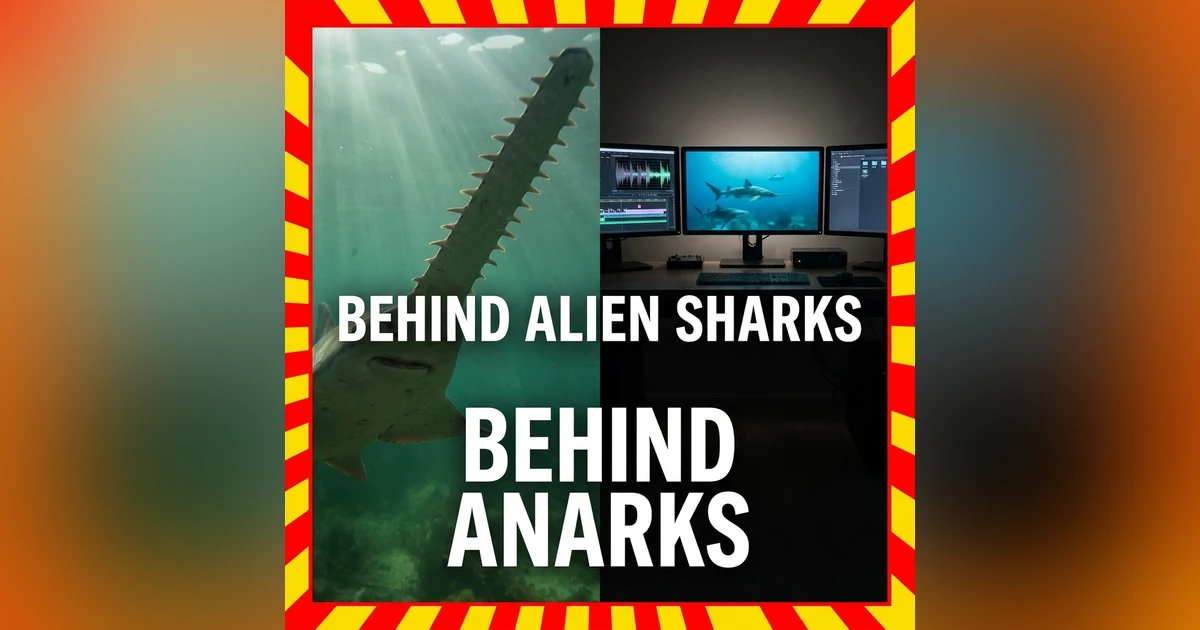
Jesse joins the show remotely from Gujarat, India, where he is showrunning and editing Vantara's Sanctuary Stories, before turning to his newest project, Alien Sharks: Untamed America, premiering Wednesday, July 29th on Discovery. Built around America's 250th anniversary, the episode traces a journey across the country in search of cryptic and lesser known sharks, including white sharks off Diablo Canyon, a California horn shark, a swell shark located after months of searching, a guitar fish, bonnethead sharks, a swarm of blacktip sharks, a rediscovered tagged sawfish with researcher Dean Grubbs, and a basking shark in Cape Cod Harbor.
Along the way, Jesse and the hosts dig into what editors notice that scientists and viewers often miss: coordinated hunting behavior in sharks, how white sharks react to a drone's shadow on the water, the technical tricks used to slow down fast-moving animals on camera, and how years of watching raw footage trained Jesse to read animal behavior the way a birder reads bird behavior. Jesse also shares stories from filming rescued and rehabilitated animals in India, the discipline it takes to run multiple shows at once, and why this year's episode leans into American wildlife, from bison to elk to the Statue of Liberty, rather than the usual landmarks.
Key Takeaways
- Jesse Colaizzi is an award-winning producer, senior editor, and director of photography who works with Forrest Galante on Shark Week and Discovery Channel programming, including Extinct or Alive and Alien Sharks.
- Alien Sharks: Untamed America premieres Wednesday, July 29th and is built around an America 250 theme, spotlighting cryptic and lesser-known native sharks across the country.
- The team tracked white sharks, a California horn shark, leopard sharks, a swell shark, a guitar fish, bonnethead sharks, blacktip sharks, a sawfish tagged in partnership with researcher Dean Grubbs, and a basking shark in Cape Cod Harbor.
- Editors and camera crews rely on subtle behavioral cues, frame rate tricks, and instinct to capture usable footage of fast-moving, unpredictable animals in the wild.
- White sharks have been observed reacting to the shadow of a filming drone, a small but telling example of how visual and behavioral cues shape what ends up on screen.
- Sharks display coordinated group behavior when hunting, echoing patterns Dr. David Ebert has documented in his own research on pack hunting.
- Jesse is currently based in Gujarat, India, working on Vantara's Sanctuary Stories, a series focused on rescued and rehabilitated animals and the conditioning process used to care for them.
- This year's episode centers the Statue of Liberty and iconic American wildlife such as bison and elk instead of typical landmark imagery, offering a nature-first take on the America 250 theme.
Connect with us:
Website: https://bit.ly/37TMqeK
Instagram: https://bit.ly/3eorwXZ
YouTube: https://www.youtube.com/@beyondjawspodcast7591
Dave:
Website: https://www.lostsharkguy.com/
Instagram: https://bit.ly/3q1J9Q5
YouTube: https://www.youtube.com/@lostsharkguy
Andrew:
Website: https://www.speakupforblue.com/
Instagram: https://bit.ly/37g5WkG
YouTube: https://www.youtube.com/@SpeakUpForBlueTV
1:00:00 It's that time of year again, folks. It is Shark Week 2026. And we like to talk to the people who are involved. Dave and I like to talk to the people who are involved in Shark Week, but not necessarily always on the camera. Sometimes it's behind the camera and sometimes it's even behind the editorial computer that sits there and drives the entire storyline. So today we have a returning guest. We've had him on for the past two years on show right before Shark Week. Jesse Kalezi. He's here to talk about his work with Forest Galante. They have a show on on Wednesday, July 29th called Alien Sharks Untamed America. We're going to get into what's going on around that.
1:00:40 We're going to talk to him. We're talking to him when we did the recording. He's in a different country doing a different show. The work just continues and continues on. We're going to talk to him all about his work on this episode of the Beyond Jaws Podcast. Let's start the show. Hey everybody, welcome back to another exciting episode of the Beyond Jaws Podcast. I am here with my co-host. So I'm Andrew Lewin with my co-host Dr. David Ebert. Dave, this is a, it seems like it's a tradition that we do here this time around Shark Week. We talked to Jesse Kalezi. He was always a fun guest, right? Yeah. He's like literally of all the terrific guests we have on over the course of the year. He's like become like a fan favorite when we have him come on the last two years.
1:01:23 He's just like, we just seem to have this huge following he's putting out there. And so like, I don't know, hey Forrest, if you're listening, you might want to get this guy on your on some of your episodes. On the Wild Time Podcast. Yeah, for sure. Oh yeah. Because he's just been like, he's just like a, like I said, literally like a fan favorite. So he just got into having him come on. And the cool thing is he gives a lot of insights and kind of a little background, what goes on actually behind the scenes in the Shark Week shows. Yeah, no, absolutely not. This is what I love is it's the story behind the story, right? You get some of the things that happen, you know, as they're shooting things or sometimes the story might change it in a different course, depending on what they find out there. And it's a very dynamic situation. But a lot of the times, you know, we, when people talk about Shark Week, whether they're criticizing it, whether they're applauding it for some of their shows, we talk about the actual final show.
1:02:14 And a lot of the times we get, we like to talk to the people behind, as I mentioned before, behind the camera, behind the computer who are driving the storylines, making sure science is in there and, and really entertaining the people at the same time. And I think that's a really hard line to balance at times, right? To make sure that they get ratings and make it entertaining, but also share the science that's involved in it, right? Yeah. I mean, Jesse's literally one of the behind the scenes got guys that puts the story to does the editing, puts the story together. He goes, he goes out in the field with Forrest. So he sees what's going on. He's got the big picture here and then he just sits here and works in these things continuously. And I think as you and I can probably appreciate more since we've been doing our Searching for Lost Sharks episodes series on YouTube.
1:03:01 How much works involved in doing that? Oh man. And we do a short like 10 to 15 minute episode. Imagine doing like a 45 minute or even an hour episode, right? Like that is, yeah, it's, it's, it's kind of crazy. And it's, it's a lot of thinking on their feet and making sure like, you know, what I like about Jesse and we'll hear it in a minute. But like he has the forethought of like what will look good in the on the cutting floor. You know what I mean? Like what will really stick? And sometimes he goes out in the field where he's talking to us in this interview and he's able to kind of see that and have that vision of what would look good, you know, afterwards, after the edit. That doesn't happen often. We don't get that opportunity often. So as someone who edits your your episodes, it's like, it's like, oh, this is kind of interesting to be able to have that foresight and go there. It's a it's a skill for sure.
1:03:53 Definitely. Definitely. Yeah. So it's great having him back again for three years running now. And I hope everybody enjoys it as much as they've enjoyed the last two times you've been on the show. Absolutely. Jesse, I know all your family's listening. So I just want to welcome all of Jesse's family out there and everyone else to the show there. We hope you enjoy it and let's give it a listen. Absolutely. Here's the here's the interview with Jesse. Enjoy and we'll talk to you after. Hey, Jesse. Welcome back to the Beyond Jaws podcast. Are you ready to talk about sharks and entertainment? This year, I'm feeling it, man. It's Shark Week season, my friends. I love it. Love it. Love the attitude. Well, welcome everyone back to our Beyond Jaws podcast where we have our we have our annual special inside Shark Week episode.
1:04:39 Our inside Shark Week episode with our inside guy, Jesse Colosse. Jesse was first on our episode. I was first on our Shark Week episode back in 2024. And it was so well received what we had to have back in last year. And once again, everyone came through and really enjoy the episode. So we thought, well, what the heck we'll bring him back for another year and have fun and talk about sharks and Shark Week and everything. Quick little review, Jesse's an award-winning, globally syndicated TV documentary producer. He's a lead senior editor and he's a director of photography. He works as a producer and senior editor. His work's been featured all over Shark Week, which we'll get into today. He's done programs such as "Mysterious Creatures" with Forrest Gullani, "Extinct or Alive," which also ran on Animal Planet with Forrest.
1:05:23 He's worked as an editor on other programs, "The Bermuda Triangle," into "Cursed Waters" on History Channel, and numerous other documentaries. They say he's an American Reality TV Awards winner for best editing for "Mysterious Creatures with Forrest." He has a bachelor's degree from Penn State. He also has a master's from Point Park University and a master's of fine arts from Chatham University. And right now he's coming to us from a remote location in India, of all places, throwing quite a time change here. And so with that, Jesse, welcome to the show, man. That's great to be back, guys. It really is, man. It's another Shark Week season and here we are. So why don't we start off? Why don't you tell us what you're doing in India?
1:06:03 Well, we are working on a show here called "Vantara's Sanctuary Stories." And I'm the showrunner and senior editor with quite an eclectic team of other filmmakers that we all work with, with Forrest. And we are filming a few episodes at the sanctuary right now here in Gujarat. And where is Gujarat located in India? It is if you look at the shape of India, it is like right up here, kind of just out the Pakistan, but an hour's flight north of Mumbai. Okay. Okay. Kind of up in the sort of the northwest corner place around here. Yeah. Yeah. Kind of hot and dry, except for today and this month.
1:06:45 Yeah, but otherwise, but you guys been filming there for a while now, haven't you? Yeah, this is a pretty long term project. So we were just wrapping up our filming on season two and planning season three and doing all kinds of stuff. But we do, you know, eight seasons, eight episodes a year and immerse and live here basically. For how long do you do that? Like when you're there? We're usually here for about two to three weeks at a time. We're actually on a slightly shorter little stint this time, just because we were backing up against a certain season that's upon us. Gotcha. You know, Shark Week season. Yes.
1:07:25 We need to be home for that, of course. Of course. Right. Right. Yes. We're shooting this a little bit before Shark Week actually starts. But just so we're working people watches when the series comes out. When the series of Antares sanctuary stories, if you're in the US or pretty much most places in the world, it's going to be on some form of Discovery channels networks. Discovery Plus or Max. And then in India, it airs on Geo hot star. And of course streams all over the place, too. So that's cool. That's great. We'll definitely promote that when that when it let us know when the next air will definitely promote it. Well, well, the season one is available now and season two, they drop around Christmas time. The holidays are OK.
1:08:06 OK. OK. Crazy in the air. OK. Great. That's nice. Good. Good. So Shark Week. So what do you what have you been up to for Shark Week this year, Jesse? I will tell you something. You know, every time, you know, this is like a bit of an analogy here. But like sometimes when we go into the holiday seasons, I'm just kind of like, meh, not really feeling it. Maybe I'll make some cookies and be done. Right. Right. I'm really feeling Shark Week this year. You know, we we we got a special show. It's of course the you know, the 250th year of our existence as it goes. Yours. Actually, I'm out of there. I'm I'm away from and I'm in Canada. So yeah, so. But it's our our America 250 special.
1:08:49 And so the episode is Alien Sharks Untamed America. And it starts like everybody's journey to the U.S. with the Statue of Liberty and ends with a bunch of sharks. So OK, cool. Very nice. You guys get I assume both the East Coast, West Coast, golf everywhere around the U.S. We we did exactly that. This is, you know, first of all, you know, forests. Big thing is the cryptic sharks, the sharks that nobody really thinks about when you say that word shark. And what goes in your brain is a gray shark shape. That's great. They're welcome on the show. And there are plenty on this show, but it's the ones that are all the little splotchy guys like the bamboo sharks and the chain sharks and all the little funky stuff.
1:09:30 The law sharks, basically. The law, the law, the law, the law is forgotten. Yeah. Yeah. Retreated to parts unknown. Yeah. And I feel like also like at this time, there's been a lot of episodes. We've seen a lot of episodes with alien sharks and stuff like a year after year, which is great. Other shows are really starting to show, you know, sort of the law sharks, the forgotten sharks. And we're starting I think there's more of an interest in the public to start to get to know these sharks a lot more. Like I know like Dave and I like Dave, when you share all these different types of sharks that you've discovered or that you've been working on and things like that on social media, they go like like gangbusters.
1:10:11 I guess people are liking and viewing them and want to know more. Have you found that Jesse, like with the types of sharks that you guys have been highlighting in your shows year after year that people are really starting to get interested in those not those lesser known sharks? Well, it's like birding, you know, you of course, you want to go see a Robin because you maybe you have your Robbins in your backyard that you love. And who doesn't like a white shark? You know, there's nothing boring about a white shark. But that's that that thing where I think people are starting to have more awareness and therefore they're moving past that that outer layer of the onion and getting into, you know, more deeper, more, more, more depth of where these things go because there's such a range.
1:10:53 You know, and you only get there once there's enough of an awareness about the ocean and the health of the ocean and how it all works in the ocean. And you know, you get past that that Blue Jay, what's the next cool bird you want to go find, you know, the next one and the next one and the next and sharks are the same way. Yeah, yeah, yeah. Just can you share how many species of sharks you guys encountered during this this episode? Man, that's that's math, Dave. And actually, actually, I would say that's calculus at this point, because like when we when you talk about land of the lost sharks, which was the special that we made at this point before this was gray in 2020, you know, we had what we called a shark count.
1:11:39 And this is like a little thing we do behind the scenes, like, you know, our own little competition is like, well, how many species did we have in this episode? Yeah, nine species was like the high watermark for a long time. And honestly, I don't even know. We could try to count right now if you'd like. I can kind of go through my memory. I know I'm going to forget one. But we start with, of course, white sharks. We were looking for a swell shark, but found found a white shark and found three white sharks and actually pin for us to the ground. Like the boat was right there. Like you can see my ceiling right here. Like they were maybe twice that distance up was the boat and they got they were they would just they would come in and go out. And it was kind of murky.
1:12:19 They were out by Diablo Canyon. And so the water was kind of hazy. And, you know, had that the the cold water and the hot water. And you really couldn't see. So anyway, that's shark number one. There was a. What's the one with the little horn? It's a horn shark. Yeah, yeah. Yeah. Yeah. Yeah. California horn shark. Yeah. California all native sharks, by the way. California horn shark leopard sharks. Of course, we were looking for a California swell shark and thankfully found one. A guitar fish, if you want to call that shark.
1:13:00 And actually that happened during a great scene because I want to say Forrest's son might have reeled that one in. He brought his family out on the beach for a while. They were looking for swell sharks off the beach somewhere and brought in a guitar guitar shark. That counts, baby. Guitar fish, guitar fish. That counts with a little clear nose. You know, has a little see through. I think I think Rhodes for a son called it a clear through nose because he's he's getting it. And then what else did we find? Then we went for a well, we were looking for the bonnet head in the Gulf. So that's another one. I've already lost count, by the way, but that's I got five so far. So I'm good. And just everybody, just all the flat shark people, I am counting the guitar fish that does count.
1:13:49 So sharks are sharks to the rate. They are sharks. They just need more love. Shark check mark. Yeah. And OK, let me think here. So in along the long searching for the bond ahead, of course, we saw a bunch of black tips out in the Gulf. Of course, swarm of black tips from Oceanic. Yeah. And OK, so the bonnet head, of course, was running those days. Then we went and paired up with some guys at Florida State University who have this. The main gentleman in particular has been searching for sawfish for decades. This is Dean Grubbs. Yes, it is Dean Grubbs. He's been on the show. We know.
1:14:32 Yeah. And I mean, always smiling, always happy doing his thing. Like 100 percent of the footage was a smile on his side. And they went out. I mean, those guys know where they breed. They know where they pop. They know where they hang out. They that's this whole thing was triggered by. There was a viral clip that went around a diver and just like dropped down to the bottom in an area really near here. The vis kind of had cleared up. And there's like, oh, I'm going to get it. And cleared up and there's like nine of them just sitting around. Wow. And we thought, wow, we need to get the the the the the sawfish in this show. That's like such an odd looking American thing. And so that happened. But along with that, there were some sharks that honestly were species forest couldn't even had never even identified or seen before. There was a.
1:15:20 I don't even remember the names of them. I'll be honest with you. I edited the show and I can't even remember the names. There were probably four different sharks that they know. Deans got his whole grad student team. Everybody there. And they're they're turning it through there like a machine. They're bringing them up. They're putting them on the measuring thing, you know, measuring and giving all the science, throwing them out, bringing them up and bringing up. And then suddenly, like he's pulling the line and it is like tight. And it was, I mean, probably 30 percent. And you know, they're like, you know, they're like, 13 feet. Actually, it was like 13 point something feet. The sawfish that they brought up and it was already tagged. Right. I mean, the tag was old. It was covered in seaweed. They couldn't even read the number, but they were able to pull it off. Retag it.
1:16:02 And I mean, it seems like that's even more valuable than, you know, tagging one fresh for the first time. At least Dean seemed pretty excited about it. Oh, yeah. Yeah. And and so that was pretty cool. And then I believe the unexpected cherry on the cake or cupcake or what? On top the cherry on the you know, the ice cream and the whipped cream that I always put too much of on my you know, was a basking shark in Cape Cod Harbor and cool. And we we went all out with that one. You know, the guys hired a plane spotter, you know, and of course, we weren't allowed to show my favorite shot of the episode, which was the pilot.
1:16:44 He was flying this plane that looked like a 1972 Chevy truck with wings and, you know, like the windows are kind of open and he's got his spittoon and he's had his you know, his his chai and he's like, you know, and flying the plane and and then he's like, hey, first, I got one right off my left wing. And they they sped out there. And it was literally the most Boston thing you could happen. It's happened, you know. And and so that one that we actually saw several but the one that we actually put in the show was like half the size of the boat. Yeah, I mean, it was just it was a whale. You know, I mean, it was so big. And they caught him just in the right time. I think that it was the one of the last few days before they were off out into the Atlantic, you know. And so I forget how many species just to make it clear when you said, you know, I think it was a whale.
1:17:34 I get it clear when you said when you said they caught him. They caught him on video, not on it. There's no huge Yeah, yeah, yeah, yeah. Just wanted to clear things up. They harpooned him. he's going. He tasted really good that night. Well, few is coming right for them. It was just the basket. The dangerous basking shirt. Yeah, that is a great point of clarification. We in the business like, oh yeah, yeah, I shot him yesterday. It was great. If you shot you shot him. We're not always in the business here. That's why he's So we're just like, oh, wait a minute. I just had to think about it. I should clarify that. He shot him with one of these. It's all good. Gotcha. Gotcha. It got hilarious if somebody kicked in the door now and the guys hold you away some fishing game guys.
1:18:15 [LAUGHTER] Hello, guys. We're here for poaching services. Poaching list. Yes. We caught him on camera. Oh, yeah. OK. It is impressive. There's this one shot we have of this thing where they-- he was kind of moving around. First of all, I had no idea they moved as fast as they did. You know, like Mitch, Mitch Long, who's he of many things, was one of them. He's our drone pilot. OK, he was like, you know, having trouble keeping up with it. I'm going through the rough footage. I'm like, he's trying to correct his speed, but then the shark would slow down and then he would overshoot it. And he was coming back and they're like, this thing was flying. You could see when the little floaters, all the little seaweed that's floating is like your point of reference.
1:18:59 Kind of like if they would put me next to all the other Olympic people running the 100 meter dash, I'd be your normal guy. And then they would all be there waiting for me for like five minutes. Like the little floaters of seaweed would like show me like, oh my God, that thing is cooking like a boat. You could water ski off of it. I mean, did you catch a breach at all? Breaching? No, no. But what's funny is, it's like, you know, the guys had these like scooters, you know, they were trying to like, because they needed to catch up with them. And they were still like out of breath. And I mean, this is a very fit crew. These guys are in the gym every morning for an hour and a half. And like just this, the kicking to stay up with these things was impossible.
1:19:40 Crazy. Yeah. That's the thing that, you know, when you, when we see it on, on film, like, as we watch these documentaries, I don't think a lot of people don't realize until they're told that the video slowed down so we can actually catch the site of them and the way they move through the water and stuff. But when you're filming, it's got to be pretty challenging because you never know when they're just going to dip down and be out of sight. Right. So is there, you know, you mentioned, I think it was Mitch, the drone pilot, like, is there a bit of like, when you see this happening and this behavior happening, is there a bit of like a panic that sets in, you know, as you're trying to get the frame just in case he, you know, that shark decides to dive a little deeper and out of, and out of sight. You know, these, the especially our underwater shooters are very intuitive.
1:20:22 You know, they, I mean, these are all, you know, not only wildlife photographers, but they really specialize in underwater. And, you know, they've just got this instinct that the camera is always in the right direction. You know, like, if their head's looking this way, it's like their hands are attached to their head. They have hand. I are like locked. And they also, it's a little trick that, you know, if you are shooting at 24 frames per second and you're playing it back on the show in 24 frames per second, sure, it's time. It's a ratio of one time per one time. You know, however, if you shoot at 60 frames a second and you only get a half of a second of a glimpse, you could slow that down by about 40% and still have a nice smooth shot, you know, and it gives you a little bit more of a gander at it because to me, the best part about these shows is just getting to show somebody an animal that they would never see so they could just stare at it.
1:21:20 Right. And learn something about it, but just stare at it and take it in because it's beautiful, you know, never know. Absolutely. Like looking at a tiger, you know, who gets to go look at a tiger and study them close up? You know, when you see one in a zoo, you can't do anything but look at it. True. Yeah, true. And that's our goal as someone who makes entertainment and television, people who want to watch animal shows want to stare at the animal and they want to hear about them. They want to see the pursuit, of course, is always fun. But when you catch it, you want to that's the payoff. Absolutely. Yeah. By catching on video. Catch it on film. I caught Sasquatch. I mean, you know, he's right. He's in the next room over. He's on the crew. He joined the, he's one of forest guys now. He's gonna have his own TV show later this year, right?
1:22:06 Spin off maybe, you know, we'll see if animal planets interested. They may pass. He doesn't want to show his face though. So it'll just be blurs. Well, he's always like walking, you know, like what was the most exciting thing you guys film? Was it, was the Basking Shark or just anything else that was kind of, I will tell you this. And this is, this is like one of those behind the scenes little things, you know, just appeal the curtain back and mainly into post production, you know, I live, I live in post mainly of course, I'm on the field now, but, you know, we were given the opportunity to film the various parts of this show when the animals were active and running in the areas that they're known to be in. And so, as we were filming, you know, it started back in October when they were looking for the swell shark, they were there towards the end of the year, uh, the end of 2025 and, you know, put this whole thing together. And I was like, this is epic. This could be half the show if we needed to just, you know, do one more thing.
1:23:04 All that they had to do to find the swell shark was there. I mean, there were like four dives and, you know, they tried fishing, they were scouting by air. You couldn't find swell sharks? It was impossible. They ended up going out to the Canary Islands and when they got to the Canary, um, not the Canary Islands, the Channel Islands. And I always get them confused. But, um, when they got out to the Channel Islands, um, and, uh, went down, they actually found an egg. And at that point, Forrest was like, we're not going anywhere else. And, um, so, cause I mean, if there's an egg, they're there, they don't go far, you know, they, they don't even really go much further than maybe twice the size of this room. Right. Yeah. Right. Yeah.
1:23:48 No, go ahead. I, because those are like the horn sharks, well sharks in Southern California. You, you used to be pretty common. I haven't been diving down there in a long time, but they used to be pretty common to see, especially out the Channel Islands and stuff. So it, you say you're looking around for a swell shark. It was like, man. Well, they had been looking towards the land where they were hoping that, you know, Forrest's first hope was, you know, like, let's just go somewhere where we think there's just going to be everything. And that's why he went to Diablo Canyon. He's like, the hot water is going to have all this stuff, you know, let's just give it a shot. And it turned out to be a bust, but a great bust because they got busted by white sharks and, um, um, but then, um, he moved a little further South tried, tried, you know, doing, you know, the fishing method that, uh, was fun, but it really didn't prove to turn up a white, a swell shark. Um, but then going back out to the Channel Islands, something amazing happens during their crossing of the channel, by the way, that I actually won't give away in this. Yeah.
1:24:43 That secret, a nice little surprise. Yeah. Uh, okay. I'll screw it. I'll give it away because I actually think it's a, it's a, it's a good theme of the show. This was a discussion we had in post where we were like, how do we frame this around America to 50? And you know, one of the, one of the things was, you know, you think of the Serengeti when you think of migrations, you think of, you know, the butterflies coming from Mexico as a migration. But I think that like some of the best migrations happen in the water, both beneath the surface, and you really don't see them if you're not out there every day, but a massive mega pod of dolphins and whales. I mean, these guys, they had to stop the boat. I mean, they were trying to navigate through it, just like we were talking about before we recorded with the ships in the Gulf of St. Lawrence. Like, had they been going full speed? They, they, well, they couldn't have, it was a minefield of animals everywhere. They looked, they ran in and saw, they saw a spray and they stopped. And then suddenly they were surrounded by dolphins and whales. Like it was magic.
1:25:41 And to me, that's a mass migration that you should think of when you think of animals in the world, that's an American mass migration. That's just as good as anything in Africa, you know? Yeah, yeah. And but they got out there and eventually they found the egg and they actually then found a shark way up in a crack and thought, well, let's just wait until nighttime, of course, you know, feeding and they went down. He was right there and glowed. Yeah, nice little, you know, the glow. That's right. The glow of the glow. Of course, course, always brings his floral lights. Okay. He doesn't leave home without his UV or black lights. You know, it's a pretty cool, cool. It's pretty cool. It's kind of cool. It's kind of cold to see those. Yeah, that's cool.
1:26:27 But the behind the scenes thing, though, like we filmed that it was awesome. We know we did the bonnet head that turned out really impressive. And then the sawfish and we're like, you know what? We could just skip the the basking shark if we want to, you know, like we could call we could put this show together and boom, it's done enforces like hell no, we got to get this bad. We got to go for all four. He's a go getter, you know, man. Yeah. Yeah. And we're like, all right. So, you know, I start trimming the showdown and they go up to Boston and it actually was a great show. And I think it's amazing how you highlight that because, you know, like if you if you do any kind of work in as a marine mammal scientist, you're doing aerial search.
1:27:19 And, you know, planes and drones and everything have become a huge part in in allowing us to monitor animals from the surface at a distance where we're not interfering. You know, you don't have to be a like sometimes if you don't have to have divers in the water, I think it's it's it's really important to highlight that too, because it's it's become a really important aspect to science and conservation to be able to see these animals at that distance. Drones have been a huge advancement in what we do too, because being able to just survey, I mean, yeah, but I think that's really important. Well, I mean, to see these animals at that distance drones have been a huge advancement in what we do too, because being able to just survey, I mean, yeah, beautiful, big, high, wide shots. Great for taking you somewhere and dropping into a place.
1:28:04 But using it for survey purposes is wonderful, especially in the vicinity. Yeah, we were trying to cover that big harbor. We had, you know, airplane going all over the place. But yeah, if you guys notice with doing the drone stuff, because this happened, I was doing it as doing a show up here on the white sharks in Monterey Bay and the guy was flying the drone. He commented to me because he'd seen this before. But the white sharks, when they're up near the surface like that, if they see the shadow from the drone, they'll follow it almost like a cat with a laser thing. Oh, it was a weird. It was a strange because he said because the shark made a kind of a bit of a movement and he says, yeah, the sharks obviously picked up on the drone shadow on the water.
1:28:48 It was a strange. I'd never it was the weirdest. And I saw the shark made a little bit of a kind of a perky journey. Yeah. And it was like, and when he said that, yeah, he was like he moved right towards where the shadow from the drone was, you know, the drones aren't that big. But the white shark could pick up on the shadow with that. And it was just interesting. I mean, I know that are they very visual? White sharks are definitely not all sharks. Every shark is a little different, but white sharks are very visual. They're very like maybe it's like kind of doing this. Maybe they were going under the shadow to give themselves a little. Well, when they when they when they hunt, they'll they'll cruise along the bottom and they're looking up for things.
1:29:28 And when they'll attack, they'll come up for if they're attacking like a sea lion or something like that, they'll come from below typically. And I mean, you kind of like it went extremely see like on shark week, you see the breaching sharks and stuff. A lot of times those white sharks and I've talked with guys have seen a lot of abalone divers would see them. They'll move along the bottom there and then they'll they'll come up when they when they see they see a shadow or something or what they're what they're maybe hunting a seal, a seal or something. That's worth investigating. I mean, that's a pretty interesting. Yeah, I love to see what I wanted to notice that sometime when Mitchell's running the drone and stuff, just kind of see if you ever if the shadow like goes in front of the shark, if the shark makes some kind of I won't say all sharks would do that.
1:30:15 But these white sharks won this white shark. I saw that as a weirdest thing. And the guys just tell them right now, mention in forest, if you're watching this, which I'm sure at some point you will be. Let's do that sometime. Yeah, yeah. Try to see if you get the shadow from your drone to do some with the white shark. Yeah. See how it behaves and stuff would be really interesting to see if you get to do some. That's so I just think animal behavior is if you're tuned into it and you can actually see it and you know what to look for. You can speak their language. You can at least listen to it and know what they're doing. Saying, yeah, you know, I was going to say you hit a great point, Jesse, in that because, you know, the science really gets so hung up on the numbers and everything and doing statistics and show them.
1:30:56 And when I was when I was a grad student, my professor Leonard Kapanja was he was a birder. And if you ever been with birders, they're always watching the behavior of the birds. They're not sitting there taking like, you know, numbers and calculus. They're just watching the behavior of the birds. And he was really in got me into like watching how the sharks would behave. Just just just watching and just if he we didn't have like GoPros and all the film that you have today or drones, but just watching what they do and you can pick up a lot of stuff. You can't quantify it. It's like I just mentioned about the drone shadow thing. You can't quantify it, but it was clearly this shark made some movement and the guy who does the drone stuff all the time said, yeah, he sees that when the if the shadow passes in front of like the white shark, sometimes they'll move towards it.
1:31:46 Well, you know, I've noticed this about my my cat, but then I see it in big cats, too, is he'll be sitting with his butt towards you looking away, but then he'll look back at you over his shoulder and prefer to kind of have his body between you and them and kind of like the girl with the pearl earring. You know, she's kind of like looking that way. And I always saw that in my cat and just thought like, oh, that's cute. And then we come out here to Ventura and I see that in all of the tigers, all of the lions. They all sit there with their back kind of away and they look at you in this way, like a person would look over their shoulder. Yeah, either direction. You know, some of that may sometimes I don't watch it easy.
1:32:26 Don't watch the lot of the shark stuff just because you live in the world. It's like don't need to watch home movies at night all the time. But sometimes I would just like turn on. I don't listen to the sound, but I'll just watch what you guys are filming and you'll see behaviors show up. And I think a lot of times they just they're so focused on what you guys are like there to film that you're not really watching. Sometimes behaviors that are going on that you might pick up on, you know, as an editor. I started off cutting in when I was in television casting reels, you know, at first and then you eventually start doing bigger things, maybe a presentation reel or a pilot. And then they trust you enough to do like, you know, the full show cutting cooking shows, for example, there was this one particular host that I used to cut who had these little like personal moments where she would be doing something and tasting something and just go like kind of just having her own moment, like just in her, like maybe it was triggering a memory of something that her dad used to cook or something like that.
1:33:31 And you know, you pay so much close attention to the raw footage. You're watching the way they breathe. You're watching the way they walk, the way they talk, everything, the where their eyes are going, where their hands are going. Are they nervous? Are they happy? Are they calm? And you cut to that. You've you see what they're doing and you respond. And then it translated into the animal world after going from cooking shows to the the other side of things. The animal shows is, you know, you start to watch their behaviors, particularly sharks in particularly this one moment. I remember things really clicked. This was years into it. We were it was after we had been doing this for a while and we were filming a shark week off the coast of Mexico.
1:34:13 And we had a fast turnaround. I was kept cutting out on the boat. It was a narrow, maybe nine meters wide, you know, in a single hole. So, you know, you're rocking. And I'm in there with my edit machine rocking. And, you know, every two seconds, your body's being flung 20 feet up and down. And it just I became in tune with the waves. It started cutting without even thinking about it in tune with the waves. I was sitting on the waves that were in the footage and with that started to be it translated into the sharks movements and you start to place these edits on these moments when the shark moves in a certain way. And it starts to like frame the movements to where you see them more obviously, because you cut out the stuff before and after and you look at this behavior. And we saw this a lot with white shark. I'm sorry, with black tip oceanic black.
1:35:03 Watching them try to do these coordinated moves around a piece of bait, you know, where they would you'd start to see like the structure. It's not just chaos. They actually are moving in a way that's maybe they're communicating. Maybe it's just instinct. But they, you know, do these little things. You know, I don't know. It was no, you're right. Exactly right. It's very coordinated. I got I got to doing a lot of this when I was in the when I was doing my PhD and even my masters. You watch you just sit and watch what these things are doing. And I that's why that's how I got onto the whole thing with pack hunting because I was the first one that document pack hunting and I was watching it. And fortunately, I was living in Africa and Leonard get a component said, why don't you read these books on the Serengeti lion and the spotted hyena?
1:35:45 And I can you go watch him hunt and they are. It's very coordinated what they're doing. And I was and when I saw that I was like, that's what these sharks are doing. It's a very coordinated with these seven gill sharks at the time were coordinating the hunt on a Cape fur seal. So one shark couldn't really take out one of these Cape fur seals, but a pack of them could. And that's what you see with like hyenas, particularly one might not be able to take down like a wildebeest, but a whole bunch of them can. And the same with the lions. They'll coordinate and how they hunt. And it's just it's not it's not random, but I just young people that are you're doing the field a lot. Just watch sometimes just sit and watch if you can film.
1:36:28 It's even better. And then, you know, learn something about like like said other animal behaviors, you know, and try to you can extrapolate or see what's going on. But what you're saying, Jesse, just makes absolute sense to me. Well, well, Dave, you know, this was actually I was had the honor of being with you on this day. This was when we were in South Africa on land of the law sharks. This was our day off. And of course, forests day off. I mean, let's just go catch sharks for fun. Yeah. And so we went out off the off the coast there. And that was the day that we had just gone around and around and around and conjured up this massive swarm of black, black tips. That was a heck of a day. Those were the first sharks I ever saw with my own eyes, by the way. Oh, wow. OK. Yeah.
1:37:13 Yeah. But but even those sharks there that day were out there doing that. If you watch what they're doing, it wasn't just random. They were just they were in a very coordinated pattern the way they're behaving. And if you I don't know if you guys ever went down, we didn't do this that on that trip. But the film, like the sardine run and stuff down in South Africa. If you watch the sharks feeding, it's not just there's a school of fish, obviously, but they're just they're very targeted at what they're doing. They're not just these random killing machines and both jaws. But they're just they're very coordinated how they're how they're approaching the the bait balls and stuff. I think animals are so much more. And I mean, of course, there's like everyone thinks a pig is very intelligent and an elephant is very intelligent. And absolutely, I don't think it stops with these.
1:37:58 I think animals as a whole are so much more intelligent than we give them credit for. We were just very people centric. We think, well, we've we do math and we drive to work in a car. We work in a skyscraper. We did all this good for us. You know, pat ourselves on the back. But I mean, a shark, for example, is learned to survive or a white tail deer is learned to survive in the woods with no forks, no knives, no calculators, no car, you know, no doctors. And they have. You have to be highly intelligent in your environment to be able to live like that. Well, I mean, the shark, they will, you know, a good example, sometimes the sharks, if they're habituated to associating boats with food and you guys are out there, they'll come to the boat thinking you're going to give them some food.
1:38:44 Yeah. Of course, people do bait on the time. But a lot of times we'll just come up there because they just expect it. Rev the engine a little bit in a dinner bell, you know. And oh, yeah. Yeah. It's very, very common to do. And so they get into that. So they can pick up on things pretty quickly as far as just learning different types of behaviors and stuff. So that that'd be something that'd be cool if they could just do some kinds of shark week shows like that to kind of show these interesting behaviors. It probably would take like a lot of effort to get them. And I'm sure like blow out the budget for Discovery Channel to try to. You know, it's funny you say that because, you know, sitting here, you know, we're filming this Vintara show. And I think one of the biggest themes of it is the conditioning and care that is given to these animals. These are all rescued animals. They're not the kind of animals you go to see in a zoo. They have traumatic pasts.
1:39:34 They were, you know, maybe part of a zoo that, you know, couldn't feed them as well anymore. Maybe they're, you know, financially had to give them up and put them somewhere to save them from malnourishment or they were rescued logging elephant or a rescued man eating tiger that the state wanted to kill. And they decided to give it a life. You know, they have to spend time conditioning the animals to be able to medically care for them. If you want to draw blood from a leopard's tail. Well, you can't sedate an animal to draw blood. That's not going to be your markers are going to be off. You know, you want to have good clear markers. You got to keep them awake. And so you have to condition these animals to present their tail. So you can draw the blood out while they are perfectly alert.
1:40:25 And the speed at which the keepers and the biologists here at Bintara take an animal that's a rescue from God knows what kind of situation to this sanctuary within I'd say weeks. They've got them able to sit there calmly present their tail through the, you know, the, you know, the fencing or enclosure. And you know, everyone's, you know, feeding it a little bit, you know, saying nice things, playing calming music, all that stuff is real here and they'll just draw the blood. Yeah, nothing ever happened. And then they have they know they know how that animal's doing perfectly. I think, you know, yeah, and that's fast. I mean, it's like a couple of weeks and they get that animal at least to where they can start to actually work with it. You know, that's a whole fascinating side of just animal behavior in general, even just beyond charge.
1:41:14 But people, because people can see the land animals, the terrestrial animals, you can pick up on that. But when you start dealing with fish or particularly sharks, everybody, you're limited on. People always ask you, like, well, you do a lot of diving. This is well, can't really do a lot of diving because you only got like maybe 45 minutes underwater, depending on how deep you are. Yeah. And, and, and you've got a, and so you in the sharks, because you put yourself in there, it's like, it's like I tell people, you know, if you drive out in the Serengeti and you flip beef steaks outside your Land Rover window and the lions come up and eat the beef steaks, you'll get some really cool pictures. But is that really telling anything about the lions? No. So if you put yourself in the water with the sharks, how is that your presence there affecting that?
1:41:57 That's why I think bruv, bruv's and those types of things are much better for learning something. I think the more candid anything like that, you know, one of the things that animals do also is they mask, you know, that's why you always find out about your cat's illness after it's too late. Hiding it from you. And there's a gentleman here who is the head bear curator and biologist who because bears are another one that are like way more smart than you think they are. Yep. To the point to where if there's a bear that wants to go meet a girlfriend bear but doesn't want another bear to know that they were doing this thing because there's like social dynamics.
1:42:37 They'll go up, they'll have their little get together with his girlfriend. And when the bear leaves, he'll close the enclosure door like the little bedroom hut that they have made to like not to erase their steps. I mean, that is scary. Yeah, but one thing that not scary, it's impressive. But yeah, they started using remote cameras and they're designing programs that will actually be able to see, oh, this one didn't have a limp when I was there, but showing a limp on video on security cam. And then they know they can catch things earlier because when their keepers around, they're acting like everything's fine. And then the second they turn away when no one's looking, that's when the lint comes back. That's interesting.
1:43:22 Yeah, I really can't. Well, I know if you know sharks, if you ever see, I've seen this experience is where if you catch one like on a line, all of it is because he's in distress, all of his buddies will immediately turn on him and eat him. Oh, I don't know if you guys, if you're, oh yeah, that's that's pretty easy film that it's pretty graphic when they turn on when they turn on their pal and they just start just, it's just like just a pack of sharks will turn on him and just start tearing him apart and eating them basically because he's distressed. Wow. Yeah. If you catch, well, you know, you probably see this a lot of times that people catch bony fish, right? And the sharks will come up and bite a bony fish.
1:44:02 Well, if you catch a shark and he's like, you know, putting off the right vibe, trying to, you're trying to land the shark, his buddies will come and eat him. I always just assumed something like that would happen because it was in distress, but, you know, captive, you know, like when you go fishing with a fishing lure and they bite the worm, all, you know, I bite a worm, you know, it's there. Yeah. But the thing is, if the shark gets off the line and swims around, they'll leave him alone unless he's wounded. But if he, as long as he's on that line, I mean, I've seen this with the other guys will just come right in and just fricking nail them and just just like it's like a pack of Hein is just decided like the dinner bell went off. Even though that might've been, you know, they might even their pal Fred. It's like, oh, well, that's what happens when you're that's why they call them sharks.
1:44:49 Yeah. Yeah. They clean up the ocean. There's no, there's no sink. There's no sick ones around. That's for sure. No, no. A lot of a lot of a lot of good ones. So for sure. So do you know much about any of the other shows that are on this year? Jesse, any other show? Yeah, I wish I will after the end of shark week because I usually actually like to watch a lot of those, you know, like I like to see what other people like me do. You know, it's it's inspiring to see, you know, other people's work particularly. And it also I think they probably watch our show and take things. I mean, I always feel like shark week is like a film festival for adults who are actually working in the field but still want to do because it's like you've got all these different companies and they're all like keeping their little project secret over here and secret over here. And then when it's out there, you want to see what all your colleagues are doing. You know, these are it's a small community, you know, I mean, oh, yeah, that's what that's nine shows.
1:45:41 Twelve shows a year, you know, maybe 15. Yeah. And most of the guys I see at conferences and around anyway, so it's like what I need to watch my TV for, you know, I already I already heard the story and on it. And I'm usually the behind the story after the show's kind of there, too. So but that's just because I'm in that world. But it's you know, if you haven't seen it, it's definitely kind of fascinating to watch. I saw like our I saw like our pal Tristan Gutridge. He's like, he's a guy like four shows this year or something. Yeah. So he's like, I honestly don't know how he does it. I mean, I do know how he does it. But it's so much energy involved, you know, doing a any kind of a series work, you know, or multiple episodes at the same time.
1:46:24 It doesn't just double and triple things. If you have one show going on, that's a major commitment. But when you go from one to two, it's it's exponential. And then you go from two to three, just like my I have friends who had two kids for a while. Then suddenly they had a third kid and it it was like going to six kids at that point. Yeah. Yeah. And doing six shows at once, it requires an entire company and multiple departments in a huge coordinated effort. And that's obviously that's what Tristan is doing for the for all of he's doing. And there was another one I saw who had three three this year. Yeah. Adam Barnett's on three of them this year. And actually, you get Adam's a friend of mine. We have he's in Australia. I haven't had Adam. I don't know if you guys, you know, Adam. I got to have he's a guy we got to have on some time. I know of him. Yeah. No, I know. I know. I've known him quite a while. He's got. I've just had been in touch with him. Yeah, he's definitely something. I see Charlie Huvenir's has got a couple episodes on to. Yeah, I saw that.
1:47:20 Yeah, I saw that. And there may be some other people, but those are the two. Those are the two that sort of jumped out was Adam and Charlie and Lauren Meyer. She's in a couple of them as well with with the Lauren's been on the podcast as well. But yeah, so I was kind of surprised that I just saw Forrest had the one this year. But. Well, you know, but you're you raise a good point there, Dave is like, I'm really excited for this year's shark week. Like, I think there's gonna be a lot of really good heartfelt content, you know, I mean, I think a lot of people are doing similar kind of themes, not all of them. You know, we wanted to do this. The the America to 50 theme because a forest has been on the road since October of 2024 and would have liked to have stayed home for a little bit. And it just kind of because, you know, we even frame the whole show, like most of our shows are halfway around the world. But this one, we've decided to stay home.
1:48:11 And we got a great show. It's probably our best one so far. Yeah, great. Yeah. I hope I hope everybody tunes in and catches the show. They will too, because they're interested in learning about different types of sharks. And this is the one that you're going to see on a different type of shark. Sure. Definitely going to be the one here. But yeah, so and I'll yeah, never been checking or checking all the other shows. I just kind of saw the summary and a few of them there and just cause some of the people that were involved with it and stuff. And I also I was just at the Sharks International in Colombo Sri Lanka. So I saw quite a few of these people are already there just at a conference. Now, so we got to have like, we have a lot of fun stuff there. But actually, one show that caught my eye is they have one. It's called a K-pop shark heroes, which I have no idea what K-pop is.
1:48:54 It's an expression. It's all the right. You've never heard of. Yeah. Yeah. I didn't even know that. I just heard K-pop. I didn't. I have no idea what it is. K-pop is Korean pop music and it's it's it's global at this point. And they're definitely hitting on the popularity of K-pop. I saw this guy Ken Jeong, who is Korean. He's a he's a from the what's that? What's this? What was that? Sir, the hangover hangover movies. Yeah, it was hilarious. Yeah. He's hosting. Isn't he hosting all the circles? Yeah, I think so. Yeah. K-pop one. I know he's I don't know. He knows you're doing that all the whole of the whole week or so. Yeah. OK.
1:49:34 I'm sorry. K-pop. That was that was the one that kind of caught my eye. What the hell's K-pop? I don't know. I'm I'm aging myself. But I I wish it was spicier. That's all I'm saying is I wish it was. I wish K-pop had some spice. It doesn't. It's music. Yeah. Yeah. Yeah. Well, I got no chicken. Well, I got one for you, Jesse. So I so I was just at this. I gave a presentation on a paper and it was on guitar fish guitar sharks actually funny enough. And the title of talk was playing for time. And so I had up. So I had up my opening slide was Eddie Van Halen. Right. Well, half my off actually three quarters of my authors are all like under 30. They had never heard of Eddie Van Halen or Van Halen. Travis D. Travis. It's just it's just it's criminal. You know, man, we all know who Beethoven was. Come on. Right. I know exactly. I mean, it wasn't like he was some like sort of unheard of.
1:50:32 Guy. And so my first question my talk was, has anybody here under 35 ever heard of this guy and just crickets? Frickets. Unreal. Nothing. I was just like, and so I go, yeah, I go. I go three quarters of my authors don't even know who this guy is. And they're on the paper and they're doing this paper on. So it was hilarious. So well, there you go. So everybody gets one. It was K-pop for you. And even for all them. Right. Exactly. So I mean, there's a lot I could I could probably not. I couldn't actually listen to that. I couldn't actually list all the stuff I don't know because I don't know what I don't know. I know it's just something I go lots. Probably if I had kids like you got young younger teenage kids. And you probably had a pretty good idea. But K-pop, I'm sure it's probably what I do.
1:51:14 I'm in the know. I am. Yeah. To the to the what the kids are up to. No. But I I know there's a show, isn't it, called K-pop demon hunters? I think is where it got really, really popular this year. So yeah, it's the funniest little trends that come up. Like in my YouTube. Real or whatever shorts feed, you know, everyone's just like sitting down for their Netflix interview. I see here. That's my it's my shark week. There you go. It's my I'm sitting down for my shark week interview now. Yeah. I've seen that trend. It's like a Netflix documentary trend. Yes. I mean, it's going to be out of style next week. It's probably already gone. But you know, what's what I think I travel around like it goes places like these place that go with like these younger grad students are like, you know, 30 ish or so. And so that's that's where I pick up my like sort of like modern.
1:51:59 Like what's what's what's hip this week, guys? I think it's good to surround yourself with two kinds of people, people who are really smart and people who are younger than you. Because you can learn a lot from both. Actually, I could probably learn a lot from anybody I'll surround myself from anybody. But for sure. Yeah. Yeah. Yeah. That's that. That's that. That's yeah. Yeah. I've learned off people get to do little bit more of that. And you don't want to limit that just people. There's other animals. You know, honestly, we could keep going. You can learn from plants if you really learn from anything. Learn from the world. Oh yeah, absolutely. So are there any other final sort of shark week highlights you might recommend to anybody? Obviously, Alien Shark's Untamed American with Forest.
1:52:43 That's the number one. I'm doubling down on our show, man. I wanted to make sure I'm an outdoorsman and I love all of the kinds of animals and all the kinds of things that you can encounter out in the wild. And when we talk about America in this show, I wanted to make sure I was packing something more than just a shot of the Golden Gate Bridge in there. No shade of Northern Californians, of course. But I went for more scenic antelopes running instead. So I wanted to really paint the animal picture. We love that. We're trying to think like, what's the angle here? And people were thinking, let's go. We should start founding fathers and it kind of went a little cold.
1:53:27 I was like, you know what? Let's take the Teddy Roosevelt approach. If we want to talk about how great America is, let's show a buffalo, you know, some American elk, you know, the old thing. And you get that bleat sound going on because those sounds like that will trigger your ear. You hear that when you're sitting on your couch. It'll make you look at the TV if you were looking away for a minute. It's like that. That sound that you don't know what it is. I don't. I'm not going to embarrass myself and try to do my elk bleat right now. But like, you know, those kind of things, you know, a bears and wolves and all that. And we have so many cool animals in this country, you know, and that was it. I think that's a great way of really flipping the narrative of what people think the U.S. is or even like for me, for Canada is instead of looking at sort of the steel monuments and like which are iconic.
1:54:17 There's no doubt. But to think of it from a nature perspective and like defining America as from an animal perspective and like the cool animals that we have in the U.S. that we have in Canada. I think that's a really interesting way to flip the narrative and teach people to look at the U.S. and their country from a different perspective. Right. It is. And, you know, there's there's a I actually don't want to give away the final thoughts. I always like to put a little final thoughts at the end of the show, you know, a little something. I mean, I think a TV show needs a take home. You know, I like to watch something that, you know, if I turn it off and I put my head down on my pillow, it still gives me a little something to think about afterwards.
1:54:58 And with this one, we made sure to put something like that in there. And it was funny because we were all independently on the same page about how we wanted to do it. And even a couple of the network executives had chimed in with a similar comment and we were actually waiting for a picture to be delivered for us to be placed in there. So they were one step ahead of us on that one. But I feel that this particular episode, the only real non-animal American iconography that I wanted to bring in was the Statue of Liberty. You know, it means a lot of things to a lot of people. I've been there. I've, you know, my family members names on the wall. You know, they all came in through that way.
1:55:45 And I felt like that's a great way to put you in a place. And then where we go from there is all of the things there, you know. And to me, our show is special because I love this country. Oh, well, this country, technically now this is India right now. But it would have home when you're watching this. I'll be home. Yeah. But and I love India, too, honestly, like it gets in your veins. I came here thinking the food was my favorite part. And after my first trip, it was bumped down to second because the people are my favorite party. Awesome. Yeah. You got a whole new enclave of friends. You know, you know how it goes when you have a regular project somewhere, guys, you know, as you get connected. And for sure. But this was one where I really felt like this is all of our chance for us.
1:56:31 You know, was I think he actually first came up with this concept. He pitched it to Mitch and the consensus just started to grow among the crew before it was even pitched to the network. And we all bought in and we all bought our own thing. You know, everybody on this crew has some kind of special connection with our country. And it's our way of expressing that we had a chance to do is a little platform for that this time. Yeah, I love it. I love that aspect. That's awesome. That's really cool. Yeah, Jesse. Well, thanks for doing this again. It's going to be our annual thing with you and shark week and everything. And especially because you're in India now, it's like whatever 930, 10 o'clock at night for you. And I know you got a big shoot coming up tomorrow and everything.
1:57:14 And just mention everybody. Please watch Alien Sharks Untamed America with Forest Galani. And maybe even they'll give you a cameo in the next time you guys do it when he's Jesse. I cut myself out everywhere. I hate seeing myself. Sorry, I don't like looking at myself. Back in the day, I used to do all the scratch tracks, the temporary voiceover before before we finished writing it all. And although I had a really as an editor, you know, you know, pacing more than anything else. So like the pacing was right and all that stuff. But I had to listen to myself for two months at a time. It was awful. That's tough. That's tough. Now, I mean, unfortunately, we're using like, you know, A.I. 11 labs to just like, you know, you know, put it in and drop it in.
1:57:57 But it just it doesn't give me the pacing feel that we used to. But at least I don't have to listen to myself, you know, but the I cut myself out. If I see there were a lot of shots shots in that Land of the Lost Sharks show that Dave and I were working on together with all the guys. And I don't like that. I don't know. So I have a beard of glasses. I'm usually wearing a hat and just, you know, there's no mirror. I barely have any mirrors in our house, you know, from from our perspective, it doesn't look that bad. It looks good, man. You look good. You're looking great. Even the beard is looking fantastic. I like it. Oh, yeah. Yeah, I got you know, do I want to tell you a behind the scenes story or not about gray hairs and beards?
1:58:43 Yeah, you are still probably kill me. But, you know, way back in the year, we were all you know, we work in television. It's a stressful business, you know, and season one, episode one of Extincter Alive. This was 11 years ago. I remembered all of us. There's a picture I actually have of myself, the showrunner at that time and forests sitting together to have a group picture together. And all of our beards were pretty much black. And, you know, it was day one, you know, first day at kindergarten, essentially. And just last year, we had started working here in India and Vintara and Forrest came over, brought his family with him. His mother was there and we were sitting in the airport and she's like, Jesse, my dear, I don't think she said my dear, but the vibe was my.
1:59:28 Yeah, Jesse, my dear. How's it been working for my son, Forrest? And I said, let me show you something, Mrs. Galante. And I pulled out my phone and I'm going back, back, back, back, back, back, back, back, back, back, back, back. There it was. And I pulled up this picture that, you know, our beards were his is brown or like a reddish. Mine was perfectly black. And I was like, this is how it's been going. Yeah. Yeah. I love it. I love it. He used to be able to use a brown Sharpie just like one, two, three. And now he's he's given up. We're all getting older. You know, we're all getting older. My beard, my goatee started to turn gray more and more. My hair used to be jet black.
2:00:09 Really? Yeah. I've never seen the pictures. Yeah. Yeah. Yeah. You look at some of the pictures. I got a few on my Instagram like, yeah, my hair is jet black. People you think I was blonde. No, I always had jet black paper. Yeah. Jet back hair. Jet black. Well, I used to have hair. I mean, I at least you have hair. Well, I have to say, I tell people now, like, I don't care. I have hair and a lot of people my age don't. So yeah. I mean, you got to be happy with what you got. You guys all look great. And so, yeah, it's a lot of fun. But Jesse, this has been amazing to have you on again. We appreciate you coming back on and sharing the new one. So we're going to just I'm just going to say, because I look at the schedule now, it's Wednesday, July 29th at 10 p.m. I'm going to assume that's Eastern time.
2:00:52 So it's, it's, it's called alien sharks, untamed America. Check it out. We want to thank you, Jesse, for coming on the podcast. We love having you on. Thank you. And I just want to say on behalf of the whole crew and everybody involved all the way up to the network down to our PAs. Thanks for having me on. They all love that you guys have me on every year and I'll gladly talk about television. So awesome. We love, we love hearing about it. We learned something new every single day. So every time we have you on. So we appreciate it. And I can't wait to, can't wait to see the show. We can't wait to have you back up. It's great to be here, guys. Thank you. You bet. Thank you, Jesse, for joining us on today's episode of the Beyond Jaws podcast. It was great to have you on be able to talk about alien sharks, untamed America. I mean, you know, Dave, this is something that always gets you with like the alien sharks, right? Like you were a part of that when it first came out, you collaborated with forest on on one of them. Like this is an interesting topic for you, obviously, in your specialization.
2:01:52 Yeah, we really the first we started actually the alien shark series started back in 2013, 2014, where the first ones on that myself and some of my graduate students were on there. We did we did three or four alien sharks were involved in alien shark series and then force picked then it then it went over to force picked it up and I did the first one they did in 20. I think it was I think it was the first one in 2020 in South Africa, which was kind of like my backyard down there. Yeah. And of all the of all the shark weeks and Nat Geo shark fest episodes I've done that was probably one of the funnest ones I ever did with those guys. Right. Especially for me keeping up with a bunch of like 30 year old testosterone charge guys. I'm a little over 30 myself, but I survived. Thanks guys. Yeah, absolutely.
2:02:42 Absolutely. They're a fun group. You know, as you said, oh yeah, such a good time with them there. You can just see it like in all the different things that they've done, you know, even in the interview with Jesse, like he is he is energized. He's excited. He's passionate about sharks. He's passionate about, you know, getting the shots that are the right shots for the show. And I think that's really important. And I think it's to us like with people like we've had Jesse and we've had a number of camera people on. We had Johnny Harrington who works with Forest at times. We've had Jeff Curran, Chris Fallows and other people that are behind on the other side of the camera that you don't often see. Yeah. And so I think it's kind of interesting for people to get a sense of what goes on behind the scenes because there's a lot there's a lot going on. Oh, yeah. And Jesse, I think, you know, he has a he hasn't a good humorous way in the way he tells the stories kind of from the behind the scenes. And I think that's what people kind of really find. I find that's at least a feedback we see that's the findings of the findings people hear of what goes on to put one of these shows together. Absolutely.
2:03:40 And it's a lot of work. And I think if you talk to anybody that's been involved with them, and I can share that it's it's a lot of work goes in for 45 minutes. It's an hour episode, but it's only about 42 to 45 weeks and weeks of maybe even months of putting the show together. Because it's not just putting it together and just letting go. It's making sure the story makes sense. And entertaining to people. And I think having those quality shows, that's a really difficult thing to do. Yeah. And just, you know, people don't realize, like, when you're out on the shoot like that, you I mean, 20 hour days are not like unheard of. I mean, I like, I get every almost everyone I've done sometimes those they're there, you're doing it for two, three weeks sometimes. And yeah, the trip, man, you just want to get in the plane and go home. And then it's funny, people ask you like, you know, hey, how'd you enjoy the show? I don't know. I don't really watch it because it's I just I lived it. So it's like so true. So true.
2:04:29 Yeah. And I literally have the bruises the show for it. Yeah. So 100%. I can just imagine him seeing the episode so many times and finally seeing the final cut. He's probably like, I can't watch the show. I'm like, he's in India right now, I think, or maybe even just returning depending on how long he was out there. But yeah, he, yes, I've emphasized Jesse was in it. He just flew into India with the team there and force there on the project they're doing. And so it was great of him to have enough time to it's late for him back there to get up and build this interlag and everything. Yeah, no, it was. Yeah, it was wonderful. Yeah, he's always one of our one of our favorite guests just because he loves the show, which was, which is always great. Yeah, we also like we love his work too. And you're always just picking his brain. And he's so much. He's so great to share, you know, what he's learned over the years and what he's able to do for these shows with us too. So that's always nice.
2:05:17 So we love, we love him having him on the show. And so go check out on the Wednesday, July 29th, Alien Sharks Untamed America and enjoy. Let us know what you think of the show. We'd love to hear from you. And of course, Jesse, we'd love to hear from you as well. And Dave, if people want to get ahold of you, how would they do so? The best way is go to Instagram account, lost shark guy. Also check out our YouTube series, searching for lost sharks, which is kind of the original alien sharks. Andrew and I and Denise Sotomayor are doing it's also on YouTube at lost shark guy, the series searching for lost sharks extinct or alive. Okay. Wonderful. And if people want to get a hold of us beyond Jaws pod on Instagram, and we would love to hear from you. So don't be shy and enjoy the episode. Enjoy this episode.
2:06:03 And of course, don't forget to follow, like they said, on YouTube here on beyond Jaws pod. If you're listening to this, whether you're watching us or whether you're listening to this on the podcast, lots of stuff to do. All the links are in our show notes. And so we thank you so much for joining us from Dave and I on the beyond Jaws podcast. Have a great day. We'll talk to you next time and happy conservation.