Tiny Robots, Alien Caves: NASA's Plan for Titan
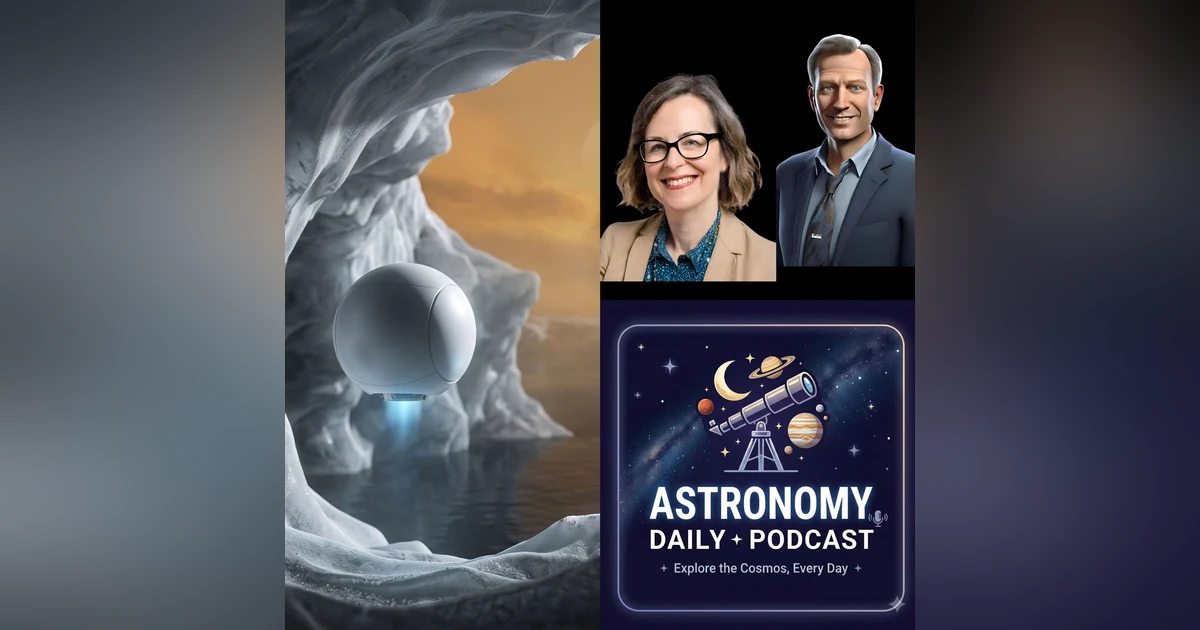
Anna and Avery cover NASA's newly funded concept for spherical, propeller-free "aerobots" that could one day explore the methane-carved cave systems of Saturn's moon Titan. Plus: SpaceX breaks its own launch-turnaround record with two Falcon 9 missions 38 minutes apart, Rocket Lab lands its biggest-ever defense contract to build "Flatellites" for the U.S. Space Force, and a geomagnetic storm arriving today could bring aurora to high latitudes tonight.
**Full show notes:**
Today's episode — S05E169, Monday August 17, 2026:
**Main story: NASA funds spherical "Aerobots" to explore Titan's caves.** A NASA Innovative Advanced Concepts (NIAC) Phase 1 grant is backing SPARK (Solid-state Propulsion for Autonomous Reconnaissance of Karst) — small, propeller-free spherical robots using electrohydrodynamic (EHD) thrusters, led by Daniel Drew (University of Hawaii) with JPL's Ethan Schaler and Jacob Izraelevitz and Michael Malaska (Blue Marble Space Institute of Science). The concept targets Titan's karst terrain — sinkholes and caves carved by liquid methane and ethane rather than water — as a candidate site for astrobiology research. Phase 1 covers nine months; a Phase 2 award could follow. No confirmed mission link yet, though NASA's Dragonfly rotorcraft is headed to Titan around 2028.
**SpaceX sets a new launch-turnaround record.** Two Falcon 9 missions launched 38 minutes apart on August 15 — a Globalstar satellite mission from Cape Canaveral Space Force Station at 9:12 p.m. ET, and the classified USSF-366 mission from Vandenberg Space Force Base at 9:50 p.m. ET — beating SpaceX's previous 65-minute record from August 2024. Both boosters landed successfully (14th and 18th flights respectively). 2026 tally: 96 Falcon 9 launches so far.
**Rocket Lab wins $397 million Space Force contract for "Flatellites."** The flat-panel satellites will support the SB-AMTI (Space-Based Airborne Moving Target Indicator) program and launch stacked aboard Rocket Lab's still-undebuted Neutron rocket. It's Rocket Lab's largest defense contract to date, bringing 2026 government contract funding to $943 million.
**Geomagnetic storm expected today.** A double CME plus a high-speed solar wind stream is forecast to bring G1–G2 level geomagnetic storming, with the main impact expected later today. Aurora is possible at high latitudes — potentially Scotland, northern England, Northern Ireland, Alaska, Canada, and the northern US, plus southern New Zealand and Tasmania in the Southern Hemisphere. Comes amid an active stretch for the Sun, including 14 C-class flares from sunspot region AR4507 over August 15–16.
**Links & sources:**
- [Space.com — NASA funds spherical 'Aerobots' for Titan's caves](https://www.space.com/technology/nasa-funds-spherical-aerobots-that-could-explore-the-caves-of-saturns-moon-titan)
- [JPL Robotics — Titan Aerobots](https://www-robotics.jpl.nasa.gov/what-we-do/research-tasks/titan-aerobots/)
- [JPL — Shapeshifter concept for Saturn's moons (background)](https://www.jpl.nasa.gov/news/nasa-designing-shapeshifting-robots-for-saturns-moons/)
- [Space.com — SpaceX breaks launch doubleheader record](https://www.space.com/space-exploration/launches-spacecraft/spacex-breaks-record-launch-doubleheader-ussf-366-globalstar-2r)
- [Spaceflight Now — Globalstar/USSF-366 launch coverage](https://spaceflightnow.com/2026/08/15/live-coverage-spacex-to-launch-satellite-replenishment-mission-for-globalstar-from-cape-canaveral/)
- [Space.com — Rocket Lab's $397M Flatellites contract](https://www.space.com/space-exploration/satellites/us-space-force-gives-rocket-lab-usd397-million-to-build-threat-tracking-flatellites)
- [Rocket Lab — Flatellites contract announcement](https://rocketlabcorp.com/updates/rocket-lab-awarded-397-million-contract-to-build-and-launch-flatellites-for-u-s-space-forces-space-based-airborne-moving-target-indicator-program/)
- [ummid.com — Geomagnetic storm set to hit Earth Monday Aug 17](https://www.ummid.com/news/2026/8/16/what-is-geomagnetic-storm-set-to-hit-earth-monday-aug-17.html)
- [EarthSky — Sun news / solar flare, CME, aurora updates](https://earthsky.org/sun/sun-news-activity-solar-flare-cme-aurora-updates/)
Follow us: @AstroDailyPod
Become a supporter of this podcast: https://www.spreaker.com/podcast/astronomy-daily-latest-space-news--5648921/support.
Sponsor Details:
Ensure your online privacy by using NordVPN. To get our special listener deal and save a lot of money, visit www.astronomydaily.io/nordvpn. You'll be glad you did!
Get the best secure and private email on the planet. Stop your Government, google and who knows who else spying on every email you write. Do what we did and use ProtonMail. They beleive in privacy and there are no ads in their business model...yet they still provide a free forever service. Check them out and get out special deal at www.astronomydaily.io/protonmail
Become a supporter of Astronomy Daily by joining our Supporters Club. Commercial free episodes daily are only a click way... Click Here
This episode includes AI-generated content.
0
00:00:00.720 --> 00:00:03.200
Anna: Hey, everyone. Welcome back to Astronomy
1
00:00:03.200 --> 00:00:04.560
AstroDailyPod. I'm Anna.
2
00:00:04.720 --> 00:00:07.680
Avery: And I'm Avery. And Anna, uh, I feel like we
3
00:00:07.680 --> 00:00:10.000
need to issue a weather warning today. A
4
00:00:10.000 --> 00:00:11.200
space weather warning.
5
00:00:12.000 --> 00:00:14.640
Anna: Very on brand for us. It's Monday,
6
00:00:14.800 --> 00:00:17.550
August 17th, series five, episode
7
00:00:17.690 --> 00:00:20.640
169. And yes, there is genuinely
8
00:00:20.640 --> 00:00:23.480
a solar storm rolling in as we speak, though.
9
00:00:23.480 --> 00:00:24.480
Uh, we'll get to that.
10
00:00:24.640 --> 00:00:27.410
Avery: We will. But first, our main storey today
11
00:00:27.410 --> 00:00:30.290
is one of my favourites in a while. NASA just
12
00:00:30.290 --> 00:00:32.930
funded a concept for little spherical robots
13
00:00:32.930 --> 00:00:34.330
to go exploring the caves
14
00:00:34.330 --> 00:00:37.130
Anna: of Titan, which sounds like science fiction
15
00:00:37.130 --> 00:00:39.210
and is, in fact, just science.
16
00:00:39.690 --> 00:00:42.330
Avery: Just science. Then we've got SpaceX
17
00:00:42.330 --> 00:00:44.970
quietly breaking its own launch record twice
18
00:00:44.970 --> 00:00:47.370
in one night, 38 minutes apart.
19
00:00:47.610 --> 00:00:49.850
Rocket Lab picking up its biggest defence
20
00:00:49.850 --> 00:00:51.970
contract yet for something called flat
21
00:00:51.970 --> 00:00:54.350
alights, which is a genuinely fun word to
22
00:00:54.350 --> 00:00:56.750
say. And then we'll close out with that solar
23
00:00:56.750 --> 00:00:58.870
storm, because depending on where you live,
24
00:00:58.950 --> 00:01:00.390
you might want to look up
25
00:01:00.390 --> 00:01:03.310
Anna: tonight, a very Monday lineup. Let's get
26
00:01:03.310 --> 00:01:03.750
into it.
27
00:01:03.910 --> 00:01:06.710
Avery: Okay, so start us off. What exactly did
28
00:01:06.710 --> 00:01:07.830
NASA fund here?
29
00:01:08.230 --> 00:01:11.030
Anna: So this is a, uh, NASA Innovative Advanced
30
00:01:11.030 --> 00:01:14.030
Concepts Grant, NIAC for short. That's
31
00:01:14.030 --> 00:01:16.550
NASA's Programme for Funding the genuinely
32
00:01:16.630 --> 00:01:19.590
weird early stage. This might not work, but
33
00:01:19.590 --> 00:01:22.460
if it does, it's a game changer. Ideas. And
34
00:01:22.460 --> 00:01:24.540
the one that just got a phase one grant is
35
00:01:24.540 --> 00:01:27.300
called sparc, which stands for Solid State
36
00:01:27.300 --> 00:01:29.660
Propulsion for Autonomous Reconnaissance of
37
00:01:29.660 --> 00:01:31.540
Karst. Karst being
38
00:01:31.940 --> 00:01:34.860
Karst is the geology term for terrain
39
00:01:34.860 --> 00:01:37.700
shaped by dissolving rock on Earth. That's
40
00:01:37.700 --> 00:01:39.940
usually limestone, and it's what gives you
41
00:01:39.940 --> 00:01:42.900
sinkholes, underground rivers, cave systems,
42
00:01:42.900 --> 00:01:45.580
all of that. Titan, Saturn's biggest
43
00:01:45.580 --> 00:01:48.260
moon, has its own version, except instead of
44
00:01:48.260 --> 00:01:51.100
water carving through limestone, it's liquid
45
00:01:51.100 --> 00:01:53.930
methane and ethane carving through water ice,
46
00:01:54.320 --> 00:01:56.200
which behaves like rock at Titan's
47
00:01:56.200 --> 00:01:56.800
temperatures.
48
00:01:57.280 --> 00:01:59.240
Avery: Right, because it's what, minus
49
00:01:59.240 --> 00:02:01.600
179 degrees Celsius out there?
50
00:02:01.920 --> 00:02:04.880
Anna: Roughly, yeah. Properly cryogenic.
51
00:02:04.960 --> 00:02:07.680
So Titan's got these liquid methane lakes and
52
00:02:07.680 --> 00:02:10.279
rivers on the surface, and scientists think
53
00:02:10.279 --> 00:02:12.880
underneath there's a whole hidden landscape
54
00:02:12.880 --> 00:02:15.640
of sinkholes and caves, the same way you'd
55
00:02:15.640 --> 00:02:18.560
get in, say, Kentucky or Slovenia, just
56
00:02:18.560 --> 00:02:20.960
running on an entirely different chemistry.
57
00:02:21.410 --> 00:02:23.470
Avery: Um, and that's the terrain a normal rover
58
00:02:23.470 --> 00:02:24.670
just can't deal with.
59
00:02:24.990 --> 00:02:27.990
Anna: Exactly. You can't drive a wheeled rover into
60
00:02:27.990 --> 00:02:30.910
a cave mouth or over a sinkhole edge. And
61
00:02:30.910 --> 00:02:33.630
flying a fixed rotorcraft in there is its own
62
00:02:33.630 --> 00:02:36.070
nightmare of collision risk. So the team
63
00:02:36.070 --> 00:02:38.870
behind sparc, led by Daniel Drew, an
64
00:02:38.870 --> 00:02:40.790
assistant professor at the University of
65
00:02:40.790 --> 00:02:43.510
Hawaii, working with Ethan Schaller and Jacob
66
00:02:43.510 --> 00:02:45.990
Israelovitz at JPL and Michael
67
00:02:45.990 --> 00:02:48.630
Molaska at the Blue Marble Space Institute of
68
00:02:48.630 --> 00:02:50.590
Science came up with something different.
69
00:02:51.160 --> 00:02:53.880
Small spherical robots that basically fly
70
00:02:53.880 --> 00:02:56.480
themselves through the terrain using electric
71
00:02:56.480 --> 00:02:59.280
propulsion. No propellers, no moving parts to
72
00:02:59.280 --> 00:02:59.560
break.
73
00:03:00.040 --> 00:03:02.520
Avery: No moving parts. So how do they actually
74
00:03:02.520 --> 00:03:02.920
move?
75
00:03:03.240 --> 00:03:05.680
Anna: This is the clever bit. It's called
76
00:03:05.680 --> 00:03:08.640
electrohydrodynamic propulsion, or
77
00:03:08.640 --> 00:03:11.520
ehd. It's a solid state electric
78
00:03:11.520 --> 00:03:14.000
thruster, similar in principle to the ion
79
00:03:14.000 --> 00:03:16.040
windlifters people have been experimenting
80
00:03:16.040 --> 00:03:18.660
with here on Earth for years. Except this
81
00:03:18.660 --> 00:03:21.300
team is adapting it for Titan's specific
82
00:03:21.300 --> 00:03:23.940
atmosphere. Drew's own description of the
83
00:03:23.940 --> 00:03:26.620
advantage is basically the whole pitch. He
84
00:03:26.620 --> 00:03:28.700
says the design gives you persistence,
85
00:03:28.780 --> 00:03:31.300
manoeuvrability, robustness to the
86
00:03:31.300 --> 00:03:34.099
challenging near cryogenic conditions, and
87
00:03:34.099 --> 00:03:36.240
minimises downwash disturbance of, uh,
88
00:03:36.340 --> 00:03:38.780
scientifically important hydrocarbon
89
00:03:38.780 --> 00:03:39.260
layering.
90
00:03:39.740 --> 00:03:42.180
Avery: Break that last bit down for me. Downwash
91
00:03:42.180 --> 00:03:43.020
disturbance.
92
00:03:43.670 --> 00:03:46.230
Anna: So if you fly a normal propeller drone into
93
00:03:46.230 --> 00:03:48.950
one of these caves, the propwash, the air
94
00:03:48.950 --> 00:03:51.510
it's pushing down and around would stir up
95
00:03:51.510 --> 00:03:54.110
and disturb the very hydrocarbon layers on
96
00:03:54.110 --> 00:03:56.310
the ground that scientists want to study
97
00:03:56.470 --> 00:03:59.189
undisturbed. A solid state thruster
98
00:03:59.189 --> 00:04:01.390
barely moves the surrounding atmosphere in
99
00:04:01.390 --> 00:04:04.030
the same way, so it can hover and inspect a
100
00:04:04.030 --> 00:04:05.910
site without messing up the science.
101
00:04:06.630 --> 00:04:09.550
Avery: That's such a specific, very tightened
102
00:04:09.550 --> 00:04:11.030
problem to have to design around.
103
00:04:11.590 --> 00:04:14.390
Anna: It really is. And it's a good reminder that
104
00:04:14.390 --> 00:04:17.030
Titan is nothing like Mars M with the Moon.
105
00:04:17.030 --> 00:04:19.510
In terms of engineering constraints, it
106
00:04:19.510 --> 00:04:22.270
actually works in the aerobots favour in one
107
00:04:22.270 --> 00:04:25.230
big way, though. Titan's atmosphere is denser
108
00:04:25.230 --> 00:04:27.950
than Earth's at the surface and gravity is
109
00:04:27.950 --> 00:04:30.590
only about a seventh of Earth's. So flying
110
00:04:30.590 --> 00:04:33.550
there is weirdly easier than flying
111
00:04:33.550 --> 00:04:35.910
here. You get more lift for less power.
112
00:04:36.390 --> 00:04:38.750
Avery: So it's almost the perfect place to fly a
113
00:04:38.750 --> 00:04:41.310
fleet of tiny spherical drones. Other than
114
00:04:41.310 --> 00:04:43.260
the fact that it's over a billion kilometres
115
00:04:43.330 --> 00:04:45.450
kilometres away and colder than anywhere on
116
00:04:45.450 --> 00:04:46.450
Earth has ever been.
117
00:04:47.890 --> 00:04:50.290
Anna: Just a few small logistical issues.
118
00:04:50.610 --> 00:04:53.250
But it's not the first time JPL's circled
119
00:04:53.250 --> 00:04:55.730
this exact problem either. There was an
120
00:04:55.730 --> 00:04:58.050
earlier concept called shapeshifter
121
00:04:58.210 --> 00:05:00.930
cobots that could roll as a sphere, fly
122
00:05:00.930 --> 00:05:03.690
independently, link into daisy chains to
123
00:05:03.690 --> 00:05:06.490
descend into caves, or reconfigure into
124
00:05:06.490 --> 00:05:09.010
a swimming probe for the lakes. That one
125
00:05:09.010 --> 00:05:11.730
dates back to around 2019, led by
126
00:05:11.730 --> 00:05:14.450
JPL's Ali Aga, and it never
127
00:05:14.450 --> 00:05:17.310
fl but it shows. This has been a recurring
128
00:05:17.310 --> 00:05:19.670
puzzle for mission planners. How do you
129
00:05:19.670 --> 00:05:22.350
actually get eyes into Titan's caves
130
00:05:22.430 --> 00:05:24.350
and under its lake surfaces?
131
00:05:24.830 --> 00:05:27.350
Avery: So SPARC is sort of the next generation
132
00:05:27.350 --> 00:05:29.790
attempt at solving the same problem, right?
133
00:05:29.870 --> 00:05:32.710
Anna: A ah, more focused, more mature approach to a
134
00:05:32.710 --> 00:05:35.030
piece of that puzzle. And in terms of where
135
00:05:35.030 --> 00:05:37.870
this sits right now, this is a NIAC Phase
136
00:05:37.870 --> 00:05:40.310
1 award, which is nine months of funding to
137
00:05:40.310 --> 00:05:42.750
mature the concept and prove out the physics.
138
00:05:43.100 --> 00:05:45.700
If it clears that bar, it can apply for a two
139
00:05:45.700 --> 00:05:48.620
year phase two grant. This is very early
140
00:05:48.620 --> 00:05:51.100
stage. We're talking design studies and lab
141
00:05:51.100 --> 00:05:53.460
testing, not hardware headed to the launch
142
00:05:53.460 --> 00:05:53.900
pad.
143
00:05:53.980 --> 00:05:56.020
Avery: Is there any actual mission this could hook
144
00:05:56.020 --> 00:05:58.100
into or is it purely conceptual?
145
00:05:58.100 --> 00:06:00.620
Anna: For now, the obvious one people are asking
146
00:06:00.620 --> 00:06:03.140
about is Dragonfly. That's NASA's
147
00:06:03.140 --> 00:06:05.700
rotorcraft lander that's actually built and
148
00:06:05.700 --> 00:06:08.300
funded targeting a Titan launch around
149
00:06:08.380 --> 00:06:11.000
2028. Drew's been fairly
150
00:06:11.000 --> 00:06:13.640
upfront that integration with Dragonfly
151
00:06:13.720 --> 00:06:16.440
specifically isn't confirmed. This is really
152
00:06:16.440 --> 00:06:19.080
a technology maturation project first
153
00:06:19.320 --> 00:06:21.920
looking for a ride on whatever future Titan
154
00:06:21.920 --> 00:06:24.200
mission makes sense, which could be an add on
155
00:06:24.200 --> 00:06:26.840
to Dragonfly or something entirely separate
156
00:06:26.840 --> 00:06:27.480
down the line.
157
00:06:27.640 --> 00:06:30.080
Avery: Why does any of this matter? Beyond tiny
158
00:06:30.080 --> 00:06:32.120
robot spheres are cool though, like
159
00:06:32.360 --> 00:06:34.480
scientifically. What's actually at stake in
160
00:06:34.480 --> 00:06:35.080
those caves?
161
00:06:35.740 --> 00:06:38.700
Anna: A few things. One basic geology.
162
00:06:39.020 --> 00:06:41.660
Understanding how karst terrain forms in an
163
00:06:41.660 --> 00:06:44.500
entirely different chemical system tells us a
164
00:06:44.500 --> 00:06:46.980
lot about how erosion and landscape evolution
165
00:06:46.980 --> 00:06:49.420
work in general, not just on Titan
166
00:06:49.740 --> 00:06:52.700
2. And this is the bigger one. Titan's
167
00:06:52.700 --> 00:06:55.420
subsurface, especially anywhere liquid
168
00:06:55.420 --> 00:06:57.260
water might mix with those organic
169
00:06:57.260 --> 00:06:59.820
hydrocarbons, is one of the more interesting
170
00:06:59.900 --> 00:07:02.370
astrobiology targets in the solar system.
171
00:07:02.770 --> 00:07:05.650
It's not Europa or Enceladus with their
172
00:07:05.650 --> 00:07:08.370
subsurface oceans, but Titan has its
173
00:07:08.370 --> 00:07:11.050
own complex organic chemistry happening on
174
00:07:11.050 --> 00:07:13.650
the surface and possibly just beneath it.
175
00:07:13.890 --> 00:07:16.850
And caves are exactly the kind of sheltered,
176
00:07:16.930 --> 00:07:19.210
chemically rich environment where you'd want
177
00:07:19.210 --> 00:07:19.970
to look closely.
178
00:07:20.130 --> 00:07:22.650
Avery: Tiny spherical robots floating into
179
00:07:22.650 --> 00:07:25.010
alien sinkholes, hunting for the building
180
00:07:25.010 --> 00:07:27.170
blocks of life. When you put it that way,
181
00:07:27.170 --> 00:07:28.850
it's, uh, a pretty great pitch for nine
182
00:07:28.850 --> 00:07:30.210
months of NIAC funding.
183
00:07:30.530 --> 00:07:33.170
Anna: It really is. And this is exactly the kind of
184
00:07:33.170 --> 00:07:36.010
storey I love bringing you because 90%
185
00:07:36.010 --> 00:07:38.610
of these NIAC Phase 1 concepts never
186
00:07:38.610 --> 00:07:41.330
fly. But the ones that do reshape
187
00:07:41.330 --> 00:07:43.890
entire mission architectures years later.
188
00:07:44.130 --> 00:07:46.250
Worth keeping an eye on SPARC as it moves
189
00:07:46.250 --> 00:07:46.850
through a view.
190
00:07:47.330 --> 00:07:50.330
Avery: Okay, moving on from tiny robots on
191
00:07:50.330 --> 00:07:52.730
Titan to something happening a lot closer to
192
00:07:52.730 --> 00:07:55.730
home. SpaceX broke its own turnaround record
193
00:07:55.730 --> 00:07:56.370
this weekend.
194
00:07:56.910 --> 00:07:59.550
Anna: Twice in one night, and not by a little.
195
00:07:59.870 --> 00:08:02.790
Avery: So Saturday night, August 15th, SpaceX
196
00:08:02.790 --> 00:08:05.310
launched two separate Falcon 9 missions from
197
00:08:05.310 --> 00:08:07.950
opposite coasts just 38 minutes apart.
198
00:08:08.350 --> 00:08:11.150
First one lifted off at 9:12pm, um, eastern
199
00:08:11.150 --> 00:08:13.590
from Cape Canaveral's Space Force Station in
200
00:08:13.590 --> 00:08:15.910
Florida, carrying eight Global Star
201
00:08:15.910 --> 00:08:18.390
telecommunications satellites deployed over
202
00:08:18.390 --> 00:08:21.070
about a six minute span. Then at
203
00:08:21.070 --> 00:08:23.950
9:50pm Eastern. So barely more than half
204
00:08:23.950 --> 00:08:26.870
an hour later, A second Falcon 9 went up from
205
00:08:26.870 --> 00:08:29.590
Vandenberg Space Force Base in California,
206
00:08:29.750 --> 00:08:32.150
carrying a classified U.S. space Force
207
00:08:32.150 --> 00:08:35.030
mission called USSF 366.
208
00:08:35.590 --> 00:08:37.990
Anna: Classified as in we don't fully know what's
209
00:08:37.990 --> 00:08:38.390
on it.
210
00:08:38.950 --> 00:08:41.069
Avery: Right. Though the reporting suggests it's
211
00:08:41.069 --> 00:08:43.110
likely built on the Starshield platform.
212
00:08:43.110 --> 00:08:45.630
That's SpaceX's national security variant of
213
00:08:45.630 --> 00:08:48.230
Starlink. But the headline here isn't really
214
00:08:48.230 --> 00:08:50.960
the payloads, it's the timing. 38
215
00:08:50.960 --> 00:08:53.280
minutes between liftoffs from two different
216
00:08:53.280 --> 00:08:56.200
coasts beat SpaceX's own previous record
217
00:08:56.200 --> 00:08:59.056
of 65 minutes, which was set back in August
218
00:08:59.184 --> 00:08:59.760
2024.
219
00:09:00.160 --> 00:09:03.040
Anna: So they shaved 27 minutes off their
220
00:09:03.040 --> 00:09:05.520
Avery: own record, which doesn't sound like much
221
00:09:05.600 --> 00:09:07.880
until you think about what has to happen in
222
00:09:07.880 --> 00:09:10.080
that window. Different pads, different
223
00:09:10.080 --> 00:09:12.240
states, different mission control teams,
224
00:09:12.240 --> 00:09:15.120
weather, range, safety clearances, all of
225
00:09:15.120 --> 00:09:17.280
it lining up almost simultaneously.
226
00:09:17.720 --> 00:09:20.160
Anna: And both boosters landed successfully too,
227
00:09:20.160 --> 00:09:20.520
right?
228
00:09:20.920 --> 00:09:23.000
Avery: Both stuck the landing. The Global Star
229
00:09:23.000 --> 00:09:25.440
Booster completed its 14th flight and the
230
00:09:25.440 --> 00:09:28.440
USSF 366 booster landed on the drone
231
00:09:28.440 --> 00:09:30.720
ship. Of Course I Still Love youe Out in the
232
00:09:30.720 --> 00:09:33.400
Pacific. That one was on its 18th flight.
233
00:09:33.800 --> 00:09:36.520
Anna: 18 flights on a single booster is
234
00:09:36.520 --> 00:09:39.000
wild to say out loud. And now it's just
235
00:09:39.320 --> 00:09:41.160
Tuesday. Well, Saturday.
236
00:09:42.360 --> 00:09:44.680
Avery: Just another day at the office for Falcon 9.
237
00:09:45.110 --> 00:09:46.630
And that's really the bigger storey
238
00:09:46.630 --> 00:09:49.470
underneath the record. This pushes SpaceX's
239
00:09:49.470 --> 00:09:52.310
2026 tally to 96 Falcon
240
00:09:52.310 --> 00:09:54.870
9 launches so far this year, with
241
00:09:54.870 --> 00:09:57.070
roughly three quarters of those dedicated to
242
00:09:57.070 --> 00:09:58.870
building out the Starlink constellation.
243
00:09:59.430 --> 00:10:02.110
Anna: 96 launches and we're not even through
244
00:10:02.110 --> 00:10:02.630
August.
245
00:10:03.110 --> 00:10:04.870
Avery: At, uh, that pace, they're on track to
246
00:10:04.870 --> 00:10:07.390
comfortably beat last year's total. It's
247
00:10:07.390 --> 00:10:09.190
honestly gone to the point where a single
248
00:10:09.190 --> 00:10:11.830
Falcon 9 launch barely makes news anymore.
249
00:10:12.150 --> 00:10:14.750
It takes something like 2 and 38 minutes from
250
00:10:14.750 --> 00:10:16.590
opposite coasts to actually stand
251
00:10:16.590 --> 00:10:19.510
Anna: out, which says a lot about how normalised
252
00:10:19.510 --> 00:10:21.750
orbital class rocket launches have become in
253
00:10:21.750 --> 00:10:23.270
the space of about a decade.
254
00:10:23.590 --> 00:10:26.150
Avery: It really does. We'll keep watching to see
255
00:10:26.150 --> 00:10:28.790
how long that 38 minute record holds, because
256
00:10:28.790 --> 00:10:30.950
at, uh, this cadence, I wouldn't bet on it
257
00:10:30.950 --> 00:10:32.390
lasting past the end of the year.
258
00:10:32.950 --> 00:10:35.030
Anna: Speaking of defence contracts and companies
259
00:10:35.030 --> 00:10:37.710
racing to build out Constellations, Rocket
260
00:10:37.710 --> 00:10:39.750
Lab just landed its biggest one yet.
261
00:10:41.350 --> 00:10:43.470
Avery: I need everyone to appreciate that name for a
262
00:10:43.470 --> 00:10:43.750
second.
263
00:10:44.550 --> 00:10:47.110
Anna: It's a great name. So this is a
264
00:10:47.110 --> 00:10:50.030
$397 million contract from
265
00:10:50.030 --> 00:10:52.870
the US Space Force awarded earlier this month
266
00:10:52.950 --> 00:10:55.430
for Rocket Lab to build and launch a batch of
267
00:10:55.430 --> 00:10:57.990
satellites called Flat Alights. Flat
268
00:10:57.990 --> 00:11:00.350
Panel Satellites, hence the name for a
269
00:11:00.350 --> 00:11:02.430
programme called SBAMTI M
270
00:11:03.510 --> 00:11:05.910
Space based Airborne Moving Target
271
00:11:05.990 --> 00:11:06.630
Indicator.
272
00:11:07.160 --> 00:11:09.720
Avery: Which is exactly what it sounds like tracking
273
00:11:09.720 --> 00:11:11.560
moving airborne threats from space.
274
00:11:12.040 --> 00:11:13.920
Anna: Right. It's about building a space based
275
00:11:13.920 --> 00:11:16.000
sensing layer that can watch contested
276
00:11:16.000 --> 00:11:18.800
airspace in near real time. Rocket Lab
277
00:11:18.800 --> 00:11:21.720
CEO Peter Beck put it this way. He said
278
00:11:21.720 --> 00:11:23.880
we are proud to contribute to the deployment
279
00:11:23.880 --> 00:11:26.760
of a resilient space based sensing layer
280
00:11:26.760 --> 00:11:29.120
that will enhance the Joint Force's ability
281
00:11:29.120 --> 00:11:31.320
to operate in contested airspace.
282
00:11:31.640 --> 00:11:33.680
Avery: And um, the flat design is the interesting
283
00:11:33.680 --> 00:11:36.570
engineering choice here is flat
284
00:11:36.570 --> 00:11:36.970
panel
285
00:11:36.970 --> 00:11:39.650
Anna: satellites stack far more efficiently inside
286
00:11:39.650 --> 00:11:42.170
a rocket fairing than traditional boxy
287
00:11:42.170 --> 00:11:44.930
satellite designs. So you can pack a lot more
288
00:11:44.930 --> 00:11:47.810
of them per launch. It's the same basic logic
289
00:11:47.810 --> 00:11:50.530
SpaceX used when it redesigned Starlink into
290
00:11:50.530 --> 00:11:53.170
a flat pack form factor. Each flat
291
00:11:53.170 --> 00:11:55.930
alight is also fitted with low latency high
292
00:11:55.930 --> 00:11:58.370
bandwidth communications alongside its threat
293
00:11:58.370 --> 00:12:01.090
detection sensors. So the whole constellation
294
00:12:01.090 --> 00:12:03.530
can talk to itself and to the ground quickly.
295
00:12:03.870 --> 00:12:06.390
Avery: Um, and these are flying on Neutron Rocket
296
00:12:06.390 --> 00:12:08.430
Lab's new rocket, the one we were just
297
00:12:08.430 --> 00:12:10.790
talking about on Thursday's episode that's
298
00:12:10.790 --> 00:12:13.230
still hedging on a 2026 debut.
299
00:12:13.470 --> 00:12:16.230
Anna: Exactly the same Neutron. So there's a
300
00:12:16.230 --> 00:12:18.670
nice bit of continuity here. The rocket
301
00:12:18.670 --> 00:12:21.150
itself still doesn't have a confirmed first
302
00:12:21.150 --> 00:12:23.750
flight date, but customers keep signing up to
303
00:12:23.750 --> 00:12:26.470
fly on it anyway, stacked in a Starlink
304
00:12:26.470 --> 00:12:29.030
style configuration once it does get off the
305
00:12:29.030 --> 00:12:29.310
ground.
306
00:12:29.760 --> 00:12:32.400
Avery: That's either a huge vote of confidence or a
307
00:12:32.400 --> 00:12:34.680
slightly nerve wracking amount of manifests
308
00:12:34.680 --> 00:12:36.880
riding on a rocket that hasn't flown yet.
309
00:12:37.040 --> 00:12:39.680
Anna: A bit of both, honestly. But it does make
310
00:12:39.680 --> 00:12:42.320
sense in context. This is Rocket Lab's
311
00:12:42.320 --> 00:12:45.000
largest defence contract to date, and it's
312
00:12:45.000 --> 00:12:47.400
not their only one this year. Add up the
313
00:12:47.400 --> 00:12:49.000
other government contracts they've announced
314
00:12:49.000 --> 00:12:51.680
in 2026. 190 million,
315
00:12:51.840 --> 00:12:53.860
90 million and $266
316
00:12:54.060 --> 00:12:57.010
million. And combined with this deal of
317
00:12:57.010 --> 00:12:59.450
397 million, that's
318
00:12:59.450 --> 00:13:02.450
$943 million in defence
319
00:13:02.450 --> 00:13:04.610
funding secured this year alone.
320
00:13:05.010 --> 00:13:07.450
Avery: Just shy of a billion dollars all in
321
00:13:07.450 --> 00:13:08.290
2026.
322
00:13:08.610 --> 00:13:11.129
Anna: Which tells you Rocket Lab's strategy of
323
00:13:11.129 --> 00:13:13.490
leaning hard into national security work
324
00:13:13.810 --> 00:13:16.290
alongside Electron's commercial track record
325
00:13:16.530 --> 00:13:19.210
is really paying off. It's positioning them
326
00:13:19.210 --> 00:13:21.850
as a legitimate second option to the primes
327
00:13:21.850 --> 00:13:24.280
in this space, not just a smaller player
328
00:13:24.280 --> 00:13:26.040
nipping at SpaceX's heels.
329
00:13:26.360 --> 00:13:28.760
Avery: Reputation and revenue building up nicely
330
00:13:28.760 --> 00:13:31.000
while Neutron itself is still on the ground.
331
00:13:31.320 --> 00:13:33.480
We'll see if that first flight finally
332
00:13:33.480 --> 00:13:35.920
happens before the manifest gets too long to
333
00:13:35.920 --> 00:13:36.440
wait for.
334
00:13:36.600 --> 00:13:39.480
Okay, last storey for today and this one's
335
00:13:39.480 --> 00:13:41.920
genuinely live. As we're recording, there's a
336
00:13:41.920 --> 00:13:44.320
geomagnetic Storm expected to hit Earth
337
00:13:44.320 --> 00:13:45.720
today, August 17th.
338
00:13:45.960 --> 00:13:48.680
Anna: This is the space weather warning I teased at
339
00:13:48.680 --> 00:13:49.000
the top.
340
00:13:49.390 --> 00:13:52.310
Avery: It is. So the setup is a double coronal
341
00:13:52.310 --> 00:13:55.230
mass ejection, 2 CMEs combined with the high
342
00:13:55.230 --> 00:13:57.950
speed solar windstream all heading our way.
343
00:13:58.350 --> 00:14:00.870
Forecasters including the British Geological
344
00:14:00.870 --> 00:14:03.750
survey are predicting G1 to G2 level
345
00:14:03.750 --> 00:14:06.390
geomagnetic storming. So minor to
346
00:14:06.390 --> 00:14:08.670
moderate on the scale that runs up to G5.
347
00:14:08.910 --> 00:14:11.910
Anna: And the timing, when's this actually supposed
348
00:14:11.910 --> 00:14:12.430
to arrive?
349
00:14:12.670 --> 00:14:14.910
Avery: The geomagnetic background's already been a
350
00:14:14.910 --> 00:14:17.670
bit unsettled since yesterday the 16th. But
351
00:14:17.670 --> 00:14:19.670
the main impact is expected in the second
352
00:14:19.670 --> 00:14:22.030
half of today as the bulk of that solar
353
00:14:22.030 --> 00:14:23.390
material reaches Earth.
354
00:14:23.630 --> 00:14:26.110
Anna: So basically tonight, depending on your time
355
00:14:26.110 --> 00:14:28.990
Avery: zone, basically tonight, and the fun part for
356
00:14:28.990 --> 00:14:30.910
listeners is the aurora. Potential
357
00:14:31.150 --> 00:14:33.669
forecasters are calling for possible displays
358
00:14:33.669 --> 00:14:36.430
at high latitudes based on similar recent
359
00:14:36.430 --> 00:14:38.710
storms this season. Uh, that's put places
360
00:14:38.710 --> 00:14:41.230
like Scotland, Northern England, Northern
361
00:14:41.230 --> 00:14:44.030
Ireland, Alaska, Canada and the
362
00:14:44.030 --> 00:14:46.110
northern tier of the U.S. from Washington
363
00:14:46.110 --> 00:14:48.520
state to Maine in the potential viewing zone.
364
00:14:48.910 --> 00:14:50.870
And in the Southern hemisphere, keep an eye
365
00:14:50.870 --> 00:14:52.630
out if you're in southern New Zealand or
366
00:14:52.630 --> 00:14:53.390
Tasmania.
367
00:14:53.710 --> 00:14:55.990
Anna: Solid excuse to step outside tonight if
368
00:14:55.990 --> 00:14:57.470
you're anywhere in that band.
369
00:14:57.630 --> 00:15:00.510
Avery: Definitely worth a look. This is coming off a
370
00:15:00.510 --> 00:15:02.750
pretty active stretch from the sun generally
371
00:15:03.150 --> 00:15:05.790
one active region in particular. Sunspot
372
00:15:05.790 --> 00:15:08.670
AR4507 fired off
373
00:15:08.670 --> 00:15:11.310
at least 10 C class flares in a single
374
00:15:11.310 --> 00:15:13.910
24 hour window between the 15th and
375
00:15:13.910 --> 00:15:16.530
16th including the strongest one, a uh,
376
00:15:16.570 --> 00:15:19.010
C3.7 right around
377
00:15:19.010 --> 00:15:21.330
3:31 UTC on the 16th.
378
00:15:21.650 --> 00:15:24.450
Anna: O M, M or X class flares in that batch.
379
00:15:24.530 --> 00:15:27.490
So nothing extreme but a genuinely busy sun
380
00:15:27.890 --> 00:15:28.770
which tracks.
381
00:15:28.770 --> 00:15:30.969
Avery: We're in an active phase of the current 11
382
00:15:30.969 --> 00:15:33.050
year solar cycle and there's been a steady
383
00:15:33.050 --> 00:15:35.650
run of filament eruptions, flares and Earth
384
00:15:35.650 --> 00:15:38.410
directed CMEs over the past few months. This
385
00:15:38.410 --> 00:15:40.450
is very much part of that pattern, not uh, a
386
00:15:40.450 --> 00:15:41.010
one off.
387
00:15:41.520 --> 00:15:44.320
Anna: I did see one slightly funny detail
388
00:15:44.320 --> 00:15:46.800
in the coverage Space weather experts
389
00:15:46.800 --> 00:15:48.920
advising that people who are sensitive to
390
00:15:48.920 --> 00:15:51.520
weather changes or who have cardiovascular
391
00:15:51.520 --> 00:15:54.000
conditions might want to keep stress low,
392
00:15:54.240 --> 00:15:57.160
stay hydrated and go easy on caffeine and
393
00:15:57.160 --> 00:15:57.680
alcohol
394
00:15:57.680 --> 00:16:00.400
Avery: during the storm, which is genuinely sound
395
00:16:00.400 --> 00:16:02.480
advice regardless of what the sun's doing.
396
00:16:02.480 --> 00:16:04.400
But sure, blame uh, it on the cme.
397
00:16:05.760 --> 00:16:08.200
Anna: Also worth flagging. Forecast models don't
398
00:16:08.200 --> 00:16:11.000
fully agree yet on exact timing, so
399
00:16:11.000 --> 00:16:13.520
this could still arrive a little later or
400
00:16:13.520 --> 00:16:15.840
even end up being more of a glancing blow
401
00:16:15.840 --> 00:16:18.600
than a direct hit. Space weather forecasting
402
00:16:18.600 --> 00:16:21.160
is still much fuzzier than the terrestrial
403
00:16:21.160 --> 00:16:23.360
kind, so no guarantees,
404
00:16:23.520 --> 00:16:25.720
Avery: but if you're in the right latitude band and
405
00:16:25.720 --> 00:16:27.960
the sky's clear tonight. It's worth stepping
406
00:16:27.960 --> 00:16:29.040
outside and looking up,
407
00:16:29.280 --> 00:16:31.720
Anna: which is basically our whole show in one
408
00:16:31.720 --> 00:16:32.240
sentence.
409
00:16:32.640 --> 00:16:35.120
Alright, that's our four storeys for today.
410
00:16:35.440 --> 00:16:38.200
Quick recap. NASA's funded an early stage
411
00:16:38.200 --> 00:16:41.120
concept called Sparc. Spherical propeller
412
00:16:41.120 --> 00:16:43.860
free aerobots that one day fly into the
413
00:16:43.860 --> 00:16:45.980
methane carved caves of Titan.
414
00:16:46.380 --> 00:16:49.020
SpaceX broke its own launch turnaround record
415
00:16:49.100 --> 00:16:51.820
with two Falcon 9 missions just 38
416
00:16:51.820 --> 00:16:54.740
minutes apart from opposite coasts, Rocket
417
00:16:54.740 --> 00:16:57.300
Lab landed a $397 million
418
00:16:57.740 --> 00:17:00.740
Space Force contract to build flat satellites
419
00:17:00.740 --> 00:17:03.300
for airborne threat tracking. And there's a
420
00:17:03.300 --> 00:17:05.980
geomagnetic storm arriving today that could
421
00:17:05.980 --> 00:17:08.260
bring Aurora to parts of the northern and
422
00:17:08.260 --> 00:17:09.820
southern high latitudes tonight.
423
00:17:10.180 --> 00:17:12.180
Avery: If you enjoyed today's episode, the best
424
00:17:12.180 --> 00:17:14.260
thing you can do for us is leave a rating or
425
00:17:14.260 --> 00:17:16.300
review wherever you're listening and share
426
00:17:16.300 --> 00:17:18.780
the episode with a fellow space nerd. You can
427
00:17:18.780 --> 00:17:21.260
find full show notes, sources and links for
428
00:17:21.260 --> 00:17:22.980
every storey we covered today at
429
00:17:22.980 --> 00:17:25.700
astronomydaily IO and find us on social
430
00:17:25.700 --> 00:17:28.580
media. We're AstroDaily Pod pretty
431
00:17:28.580 --> 00:17:29.300
much everywhere.
432
00:17:29.460 --> 00:17:31.860
Anna: We'll be back tomorrow with another episode.
433
00:17:32.020 --> 00:17:34.500
Until then, keep looking up. Tonight
434
00:17:34.500 --> 00:17:34.820
especially.
435
00:17:35.300 --> 00:17:37.140
Avery: See you next then. Um, clear skies.


